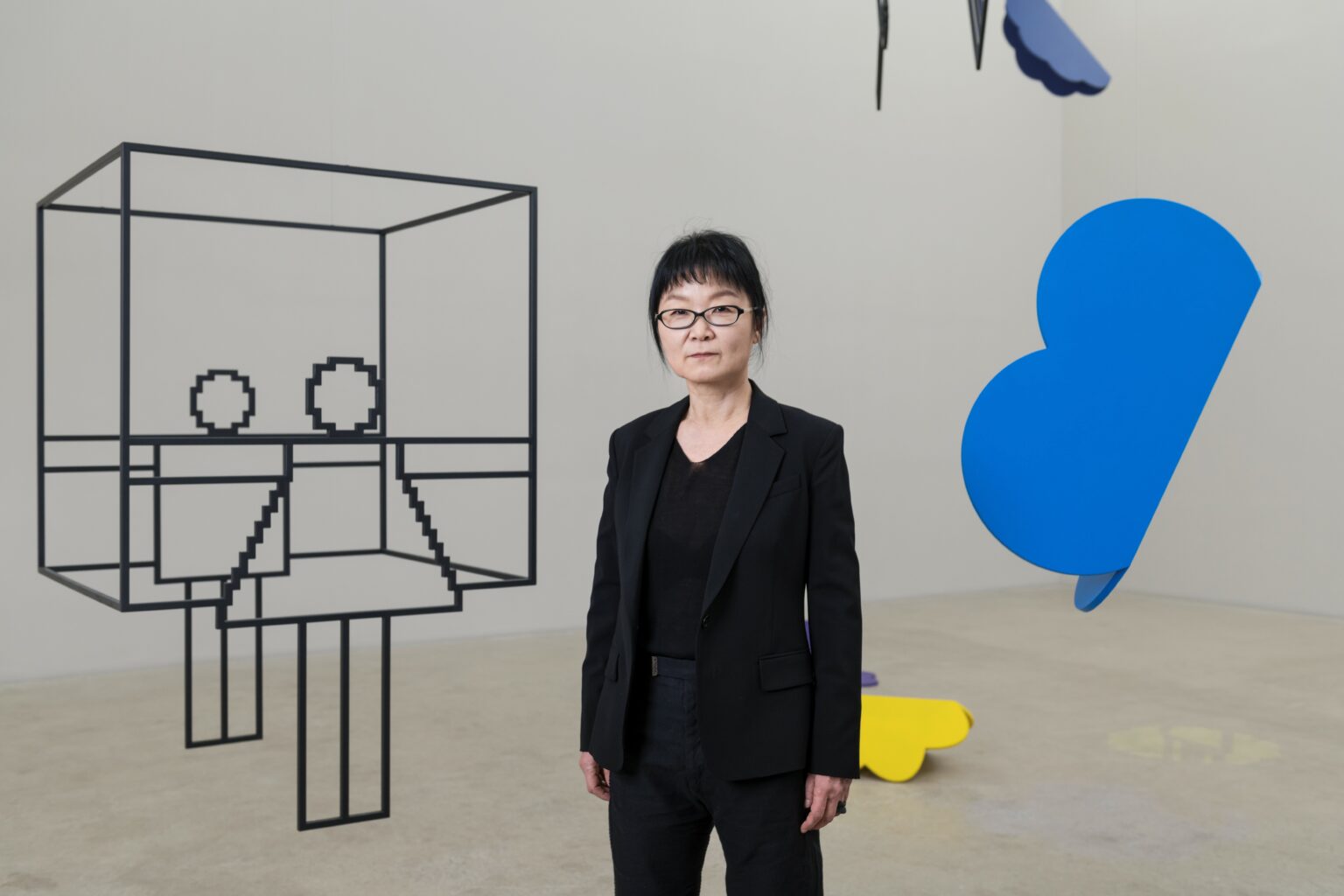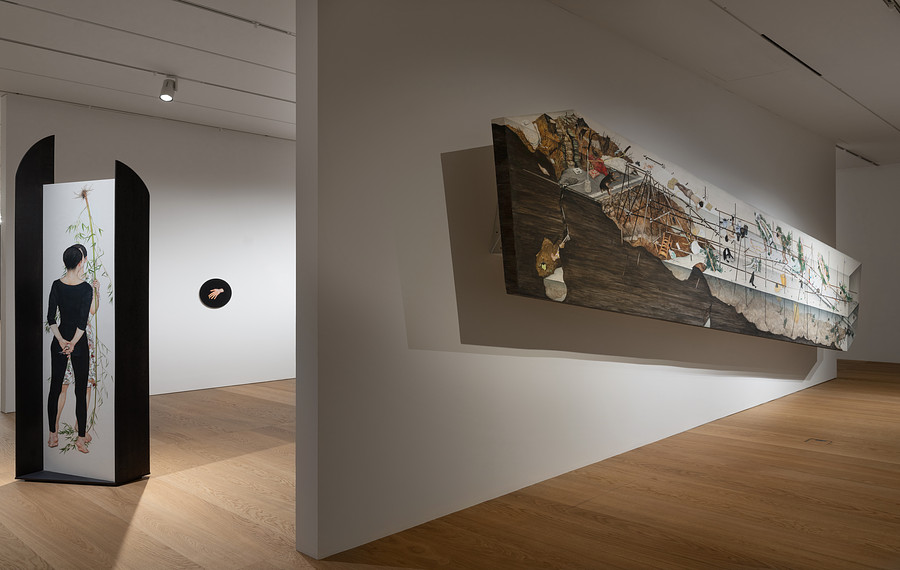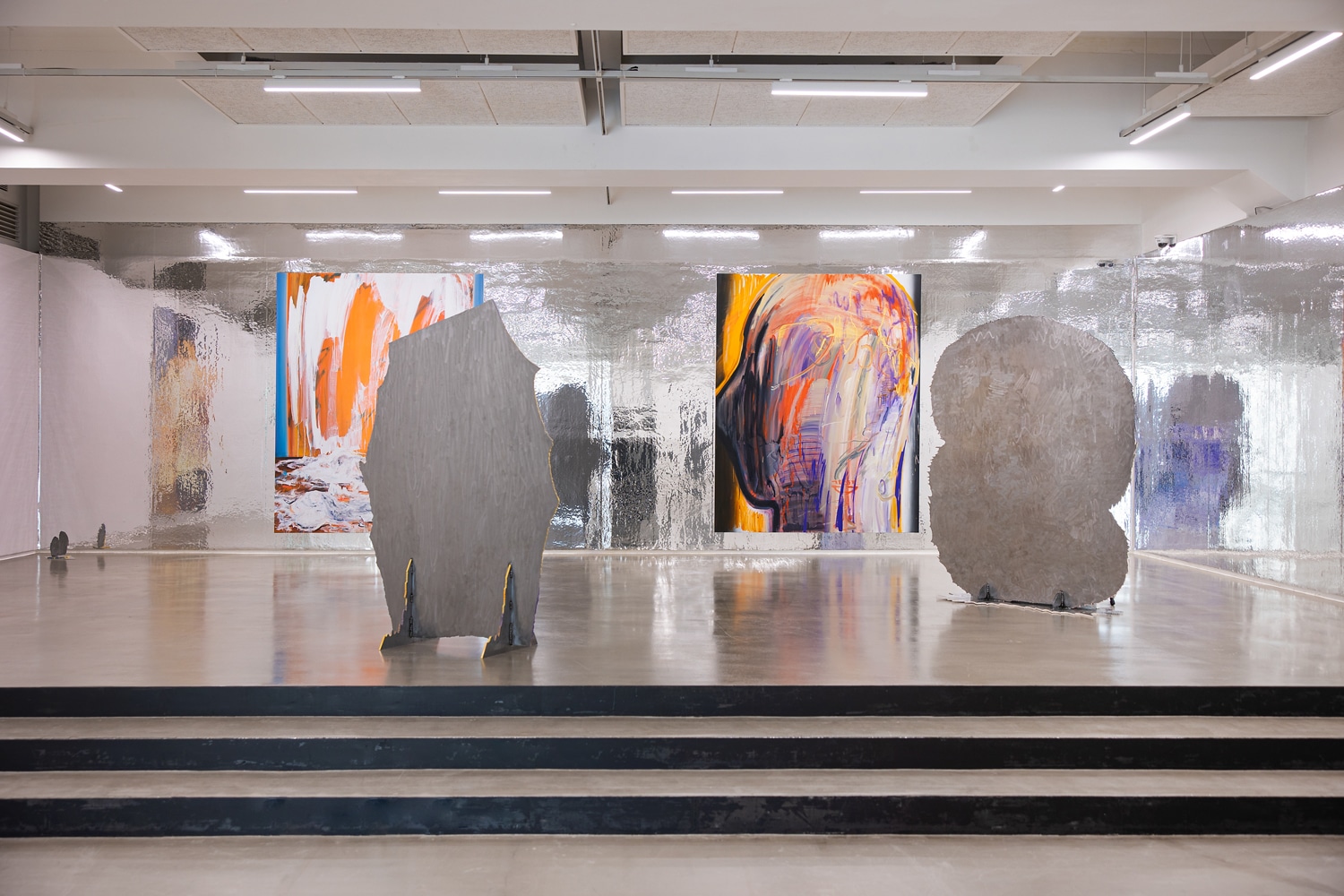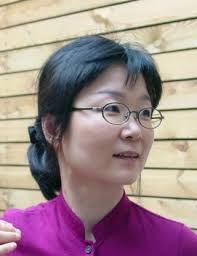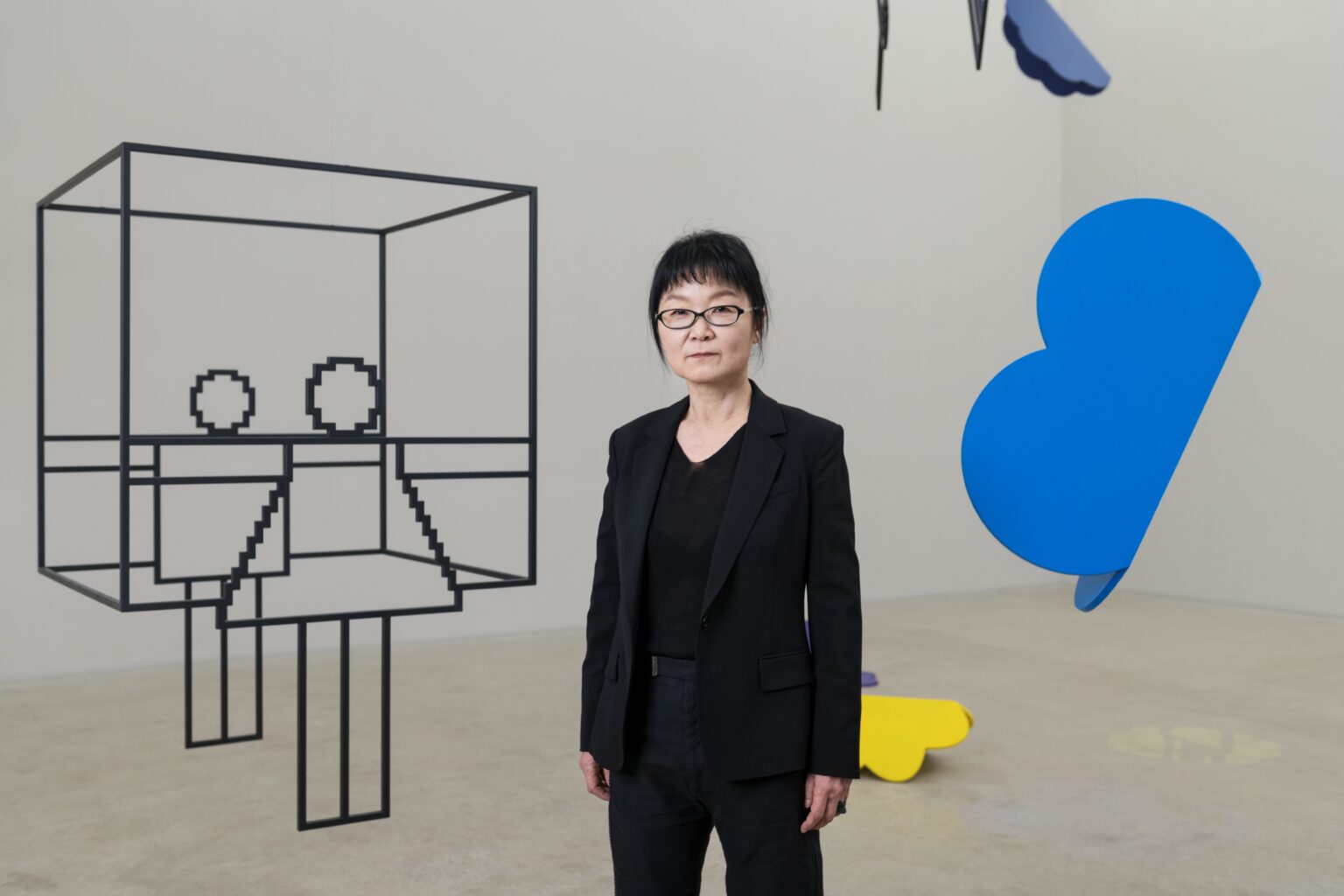
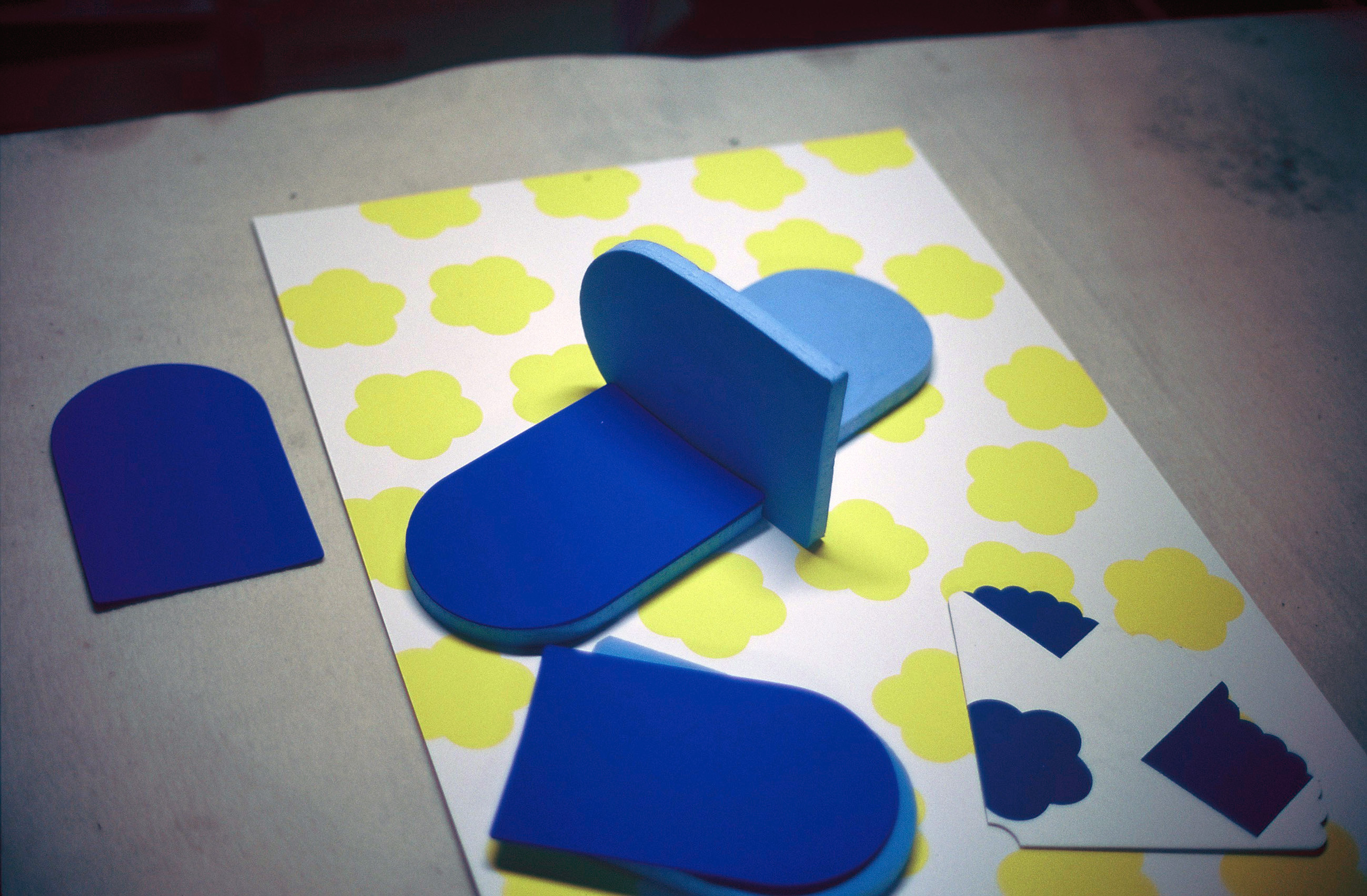
She is interested in designing and mass-producing practical objects — cigarette packs, small liquor bottles, upright vases. Yet in the studio of artist Hong Seung-Hye, small and pretty but not particularly useful objects were lined up. A white flag made by attaching a handle to a small canvas, a mason jar filled with finely cut yellow rubber bands resembling sulfur, and winding fluorescent acrylic forms were neatly arranged on shelves. Pointing to the dozen works made by different hands, Hong carefully listed young artists someone had already noticed or had yet to discover.

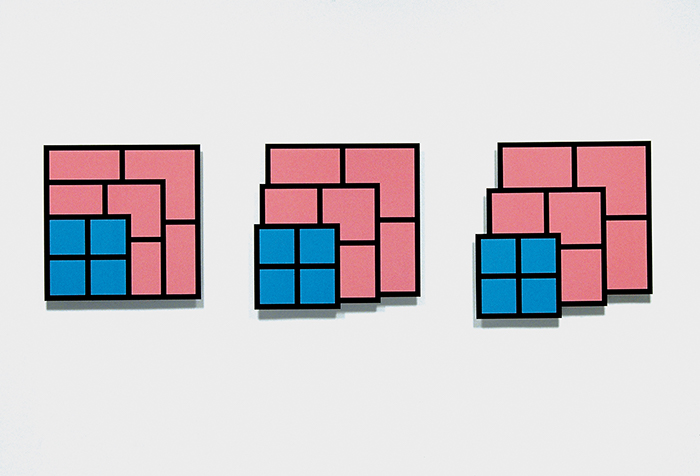
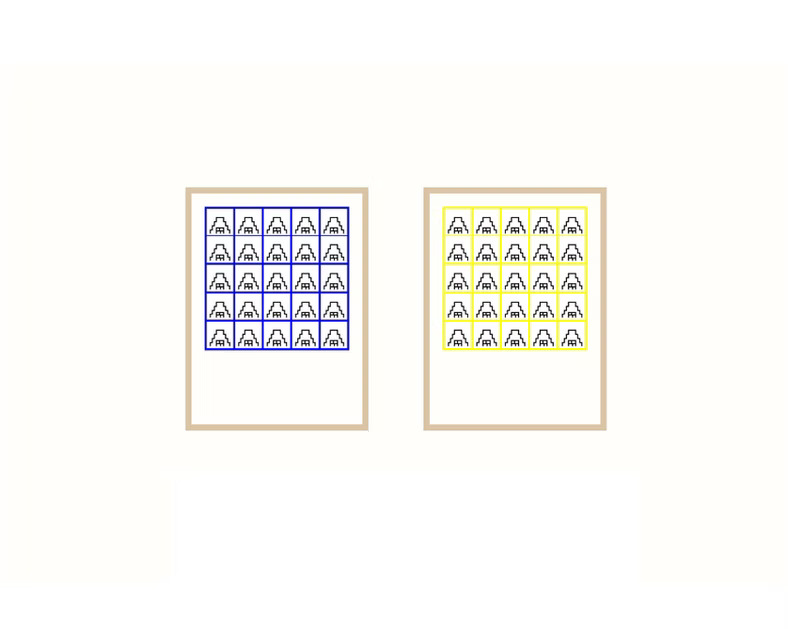
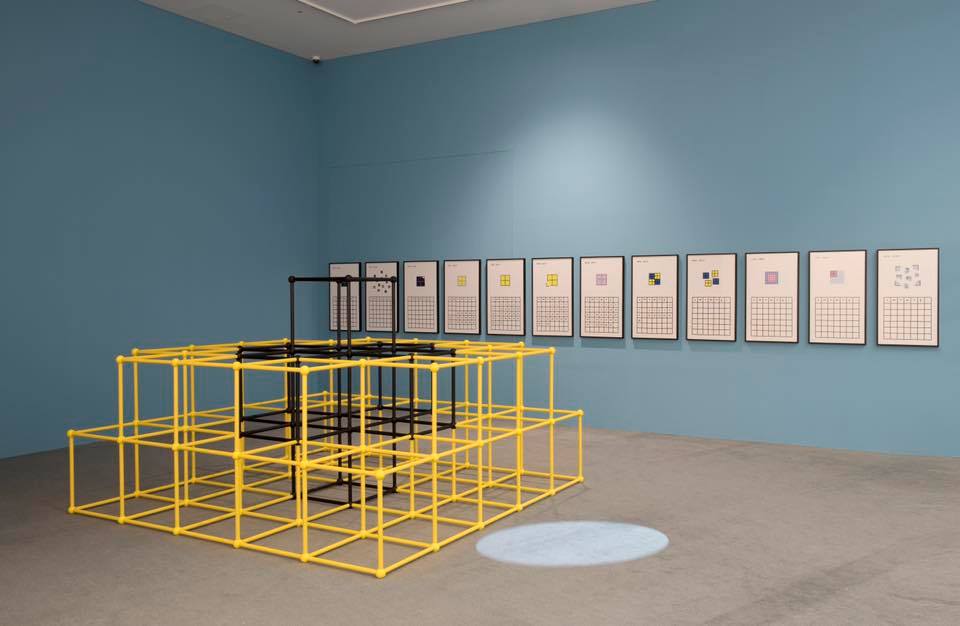
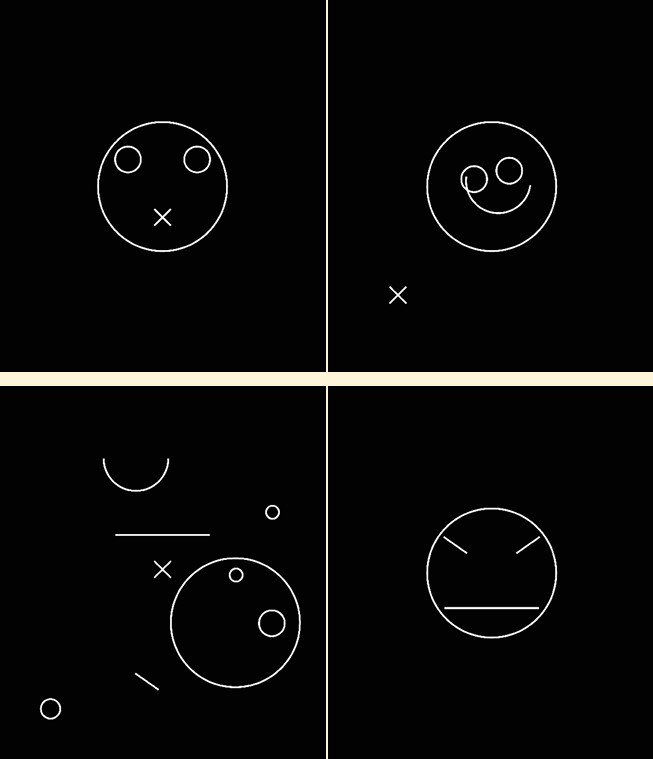
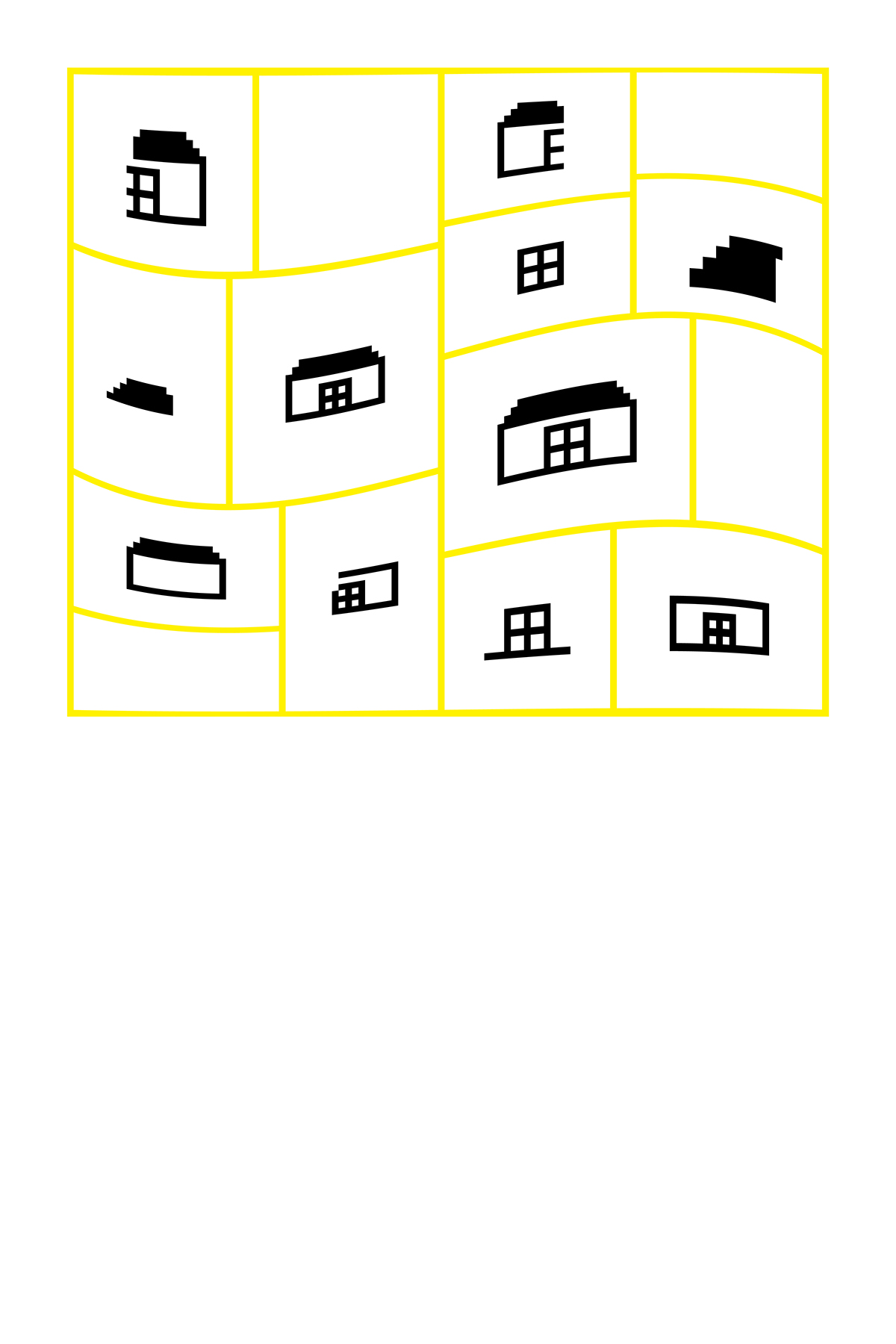
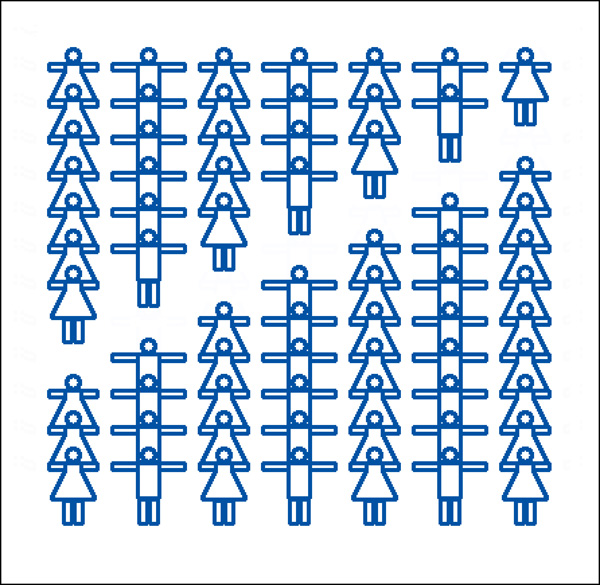
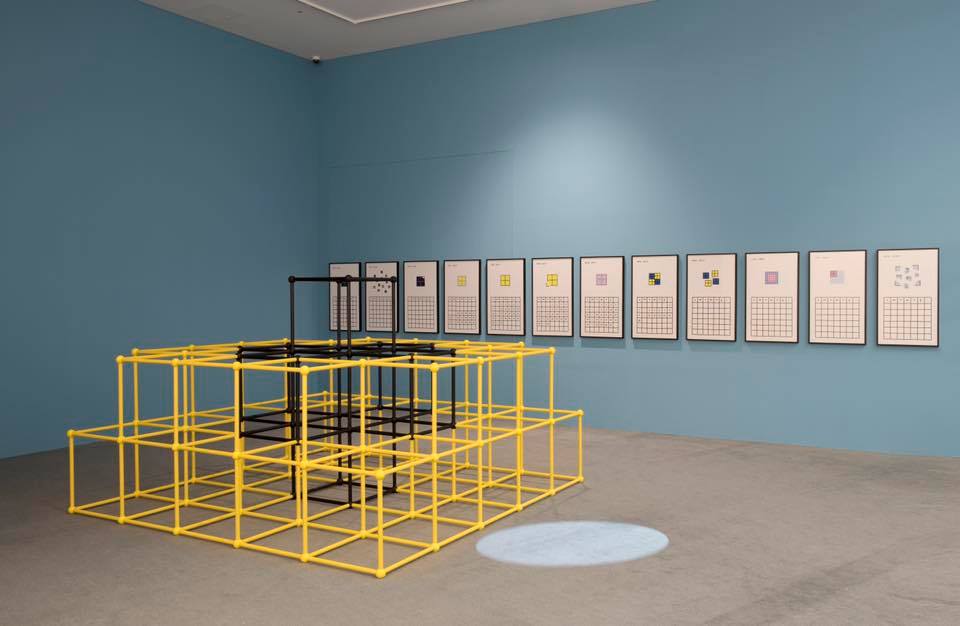
When I said, “Perhaps because the finish is rough, I’m not sure this work is good,” she smiled and replied, “Is that so? But for this artist, the finish isn’t important!” At that moment I remembered the first time I encountered her. At a late-2000s exhibition at Kukje Gallery, where square pixel images were stacked like bricks and multiplied through reduction and enlargement, permutation and combination, her works pierced the retina and provoked thought — pretty yet chilling. The artist herself was no different.

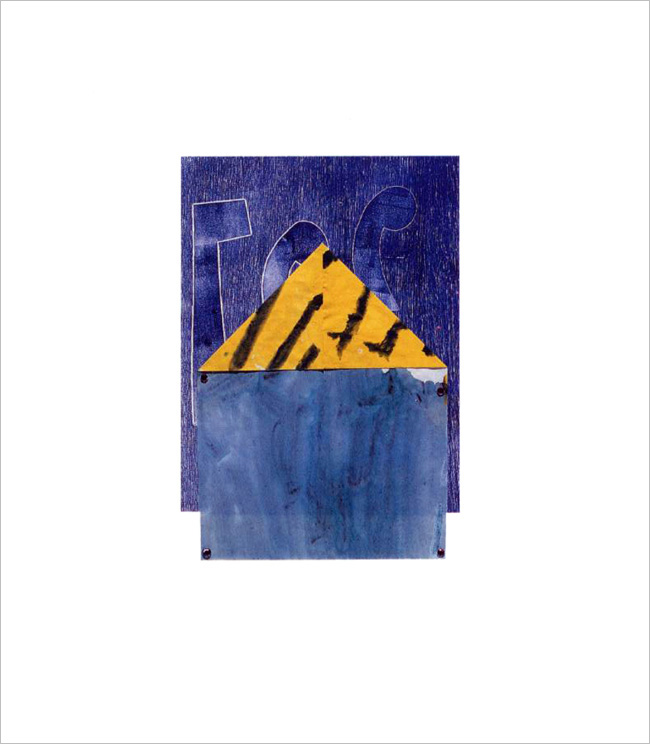
“A moderate artist!” she described herself this way. Near the end of interviews there is often the question, “If you describe yourself in one sentence?” and this was her answer. Someone whose clear forms and colors and incantatory tone seemed to allow no contradiction called herself “not picky, easygoing,” adding emphatically, “How difficult it is to be moderate. I like the expression so much — please write it.” In the late 1980s, after studying abroad and debuting, Hong painted like other painters, with brush and pigment. Influenced by her teacher, she worked in Informel on canvas but, feeling its limits, moved to watercolor paper collage, becoming absorbed in its freedom and flexibility.

Then she encountered Antoni Gaudí’s architecture. Seeing the overwhelming buildings in Park Güell in Barcelona, she felt her small collage pieces resembled a single tile of Gaudí’s structures, and she recalls this as the moment she first recognized painting as an element constructing space. During a somewhat withdrawn period in the late 1990s she encountered a DOS computer system and discovered the grid in a paint program.


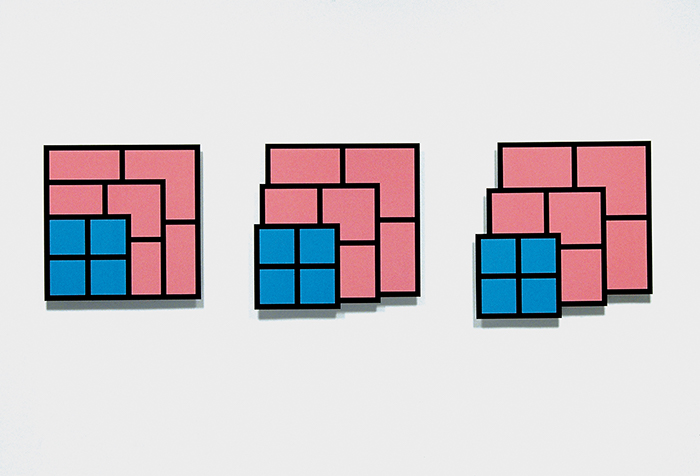
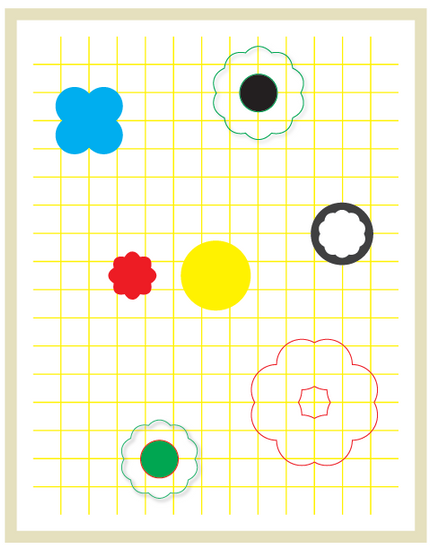
Hong Seung-Hye, Organic Geometry, 2000, Polyacryl urethane on aluminum plate, 67.4 x 67.4 cm © Hong Seung-Hye

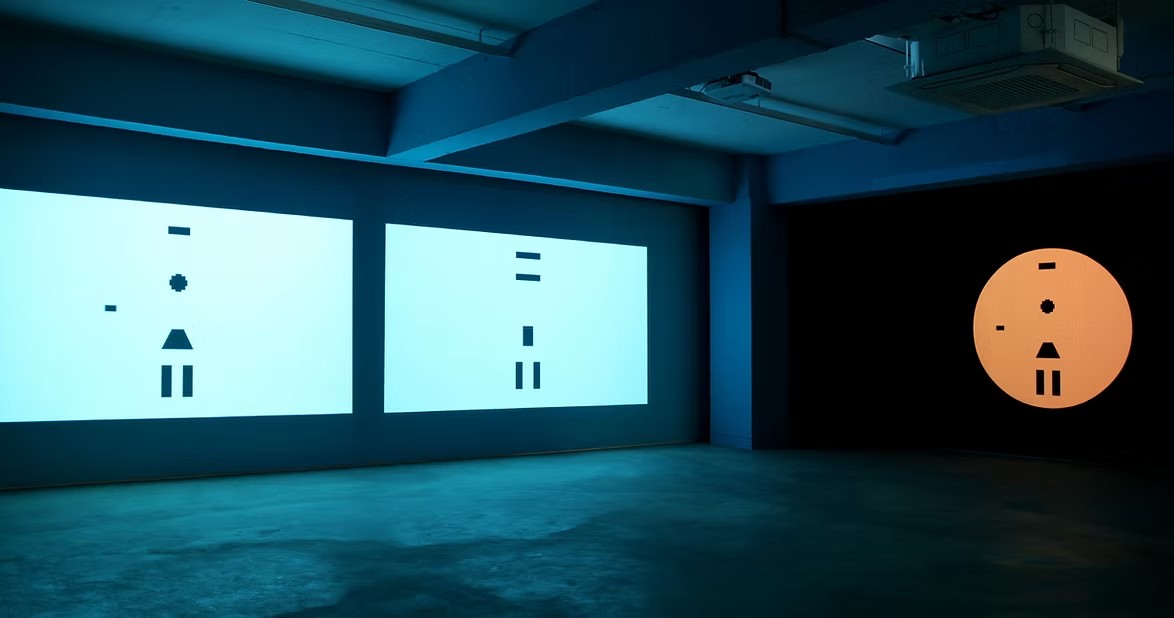
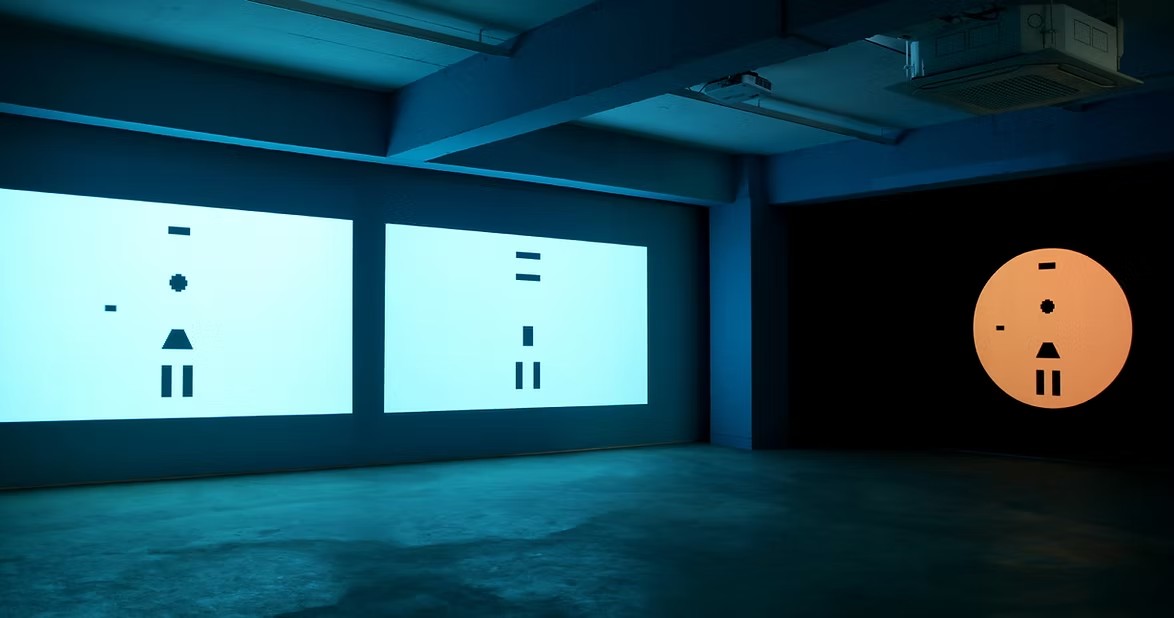
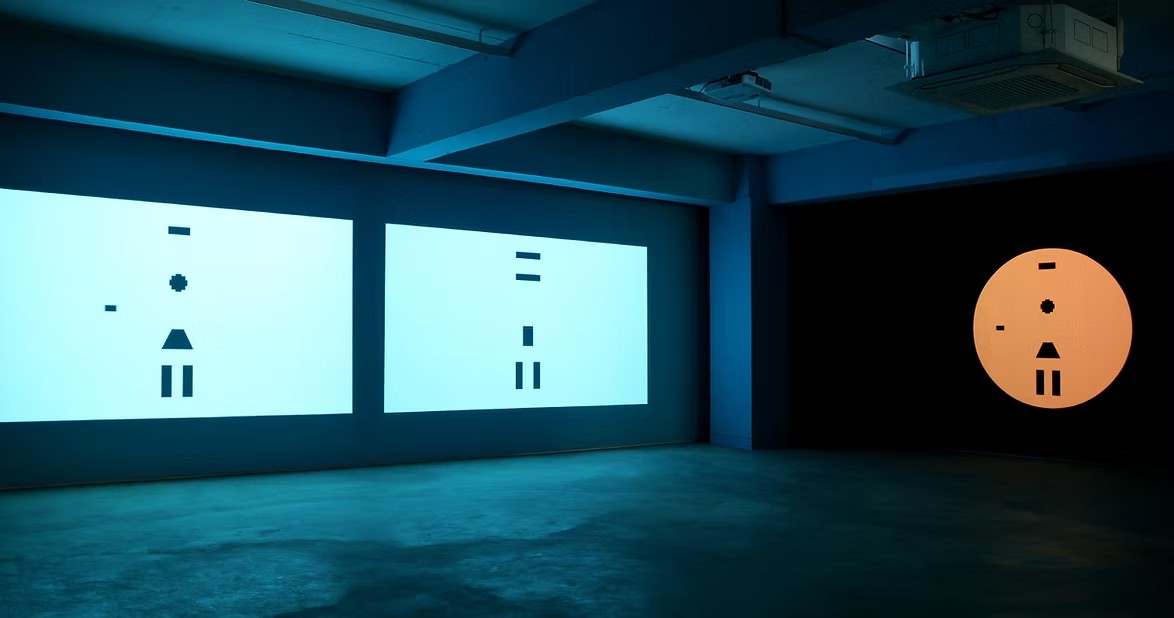
Like finding a guide in the open sea, she soon moved to Photoshop and began the work she continues today, using pixels — the minimum unit of the screen — as bricks. Since then she has expanded her practice by learning new digital tools such as Adobe Flash and GarageBand; in a sense, the history of Hong Seung-Hye’s work is a history of tools. When asked whether the way she varies sound in recent works parallels how she once varied binary code into images, she replied:

“Technology has continuously developed since the beginning of human history. Traditional art media we know are also products of evolving tools. There was a time when drawings were made with ruler and compass. The computer is a medium that can draw them faster and more precisely. In my work, where thought is more important than gesture and ideal proportion more than brushstroke, the computer is a welcome tool. Ruler and compass can no longer keep up with the speed of thought. I create sound with GarageBand — the temporal operating system provided by the grid is fantastic. It perfectly corresponds with the operating system of space.”


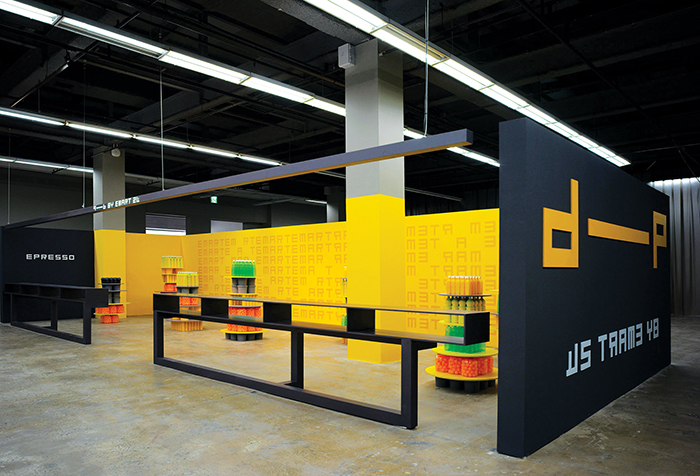
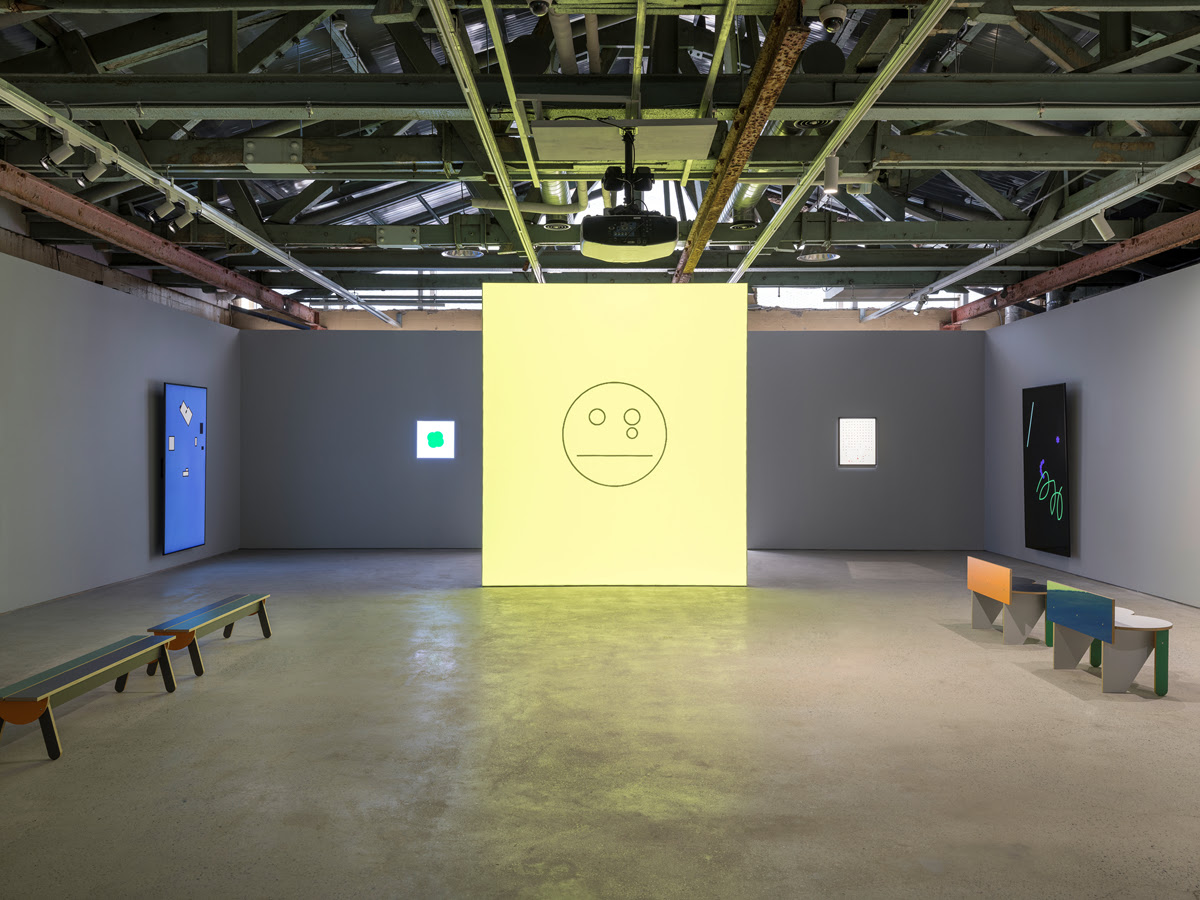
Hong Seung-Hye, 9-6 by EMART 24, 2017, Mixed media, Dimensions variable © Hong Seung-Hye

Critics and curators do not usually produce works, yet most artists write, and some compose sentences more perfectly than professional writers. For a journalist, the most uncomfortable type is an artist who writes well. However one structures the text, it cannot surpass the artist’s own note, nor can any adaptation keep pace with the artist’s direct explanation. In that sense, Hong Seung-Hye is uncomfortable and far from moderate. When I listed words associated with her — sign, symbol, abstraction — she explained: “Signs and symbols do not reproduce objects as they are; they express the essence of the object by condensing and simplifying it.

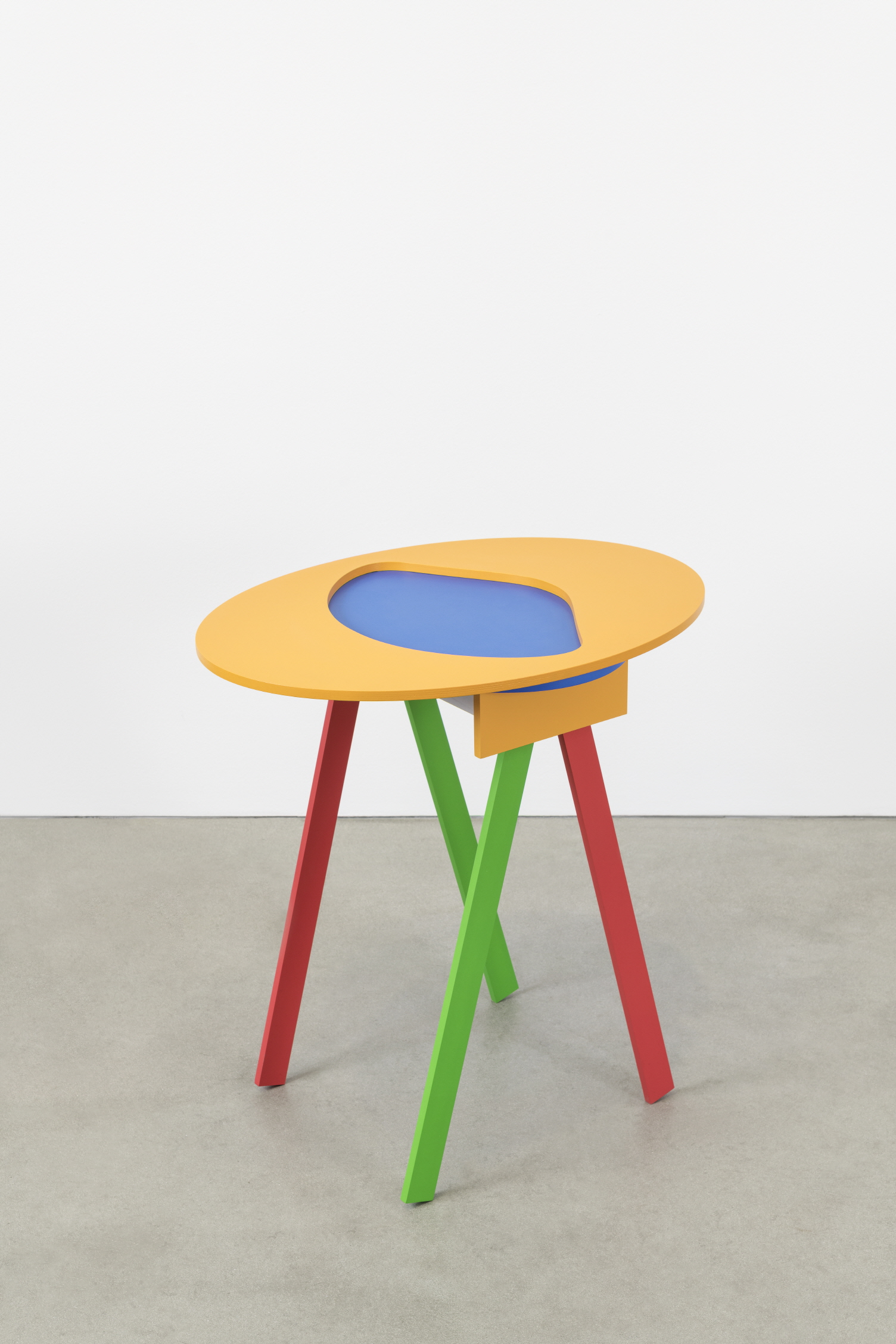
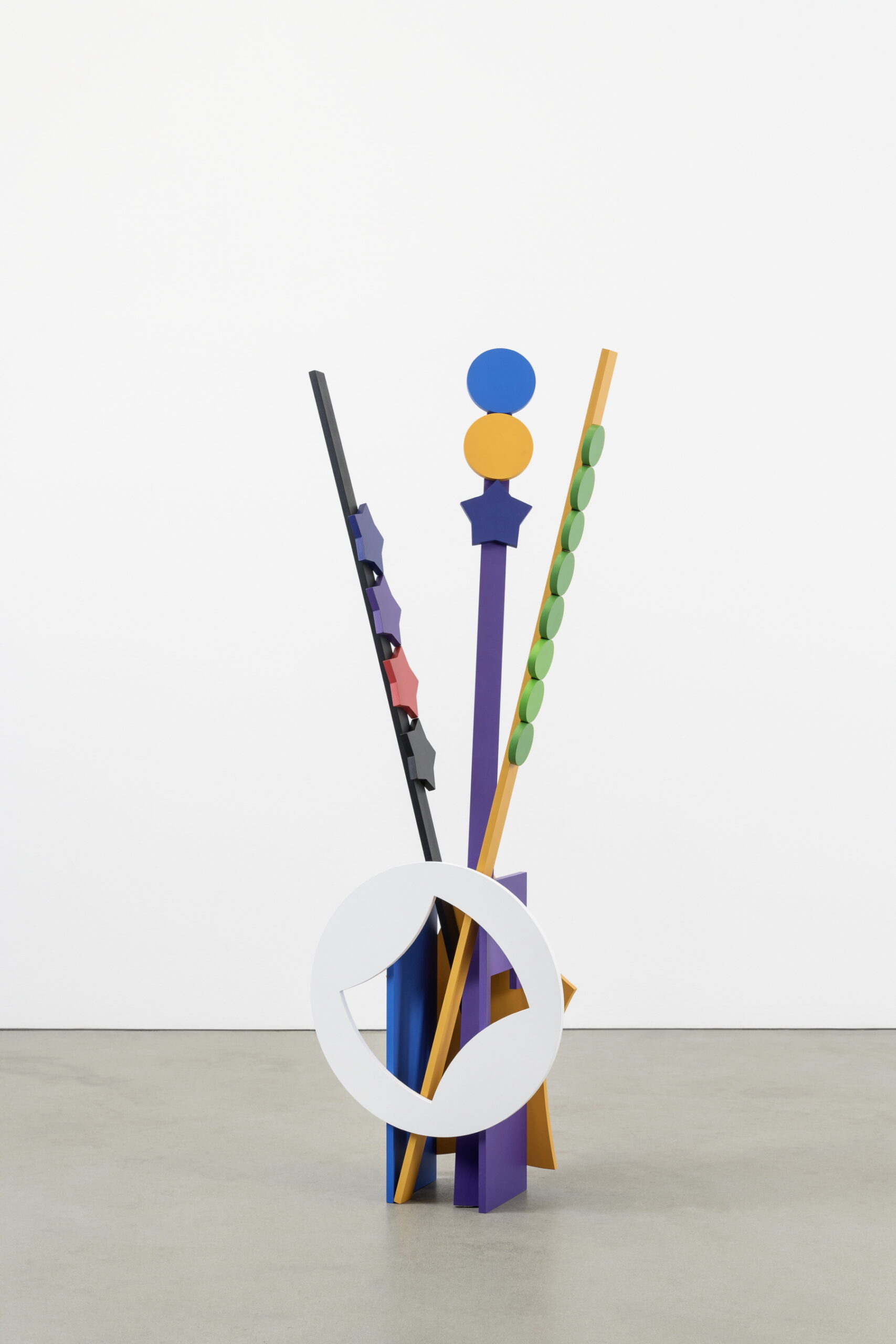
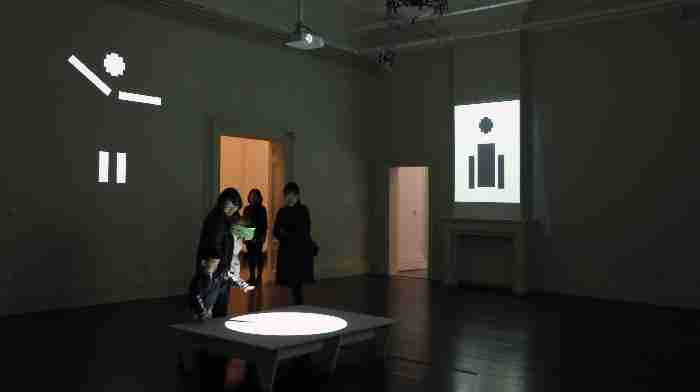
Thus these forms inevitably contain an abstract dimension. This is why I am attached to abstraction. I do not know exactly what I want to say. Once something is conclusively defined, a sense of emptiness arises. The appeal of abstraction lies in the infinite room for interpretation embracing both essence and its surroundings. Geometry is inherently concerned with the operation of space. My work ultimately speaks about the operation of life through the operation of space — abstractly and indirectly.” Nothing needs paraphrasing or refinement in such an answer. Her images do not remain confined to the flat surface but become furniture, murals, sculpture, video, and books, often merging with architecture.


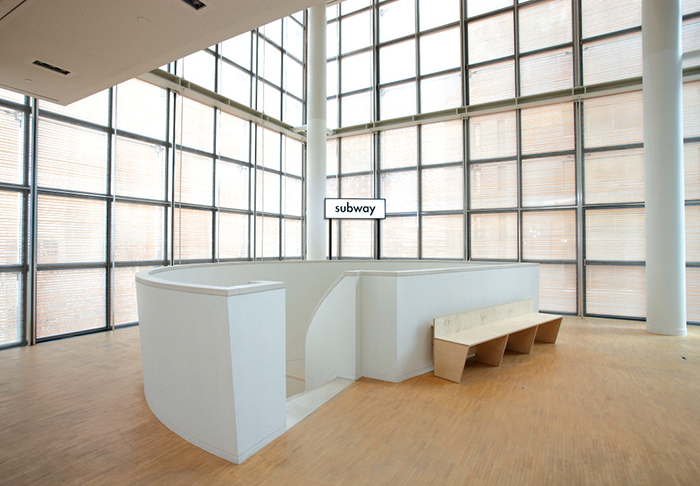
Hong Seung-Hye, Subway Sign, 2012 © Hong Seung-Hye

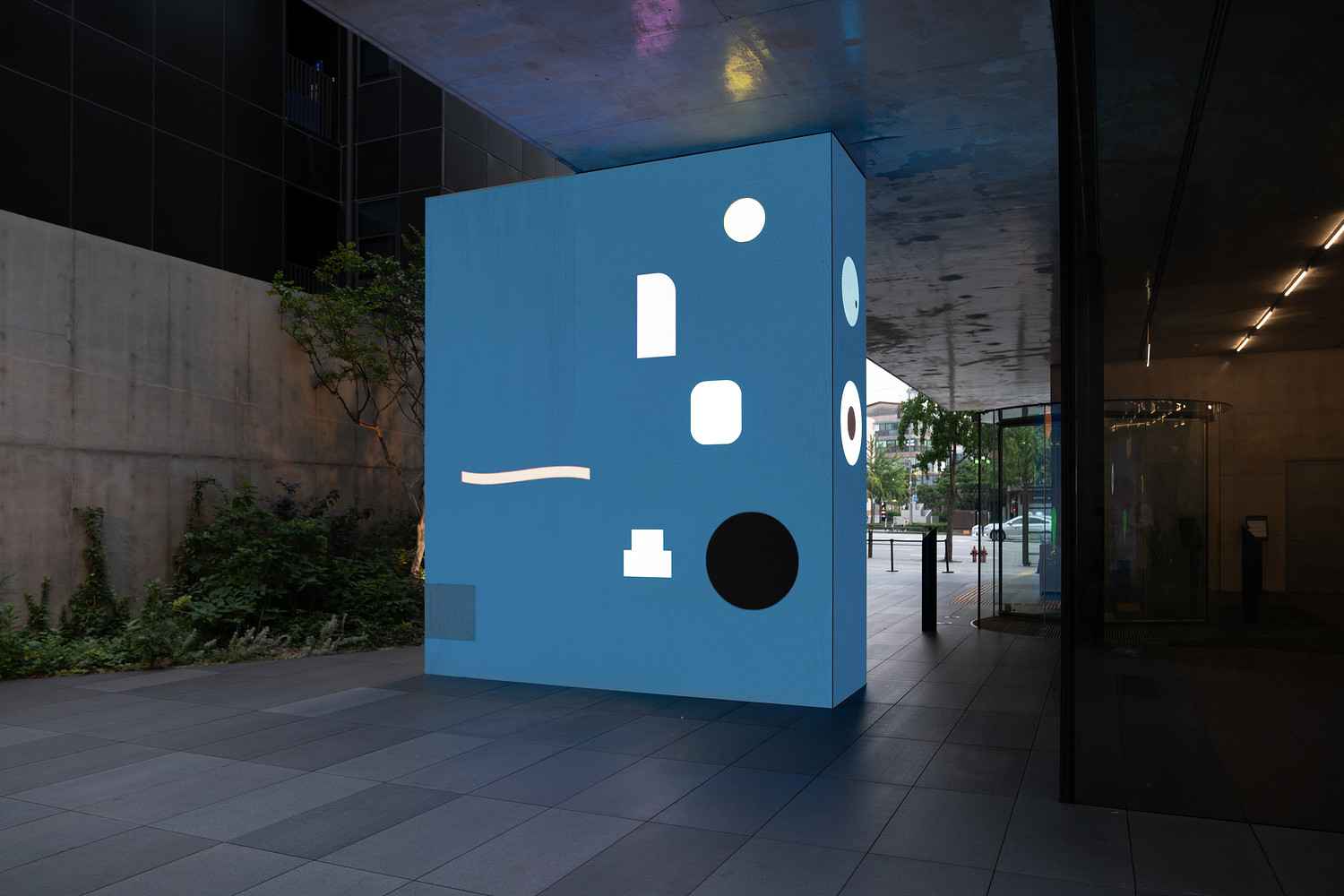
After entering the art world in the 2000s, even before I realized it, the reason I remembered the name Hong Seung-Hye was because of images inscribed into architecture. “Whether a painting functions as an ‘open window’ or an ‘object,’ it is often completed only when installed within real space. Geometric work in particular has an inseparable relationship with architectural space because painting appears as an extension of architecture. Flat geometric forms can be considered a kind of ‘illusory’ architecture, so sensing their intersection is natural.

My initially flat paintings gradually became three-dimensional and materialized, which can be understood as an expression of a desire to intervene more actively in architectural space.” The pixels of an artist long interested in the operation of space are gradually evolving into the site of the plaza.


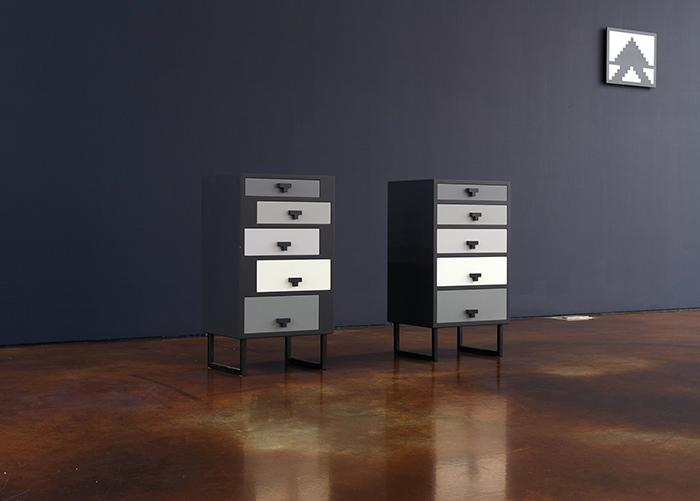
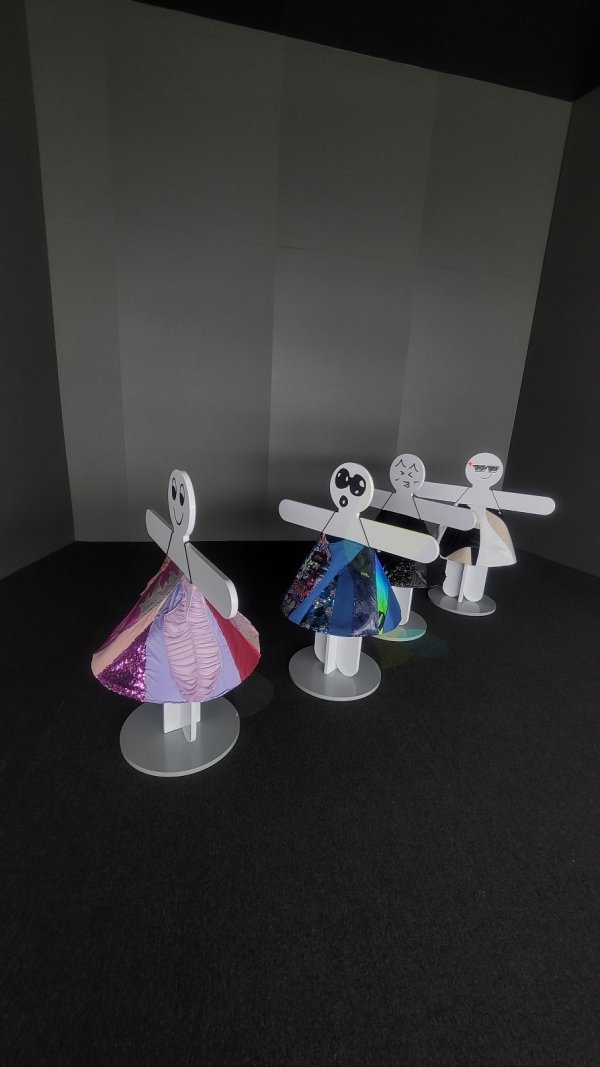
Hong Seung-Hye, Dancing Drawer, 2014, Polyurethane on birch plywood, 35 x 43.2 x 79.8 cm (each) © Hong Seung-Hye

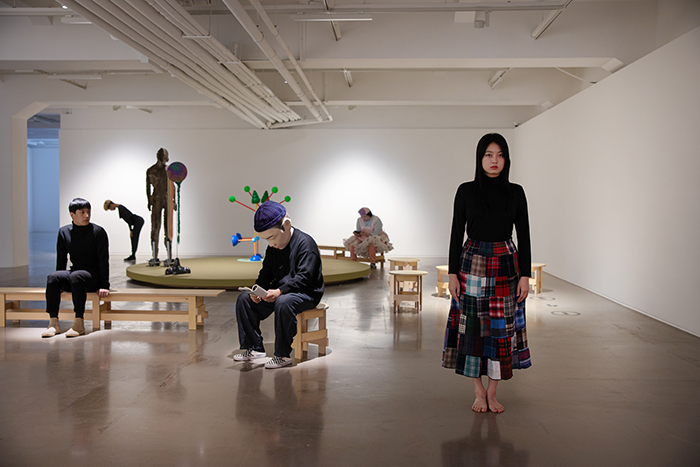
After moving forms arbitrarily to music, surprisingly intimate emotions and hidden narratives emerge concretely. Using only existing sound sources created a sense of thirst — the reason she now produces sound herself. “Am I enjoying this now?” This is the question she prioritizes most when composing a work. Freely operating role and rule, she produces things both beautiful and useful.

Saying she has made works that occupy space for too long and too much, her recent focus on immaterial and temporary works — video and sound — follows the same logic. She is also gradually turning her attention toward performance. Whatever useful yet consumable object she makes next, it will likely not be an entirely different attempt but part of the Hong Seung-Hye series.

References