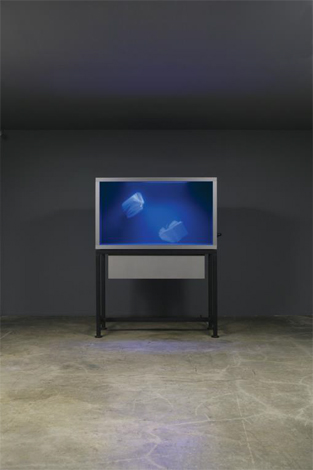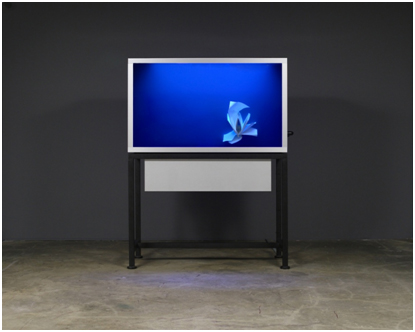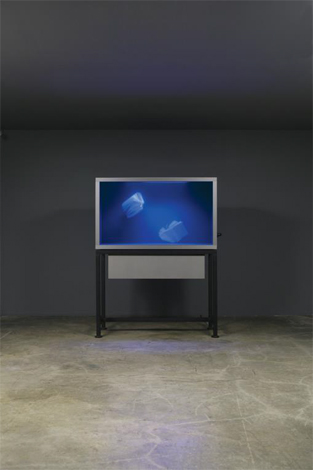


At the entrance of the exhibition space, in a dark bluish tank, a single fish swims. No— it is a book. Recovered and materialized from the artist Kibong Rhee’s memory of dropping a book he was reading into a bathtub, this work is an entity resurrected as a living organism called art after being sentenced to death by the utility of the book. It is also a “subject” as a dual body — one that has exchanged inorganic matter for organic life.

Look: within the life-giving water prepared by the artist, the fluttering pages, carried by the pressure of a pump, resemble the fins of a fish. This “lonely bachelor” is a being born at the boundary of “object/art” and “death/life,” an organism that is not an organism.


Kibong Rhee, End of the End, 2008, Aluminum, steel, water pump, blue lamp, acryl box, 90 x 152.5 x 65.2 cm © Kibong Rhee

As suggested by the artist’s coined title 《The Cloudium》 — a combination of “cloudy” and the suffix “-um” meaning museum — the space is filled with hazy opacity and countless vibrations that blur boundaries. This “blurriness” is nothing other than the movement of “transgression through enveloping.” It slowly traverses the borders between night/day, absence/presence, concealment/revelation, mind/matter, extinction/generation, and death/life.

Rather than a physical crossing that leaps over extremes, it is a mental motion that softens the wall of the boundary into the state of wet paper and permeates into it. Rhee’s damp, “wet psyche” gradually transforms its body from water into foam, mist, and vapor, sustaining across the entire exhibition a slow, inward movement of transgression.

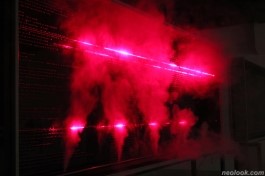
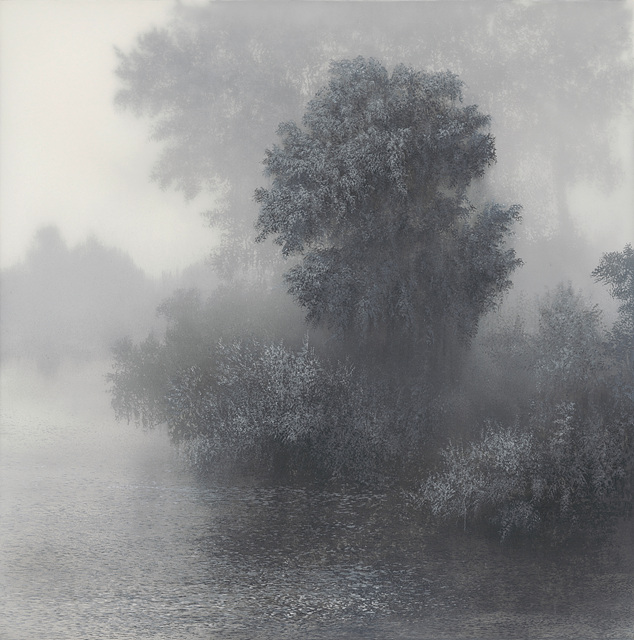
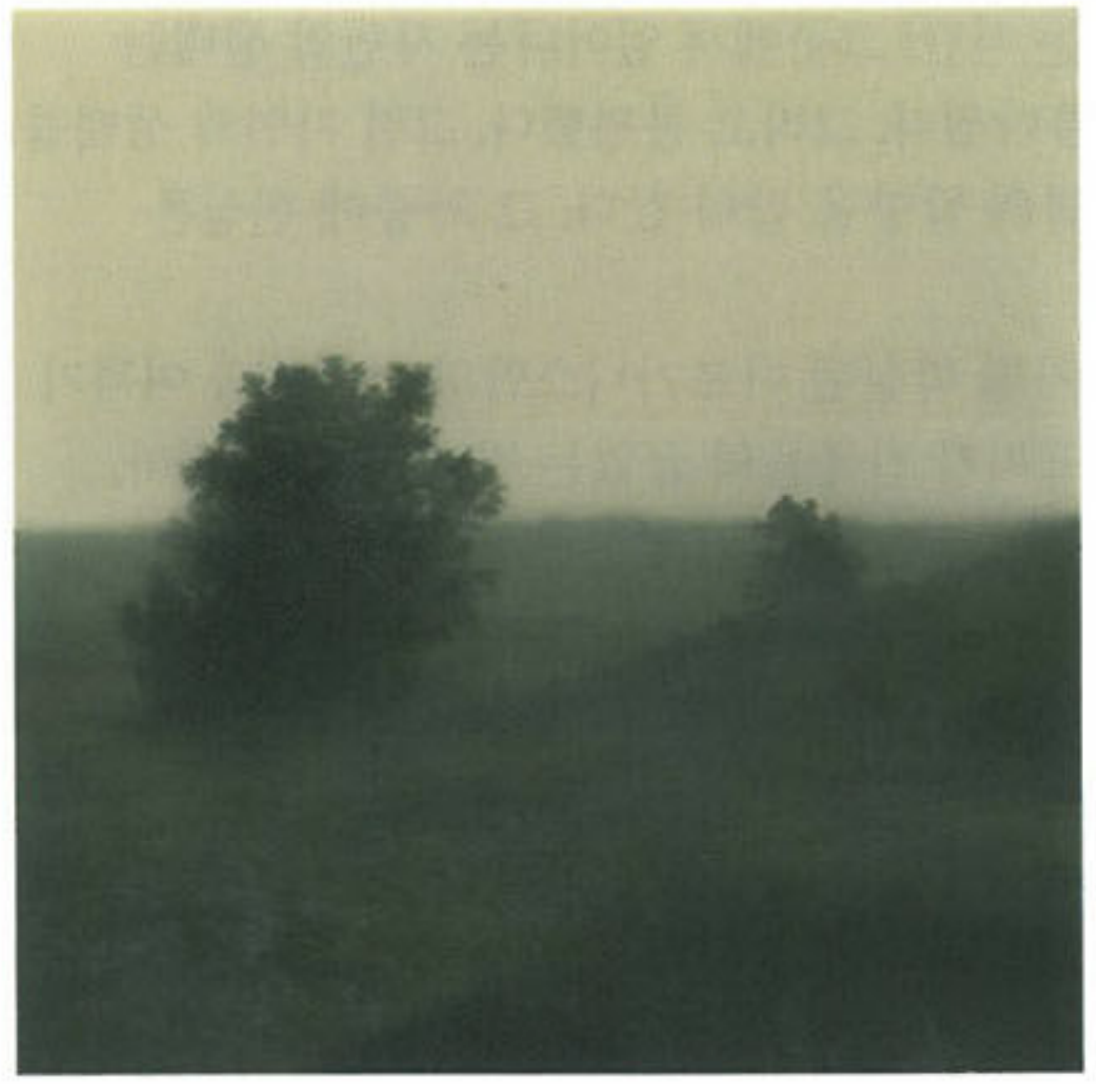
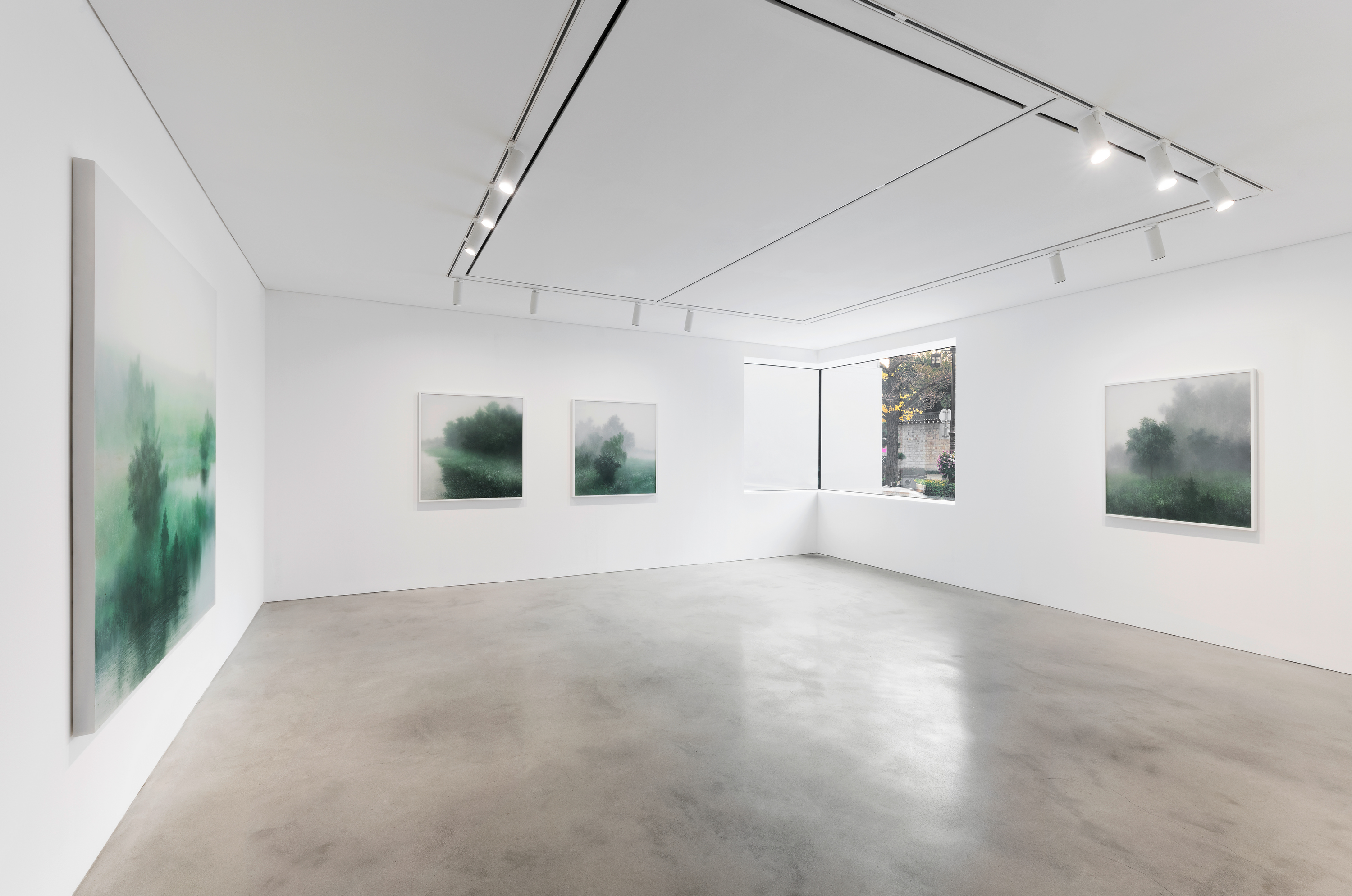
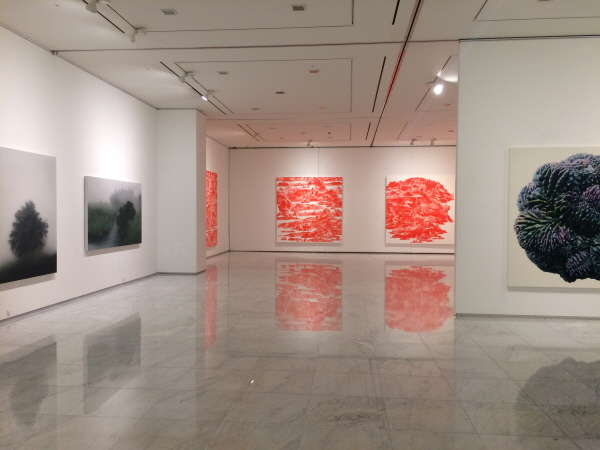
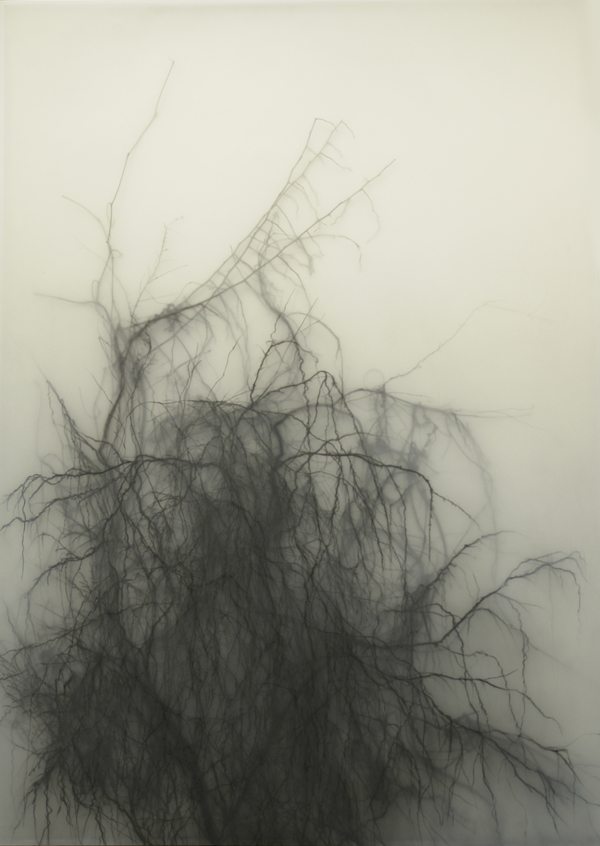
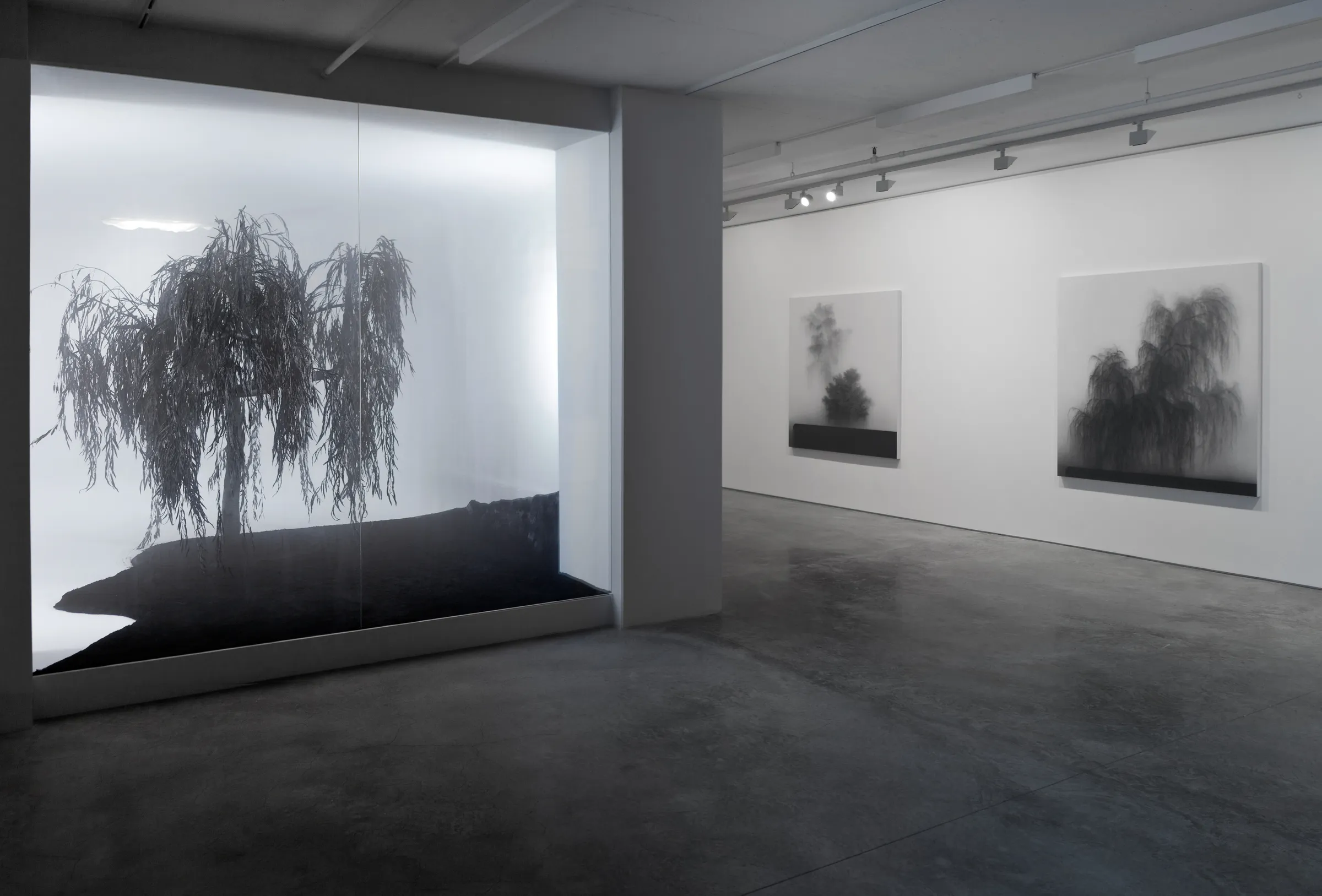
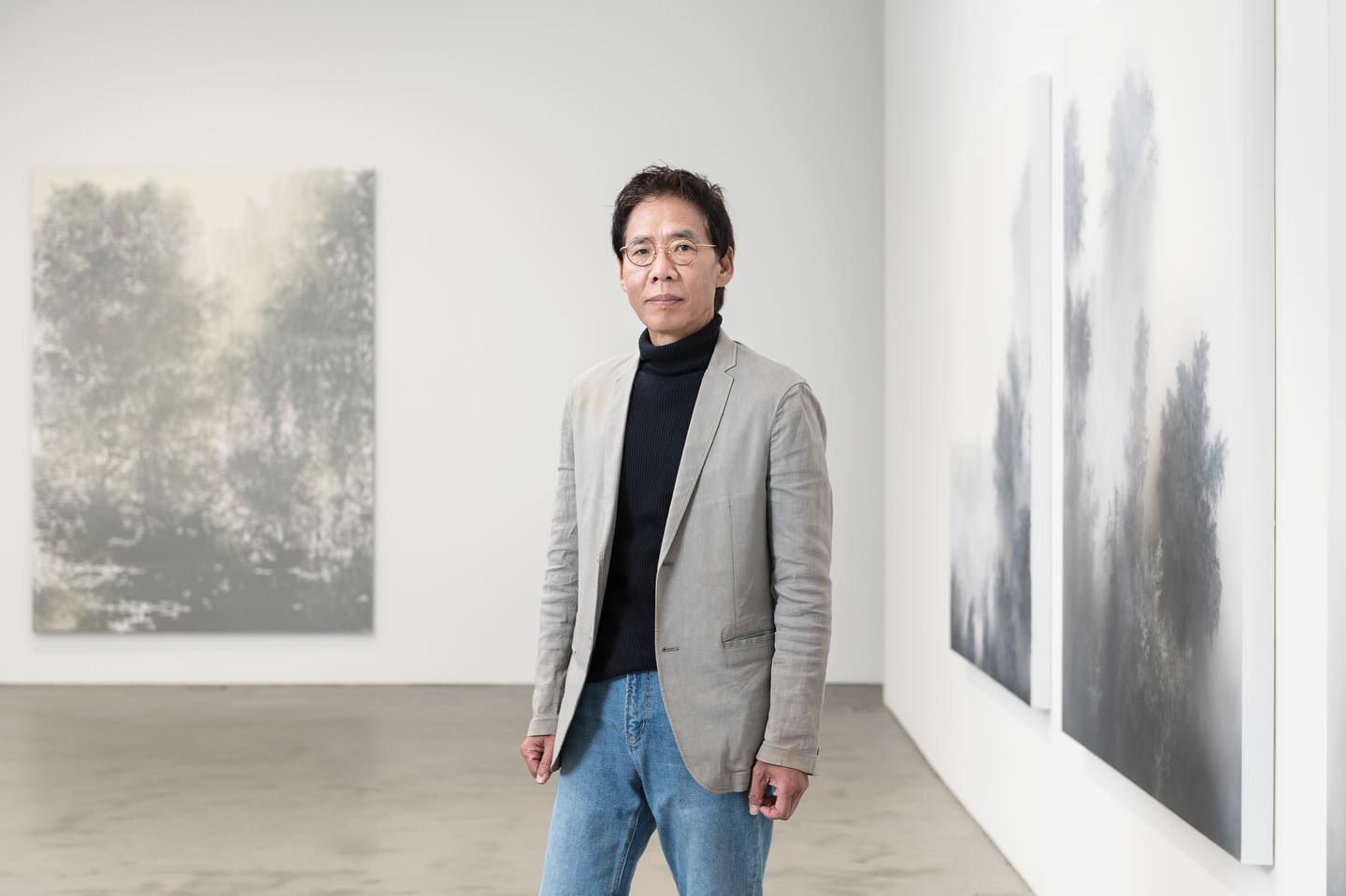
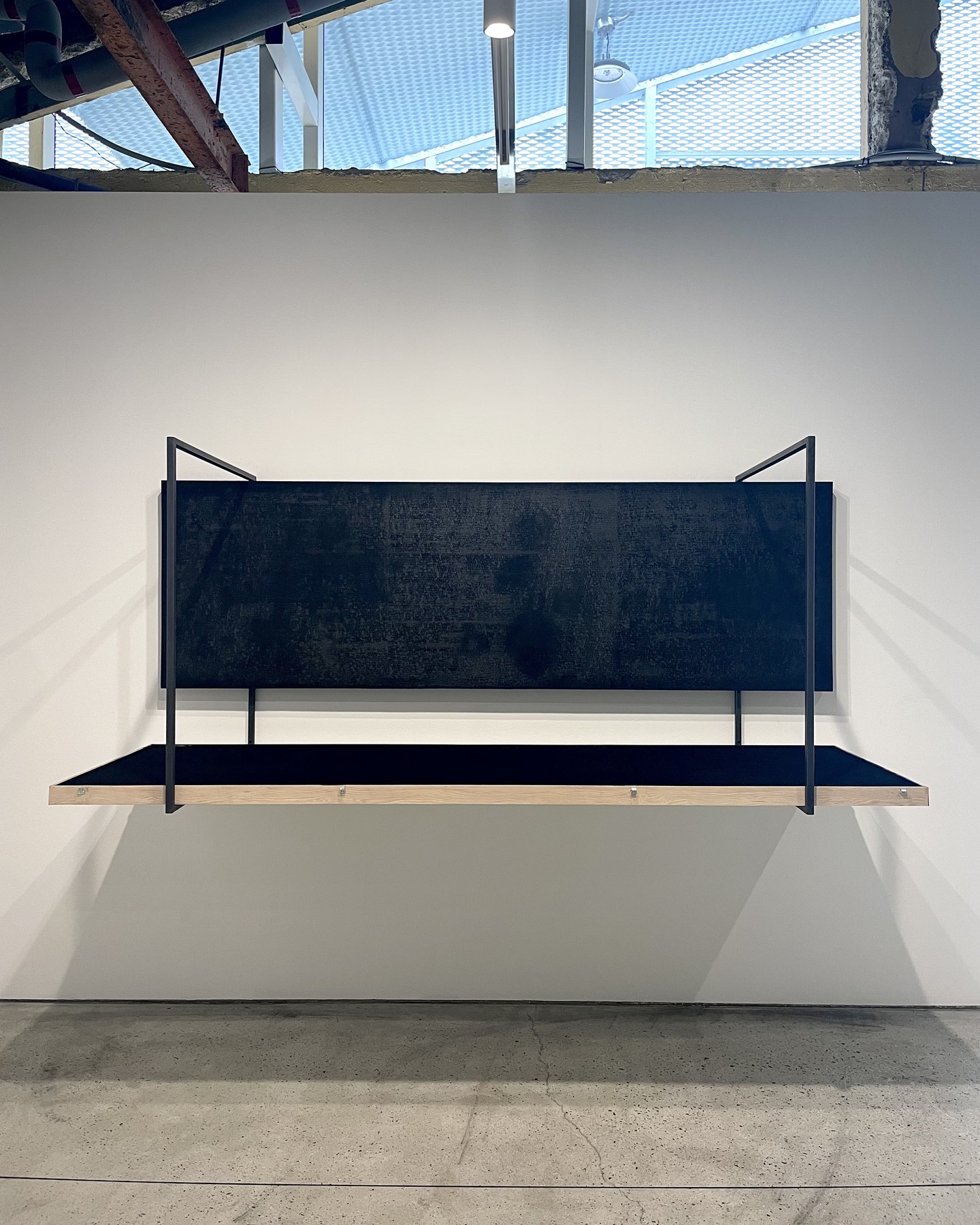
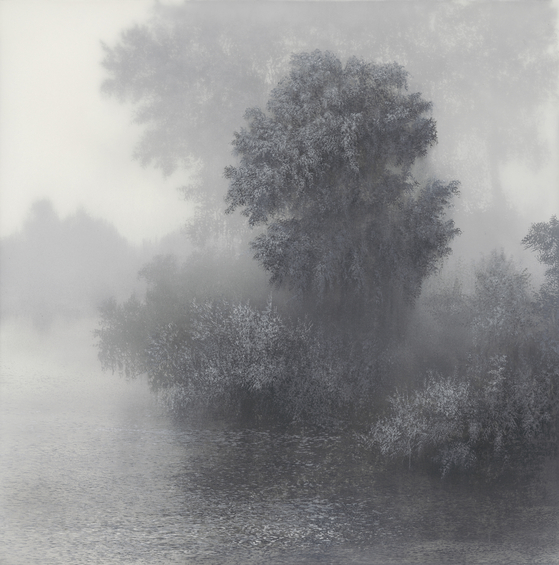
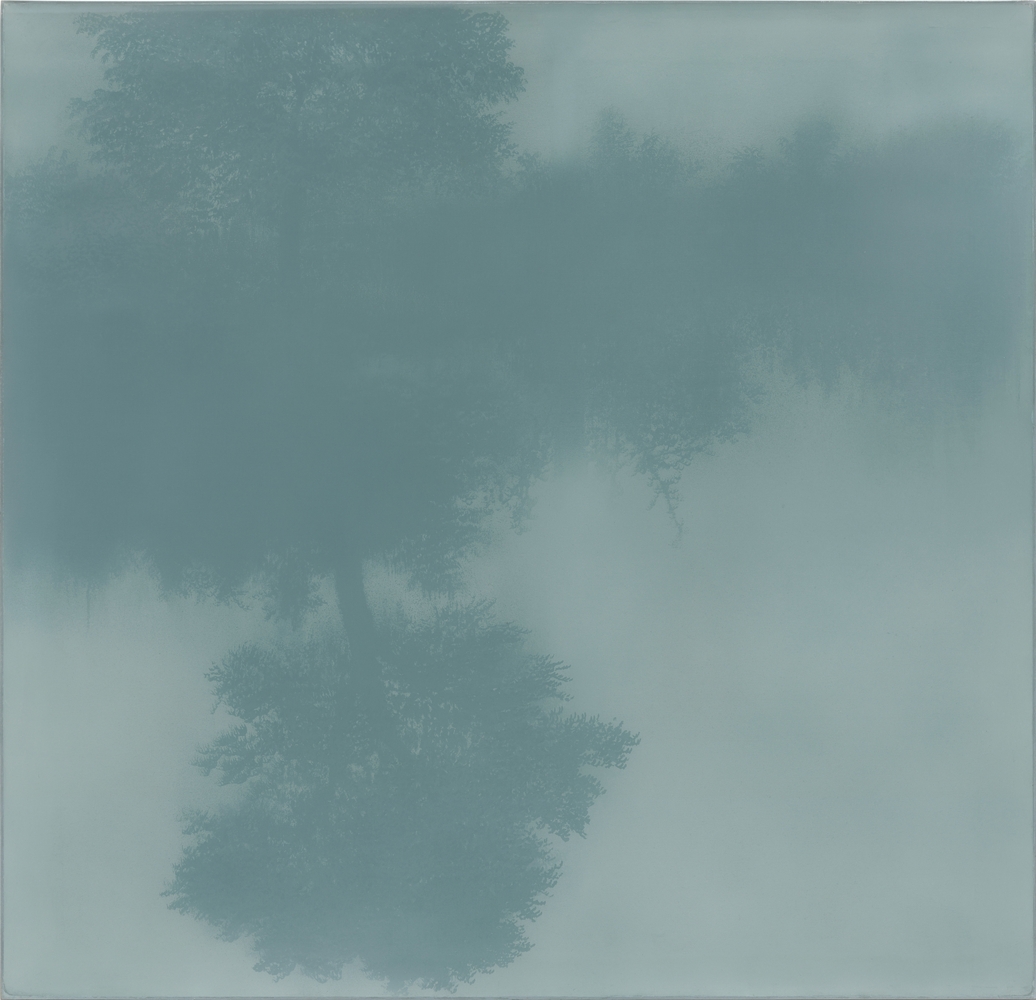
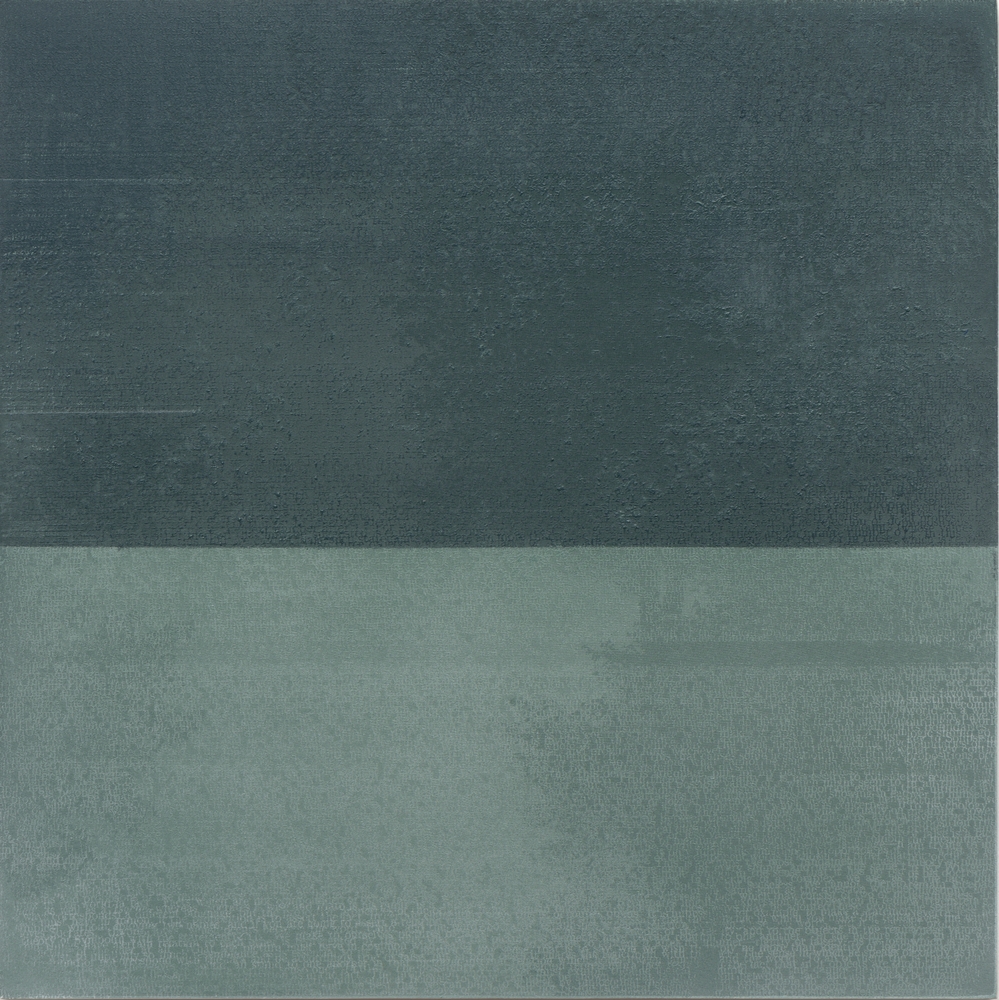
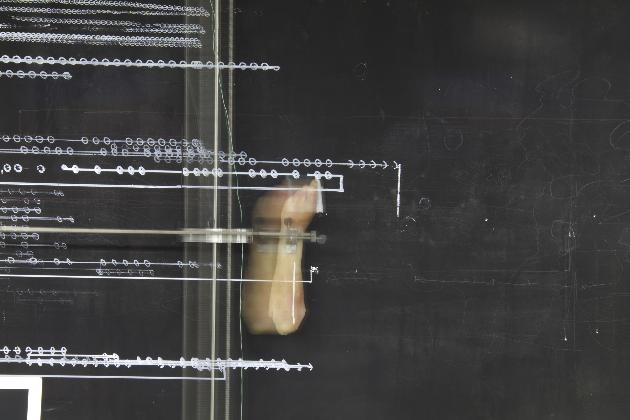
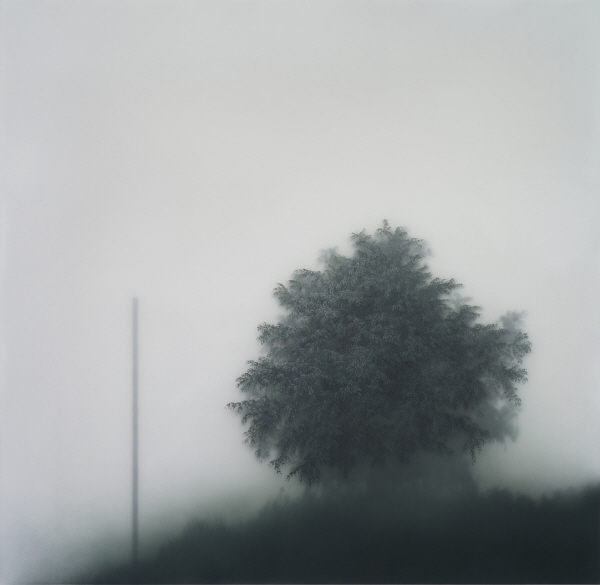
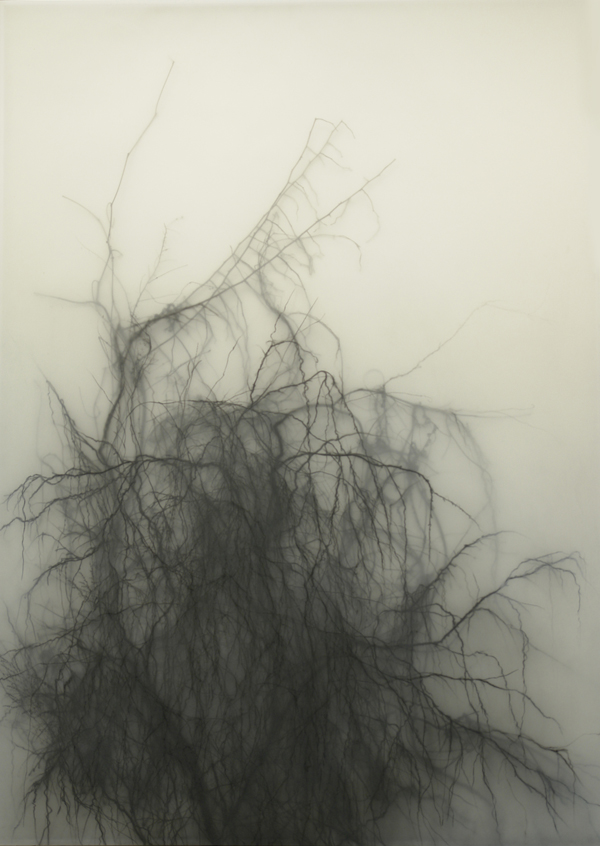
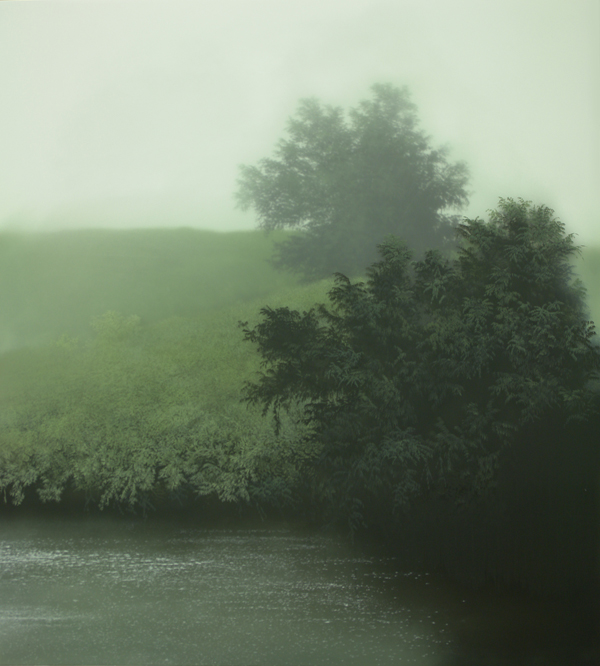
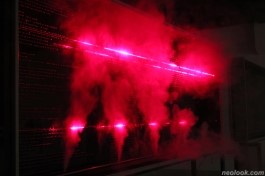
The viewer is first seduced by the visual effects generated by the artist’s formal language, developed through meticulous material experimentation. The humid, blurred atmosphere seen in the three paintings — reminiscent of fog — results from layers of plexiglass spaced at 0.5-centimeter intervals. Likewise, in Sense Machine, the horizontal and vertical red laser beams inside the black box appear to grow because vapor fills the interior and slowly dissipates.


Kibong Rhee, Sense Machine - Persistence of the Horizontal, 2012, Mixed media, 330 x 237 x 60 cm © Kibong Rhee

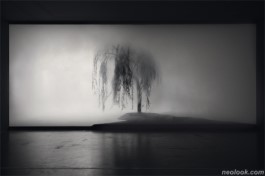
Consider the installation There is no place-shallow cuts. Here the artist not only faithfully reconstructs nature by installing real sand and trees, but also produces a surreal landscape by slowly rotating the tree with a motor and clouding the glass enclosure with a fog device. Standing before the work, the viewer simultaneously experiences a “philosophy of transgression moving between generation and extinction through the phenomenology of water” and an “aesthetics of hallucination moving between reality and unreality through the alchemy of materials.”


Kibong Rhee, End of the End, 2008, Glass, fog machine, artificial leaves, wood, steel, sand, motor, timer, Dimensions variable © Kibong Rhee

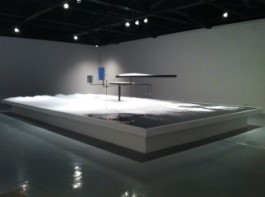
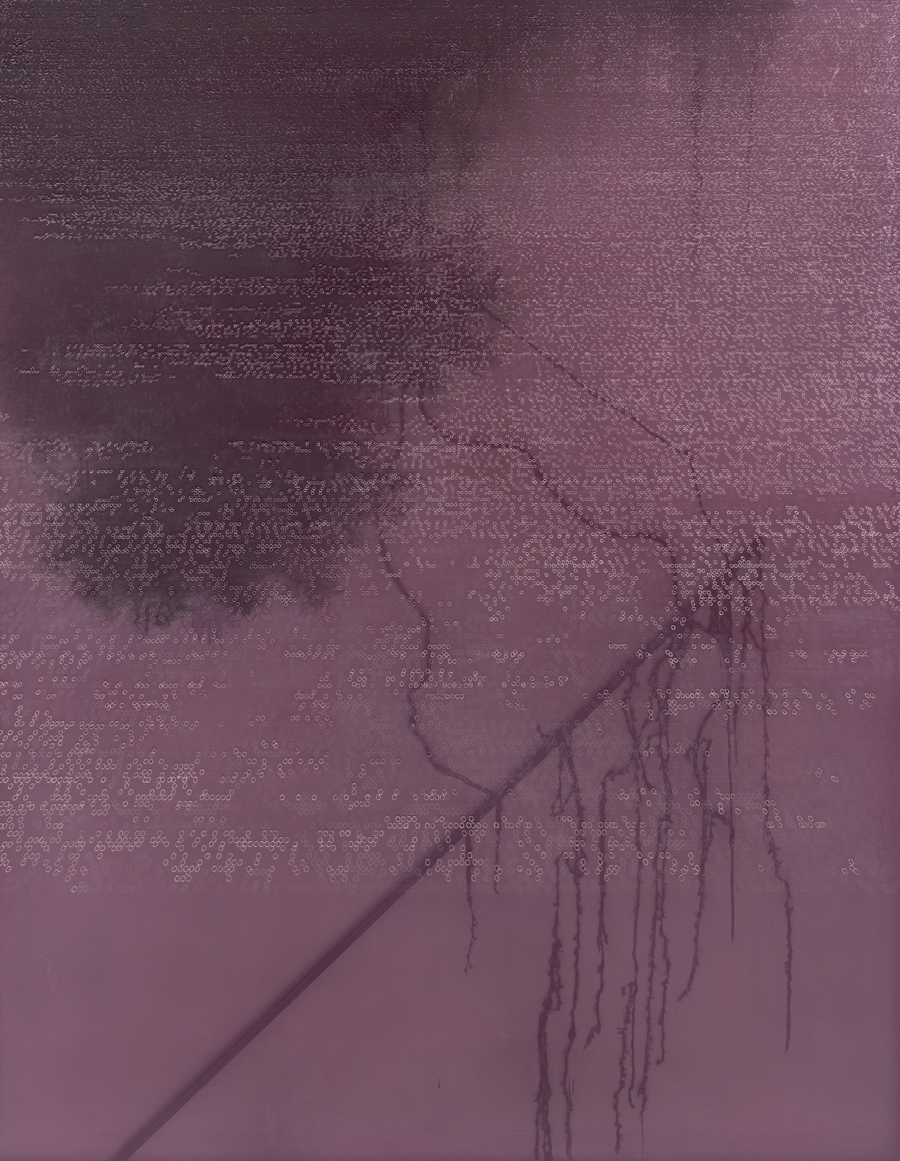
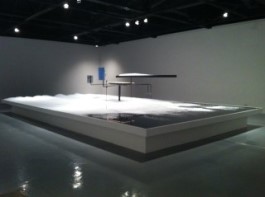
The work Cloudium in the second-floor gallery — the core of this exhibition — is the point where the artistic questions about the nature of existence raised from the entrance reach a Zen-like conclusion. On a vast panel holding a scholar’s desk lie densely packed, unrecognizable texts. As foam fills and empties them over time, we once again confront Rhee’s philosophy of transgression and aesthetics of hallucination.

What should be noted is that, although these are clearly real events, they exist as movements that disappear into an unreal space while leaving traces behind. In this sense, the exhibition becomes a “play of transgression,” slowly rowing across a mist-covered river of being.


Kibong Rhee, Cloudium, 2012, Mixed media, 9000 x 488 x 50 cm © Kibong Rhee
References