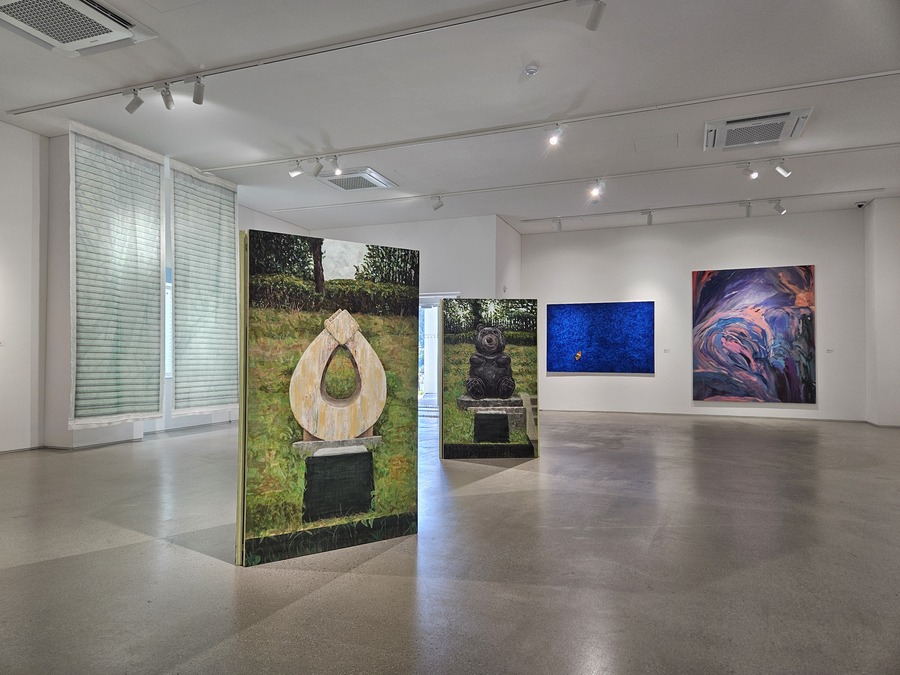
The Page Gallery’s group exhibition 《Soh(素)_empty morph》, featuring Kim Tschoon Su, Shin Soohyeok, and Cheon Kwangyup, presents works by three artists who pursue a shared process of “returning to a single origin (素) through non-purposiveness and the dreaming of the body.” Judging solely from its title and curatorial statement, the exhibition is not immediately accessible.
The title suggests that the beginning of things is without form—an “empty morph.” According to the curatorial premise, the exhibited works are outcomes of the body’s dreaming, free of teleological intent, and gesture toward a return to an elemental origin.
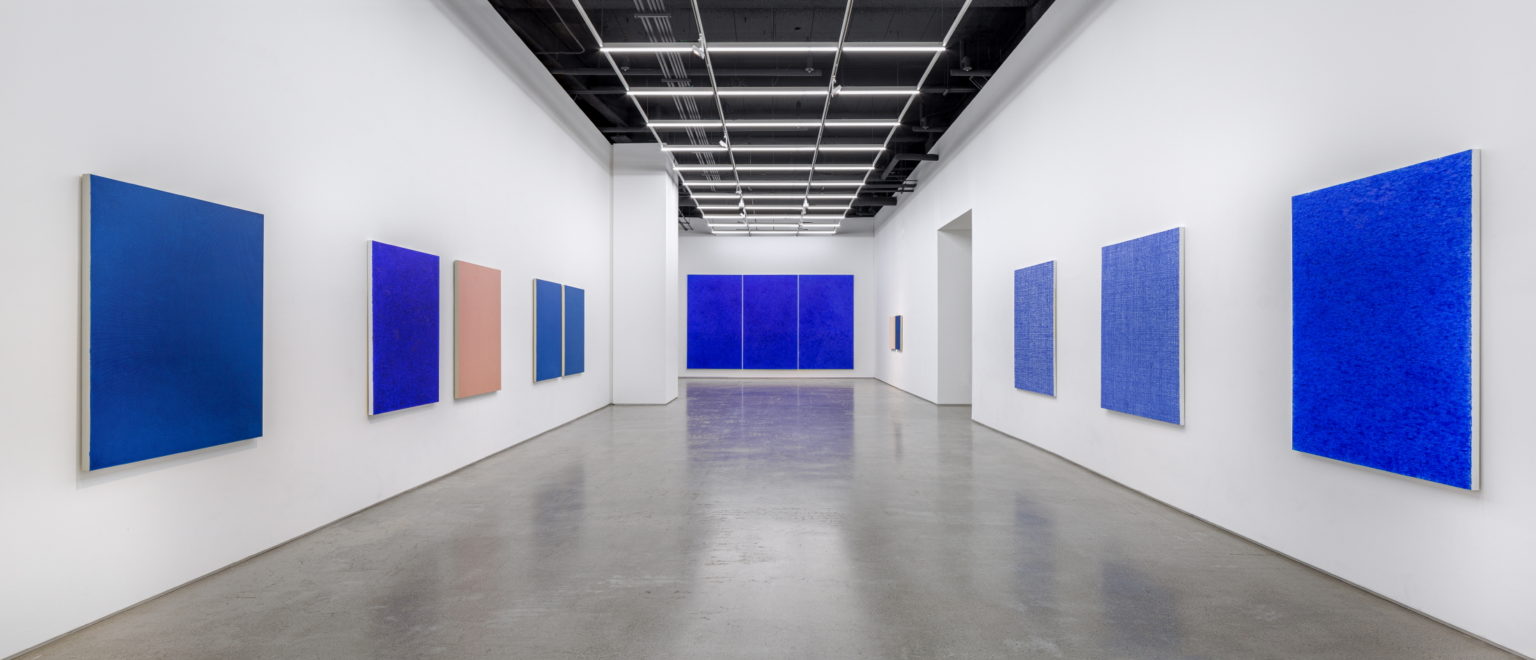
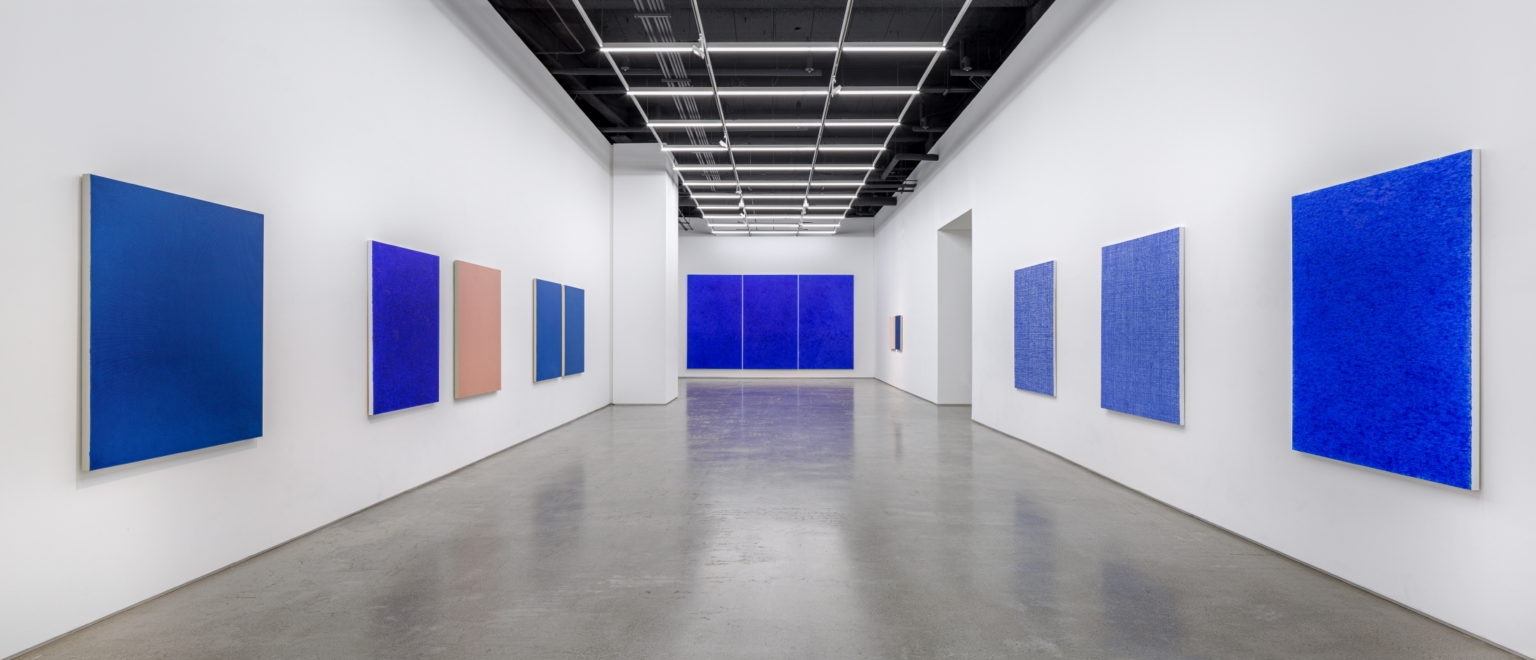
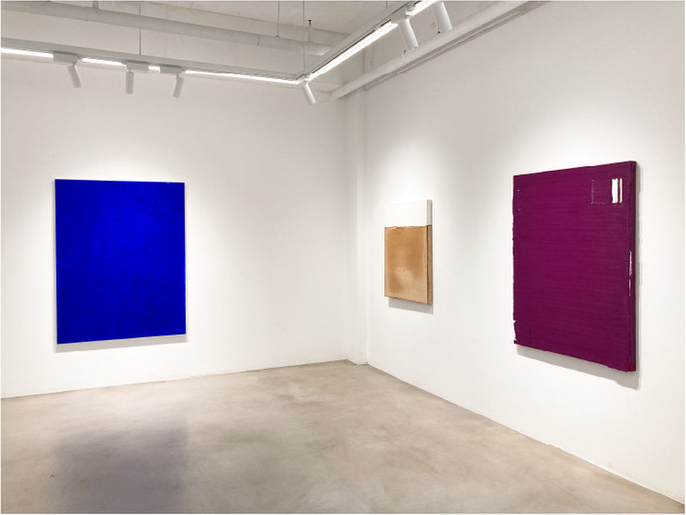
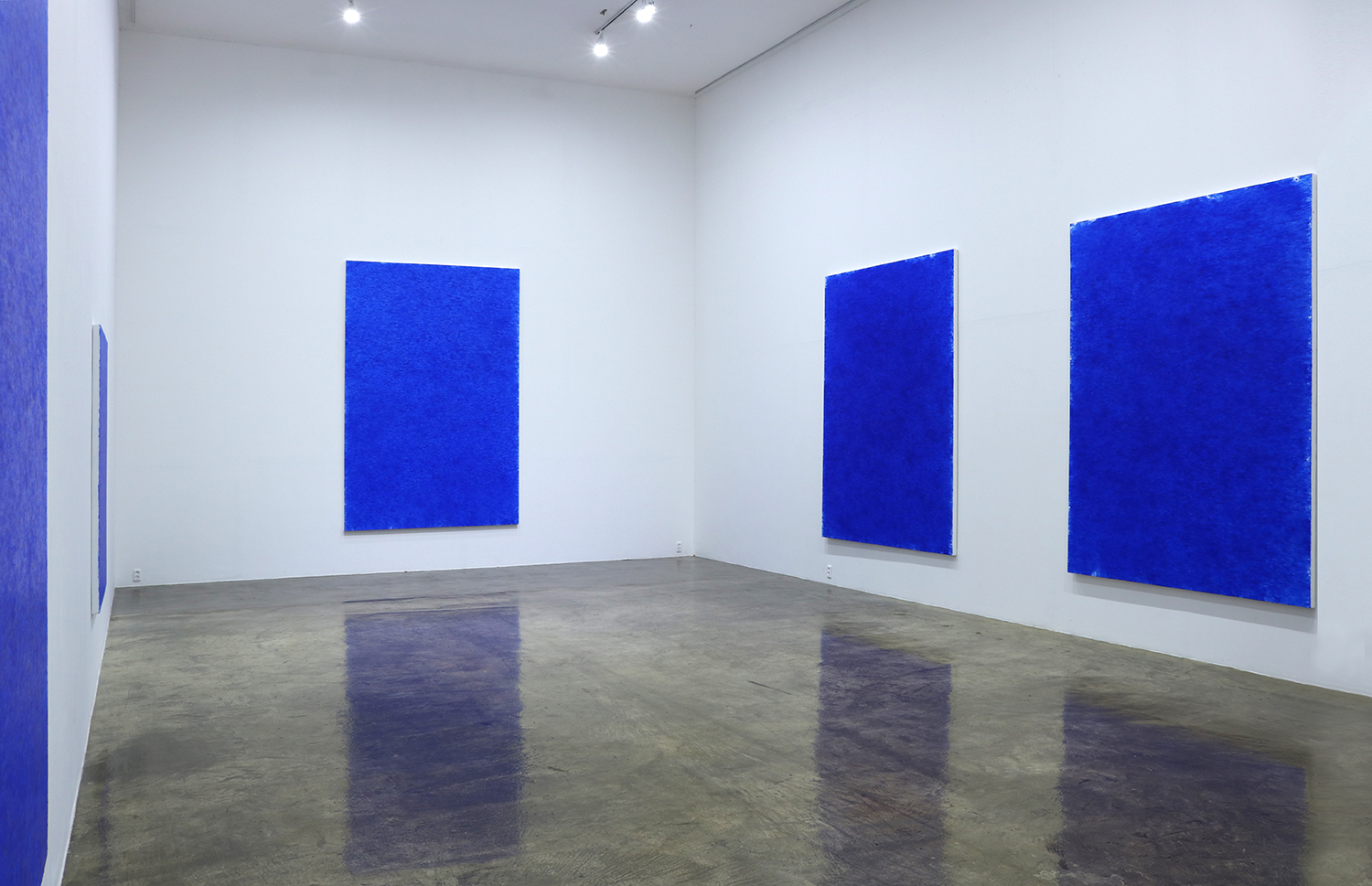
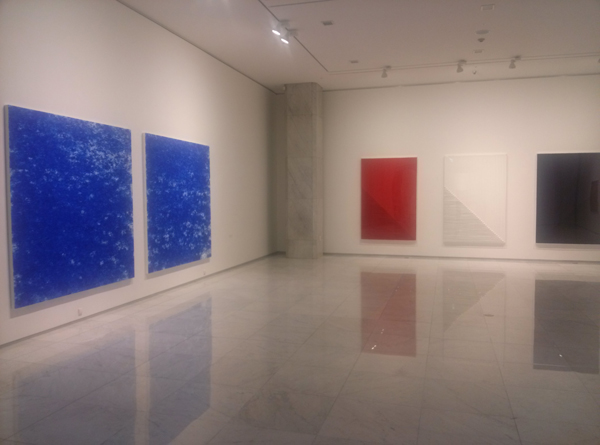
Yet the exhibition design itself is lucid. In Room R1, where works by the three artists are installed together—side by side or facing one another—the arrangement reveals both their differences and affinities, while allowing meanings to emerge relationally among the works. Encountered individually, each piece appears to embody a state of contemplative emptiness; placed together, however, they seem to writhe, interfere, and resonate with one another. Meanwhile, Rooms R2 (Shin Soohyeok), R3 (Cheon Kwangyup), and R4 (Kim Tschoon Su) present each artist separately, clarifying the distinct yet subtly aligned trajectories of their practices.
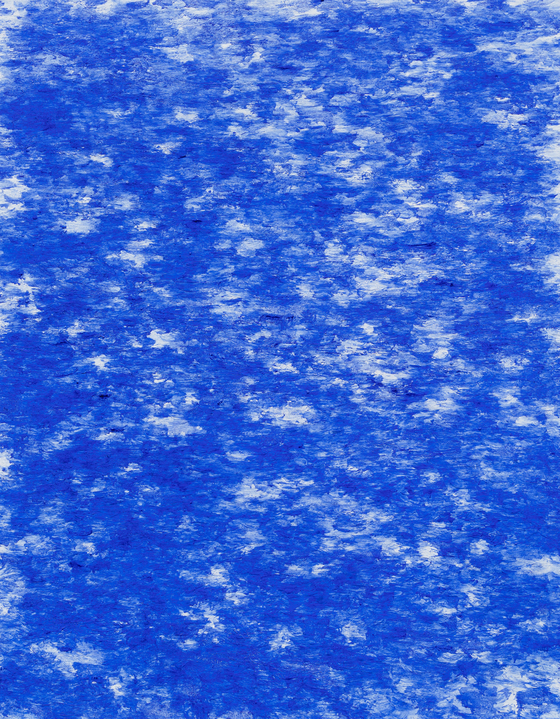
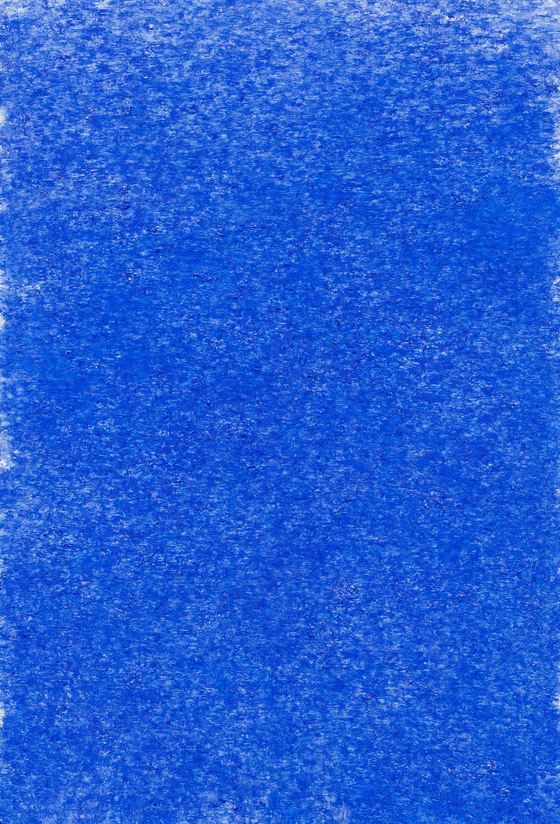
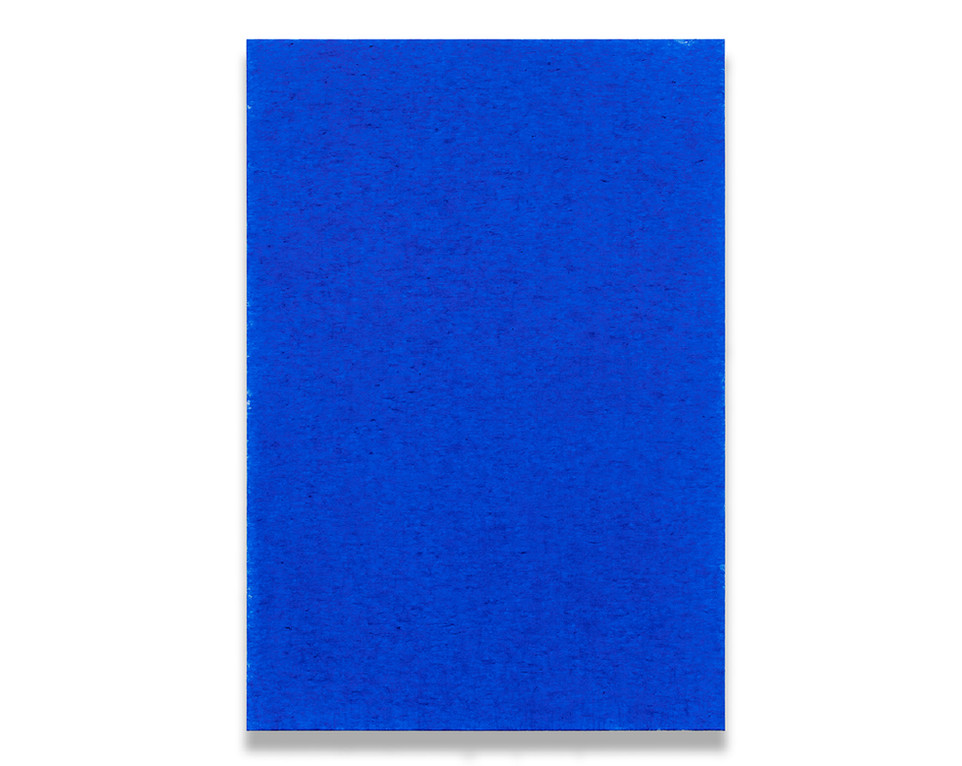
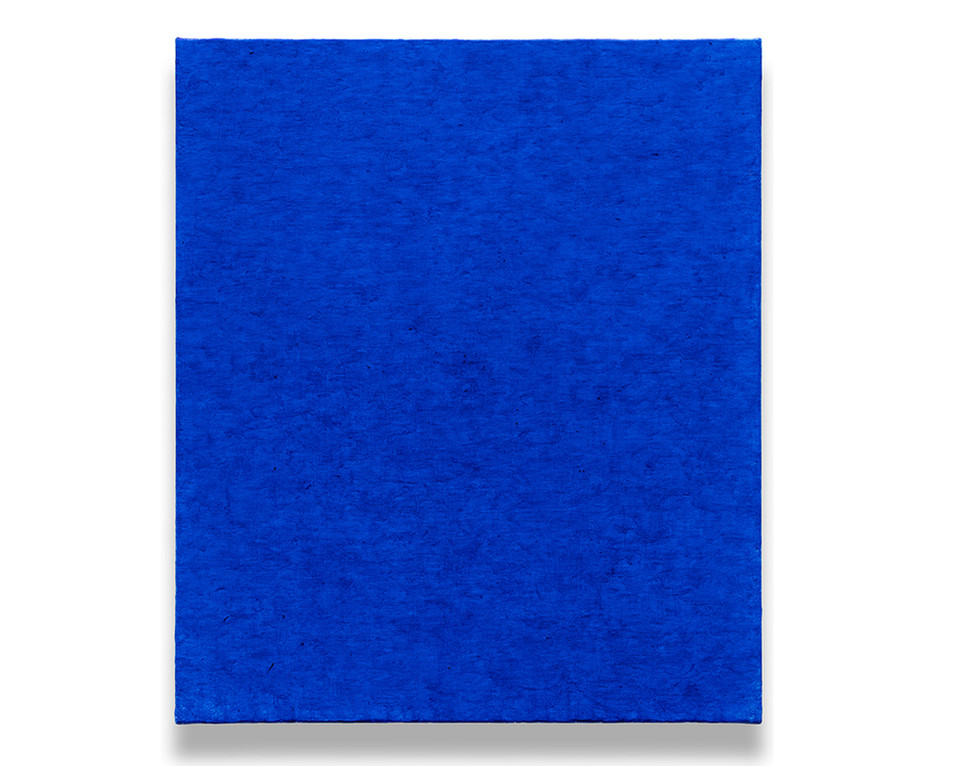
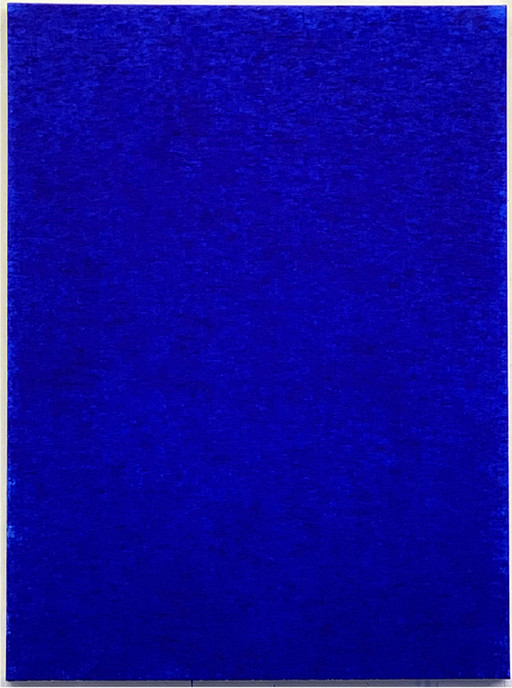
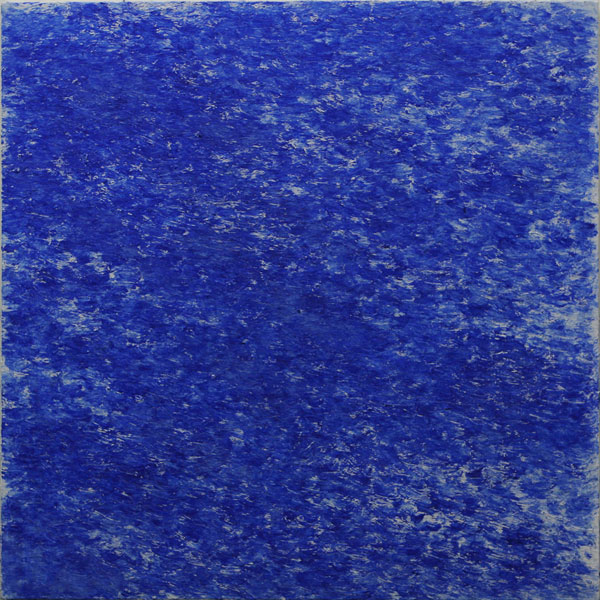
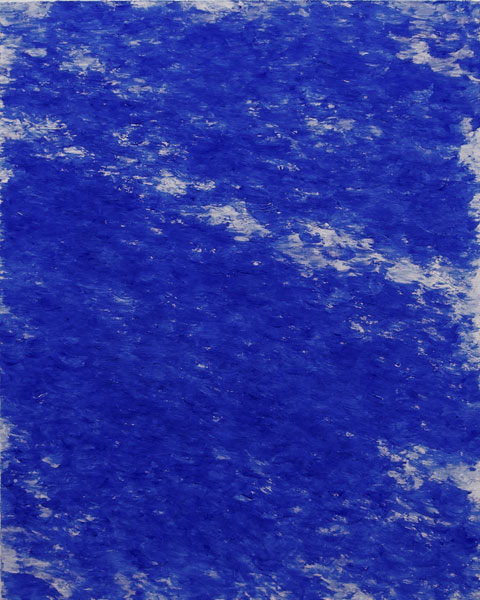
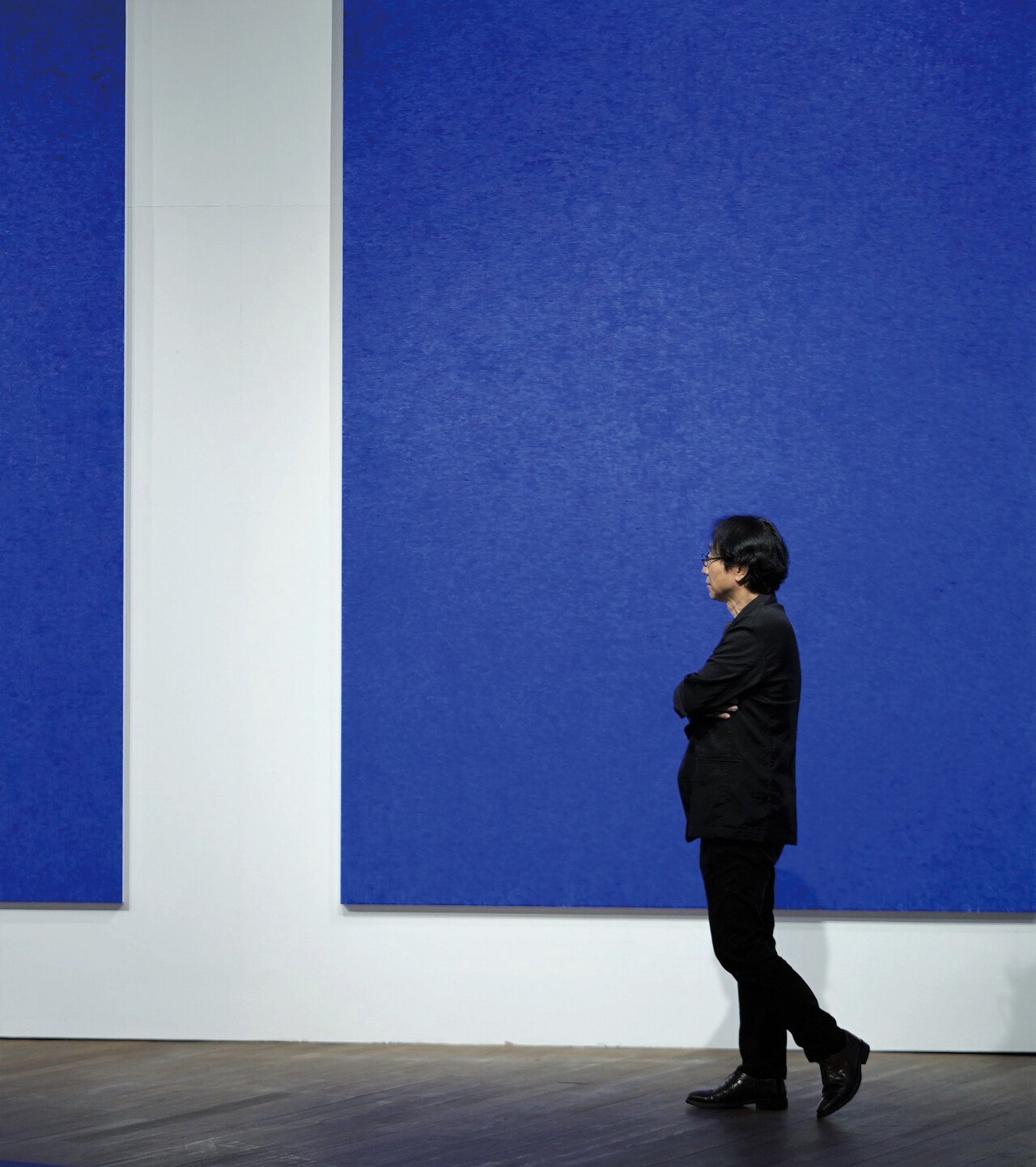
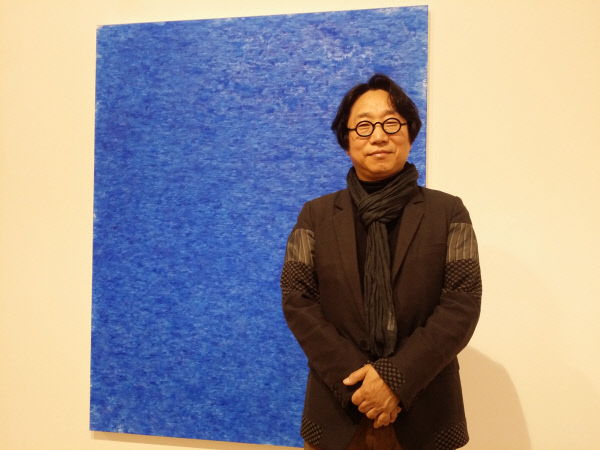
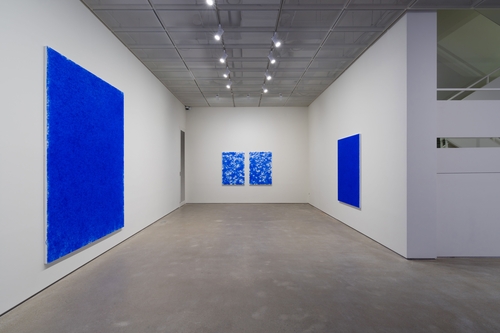
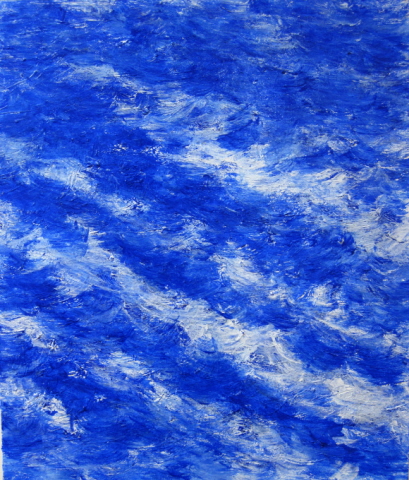
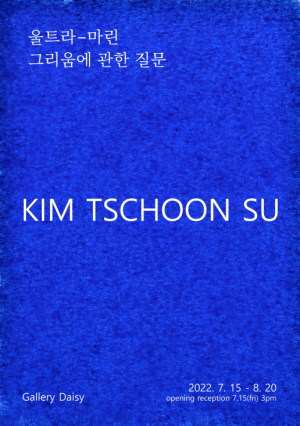
Dominated by blue energy, Rooms R1 and R4 primarily feature works by Kim Tschoon Su (b. 1957), who has sustained his ultramarine monochrome world for over three decades. His countless blue dots, applied with the fingertip through a balance of spontaneity and deliberation, vary subtly in form, placement, and density. Viewed up close, the works reveal tactile traces distinct from the blue aura perceived at a distance. These textures testify to the breathless passage of the artist’s hand across the canvas—touching, lingering, moving.
Through repeated acts that unite blue pigment, canvas, and gesture into a state of oneness—mul-a-ilche (物我一體)—his surfaces transcend mere materiality, becoming immersive spaces of depth. Particularly when scaled large and pressed against white walls, his works command the viewer with overwhelming absorption. Depth here signifies capaciousness: a space capable of containing vast emotional and perceptual resonance. Even in his 2021 works, this depth remains an unwavering testament to his enduring passion.
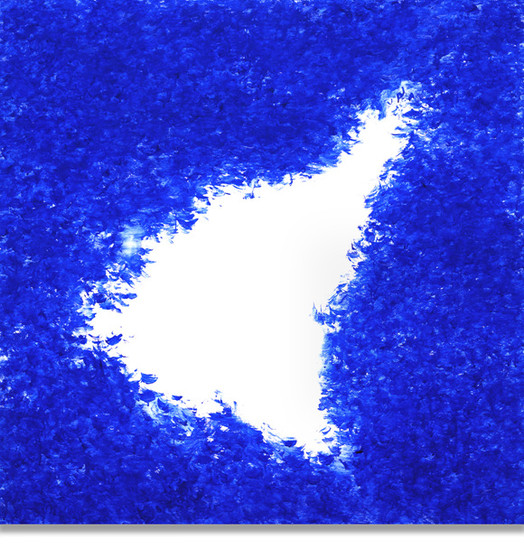
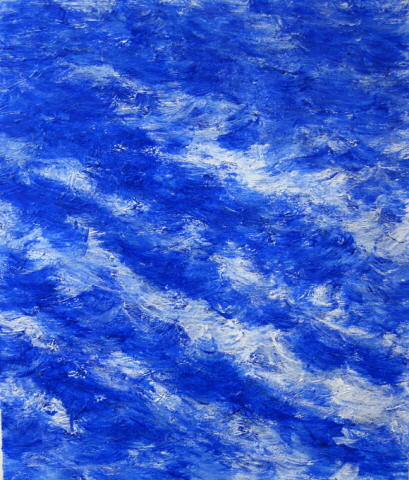
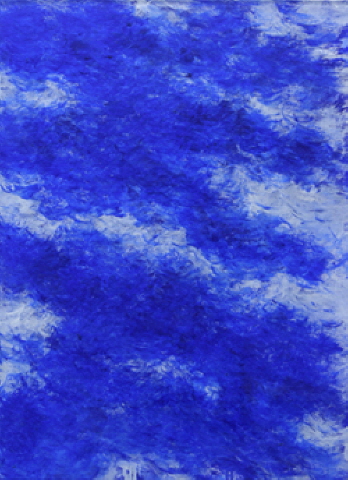
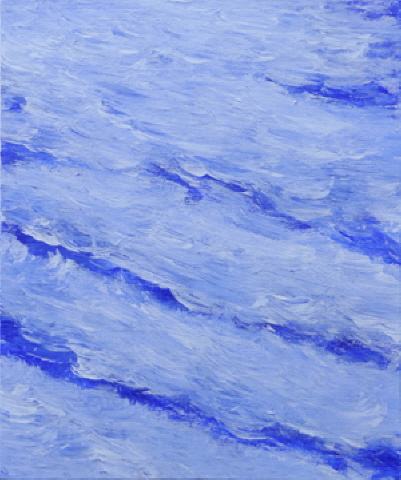
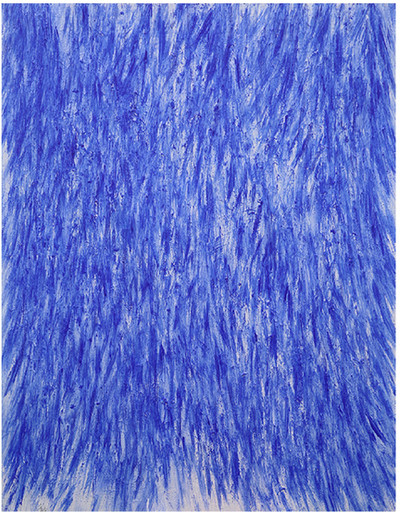
In Room R2, Shin Soohyeok (b. 1967) presents materially dense surfaces. His textured layers, composed of intersecting vertical and horizontal lines, evoke architectural structures. Through the repetition and enlargement or reduction of plaid-like formations—structures that both confine and are confined—he articulates his own pursuit of flatness. The blue and white palette, conveying the physicality of paint, embodies a process of experiential repetition and material accumulation.
This is an attempt to approach the internal essence of something that governs the artist’s psyche. The intuitive lines that weave across the surface—barely distinguishable to the naked eye—seek the intrinsic properties of matter itself. Through restrained monochrome and intersecting short lines, Shin reveals that all phenomena are constructed relationally, irrespective of whether they are perceived.
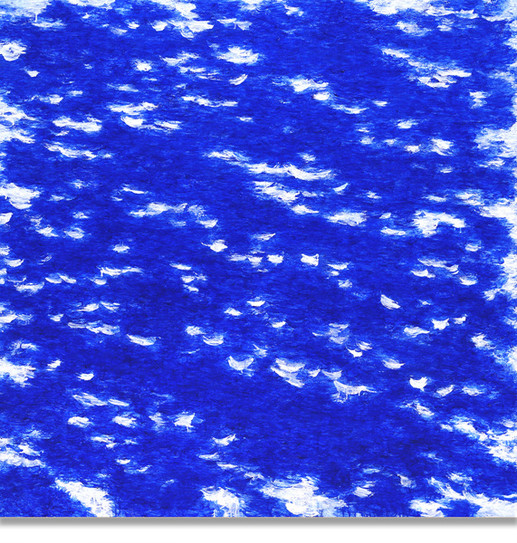
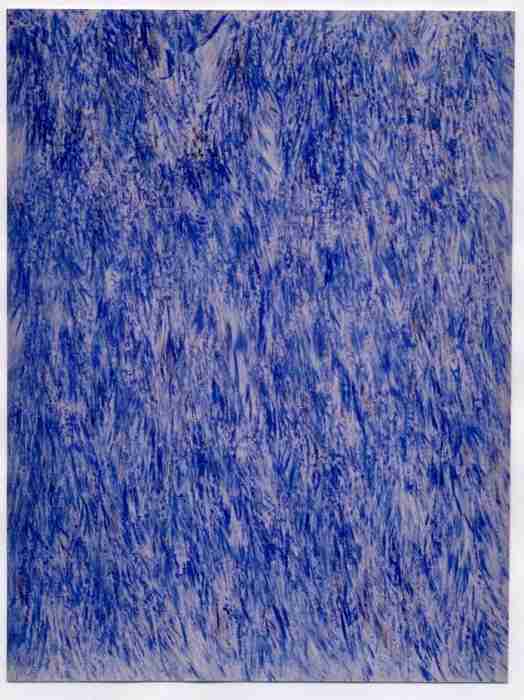
Cheon Kwangyup’s (b. 1958) works in Room R3 initially resemble optical art upon close inspection. Seen in entirety, however, they consist of meticulously organized fields of dots forming rhythmic waves across the canvas. The densely packed dots—imperceptible from afar—suggest that all phenomena are composed of minute particles, even if not readily visible.
Cheon’s works are achieved through sustained labor: painting, sanding, refining, and repeating in a state of heightened concentration. In a transparent acrylic box, a small rectangular object resembling a slice of cake contains layers of pigment sediment—formed from sanded oil-paint residue—materializing time itself. His oeuvre may thus be read as an ongoing inquiry into the relationship between matter and materiality, articulated through his distinctive sign: the dot.
All three artists share a commitment to pushing action and material to their limits, yielding formal and chromatic results born of repetition. The surfaces they leave behind—filled, layered, coated, sanded, emptied—recall the context of Korean Dansaekhwa. Their practices are rooted in the body and mind, shaped by time, place, and lived experience. Terms frequently associated with Dansaekhwa—“repetition and discipline,” “materiality and flatness”—apply seamlessly here. Indeed, these artists have often been categorized within a broader generational framework of monochrome painting.
Yet interpreting the exhibition solely within the lineage of Dansaekhwa risks redundancy. It would merely reiterate the assimilation of minimalism and monochrome into Korean modern art. Thus attention returns to the concept of “empty morph.”
An “empty morph” (虛形態) refers to a form without inherent meaning, whose significance emerges only through relational context. Like a grammatical morpheme without semantic autonomy, it acquires meaning only in conjunction with other forms. Two implications arise. First, the elemental origin (素) pursued by these works carries no intrinsic meaning; thus the works cannot be read as fixed signifiers within Korean modern art history. Unlike traditional interpretations of Dansaekhwa through concepts such as non-action or emptiness, these works resist teleological categorization. Second, as “empty morphs,” the works generate meaning flexibly within diverse contexts—Dansaekhwa, minimalism, or beyond. Their meaning expands in proportion to the multiplicity of their environment.
Seen from this perspective, the three artists’ works resemble monochrome painting in appearance and technique, yet they resist reduction to that category. What matters most to them is not the result, but the attitude of creation. Their works are not defined by specific forms or outcomes, but by art as action itself. For them, artistic practice is inseparable from the artwork.
If one assumes that these artists are not driven by ideological allegiance to any specific movement, their work—though visually aligned with monochrome painting—may be understood as an “empty morph” within Korean contemporary art history. This is not a negative assessment. Rather, it acknowledges that they have contributed meaningfully to shaping the formal vocabulary of contemporary Korean art.
Even when appearing unexpectedly, without predetermined significance, their works assert value through their autonomous formal units. Ultimately, if they come to be recognized as truly belonging to no singular form—if they stand as “empty morphs”—then the curatorial ambition of 《Soh(素)_empty morph》 will have achieved its full persuasive force.