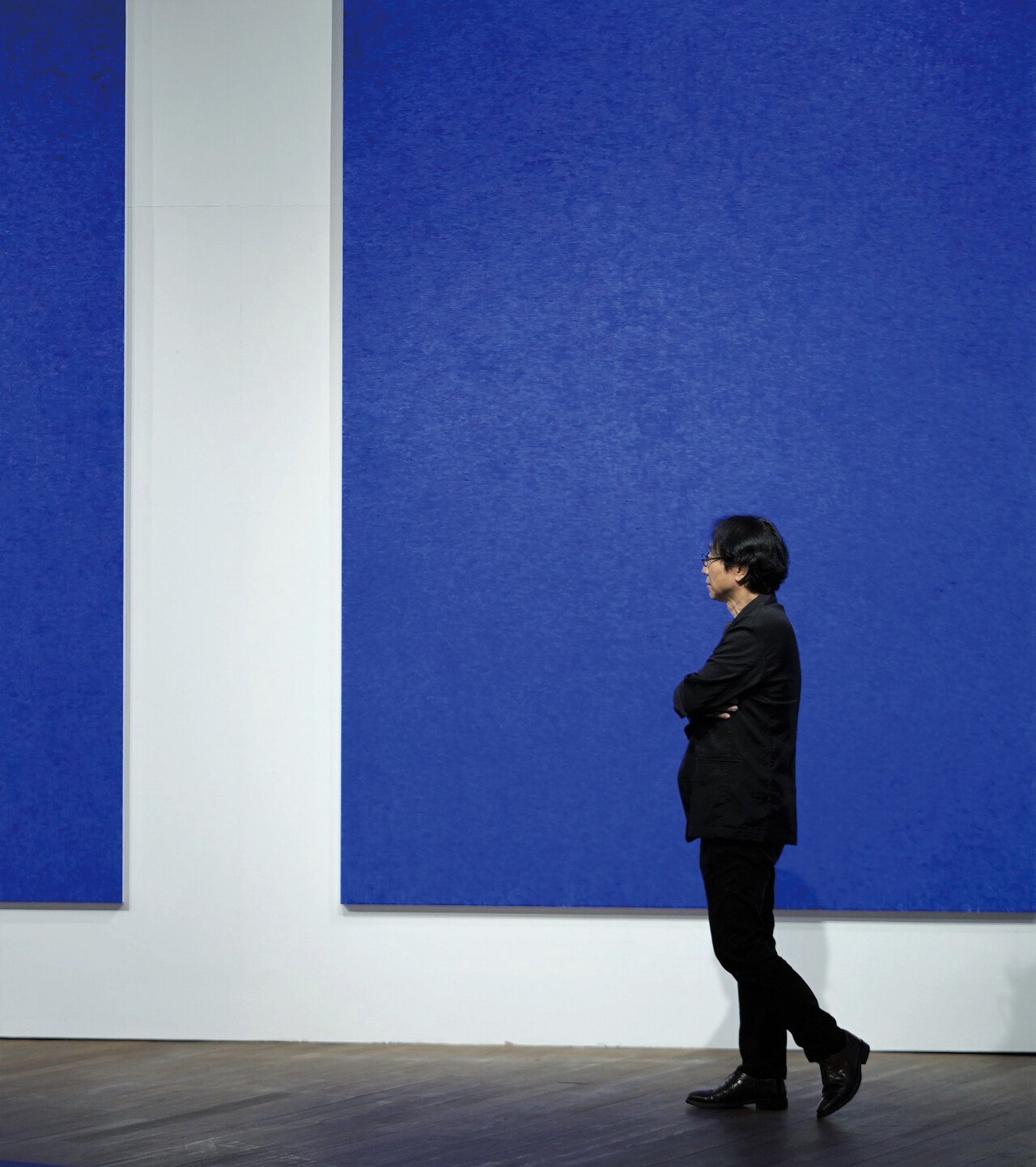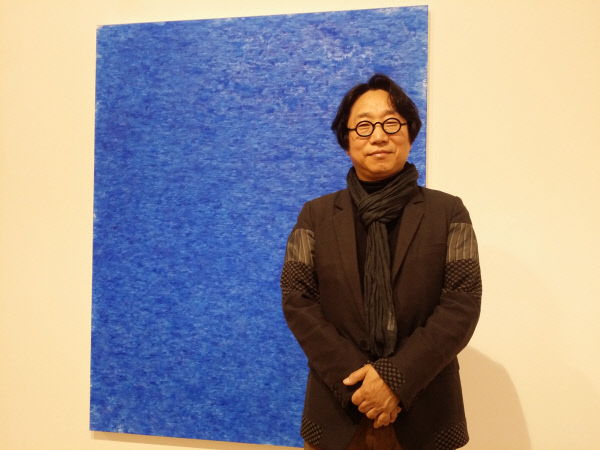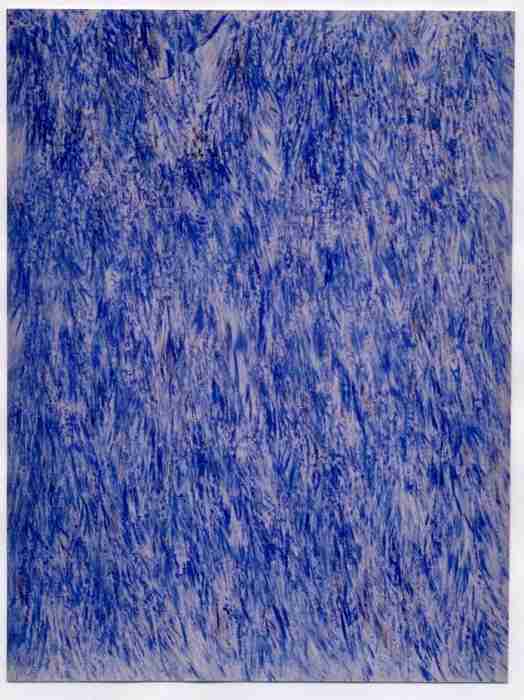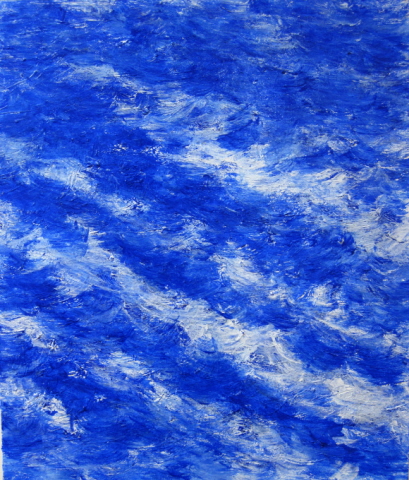

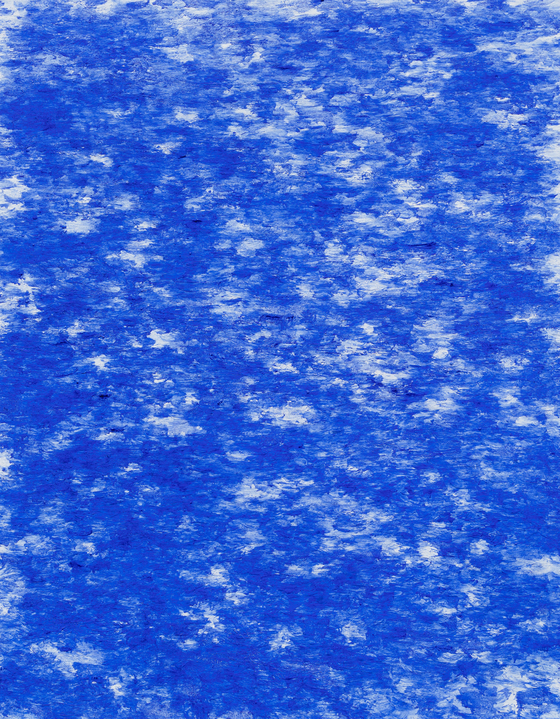
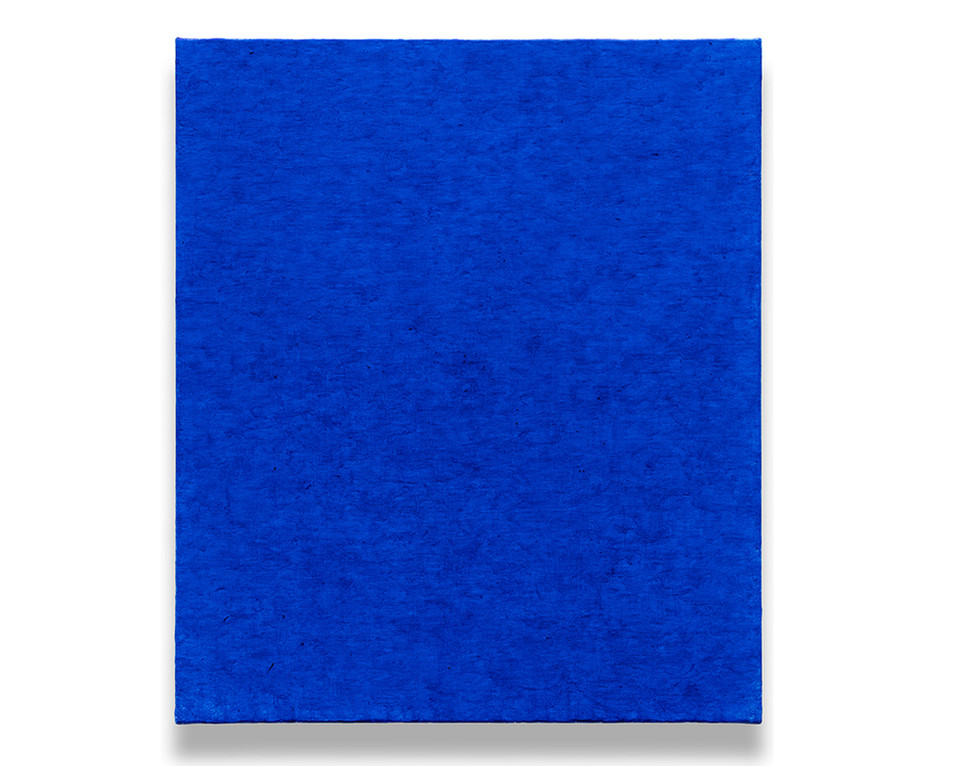
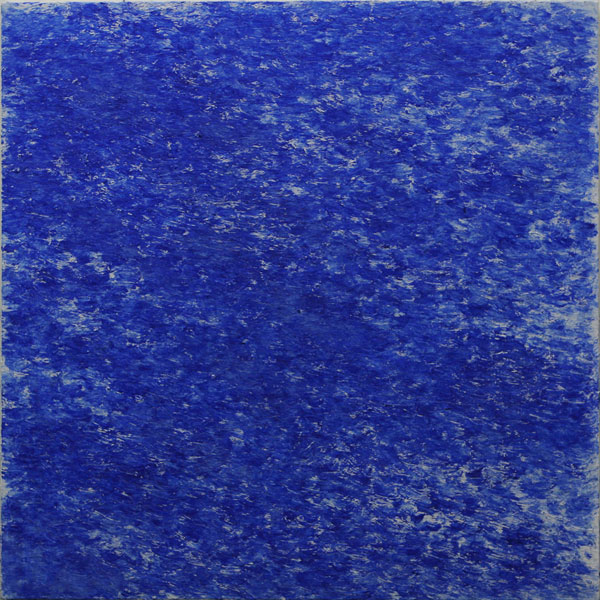
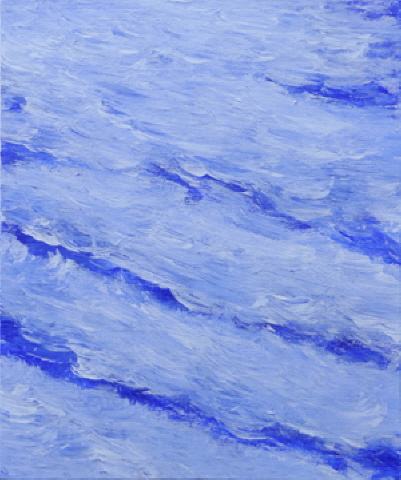
Kim Tschoon Su, Ultra-Marine 0904, 2009, Oil on canvas, 45.5 x 53 cm © Kim Tschoon Su

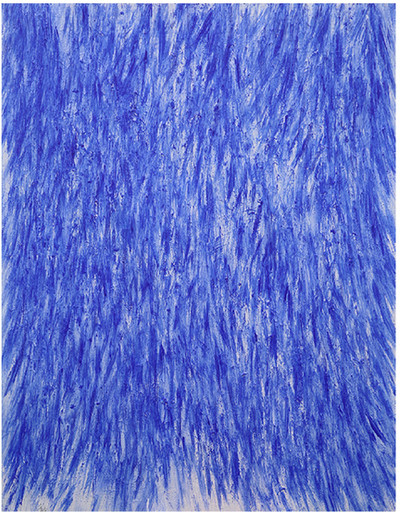
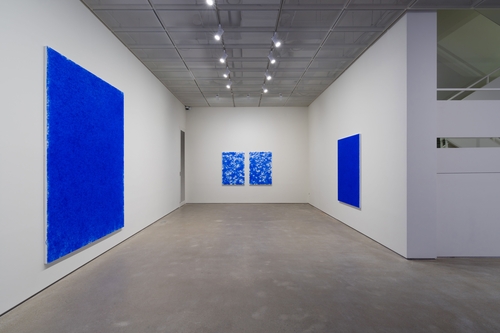
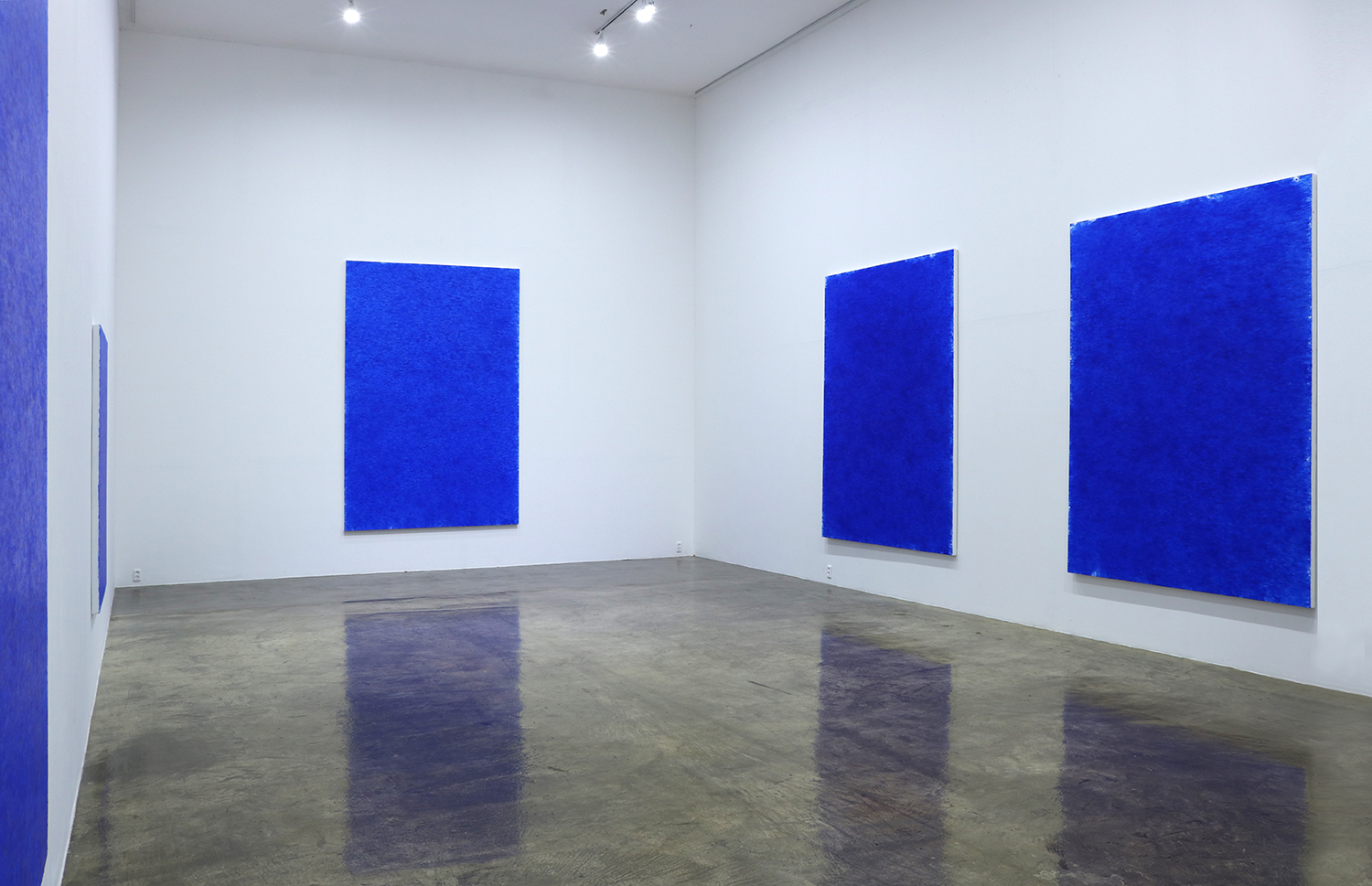
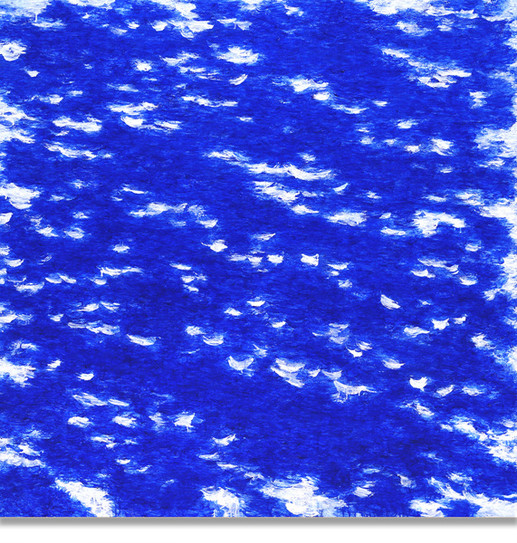
The canvas surface is typically filled with traces of two colors—blue and white—applied directly by hand. These simple manual marks set the surface into motion. The force and direction exerted on the paint, along with its repetitive flow and rhythm, elevate a single canvas into a work of art. 

In this way, Kim Tschoon Su’s work emerges as the result of an inexhaustible contemplation of the most fundamental principles of painting. The surface thus becomes an answer to the question of how basic elements are brought together. The principles employed in his painting acquire meaning as tools that activate material through the artist’s intensely rigorous process of thought. Within this process, painting can become a kind of ritual act. 

If so, the artist may be understood as an alchemist of thought who combines, on a blank canvas, the temporality formed through force or movement with the stillness of the pictorial surface.


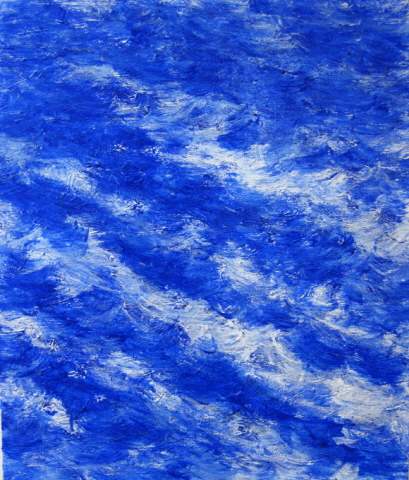
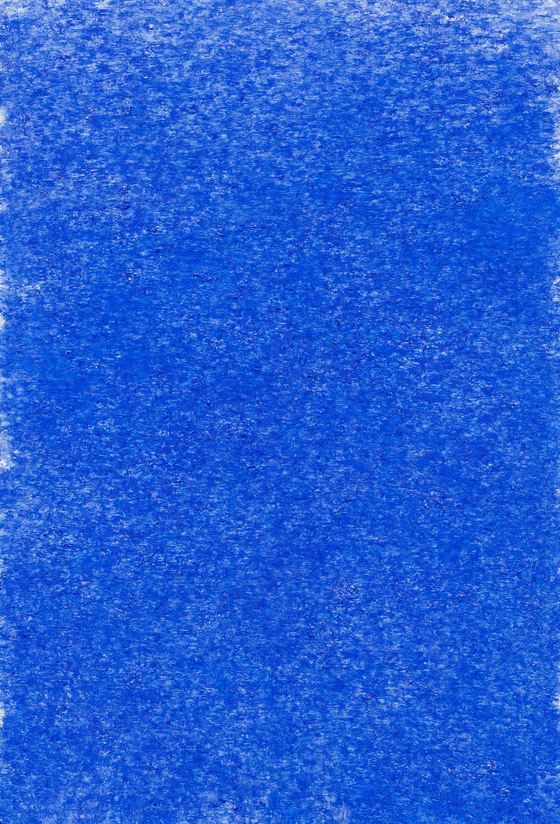
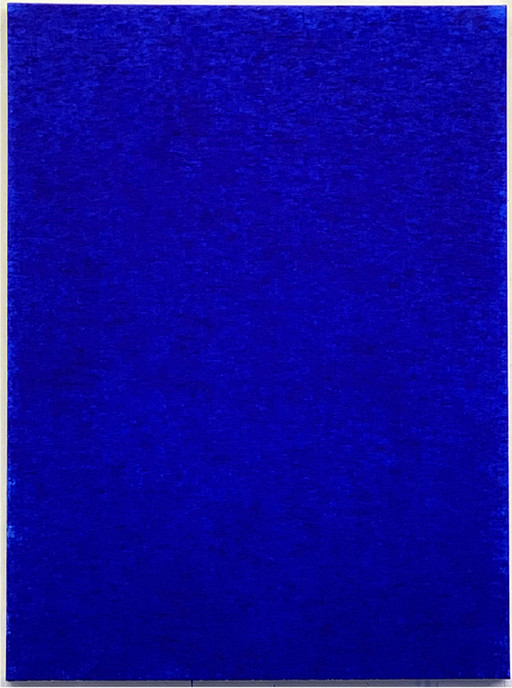
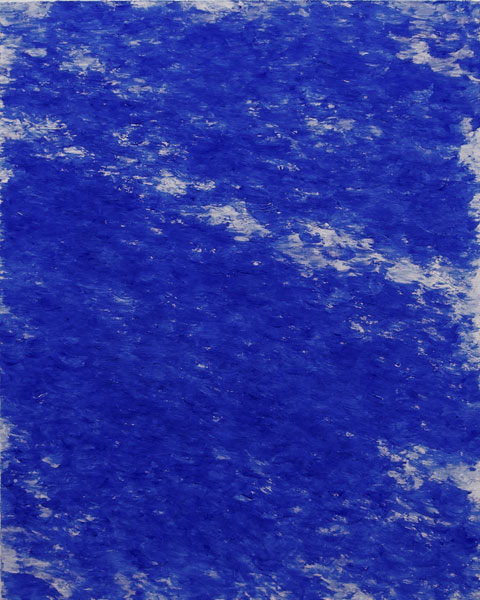
Kim Tschoon Su, Ultra-Marine 0858, 2009, Oil on canvas, 72.7 x 53 cm © Kim Tschoon Su

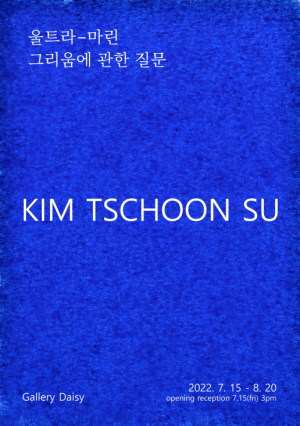
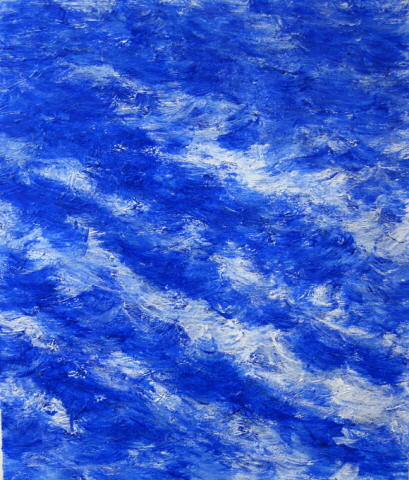
Kim Tschoon Su’s ultramarine blue first establishes a semantic identity before being translated into a painterly mode of expression. The term “ultramarine,” a compound of “ultra” and “marine,” can be elevated to a level of interpretation to suggest a dimension that transcends the sea, or surpasses the marine as the color of the sea. Indeed, his paintings often resemble or vividly evoke the sea. The agitated traces of paint become wind-driven ripples or turbulent waves. 

The once still, inert surface of the canvas is transformed by his actions into a violently undulating, organic life form. Filled entirely with blue gestures, Kim’s paintings inevitably recall Yves Klein, who similarly adopted a singular hue as a kind of trademark. Klein’s blue, however, functions as a surface that is either simply overlaid or that neutrally refines the object’s orientation toward surface. In contrast, Kim’s blue appears as a kind of force that expands outward from the tension of the surface. 

This force, of course, is formed through a dynamic opposition with white. Yet this opposition does not register as volume or weight of material, but rather as pure movement, establishing the divisions of interior and exterior around the surface of the painting as a spatial condition.

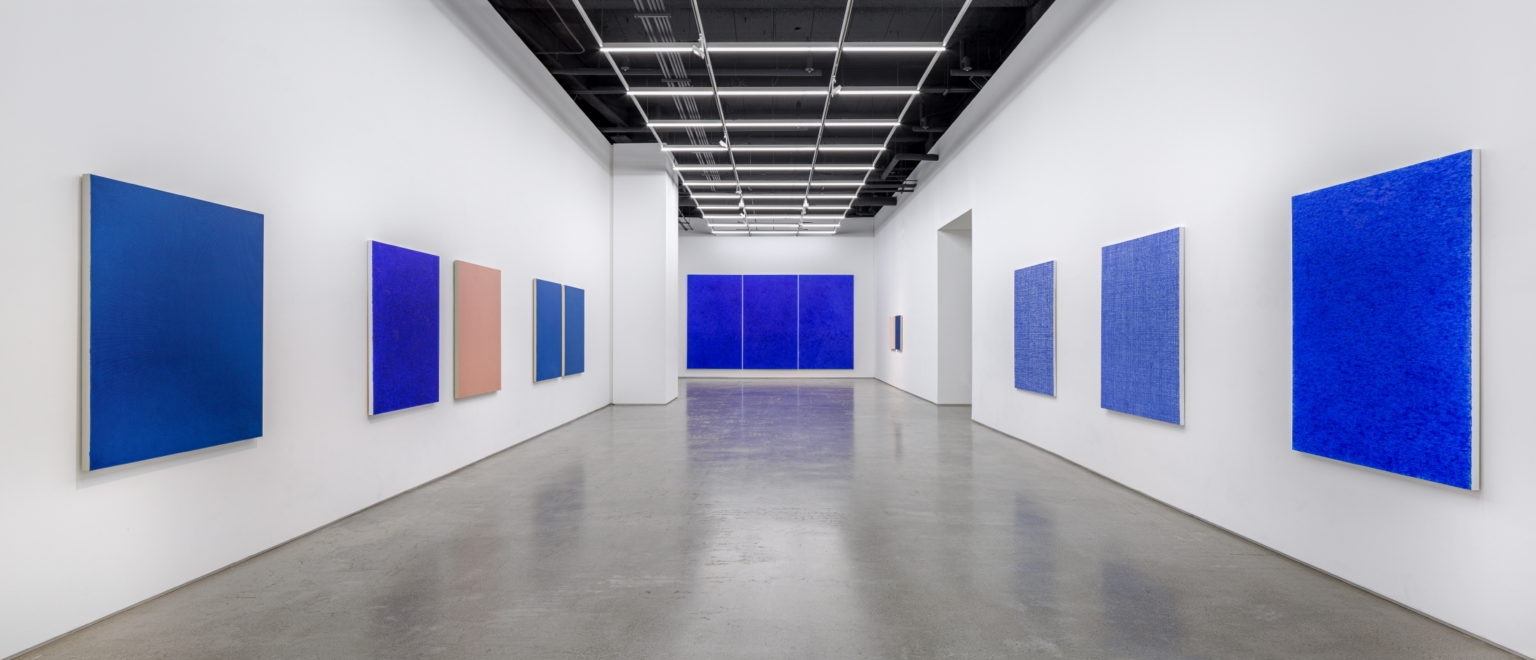
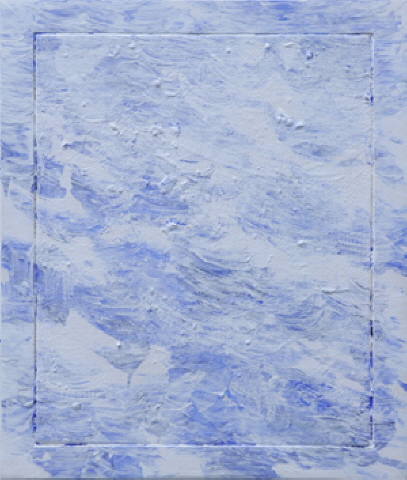
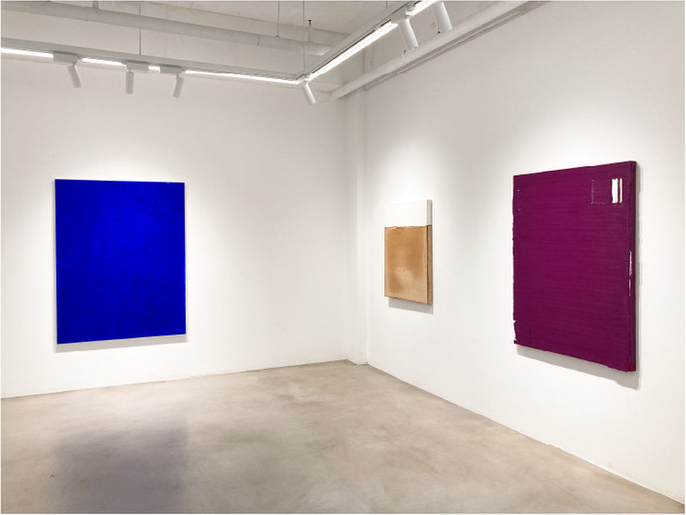
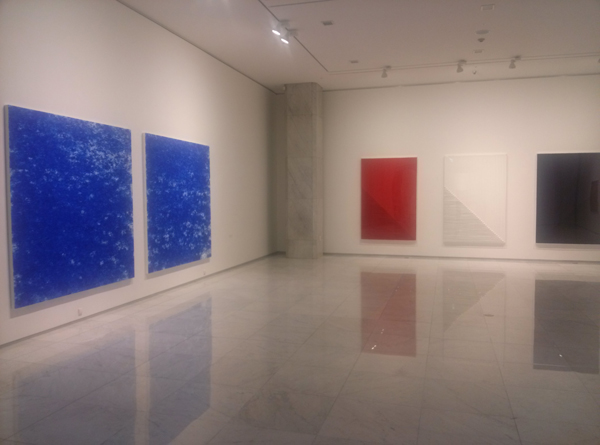
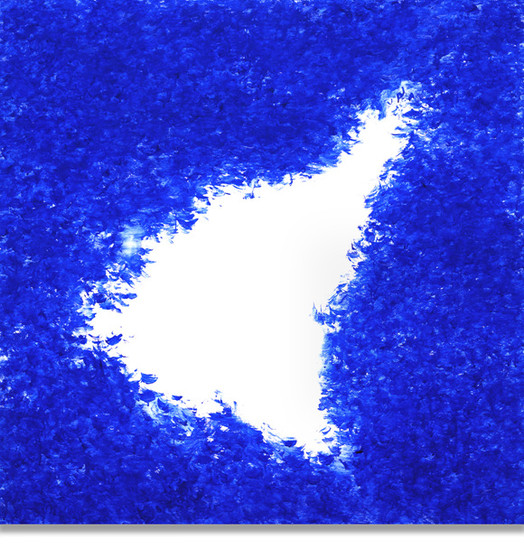
His recent works suggest an expanded horizon in which these similarities are further varied. White is more prominently introduced, and the previously intense dynamism appears to have settled into a more stable state. The scale of the canvases also seems to have receded to a more restrained size compared to earlier works. 

In the past, Kim pursued a kind of sublimity akin to overwhelming sensory experience through large-scale surfaces and vigorous movement that pushed beyond the limits of perception. Now, however, he appears to approach a more intimate form of movement, softening the threatening impression once conveyed by scale. 

Whereas the sublime, in visual terms, required a certain distance to ensure safety, these recent works draw the viewer physically closer, thereby engendering a different mode of perception.

These new works move beyond the earlier analogical resemblance to the sea. Borrowing Rosalind Krauss’s terms, Kim’s painting now demonstrates a more self-referential character. At the same time, its readability has relatively diminished. Put more simply, his paintings sever chains of association and return to the surface of painting itself. In this sense, they seem to arrive at the ultimate principles posited by modernist painting theory. 

Yet viewed through such a schema alone, the work risks appearing uninteresting. It is precisely the works themselves that provide grounds to break this framework. Kim’s painting can be more meaningfully understood as a re-presentation of the process and duration of the artist’s engagement with the canvas. To summarize: the texture of the canvas surface becomes more perceptible; the traces of handling assert their own presence; and in the drips of paint one can discern a correspondence between gravity and material. 

Seen as a whole, the compositions feel increasingly pared down. This suggests that, unlike before, the artist now executes his painterly gestures with resolute intention. The trajectory of his actions has also become clearer. His handling reveals not only the dynamism of action but also the material properties of the pigments themselves. Stains and marks found throughout the surface—some seemingly beyond deliberate control—can be understood as the accumulated results of time structured through action.


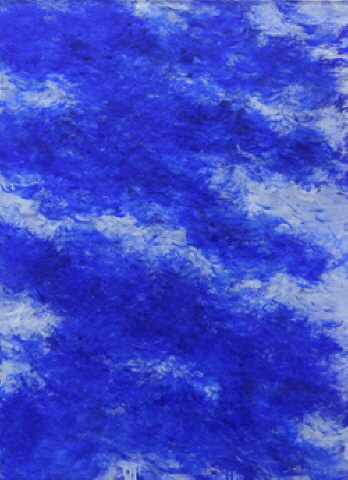
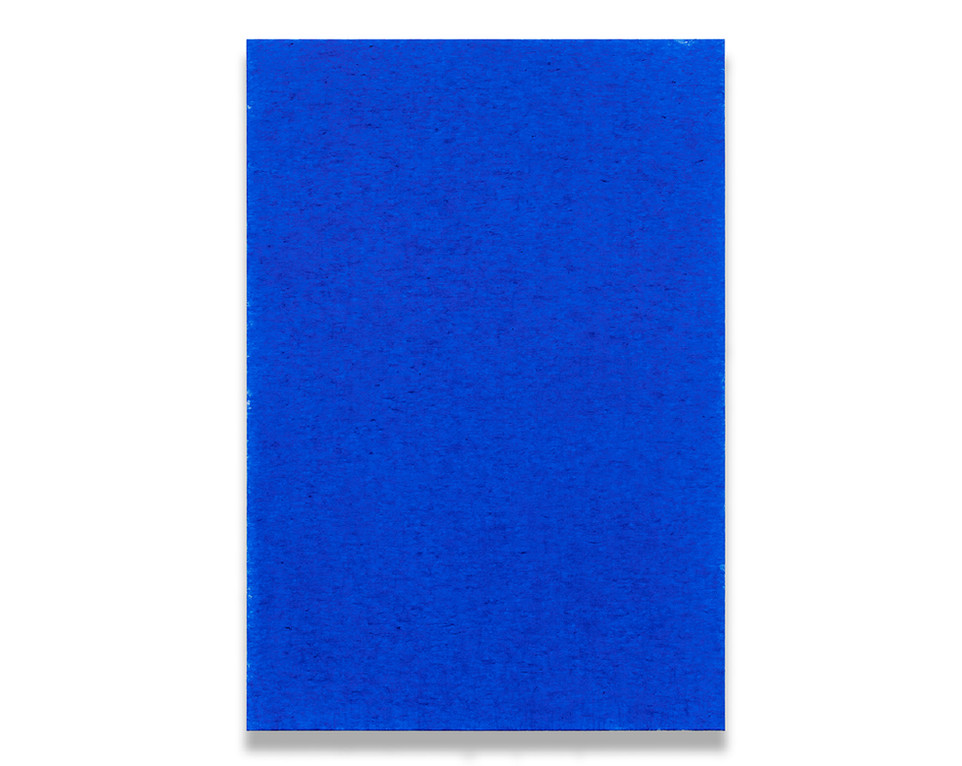
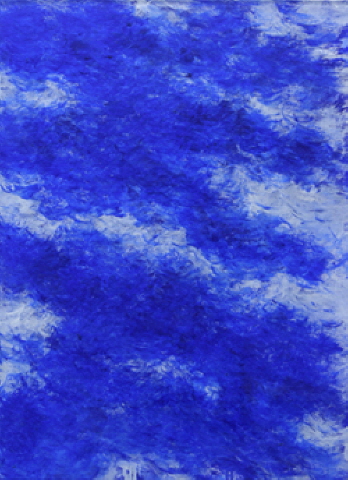
Kim Tschoon Su, Ultra-Marine 0940, 2009, Oil on canvas, 39 x 33.3 cm © Kim Tschoon Su

Yet the characteristics of his earlier paintings are still retained. The diagonal directionality that traverses the surface has softened from its previously steep inclination, but it remains perceptible. The intensity of his handling, too, has shifted from an aggressive tendency toward a more tempered state, yet, as noted, it has become all the more resolute. 

In this way, the artist clearly delineates the trajectory and process of his work. For art historians such as the present writer, this kind of evident development is both welcome and appreciated. It indicates that the artist’s thinking and practice are evolving in a logical manner, providing grounds to describe his work as both continuous and progressive. 

As seen in this exhibition, Kim Tschoon Su’s painting approaches the very origins of painterliness, ultimately leaving behind the force of time, and reads like a record of a journey that has escaped from the conceptual sea.

References