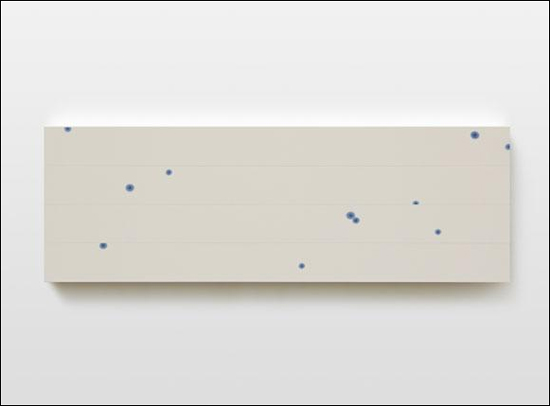
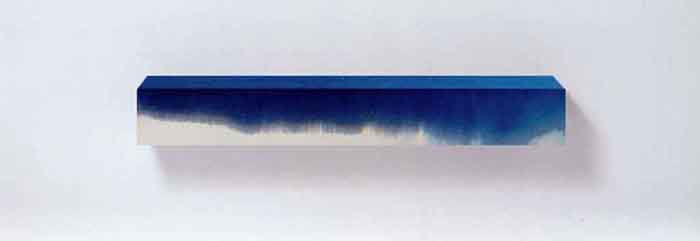
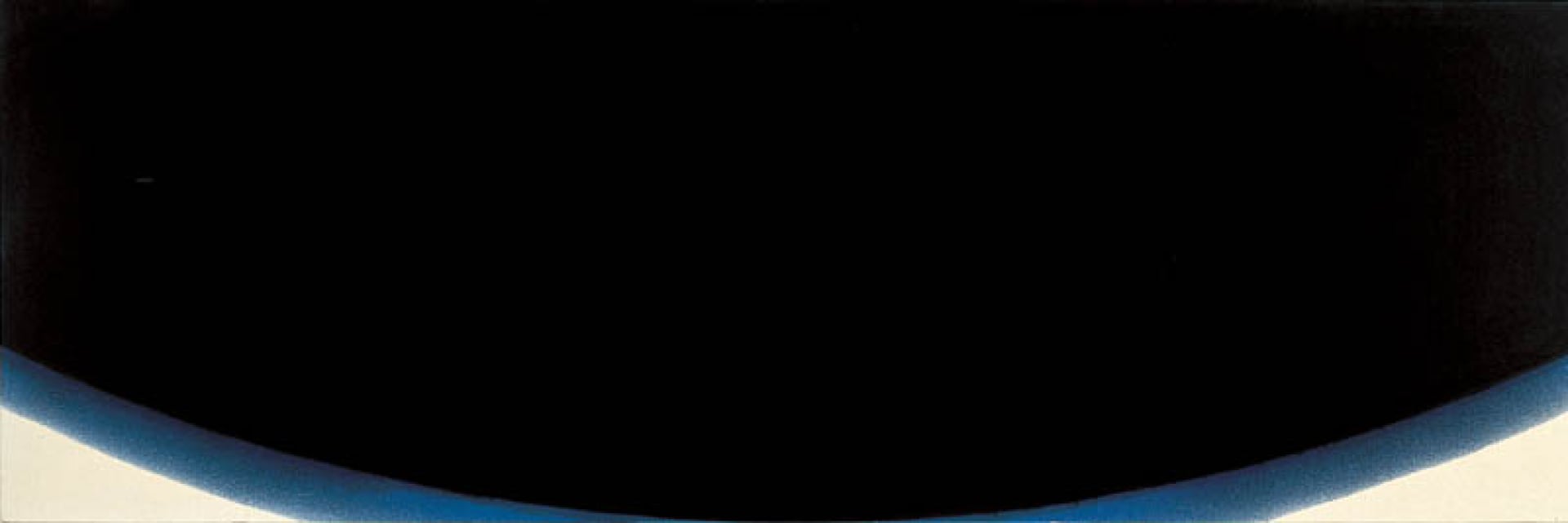
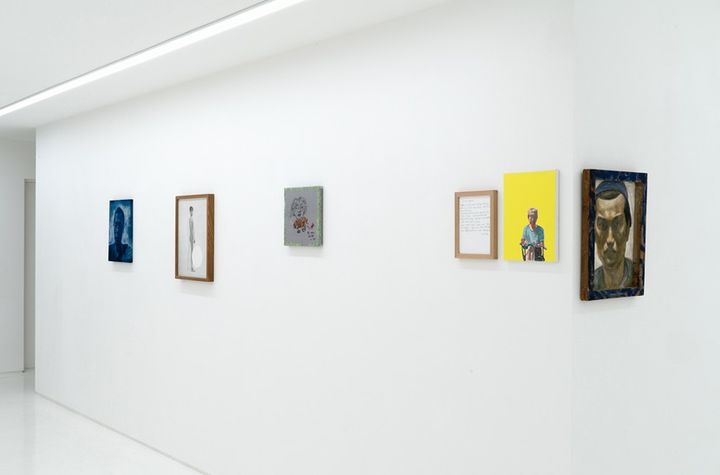
In the following exhibition at Gallery R, the
two artists transformed the space with a completely different tempo and air.
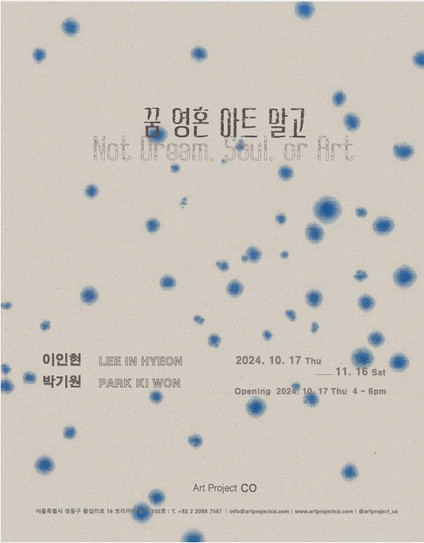
Curated by art critic Byeonghak Ryu, 《Jagangducheon》—a
title borrowed from a neologism meaning “two self-proud geniuses”—emphasized
the meeting of two formidable masters, Kiwon Park and Inhyun Lee. Like
martial-arts masters who spar tens of thousands of times in their minds, they
swiftly teleported the empty white space to a far-off galaxy with works each
had prepared after only brief discussion.
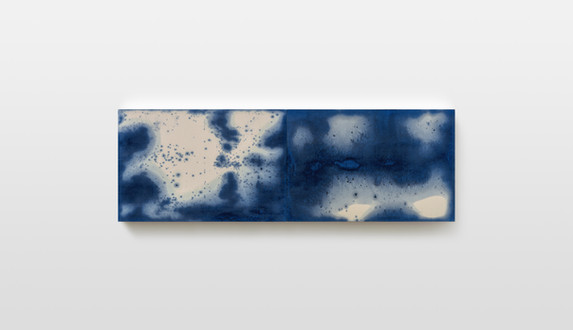
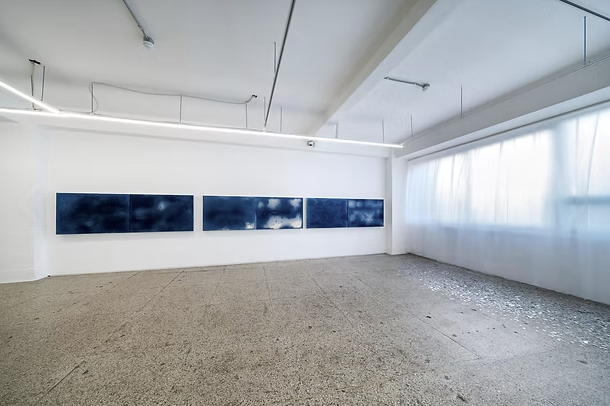
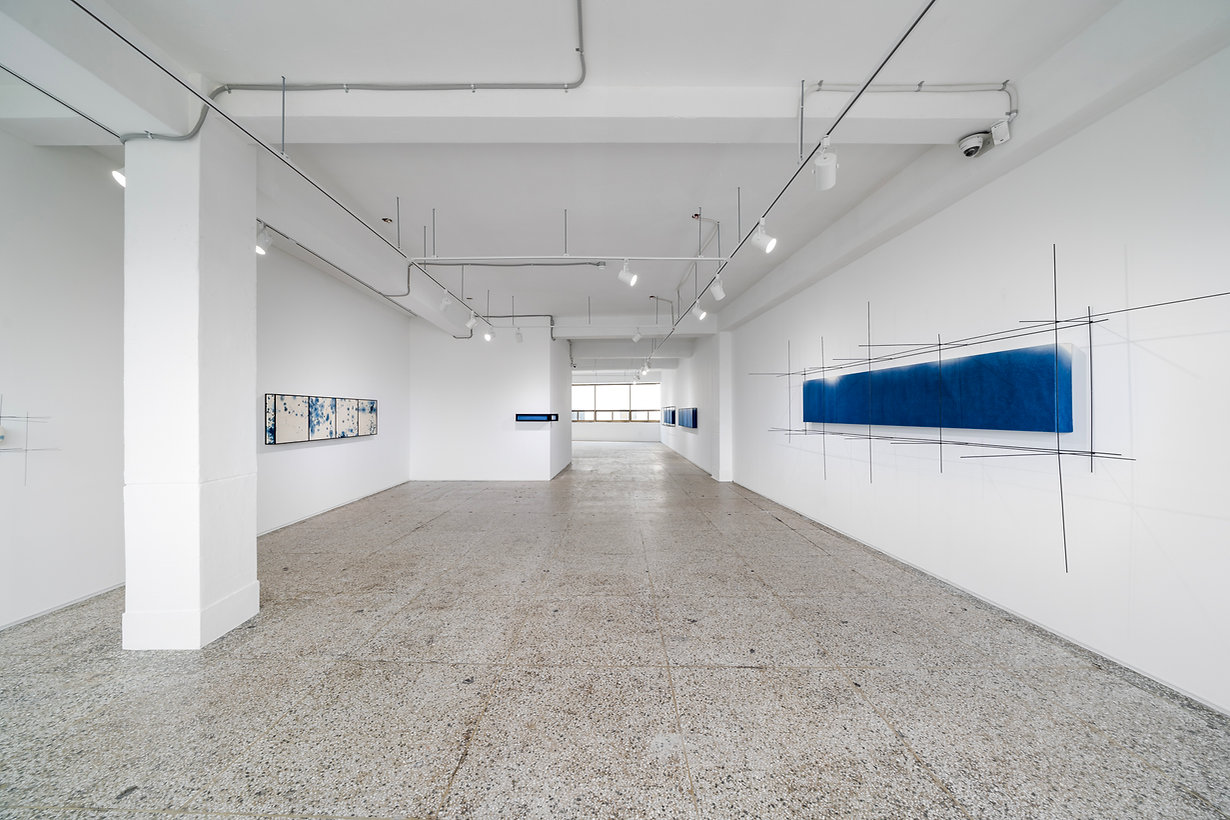
By separating Lee’s two-panel work
and installing it horizontally to stretch the view, they maximized the
perspective of the corridor extending from the entrance. Following that path
and turning one’s gaze ninety degrees, one suddenly encountered Lee’s new work,
themed on parallel universes, and Park’s floor-covering installation of black
cloth balls—composing a spectacle as if stepping into the midst of a galaxy.
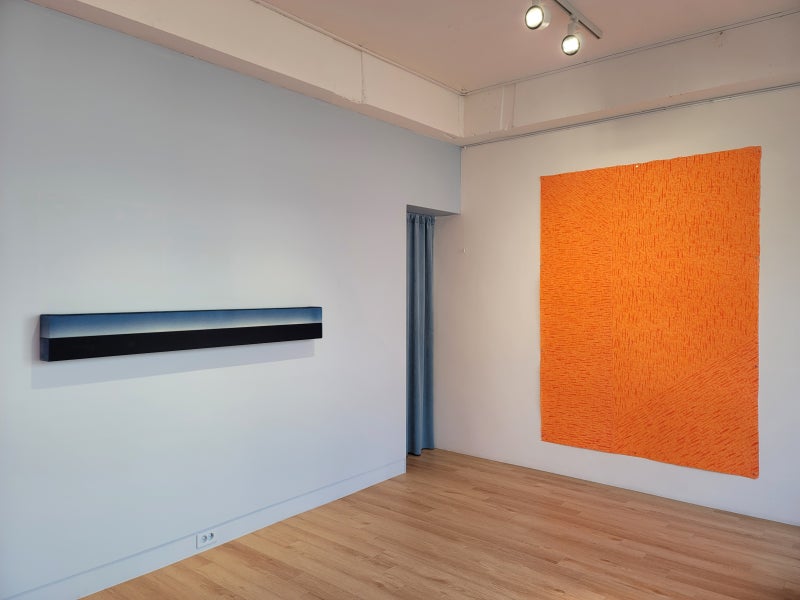
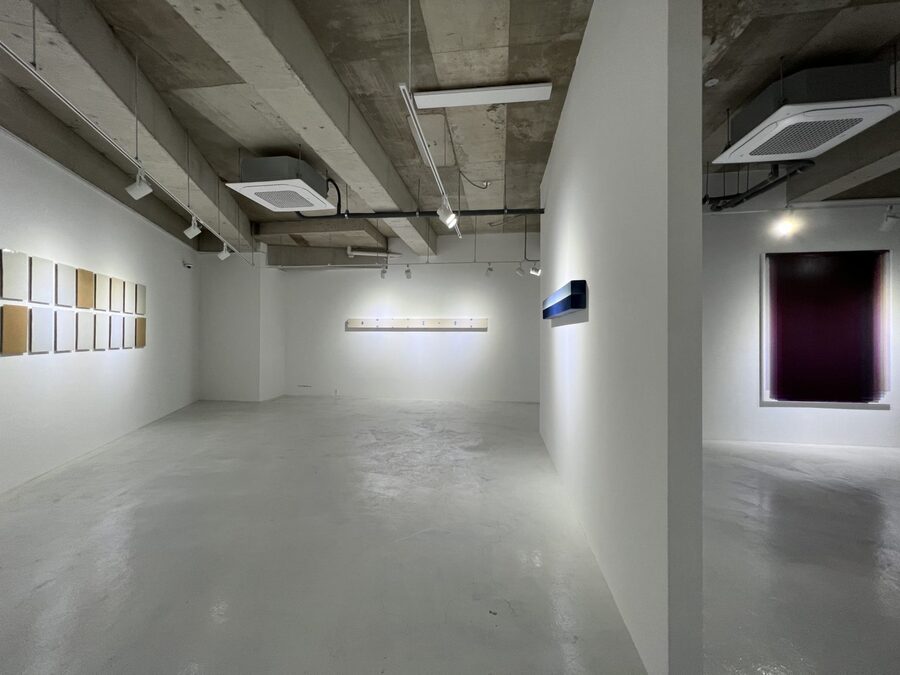
Passing through that galaxy into the cul-de-sac, viewers came face-to-face with
Park’s fluorescent-tinged painting, prompting the imagination of yet another
universe beyond.
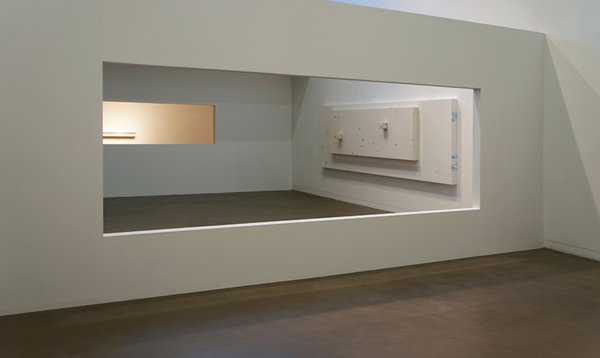
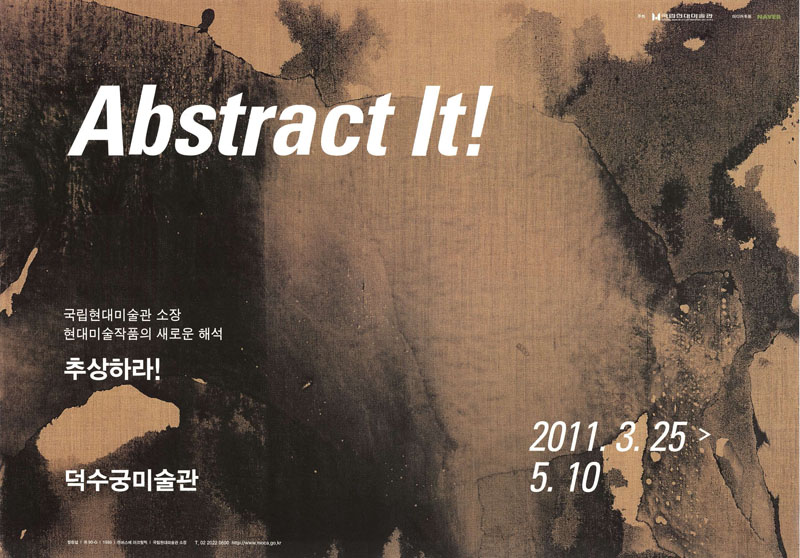
Thus 《On Time about Length, Width, and
Thickness》, which evokes an eighteenth-century French
salon, and 《Jagangducheon》,
which feels like a time warp into future space travel, each stage completely
different times and spaces. Even so, a closer look reveals how quintessentially
Park-like the exhibited works are—and just as quintessentially Lee-like. While
maintaining the artistic philosophies they have built, the two artists
responded flexibly to the situations before them, producing exhibitions that
are so alike yet so different.
As they exerted small influences upon each
other, the resulting differences returned vastly magnified. The tiny wingbeats
that nestled in each other’s hearts more than a decade ago are gradually
stirring into a storm. Perhaps the two already knew the possibilities of this
multiverse born of the butterfly effect. As they prepared the two prior exhibitions,
they fixed the title of their next show at The Soso as 《Amazing Multiverse》.
The Soso—Gallery SoSo’s Seoul venue where 《Amazing Multiverse》 unfolds—retains the gritty atmosphere of the tool-shop district
along Cheonggyecheon in Euljiro. The exhibition space, opened wide by
puncturing the cramped grid of an old building, admits in rushes the views of
surrounding buildings and Bukhansan through large windows at both ends.
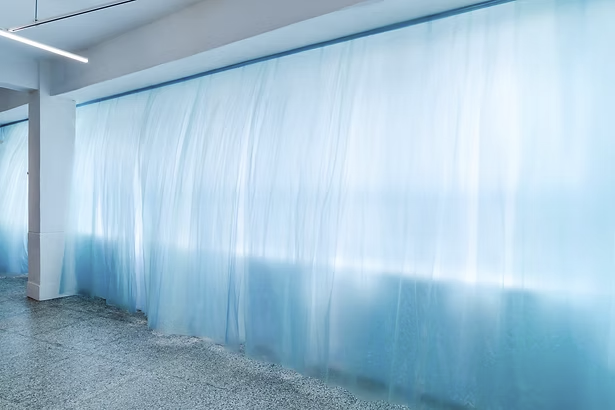
Thinking of this space, Park says he had envisioned a vinyl installation from
early on. He curtained the urban landscape with translucent vinyl, connecting
outside and inside with light and gentle movement alone. For the windows facing
the back alleys packed with buildings, he used vinyl with a subtle bluish cast;
for the window opened skyward toward Bukhansan in the distance, he used milky
vinyl. The quiet, delicate distinction hinted at the scenery beyond the windows
while naturally connecting to Lee’s deep blue works installed inside.
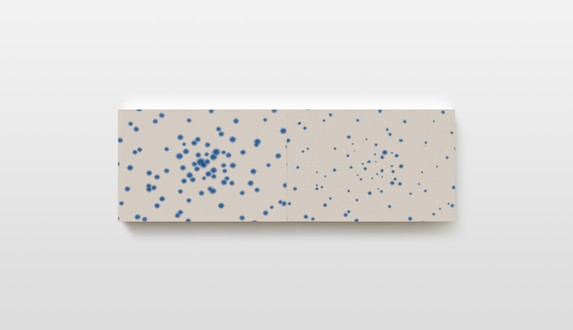
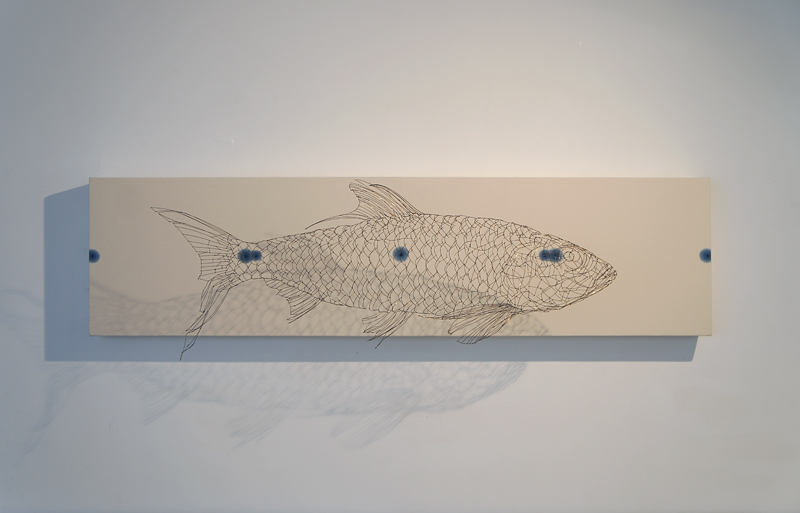
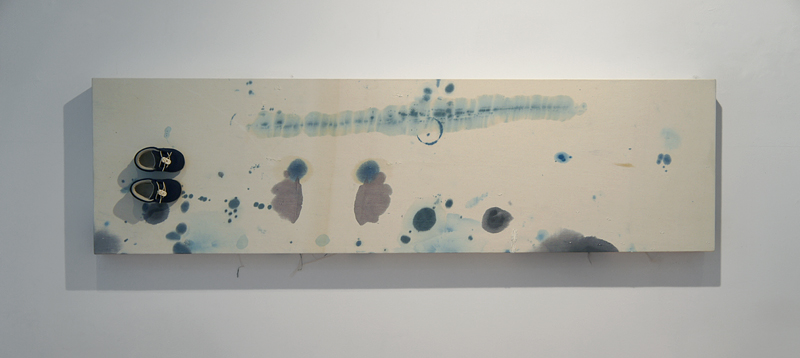
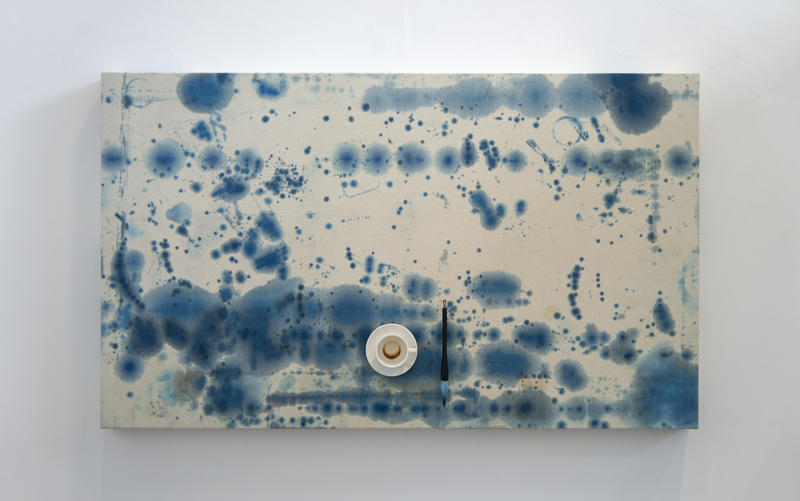
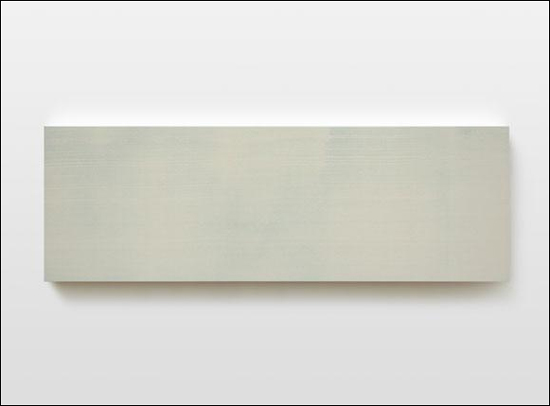
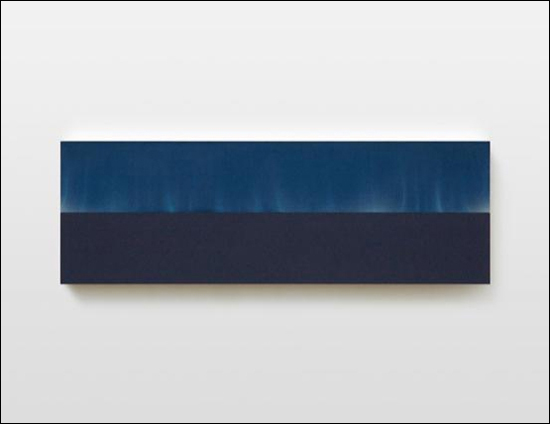
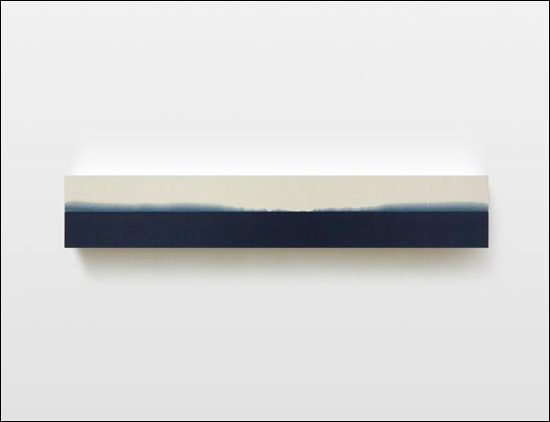
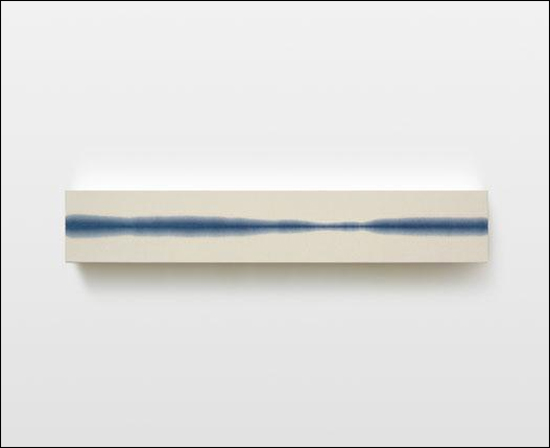
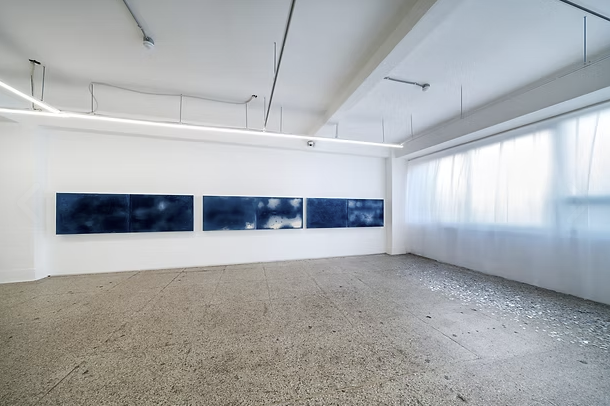
In the series of new works Lee completed
under the subtitle of the exhibition title—“Amazing Multiverse”—two worlds that
are the same yet different coexist. Saturating cloth with blue oil paint, he
pressed two layers of cloth together to make transfer prints, then separated
them, mounted each on a board, and placed them side by side. Though the two
panels share the same origin, physical differences in how paint soaked into the
overlapped cloths give rise to different forms.
At a glance, the piece appears
to be two entirely different images placed in parallel, simultaneously
presenting multiple outcomes derived from the same source. Included there,
borrowing Lee’s words, are the rough, chance results that occur when peeling
apart the overlapped cloths—so rough, in fact, that a tearing “jjeojeok” sound
can be heard. Having built a keenly refined formal language through
meticulously calculated chance, Lee says he found that fierce outcome
astonishingly displeasing one day and, the next, perfectly satisfying. In
producing two worlds that are the same yet different, he also delighted in the
two unforeseen directions of feeling that arose in the process.
From the bluish dawn created by Park’s vinyl
work Holy Wind, through the vast cosmic storm stirred
up by Lee’s Strata of Painting – Amazing Multiverse,
and back to the white light of another Holy Wind by
Park, there lies below Glacier, Park’s installation
composed of shimmering metals. Having traveled through the cosmos that ruled
the night, one gradually returns to Earth. On the wall bathed in that milky
light hangs Park’s painting imbued with the green of grass.
It is a shift from the
cosmic tempest to the forest’s breeze, from the night’s force to the light’s
brilliance. Just as Lee savored the two opposing feelings born from two
different forms that emerged unpredictably out of one, Park too seemed to enjoy
this transition, hanging a bright and buoyant painting. In his painting, lines
crisscross joyfully in every direction amid a radiant green variation.
Park’s Holy Wind raises
a light breeze in the space with a small wingbeat. That breeze soon becomes a
storm, churning a rough, blue vortex in Lee’s Amazing Multiverse.
As if delighted by this immense tempest, Park’s painting shines more brightly,
letting innumerable lines intersect. Very small choices, very small affinities,
and very small flows of air thus rush headlong into the chaos of disorder. With
each wingbeat, a world is born. Those worlds overlap and agglomerate, stirring
a great storm. The brave butterflies fly into that storm. Thus the multiverse
comes into being. In this amazing multiverse where two butterflies flit about,
one cannot take one’s eyes off the scene.
Heejeong Jeon (Gallery SoSo)