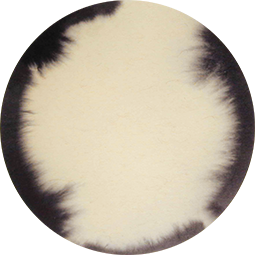
Lee Inhyeon’s painting practice—completing an extremely concise pictorial field on unprimed canvas with monochrome oil paint, centered on bleeding effects and tonal gradation (階調)—has continued for more than a decade under the single title, ‘L’episteme of Painting’. The way paint seeps into the canvas and spreads outward, and the gradations that slowly fade or deepen, in themselves evoke “strata” in painting. Yet it is already well known that Lee’s use of the term “strata” does not arise solely from such outward characteristics; rather, it was coined with Michel Foucault’s concept of “episteme,” articulated in The Archaeology of Knowledge, in mind.
Foucault argued that each era possesses an underlying structure of cognition that forms the background of all discourses, and that these structures are differentiated by period like layers in the earth; he called such strata the “episteme.” In this sense, Lee Inhyeon’s decision to refer to the entirety of his painterly practice as ‘L’episteme of Painting’ may reasonably be understood as an expression of his will: that his painting be read not simply as an artwork offered for appreciation, but as a series of attempts to investigate the fundamental principles that encompass painting in our time—in other words, the “episteme” of contemporary painting.
Considering that his long-running ‘L’episteme of Painting’ series has functioned as a sustained study of painting’s materiality and image, front and side, flatness and objecthood, and other questions concerning painting’s essence and its mode of existence, the title is undeniably an apt name through which the artist can articulate his consistent artistic attitude.
From Lee’s earliest presentations in the early 1990s through his most recent exhibition in 2003, a wide range of deep and nuanced criticism and discussion has gathered around ‘L’episteme of Painting’. At the same time, it is also true that precisely because Lee Inhyeon has so strongly come to be identified with this series (Lee Inhyeon = L’episteme of Painting), his painting has repeatedly been made to endure a kind of nominalist (唯名論的) proof. Some abruptly ask, “Which work is L’episteme of Painting?”
Others arrive—by their own lights—at the happy conclusion that they have “seen L’episteme of Painting.” Still others wonder, in all seriousness, “How long will ‘L’episteme of Painting’ continue?” Such reactions are often symptoms of withdrawal caused by a perceived lack of images. They follow the linear historical view of teleological modernism, which constantly demands the new and pursues an ever more “advanced” state; and the author considers the refusal of precisely such modern thinking to be a central thesis that runs through Lee Inhyeon’s painting as a whole.
‘L’episteme of Painting’ is “painting about painting”: it casts doubt on questions that were accepted as self-evident across the history of traditional painting, and rebels against the binary structures that have organized discourse on painting. Along the boundary line, Lee makes what once seemed incompatible in the debates of art history become compatible, through his own paradoxical logic. The first matter to consider is his position on the relationship between front and side—one of the most frequently cited topics in discussions of ‘L’episteme of Painting’. Lee sought to bring forward the status of the side, long concealed by the front-centered history of painting.
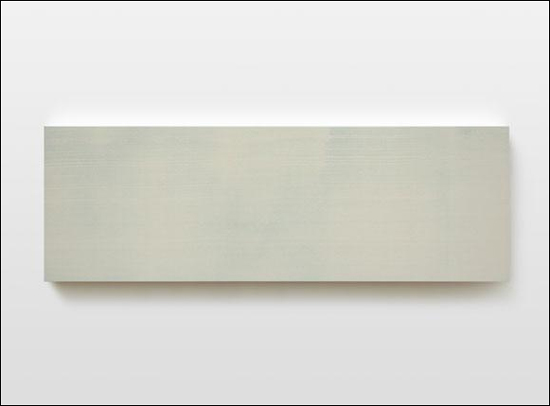
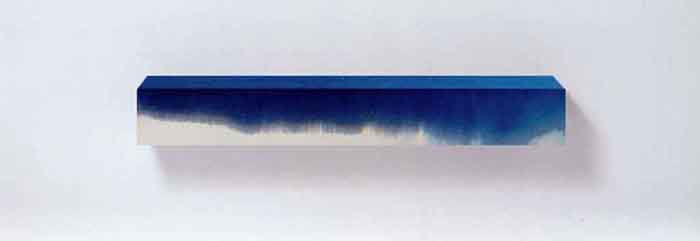
The recurring 10-centimeter side surface in his paintings is another pictorial field that, through the seepage of paint, reveals painting’s material nature and its process of formation. In his painting, the side is at once an extension of the image surface that must be viewed together with the front, and—unlike traditional painting, which seeks depth through three-dimensional illusion—an effective means of physically presenting the depth that matter itself generates. Moreover, what was a side during production can become the front in display, and at times the edge where planes meet may even become the center of the pictorial field. For Lee, the pictorial surface departs from the binary distinction of front and side; it is reversible and fluid, capable of exchanging positions at any moment, and marked by the absence of any fixed center.
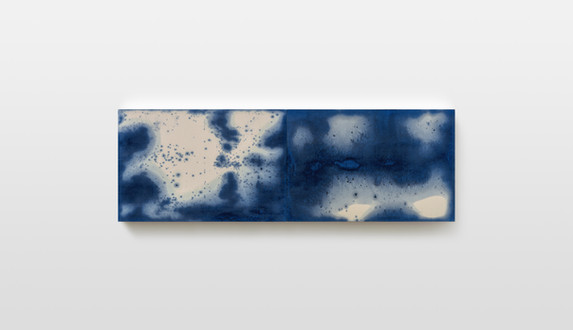
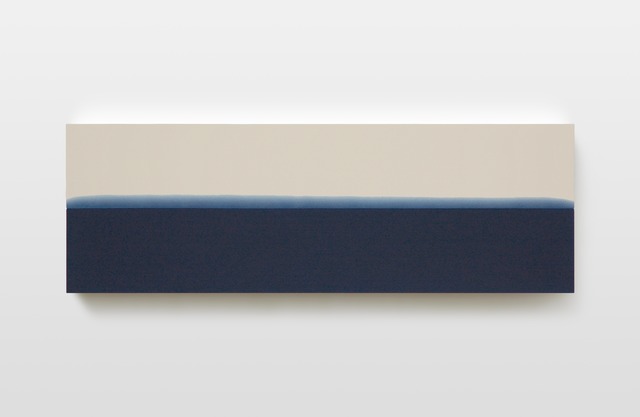
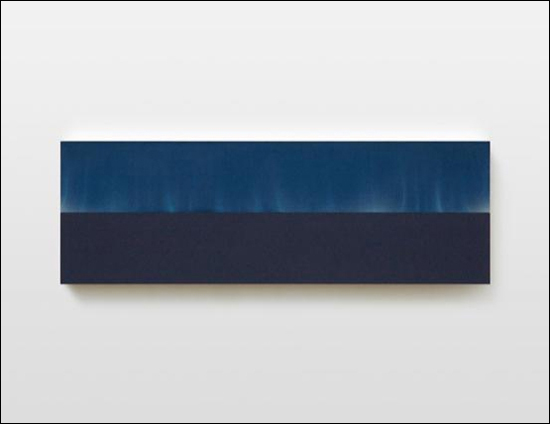
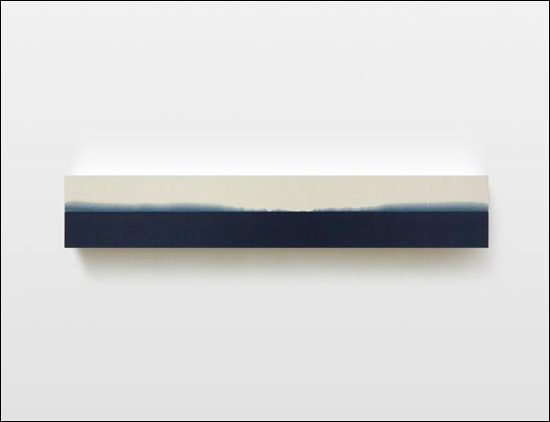
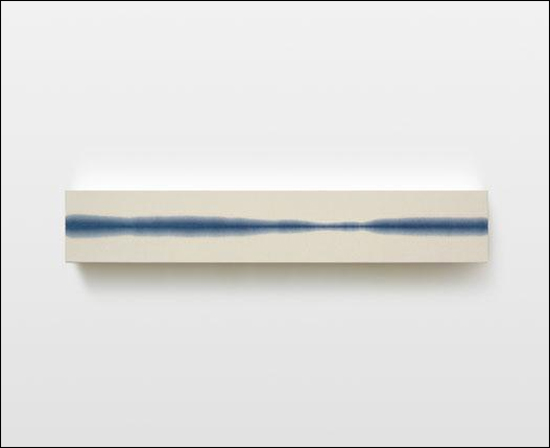
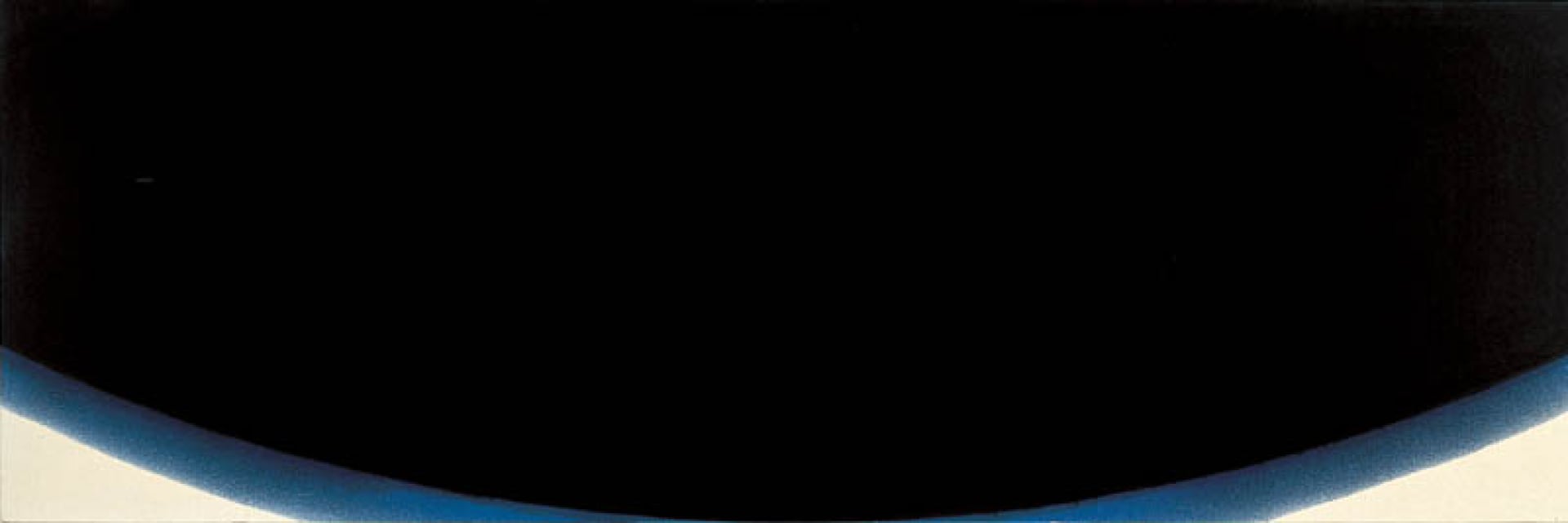
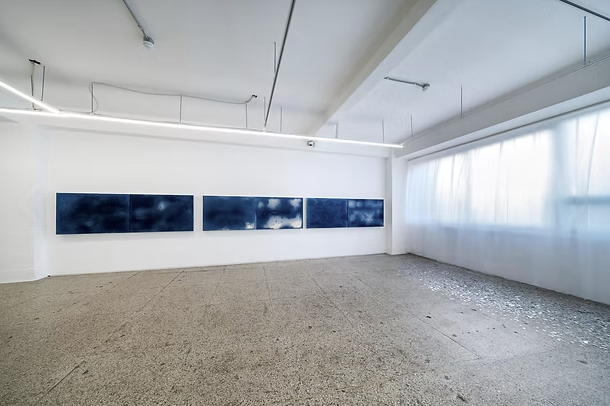
This fluid relation between front and side extends into the relation between materiality and image. Just as the front and side in his painting do not form a predetermined hierarchy, so too do materiality and illusion—long regarded as mutually exclusive within traditional discourse—become, in ‘L’episteme of Painting’, inseparable like two faces of the same coin. Both the uniformly painted monochrome field and the surface where paint has bled unmistakably assert their materiality; and yet, at the same time, the forms produced by the spread of blue pigment, together with their juxtaposition against monochrome planes, conjure concrete illusions: a riverside landscape divided by a horizon line, or islands floating on the sea.
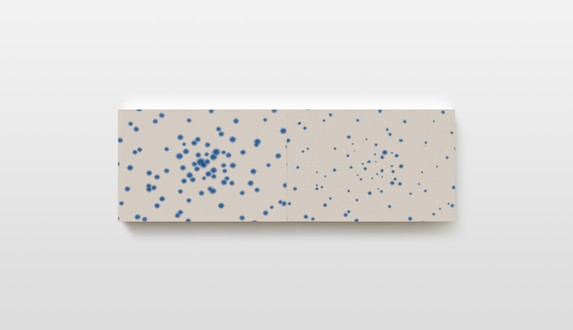
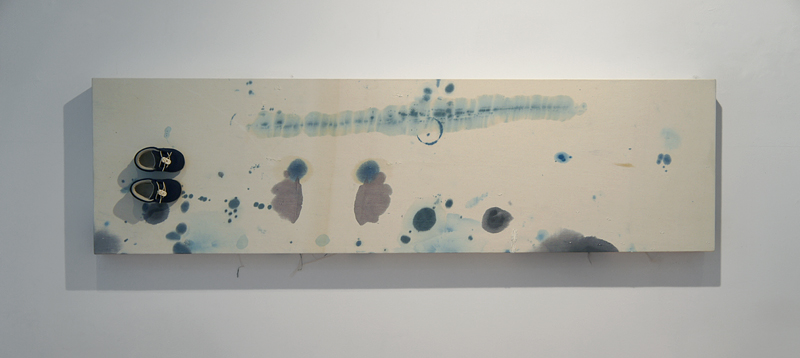
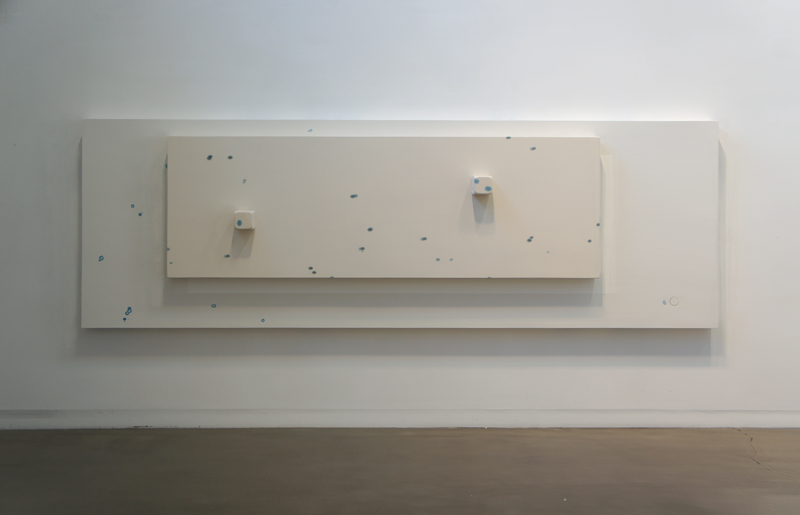
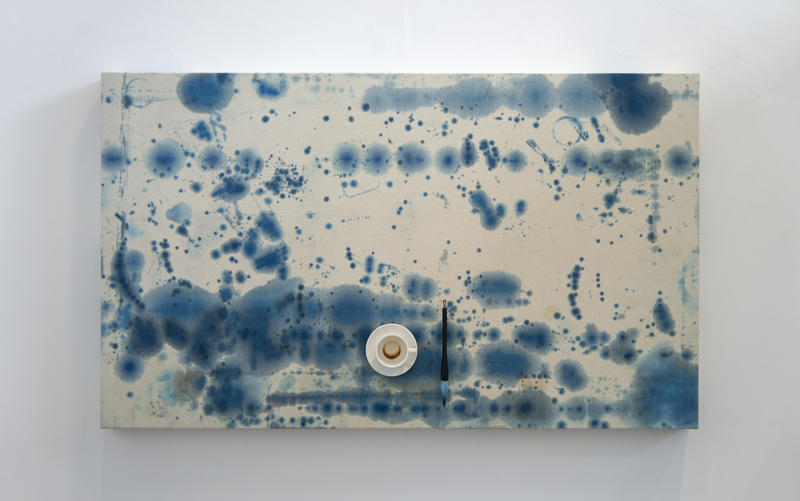
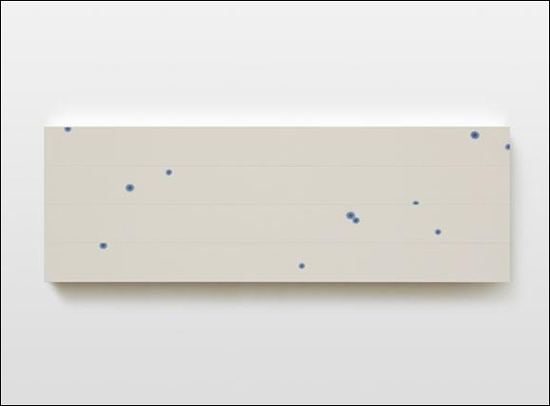
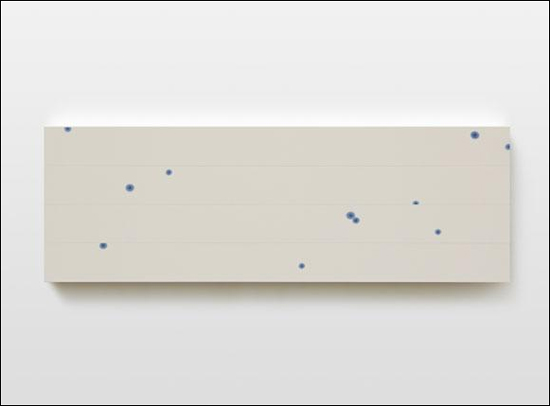
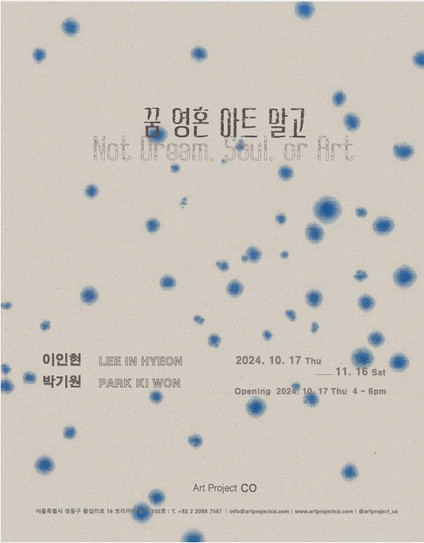
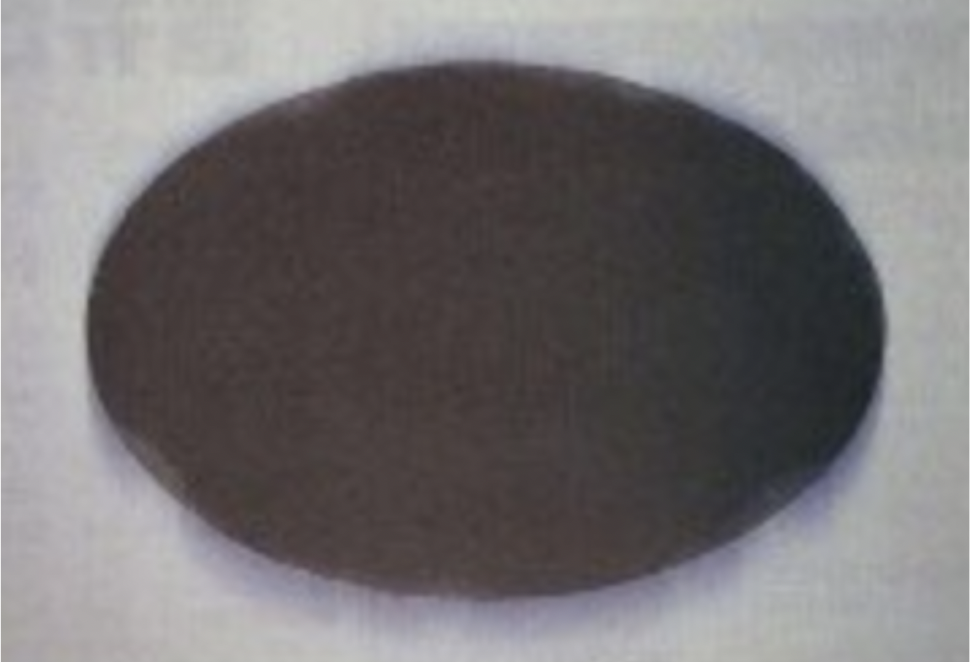
Even in the point works, the materiality of canvas and paint is strongly present within a single pictorial field, while to some viewers the points may appear as falling raindrops, or as the lights of fishing boats adrift on water. In Lee Inhyeon’s painting, illusion does not arise from the artist’s intended self-expression, but from contingent effects generated by material properties themselves. Within ‘L’episteme of Painting’, he subtly blurs the boundary between materiality and image, performing a delicate tightrope walk between the two—paradoxically sustaining the absolute essentials of modernist painting, canvas and paint, while producing from their very materiality the illusion that modernist painting sought to refuse.
‘L’episteme of Painting’ also carries its own paradox in technique and in the use of materials—departing from the conventions of traditional painting. While using oil paint on canvas, Lee dissolves it into a thinner solution, spreading it evenly in a short period of time or placing it down in an instant to allow it to bleed, thereby avoiding the thick impasto associated with oil painting and producing a watery sensation. This is his strategy: using the material of oil painting to make the work appear not to be oil painting.
He also restrains the use of the brush—the very emblem of painting—in the process of transferring paint to canvas. It is common for him to soak a paint-saturated rod wrapped in canvas and use it like a brush, or to use the canvas cloth itself in place of a brush. Even when he does use an actual brush, he often avoids touching it to the canvas, using it merely as a tool to move paint. This is an intentional twisting of the traditional overinvestment in the meaning of the “brushstroke.” His remark—“If you bring a dry brush to the canvas, you cannot leave any trace at all. Then, in fact, isn’t the brush something that can never touch the canvas?”—makes this intention legible.
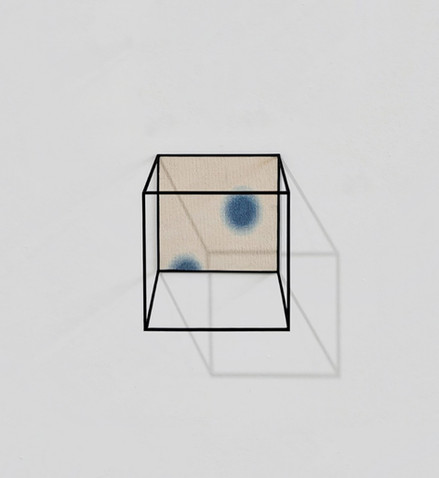
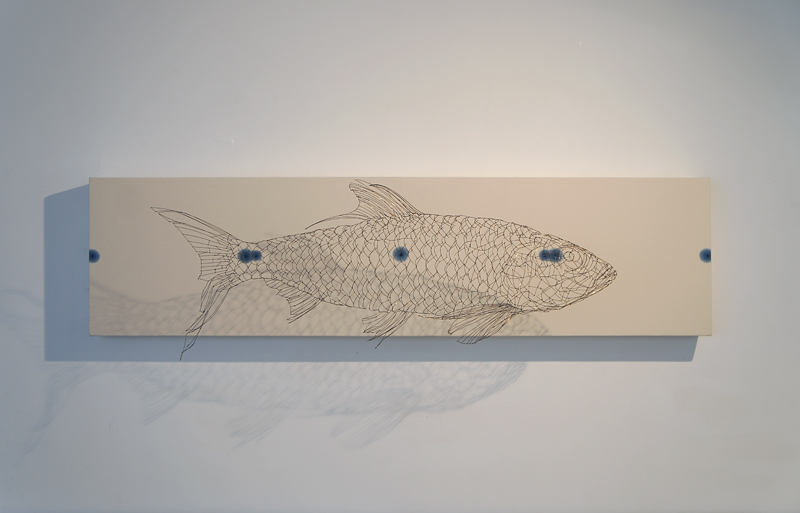
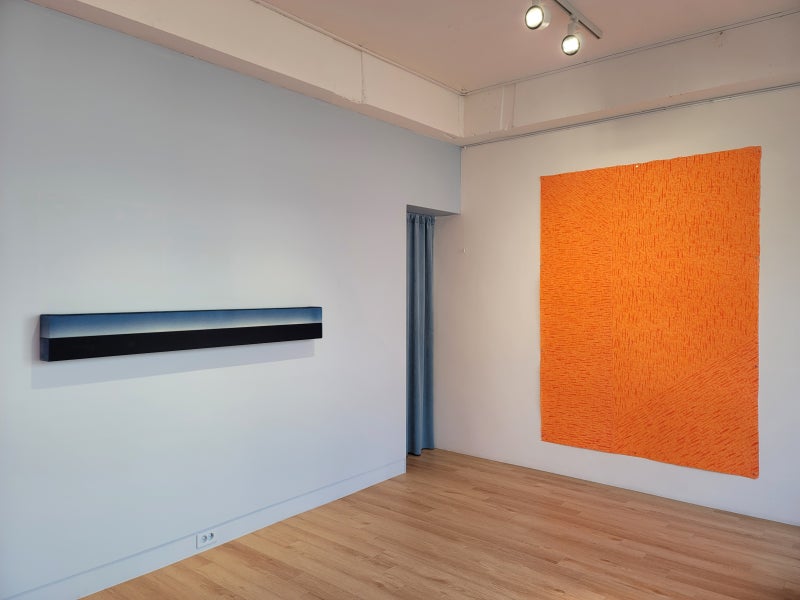
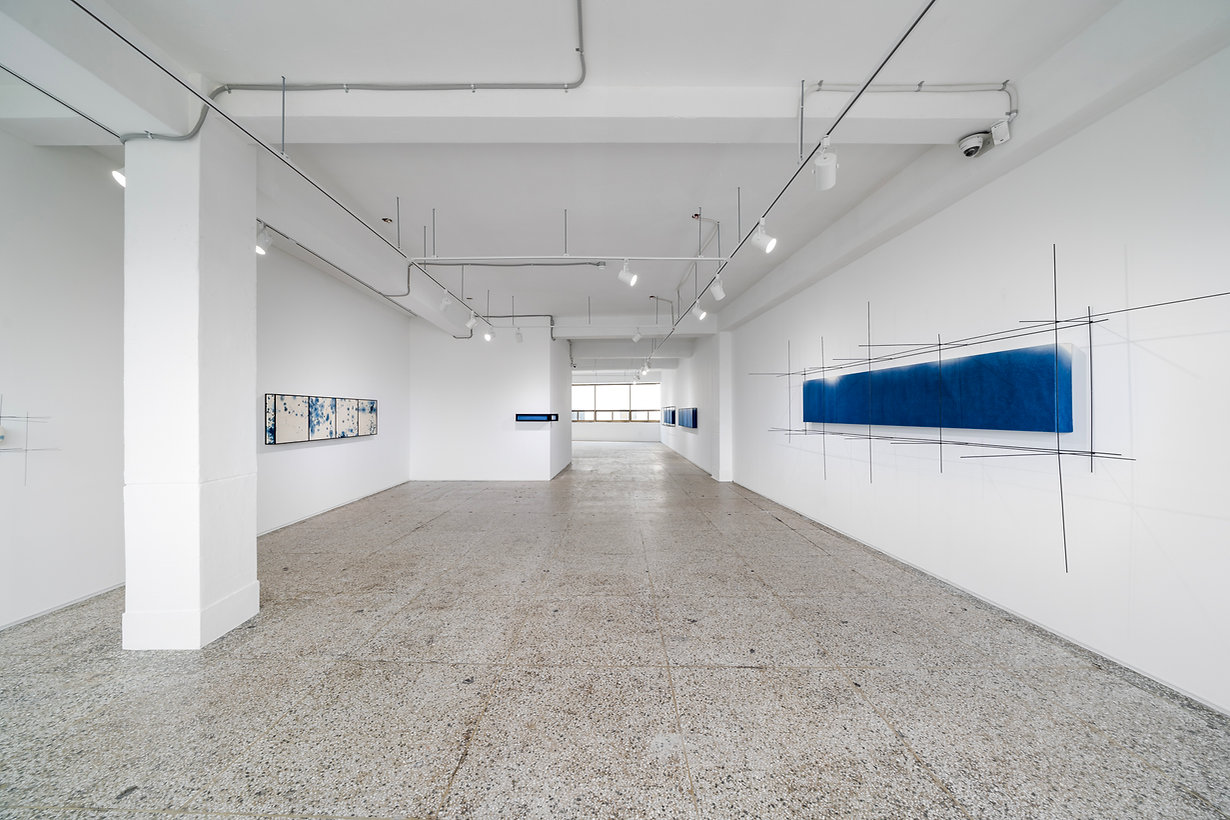
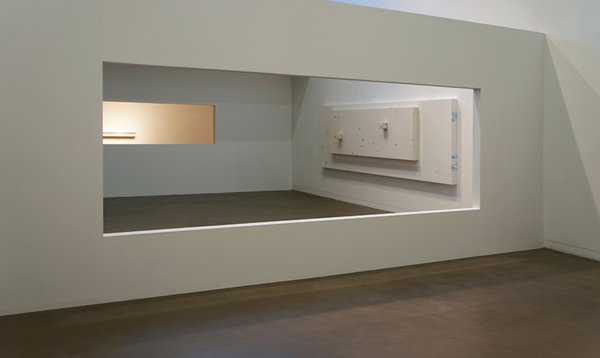
‘L’episteme of Painting’ also overturns the standardized format of the canvas. Lee Inhyeon centers his work on an elongated rectangular canvas that is not a two-dimensional plane in the traditional sense, but a “three-dimensional plane” with a fixed width; he varies height and breadth, experiments even with rod-like canvases or cubic canvases, and combines them arbitrarily. His paintings—made of two panels, three panels, or sometimes as many as five or six—brazenly mock the cliché of the “single-panel painting.”
Moreover, his finished works pass through processes of partial dismantling and recomposition, repetition and reuse. He removes the canvas cloth from an earlier work and stretches a new canvas over the existing frame, then combines the newly made work with the earlier work to complete yet another work. For him, the distinction between new and old is not important; each work, rather than holding value and meaning as an independent unit, takes its place as one process within the artist’s entire trajectory named ‘L’episteme of Painting’.
All of these attempts within L’episteme of Painting arise from Lee’s will to resist the fetishization of artworks and the authority of the artist. He opposes the modern myth of art that sanctifies artworks or deifies artists. In fact, his act of making is a repetition of simple labor. After entering production on the basis of his calculations, he withdraws all ruminations and desires, holds his breath, and applies strokes with the same duration and tension, or places paint down in an instant so it may bleed.
He concentrates solely on bringing canvas and paint into encounter. For him, the pictorial field is merely a site where two materials—canvas and paint—meet through the artist’s labor, and it is not a realm the artist can fully control. In his completed paintings, there are no brush marks, no fingerprints, no signatures—only material and the spontaneous illusions that material produces. In this way, within ‘L’episteme of Painting’, the role of the artist is minimized, and the artist moves as far away from the work as possible.
Lee Inhyeon’s attitude toward art—opposed to auteurism—recalls Roland Barthes’s The Death of the Author. Barthes rejects, in full, the approach to literature that presupposes an author as the singular origin of meaning and treats reading as the deciphering of that author’s intention. He refuses the author’s absolute authority as the source of meaning and asserts that every text is plural and indeterminate. The “author (auteur),” a modern concept born alongside humanism since the Middle Ages, is presumed always to precede the work and to sustain it as its fundamental origin. Barthes, however, regards this notion of the author as a myth to be overturned, proposing instead the figure of the “scriptor,” who is born simultaneously with the text and is consumed only within the act of enunciation.
The modern scriptor, as Barthes describes, is a true writer who has no origin other than language itself—one who imitates prior writing and “draws ceaselessly from a vast dictionary without bottom.” Only then can the text exist as an open space for infinite production of meaning, and only then can control over meaning pass to the reader.
Lee Inhyeon’s painting demonstrates, in practice, that this “death of the author” is not a proposition that holds only in literature. The painter is not the subject of self-expression who produces a single, definitive meaning within his painting; rather, he is one who is born with painting and is expended only within the act of making it—continuing simply to “imitate previous gestures.” Originality is a fiction produced by the modern myth of art: nothing can be wholly new. The painter is one who continually surveys the space of painting, delaying the bestowal of final meaning upon the work. In this sense, Lee becomes, in Barthes’s terms, a true artist—a modern scriptor—who investigates painting itself while allowing the signified (image) to slip incessantly amid the countless signifiers (materiality) drifting through ‘L’episteme of Painting’.
His emphasis on artistic action as a sequence of becoming, rather than on the finished artwork as a completed product, and his focus on enriching meaning through repetition and difference among similar things, support this reading. This is why, within ‘L’episteme of Painting’, changes in image are not essential, and why the series is able—indeed compelled—to continue.
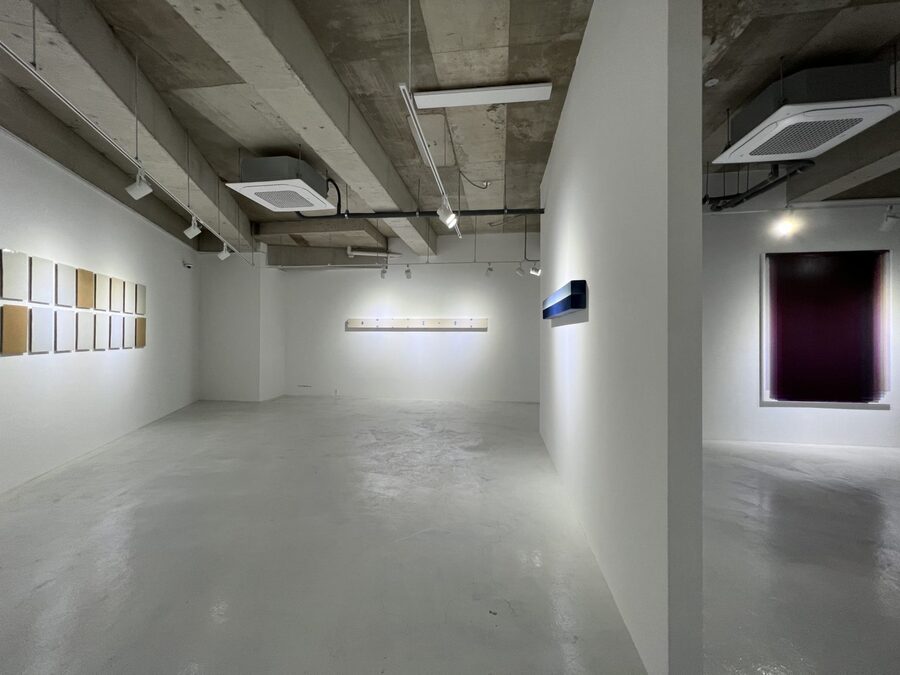
In this solo exhibition, held three years after the last, ‘L’episteme of Painting’ unfolds in a more diverse and abundant form. Unlike several recent exhibitions that presented a single kind of series, here Lee gathers his methods across years to show, in the fullest sense, a richly varied ‘L’episteme of Painting’. Especially striking are the works in which paint bleeds outward as a horizontal line along the edge where planes meet. Made by soaking a wooden bar wrapped in canvas with paint and pressing it against the corner of a broad canvas, these images change in the shape and length of their lines depending on angle and duration—sometimes becoming an island, sometimes a horizon.
In addition, a group of works in which these illusion-bearing surfaces combine with uniform monochrome planes—two panels meeting edge to edge—forms a central current of the exhibition, clearly revealing Lee’s characteristic tightrope walk between materiality and illusion. Alongside these are several other works: the established plane works that represent L’episteme of Painting; point works made with a slightly altered method—whereas previously the brush tip lightly touched the canvas, darkening the point’s edge, this time the artist repeatedly places paint down without touching the brush to the canvas, producing a deeper tonal center; and lighter plane works in which paint skims across the surface.