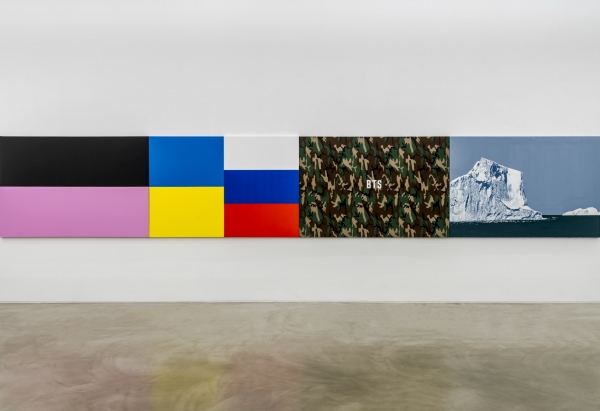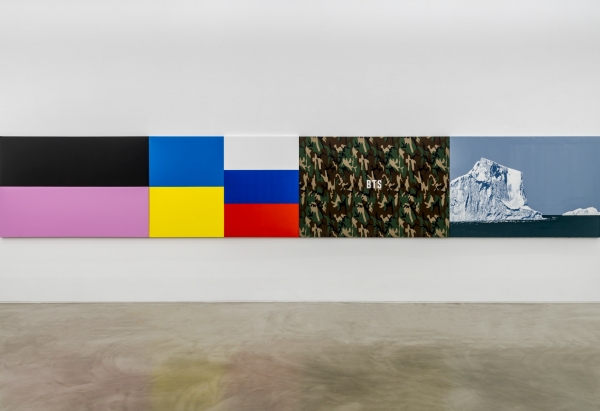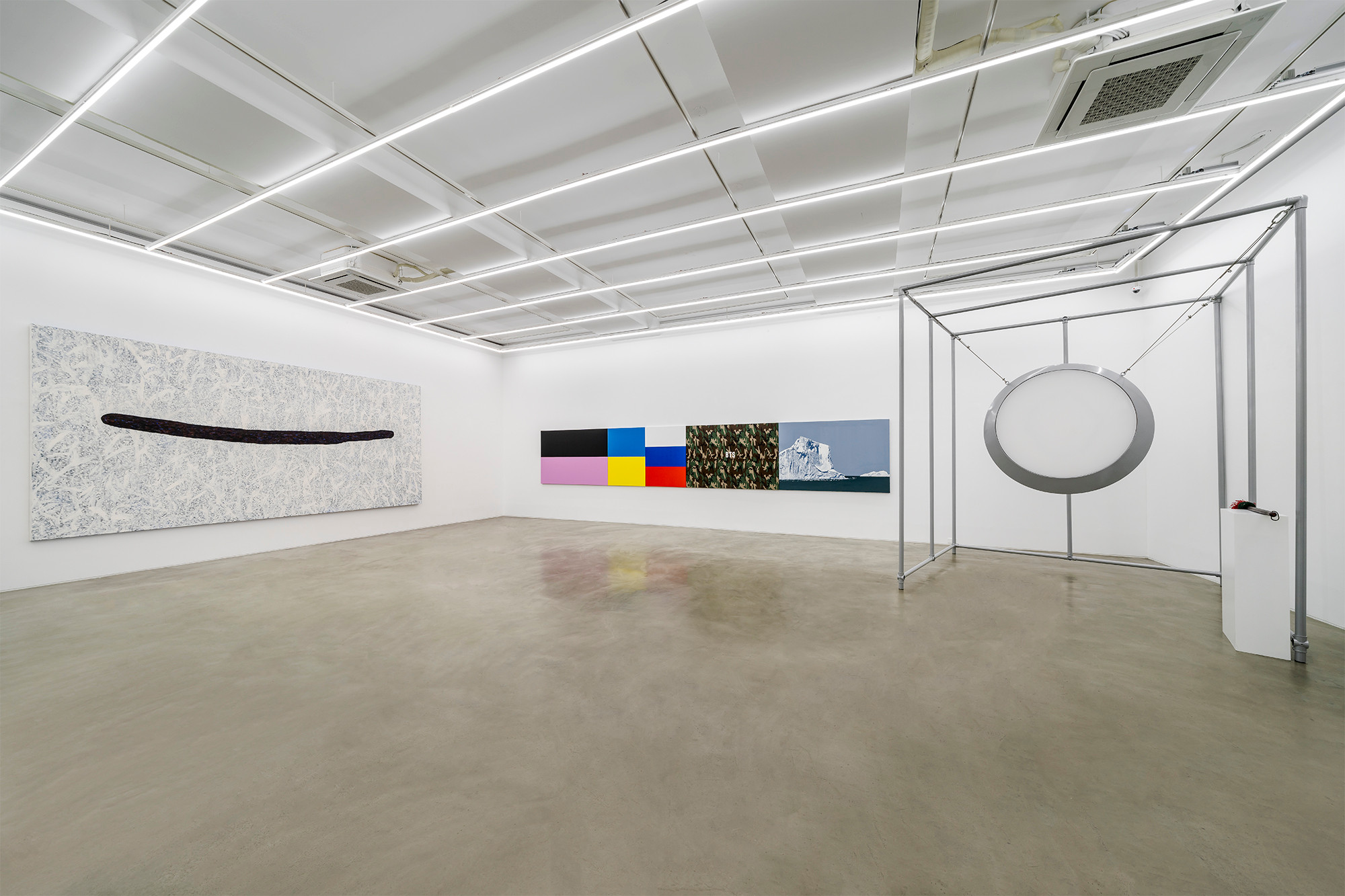
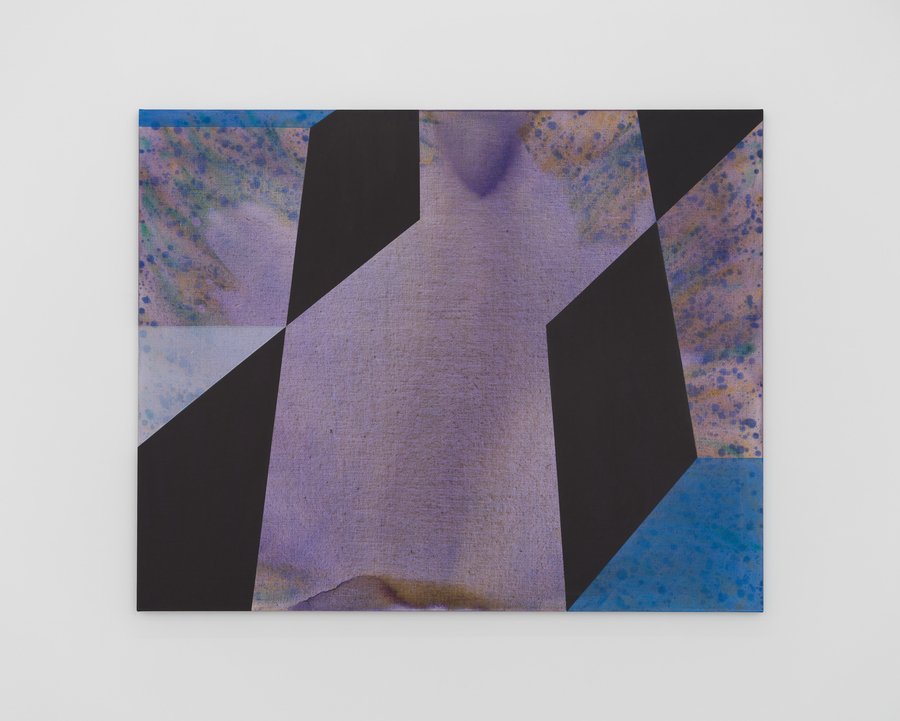
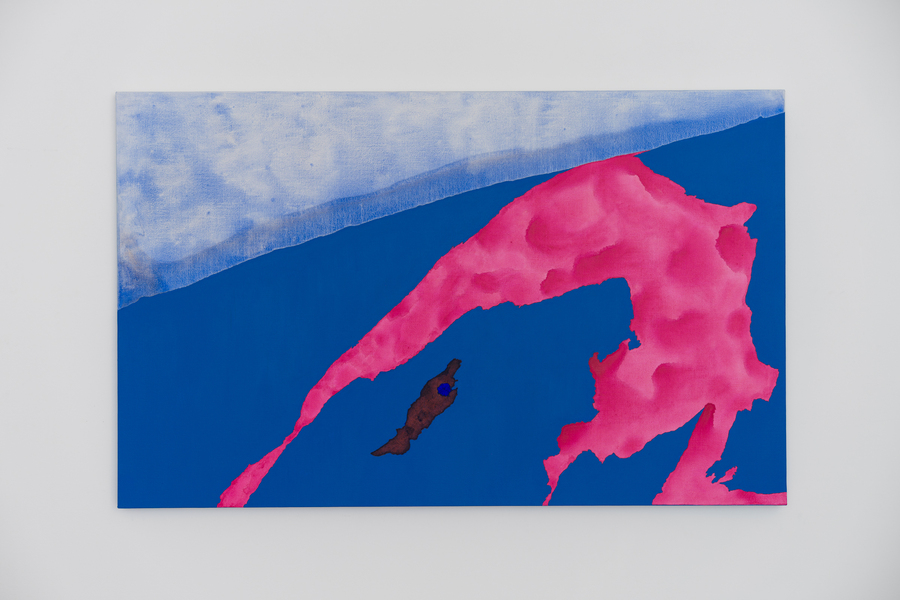
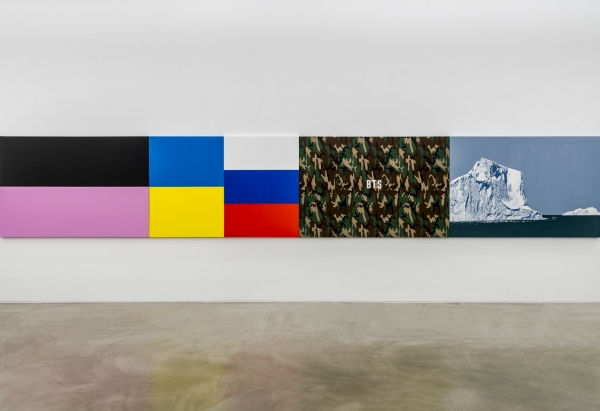
Yoon Dongchun, Reality – Hot & Cool: BLACKPINK/Ukrassia/BTS/Climate Crisis, 2022, Mixed media on canvas and cotton fabric, 130.3 x 775.6 cm © Yoon Dongchun

Thinking, Understanding Painting

A long black-and-pink rectangle; a short blue-and-yellow rectangle; a three-tiered rectangle composed of white, blue, and red; a piece of military-patterned fabric bearing the letters “BTS”; a seascape with an iceberg floating upon it. Before us stretches an artwork measuring 775.6 cm in width, consisting of these five panels aligned horizontally, tightly joined without a single gap. Now then — how would you view this work?

The sequence of colored planes suggests a minimalist style. The camouflage pattern faintly recalls the paintings of American Abstract Expressionist Clyfford Still. The sublime grandeur of the massive iceberg might evoke the tradition of 19th-century German Romantic painter Caspar David Friedrich. Yet the title of this work is Reality – Hot & Cool: BLACKPINK/Ukrassia/BTS/Climate Crisis. The title itself already contains topical references, along with coined terms that twist explicit designations and proper names.

To interpret the work by placing it within a specific art-historical school or visual style is, contextually speaking, a misfit. In other words, this is not a work to be consumed through immediate sensory reaction or simple visual pleasure; it clearly embeds meaning and demands to be read.


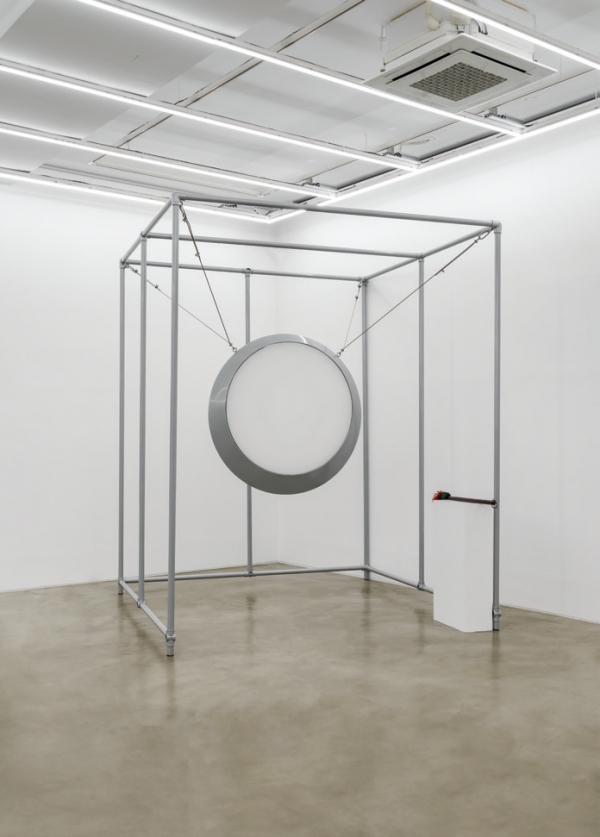
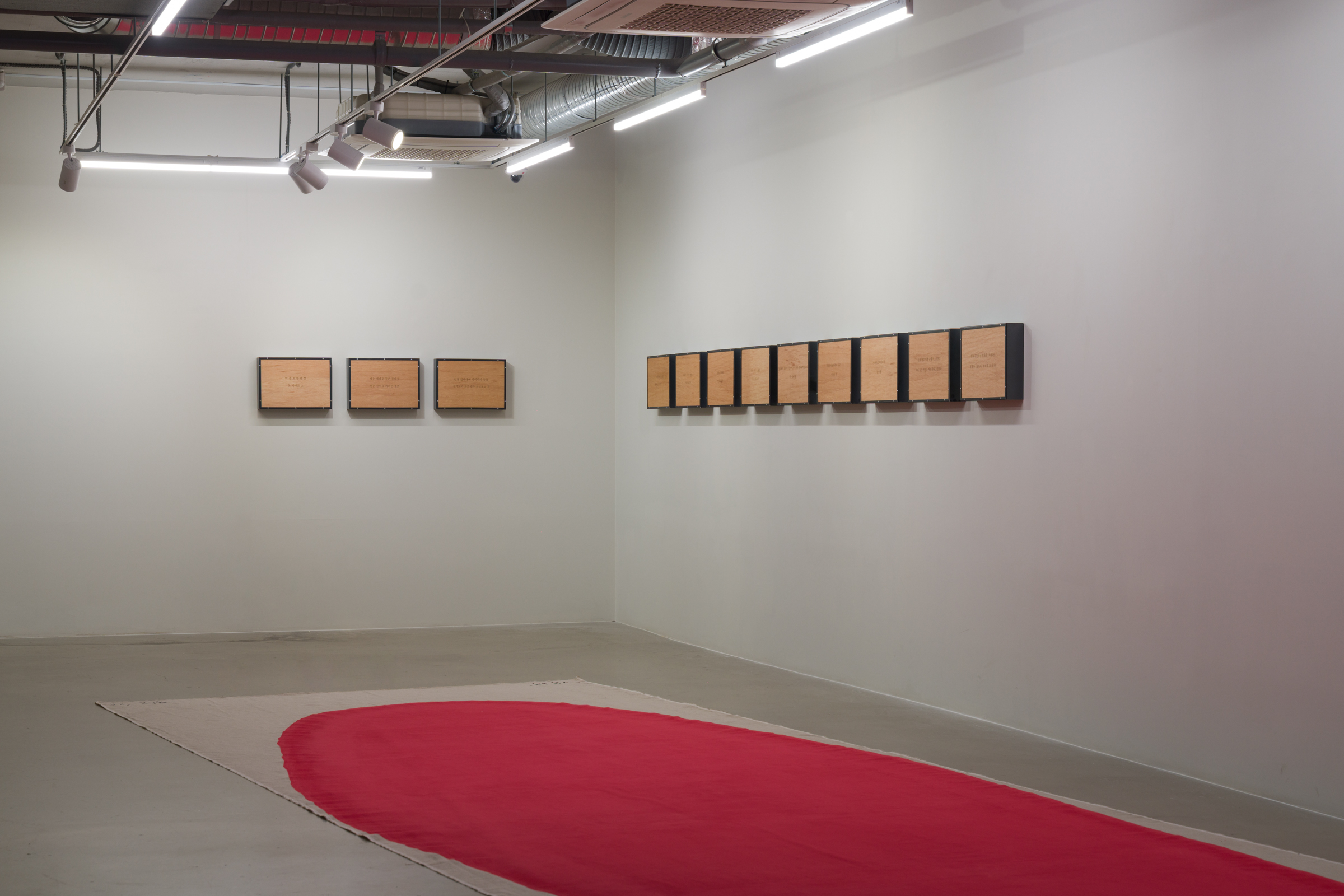
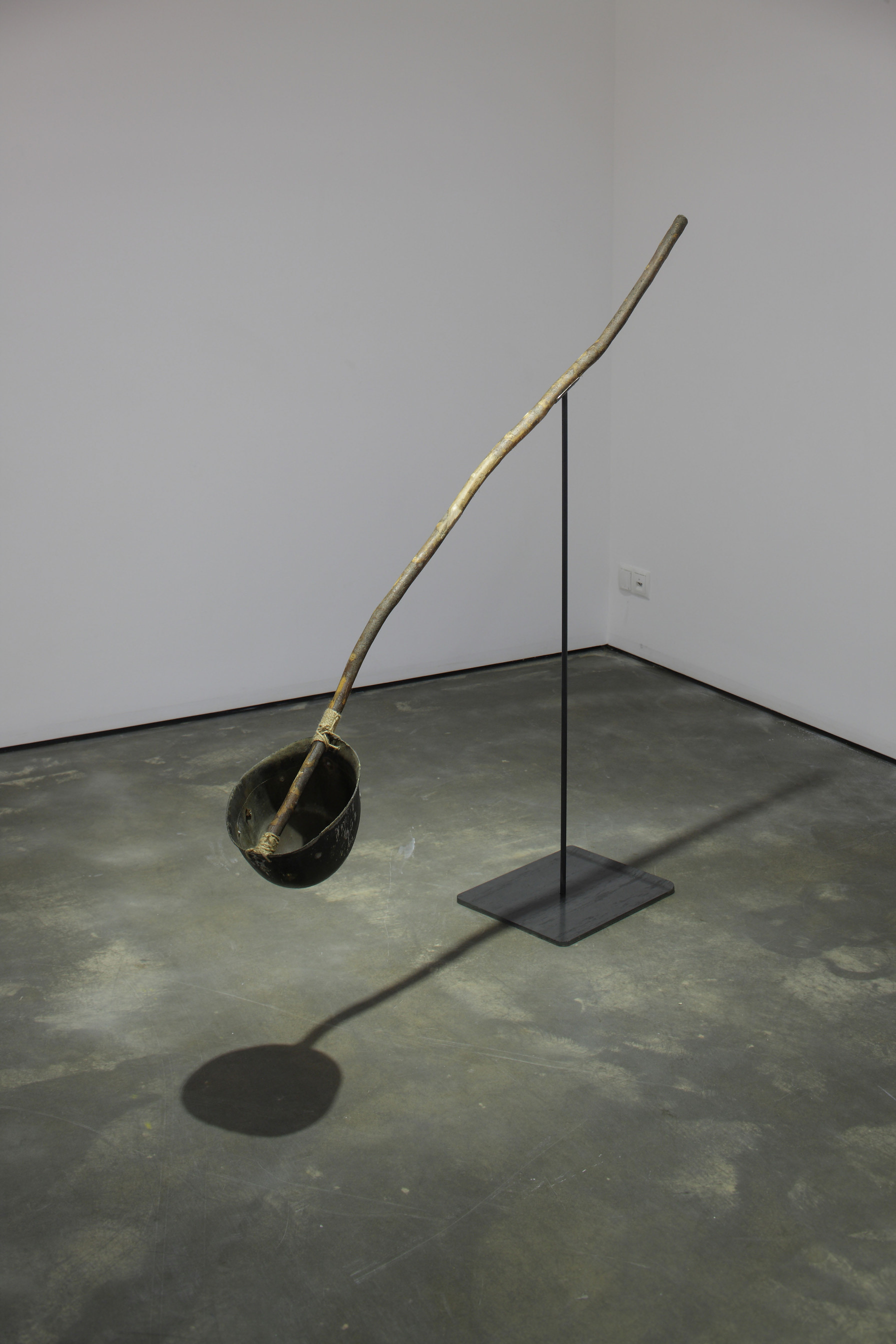
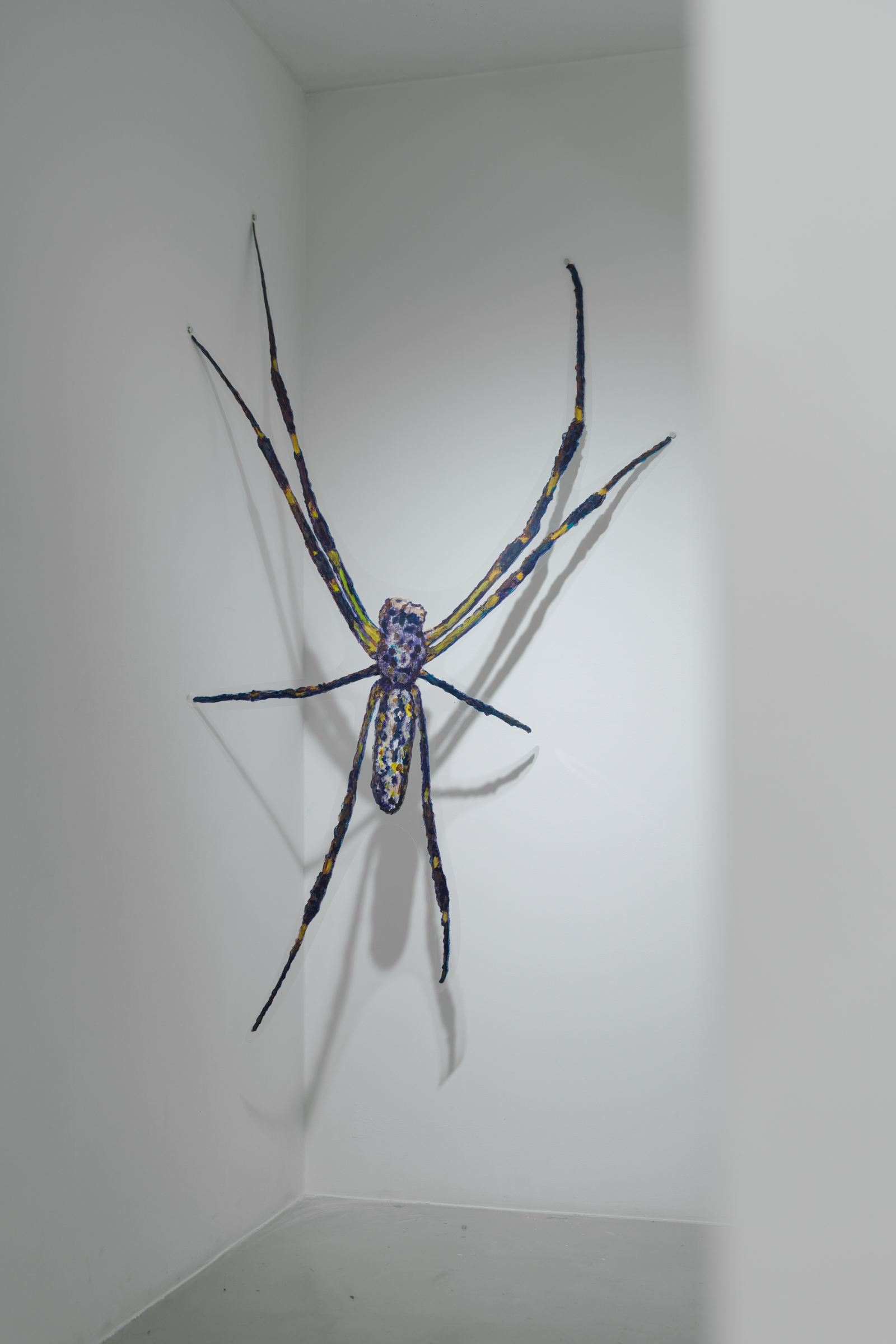
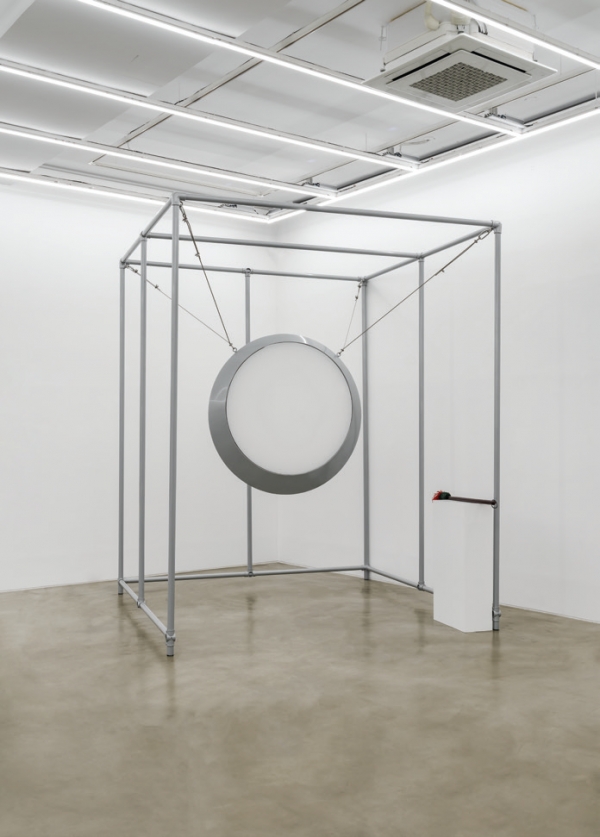
Yoon Dongchun, Shinmungo that Doesn’t Ring, 2022, Powder coated frame, spandex, drumstick, 270 x 270 x 320 cm © Yoon Dongchun

There is art whose point of appreciation lies in understanding and persuasion. This differs from the conventional belief that artworks are to be felt sensorially and enjoyed with the eyes and heart. For example: works that are visually beautiful; works that possess formal value in aesthetic experience; works that demonstrate lineage within art history while also experimenting with new stylistic forms. Visuality, form, school, and style have traditionally justified art’s distinction from other social fields such as politics or science — particularly underpinning the aestheticism that legitimized “pure art.”

By that convention, reading an artwork like a book or engaging with it as a mental exercise may seem awkward or uncomfortable. Yet the reality of contemporary art surpassed retinal pleasure more than a century ago. Moving beyond the enjoyment of trompe l’oeil or picturesque representation, art that incorporates intellectual judgment and textuality is precisely what became avant-garde. Moreover, critical visual art that introduces heterogeneous subjects and themes within society to provoke contentious discourse — and that encourages public participation — is even more contemporary.

In such a field, the artist must be as adept at constructing logic and visualizing judgment as at using eye and hand. This task requires the tactical skill to weave together the language of art and the devices and objects of everyday life onto the image surface, and to command media in agile and complex ways.


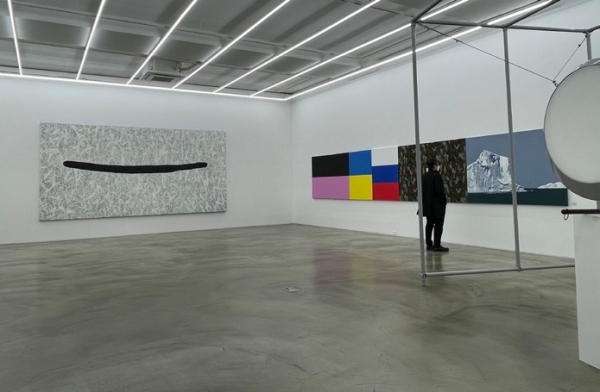
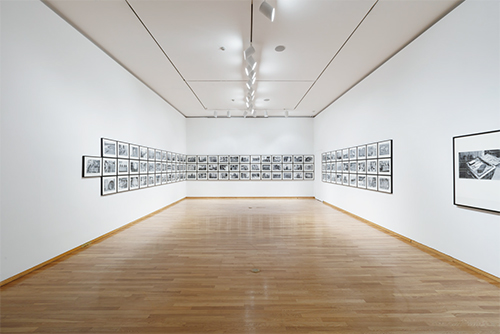
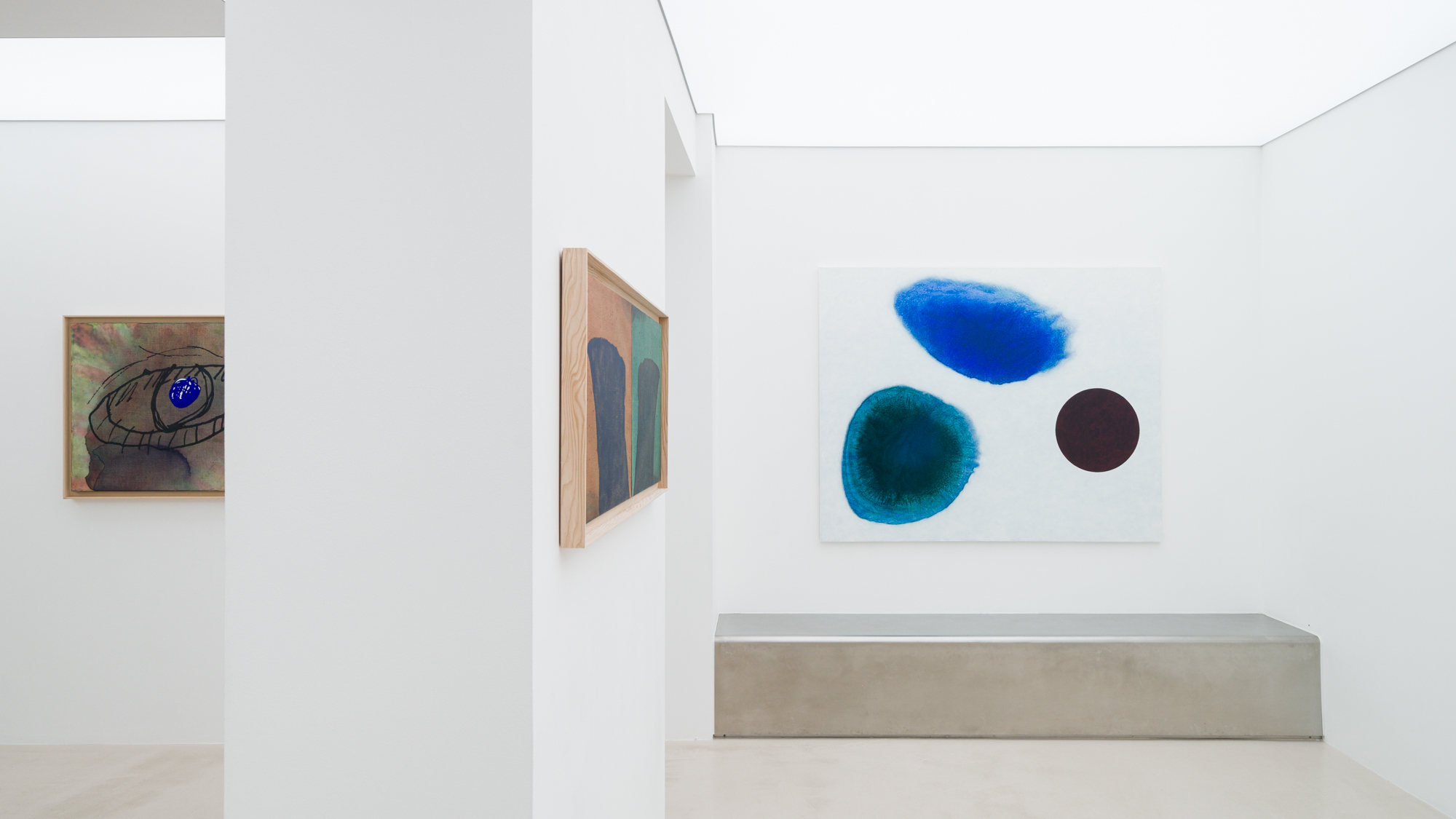
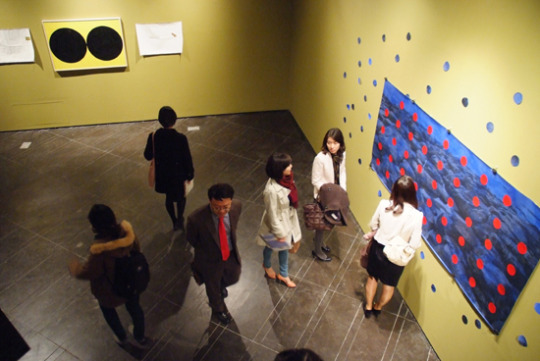
Installation view of 《Pairs》 © Gallery Simon

Yoon Dongchun, Art and Life

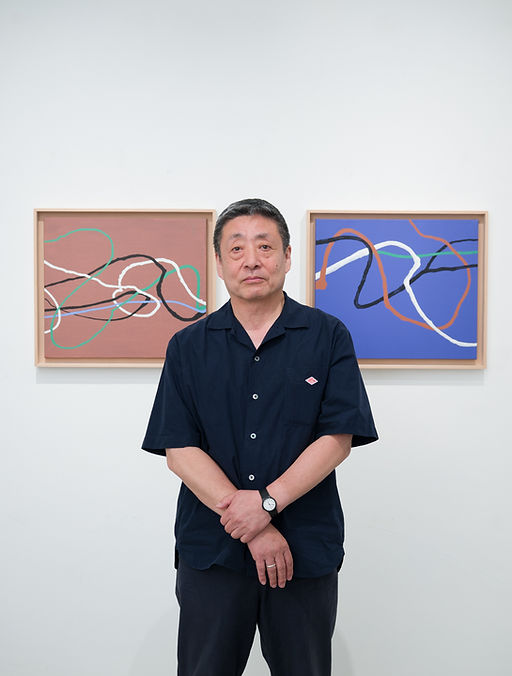
In the Korean art world, Yoon Dongchun stands as a representative figure. The aforementioned Reality – Hot & Cool: BLACKPINK/Ukrassia/BTS/Climate Crisis is a recent work from 2022, first presented in his solo exhibition 《Pairs》 (Gallery Simon, Oct. 20 – Dec. 21, 2022). As noted earlier, this work carries meanings that require the viewer not only to see but to think. The time of its production and exhibition becomes a key to interpretation. In short, it is art grounded in timeliness and reality.

At the beginning of 2022, what seemed almost unthinkable became real: Russia’s invasion of Ukraine triggered war. The K-pop girl group Blackpink, by establishing a global fandom, embodied the very mix of stereotypes implied in its name — the feminine (pink) and the strong (black). The immensely popular and influential boy group BTS found itself, willingly or not, entangled throughout the year in the politically instrumentalized issue of military exemption. And the climate crisis, needless to say, is the pressing reality of our present and a fearful inheritance for future generations.

My interpretation may not coincide precisely with the message Yoon Dongchun intended to inscribe into Reality…. Nor does he pursue a single, exclusive meaning in his art or impose a definitive answer upon viewers. Yet he works from a position beyond the ideology of pure art, maintaining that art arises from life and that through art the negativity of life may be sublated. Thus, the grounds and scope of interpretation are neither infinitely open nor recklessly unbounded.


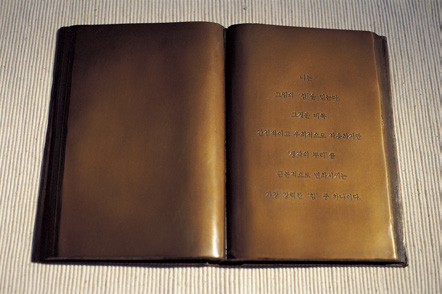
Yoon Dongchun, The Power of Image, 1998, Bronze © Yoon Dongchun

From the mid-1980s to the present, spanning nearly forty years, Yoon Dongchun has worked across painting, drawing, printmaking, photography, video, installation, and sculpture. At first glance, he might resemble today’s pluralistic artist assembling a diverse portfolio — or a free spirit traversing artistic expression at will. Yet rather than indulging in the flamboyance of pluralism, he is a modernist who inscribed in bronze the declaration, “I believe in the ‘power’ of image.” (The Power of Image, 1998). Here, however, “modernist” does not denote an art-for-art’s-sake devotee, but an avant-gardist who believes that art can fundamentally transform “the roots of thought.”

Possessed of a rational discipline that prevents immersion in romantic notions of art, he has consistently produced work imbued with critical argument throughout his career. Even if realized in diverse formal and generic modes, Yoon Dongchun’s art must be understood as the result of selective expression grounded in his own thematic consciousness — “a wish to create opportunities to reflect on our life, here and now, through art” (The Cradle of Beauty, 2017) — and his concept of the “thinking painting” (2014).

In doing so, he anticipated and realized, earlier than most, the plural languages and complex representations that we now accept as natural in contemporary art. In short, Yoon Dongchun is both a rare driving force of critical thought within Korean contemporary art and the living present of that lineage.


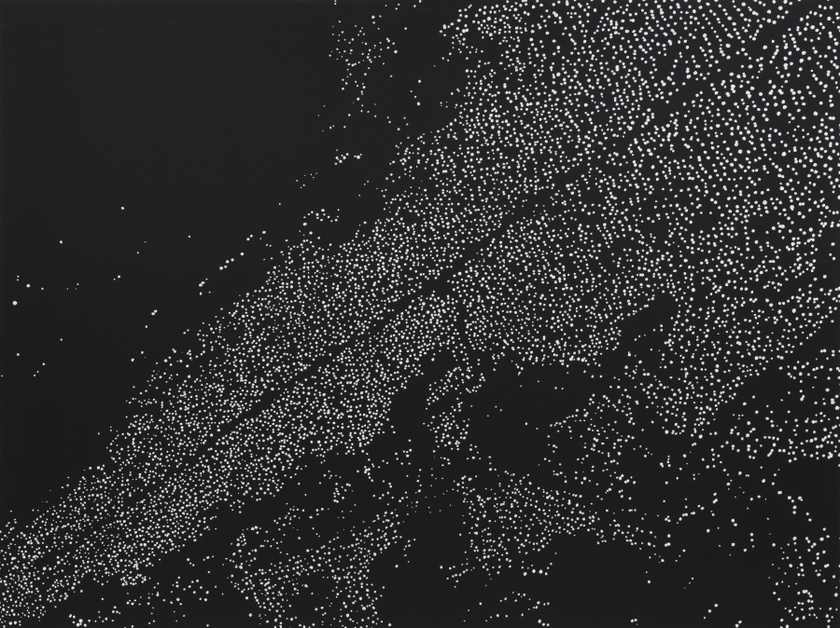
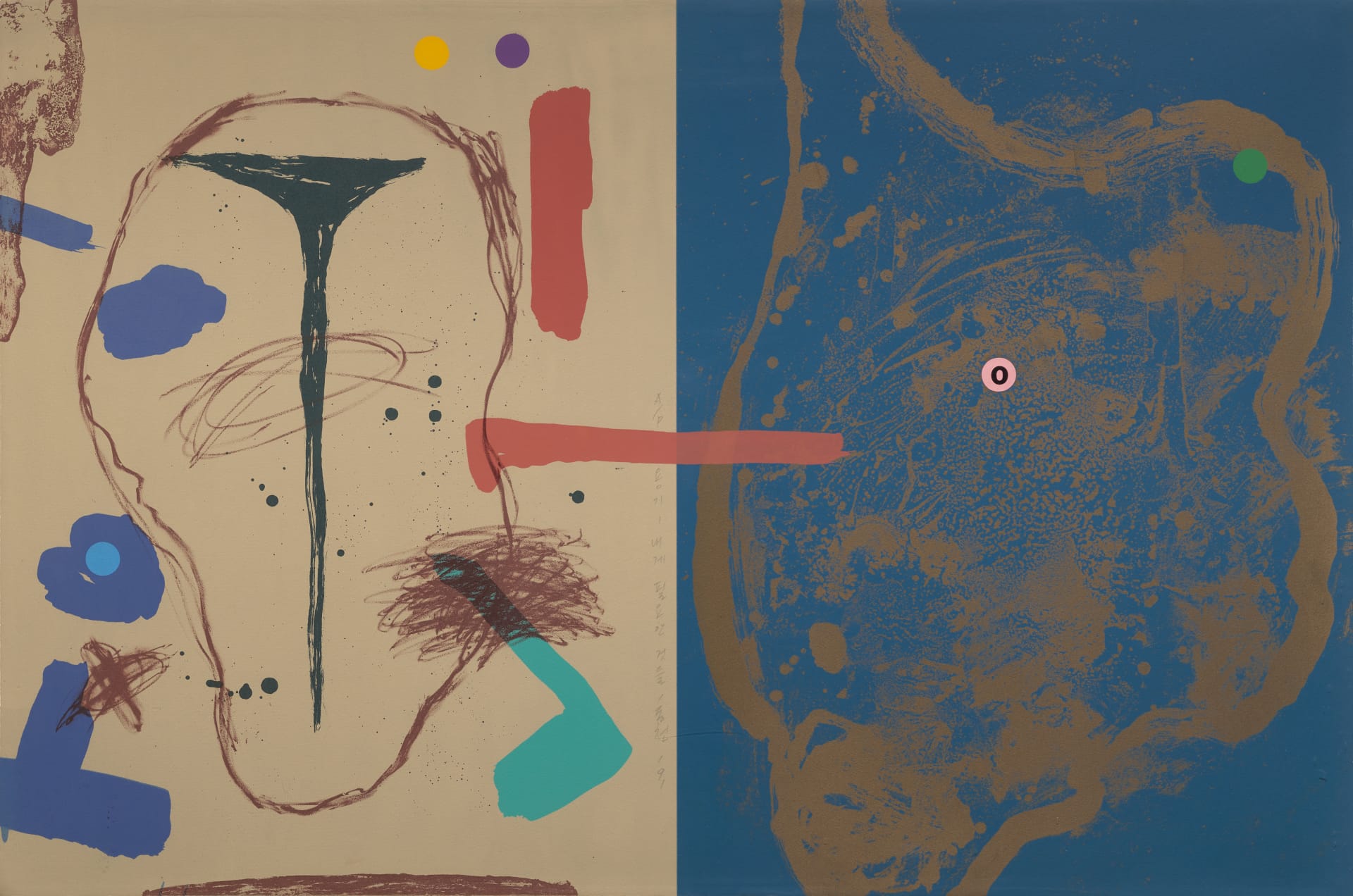
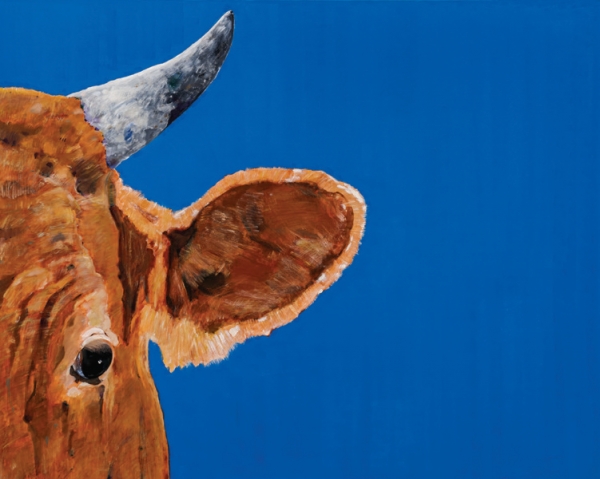
Yoon Dongchun, Reading a Sutra, 2022, Mixed media on canvas © Yoon Dongchun

Container容器 – Courage勇氣

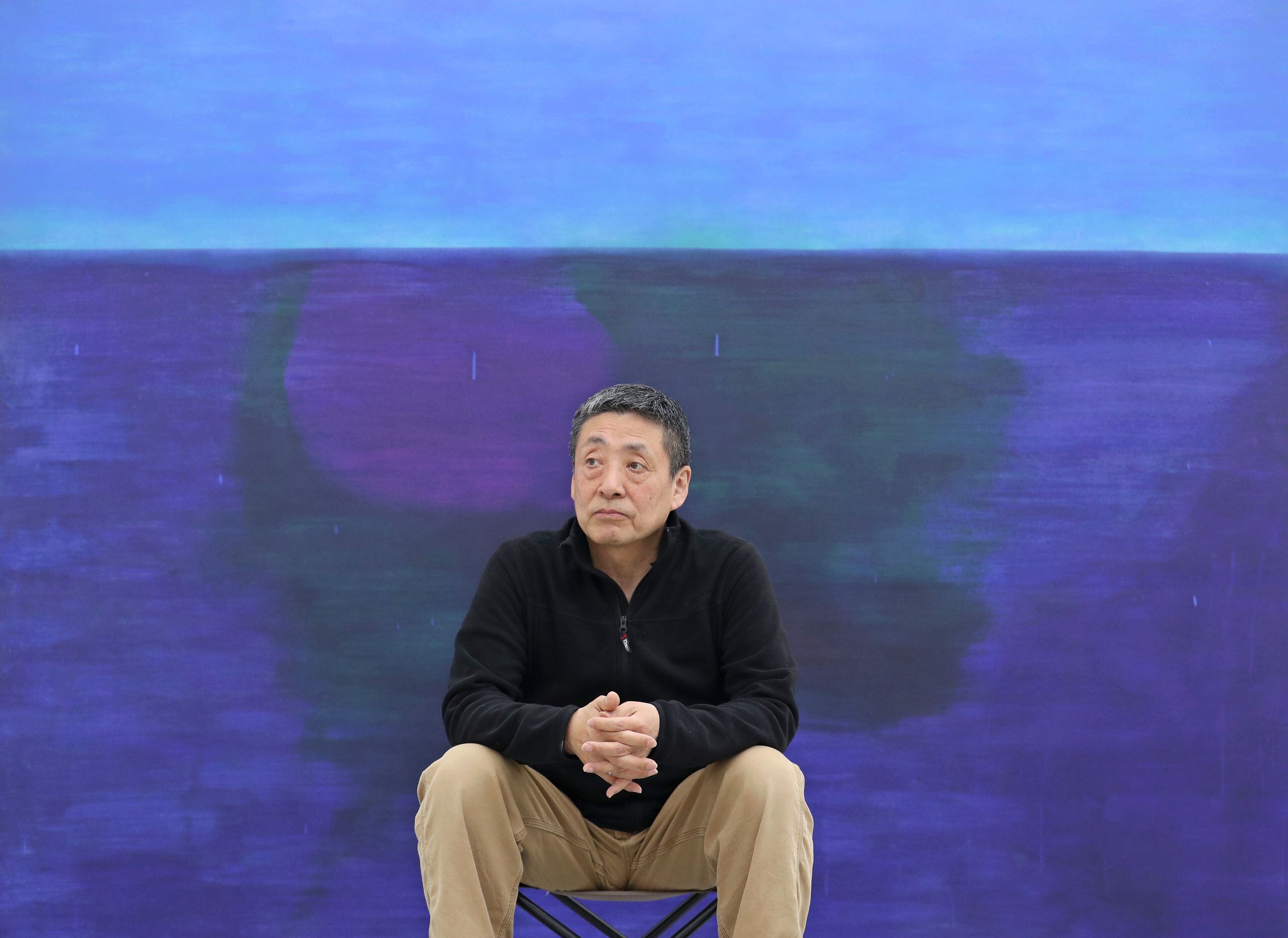
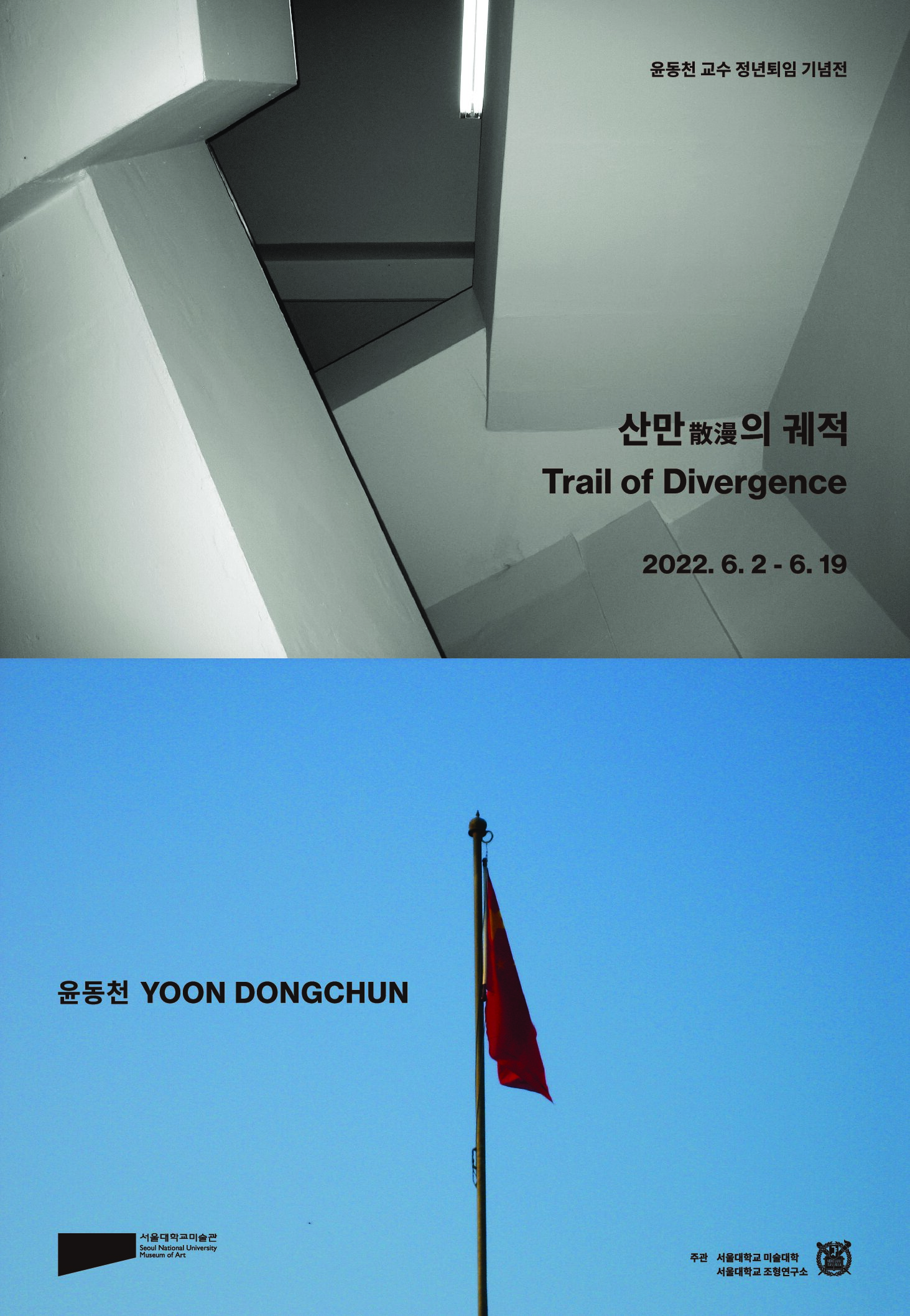
Yoon Dongchun served as a professor at Seoul National University’s College of Fine Arts for over thirty years. Upon retiring from this weighty role, he presented the solo exhibition 《Trail of Divergence》 (Seoul National University Museum of Art, June 2 – June 19, 2022), followed by 《Pairs》 at Gallery Simon, both of which comprehensively articulated his aesthetics: art imbued with latent content and critical thought.

Because he arrives at such art through synthesizing intellectual force and the power of image, his writing is likewise lucid. The following excerpt appears in the 《Pairs》 catalogue — smoothly readable, yet incisive:

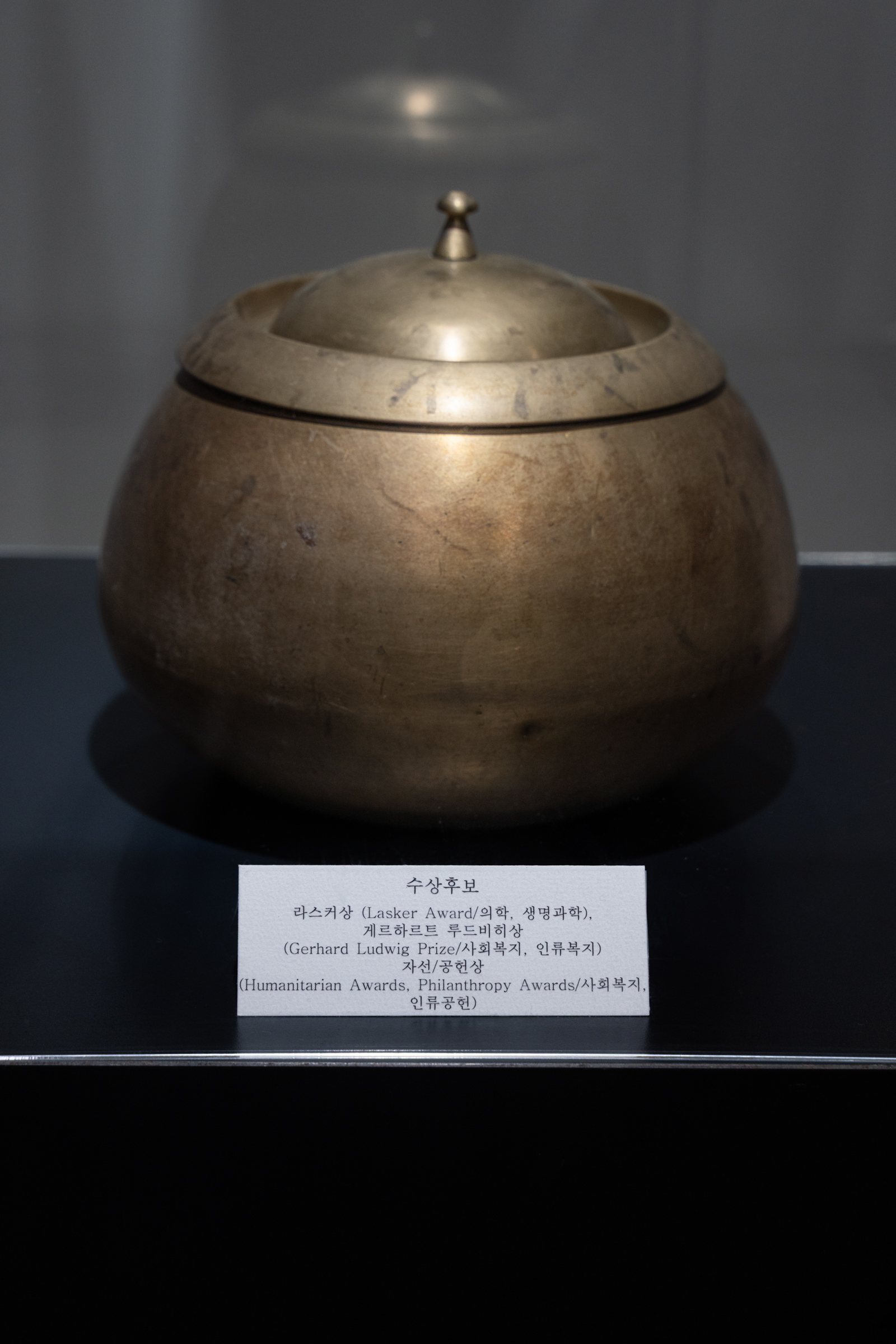
“If one were to offer candy in a chamber pot, no one would so much as glance at it. No matter how finely crafted the porcelain chamber pot may be. But if one offers candy in a chamber pot to Westerners, they will readily eat it without hesitation. For them, the chamber pot is merely a well-made container.”
(Yoon Dongchun, from “On the Exhibition 《Pairs》”)

The crux lies in the difference between those who know and those who do not know the identity and function of the chamber pot. Between knowledge and ignorance operates a powerful prejudice. The view that a chamber pot is a lowly object — and that placing food within it is unthinkable — is neither purely cognitive nor purely sensory prejudice. It is a prejudice formed through the intertwining of cognition and sensation. As Mary Anne Staniszewski, author of This Is Not Art, has described it, this is a “horizon of prejudice” — an aesthetic and perceptual bias unconsciously formed through our education in the history of [Western] art.

Yoon Dongchun appears to side with those “Westerners” who see the chamber pot as a beautiful vessel. Yet interestingly, those same figures constructed the ideological container of “pure art,” disseminating even to East Asia the horizon of prejudice that declares “this is art, and that is a base object.” Thus, what Yoon Dongchun points to is not one side but the dimension of relationality — the limits inherent in each element that forms a pair.

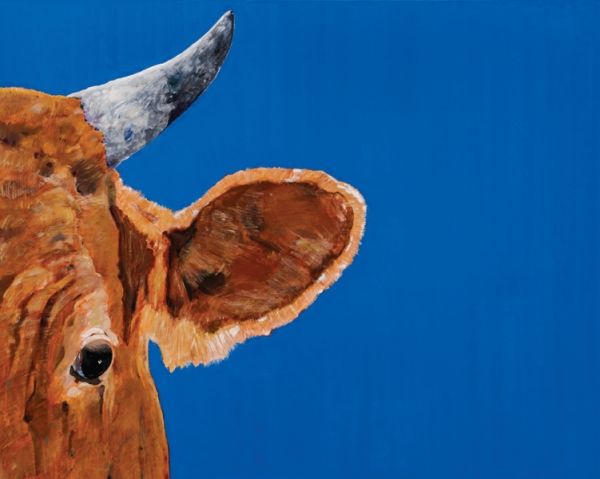
Knowledge, in some cases, misses even the playful simplicity of visible aesthetics, as in Reading a Sutra (2022), a painting that fills the canvas with the ear of an ox. Ignorance, meanwhile, as suggested by his installation Shinmungo that Doesn’t Ring (2022), may abandon even the minimum threshold of self-expression despite possessing the right to speak. Therefore, the sum of the two is crucial — or rather, the tension between the two poles. When critical thought achieves synthesis — or tension — not through direct speech or writing but through the silence and formal language of plastic art, it unsettles the entire structure of perceptual experience.

The dictionary defines “courage (勇氣)” as “spirited and steadfast energy; a disposition unafraid of things.” Yoon Dongchun will likely continue to stand at the fissures of structure by pairing the courage to critique art with art itself as container (容器).

References