Activities
A Former Rice Mill Bearing the Pain of Exploitation Reimagined as a Space of Reflection Connecting Past and Present: Artist Cho Duck Hyun’s Old Mill Chunpo Project
May 18, 2024
SoYoung Moon | JoongAng Daily Reporter
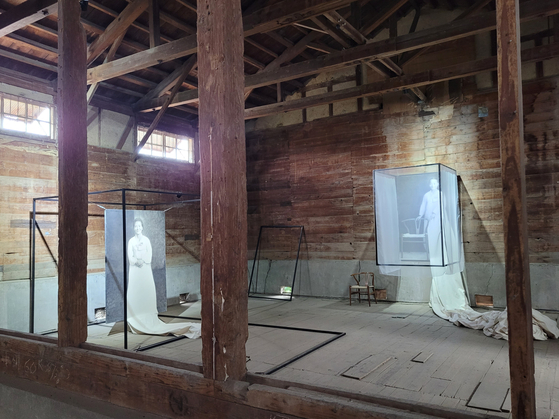
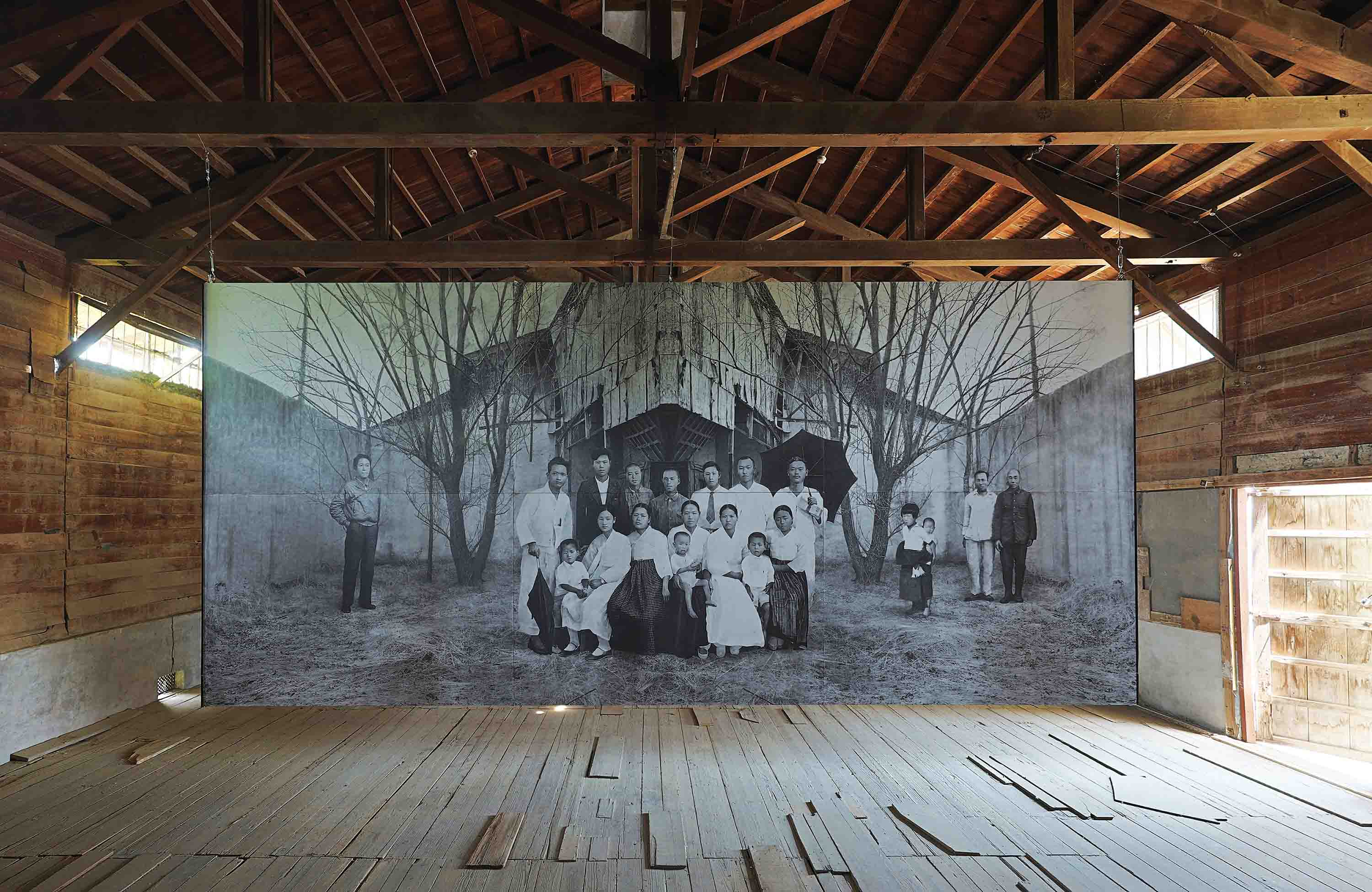
Installation view of 《110 and: Horizon》 © Cho Duck Hyun
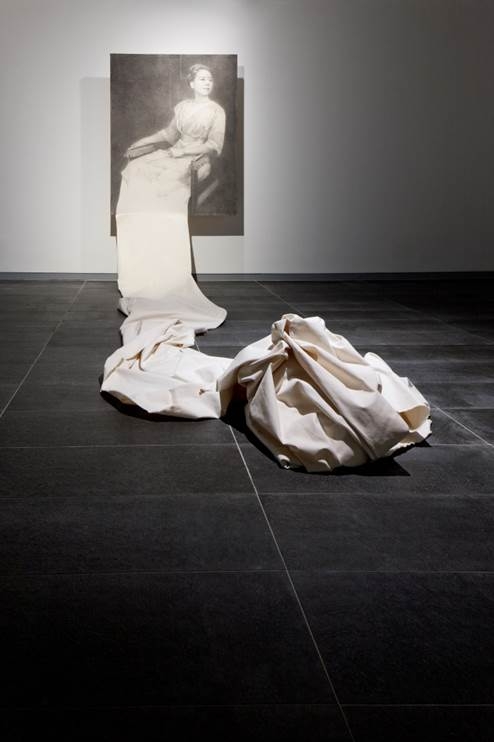
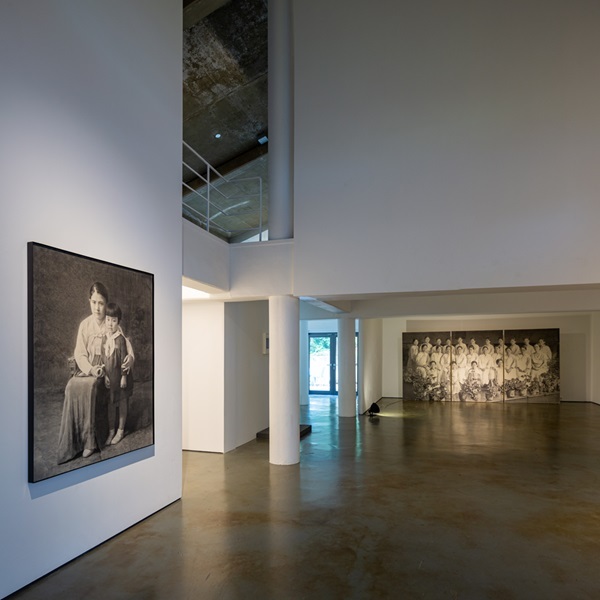
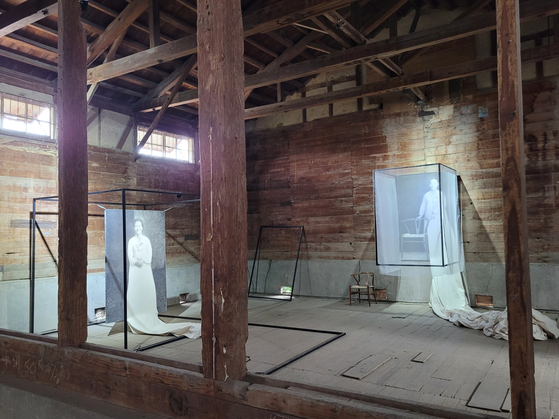
Entangled vines grow thickly along exposed wooden beams, and sunlight filters through gaps in the broken corrugated metal roof of the 110-year-old Chunpo rice-milling factory. Located in Iksan, Jeollabuk-do, the site now displays a large black-and-white photograph of a young woman wearing hanbok. The hem of her white skirt appears to extend out of the photograph and flow down onto the floor, giving the woman a mysterious presence that seems to move between apparition and reality.
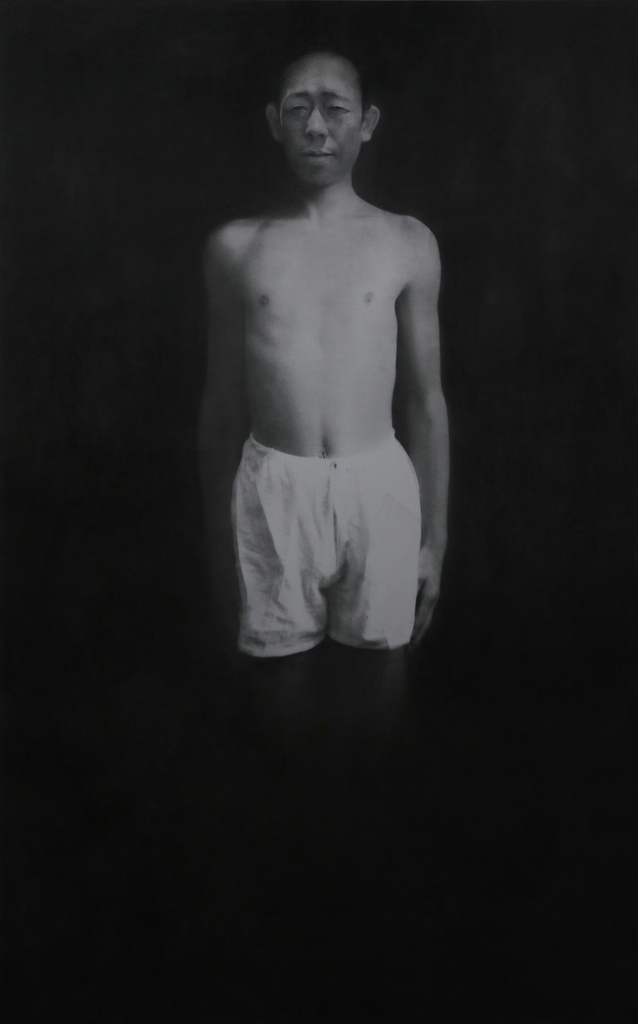
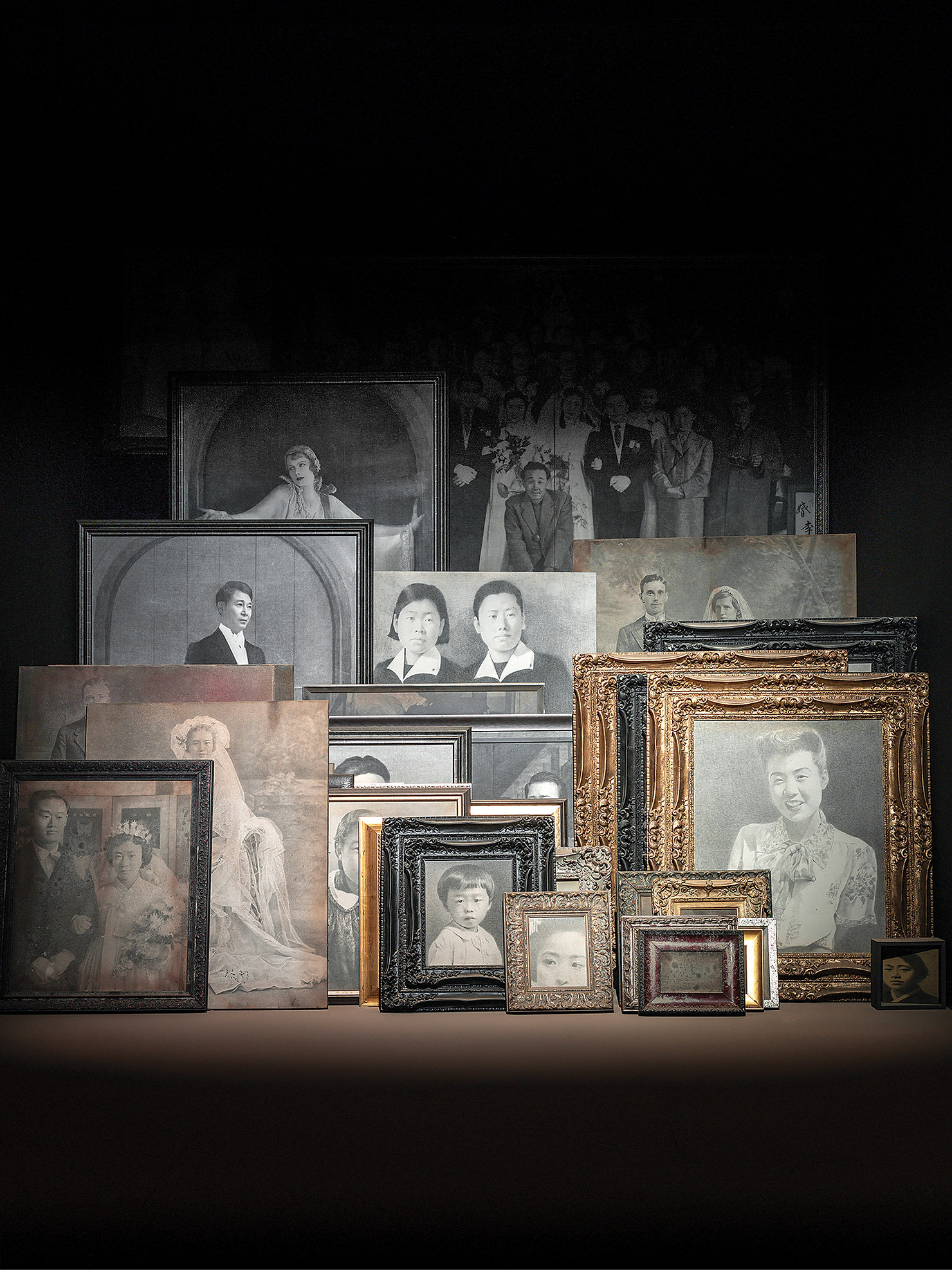
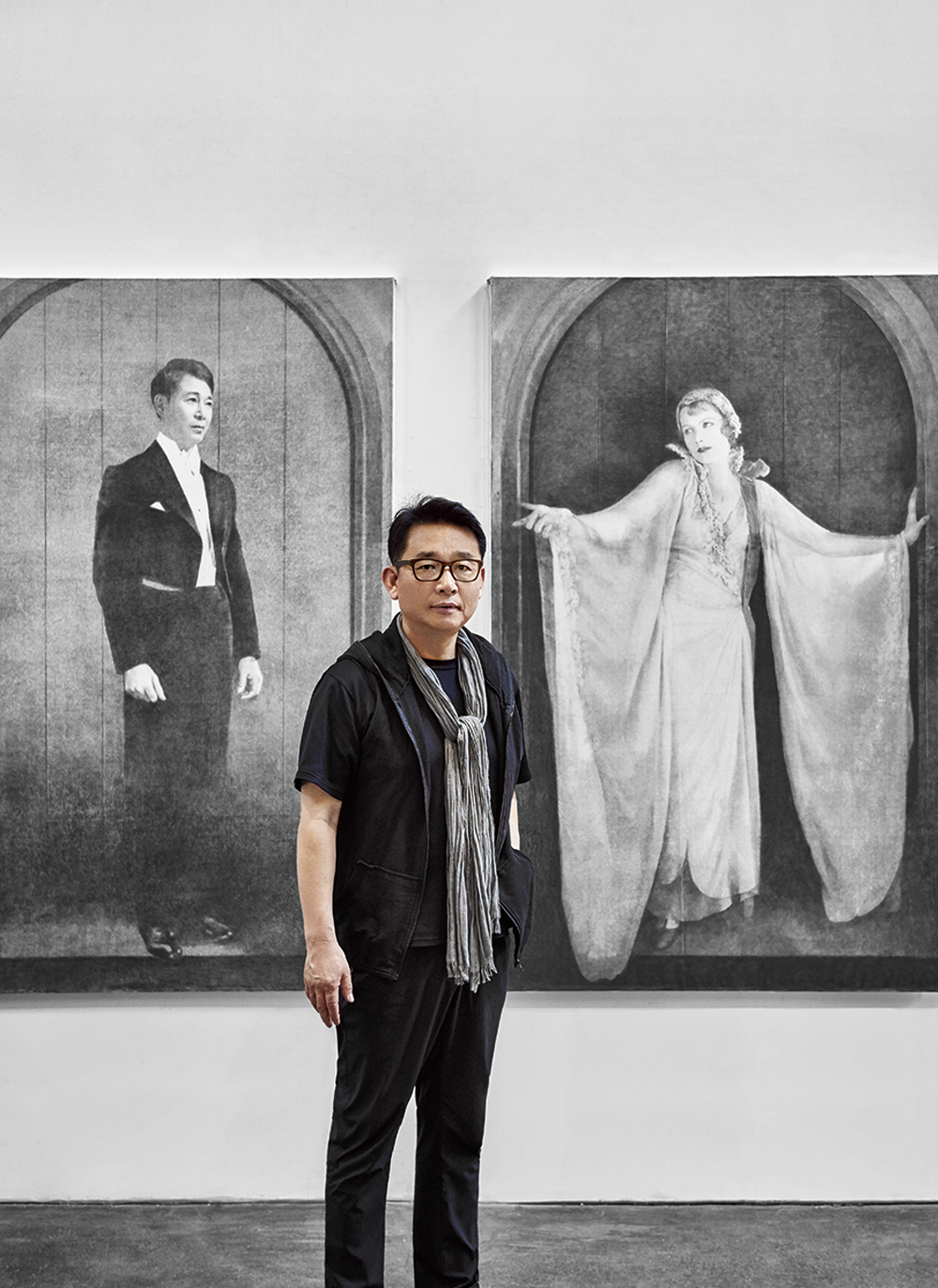
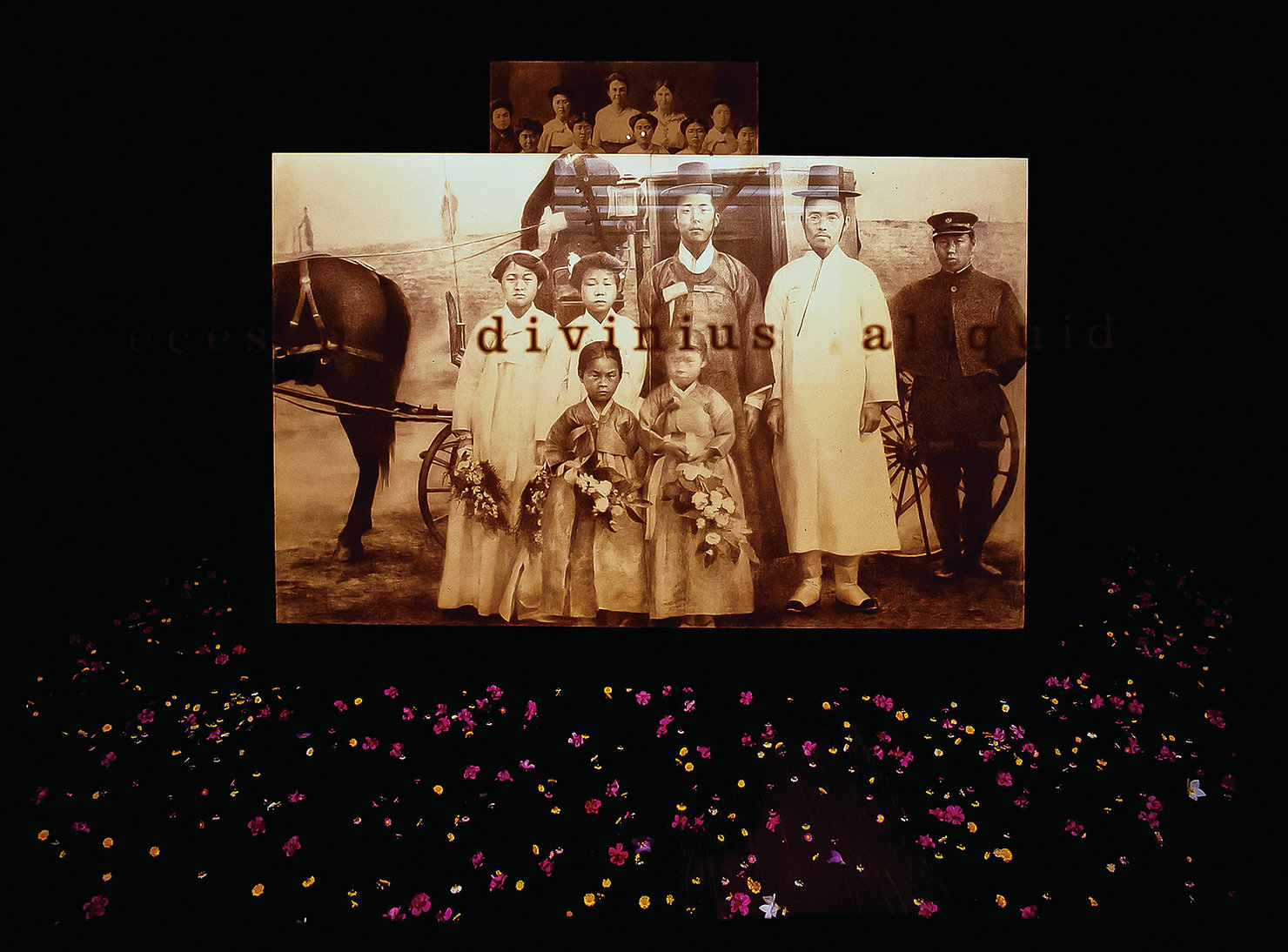
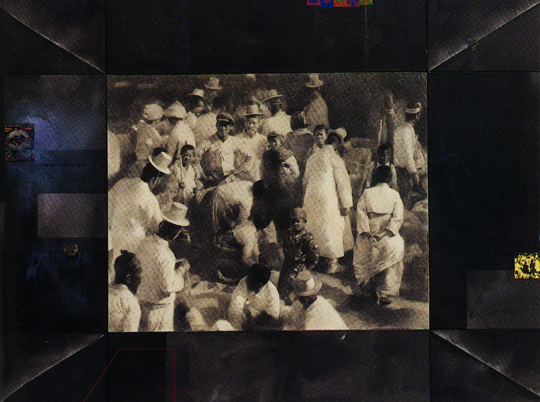
On closer inspection, the image is actually a finely executed pencil drawing that resembles a photograph, cleverly extended with real white fabric. The work is by artist Cho Duck Hyun (67, professor emeritus at Ewha Womans University), who is known for combining history and fiction through meticulous pencil drawings and installations based on historical photographs. This raises the question: is the woman a real historical figure, or a fictional one?
The Rice Mill Was Built by the Grandfather of Former Prime Minister Hosokawa
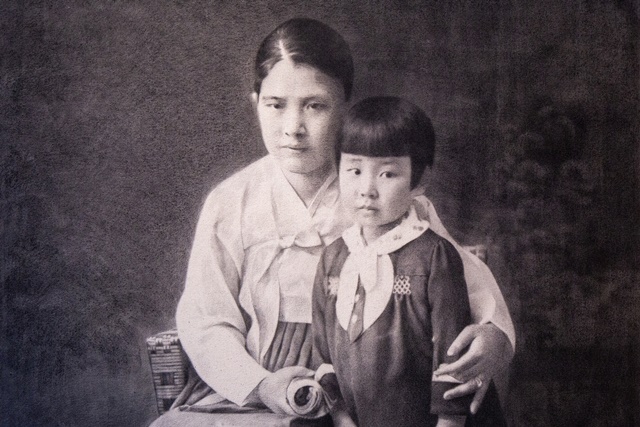
The woman is a real person: Son Ho-yun (1923–2003). Born during the Japanese colonial period, she was unable to use Korean at school and therefore developed her literary talent through Japanese poetry. She later studied in Tokyo and gained recognition for her work in the traditional Japanese poetic form of tanka (waka). However, after Korea’s liberation in 1945, writing in Japanese suddenly became a source of shame. Having written tanka every day, the poet found herself in a state of confusion and despair regarding her identity.
At that time, a scholar of Japanese classical literature encouraged her, saying that “the roots of tanka lie in Baekje,” urging her to continue writing. Encouraged by these words, Son went on to compose more than two thousand tanka poems over the course of her life. In 2005, the then Japanese Prime Minister Junichiro Koizumi even recited one of her poems during a Korea–Japan summit while speaking about peace between the two countries.
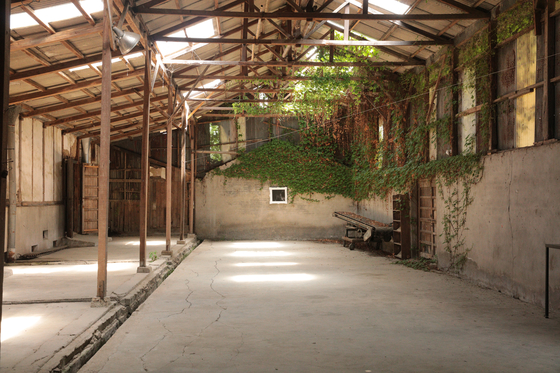
Interior view of Old Mill Chunpo © Cho Duck Hyun
Under the towering metasequoia trees that fill the quiet courtyard of Old Mill Chunpo stand several transparent monuments engraved with Son’s tanka poems. Rather than the original Japanese text, the monuments bear Korean translations produced by poet Lee Seung-shin, the poet’s eldest daughter, who has actively worked to introduce her mother’s life and work.
These monuments are also part of Cho Duck Hyun’s installation. Lines such as “Moonlight shines through the folds of a purple skirt hung to block the chilly wind” and “Dressed neatly in skirt and jacket, I breathe in the ancient fragrance left by Baekje” appear and fade depending on the shifting sunlight and shadows of the surrounding foliage.
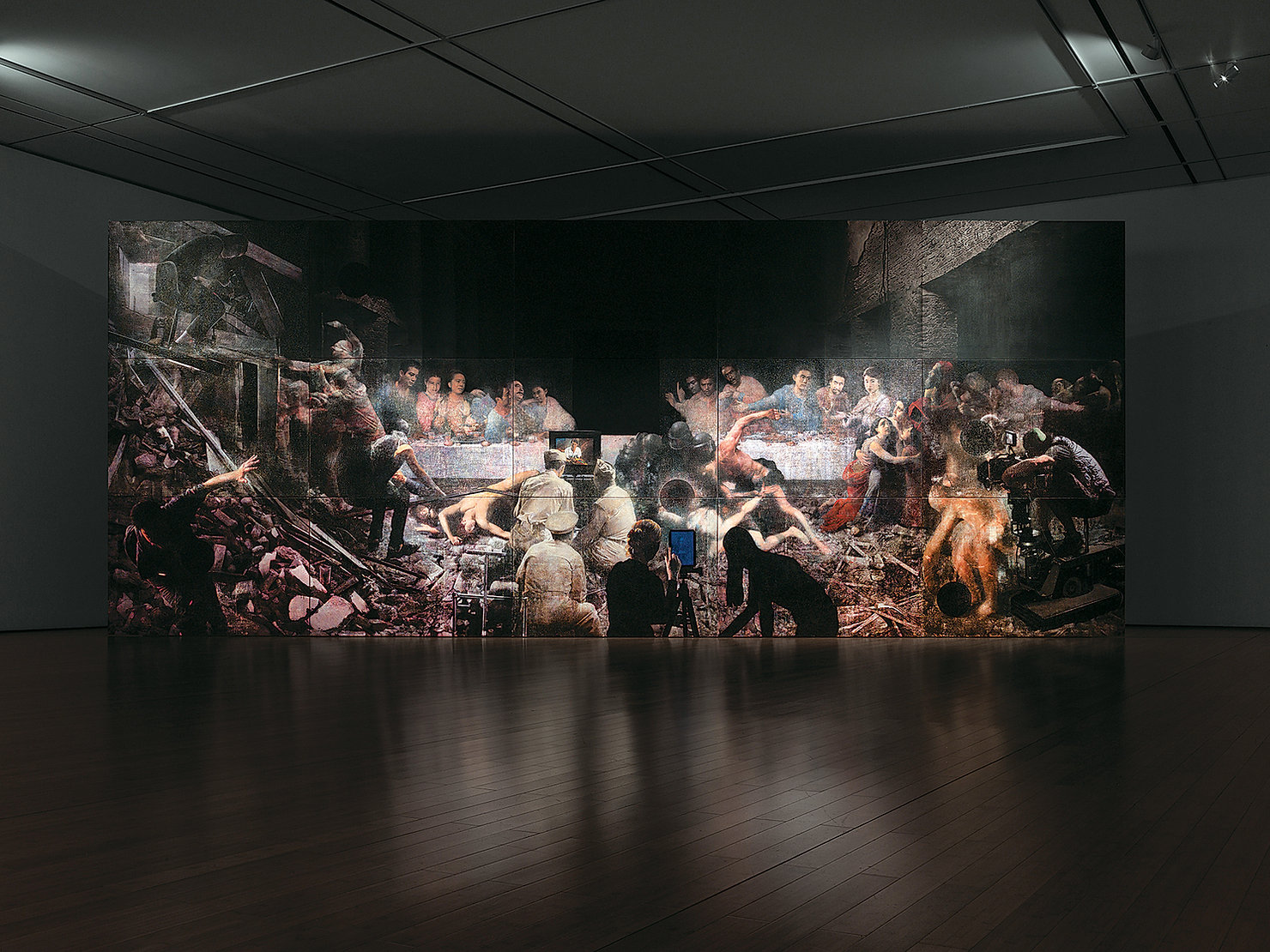
Son’s life is a striking example of the many tragedies, ironies, and unexpected turns that arise when large historical forces collide with personal histories. This very theme forms the core of Cho Duck Hyun’s exhibition, now in its third year at Old Mill Chunpo, titled 《110 and: Horizon》. The mill itself embodies historical irony.
Located about twenty minutes by car from Iksan Station, the facility was built by Hosokawa Moritatsu, a major landowner in the Chunpo area during the Japanese colonial period and the grandfather of former Japanese Prime Minister Morihiro Hosokawa. The mill processed rice from Iksan before shipping it to Japan, inevitably recalling the textbook narrative of “Japanese colonial rice extraction.”
A Citizen Purchased the Site and Turned It into a Cultural Space
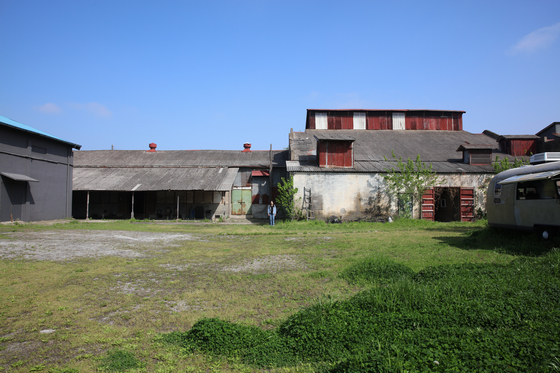
Exterior and courtyard of Old Mill Chunpo © Cho Duck Hyun
Yet ironically, the mill’s courtyard and buildings possess a quiet elegance. The deep gray roof, white walls, and dark red doors create a refined color harmony, while the wooden structure itself has a striking architectural beauty. Even after Korea’s liberation, the building continued to operate as a rice-milling facility until it was abandoned in the late 1990s.
A few years ago it was nearly demolished for housing redevelopment, but Seo Mun-geun, a citizen of Iksan who recognized the aesthetic and historical value of the site—even its darker historical layers—purchased it and transformed it into a cultural space. Around the same time, Cho Duck Hyun, who had been traveling across various regions researching disappearing villages and cultural remains for his work, happened upon the site by chance. Fascinated by its unique atmosphere, he has since continued an art project here for three years.
Known for creating works that combine history and fiction to offer fresh perspectives on human history, Cho drew inspiration from the theory that “the roots of tanka lie with people of Baekje who migrated to Japan.” Building on this idea, he imagined Old Mill Chunpo as an archaeological site where Baekje relics had been excavated and constructed the exhibition around this fictional premise. The concept is all the more plausible given that Iksan is believed by some historians to have once served as the capital—or a secondary capital—of Baekje, making it a place where Baekje culture flourished.
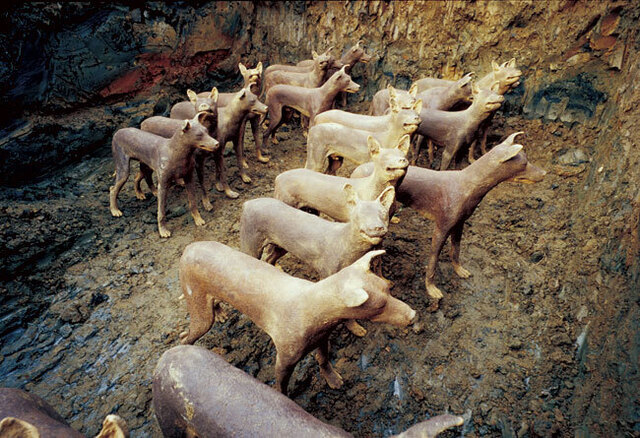
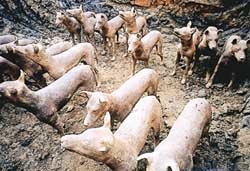
Accordingly, the artist transformed the mill’s back courtyard into what resembles an excavation site for Baekje Buddhist sculptures. One room inside the mill has also been converted into a simulated archaeological research space: a pit once used for storing milled rice has been made to resemble an excavation trench, illuminated with a mysterious yellow light, and filled with fictional artifacts.
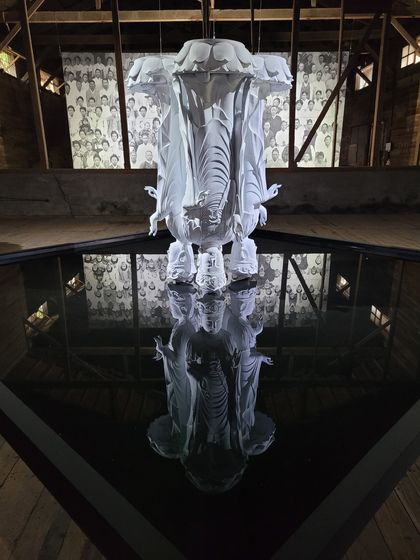
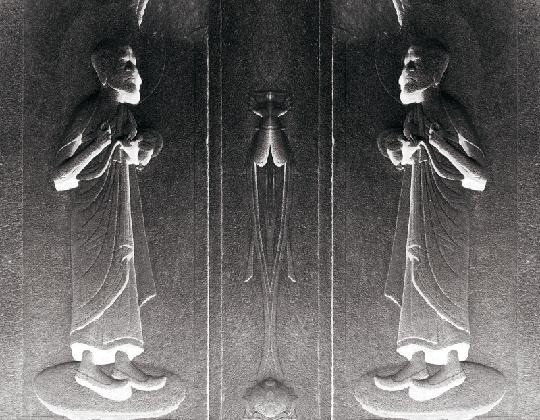
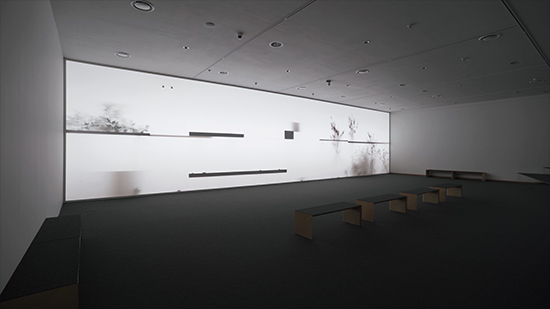
Installation view of 《110 and: Horizon》 © Cho Duck Hyun
One of the most visually striking works is an installation in which four white Baekje Avalokitesvara (Gwanum Bodhisattva) statues hang upside down from the ceiling in the mill’s dark interior. At first glance the piece may appear irreverent, but the viewer’s perception changes when noticing the large water basin beneath the sculptures. The basin reflects the statues clearly, and in the reflection they appear upright, as if floating through an immense black cosmic space while radiating boundless compassion.
The symmetrical arrangement of the statues and their reflections—touching head to head across the vertical axis—also evokes the idea of two antipodal points of the Earth. Exactly thirty years ago, Cho participated in the São Paulo Biennial in Brazil, which lies roughly opposite Korea on the globe. During that visit he met a Japanese immigrant in his sixties named Mr. Taguchi. Taguchi shared with the artist the painful memory of his beloved older sister.
She died young after suffering from heartbreak when she could not reunite with her lover who had been conscripted during the Pacific War. Overcome with grief at the moment of her death, the young Taguchi reportedly tore the hands off a grandfather clock in despair. While empathizing with this sorrow, Cho also recalled the story of a Korean youth who had been forcibly conscripted by Japan and later executed by American forces as a war criminal. A work related to this history also appears in the exhibition.
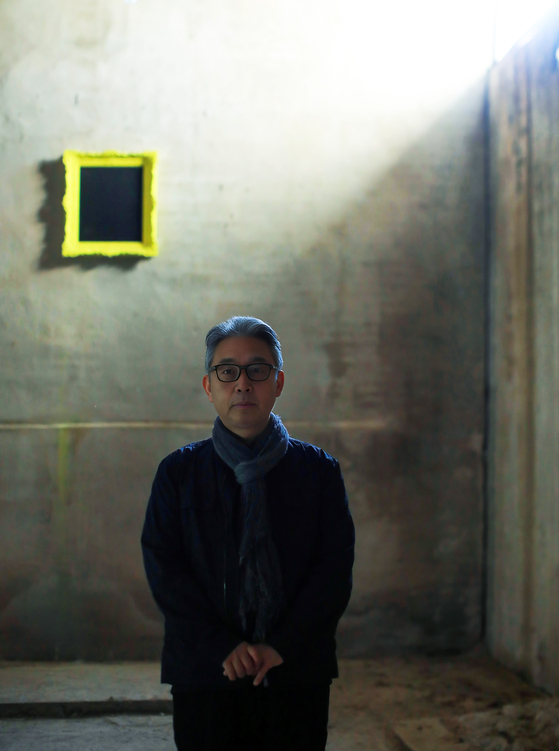
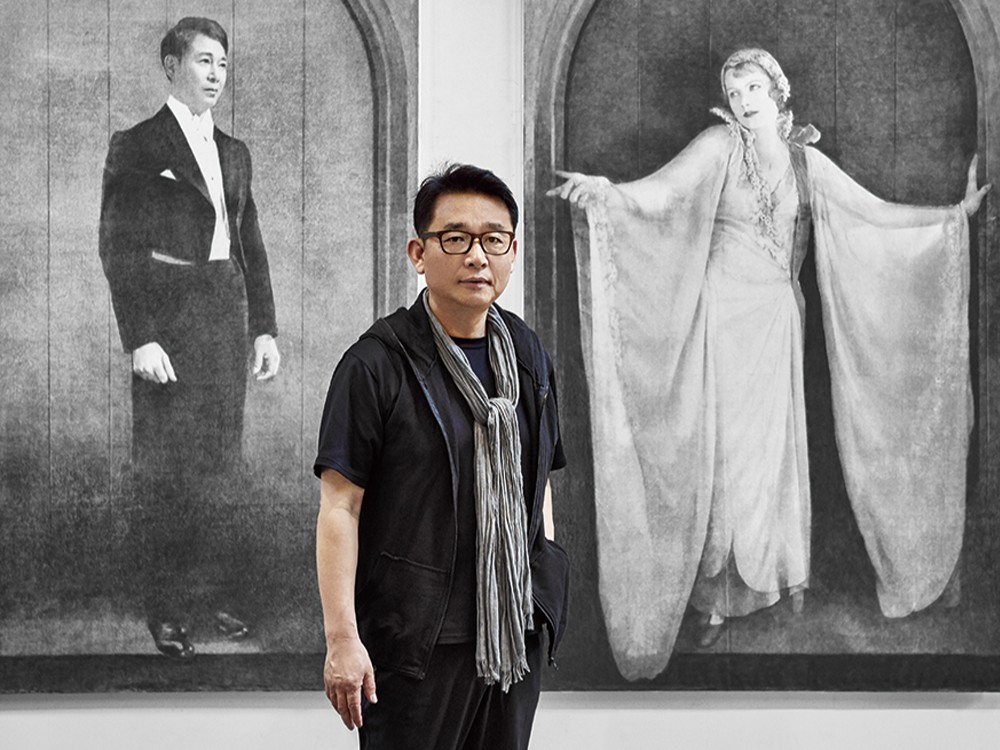
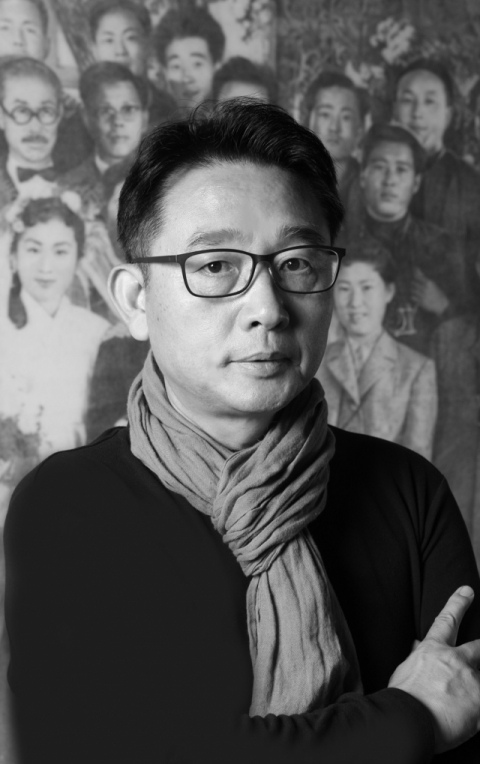
The Artist © Cho Duck Hyun
Ultimately, the artist explains that the exhibition seeks to embrace the wounds of ordinary individuals who lived within the great whirlpool of history and to “open the viewer’s ‘horizon’ through imagination that transcends time and space—passing through the earth or moving back and forth to the Baekje period.”
He adds, “From distant Baekje to the modern and contemporary era, this is about transforming the feelings of loss embedded in a place deeply marked by ‘pain’ into a song of love. It may seem like an overly grand and somewhat clichéd theme, but I believe it is a language that must be recalled within the broader flow of human history in our time, which is increasingly heading toward catastrophe through sharp confrontation and hatred.”