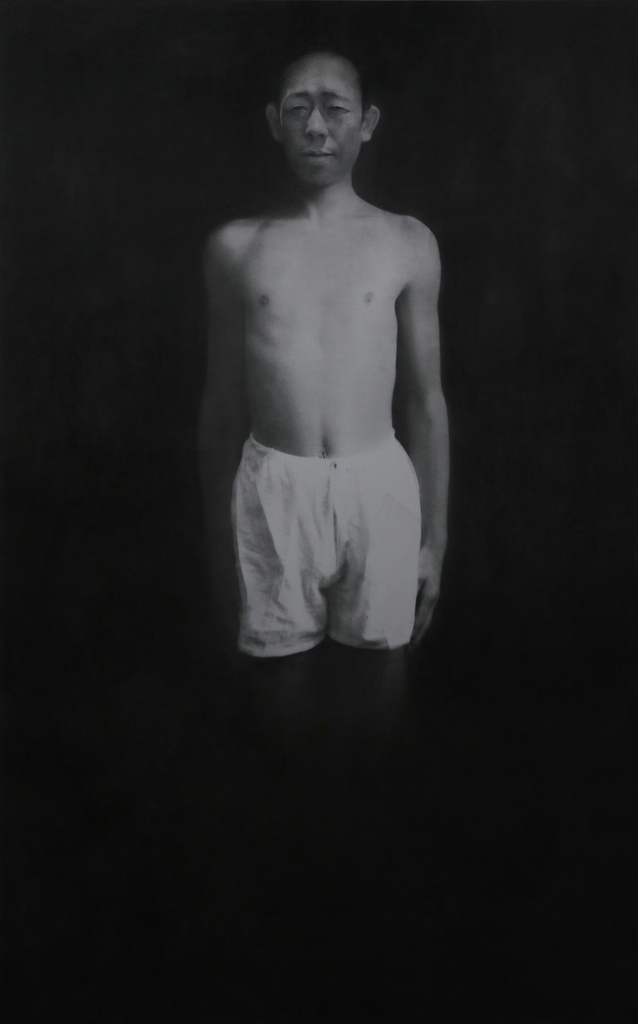
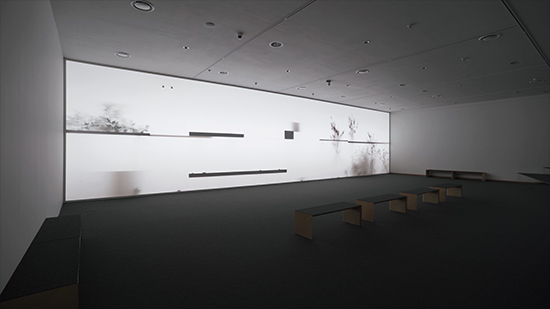
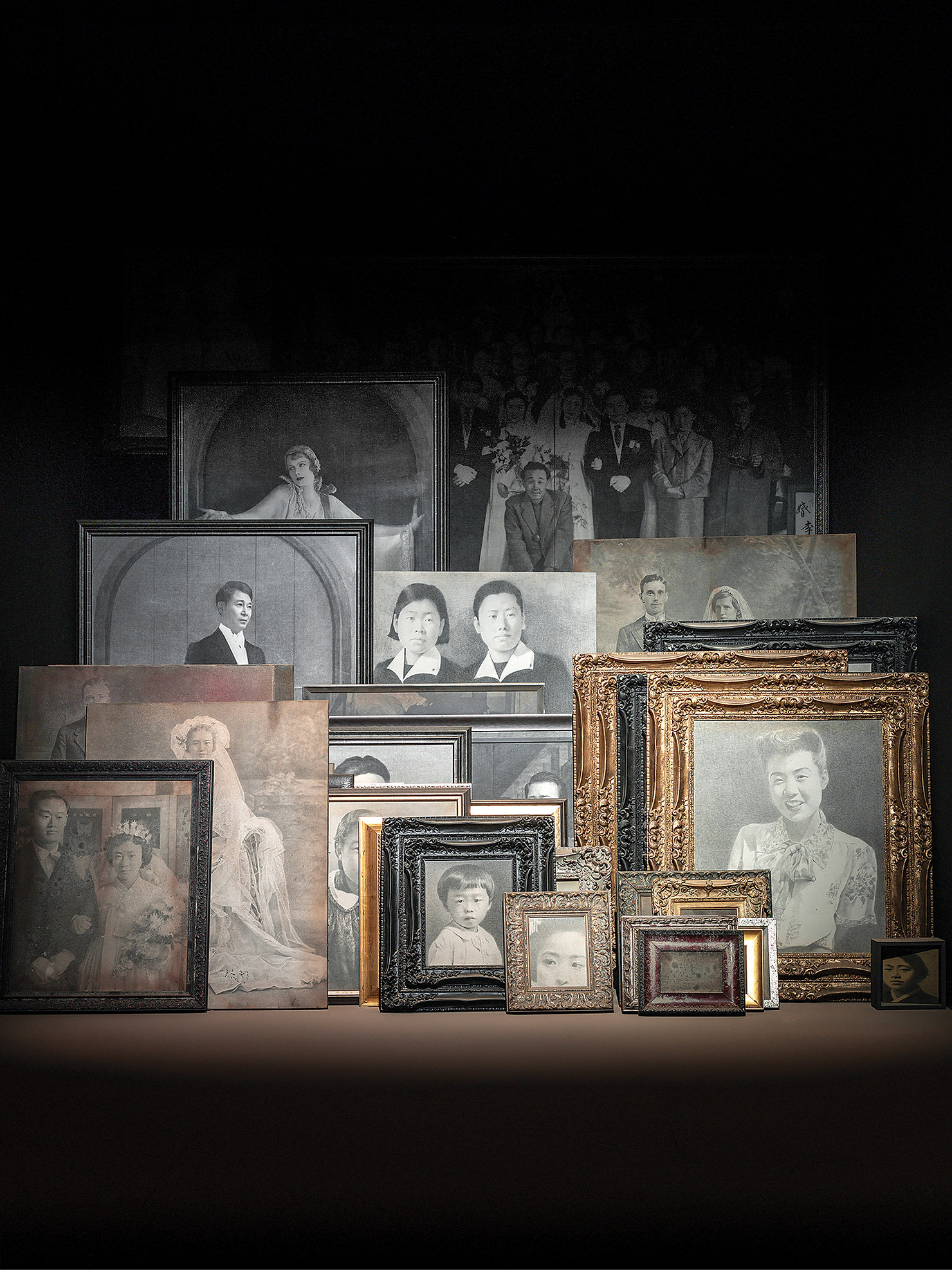
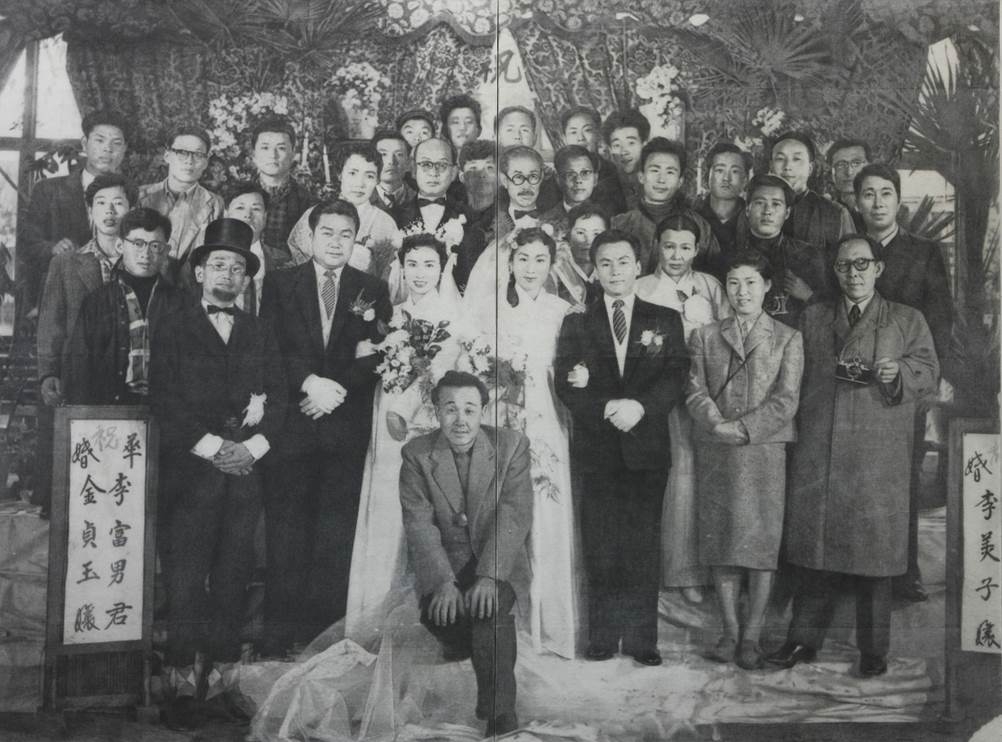
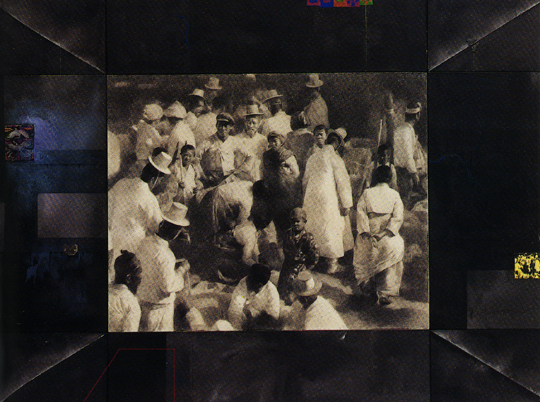
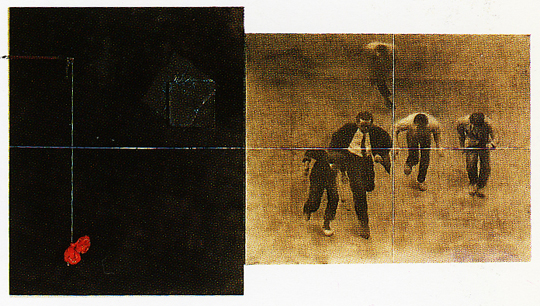
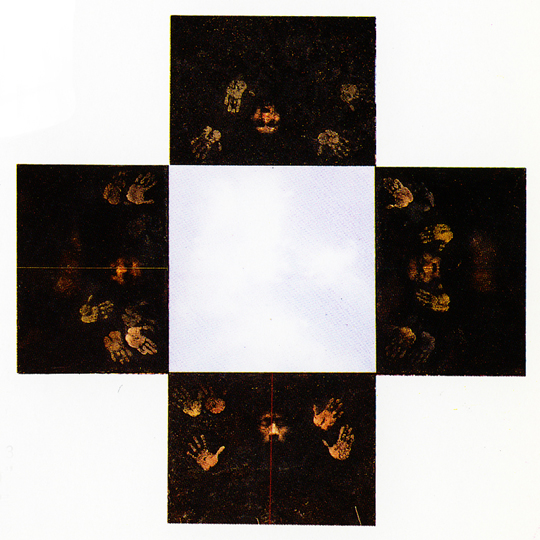
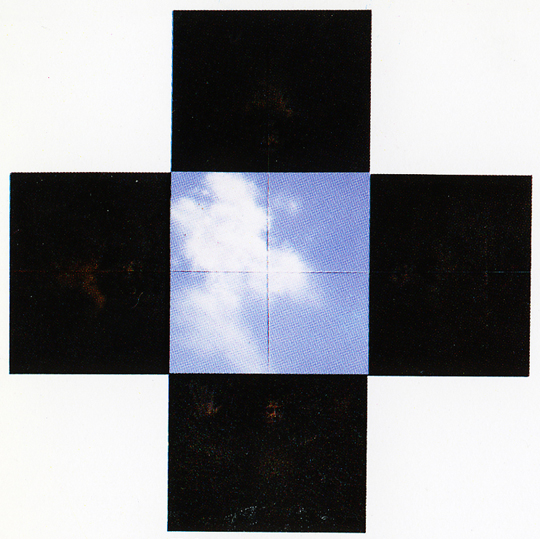
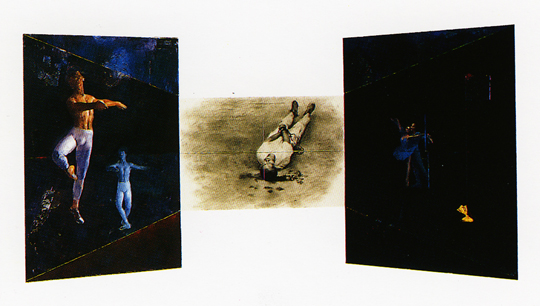
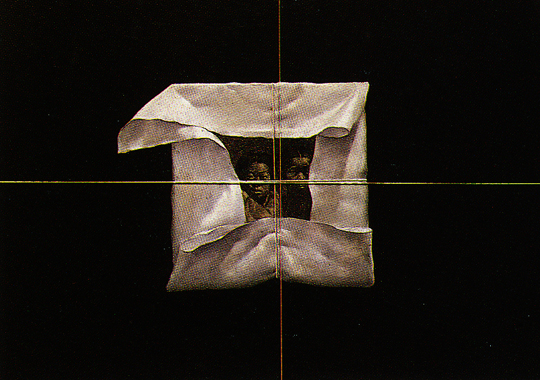
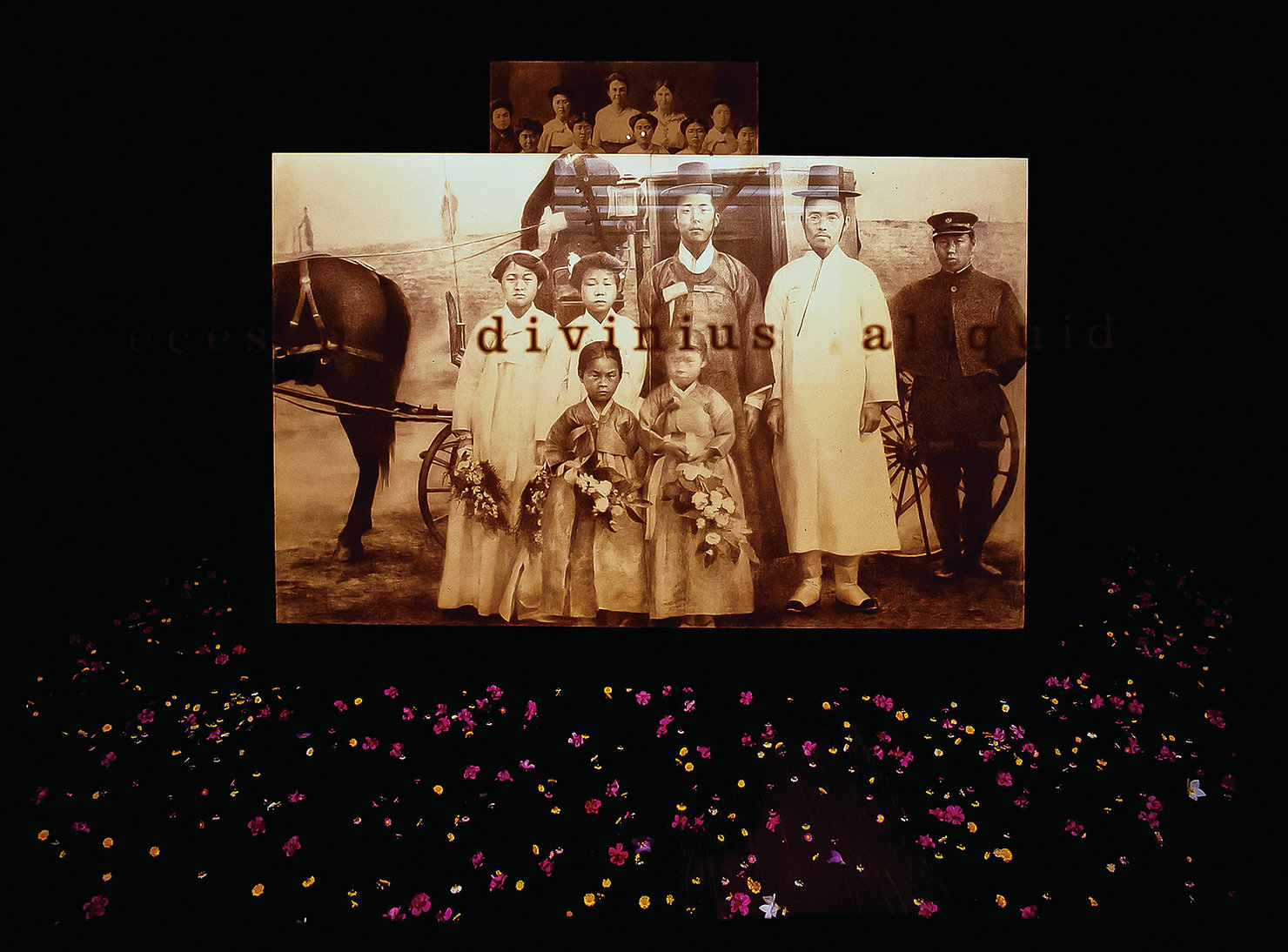
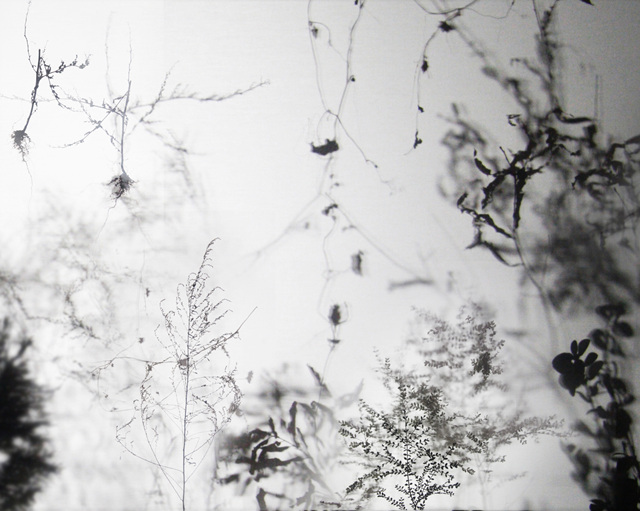
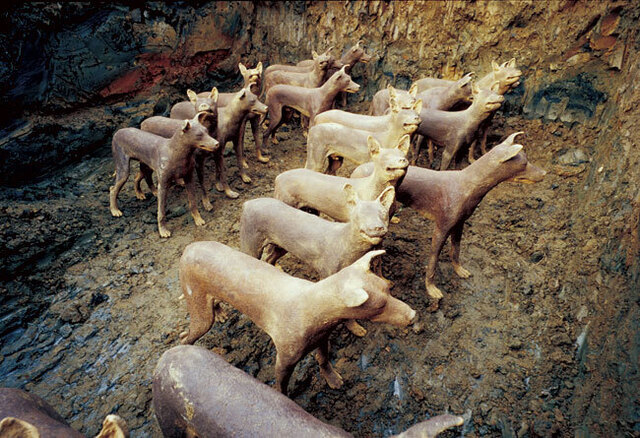
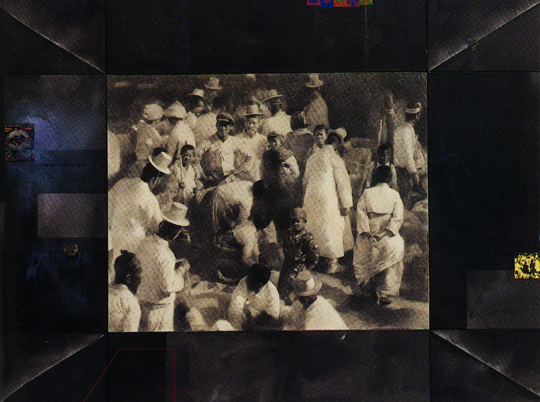
These works connect multiple pictorial panels, thereby further emphasizing historical consciousness. From this point onward, maps reduced to a scale of 1:25,000 begin to appear, specifying concrete locations while also endowing the works with a condensed layer of meaning. Needless to say, this “condensation of meaning” is closely related to the division of North and South Korea and to a broader sense of historical awareness. Whereas earlier works maintained a narrative element by inserting faint human figures into the corners of the canvas—thereby attempting to articulate a clear thematic consciousness—the works from this period deepen the strategy of appropriation and consequently strengthen the use of indirect discourse.
Topographical maps of specific locations (such as maps of areas near the armistice line) appear, and globes are employed as objects. In doing so, the works symbolically express the tragedy of the Korean Peninsula, which remains the only divided nation in the world, regardless of the dramatic transformations in the global order—the collapse of the Eastern Bloc following the Malta Summit, the reunification of East and West Germany, the emergence of a post–Cold War system, the rise of post-ideological discourse, and the formation of economic blocs across the world. (Fig. 6) In this sense, his works clearly possess the character of historical monuments, yet within them the artistic strategy of rigorously restraining his own authorial statement remains firmly in place.
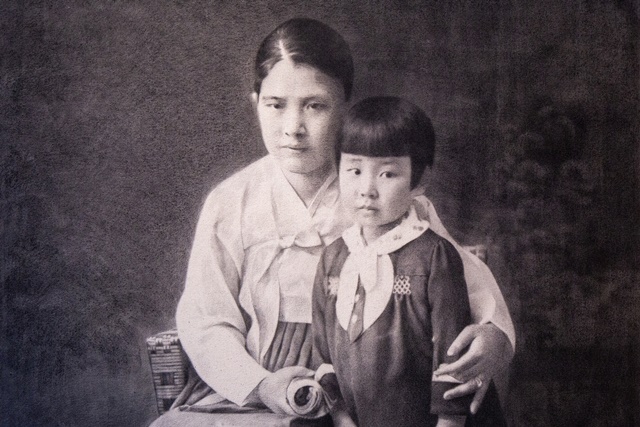
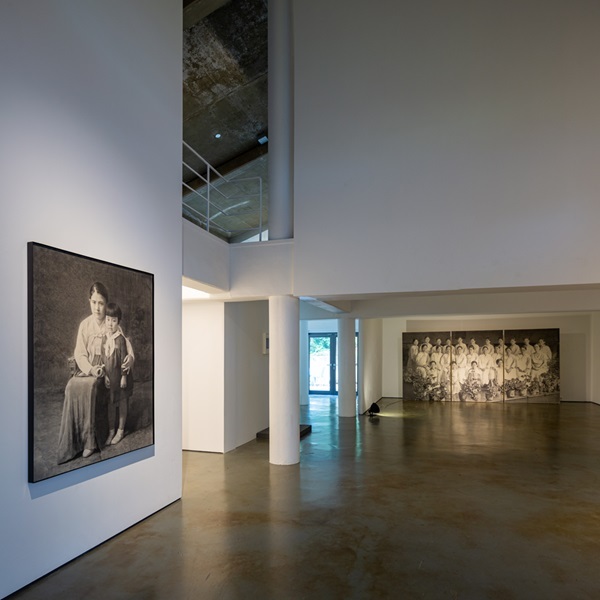
As is well known, a map is nothing more than a mass-produced reproduction, and a globe likewise does not possess any particular meaning in itself; rather, it acquires its existence only within processes of “combination” and “aggregation.” The artist merely assembles ready-made objects imbued with symbolic significance. Consequently, conventional artistic perspectives such as individual autonomy or creative novelty are inevitably placed in parentheses. Works exhibited in 1991, as well as more recent works depicting children playing in water (Fig. 7), images of girls carrying water jars on their heads from the period of Japanese colonial rule, and scenes of traditional marketplaces from the same era—although differing in motif—are all reproductions of original photographs saturated with the emotional experiences embedded in the lives of our ancestors.
In other words, whereas earlier object-based works relied on appropriation through “combination” and “aggregation,” more recent works take on the character of appropriation through “reproduction” (though in this case it is not mass reproduction like commodities, but rather a single reproduction). As a result, the artist’s subjectivity, intention, and thematic consciousness appear to recede into the background, while terms such as “combinatory technique” and “technologies of reproduction” seem to further reinforce the meaning of the works. Nevertheless, by presenting fragmentary glimpses of the everyday lives of ancestors who endured arduous life journeys, his works appear to quietly invite viewers to reflect upon the social conditions, economic circumstances, and historical situations of that time.
In other words, through a new creative method, the artist encourages a productive reconsideration of social conditions through the depiction of individual life.
At this point, it becomes necessary to examine a more fundamental question: why is subjectivity minimized or rendered ineffective, and has subjectivity or individual will truly disappeared? This issue is not limited to this artist alone; as is well known, it has also become a central concern in the critique of postmodern artists. In particular, British critic Terry Eagleton and American critic Fredric Jameson have harshly criticized the appropriation of others’ works or of the past, describing it as “depthlessness,” “trivial kitsch,” and even “schizophrenia.”
However, British critic Linda Hutcheon—who regards parody as a principal method of contemporary art—defines parody as something that “explains the self while simultaneously drawing attention to the processes of aesthetic conceptualization and the social conditions of art.” According to Hutcheon, postmodern art takes “our social, historical, and existential present and past” as “references” or “ultimate goals,” yet the reason for doing so is not naïve. Rather, postmodernism seeks to test the actual possibility of what has previously been understood as an “ultimate goal.”
In other words, when the social, historical, and existential “reality” of the past is employed as a reference in art, it becomes a discursive reality. Thus, “pure historicity” openly reveals itself as discursive and ongoing. In this sense, the past as reference is not erased or destroyed, as critics claim, but instead endowed with new vitality and meaning.
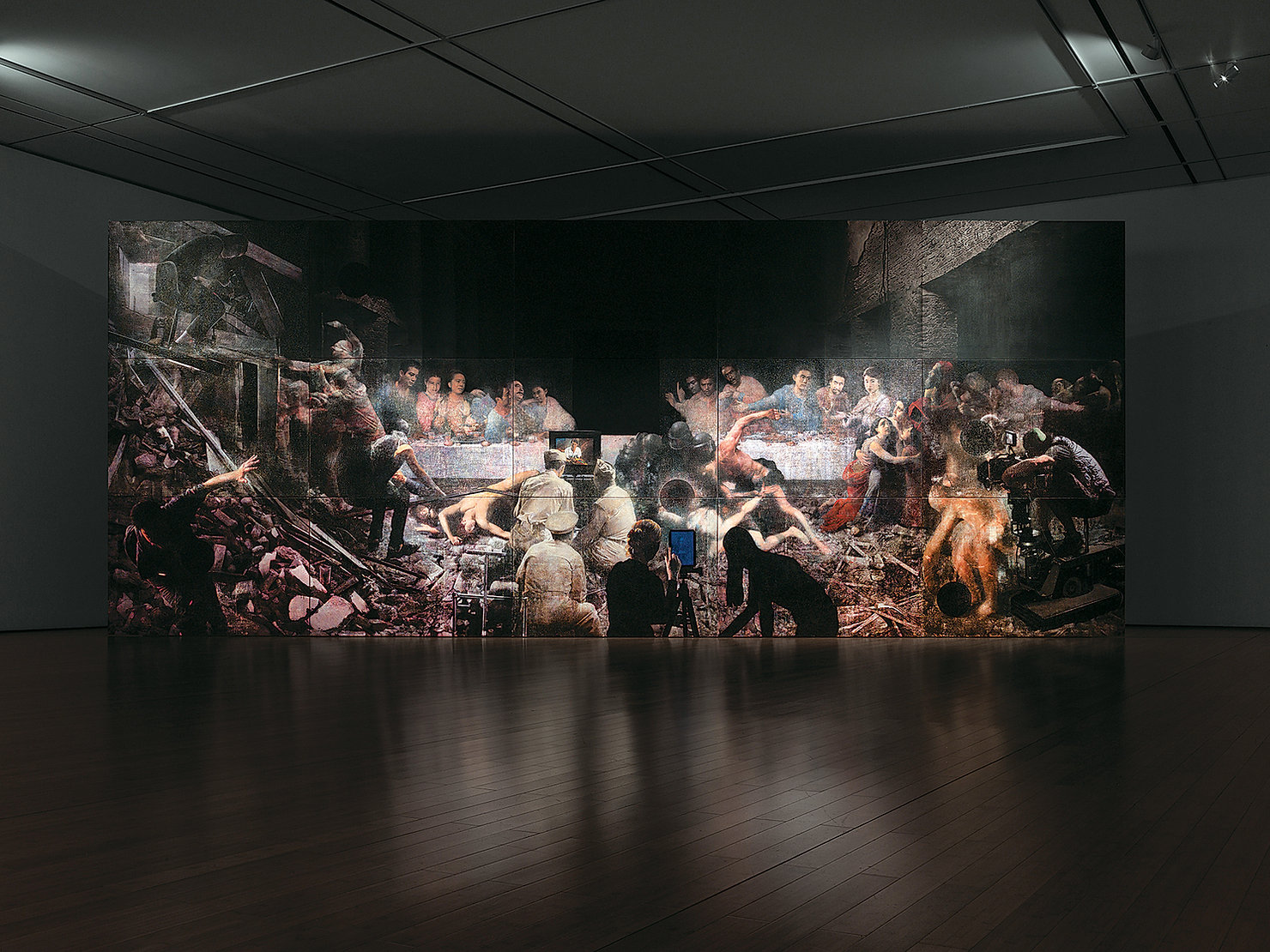
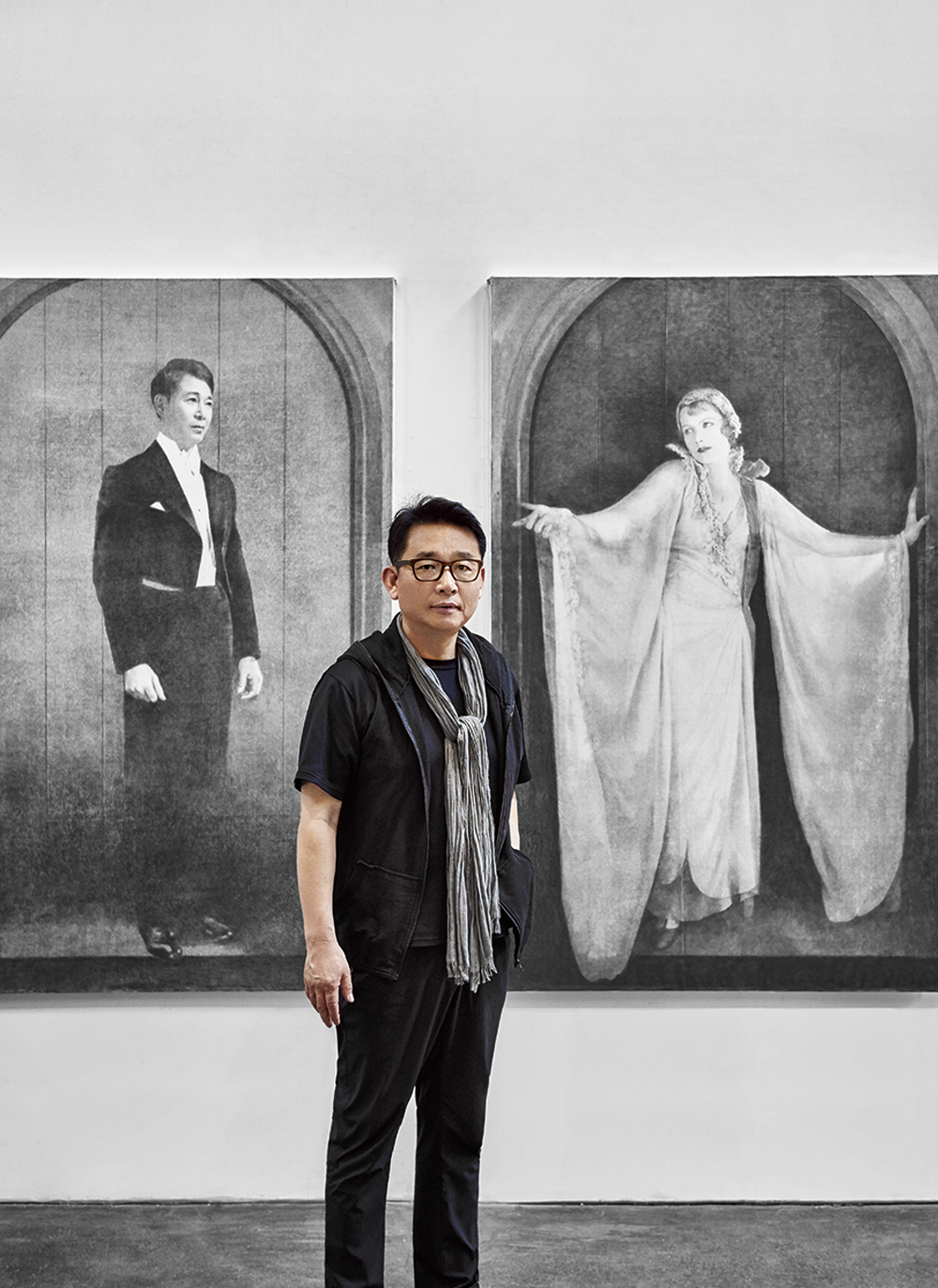
I believe that this character of parody provides a crucial clue for understanding the essence of Cho Duck Hyun’s work. In particular, this tendency appears most clearly in his recent works. In recent years, the artist’s attention has been directed toward Korean history—especially toward what might be called “great catastrophes,” such as the Korean War, remembered as a tragedy of fratricidal conflict, and the Gwangju Uprising, which left an indelible wound.
The transport of lifeless bodies, soldiers screaming as they are struck by bullets, citizens and demonstrators fleeing while bent halfway forward, and children sitting casually atop tanks after the gunfire has ceased, wearing bright and innocent expressions—through such brief scenes the artist evokes historical events. (Fig. 8, Fig. 9)
However, judging from the narrative structure of these works, the artist refrains from investigating the “truth” of events or evaluating them through any specific ideological framework. It is precisely this context that allows him to employ different historical “events,” such as the Korean War and the Gwangju Uprising, as narrative elements within his works.
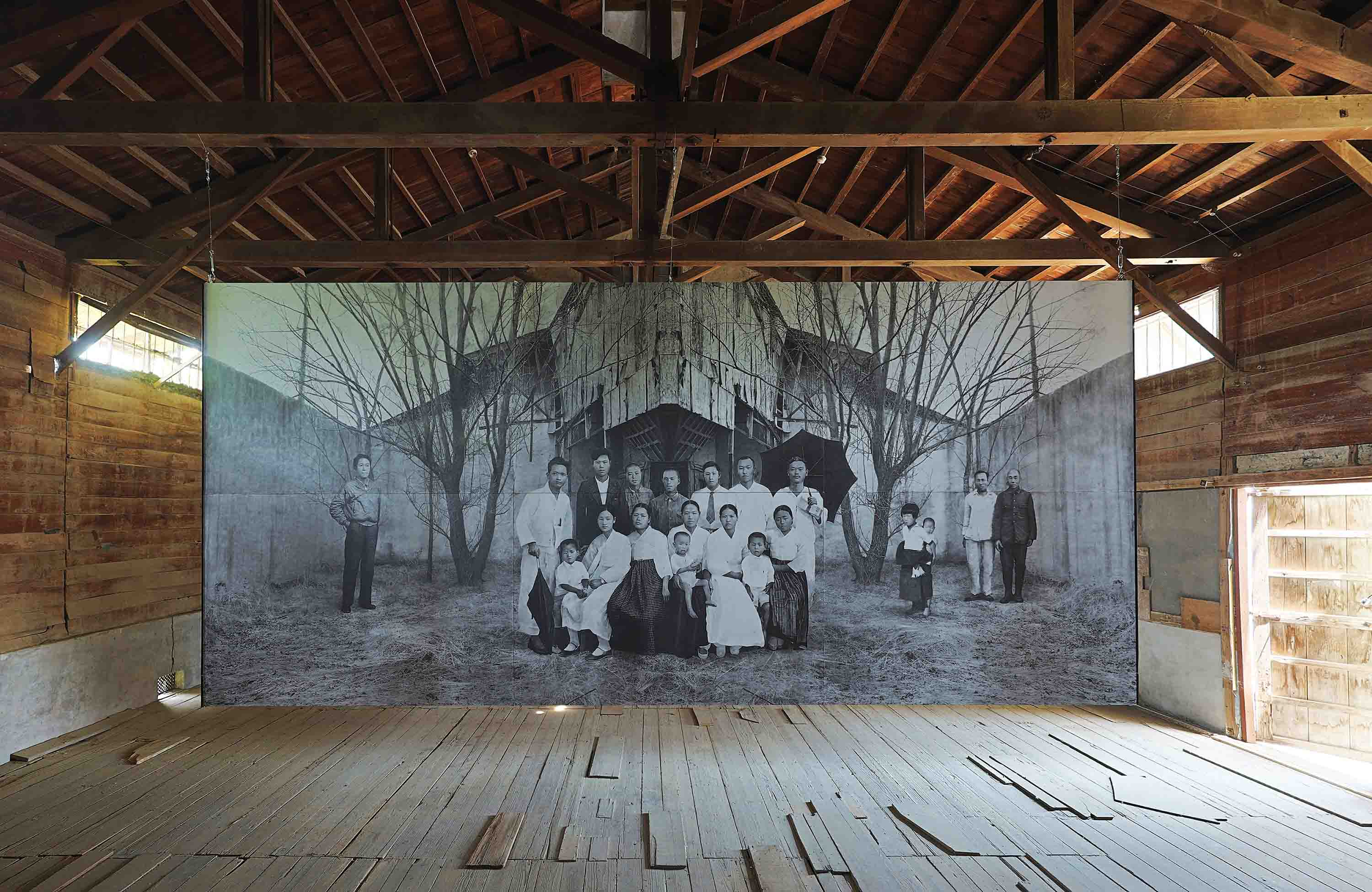
One notable point is that his interpretive attitude toward subject matter differs considerably from that of conventional realism. Several aspects may be identified. First, by rendering photographs “as they are,” the works assume a kind of documentary character. Second, the artist strives to objectify his own assertions as much as possible. Third, beyond this, he connects historical events to spaces of different meanings—namely the multiple compositional structures of the canvas—thereby transforming them into something beyond conventional history painting.
Why, then, does the artist refrain from directly expressing his own authorial consciousness and instead employ photography as a mediating device? This question becomes an important key to understanding his artistic outlook. There is a profound difference between asserting, based on an absolute system of values, that one thing is right and another wrong, and presenting a statement grounded in objective materials while leaving evaluation to the viewer. The artist replaces direct speech with the seemingly calm reproduction of fragments of historical scenes captured by someone else. No overt emotion is embedded within them, nor is any conclusion hastily imposed.
Today, as Walter Benjamin once observed, we live in an age marked by the loss of “aura.” At the same time, as the “pope” of Pop Art, Andy Warhol, famously noted, we also live in an era in which all images are mechanically reproduced and commodified. Whether unfortunate or fortunate, this is the face of the age we inhabit. This new “total communication package” spreads almost simultaneously across all places, continuously repeating and reproducing itself. Modern art has therefore been forced into an urgent situation in which it must redefine its position in the wake of the printing revolution.
Furthermore, technological innovations—from photographic plates and electronic painting to roll film, the invention of the telephone and phonograph in the late nineteenth century, the spread of radio and the popularization of motion pictures, the rapid dissemination of television in the United States and Western Europe after the 1940s, and even the invention of satellites that allowed the entire world to watch the Olympic Games, as witnessed during the Seoul Olympics—have fundamentally transformed the way we live. More importantly, the emergence of technological images has triggered a cultural shift from the “age of production” to the “age of reproduction.”
It is precisely here that one finds the basis for the argument that, within postmodern culture, industrial relations of production have been absorbed into the relations of production characteristic of late-industrial communication systems. The postmodern subject—equipped with a video recorder connected to a computer screen and printer—gradually distances itself from what Benjamin called the unique and irreplaceable “aura” of the autonomous artwork, once revered as a universal value. As a result, the individual subject falls into a terrifying skepticism: the belief that one can no longer produce or transmit one’s own images. The conviction that the images we possess are nothing more than reproductions of images already before us is closely related to this condition.
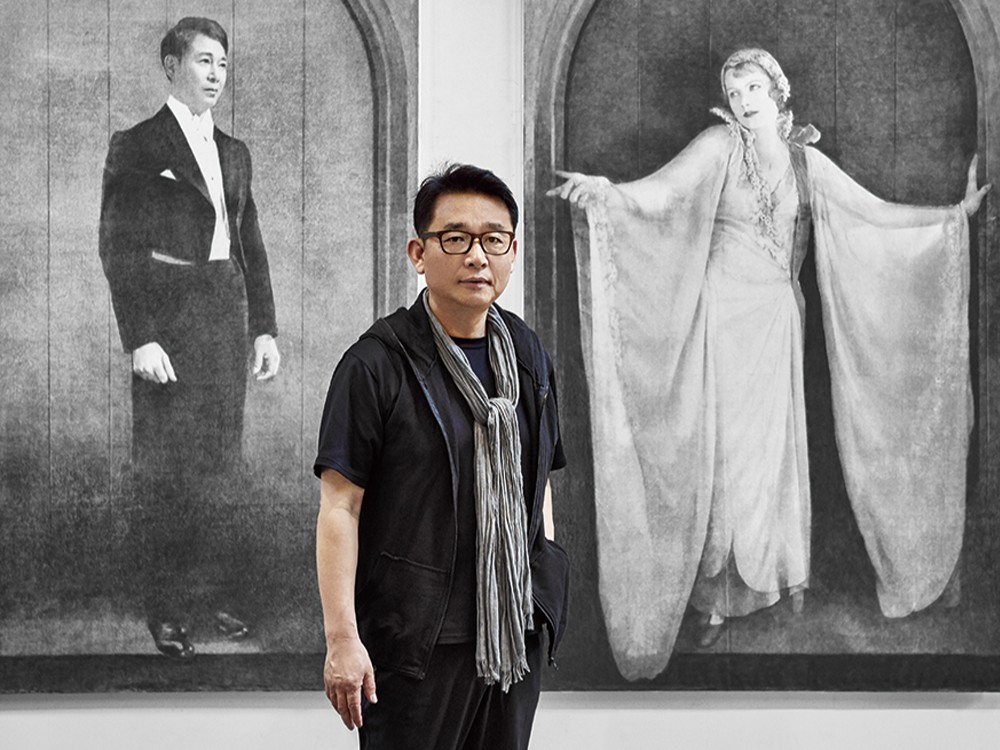
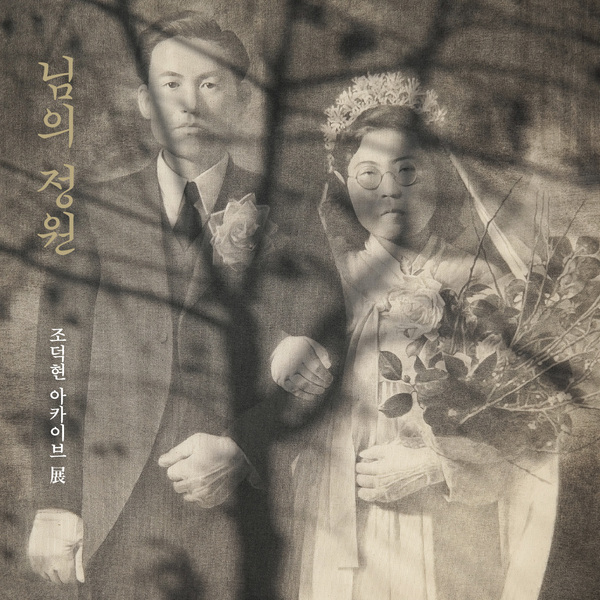
The “reality” that appears in Cho Duck Hyun’s paintings is not actual reality but “reproduced reality”—that is, images of photographs rendered in paint. More precisely, rather than representing the real world itself, he selectively cites and reproduces images that have already been mechanically reproduced from the real world. From this point onward, we witness a major transformation in the very notion of art. Whereas traditional artistic production depended upon originality and creativity, he now devotes himself less to creation than to the editing of existing facts and materials.
In other words, he relinquishes the authority of the creator while simultaneously minimizing—or even nullifying—the role of subjectivity. Observing how he meticulously paints selected photographs of historical scenes, or attaches epaulettes, insignia, maps, and other decorative elements to corners or sections of the canvas, it becomes easy to see how strongly the artist’s editorial sensibility shapes the choice and arrangement of materials.
The evaluation of such reproduced images—often treated as a key issue in debates surrounding postmodernism—can broadly be divided into two positions. One argues that in a new mass-communication society postmodern images reveal only surface and depthlessness. The other contends that by demonstrating that no representation of reality can ever constitute absolute truth, such images expose the fiction underlying principles long associated with value, order, control, and identity. The former position belongs to the critics, while the latter belongs to its supporters. To which of these positions, then, do Cho Duck Hyun’s works belong?
Without question, they belong to the latter. What Cho Duck Hyun seeks to evoke through his images of the Korean War is neither the “ambition of communist takeover” described in the South nor the “war of national liberation” proclaimed in the North. Instead, his works present scenes of tragedy free from ideological intervention, while simultaneously bearing strong humanistic qualities and the character of historical memorials. He himself states that he expresses such history simply with “deep affection.”
In other words, rather than interpreting the Korean War through ideological frameworks, he approaches it through individual and social experiences, thereby portraying it as an unhealable historical event born from the collision of opposing ideological systems. Scenes of rows of corpses being transported, children smiling happily atop tanks despite surrounding violence and ideological conflict, and maps of areas near the armistice line that record history’s tragedy merely as documentation—all reveal his serious yet cool-headed attempt to reexamine historical truth from another direction through the strategy of parody. (Fig. 10)
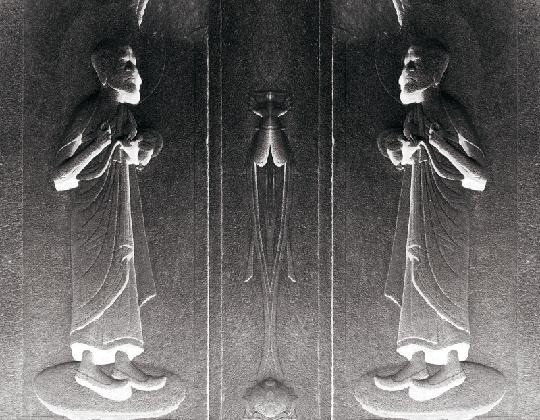
From a formal perspective as well, another noteworthy feature emerges. The artist does not present only a single fact within a work but at least two or more. These oppositions often appear as Western/Eastern, abstraction/figuration, joy/pain, historical event/decorative form, purity/engagement, humanism/political ideology, and reality/idea.
Through multi-layered compositions, the artist cross-connects these binary oppositions. In more formal terms, this could be described as a form of “de-bordering.” By dissolving oppositional concepts within a single space and revealing contradictions as they are, the works seem to paradoxically call for the overcoming of those contradictions. The artist interprets this approach through what he calls the “logic of peripheral induction,” explaining his intention as follows:
“Peripheral-induction logic,” as discussed in sociology, is a concept opposed to “center-induction logic.” Center-induction logic refers to a state in which, when a cultural sphere is divided into a center and a periphery, entities in the periphery are subordinated as they orient themselves toward the central system. By contrast, peripheral-induction logic posits that exceptional or surplus entities located at the periphery—while still having their source in the center—can nonetheless produce an independent culture through their innumerable perspectives and lived experiences.
As examples, one might cite France, England, and Germany: although their cultural sources lie in ancient Greece and Hebrew traditions, each has produced its own intellectual history through its distinctive experiences and language. In our art history as well, the singular figure of Gyeomjae Jeong Seon (謙齋 鄭膳) can be considered an exemplary case of putting this peripheral-induction logic into practice in painting. Against the backdrop of Joseon society in the late seventeenth century, when cultural pride was on the rise, Gyeomjae broke away from the prevailing practice of merely repeating Chinese painting, and devised Gyeomjae’s “true-view landscape painting of the Eastern Kingdom” (謙齋東國眞景畵風), the style best suited to sketching our own mountains and rivers from life.
It has now been nearly a century since the introduction—albeit in a refracted form—of Western civilization as the mainstream of world history began. From the standpoint of one who paints, many issues still remain a source of concern. Tradition and modernity, East and West, purity and engagement, and other extreme binary concepts continue to constitute the structure of our conflicts.
At this juncture, I return to the idea of “peripheral-induction logic.” The current art scene, where all manner of individualities proliferate, may not be limited to us—who bear the particular pain of the past—but may also be attributed to an end-of-century condition. Even so, a healthy spirit that we can pass on to the next generation must be found, somehow.
As one proposal toward that end, I present paintings that embody my thinking. What I aim for in my current work is to allow the following two perspectives to meet on the picture plane without strain: one is a profound understanding of Western art, and the other is a deep affection for what surrounds us. For now, because my intention runs ahead of me, these two perspectives collide on the canvas; but when they come together harmoniously, I will feel proud to have contributed, in part, to a “shift toward a peripheral-induction system.”
This text makes it clear that the object of the work is not confined to the artist’s subjective domain—such as fantasy, imagination, intuition, or emotion—but has become an issue for the art world at large. It also proposes a new conception: that such problems should be addressed not through a bias toward a particular viewpoint or worldview, but on the basis of “multidimensionality” and “multi-valuedness.” In this context, it goes without saying that “multidimensionality” and “multi-valuedness” carry the binding force of allowing two heterogeneous elements—whether mutually contradictory or mutually complementary—to coexist within our recognition of the world and of artworks. In this sense, his work can be said to rest upon an “anti-binary logic.”
This “anti-binary logic” in his work should not be viewed solely in formal terms, such as the multiple compositional structures of the canvas. Rather, it appears to be deeply connected to the reorganization of what already exists. That is, elements regarded as incidental, outdated, or branded as trite begin to form new contexts today, showing signs of being elevated into the dominant. From a broader perspective, the work reproduces certain historical experiences as objective situations “without any intervention of subjectivity,” unexpectedly calling forth a new domain of judgment.
The reason is simple: no matter how weighty a subject may be, it cannot have any persuasive force if it is not filtered through the “sensibility of lived life.” This is precisely why the artist, while relying on the mechanical reproduction of photographs, emphasizes the meanings of life and death; and why, in reproducing portraits of people who did not lose hope even amid hardship—along with the longings of childhood—he assigns greater significance to “humanity.”
Of course, even here, an intention to evoke historicity is plainly evident through objects such as personal social experience, an old hand mirror bearing the patina of years, pillow ornaments, and decorative furniture fittings. At the same time, the traces and vestiges of those who retained their “human-ness” remain alive in their vitality despite the erosions of long time. The artist is simply pointing out that such “living-ness” has been confined to photo albums, storage rooms, museums, and other history books.