The Aesthetics of ‘Memory’
For modern people, forgetting is something to be feared. Ironically, however, the culture of collective amnesia in contemporary society continues to accelerate. While new technologies are astonishing, their remarkable capabilities gradually diminish both our will to remember and our capacity for memory. Here is an artist who resists the crisis of collective forgetting by replacing the mechanically reproducible image of photography with the unique originality of hand-crafted work, connecting the ‘you’ of yesterday with the ‘I’ of today.
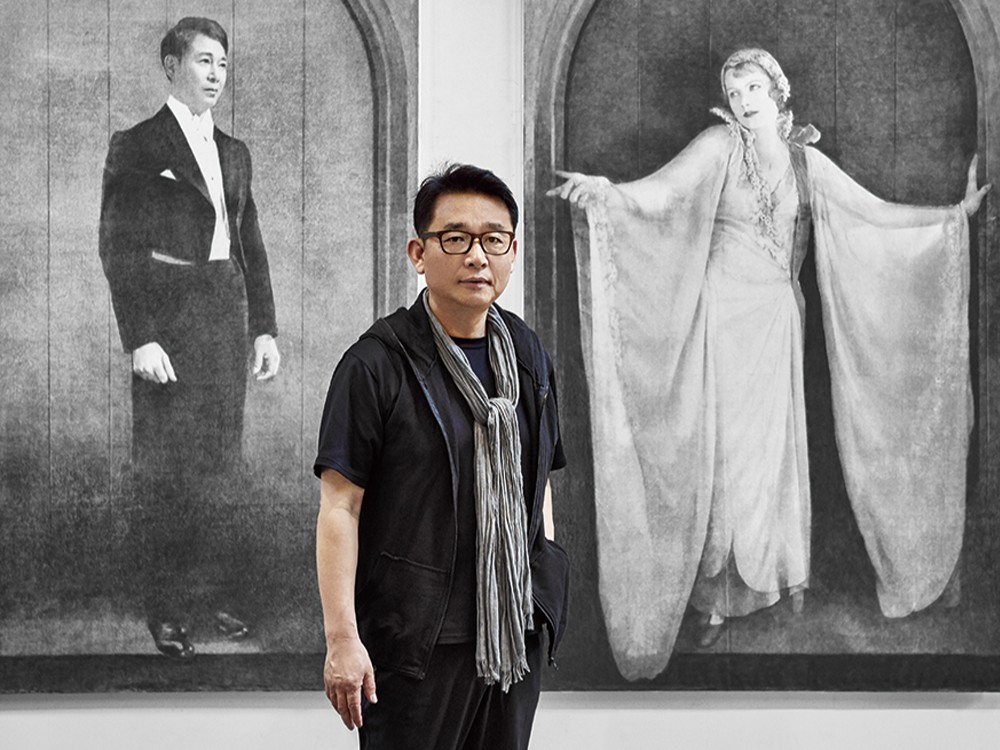
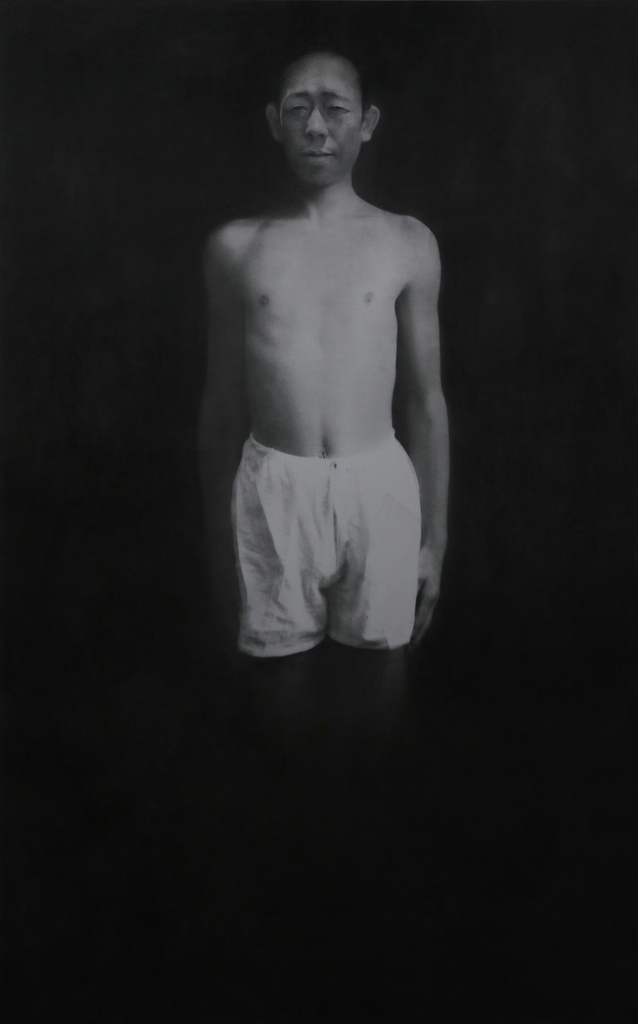
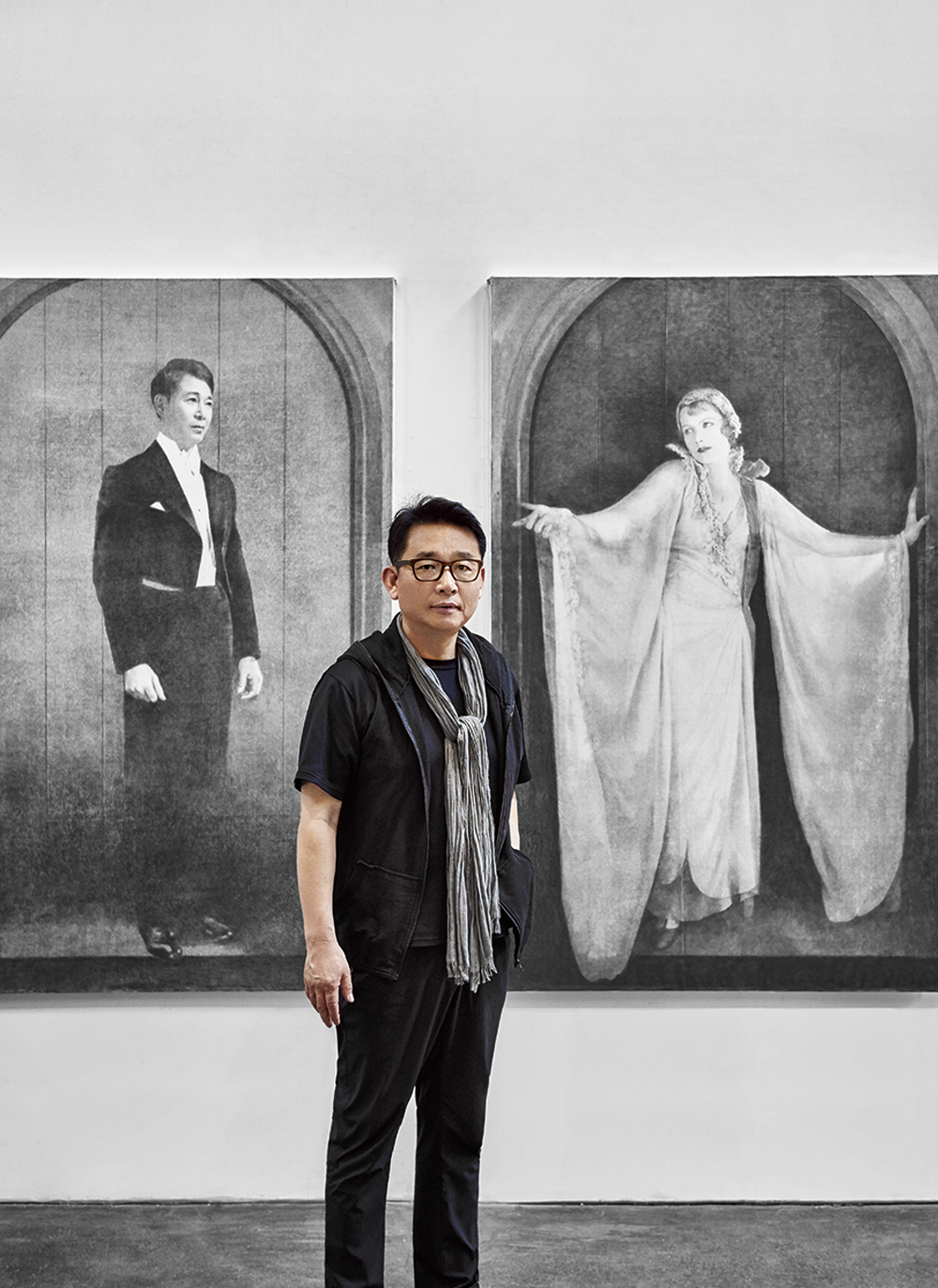
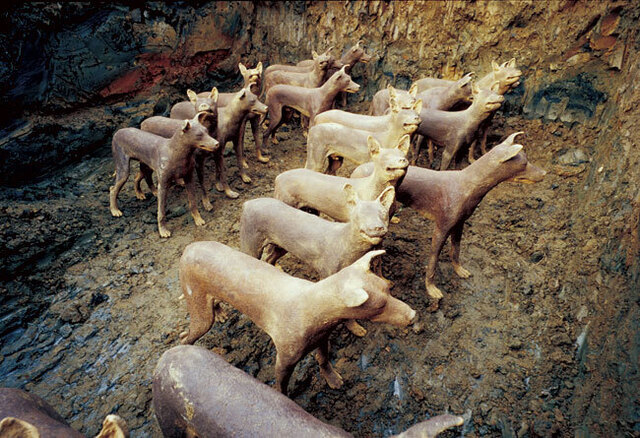
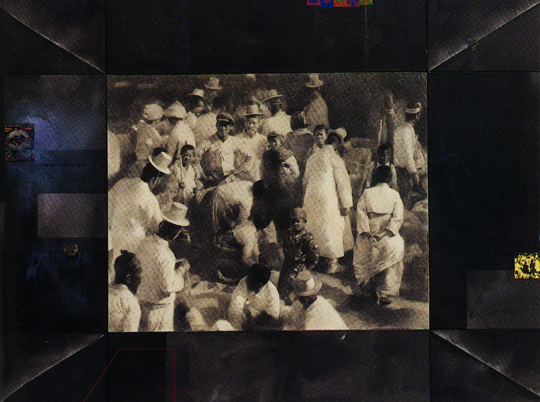
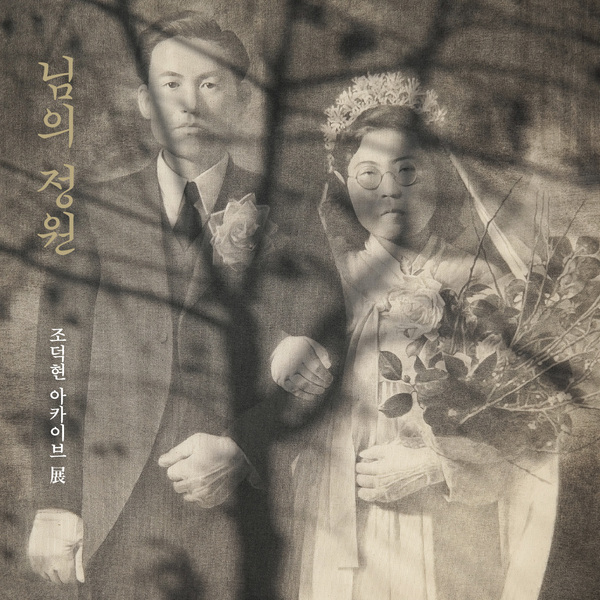
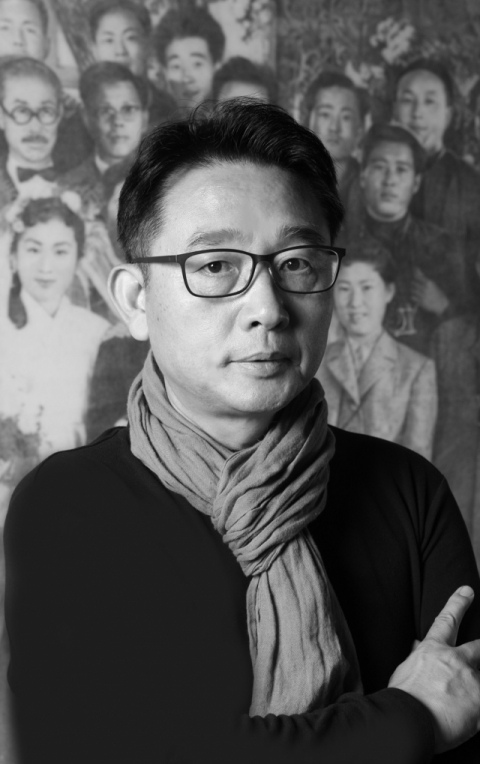
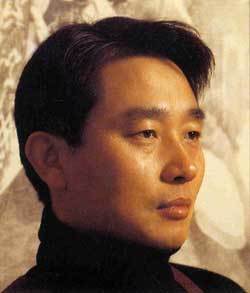
Cho Duck Hyun (1957–) is an artist who summons memories of the past and brings them into the present through a working method known as photo-drawing, in which black-and-white photographs are recreated with remarkable realism. Over the course of nearly forty years of artistic practice, his work has continually evolved and expanded into installations, video, archives, and excavation projects. Yet the central keyword running through his entire oeuvre remains ‘memory.’
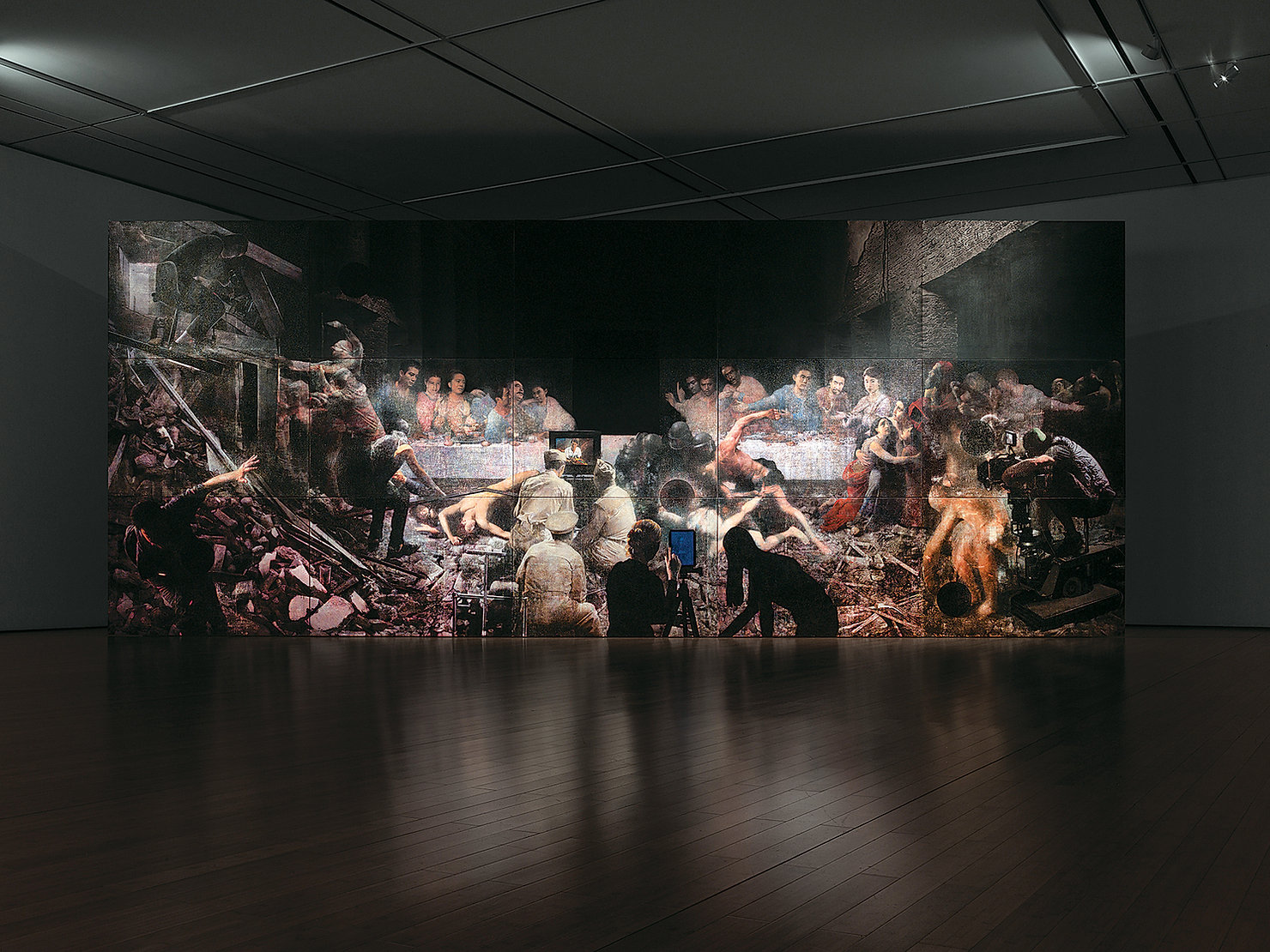
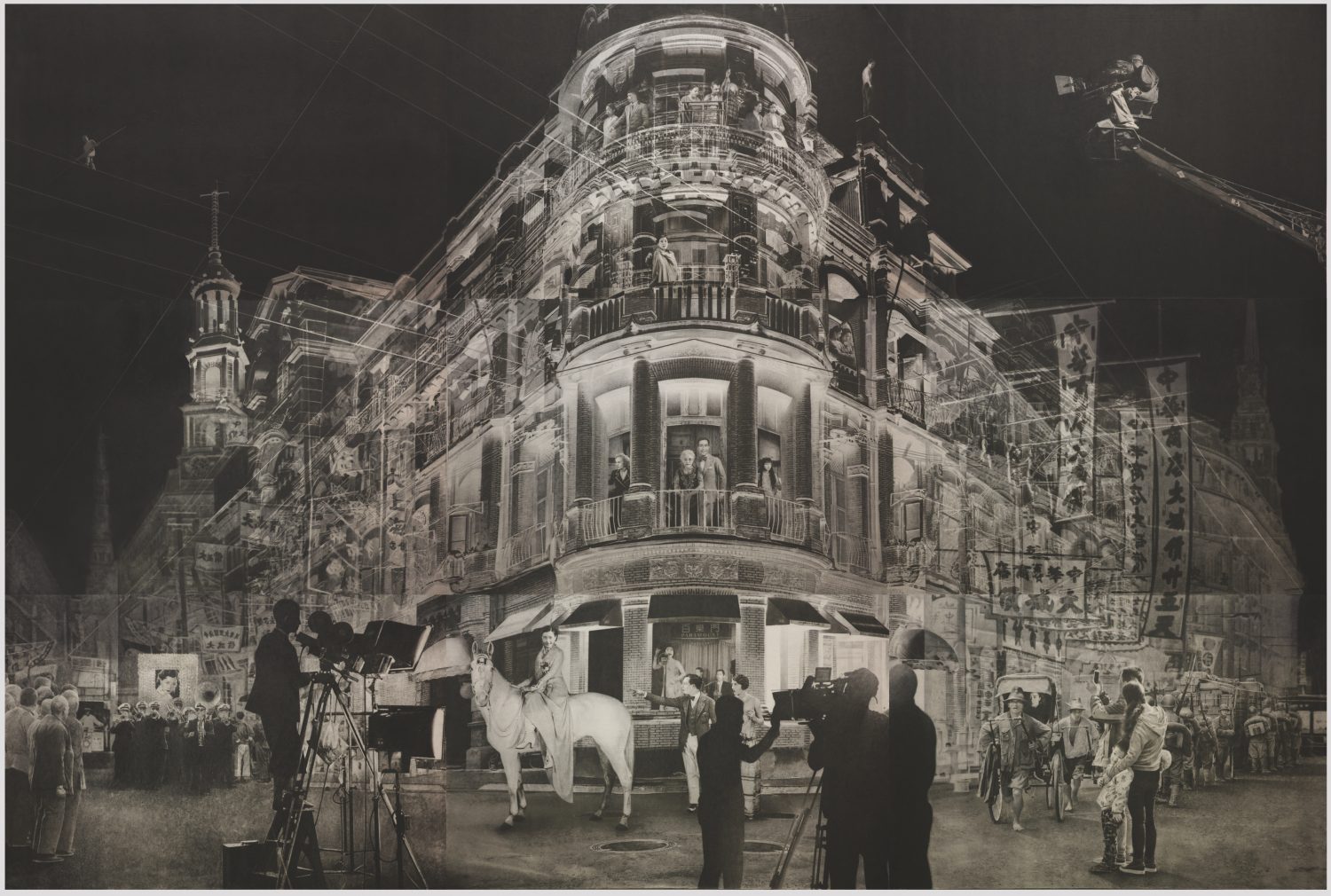
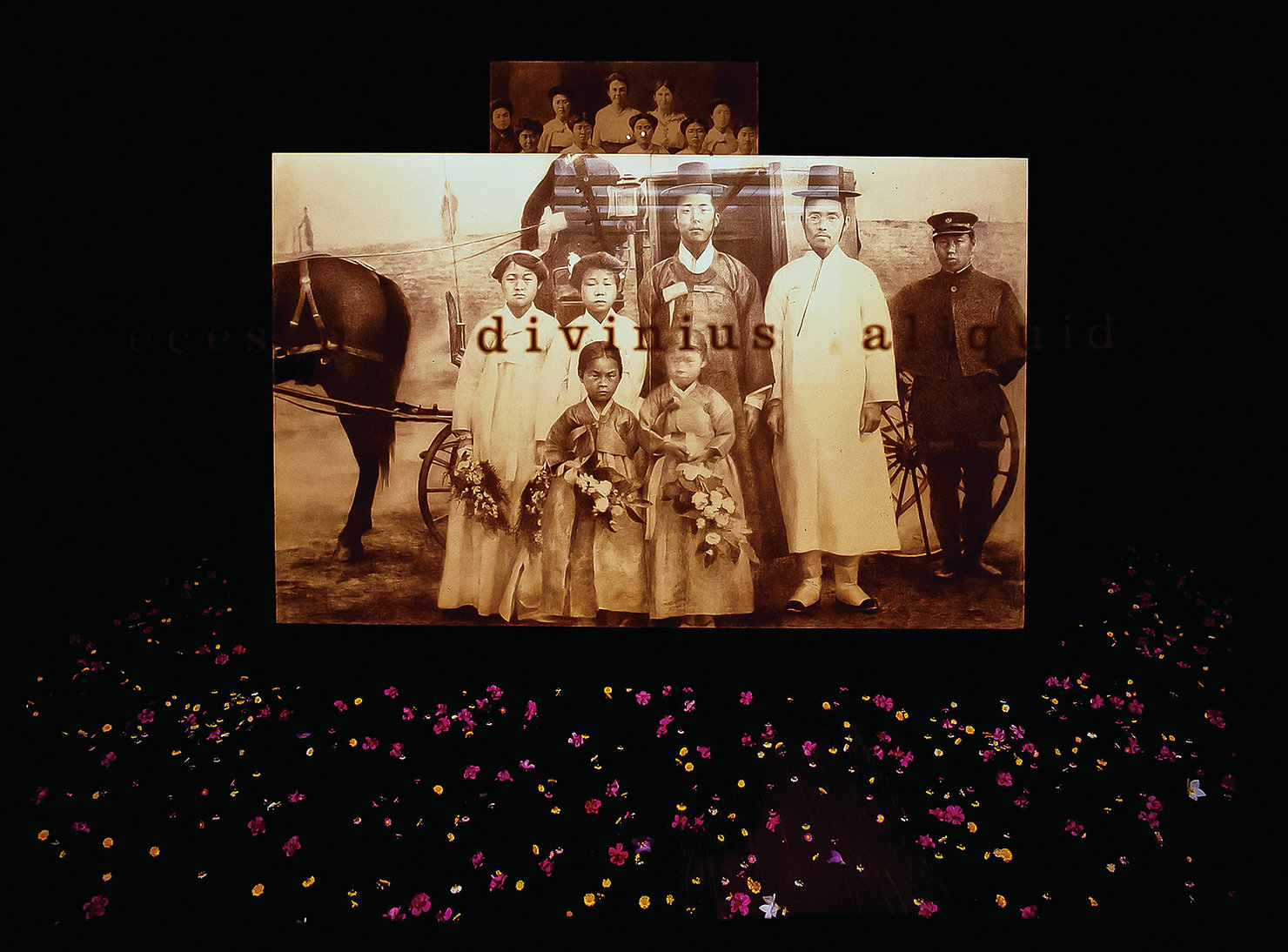
In his work, the subject of memory begins with families or anonymous individuals, as seen in the early work Memory of the Twentieth Century (1990), and later expands to include real figures obscured behind the symbols of modern and contemporary history. In exhibitions such as 《re-collection》 (2008), 《Dream》 (2015), and 《Epic Shanghai》 (2018), he addresses fragmented personal memories through rich narratives and visual staging that combine imagination and fiction with reality against the backdrop of grand historical narratives such as disasters, refugees, and war.
While Cho Duck Hyun’s previous exhibitions centered on past memories and history have engaged viewers through spectacular spatial-temporal staging and plausible narrative structures, the exhibition at Um Museum is comparatively quiet and contemplative.
Titled 《MNEMOSYNE – A River of Memory》, this exhibition takes its name from Mnemosyne, the Greek goddess who presides over the “river of memory.” In Greek mythology, the River of Memory stands in opposition to the River Lethe of the underworld, whose waters cause souls to forget their past lives; drinking from the River of Memory restores all recollection.
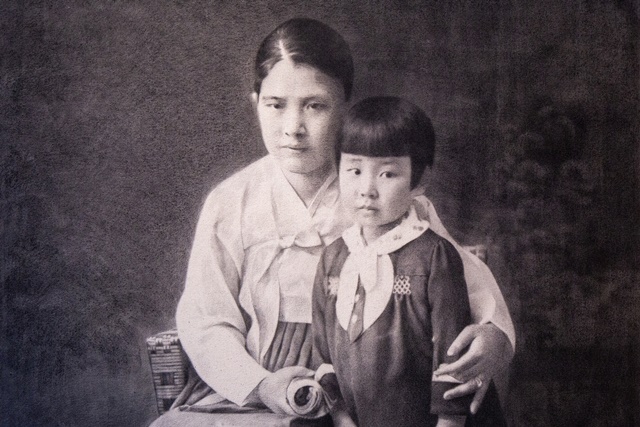
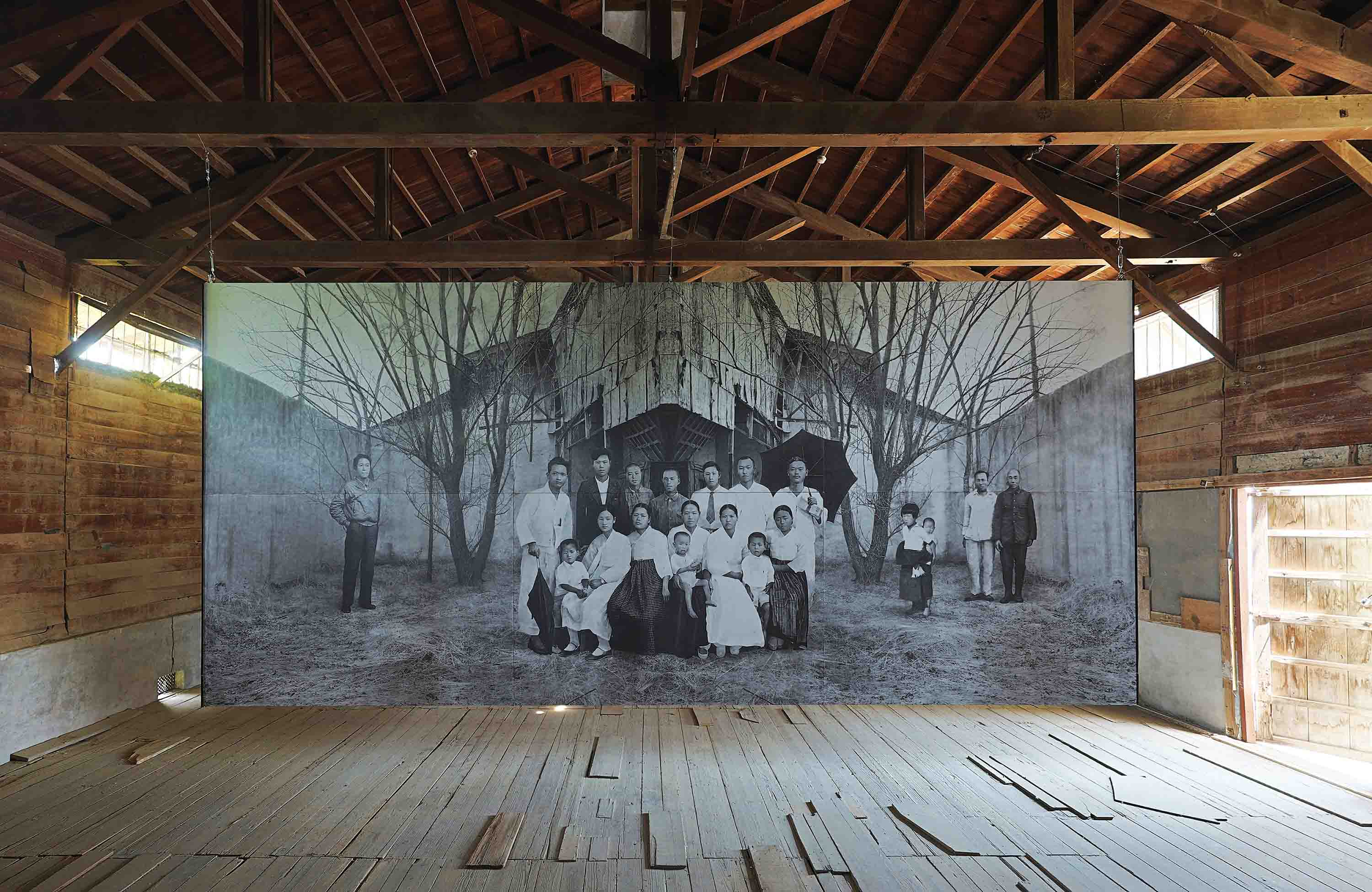
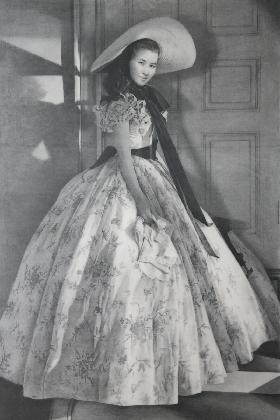
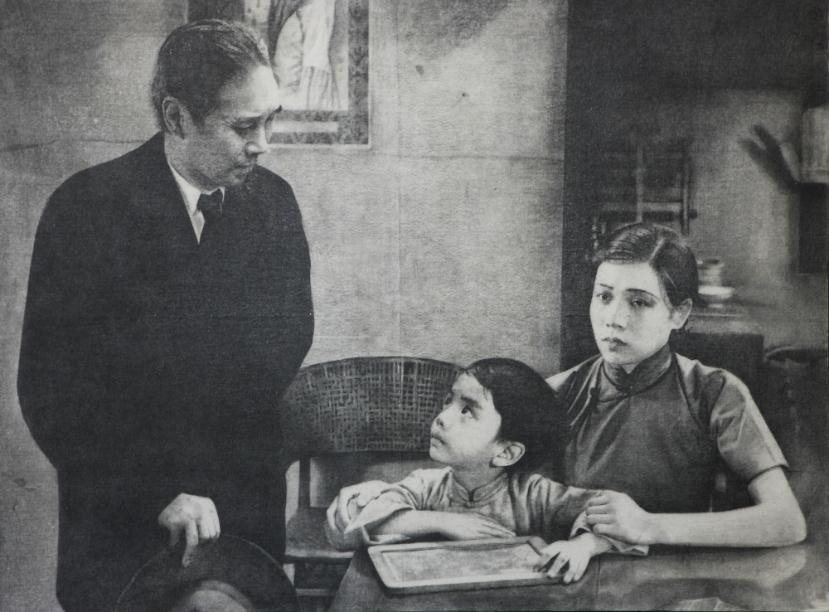
Drawing upon this mythological motif, the artist summons forgotten memories of the past through the exhibition, projecting them into the present and opening new possibilities for imagining the future. Through 《MNEMOSYNE》, Cho brings into the present figures from old black-and-white photographs that he happened to encounter in the past.
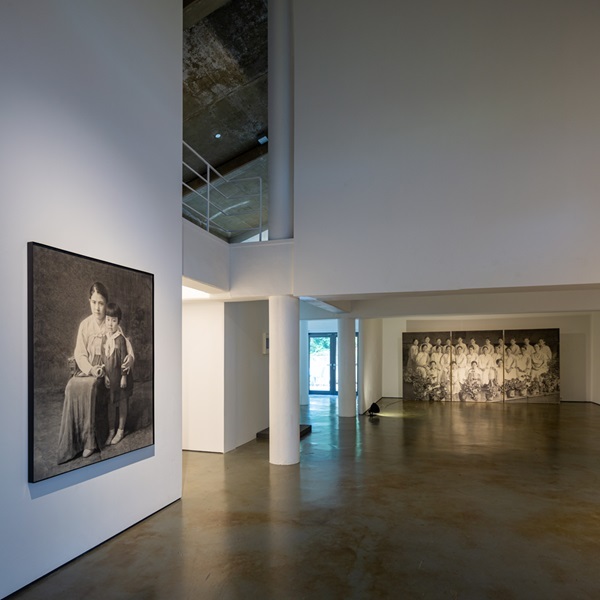
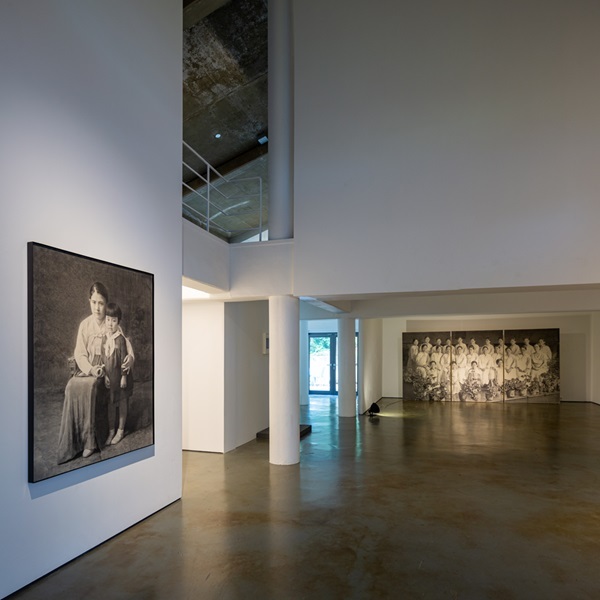
This act is both the artist’s response and a gesture of affectionate mourning, acknowledging that a family once existed. The fragments of this family’s story and memory intermingle with the artist’s contemporary devices, overlapping and blending together to transform the restrained white-cube space into a multilayered environment where invisible memories permeate and intersect.
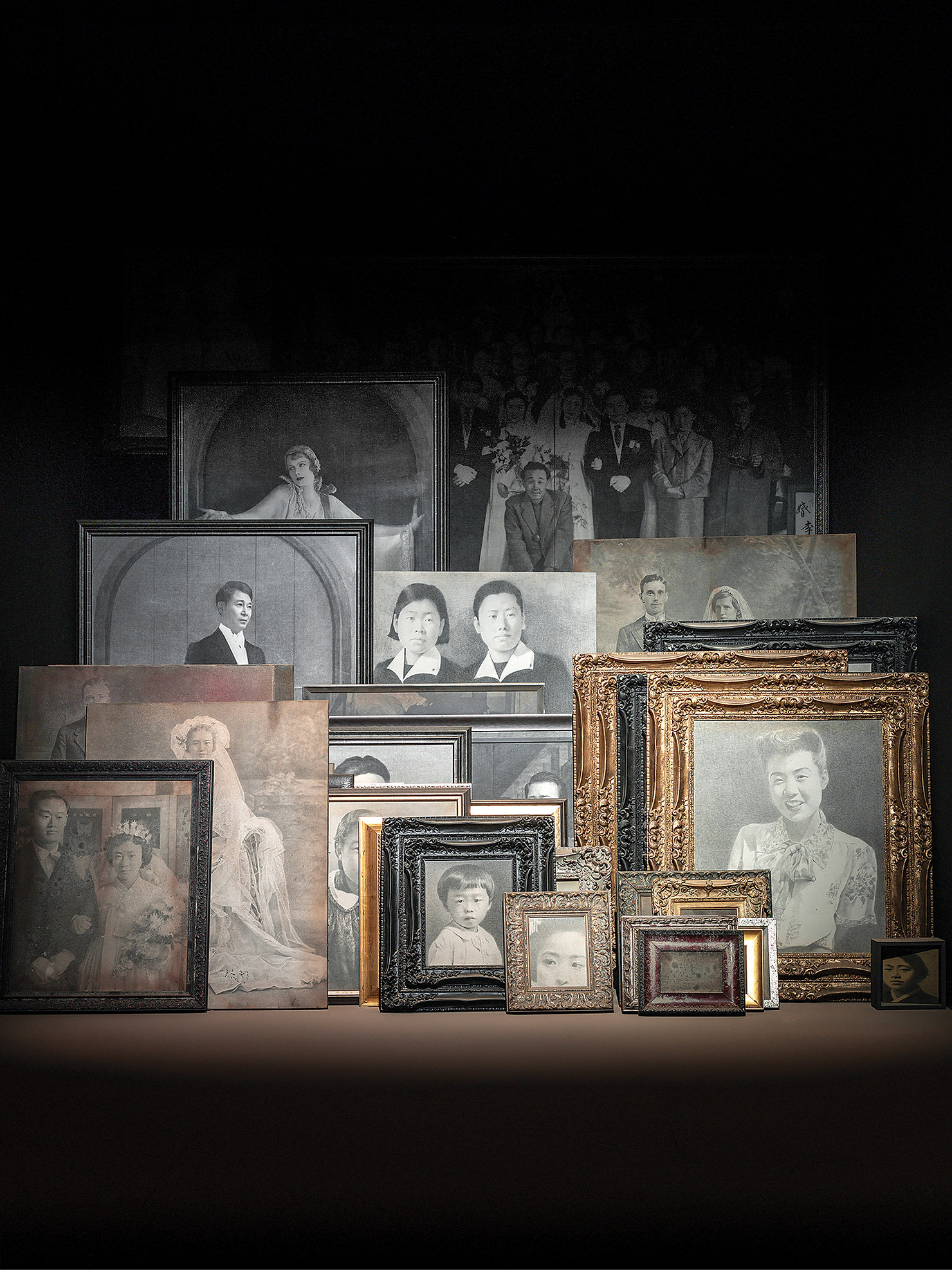
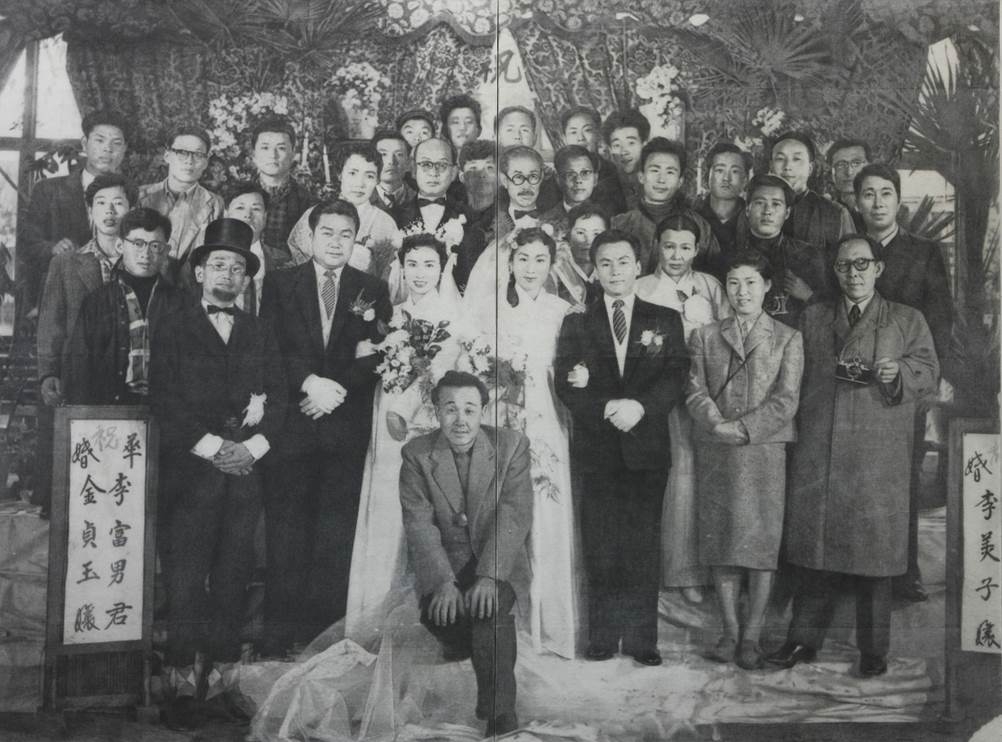
The central figure of the exhibition is Wookcheon Jin Hoseop (1905–1950), an antiquities collector and emerging intellectual from Gaeseong, along with people around him. Though not widely known in academic circles, Wookcheon was a collector who excavated and gathered cultural artifacts during the Japanese colonial period.
He was associated with figures from Gaeseong such as Ko Yuseop and Hwang Suyoung—both involved in the study and preservation of cultural heritage—and played a role in safeguarding Korean cultural traditions. However, amid the turmoil caused by foreign intervention and ideological conflict, the cultural artifacts he was transporting to the South were confiscated by Soviet troops stationed in the North. During the Korean War, Wookcheon made desperate efforts to recover these artifacts, but ultimately failed and passed away leaving behind a life filled with unresolved sorrow.
His deep love for cultural heritage and his tragic life were swept away into the past like waves breaking within the great historical currents of colonial rule and war. For Cho Duck Hyun—who captures the micro-histories of individuals and transforms fleeting moments into enduring originals—Wookcheon’s photo album must have been an unforgettable aesthetic experience and a powerful moment of punctum.
The Gaze of the Other and My Memory
Upon entering the exhibition space, visitors encounter historical figures enlarged to the scale of the human body, meeting the viewer’s gaze. They are no longer objective subjects seen through the eye of the camera obscura, but figures reborn through the artist’s gaze disguised as representation. The act of seeing is not merely a function of the retina but a process involving the full operation of perception and cognition.
Here, the artist’s gaze goes beyond the established conventions and linguistic structures that Jacques Lacan described as the “symbolic order.” His gaze allows us to perceive what lies beyond the represented world, revealing invisible dimensions that a one-directional gaze cannot capture. The figures reborn through the artist’s gaze are no longer merely physical objects perceived through primary sensation. Instead, viewers as subjects establish relationships with the “others” within the canvas—entities that were once only objects—and begin a silent dialogue with them.
Within the same space, the viewer’s “eye,” the painter’s “gaze,” and the “look” of the figures within the works intertwine to create a rich narrative of memory.
The forms of eye contact between viewers and the figures on canvas vary. When entering the exhibition, the dignified couple—Mr. and Mrs. Wookcheon—initially look down upon the viewer from a lofty position, but after visitors have moved through the entire exhibition, they find themselves meeting the couple’s gaze at the same level (Mnemosyne II).
It feels as if the couple is responding to and acknowledging the empathy of viewers who have come to share in their life, love, and suffering. Unlike conventional portrait photography, where attention is first drawn to outward appearance, the portrait of a stranger looking directly at us possesses a curious power that invites us to gaze into their inner depths. Through painterly strategies involving light, shadow, tone, and contrast—as well as the artist’s reinterpretation of the depth and texture of images—the viewer’s consciousness is gently awakened, encouraging them to regard the figures in the paintings as living beings and to address them silently.
At times, the unfamiliar other within the canvas becomes a mirror reflecting ourselves, and our gaze overlaps and intersects with theirs. In Mnemosyne III, the woman’s gaze becomes that of an other observing me as I look at the installation across from her. If my gaze toward the artwork simply means “to see,” then I become the object that is “seen” and “gazed upon” by another subject—the woman.
Memory and Temporality
Cho Duck Hyun is an artist who represents time. While viewers may initially feel as though they are traveling into the past, leafing through an old photo album belonging to a grandmother, they soon realize that the times recreated by the artist through painting become intertwined with themselves, existing here and now in the present moment. The viewer is no longer positioned within a linear timeline but enters a cyclical orbit of time.
In his earlier works, Cho explored the margins of history and represented time through narrative structures based on editing and montage, focusing on how to present and persuade. In this exhibition, however, he simply conveys what he has felt. He does not attempt to intervene in the viewer’s consciousness by fragmenting or modifying time to produce deliberate disjunctions.
Instead, he presents memory and time in a way that allows viewers to feel and participate on their own, offering them quietly before the audience. Standing before images seemingly frozen within the fixed time of the past, the viewer is prompted to ask: how can one connect one’s own subjective sense of “now” and “self” to these images?
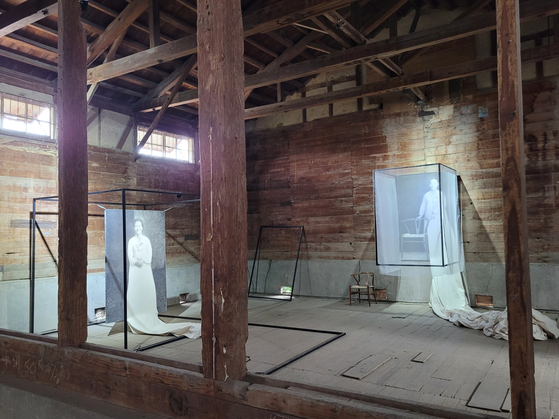
In 《MNEMOSYNE》, the mediators connecting Wookcheon’s album with the audience—and linking the viewer’s memory and imagination—are three installation works. Within spaces that pay homage to the past, contemporary works including media art unfold, transcending temporal gaps. While these elements visually enrich the exhibition and provide fresh interest for visitors, their significance within the exhibition is far more layered.
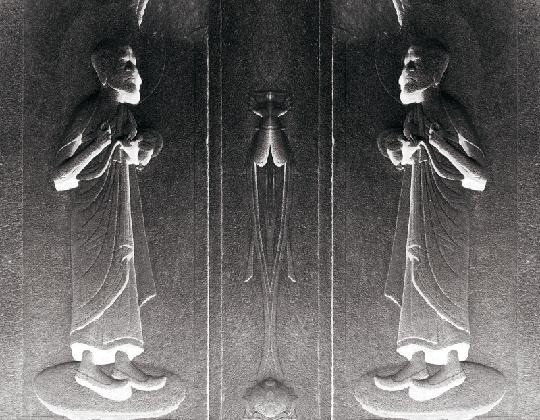
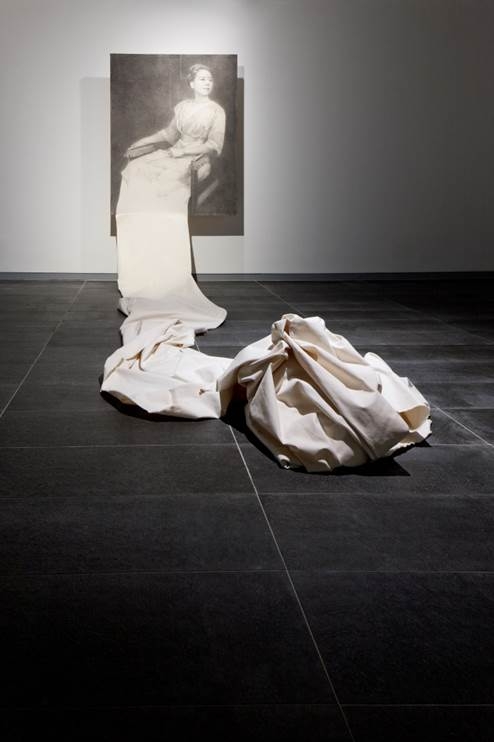
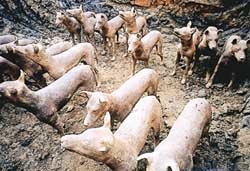
Mnemosyne Installation II, installed along the staircase wall connecting the first and second floors of the exhibition space, is an installation in the form of a “found object.” It functions as a device through which the artist evokes the past using aged materials. Among numerous artifacts owned by an acquaintance who collects antiques, the artist selected several pieces and placed them within the exhibition’s blind spots. These mysterious objects often depict human forms or bodily fragments.
Once transformed into artistic materials and placed within the exhibition space, these old objects naturally touch something deep within the viewer, evoking nostalgia. Memories that exist somewhere within us yet have rarely been recalled—memories on the verge of being forgotten—are revived through the artist’s appropriated objects. Equipped with this renewed sensory awareness of memory, viewers begin to translate the past times represented in the exhibition into their own memories and project them onto their present and future.
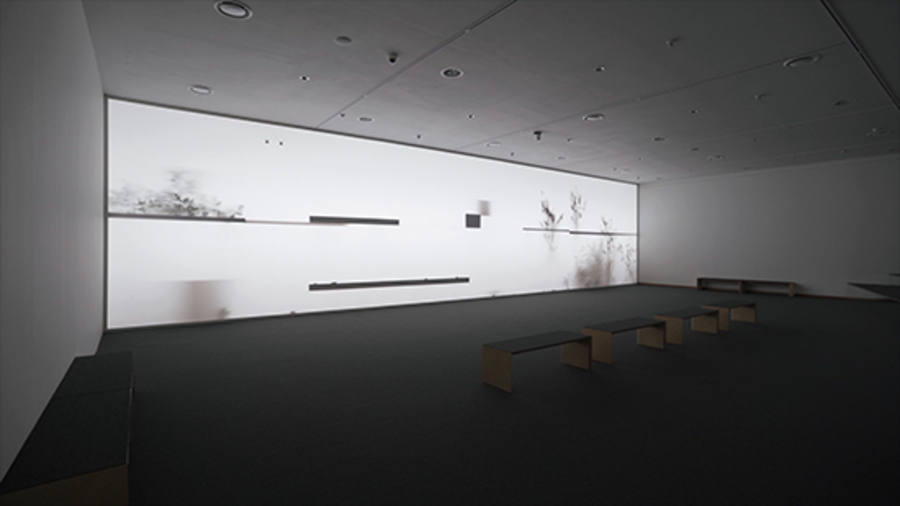
Just as Cho returns formally to canvas painting and emphasizes classical depiction, on the level of meaning he also revisits the time of the “past”—a time that encounters the present and influences the future—recontextualizing the relationship between past and present. In the media work Mnemosyne Installation I, eight monitors displaying video images are placed within a mirrored space where reflections expand infinitely, repeatedly projecting various images of water.
The scattering, gathering, and surging movements of water resemble fragments of memory emerging from primordial depths. The fleeting breadth of memory glimpsed while viewing the canvas paintings becomes amplified and realized within Mnemosyne Installation I. In this infinite space—both a fictional realm and one that touches the future—a woman reflected in the mirror from a canvas across the room gazes calmly at us (Mnemosyne III), as if to say that “the past remains beside you, now and in the future to come.”
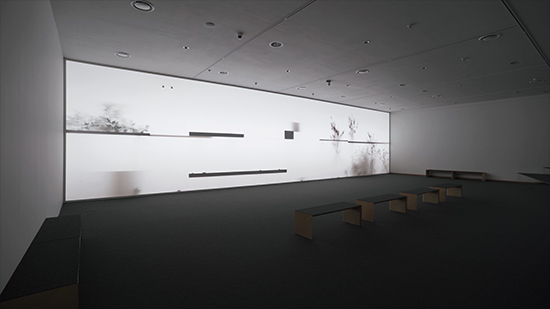
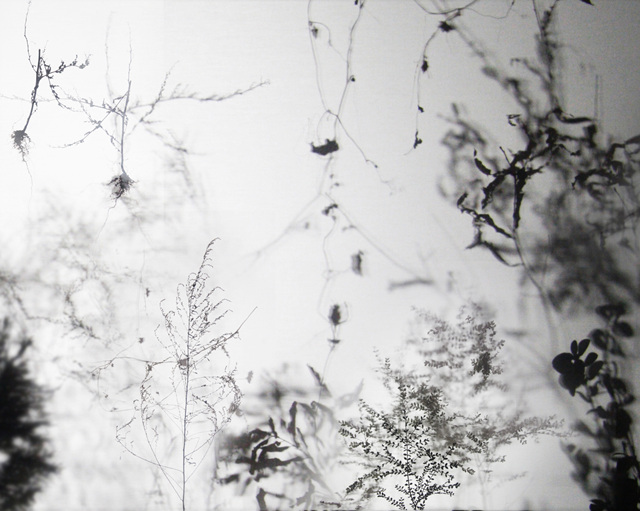
Another installation, Mnemosyne Installation III, is a text-based sculptural work composed of phrases by Um Tae-jung. The cut-out text installed on the wall enclosing the terrace responds moment by moment to the changing seasons and weather. Through natural elements of light and shadow, the artist visually expresses the passage of time. Within a space that might otherwise feel solemn and heavy, the use of text and nature offers viewers a fresh visual stimulus.
Semantically, the text also resonates closely with the exhibition’s theme. The phrase—“I see myself in you. Because you exist, I exist; you are my incomparable one”—suggests a connection between contrasting temporalities such as past and present, classical and contemporary. In this way, within the exhibition space of 《MNEMOSYNE – A River of Memory》, the voices of different beings situated in different temporalities resonate together.
The Dialectical Contemporaneity of Time and Memory
Moments that were once present but are now past become present again through memory and continue to influence the future. In 《MNEMOSYNE》, the past addressed through the theme of memory is connected to the present and recontextualized as it looks toward the future. The artist transforms photographs capturing fleeting moments into an aesthetic practice of time and labor, continually speaking about these invisible relationships.
Within the contemporary art scene, Cho searches for traces and atmospheres of the past—sometimes through narratives of representation or imagination, and sometimes through direct acts of excavation—accumulating counter-memories. For an artist who cherishes the past in this way, the ultimate destination is always the present and the contemporary moment. The second hand of a clock that appears frozen in a particular moment of the past ultimately points toward contemporaneity.
Through the artist’s exploration of multiple memories and temporalities in order to understand reality and shape the future, the space of Um Museum is transformed into a solemn temple where layered memories and times coexist.