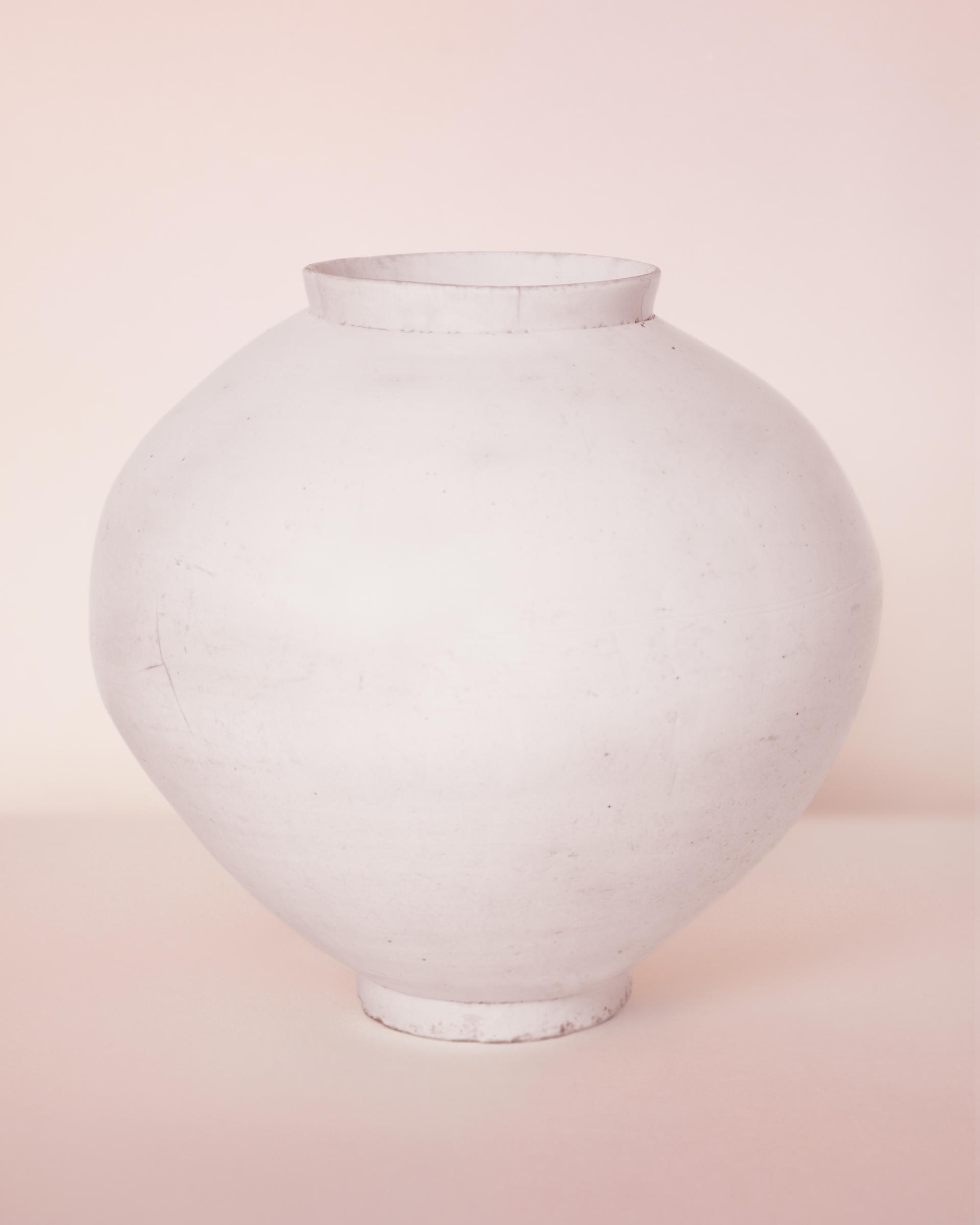
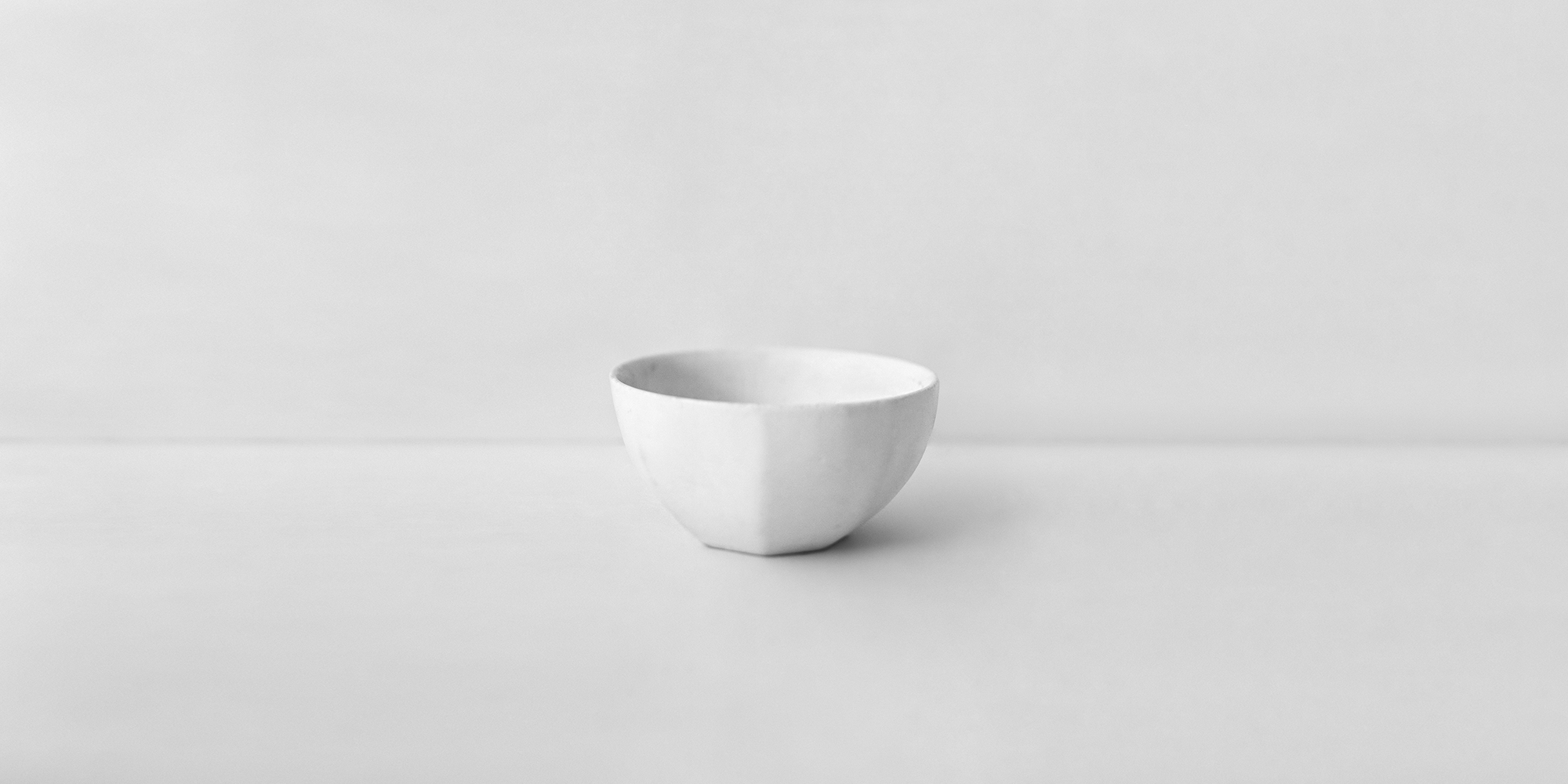
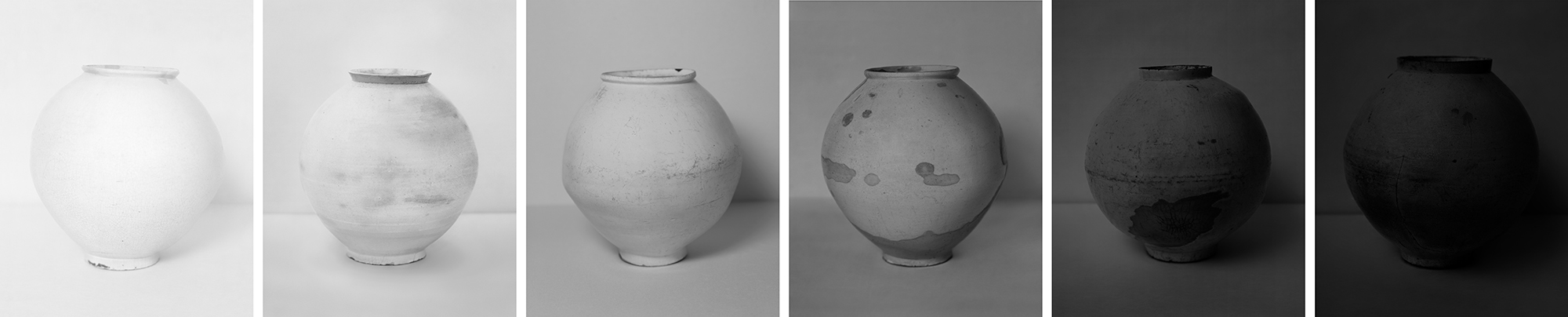
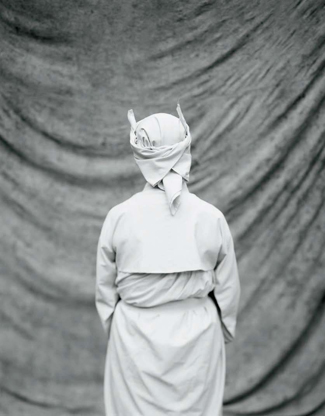
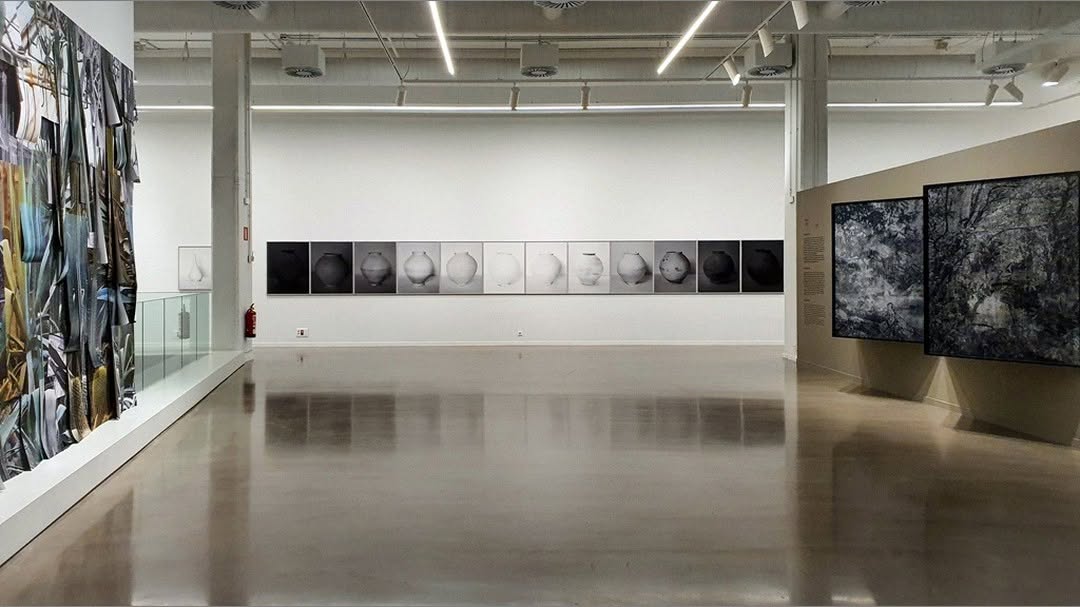
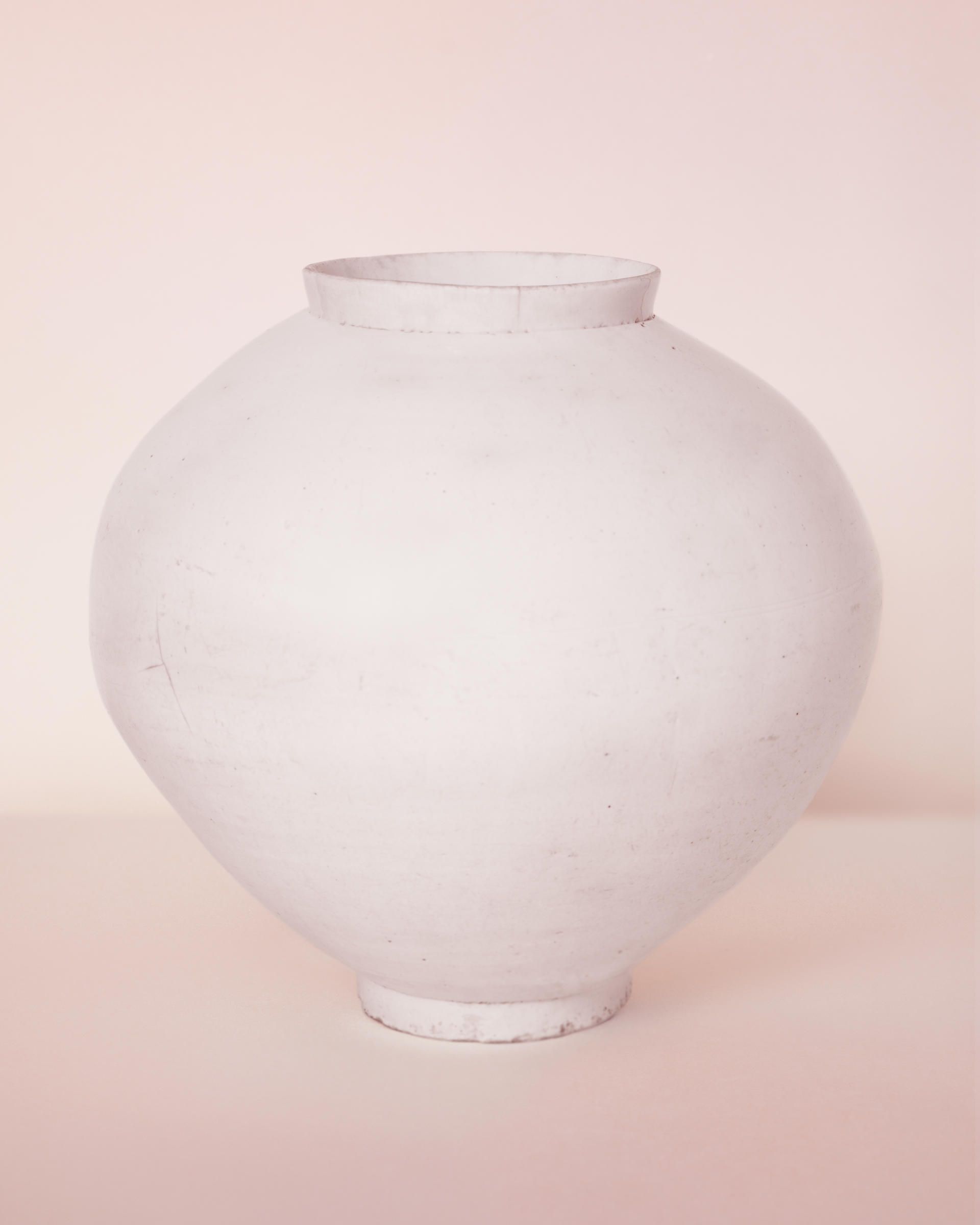
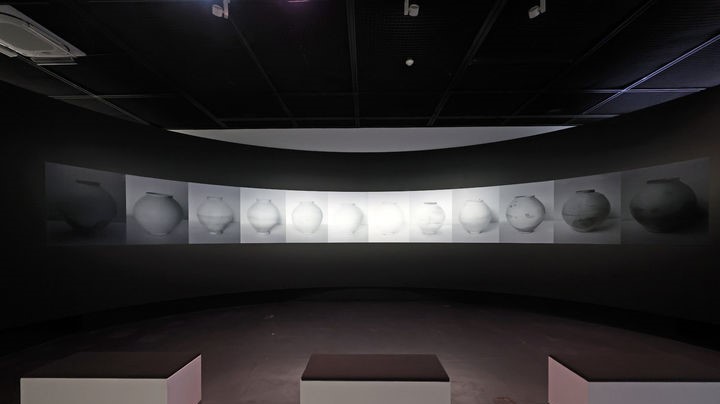
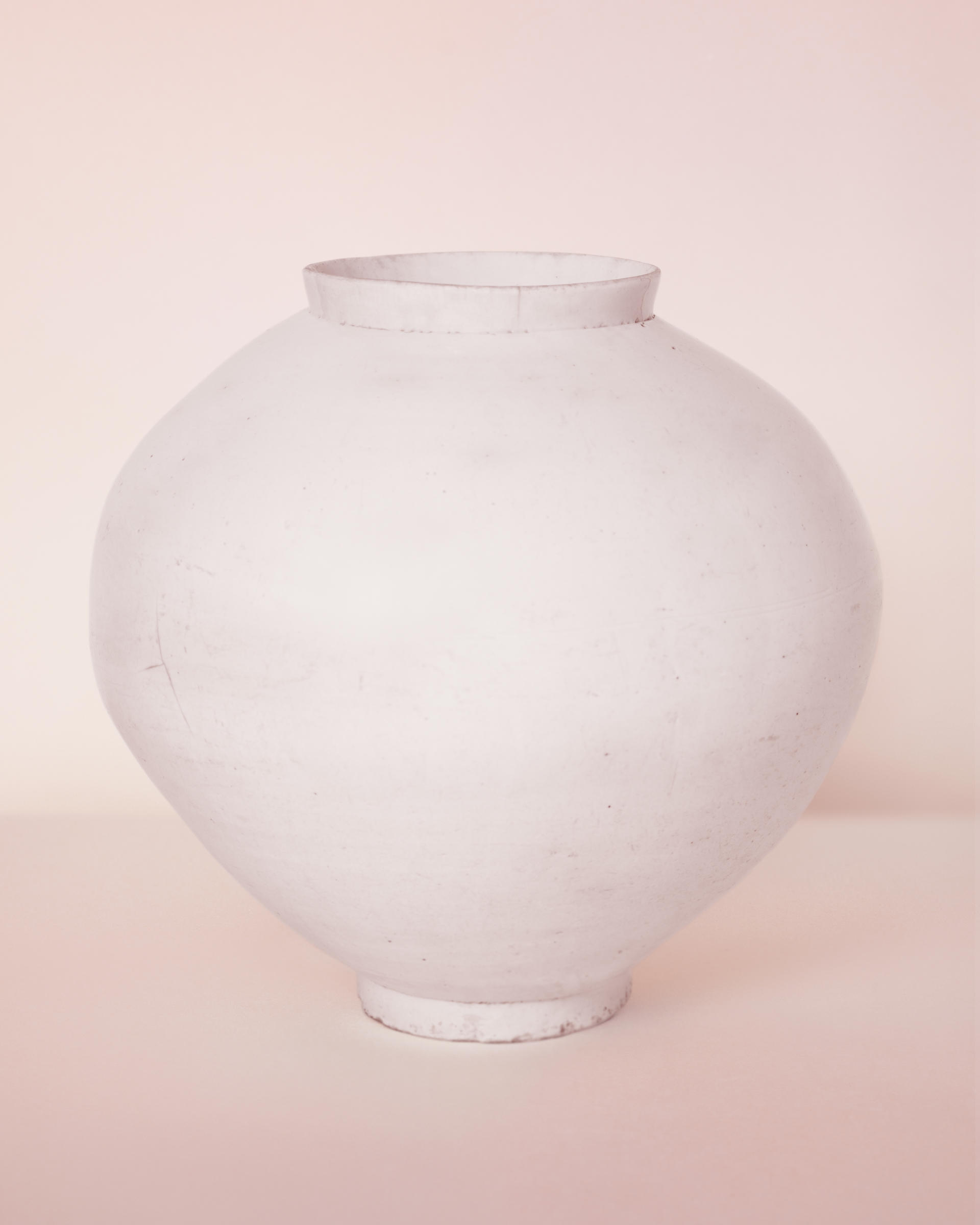
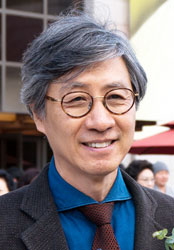
Kang Ikjoong, Koo Bohnchang, Kim Yongjin, Suk Chul Joo, Shin Cheol, Oh Manchul, Lee Yongsoon, Chon Byunghyun, and Choi Yong Wook—nine artists participating in the exhibition 《Why we are attracted to Moon jar》 at Gallery NoW—are representative figures drawn to the symbolism of the moon jar.
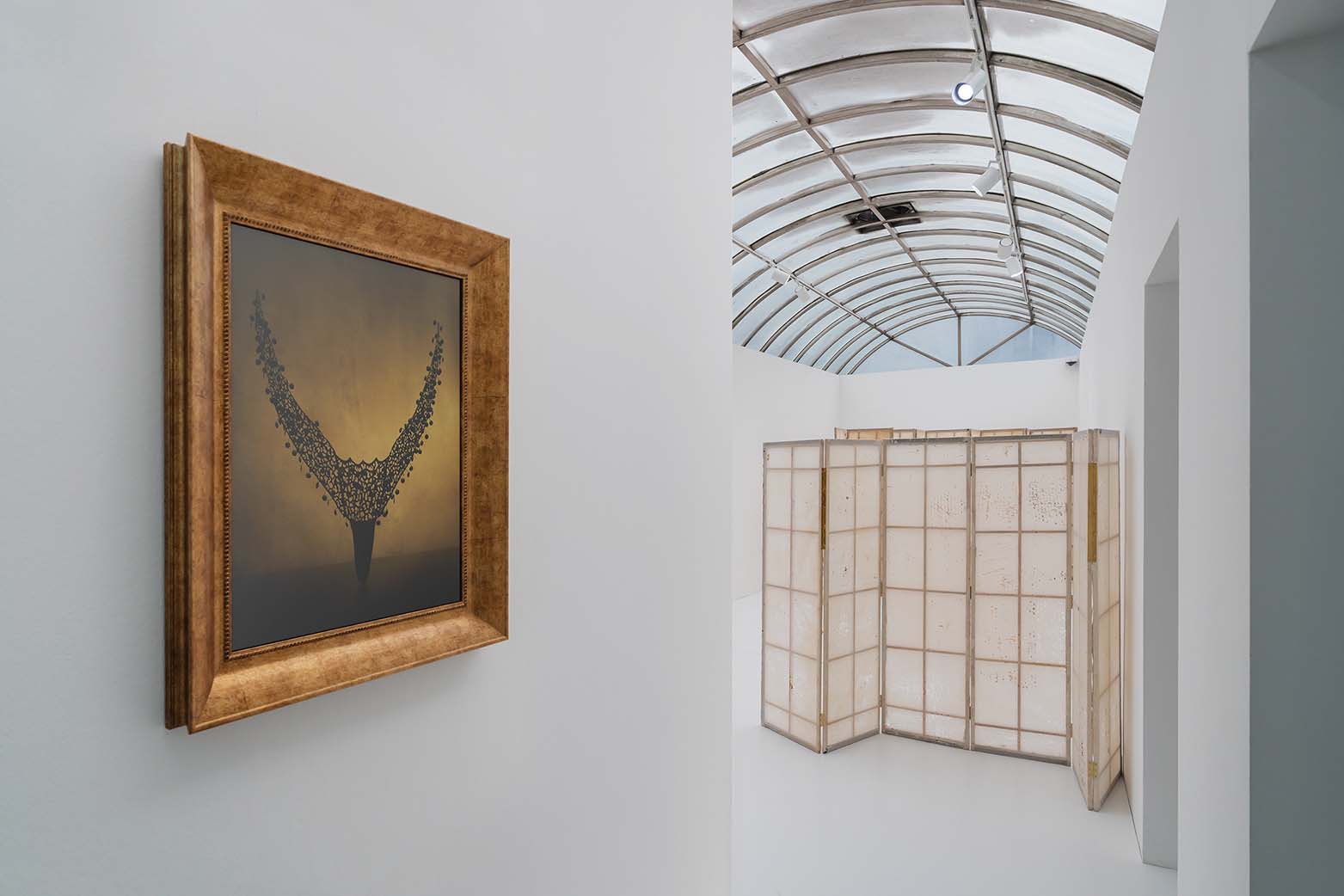
The exhibition presents diverse media and modes of expression: from ceramic artists who create actual moon jars, to painters who depict them on canvas, to artists who shape moon jars through iron cores and ceramic or hanji reliefs, and photographers who draw out the inner energy of the moon jar through the camera.
Naturally, the structure of the exhibition itself becomes intriguing. Actual moon jars are displayed alongside artworks that reinterpret and transform their image. The arrangement recalls conceptual artist Joseph Kosuth’s One and Three Chairs, a work that presents a photograph of a chair, an actual chair, and the dictionary definition of the chair side by side.
In that work, human modes of cognition—perception (the actual chair), imagination (the photographic image), and thought (the definition of a chair)—are brought together within a single frame. Photography, object, and language together visually articulate the concept of “chair” and reveal the process by which it comes into being.
By presenting the physical object we call a chair, its representation, and the conceptual act of defining it as a chair, the work poses a fundamentally conceptual question. Using this idea as an artistic device, Kosuth demonstrates how human beings recognize objects and why what we call a “chair” becomes a chair.
Similarly, the exhibition at Gallery NoW asks the question: what is a “moon jar”? Like the questions posed by conceptual art, the exhibition attempts to reveal and reaffirm why the moon jar we recognize is indeed this moon jar.
At this point, we are reminded of Gilles Deleuze’s notion of the simulacrum. Plato regarded the Idea as the truest reality, the world as its copy, and the simulacrum as a copy of a copy—thus the least valuable form.
Deleuze, however, rejects the premise of the Idea itself, rendering the distinction between original and simulacrum meaningless. For him, the simulacrum possesses value in and of itself. In Deleuze’s thought, the simulacrum is no longer defined through the binary opposition of essence and appearance, or original and copy.
Instead, it contains a positive potential that simultaneously denies the hierarchy of original and reproduction, model and replication. Within the world of simulacra, nothing can claim the status of an original, and nothing can be relegated to the position of a mere copy.
A simulacrum is another original produced from the original. The copy that imitates the original becomes, in turn, an original itself. A representative example is Mickey Mouse, originally modeled after a mouse. Mickey Mouse is no longer subordinate to the animal it imitates but has become an independent original in its own right, existing across character industries and animation.
The moon jars created by the artists participating in this exhibition function in a similar way. The moon jar once situated within the realm of antiques and cultural heritage is reshaped, transformed, and rearticulated through contemporary artists, emerging anew through photography, painting, and other artistic forms.
Many artists have chosen the moon jar as a subject for their work. Why are artists so captivated by its form? The common reason lies in the sensibility evoked by its whiteness and shape. In fact, such pure white porcelain jars are particularly associated with the cultural heritage of Korea.
Across cultures, the color white carries universal associations with the sky, the heavens, purity, emptiness, obedience, sacrifice, and generous acceptance. It evokes feelings of clarity and naturalness and is considered the purest among colors. The white wedding dress, the nurse’s uniform symbolizing an angel in white, and the robe of a monk are all white. Angels are depicted in white garments, and even the eyebrows and beards of Taoist immortals are white, suggesting transcendence. The color of heavenly light has long been represented as white.
The Korean word for “white” derives from a medieval term meaning “the sun.” White also enhances other colors while embracing them generously, which is why museum walls are often painted white. Even within the category of white, the moon jar contains subtle variations: the snow-white brilliance of seolbaek, the milky softness of yubaek, the grayish tones of hoebaek, the paper-white of traditional Korean hanji, and the delicate whites of ramie or cotton cloth.
In the Confucian society of Joseon, such colors symbolized integrity and restraint. In ancient Rome, the white toga worn by men running for public office carried a similar meaning. In medieval European religious paintings, the white halo and the white garments of clergy signified nobility and sacrifice. Across cultures, white clothing expresses a state in which not only the body but also the soul is revealed before the heavens.
Thus white has become more than a color; it has functioned as a symbol of the values each era aspires to. The history of white reflects humanity’s journey to capture purity through light. In times when the concept of colorlessness did not yet exist, white stood in for the idea of the colorless, signifying emptiness and void.
In the case of the moon jar, the virtue of emptiness and void is inherent in its very existence as a vessel. The color white intensifies this meaning even further. Its shape is not a perfect circle but rather gently rounded. A perfect circle is closed and complete, whereas a rounded form remains open.
It becomes a point of communication. Humans begin to weigh emotions and thoughts not through rigid forms but through irregular ones. Such forms activate human free will and represent one of the fundamental ways we engage with the external world. This is why the moon jar’s asymmetry stimulates human sensibility.
It enriches the sense of volume and opens an intimate dimension. In other words, the moon jar is an open structure that reveals a hidden inner world. It opens a treasure house of our sensibility. The painter Kim Whanki once wrote, “In my courtyard stands a large white porcelain jar. (…) On a moonlit night, it seems as if the jar absorbs the moonlight until it is filled entirely with the moon.” Looking at the moon jar, he said, “one feels a tactile connection (…) How could a human place body temperature into clay?”
Such freedom of will and imagination sharpens the senses of our five faculties. To reach the highest realm, one must move beyond the merely real and approach the realm of imagination. This is the point at which the moon jar is praised as a repository of open sensibility. Its wide mouth seems to breathe, and its surface resembles human skin. Karl Jaspers wrote that all beings appear round in themselves.
Vincent van Gogh also suggested that life itself may be round. This roundness of existence can only be reached through phenomenological contemplation. Like the moon jar, a mass of light, when we gather ourselves inward and live without external attachments, we too become round.
The softly rounded moon jar becomes the moon in the sky, and within that scene lies a profound serenity. It is a powerful symbol. The task of interpreting such symbols belongs to art. Perhaps this is what Deleuze’s transcendental empiricism also suggests. It resembles the moment when a carpenter reaches mastery only by becoming sensitive to the signs released by wood through the movement of the plane.