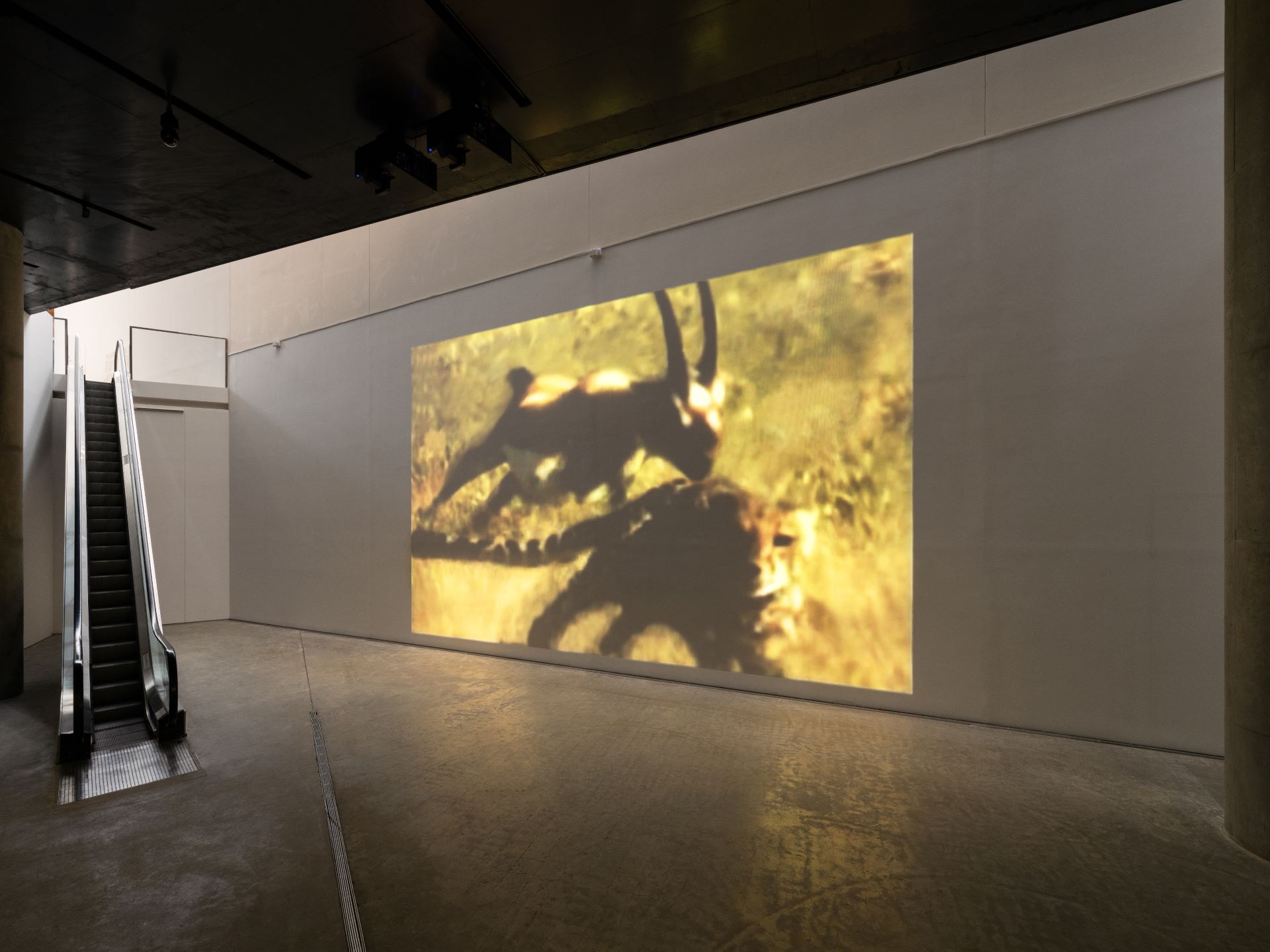
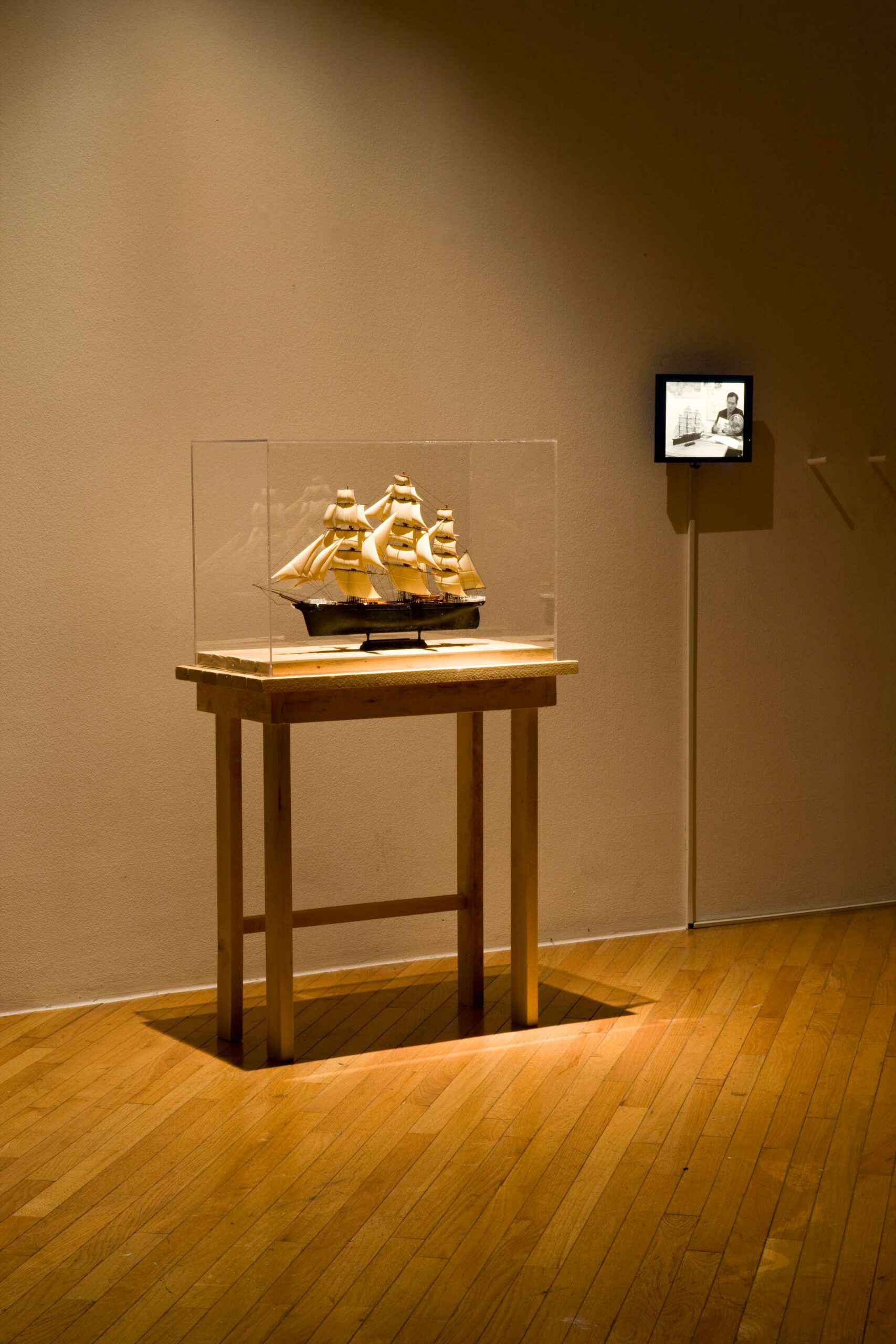
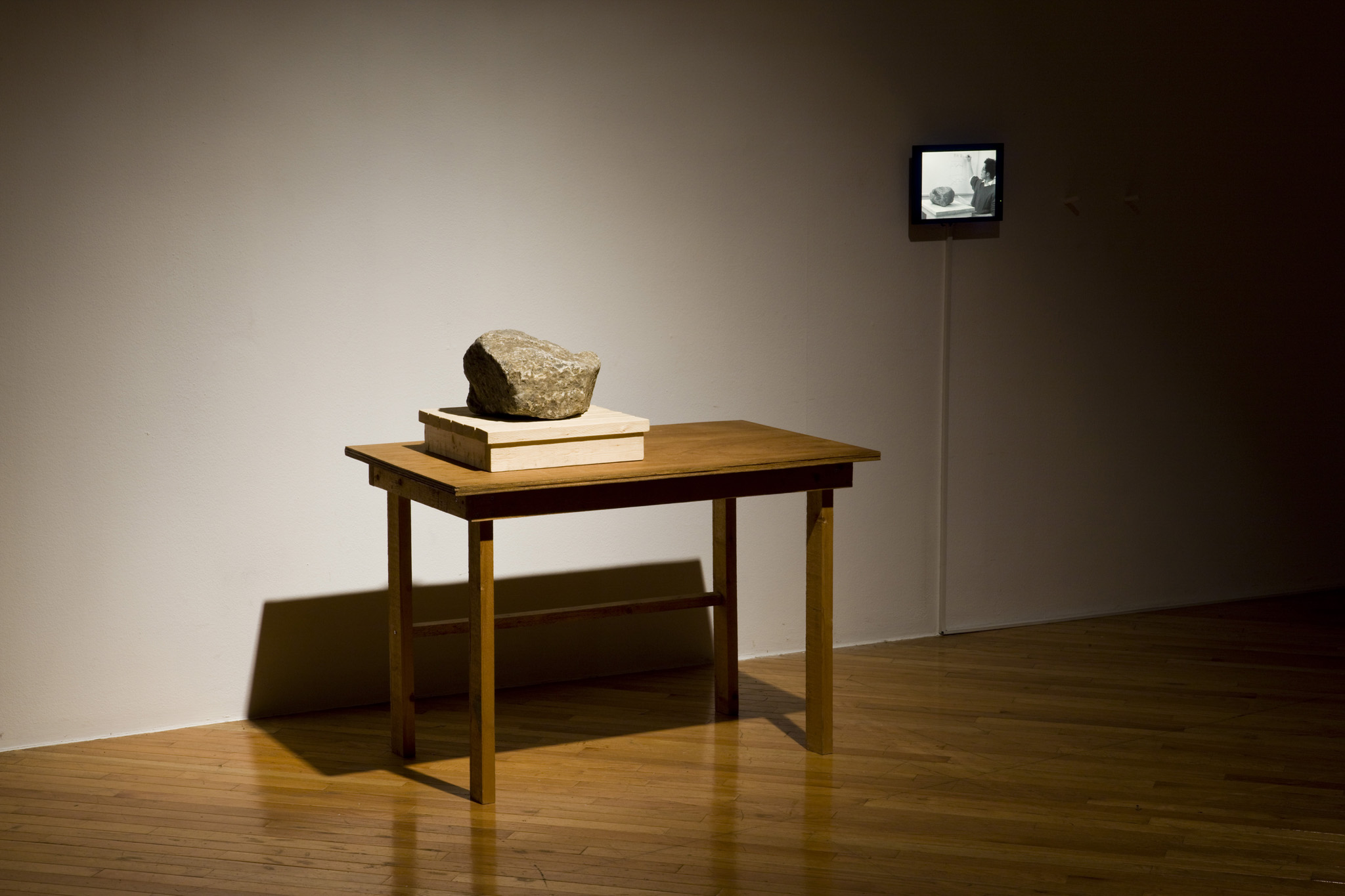
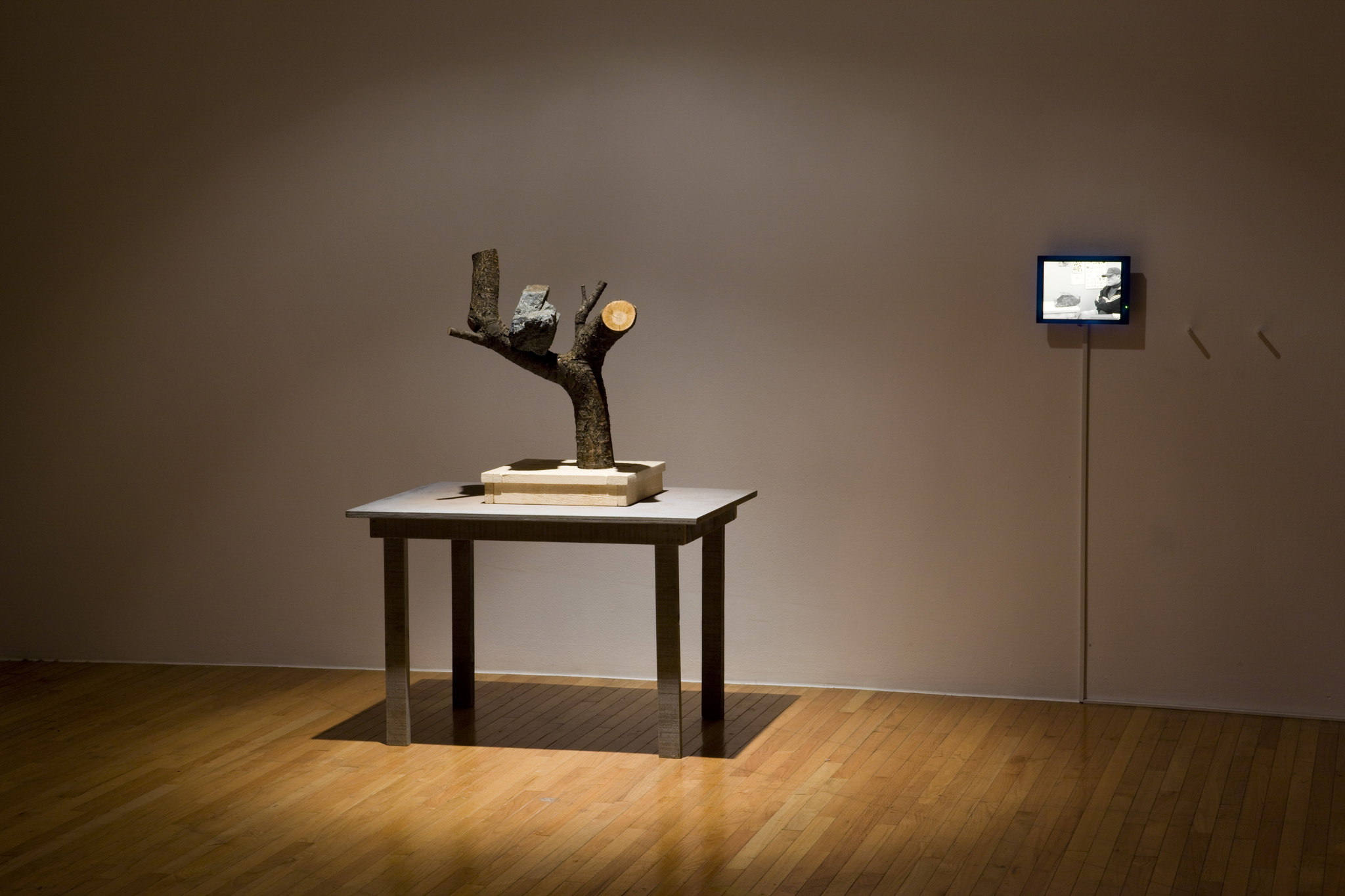
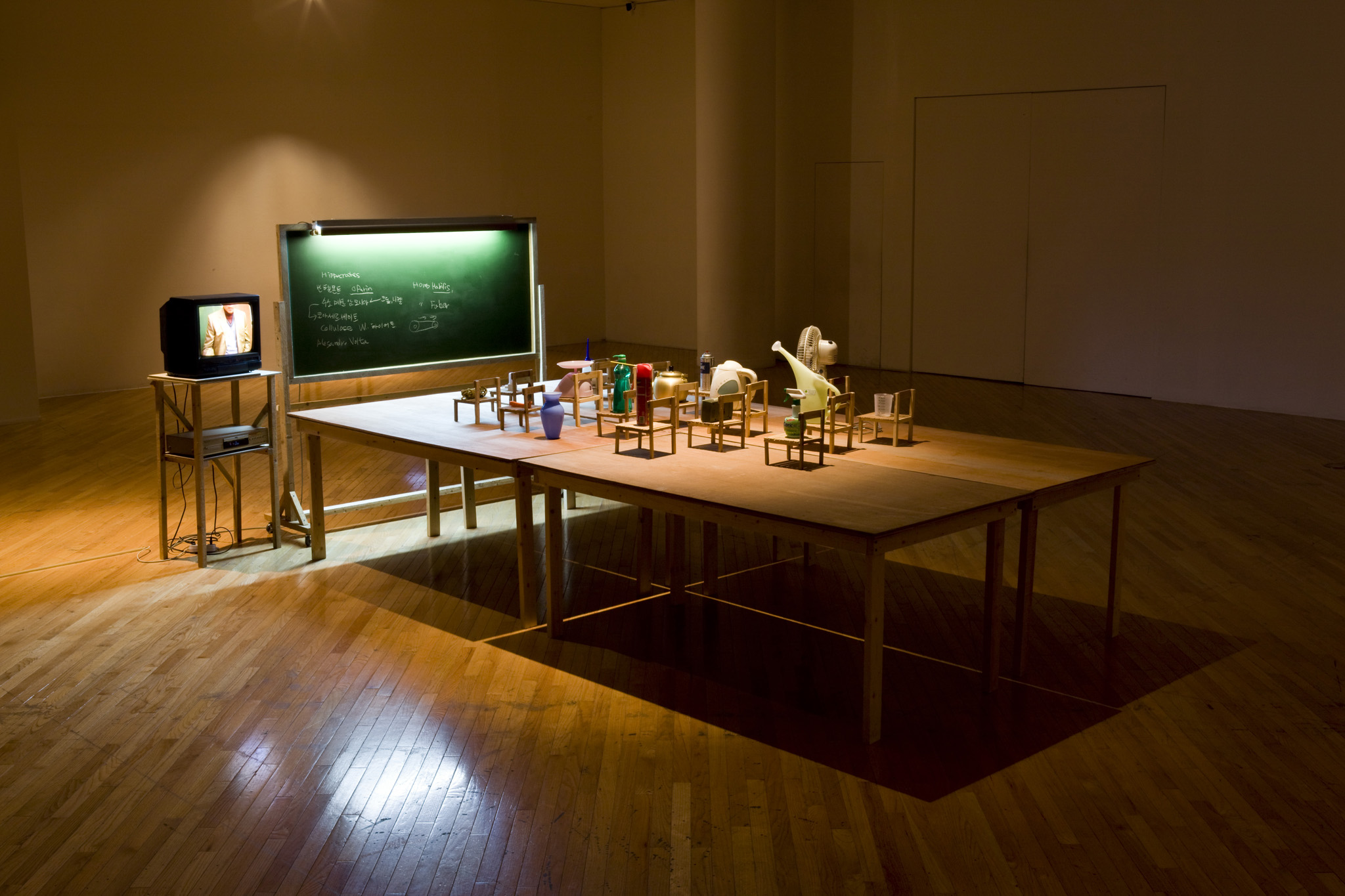
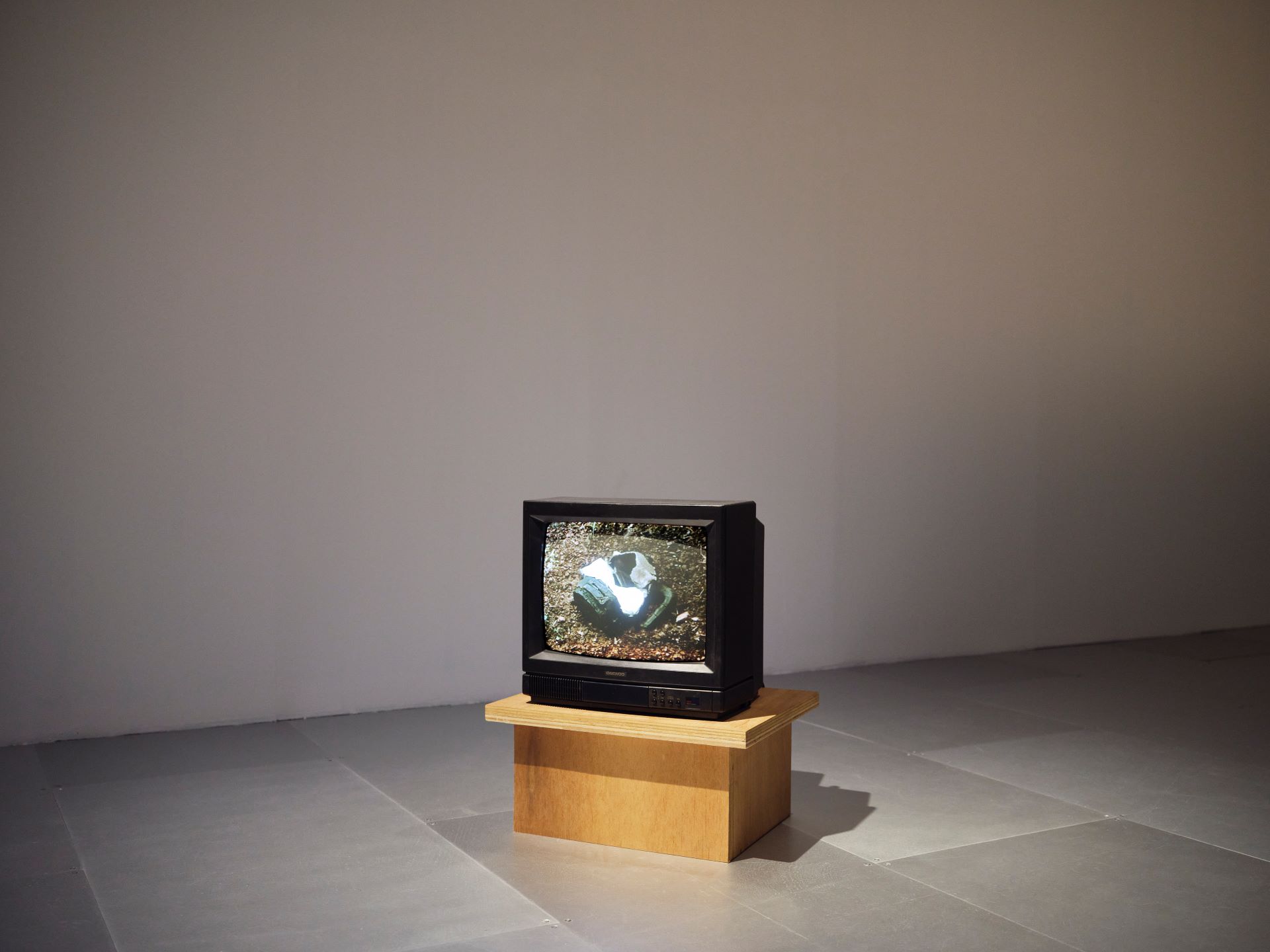
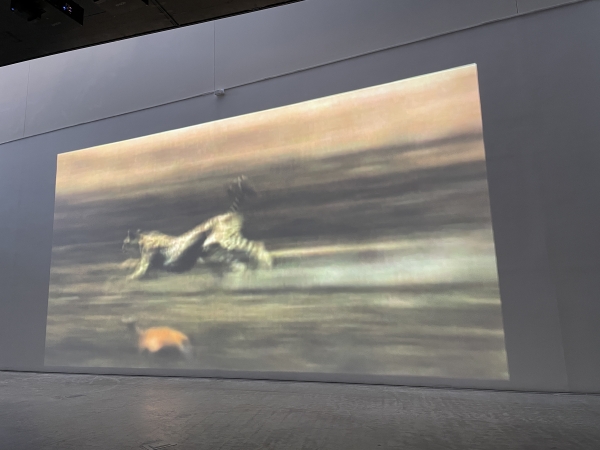
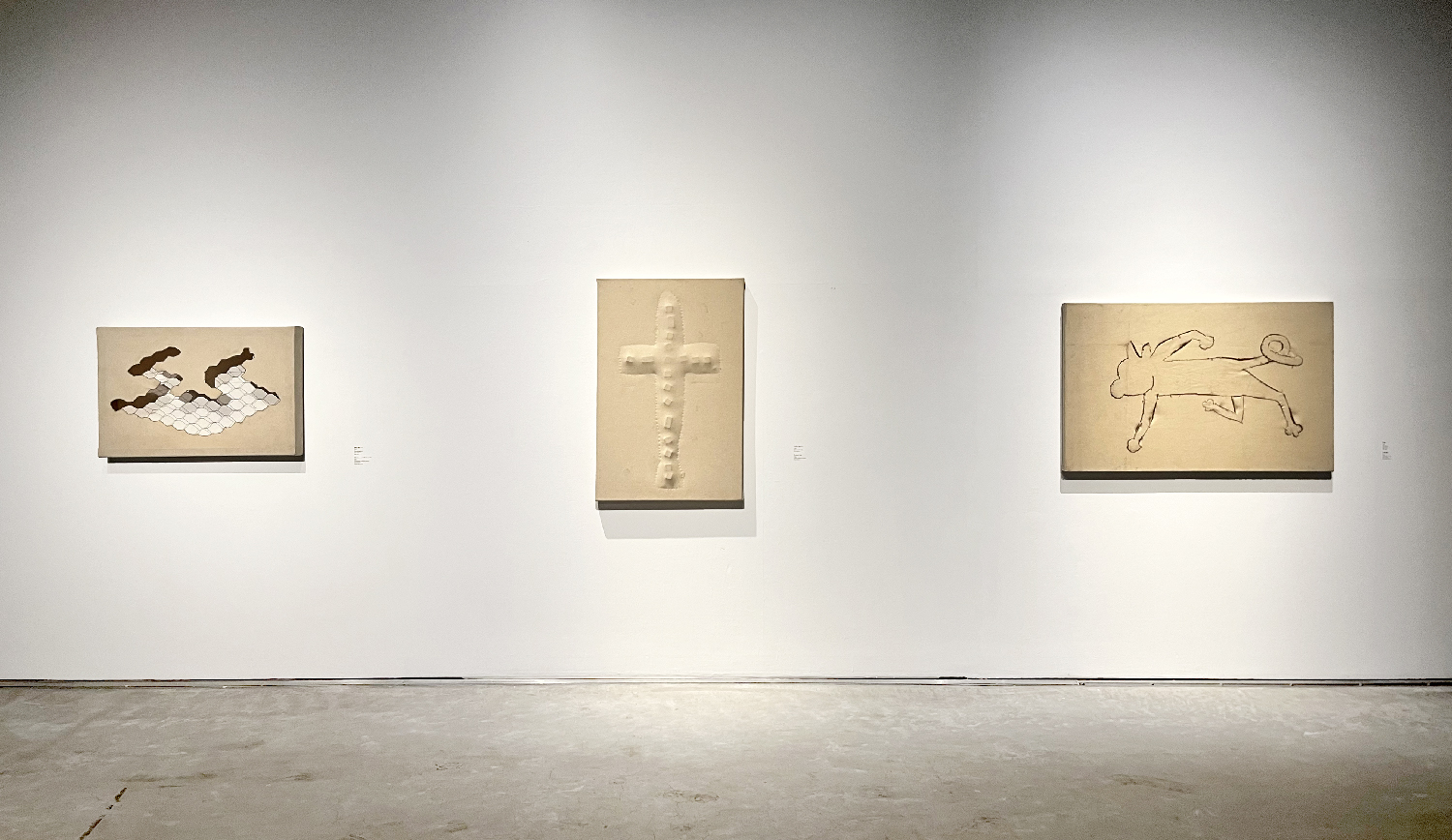
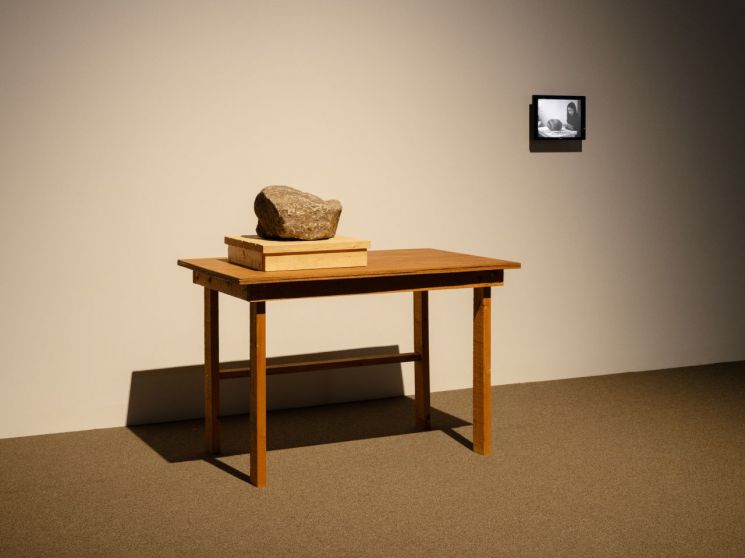
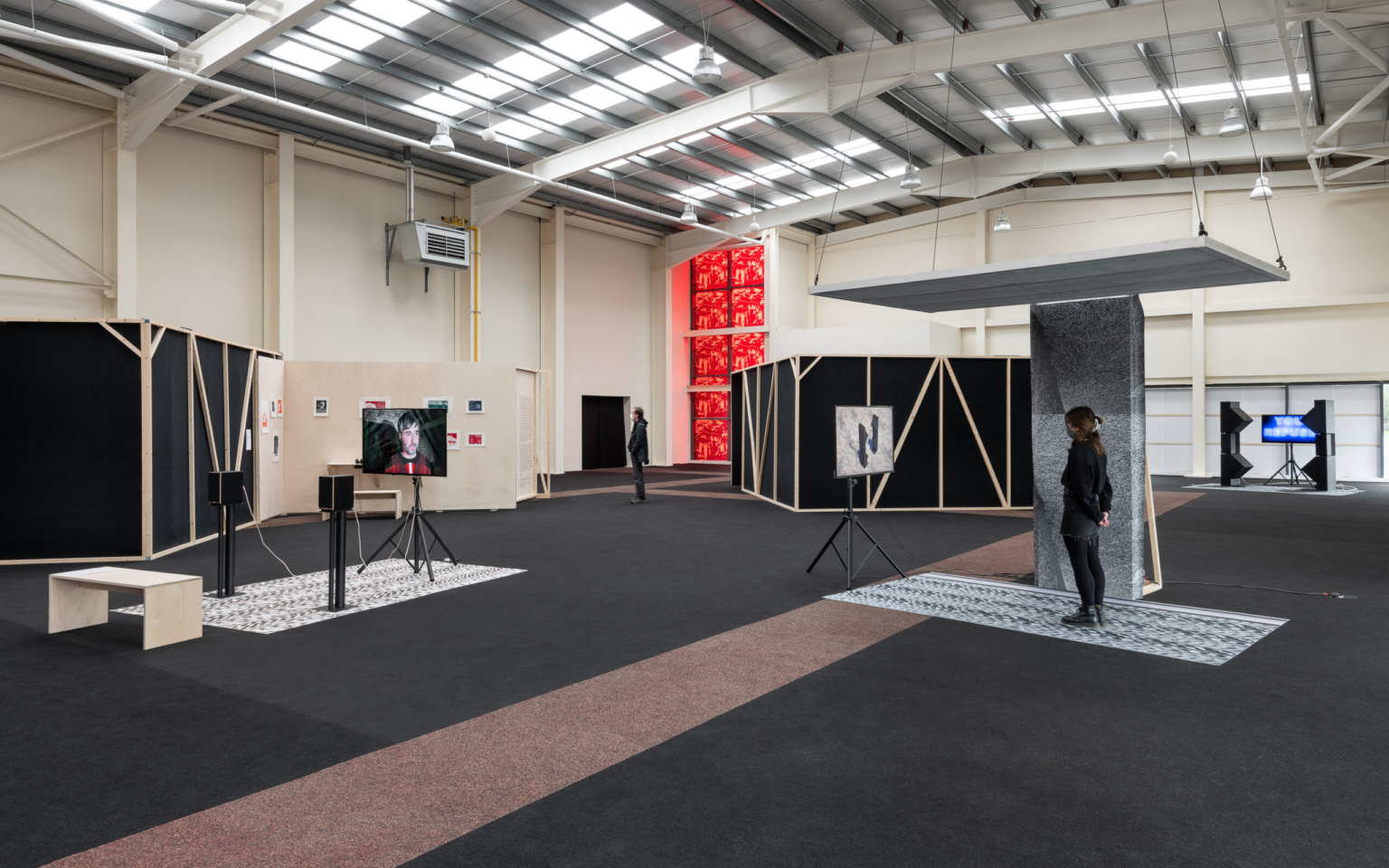
Installation view of 《How to become a rock》 © Leeum Museum of Art

The film 《Everything Everywhere All at Once》, which tells the story of Evelyn—a mother who displays extraordinary abilities while traversing the multiverse to save her daughter Joy—and her family, was widely acclaimed upon its release and quickly became a major cultural phenomenon. At one point during their chaotic journey across multiple universes, the protagonist and her daughter suddenly become “rocks.” As they gaze down at the vast rock face beneath them in silence, Joy asks Evelyn to forget the noise and confusion and to “Just be a rock.” Everything the mother and daughter have experienced in the world fades into the distance, and in the form of rocks they remain motionless, holding their original posture. (Of course, their adventure continues.)

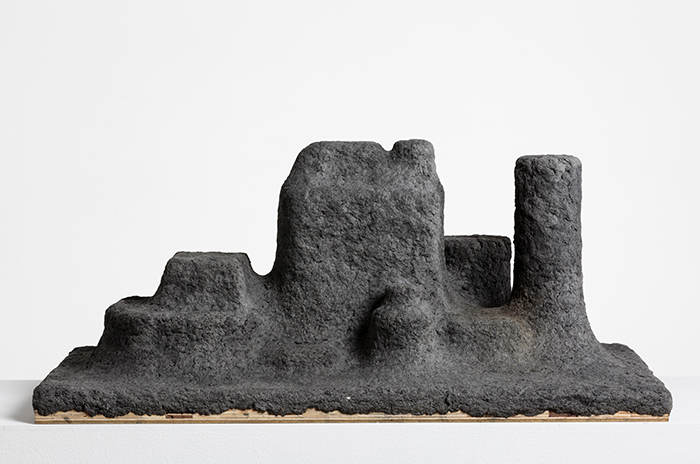
The “way of becoming a rock” that Kim Beom teaches guides viewers toward the empty hole of the bagel—the state of emptiness—that Evelyn and Joy attempt to reach. For contemporary individuals whose daily lives are saturated with processed information, biased consumption, and increasingly extreme audiovisual stimuli, his lesson is paradoxical.

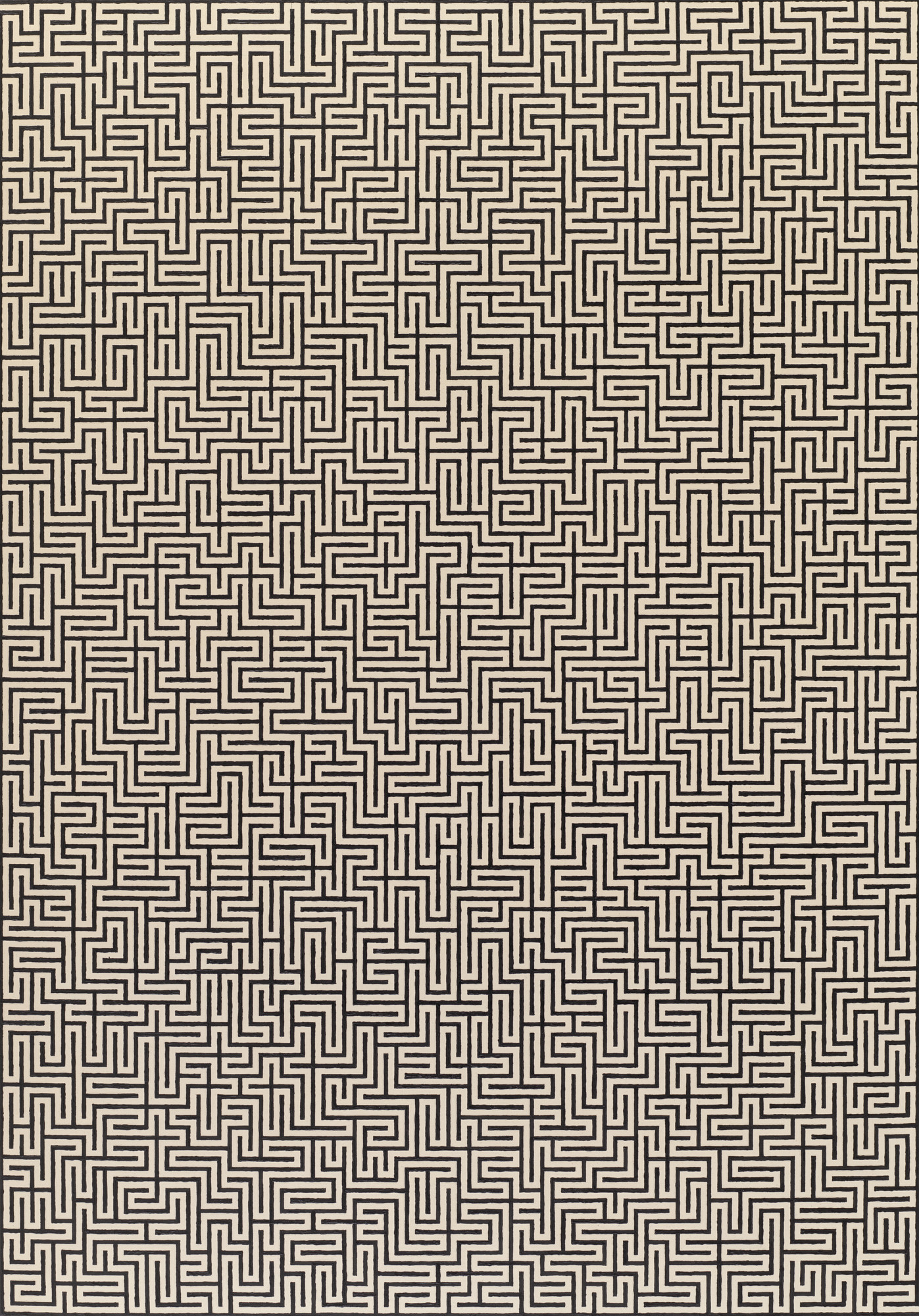
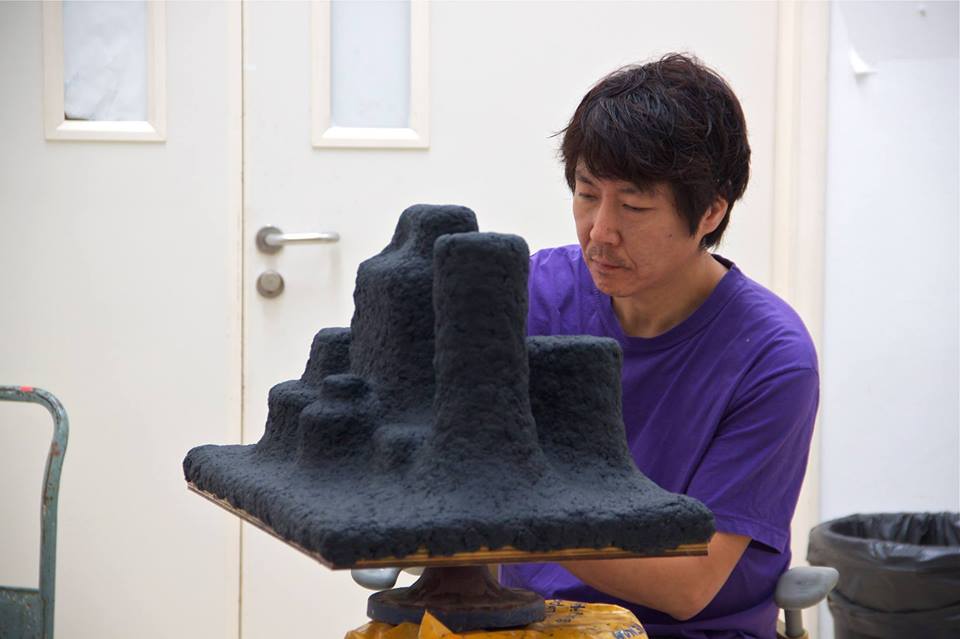
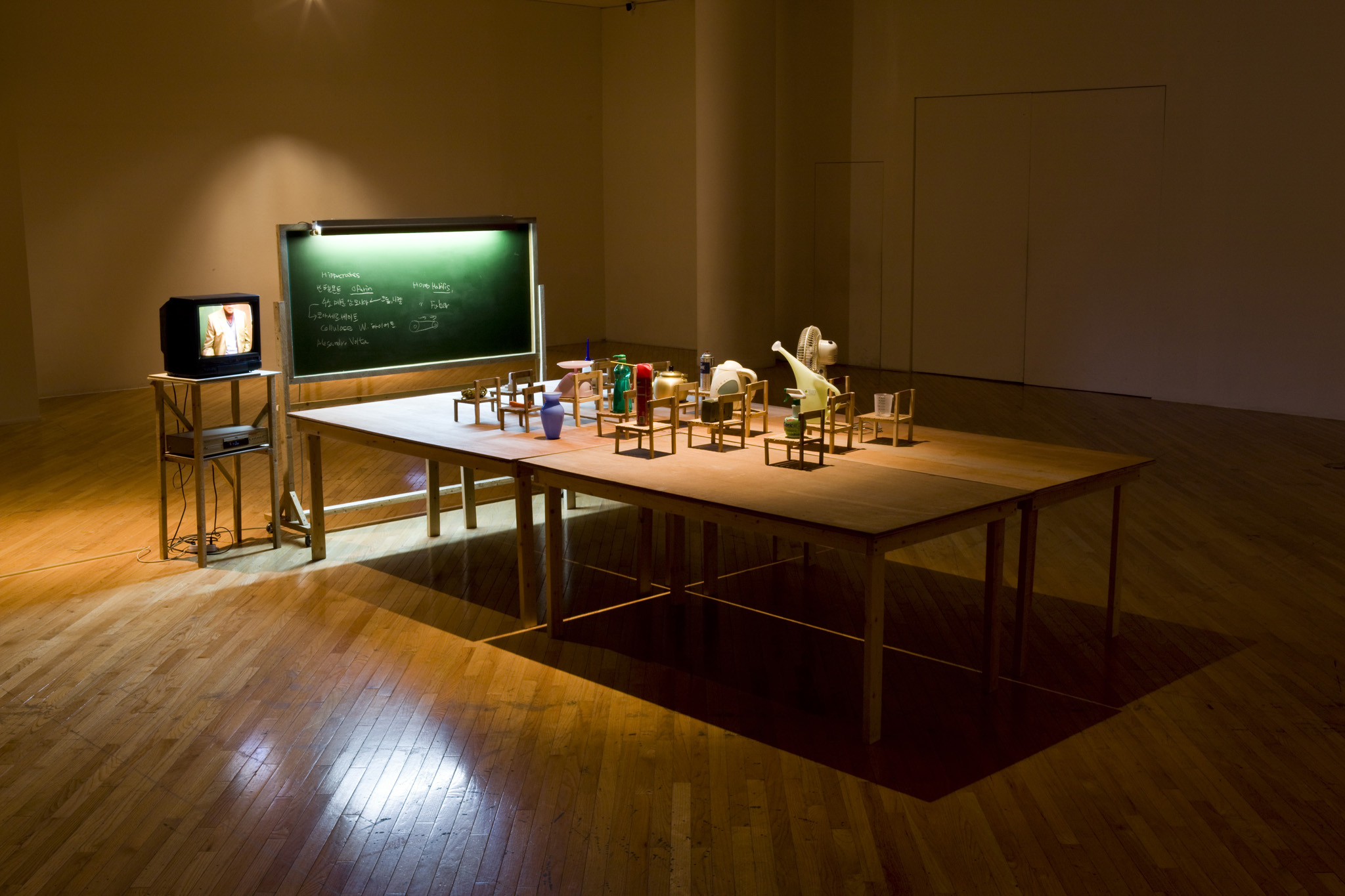
The work’s title, which is also the title of the exhibition, 《How to become a rock》, comes from a text included in Kim Beom’s artist book The Art of Transforming (1997). This book addresses the theme of self-transformation for survival and the mutable nature of human beings, instructing readers on how to become various living creatures or objects. In this theater of the absurd—where objects attend lessons, humans attempt to become rocks, a fierce dog runs off somewhere, and a maze awaits resolution—Kim Beom offers a potential response through art to those of us who are engaged in a relentless race against time every day.

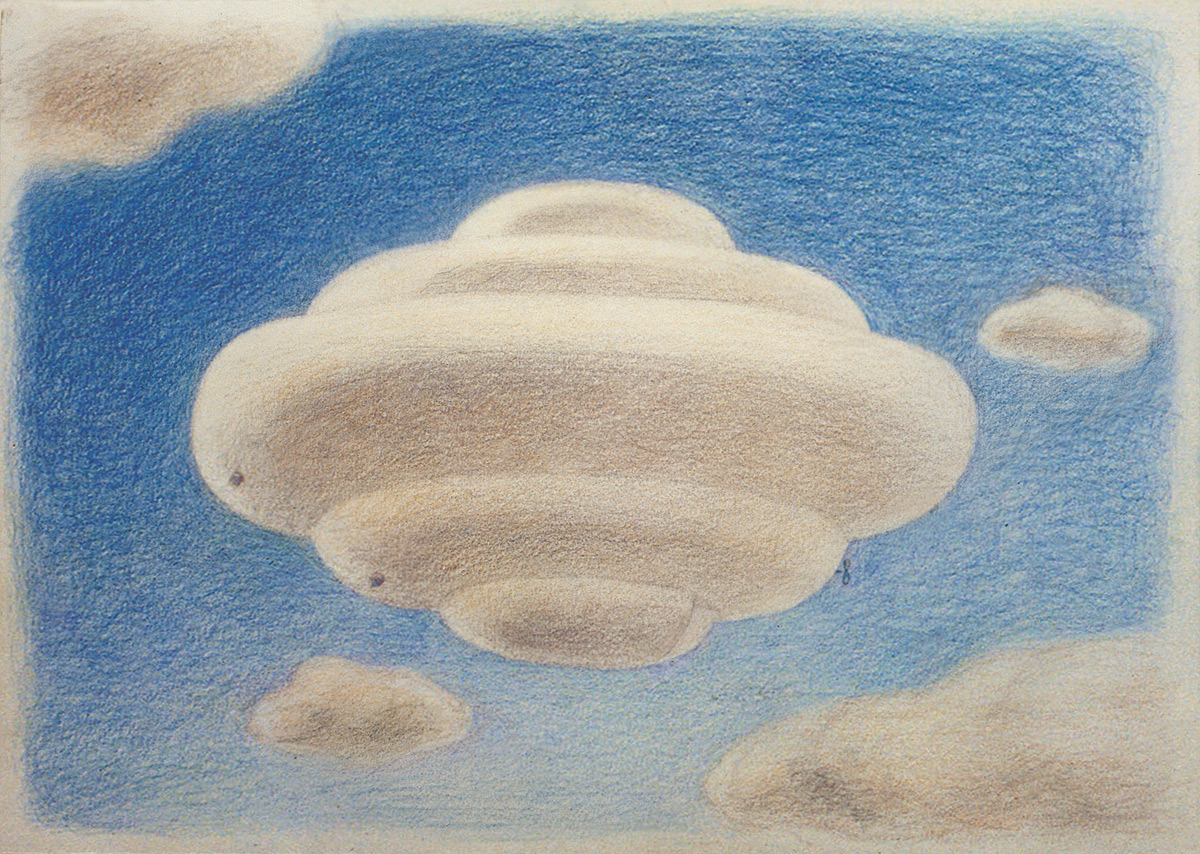
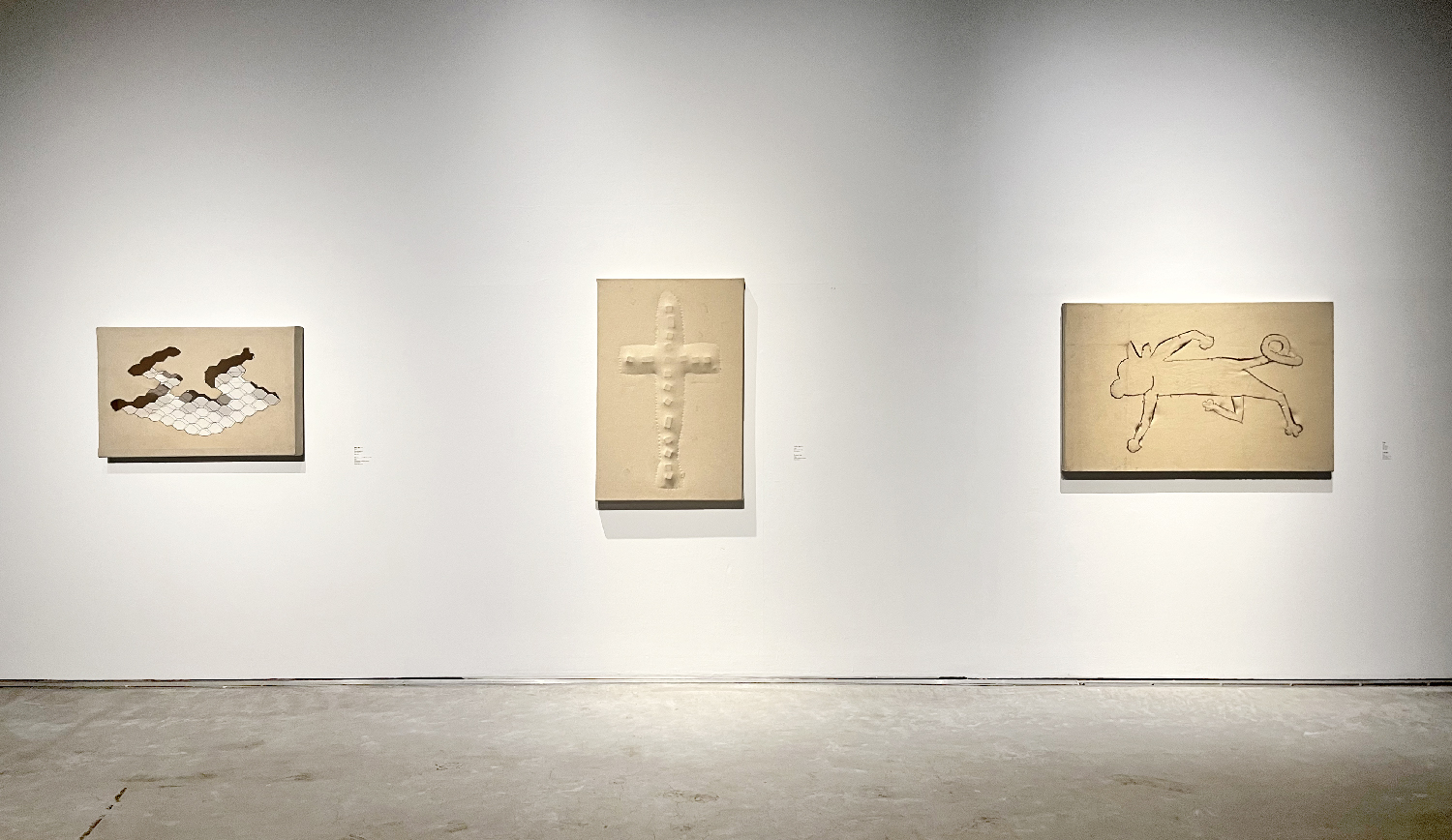
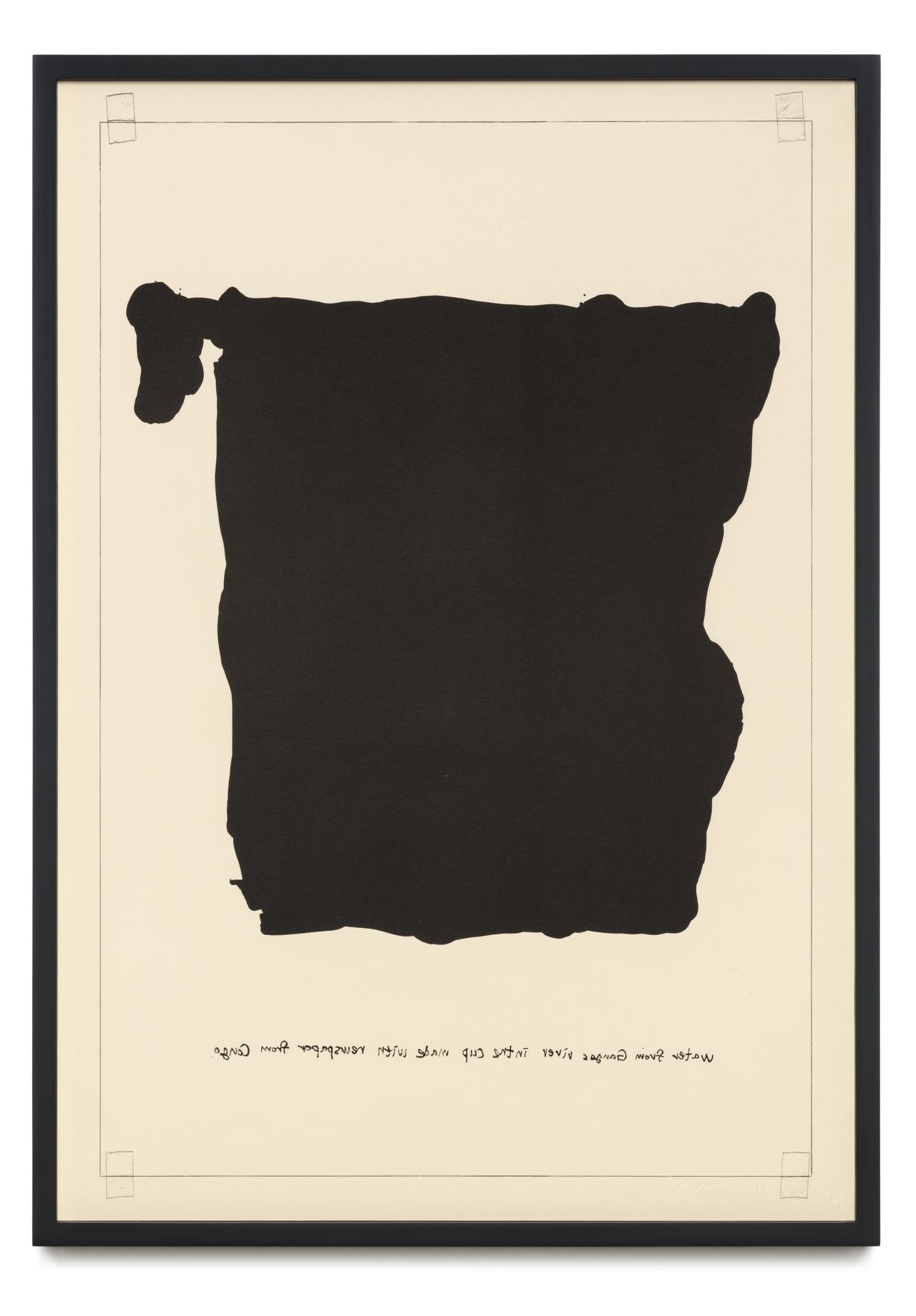
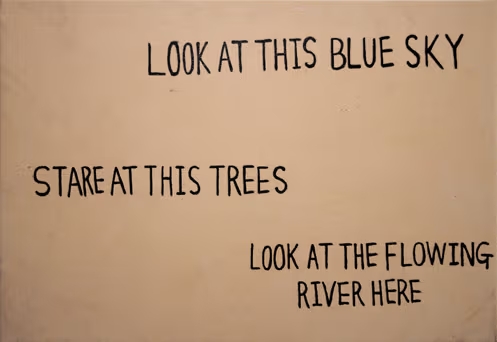
The artist’s instructions do not stop at becoming a rock. He encourages viewers to traverse the world of art through various methods. Just as in the film, where moving between multiverses requires unusual actions—such as chewing on lip balm or putting on shoes with the left and right switched—Kim Beom proposes somewhat eccentric and experimental roles in order to discover new possibilities for art. When we read an instruction written in clumsy lettering that tells us to look at the blue sky, or when we imagine a personal message hidden inside a carefully folded pocket, we instinctively summon certain images and fill the blank spaces left on the canvas.

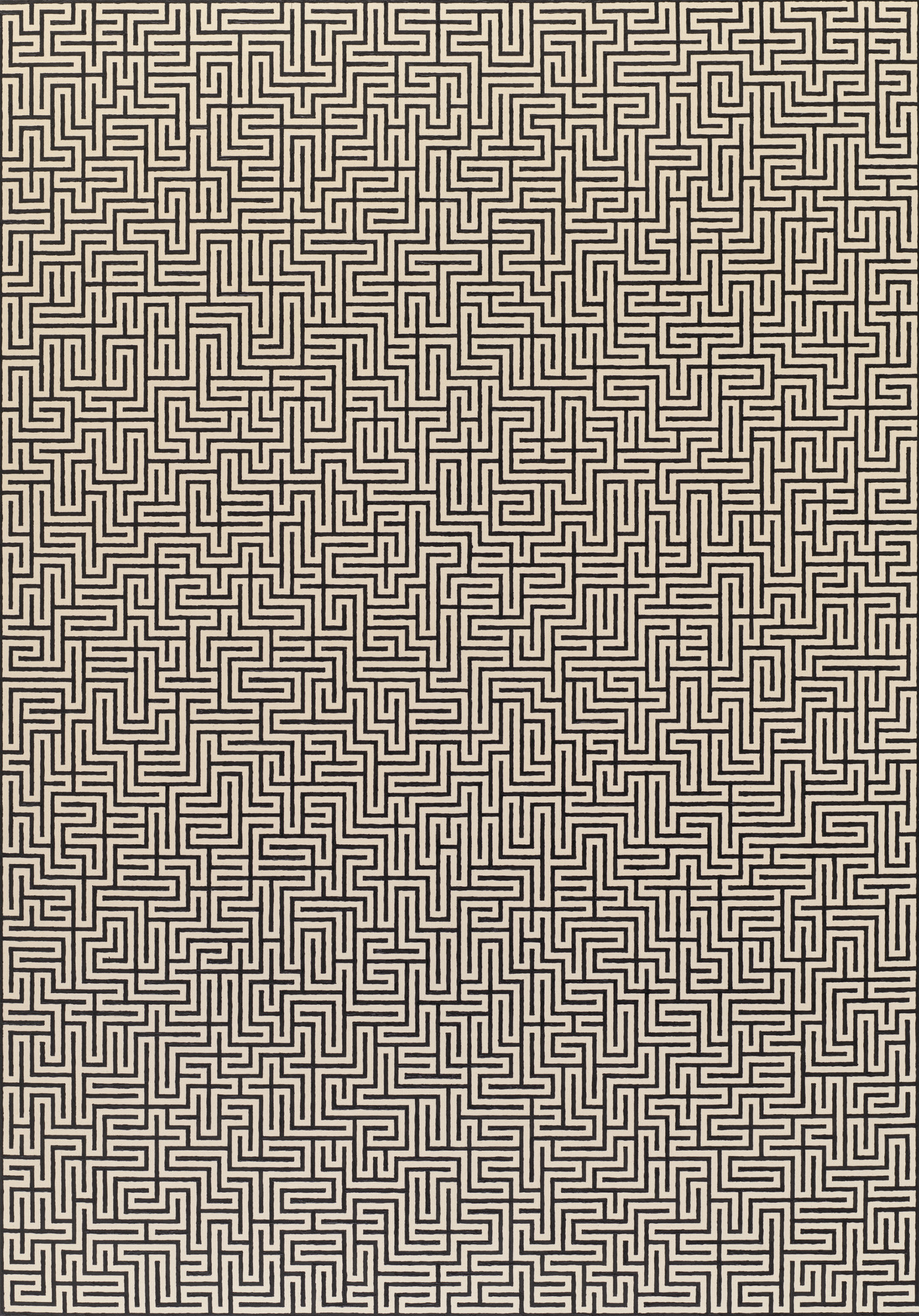
For Kim Beom, painting is at once a highly concrete object—something that can be cut or written upon—and an occasion that, mediated by the viewer’s imagination, allows entry into an unreal dimension. In this way, attempts to restrict visual elements present an intermediate state in which reality and unreality overlap.


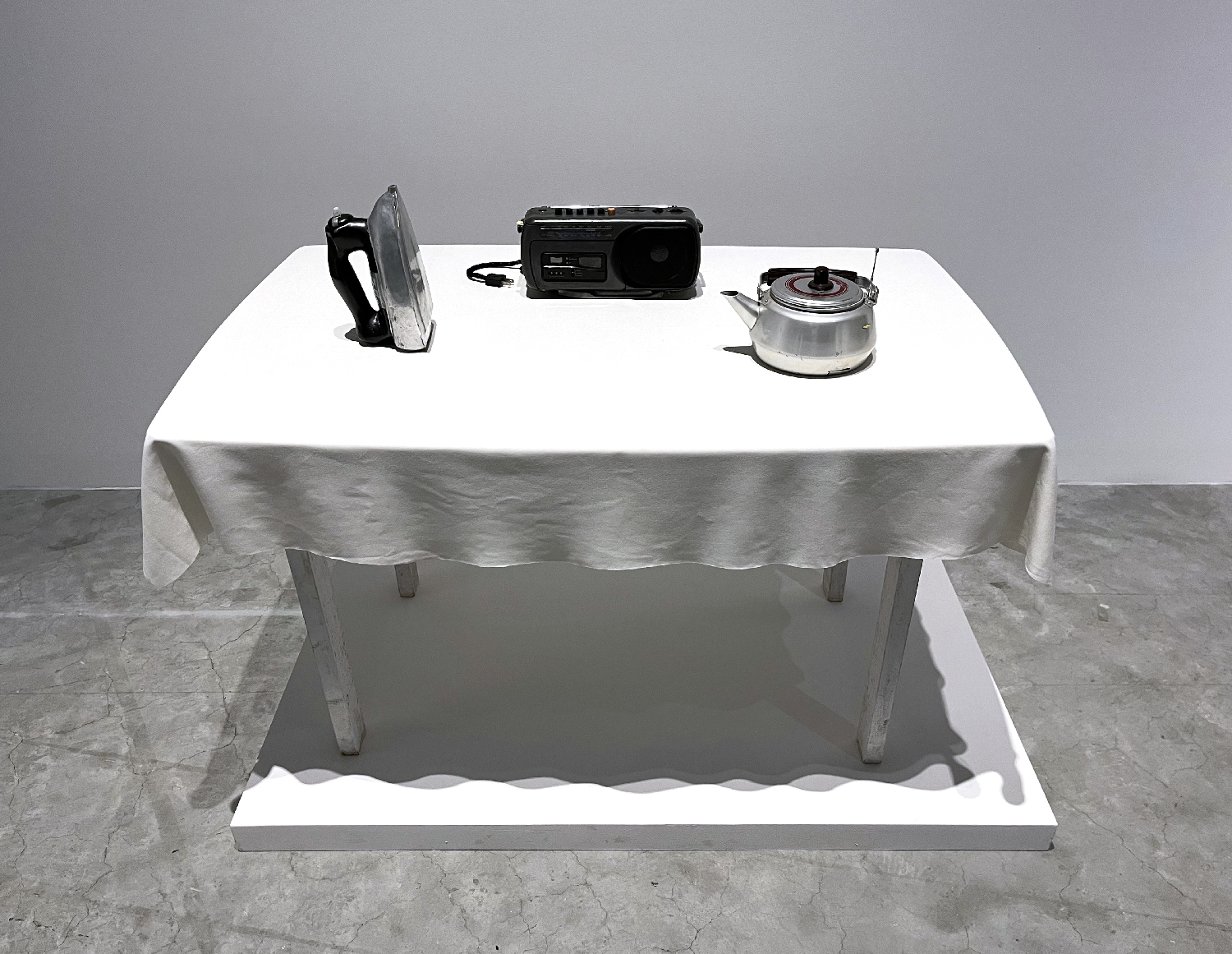
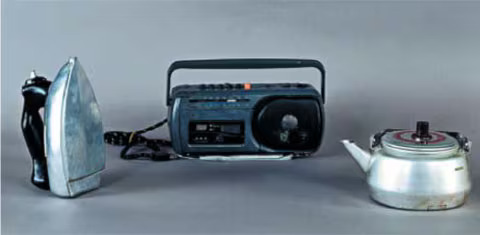
김범, 〈라디오 모양의 다리미, 다리미 모양의 주전자, 주전자 모양의 라디오〉, 2002, 혼합 매체, 14 x 30 x 13 cm, 23.5 x 13 x 13 cm, 13 x 22.5 x 19 cm © 김범

The artist’s eccentric experiments turn toward objects. An lron in the Form of a Radio, a kettle in the Form of an lron and a Radio in the Form of a Kettle presents, just as its pun-like title suggests, an iron shaped like a radio, a kettle shaped like an iron, and a radio shaped like a kettle arranged side by side. These three objects, cleverly dismantled, inverted, and recombined, betray the common sense we hold about everyday things. Positioned between reality and imagination, between common sense and nonsense, the objects prompt us to question whether what we see truly coincides with what it is, and how the identity of the things we perceive can be defined in the first place.

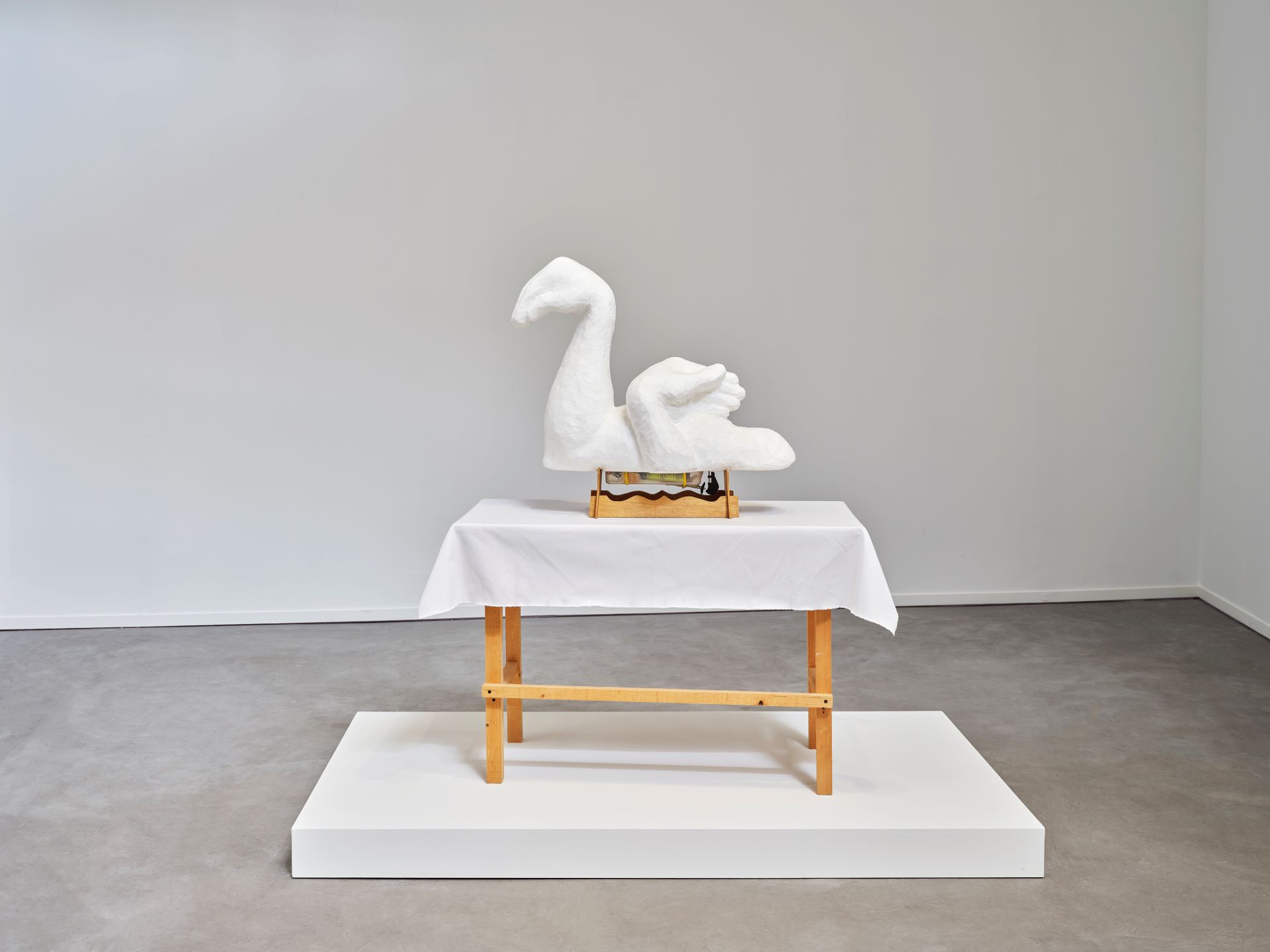
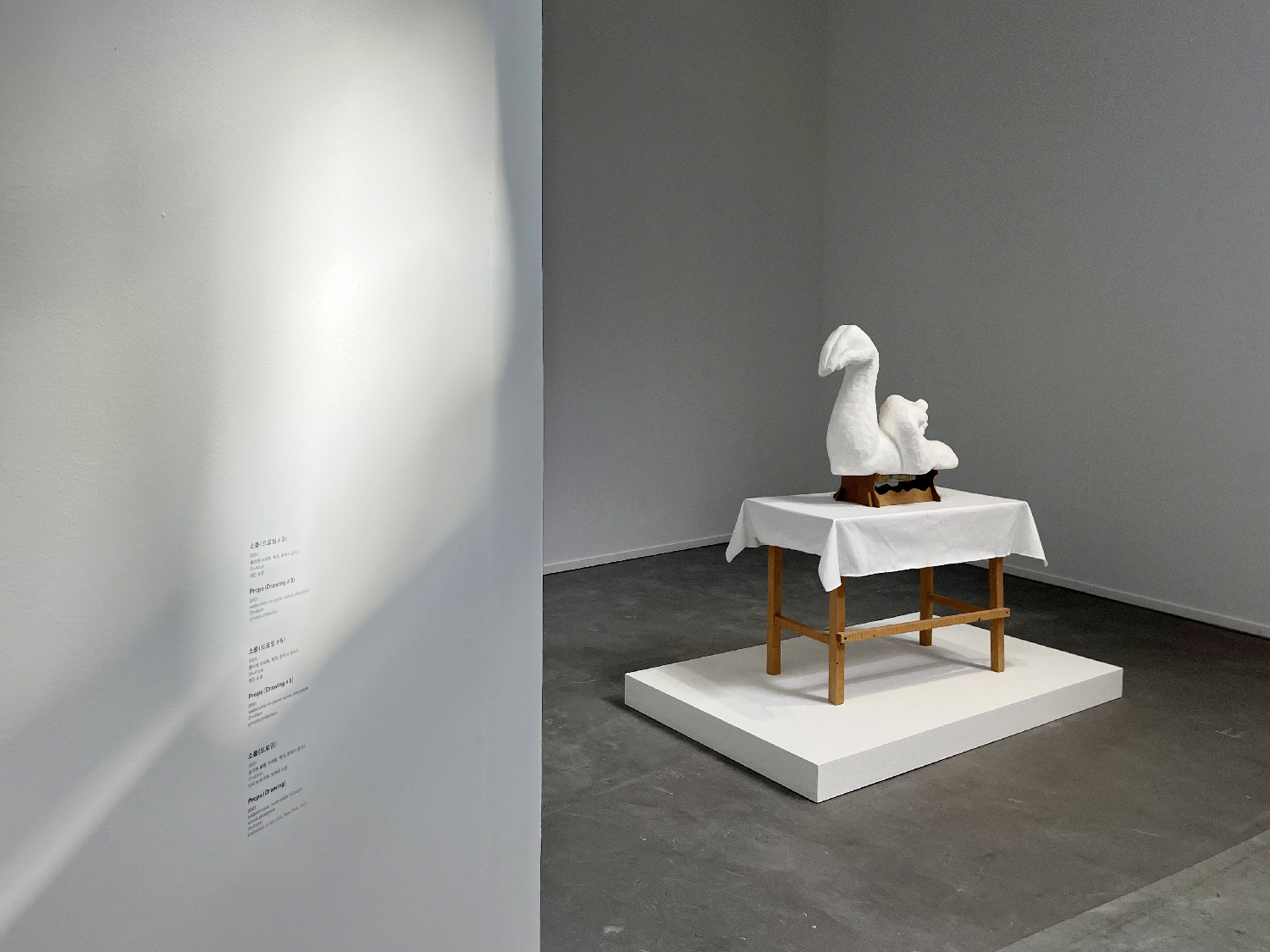
A hammer becomes pregnant, while the leaves of plants that appear to grow each day are in fact collaged fragments from newspapers and magazines. A white floating form that looks like a swan turns out to be nothing more than a piece of Styrofoam, and we eventually realize it even takes the shape of an arm imitating a swan. As if mocking our innocent faith in the world, the artist proposes that we “open our eyes” within a bewildering reality through instinctive and playful forms of expression.

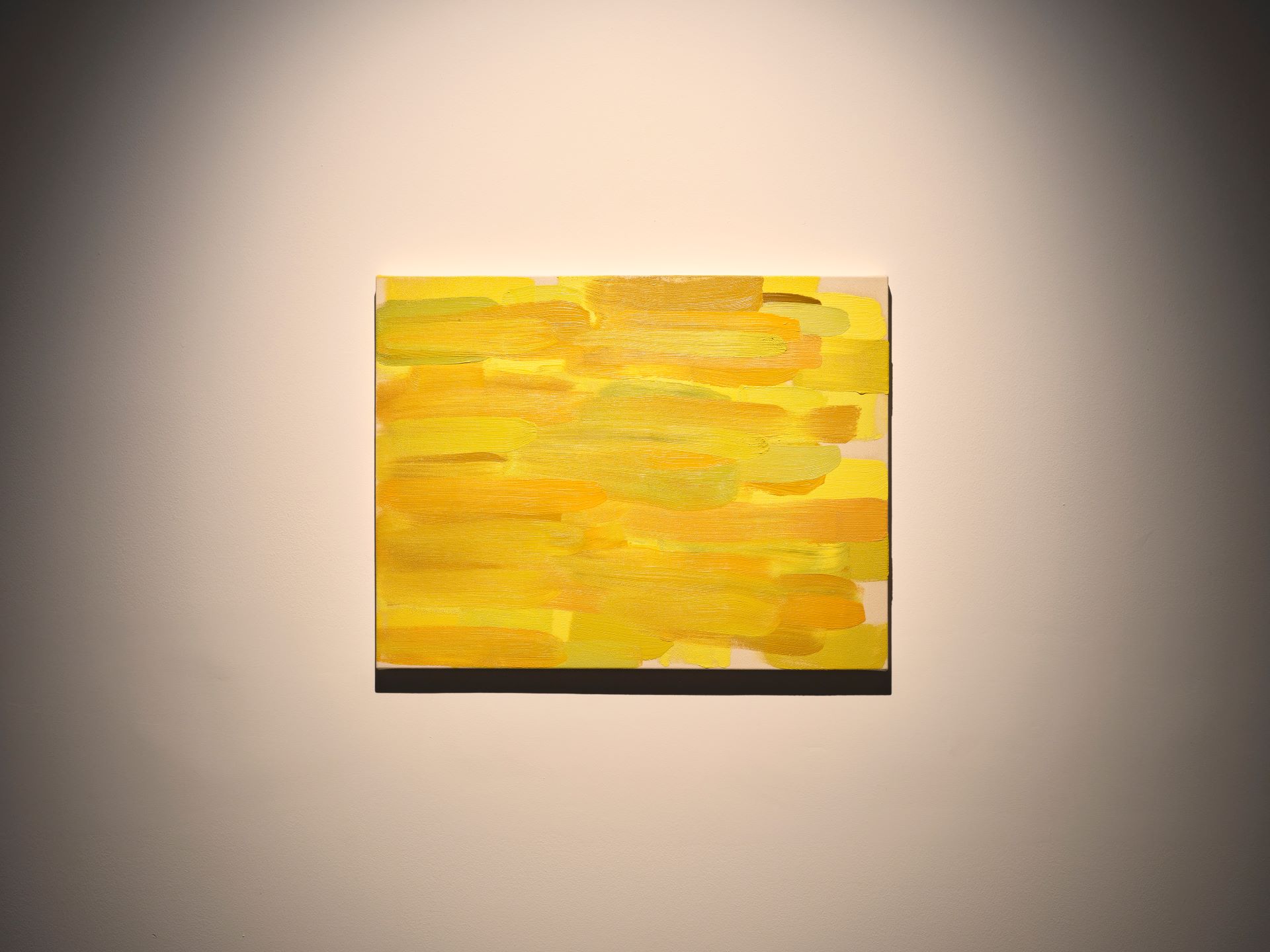
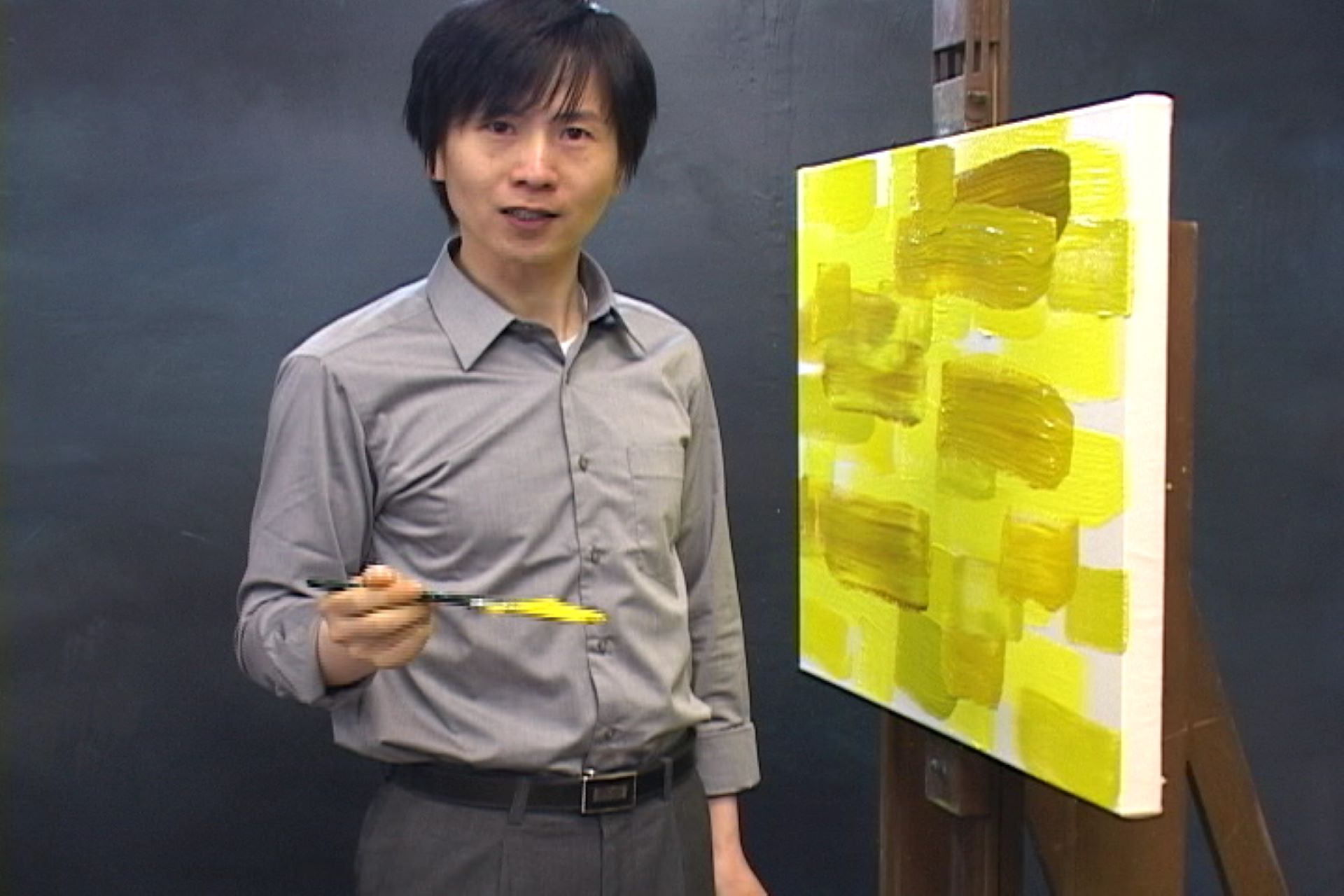
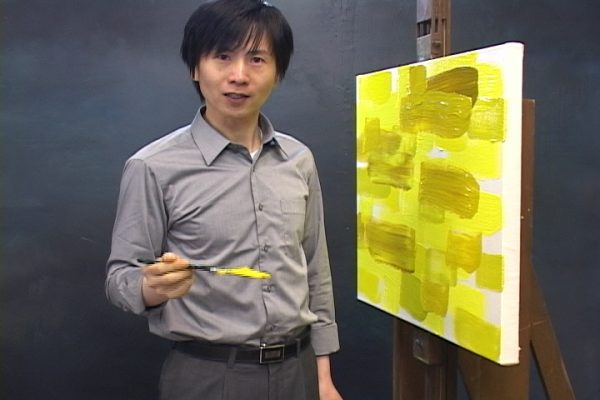
The struggles and emotional burdens of an artist wrestling with uncertain ideas and meanings are condensed in the tutorial-style video Painting "Yellow Scream", which demonstrates how to create an abstract painting. In the video—reminiscent of the gentle television painter Bob Ross—the artist himself appears and demonstrates the mixing of several shades of yellow. With each hue he releases a different, somewhat comical scream as he applies brushstrokes to the canvas. “Ah! Aah! Aagh!” With each cry, layers of yellow accumulate until the painting ultimately resolves into an abstract composition.

Filled with Kim Beom’s distinctive wit and humor, the exhibition calls to mind Descartes’ methodic doubt, which demanded that everything be questioned. What ultimately remains beyond doubt, however, is a single thing: the self who doubts everything. Seeing Kim Beom let out a yellow scream brings this to mind once again. For Kim, who remained wary of familiarity and persistently questioned the authenticity of reality, the trembling Adam’s apple of the “self that screams” must have been an undeniable and truthful resonance.

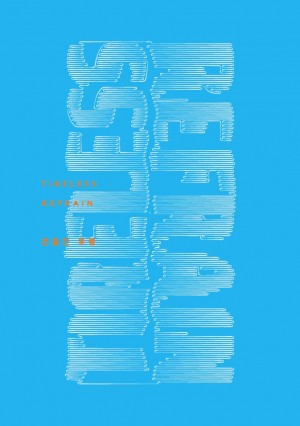
This painful yet surprisingly pleasurable process of inquiry—moving between reality and imagination, common sense and nonsense—is a journey undertaken together with Kim Beom. His art offers us new perspectives and opens up fresh horizons of the world. Now we may transform into anything—into everything—ALL AT ONCE.



Kim Beom, Swan, 2004, Foam, motor, screw, RC receiver, wood, 72 x 79 x 31 cm © Kim Beom
References