Articles
[Critique] The World after Emptiness – Jihyoung Han Solo Exhibition 《Fatty Folders》 (drawingRoom, 2022)
May 28, 2022
Siwoo Kwon | Art Critic
“Why do so many new abstractions look the same?”– Jerry Saltz,
2014
Zombie Formalism, which gained traction in the early to mid-2010s,
is often characterized as the convergence of past visual and auditory imagery
within the “here and now.”
At the time, that “here and now” was synonymous with a sense of emptiness.
It was the prevailing perception that we, as users, had exhausted
everything—content included—and thus were incapable of generating anything
truly “new.” This pervasive pessimism inevitably led to a fixation on the past.
The past became a kind of archive, a repository to counterbalance the void.
However, Zombie Formalism was not necessarily about cannibalizing
all the images embedded within that archive. Rather, images derived from the
past were reconstructed—by certain artists—to resonate with the prevailing
sense of emptiness, and through that process, they came to embody a certain
order, ultimately represented by form.
So, what is the logic—or order—of an image that corresponds to
emptiness? That, in itself, is a paradoxical question. In a state of
emptiness—where nothing exists—order is meaningless. Thus, images sourced from
the past must intervene in that void while simultaneously generating a
self-sufficient order. Whether it was mere nostalgia or unconscious reference
to specific past forms, strategies to colonize emptiness abounded during that
time.
The problem was that these strategies became so prolific that they
failed to produce any shared resolution to the emptiness we faced. As Nicolas
Bourriaud once argued, the past did not become a new topography of imagery
through postproduction by multiple users; instead, arbitrarily selected images
crisscrossed with no coherent logic, ultimately resulting in a spatiotemporal
fragmentation.
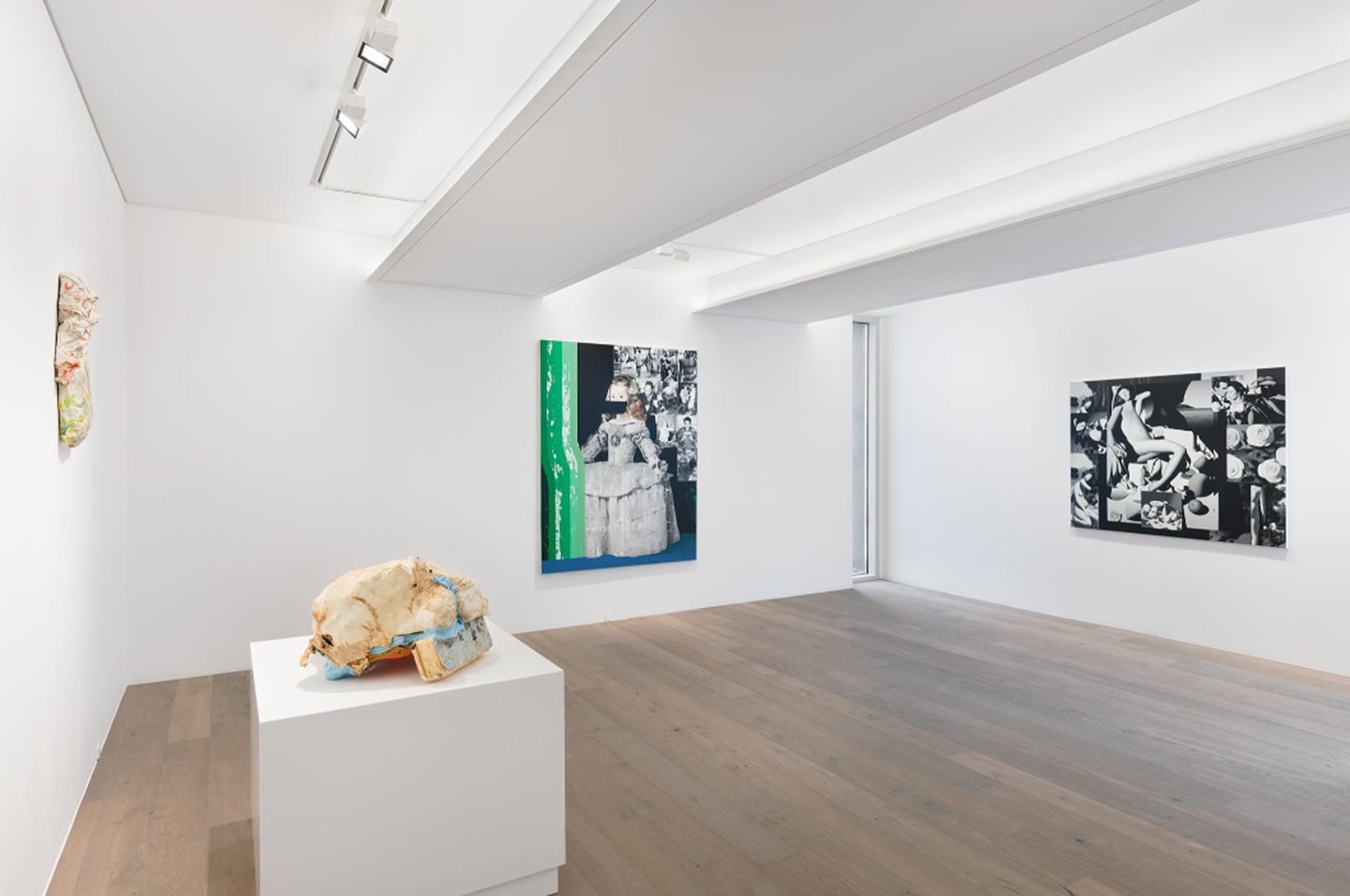
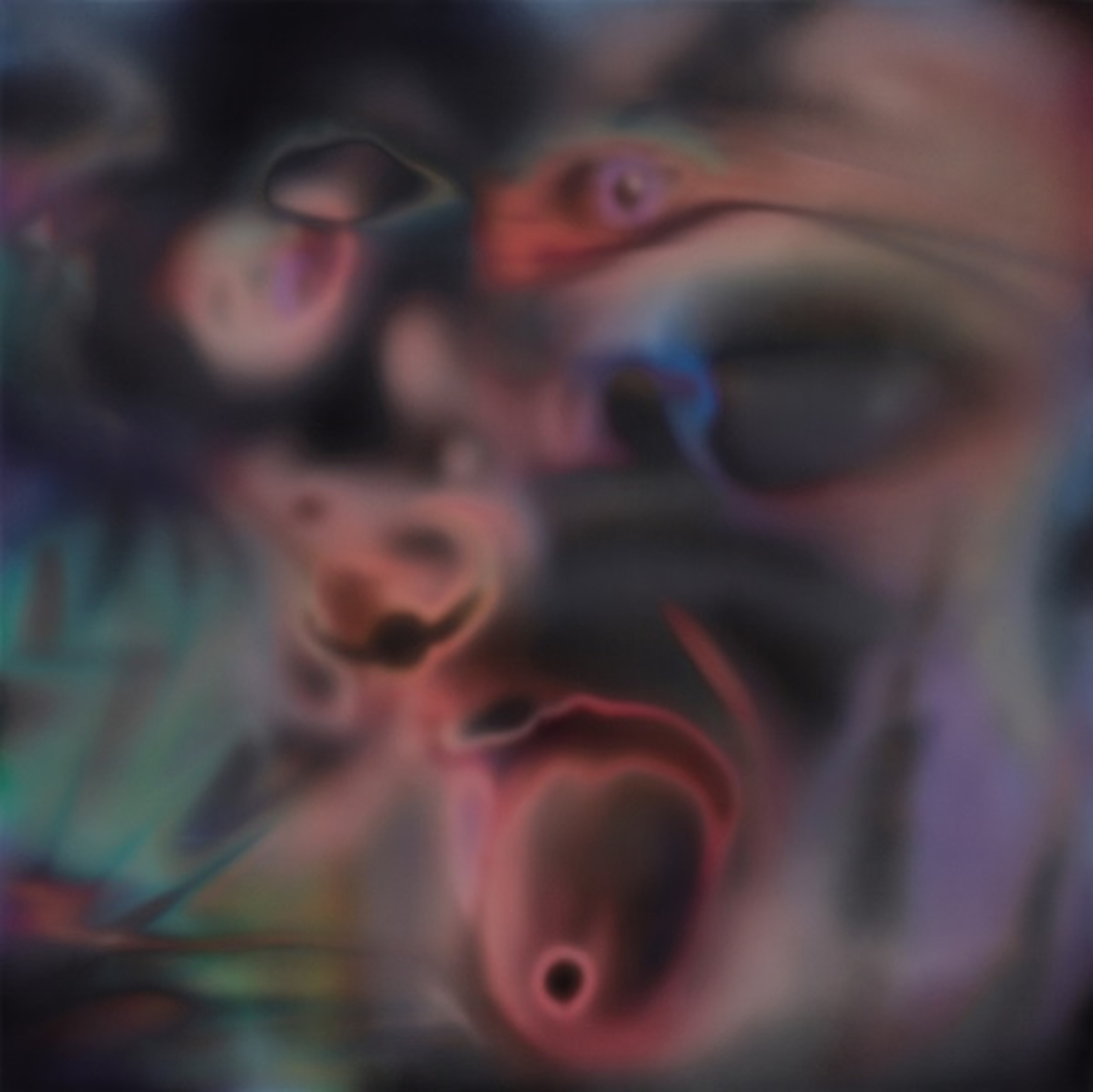
 Jihyoung Han, A day in
the life of Person X, 2022, Acrylic on canvas, 100x80cm ©Jihyoung
Han
Jihyoung Han, A day in
the life of Person X, 2022, Acrylic on canvas, 100x80cm ©Jihyoung
Han
That fragmentation is precisely what defines the form of
emptiness. Emptiness, paradoxically, colonized the past. And that fact was
quickly forgotten. Or rather, attempts to trace the genealogy of these
arbitrary image intersections were indefinitely deferred. Under the guise of
remix, the past was left mutilated and abandoned. No meaningful constellations
driven by emptiness remain.
Eventually, everything—including the past—was reduced to rootless
data, haphazardly mashed together by the inertia of remix culture, giving rise
to what is now called Crapstraction. Crapstraction is not Zombie Formalism
itself but the landscape that emerged in its aftermath.

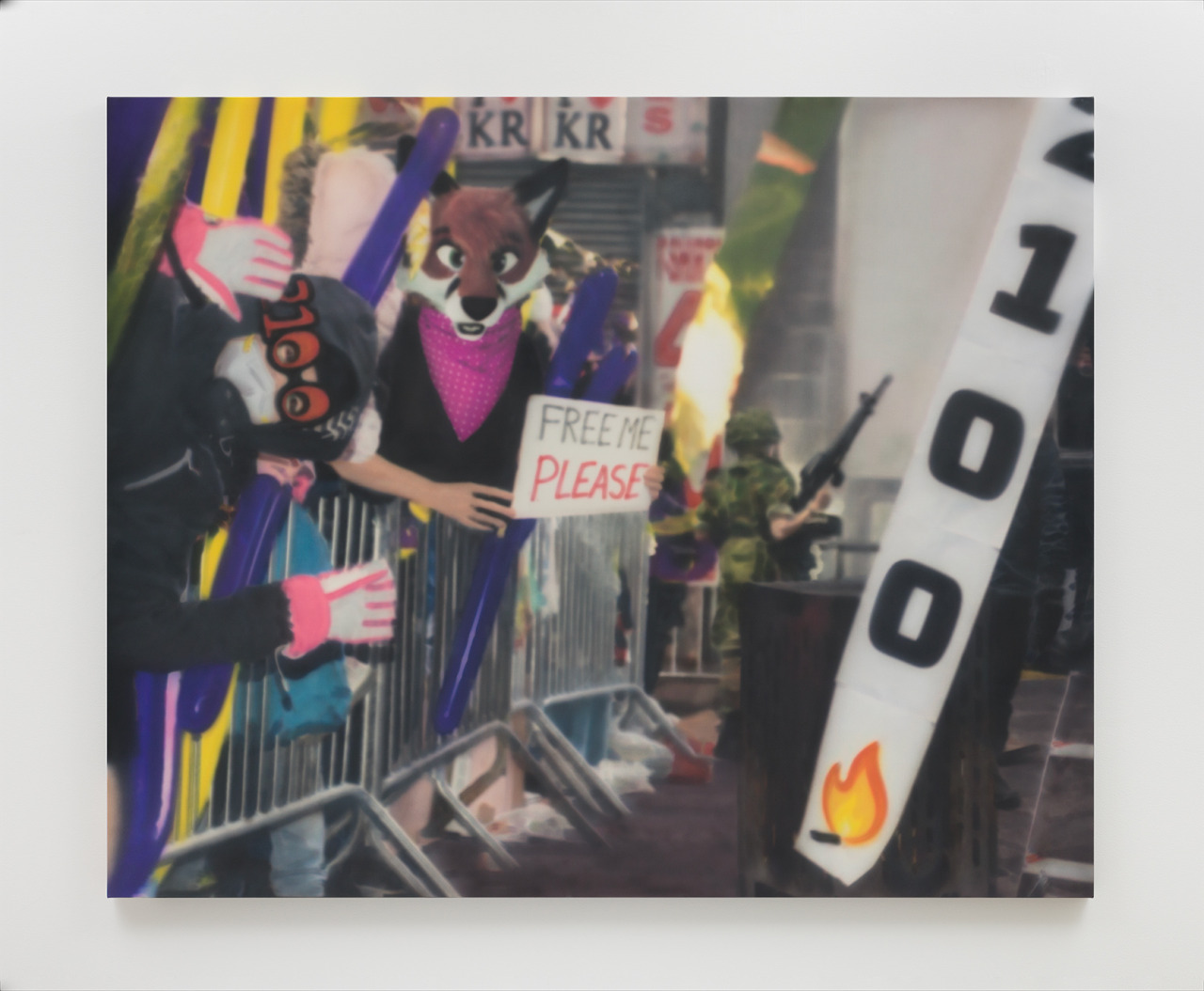
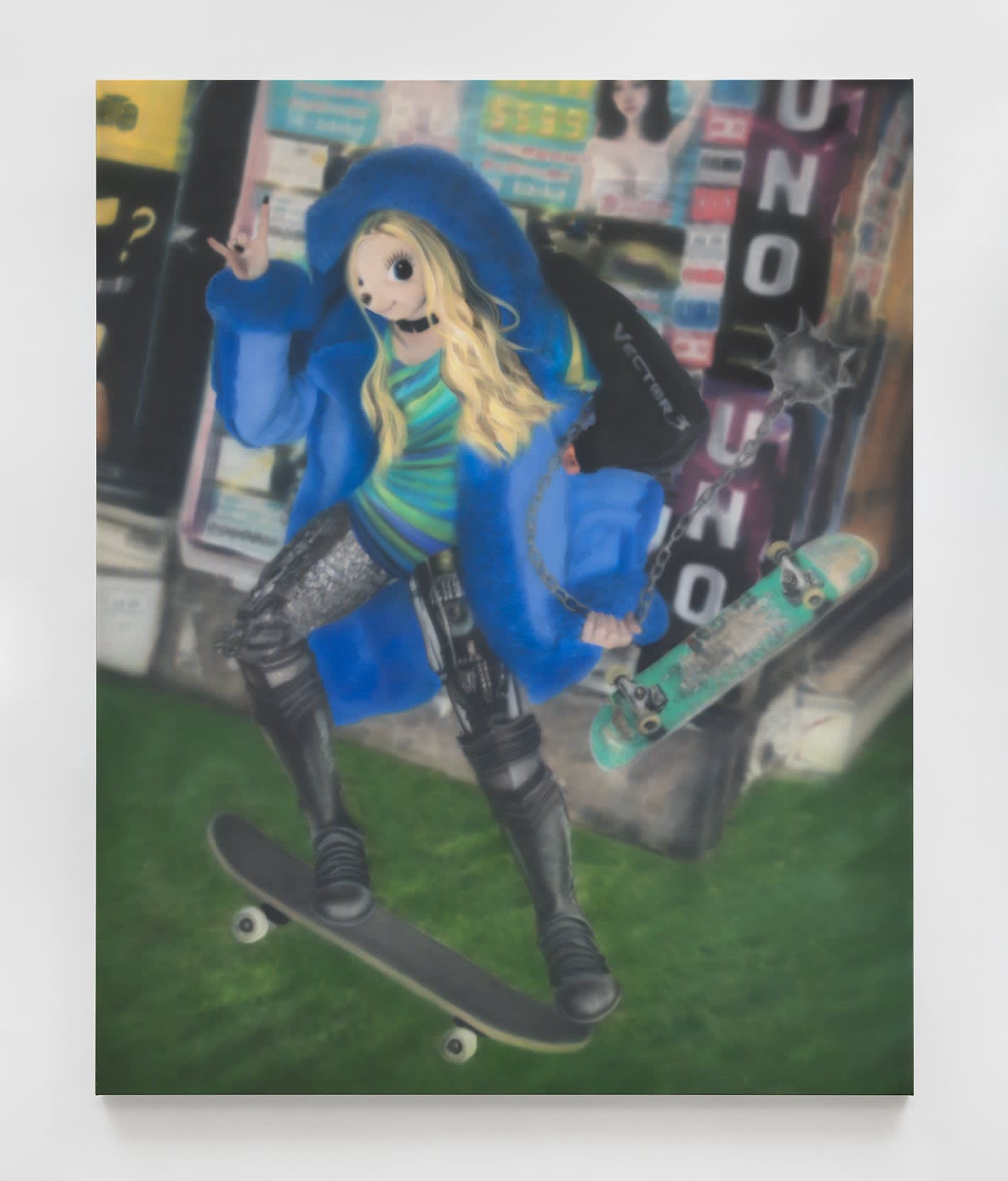
Jihyoung Han, Marinated
Lazy sun, 2022, Acrylic on canvas, 145.5x112cm ©Jihyoung Han
It is from this point that Jihyoung Han’s practice unfolds. In
particular, the geometric compositions prominent in some of her paintings seem
to freeze the momentum of Crapstraction in a chilling manner. By rigorously
demarcating the residual data that would otherwise dissolve into Crapstraction,
her works finally present the viewer with an “image” that can be objectified.
This is not so much a painterly experiment as it is an effort to
re-contextualize our currently abstracted world through painting as a medium.
For the artist, painting is not the spoils of a past already colonized by
emptiness—it is a means of gathering the future after Crapstraction into the
“here and now.”
In this exhibition, painting becomes a medium of
transformation—not content to dwell in the lineage of “cold abstraction,” but
boldly attempting metamorphosis.
For instance, the once-painterly geometric compositions begin to
splinter, negotiating with the underlying flow of Crapstraction. Time, enmeshed
and congealed at the data level, leaks into the image, causing the spatial
territories within it to dissolve instantaneously.
Yet the artist is not overwhelmed by this self-imposed chaos. On
the contrary, she presents it as a new futurist declaration—something still
possible in the here and now.
This new futurism considers today’s abstract world an organism to
be tuned using the vast toolbox provided by digital technologies. This organism
encompasses the past we’ve hacked to pieces, the hollow slogans crafted to sell
it, the consumerist strategies that follow, and the political contentions
orbiting the past as a gravitational center—until it all forgets itself.
Thus, the past no longer exists.
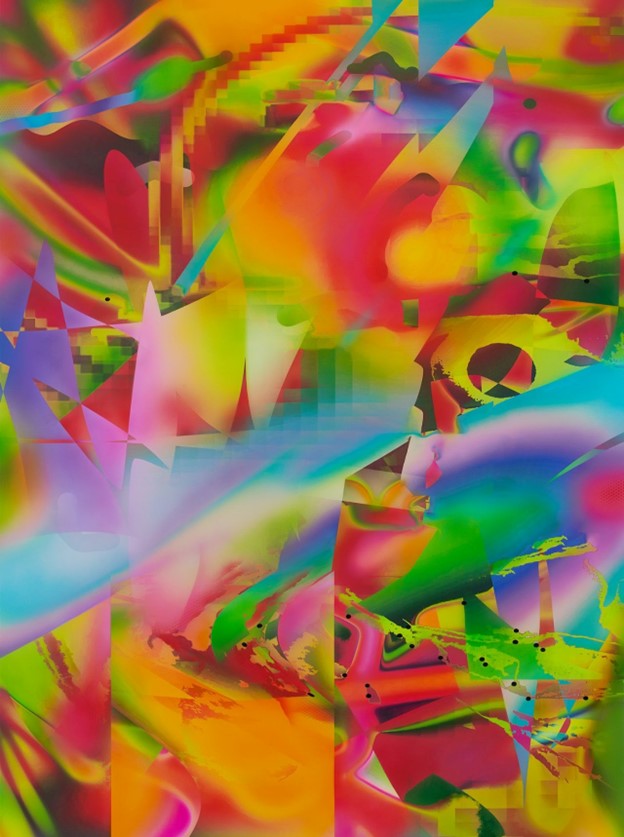
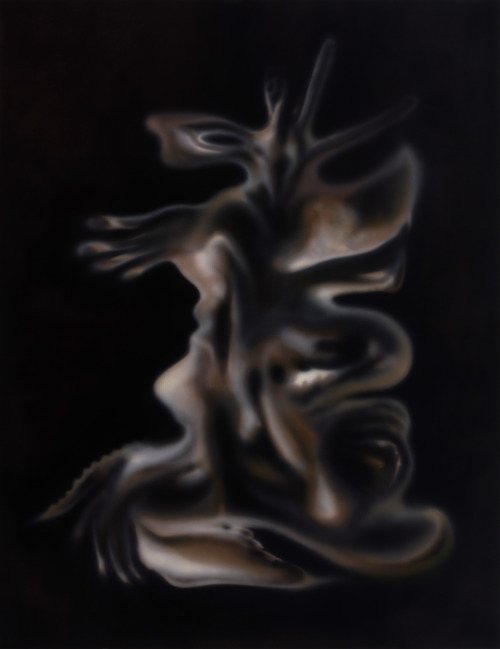
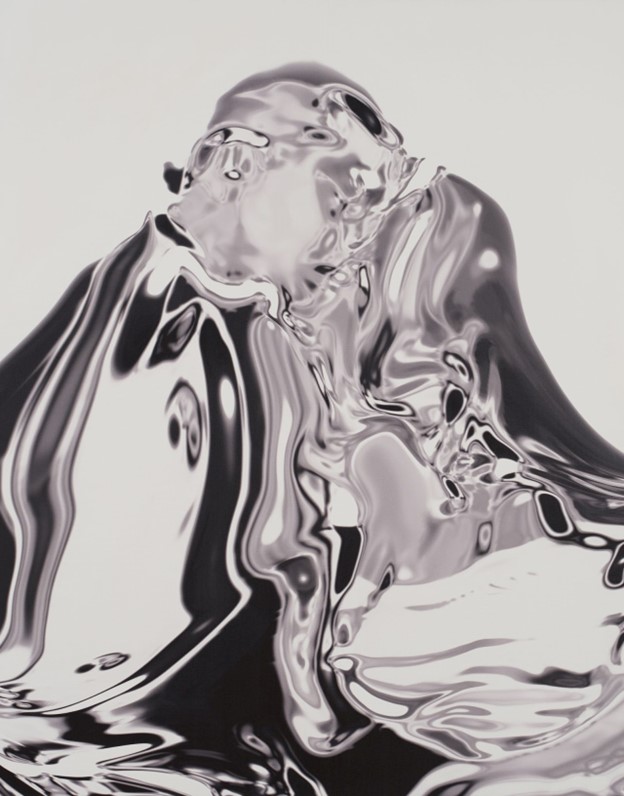
Jihyoung Han, As I
imagine him -I, 2022, Acrylic on canvas, 130.3x89.4cm ©Jihyoung
Han
What remains is the form of an organism, or an amorphous image
that corresponds to it. Yet this does not plunge us back into collective
pessimism. Rather, the amorphous image becomes an allegory of the post-human—a
figure submerged in the phase of Crapstraction—cleansing all remaining physical
and non-physical relations in the abstract world.
In doing so, it dilutes modern subjectivity, flipping subject into
object and vice versa, transcending gender binaries, and forming new commons
for disparate consciousnesses and ideologies.
This allegory hints at the infinite potential of a future that the
artist has summoned—deliberately—into the present. The image, therefore, is now
capable of becoming anything.
In this exhibition, the viewer is invited to contemplate these
potential metamorphoses, resolving the allegory in their own way. In that
sense, this new futurism does not dwell on the gaps of the past, nor does it
prematurely define the future.
Instead, it simply realizes the world as an organism—a world the
artist declares and manifests through the image.
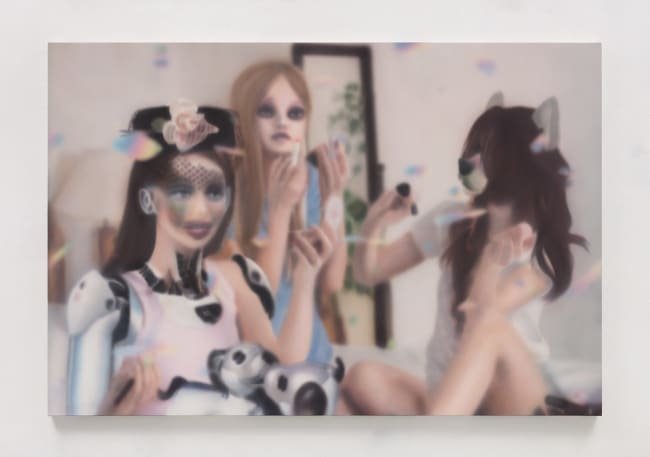
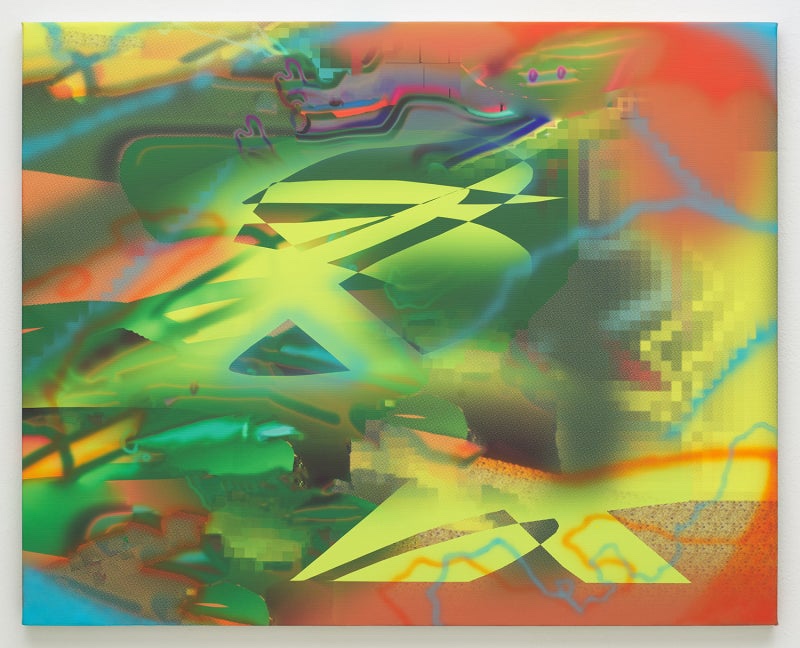
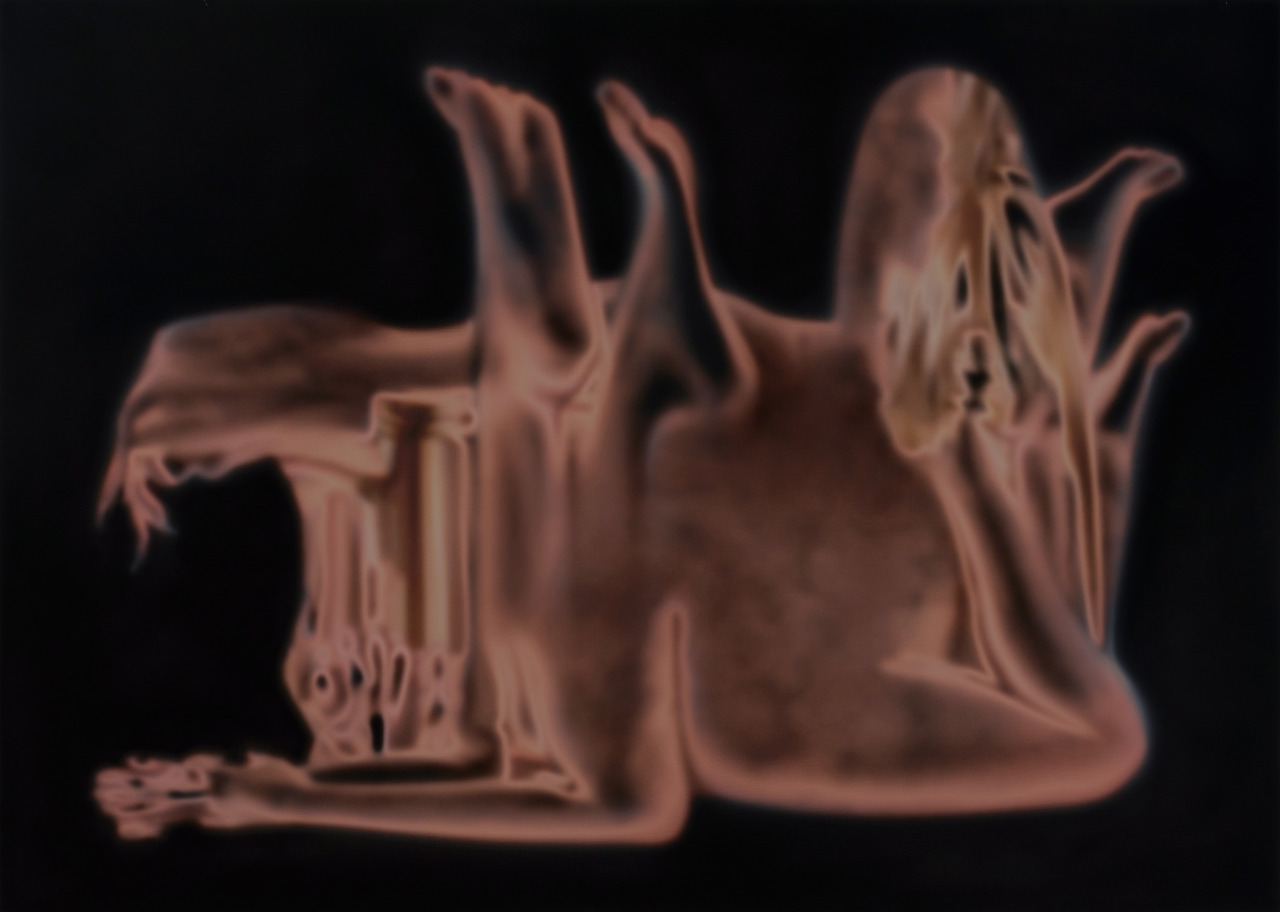 Jihyoung Han, Angel
applicant, 2022, Acrylic on canvas, 100x140cm ©Jihyoung Han
Jihyoung Han, Angel
applicant, 2022, Acrylic on canvas, 100x140cm ©Jihyoung Han