1km ahead, turn right at the backyard.
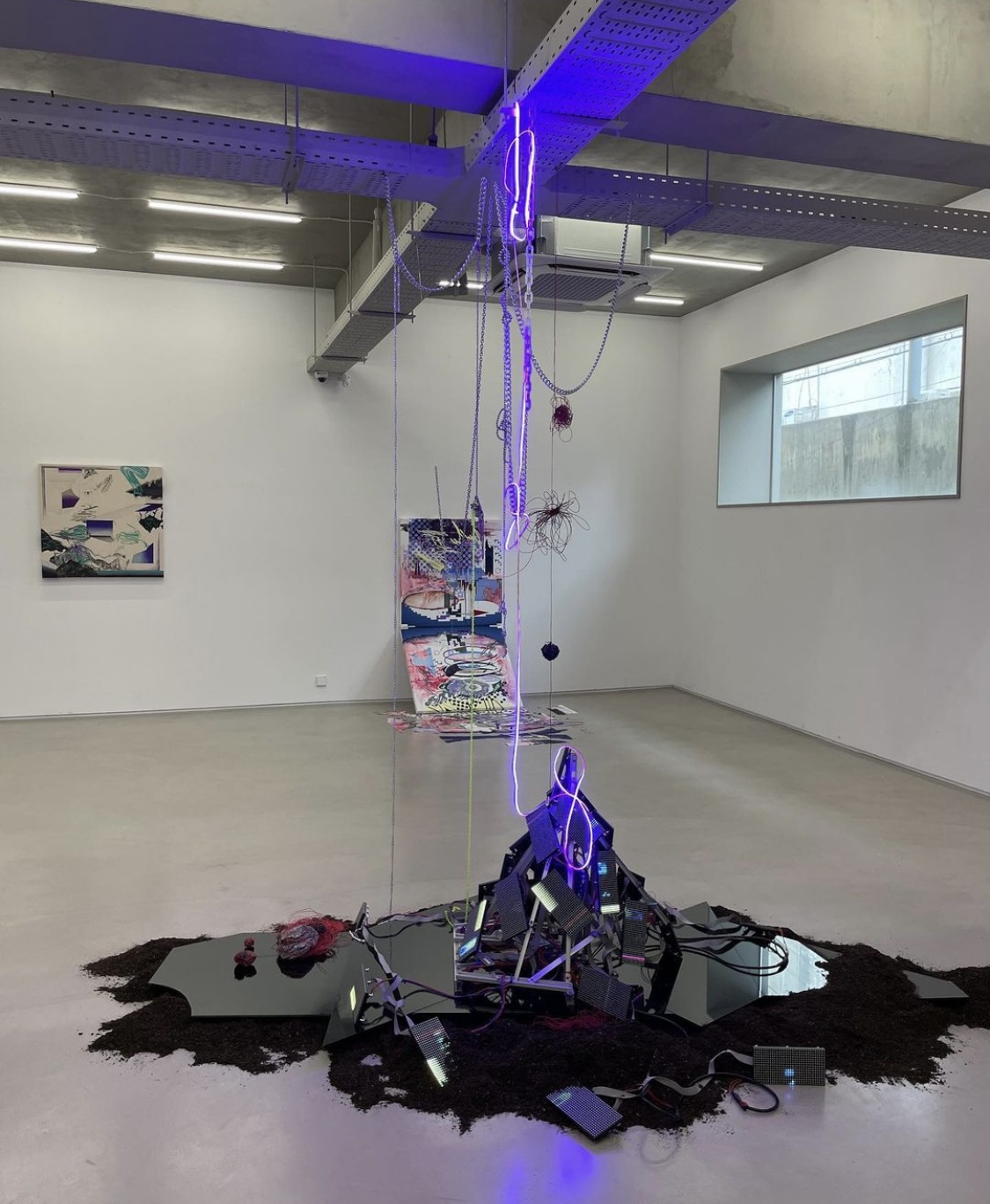
K, a Korean artist, starts the oldest computer C ever known in
history—one never introduced before. In the subterranean world below, where
other (non)human beings operate it, only parts of its iron framework and a few
components remain. Two pairs of pillars taller than a person and two shorter
ones stand at regular intervals, aligned on the ground, with an additional pair
at one-third the height of the front pillars. Connecting rods between these
pillars form a cubic grid. Mounted to these rods and aligned with the grid of
C, an electronic display with its power unit exposed from behind continually
loops innocent dream footage created by K. Divided into three horizontal
sections, the device outputs glitches and illusions, swaying left to right,
gently and constantly.
Keep left lane.
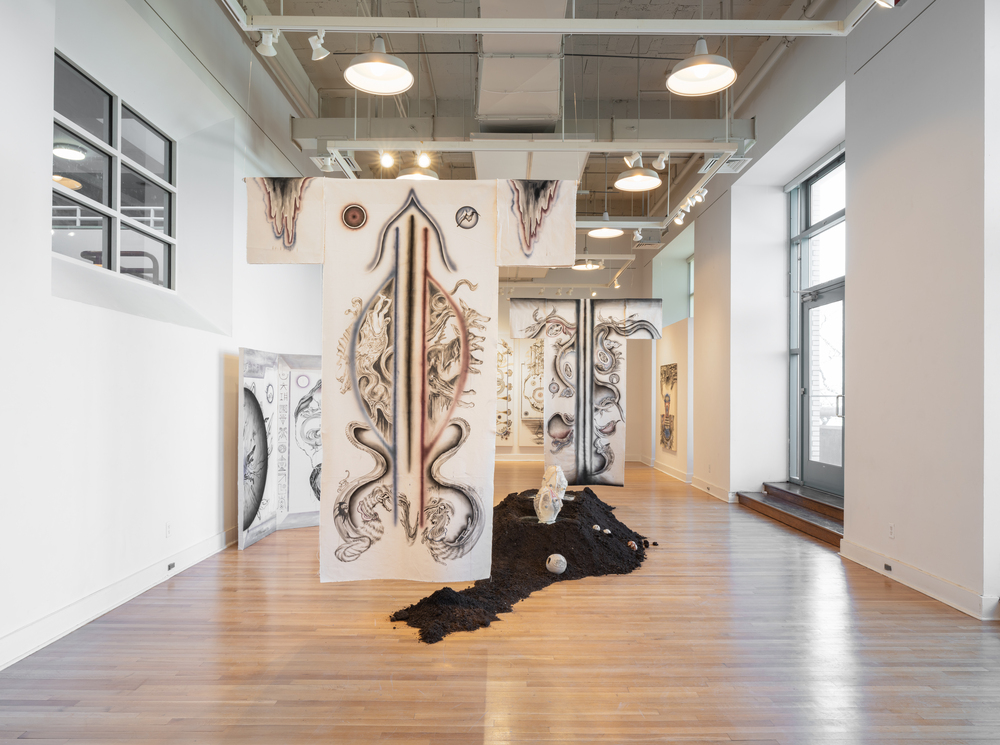
Before asking what C has been programmed with, we look at the
similarities between C and its exhibition room, C². C mimics the architecture
of C² by adopting a corridor-like exterior, while C² arranges a triptych-like
structure inside, mirroring the setup of C. Neon tubing and wire bundles
crouched behind the grid form a vascular or vine-like genealogy that emphasizes
the horizontal and vertical tensions of the iron structure. Various unnamed
minerals and gemstones, serpent scales shaped like stones and pebbles following
the logic of spatial immanence, meet the viewer’s gaze. In this visual system,
sentences tumble like dunes in the desert, paragraphs engrave themselves in
forest sunlight, and documents fold blue waves on the beach—forming a
compendium of texts buried beneath the surface of the planet. The unfolding of
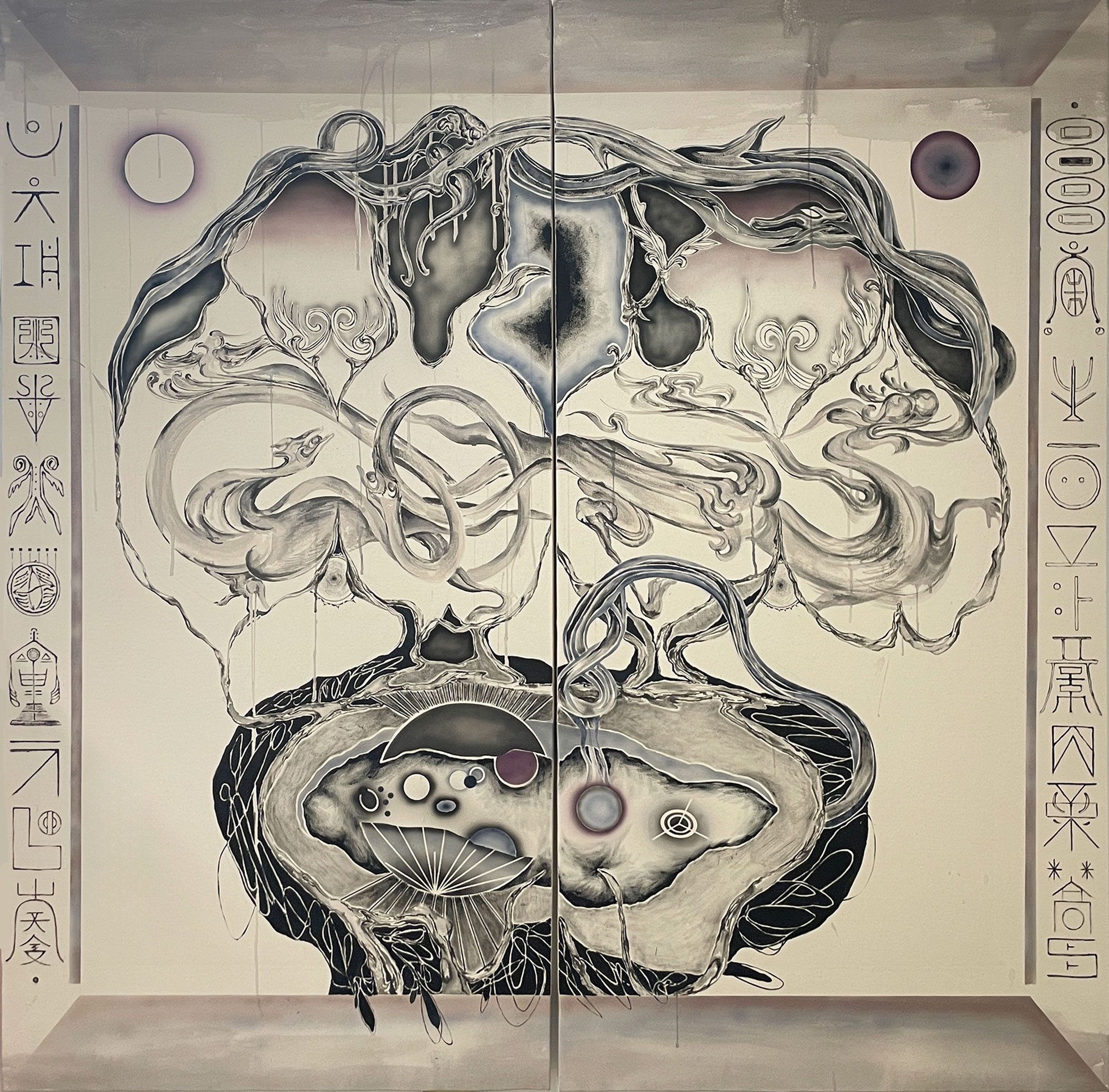
another house splits open Ouroboros’s mouth and throws the self into a black
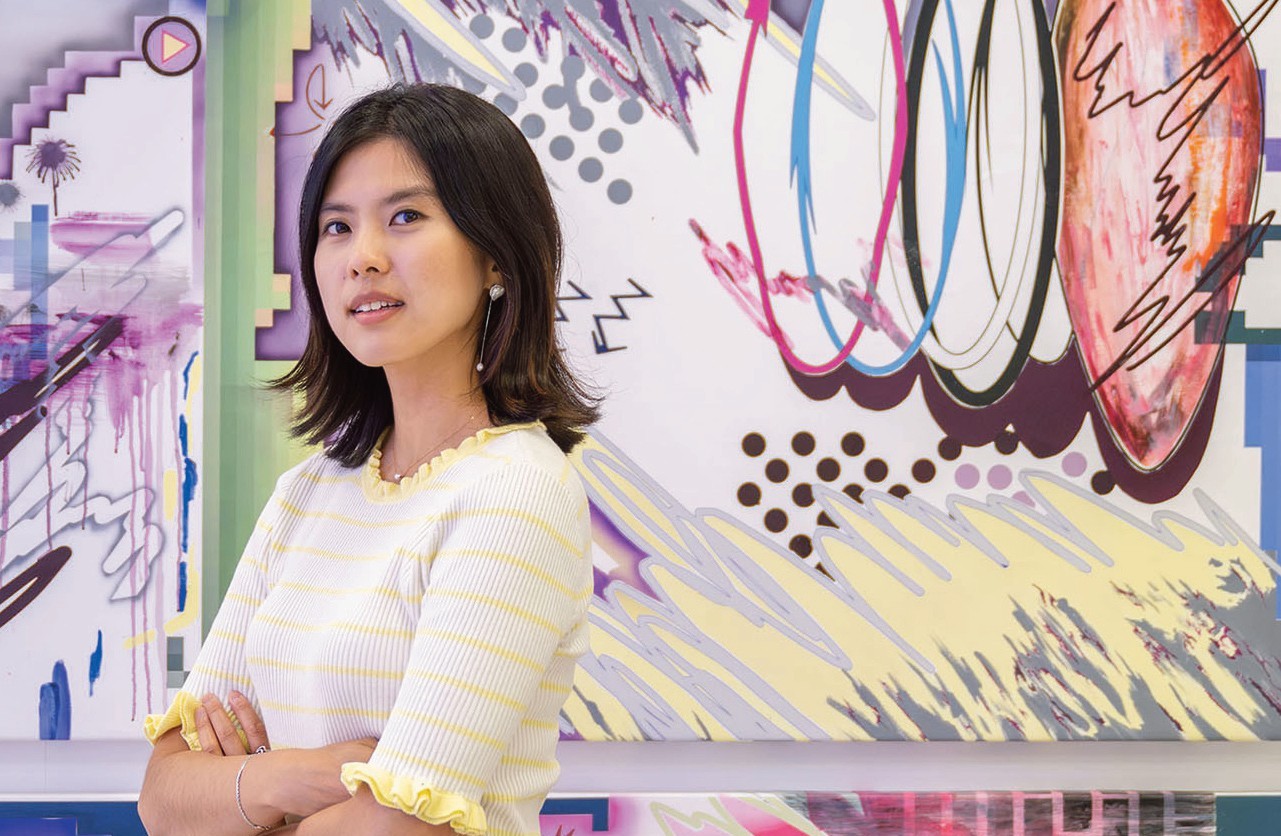
and deep void—a liminal zone. K, Leekyung Kang, gives form to the embodiment of
truth in the space between C and C², which remains incomplete and tilted.
You are entering a high accident zone.
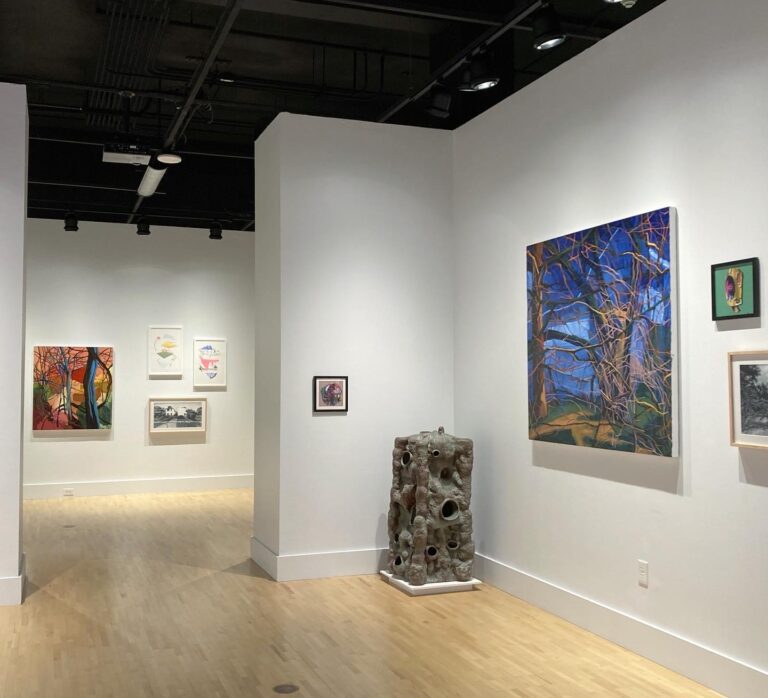
It also waits, not innocently. Inside and outside the exhibition
room, the expressions of C and K’s paintings serve as routes that lead to
another form of existence, one that can change from moment to moment.
Ilwol-oakdo data—a painting found only in the Joseon royal court and deeply
embedded in Northeast Asian cultural history—exists differently in Kang’s
space, transformed alternately through digital and material means. These images
become separated or fragmented, drifting away from the center of the grid and
revealing unplanned space. They move, replicate, and leave behind traces of
motion in unpredictable ways. Discontinuous structures that stack layer upon
layer encourage mutual repulsion. Where does the craft of dismantling
up/down/left/right/front/back—unceasing and recursive—lead us?
Leekyung Kang focuses on configurations formed through unspecified
collectives, not in confrontation with established forms but in search of new
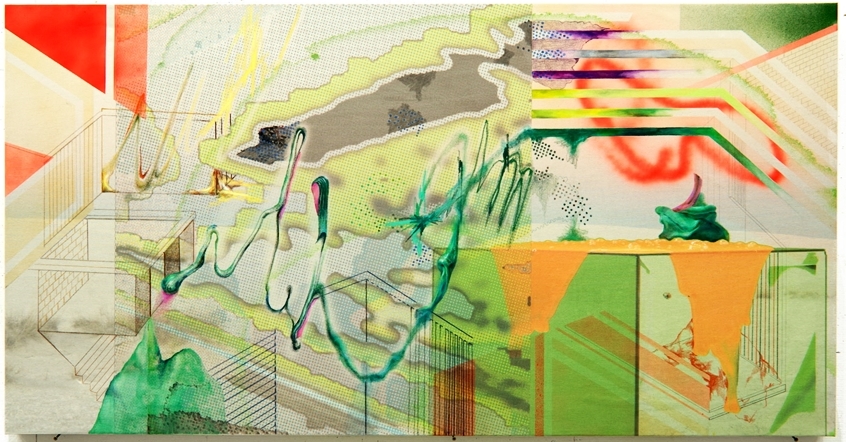
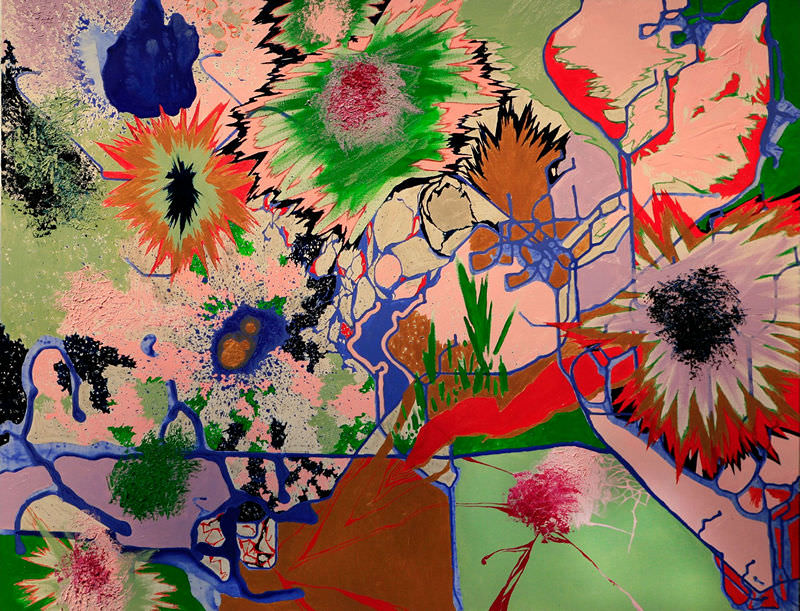
combinations that fundamentally reassess systems of existing values. In earlier
works, she visualized material glitches in fantastical images by deconstructing
virtual data from navigation software. More recently, she has moved toward
reconciliation with various collectives, channeling gestures and muscle
memories from two decades ago—reminiscent of her early drawing practice.
Sharp curve ahead. Drive safely.
As the exhibition—or life in its fragmented entirety—is
structurally, visually, and performatively connected, a humming of the wooden
fish rings from within the mouth of Ouroboros. Amid precarious tension, the
sound leads one toward an unwelcome serenity—an unblinking moktak beat through
day and night. Audio glitches that amplify sensation sediment the consciousness
in meditation, tracing someone’s movement and overlapping with the shadow of C.
Beneath the calm mirror surface and the base of the iron grid, the snake’s
tongue and fangs awaken from slumber.
Speed check zone 1km ahead.
The universe has been yawning since the beginning. The sun and
moon, temporary agents of emptiness and fullness, observe unfolding events. In
this world where yin and yang flow through the five elements, a drifting light
beyond the iron grid of the front yard delivers a confession from a lighthouse
by the sea. The fragment of a wall fallen from a collapsing tower, the shell of
a crab overtaking a bleached corridor—these become guides for a wanderer in the
backyard. The black, deep void awaits the snake who, in another life, might
have been a wooden fish. (Leekyung Kang says her memories of Korea are growing
faint after more than a decade living in the U.S.)
Proceed straight until the next instruction.
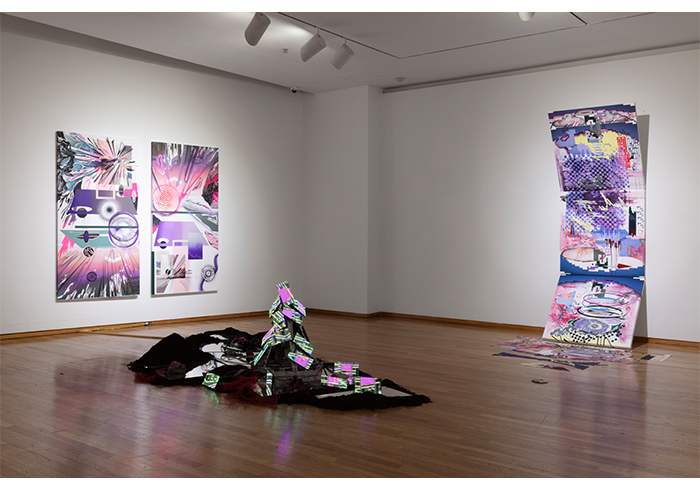
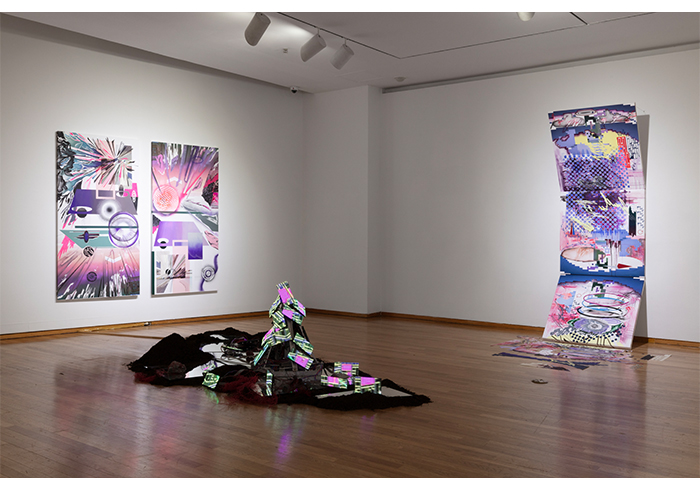
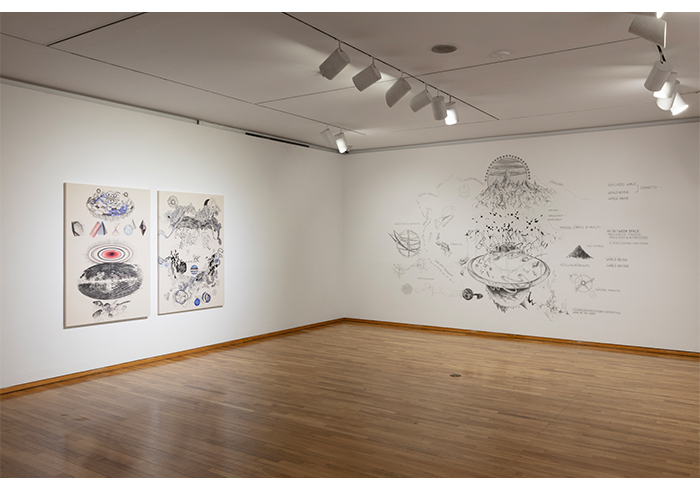
In her last exhibition, Kang propped up a square panel against a
wall, attaching to its top and bottom two others of equal area—one a painting,
the other a film collage. The images fixed within the frame and the objects
hung on the wall are offered directions for movement and rest. Its return to
the backyard, with another panel mounted atop the upper one in a slanted
posture facing both the lower panel and the viewer, was a premonition long
expected. The new top panel faces the ceiling as it leans toward the viewer. In
this pictorial space, a lavender polka-dot pattern lies between the top and
middle sections, while a dark blue stepped silhouette connects the middle and
lower parts. From the top canvas to the lower film, a flow of (un)specified
elements travels in and out of the frame’s borders. This expression, repeating
a unique yet standardized form, delays the difference between the artist
(studio) of yesterday and the viewer (gallery) of tomorrow—or vice versa.
Detecting traffic change. Continuing on original route.
Within the infinite loop where the head devours the tail, Kang
searches for the alternative or the substitute. The ever-unfolding procession
of interconnected worlds—layers upon layers, the segmentation of planes, and
the drifting of lines—where do they originate? What do they copy and reproduce
in our (ab)normal society of digital capitalism? The (im)material conditions of
K and C, visualizing such questions, are endlessly deciphered through Kang’s
art. At the moment when this antonymous art—embracing everything—approaches
completion once again, it becomes a life in circulation.