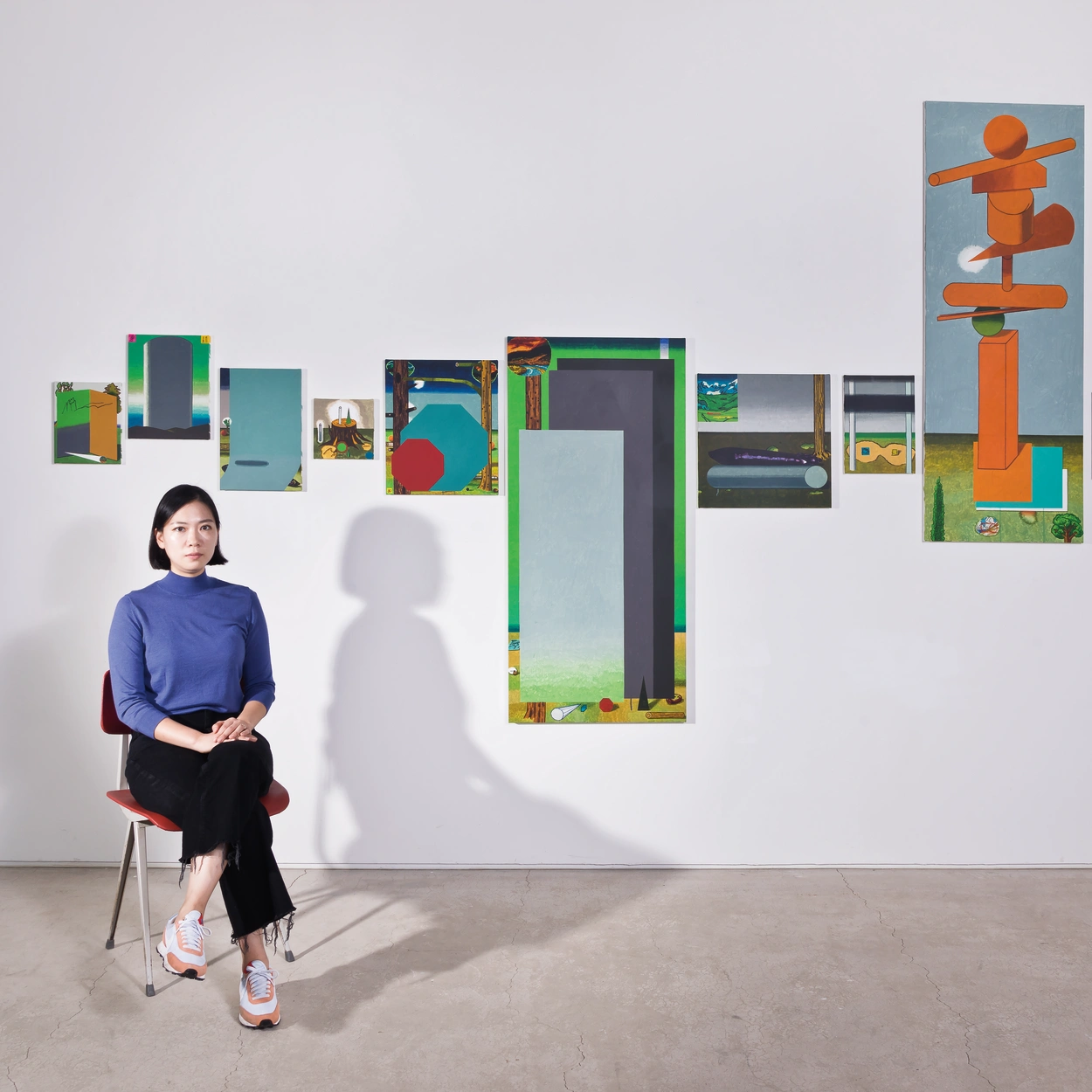
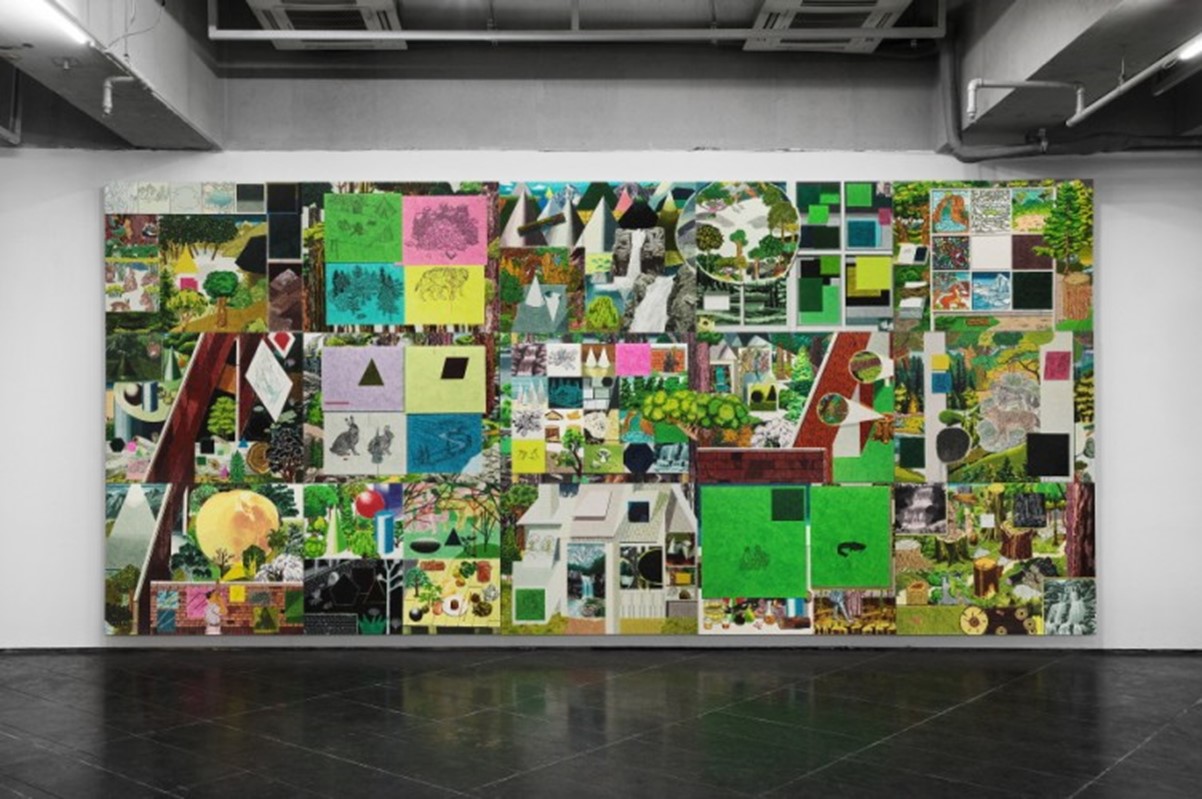
From a distance, the work(s)
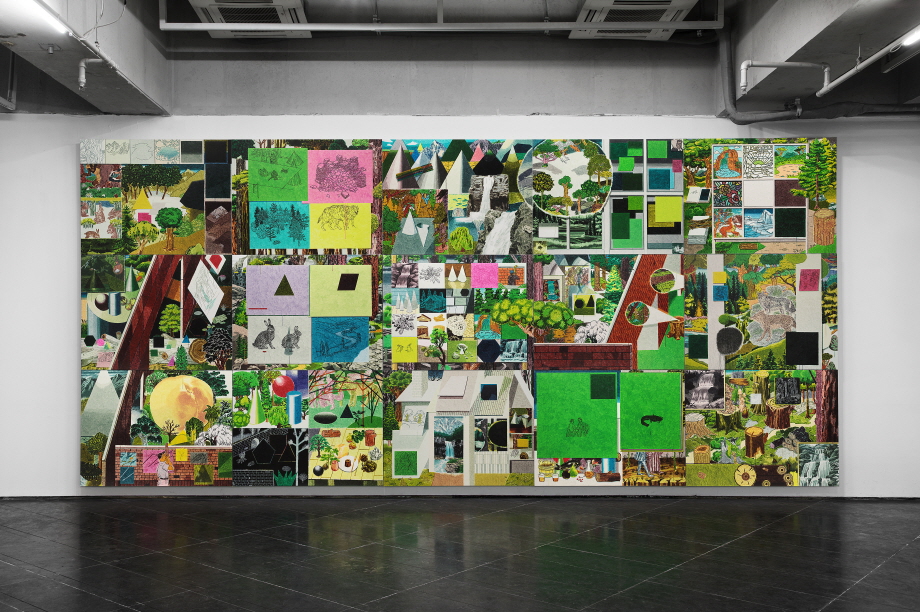
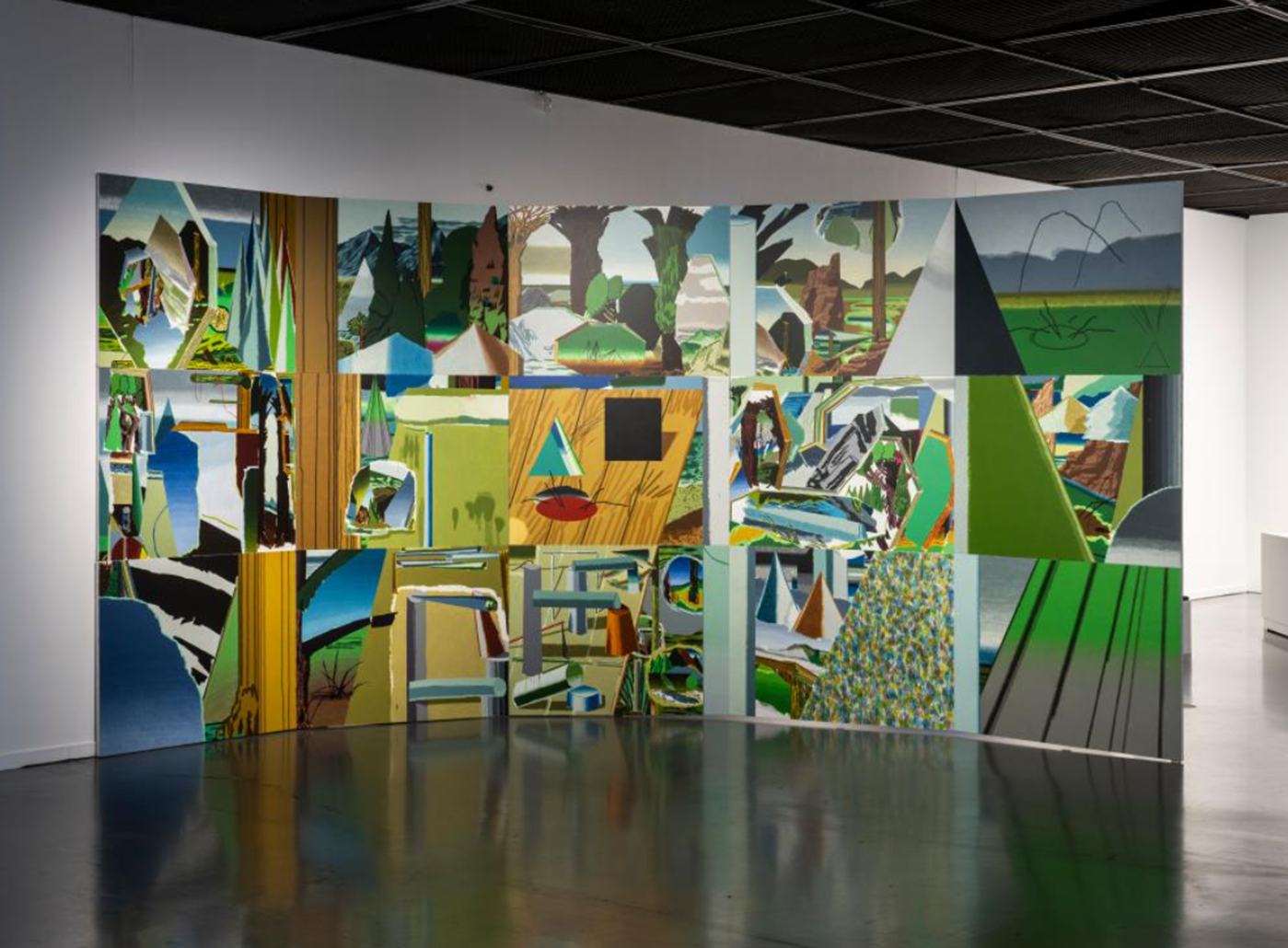
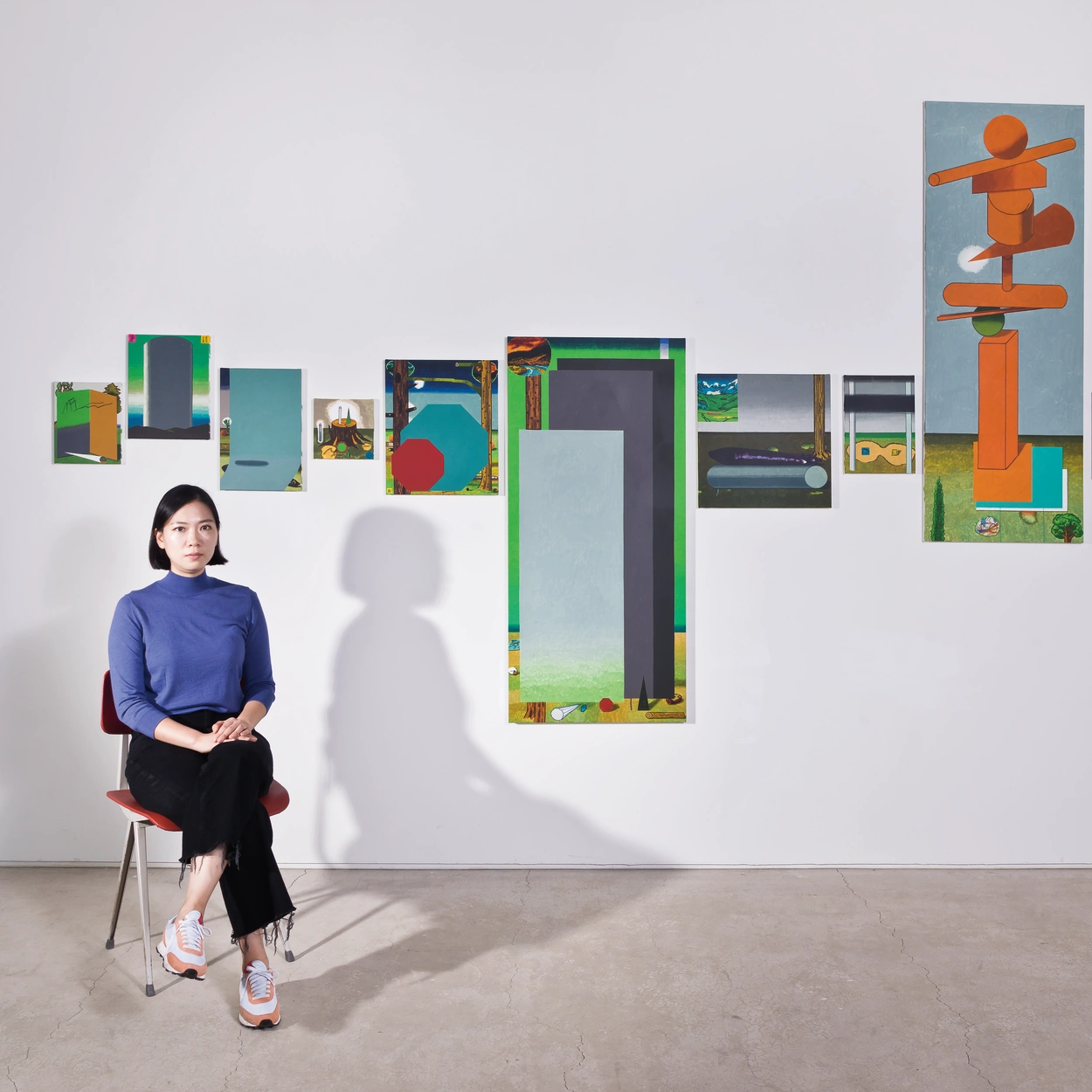
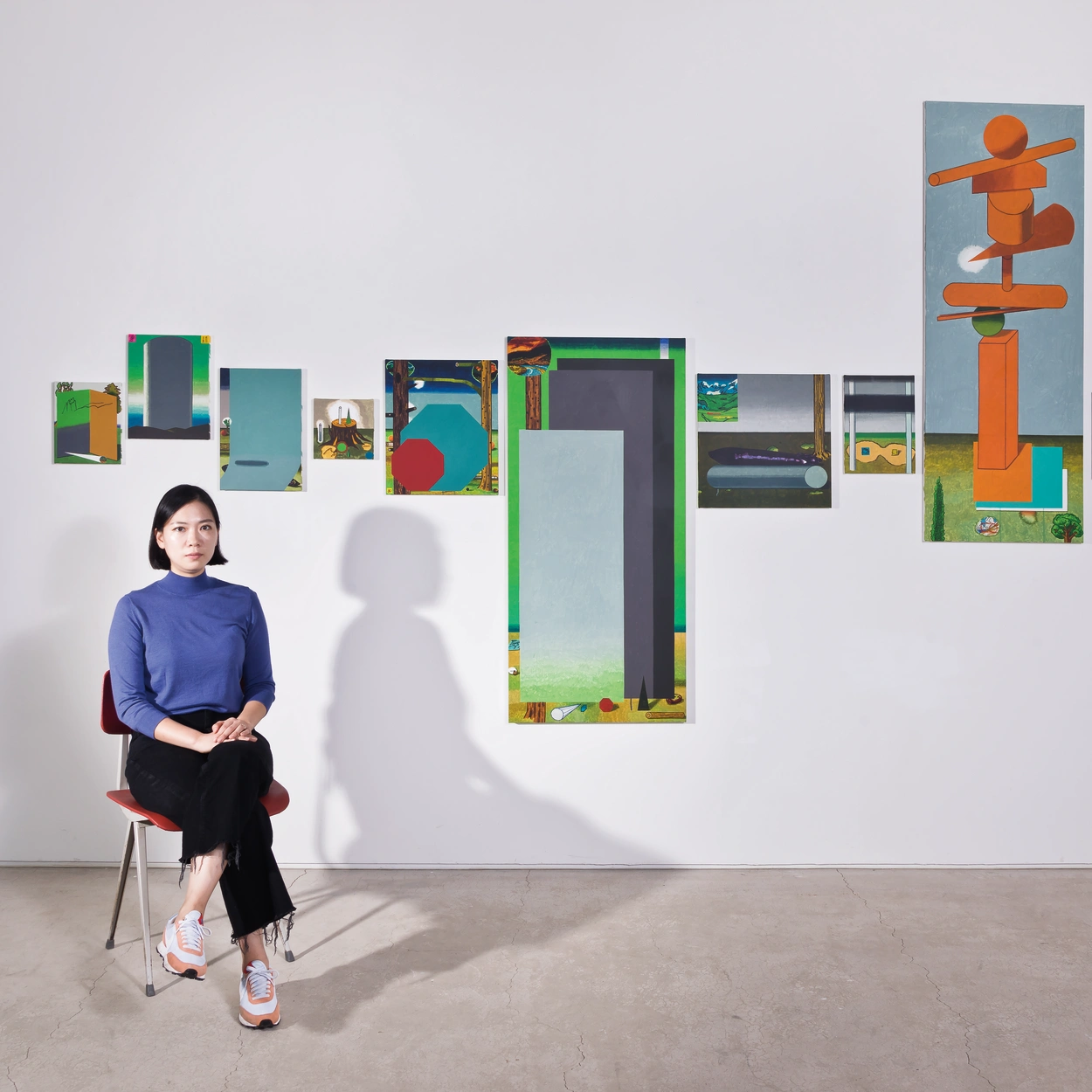
appear as a single, massive canvas composed of fifteen panels—identically sized
canvases installed in a tight 3x5 grid. Pieces previously exhibited separately
in the group show at Gallery KICHE are now presented as one cohesive work.
Notably, both the exhibition format and the artwork titles have changed.
For
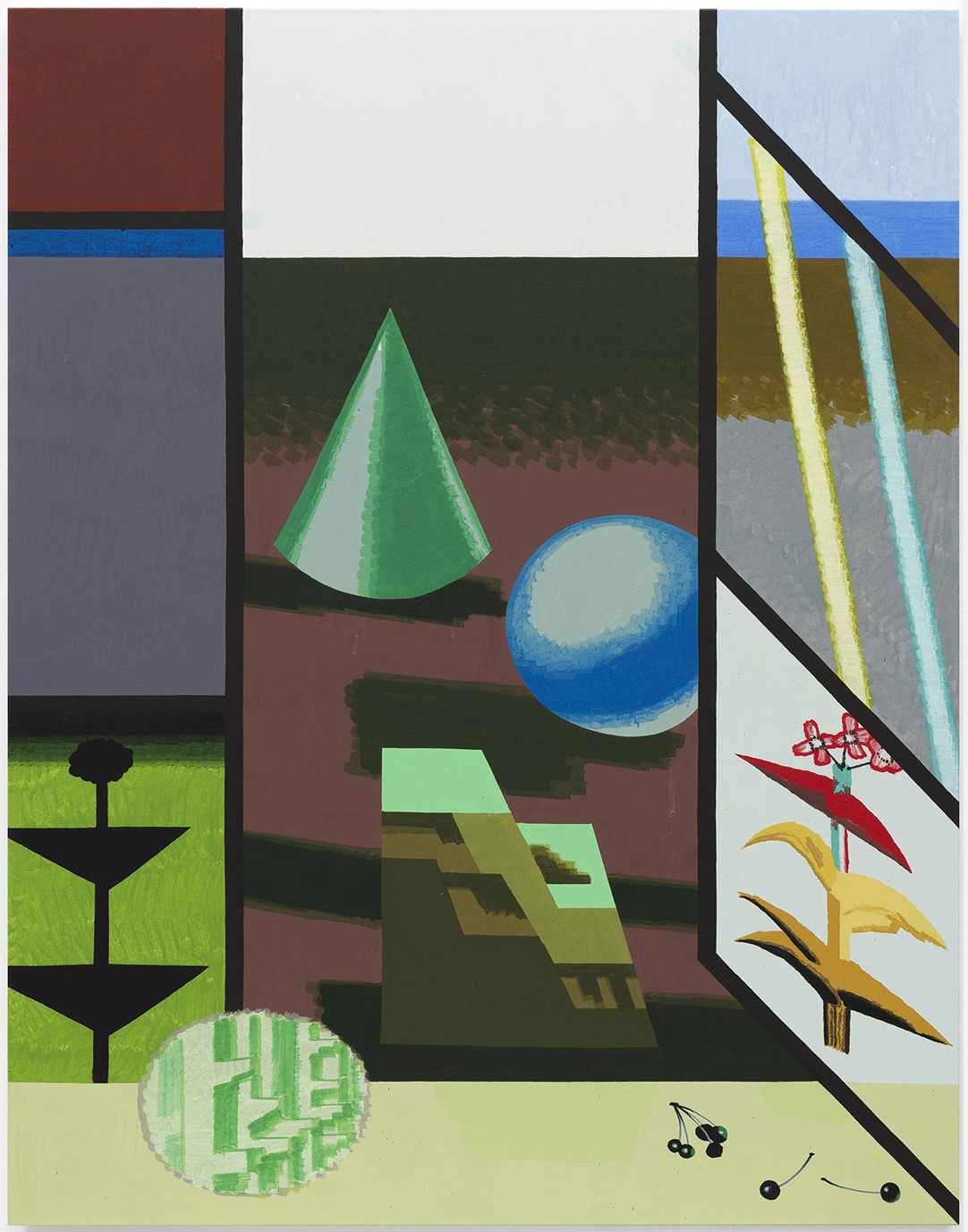
example, a work once titled The Landscape Seen by the Cone (A Part for
the Whole) (2017) in the group show is now retitled Parallel
Paths (11) (2017) in this solo exhibition. Here, Parallel
Paths becomes the shared name for both the entire installation and
each of its constituent parts. In this way, what was once a “part for the
whole” is now presented as the “whole” itself.
On a closer level, the work may
be understood as a summation of a series, not only due to the shared title but
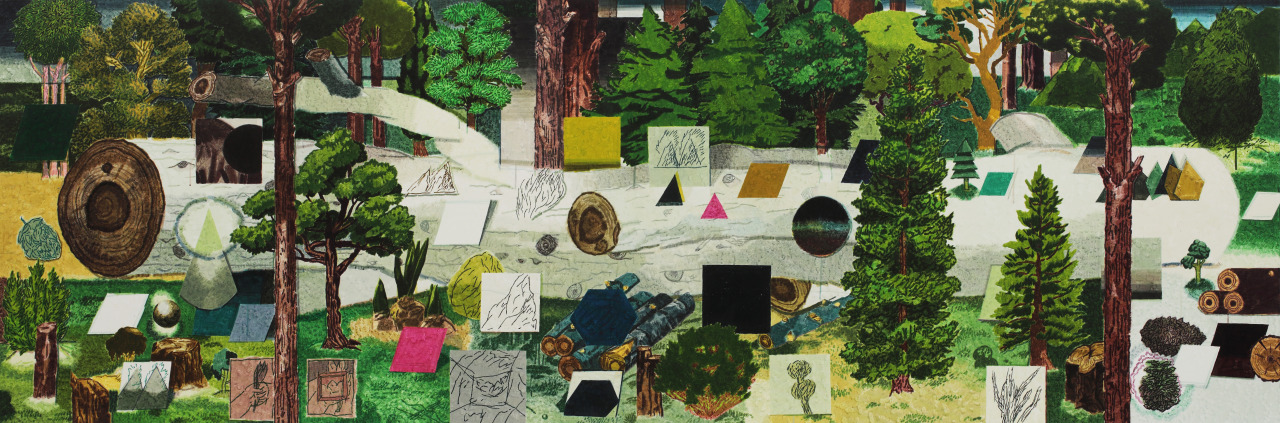
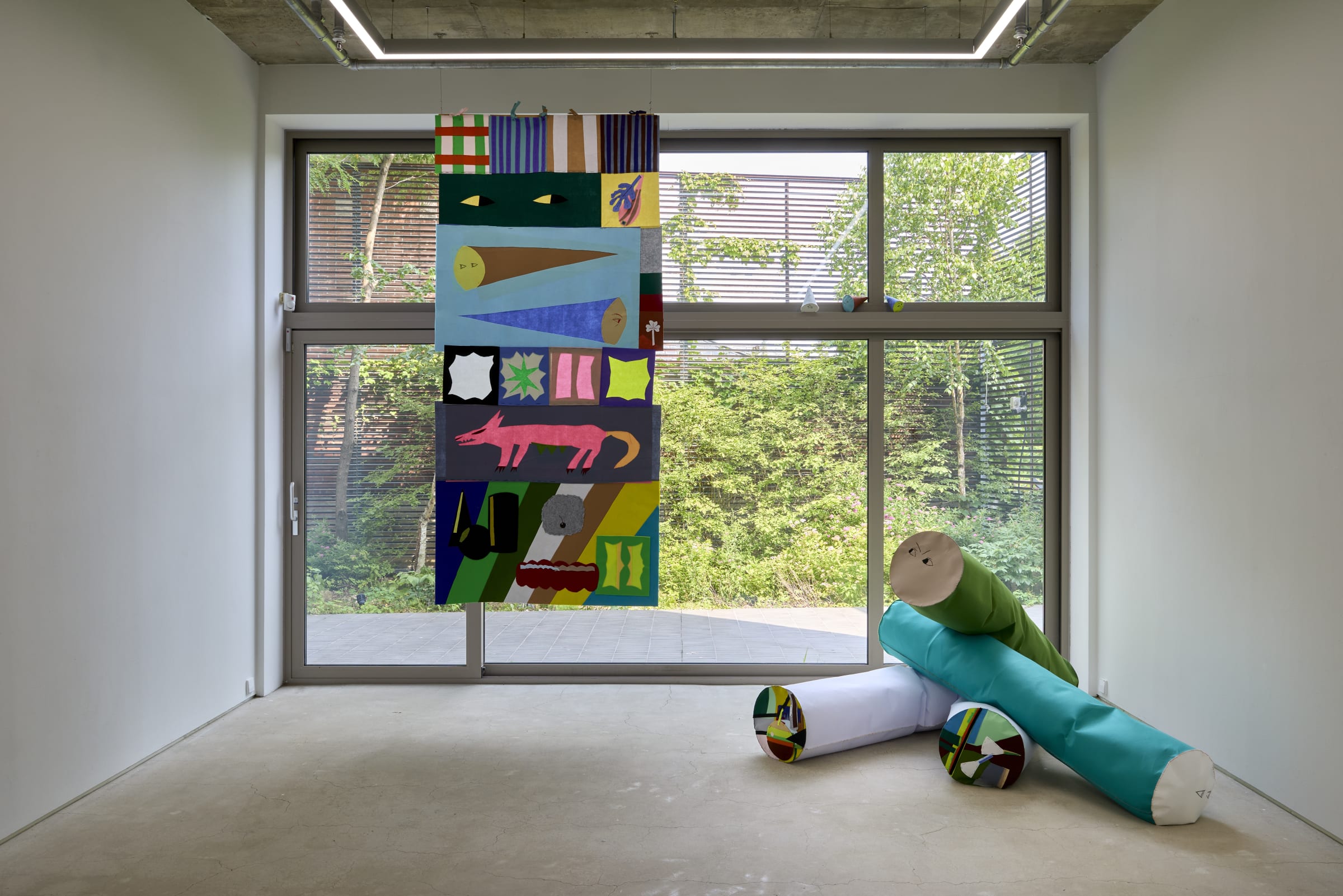
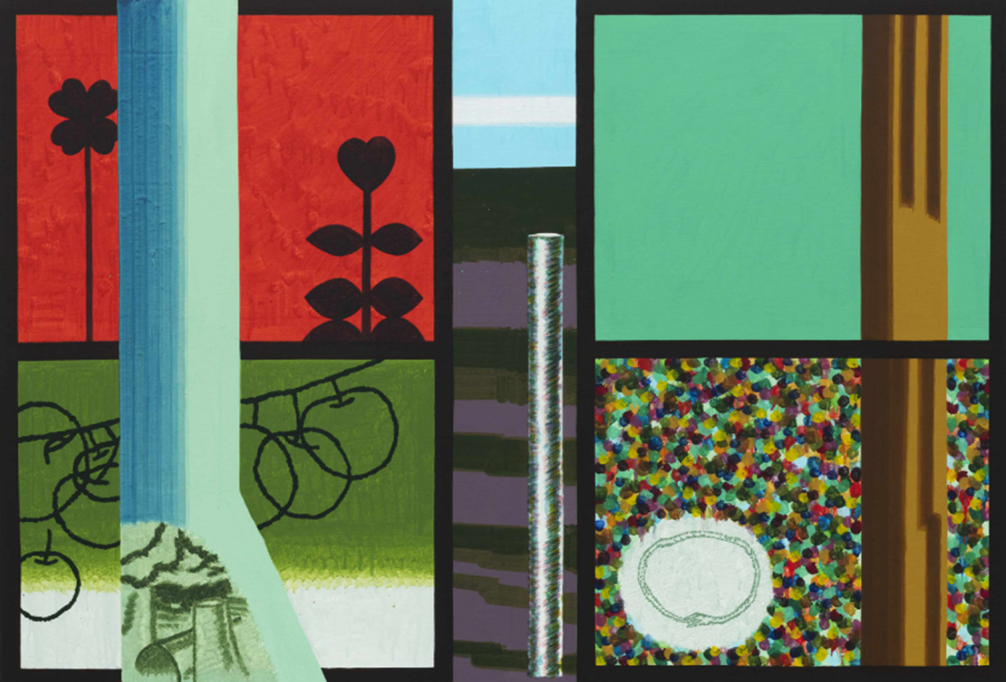
also the recurring motifs (cones, spheres, and rabbits), stylistic
similarities, and uniform canvas sizes. Nevertheless, even if these paintings
are part of a series, they are typically expected to be exhibited
independently. No one would connect Cézanne's obsessively painted apples into a
single canvas, nor should we assume that Jeon's series is meant to be displayed
as one. At the same time, this connected presentation does not resemble a
stadium card-section event, where each part contributes to a singular,
predetermined image.
So then, why—how—did these works
come to be joined together? The key lies in how the motifs are already
segregated within each individual canvas. These motifs are not only unrelated
to one another, but the positions in which they are rendered—each isolated on a
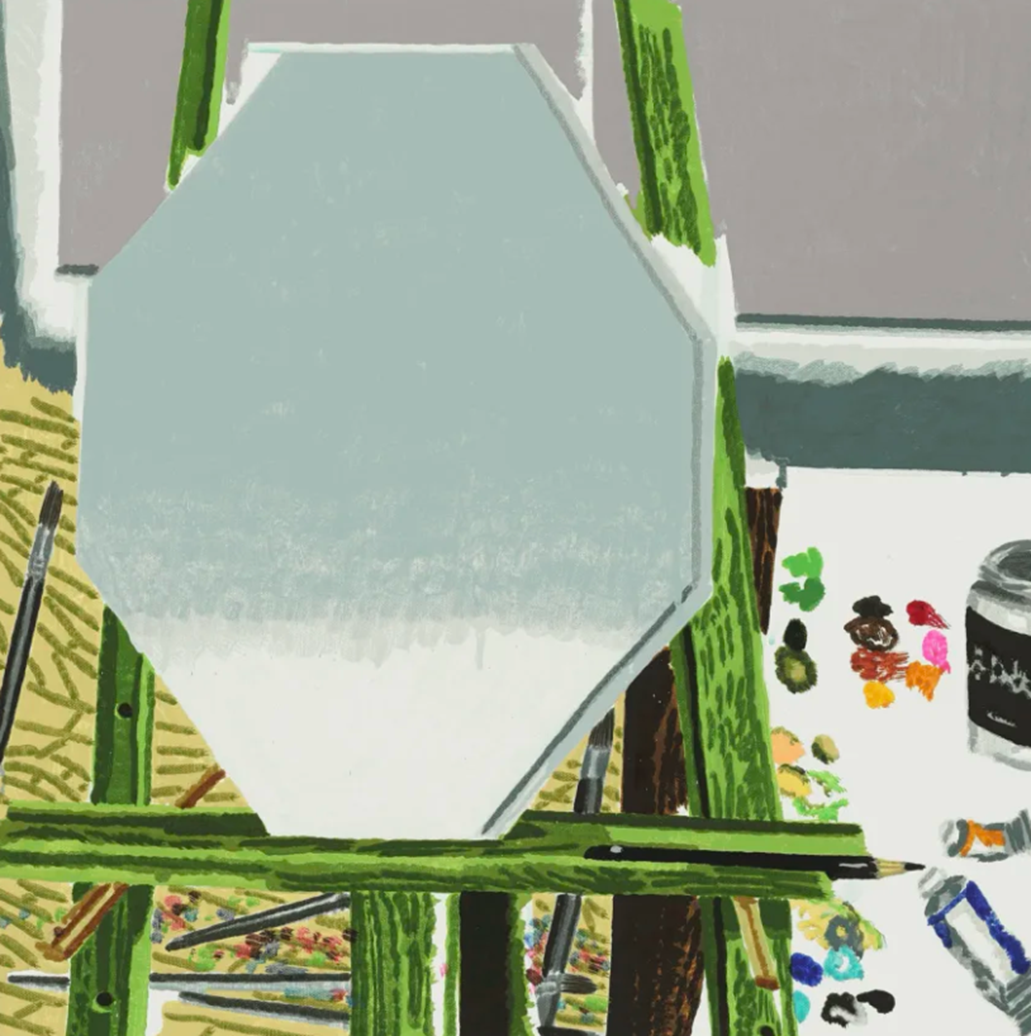
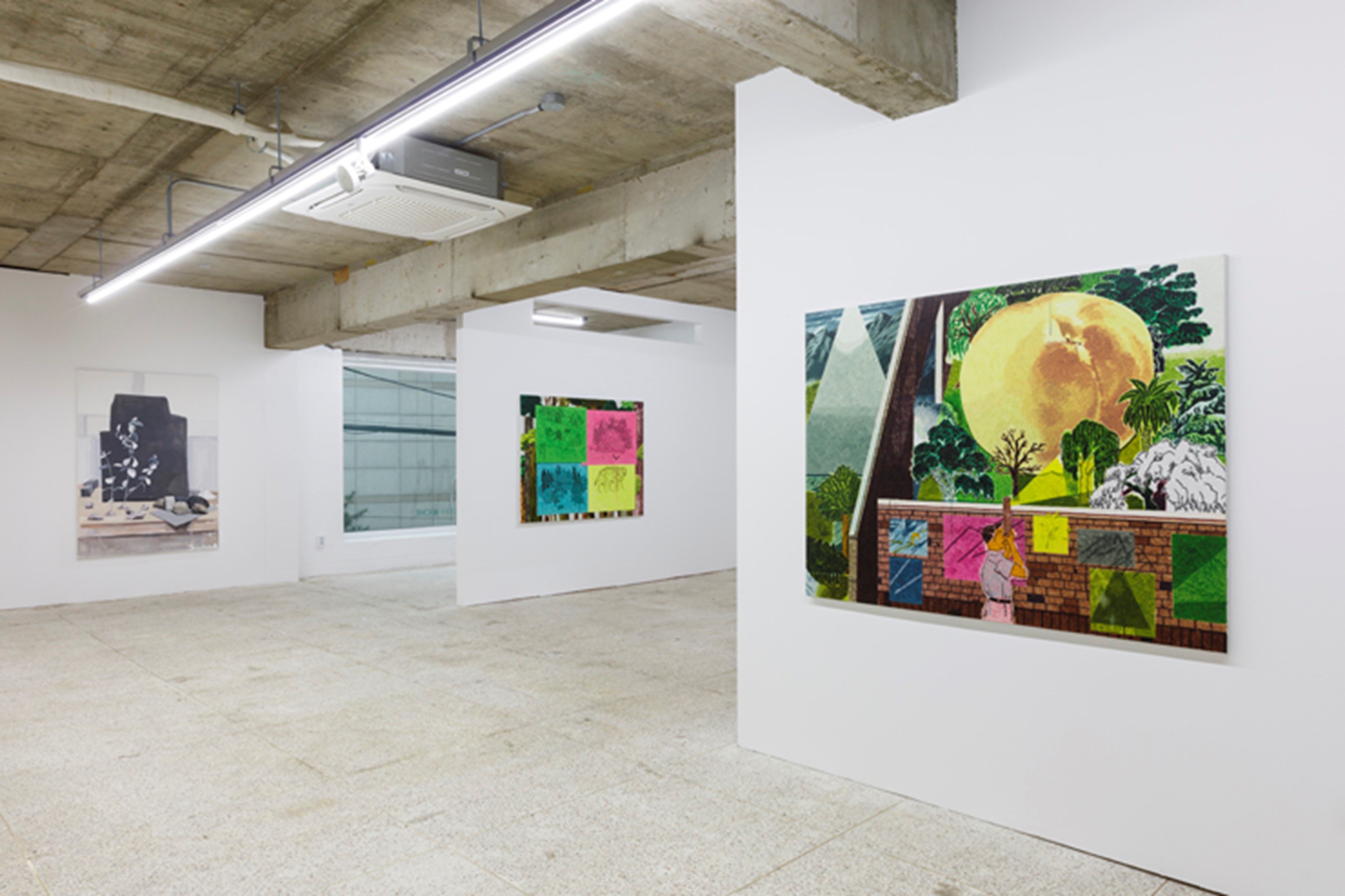
distinct layer—are detached. The motifs often appear within balloon-like spaces
or backgrounds reminiscent of cutouts, or are confined to new compartments
within each canvas, which function as self-contained supports.
In my analysis
of 《Immersion vs Balance》, I
suggested that these subdivisions become “canvases painted within the canvas.”
That is, the foundational surface on which painting occurs becomes a subject of
depiction itself. This latest work also features multiple internal spaces
within a single canvas, bringing disparate motifs into curious, unanticipated
encounter.
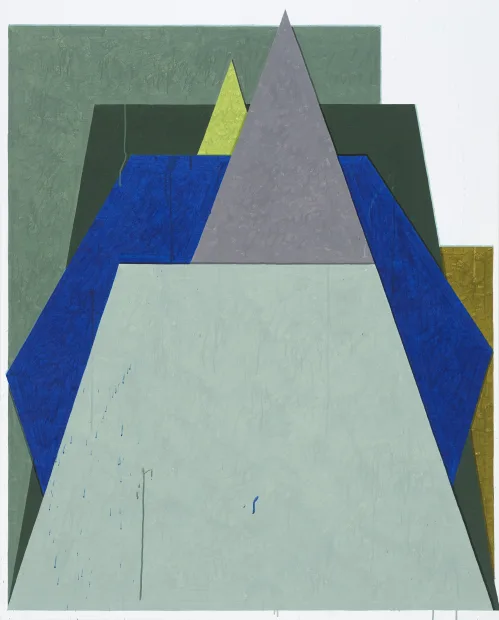
Parallel Paths
features combinations of elements that would not normally meet—just like its
title suggests. The dual concepts of day and night, while oppositional, serve
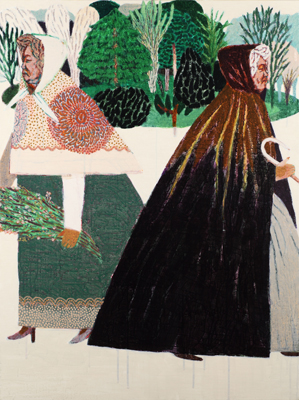
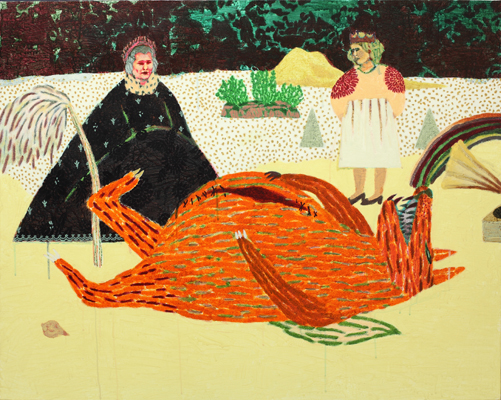
not to blur temporal distinction but to suggest parallel coexistence. Figures
and animals appear side by side, alongside an "artificial support
structure" that makes clear these elements have been staged and painted.
It evokes a kind of “world” on the flat surface—like the notion that while I
sleep at night, someone else greets the morning on the opposite side of the globe.
Unlike typical collage works, which are confined to a single canvas, this one
expands outward and embraces difference. The continued generation of spatial
depth leads to a layering where within a painting, there is another
painting—and beside that, another still—so that additional canvases are
appended, one after another.
However, this visual depth is not
always consistent. Each canvas varies in how its layers are constructed. As a
result, this large composite painting is inherently fractured. Firstly, the
composition is divided into panels. Secondly, the expressed layers differ
across canvases. Finally, all these perceived depths ultimately return to the
illusion of the single, flat surface of the canvas. In these ways, the work
embraces division.
Yet within this coexistence of
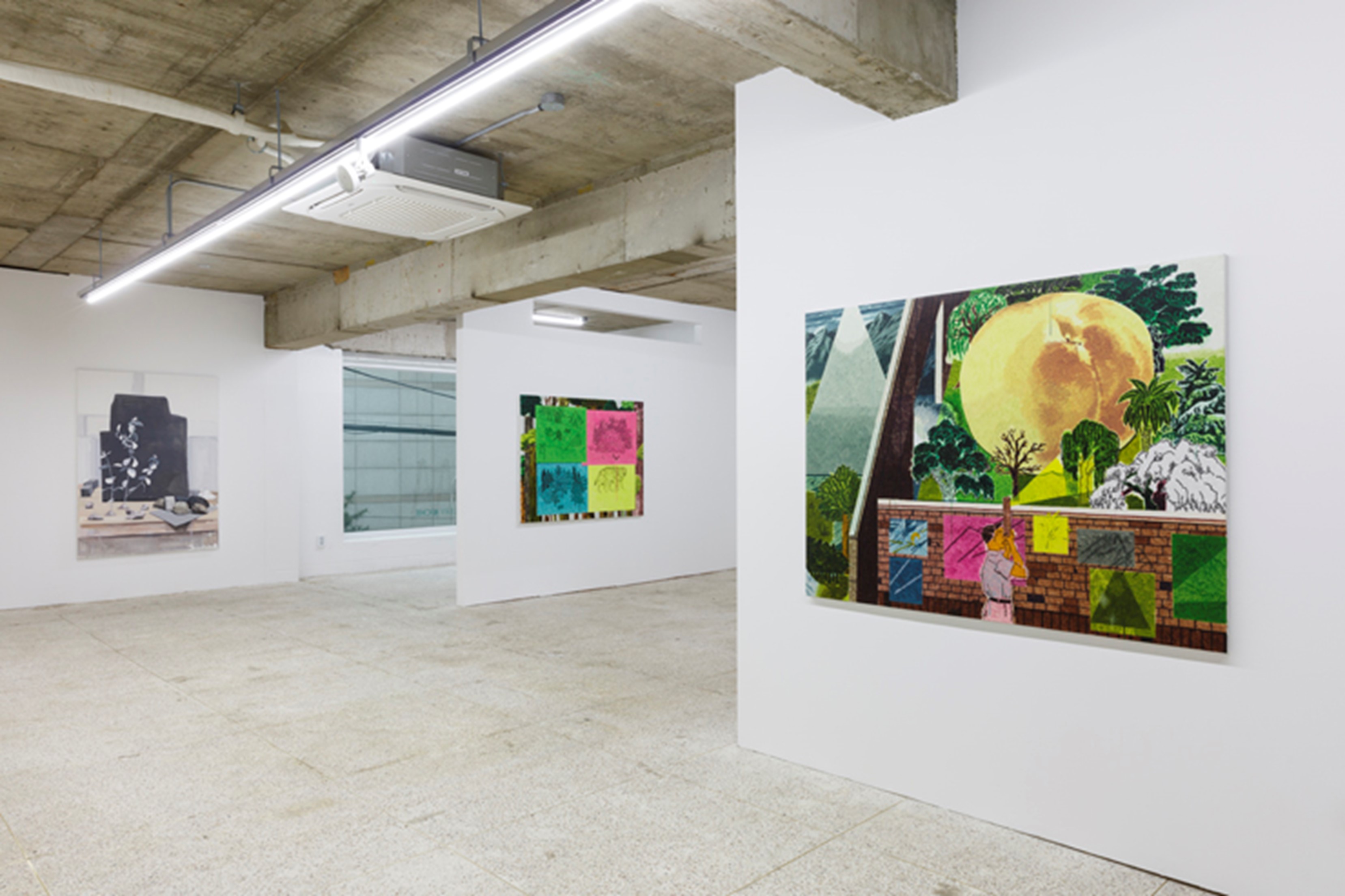
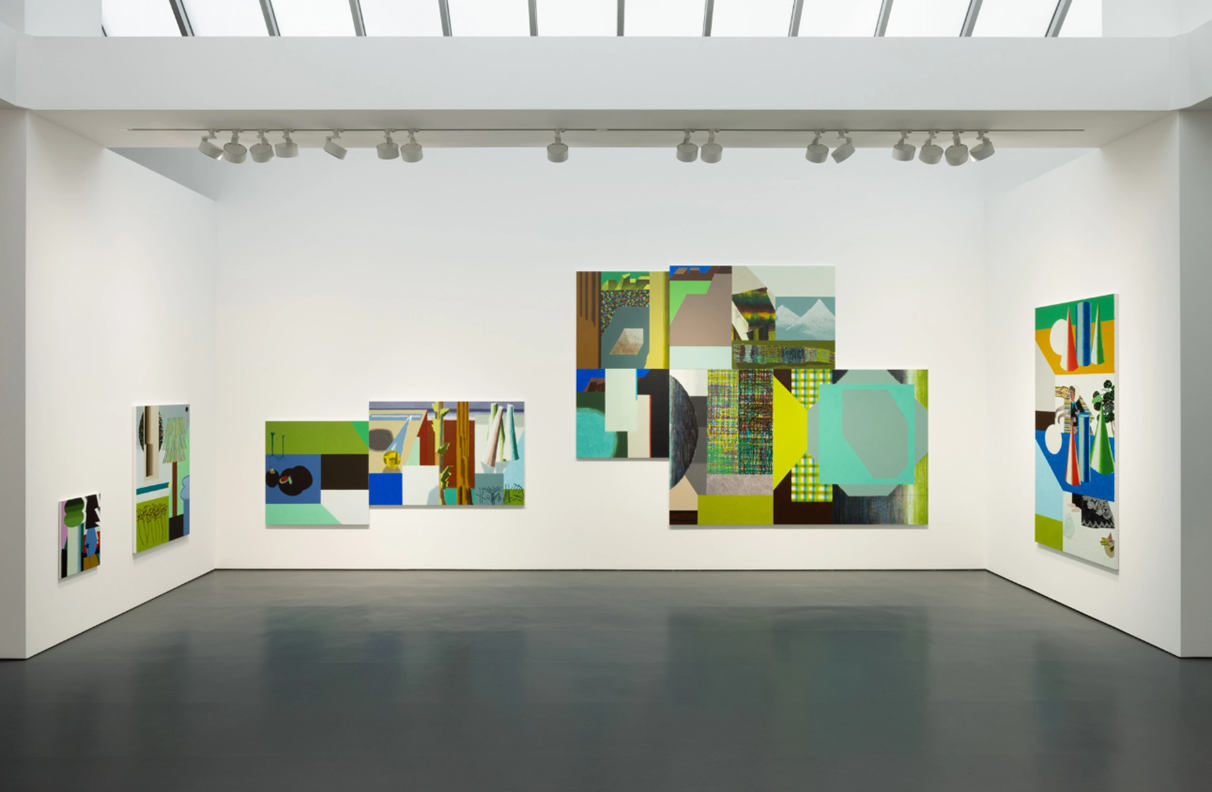
division lies the possibility of recombination. Works displayed separately from
Parallel Paths in the exhibition space hint at the potential
to be joined into one large canvas. This suggests a world that can embrace—or
be embraced by—such pluralities. It is not a self-sufficient world enclosed
within the frame, but one that expands and enfolds difference.
Day and night
are not isolated localities at opposite extremes but are enfolded divisively
within such a world. The world the artist paints within each canvas, when
multiplied and diversified, continues to exercise its internal force. It is a world
that holds multiplicity together from within.