Articles
[Critique] Opening the 'Adult Fairy Tale' through Imagination
mAY 01, 2012
Sungho Kim | Art Critic, Professor, Sculpture, Sungshin Women’s University
Hyunsun Jeon’s paintings resemble
fairy tale books with no text. Within them, exotic spaces and unfamiliar past
times tumble about in a state of indefinable vagueness. These works are
populated with grandmothers, girls, wolves, rabbits, wild boars—scenes filled
with ambiguous incidents unfolding between humans and animals. The characters
living in the time-space of a fairy tale continuously send and receive unspoken
messages, forging their roles through mutual exchange.
"Who is the protagonist and
who is the supporting character?"
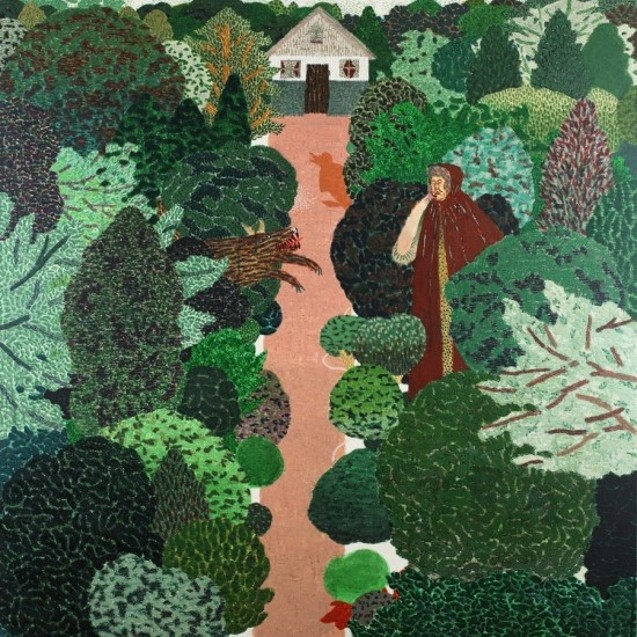
Hyunsun Jeon, The
Last Walk 2012, watercolor on canvas, 100 x 100 cm ©Next Door Gallery
It is the viewers themselves who
fill in the empty speech bubbles between imaginary characters, casting the
protagonists and supporting roles, and bringing vague events into specificity.
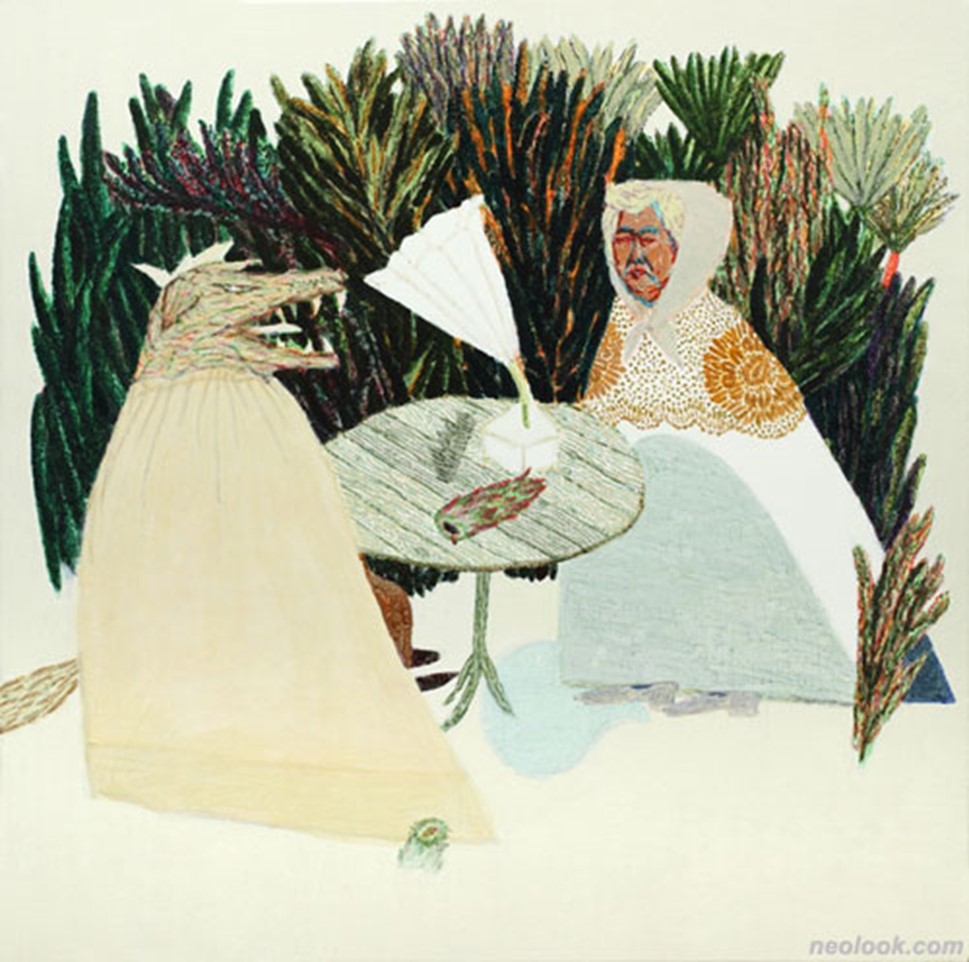
Whether on the table between the wolf and the grandmother, on drifting clouds
like pebbles, or atop dense foliage, Jeon’s speech bubbles await the audience.
They invite viewers to awaken dormant childhood memories and fill those bubbles
with their own stories.
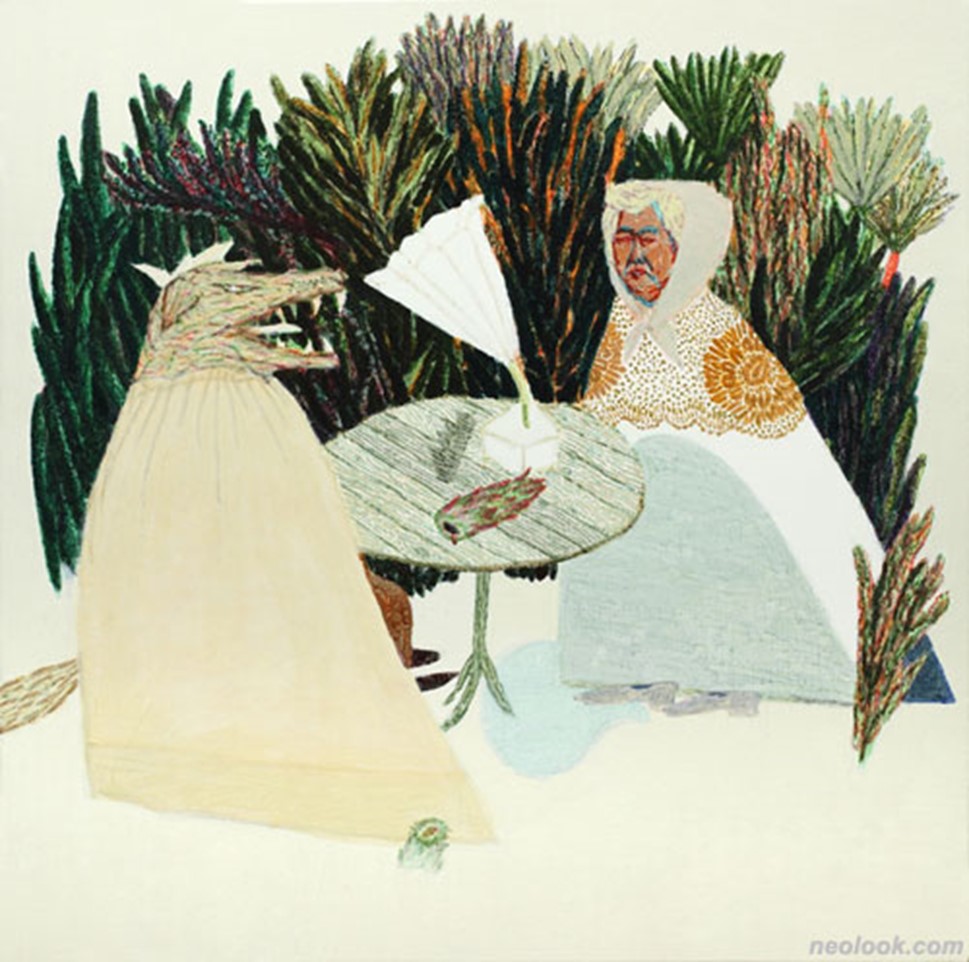 Hyunsun Jeon, A Secret
Meeting, 2011, watercolor on canvas, 90×90cm ©Neolook
Hyunsun Jeon, A Secret
Meeting, 2011, watercolor on canvas, 90×90cm ©Neolook
As suggested in the exhibition
subtitle 《Road to Endless Opposites》, the texts viewers fill into these speech bubbles are all
different. They diverge endlessly, clash, and meander restlessly into a nomadic
space. Her "adult fairy tales," in a state of undefined transition,
become a poignant plea not to abandon hope and a gesture of shared empathy for
memories of despair and pain.
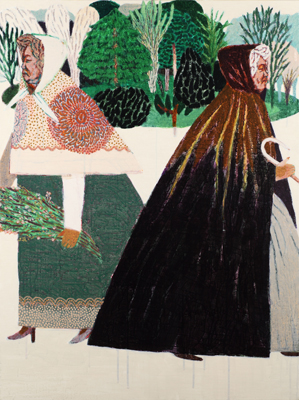
Jeon’s paintings are fairy tales
that metaphorically reflect the adult world—full of conflict and tension, plots
and conspiracies, betrayal and revenge, violence and cruelty. Consider this: if
traditional children’s fairy tales are typified by moral lessons and happy
endings for the sake of education and enlightenment, then the open-endedness of
evil is characteristic of fairy tales for adults. Such tales invite us into a
world of rich imagination detached from the reality we know.
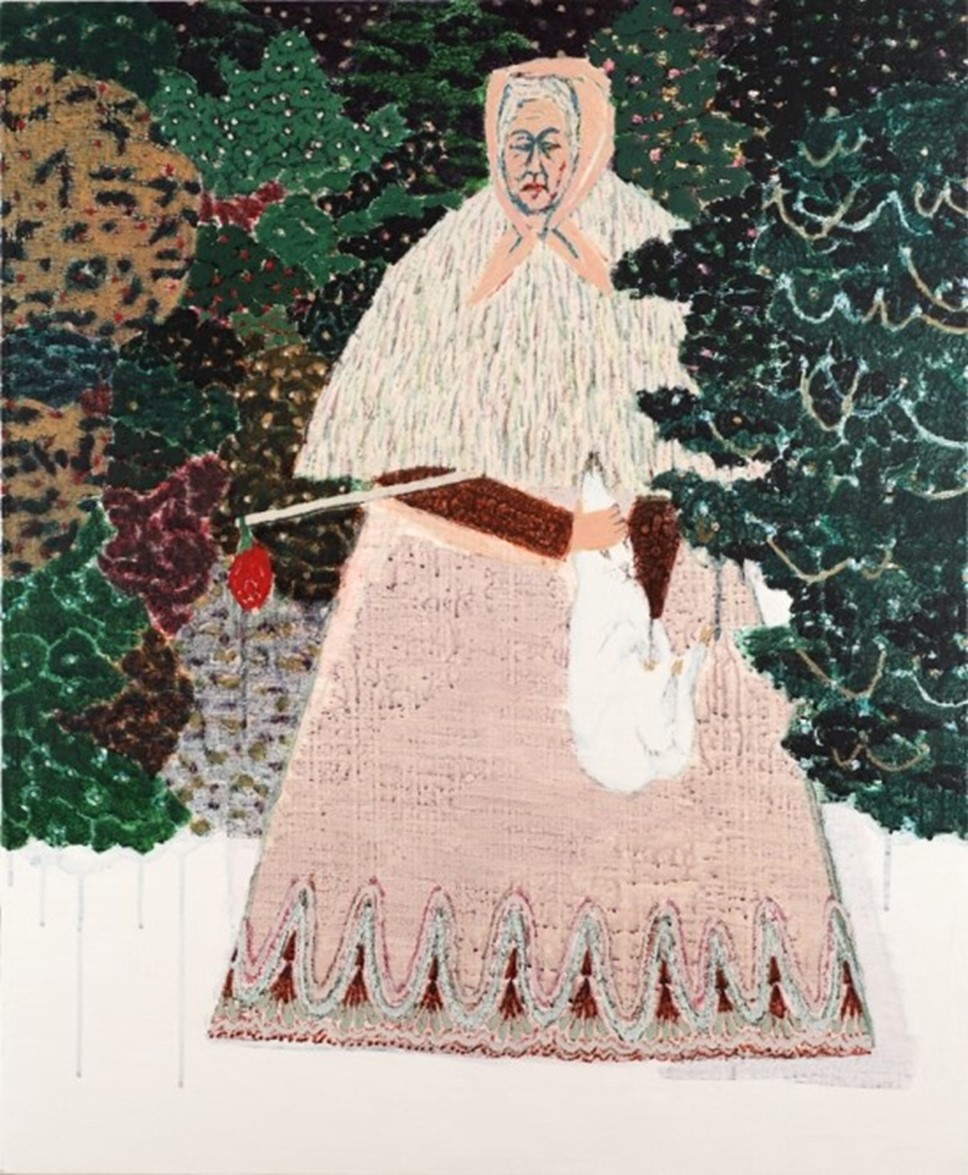 Hyunsun Jeon, A Night with Particularly Bright
Stars, 2011, watercolor on canvas, 80.3 x 65.0 cm ©Next Door Gallery
Hyunsun Jeon, A Night with Particularly Bright
Stars, 2011, watercolor on canvas, 80.3 x 65.0 cm ©Next Door Gallery
Let’s examine the work.
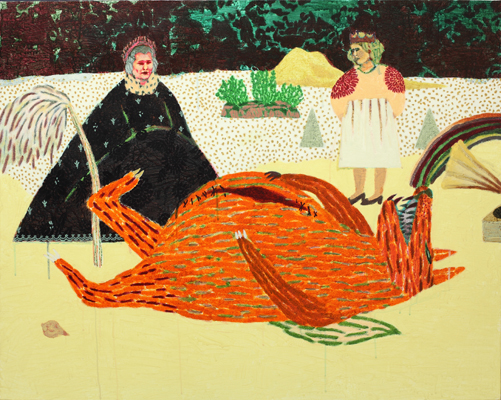
A large wolf lies dead with its
belly split open, and around it stand a grandmother—who might be a queen—and a
girl resembling a princess, both with unreadable expressions. The title A
Gratifying Ending reveals the emotional dimension hidden behind those
ambiguous expressions. This event, unfolding in an unreal world, is captured
like a cinematic sequence, naturally prompting viewers to imagine its
narrative. Although the scene reaches what the artist calls a "gratifying
ending," it also hints at the beginning of another episode.
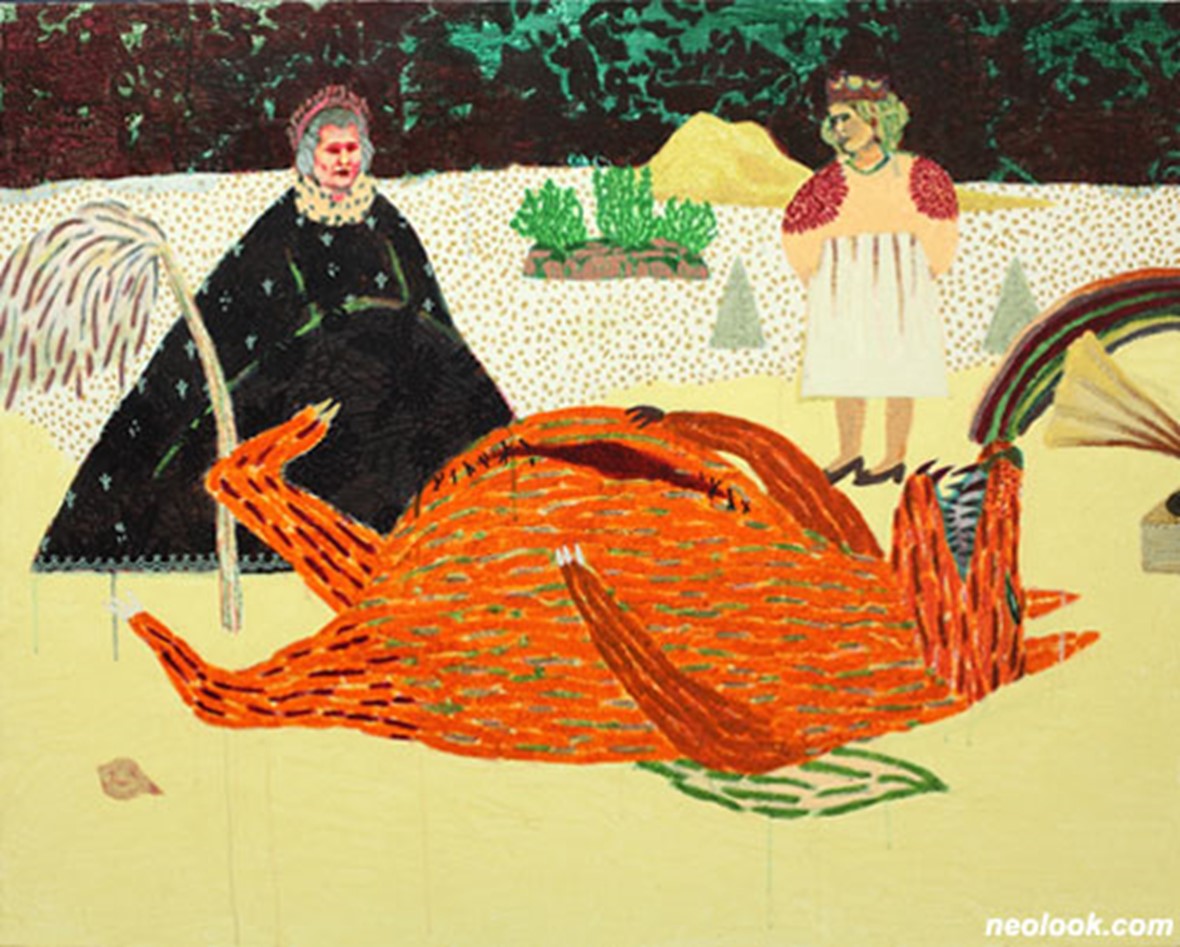 Hyunsun Jeon, A
Gratifying Ending, 2011, watercolor on canvas, 72.7x 91cm ©Neolook
Hyunsun Jeon, A
Gratifying Ending, 2011, watercolor on canvas, 72.7x 91cm ©Neolook
Jeon’s use of watercolor on
canvas enhances the unfolding of such narrative sequences. The thin layers of
pigment formed through evaporation and self-polymerization of watercolor always
allow for reactivation upon contact with water, permitting the penetration of
new materials.
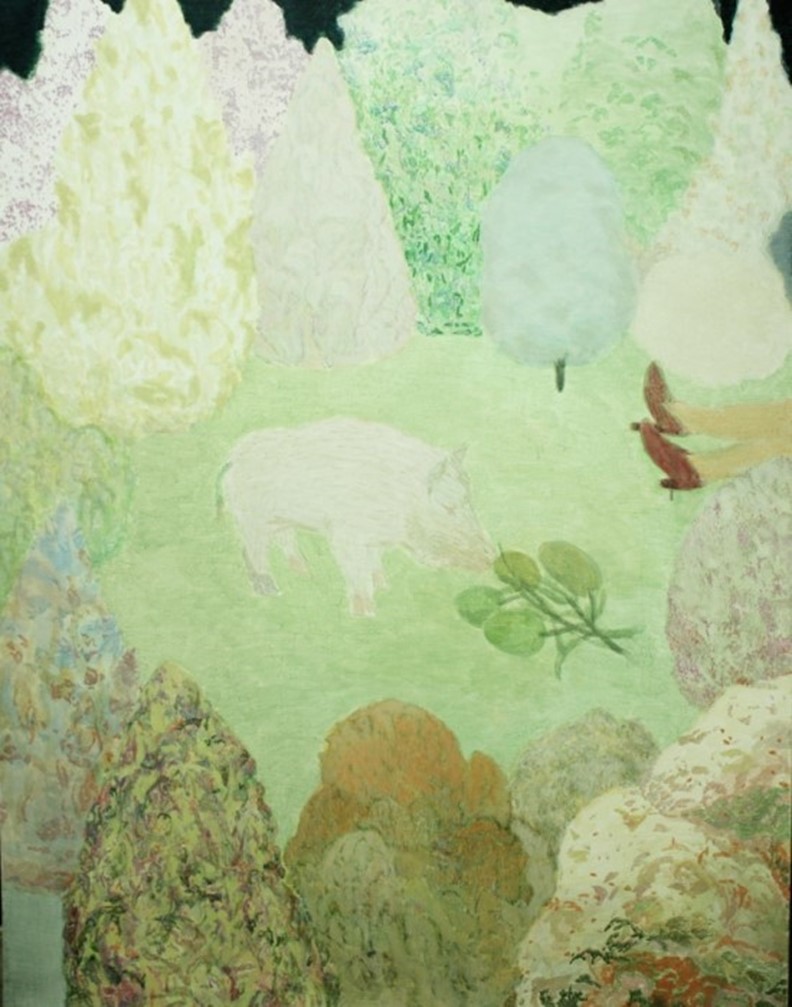 Hyunsun Jeon, A White Night,
2011, acrylic on canvas, 116.8 x 91.0 cm
©Next Door Gallery
Hyunsun Jeon, A White Night,
2011, acrylic on canvas, 116.8 x 91.0 cm
©Next Door Gallery
And what about the wolf walking
upright behind the girl who seems to be fleeing? Is it an anthropomorphized
wolf? A human wearing a wolf’s skin? Or neither?
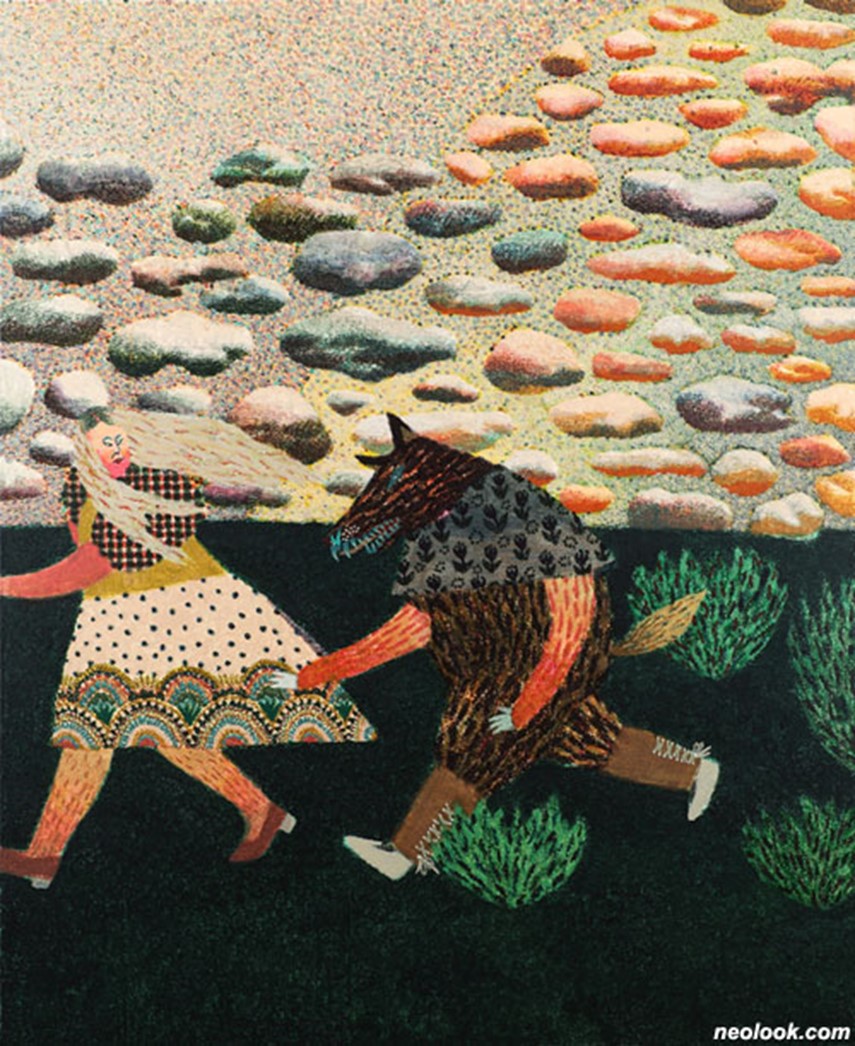 Hyunsun Jeon, Untitled, 2012,
watercolor on canvas, 80.3 x 65.0 cm ©Neolook
Hyunsun Jeon, Untitled, 2012,
watercolor on canvas, 80.3 x 65.0 cm ©Neolook
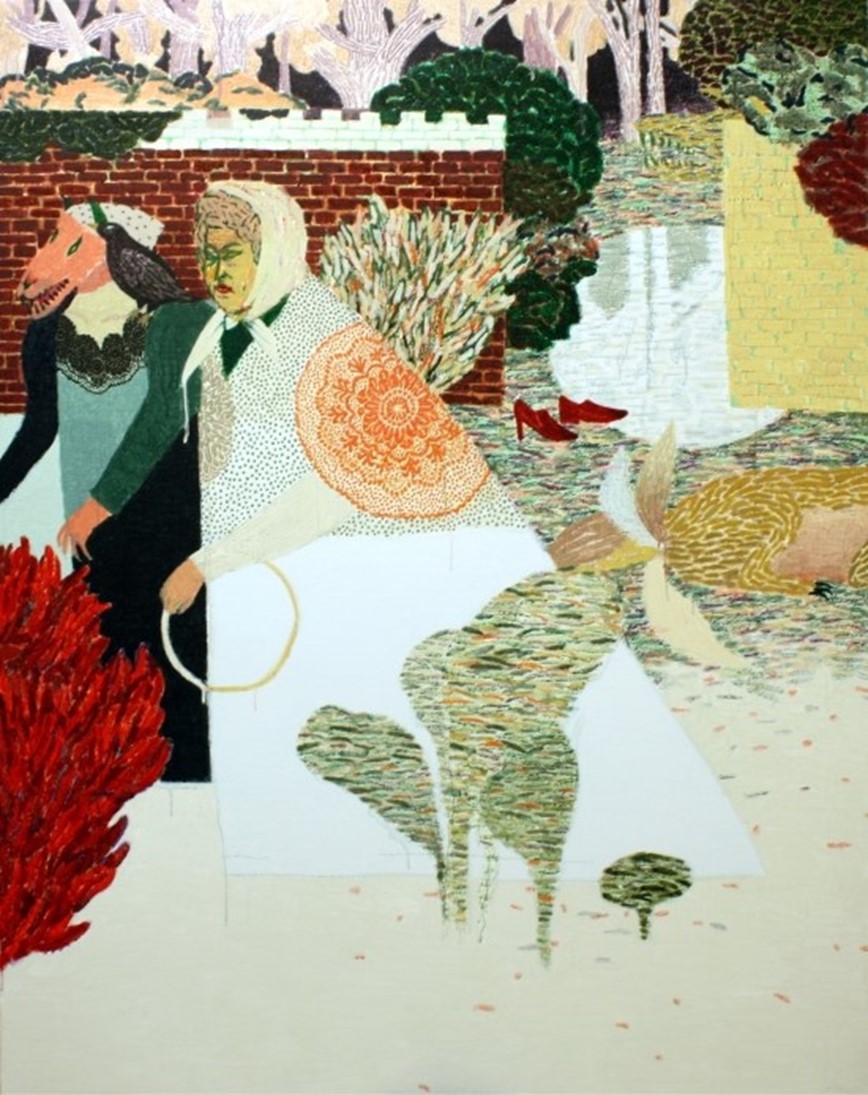 Hyunsun Jeon, Someone
Was Heard to Run out of the Forests, 2011, watercolor on canvas,
145.5 x 112.0 cm ©Next Door Gallery
Hyunsun Jeon, Someone
Was Heard to Run out of the Forests, 2011, watercolor on canvas,
145.5 x 112.0 cm ©Next Door Gallery
In Jeon’s work, anthropomorphized
animals appear like personae from a non-realistic realm—extensions or alter
egos of the human self. As the term "persona" originally means a
mask, these animal figures become personified conversational partners and
fragmented identities of a single subject. They are non-human entities rendered
with human attributes. In this way, anthropomorphized animals serve as
interfaces connecting the real and imaginary realms within her "adult
fairy tales," and they become co-protagonists inviting viewers into the
scene.