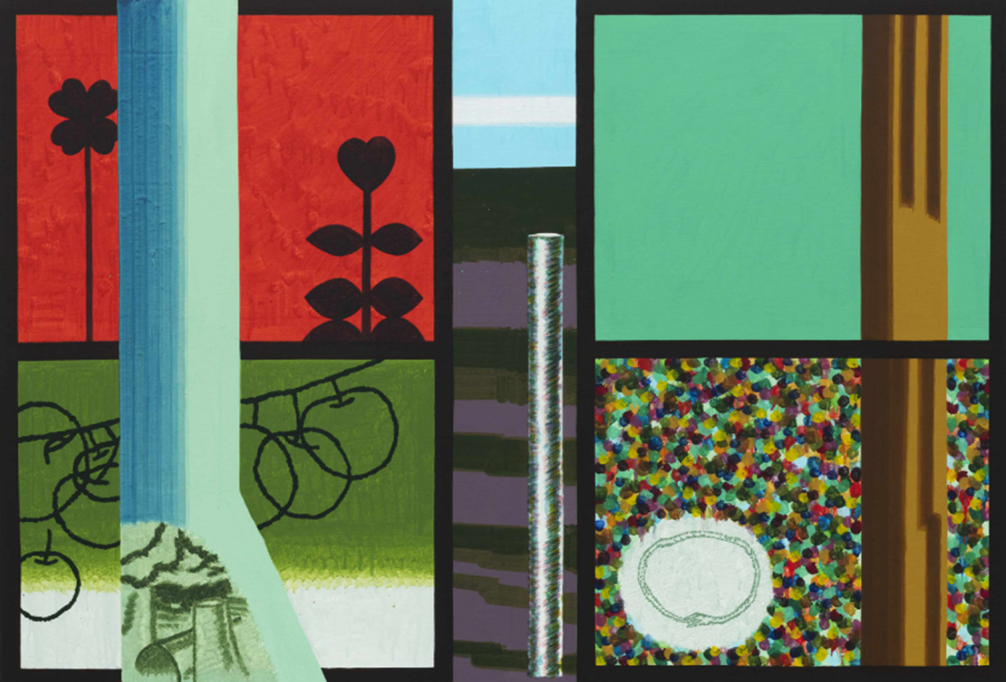
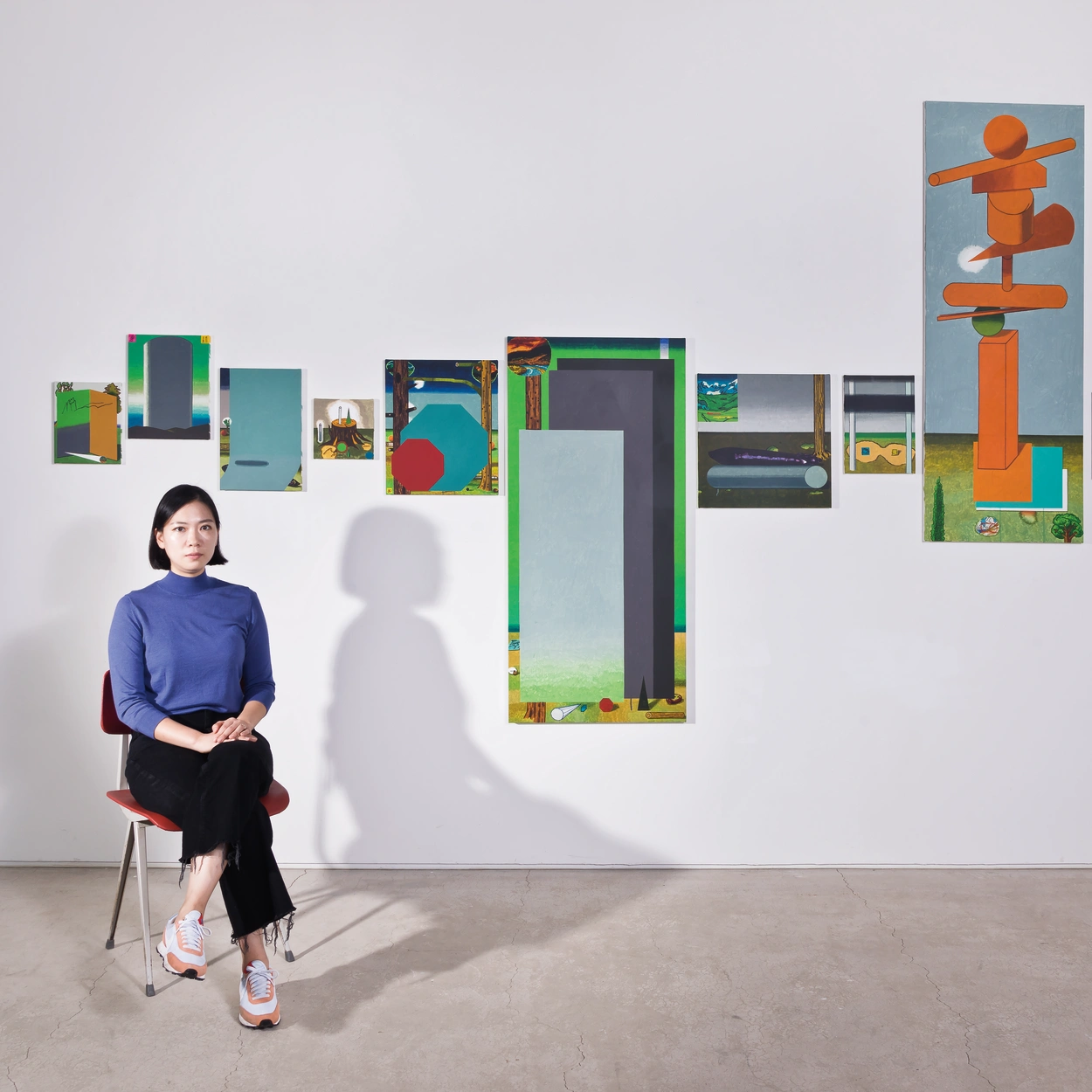
Various forms appear in Hyunsun Jeon's paintings. While these
forms are somewhat recognizable as to what they might be, the totality they
compose remains ambiguous and undefined. In other words, each part remains a
part; the forms do not collectively build toward a coherent whole. A form is
just a form, and the whole is simply the whole. In her paintings, no single
form serves another. Yet, forms do not exist in isolation either. Each form
fluidly connects to another, and can then shift toward yet another. The forms
are in constant motion.
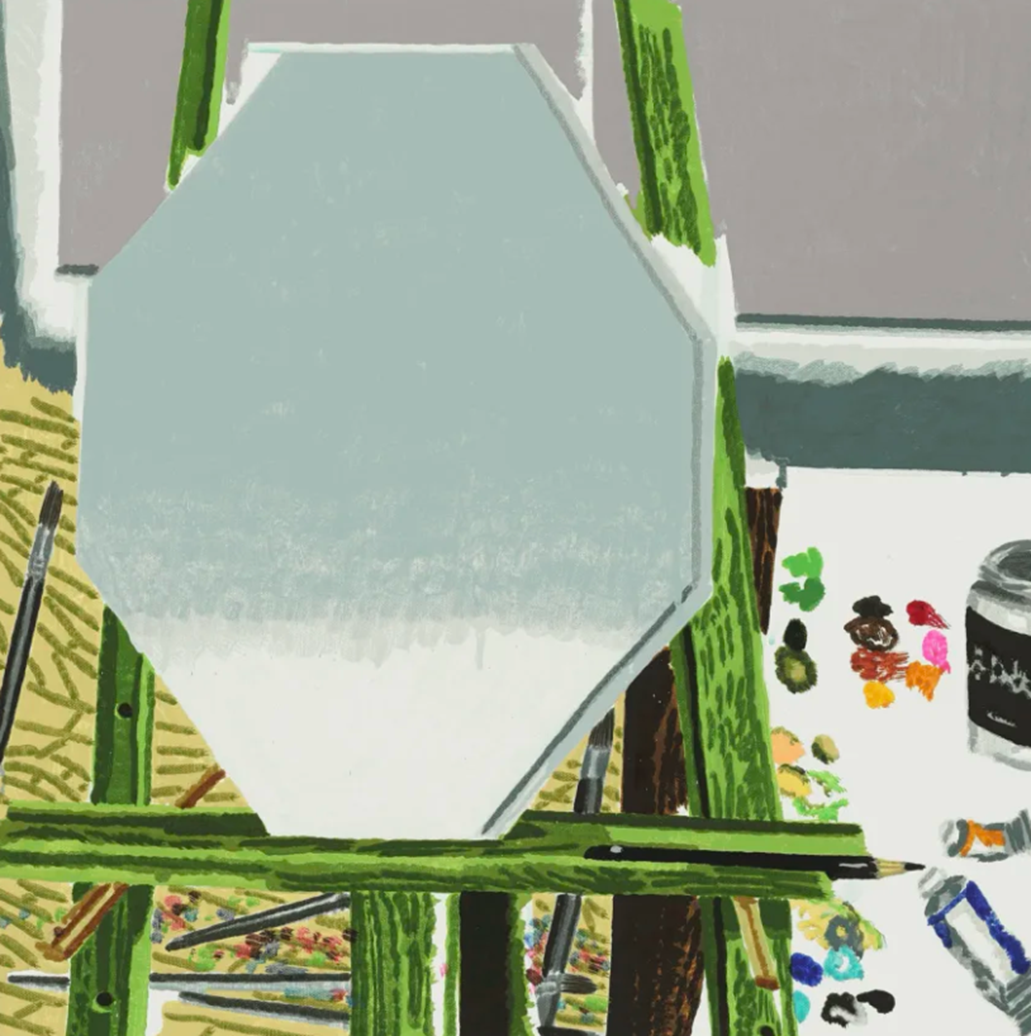
Jeon paints with watercolor on canvas. Finding that oil painting
did not suit her temperament, the artist taught herself how to use watercolor
on canvas. Compared to oil or acrylic, watercolor allows for thin, lightweight
expressions more akin to drawing. Moreover, when painting a new color over an
already painted surface, the underlying hue does not completely disappear.
Instead, the interaction between the upper and lower layers of color creates a
flat yet spatially complex layering of color.
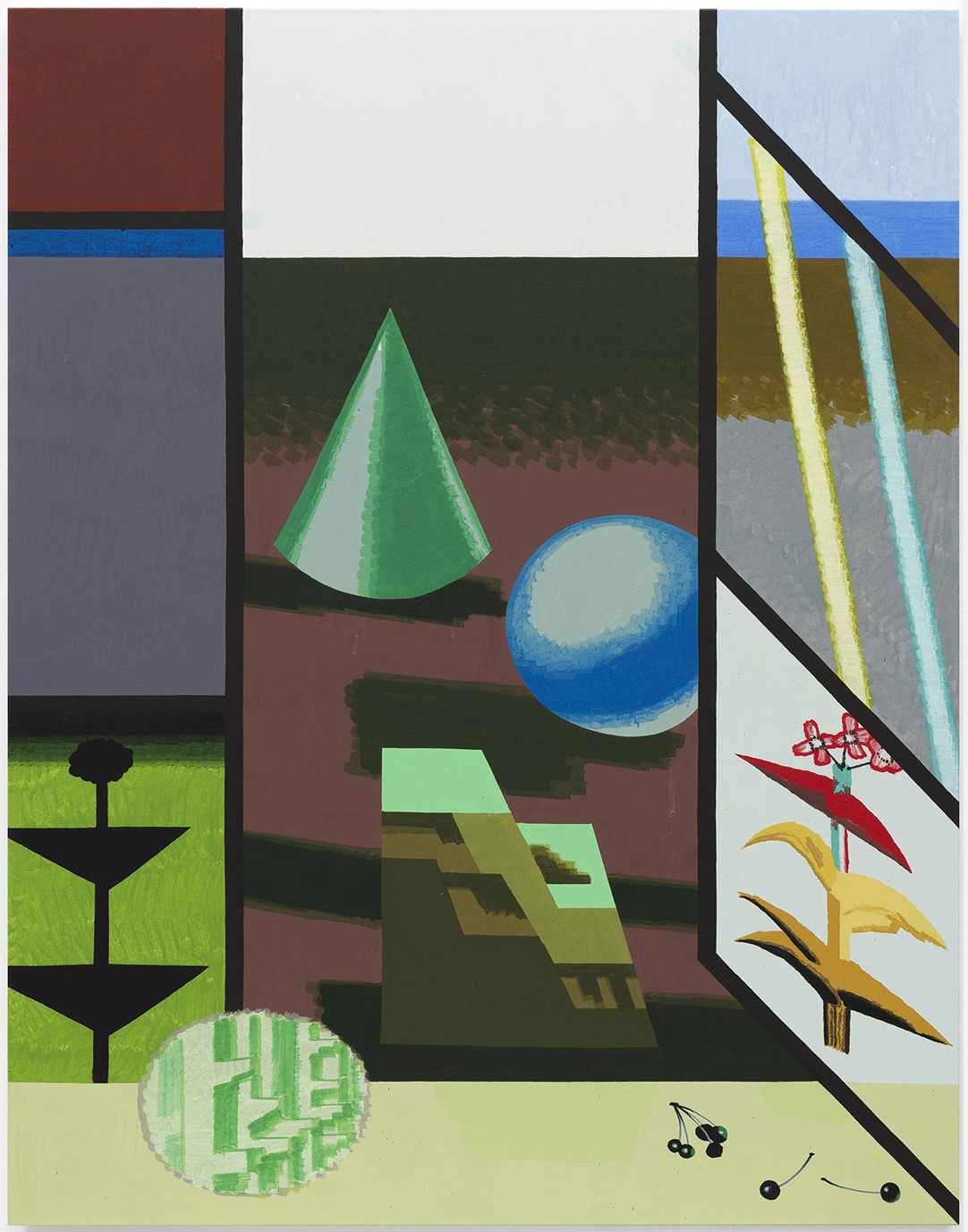
"The Cone and Glittering rock" (2016) features two cones
at the center of the composition. While the cones serve as an initial motif or
starting point for unfolding a scene, they do not carry any specific narrative
or symbolic function. Rather, the artist places various elements around them in
an attempt to perceive or make sense of them. For instance, there is a table
where the cones rest, flanked by two indifferent figures, and behind them
stands a mountain the artist once saw in a Western religious painting. Between
the two mountains, something glowing appears. Below the cones, on the left
side, is a mirror ball, and on the right, a glowing rock. Though all these
elements are arranged around the cones, there is no inevitable causality, no
concrete narrative, no protagonist. There is no hierarchy among the forms, no
centralized composition. As nothing protrudes forward or recedes backward,
every form flattens into visual equivalence.
Jeon's work can largely be divided into three phases. The first
phase spans from late 2014 to early 2015, with works presented in her solo
exhibition 《The Cone and Conversations》 (Place MAK, February 6–25, 2015) and the group exhibition 《Fearful but Fantastic》 (Hite Collection,
February 27–June 5, 2015). The second phase includes works from late 2016,
featured in her solo exhibition 《Nameless Mountain》 (LEE HWAIK Gallery, September 7–27, 2016). The third phase covers
her works from late 2017 to the present, as shown in her solo exhibition 《Everything and Nothing》 (WEEKEND, August
25–September 24, 2017) and her most recent solo shows.
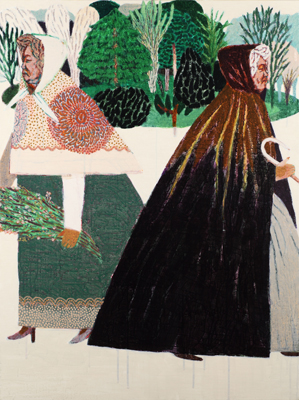
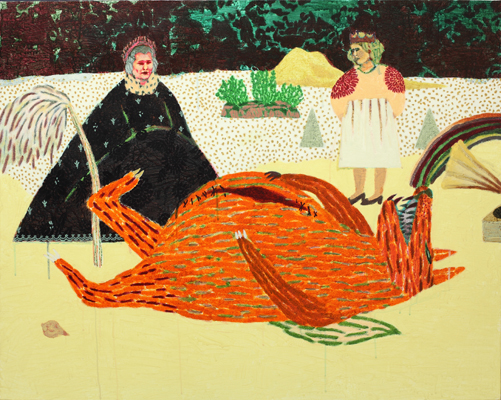
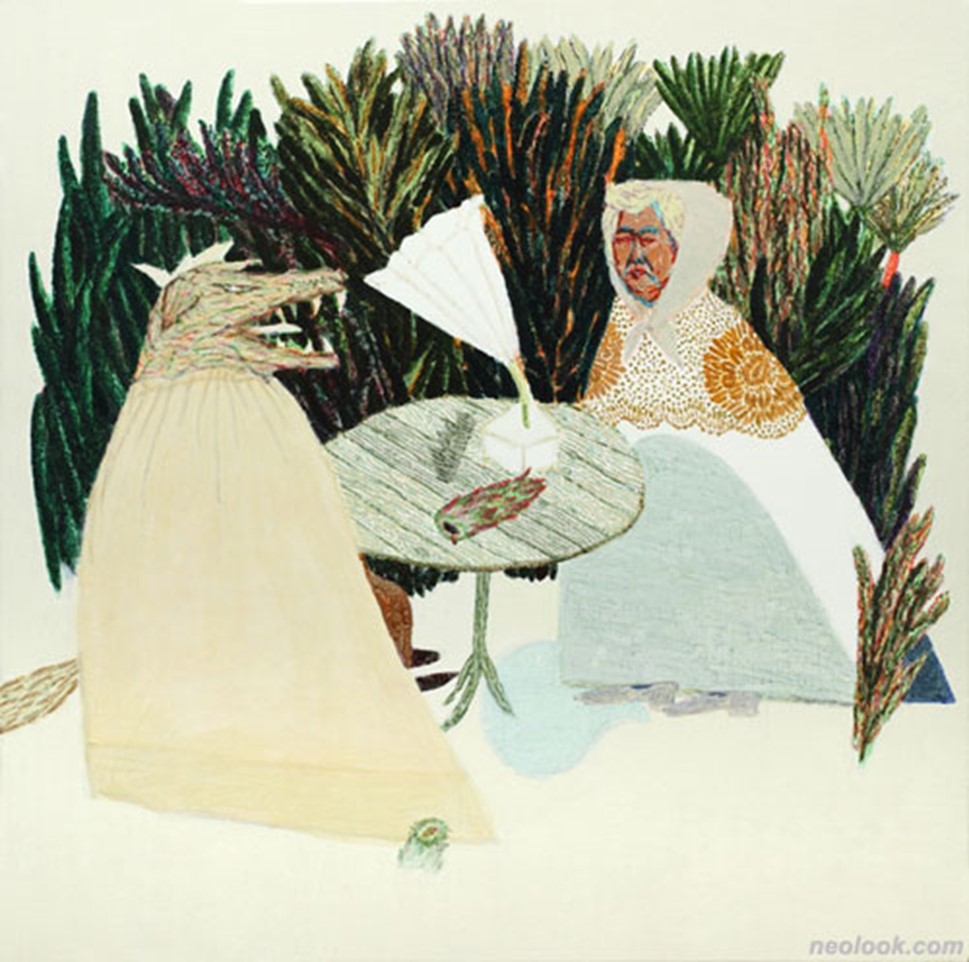
The motif of the cone first prominently appeared during the first
phase. It was also during this period that human figures were most present.
Landscapes resembling forests or caves often accompanied the cone and figures,
imagery that Jeon recalls from children's books she read as a child. Of course,
the coexistence of figures and objects within a background does not imply a
specific event or narrative. As a child, the artist was more captivated by
illustrations than by text.
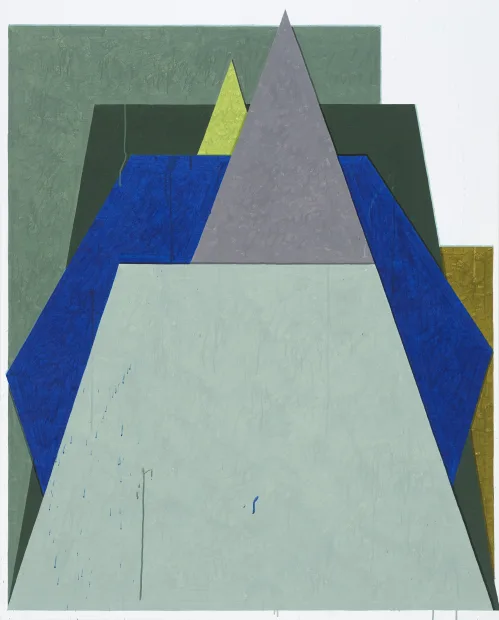
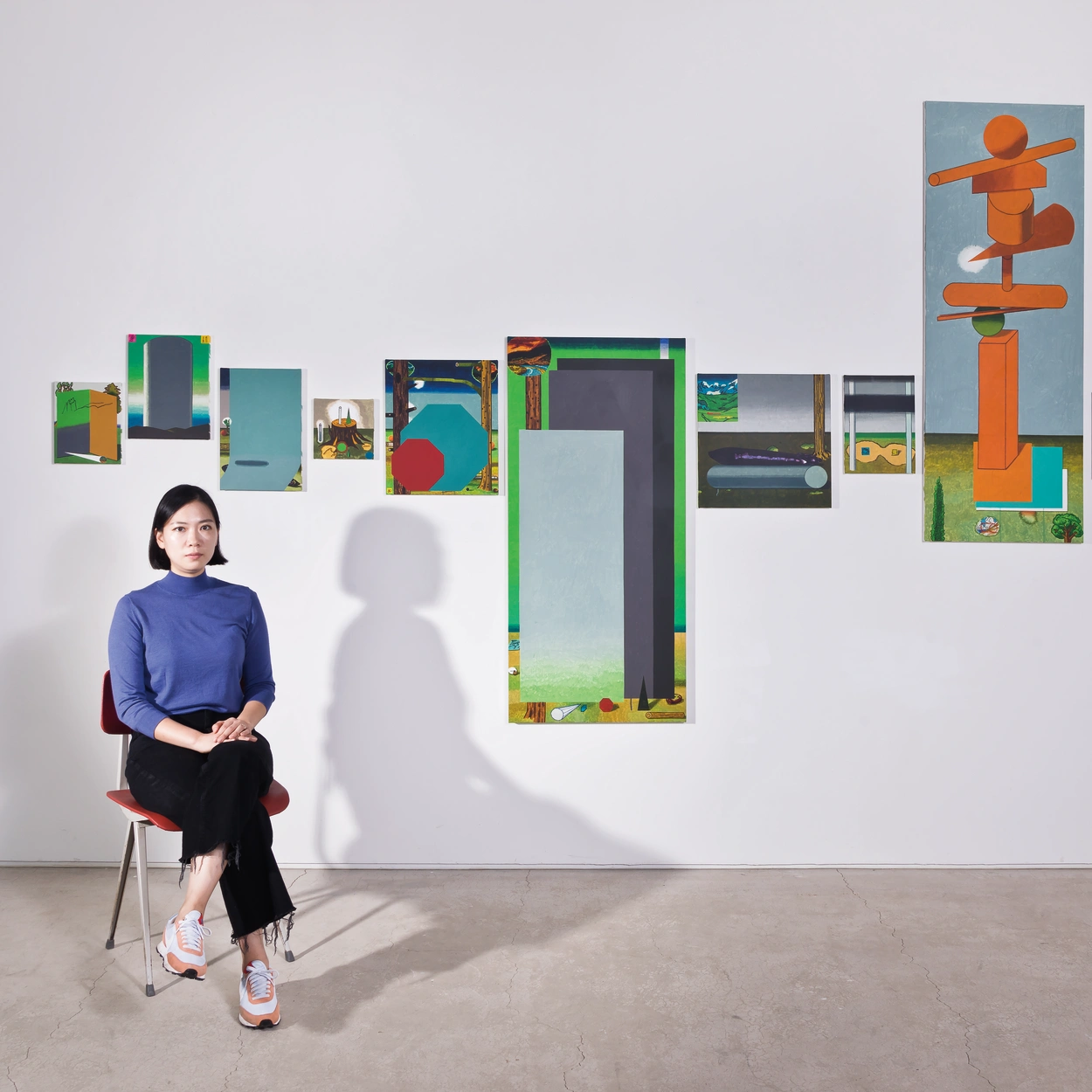
The most distinctive feature of the second phase is the
compartmentalization of the canvas. Jeon credits her collaboration with artist
Eunju Noh in early 2016 as a pivotal moment that heightened her interest in
compositional structure. The division of space lends these works a more
organized atmosphere compared to earlier ones. While the presence of human
figures declines, the cone motif persists. New elements also emerge—namely, the
"nameless mountain" resembling a cone and recurring glowing objects.
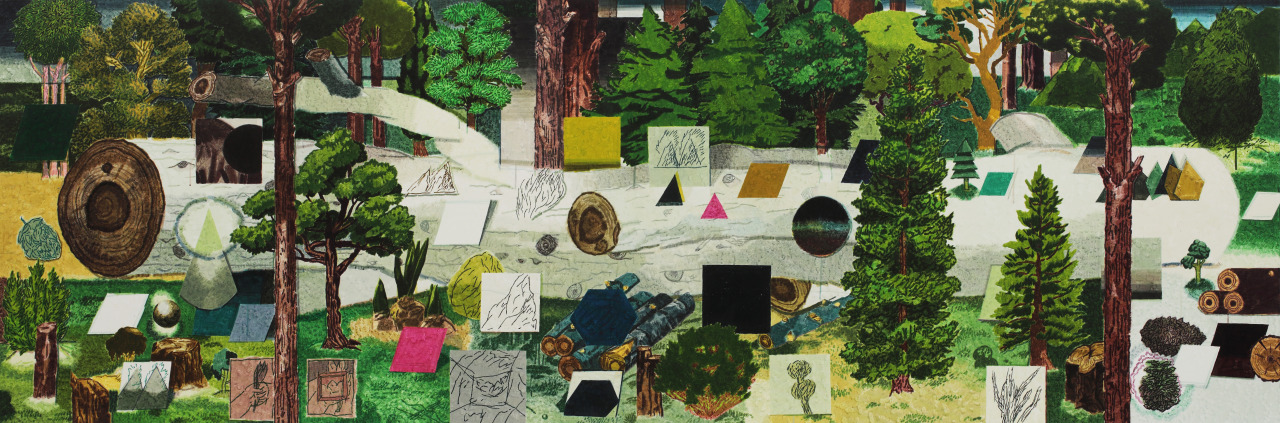
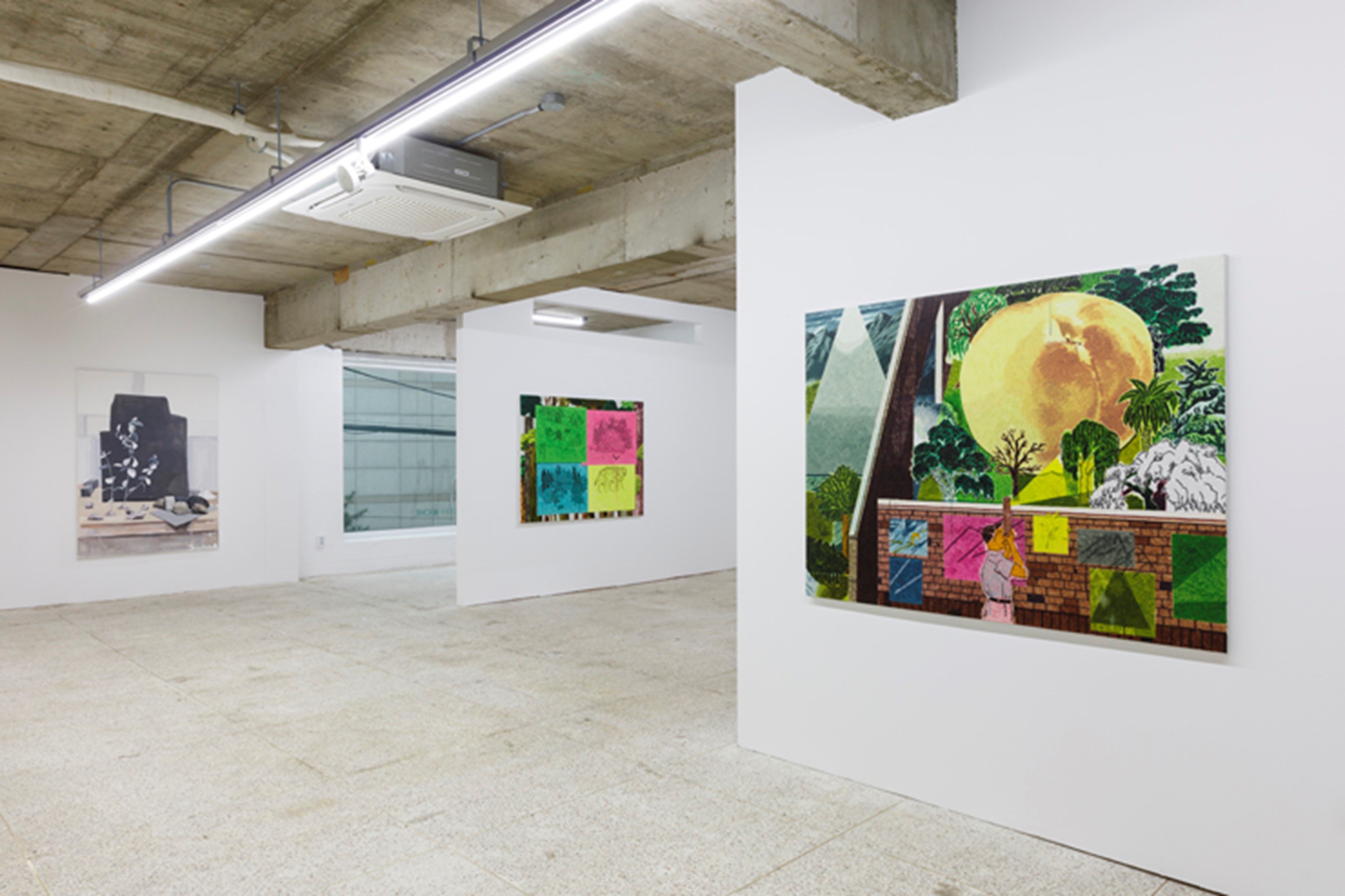
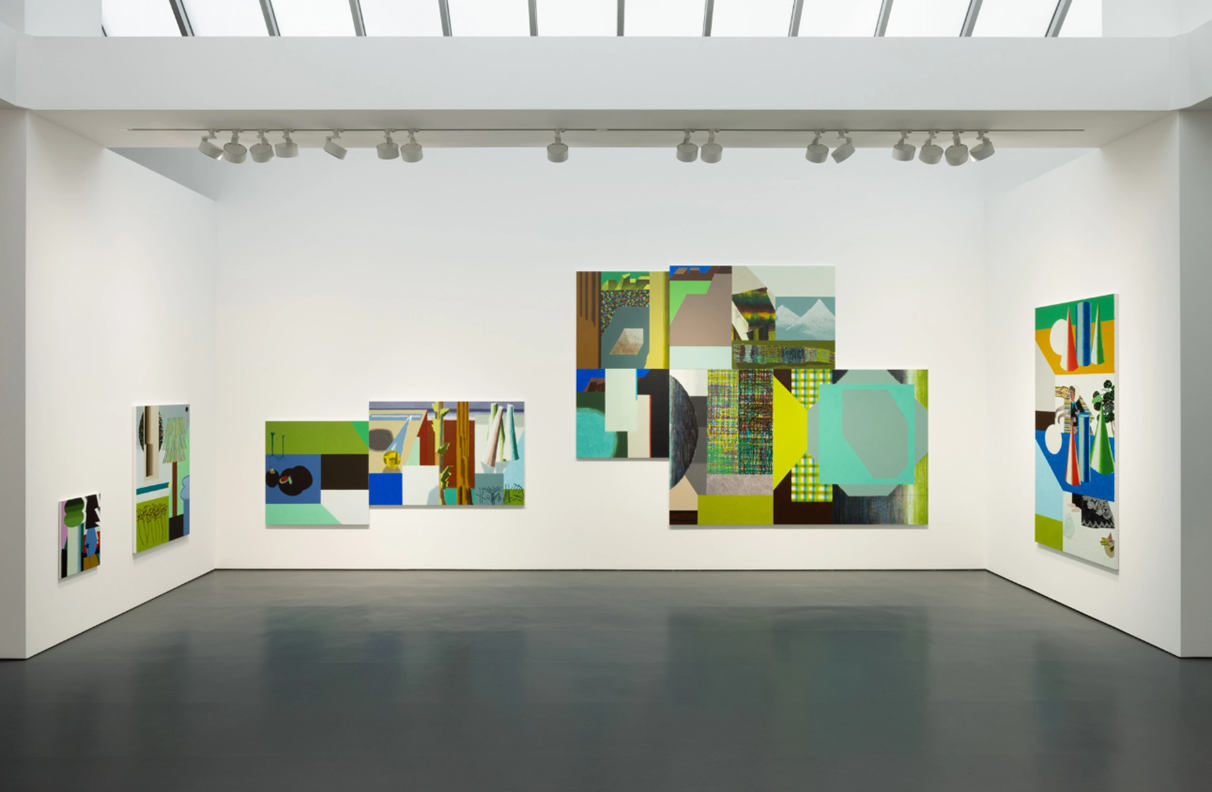
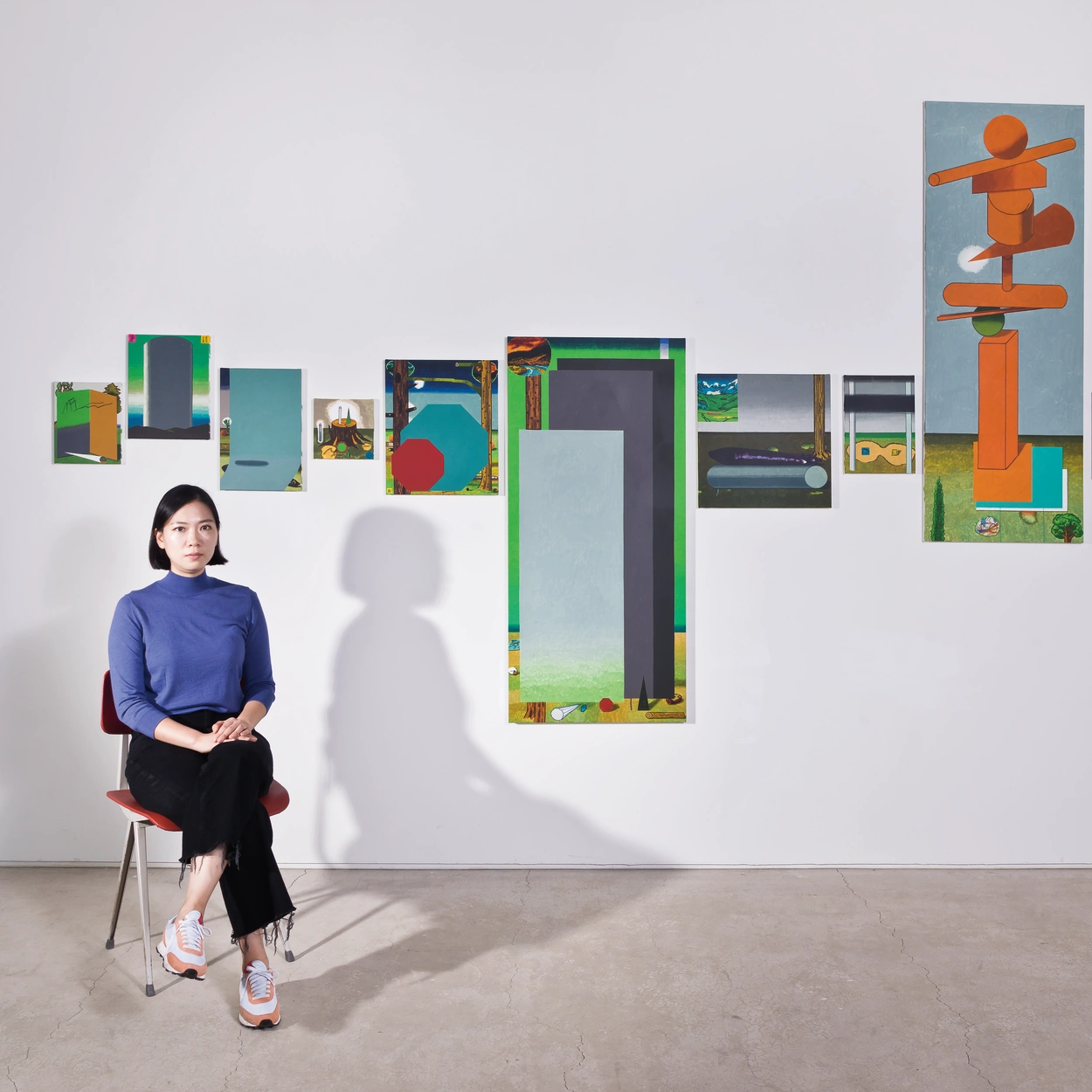
In the third phase, human figures disappear entirely. The
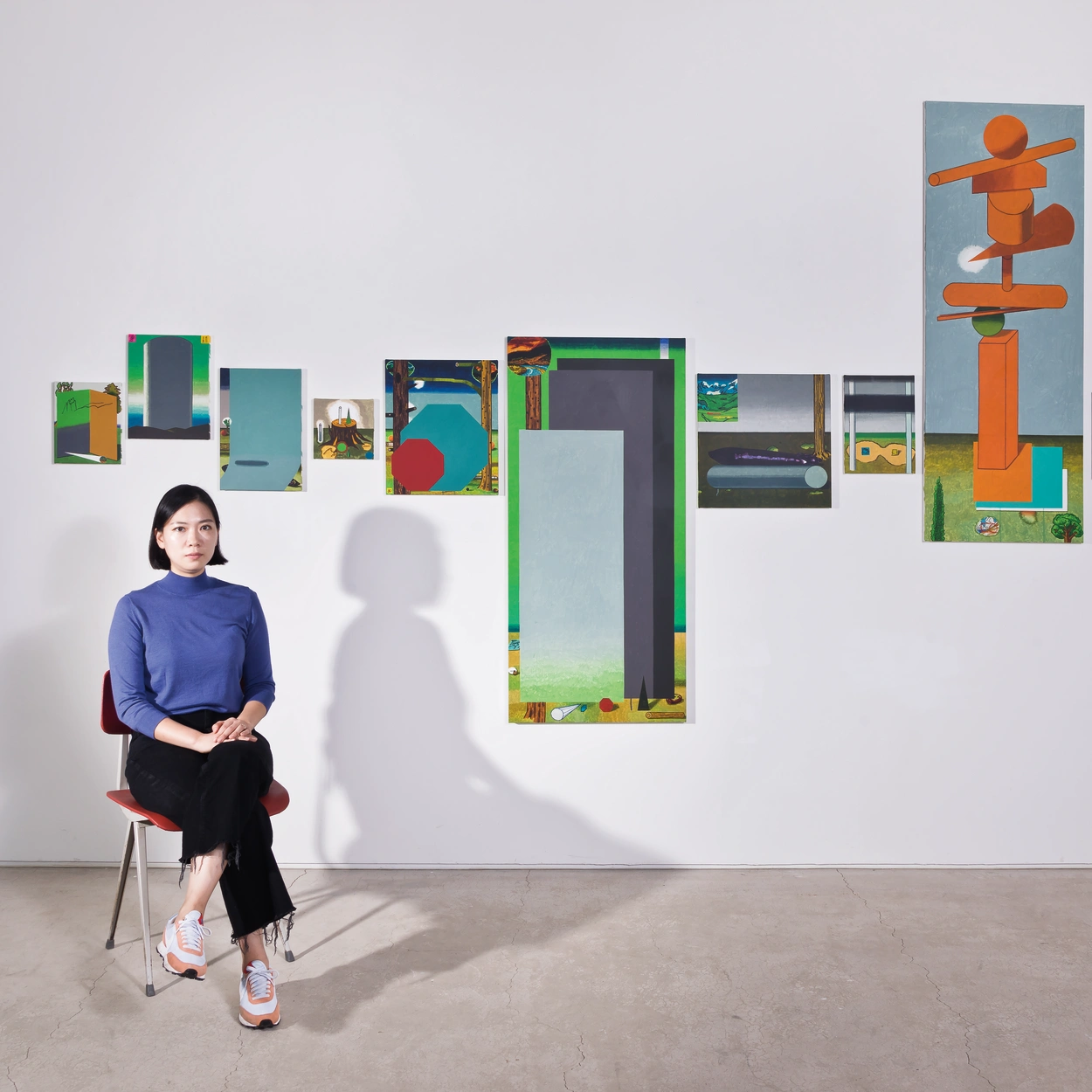
compositions stretch laterally like panoramas, populated with trees, objects,
and geometric shapes arranged in an all-over format. Notably, the color palette
becomes brighter and more playful than in earlier works. This shift in chroma
is directly tied to the absence of figures. Since human figures inherently draw
the viewer’s gaze first, Jeon had previously subdued color saturation to
minimize the visual dominance of figures over objects. With the figures gone,
she no longer needed to neutralize contrasts. Instead, she began to use varying
levels of chroma to create subtle visual dynamics.
Although her work has evolved significantly over the past three
years, it consistently retains a sense of thinness and flatness. Because of
this, her work appears visually aligned with that of her contemporaries, who
actively reflect new visual environments. Even if Jeon does not consciously
insist on flatness to suit the digital or internet era, the flat visual
language may have become innate, shaped by lifelong exposure to digital
environments.
Yet her painting differs from that of others. In her work, no
single form dominates another; all exist on equal terms. This is why her
compositions appear flat. But this flatness does not mean the energy of the
painting is lost. Rather, one could say that the energy is evenly distributed.
Her canvas is not a mere plane but one imbued with virtual potentiality. It
approaches what Gilles Deleuze and Félix Guattari call the “plane of immanence”
and “plane of consistency.”
"Each canvas comes together to form a scene in this body of
work. While working on it, I began to think about the relationship between
words and sentences. The image fragments I handle feel like individual words.
And the referents are relatively clear—this is a peach, that is a fish. But as
these are fleshed out with particles and begin to form sentences, they seem
like they should become more specific. Yet paradoxically, they become less
precise, more ambiguous." – Artist's comment, January 2018
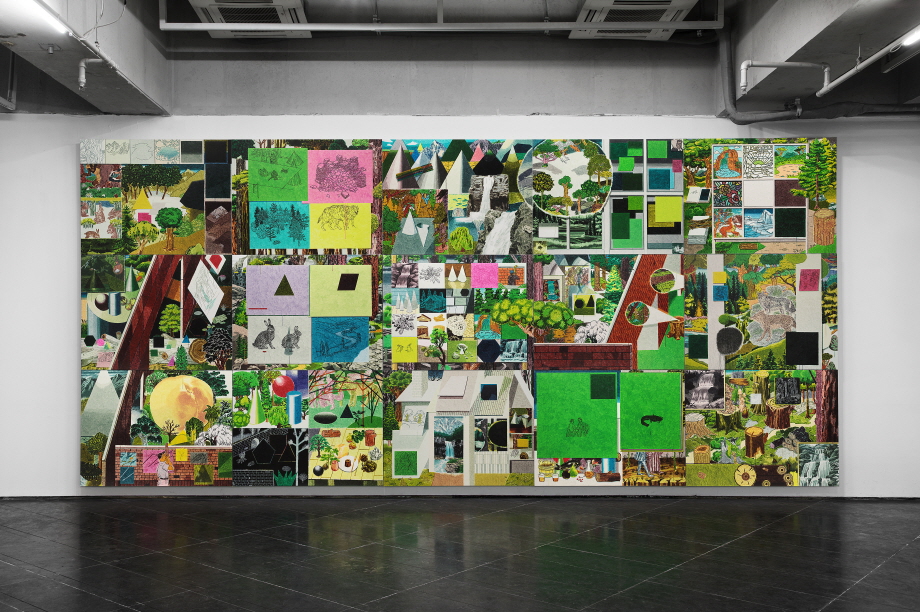
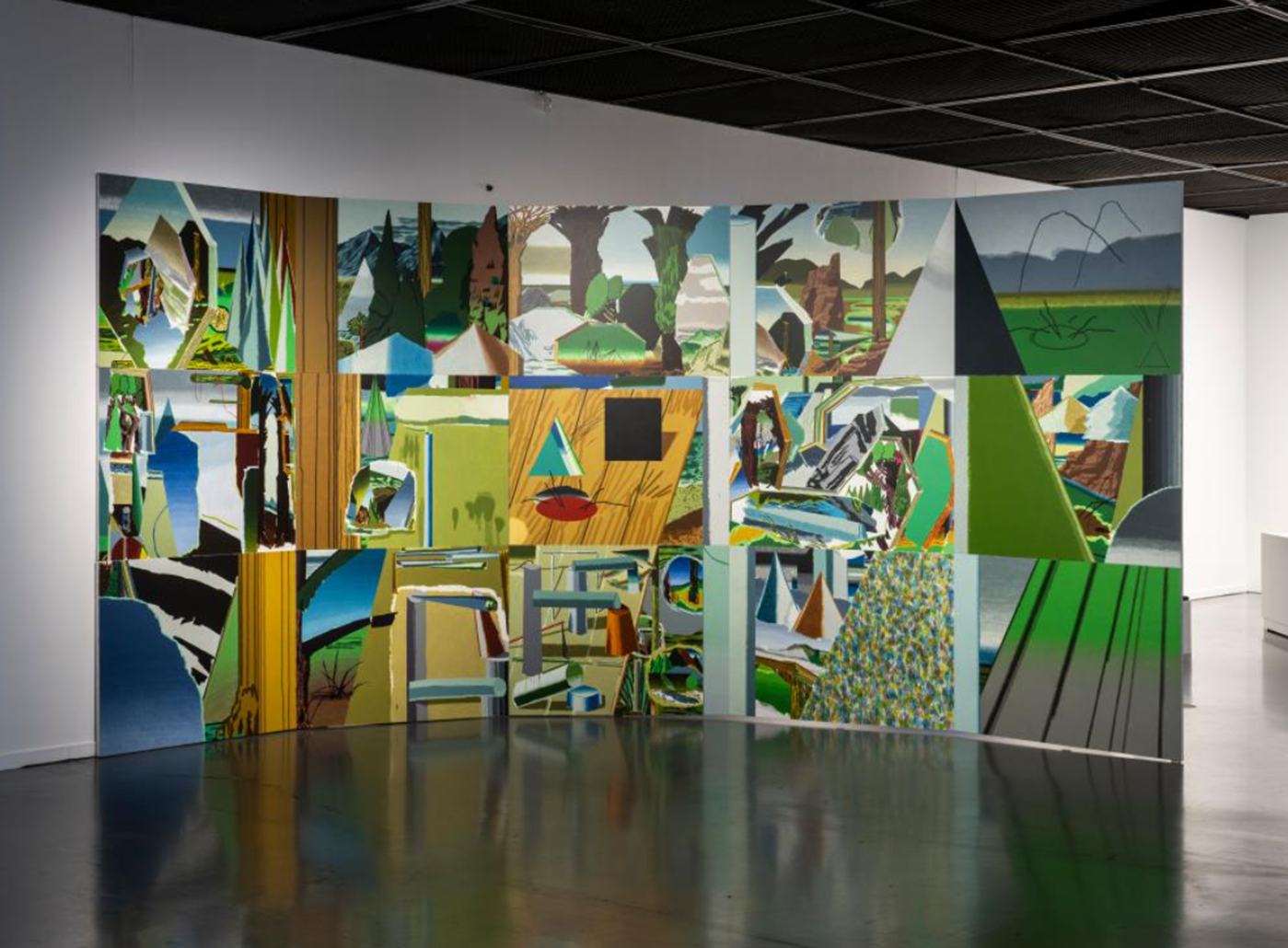
Parallel Paths(2018) is a large-scale work
composed of fifteen size-80 canvases joined together. In contrast to earlier
works where the chosen objects bore little direct relation to Jeon's personal
experiences—many of them sourced from the internet—this piece focuses on
objects she encountered in daily life or held personal significance within
certain relationships. To reflect upon these intimately connected objects, she
painted them in multiple settings. Rather than presenting a single fixed
viewpoint, she aimed to depict them from shifting perspectives.
The images (objects) in her paintings resist fixed meanings.
Through flexible relationships with various other forms, they take on
polysemous meanings, even if ambiguously. Her canvases function similarly.
Though she initially intended to join the canvases together, she did not begin
with a predetermined overall composition. She painted each canvas individually
and later used Photoshop to arrange them digitally, moving them around until
she found the right configuration. The forms traverse the segmented canvases.
As they connect, certain visual zones emerge, but new zones form again through
different flows. Boundaries appear only to be soon dissolved.