1. A Discovery in Tongyeong
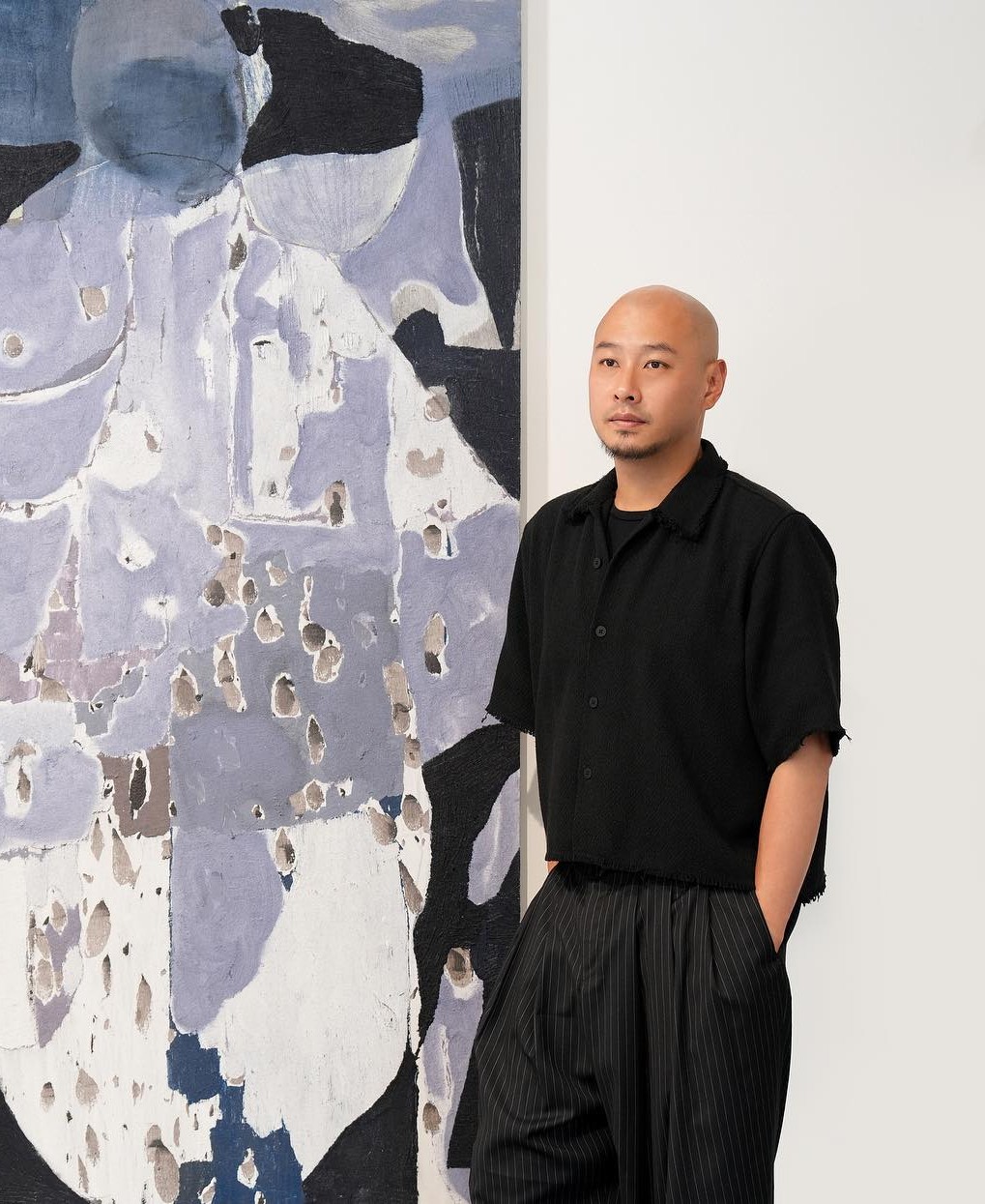
While walking along the Dyemigi coast in Tongyeong, Ahnlee Lee (hereafter
“Ahnlee”) stumbles upon a fragment of peeling paint shed from the surface of a
ship. It was a remnant of marine coating—a form of painting in its own right.
The purpose of such coating is well known: to prevent salt-induced corrosion of
metal hulls. This process is vital for extending a vessel’s lifespan, requiring
multiple layers of paint to ensure durability. Yet beyond structural
protection, the coating contributes to the vessel’s resistance against seawater
and shifting air conditions, ultimately affecting the internal environment
aboard—a fascinating intersection of utility and atmosphere.
Why, then, did Ahnlee pick up
this weathered scrap of paint? Influenced heavily by classical painting, Ahnlee
regards painting as a poetic act of discovering beauty. Yet rather than
reproducing form or rendering imagery, his work leans toward shaping emotion—his
paintings do not depict appearances or even inner visions so much as they
attempt to form a particular emotional texture. Perhaps this is why Ahnlee’s
paintings appear more concerned with the skin or surface of things. Skin, the
body’s largest organ, breathes and exhales, regulating internal and external
states—not unlike the role of marine coating.
The ship’s paint fragment, though
a kind of makeup designed to endure long voyages, was not merely cosmetic. Once
shed, like flaked skin, it still retains its function: it protected what was
beneath. These discarded shells can be seen as abjects—remnants that once
served a purpose but are now cast off. Can a painting rooted in function
transcend into something beyond? Ahnlee carefully collects these abjects as if
searching for future possibilities in painting. He spends most of his time
among plants. The word “greenhouse” stems from the idea of a nursery—a space of
healing. In this space, where the living and the dead, the biological and the
inanimate, coexist in their own order, Ahnlee acknowledges the unique value of
each.
2. Ahnlee’s Summer
For a long time, Ahnlee has experimented with multidisciplinary projects.
Rather than focusing on a single medium, he thrives in layering space, objects,
people, and actions—allowing unpredictable situations to unfold. This current
exhibition begins with a book. Upon reading Shakespeare’s A Midsummer
Night’s Dream, Ahnlee draws a connection between a serendipitous
summer night and painting. In the play, he finds a character akin to the
peeling paint he discovered in Tongyeong: Puck.
Without Puck, the chaos of
midsummer—love, conflict, mischief, and misunderstanding—would not exist.
Descended from the lineage of fairies, Puck interferes in human affairs,
causing confusion and laughter, not out of malice but playful meddling. Neither
fully human nor divine, Puck invokes chance to trigger pivotal moments, all
while remaining endearingly mischievous. In many ways, Ahnlee mirrors Puck’s
nature. Like Cupid, Puck misfires his arrows, disrupting fates with mistaken
desires and jealousy. Yet the characters in the play accept the unraveling of
order under the generous spell of midsummer night, allowing buried desires to
surface.
Could painting at night be a
space-time where all things desired—outside convention—can finally be accessed?
In his nocturnal paintings, Ahnlee stains the canvas with marks that resemble
nectar blooms, as if each figure secretly gazes at another. Like Puck, he
tiptoes through relationships, gently stirring new situations into being. In
the dream of a summer night, Ahnlee worships darkness with anthraquinone blue—a
pigment like oxidizing sparks, flickering and dissolving in the heat of the
night.
3. Dwelling with Plants
After years of living in transit, Ahnlee Lee now finds himself anchored—perhaps
by fate—through his encounter with plants. Though it remains uncertain how long
this settled state will last, this moment seems to mark a period in which the
many fragmented memories of his past quietly begin to germinate within his
painting. The fervent ambitions he once launched toward the stars now descend,
like Prometheus, into the vital world of the earth. The constellations, once
unreachable, now bathe the soil and guide him into a realm of flourishing life.
Through plants, Ahnlee senses the
boundless vitality of the earth. The plants seem to whisper that it is time for
him to dwell. And so, he becomes a caretaker of nature. In his eyes, nature is
vast—it encompasses not only flora and fauna but also family, acquaintances,
objects, and memories: all forms of human and non-human existence. Yet among
these, it is flowers that he holds with particular tenderness. For Ahnlee, the
flower is a being of reciprocal care. It is through this relational
dynamic—where artist and flower mutually tend to one another—that his work
gains depth.
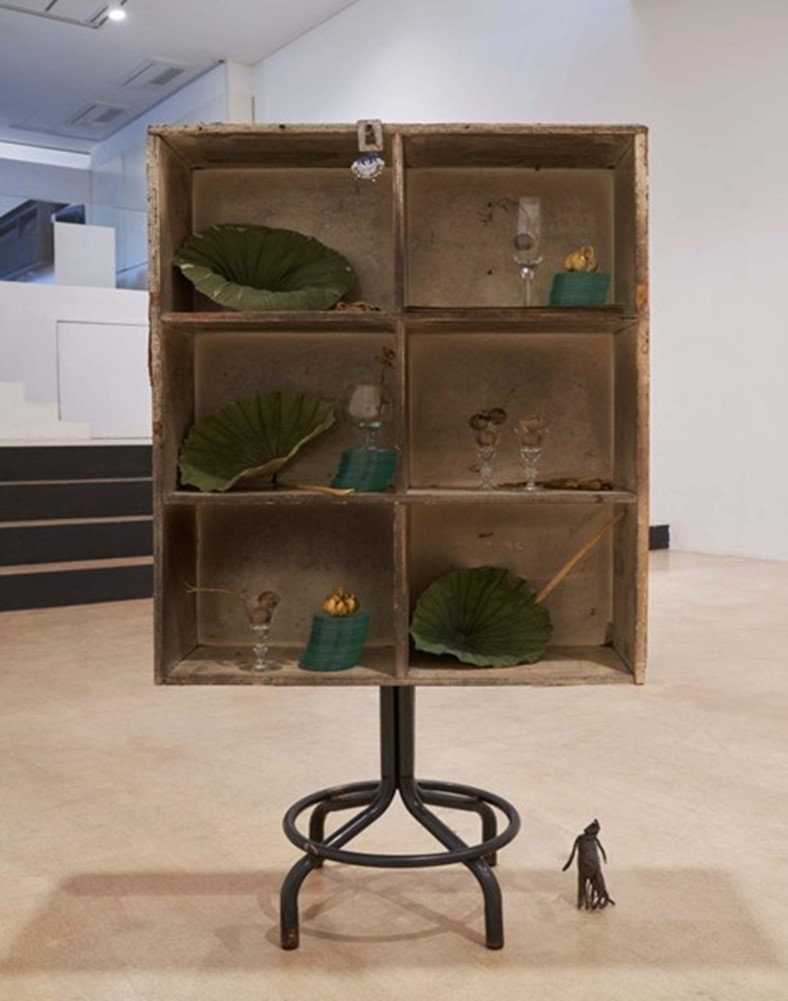
He pays close attention to the
flower’s anatomy: stamen, pollen sac, ovary, stigma, and pistil. These organs
serve as more than botanical elements; they open a threshold to other
perceptual worlds. Ahnlee is drawn to this primordial imagination—an elemental
world evoked by the mucous membrane of a stigma or the pollen-bearing filament
of a stamen. Thus, he invites us to imagine the flower not as an objectified
symbol of beauty, but as a structure of living form—a site where perception,
sensation, and life converge.
4. Nocturnal Painting
Ahnlee has long pursued a practice of experimentation—often formless and
performative in nature. His projects at Apricot Bar in Seongbuk-dong were
shaped by the interplay between life and the things around him. In this strange
realm—neither here nor there—he assumed the role of an alchemist, transforming
the insignificant into something precious. For years, he drifted between ideals
and reality, navigating both the brink of success and the edge of despair. Yet
these periods of wandering were not wasted—they were, perhaps, the slow
unraveling of brilliance, peeling back layers to approach reality more
intimately.
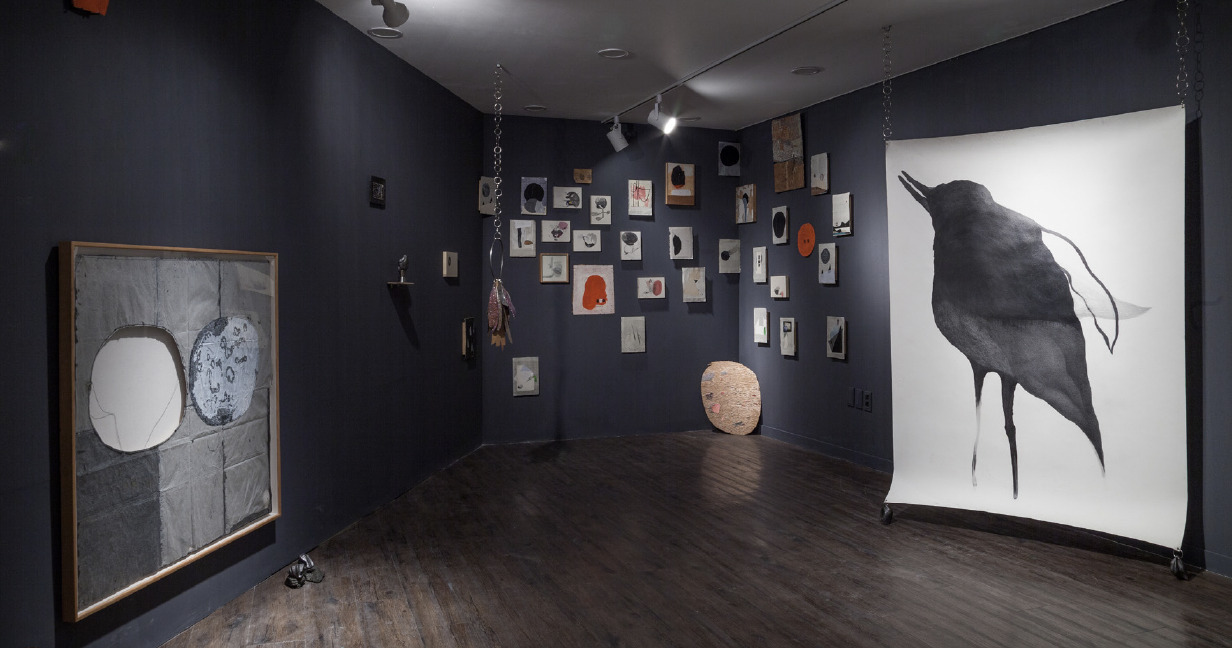
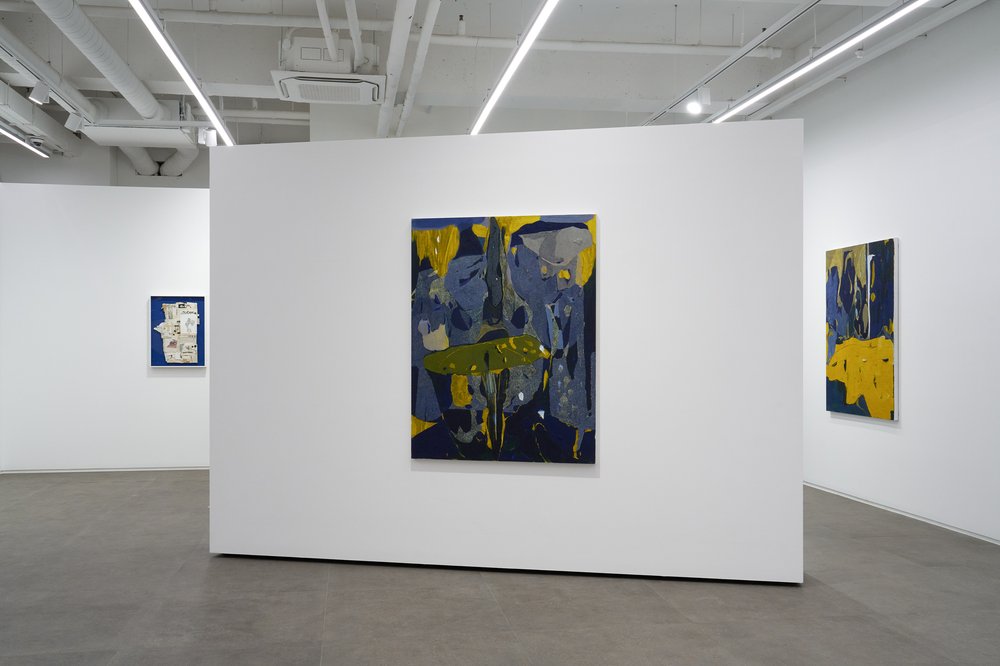
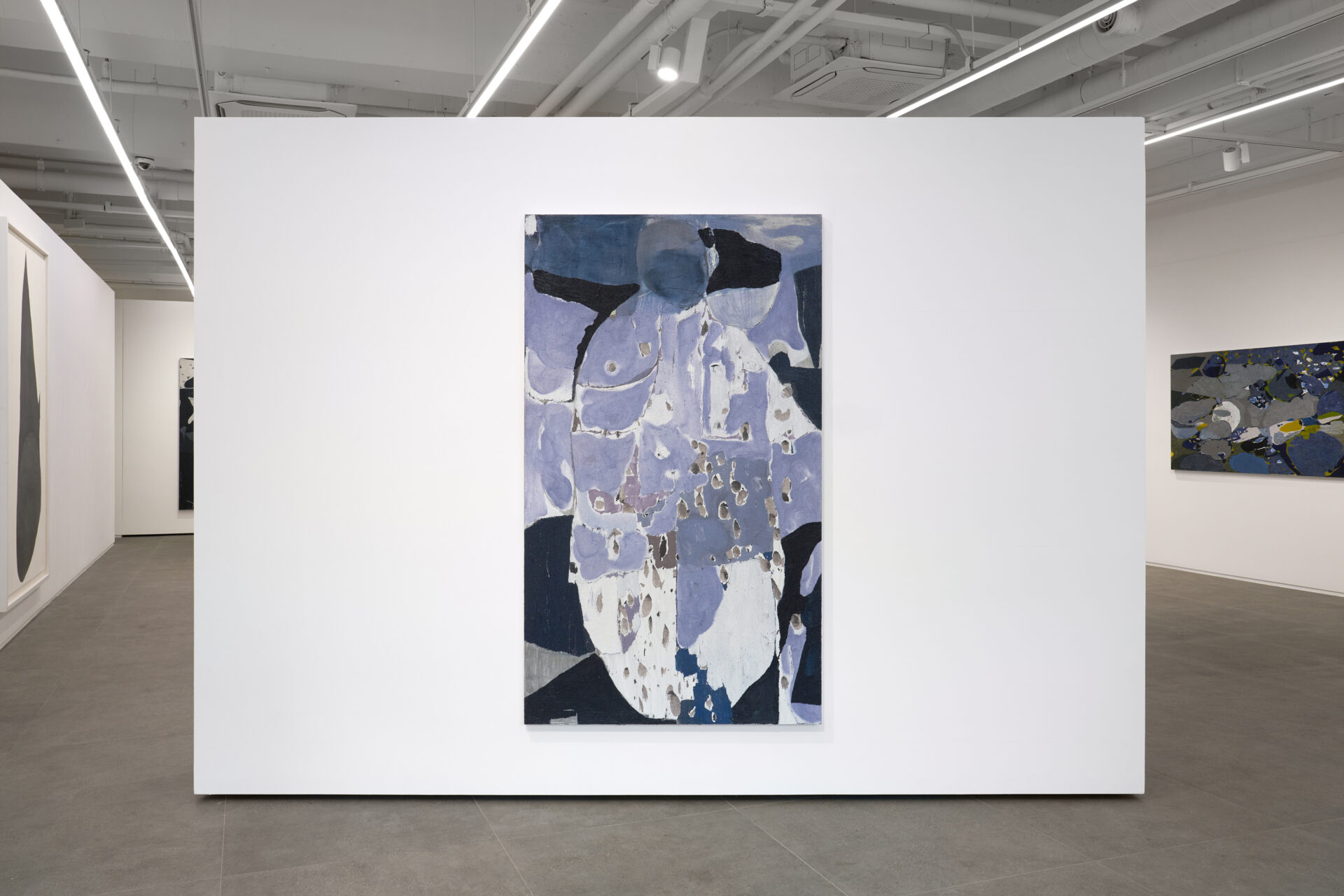
Through nocturnal painting,
Ahnlee does not simply indulge in the fleeting pleasures of summer night
reverie or grant himself permission for hidden desires. Rather, he extends this
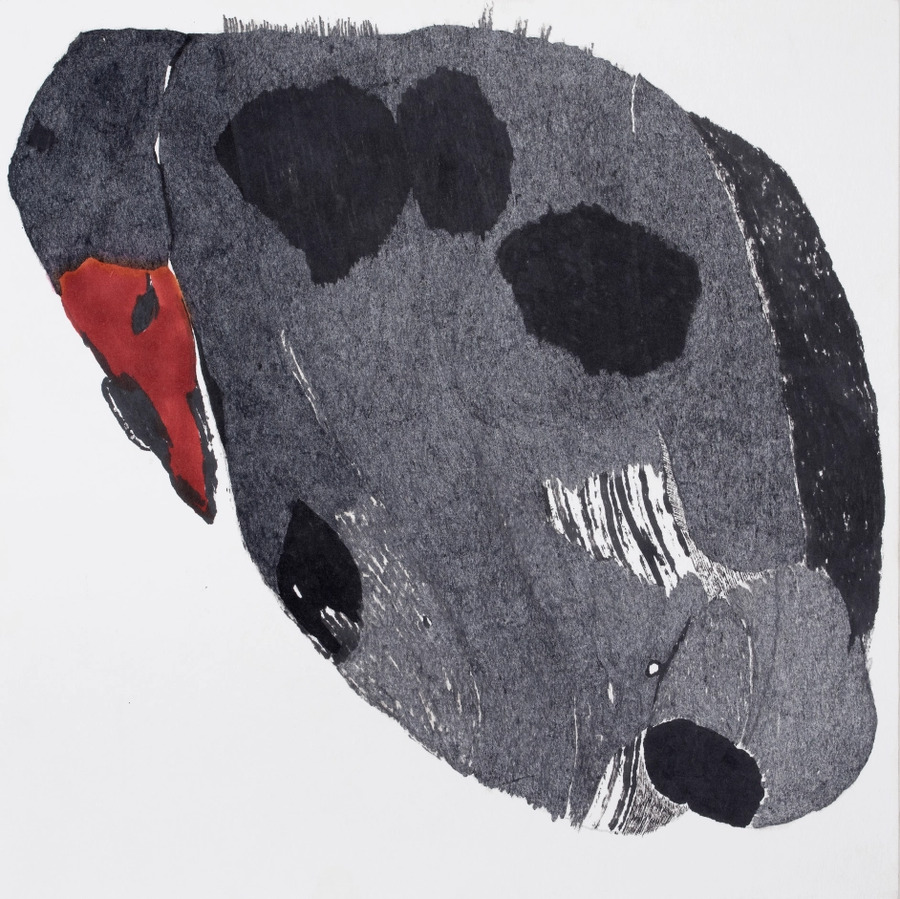
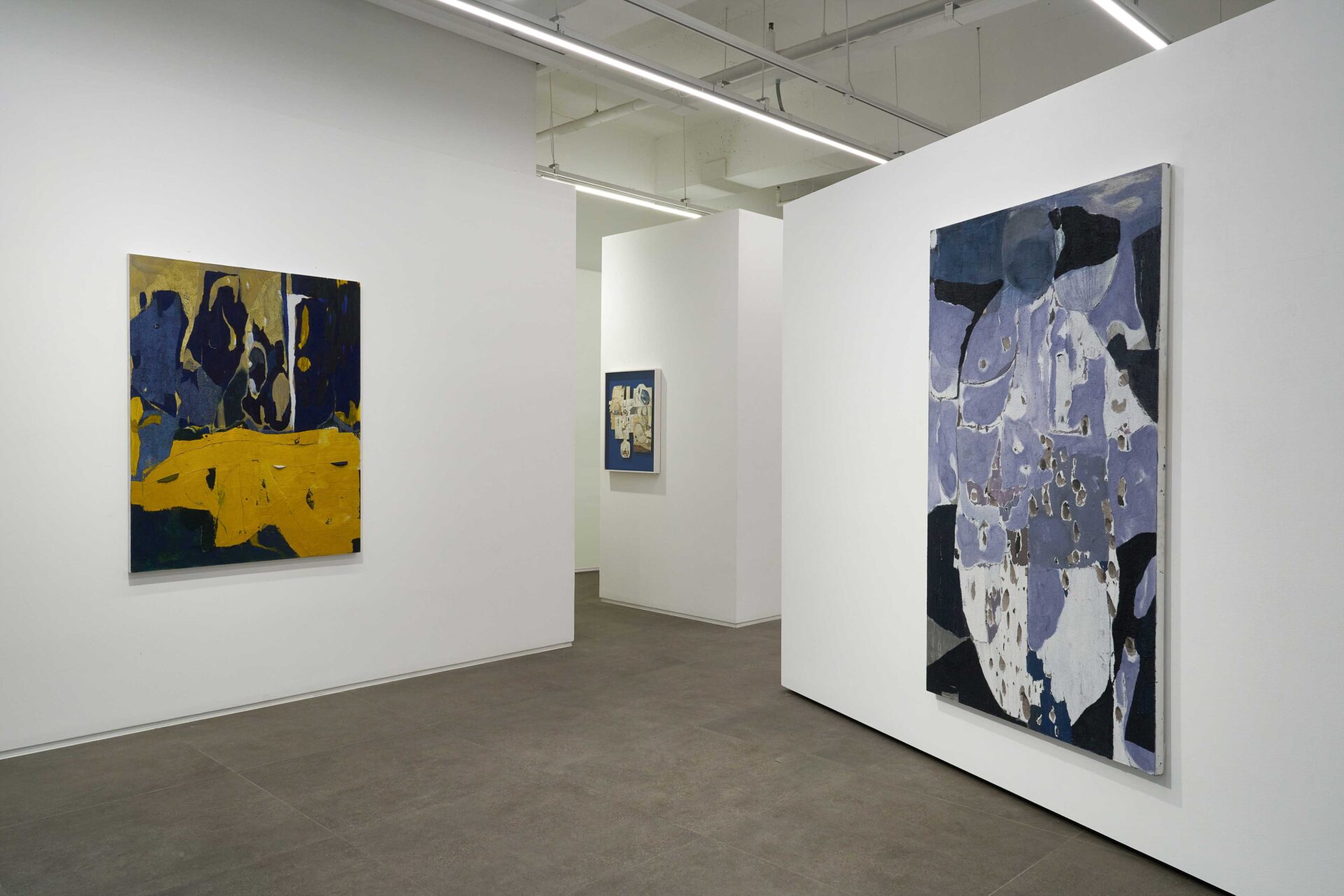
allegory of mischief into a deeper painterly meditation. The dark blues that
dominate his canvases, the rock-like masses, and the foamy, blooming particles
that emerge between them—these are not mere elements of night. This time, he
employs sand as a primary material, as if attempting to pierce into ancient
time. One is reminded of the Navajo sand paintings of New Mexico—rituals of
embodiment and invocation.
In this way, painting becomes a
“response” to the world. The work begins through encounters with nameless
things, with fragments overlooked by others. These sensorial and spontaneous
reactions form the seedbed of his practice. He sifts the grains of sand, fixes
them onto canvas with adhesive, then polishes the surface with sandpaper until
it evolves into a tactile plane. What follows is a phenomenological process of
caressing, kneading, and striking. Ahnlee communicates through the body.
The philosopher Luce Irigaray
describes this type of engagement as “the body and flesh that desire to speak
to the Other” (The Way of Love, trans. Jung Seoyoung,
Dongmunseon, 2009, p.35). These gestures—his gestures—stand as witnesses of the
night. They watch, with a cyclopean gaze, the mischief of Puck and Ahnlee
unfold.
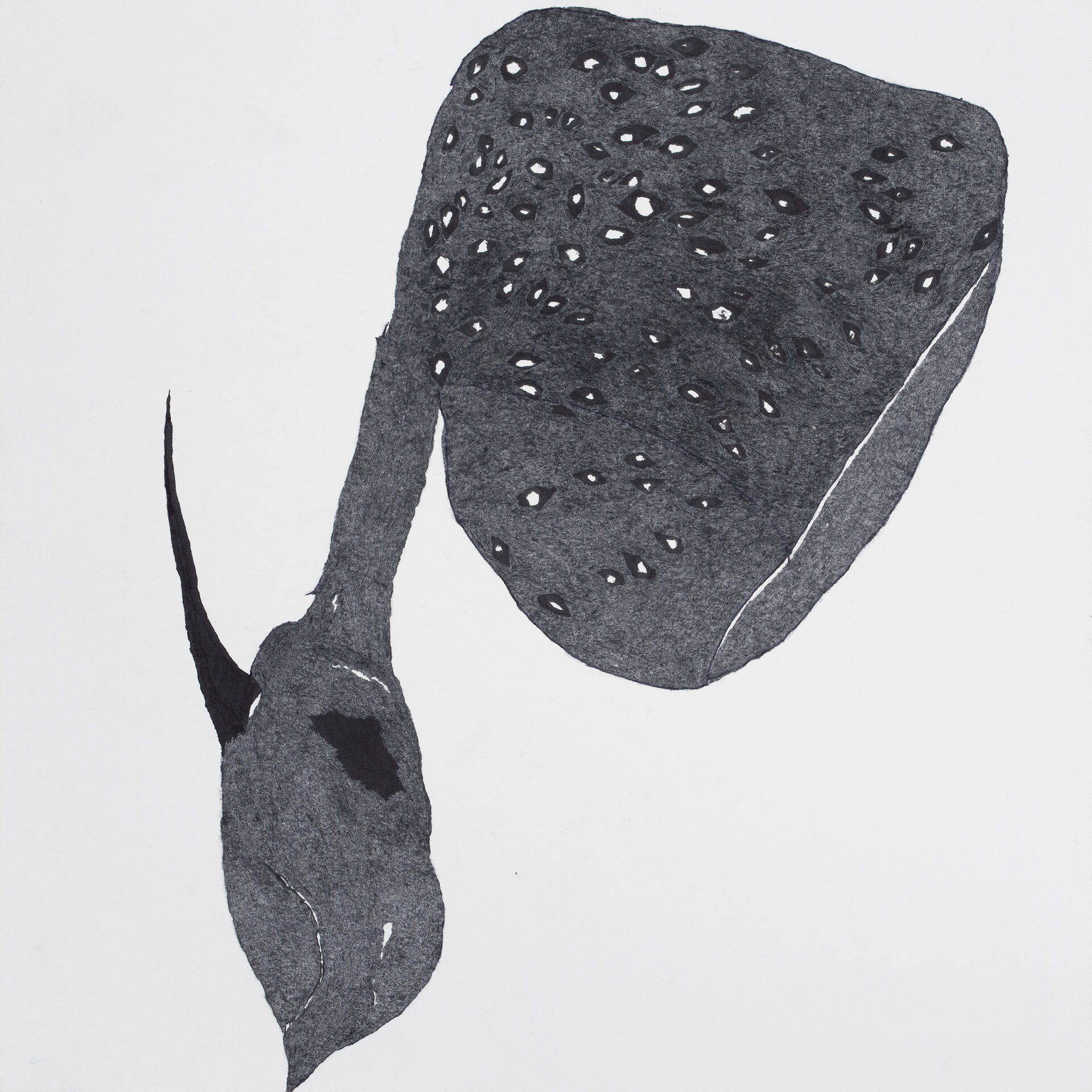
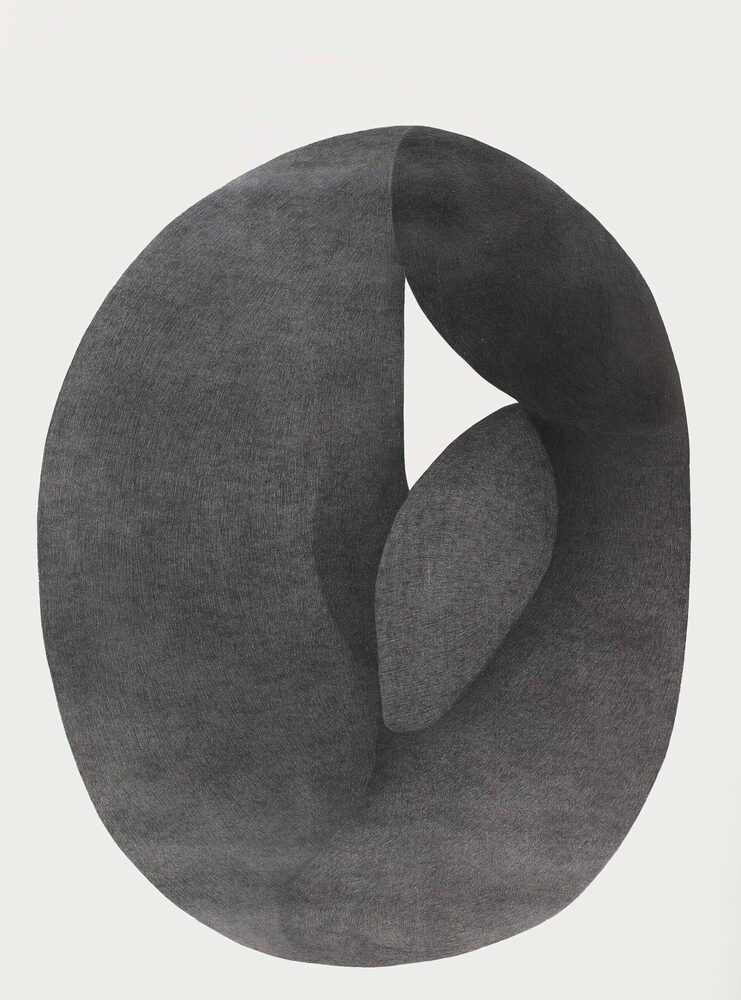
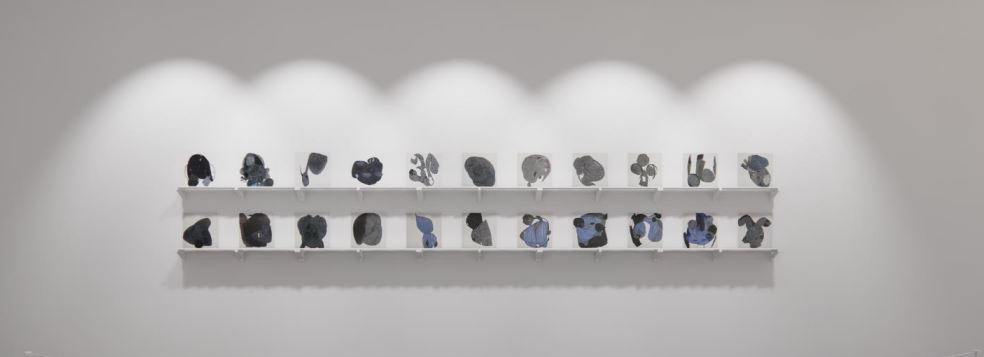
Included in this summer night’s
festival are two earlier works: Depart I (2011) and Depart
II (2016), graphite on paper, which emerge like preludes to the
nocturnal paintings. Here, painting unravels time. Through surrealist traces of
the unconscious, Ahnlee’s canvases bring past and present into collision,
dismantling linear temporality. In this ongoing movement between dwelling and
wandering, he continues to explore the possibility of a vegetative life. This
paradoxical cycle—between rooting and uprooting—may well be the source of all
his work, whether painting, sculpture, object, or gesture.