1.
I was going to oppose giving judgement, but I only witnessed his arrest without
a shadow nor signal. He is innocent. Nevertheless, I can’t ask what the arrest
is about. Because the one who visits is not able to be considered. Now, he must
prove his innocence for a crime he did not commit and a crime about which he
does not even know. The court is as invincible and blind as this arrest, so
this claim can’t help but to be a judgement. For even if a bit of him is
innocent, he tries to find an exit through the law even though he is referred
to the court. But the access will be deferred forever. Since the law is unknown
and the crime is unknown, the judgement will be only fair in its blindness. In
other words, for judgement to be fair, there must be no condition at all to
declare fair guilt without looking into it. And this kind of judgment seems to
not exist and it has to be nowhere, but it exists in life all the time. The
name of this suspicious and unfortunate law has been always the providence. So
are the pains of the weak, the other, and the minorities who are innocent, but
featured in the news every day.
After
all, one can’t help but to name this one God who intrudes on the presumption of
guilt. Maybe God comes into the world in front of this indifferent and chilling
futility. Because believing in the somehow incomprehensibly magnificent divine
providence existing in everything is closer to meaning than coping the verdict
without the victory nor defeat. Therefore, there exists no one questioning God,
asking “why do the innocent suffer?” While tracing the law of physics for
accidents, its causal relationship, and related human law and interest and
saying “that’s not your fault” at the same time, there exists no one making a
revenge indictment charging why God neglects human misfortunes, rather than
just shedding tears for the horrors of the world. As soon as we prosecute him,
the meaning, left in the size of dust, would disappear. However, when it
becomes unavailable to prosecute God, it also becomes unavailable to prosecute
every other thing. It’s because if we can’t understand what is providence, we
can’t distinguish what it isn’t. It’s a problem to remaining silent on the
revolutionary idea of questioning everything, even this world, along with the
feeble realization of only delving into something partially or only into the
corrections.
Maybe
providence will be unknown forever. However, to make everything possible, to
eradicate every irrationality that is able to be cleared, even God who sticks
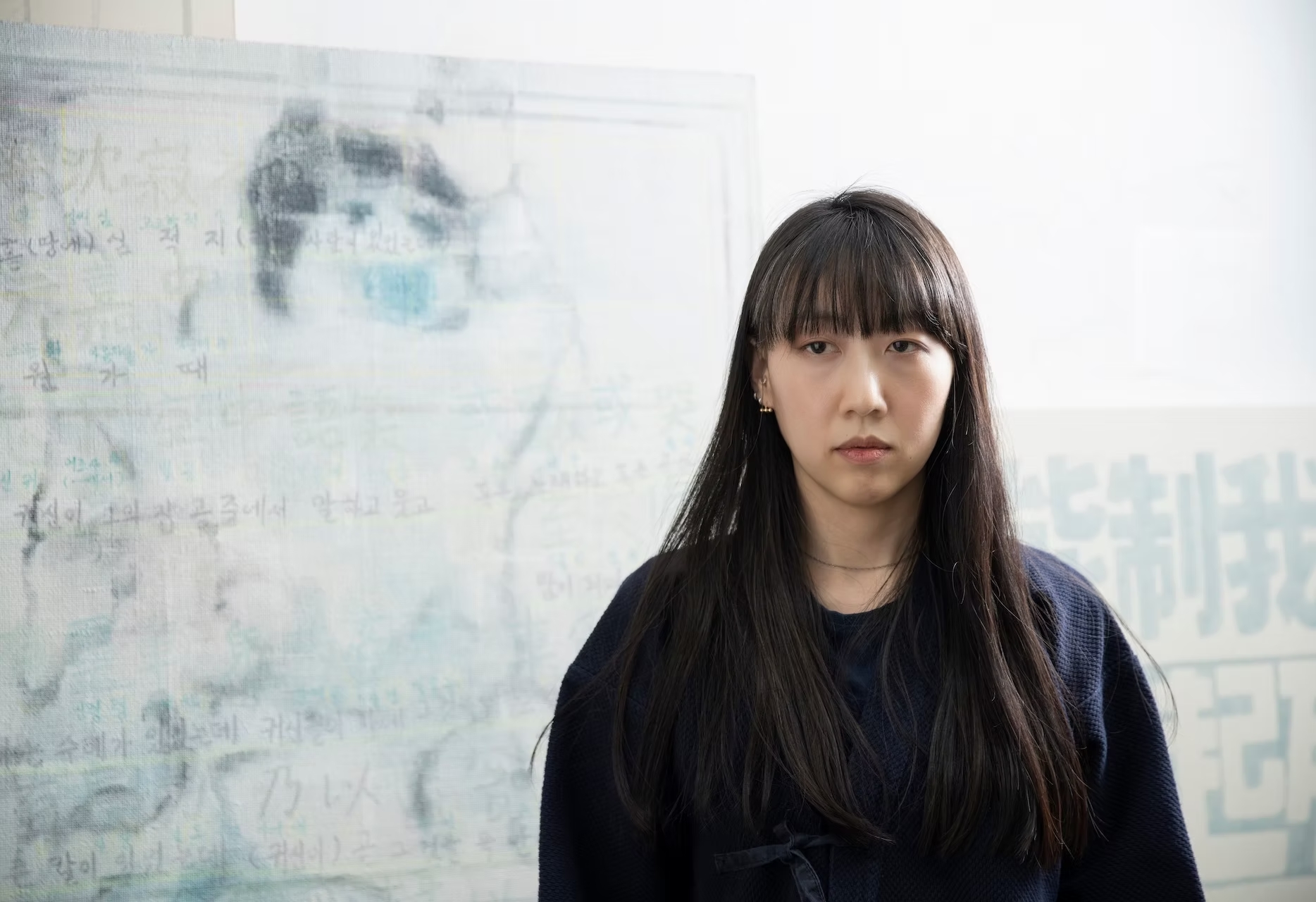
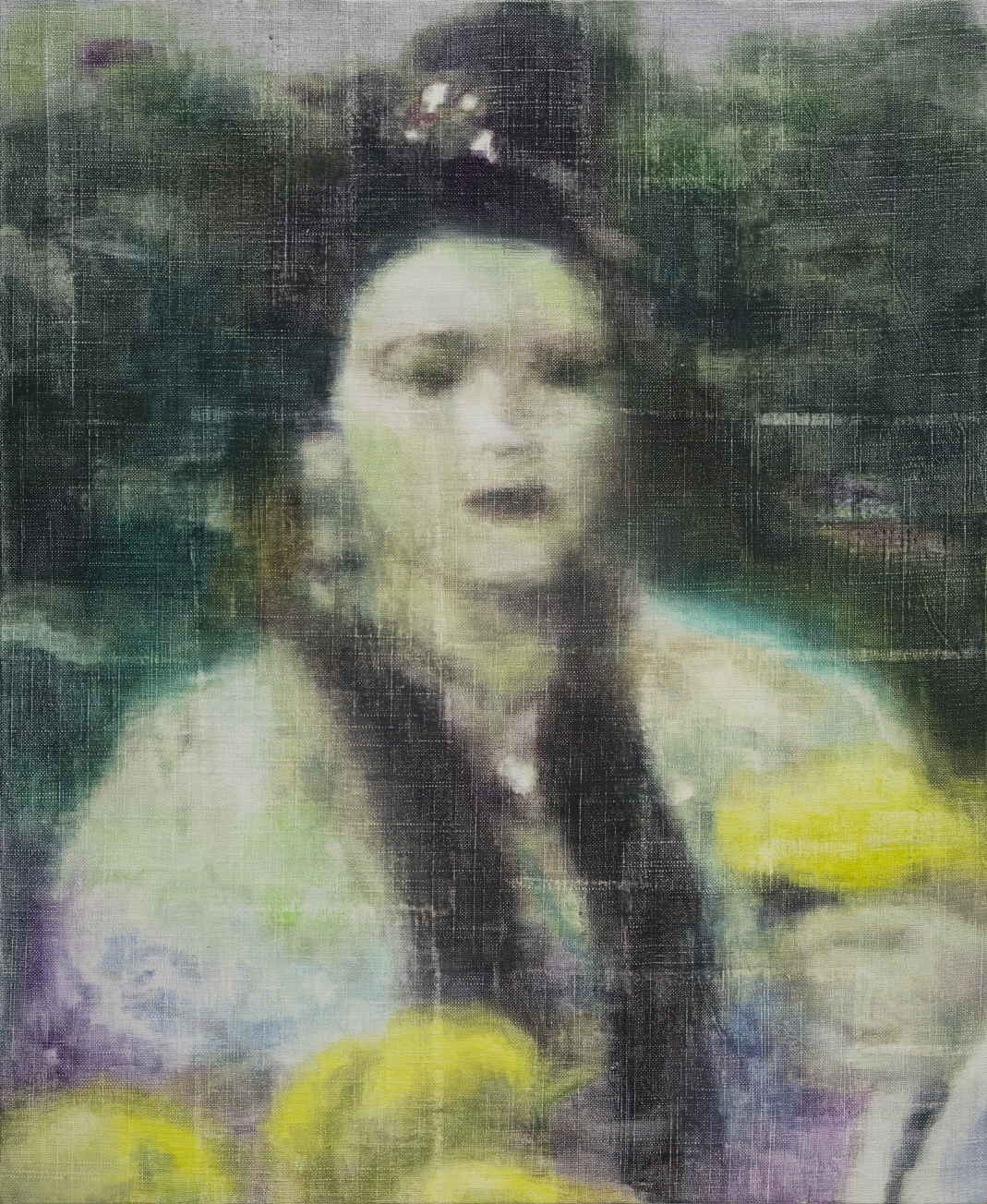
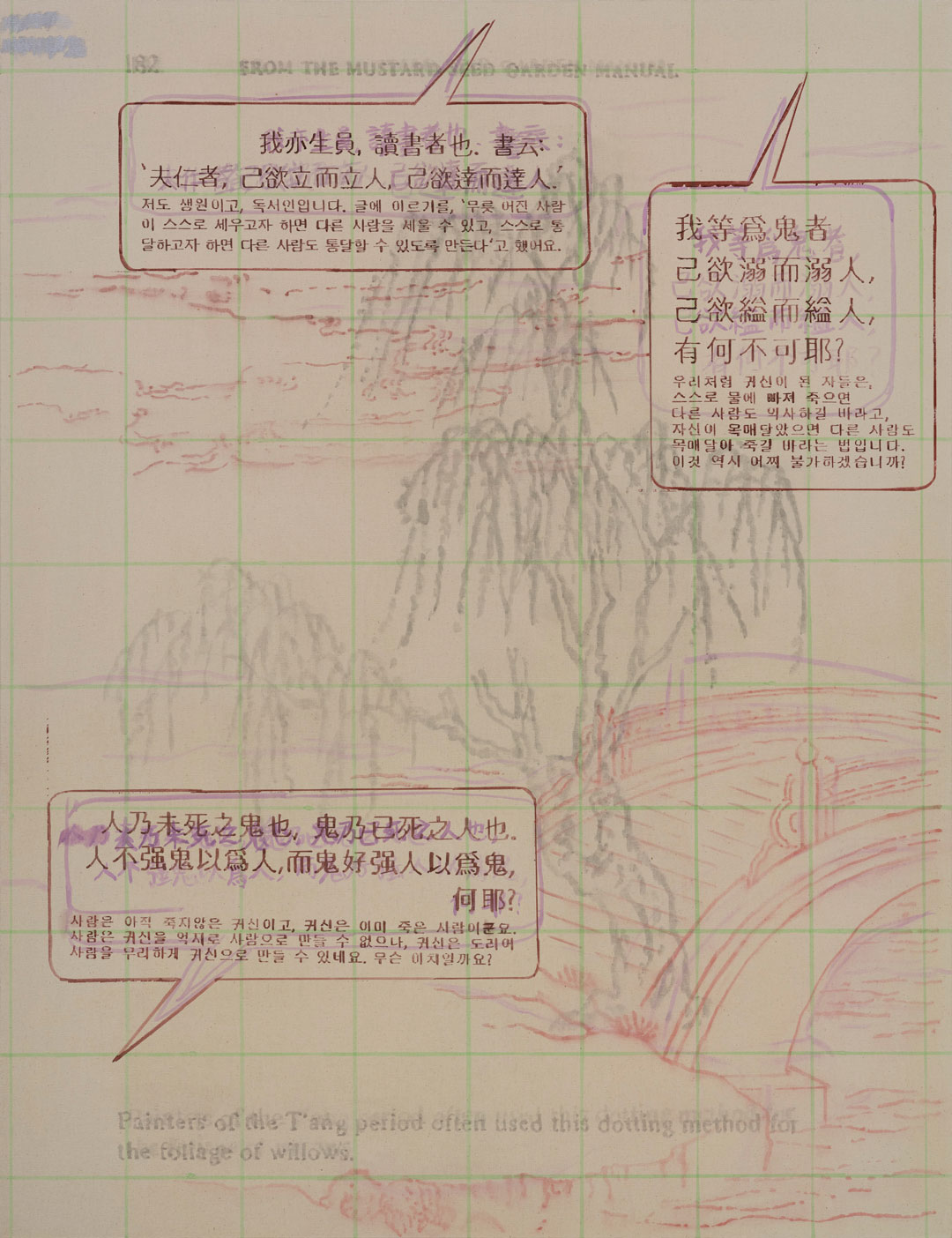
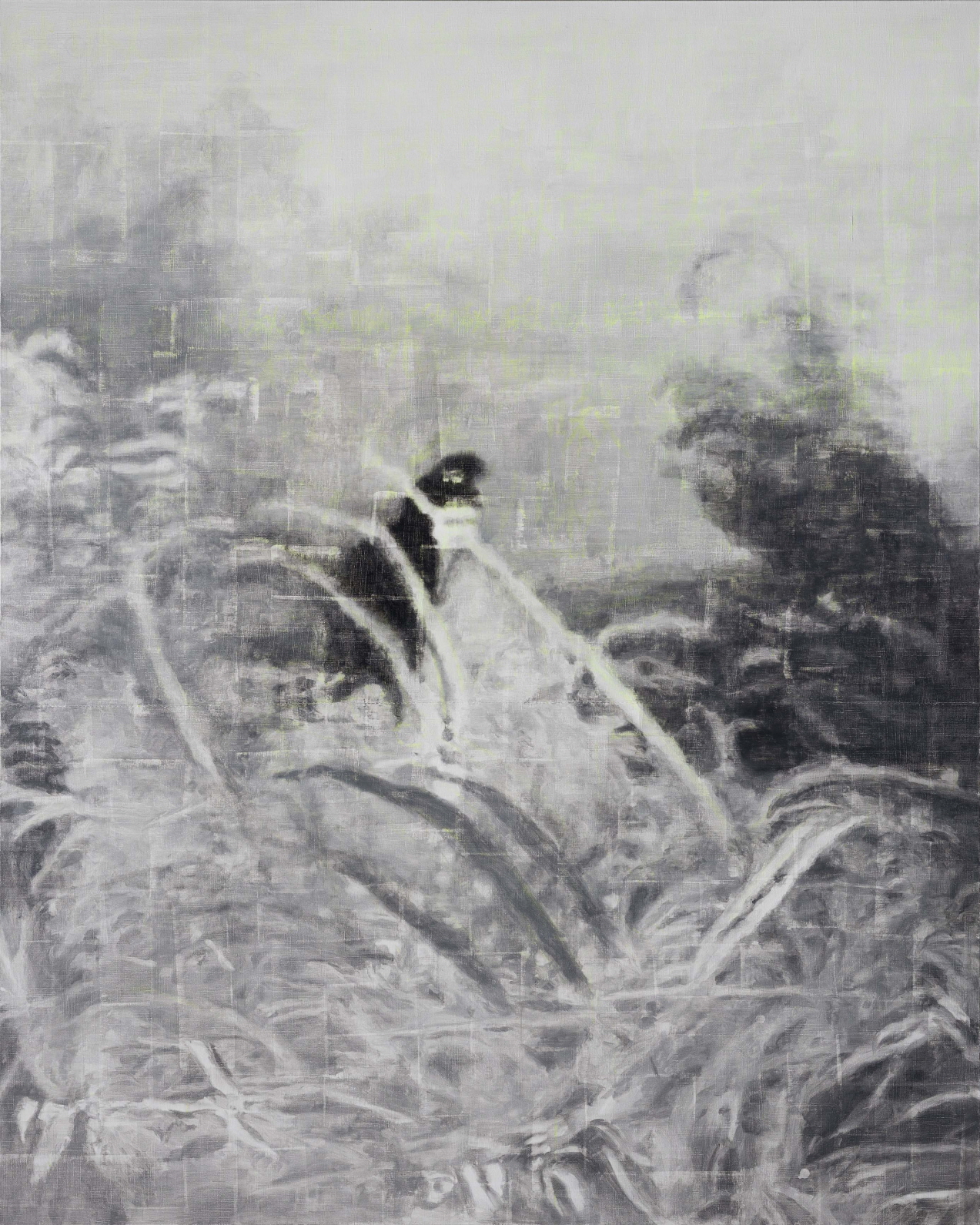
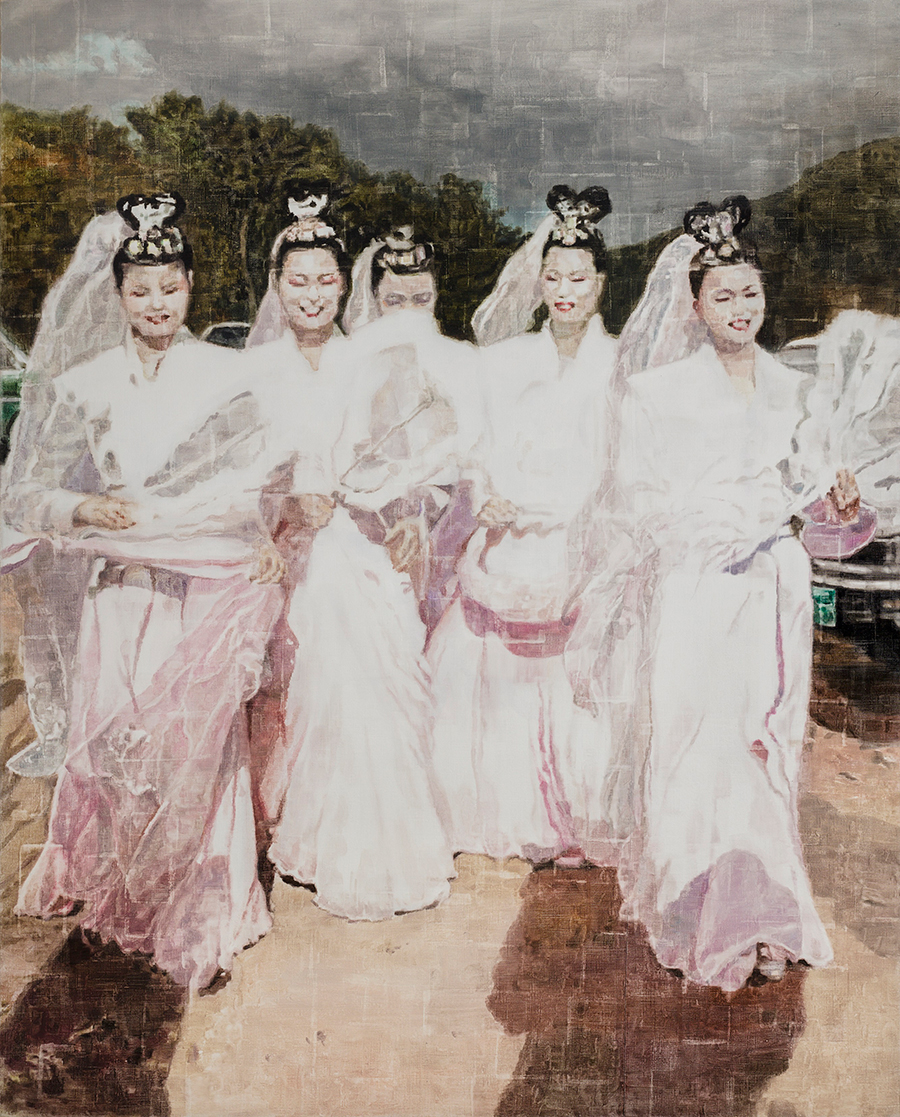
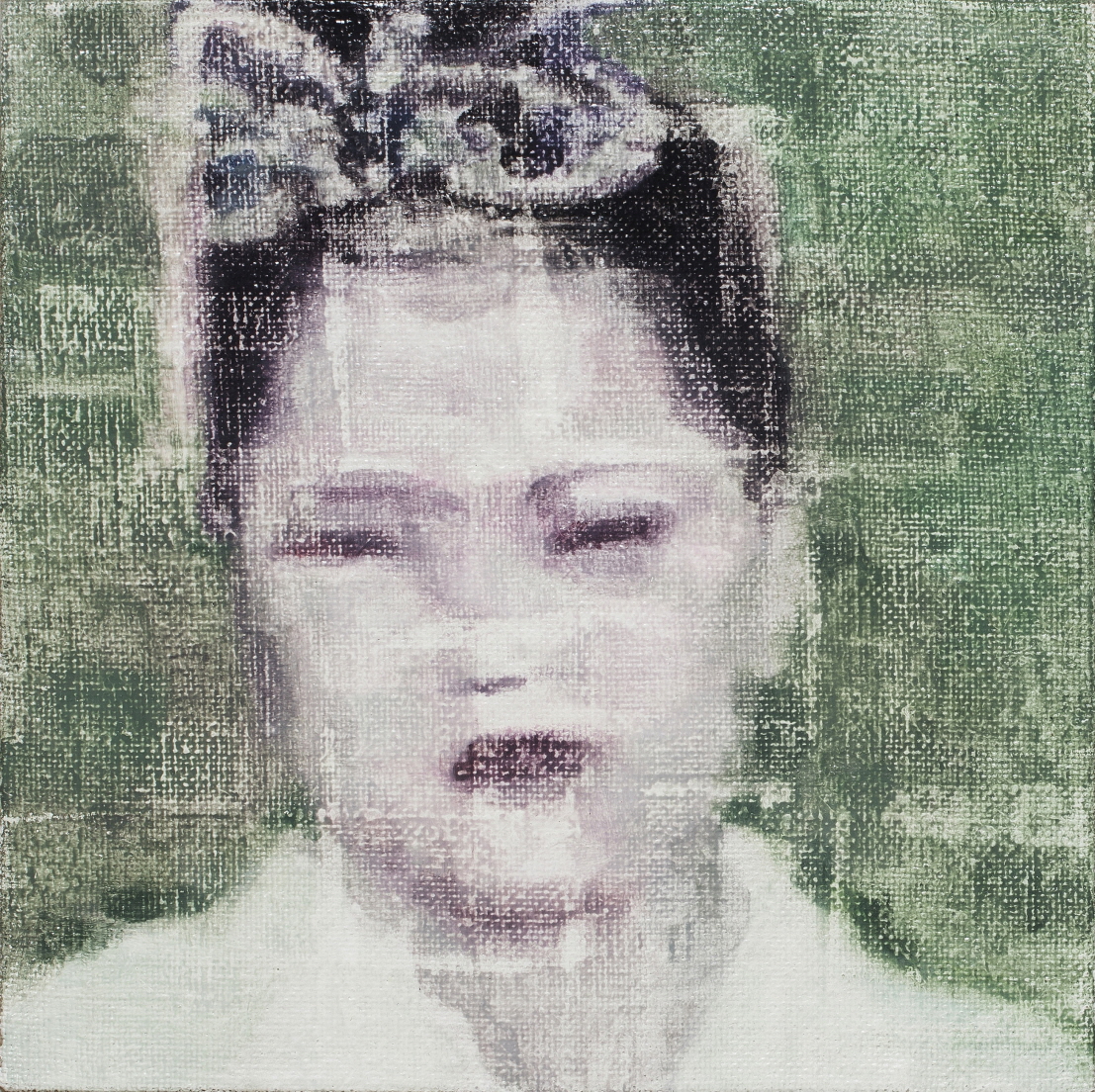
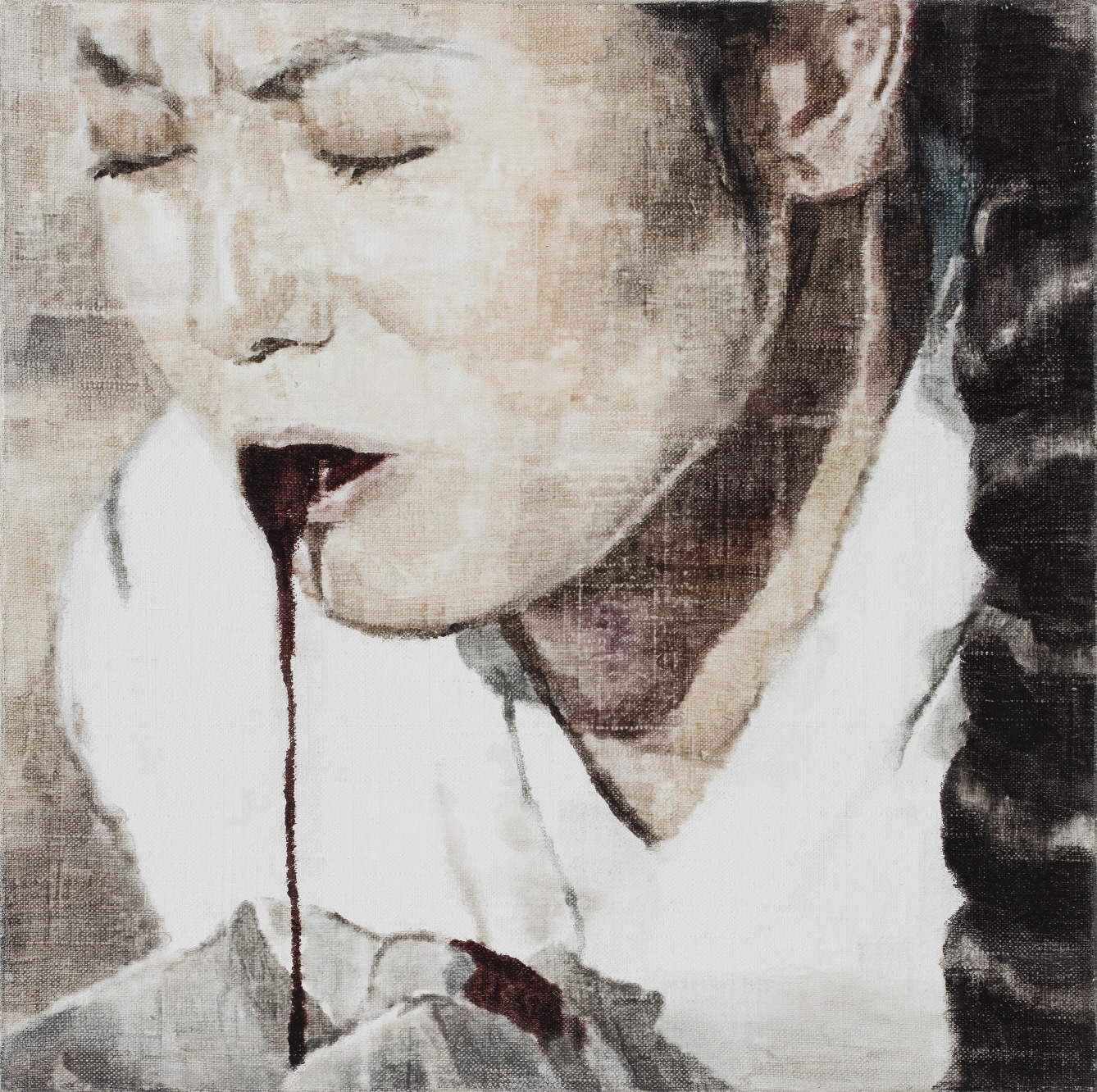
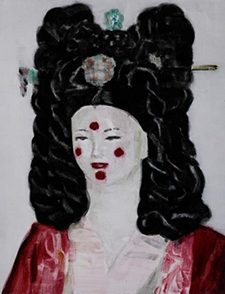
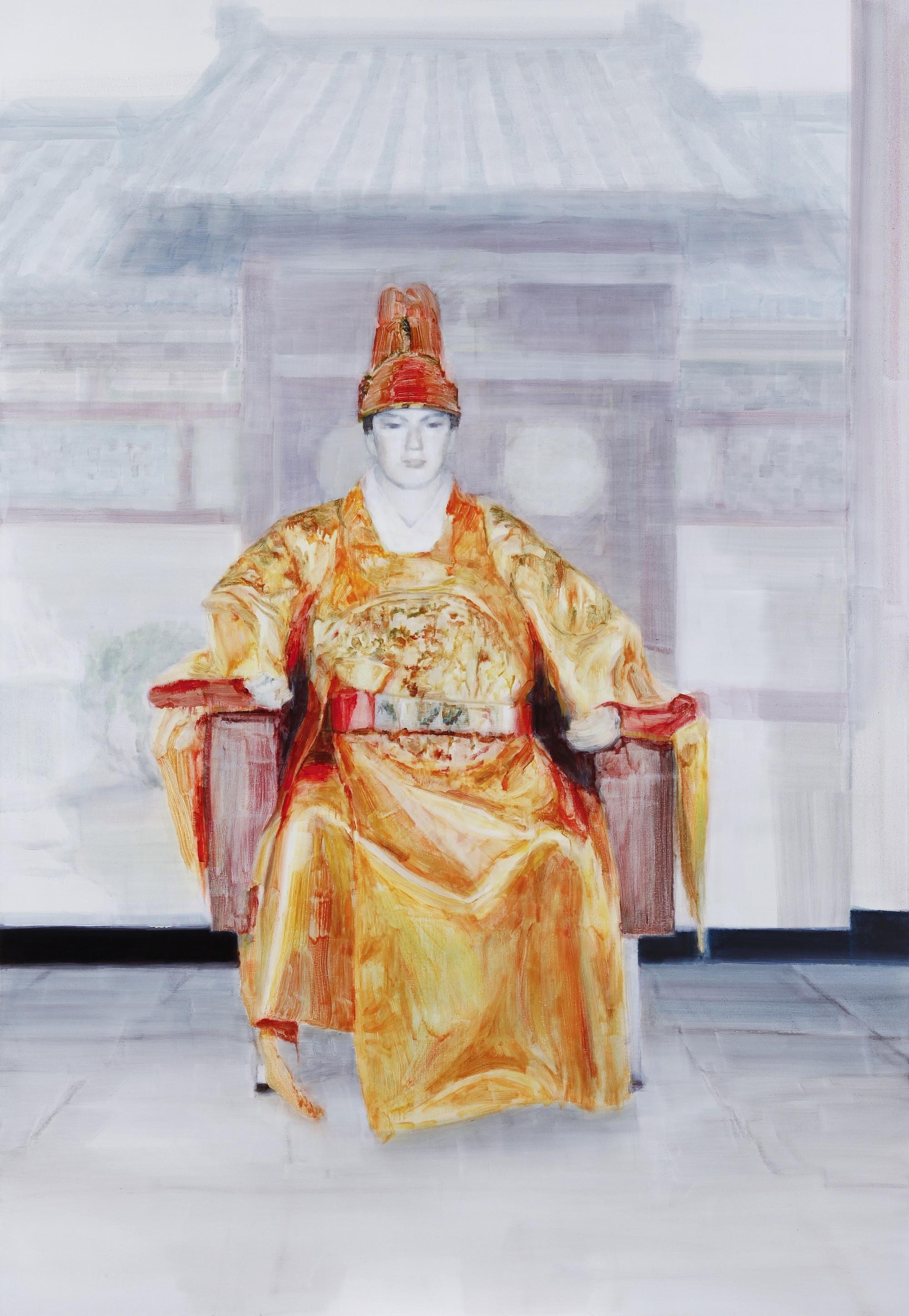
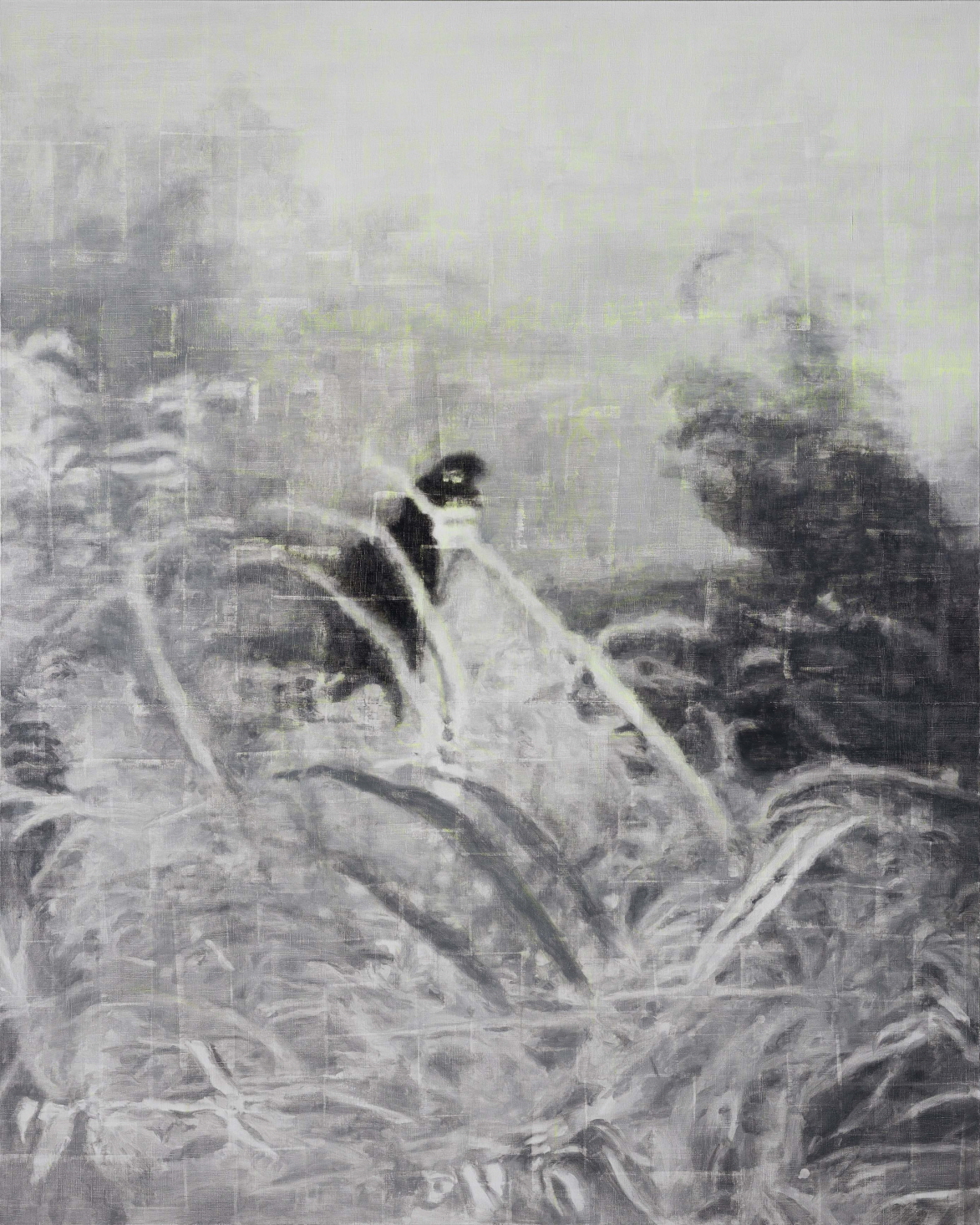
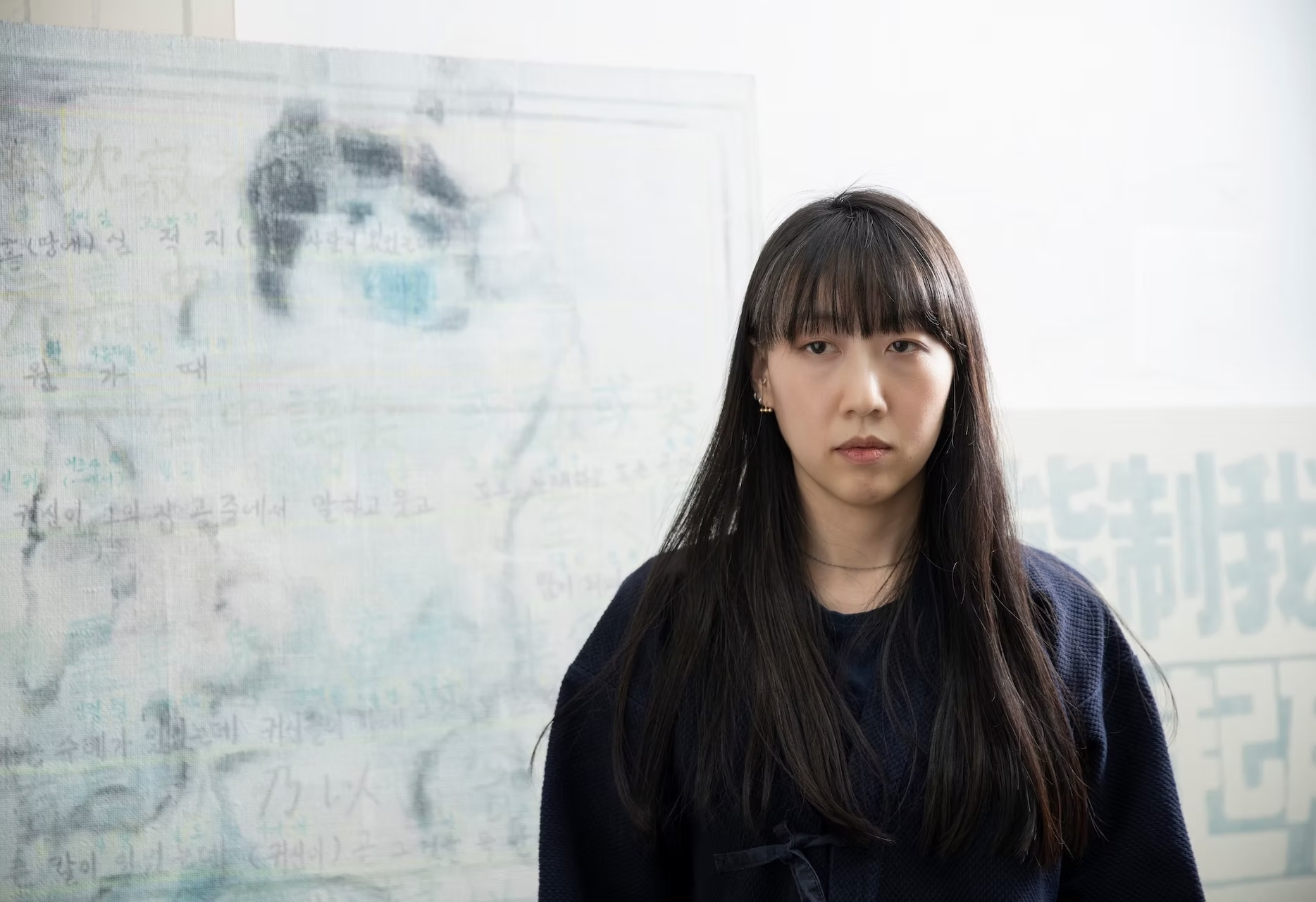
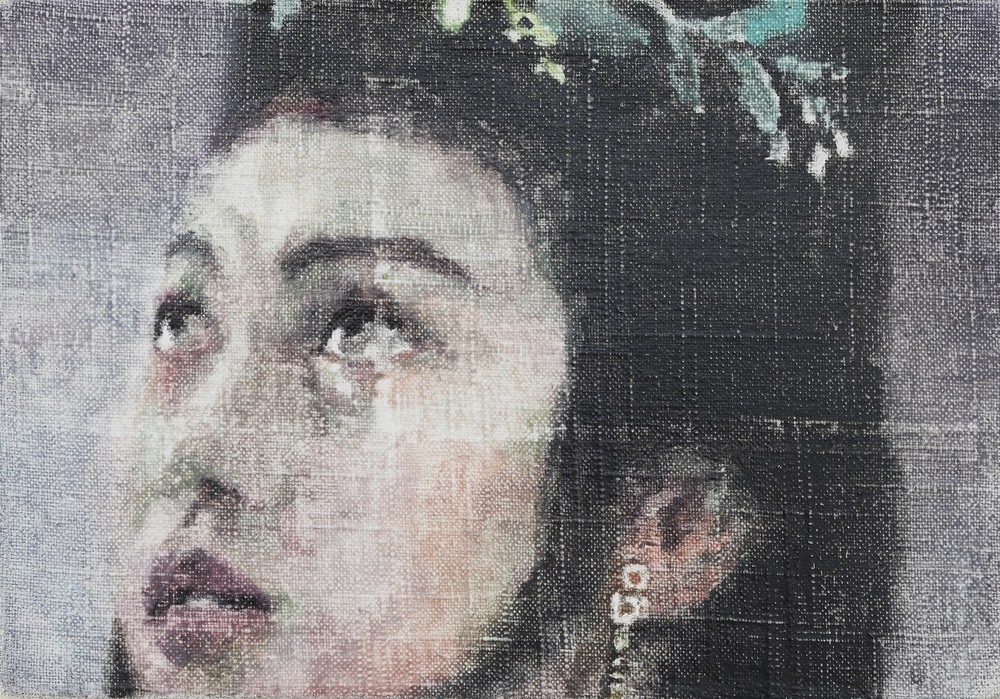
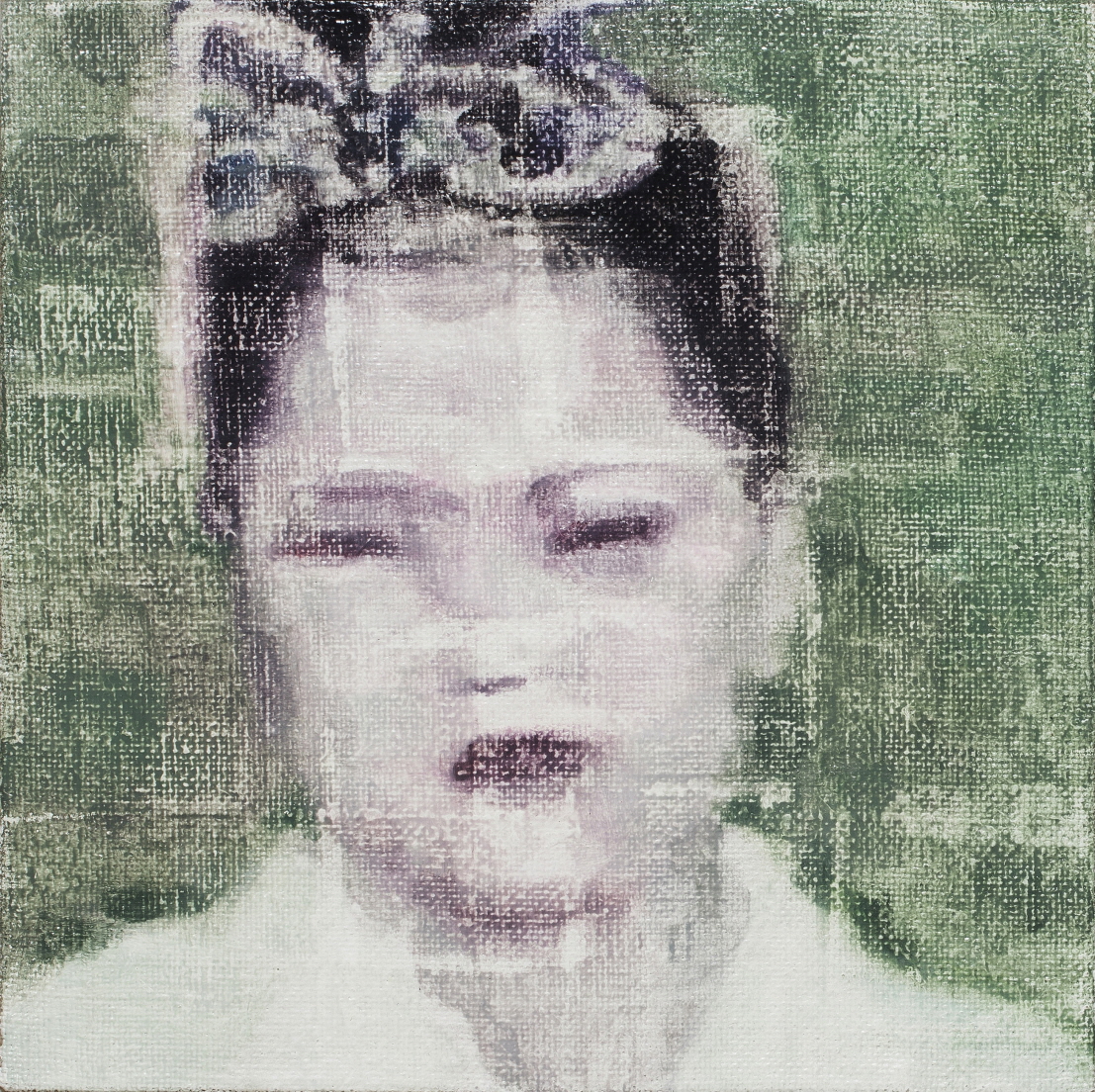
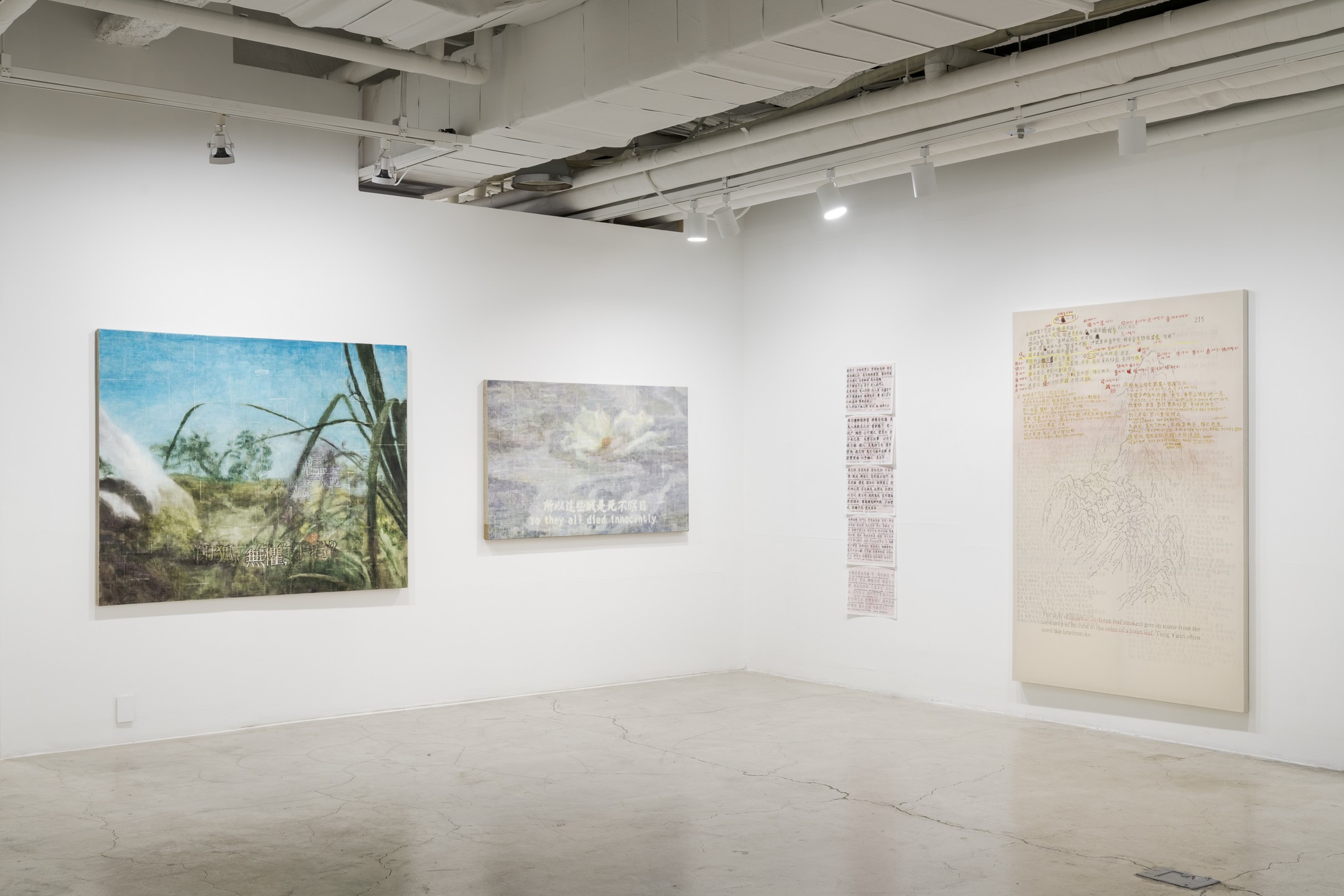
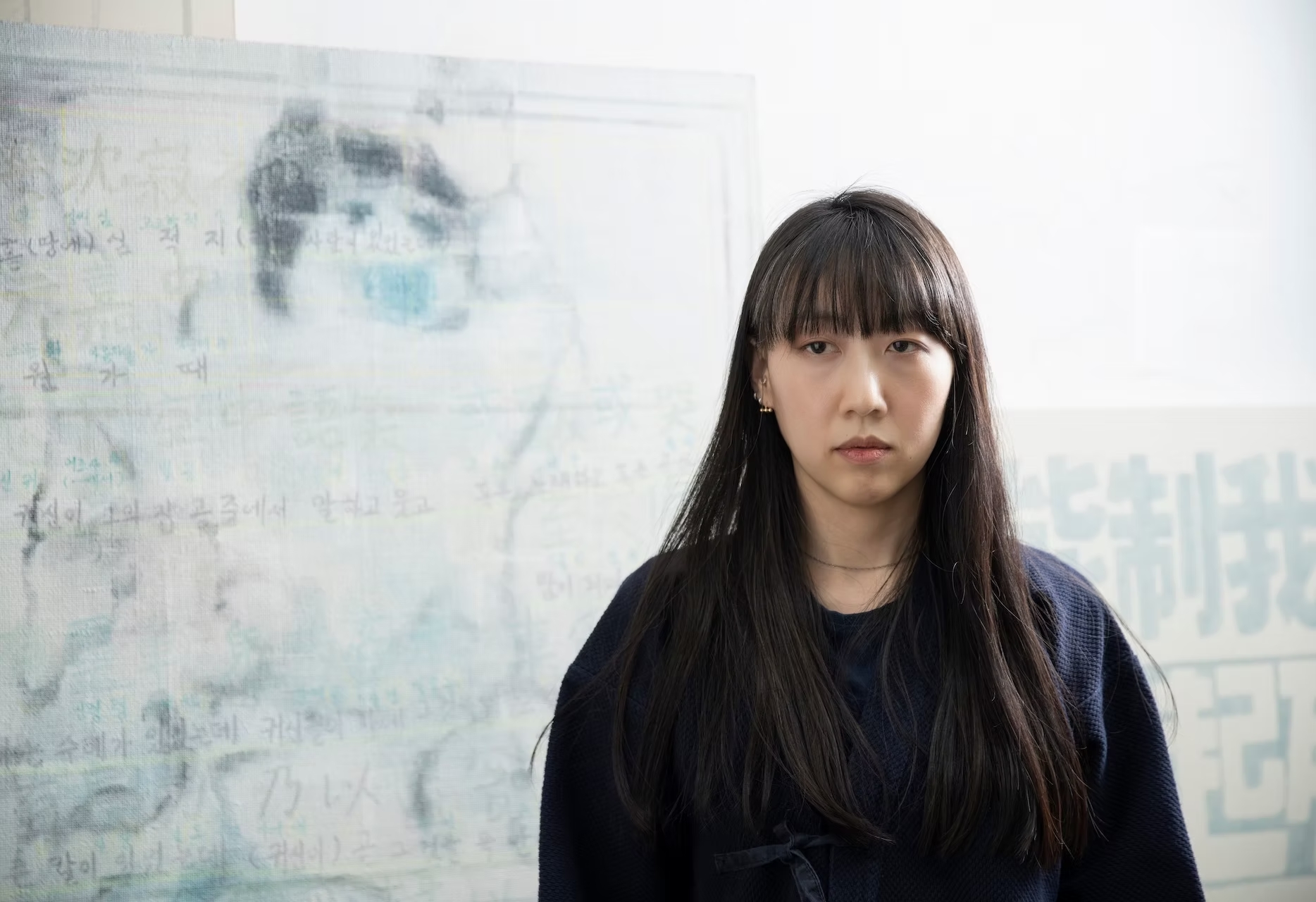
to the presumption of the guilty must be prosecute. CHOE Sooryeon’s Pictures
for Use and Pleasure (Window Gallery, Incheon Art Platform Incheon,
2020) appears at this point. The name on the indictment written by the artist
is for a devil who was against judgment. Whether it is a story of ‘a female
servant’ or ‘Chaemo,’ the death quoted in this work is always irrational since
there is no charge named nor cause of death. It is as in touch with the
providence supervised by God as with irrationality. Likewise, God never
considers the volume of individuals and treats everyone as a criminal. But the
devil only hates the one with sin. Only the one who sinned is allowed into
hell, since the punishment that God would not engage with the sinner is only
hated by the devil, and thereby makes the sinner suffer. The devil having
feelings for evil deeds is just a rumor created by irrationality. If the devil
loved evil deeds, he would be unlikely to produce headstones for criminals in
such a sunless place. Only (quoting) the devil eases the irrationality.
Therefore, to forever face the tragedy and misfortune, we have no choice but to
accept it and to eternally give up. Pictures for Use and Pleasure cannot help
but write the bill of indictment with ‘the words of ghosts or the words for
ghosts’ that have ‘the view of the world based in didactic morality and the pessimistic
perception of it.’ The exhibition says it is not limited at ‘that’s not your
fault,’ rather it extends beyond stating that it would change everything except
you, everything that surrounds you.
2.
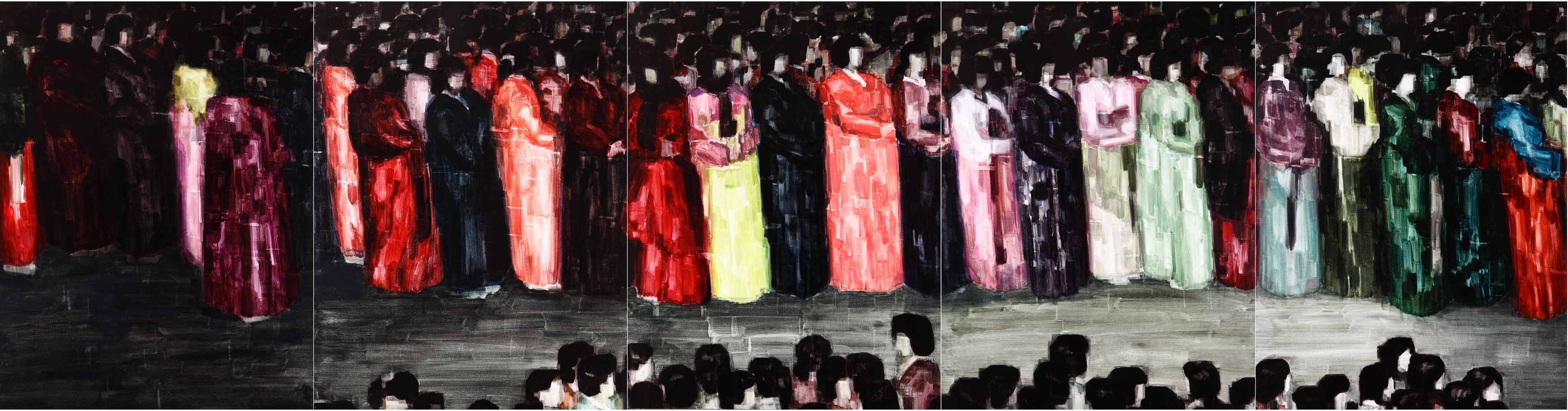
Unlike
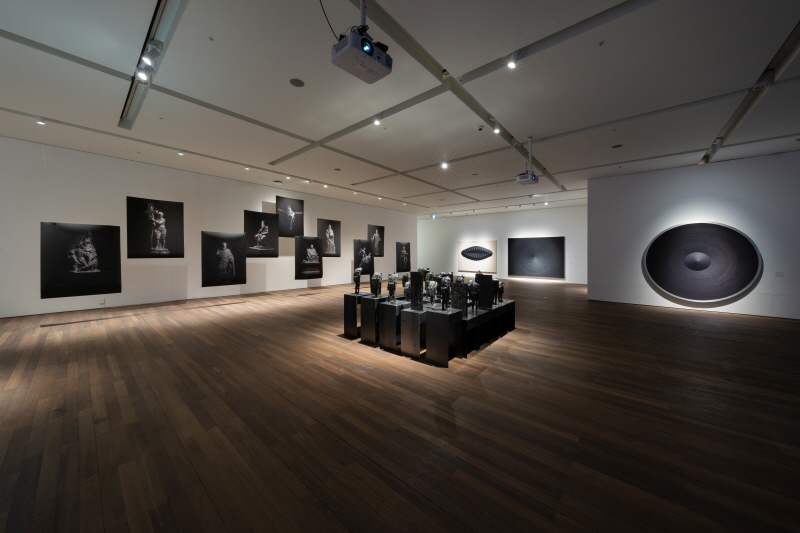
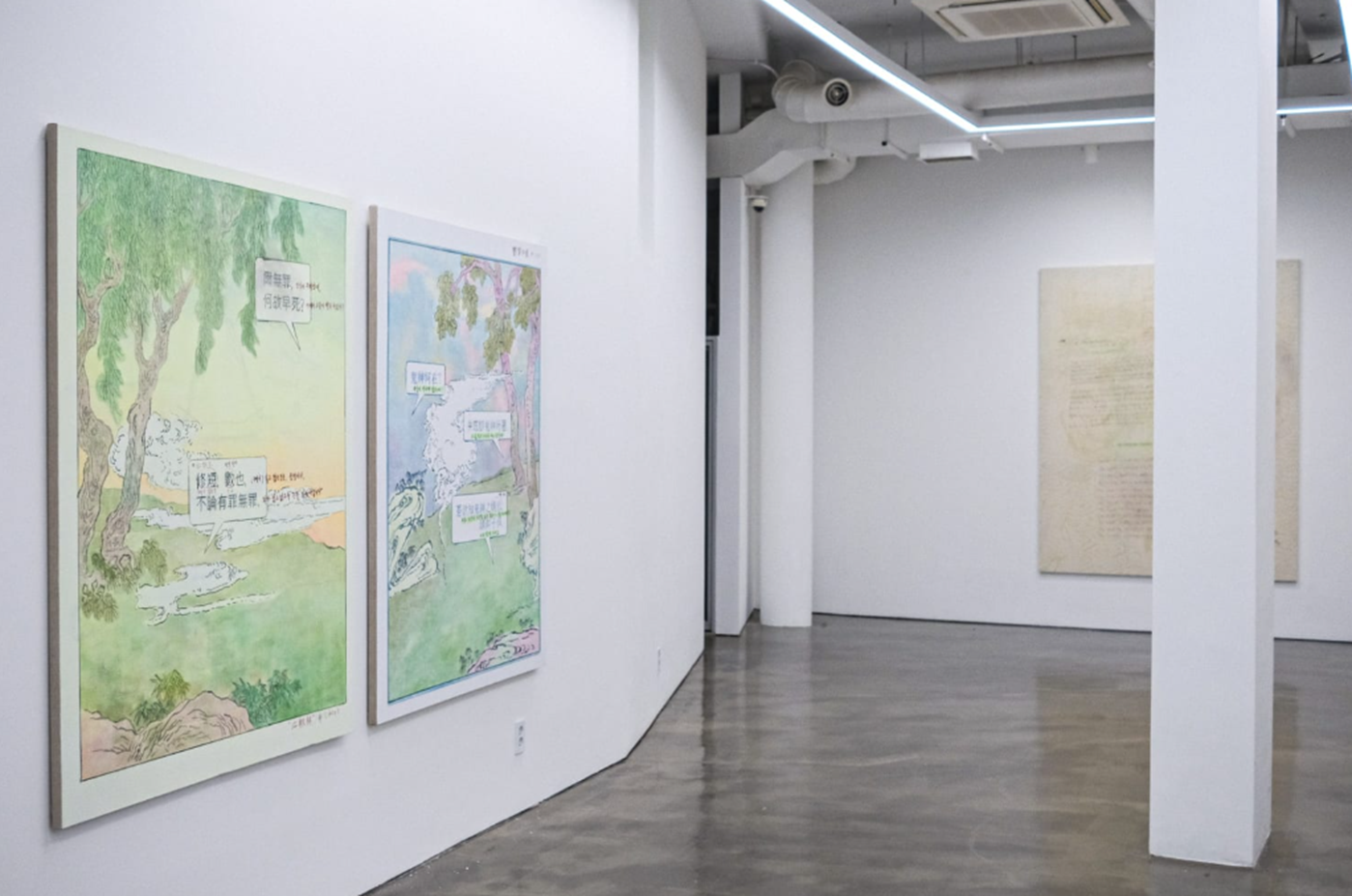
the scale of the exhibition, which is difficult to capture with a quick glance,
Pictures for Use and Pleasure reveals itself in the form of one continual work.
The work consists of some previous works and some newly produced ones, but they
give up their partial or independent positions to come together as ‘one’
panorama. This oneness is irreversible because it cannot be separated nor
divided even after the exhibition ends. This cohesion aims to distinguish
providence from something that is not providence as it criticizes the feeble
perception that tries to present only a part while neglecting the whole. This
process doesn’t prove that the individual can be piled on as one by
artificiality. Rather, the panorama shows that the whole does not consist of
divided parts but exists by a connection that cannot be divided. Hereby, the
individual always holds the whole thinking of it as its source, so it is proved
that the totality is not lost even after it seems to be divided. Just as this
exhibition is one artwork, narrating the ‘whole’ world becomes possible.
If
one work displays how it possibly and synchronically reveals a totality, in
another sense, a diachronic restriction of the work shows the totality of the
world. Pictures for Use and Pleasure refers to the book of the same name, Pictures
for Use and Pleasure: Vernacular Painting in High Qing China (2010)1)
an academic text that introduces the literature and customs of the Qing
Dynasty. The book states that from a modern and foreigner’s point of view, the
tradition does not comprehend life but reveals itself as a foreign body leaked
from life. This tradition is not the contemporary one, rather came from the
origin timeline when myth and reality were not classified as distinct. Even
though the feeling of irritation, the irrationality of the origin and modern
one are not classified in terms of their content, they still commensurate to
today by what is stated to be modern. By not being classified, the origin story
never stops speeding through the modern and the present on the timeline. This
continuing direction proves that time is continuous, not severed, and,
synchronically and diachronically, the world is revealed as a whole. Therefore,
rather than a partial modification, the condition to practice revolution for
the whole becomes available.
Two
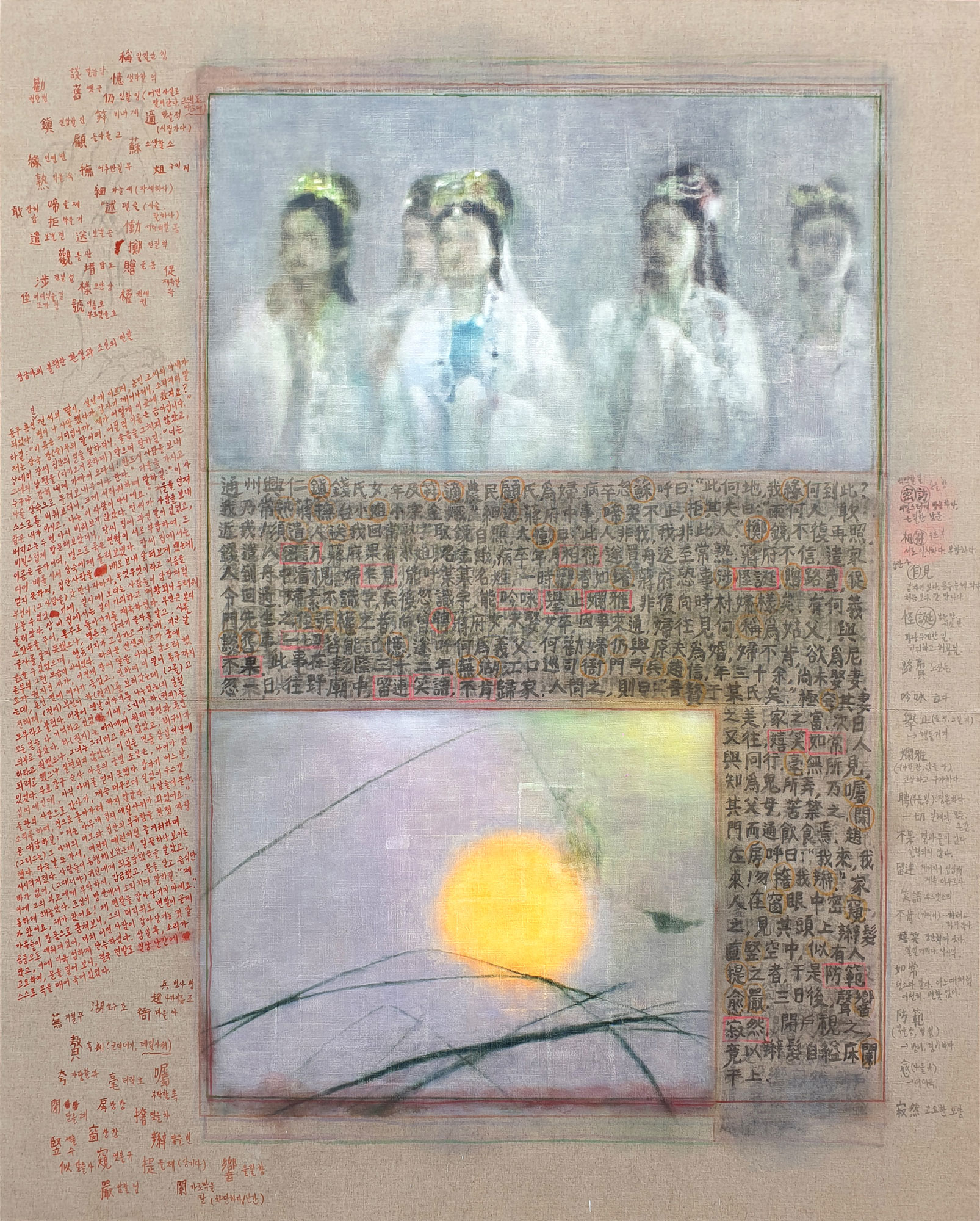
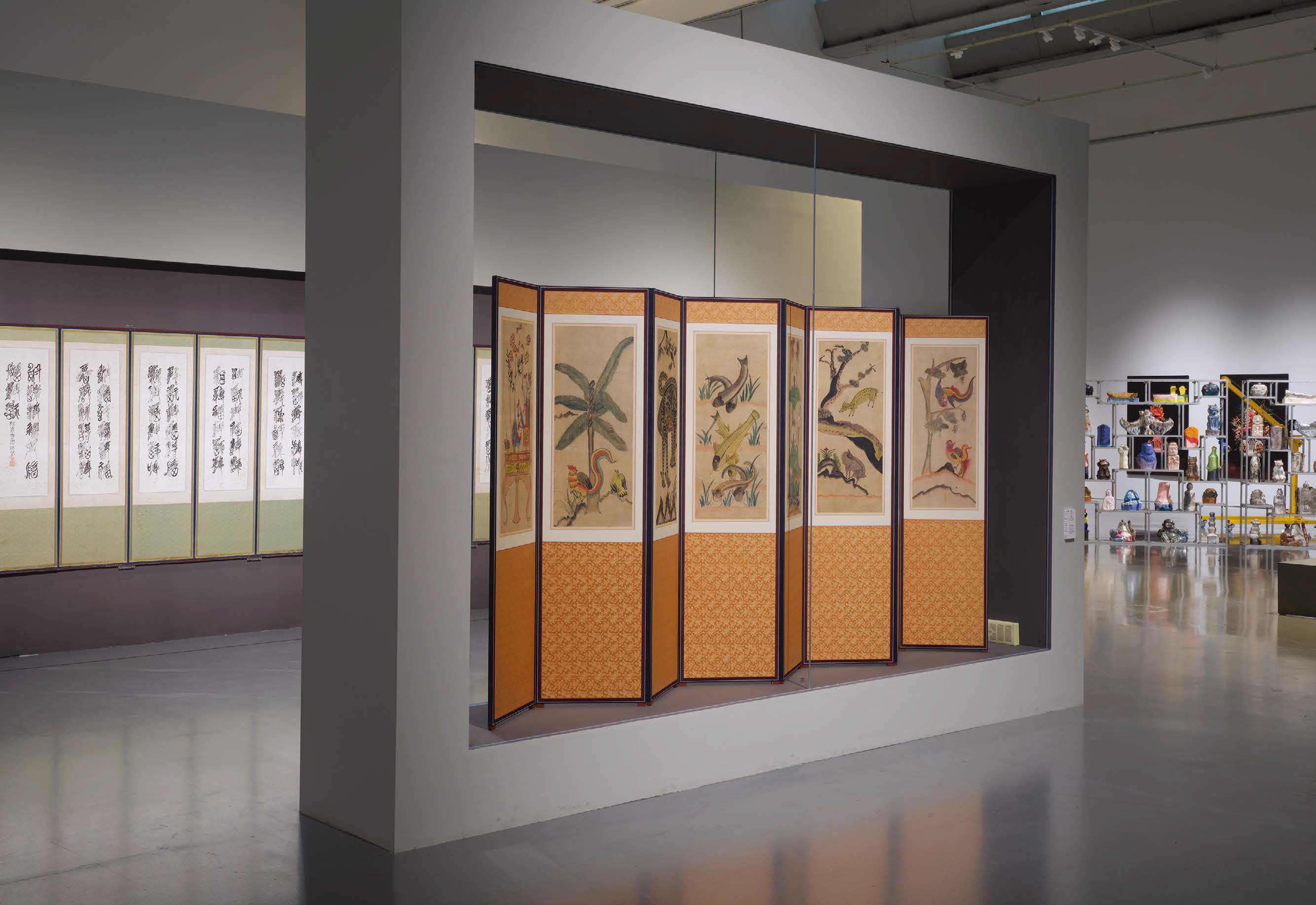
folktales are suggested in the exhibition. One is about the death of ‘a female
servant and Soojing’ and another is about the deaths of ‘a woman and Chaemo’.
The servant dies without any explanation, just because she came across the
death angel, and Soojing dies because the servant belongs to her. The woman in
the latter story dies and not long after that Chaemo also dies, both deaths for
unclear reasons. What these two stories share is not just that the stories do
not end with the death of the characters, but that the deaths of the two
stories have no grounds. Every aim to end the cause of death in relation to
those characters’ personality, description, whereabouts, and nature are all for
naught. Anything related to the character has no probability, and it becomes
meaningless. While folktales generally carry a message that leaning toward the
promotion of virtue and reprisal of vice, CHOE chooses a story in which an
innocent individual suffers and is punished without sin, underlining this
aspect of irrationality. The reason that didactic morality is general in
folktales is not because it is actually common, but rather because it reflects
a desire for irrational reality to move toward the direction of the moral good.
In other words, the judgement of the innocent is in fact closer to reality.
The
narrator who describes Chaemo’s death ends the story with “at last, dies.”
Here, ‘at last’ is an adverb that comes before the desired result due to a
certain reason. Although there exists no cause for these deaths, what one can
seek to understand is the narrating subject who ‘desired’ the death. The
subject is ‘God’, and the incomprehensible and imperceptible providence can
only be described as irrational. The pain that the innocent would experience,
by which proves God’s absence or incapacity, cannot help but prove God’s
existence by manifesting that God is fair to every existence. And it proves
that the magnificent providence must be incomprehensible. If the realization
that misfortune has its own meaning and intention, rather than having no
meaning at all, frees us from suffocating futility, humankind cannot help but
hang on to this realization. In such an atrocity that paralyzes humans, it
would be rare to figure out the truth that caused that atrocity. Since the
truth becomes unachievable, humankind begins reducing itself, persuading itself
that truth does not exist or is unknown. This reduction presupposes the
incomprehensibility of providence. Whether or not the individual believes, when
they give up trying to understand or correct the world, they engage in proving
God.
But
this proof also paradoxically proves the existence of the devil. If there is a God,
the devil also exists. Not a God who equally sentences sin indiscriminately,
but the devil who sentences pain to the guilty since he only hates the sin.
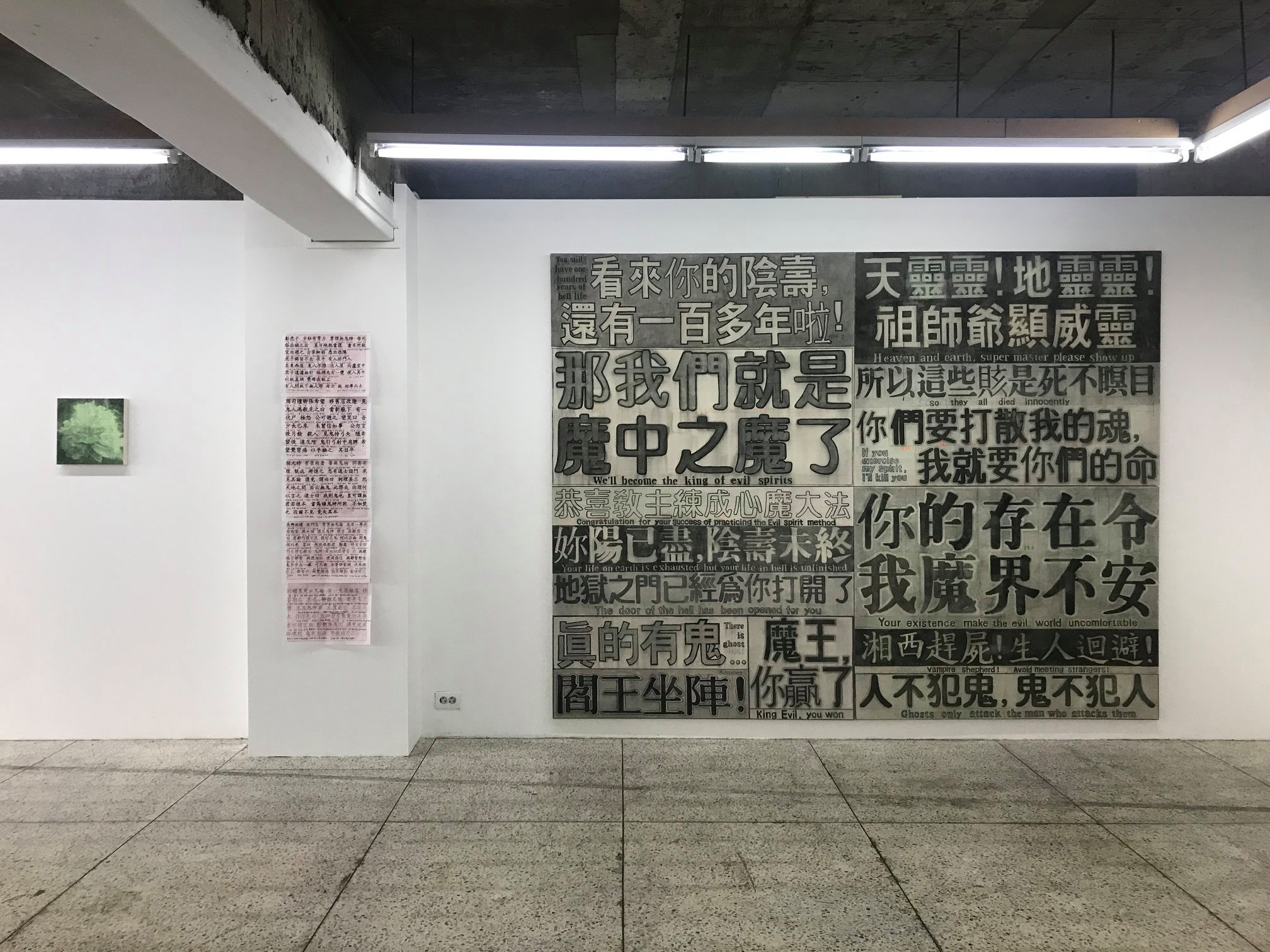
Between the two stories, there is a sentence “Your life on earth is exhausted,
but your life in hell is unfinished” and this does not indicate the event was
enacted later than those beings moved to hell. The sentence is a declaration to
change the world of reality into hell. Therefore, it was written in the present
tense. It can be declared, “Devil is here,” or “Pluto is here,” as if it is
currently taking place, or more radically as, "King evil, you won” in the
past tense. Overthrowing the world in which the innocent suffers to the reality
of hell where only the guilty suffer is in the cards or currently taking place.
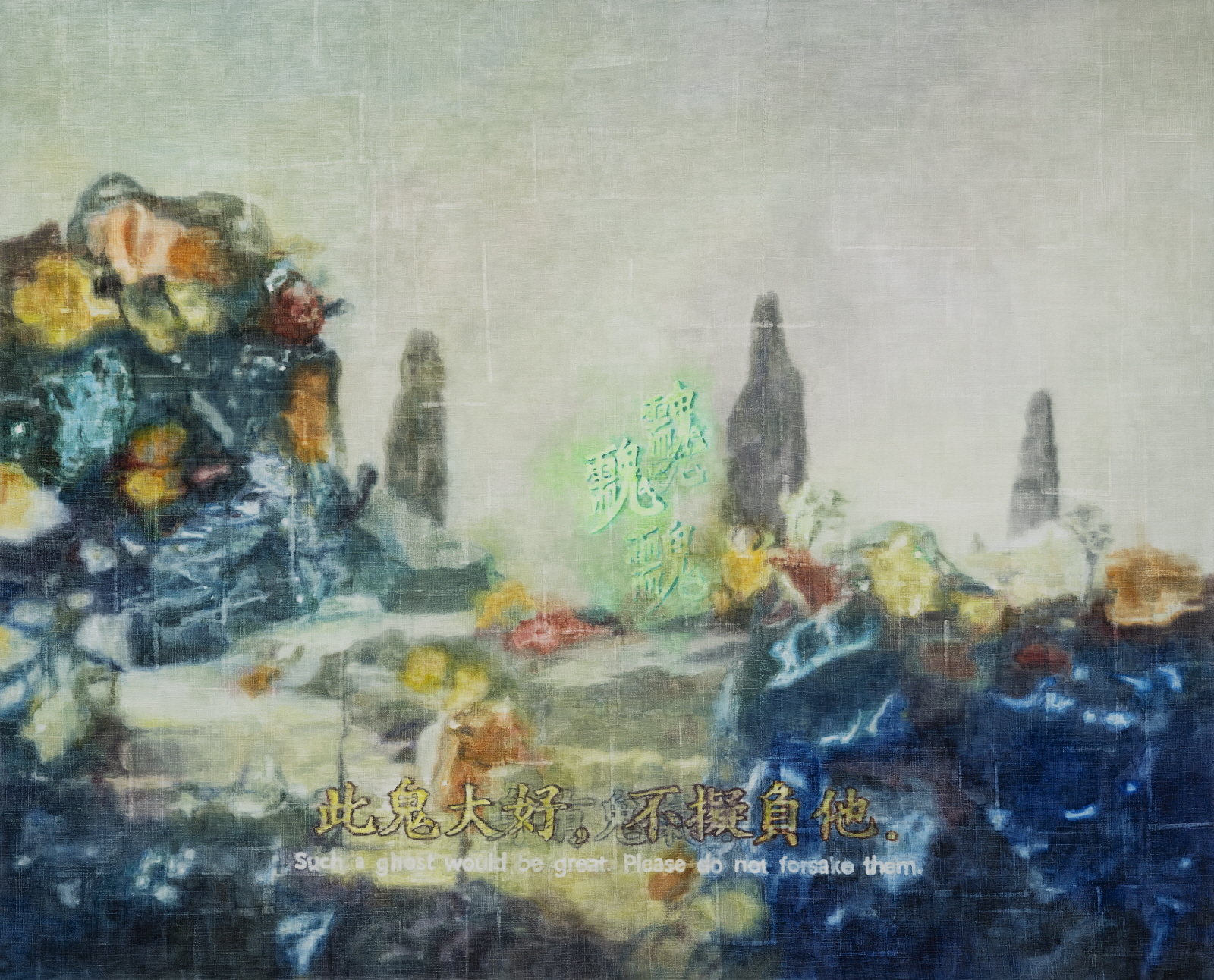
Quoting the devil’s words that Pictures for Use and Pleasure
uses takes the role of an indictment for this irrational world. "We will
become the king of evil spirits.” Whether they believe or not, in this world of
the devil not of God, we would participate in correcting the whole and in
aiming to understand everything, rather than humbly accepting the providence.
As long as we keep questioning this, this world becomes the place where the
innocent avoid suffering and become the king of evil spirits.
Art
unfurls itself to simultaneously expose every component of its field. This
simultaneity removes the order of the components, and therefore creates a sense
of fairness. Although the audience views each part of a work according to their
own order of viewing, for example spending a longer time viewing certain parts
of the work, the fact that the artwork exposes all of itself in a singular
instant never changes, so a hierarchy of objects does not exist. This
indiscriminatory exposure is comparable to God’s attitude toward the sinner and
the innocent in this world he created. Since Pictures for Use and
Pleasure challenges such a point of view, the work requires a
necessary order. In order to present a specific order, the work uses ‘letters’.
Letters cannot help but have order, whether it is from left to right or in the
reverse, from top to bottom, and vice versa. Although the work expresses
everything at the same time, once there are letters, audiences cannot help but
follow a certain order of viewing. On the one hand, the work seems to break the
order of creation. God’s creation was executed with the creation of light by
his words ‘let there be light.’ But Pictures for Use and Pleasure must have
existed before the light. Although the work installed outside the exhibition
hall will fade due to its constant light exposure, the work existed long before
light was created at the beginning of time. Therefore, it always exposes itself
as even more faded than time can make it. The hierarchy of creation does not exist
here, either.
3.
If
these precious words, ‘it’s not your fault,’ did not console you enough, that
was not because there was a lack of sincerity. It did not comfort because it
indicated that we must accept everything as it is, without looking back at the
past or to the possible changes of what is to come. And, that was a sad
feeling. That sentence rationalizes the present world by saying ‘that’s how
life works,’ rather than resisting it by saying ‘we must find the one who did
this wrong’ or ‘we need to stand against this conclusion.’ This phrasing could
be a helpless choice. Even after we are equipped with such knowledge of sending
several human beings to the moon, out into the universe, we still do not know
why hundreds of people had to drown in the water. Human beings are always
trivialized when facing the pain of the innocent. The inevitable agreement that
the whole cannot be changed in the end, scales people to be miniscule. This
exhibition was not created on the metaphysical level that follows a rumor
called ‘God’. In a materialistic view, ‘God indicates human beings’ humble and
feeble agreement that makes them give up revolutionizing the whole, only
thinking that the world can be partially modified. On the contrary, the ‘devil’
remains silent in regard to this agreement and symbolizes the attitude toward
that revolution for the whole.
Once
again, only art stands before the court that prosecutes God. Without a witness
or proof, it prosecutes the God no one ever pitied before and demolishes the
borders between humans. By doing so, it proves that art must exist. Once again,
without experimentation or proof, materialism deepens itself to metaphysics,
and the lyric becomes dense as it describes the world, thereby salvation is
completed by revolution. All these things happen only within art. The
circumstance of the world reveals the possibility of what is possible, but art
manifests how the impossible ‘was’ possible. CHOE Sooryeon once said that the
part of the title that states ‘easygoing’ or ‘Use and Pleasure’ was intended to
evoke irony, but the irony is only available when it never stops wishing to
revert to its original meaning while it means its opposite. This is also
expressed in Sowol’s line, ‘I forgot’ indicates that the narrator did not
forget and does not want to stop forgetting in the sadness of the loss.
Therefore, the title becomes a road that continues to approach the concepts of
‘use and pleasure’ while it feels pessimistic about the world with no use nor
pleasure. Let us live in hell.
1)
James CAHILL, Pictures for Use and Pleasure: Vernacular Painting in High Qing
China (Berkeley: University of California Press, 2010).
***
CHO Jaeyeon is a critic who aims to deepen his work into lyricism, even after
the end of loss and barbarism. He writes while trembling, depending on the idea
that reform will be radicalized into lyricism and that anger will come forward
as lamentation. CHO has served on the editorial staff of Critic-Al, a culture
and art web-zine, and won first place with the article “Quietly Continuing
Quarrel” (2019) in the 3rd criticism competition held by GRAVITY EFFECT, an art
criticism magazine. While he writes infrequently, he is embarrassed for not
keeping his writing. However, because of this embarrassment, he lives within
that gap.