Exhibitions
《Trajectory of the Spearhead》, 2023.01.12 – 2023.02.25, Chapter II
January 10, 2023
Chapter II
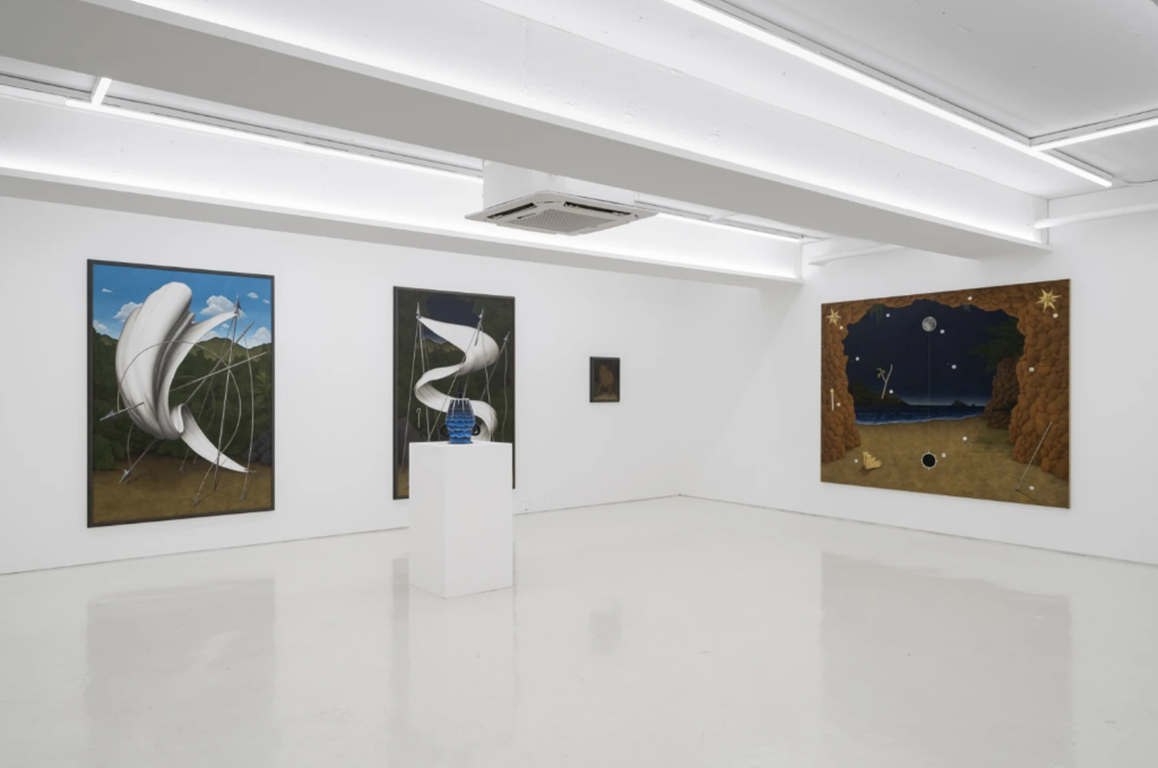
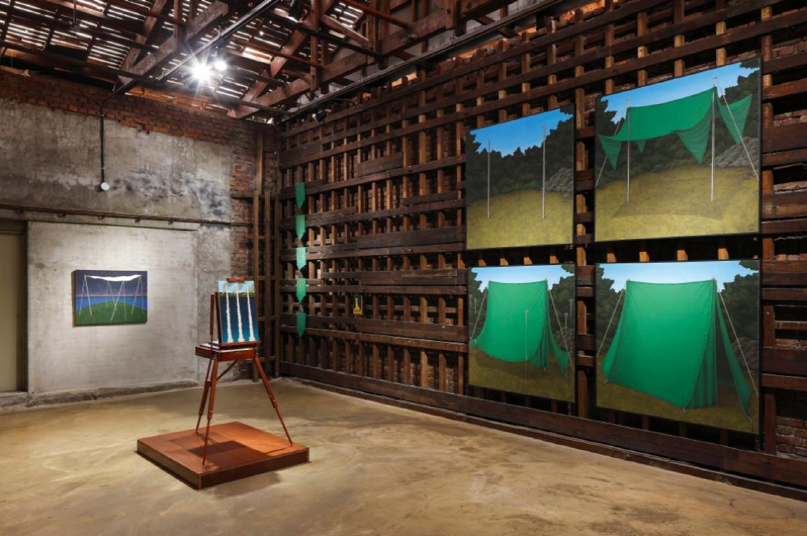
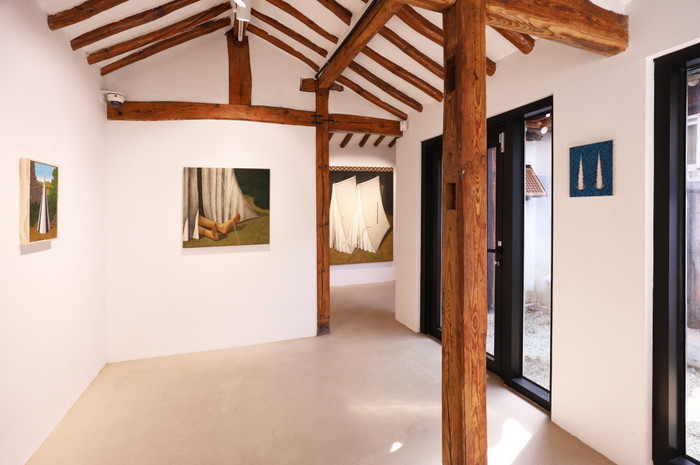
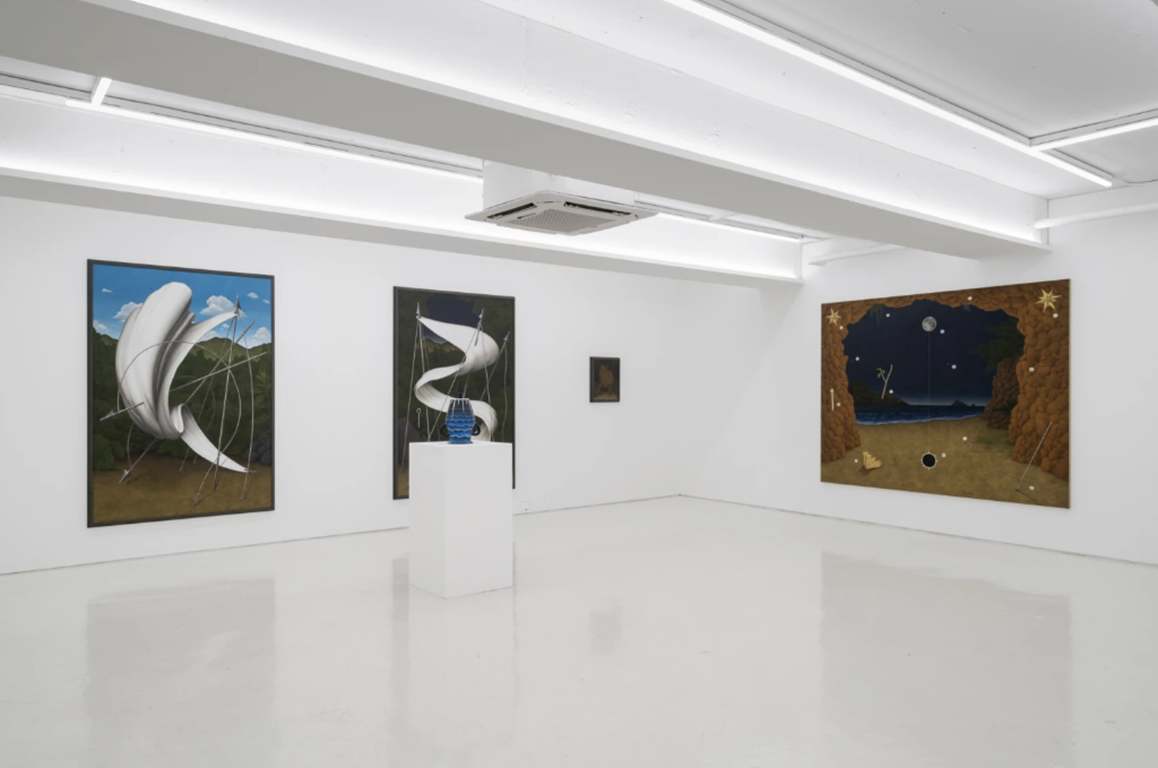 Installation
view © Chapter II
Installation
view © Chapter II
The English term, ‘sign’, is de-corded in our recognition system
more quickly than the equivalent Korean word. A sign is an action, image,
alphabet or number whose presence or occurrence indicates corresponding
semantics or behaviors according to a specific agreement. There are countless
signs and their subspecies in every culture, era, region, society or community.
Accordingly, the agreed system, which decides the corresponding value when they
operate, is a crucial precondition for signs; and this structure has developed
and reinforced by particular groups or social classes exclusively.
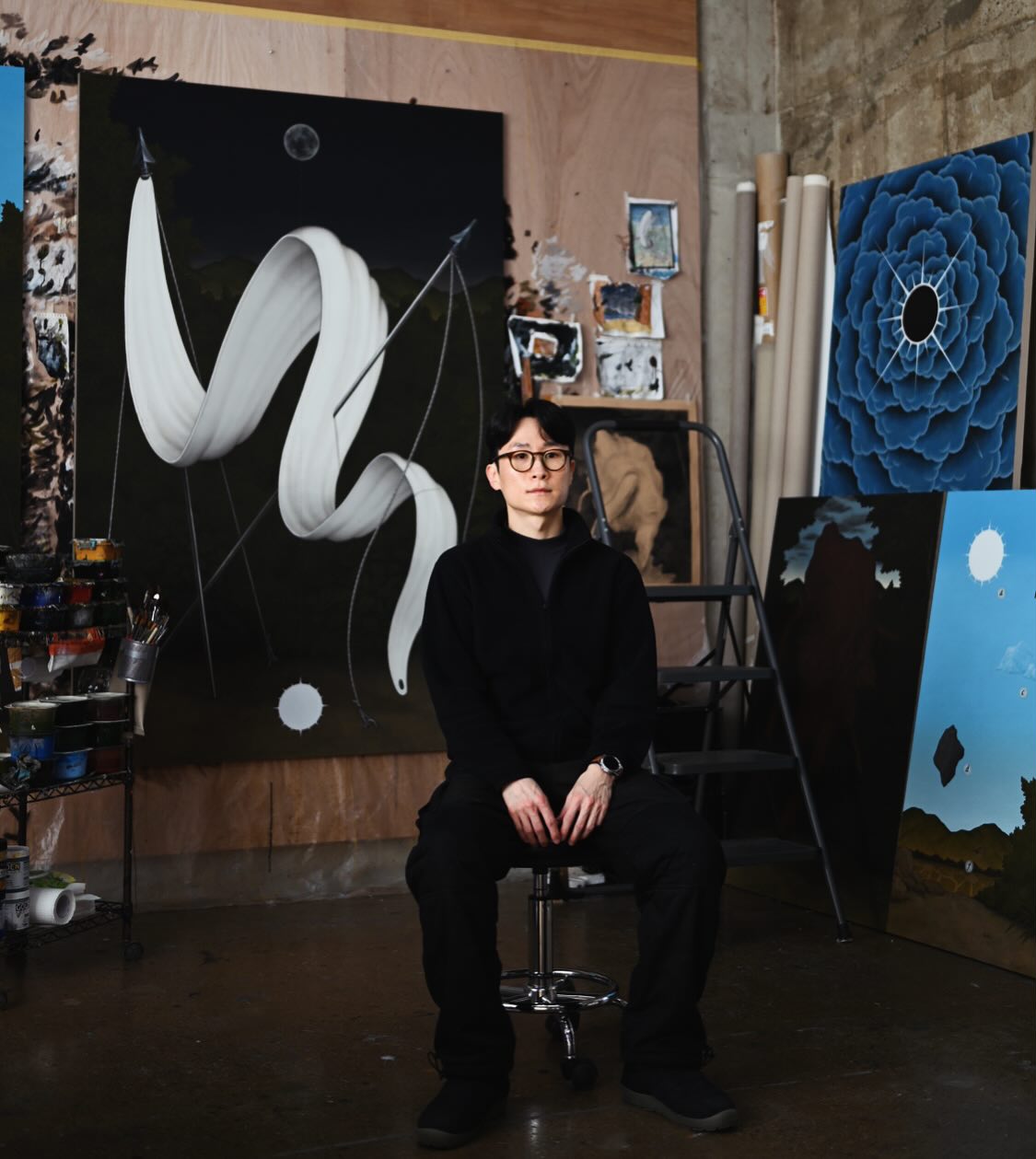
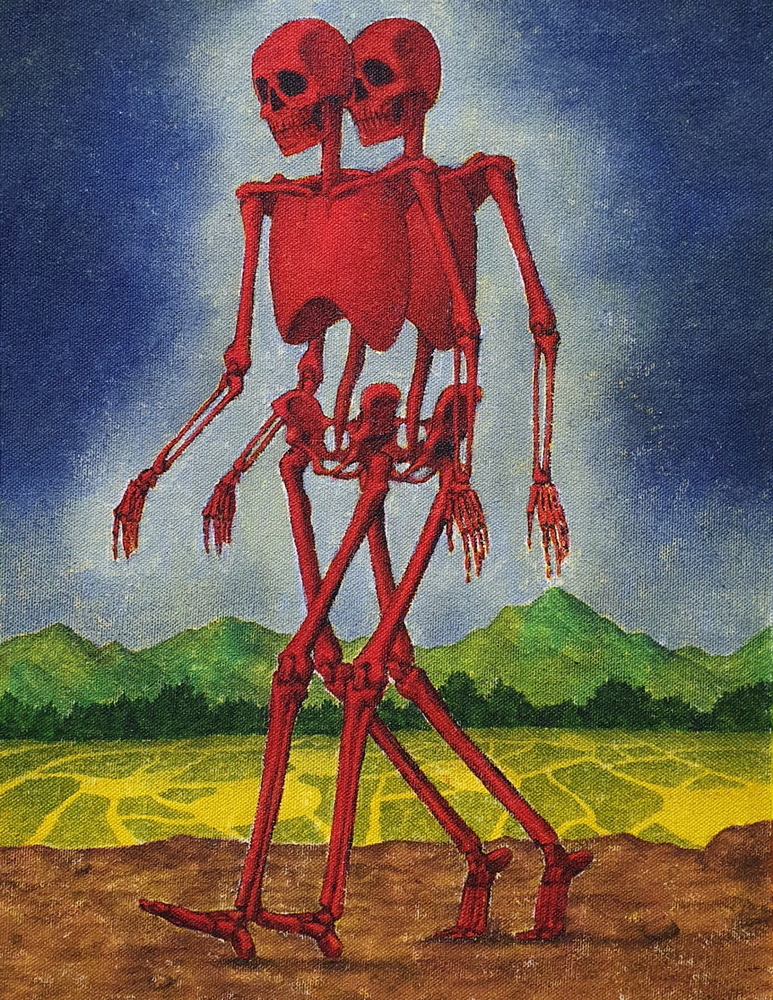
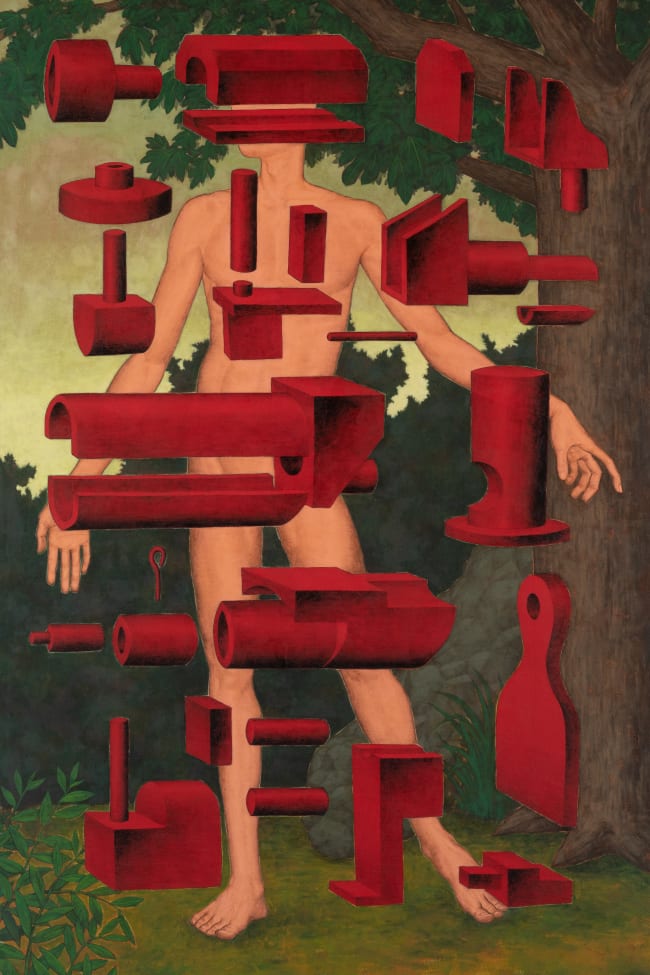
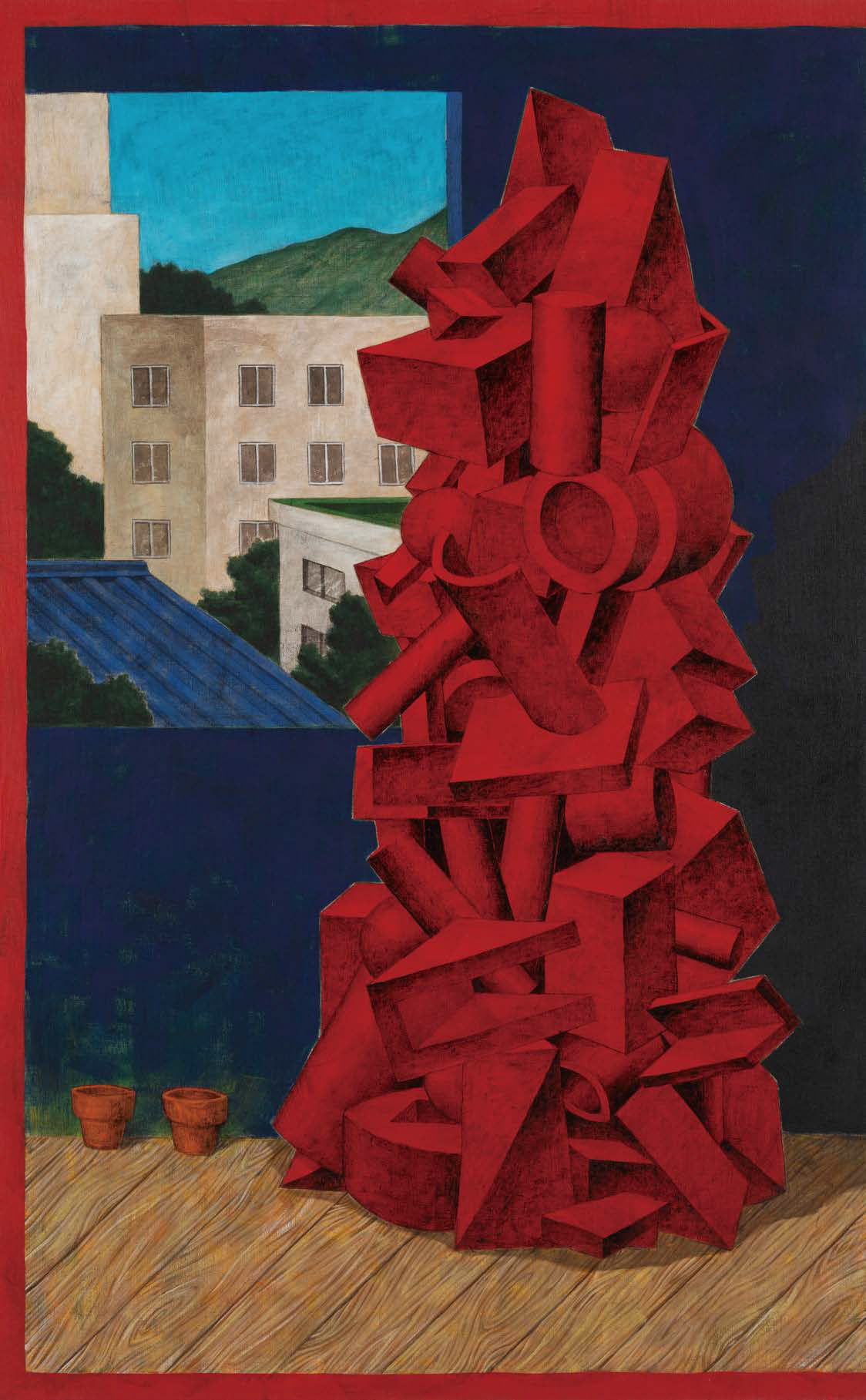
To contemplate the significance and implication of signs in Jaeseok
Lee’s practice is a shortcut to understanding his outlook. Signs appeared even
in his prior works that successfully reflected his military service
experiences. They could be seen as ‘the second name’ schematically given by the
artist to several means such as machines, goods or even temporarily confined
people under strict order to achieve an ideal goal the peculiar group sought.
Intriguingly, the power relations influence the act of naming since the
painting genre is always concluded in a two-dimensional outcome causing a lack
of methods to share the agreement without the artist’s additional explanation.
In terms of context, it is relevant to the fact that the motifs of
signs observed in his works clearly stem from the closed circumstance of the
army. In the end, the viewers can grasp the hardship of the early
archaeologists who researched Egyptian hieroglyphics before the discovery of
the Rosetta Stone. At the same time, this uncertainty not only enhances the
possibility of diverse interpretations and curiosity in each viewer’s attitude
towards images but maintains the mysterious aspects of the works by preventing
obvious analysis.
In this exhibition, 《Trajectory of the Spearhead》, what needs to
be paid attention to is how Lee managed to expand spatial staging since the
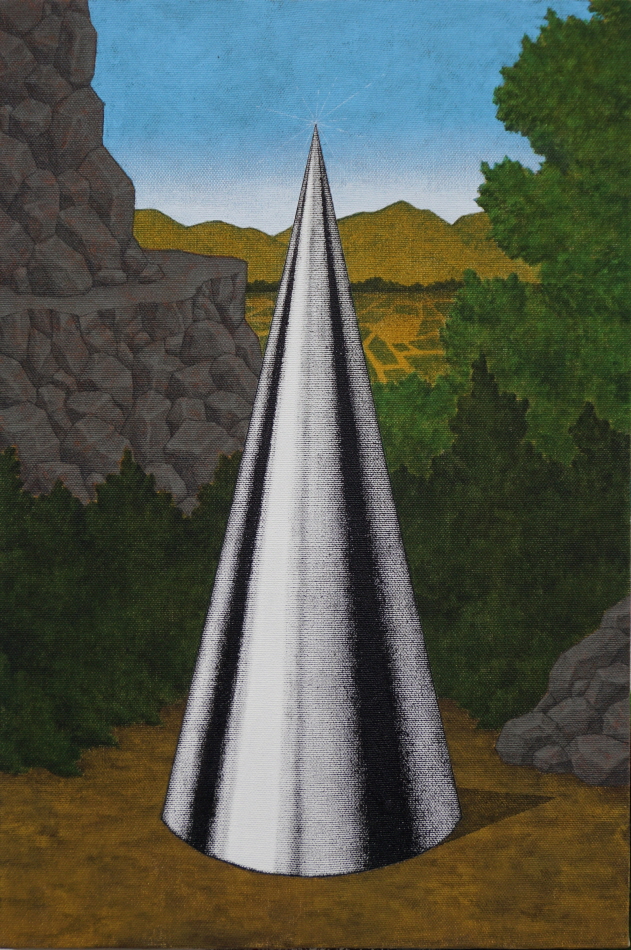
elements of the universe intervened in his works. The black and white sphere
surrounded by an aura frequently painted on the upper part of the planes
reminds us that the depicted landscapes and objects depend on general physical
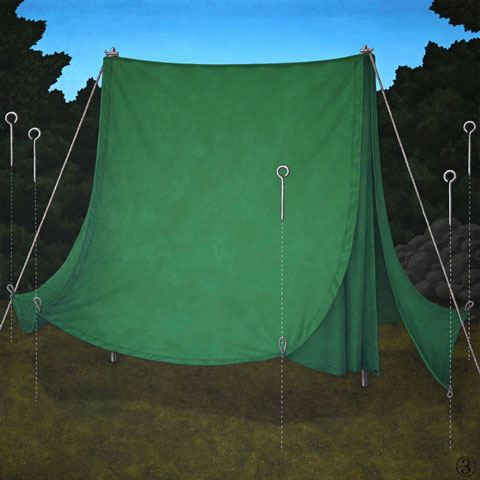
phenomena. The sophisticated adaptation of visually familiar landscapes without
exaggeration allows his paintings to have a sense of silence as composed as the
vacant space is. The landscapes let inanimate objects arrayed in his paintings
be more plausible, as a background of classical paintings often plays a
critical role in asserting authenticity in subjects and events described.
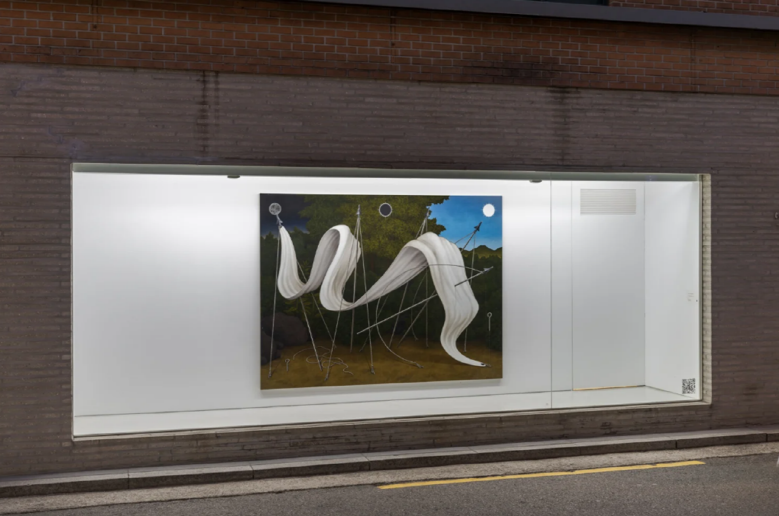
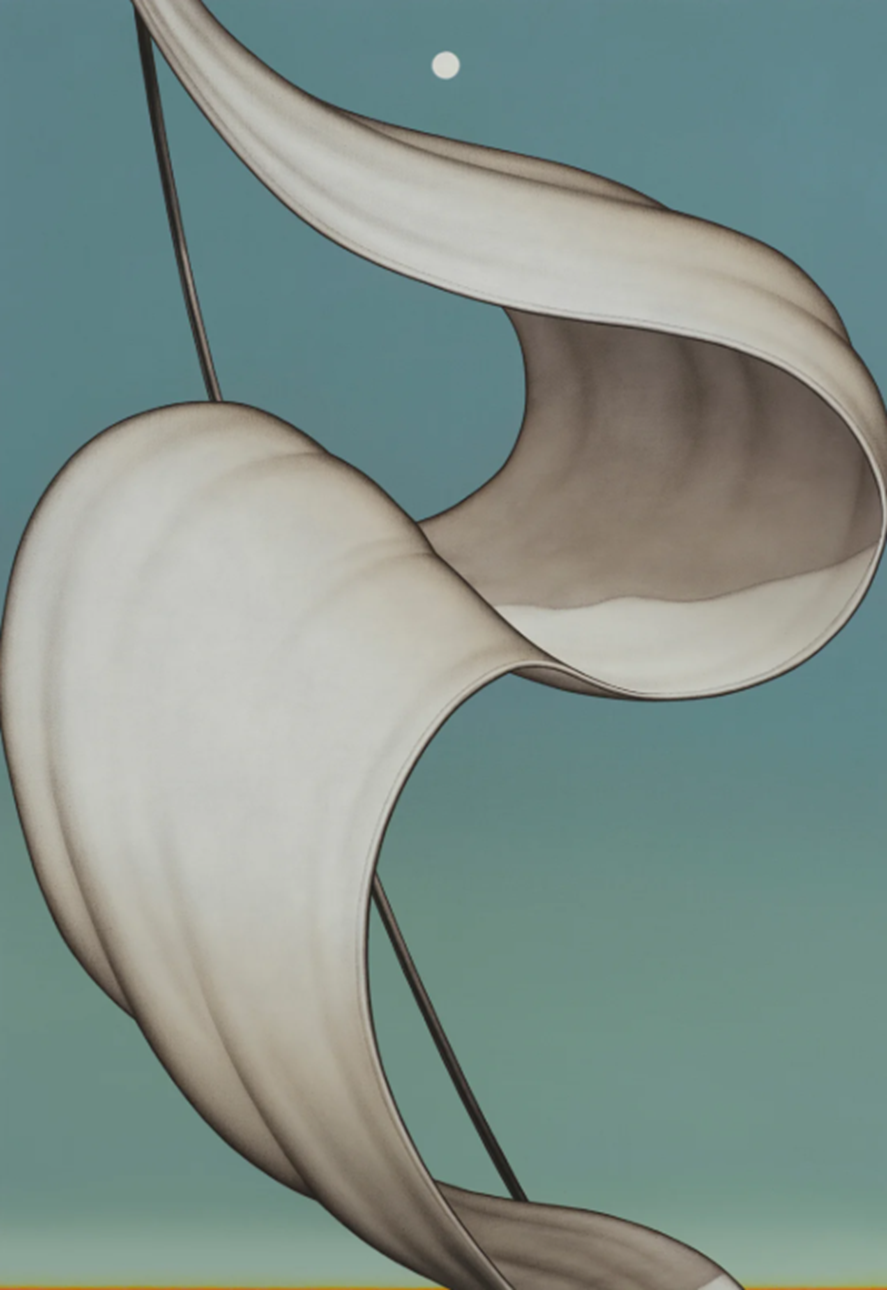
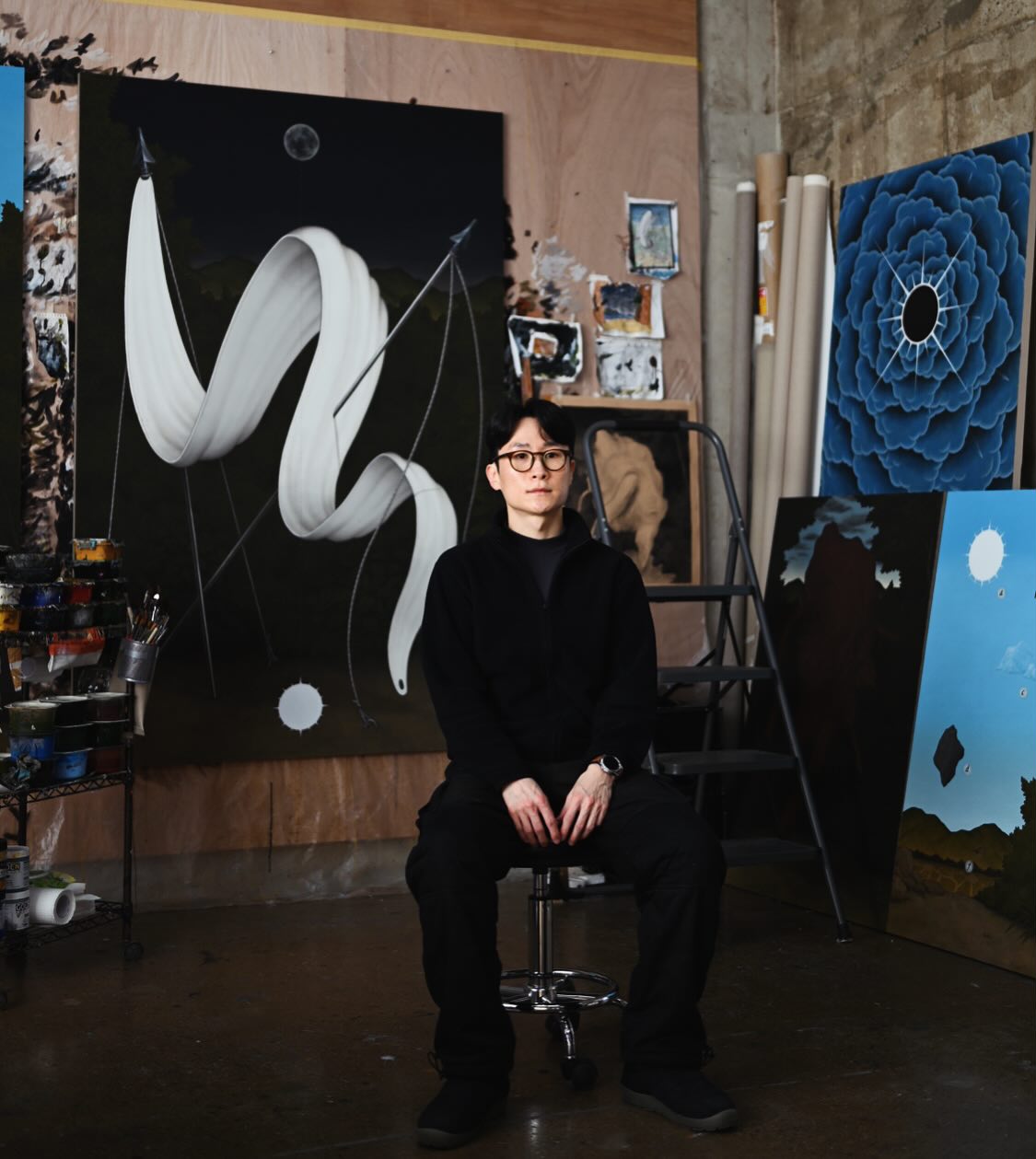
Jaeseok
Lee, Boundary of Time, 2022 © Chapter II
The huge-scale piece, Boundary of Time (2022),
in the window space implicitly presents the new storytelling by Jaeseok Lee. In
the painting, the spearhead, undoubtedly pointing towards the upper section of
the entire plane, stands approaching the glimmering sphere and the white fabric
whose pierced body is bound against its intention moves as though
drifting. The spear, the agent of the restrain tightly anchored on the
ground by ropes, creates the dynamics in the painting while the white fabric,
an unknown subject attempting to float against gravity, shows the resisting
force of the composition by being unfastened and steadily unfolding. Instead of
suggesting the clear hierarchy of military culture discovered in his early
works, Lee attempts to gain universal comprehension of the painting by applying
dichotomous concepts in two conflicting images, the spear (standing for
confinement) and the motion (standing for anti-exploitation).
In conclusion, the directions the trajectory of the spearhead
indicates are where different worlds confront each other, where phase
transition occurs, where entropy shifts and the ordinary sceneries in diverse
forms we encounter each day.