Articles
[Review] Stories Expanding into Life, Relationships, and Society… Captured Through the Language of Metaphor [Park Miran’s Whispering Paintings]– Woosung Lee Solo Exhibition “Come Sit with me” (Hakgojae Gallery)
August 26, 2023
Park Miran | Curator, Art Critic
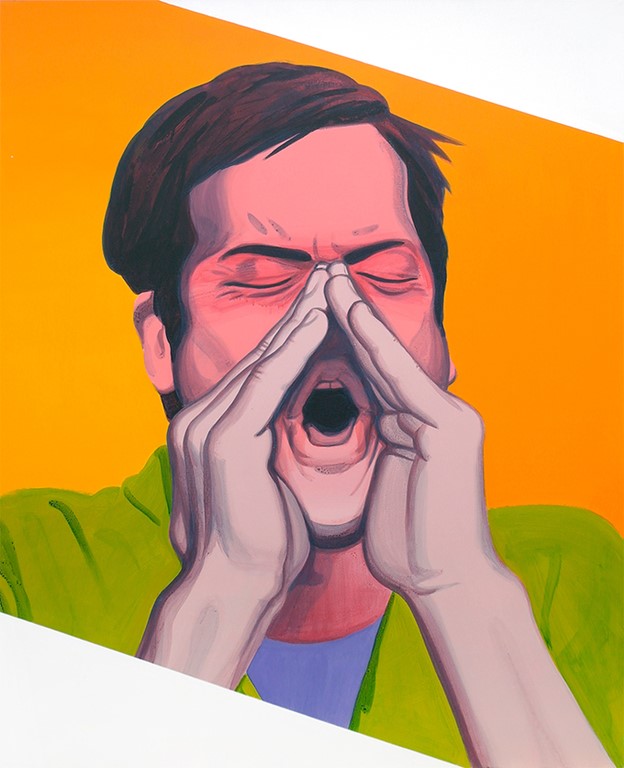
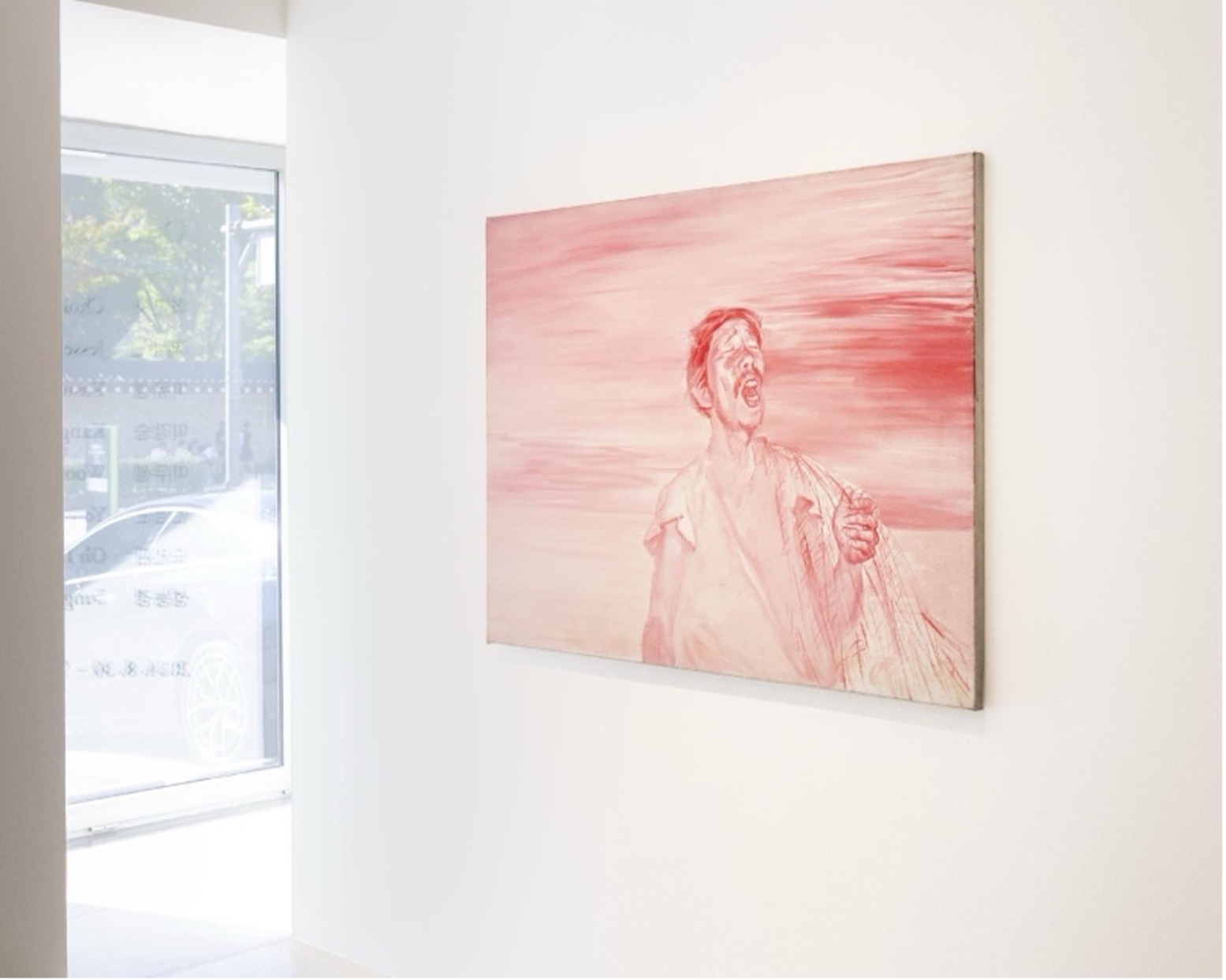
"Can You Hear Me?"
The word "youth," which
evokes images of bright, glowing days, seemed to suit him particularly well.
His paintings speak clearly in a voice that is both serious and somehow pure.
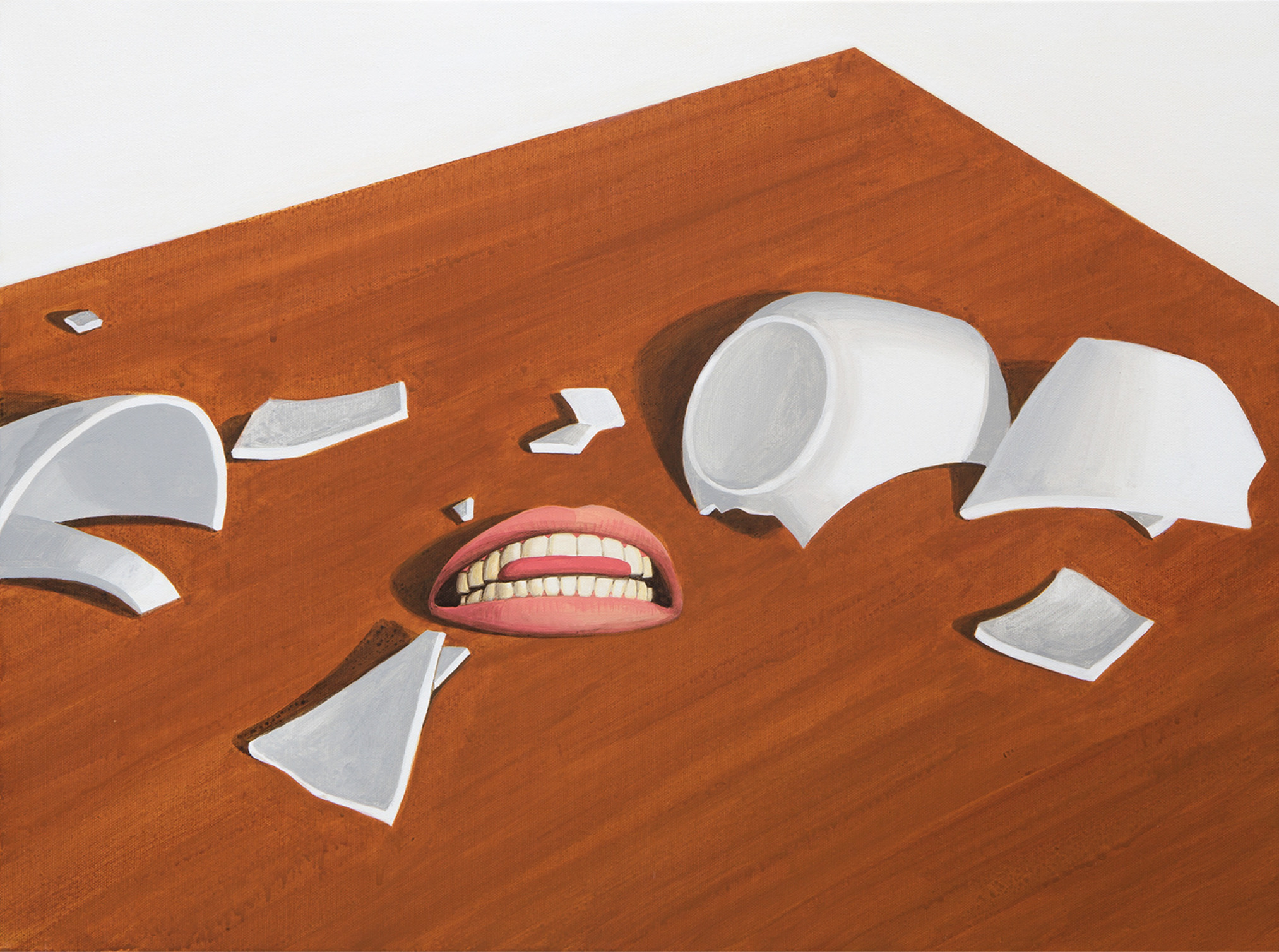
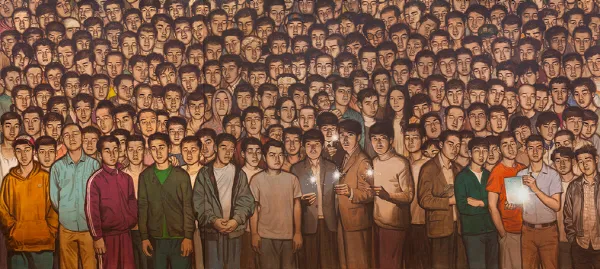
Some faces in his works seem to cry out, questioning why their words fail to
reach you. The figures in Woosung Lee’s (40) paintings sometimes reflect in
contemplation, burn alone, or carefully observe their surroundings before
eventually making room for companionship.
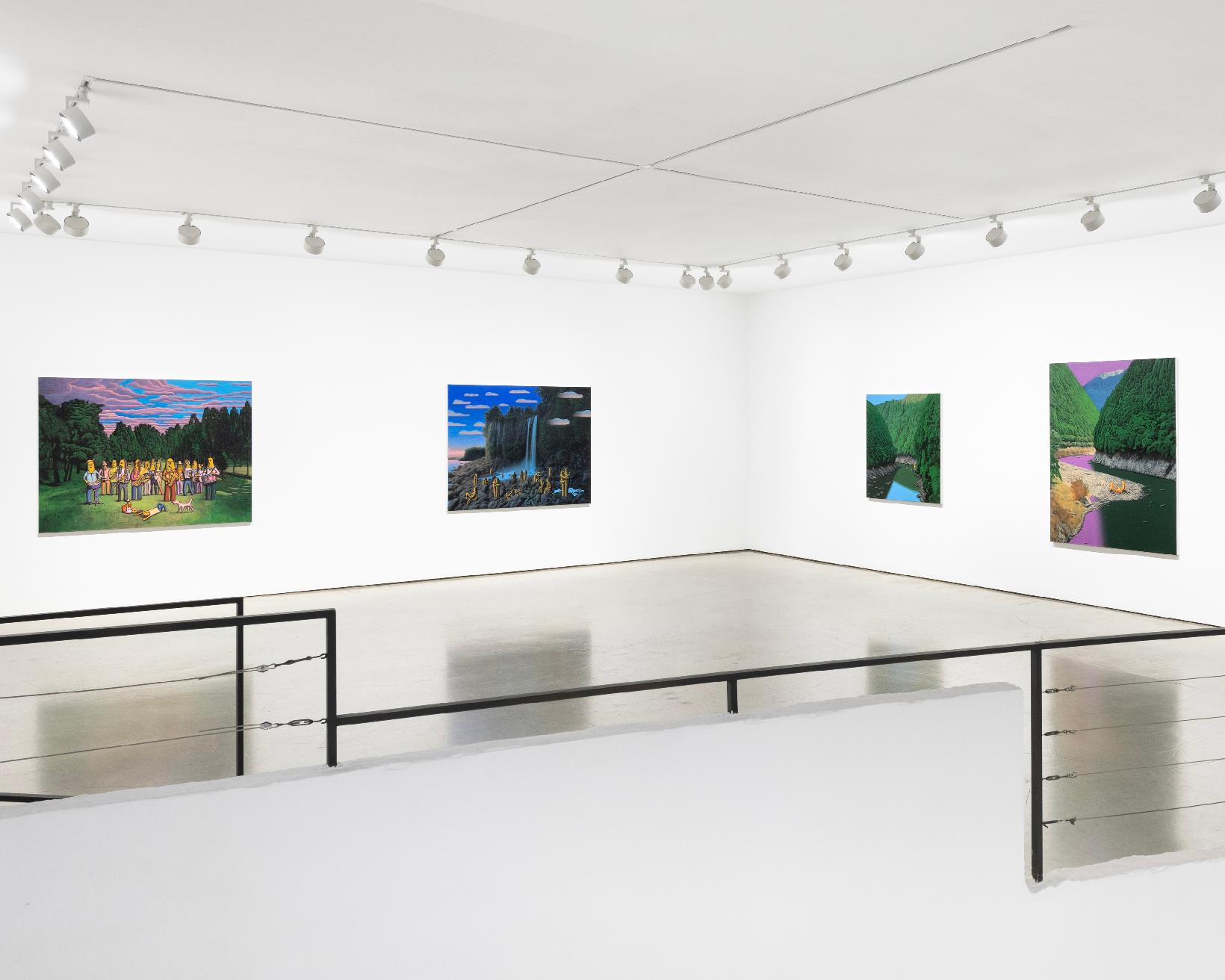
The title of his solo exhibition,
which opened on September 9 at Hakgojae, is 《Come Sit with Me》.
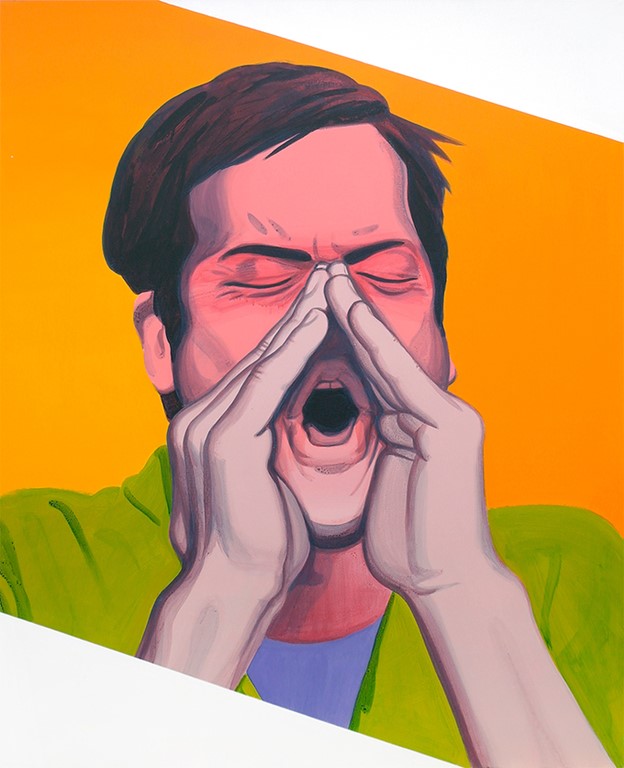
Woosung Lee, Can You
Hear Me?, 2012 ©Hakgojae Gallery
Woosung Lee translates
contemporary portraits into the language of painting. His gaze is that of an
observer who calmly and sincerely examines the present, using metaphor rather
than direct statement. The people he encounters daily, along with everyday objects
and landscapes, become the subjects of his paintings. These themes extend from
individual life to narratives of relationships, and further to the broader
social dimension. Friends and colleagues, teachers and students, studios and
public squares, daily life and socio-political reality—all these elements
interweave to form his world, much like the perspective of young people living
in the present day.
Woosung Lee was born in 1983 in
Seoul. He graduated from the Painting Department of Hongik University’s College
of Fine Arts in 2009 and obtained a Master of Fine Arts from the Korea National
University of Arts in 2012. He has held solo exhibitions at Hakgojae (2023,
2017), Doosan Gallery (2020), Amado Art Space (2017), Art Space Pool (2015),
and OCI Museum (2013), among others. In 2018, he gained attention for his
participation in the Gwangju Biennale’s "Imagined Borders."
He has
also exhibited in group shows at institutions such as the National Museum of
Modern and Contemporary Art, Arko Art Center, Kunstmuseum Wolfsburg in Germany,
Gyeonggi Museum of Modern Art, Busan Museum of Contemporary Art, Ulsan Art
Museum, Seoul Museum of Art’s Nam-Seoul branch, and Ilmin Museum of Art. In
2013, he was awarded the "OCI Young Creatives" prize, and his works
are held in the collections of major institutions including the National Museum
of Modern and Contemporary Art, Seoul Museum of Art, Gyeonggi Museum of Modern
Art, and Cheongju Art Museum. He is currently teaching at Seoul National
University of Science and Technology.
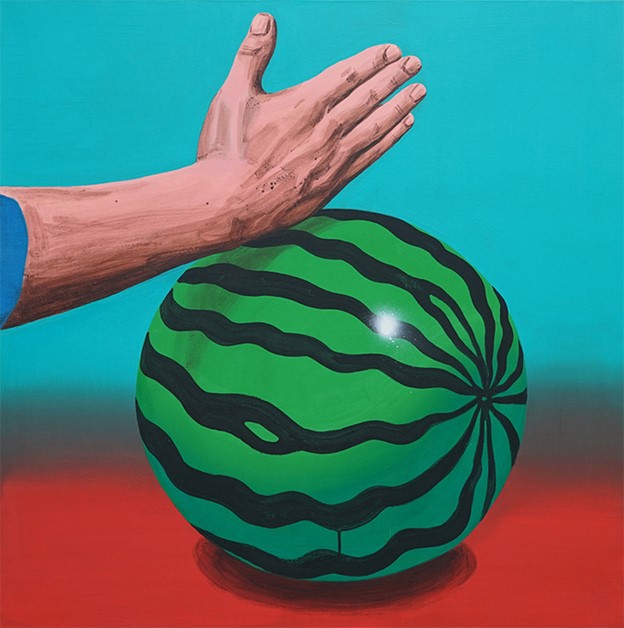
Woosung Lee, Midsummer,
2015©Hakgojae Gallery
◆Come Sit with Me—A Seat
Left Open for You
In Woosung Lee’s painting Midsummer
(2015), created eight years ago, a watermelon remains enclosed in its thick,
unbroken rind. The hands that pondered how to break it open in that painting
eventually succeeded two years later, with the help of others, in I
Came a Long Way to See You; Let’s Share and Eat Here (2017). In his
new series Come Sit with Me (2023), presented in this
exhibition, the canvas is once again filled with a massive watermelon. This
time, however, it has been cut open and transformed into a bowl of fruit punch,
filled with floating pieces of fruit and round ice cubes. The bubbles in the
poured soda glisten between them.
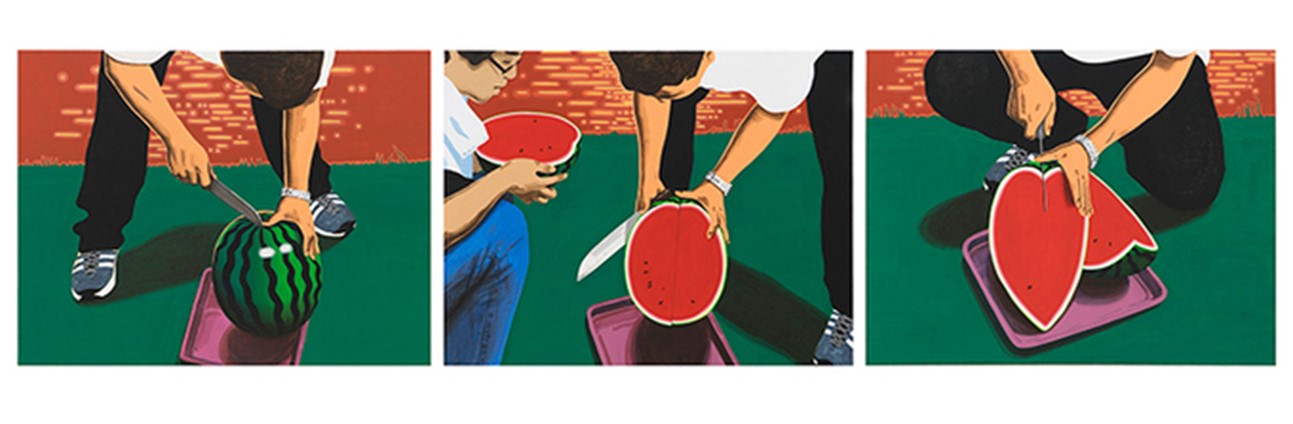 Woosung Lee, I Came a
Long Way to See You; Let's Share and Eat Here, 2017 ©Hakgojae Gallery
Woosung Lee, I Came a
Long Way to See You; Let's Share and Eat Here, 2017 ©Hakgojae Gallery
When asked why he frequently
paints watermelons, he responds, "Because it’s a fruit meant to be
shared." It is a medium that brings people together, inviting them to sit
in a circle and enjoy each other’s company. The hotter and more exhausting the
day, the more welcome its sweetness becomes. Now, the watermelon has fully
transformed into a shared dessert, inviting more people to join in. "Come
sit for a while. Let’s spend some time together."
Perhaps the voices that once
cried out, unheard, were simply saying this all along. Let’s fill our days with
kindness—the kind that everyone wishes for. Let’s lean on each other’s
shoulders in difficult moments, hold each other’s hands, and continue enduring
the present, always younger today than we will be tomorrow.
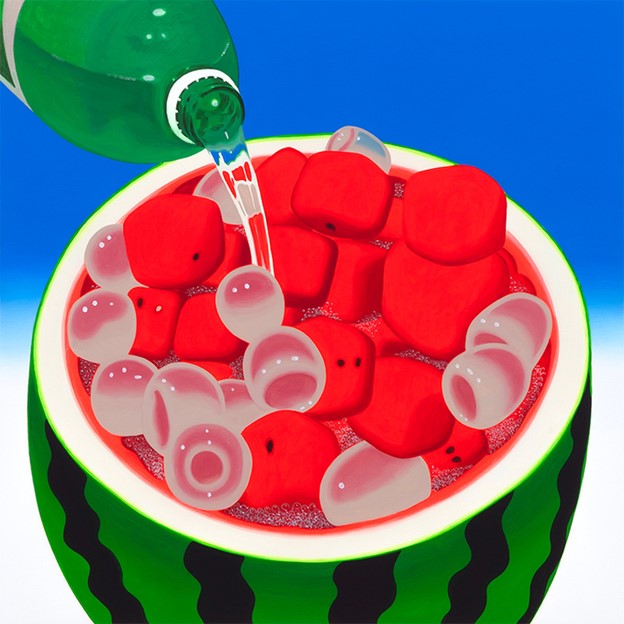
Woosung Lee, Come Sit
with Me, 2023 ©Hakgojae Gallery
◆Painting as a Record of the
Present
All grand narratives begin with
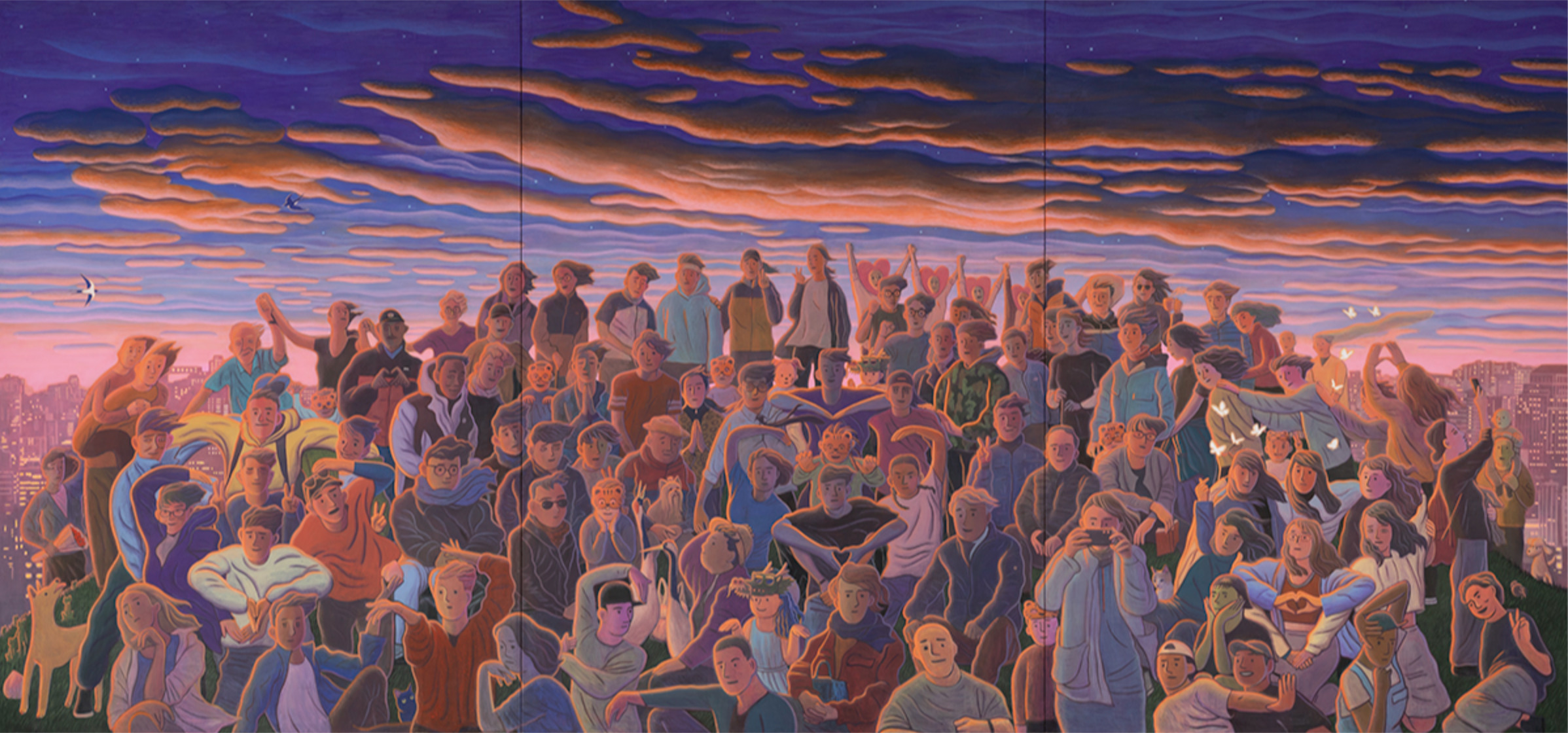
small, everyday events. I Will Be Back Here Again (2023) is
a painting depicting three figures leaning on a railing, gazing at sunlight
resting on the ridgeline. Capturing today’s friendships with a shimmering
warmth, the painting serves as both a portrait of our generation and a
nostalgic echo of our era. The same sunset also appears in the mirror held by
the figure in The Disappearance of the Self on the Mirror
(2023).
He describes this piece by
saying, "I wanted anyone to be able to see their own reflection." The
mirror’s surface is colored with the hues of the most peaceful time of day,
inviting anyone who steps into the painting’s space to find their own sunset
within it. He hopes that the reflections exchanged between viewers will become
sources of comfort. In capturing the present, his paintings oscillate between
glimpses of a larger world and deeply personal moments. The totality of a
single individual’s experience of the present is, therefore, both profoundly
intimate and universally resonant.
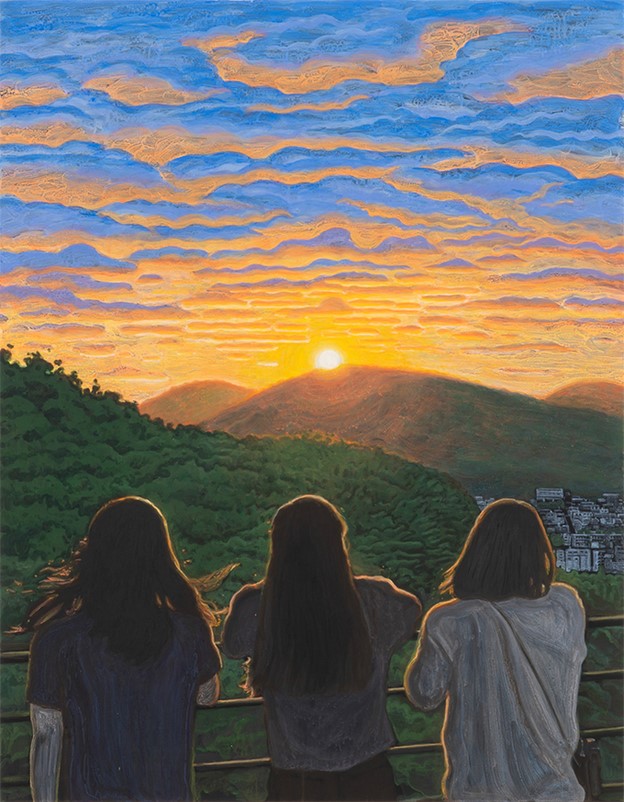
Woosung Lee, I Will Be Back Here Again, 2023 ©Hakgojae
Gallery
Woosung Lee frequently paints on
fabric rather than canvas. This choice allows for easier storage and transport,
reducing spatial limitations while fostering interaction with surrounding
environments. His distinctive career path, moving between domestic and
international art residencies, has also influenced this decision. Compared to
canvas, fabric can be more easily adjusted in scale to suit different studio
environments or carried around as needed.
He has participated in
residencies at the National Museum of Modern and Contemporary Art’s Goyang
Residency (2013), Annescaugh Cow House Studio in Ireland (2014), Seoul Museum
of Art’s Nanji Residency (2014), The Physics Room in Christchurch, New Zealand
(2016), Cheongju Art Studio (2017), and Seoul Foundation for Arts and Culture’s
Geumcheon Art Factory (2023), among others.
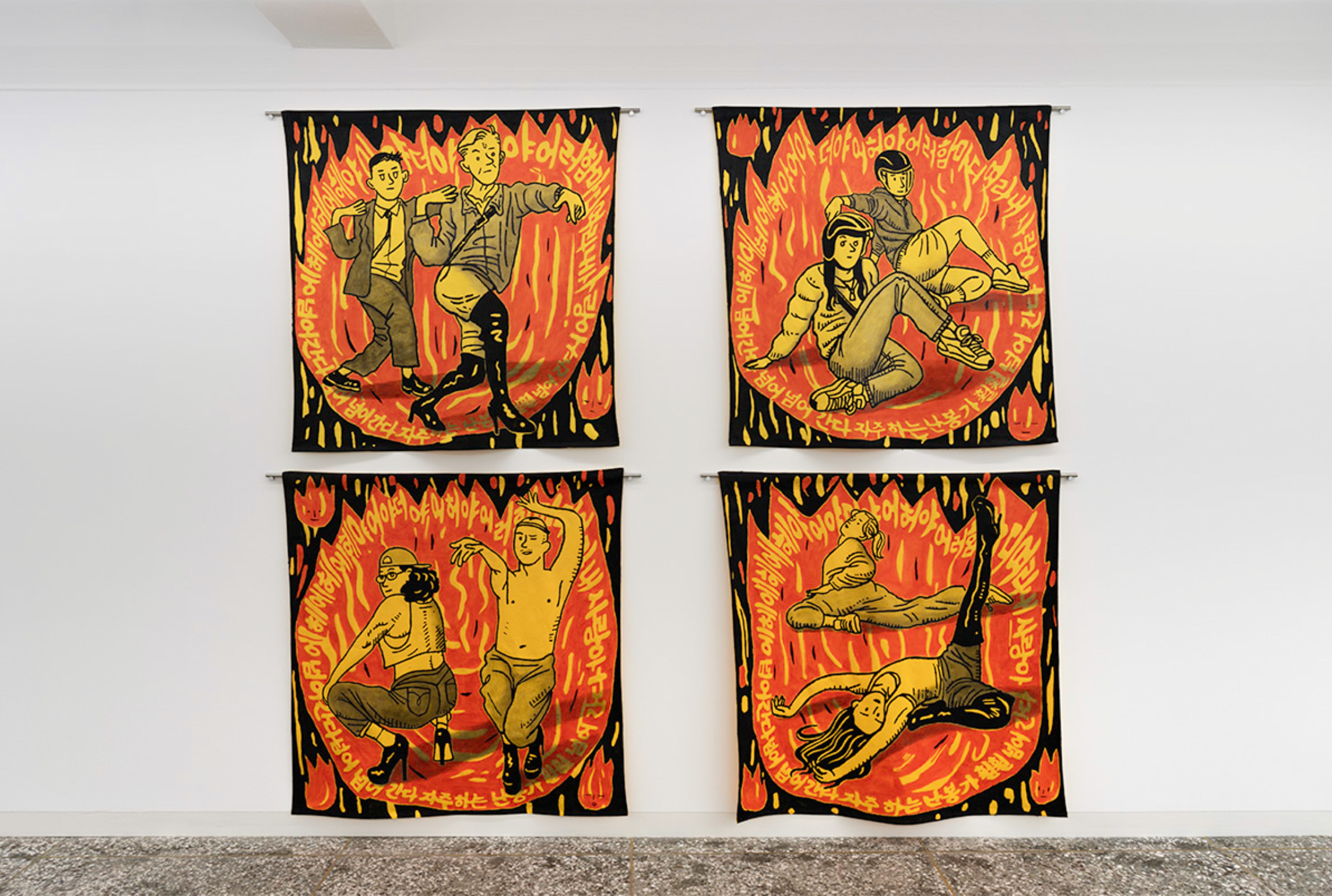
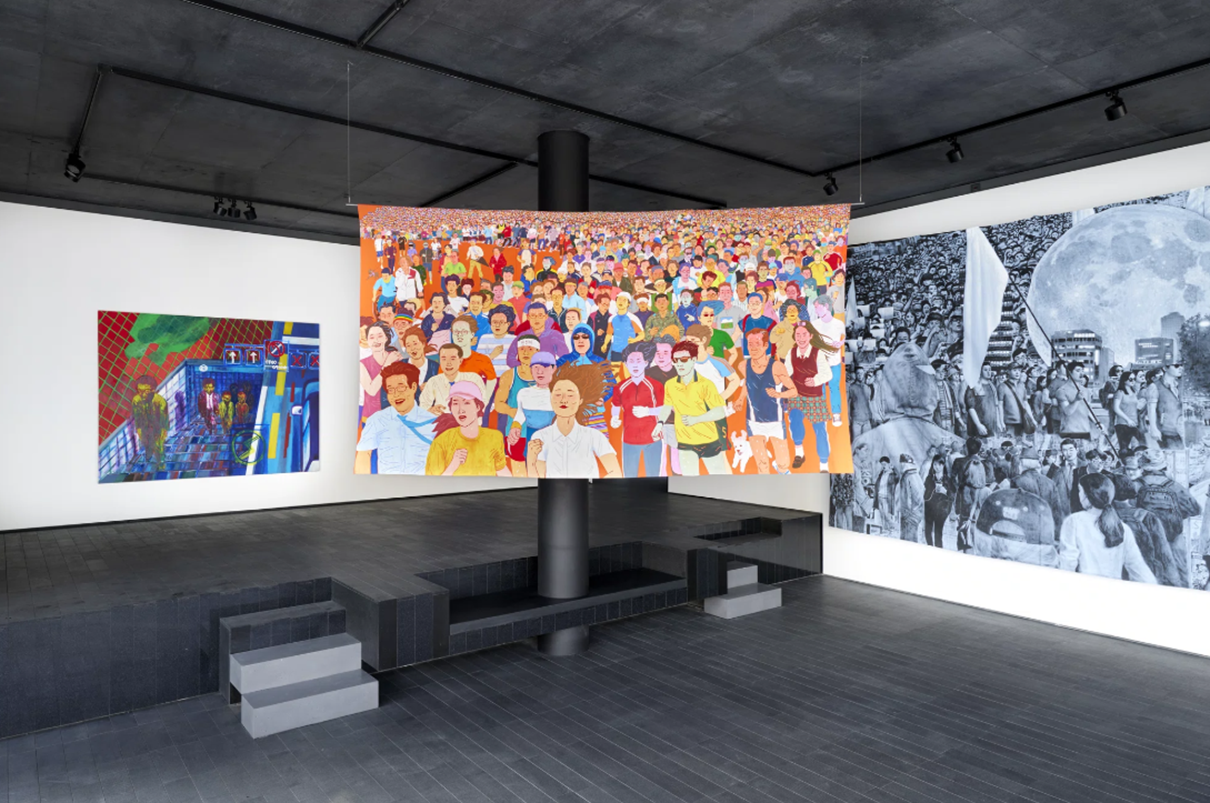
Some critics have noted that his
realistic depictions of ordinary lives and his use of fabric-hung paintings in
outdoor spaces recall the geolgae paintings of 1980s minjung artists. His works
have also drawn attention for referencing socio-political events, such as the
Gwanghwamun candlelight protests. However, Lee has consistently emphasized that
his focus remains on the everyday and personal emotions. His paintings do not
seek to make radical statements or provoke upheaval, but rather to faithfully
document reality as he sees it—without turning away.
When exhausted, he leans on the
shoulder of a friend standing beside him. As an artist, and as an ordinary
young person of our era, he spends countless days contemplating relationships
and emotions on a smaller scale than society itself.
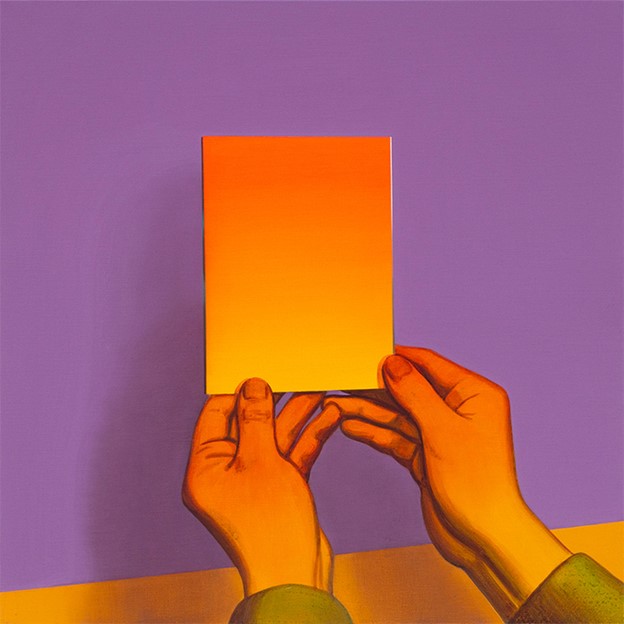
Woosung Lee, The Disappearance of the Self on the Mirror,
2023 ©Hakgojae Gallery
◆Still Working, Now and
Always
Woosung Lee’s solo exhibition at
Hakgojae runs until September 13. The faces filling the exhibition space are
all those of people he has met along the way. Each landscape of a shared place
has become a canvas of layered memories.
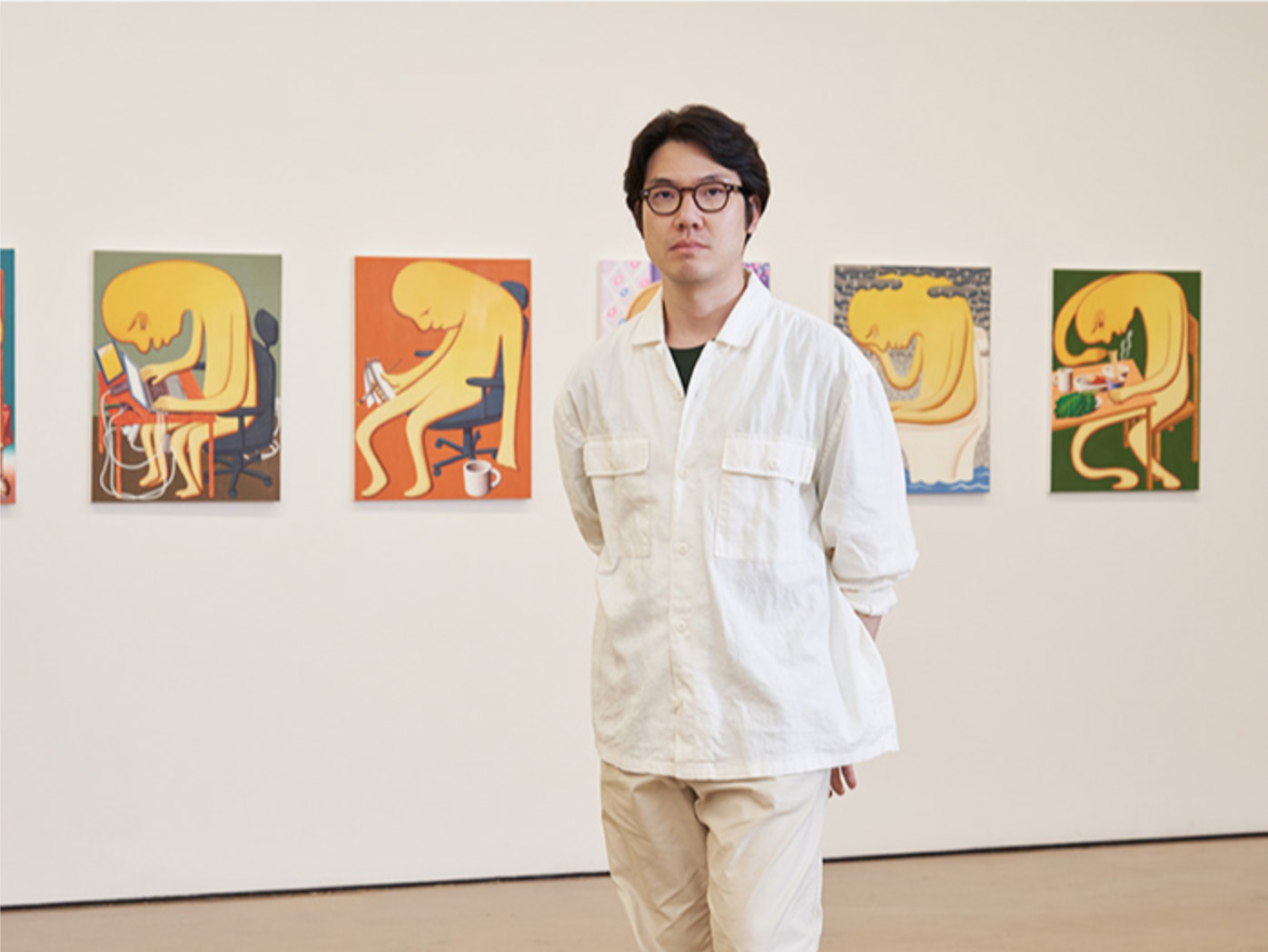
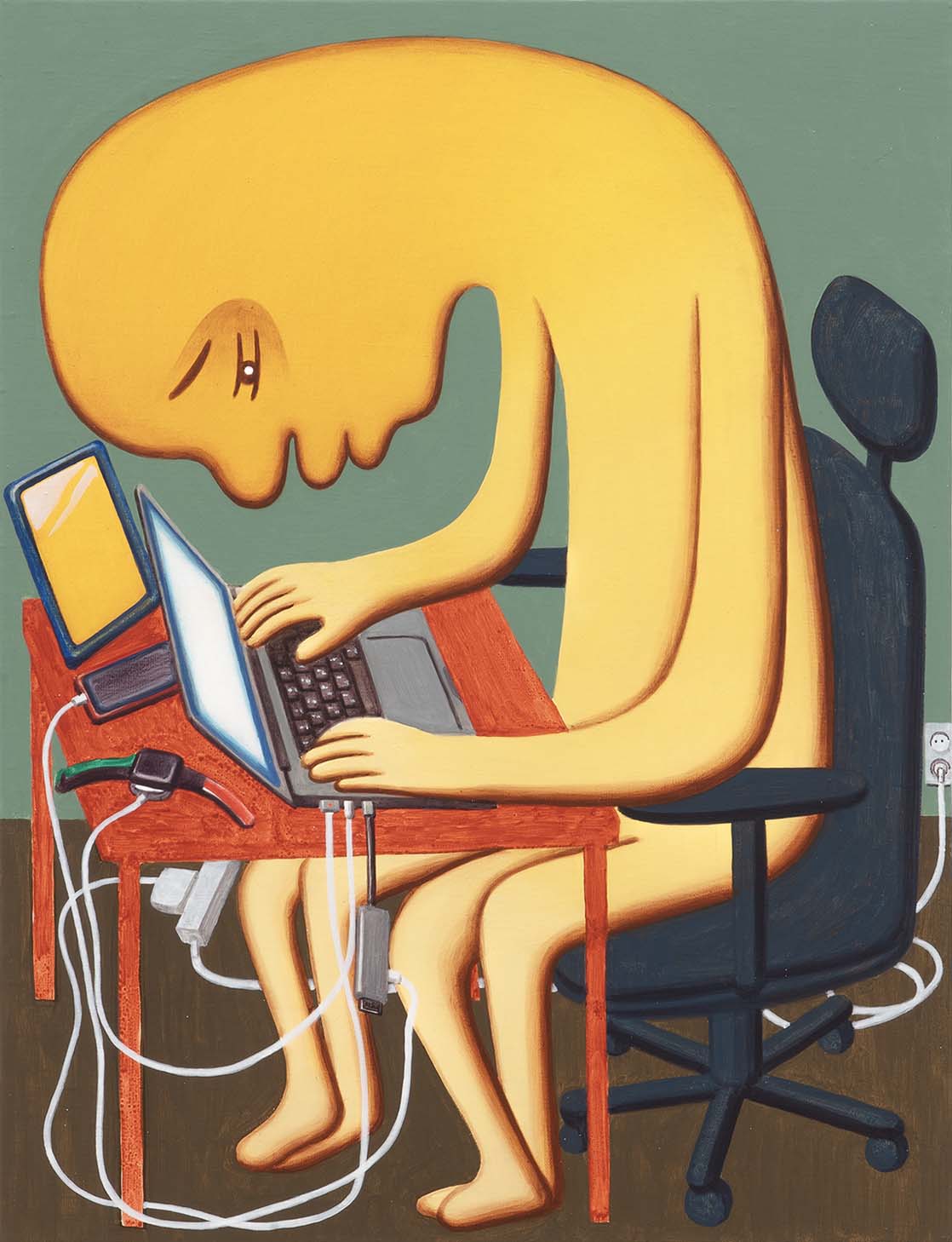
Among the many carefully rendered
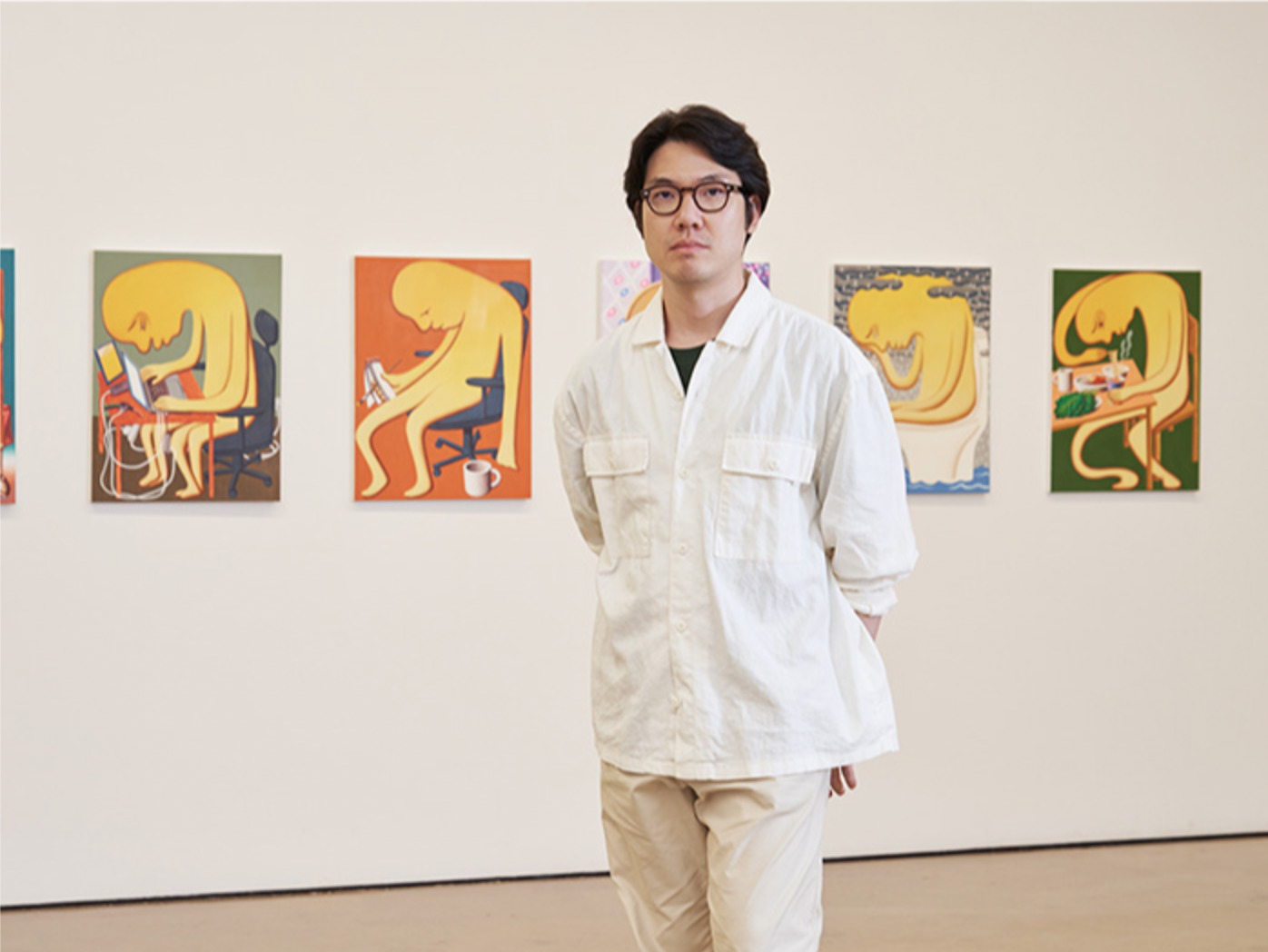
portraits, only his self-portraits in the series Still Working
(2023) appear as if they were pulled from a comic strip, with exaggeratedly
slack expressions. With lips pouting and furrowed brows, he roams through daily
life in frustration. If asked what he is doing, he would simply respond,
"I’m working right now." It seems that the life of an artist has, at
times, been exhausting. So much so that even helpless melancholy spills onto
the canvas.
Fifteen years have passed since
Woosung Lee began his artistic career. The young man who once gazed at his
canvases in his mid-twenties is now forty. With a clear brushstroke and a
softer voice, his paintings speak to us again.
"Come sit with me. There are
still many stories to tell, and countless days ahead to share them."