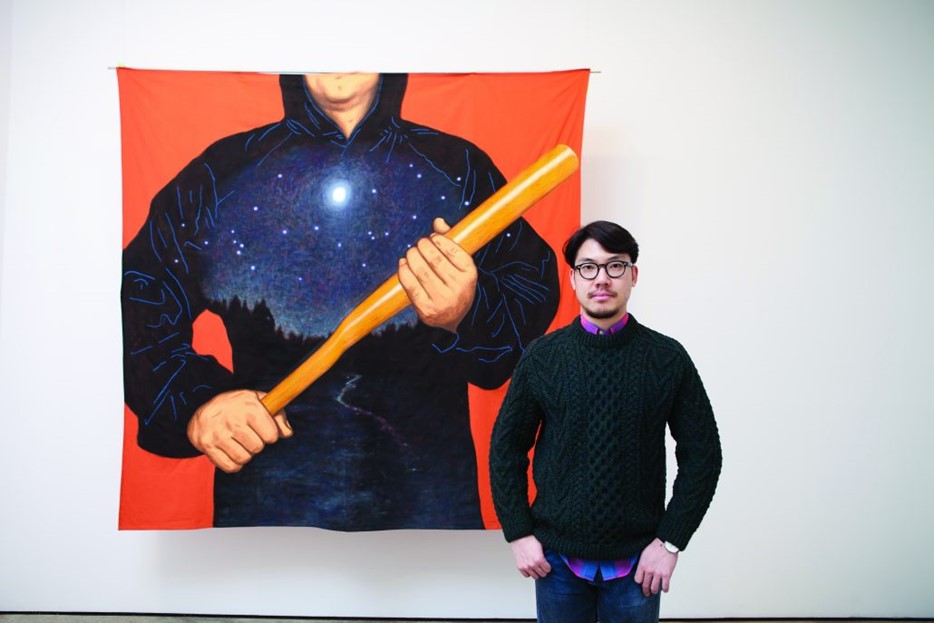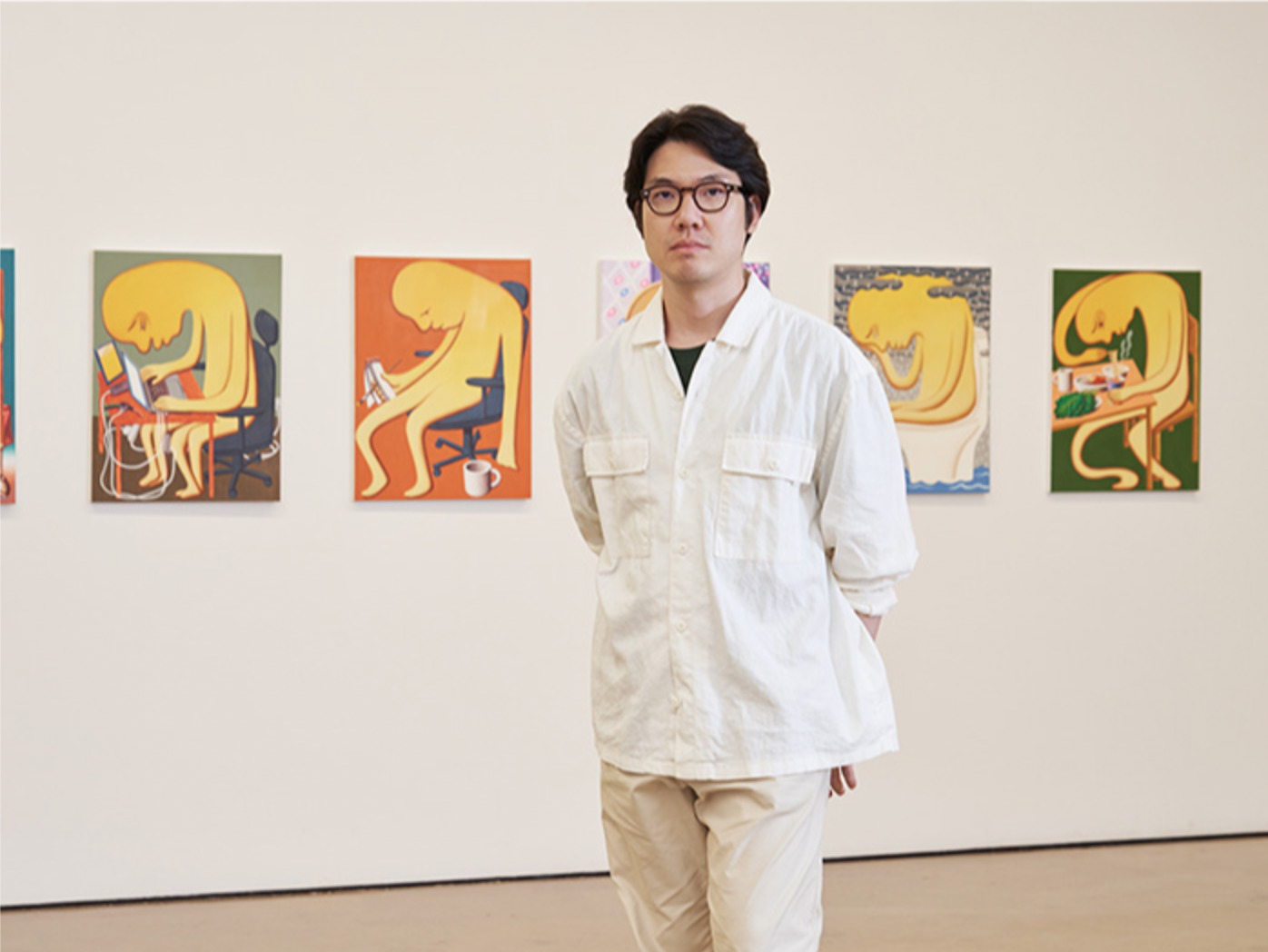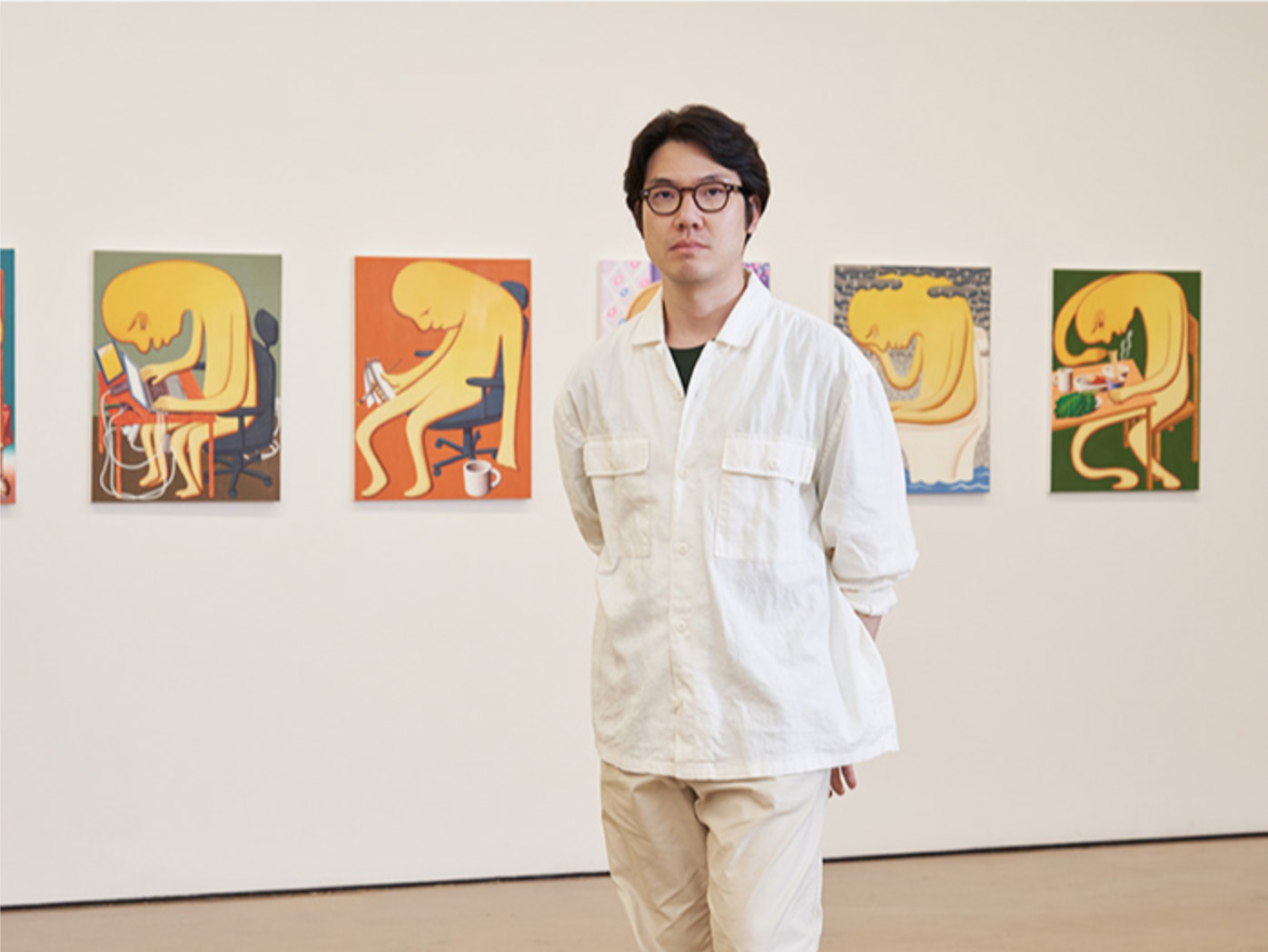


Woosung Lee in front of his work ©Woosung Lee

"I Hope These Drawings on Thin Fabric Can Reach Your Heart. I still find the size of my paintings too small to fully capture what I see."

These words, written in the notes sent by artist Woosung Lee, leave a lasting impression. The present moment, the subjects who share that moment, and the traces they leave behind—these elements become the driving force behind his paintings. That is why his artworks feel warm, familiar, and welcoming. Through the figures captured by his playful yet keen perspective, let us discover the connections between you, me, and us.


For ‘You’ Who Comes Before ‘Us’

"This is prepared for you." As a title for a solo exhibition at Hakgojae, these words lack grandeur. In an era when painting struggles to revive the aura that was supposedly extinguished in the age of mechanical reproduction (Benjamin), this phrase stands in stark contrast to that desperate effort.

From the very first line of invitation, Woosung Lee's solo exhibition is courteous, humble, and modest, yet there is an inscrutable smile hidden within. The recipients wonder: Is this really for me?

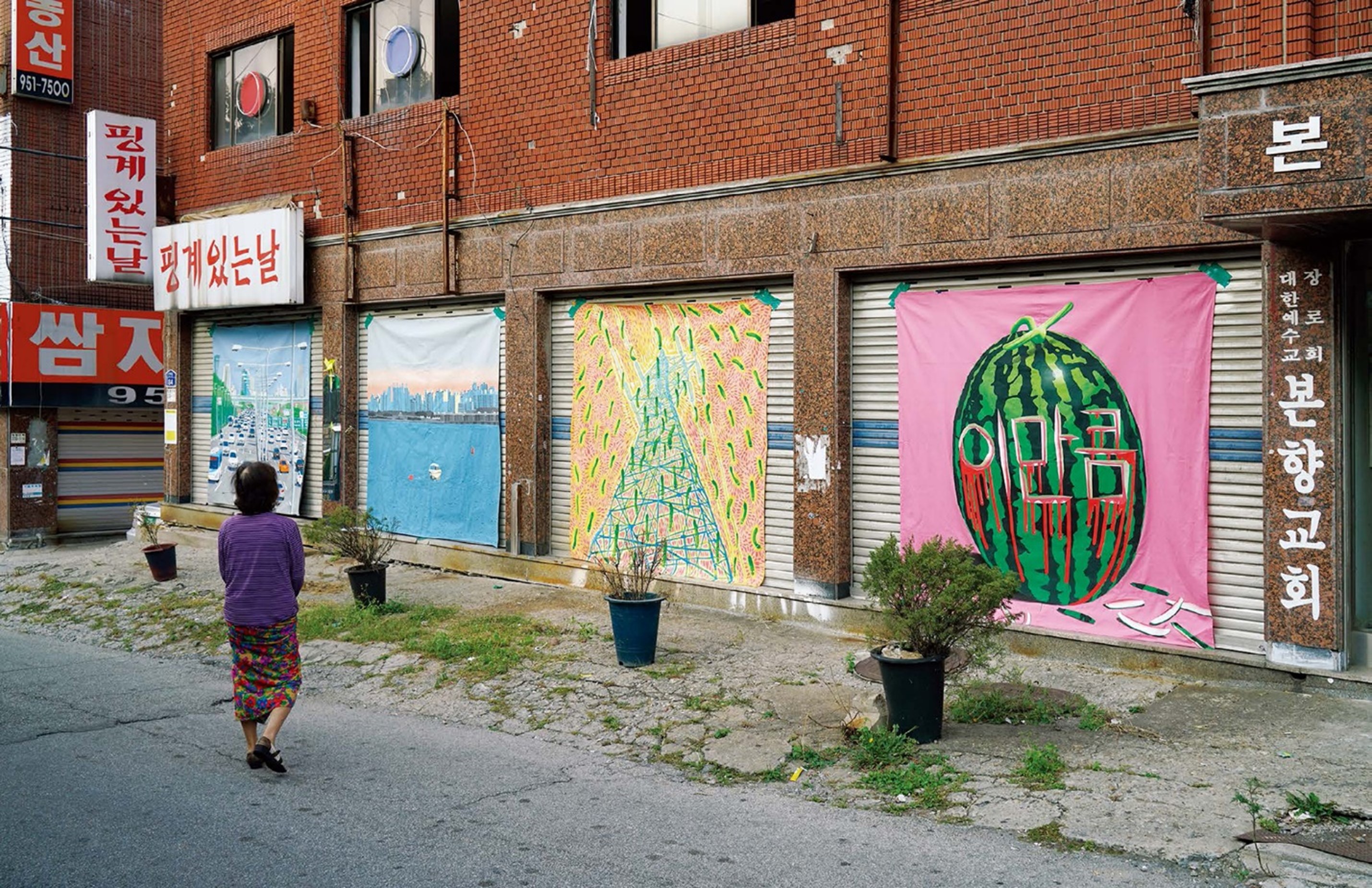
In fact, Lee’s paintings seem to align more with the plural pronoun "we" than the singular "you." He has often been called a representative youth artist for his depictions of anonymous young people. Since 2014, his fabric paintings, hung in alleys and street corners, could be interpreted as a secularized, postmodern version of the minjung art (people’s art) geolgae paintings of the 1980s.

The grand symbols of people, history, and ideology in minjung art have been replaced in his work with fragments of everyday life, objects, outlines, and rhythms—lightened to resemble cartoons. While they appear to have been liberated from revolutionary pathos and collective subjectivity, there is always a loosely yet undeniably connected sense of "us" within them.

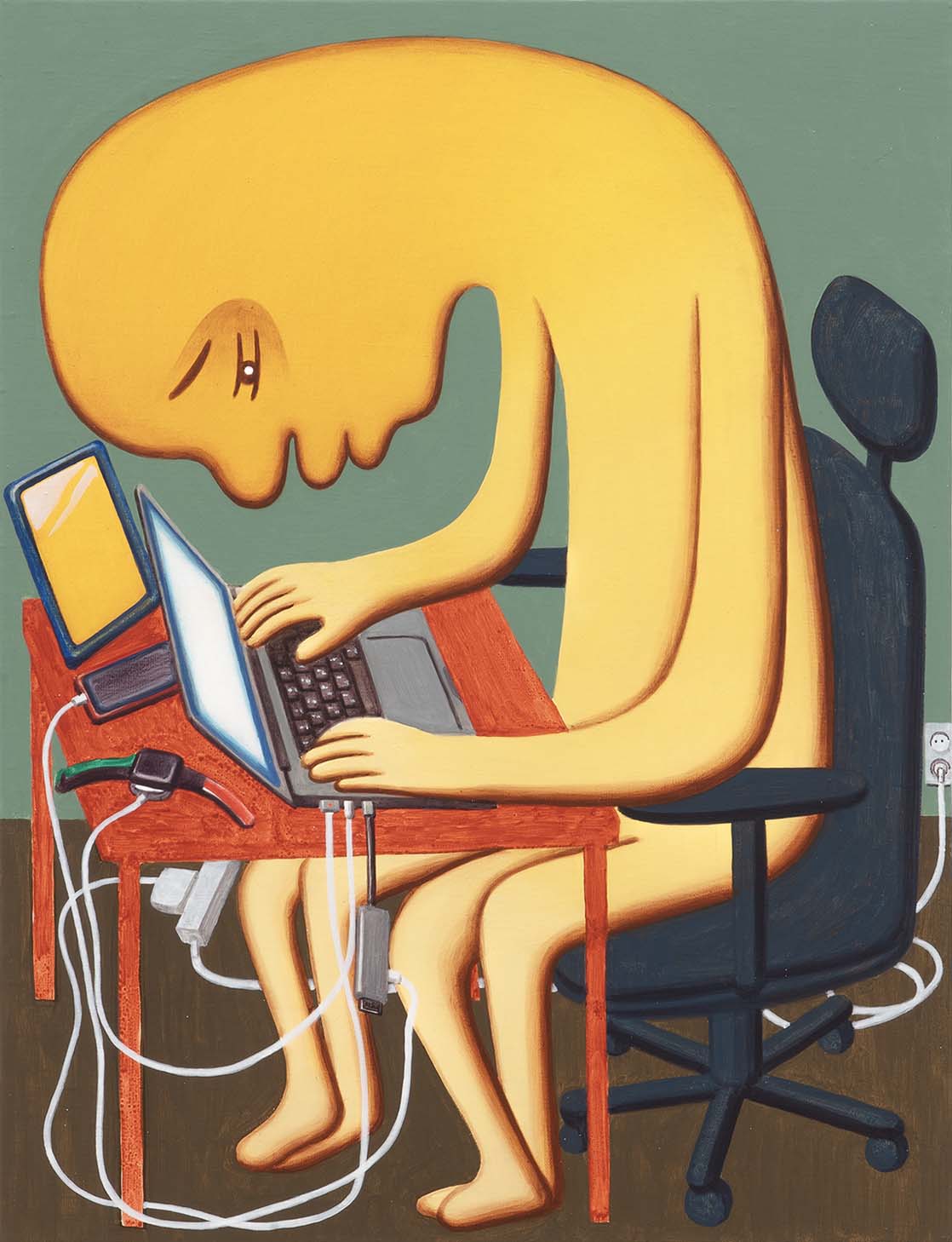
That is why people always appear in his paintings. The montage of impressions engraved on backs in Visitors (2016), the white rock walls of Annapurna in Under the South Wall (2016), and even the objects placed on hands in Who Am I Painting For? (2017) are all anthropomorphized images that preserve memories, time, and traces of a particular someone. Yet, these specific figures, known only to the artist, are often faceless—captured from the back or appearing only as vague silhouettes, bearing a sense of déjà vu, multiplicity, and anonymity akin to a found footage film.

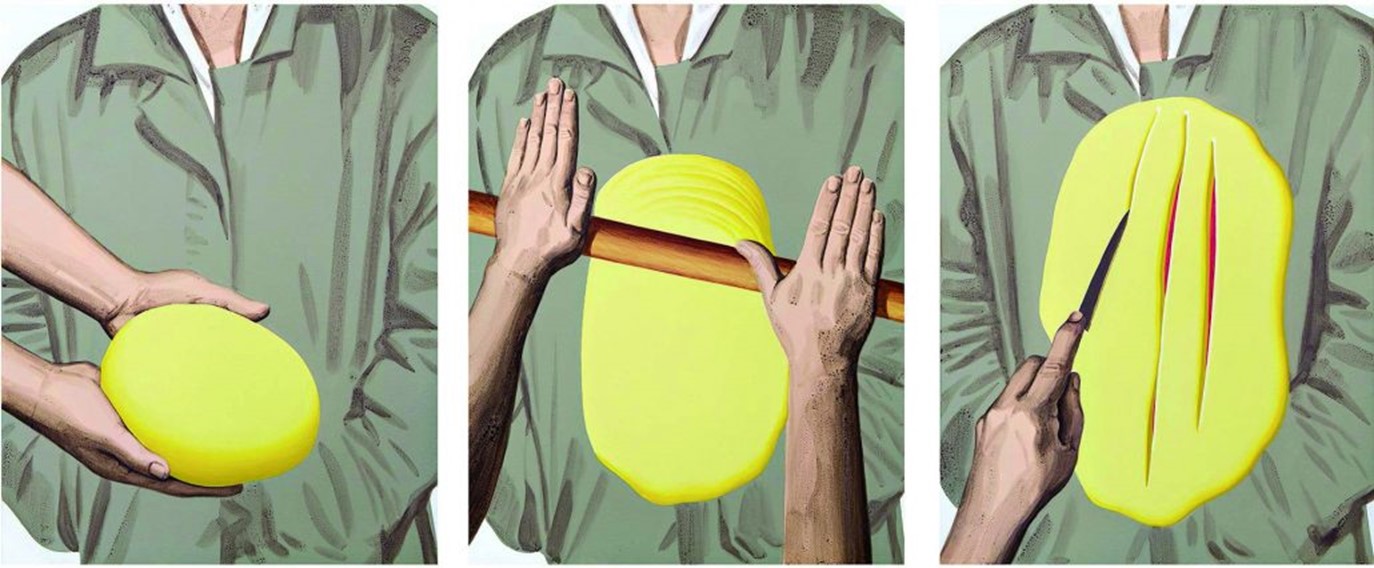
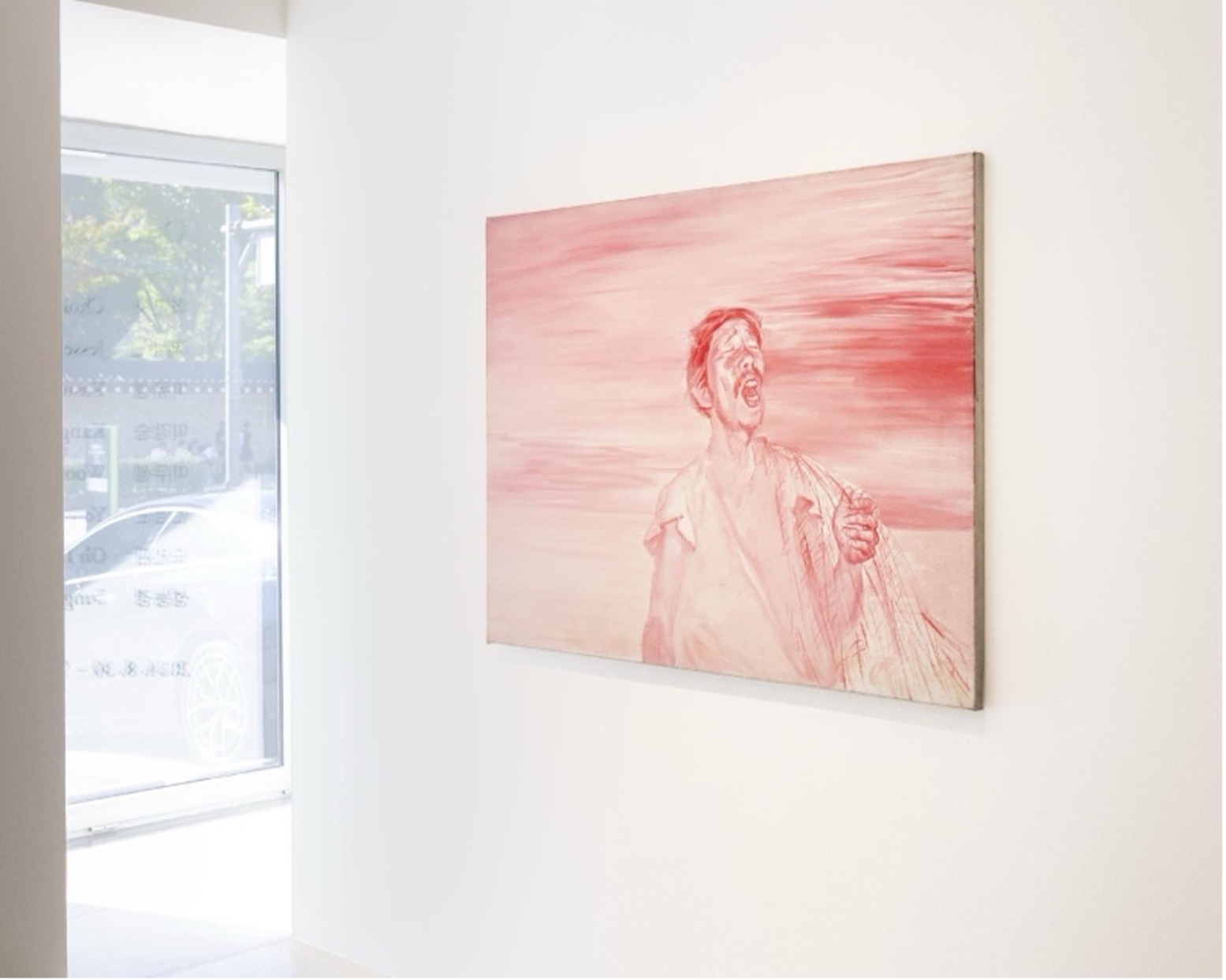
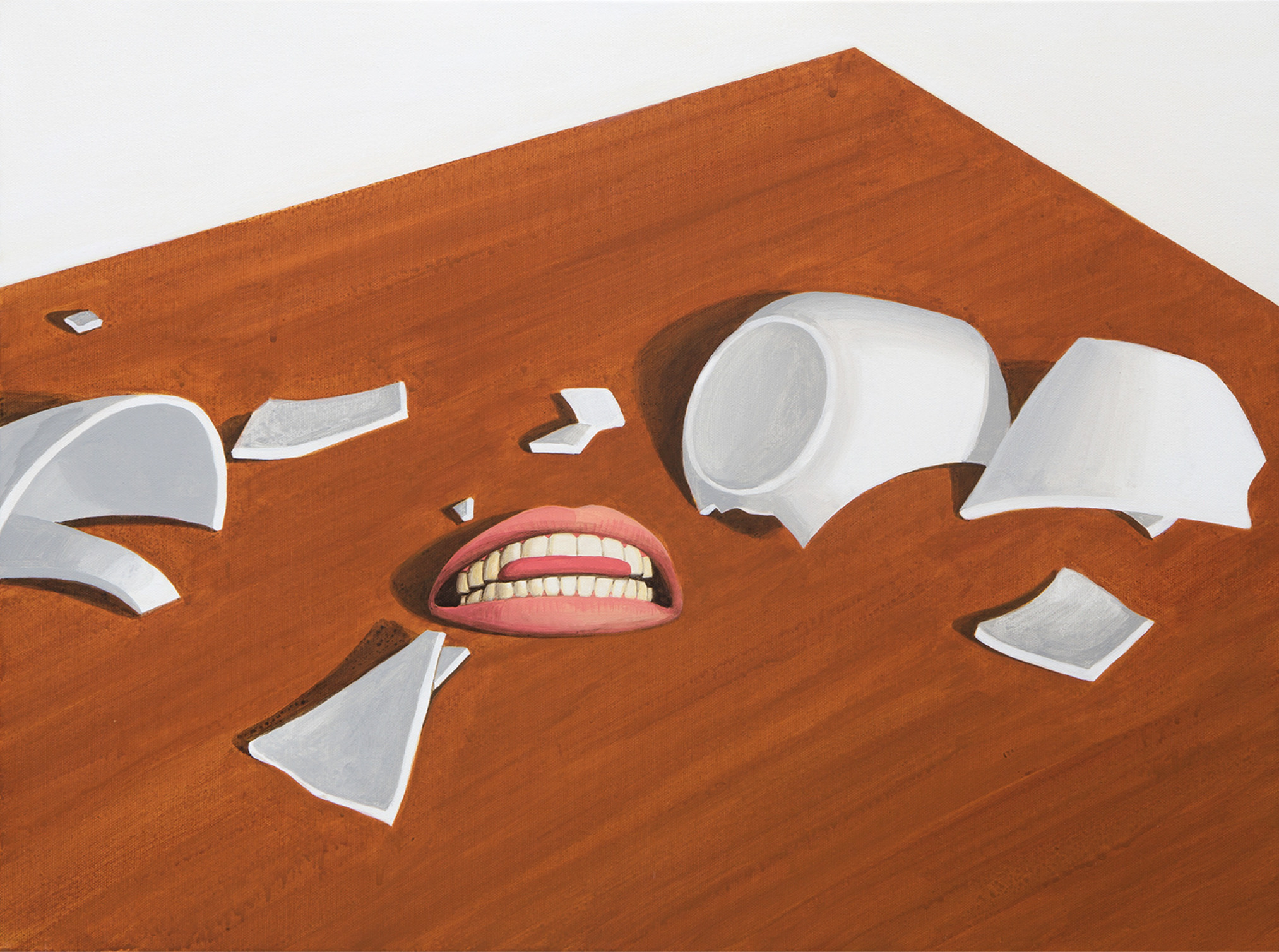
Collapsed Heart, gouache on canvas, 62.1 × 50 cm (each), 2013 ©Woosung Lee

"People are expressions and messages." For Woosung Lee, painting is an "image space" that records "the memory, time, and traces" left behind by people. It is a rubbing of the impressions deeply imprinted on him. Within these rubbings, desires or heat are intertwined like strings or nets.

In Kim Seung-ok’s novel Seoul, 1964, one of the characters remarks: "Seoul is the gathering place of all desires." Likewise, we, living in the 2000s, sit before transparent soju glasses, exchanging unspoken meanings and reckoning with the personal sensations of this city, just like the characters in the novel.

The question Where Were You That Day? (2017) overlaps with the unresolved inquiries in the novel, where differences in meaning remain unresolved. "Kim, do you love things that wriggle?"

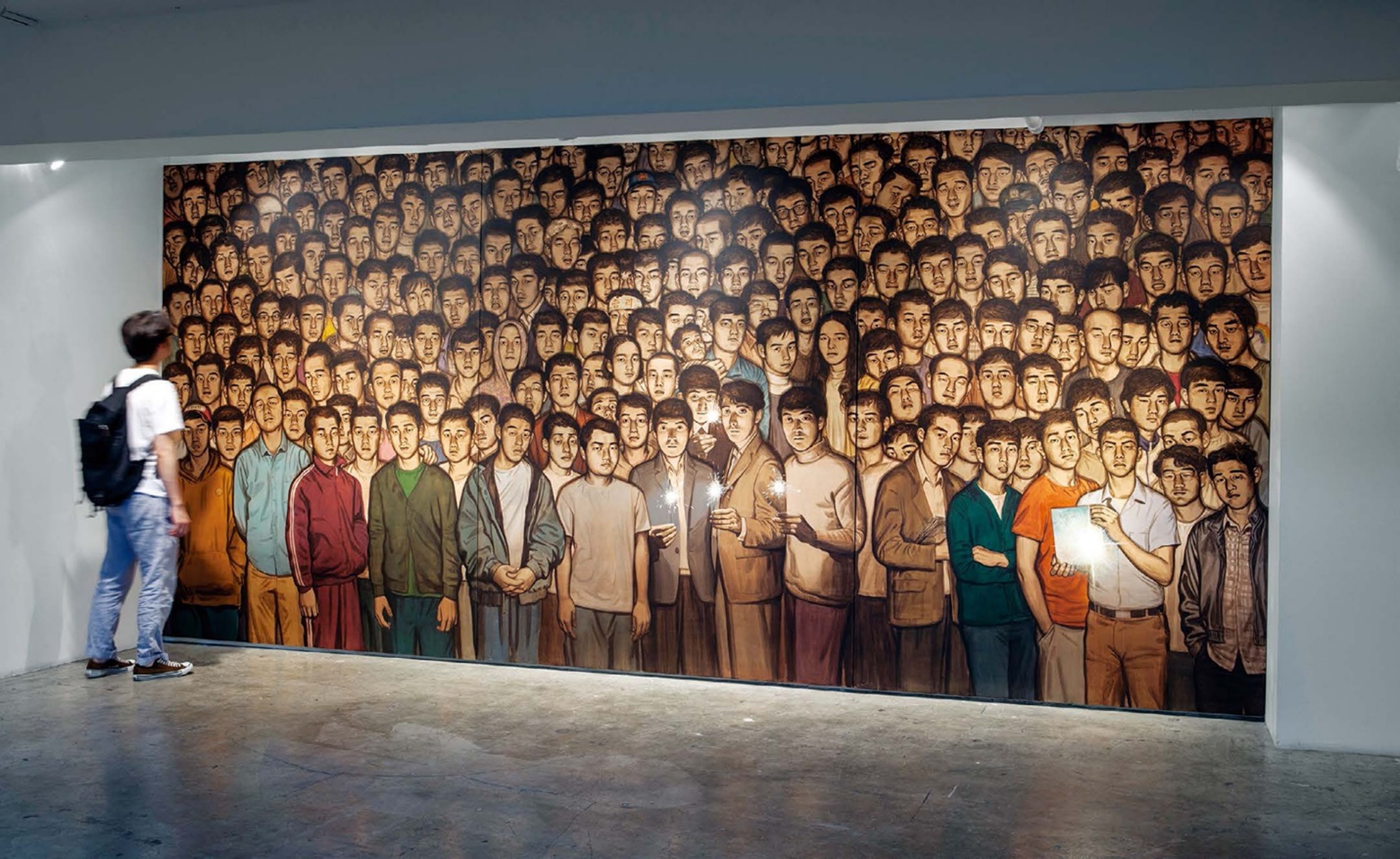
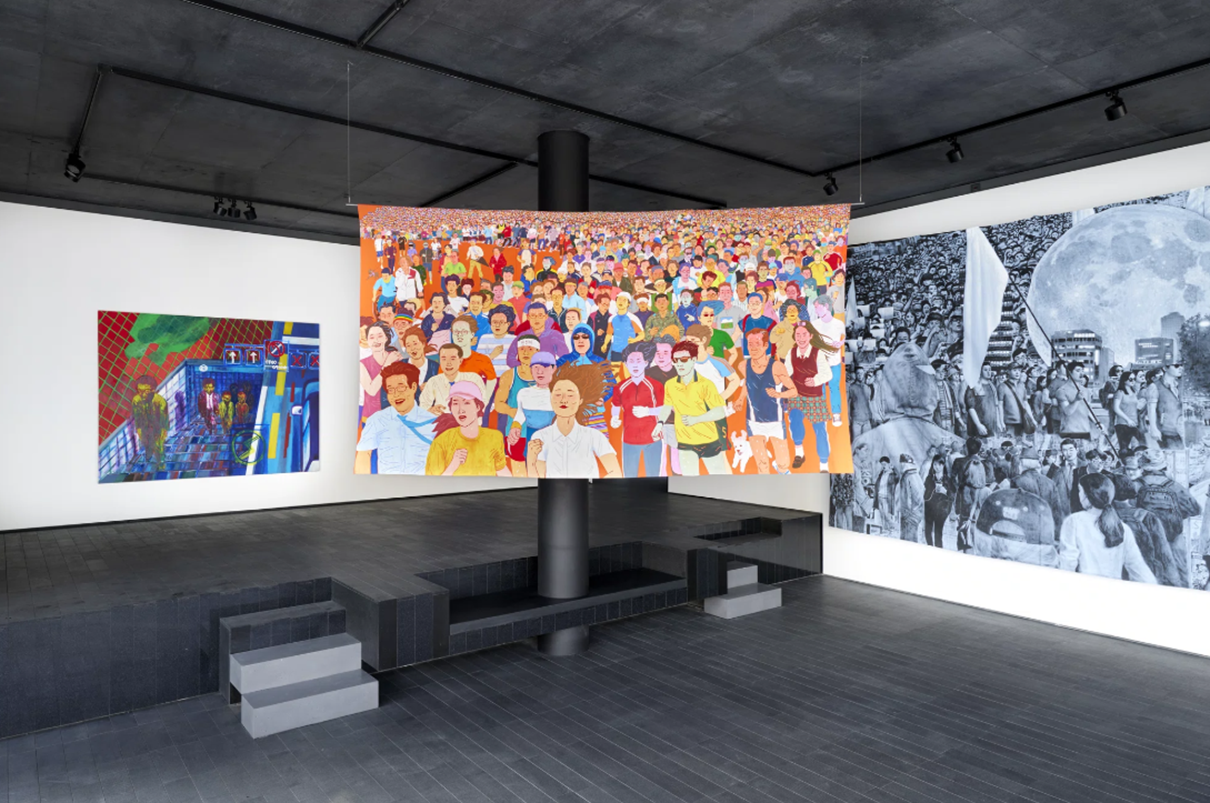
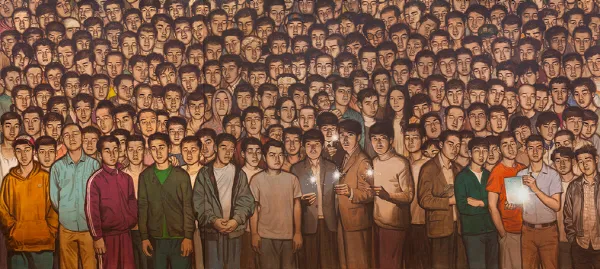
People Staring Straight Ahead, gouache on canvas, 259.1 × 569.6 cm, 2012 ©Woosung Lee

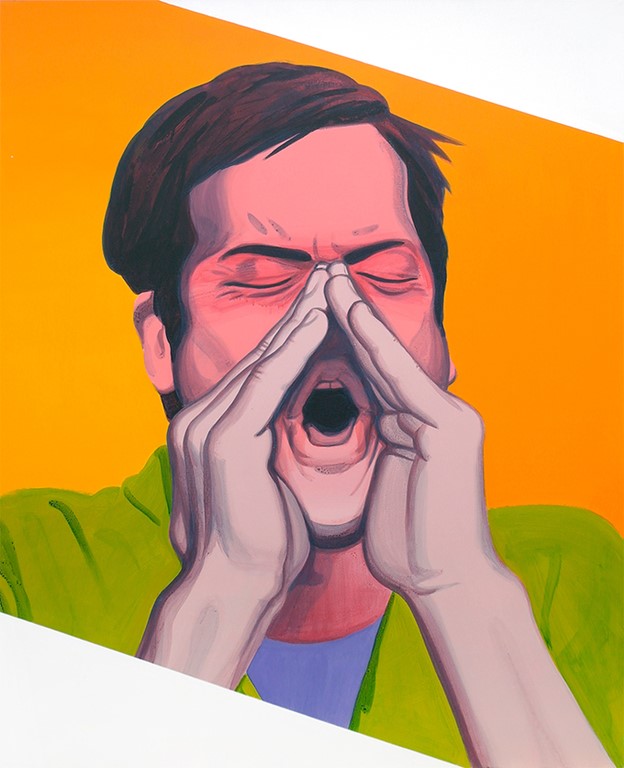
Woosung Lee often reconstructs bodies seen from a very close distance. The perspectives in his paintings sometimes feel too close, as if we are inside a dyadic relationship or a group. As a result, the artist himself seems to be hidden somewhere among the people in his paintings.

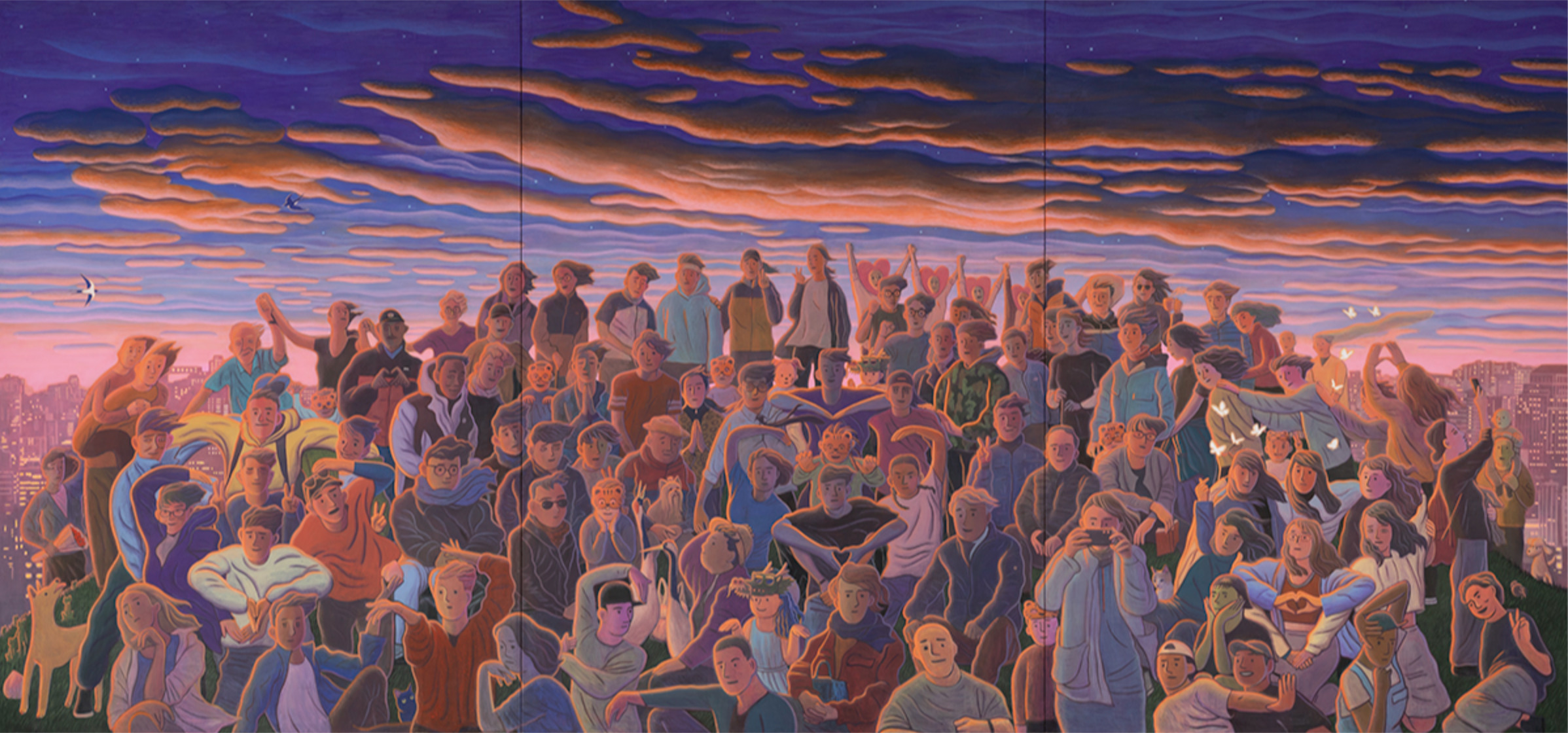
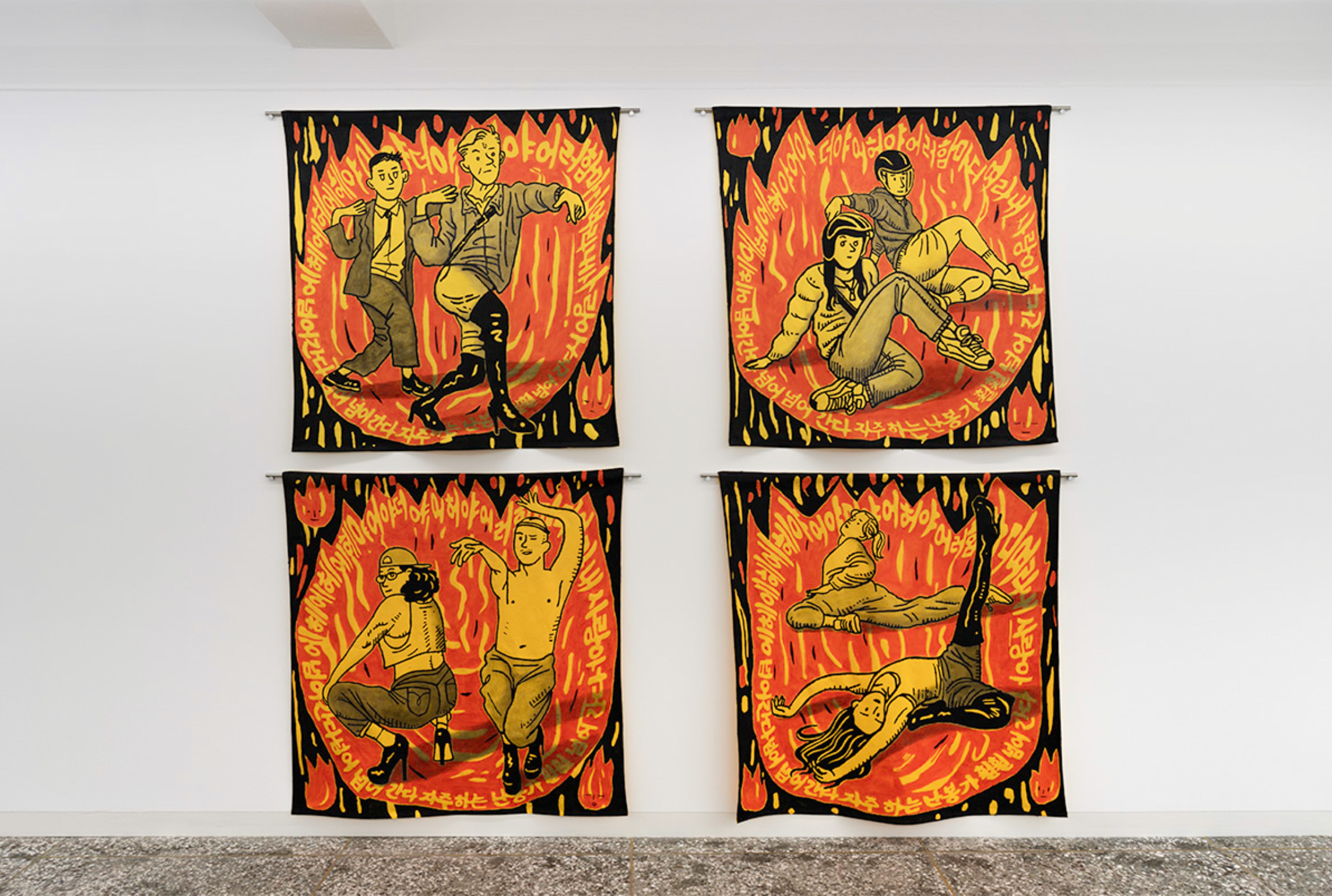
In the shadows of figures setting fires and running away (Escape, 2012), in the overwhelming density of male faces with unreadable expressions (People Staring Straight Ahead, 2012), in the faceless youth engaged in an unknown game (Rock Paper Scissors, 2013), or in the figures awkwardly staggering about (People Walking Sideways, 2014)—Lee's presence lurks subtly.

He does not paint self-portraits, but he reveals his world through depictions of his friends, acquaintances, and the traces of time and space they shared. His self-portrait emerges within relationships of altruism, resembling the structure of The Autobiography of Alice B. Toklas by Gertrude Stein, where Stein narrates her own story through the voice of her partner, Alice.

Just as Stein places herself in the position of the other, Lee constructs his self-portrait through the relationships, emotions, and memories of those around him. His identity appears like a photograph taken while quietly stepping back at a party—present yet detached, simultaneously internal and external.

In his paintings, we recall the clinking of glasses with friends, the nights spent at candlelight protests, and the yearning encapsulated in the lyrics of Yeosu Night Sea: "I want to walk with you."
However, these paintings are not truly about us. They depict deeply personal moments, imprinted on the artist like lipstick marks. Though they seem to invite empathy and resonance, they cannot fully assimilate with our own experiences.

The "you" and "yours" in Woosung Lee’s paintings resist categorization into collective identity or social groupings. Italian philosopher Adriana Cavarero argues that the other who defines the self—the you—cannot be captured by conventional ethical or political language. The moments imprinted in Lee’s paintings belong to you before us, existing prior to the collective.

Gift, Electrocuted Cucumbers Scattered, What Should I Paint?, Gangbyeonbuk-ro (from right), water-based paint and gouache on fabric, 210 × 210 cm, 2015 ©Woosung Lee


Escaping Identity

The interplay between "you, me, and us" in Lee’s work creates a subtle tension. The group performing Back to the Start (2015) does not evoke the collective pathos of minjung art. Instead, their movements resemble the rhythm of comic strip panels in Quizás, Quizás, Quizás (2017).

In People Shining in the Streets (2016), which captures the echoes of protests in Gwanghwamun and Jongno, the light does not highlight the unity of the crowd. Instead, it reflects softly from the supermoon, flags, and placards, forming a delicate montage of fragmented lights.

From an elevated viewpoint in Jongno 3-ga—one that does not exist in reality but was reconstructed through 3D modeling—the glowing figures appear beautiful yet unreal. Like the shimmering waves in The World Stops Me From Dreaming (2014), they contain both the possibility of hope and despair.

These flickering images recall the fireflies in Georges Didi-Huberman’s Survival of the Fireflies—small lights that momentarily appear, disappear, and reappear through someone else's gaze. Within them, the presence of a hooded youth, a sorrowful hand covering a face, and the sign of Nakwon Office-tel peeking through all suggest an "exception" within "us"—a "you" who resists full integration.

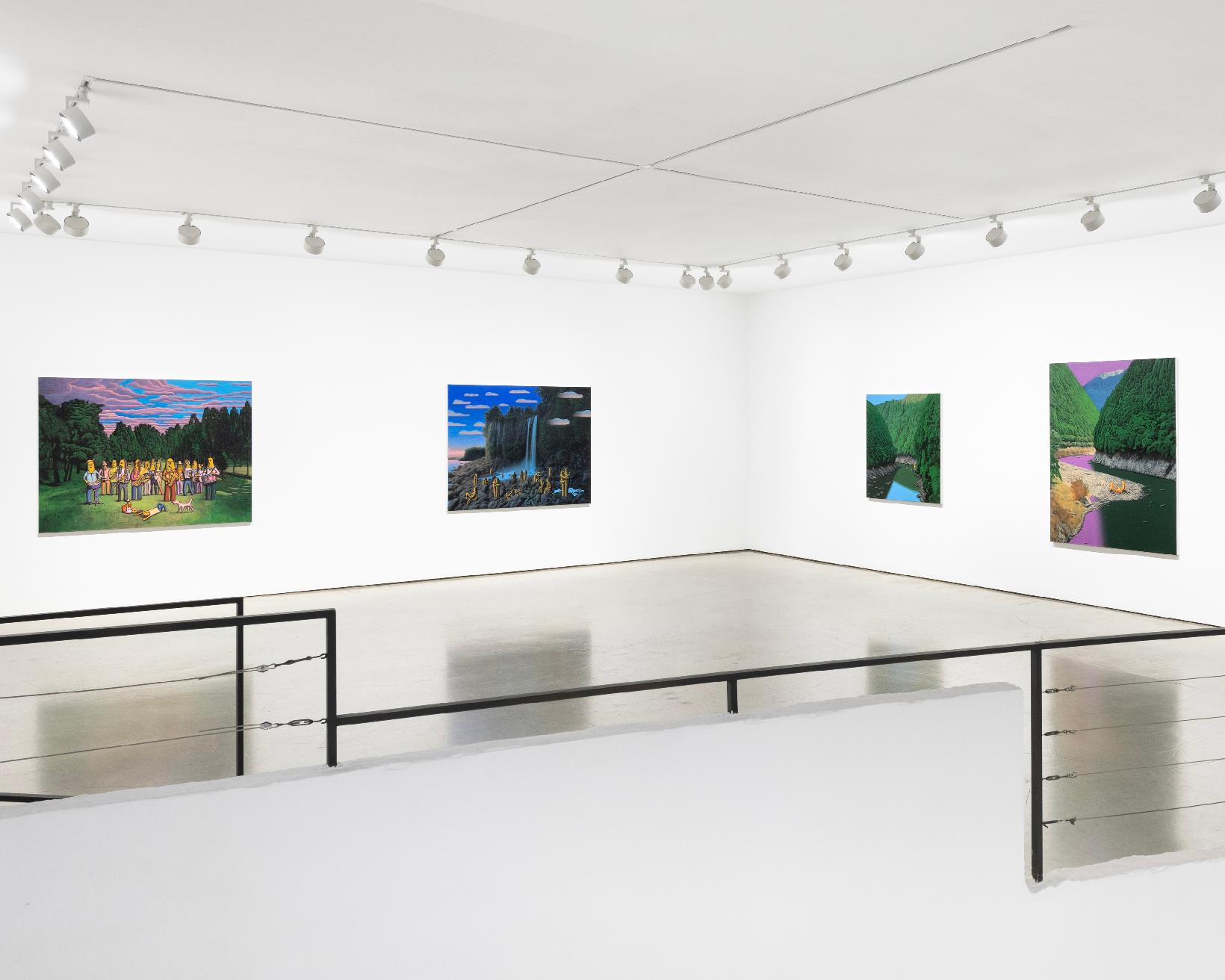
Exhibition view at Hakgojae Gallery. Yeojin, Please Light Up the Room with Your Phone (right), acrylic gouache and gesso on fabric, 210 × 210 cm, 2017 ©Woosung Lee

In his latest solo exhibition at Hakgojae, Woosung Lee presents his acquaintances in warm and vivid forms, stripping away the anonymity that characterized his previous works. Yoon Joong, artist Yeojin, Sejin… These identifiable names and recognizable figures fill the exhibition space. They seem to be the protagonists of the "you" he addresses.

However, these figures also function as curtains or veils. To an outsider—the recipient or observer—they do not serve as texts that can be fully deciphered. The names and presences of those who constitute Lee’s private world remain firmly closed to the viewer. This erases any horizon through which the audience might grasp shared emotions or the intrinsic meaning of the images.

Ironically, this empty specificity betrays the refined commodity value that might accompany the sale of his paintings. It also defies the intrinsic and transcendent aura that one might expect from a painter who has been active for years. Unlike a minjung artist who faithfully responds to the demands of the times or the people, Lee enacts a subtle betrayal—one that sidesteps the expectations of the era, the art world, and curators.

Despite the vast differences in medium, style, and historical context, I cannot help but think of Félix González-Torres when considering Lee’s approach to specificity. González-Torres' works evoke an immediate, almost universal sense of warmth and familiarity in public spaces while simultaneously prompting deeply personal narratives.

For instance, his billboard image of an empty bed, displayed in the streets of New York, might seem like an ordinary scene to some viewers. Yet, to certain minority communities, it recalls shared experiences of catastrophe, absence, and loss. José Esteban Muñoz described González-Torres’ oblique and ambiguous imagery as a form of "askew visibility"—images that remain invisible to the general public but are legible to those within a particular inner circle. This challenges the distinction between public and private while resisting any fixed identity category.

Whether intentional or not, the subtle mysteries embedded in Lee’s paintings and their connotations recreate a "structure of emotion" and a "structure of perspective" that only his close circle—or a specific internal group—can fully grasp. Yet, at the same time, the first, second, and third "you" who encounter his paintings each receive their own version of love, longing, solidarity, or loss.


He reveals this contradiction with a bright smile. "This is prepared for you." But as you hear those words, you feel not certainty, but jealousy. The call of "you" just slightly misses its mark. He gently betrays "us."

References