In an era where physical contact
with others is heavily stigmatized, Youngjoo Cho’s recent works encapsulate
acts of flesh meeting flesh through video and music. Although they stem from
the same experiential source, the videos convey this contact more directly,
while the music remains somewhat abstract. Reflecting the differences between
these genres, they function complementarily. During the exhibition period,
temporary performances are captured on video and screened, while the
installations themselves serve as stages for the performances. The ancient art
of performance, through musical instruments, is integrated with installations
that also function as instruments. Depending on the context, all of these
elements can be experienced virtually through online tours, demonstrating
fluidity and interchangeability across mediums. By mediating actions through
the body, Cho’s works transform meaning as they traverse different media.
The conceptual genesis of the
series collected under the title 《Cotton Era》 was inspired by the intimate
contact involved in childrearing. Cho meticulously formalizes this primal
experience to prevent it from fading into oblivion. Works featuring intertwined
bodies in physical struggle and musical performances using wind instruments
emphasize the act of breathing. Here, breath symbolizes life, art, and
relationship.
In his book “The Mystery of
My Body; The Greatest Miracle in the World”, physician-author André Giordan
notes that we breathe about 10,000 liters of air daily and take approximately
500,000 breaths before dying. Translated into numerical data, this
physiological fact, which is otherwise too obvious to notice, takes on new meaning.
Giordan argues that our bodies themselves are miracles. If that is the case,
then giving birth to another body and nurturing its survival, at least through
the critical phases of life, must also be a miracle. The process of nurturing a
child inside and outside the mother’s body for an extended period is, in
itself, a transgenerational miracle.
Youngjoo Cho approaches the
burdens and joys of caregiving with an objective, almost scientific distance,
documenting and interpreting them. Just as we rarely think about breathing
unless we experience respiratory distress, caregiving labor, until feminist
discourse highlighted its significance, was regarded as a natural, unquestioned
obligation assigned solely to women.
Unlike animals, human infants
require prolonged protection, granting mothers absolute control over life and
death. This duality of motherhood—both life-giver and potential
life-taker—generates the ambivalent image of mothers as both nurturing and
terrifying. Nancy Chodorow, a psychoanalyst who merged psychoanalysis with
feminist theory, argued in “The Reproduction of Mothering” that an
infant can never be completely independent. Without maternal protection,
infants cannot survive, nor do they experience themselves as separate
individuals. According to Chodorow, the infant’s original relationship with the
mother is driven by self-preservation, and libidinal attachment develops within
this context. Thus, infants feel omnipotent under the care of the mother who
provides everything, leading to a lifelong pattern of selfish love.
The mother-child relationship is
inherently asymmetrical, with the mother representing an absolute, divine other
to the child. Conversely, to the mother, the child is an internalized other or
an extension of herself throughout pregnancy and caregiving.
While feminist sociology has
examined women’s caregiving labor as “shadow labor,” Cho’s approach—connecting
it to the body and breath—offers a more fundamental perspective on motherhood.
In a world where ideological persuasion is difficult, even in feminist
discourse, Cho’s unique approach offers significant insights. 《Cotton Era》 alludes to the natural fibers
used in childcare, materials that clean bodily fluids and protect the body
warmly and softly from the outside world. If these cotton products, which navigate
the boundary between dirt and cleanliness, could symbolize commodity
fetishism’s unique sexuality, who else but women would best embody that
symbolism?
The act of wiping away bodily
fluids inherently traverses the duality of dirt and cleanliness. The cotton
products that touch a child’s skin, forming the boundary between mother and
child, are as sensitive as the title of Cho’s video work, Feathers
on Lips. The artist translates this delicate sensitivity into larger,
more dynamic actions reminiscent of sports or dance.
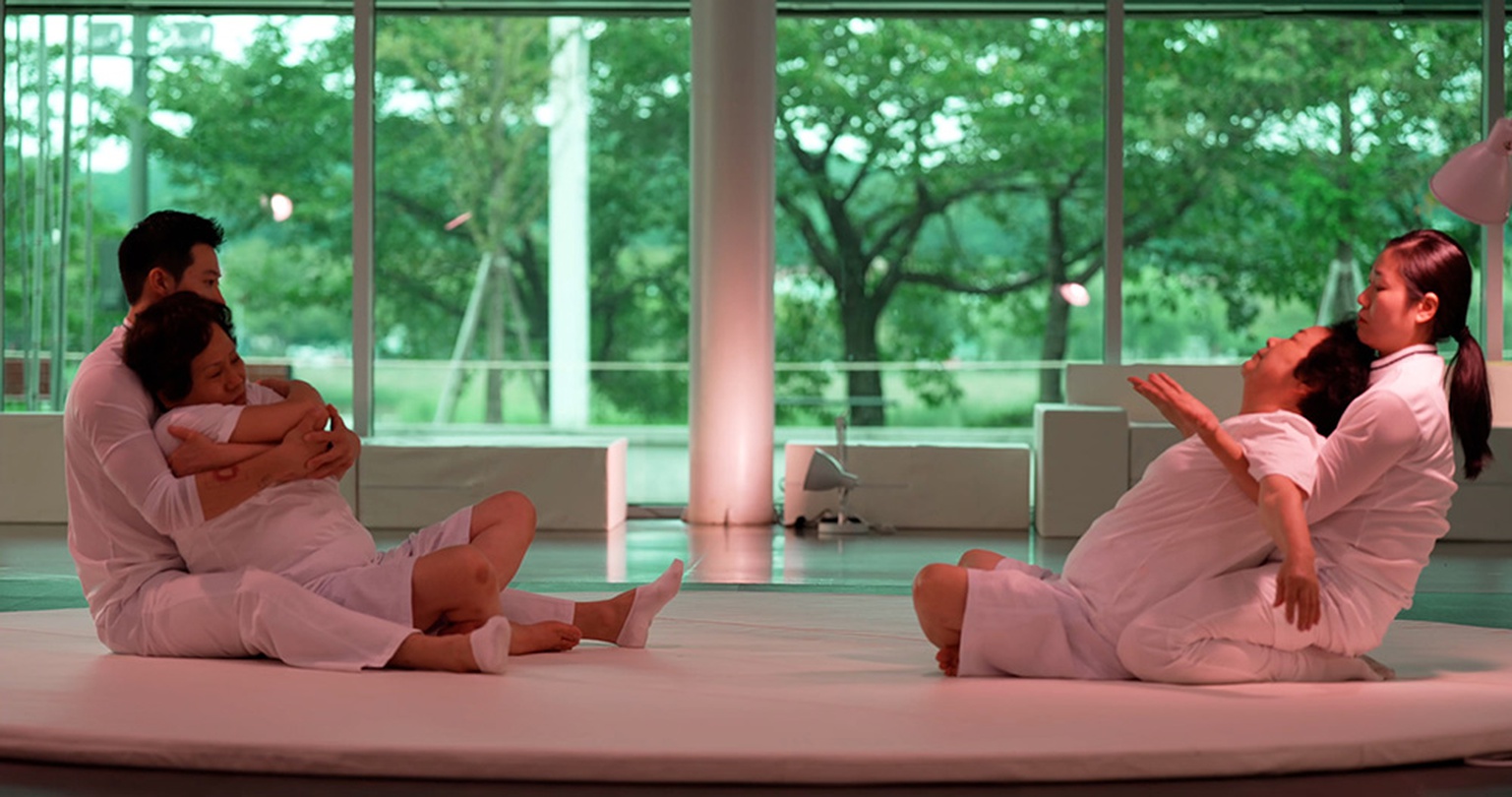
In Feathers on Lips,
the meticulously calculated movements of the bodies resemble athletic
competitions or choreographed dances. Yet, the imagery of bodies clashing, with
diverse physiques and atmospheres, carries an ambiguous undertone. The actions
range from maternal bonding to homoerotic interactions, from caresses to
violence, creating a discomforting ambiguity for the viewer. According to
psychoanalytic tradition, as discussed in “The Reproduction of Mothering” by
Nancy Chodorow, children’s sexuality is initially bisexual before eventually
forming a heterosexual orientation.
Chodorow critiques the patriarchal
limitations of psychoanalysis by introducing a stage preceding bisexuality,
which she describes as gynesexual or matrisexual orientation. Feminist
theorists like Julia Kristeva emphasize the primal relationship between child
and mother. Women perform relationality even with the beings inside their
wombs, which is why Kristeva considers women not as isolated subjects but as
“subjects in process.” This ambiguous subjectivity plays a crucial role not
only in nurturing but also in artistic creation.
Sexuality is anchored in specific
erogenous zones, but these zones also serve as conduits for aggressive
impulses. Psychoanalysis posits that love and hate share a common origin.
In “Subjectivity and Otherness: A Philosophical Reading of Lacan”, Lorenzo
Chiesa explains that when one sees an idealized image of oneself in the Other,
it simultaneously invokes love and hatred, revealing the unity of narcissism
and aggression. This duality is also evident in masochism and sadism. Chiesa
cites Lacan’s concept of “love-hate” to argue that aggression underlies
altruism, idealism, education, and even activism. In this context, the
avant-garde is a prominent example, and artists are no exception. Although
Roland Barthes argued in his semiotic analysis of wrestling that reality is
irrelevant, Youngjoo Cho’s work contrasts this by depicting interactions
between bodies of the same gender, thus evoking ambiguous sexuality and
minority sexual identities that society is reluctant to acknowledge.
Dominant social norms classify
ambiguity in sexual roles and diffuse bodily eroticism as regression or
perversion. Yet the same society that glorifies maternal care also imposes an
ambiguous role on the caregiver, who must navigate the blurred boundaries
between subject and object. Youngjoo Cho’s work does not merely depict the pain
of caregiving; it also explores the joy embedded within it. Beyond pregnancy
and childbirth, maternal caregiving itself is an all-consuming battle that
defies clear boundaries. Cho finds a parallel between childrearing and
art-making; both are total endeavors that demand the full engagement of body,
mind, and spirit. Yet in an era where totality is impossible, the demand for it
becomes an existential burden. Nevertheless, overcoming this burden transforms
pain into pleasure. Like the dialectic of love and hate, pain and pleasure
emerge from the same source. Whether children or art, they are extensions of
oneself, yet they inevitably follow their own paths.
The work Three
Breaths similarly explores boundary-breaking ambivalence. Like
the musical experiments of John Cage and Nam June Paik, Cho’s piece
incorporates dissonance and silence alongside melodic and harmonic elements.
This disruption of conventional musical expectations contributes to its
enigmatic atmosphere, aligning with contemporary music’s aesthetic of
dissonance. The introduction of foreign elements disrupts automatic habits, not
merely for the sake of disruption but to generate new meaning within the
resulting gaps. Breathing is a vital process for sustaining life, yet few
organisms are exempt from the labor required to support it. This labor often
manifests as a sigh, and in an uncanny act of imitation, the child learns to
sigh by mimicking the mother. This mimicry is not merely natural but a form of
socialization, a process by which the child becomes a social being. In the
intersection of linguistics and psychoanalysis, it is argued that one becomes
human through language, a process laden with repression and division.
The pandemic era, which has
profoundly impacted performing arts, serves as a relevant backdrop for Cho’s
work, as it deals with the primal bond between mother and child—a relationship
fundamental to human reproduction that cannot exist without intimate contact.
The intimate connections that enabled childbirth and caregiving have become so
precarious that they may one day be mere memories of humanity. We now
experience this uncertainty not as an abstract idea but viscerally, in our
bodies, as our physical spaces and daily routines shift with every new policy
update. In this era of hyper-surveillance, nature no longer appears merely as
itself. Cho’s work, grounded in the experience of childrearing, examines the
deep-seated cultural beliefs surrounding motherhood, which have remained
stagnant compared to other social domains. Since the advent of modernity, which
sharply divided the public and private spheres, men have remained third-party
observers of these issues, encountering similar experiences only through artistic
creation.
As society moves beyond an era
where women's "works" were confined to childbirth and child-rearing,
a new, uncharted territory has emerged. This realm is surfacing through the
experiences of women artists who endure the duality of pain and joy. Motherhood
is no longer merely an external construct but an internalized exploration. The
perceived "naturalness" of motherhood has long been a patriarchal
ideology. Some may wish to preserve this "purity" forever. However,
the emergence of women as mothers and artists symbolically transforms this
notion of "nature" into a subject of discourse. Discomforting and
nuanced truths, once veiled under the guise of nature, are now being brought
into the realm of dialogue. Youngjoo Cho’s approach to discussing the
unspeakable pain and joy of childbirth and motherhood avoids sentimentality and
revelation. Her work, while not strictly formalistic, maintains an artistic
detachment that is rigorously upheld. The more sensitive the subject matter,
the more disciplined the approach required. She consciously rejects the
sentimental portrayal of motherhood, treating it with experimental detachment.
Her observation of her own experiences is grounded in division, much like the
linguistic approach to dealing with objects.
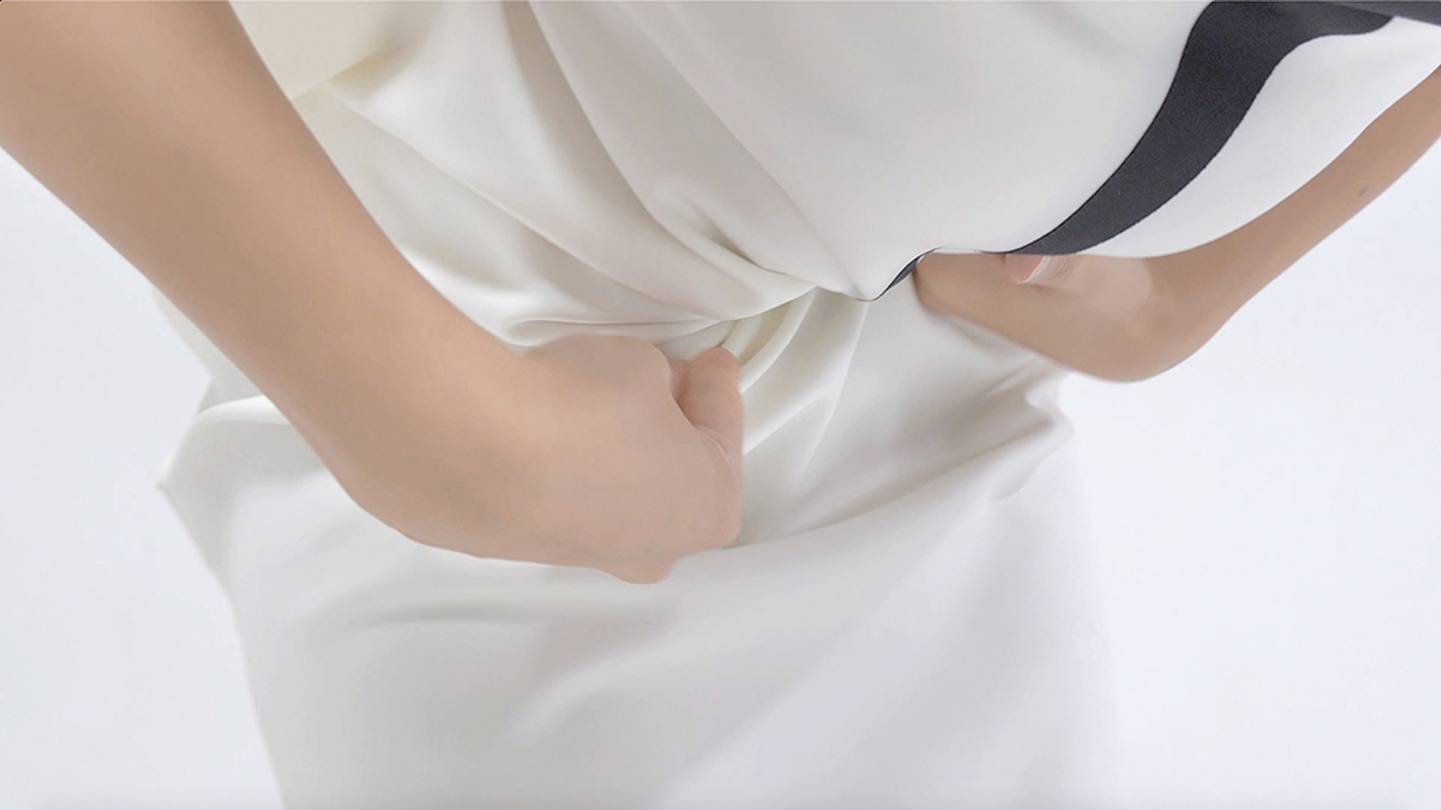
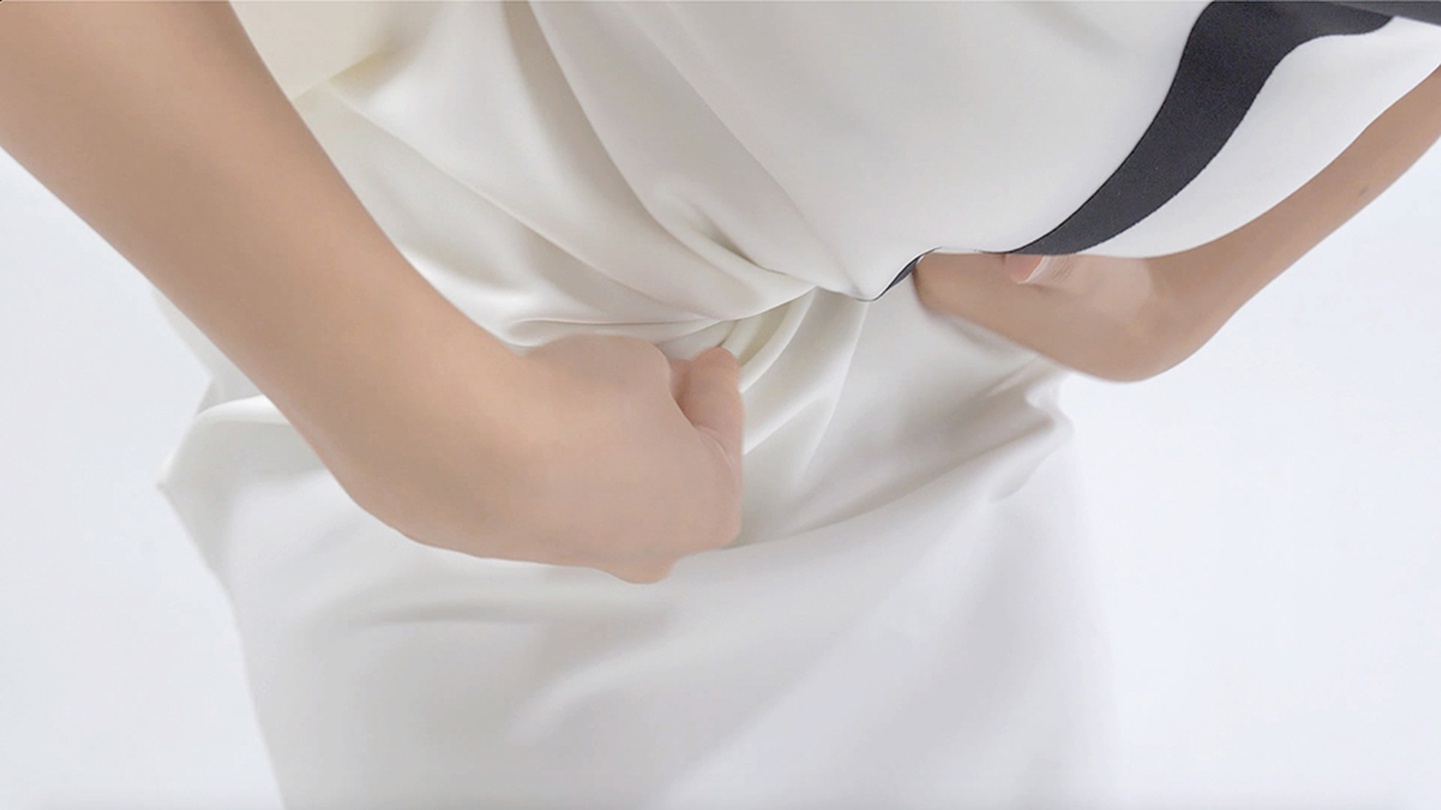
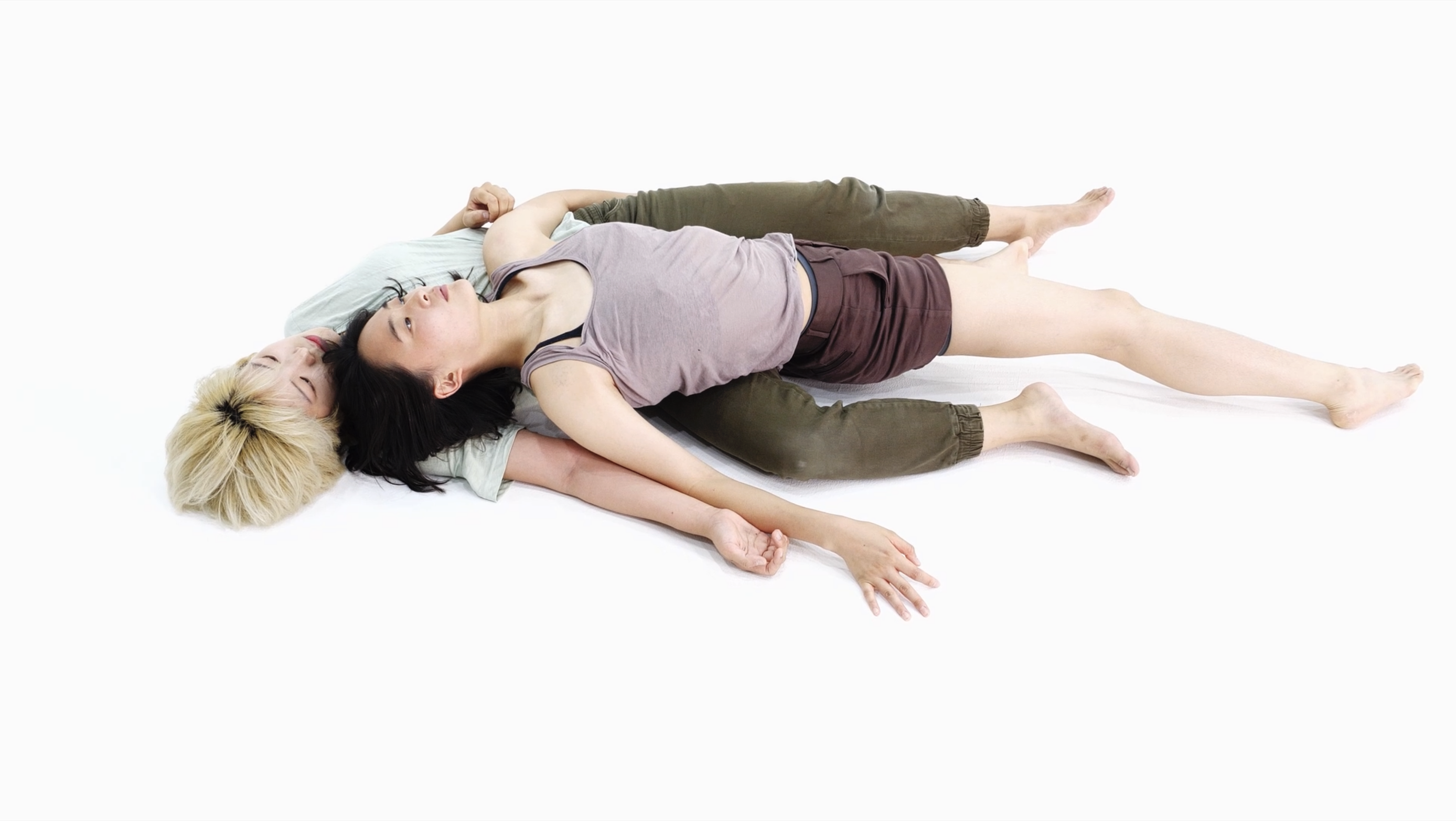
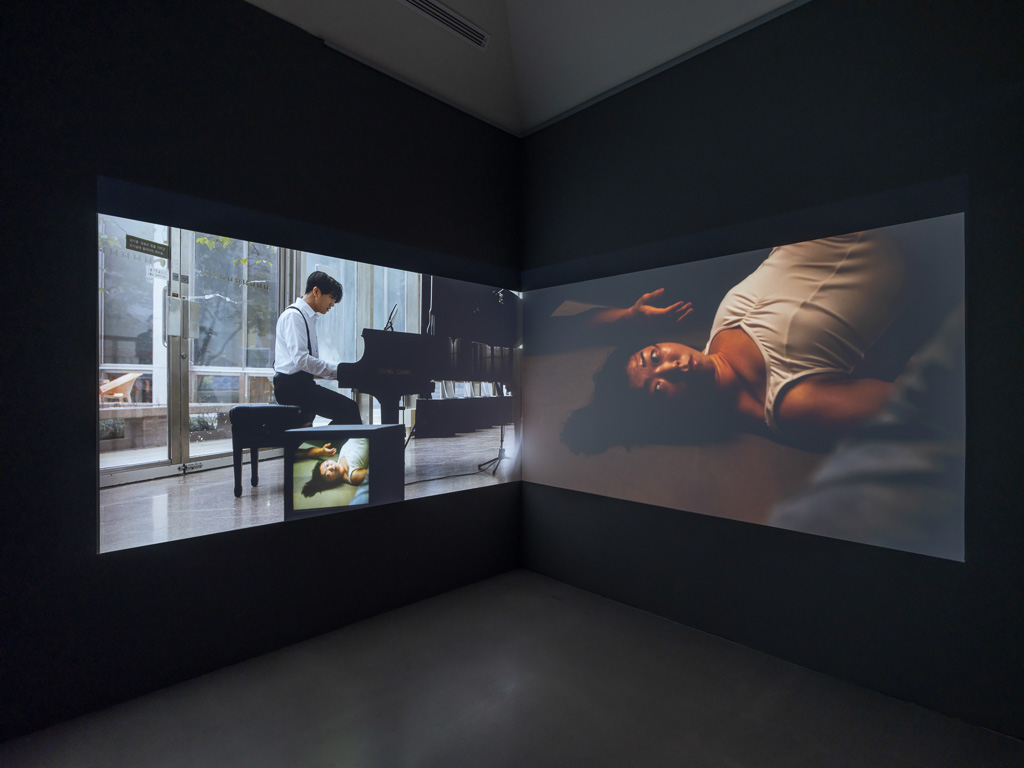
The single-channel video Feathers
on Lips, approximately ten minutes long, metaphorically portrays
intimate physical contact between bodies. It features interactions between
trained performers/dancers and ordinary people with varying physiques and
demeanors, highlighting physical closeness. The stark white background focuses
attention solely on the two figures, breathlessly intertwined in action. Cho
draws inspiration from wrestling, employing twisting and pressing movements
choreographed through extensive workshops with the participants. The ambiguous
gestures—simultaneously violent and erotic—suggest the close relationship
between the two, blurring the lines between aggression and affection. Violence
and love are alike in their intrusion upon the other’s boundaries, causing
rupture and merging. This complex interplay reflects the human social
condition, where maintaining one's identity requires constant negotiation with
the other.
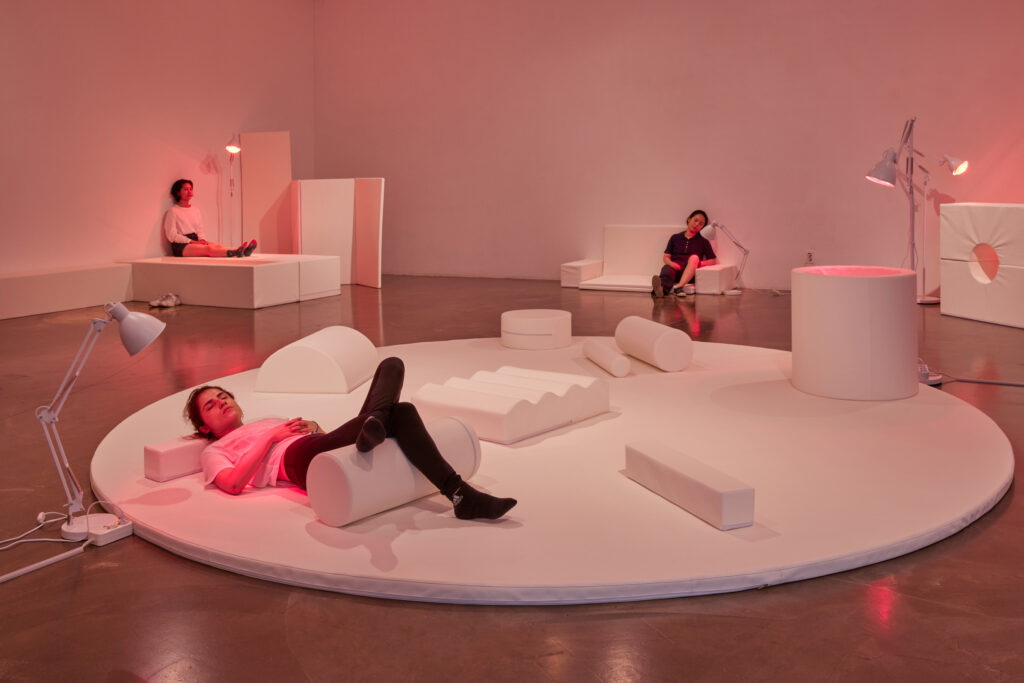
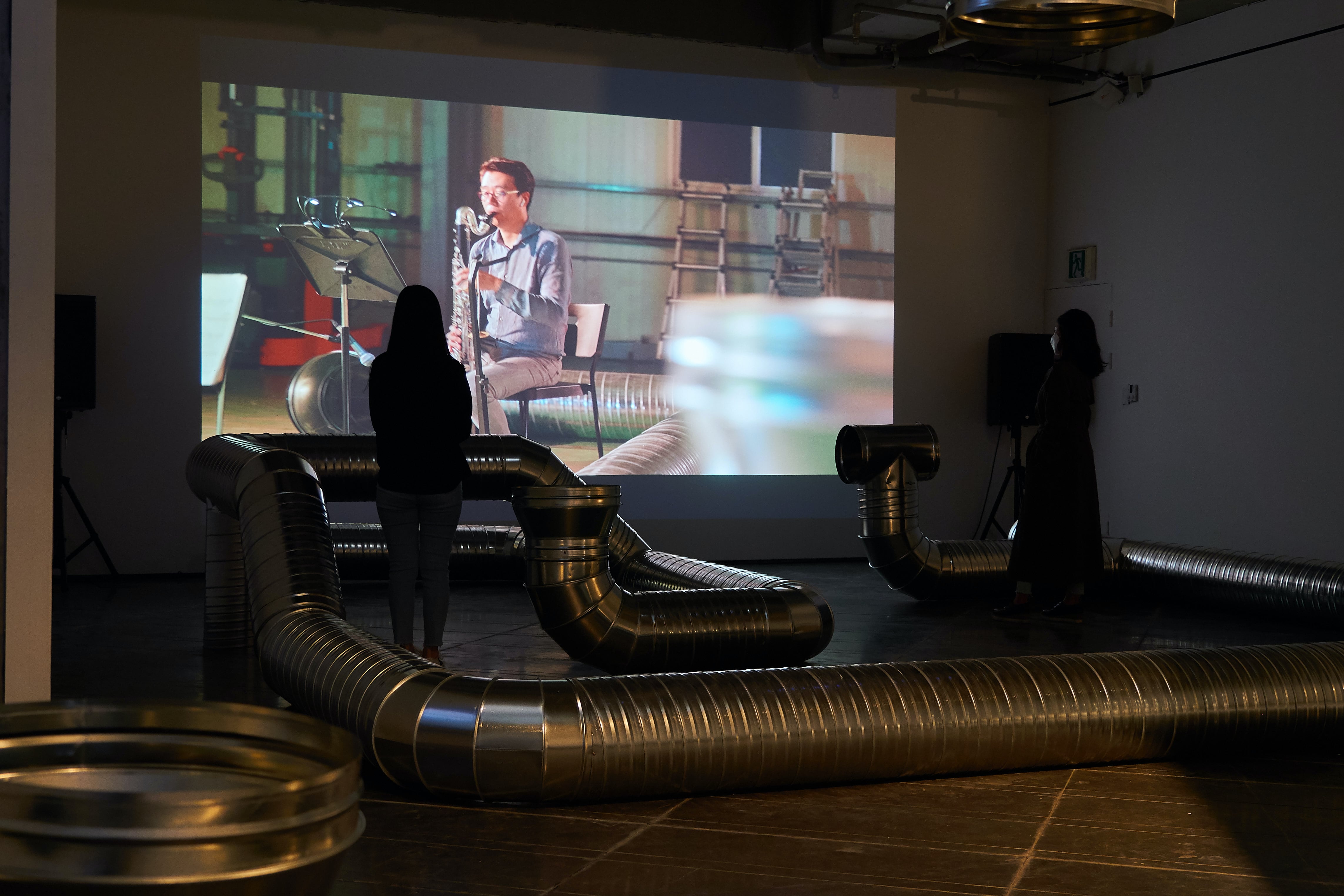
The sound installation Three
Breaths, approximately twelve minutes long, features performers
positioned inside and around serpentine metal ducts resembling giant anacondas.
The composition, centered on wind instruments that emphasize breath control,
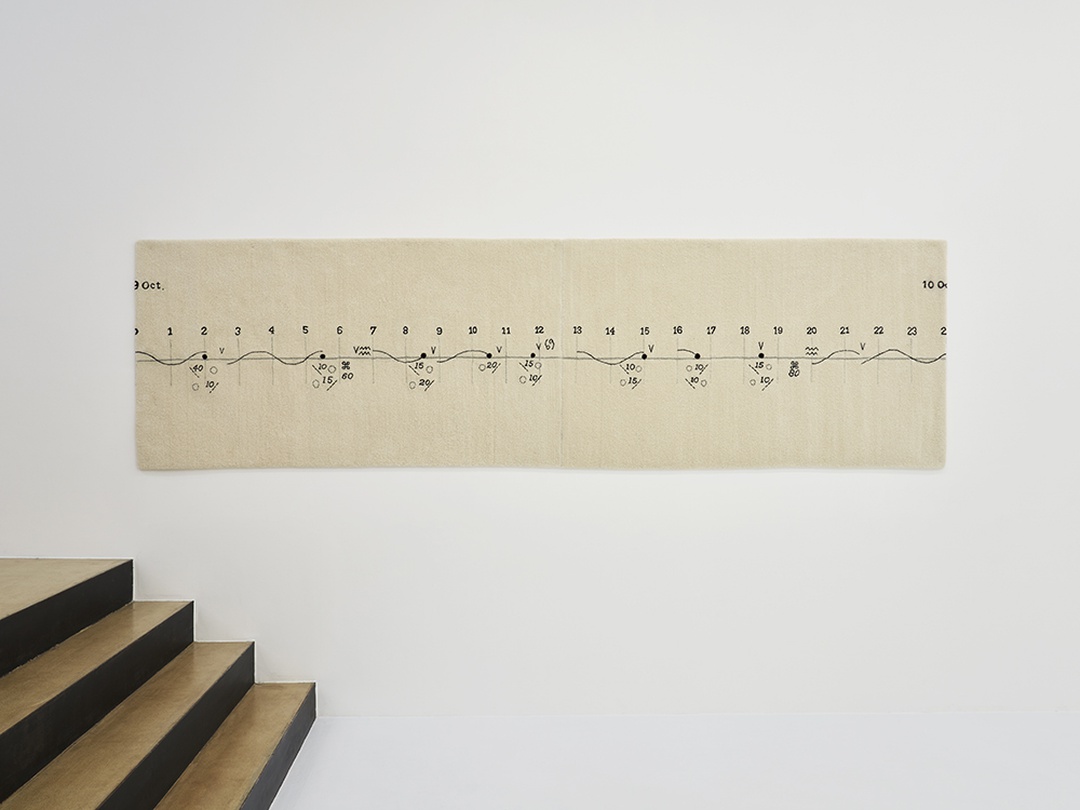
includes sighs essential for sustaining life. This piece is based on Cho’s
parenting diary, a continuous record reflecting the unrelenting demands of
caregiving, which defies categorization into neat codes. The score transforms
daily logs into musical notes, leading to a performance centered around breath.
Like her choreographic work, this piece required ongoing collaboration with
musicians. The emphasis on communication and sharing transcends objectification
or thematic exploitation, reflecting a consistent element in her practice. For
Cho, narrative matters more than imagery. Years earlier, she collaborated with
women in their fifties to seventies, learning beauty and cosmetic techniques,
conducting therapy and autobiography workshops, and even organizing a choir.
The intricate numerical data
documenting the parenting process, if printed, would span dozens of meters,
reflecting the complexity embedded in the compositional process, which is
partly shaped by the participating musicians. The winding installation, with
its gaping mouth, evokes corporeal reality. The long metal duct, also used as a
percussion instrument, resembles both a wind instrument and the birth canal or
an umbilical cord. It reflects Cho’s childhood memories of living near tunnels
and symbolizes the seemingly endless labor of caregiving. The artist’s late
entry into motherhood coincided with her transition from life abroad to
establishing her artistic career in Korea, resulting in an intense, battle-like
existence. In 2016, she held a solo exhibition just one month after giving
birth, balancing the demands of parenting and earning a living. Although she
has not fully navigated this journey, Cho continues to explore and share
experiences with other women and artists who have undergone similar life changes,
positioning this exploration as a long-term project.
This deeply lived yet mysterious
territory, marked by sacrifice, devotion, and guilt, will remain a fertile
ground for ongoing artistic exploration. If her earlier works on “ajumma” were
satirical yet serious, her recent pieces arise directly from her present
reality, addressing issues that intersect with her own experiences. As a
mother, artist, and woman, she unconsciously sighs, only to witness her
four-year-old child mimicking her. This child, who has acquired language
unusually quickly, imitates and repeats words like “hope” and “wish,” along
with indecipherable onomatopoeic sounds, which are incorporated into the
performance. This interplay of sound, music, breath, and speech signifies the
child's acquisition of language through the voice of the other (the mother).
The signifier precedes the subject. In the psychoanalytic journey of becoming
human through language, repression and division are inevitable, suggesting an
equally challenging future for the daughter who once received unconditional
care.