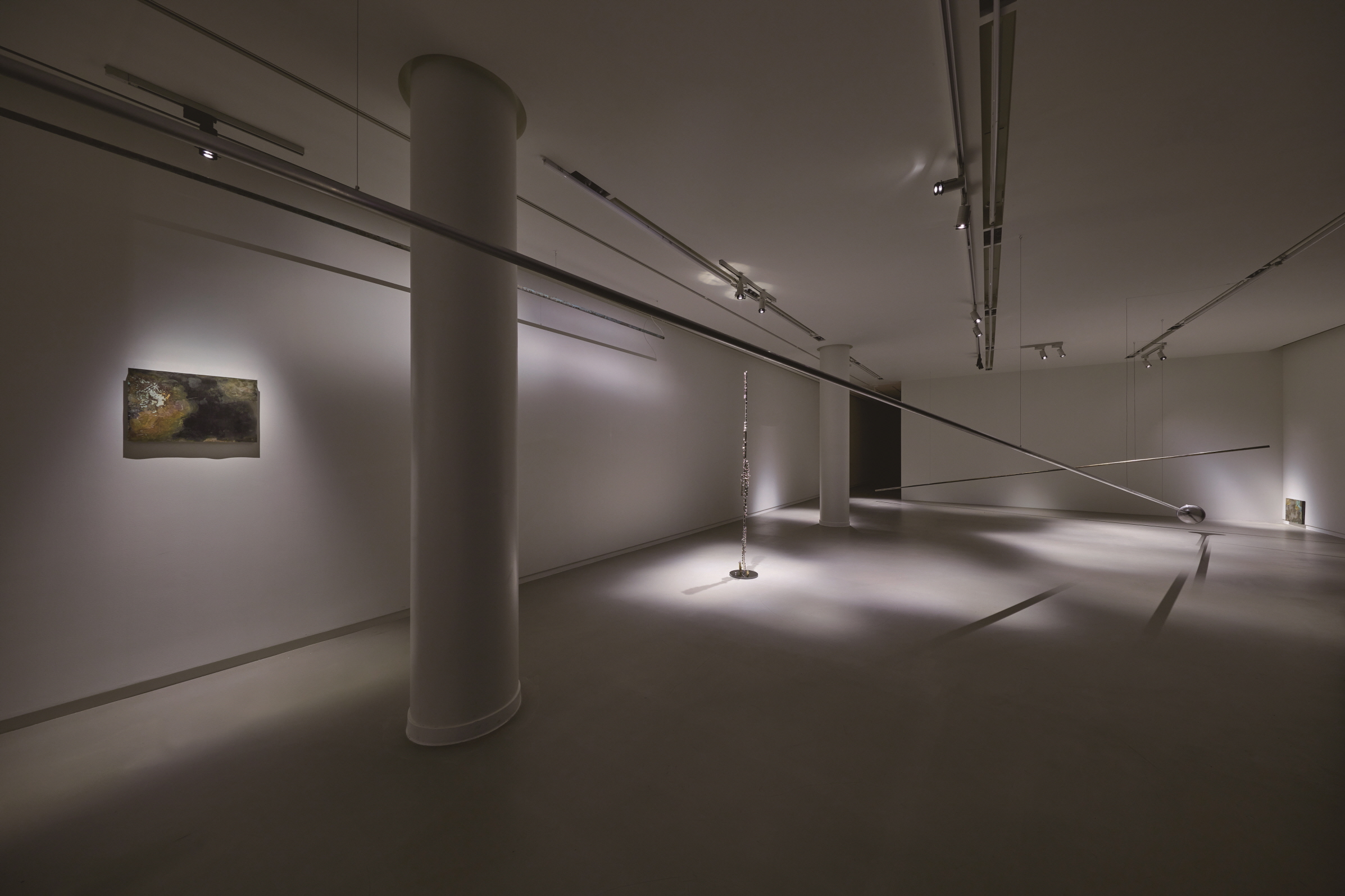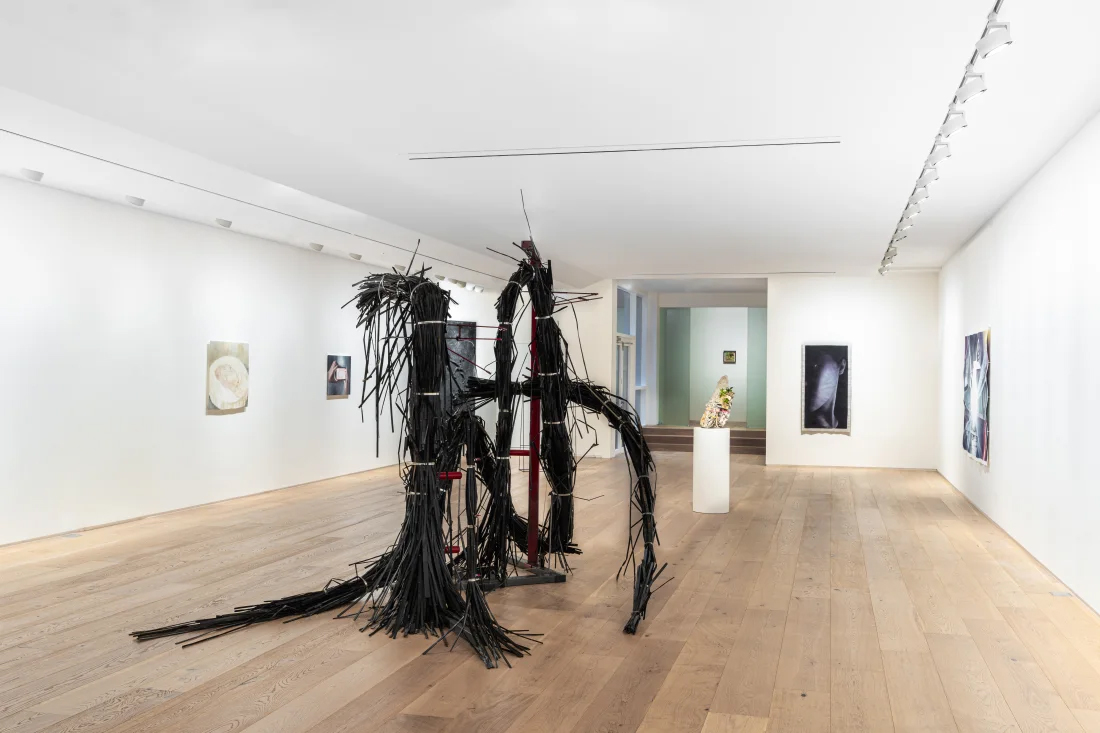
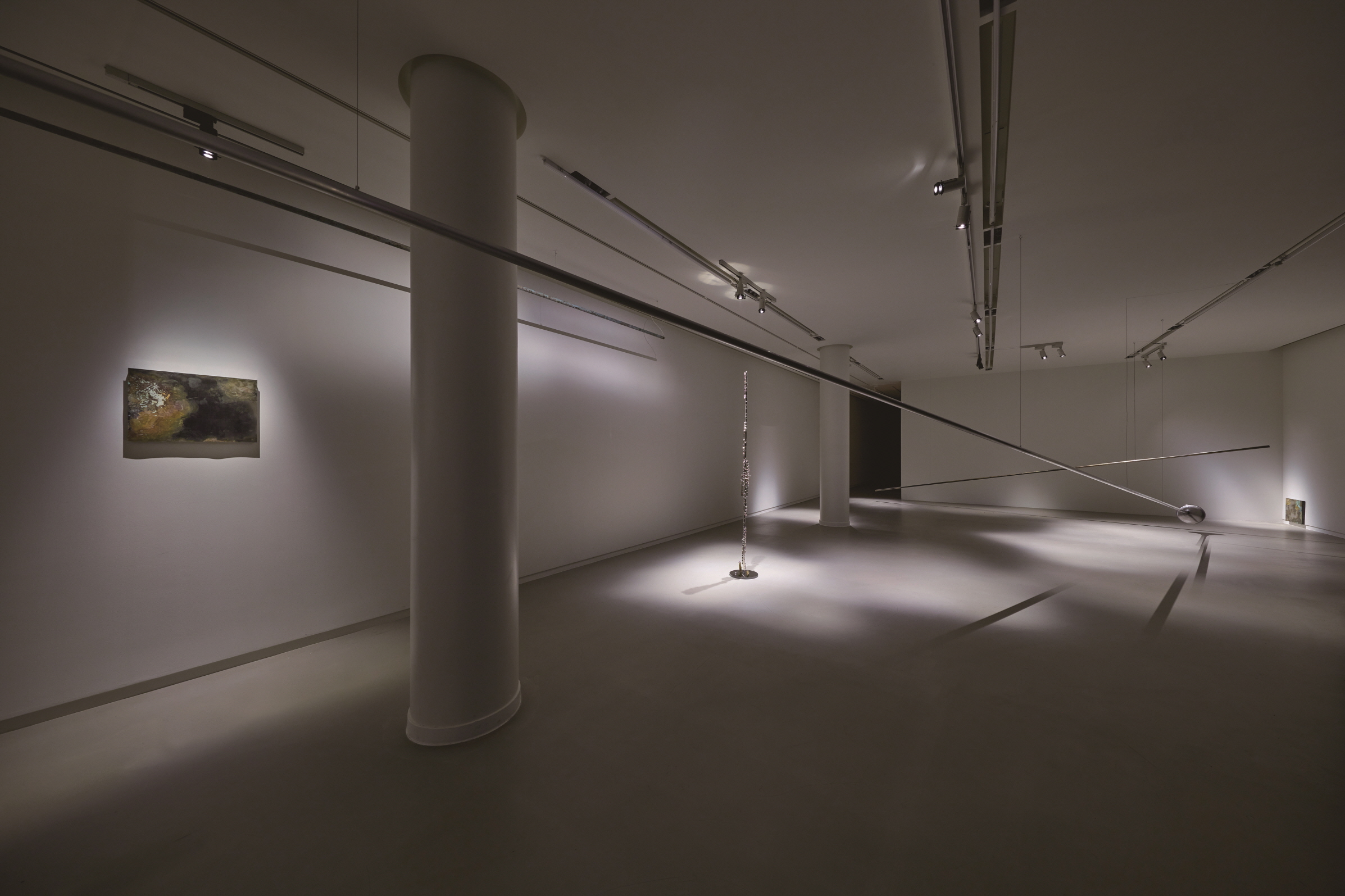
Hwayeon Nam, Coda(2022), aluminum pipes, brass pipes, air blower, air compressor, vibration motor, tubes, recorder mouthpiece, flute, horn, trumpet, variable dimensions ©Hwayeon Nam

Time demands a narrative. Time without a story does not flow. Therefore, everything visible is a story. Of course, the type of story varies with the nature of time—or perhaps the opposite is true. The time presented in 《Gabriel》 is not a single narrative. In the exhibition, vanished time, repetitive time, and suggestive time flow together with objective time. Accordingly, vanished stories, repetitive stories, and suggestive stories unfold with their own connections. The time perceived from the viewer's position is a superimposition of all these temporalities. This superimposition is generally a combination of independent and distanced elements.

The exhibition carries an apocalyptic atmosphere. More precisely, it approaches a selective composition where scenes before and after apocalyptic moments from various eras coexist. At this moment, objects and scenes are both symbolic and real. However, this apocalypse does not merely narrate the end of one world. In short, the apocalypse repeats over long intervals.

The beginning and end of the exhibition are marked by Coda, a series of trumpets with long pipes stretching from the lowest to the highest points of the space, crossing it vertically, horizontally, and diagonally. No matter how forcefully one blows into the pipes, it seems almost impossible to produce any sound. The precariously stacked flutes, reminiscent of the Tower of Babel, are no different. Some of the elongated pipes are tinged with bluish-green rust. Perhaps the trumpets have already sounded multiple times, repeating the process of apocalypse while rust accumulated. This repetition traverses history from the Maya civilization, spanning approximately 3,800 years from 2000 BC to the 17th century, to the Perseverance rover currently on Mars. The images transmitted daily from Perseverance on Mars are no different from the images of Maya ruins in northern Guatemala, revealed using LiDAR (Lighting Detection And Ranging), an advanced aerial mapping technology. LiDAR emits numerous radar pulses from the air, detecting the light reflected off objects to render three-dimensional images. These images are composed of light from the past. Similarly, the sunlight filtering through branches in Gabriel is itself from the past. Light from the Sun, emitted about eight minutes ago, travels at 300,000 km per second to become the visible light that allows us to see the present moment. What we see now is only visible through what is no longer present. In the end, seeing the present is seeing through the past, which places the viewer perpetually in the future.

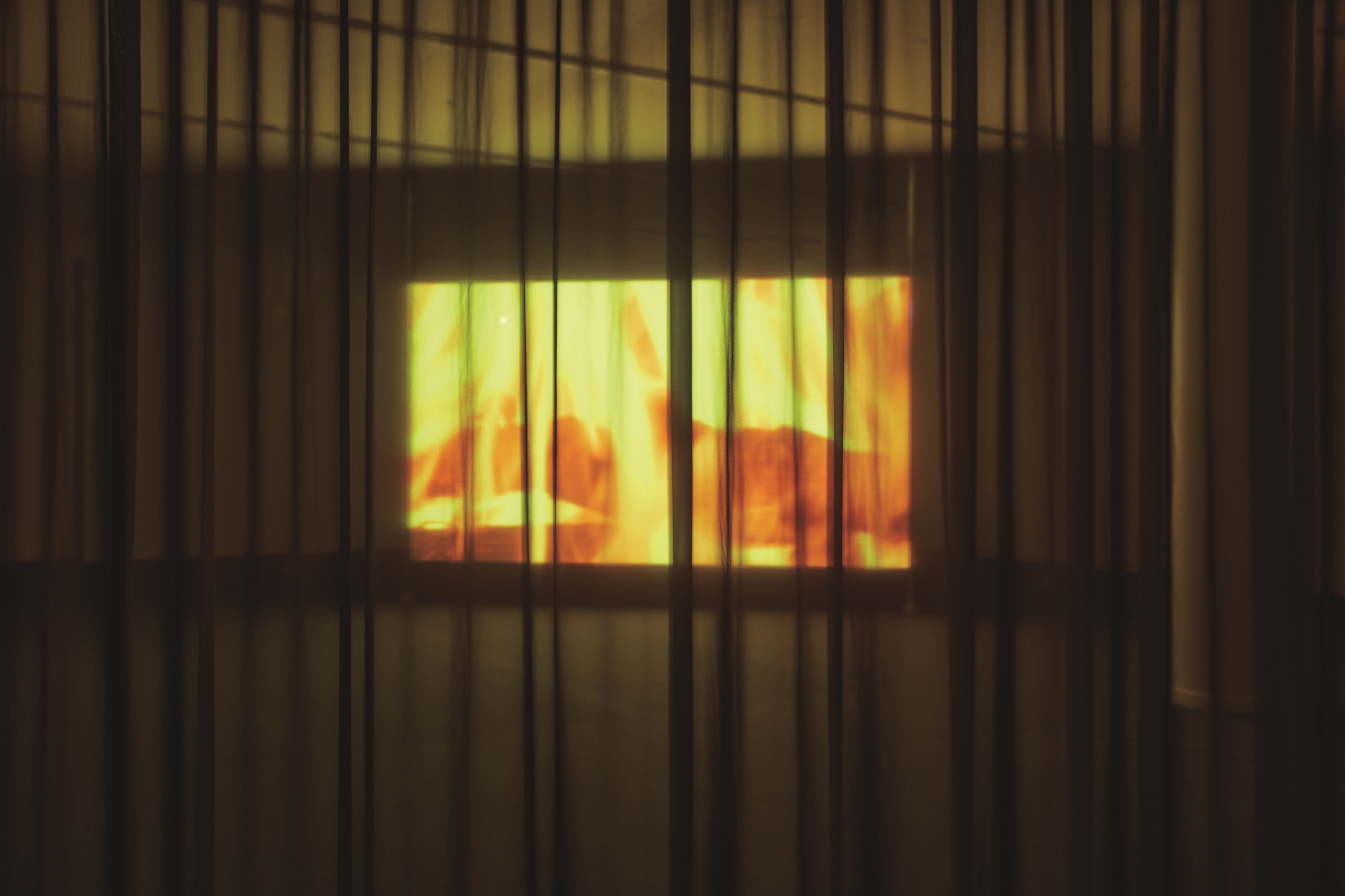
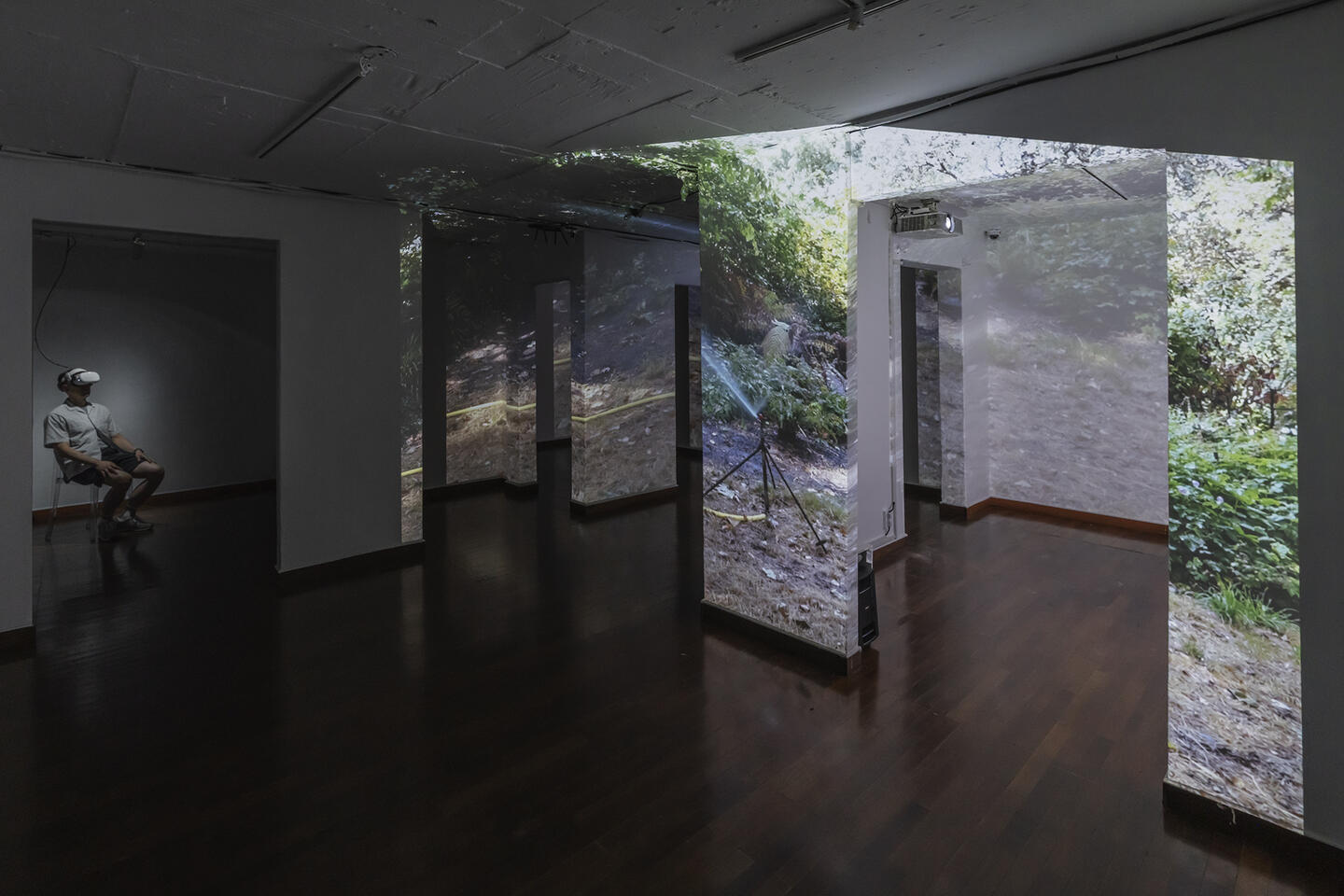
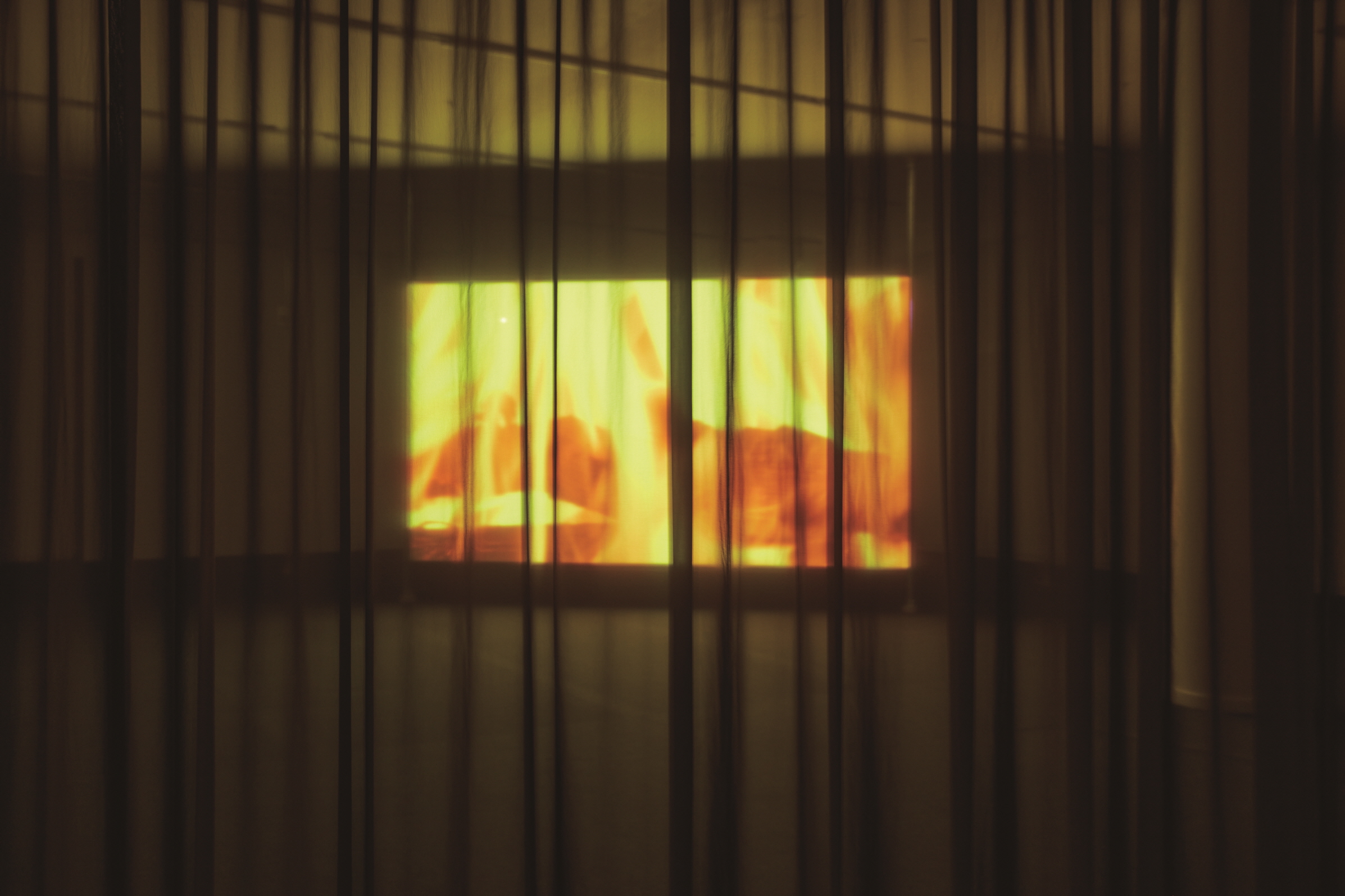
Hwayeon Nam, Gabriel(2022), single-channel video, six-channel sound, 20 min 4 sec ©Hwayeon Nam

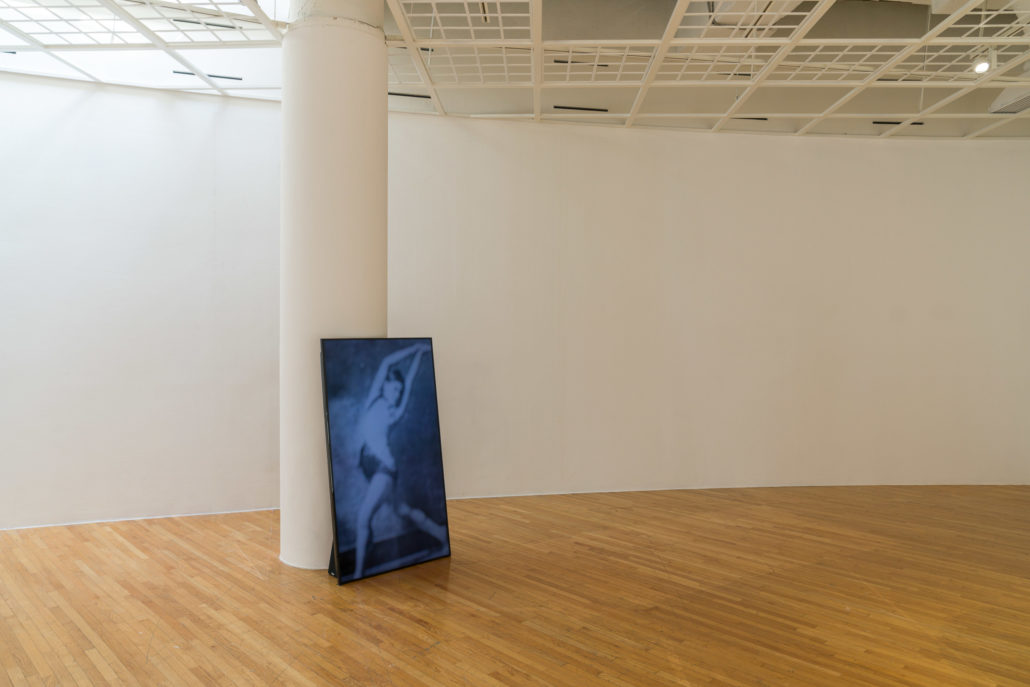
The exhibition 《Gabriel》 deliberately leaves room for iconographic interpretation. Children staring silently forward, fragments of Annunciation paintings, windows, flames, light and pillars, and vegetation in states of death and life coexist as motifs throughout the exhibition, functioning as representations of cyclical time. The figure of Gabriel, who announced the conception of Jesus Christ to the Virgin Mary, is repeated in multiple paintings. The window in Annunciation paintings becomes the window through which the woman gazes in Gabriel and connects to the corroded brass window Window-Dream.

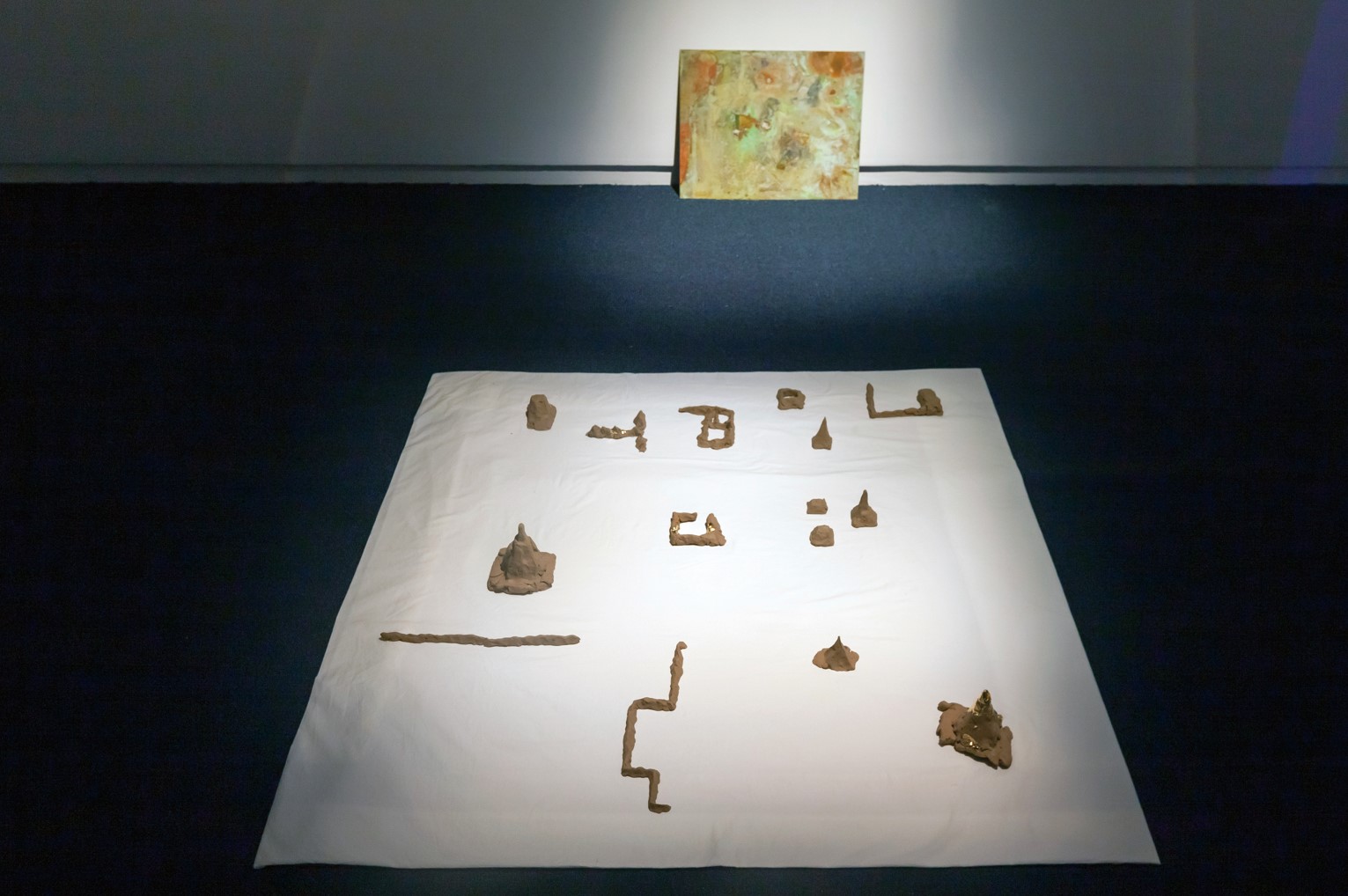
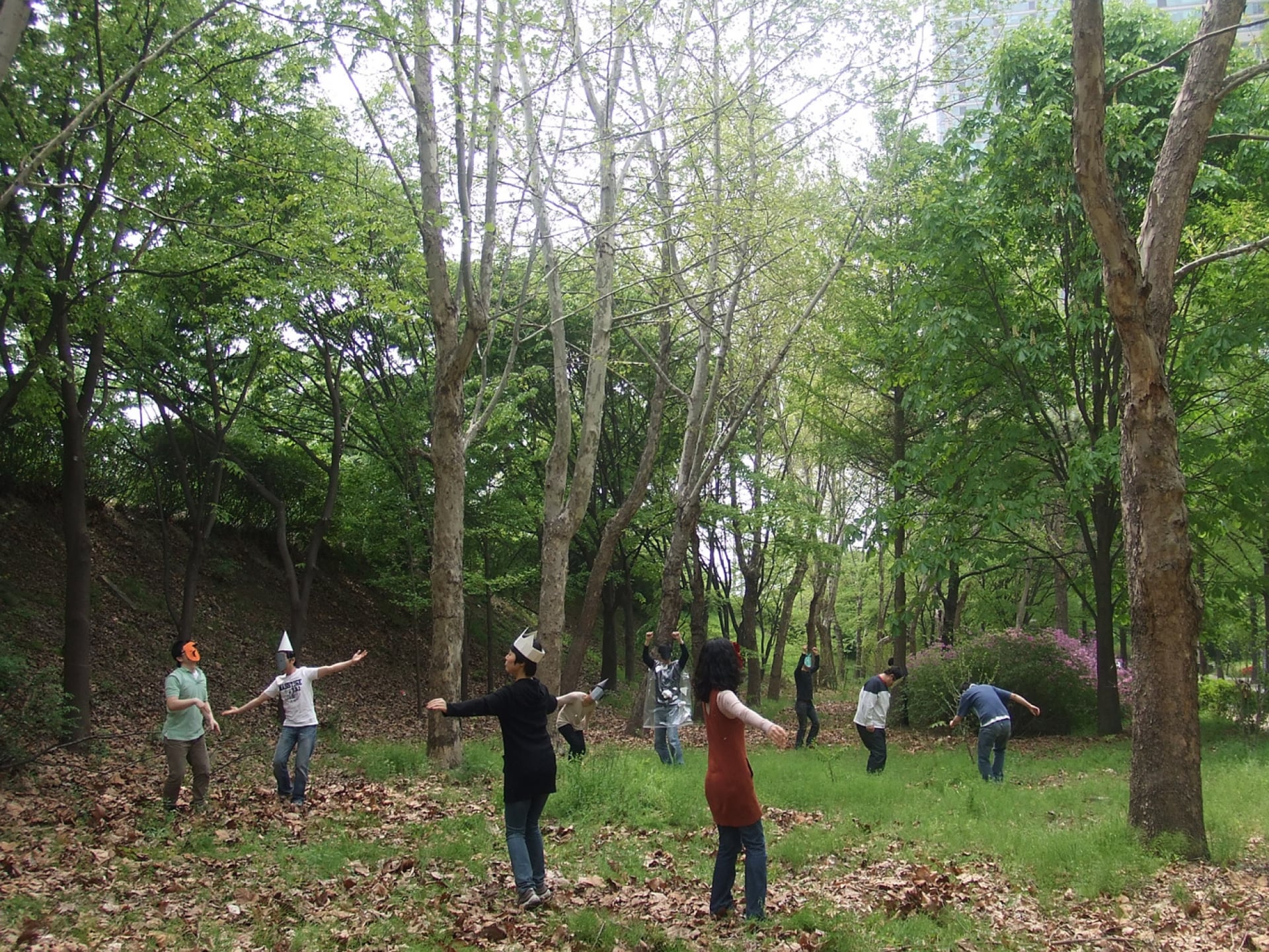
The precarious thickness and angles of the elongated trumpet pipes contrast with the relatively steadfast and solemn pillars of the exhibition space. The columns and colonnades reappear as the pillars in the painting of Gabriel, as the columns in an uninhabited underground space, and as the tree trunks leaned on by children. These columns are the colonnades of temples across time and pillars that support the present from the past. And one day, a world may come where no life appears between the gaps of these columns. Plants with dead leaves and living roots are no different from the vibrant yet lifeless flowers in the paintings. Life perpetually perishes, but we continue to hope that another form of life exists beyond human understanding, yearning for an unseen world. In this sense, the apocalypse recurs as an eternal return.

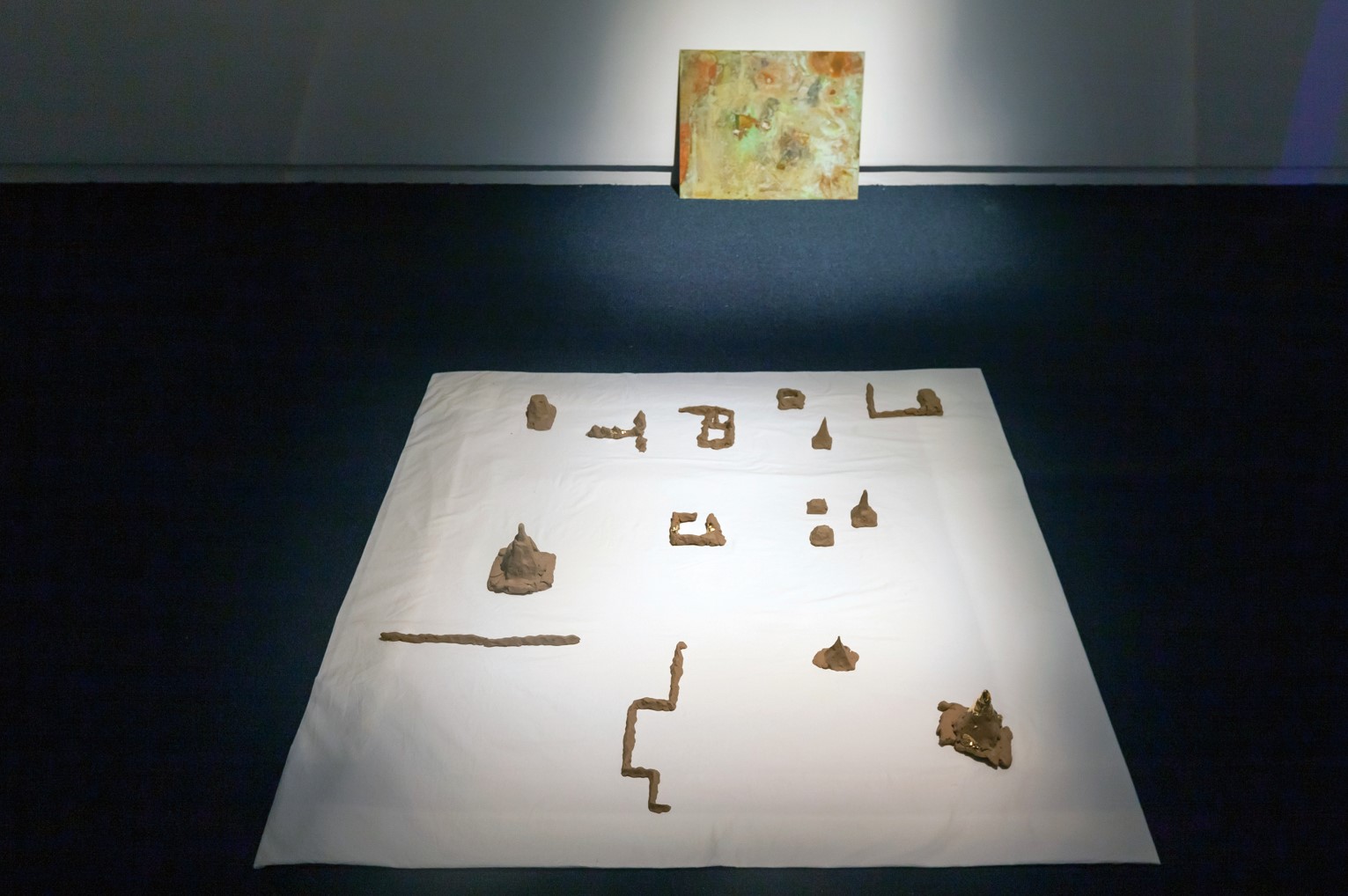
Hwayeon Nam, New Temple(2022), clay, fabric, gold leaf, variable dimensions ©Hwayeon Nam

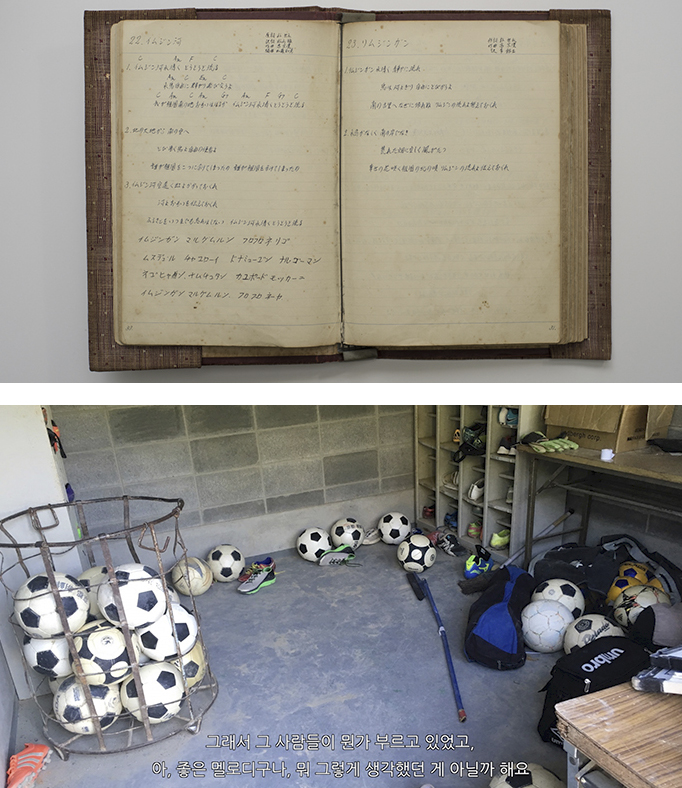
Time is silent. Therefore, time is intuition itself. Intuition, defined as "a unique act of cognition that produces immediate knowledge directly, unlike mediated knowledge obtained through abstraction, generalization, or logical reasoning," becomes incomplete when translated into language. Then, where does the artist's thought, which cannot delay the present, reside within all this time? Hwayeon Nam imagines the past and the future simultaneously. It is physically irreversible but conceptually reversible. This imagination occasionally appears through scattered symbols. One cannot describe what has not yet been seen but can suggest it. The same applies to the past. Even if one cannot describe what has already passed, one can infer it. Is the direction of difference between the past and the future truly linear? The act of expressing an intuition of time through form and shape inherently includes limitations. The request to capture time consumes time itself. Nevertheless, within the limits of human perception, art continuously imagines beyond those boundaries. While the light launched from inside to outside and from outside to inside, from past to present and from present to past, returns during this journey, the inside and outside exchange places, contemplating silence in the face of extinction. At that moment, perhaps, the loud blaring of trumpets may once again be heard. And in the end, time will converge all these journeys into a narrative.

References