If it is reasonable to conclude that "normality" has never truly existed in Korean society, is it not inherently contradictory for society to define individuals according to fixed standards and categories? When people who have never experienced a state of normality diagnose and standardize others through datafication, the result is social alienation and the unnecessary labeling of certain individuals as vulnerable or disadvantaged.
In a society without a meaningful concept of the "normal," the attempt to define a "new normal" amounts to little more than an act of forgetting the present while disguising itself as future-oriented progress. Under the pretext of growth and advancement, it willingly constructs systems that further weaken the very ground on which the present stands.
Unless we first reflect on the absence of normality in our society and question the quantitative approaches we so firmly trust as products of rational thought, we may eventually find ourselves forced to confront the transformations that lie hidden within society.
Within such a society, Lee's statement about the role of the artist, "An artist deconstructs being defined,"¹ offers a clearer understanding of both the artist as a subject and his work. In an interview with Hans Ulrich Obrist and Elena Foster, Lee explained that he had drawn inspiration from outsider artists and that many of the images they produced had profoundly influenced him.²
This immediately brings to mind Art Brut and its place in art history. The Compagnie de l'Art Brut, founded by Jean Dubuffet in 1948, organized a major exhibition at a Paris gallery and presented the 「Art Brut Manifesto and Modernism」. One aspect of this text, written more than seventy years ago, remains particularly relevant today: its discussion of the distinction between normality and abnormality.
Dubuffet regarded the distinction between "normal" and "abnormal" as an artificial imposition. He argued that mental "illnesses" were so extraordinarily diverse, almost as numerous as the patients themselves, that grouping them all under a single category seemed entirely arbitrary. He further declared that, in his view, art remains the same under all circumstances.
As an example, he stated that just as there is no such thing as the art of a person with a bad knee, there is no such thing as the art of a mad person.³ Above all, Dubuffet celebrated the motivations and original expressions arising from within the individual creator. His position reveals a philosophical conviction and humanism that valued the artist's sincerity and seriousness in artistic expression.
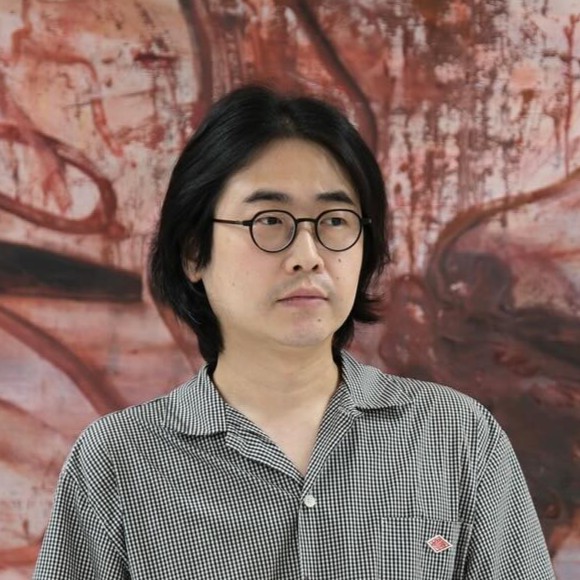
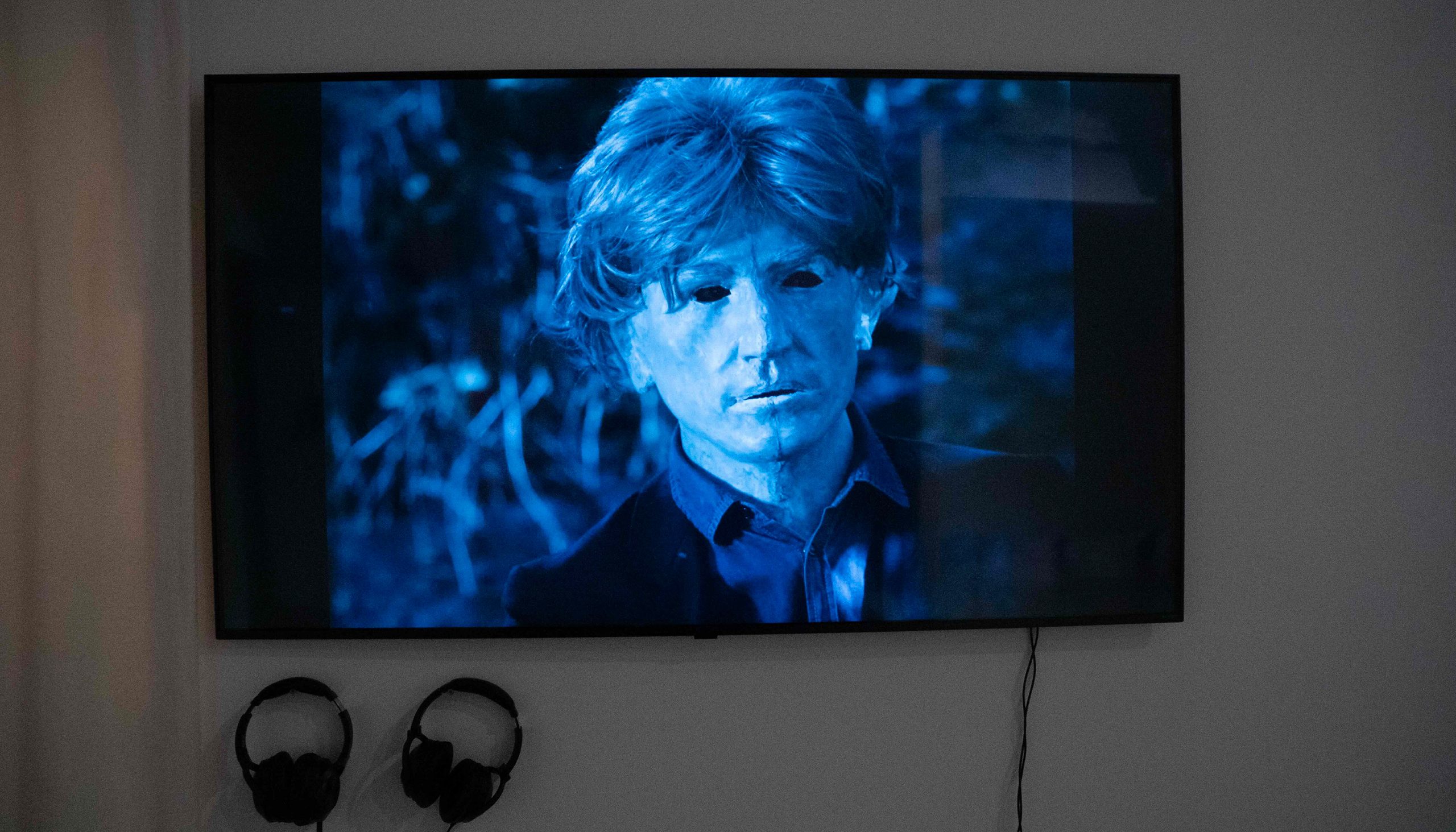
In late 2001, Keunmin Lee was diagnosed with a psychiatric condition and spent two months in a psychiatric hospital, during which he experienced hallucinations. The hallucinations he saw became both the subject matter and the starting point of his painting practice. The diagnosis of borderline personality disorder effectively became a definition imposed upon Lee.
He experienced a sense of confinement and violence in the process through which an abstract condition was assigned a name and a patient was transformed into documentation: a form of compulsory datafication in which an entire human being is standardized and converted into information serving the social system.⁴
When society diagnoses individuals without their even recognizing that they have been defined, it suggests the operation of an invisible power already embedded in social structures. As an artist, Lee particularly wanted to resist the authority of diagnosis that could absorb even a patient's innate character into the category of illness.
His artistic practice extends beyond pathological documentation toward the development of his identity as an artist and a broader aesthetic vision. Hallucinations belong to a realm that cannot be fully explained through conventional human logic. Lee recalls that, although these experiences were intensely visual, they also provided inspiration that was not entirely emotionally unpleasant.
Within the realm of art, these experiences elevated his creative methodology, giving rise to what might be called an "expression of pure energy" that transcends ordinary modes of thought. His images are deeply personal, as though offering a glimpse into someone's unconscious,⁵ yet they also possess a strangely universal quality.
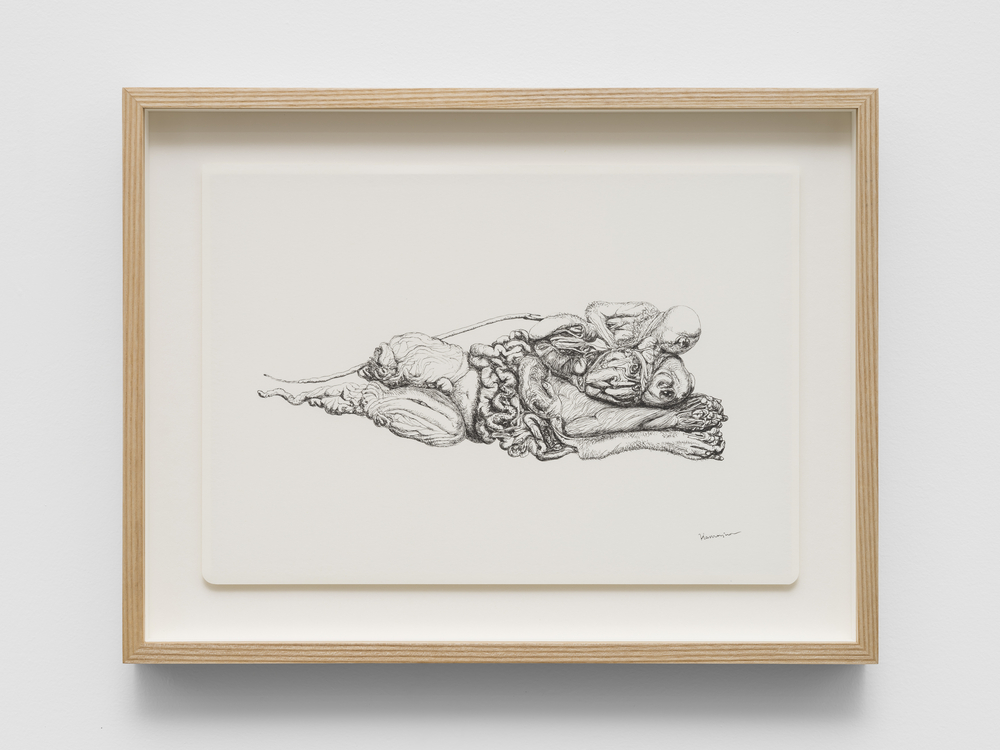
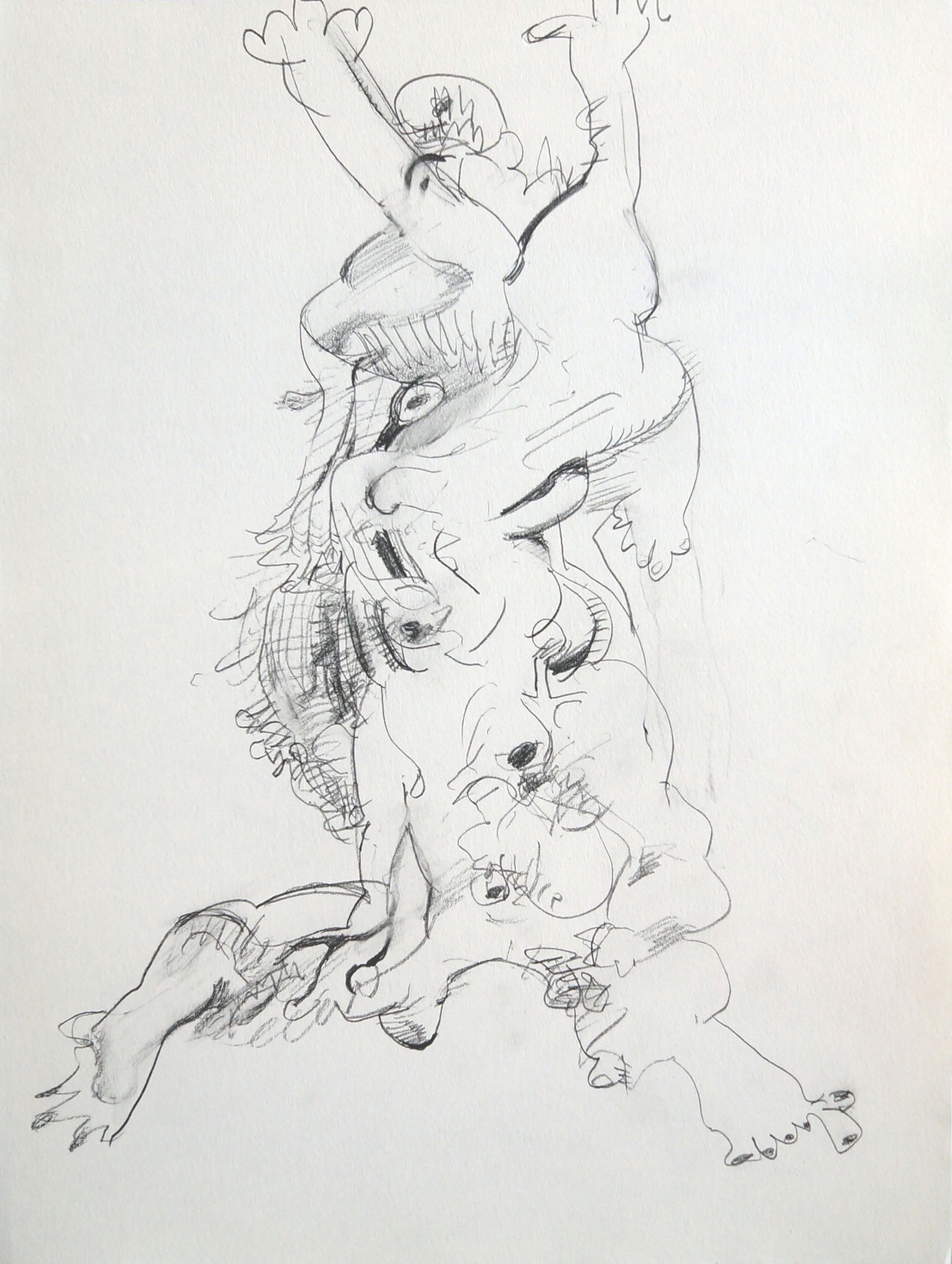
Interestingly, Lee himself cannot predict what a painting will look like when it is finished. The way his spontaneous and instinctive movements on the canvas can arrive at something universally recognizable is closely connected to his attention to the human body and the gaze directed toward it. After all, the body and its sensations provide a powerful basis for reality.
When both the subject and purpose of representation disappear, the artist gains a corresponding degree of freedom, but certainty does not come easily, and the process can be exhausting. This period requires an effort to refine his self-doubt and heightened sensitivity. Lee typically rotates a painting horizontally and vertically dozens of times before completing it.
Unable to settle on a definitive orientation, the painting eventually finds itself positioned in one direction almost by chance, and the artist persuades himself that the decision is right. This process can be understood as an act in which fragments of memory, deeply submerged and accumulated within consciousness, dissolve into the unconscious before arriving at a final form.
Lee explains that the pleasure he experiences when a painting turns out well produces a kind of catharsis. Even during periods of extreme hardship, when he feels he has nothing left to lose, reaching a certain level of achievement through painting brings a simultaneous sense of liberation from oppression.
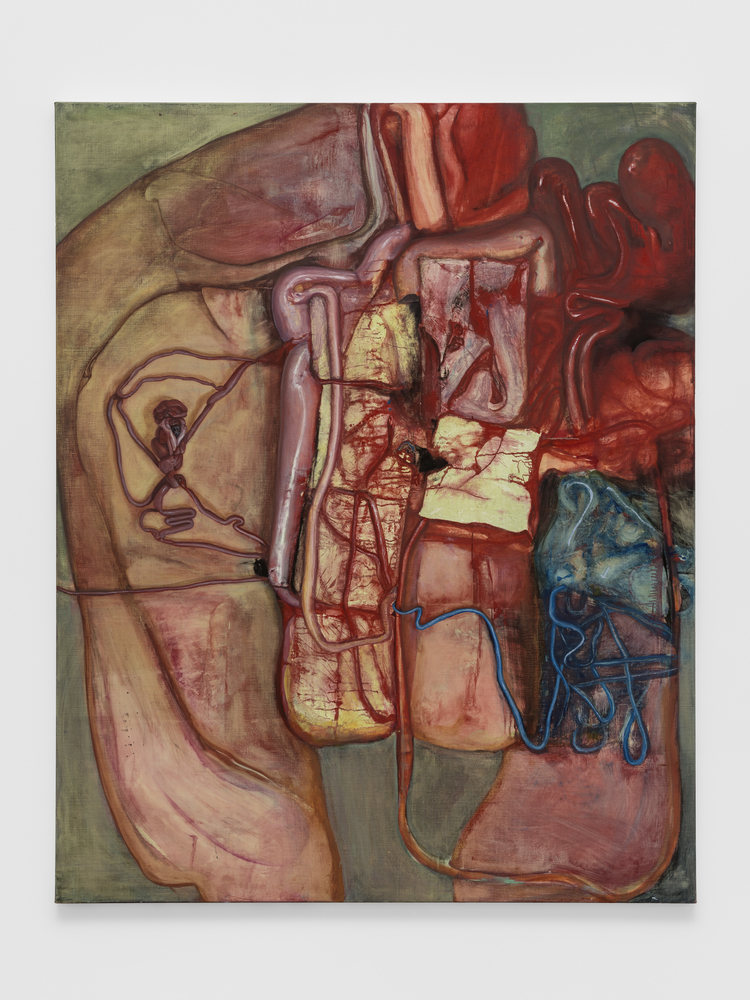
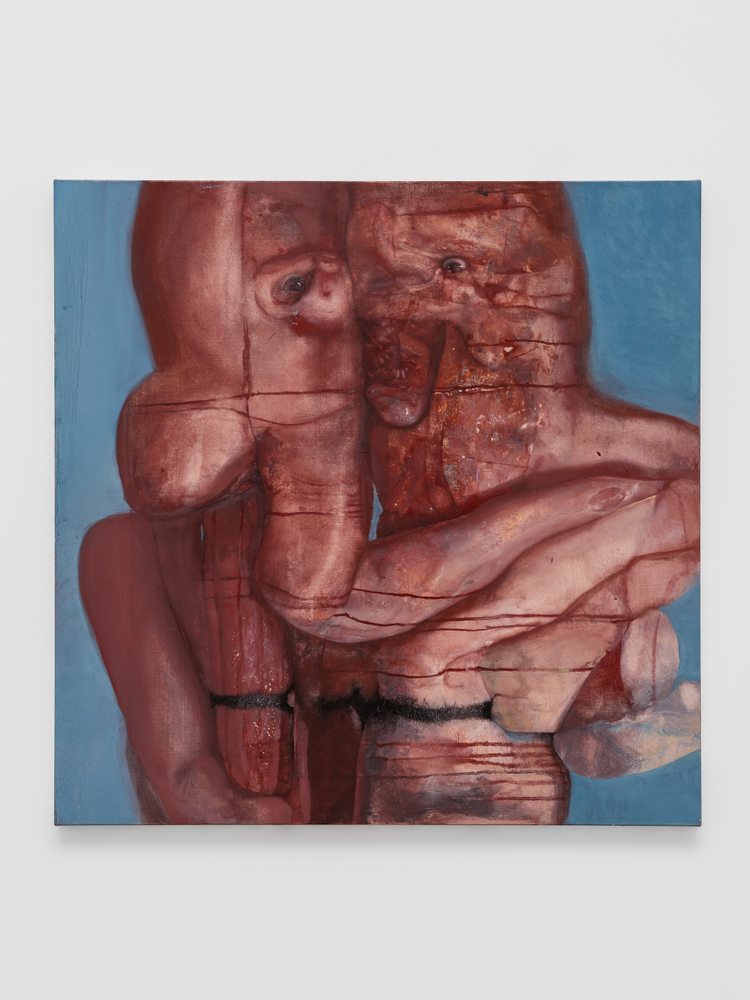
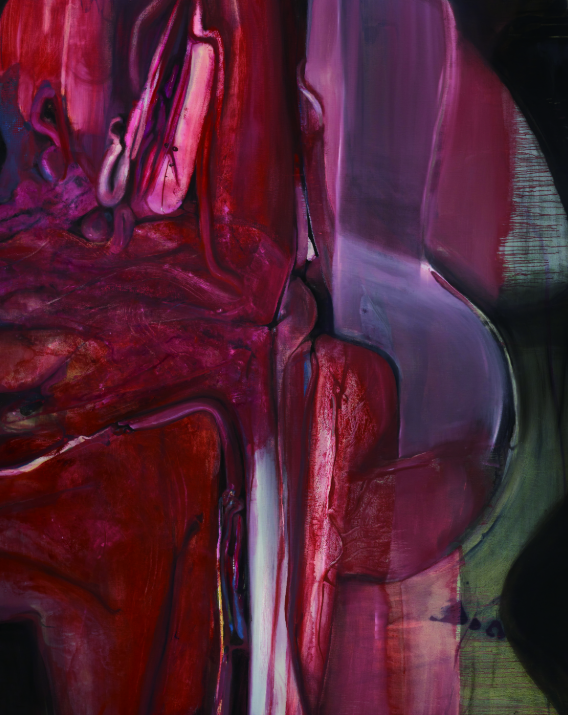
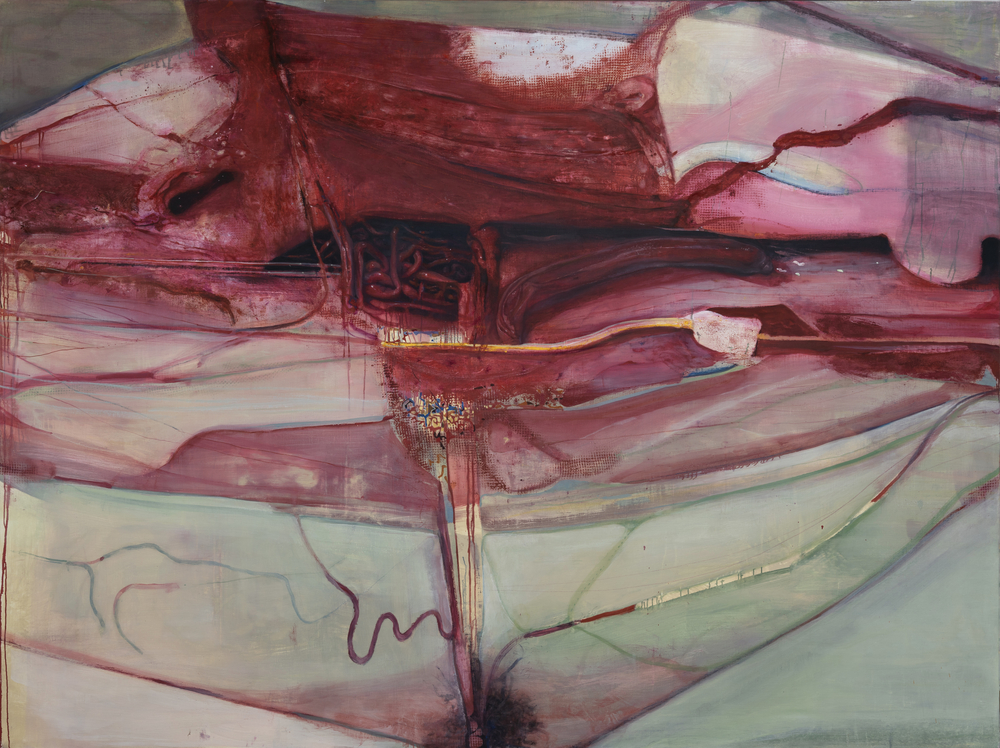
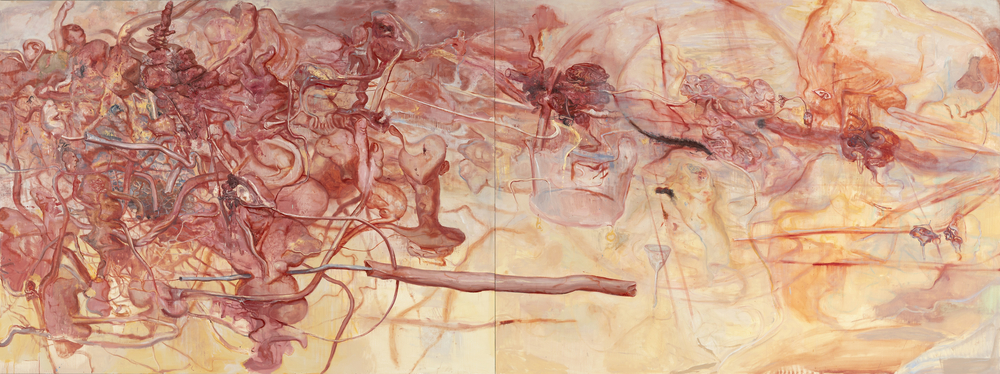
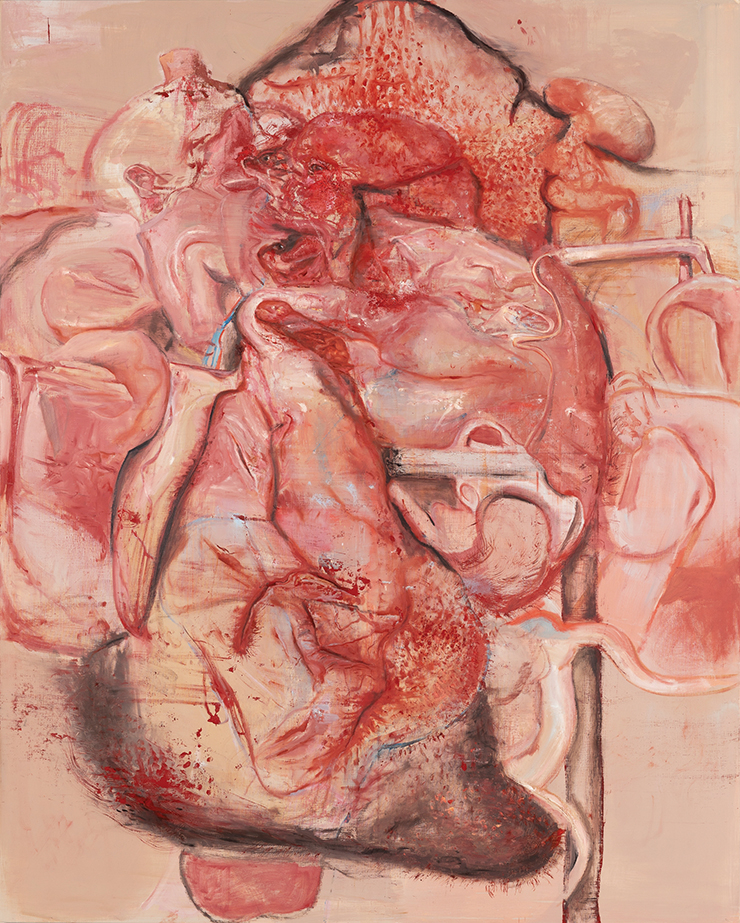
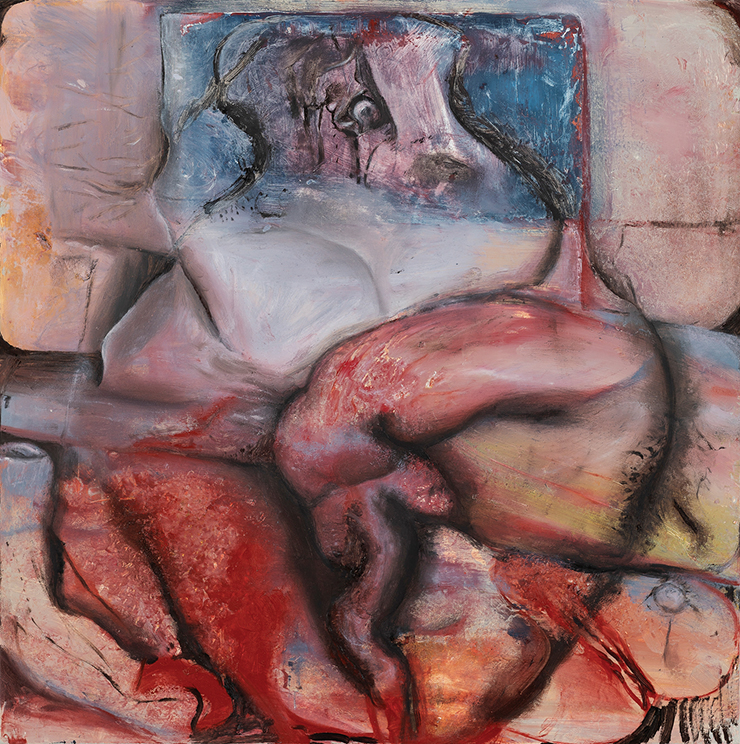
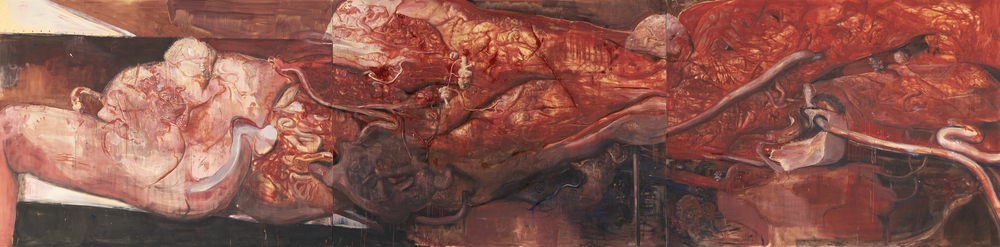
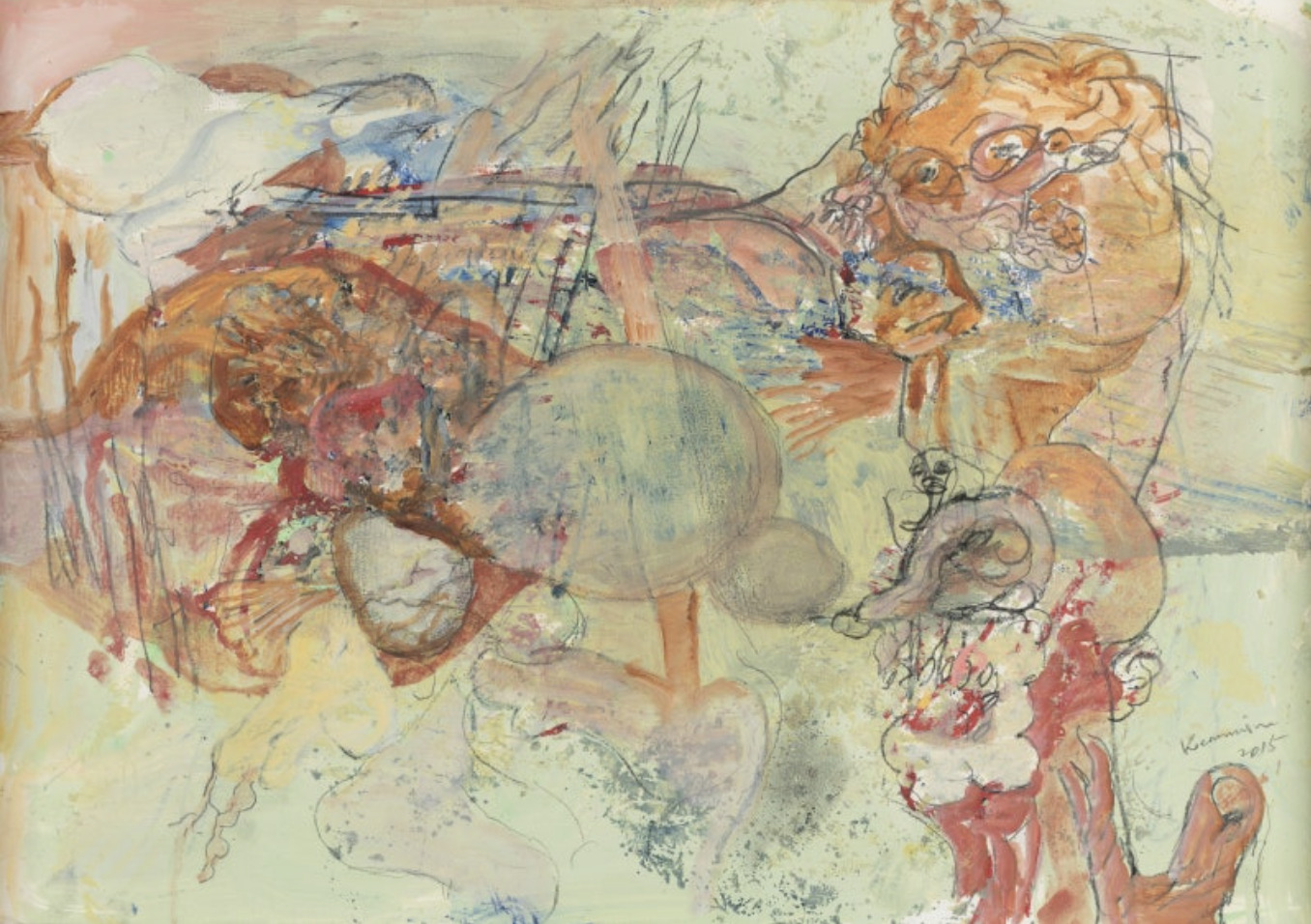
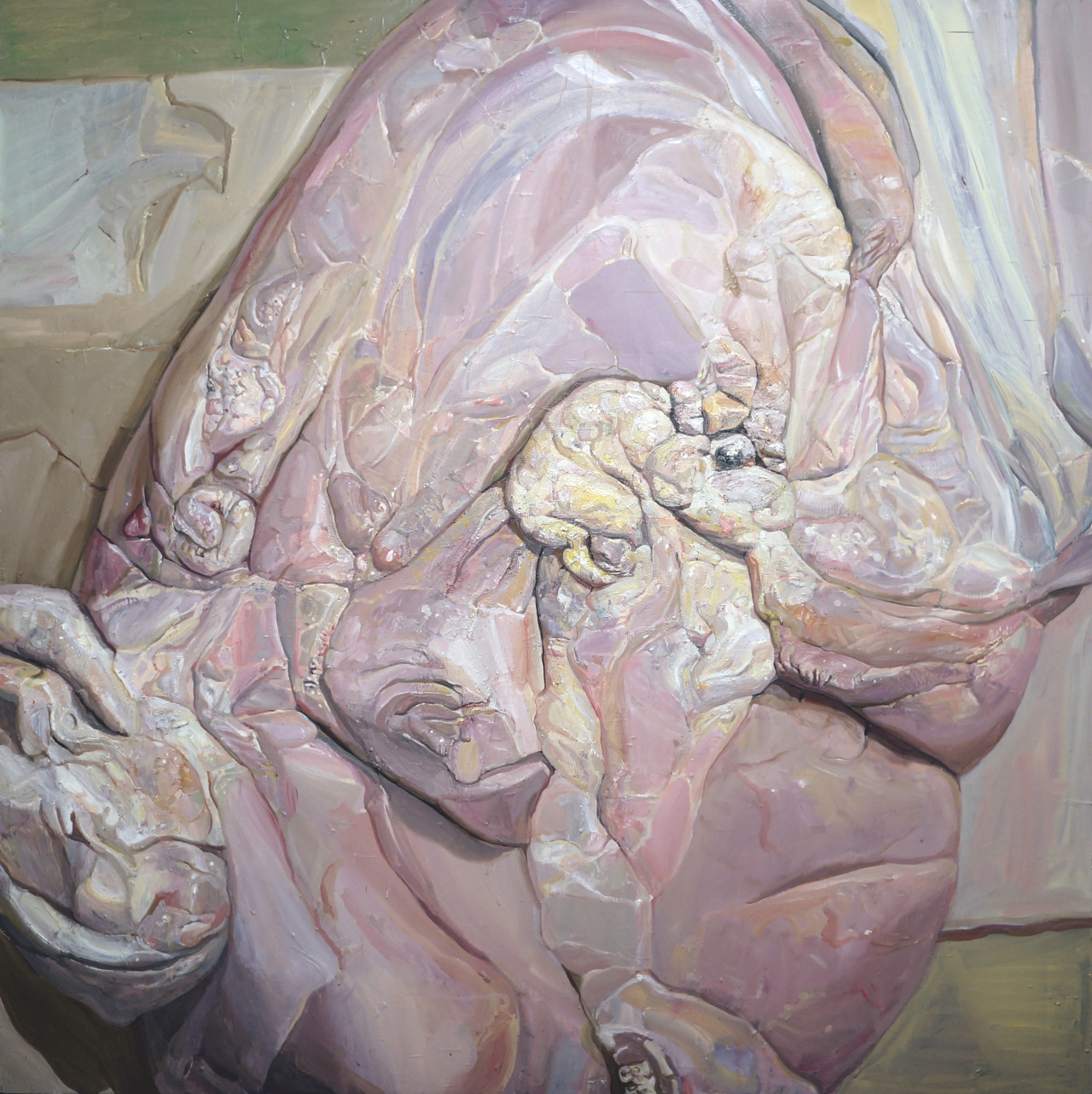
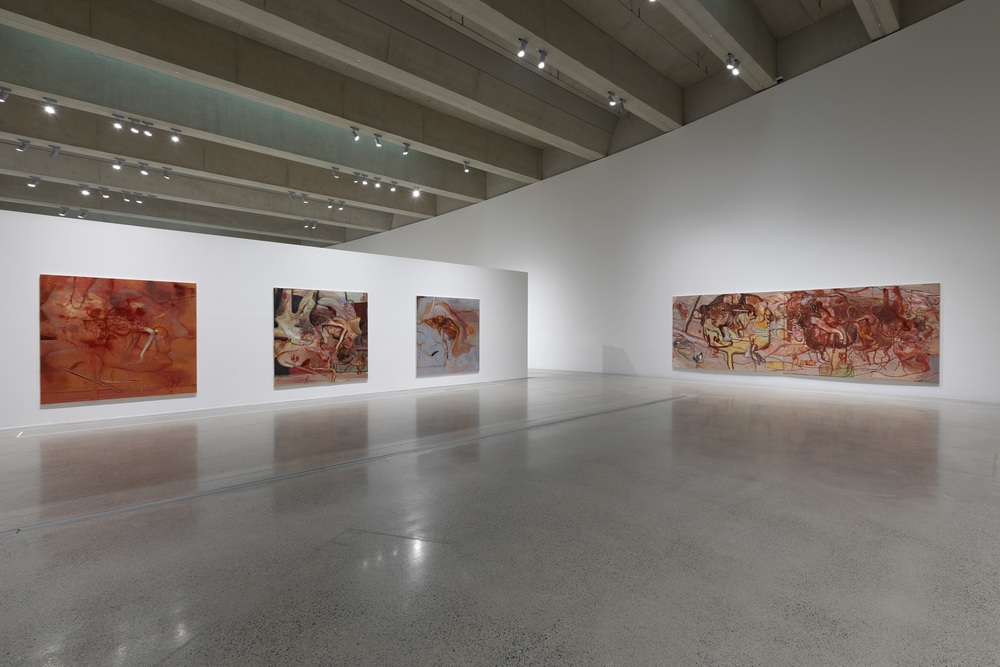
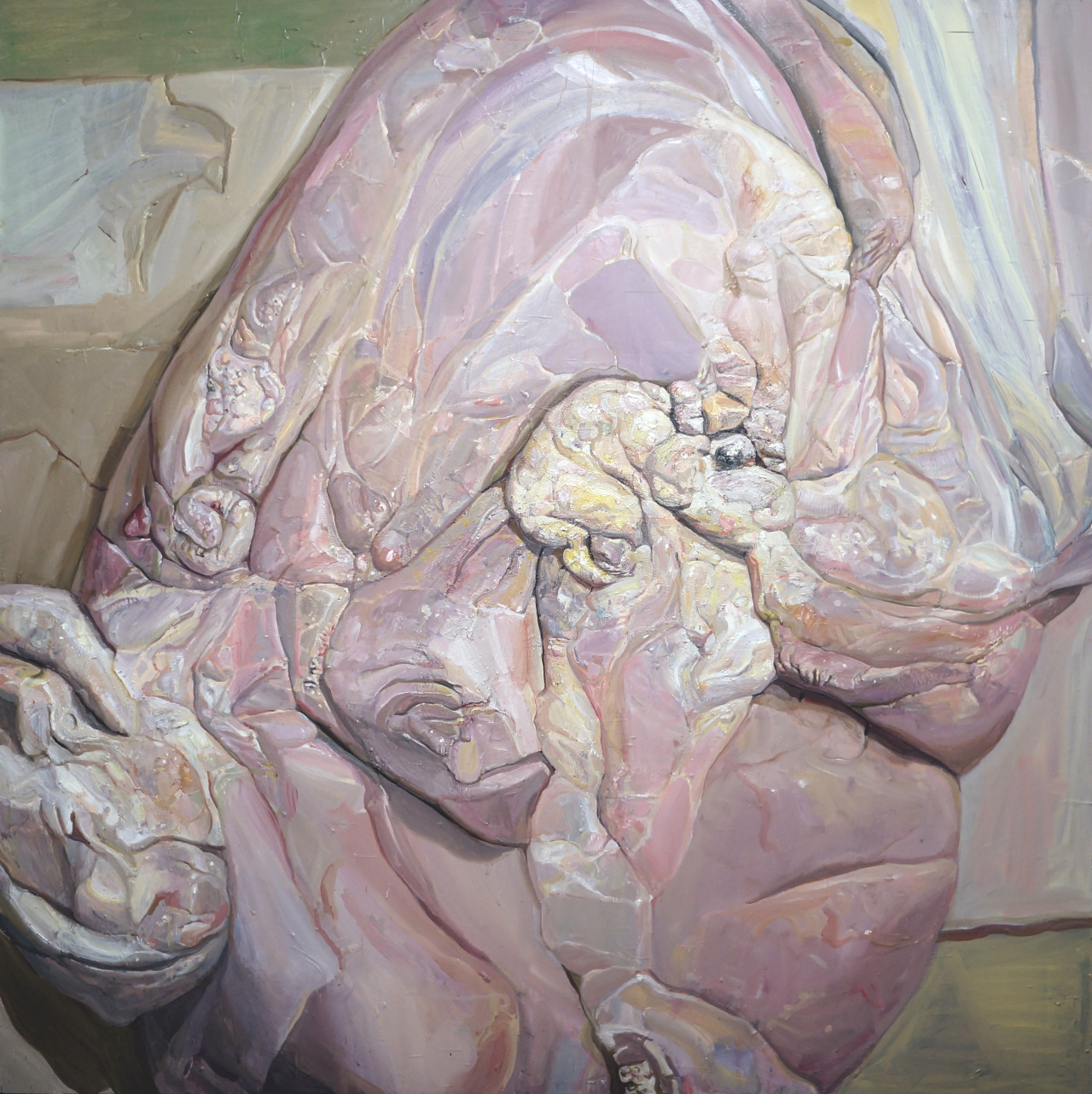
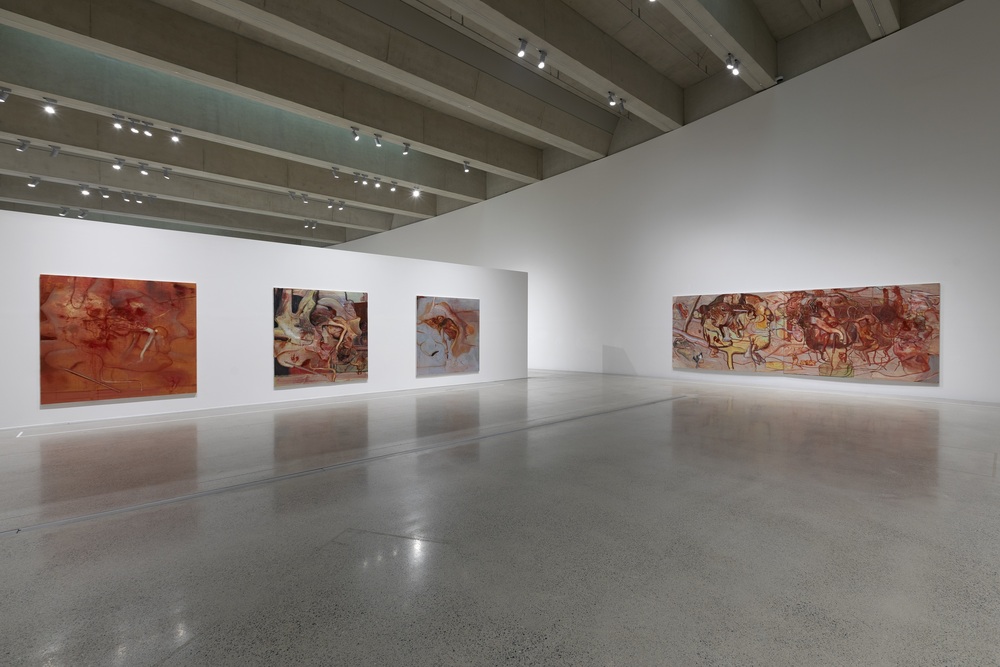
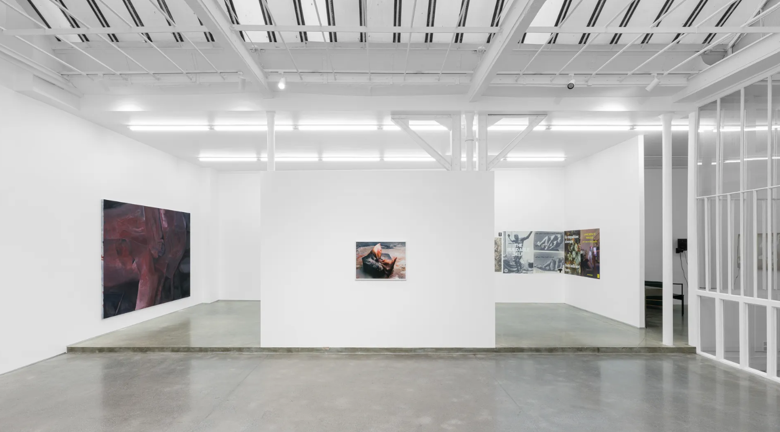
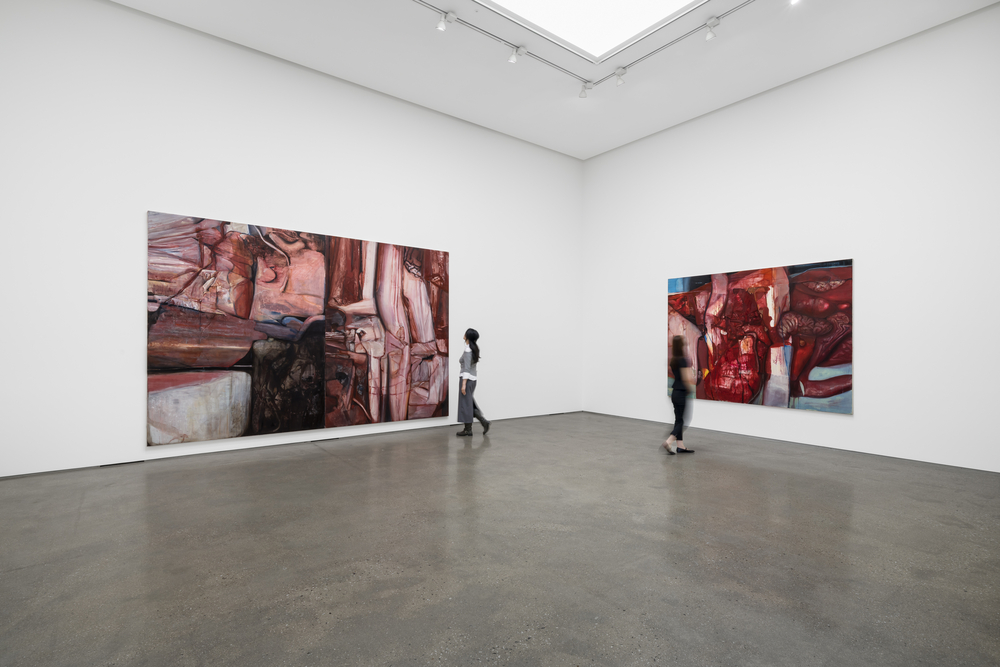
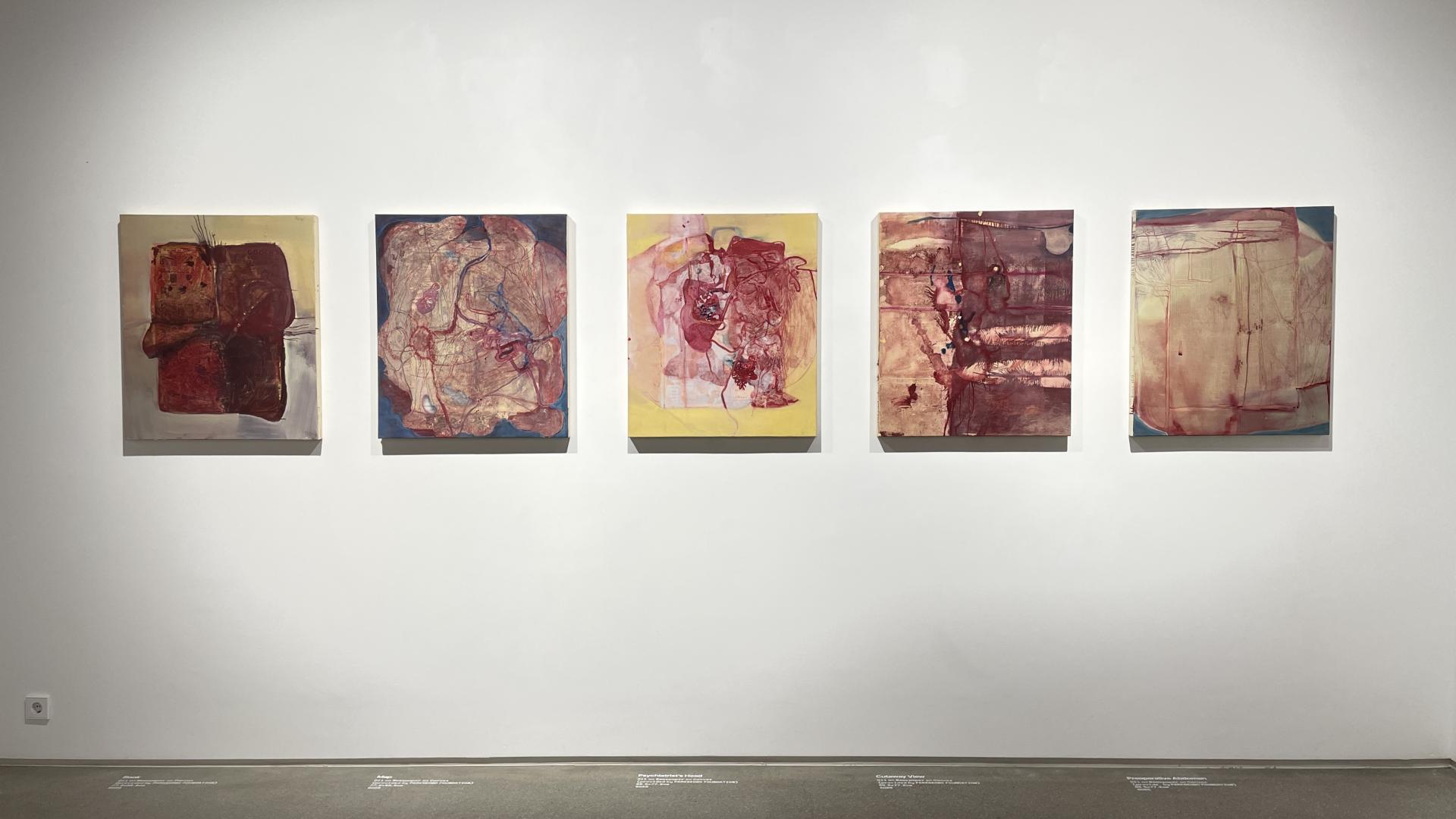
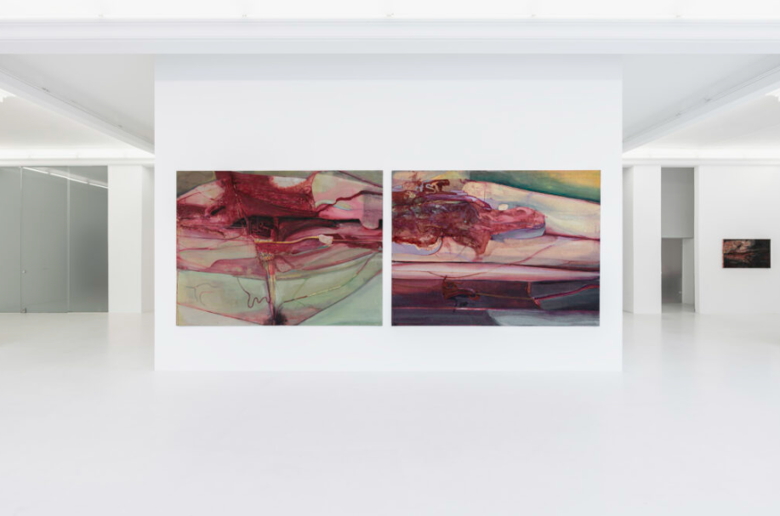
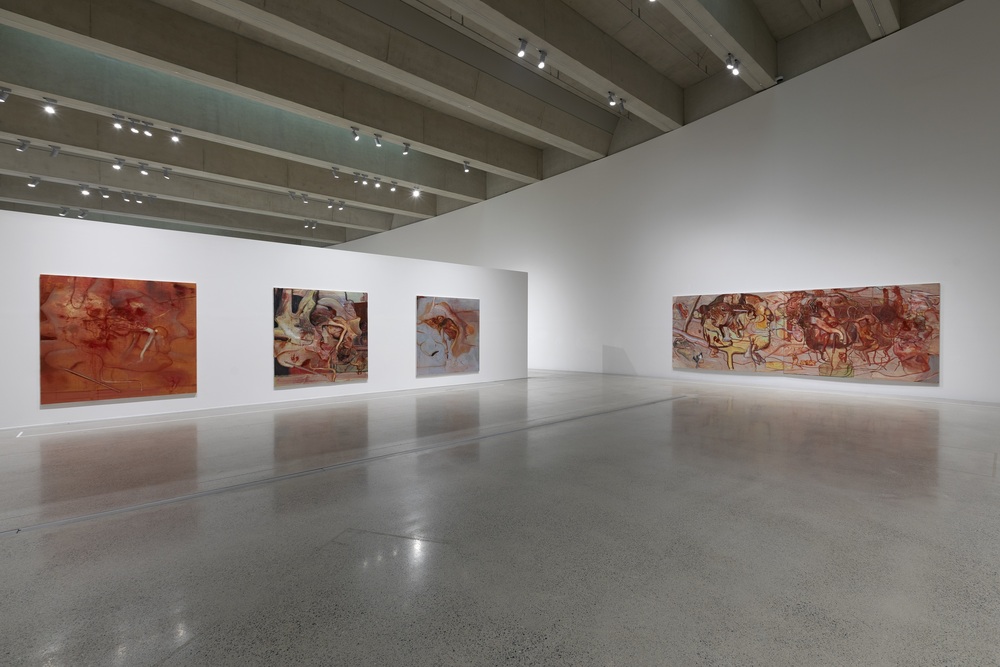
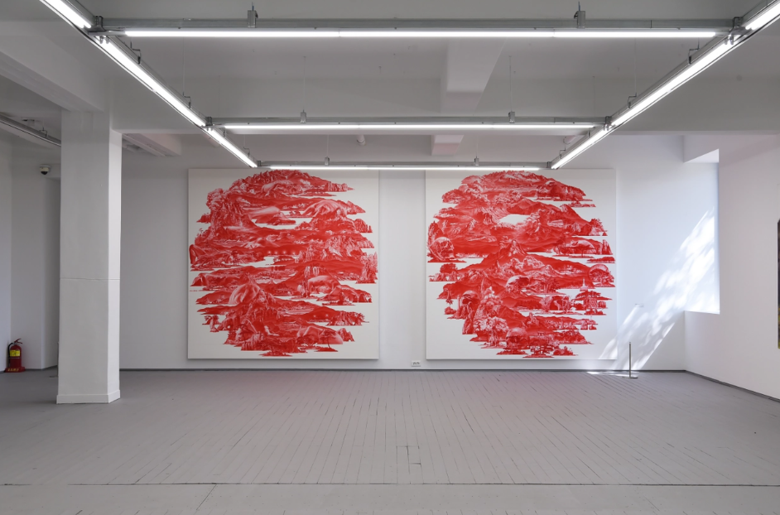
The visual language Lee has developed gives concrete form to the memories, traces, and wounds associated with illness and hallucination in their raw, unprocessed, and abstract states. Fragments of blood and flesh, muscular tissue, veins, and organs, enlarged or reduced according to the artist's psychological perspective, form the "inner landscapes" he creates within the boundaries of the human body.
These landscapes are generally characterized by reddish tones, but the greens and blues that occasionally appear also recall colors associated with bruised flesh or coagulating blood. While pale emerald tones dominated the works titled Refining Hallucinations, produced between 2015 and 2017, a bright blue stands out in the central area of the more recent Connected Skin III(2024).
The artwork, the artistic practice, and the artist: when these three elements align perfectly, and above all, when they closely resemble one another, the pleasure of coming to understand them is multiplied. At least, that is how I feel as a curator. This is also why I have continued to follow Lee's work since first encountering it.
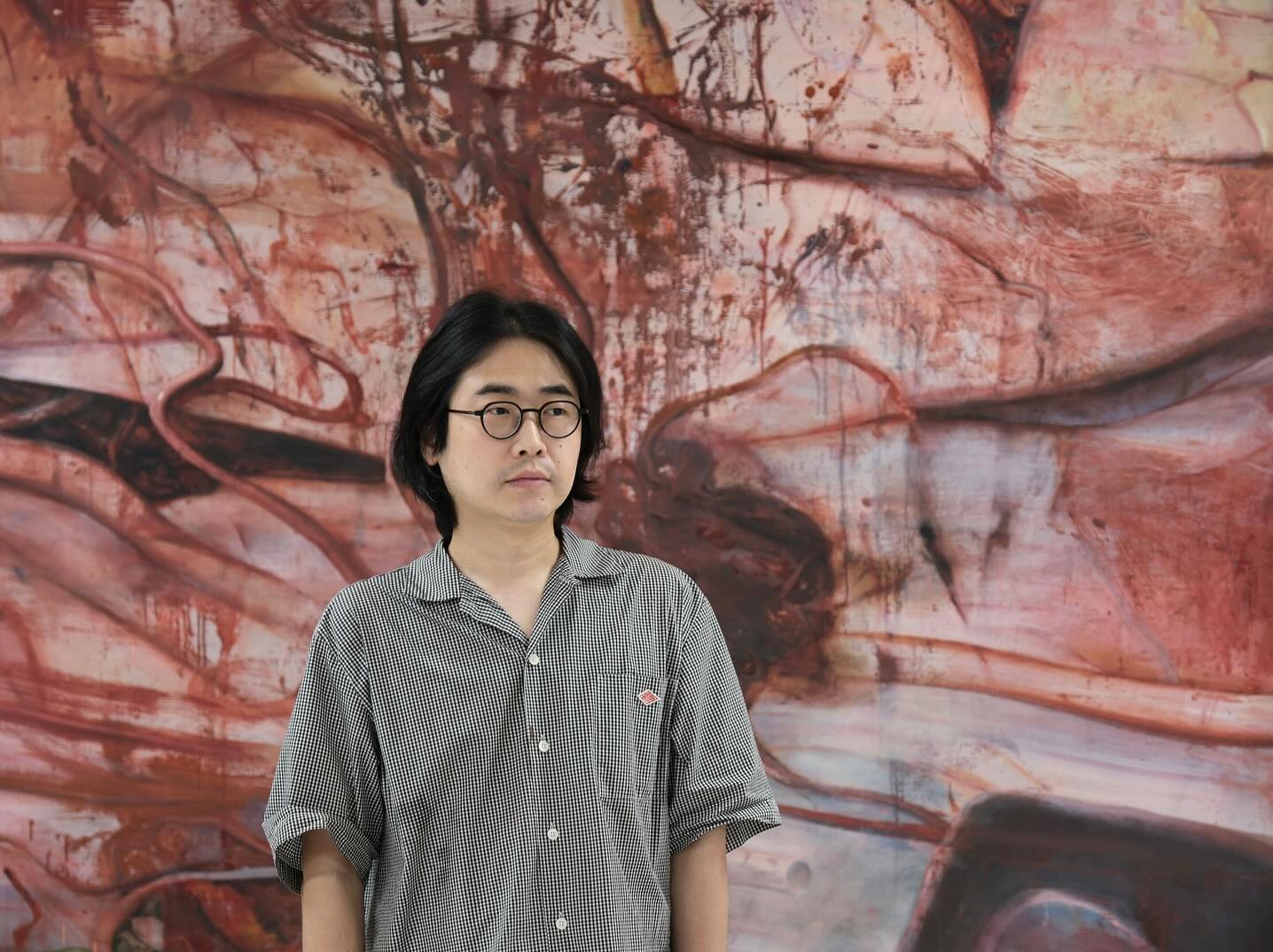
His humility, genuinely honest expression, and artistic spirit, which seems to shine all the more brightly through a certain sense of isolation,⁶ suggest that Keunmin Lee lives a life resembling his paintings. For him, painting is a reflective and liberating practice that confronts the rationalism and processes of quantification constructed by society.
Rather than reducing hallucinations to pathology, Lee refines them into an artistic language, revealing the positive human energy that resists the violence of social standardization. He also hopes that, even though his works are closely connected to his personal history, they might help people recognize how individuals themselves come to be perceived and understood anew.
Once a diagnostic label and its corresponding code are assigned, a person is designated a patient, and even their exceptional temperament or personality may be classified as symptoms of illness. This is one form that definition takes today. It shortens the time we spend coming to know another human being. Lee's practice, by contrast, lies in the act of slowing down that process of understanding another person.
1.Hans Ulrich Obrist's Instagram, Series of Artists' Handwritten Phrases, posted September 15, 2023.
2.The interview conducted at the artist's studio in Seoul in September 2023 was recently made public in conjunction with his solo exhibition 《When Hallucination Is No Longer Symptom》(February 20 – April 12) at Galerie Drouillon in Paris.
3.Kim Bokgi, "The Art History of Outsider Art," 『Art in Culture』 (May 2021), p. 91.
4.Artist's note, April 2025.
5.With the collapse of values grounded in reason, the Surrealists proposed automatism, a method based on dreams and the unconscious that excluded the intervention of conscious thought. Lee has stated that although he is not directly inspired by Surrealism, he employs automatism when making drawings. See the interview cited above.
6.Lee has posted statements on his Instagram Stories. One reflection in particular reads: "Relationships with people are important but also frightening. My biggest fear is disappointing the other person, even though most people don't even care about me." This monologue reveals the ambivalent emotions and concerns experienced by an independent individual when forming relationships with others. The original text was published in English.