1. To Fall Tragic, One Must First Be Beautiful
Tragedy is a fall, and a fall is
beautiful. However, simply causing something to fall does not create a tragedy.
Since a fall moves from above to below, the subject itself must be beautiful;
otherwise, the concept of a fall collapses. This is an example of how lowercase
beauty (美) generates uppercase Beauty (美).
Since the beginning of her
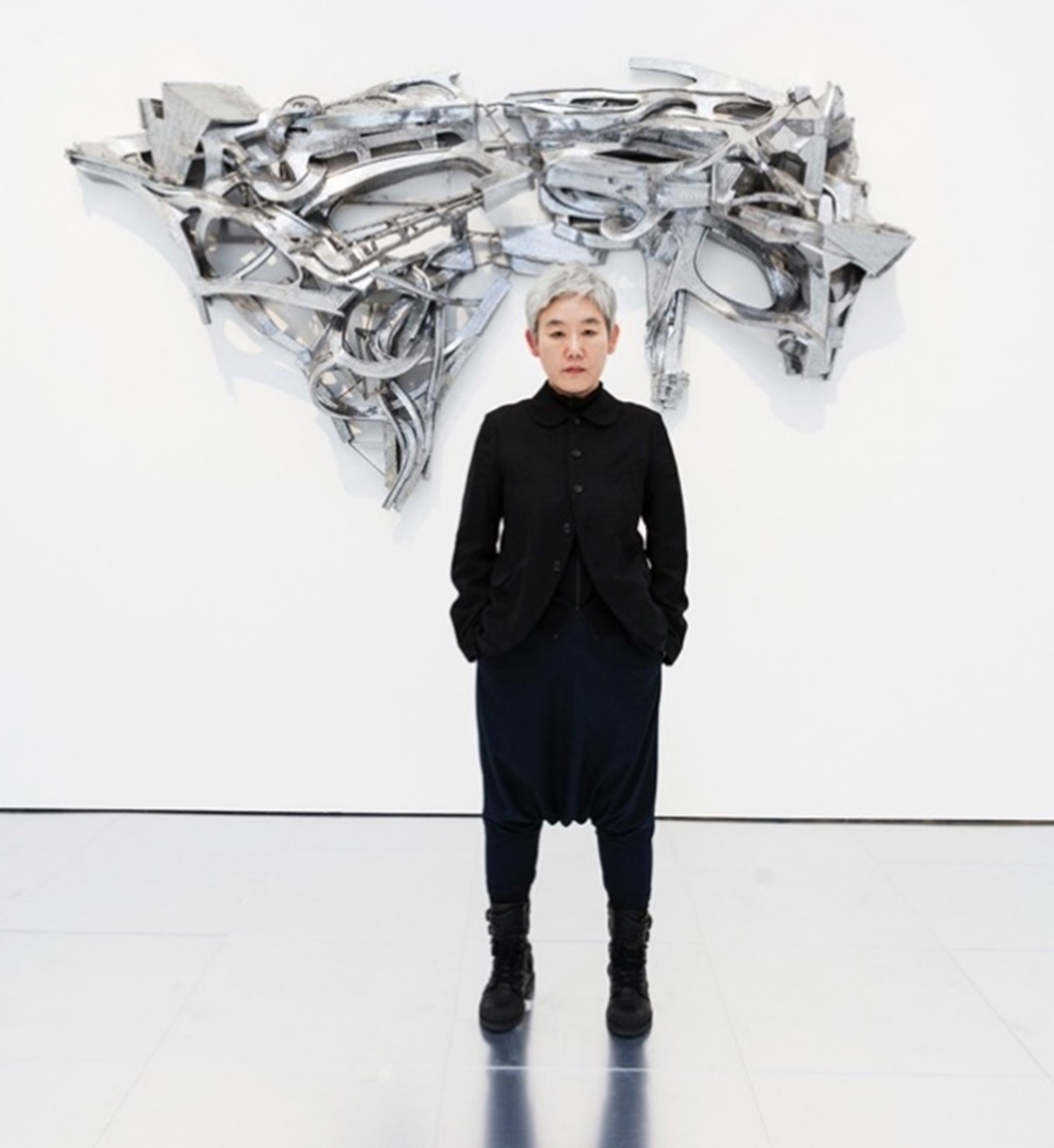
career, Lee Bul has consistently explored flamboyant and intricate forms, often
depicting scenes of explosion or collision. While her unique aesthetics can be
described as an unexpected beauty discovered in unforeseen places and their
inversion, this explanation remains somewhat crude. For her, it is not an
unexpected beauty but a deliberately orchestrated one. The monstrous is not
merely beautiful; it is beautiful because it is monstrous.
Yet, monstrous beauty remains on
the periphery of lowercase beauty (美), unable to fully transition into uppercase Beauty (美). Even though her monsters are sufficiently beautiful to transition
into tragedy, they ultimately conclude as comedy.
2. The Beauty of Monstrous Grotesque
The key term defining Lee Bul’s
early works is the beauty derived from monstrous grotesquerie. In pieces such
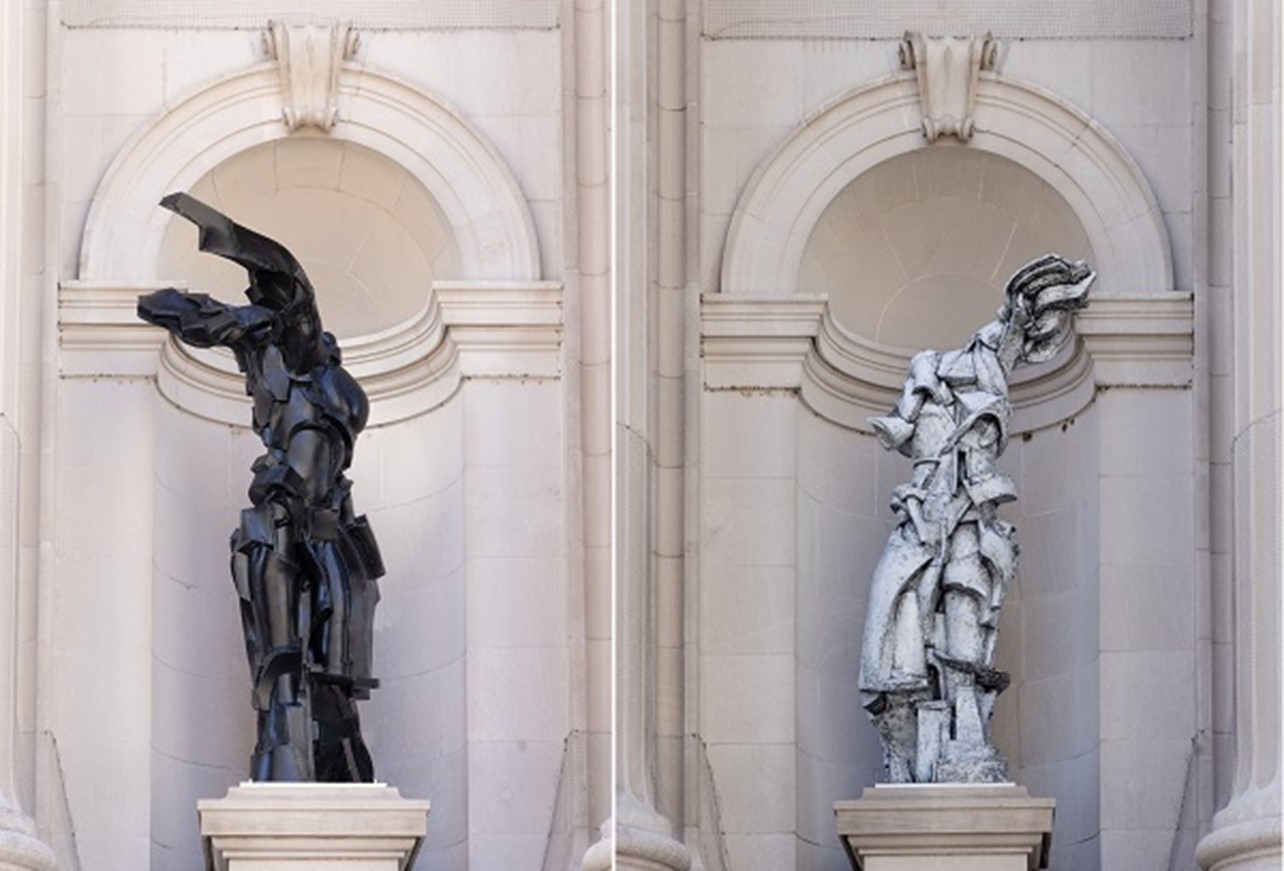
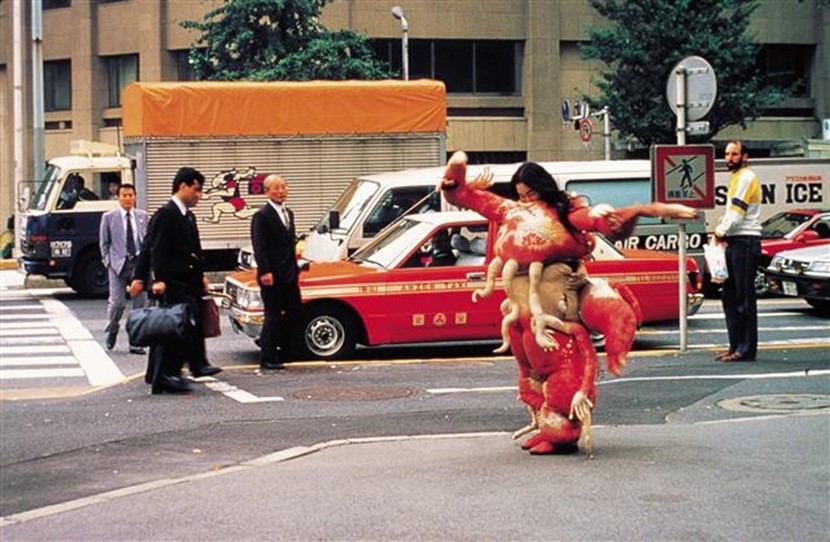
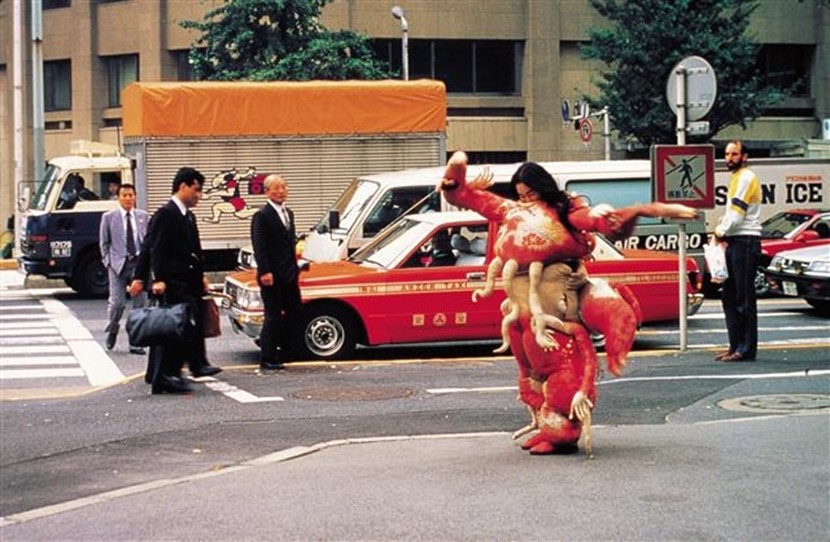
as Sorry for Suffering—You Think I’m a Puppy on a Picnic?, Cyborg Series, and
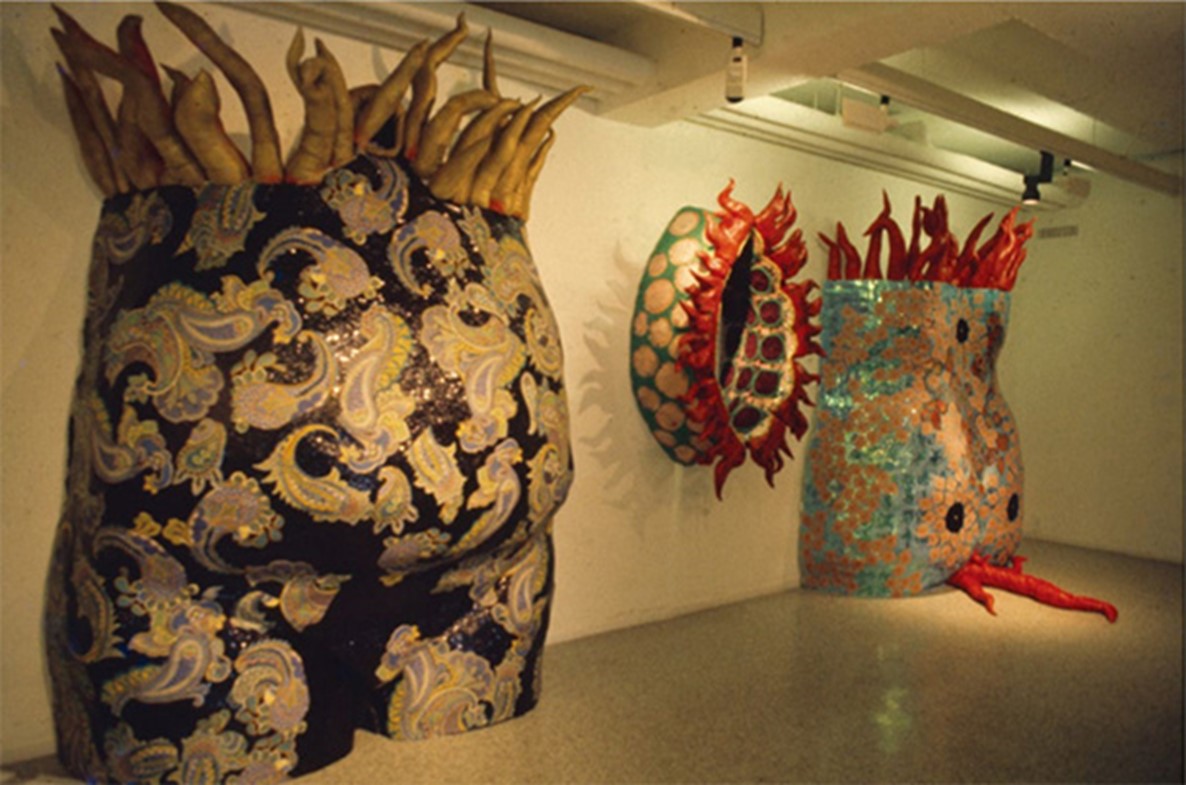
Monster Series, Lee Bul evokes an uncanny beauty through bodily mutations. The
initial encounter with these grotesque complexities—full of visual
intricacies—elicits an impression of unease, even repulsion. However, before
long, they transition into aesthetic objects, inducing a peculiar satisfaction.
Yet, rather than analyzing the
mechanics of this aesthetic pleasure, we must first examine the intended impact
of Lee Bul’s grotesquerie. What implications does Sorry for Suffering—You Think
I’m a Puppy on a Picnic? carry? Who is it directed toward?
Lee Bul’s monstrous grotesquerie
targets the Father.[1] The aggressive tentacles and forms of her works can be
interpreted as a deliberate act of violence toward those who maintain a
voyeuristic gaze. However, despite appearing to challenge patriarchal
authority, her works are ultimately absorbed into a larger patriarchal
structure—namely, the Western art world that, at the time, was particularly
interested in Asian female minorities.[2]
This paradox is evident in the
reception of Lee Bul’s works. Her cyborg warrior image was embraced because it
fit into the Western gaze, turning her intended defiance into a tamed
aggression. Her works, though outwardly violent, are aesthetically pleasing and
easily accepted as beautiful. This compromises their intended impact; instead
of overwhelming or attacking the audience, they become trapped within their
gaze.
In this sense, Lee Bul’s
grotesque monsters function within comedy. While they initially seem
terrifying, their tension is quickly diffused through humor—specifically,
mockery of the phallus. When viewers encounter her grotesquely clad figures,
they do not react with fear but with laughter, shifting their gaze toward what
the work satirizes rather than the monster itself. Consequently, the grotesque
no longer remains a monstrous entity but becomes merely another version of the
female body.
3. The Glorious Collapse of an Ideal
City
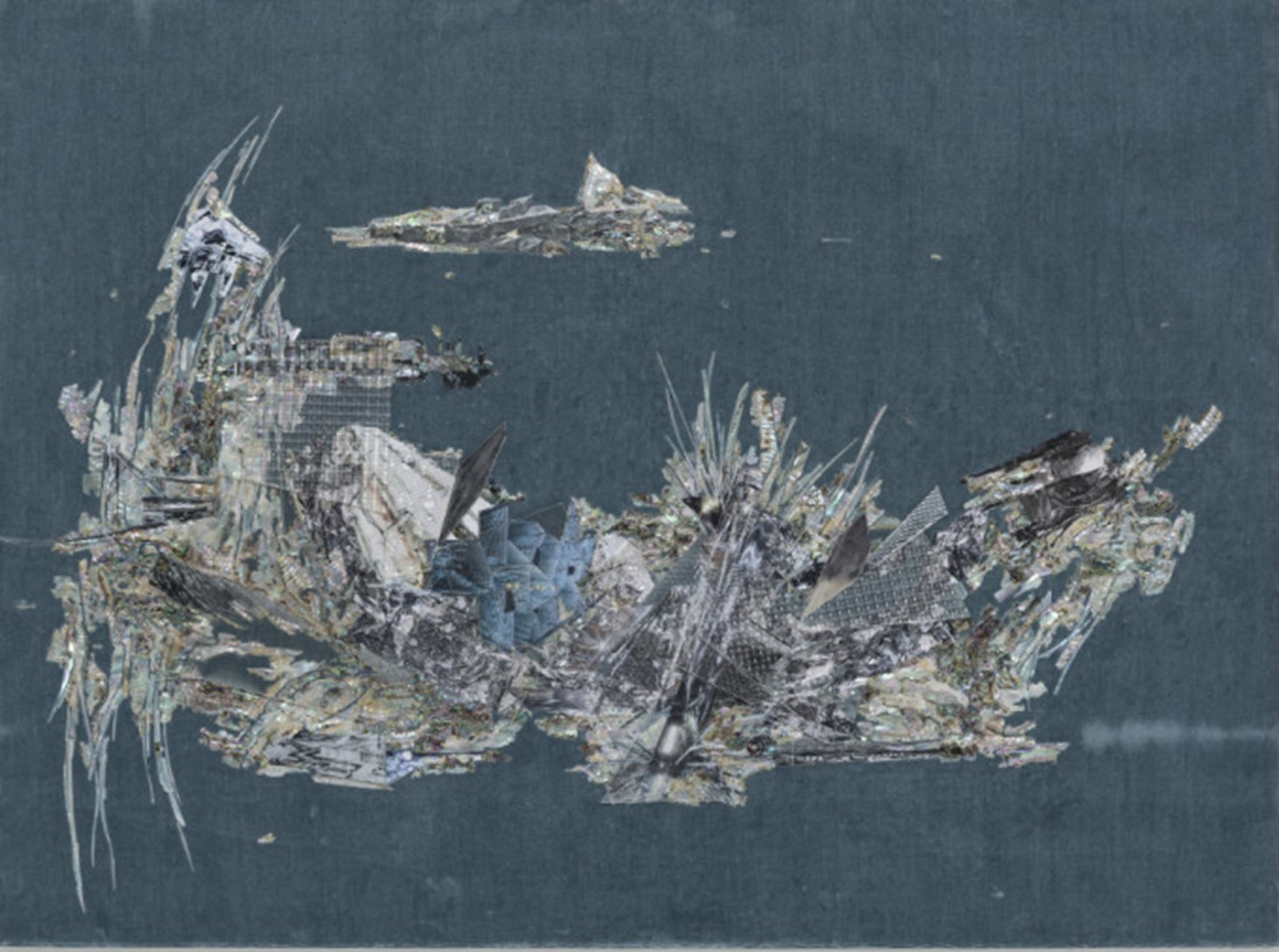
From the 2000s onward, Lee Bul’s
works gradually shifted focus. Her Mon Grand Récit series, first introduced in
2005, presents dazzling, jewel-like constructions. However, upon closer
inspection, these structures are composed of flimsy materials, revealing their
inherent fragility. The seemingly grand cityscapes she constructs are not utopias
to aspire to, but rather, failed utopias.
This notion of failure becomes
more explicit in her later works. While her early 2000s pieces hinted at
desolation through skeletal structures, her post-2014 projects fully embrace
the theme of collapse. Airships, once symbols of modernist ideals, plummet into
ruin, and once-glittering cityscapes lie in fragments. This aestheticization of
failure completes the tragic form.
Unlike her earlier monstrous
figures—whose beauty diluted their monstrousness—these works necessitate
beauty. To create a tragedy, the subject must first be idealized; tragedy is
the downfall of something greater than us, while comedy ridicules something
lesser. Thus, for Lee Bul’s works to become tragic, they must first be
unquestionably beautiful.
4. Sublimity Born from Ruin
As Lee Bul’s works collapse, they
give rise to a new sensation: the sublime.[4] Her installations create vast,
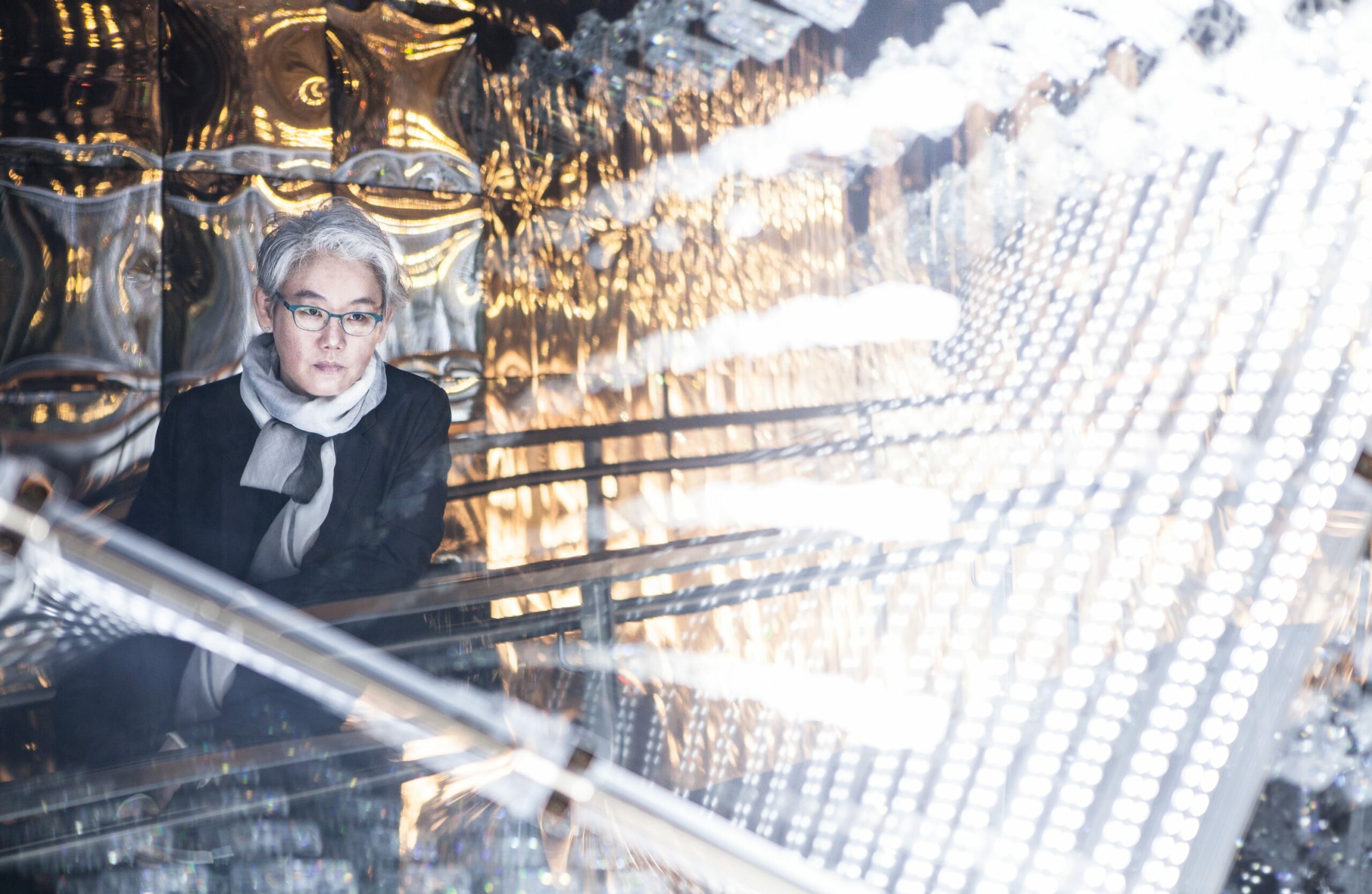
engulfing spaces where viewers experience disorientation. The use of mirrors
enhances this effect—dissolving spatial boundaries, extending reflections
infinitely, and submerging the viewer in an abyss.
Unlike traditional
representations of the sublime, which evoke awe through scale, Lee Bul’s
sublime is terrifying because it removes the ground beneath us. In pieces such
as Via Negativa II (2014) and Civitas Solis II (2014), mirrored surfaces
dissolve architectural stability, leading viewers into a void. This experience
evokes the vertigo of standing at the precipice of comprehension, much like
encountering the infinite night sky or the boundless depths of the ocean.
Lee Bul’s sublime is neither
purely beautiful nor purely terrifying; it exists in the tension between the
two, compelling us to confront the fragility of our ideals.
The Reason for Horror: Between
Grotesque and Ruin
A wise magician can only be born
through incest.
—Friedrich Nietzsche, The Birth of Tragedy
5. A Wise Magician Can Only Be Born
Through Incest
Lee Bul’s works repeatedly evoke
disturbing imagery because humanity is inherently incapable of looking away
from horror.
Why are people drawn to the
grotesque? What mechanism is at play?
The grotesque provokes curiosity precisely because it is taboo. But why are
certain images deemed taboo? Paradoxically, because they are frequently
violated. Taboos that have no risk of violation do not exist—no one prohibits
wearing shoes without socks. Taboos form around more consequential
transgressions: incest, the burial of unrotted corpses, or bodily
transformation.
These taboos are unsettling
because their violation destabilizes our perceived reality, threatening to
overturn established systems.
Yet, art and festivity often
originate in disorder, in encounters at the limits of existence. When people
face a world where conventional order collapses, they experience both unease
and fascination.[5] However, they cannot look away. Humans harbor a deep-rooted
yearning for the beyond—that which lies just outside comprehension. In ancient
Greek, the words for an inherent purpose (telos) and a boundary (peras) were
interchangeable,[6] for a purpose is defined by its limitations.
Likewise,
human limits shape human purpose. Looking beyond, teetering on the edge of
understanding, is intrinsically tied to the fundamental human desire to
confront the unknown. In this sense, the phrase a wise magician can only be
born through incest could be reinterpreted as follows:
To examine the essence of human
purpose, one must embrace monstrous imagination.
6. The Exploded Body and the
Aftermath of Ruin
Lee Bul’s soft sculptures defy
taboos through the grotesque. They transgress the norms of bodily integrity and
challenge the conventional representation of the female form. This should
invoke a sense of horror. Confronted with figures that should not exist, people
instinctively recoil. The encounter with a world where reality’s order has been
shattered induces a held breath.
Yet, this tension quickly
transitions into something else—sometimes laughter, sometimes awe.
A dangerously inflated balloon,
painted with a stereotyped image of an Asian woman (Hydra, 1996), is
unmistakably a mockery of the phallus. Similarly, Lee Bul’s skin distorts
traditional notions of the female body, often turning it inside out. Her grotesque
aesthetic contains embedded satire, an irreverent taunt directed at structures
of power. Thus, her works first evoke disgust and shock, but this quickly
shifts into laughter.
This laughter is a release—a
mechanism of liberation. Confronted with an unsettling form, viewers
instinctively tense up and seek relief. Lee Bul channels this response into
intentional derision of the patriarchal gaze, swiftly defusing the tension.[7]
Yet, this reveals an inherent
contradiction. Lee Bul’s aesthetic consistently engages with explosions,
collisions, and dazzling, alien forms. She conjures shapes that do not belong
in reality. However, in her early works, the convergence of extravagant form
(beauty) and content (mockery) seems unresolved.
Her exploding, inverted bodies
once served as revelatory devices, but by the Monster series, they begin to
lose their force. The initial mockery fades, leaving only an eerie beauty.
While such beauty accentuates the gap between reality and its aberrations, it
no longer necessitates a female body as its subject. At this juncture, Lee Bul
shifts direction.
From the 2000s onward, she moves
away from grotesque bodies toward landscapes (Mon grand récit: Weep into
Stones…, 2005). Featuring steel structures, overpasses, and flickering
billboards, these works appear desolate. Despite their skeletal frames, they do
not feel like works in progress but rather abandoned sites. They evoke a sense
of having been left behind, as though immense time has stripped them down to
their framework.
A following scene, Mon grand
récit: A Portrait of an Ideal (2005), returns to the body. An unidentified
figure, labeled “ideal,” sits draped in fabric, fully concealed.
This title offers insight into
the trajectory of Lee Bul’s later work. She grapples with the ideal, yet always
situates it within a post-event state. The object is mute, covered as though
after death. The viewer is left with something already completed, something
beyond communication.
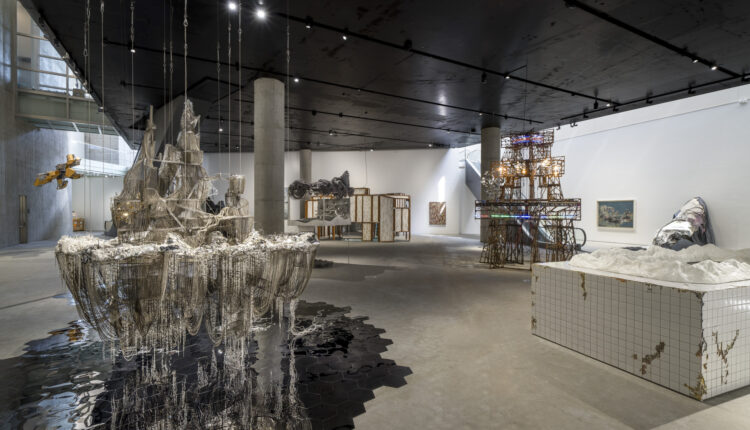
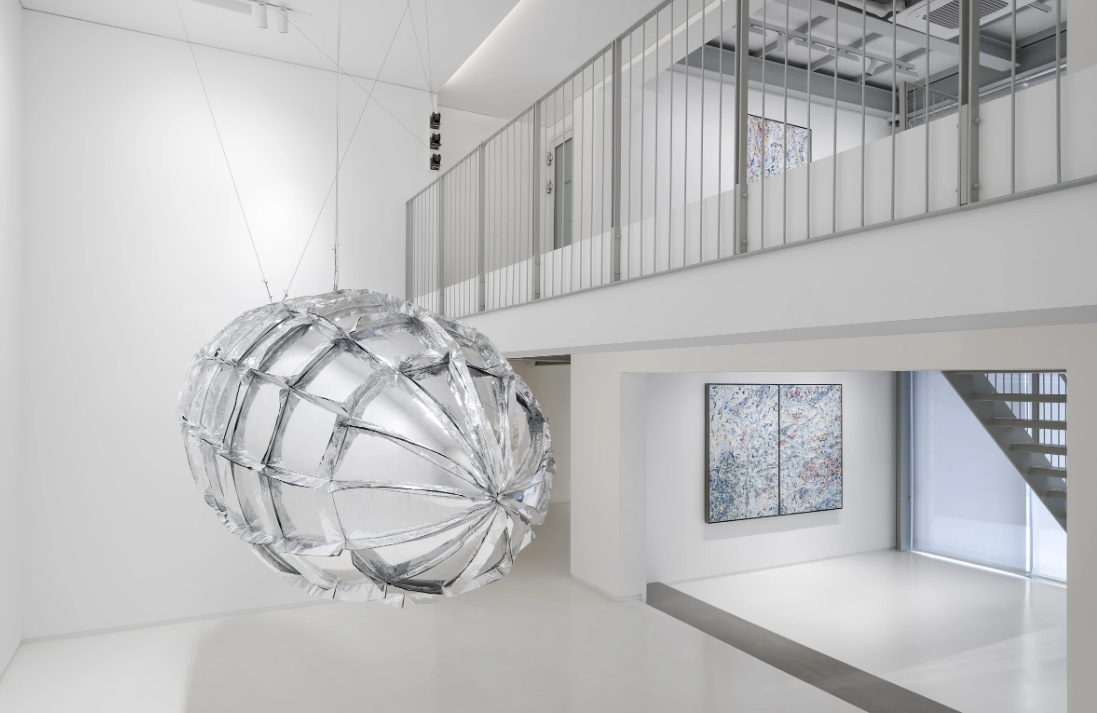
If Lee Bul continues engaging
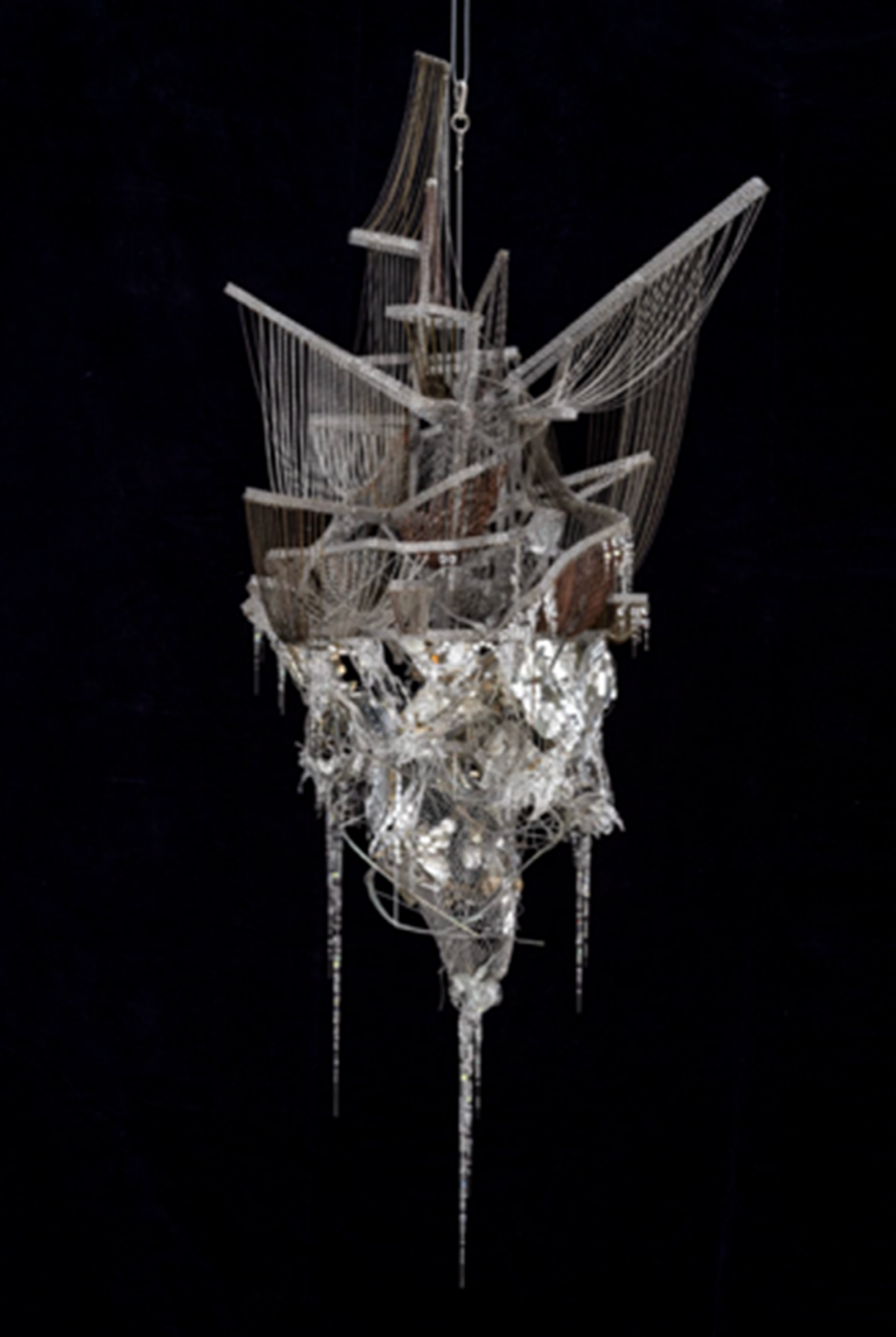
with the ideal in this period, then this chandelier-like structure must be
interpreted in relation to it. The title references architect Bruno Taut, known
for Glass Pavilion and The Crystal Mountain, utopian projects rooted in his
belief that glass would usher in a new age.[8]
However, rather than affirming
Taut’s vision, Lee Bul’s work invokes skepticism—the phrase “Beware the
Sweetness of Things” signals her cautious stance toward utopian dreams. If
Taut’s crystalline vision represents the seductive allure of a singular,
gleaming ideal, Lee Bul’s After Bruno Taut… presents its counterpoint.
Compared to Mon grand récit: A
Portrait of an Ideal (2005), this new work sharpens its stance. Instead of
celebrating success, it stages the collapse of ambition. The shimmering
materials are tangled, not radiant. Suspended lifelessly, they exude neither
energy nor motion. Unlike the animated entanglements of her Monster series,
these forms remain inert. Lee Bul’s grand narrative does not live—it hangs,
already dead.
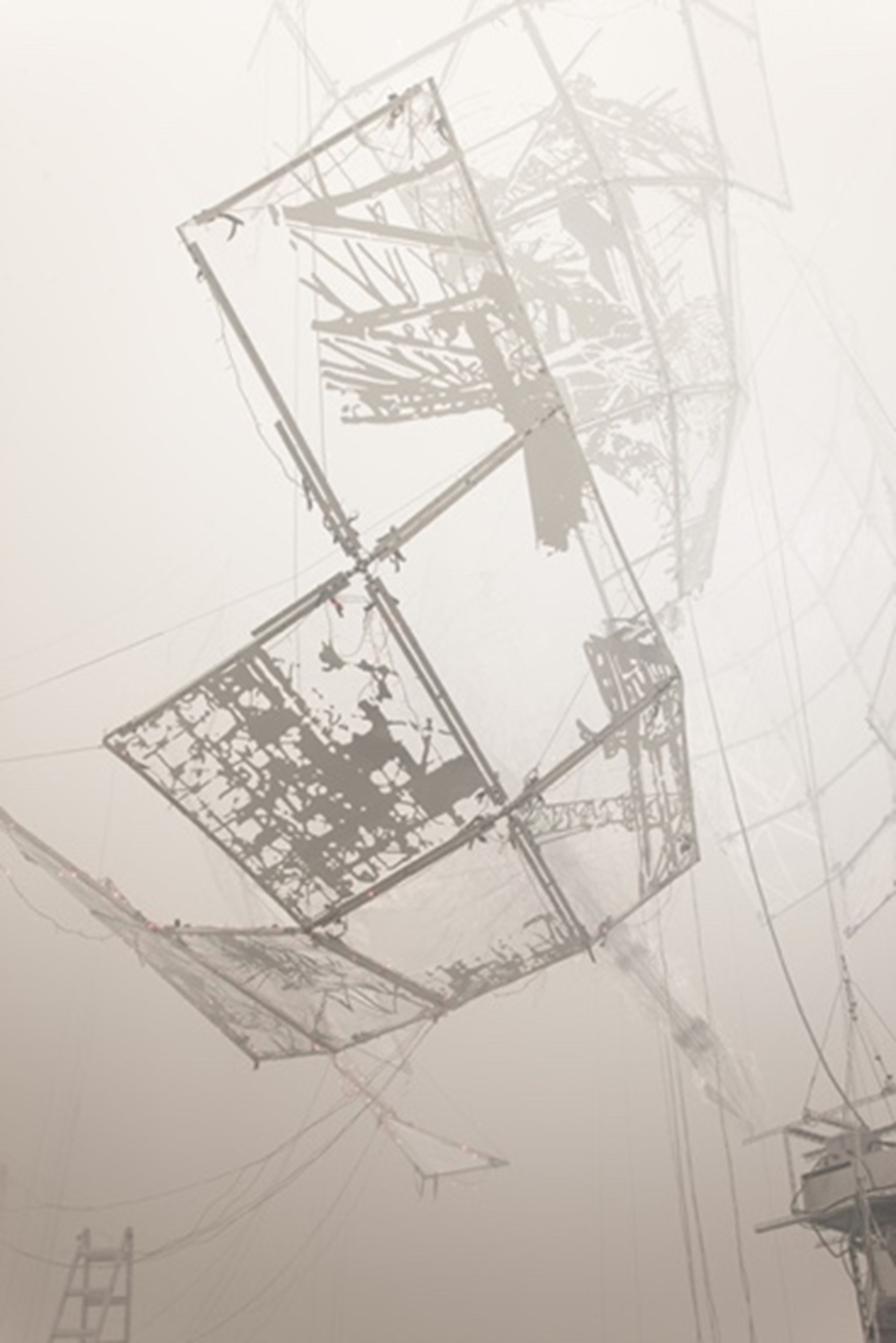
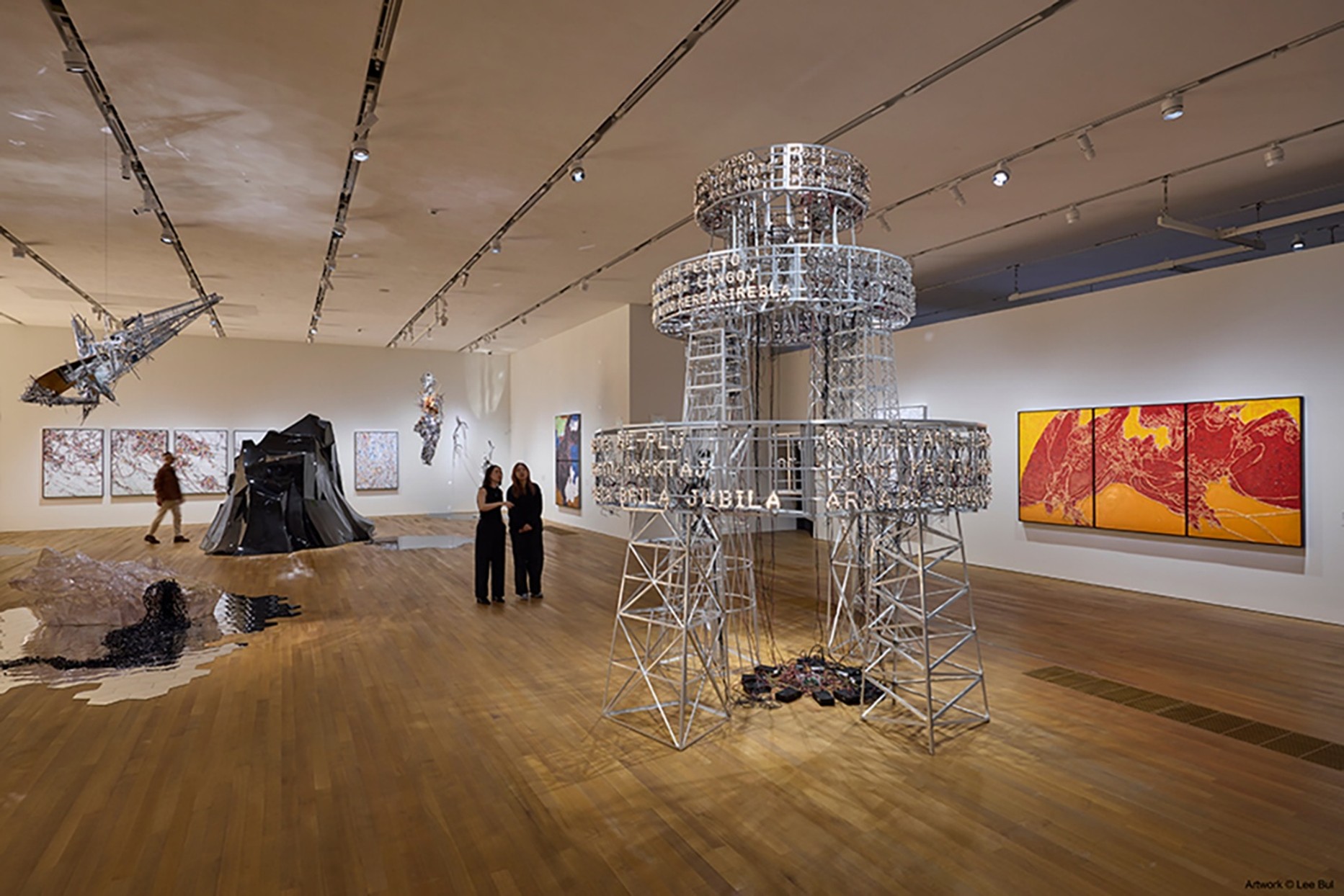
Thus, she arrives at a sublime
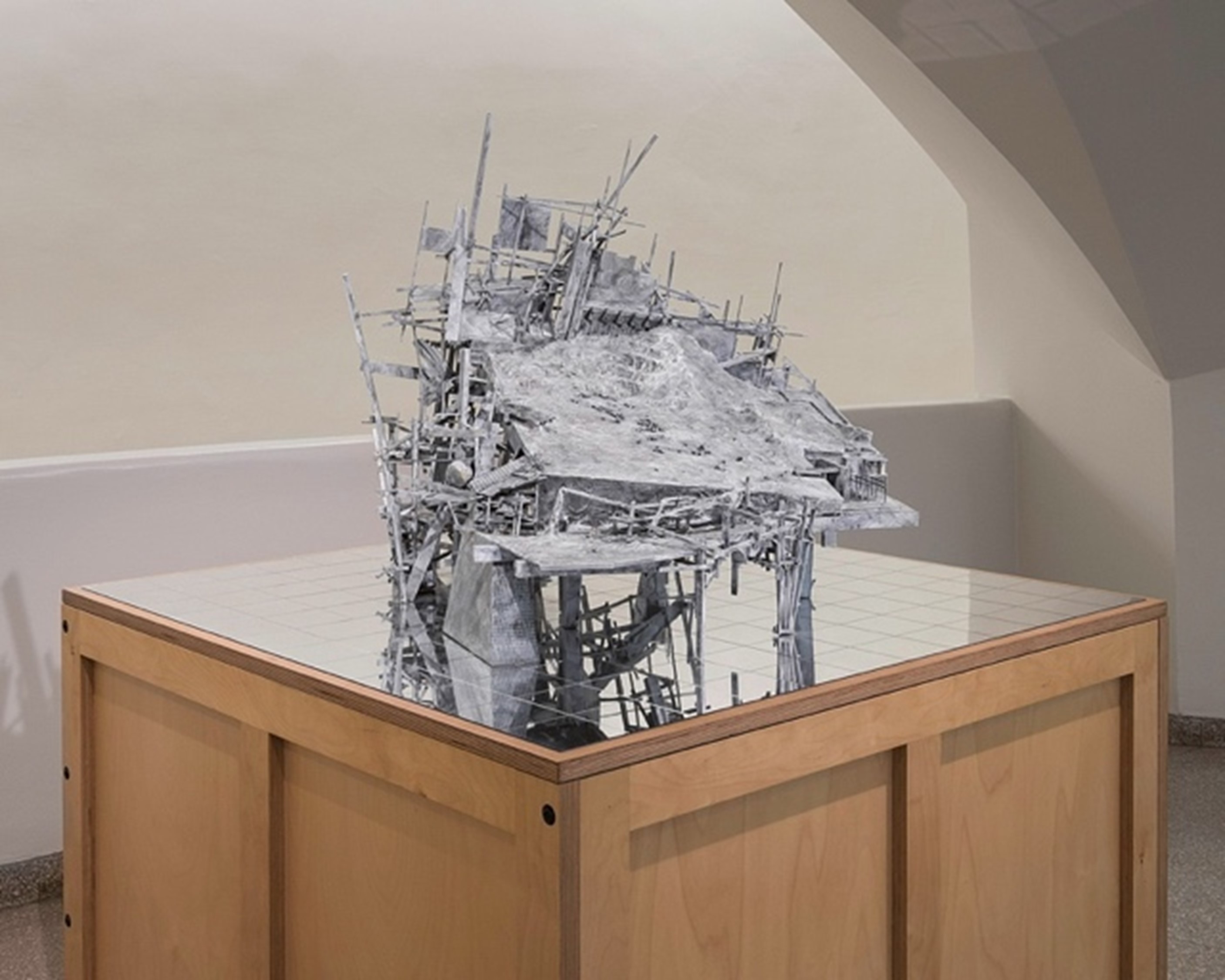
ruin (Aubade III, 2014; Civitas Solis II, 2014). Earlier attempts to depict
ruin resulted in mere fragments, but these later works resemble architecture.
No longer objects, they become immersive experiences, spaces the viewer must
physically navigate. If Lee Bul’s pre-2000s work “exploded” the female body to
induce discomfort, her post-2000s work leads us into spaces already
obliterated.
Sculptures, when large enough,
become architecture. Lee Bul’s sculptures continually expand into built
environments because they must guide the viewer to the limits of perception. To
hold us on this precipice, they must be experienced rather than merely seen.
Yet, as her grotesque sculptures once demonstrated, tension cannot be sustained
indefinitely—people instinctively avert their gaze from the abyss.
This is why Lee Bul’s works must
be ruins. Viewers find safety in gazing at something already destroyed. Through
the veil of ruin, they can confront the precipice for longer.
Thus, they witness the fall of
utopia—or the utopia that was always doomed to fall (Willing To Be Vulnerable,
2015). Lee Bul’s works feature precarious structures: headless figures
struggling to balance, towers collapsing under their own weight. Transparent
balloons gleam, yet lie abandoned. A girl hovers mid-air, fireworks bursting
from her chest.
Yet, everything remains fragile,
transparent, vulnerable.
These ruins are the residue of
vanished desires. The sparkling girl does not shine to envision the future; she
flickers as a remnant of past dreams.
If faith remains here, it is as
thin as plastic.
7. A Dance on the Edge of
Consciousness
Lee Bul’s works continually
direct our gaze beyond conventional boundaries—whether toward the unsettling
aggression of grotesque figures or the ominous mist of desolate ruins.
To withstand prolonged exposure
to such transgressive imagery, an antidote is required. For grotesque
creatures, that antidote takes the form of mockery and derision; for ruins, it
manifests as mist and temporal distance.
Yet, while the former dilutes the
horror of monstrosity, the latter preserves the full integrity of ruin. Lee
Bul’s monsters, though aesthetically striking, are ultimately not terrifying
enough to become tragedies and thus remain within the realm of comedy.
Conversely, her ruins are sufficiently beautiful to fully embrace tragedy.
Why, then, do Lee Bul’s works
willingly expose themselves to vulnerability and horror? As Nietzsche stated,
“A wise magician can only be born through incest.” Just as Nietzsche’s remark
suggests that wisdom emerges through transgressive origins, so too do Lee Bul’s
ruins dance precariously on the edge of consciousness.
[1] Choi Seung-ja, To Be Reborn
Again. The full passage reads: “All you fathers who grab my life by the tail
and shake it wildly from behind, do you think I am just some puppy on a picnic
in this world?”
[2] Roh Hyun-jung, A Study on Lee
Bul’s Cyborg Series (李昢, 1964-), p. 28.
[3] Kim Sun-jung, Lee So-jin,
UTOPIA SAVED (2010), p. 31.
[4] Kim
Hyung-mi, MMCA Hyundai Motor Series 2014: Lee Bul (2014), p. 89.
[5] Wolfgang
Kayser, trans. Lee Ji-hye, The Grotesque in Art
and Literature, Amor Mundi (2011), p. 45.
[6] Giorgio Agamben, trans. Yoon
Beong-eon, The Man Without Content, Ja-eum & Mo-eum (2017), p. 159.
[7] Kim Ye-kyung, Grotesque
Aesthetics: Between Fear and Laughter, p. 21.
[8] Kim Sun-jung, Lee So-jin,
UTOPIA SAVED, p. 51.