From Sensation to Essence: Landscapes Deep Within
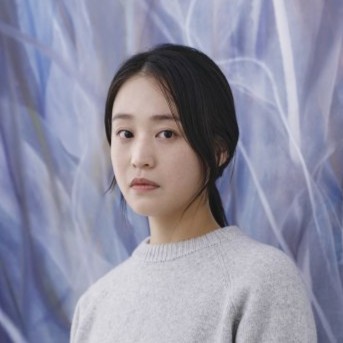
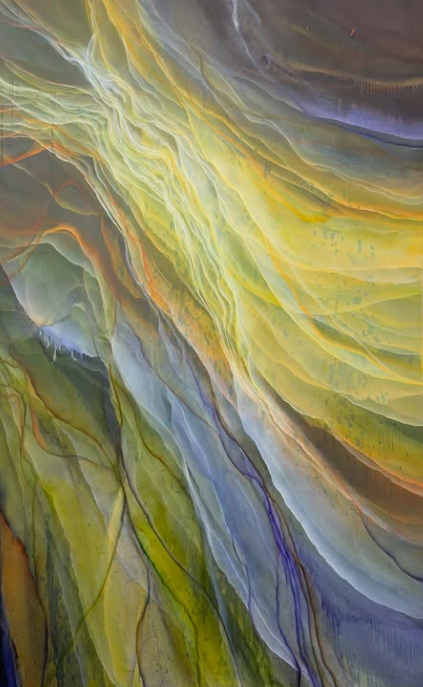
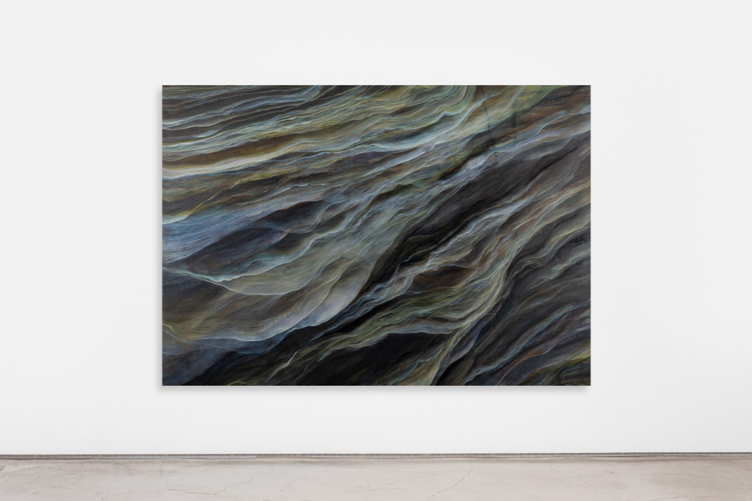
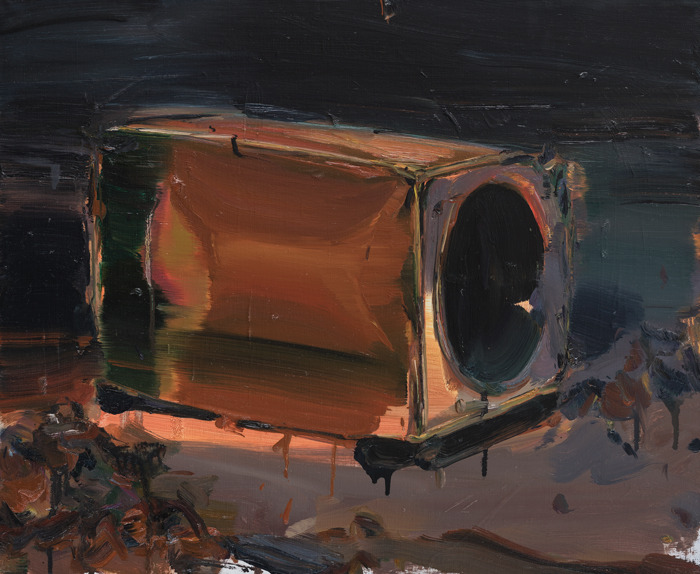
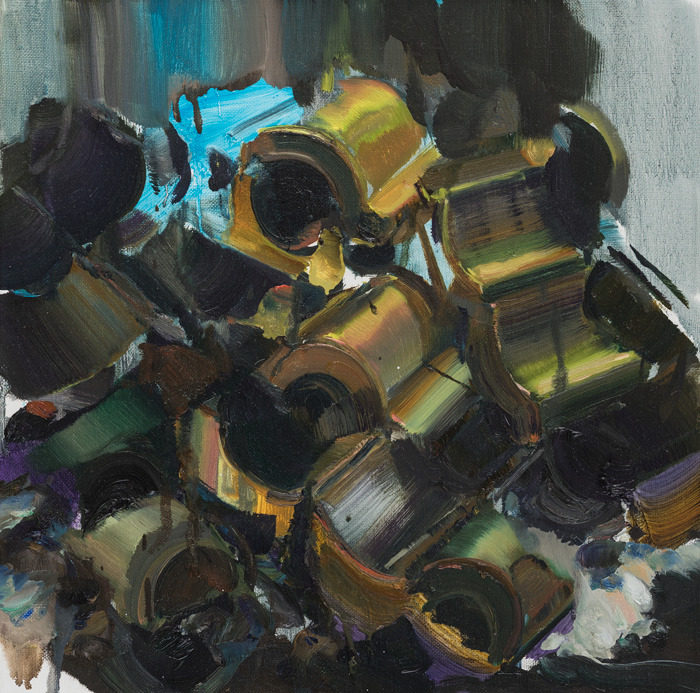
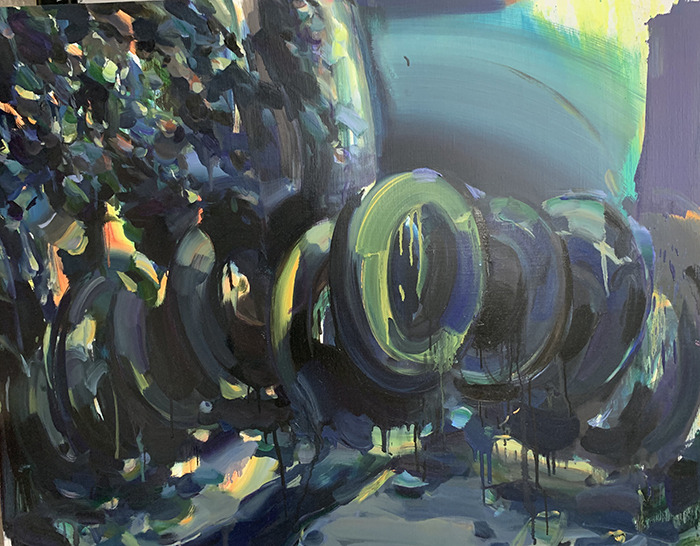
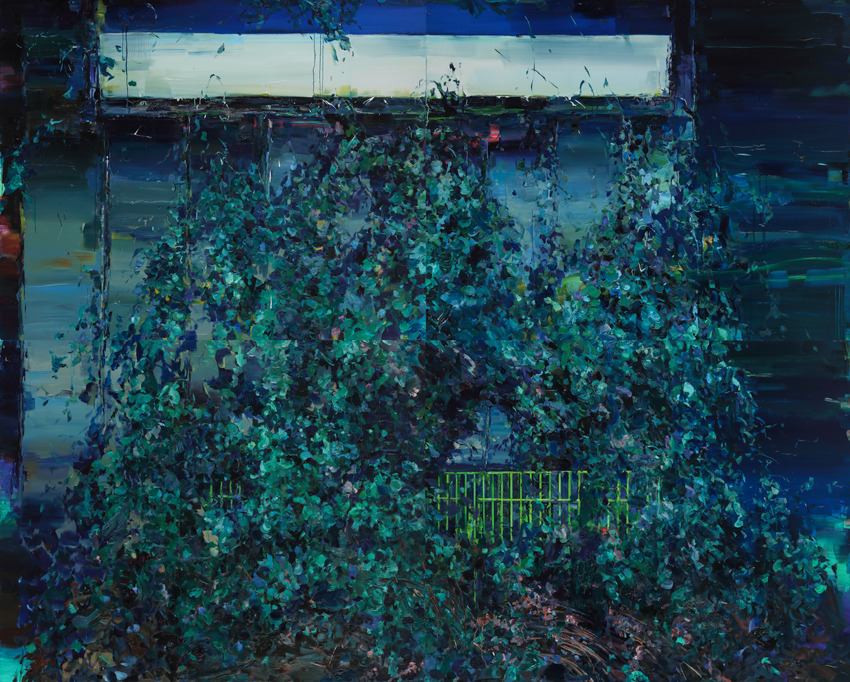
A few years ago, I visited artist Choi Yoonhee's studio. I believe it was around the time of her 2019 exhibition at the OCI Museum of Art. I remember being quite impressed by her works, which sensuously interpreted the various landscapes she encountered on the outskirts of the city on her way home, through intense colors and bold, sweeping brushstrokes.
At the time, her works translated the actual landscapes surrounding her into what might be described as boldly expressive abstractions, fully capturing the sensory experiences perceived through the artist's eyes. Much as one might bookmark a website in an internet browser, I added Choi Yoonhee to my personal list of "artists to watch," which prompted me to follow her work more closely.
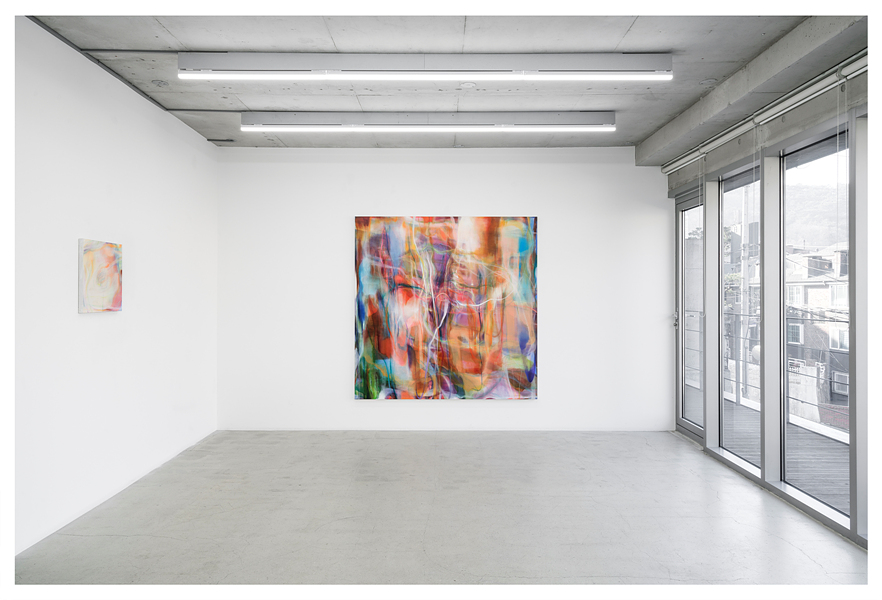
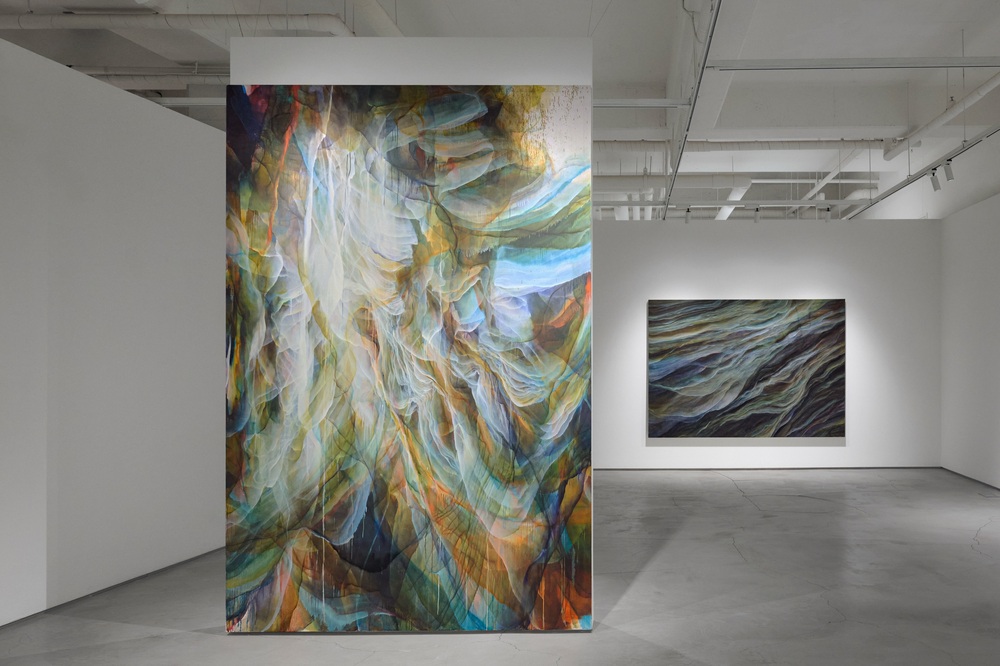
I subsequently visited her solo exhibition at Project Space Sarubia in 2021. It was intriguing to see a direction that differed from her earlier works, and her solo exhibition at A-Lounge, held from January 13 to February 4 of this year, pushes this transformed approach even further. "My recent works are directed toward the deepest parts of my emotions.
They represent periods spent concentrating on the old, deeply ingrained emotions that have shaped who I am. As time passes, emotions that have been forgotten suddenly resurface one day. Feelings that were heavy, sorrowful, or painful may seem to have disappeared without even leaving traces of their wounds, yet they have continued to exist somewhere within my body.
Through the process of painting, I try to feel my way back to those places." This is what the artist wrote in a recent artist's statement. While her earlier works were sensory representations of the external world, the works presented in this exhibition turn toward her inner world.
In fact, we all carry memories and emotions imprinted upon us throughout our lives. As the artist suggests, these may appear to have disappeared, yet they remain somewhere within us. Such long-buried emotions can suddenly break through our nerves and stir up our thoughts. The lingering impressions of the urban surroundings that the artist once depicted have led her toward the lingering impressions of her own inner world.
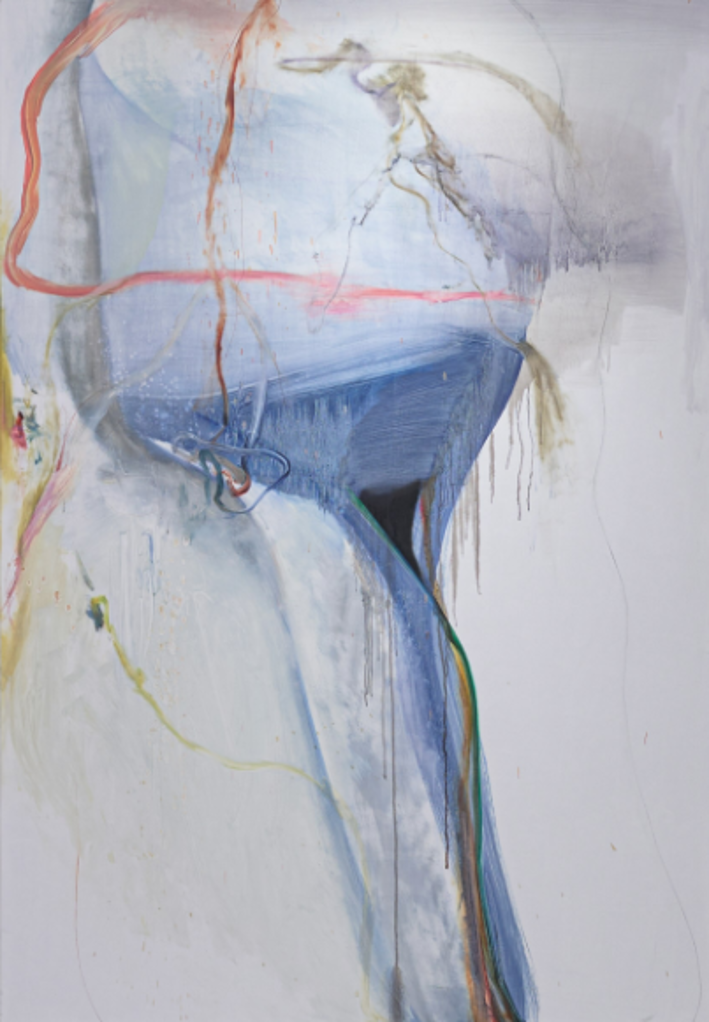
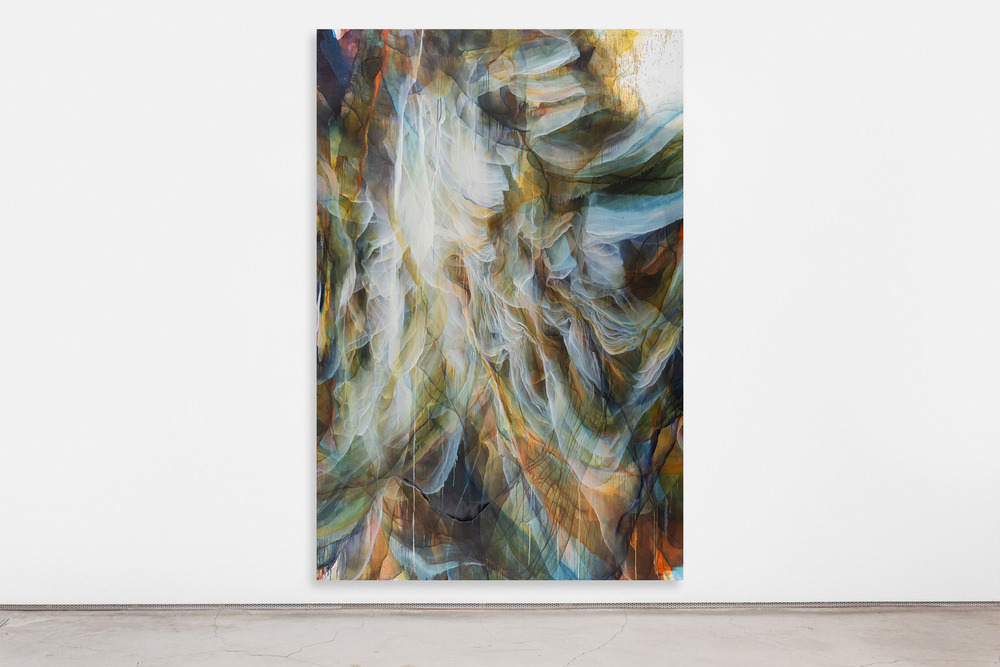
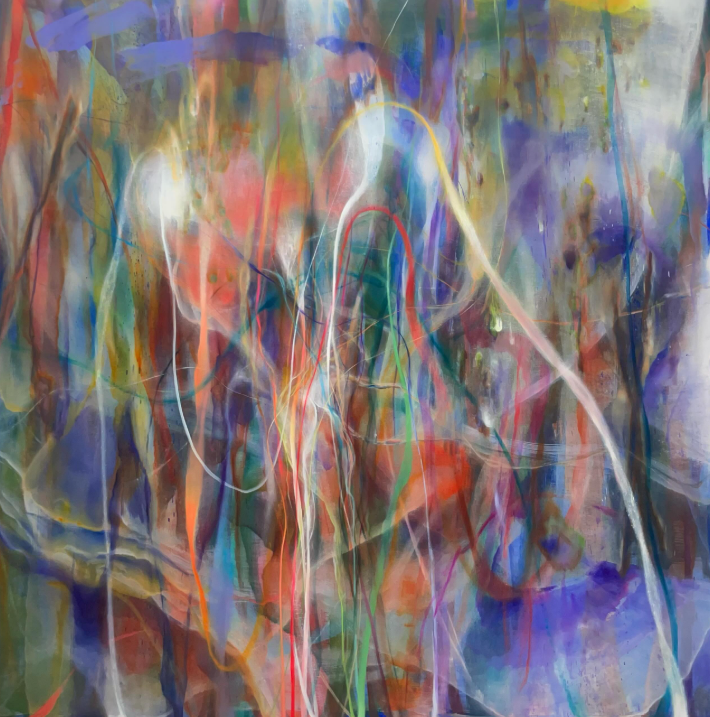
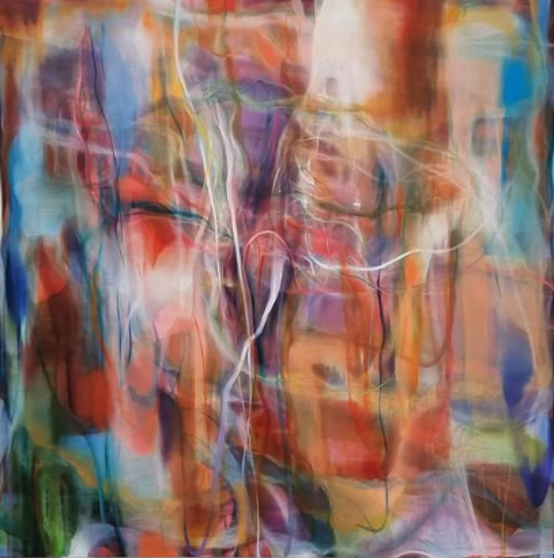
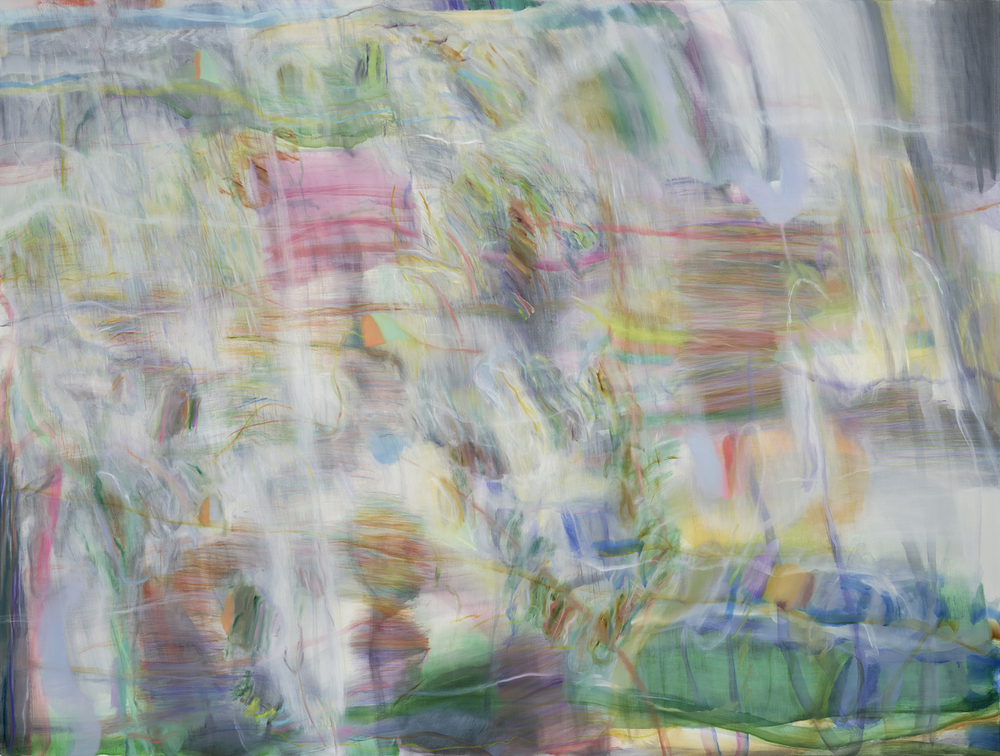
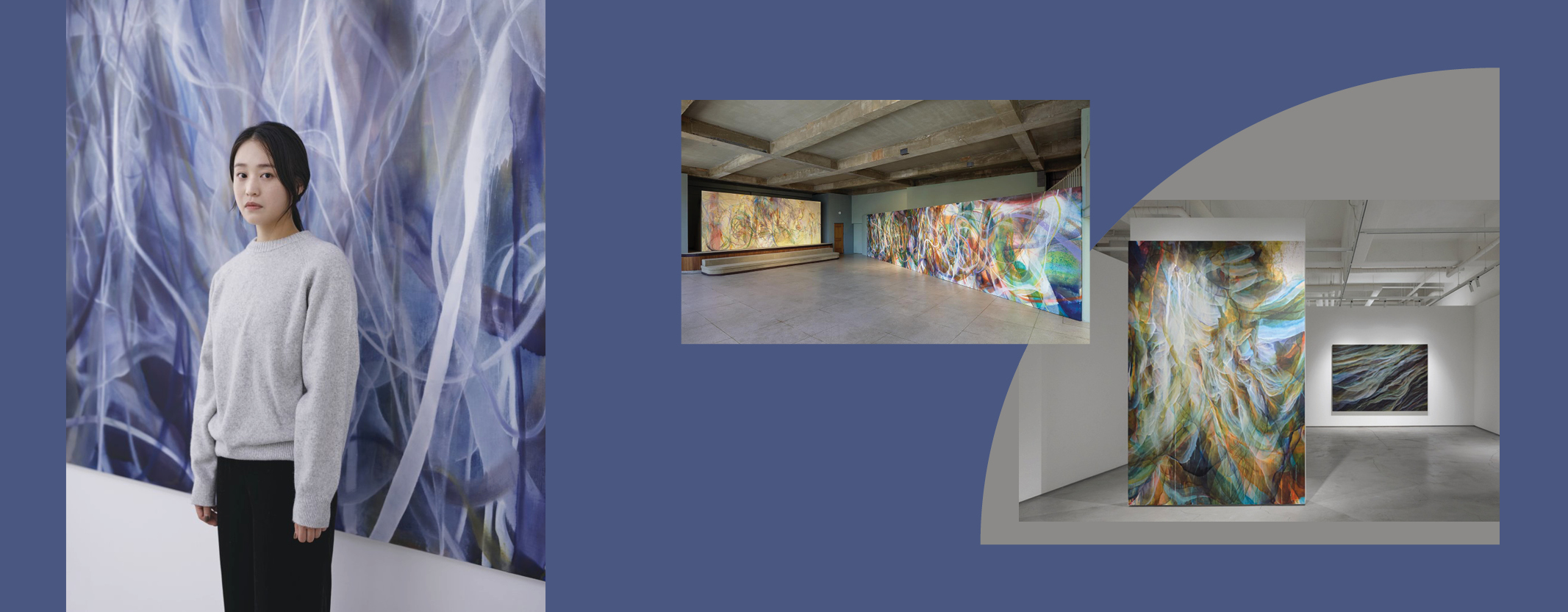
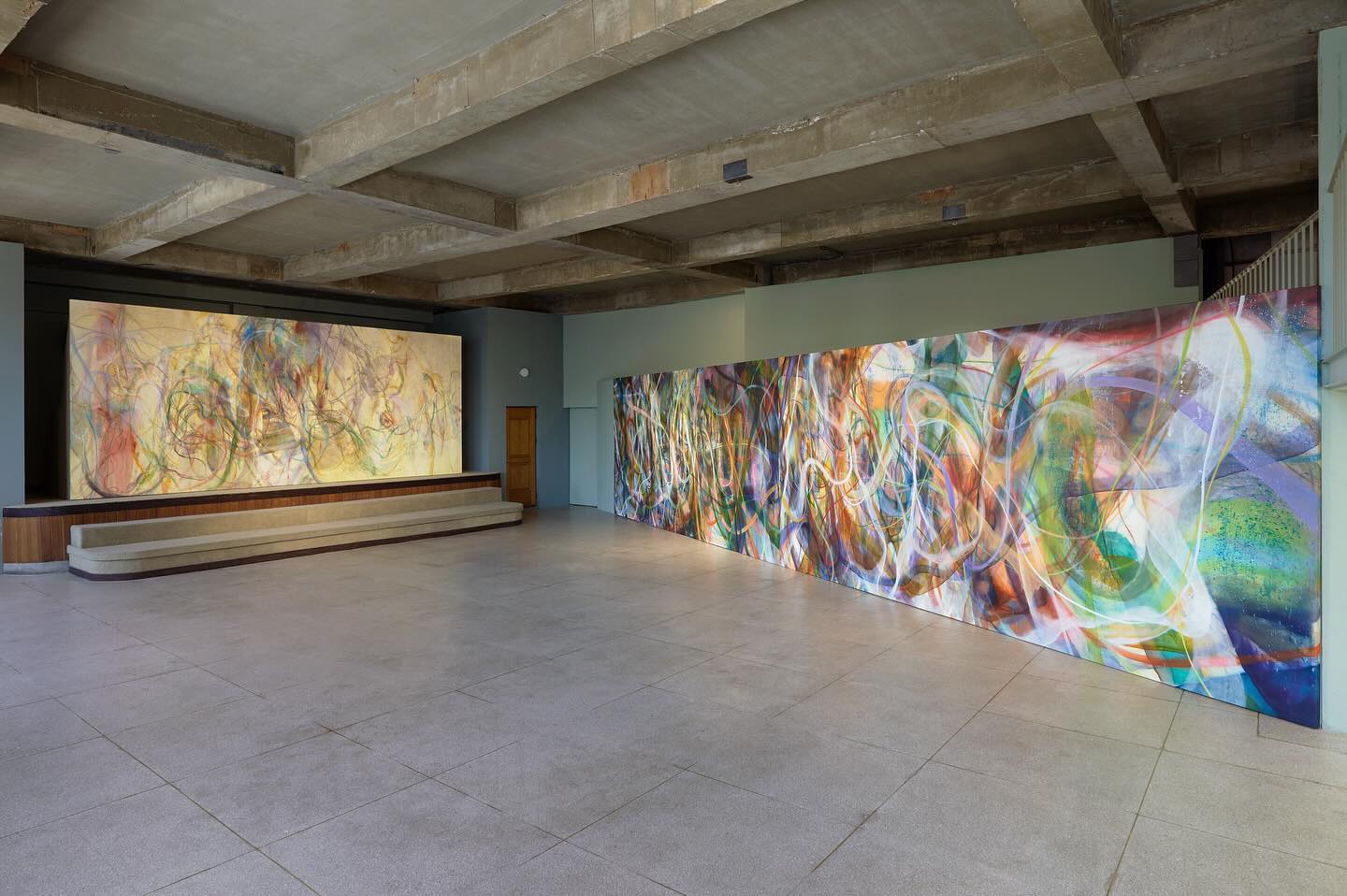
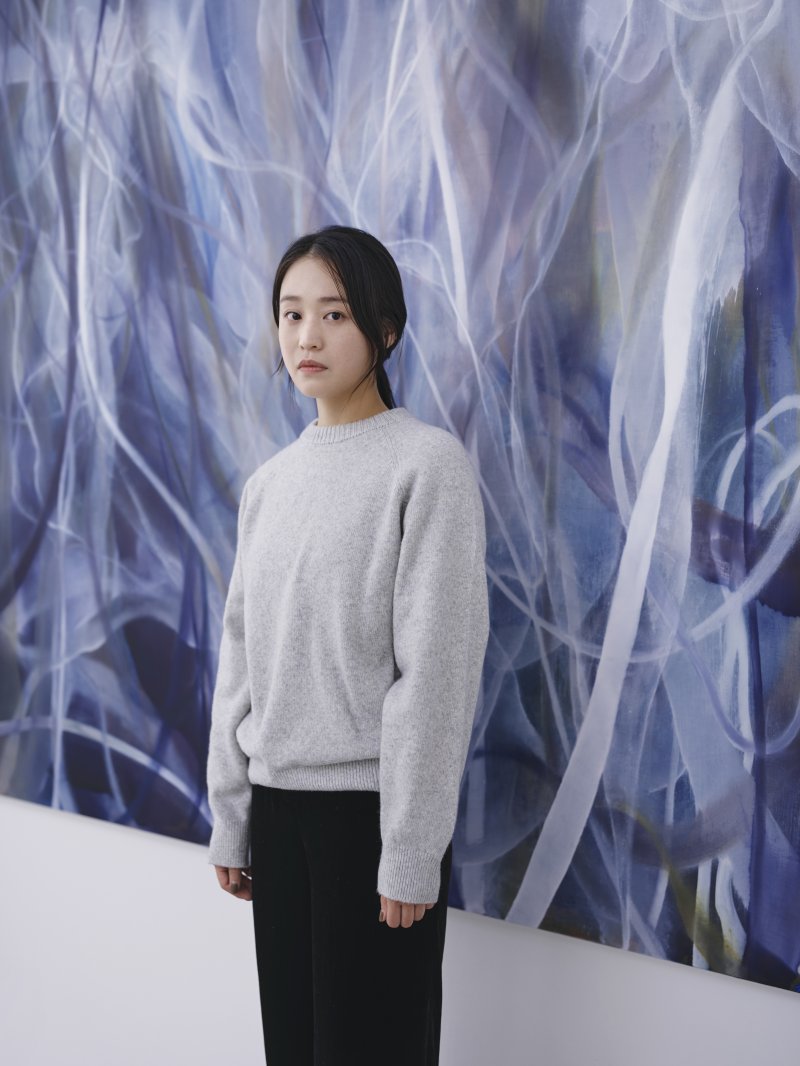
The afterimages of the city, life, and landscape have come into contact with those of her inner self. Alongside this shift in subject matter, her artistic methodology has also changed. The forceful brushstrokes of the past have evolved into softer yet dynamic combinations of colors, lines, and planes. This transformation stems from a heightened emphasis on the artist's physical engagement with her work.
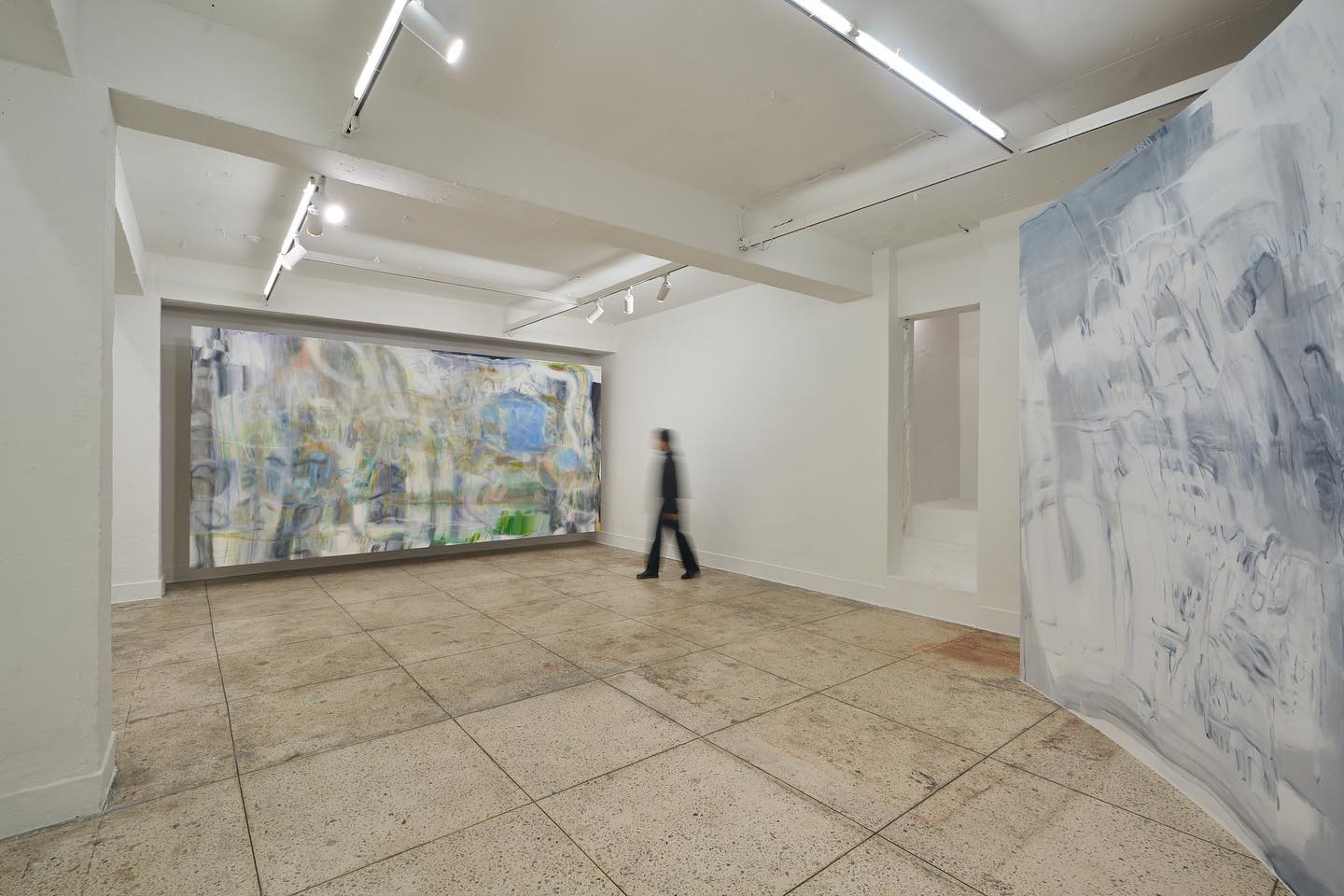
She rubs the paint on the canvas with her hands, creating a pictorial surface in which colors and images seem to be absorbed into the canvas itself, a kind of embodied painting. Through the arduous process of rubbing the surface with her hands, the artist heals and resolves emotions associated with the past and wounds within herself, in an act resembling a spiritual pursuit.
The works presented in this exhibition are the results of this physically engaged process. Of course, even though the main direction of her practice and her working methodology have changed, the resulting paintings have not undergone a dramatic visual transformation. Perhaps this point of intersection between "change and continuity" constitutes a kind of identity that defines Choi Yoonhee as an artist.
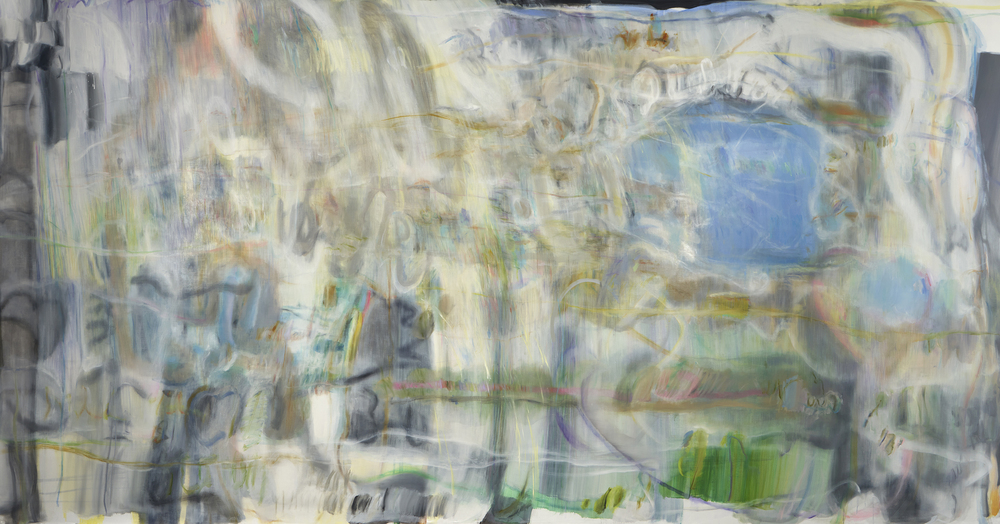
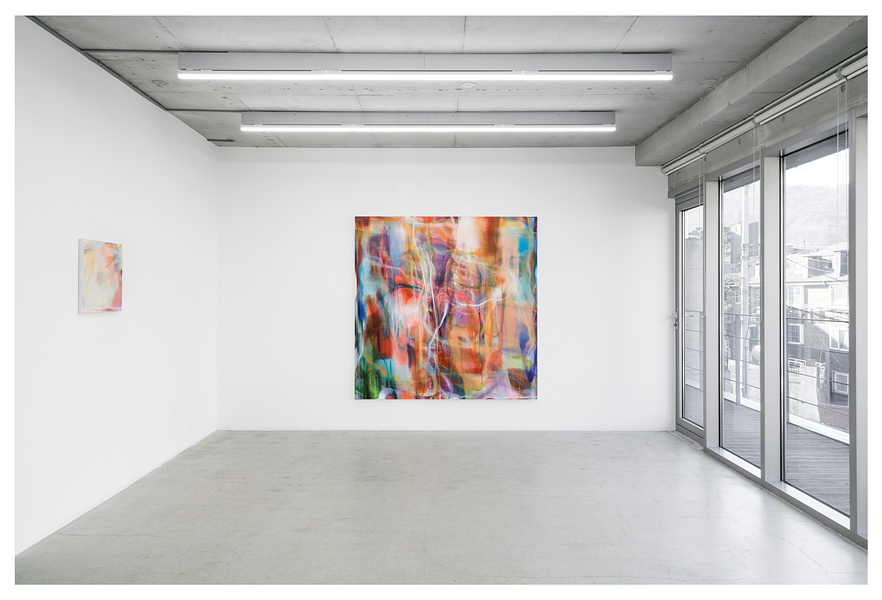
If her exhibition at Sarubia marked the beginning of her recent series through predominantly white-toned abstractions, the works presented here are covered with a broader range of colors. The tones found in her earlier abstract landscapes maintain a sense of continuity in these new works. Various colors, including reds and blues, which can be understood as material manifestations of the emotions she has experienced, are soft yet assertive in their presence and acquire greater weight through her physical process.
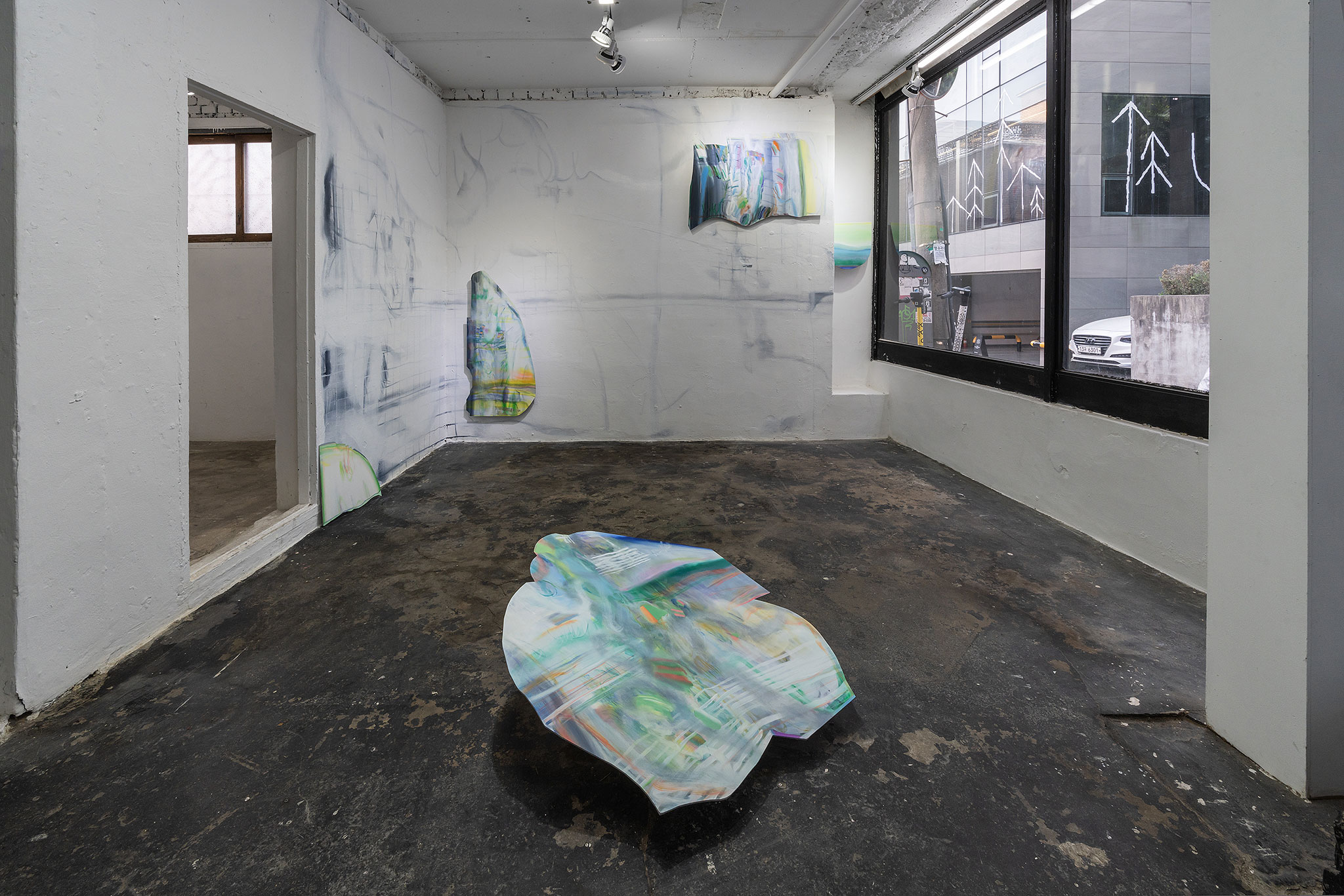
Beyond rubbing the surface with her hands, the artist also introduces lines resembling the nerves within the body or tangled threads of emotion, while expressing layers of feeling through white veils. The sequences of words concealed along the edges of the paintings also provide clues to understanding the artist's emotions.
The title of this exhibition is 《Mute》. According to the dictionary, "mute" means "silent" or "speechless," and can also refer to the act of reducing or turning off sound (Naver English Dictionary). We commonly encounter the word "mute" on the buttons of televisions or music players. Whereas "pause" temporarily stops the playback of a video or piece of music itself, "mute" allows playback to continue while preventing the sound from being heard.
Looking at the works presented in this exhibition, perhaps the title 《Mute》 suggests the results of temporarily silencing the various sounds emanating from memories and inner landscapes, even as time continues to pass and life goes on. After all, pressing "pause" would ultimately mean bringing life itself to a halt.
Looking at her practice from the past to the present, Choi Yoonhee's work has moved from the external world toward the inner world. This signifies a transition from the world of modernism, which captures an objective and sensory reality, to that of postmodernism, which traces a subjective and indistinct inner world from moment to moment. It is the result of the artist's growth and maturation.
Ultimately, our contemporary era is one in which phenomena can only be "felt." Through the realm of memory embedded in time, the artist delves into her inner self. The world revealed by these inner landscapes is not one in which definitive answers exist. Rather, it is a world of uncertainty, where things continually emerge, change, and disappear.
The artist quietly embodies these experiences through her physical engagement with painting, feeling her way through her inner world to sense and discover what lies within. The sounds or the world erased through "mute" return as another landscape through this process and are reconstructed into a new world.
For viewers, Choi Yoonhee's paintings become a kind of passage through which they can look into their own inner selves. Rather than gaining an objective understanding of their inner worlds, viewers are invited to experience emotional resonance through her work.
Ultimately, what does it mean to live in this era, to live one's own life? Existing within time, we long for the processes of remembering, forgetting, resolving, and healing. Perhaps the virtue of this exhibition lies in the kind of catharsis experienced through Choi Yoonhee's work.
Let us set down the weight of life and venture into our inner worlds. Amid the gentle landscapes of lines and colors on her canvases, we may temporarily turn off the noise of everyday life.
Click... "mute."
Ryu Donghyun | Art Critic, Lecturer at Korea National University of Arts