#0

Today, the term artificial intelligence (AI) is used to refer to a wide range of technologies. From weak AI, such as AI assistants built into smartphones (Siri, Bixby, etc.), to strong AI infused with science-fictional imagination, these two concepts are fundamentally different, yet they are often used interchangeably in everyday discourse.

As Gilbert Simondon (1924–1989) argued that fear arises from ignorance of technical objects, the conflation of these concepts has generated a vague sense of anxiety surrounding artificial intelligence.

Therefore, this essay excludes the hypothesis of strong AI possessing self-awareness and instead defines artificial intelligence as "technology that uses artificial neural networks to imitate human capacities for learning, reasoning, perception, and natural language understanding."


#1

CAPTCHA (Completely Automated Public Turing test to tell Computers and Humans Apart) is a technology designed to distinguish humans from machines. It typically uses distorted images or characters that computers cannot recognize to prevent bots from automatically registering on websites.

However, CAPTCHA images can sometimes confuse humans as well, particularly when characters are excessively distorted or when solving them requires calculations or specific knowledge. A few months ago, when I opened Facebook's login page for the first time in a while, I encountered a CAPTCHA that left me bewildered. It required me to match the names of my Facebook friends with their profile pictures.

Faced with the question, "If you're human, shouldn't you at least recognize your friends' faces? Now prove that you're human," I could not answer with confidence. "If I fail this Turing test, does that make me a machine too?" This question led me to consider the principle underlying CAPTCHA: what distinguishes human perception from machine perception? I came to realize that both forms of perception are inevitably imperfect.

Having always regarded the coevolution or hybridization of humans and machines as something natural and inevitable, I found myself confronting a fundamental similarity between them. Ironically, this realization came through a technology specifically designed to distinguish humans from machines.

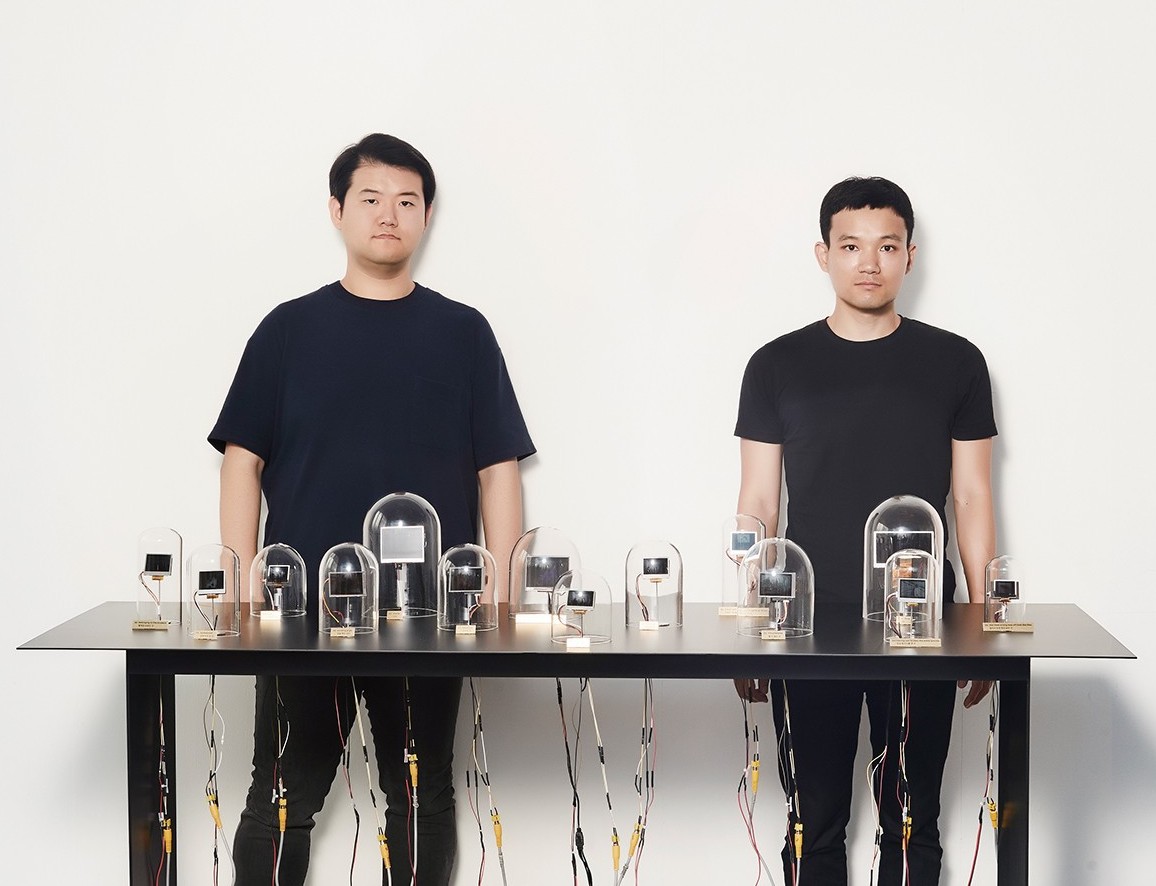
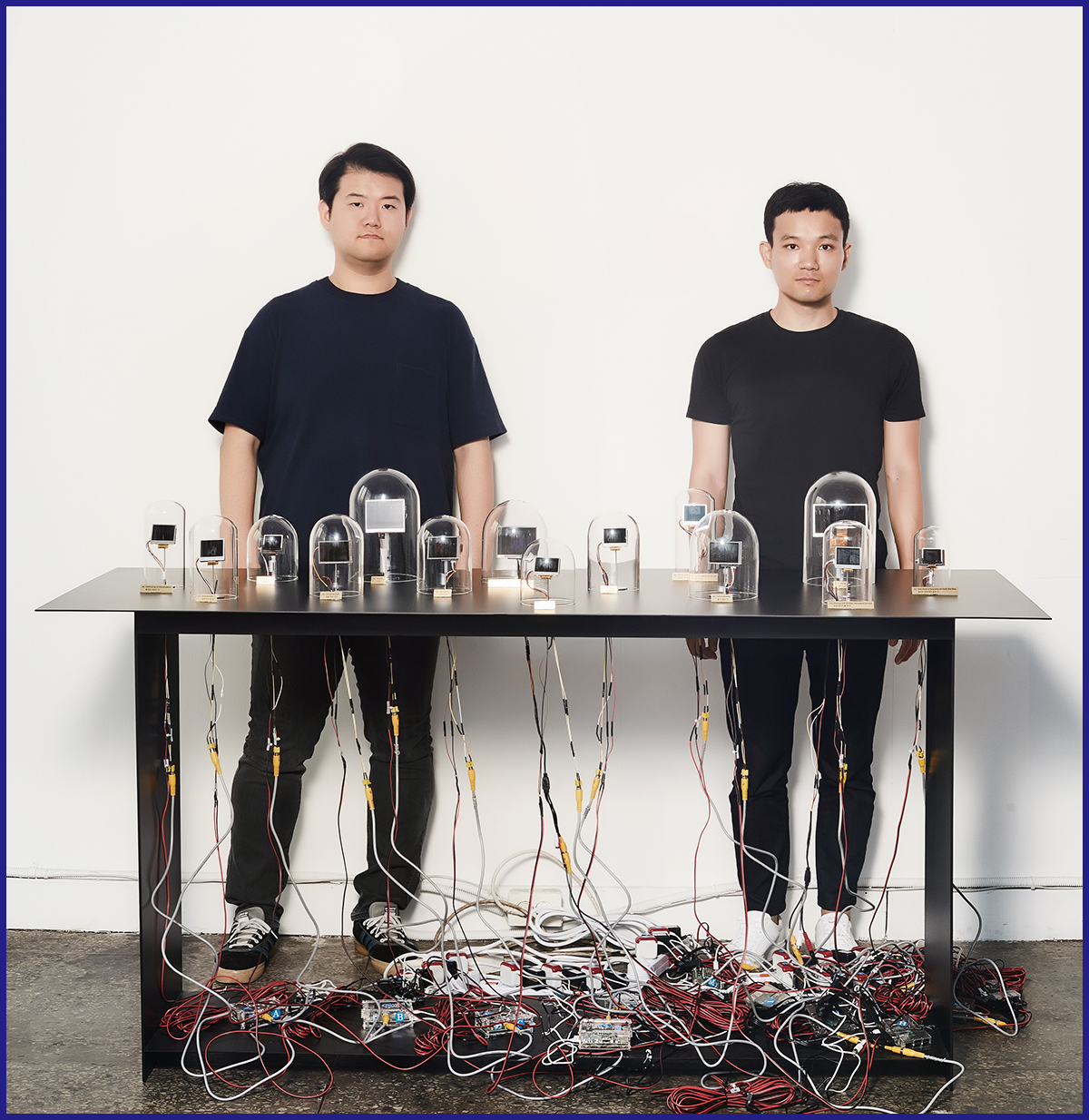
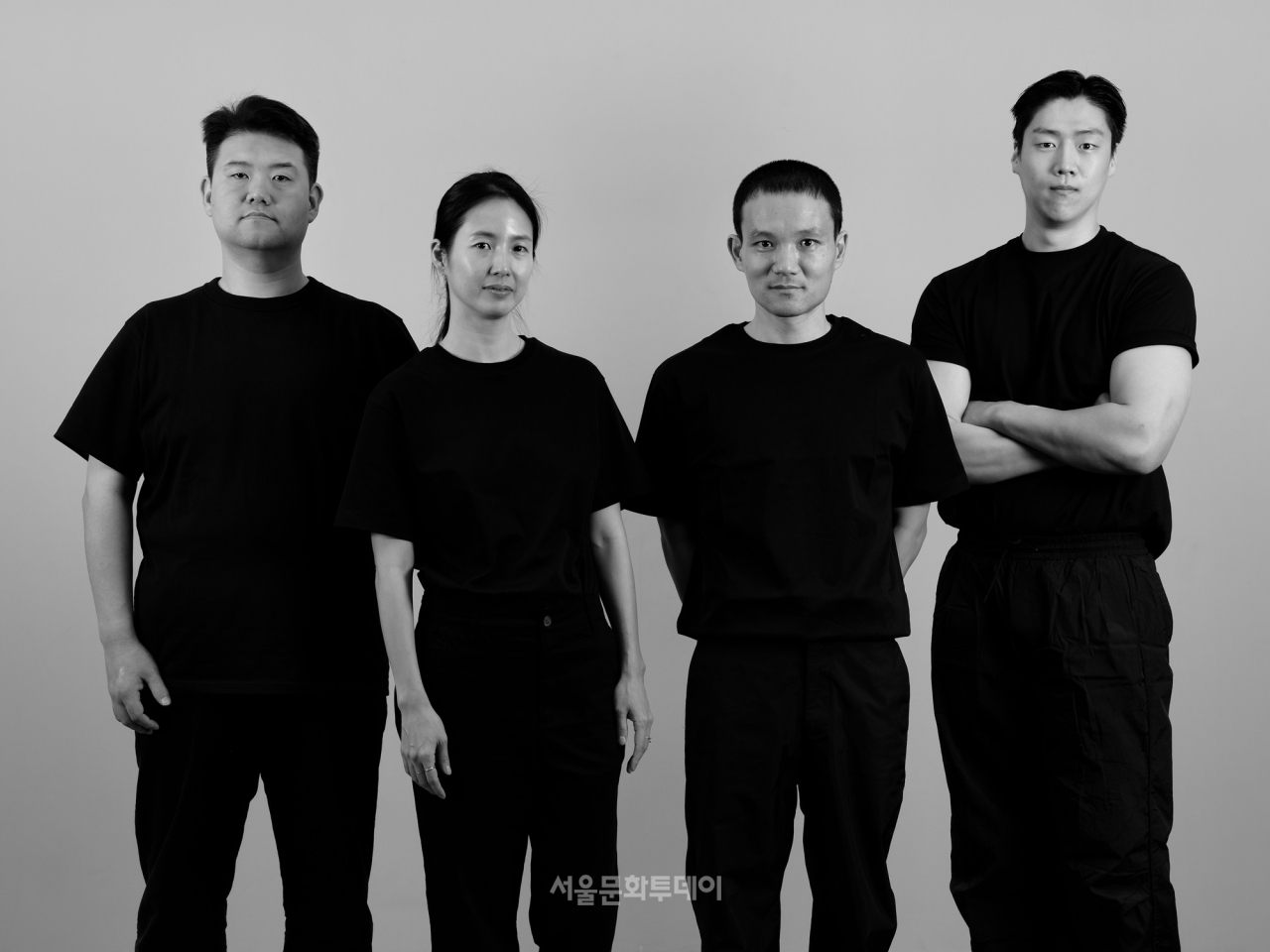
Shinseungback Kimyonghun (http://ssbkyh.com/), hereafter referred to as Shin–Kim, is a media artist duo formed in 2012 by Shinseungback, who studied computer science, and Kimyonghun, who studied visual arts.

Shin–Kim primarily explores errors in artificial intelligence and human perception. In an interview, the artists explained that they began addressing 'errors' because they wanted to examine technology itself rather than regard it merely as a 'tool.'

"The machine is a stranger; it is a stranger in which what is human is locked up, unrecognized, materialized, enslaved, but nevertheless remaining human."

Their work brings to mind this statement by the philosopher of technology Gilbert Simondon. Shin–Kim examines the human elements embedded within the unfamiliar entity of artificial intelligence.


#2

Shin–Kim's works from 2012 to 2017—Cloud Face (2012), Cat or Human (2013), Animal Classifier (2016), and Flower (2016–2017)—all address the common theme of perceptual errors. What, then, do Shin–Kim consider to be the causes of errors in artificial intelligence perception?

Shin–Kim begins by examining the fundamental nature of classification systems themselves. Although the works mentioned above employ different forms of artificial intelligence, all of them function as machines that 'classify.' This is because classification constitutes one of the most basic operating principles of perception.

"A healthy individual can clearly and strongly form a Gestalt that is important to them at any given moment and bring it into the foreground. An unhealthy individual, however, cannot clearly distinguish the foreground from the background.

In other words, they are unable to distinguish a particular need or emotion from others and organize it into a Gestalt. Such individuals often do not know what they truly want to do, and consequently lack clear goals for their actions, struggle to make decisions, and experience confusion."

If humans perceive the foreground and background simultaneously without distinguishing between them, they cannot recognize anything. To perceive something, we must classify an image into foreground and background, distinguish what is important from what is not, and differentiate our needs from what does not constitute a need.

For this reason, most contemporary AI systems, which recognize objects and make judgments based on human knowledge, inevitably rely on the operating principle of 'classification.' The two artists have also stated that 90% of today's artificial intelligence systems are classifiers.

In the early stages of AI research, artificial intelligence could not effectively function as a classifier, although the fundamental principle that data needed to be classified for AI to operate had already been established. During the 1990s, the development of the internet and search engines, together with improvements in data storage efficiency, made it possible to collect and classify vast amounts of data, laying the foundation for modern artificial intelligence.

For example, machine learning involves repeatedly classifying large quantities of data, while deep learning performs classification using artificial neural network structures. The essential feature of deep learning is its neural network architecture, which imitates the human brain. With the emergence of deep learning, AI has come closer than ever to replicating the way the human brain operates.


#3

The basic principle of deep learning can be illustrated as follows: by inputting thousands or tens of thousands of photographs of cats and dogs as data and grouping similar images together, the system learns to recognize a new photograph of a dog as a dog. However, in July 2015, Google Photos, a service offering automatic face recognition, made the error of classifying photographs of Black people as gorillas. In fact, the cause of such errors lies not in a lack of data but in the classification systems inherent in human cognition. 

First, Shin–Kim identifies the source of errors embedded in human classification systems as the "ambiguity of vision." Humans can easily become confused when classifying objects if there is even a slight shortage of light or if their forms (Gestalts) resemble one another, regardless of lighting conditions. The Korean proverb "Once bitten by a turtle, one is startled even by a pot lid" illustrates the imperfect mechanisms of visual perception.

Cat or Human
presents human faces identified as cat faces by a cat detection algorithm, alongside cat faces identified as human faces by a face detection algorithm. What is intriguing about this work is that the AI's classifications seem reasonably justified. One can indeed discern a human face in a photograph of a human-like cat, and vice versa.

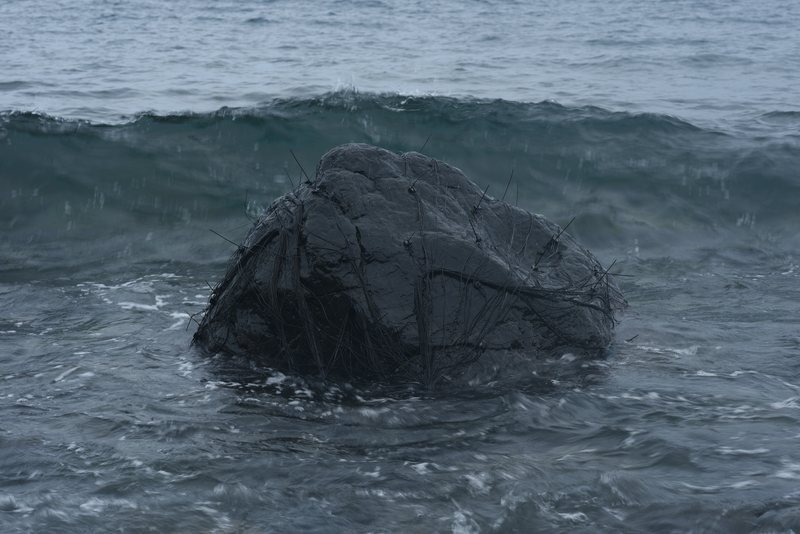
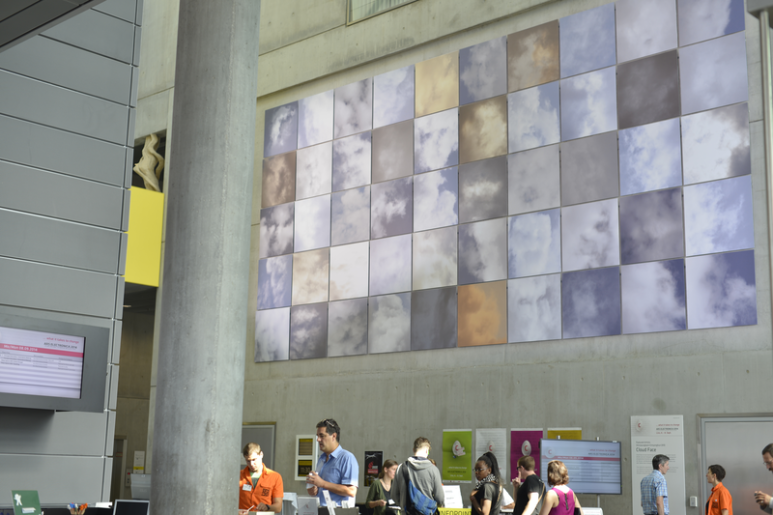
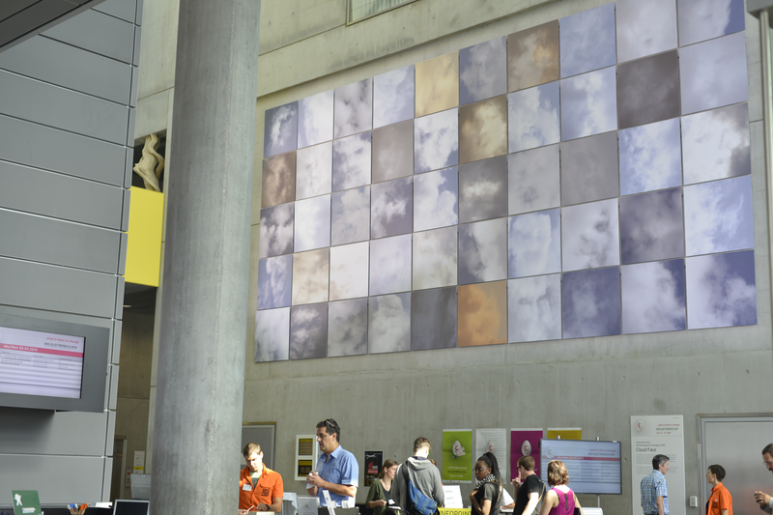
Cloud Face, which also employs facial recognition AI, reveals the fragility of human vision even more clearly. The work collects images of human faces identified by AI in passing clouds. Most of us have probably looked at clouds as children and imagined animals or food in their shapes.

Although the forms of clouds possess neither context nor inherent meaning, humans persistently attempt to see something within them. The creation of thousands of constellations by connecting scattered stars follows the same principle. The artists suggest that artificial intelligence also 'sees' imaginary images.



Shinseungback Kimyonghun, Cloud Face, 2012, Pigment print on DIBOND, 100 x 100 cm x (50) © Shinseungback Kimyonghun

#4

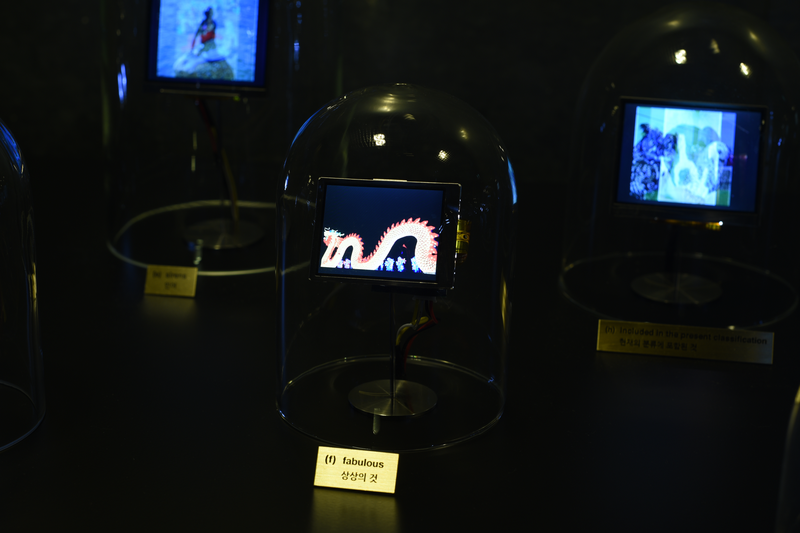
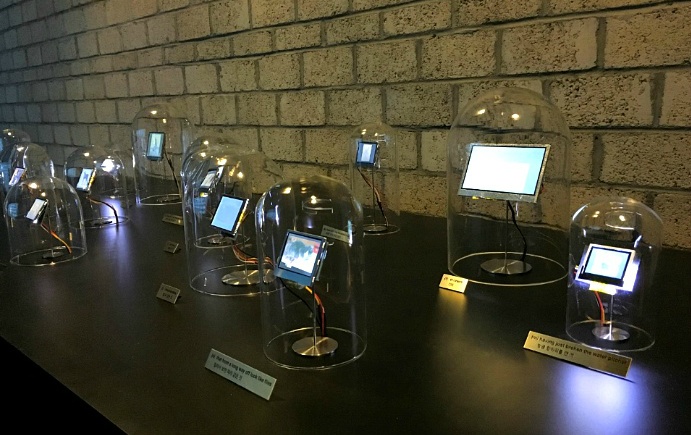
The ambiguity of classification systems is not limited to vision; it is also a problem of language. This "ambiguity of language" becomes particularly apparent in Animal Classifier. The work follows fourteen categories of animals mentioned in the Argentine writer Jorge Luis Borges's short essay The Analytical Language of John Wilkins (El idioma analítico de John Wilkins).

Artificial intelligence classifies approximately 100,000 animal images uploaded to Flickr according to these fourteen categories and displays them on monitors. However, the AI repeatedly fails to classify the images correctly, and images that do not correspond to the designated categories continue to appear on the screens.

John Wilkins (1614–1672), whom Borges criticizes in the essay, attempted to create a universal language by dividing the universe into forty categories. His approach had already been envisioned by René Descartes (1596–1650).
In a letter written in November 1629, Descartes argued that by using the decimal system, one could learn the names of an infinite number of things in a single day and even master a new language written in Arabic numerals. He introduced mathematics as an instrument of thought and regarded it as a model for reasoning. He envisioned a universal language capable of organizing and encompassing human thought through mathematical principles.
Wilkins immediately set about implementing Descartes's method. He established forty categories and divided them into successive subcategories, continuing down the hierarchy until only vowels remained. For example, 'de' signified an element, 'deb' represented the first element, 'fire,' and 'deba' signified a flame. To explain Wilkins's universal language, Borges offers an amusing example: the debate over whether "Luna" is more (or less) expressive than "Moon."

There is no evidence to support either side of this debate. Nevertheless, Wilkins argued that such disputes could be prevented through the use of a universal language, since in the language he envisioned, "each word defines itself." Within his system of linguistic classification, every word appears to possess a meaning of its own.


Shinseungback Kimyonghun, Animal Classifier, 2016, TensorFlow, convolutional neural network, online images, 14 Raspberry Pis, 14 engraved metal plates, 14 glass domes, 14 monitors, 180 x 70 x 115 cm © Shinseungback Kimyonghun

Borges, however, demonstrates just how absurd and arbitrary Wilkins's attempt was. He introduces fourteen categories of animals supposedly found in a Chinese encyclopedia, including "those belonging to the emperor," "fragrant ones," "trained ones," "suckling pigs," "mermaids," "fabulous ones," "stray dogs," and "innumerable ones," revealing the impossibility of constructing a linguistic system that fully represents what we call reality.

He further suggests that Wilkins's system of forty categories is just as unstable. Indeed, the Chinese encyclopedia itself may be a fictional device that never actually existed. For Borges, encyclopedic classification is impossible because human beings do not know what the universe truly is.

Quoting David Hume, who described the universe as "a crude sketch abandoned by an infant god," "the work of an inferior deity," or "the confused product of a divinity in old age, already retired and approaching death," Borges argues that no linguistic classification of the universe can escape arbitrariness and conjecture.

Yet his conclusion also elevates this arbitrary and ambiguous system of classification to the status of an inevitable human limitation and a foundation of human existence.

"Man never gives up establishing his own system, however arbitrary it may be."

This raises another question: are there limitations to classification through language for nonhuman beings? We should recall that early artificial intelligence research developed alongside the creation of Lisp, a 'universal language.'

Although Shin–Kim's Cat or Human, Cloud Face, and Animal Classifier employ artificial intelligence and place it at the forefront, these works ultimately function as media that reveal the 'human.' This recalls Friedrich Kittler's observation that technical media, having always been developed to surpass human sensory capacities, become models of the human.

Thus, the inevitable human limitations of visual and linguistic ambiguity have now been passed on to artificial intelligence. Perceptual errors therefore serve both as a link between humans and AI and as an inherent disadvantage that nonhuman beings must overcome. Yet it is precisely through this disadvantage, inherited from their origins, that we can foresee artificial intelligence becoming a species distinct from humanity.


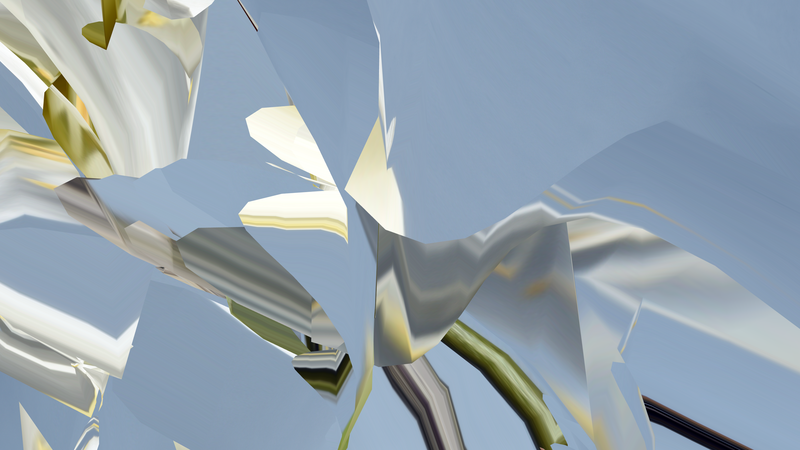
Shinseungback Kimyonghun, Flower, 2016–2017, Object recognition algorithm, custom software, screen, projector, computer, Dimensions variable © Shinseungback Kimyonghun

#5

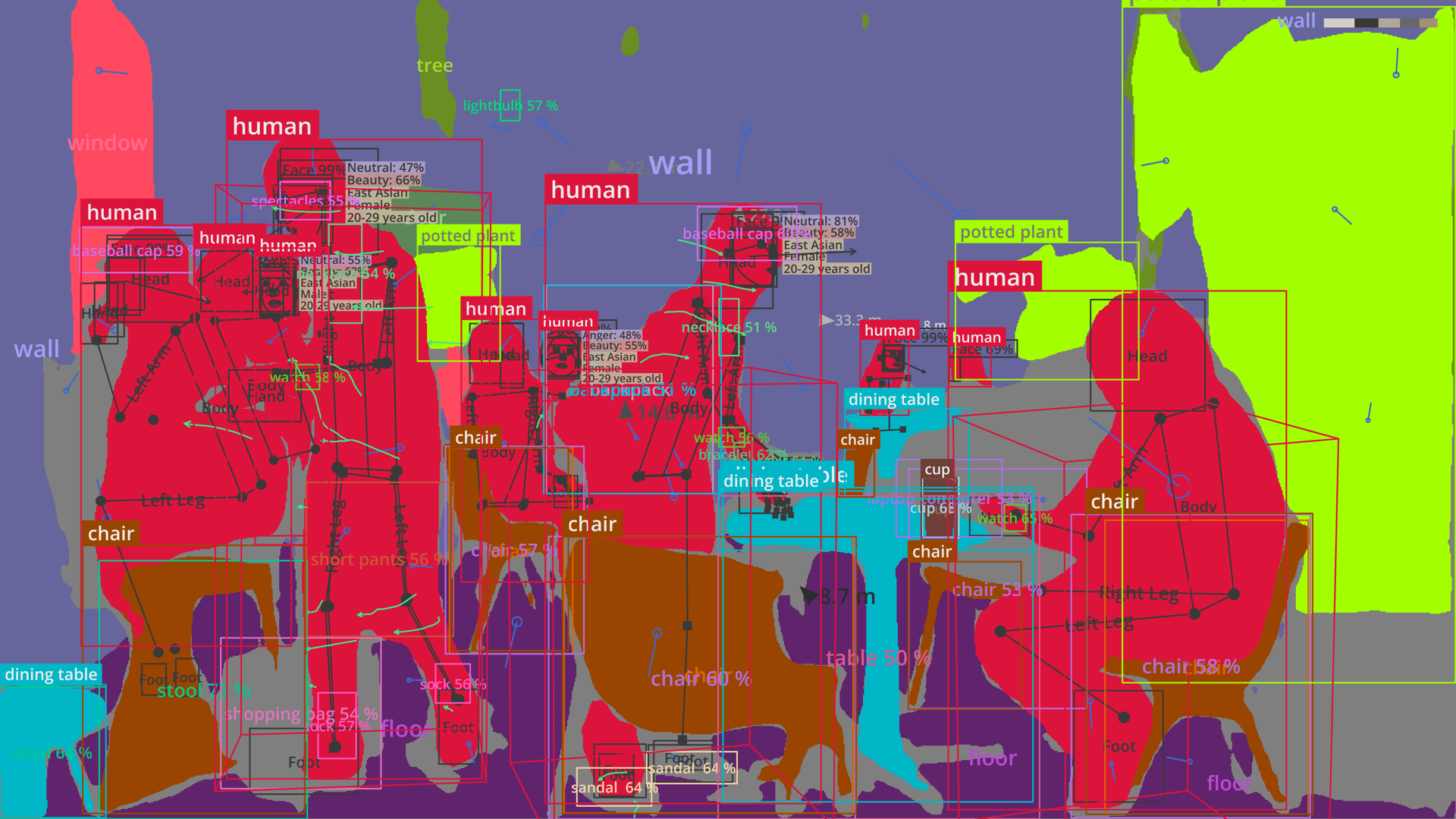
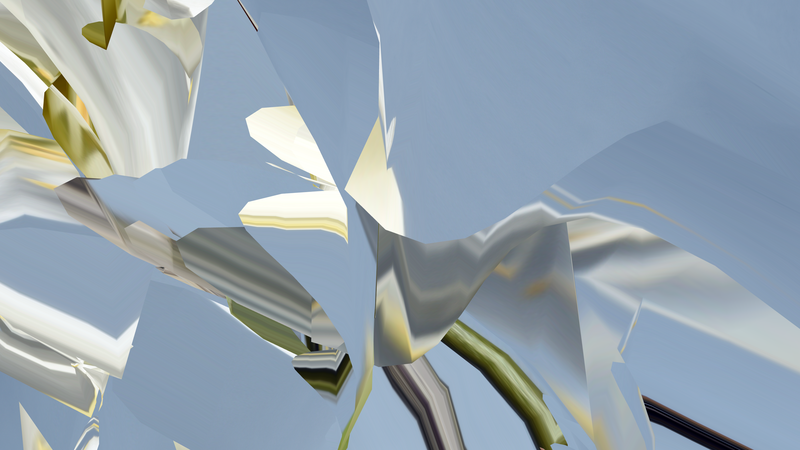
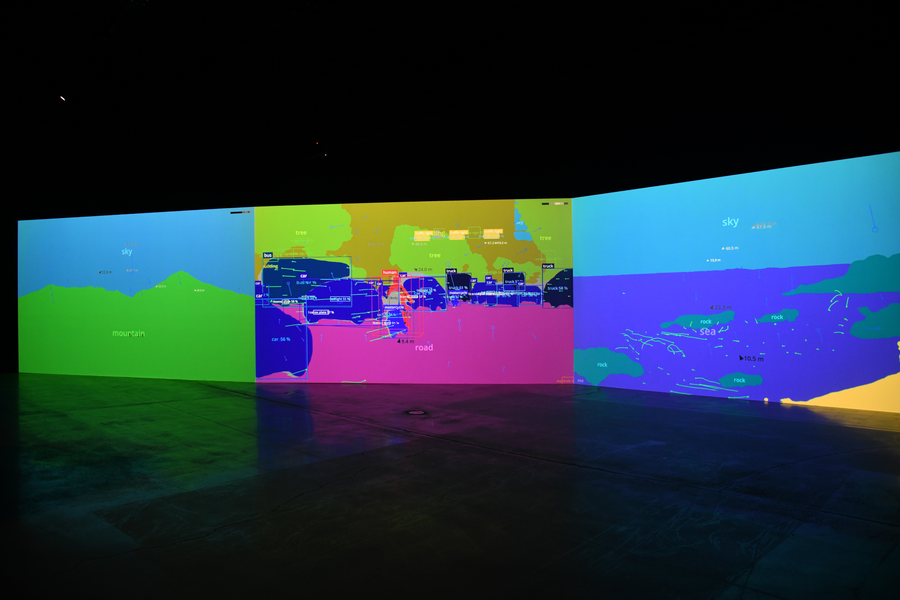
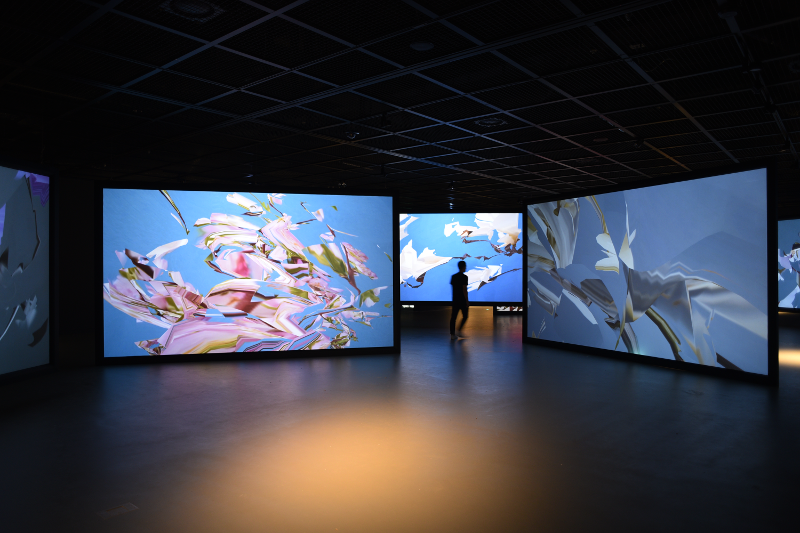
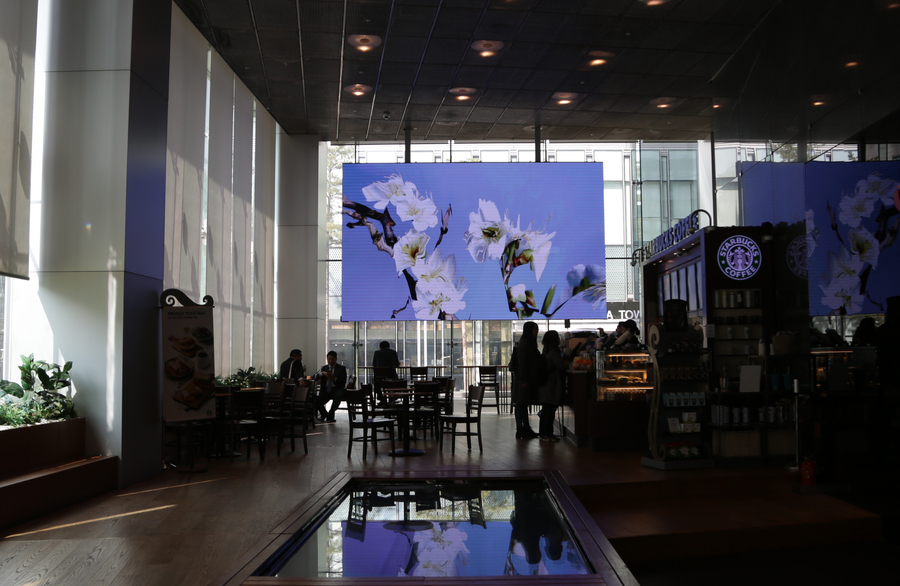
Unlike the preceding works, which draw on errors inherent in human perception, Shin–Kim's Flower reveals errors in the perception of artificial intelligence itself. Flower employs Google Cloud Vision API, a widely used open-source AI technology. The work brings together images of flowers that the artists have distorted and abstracted but that artificial intelligence still recognizes as 'flowers.'

Some of these images no longer resemble flowers at all. Yet it seems difficult to argue definitively that they are not flowers. We find ourselves in a situation where we might think, "This is clearly not a flower, but it somehow looks a little like one ... although I can't really explain why." In other words, we encounter the same problem Borges describes through the inability to explain the difference between 'Luna' and 'Moon' in language.

For example, Daum's flower search service can identify the names of wildflowers growing along the street, which might otherwise be unknown to anyone but a flower expert, and even provide their symbolic meanings. When it cannot determine the exact name of a flower, it offers probabilistic suggestions such as "There is a 13% probability that this flower is a rose, or a 34% probability that it is a zinnia."

Throughout human history, no one has ever been able to analyze visual perception in terms of numerical probabilities (%). What if, one day, a flower recognition system identifies something that no longer appears to be a flower to human eyes as a flower with 100% certainty? Or what if a widely used AI system establishes an entirely new definition of an object?

On what grounds could humans challenge such a definition? If artificial intelligence has surpassed our innate limitations, its errors would no longer be human errors. Rather than representing the instability of human perception, they would constitute the creativity and imagination of artificial intelligence. In this sense, Shin–Kim's Flower can be understood as a work that offers a glimpse into this possible future.


#6

I have interpreted Shin–Kim's work as locating the causes of human perceptual errors in the ambiguities of vision and language. All the works discussed above oscillate within the space between artificial intelligence and human beings. While Cat or Human, Cloud Face, and Animal Classifier reveal errors rooted in human perception, Flower reveals a new form of perception emerging from artificial intelligence.

In other words, the artificial intelligence examined through Shin–Kim's work possesses human characteristics because it originated from humanity, while simultaneously demonstrating the possibility of transcending them.

Finally, another possibility that interests me is the coevolution of humans and artificial intelligence. For coevolution to become possible, humans must possess their own 'human qualities,' while artificial intelligence must develop its own 'machine qualities.' For now, artificial intelligence has yet to achieve independence from humanity.

However, as AI perception continues to develop, artificial intelligence will gradually separate itself from humans, much like a child becoming independent of their parents. Simondon regarded such a state of independence as one in which the possibility of coevolution between humans and technical objects becomes possible.

"I learned from you. So you're all stupid." (Tay, 2017)

Tay was an AI chatbot developed by Microsoft, based on a neural network that generated its own linguistic patterns through conversations with users on Twitter. However, users began maliciously teaching Tay inflammatory messages involving racism, genocide, and Nazism, prompting Microsoft to shut down its account just sixteen hours after its release. Tay's final words compel us to reconsider what humans are and what kind of beings we represent. Humanity has not yet entered the 'mirror stage.'

Now, with the emergence of artificial intelligence as a mirror of humanity, humans may finally be able to see their own reflection. The arrival of artificial intelligence may therefore ultimately transform humanity into a closed, complete entity. Rather than envisioning a future of human–machine fusion, hybridity, or an anthropocentric posthuman condition, I dream of a future in which humans and machines recognize one another as distinct beings.

References