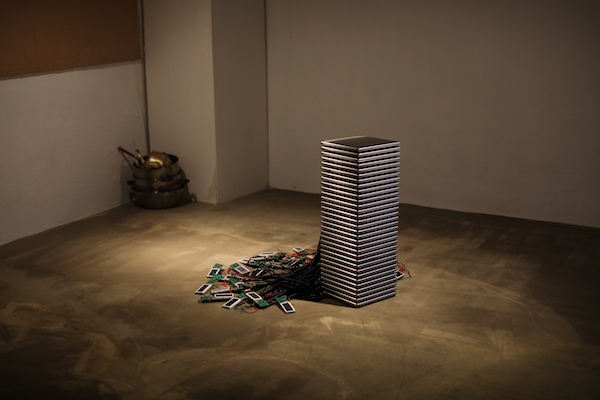
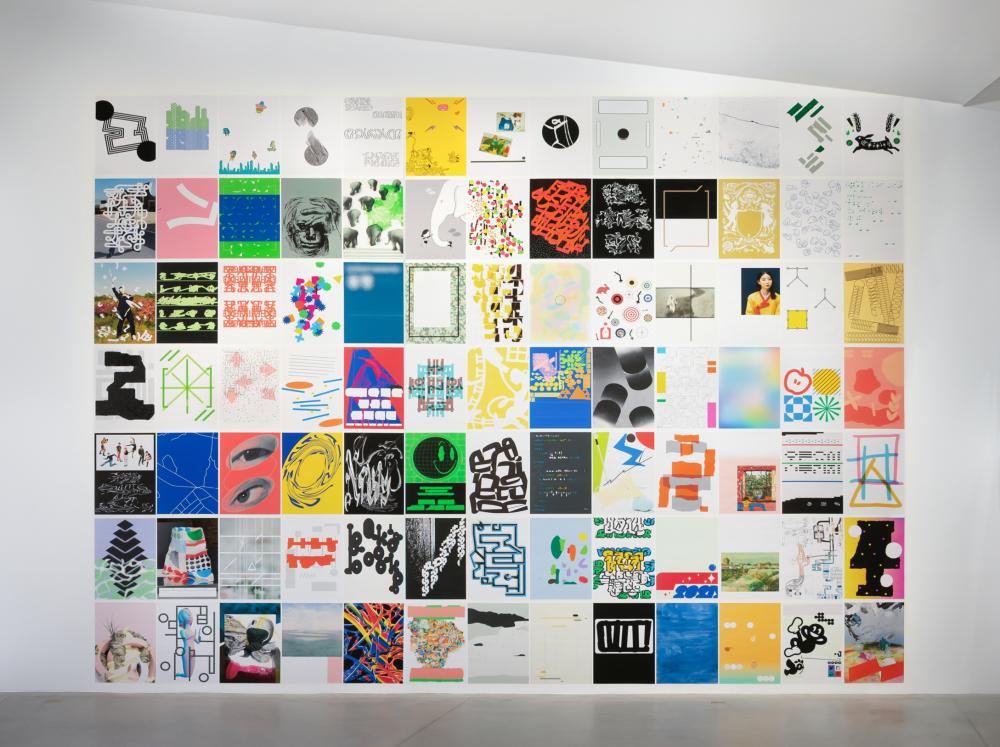
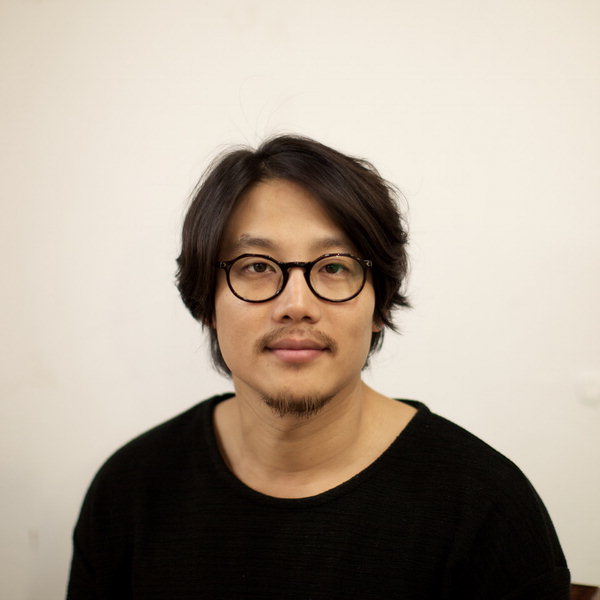
Sangjin Kim transforms abstract concepts into tangible sensory experiences through installations that combine sound, mechanical devices, video, sculpture, and everyday objects. His works frequently incorporate functional apparatuses such as speakers, printers, air purifiers, and digital displays.
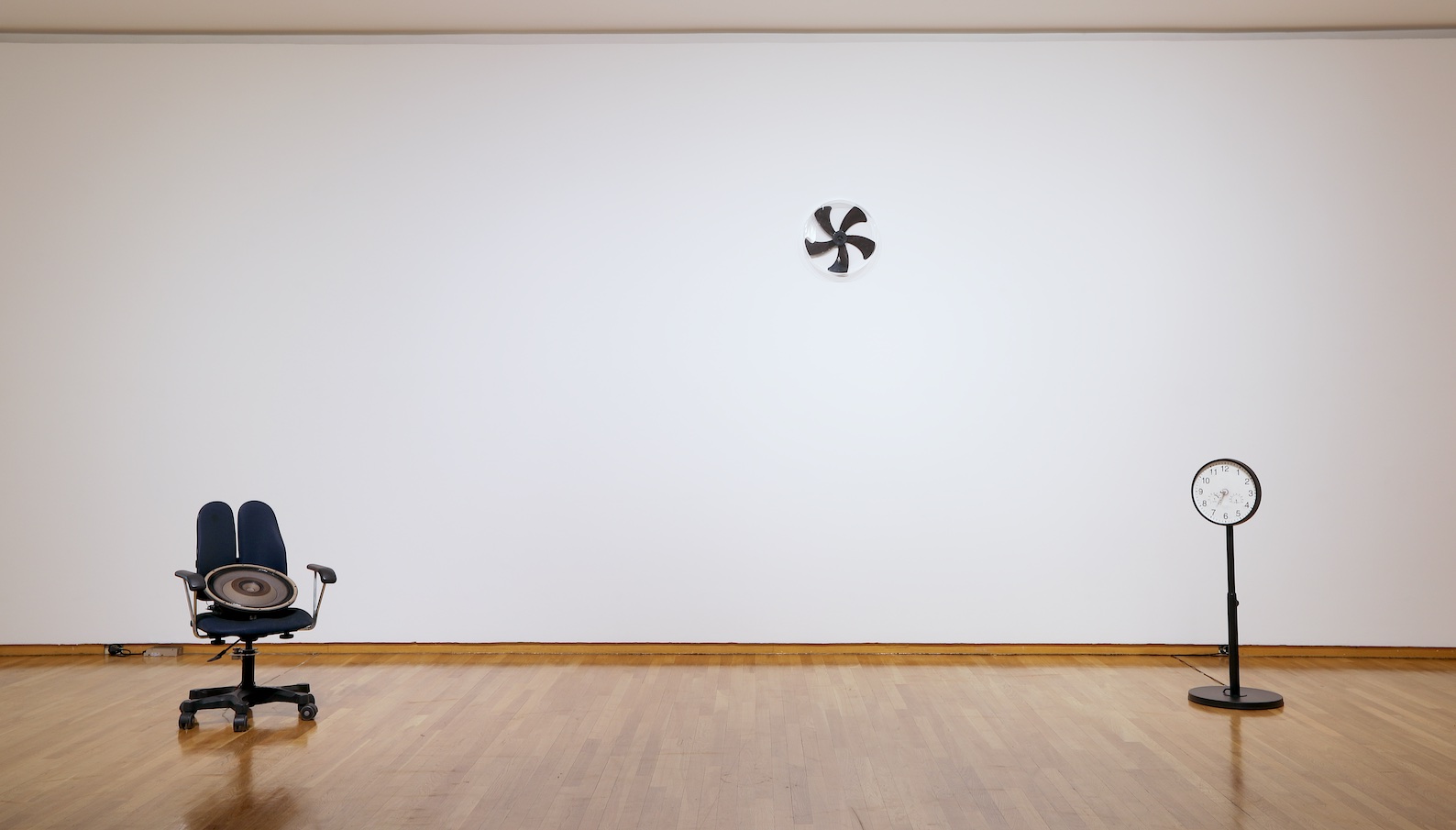
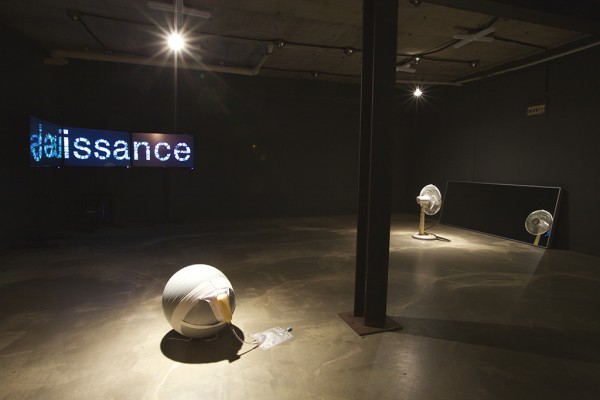
By placing these devices in situations that depart from their intended purposes or modifying their operations, Kim creates subtle discrepancies between the functions of objects and the ways they are perceived. The coexistence of precisely constructed mechanical systems and unpredictable outcomes challenges viewers’ expectations of familiar objects and technologies, often producing scenes marked by peculiar humor and absurdity.
In his early works, Kim experimented with the relationship between physical subjects and their sensory representations through sound reproduction and mechanical movement. Dog Sounds (2010) simultaneously plays 48 onomatopoeic representations of barking collected from 40 languages, creating a situation in which distinct linguistic meanings dissolve into an indistinguishable mass of noise.
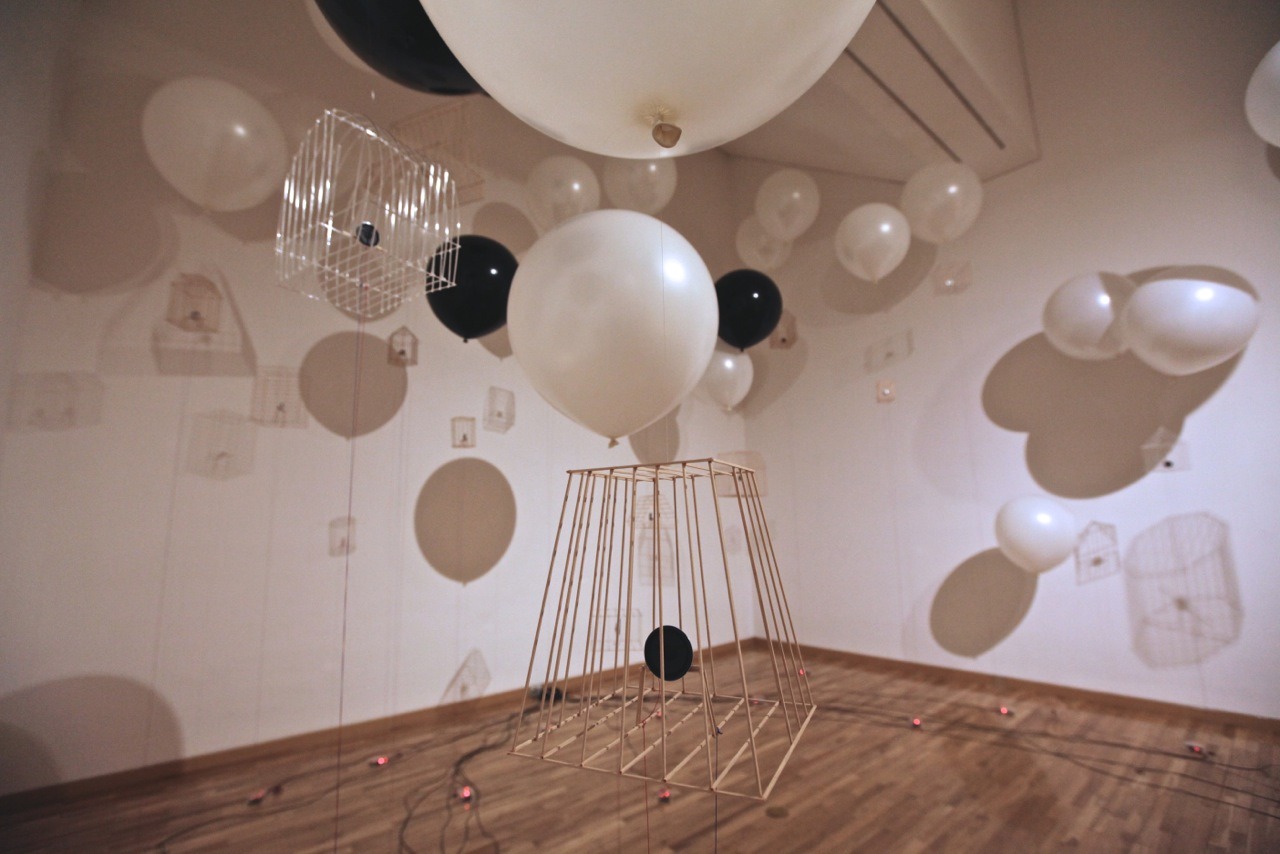
In Meditation (2013), the movements of machines seemingly striking wooden percussion instruments are disconnected from the sounds reproduced through speakers, while Icarus Stuffed Birds (2013) presents suspended birdcages emitting birdsong in the absence of actual birds. In these works, sound suggests the presence of an object while simultaneously preventing its physical source from being confirmed. Viewers encounter the limitations of representation through discrepancies between the visual information provided by the apparatuses and their auditory experiences.
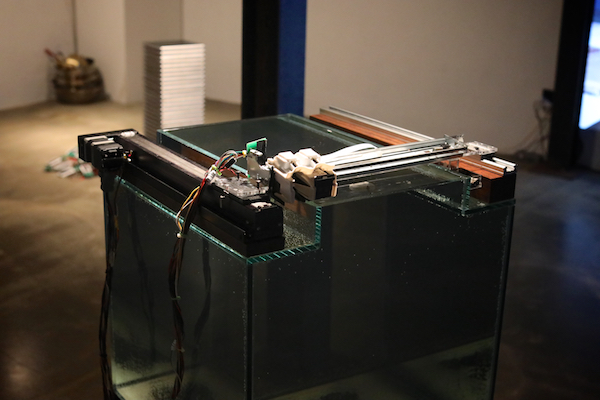
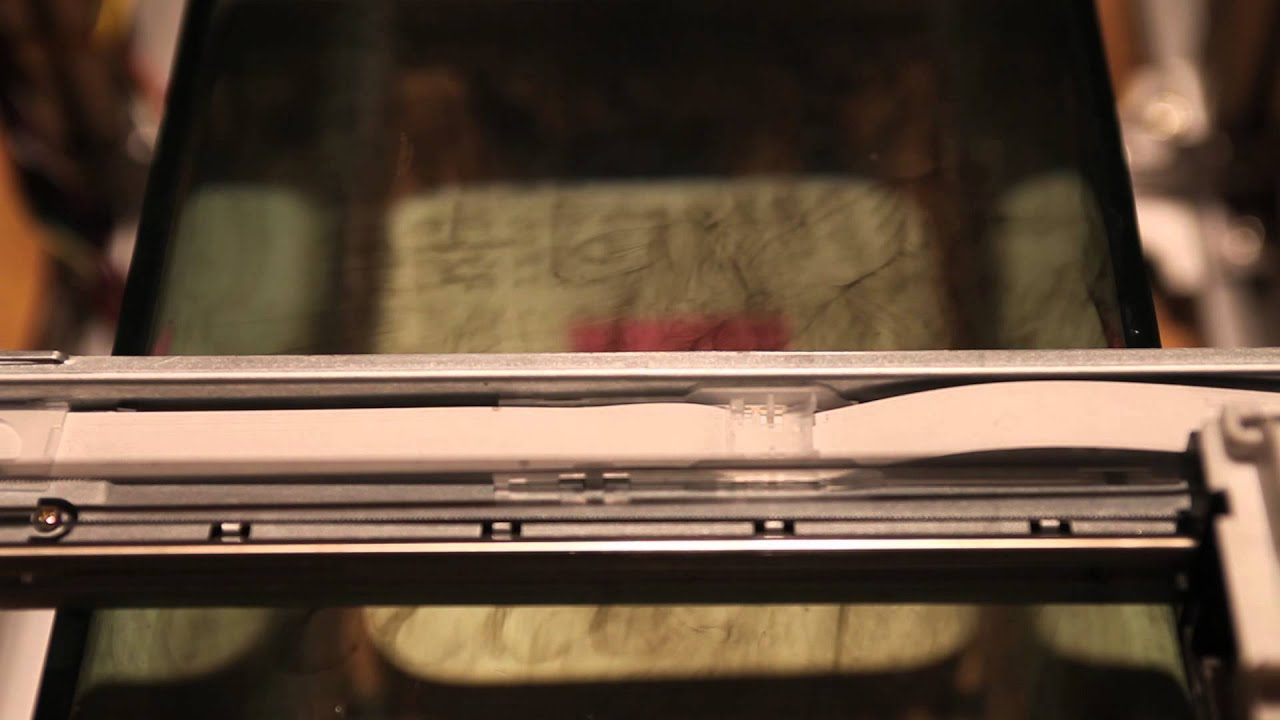
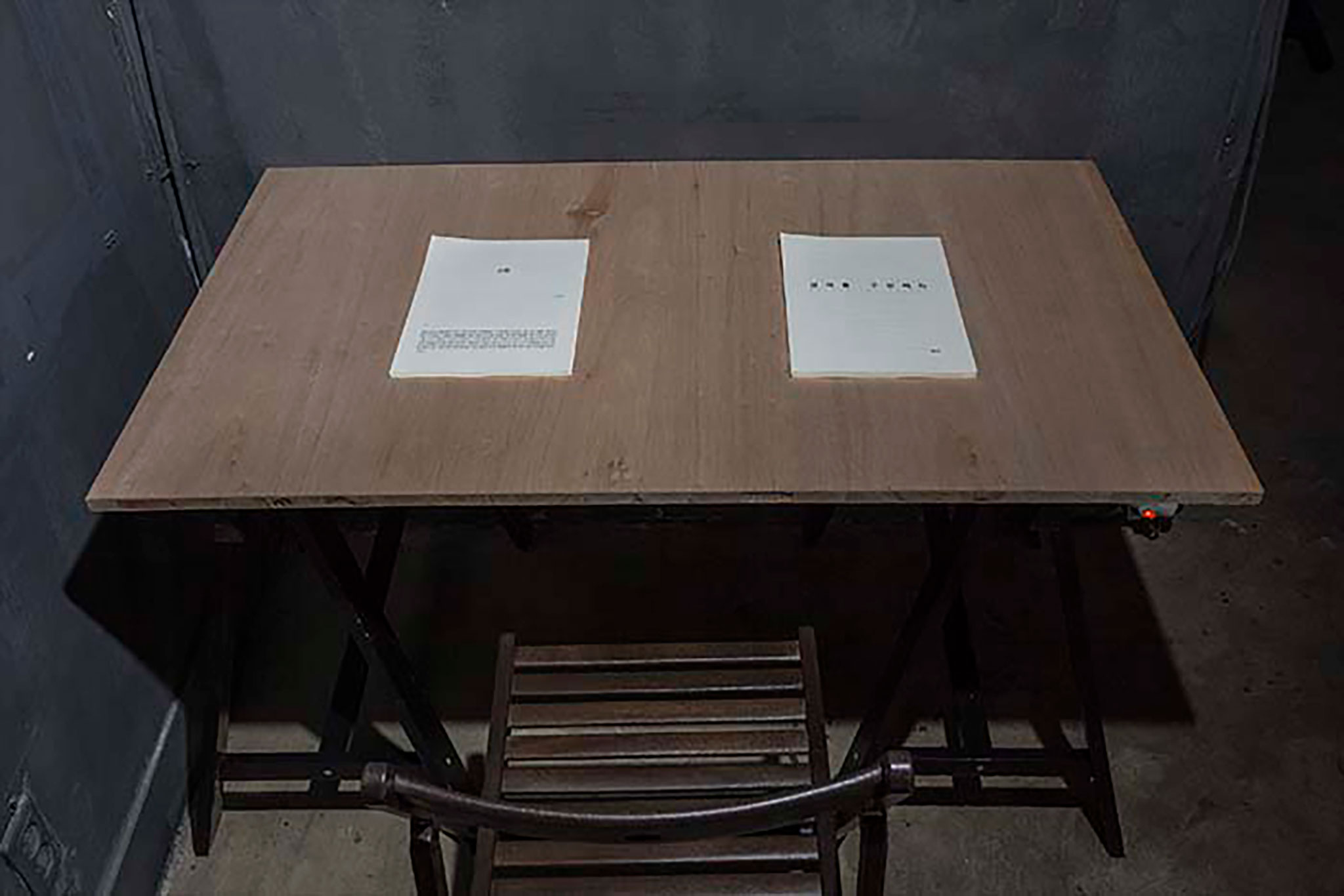
The transformation of objects and the meanings of signs over time also constitutes an important formal characteristic of Kim’s installations. In the 'In Visibility' series, printers repeatedly produce letters and images on the surface of water, only for the ink to dissolve and lose its form. As the printing continues, the initially transparent tank gradually becomes opaque with accumulated signs, paradoxically allowing the accumulation of information to result in a loss of legibility.
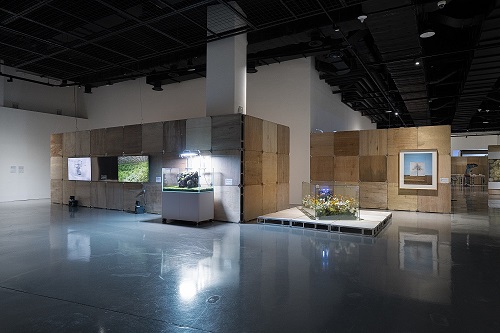
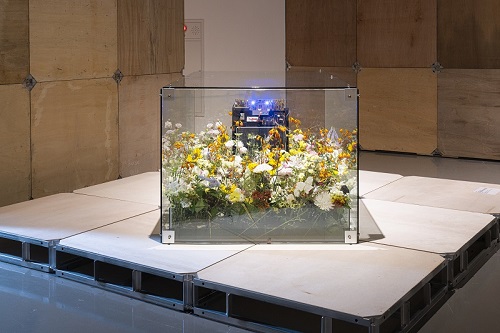
In Air Purifier (2011), an air purifier operates inside a sealed glass enclosure to eliminate the fragrance of flowers, which gradually wither in the process. By incorporating repetitive mechanical operations and material transformations into his works, Kim reveals how contradictory outcomes can emerge even when systems appear to function as intended.
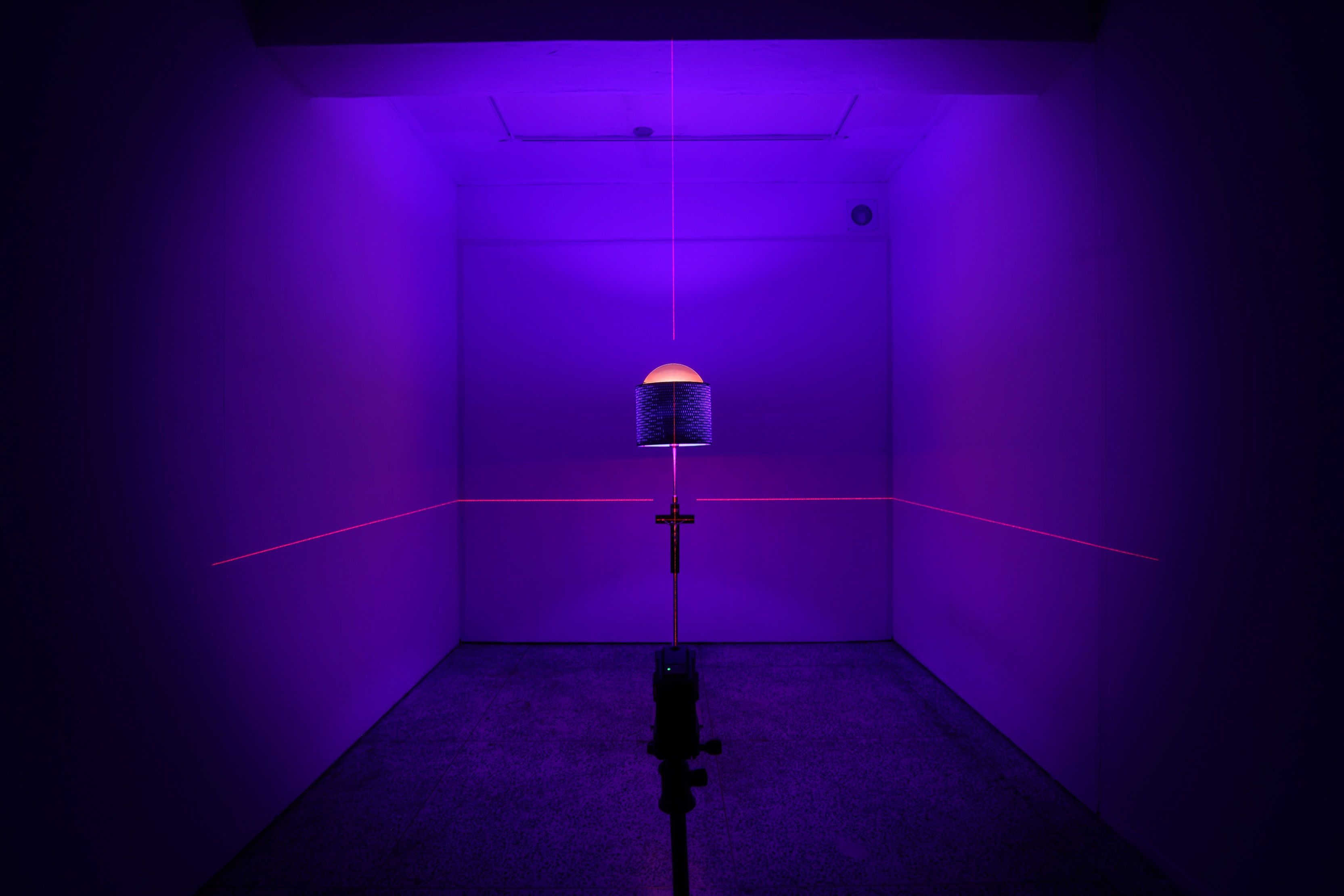
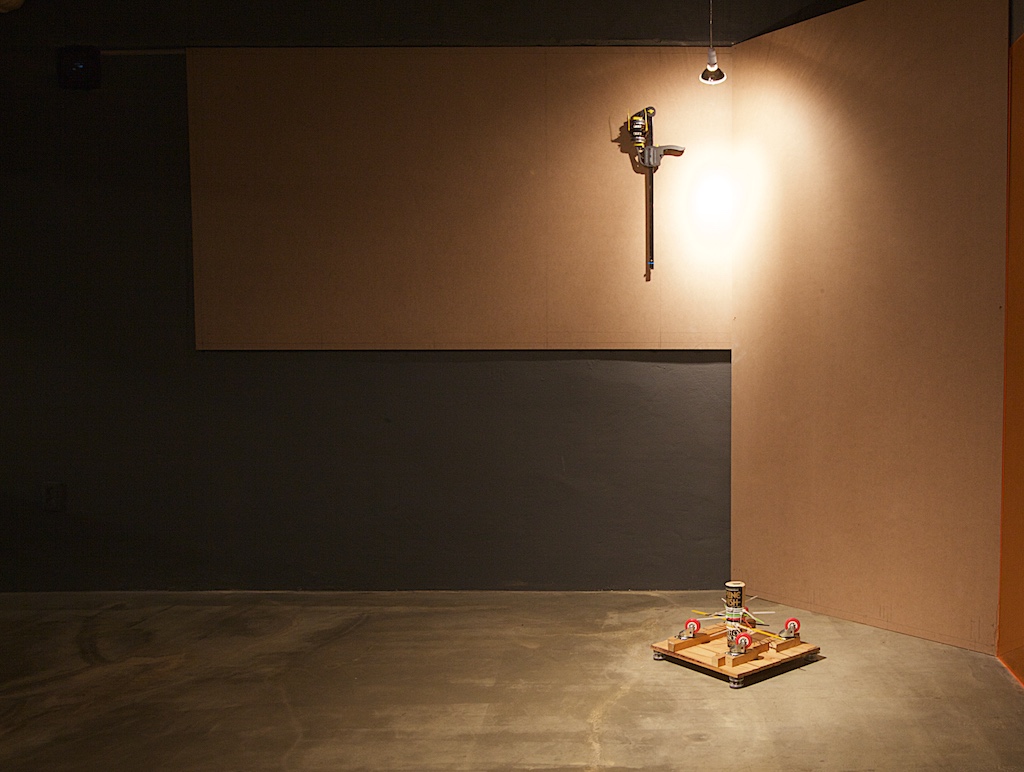
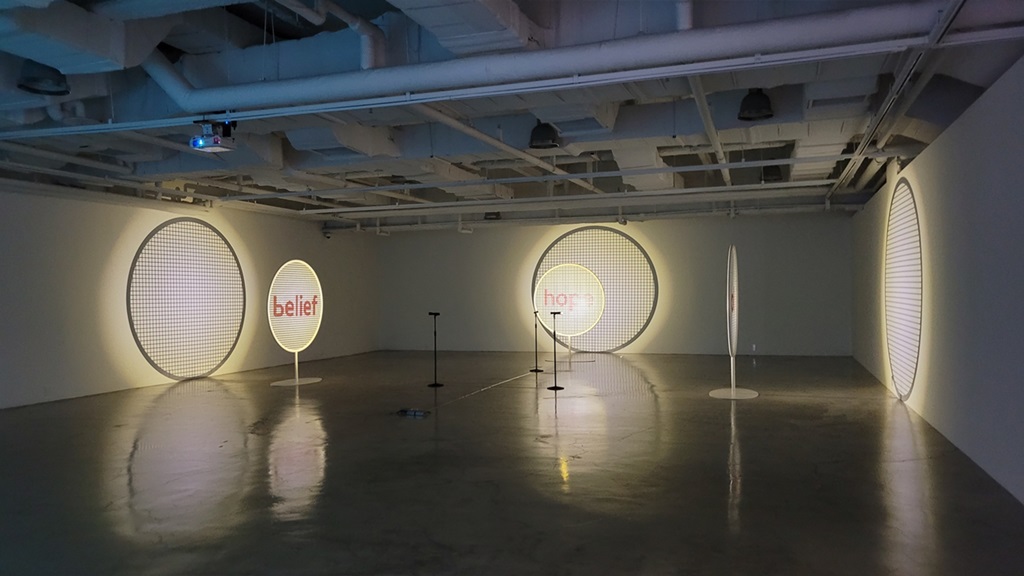
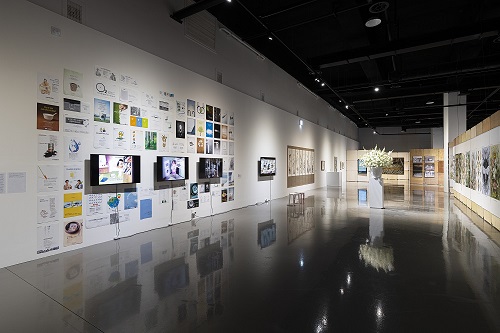
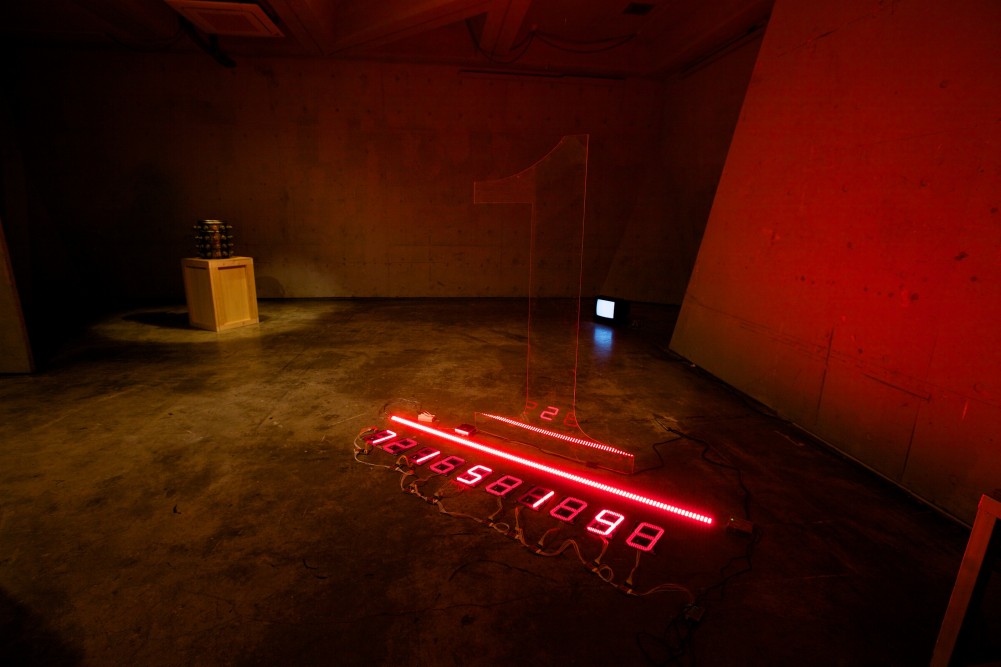
Since the late 2010s, Kim’s practice has increasingly emphasized the theatrical arrangement of text, images, lighting, and video throughout exhibition spaces. Crosscheck (2019) superimposes a Christian cross and the crosshairs of a laser level, bringing religious symbolism and the standards of scientific measurement into visual confrontation. In belief, hope, love, intense illumination produces shadows in which the letters disappear while the grid structure remains, revealing the relationship between presence and absence.
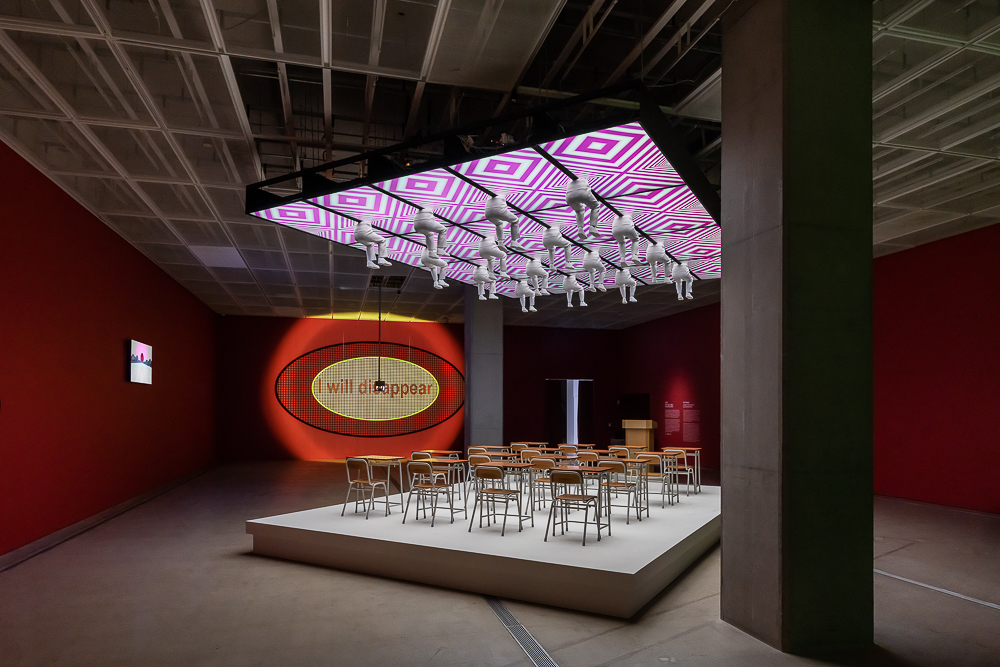
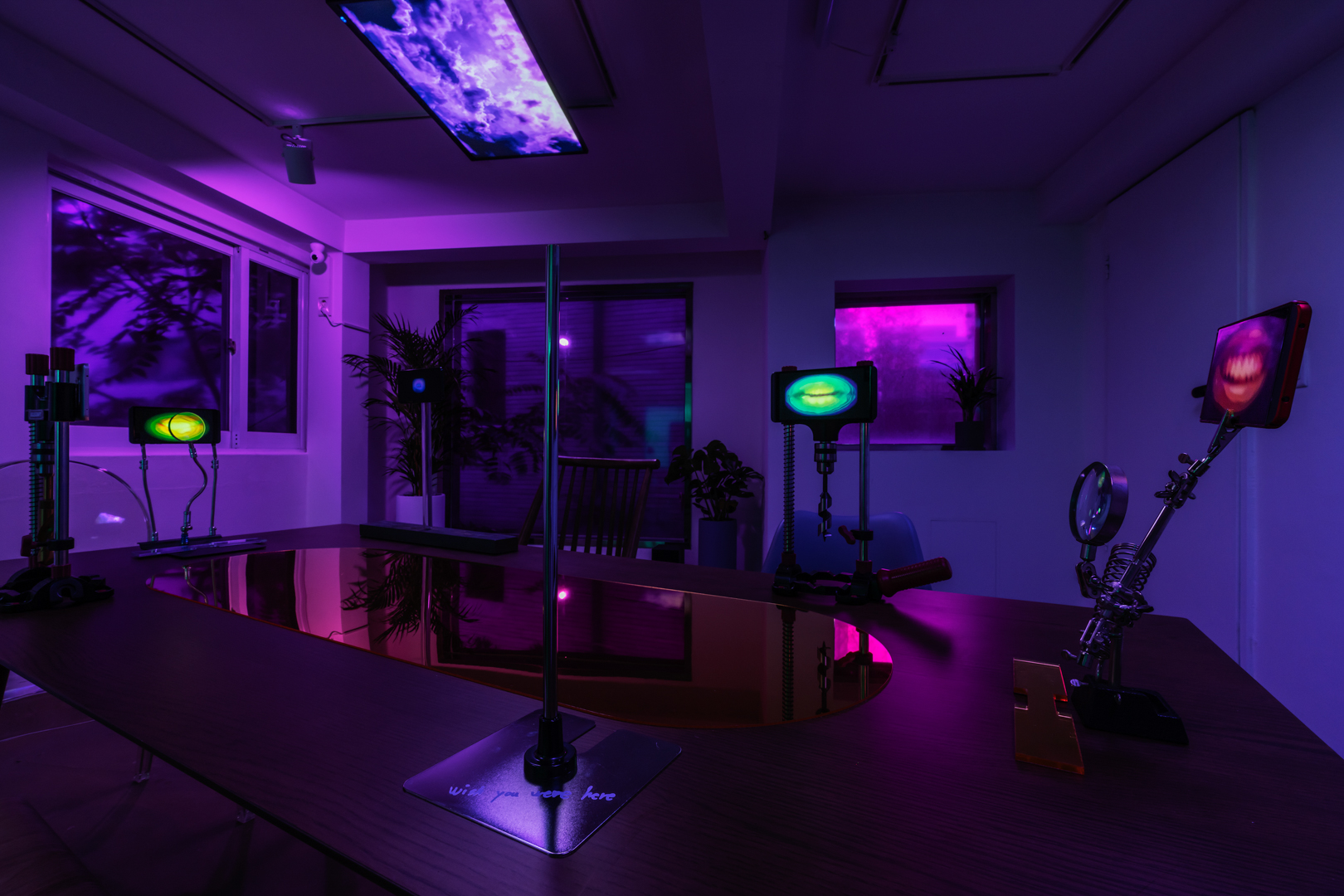
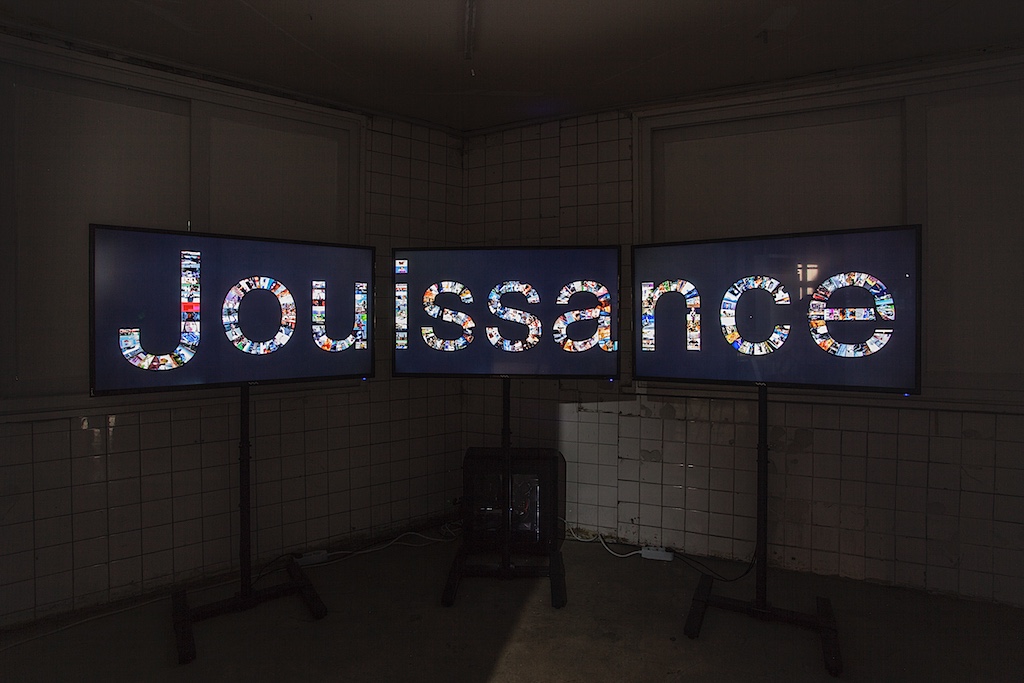
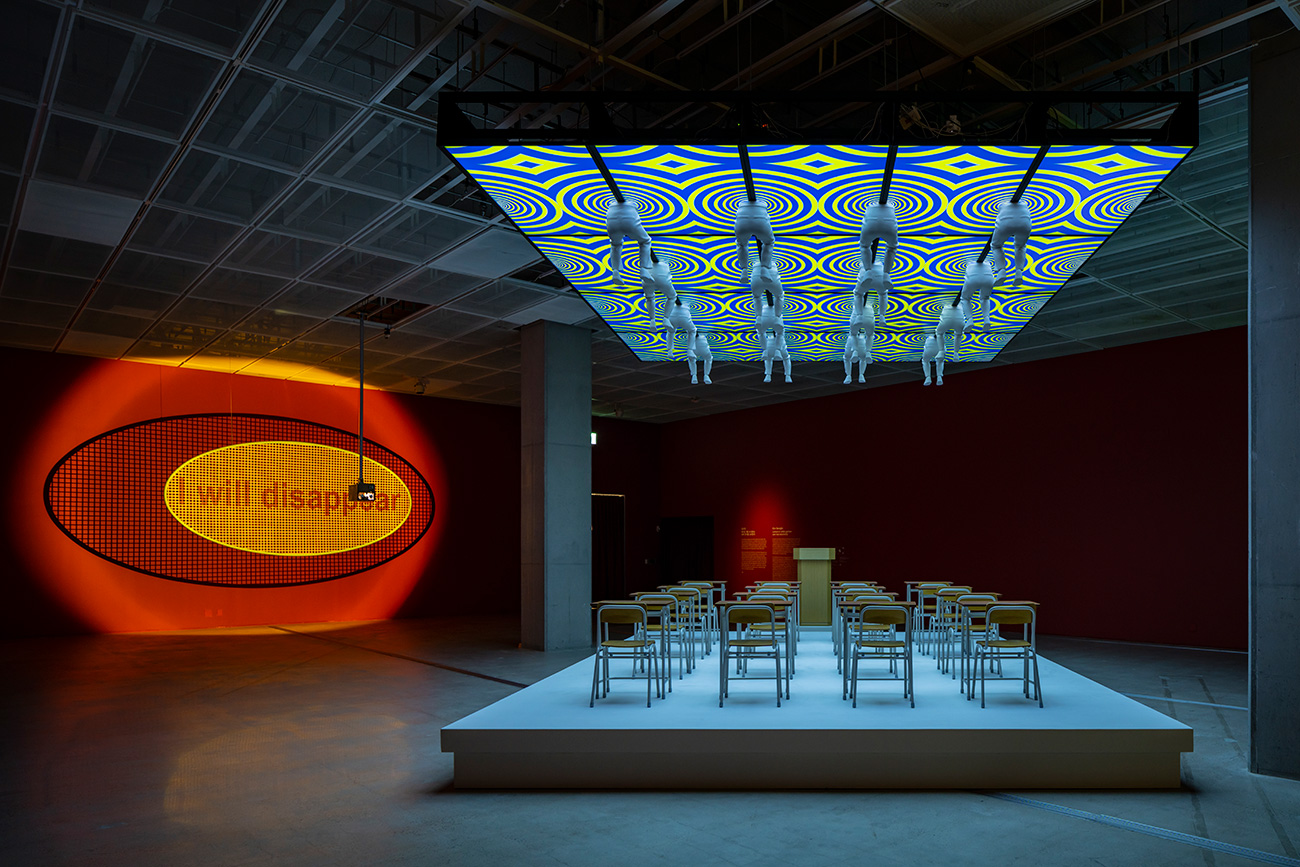
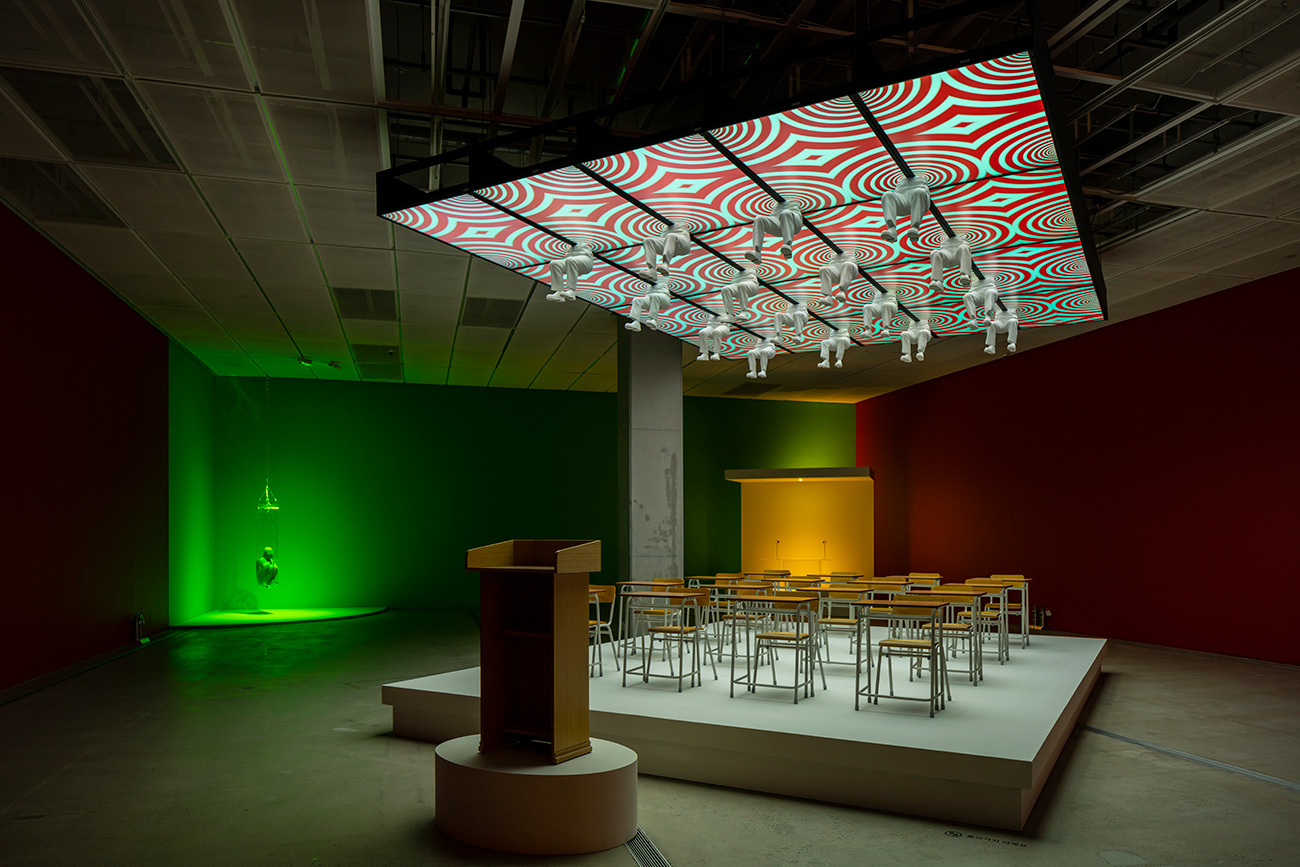
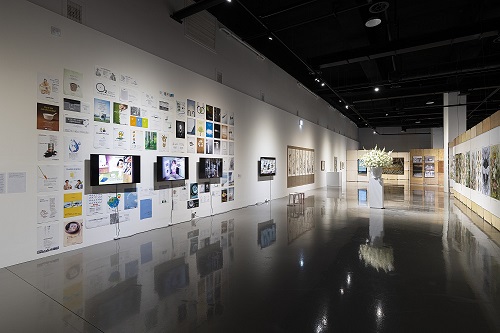
Such spatial compositions have subsequently expanded into works combining digital imagery with physical objects. Fuck You and I Will See You Tomorrow (2020) arranges smartphones, displays, and furniture to stage a scene of conversation without human participants, while Lo-fi Manifesto_Cloud Flex (2021) combines repetitive imagery across 20 screens, music, and sculptural representations of bodies emerging above desks to visualize human immersion in virtual environments.
Through these carefully orchestrated relationships between sound, imagery, and physical objects, Kim encourages viewers to experience the boundaries between reality and representation through their own senses.