Photography has adroitly proven the certain proposition on the verity of existence, through the form of image. The issue of ‘having existed’ that Roland Barthes persistently stressed in ‘Camera Lucida’ is closely weaved into the past tense that is innate in the nature of images. However, in order for photography to arrive at the clear verity of an erstwhile existence based on the past, the camera has to always be positioned in the present.
This gap between the two tenses, which makes it impossible for the device and image to coexist, is merely one instance of the several schizophrenic means of being that surrounds photography. It paints the complex map of relationships in the era of image, tracing the relationship between not only the present and the past, but also the seeing and the seen, tool and image, moment and memory, and existence and absence, generating the philosophy of the eye and the being.
Jinkyun Ahn is an artist that contemplates such complexity of photography as he overlaps it with his own experiences of life. We face the images that he captured, but they are the final product of the subtle dynamics between the lens and the gaze. Just as Barthes had approached the essence of photography through the photo of his mother dating from before his birth, Ahn substitutes the relationship between object and photography for the inevitability of blood ties.
However, the sturdy structure of the gaze thus constructed leads to a destruction that nullifies the gaze itself. This is an evolution of a sort. Delicately woven together by employing the tension between various interfaces of photography as the mechanism of images and also utilizing the structure of family lineage as the condition of image production, Ahn’s work proceeds toward a field of mutation prompted by uncontrollable noises.
Throughout this process of evolution, I witnessed the specificity of photography and dynamics of contemplation that Vilém Flusser has acclaimed as superior than the traditional means of philosophy. The intersection between time, space, and subjects, densely constructed in the existing means of photography, embraces an implication of our own means of existence.
Ahn’s work therefore transcends the traditional relationship between photography and reality, directing the equations between various clauses derived from photography toward a scaled ontology. This is without a doubt an act of encountering the unpredictable loss, and also an act of encountering the conundrum of inequations on photography.
Villa of the Mysteries
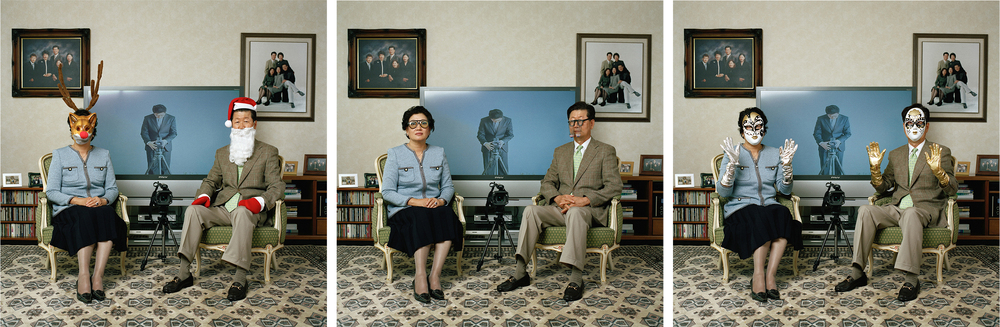
Starting from Villa of the mysteries - where is (hereinafter where is), the work of 2012, Ahn seems to have powerfully redirected the focus of relationship between the seeing and the seen from gesture to gaze. Before then, he had sought to virtually harmonize the enmity between impossible relationships of reality through dramatic gestures and arrangements within photography.
It was a manifestation of unrealizable freedom through photography; in other words, a narrative of overcoming obstacles by borrowing the power of freedom that constructs the virtual world.
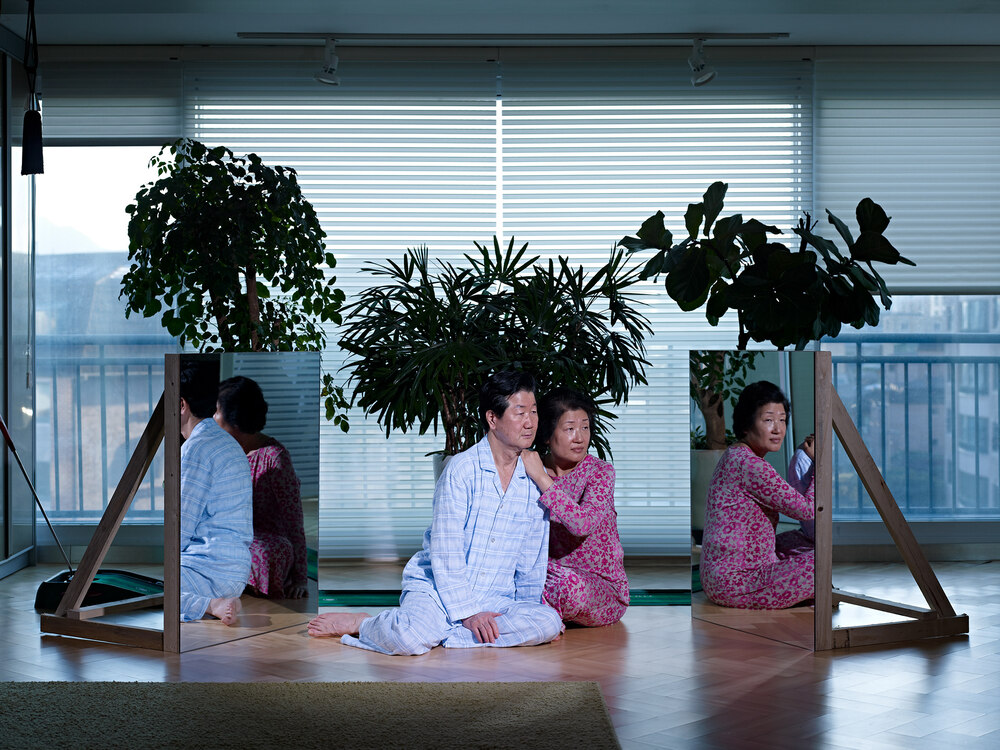
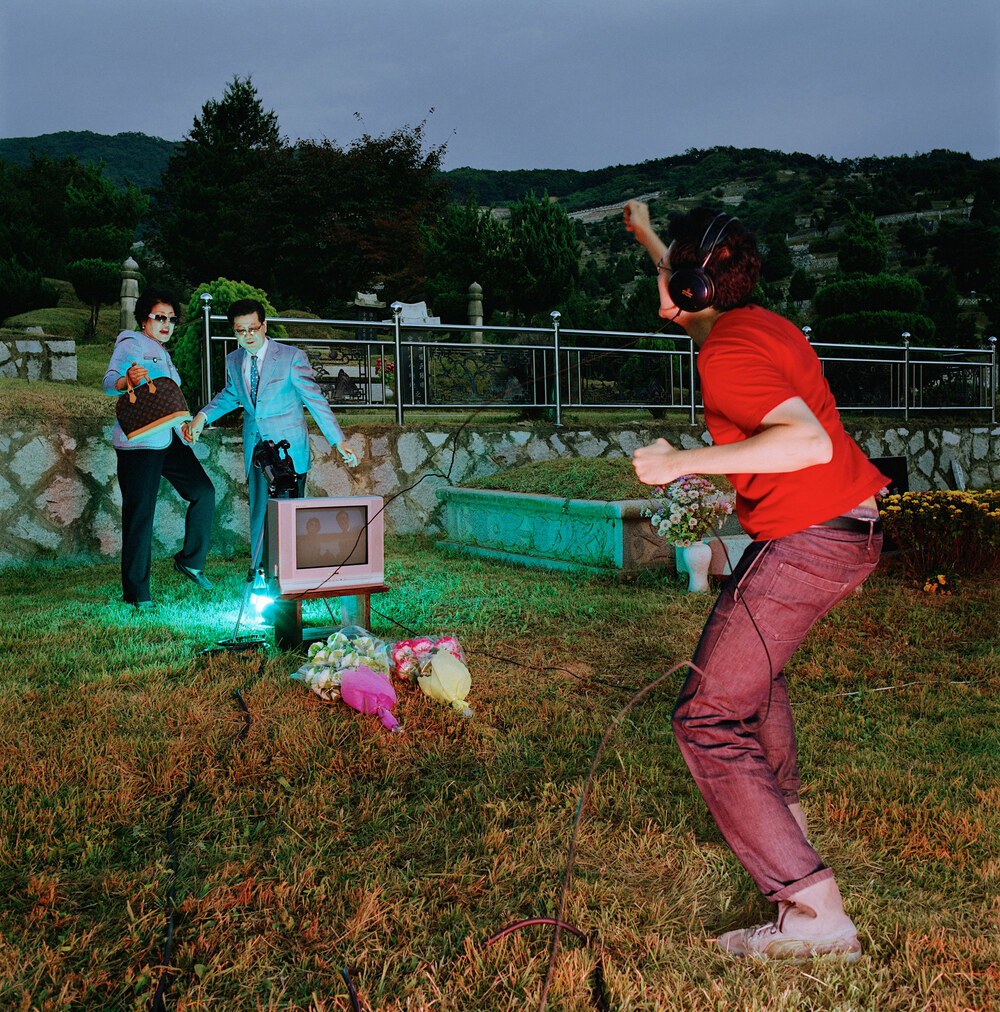
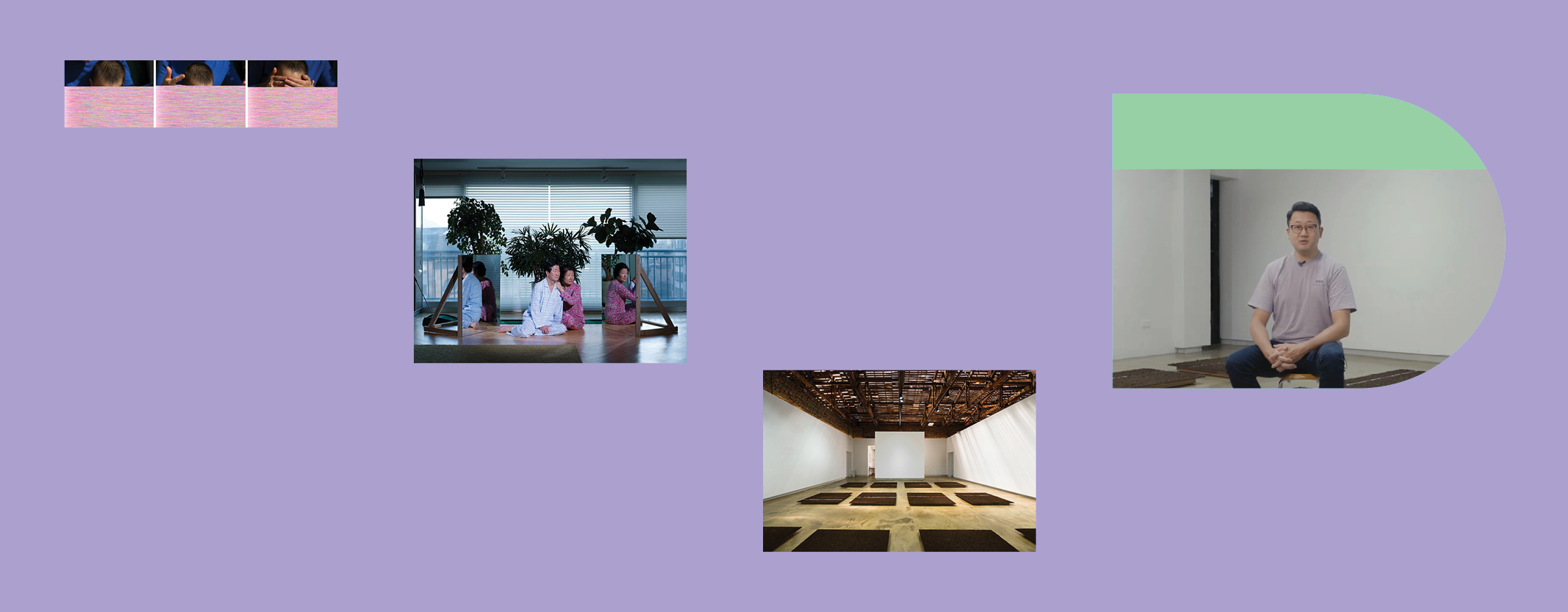
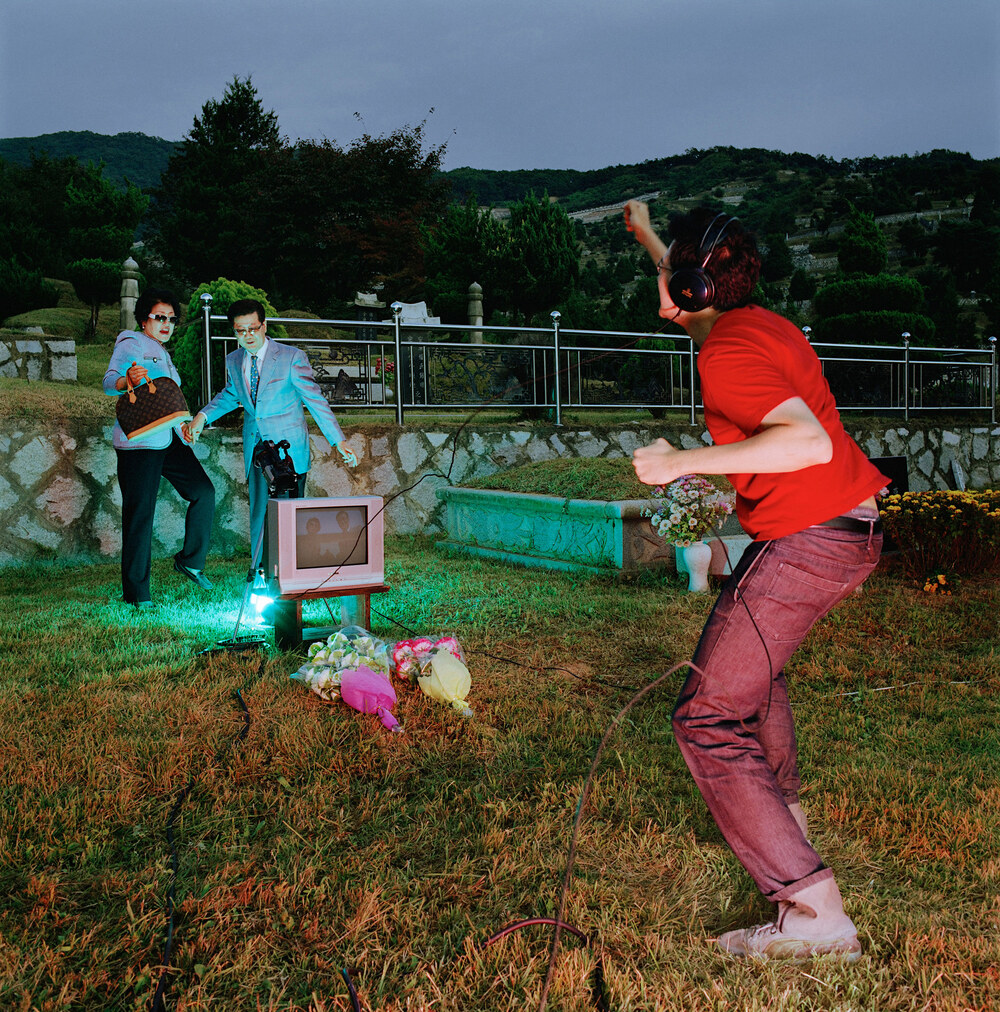
Here, the inevitability between life and death, or parent and child, is constructed with the vocabulary related to the imitation, similarity, and annihilation of image. For instance, in Villa of the mysteries – Decalcomanie, Ahn nullifies the gap between life and death by crisscrossing the living room, the main stage of the daily life, and the grave site of his parents.
Such transcendence, available only inside photography, is manifested through the cut and paste of photography’s trait of transforming a transient moment into eternity by substituting the form and subject of life, in which the two extremes of life and death coexist, with a mirrored image. In particular, the background of the image is a mysterious habitation embracing the extreme natures of graveyard and living room, and at the same time serves the double function as the site of image where editing and deleting photograph takes place.
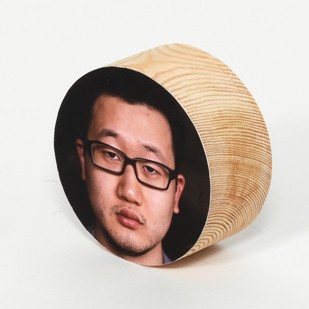
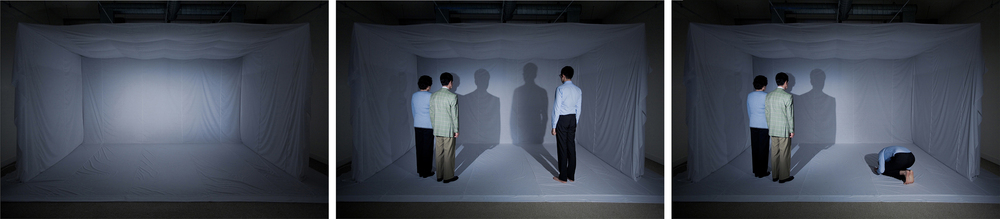
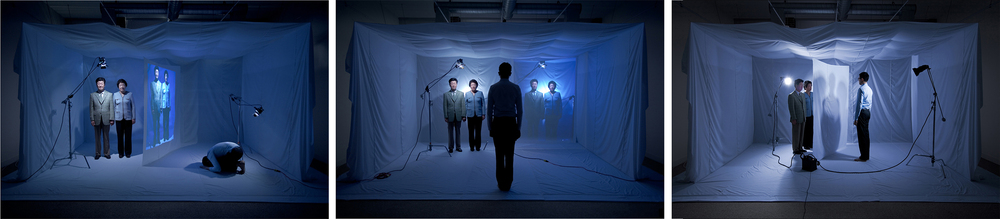
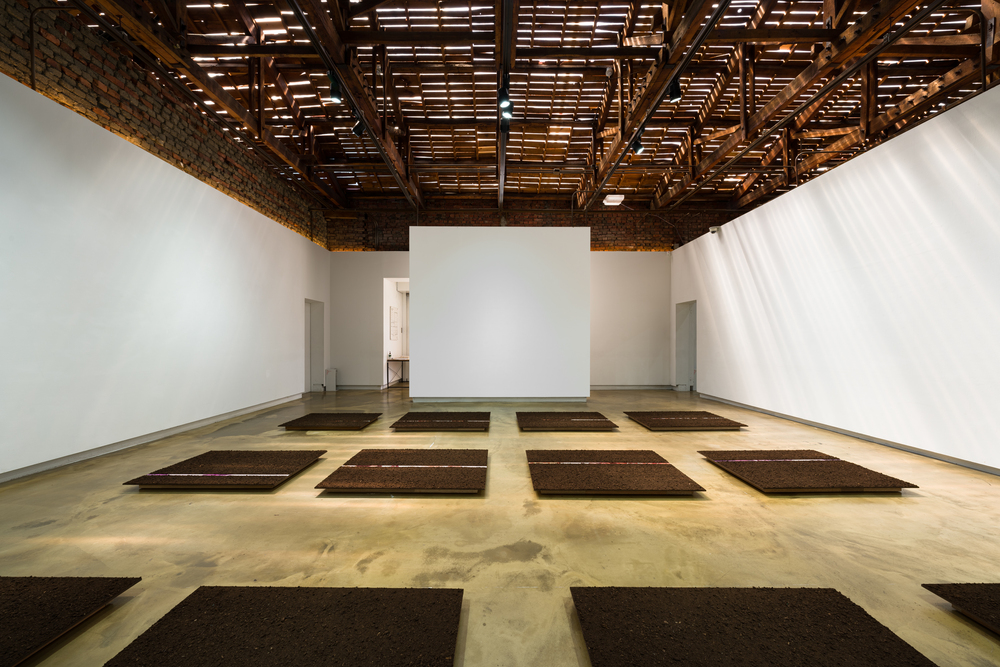
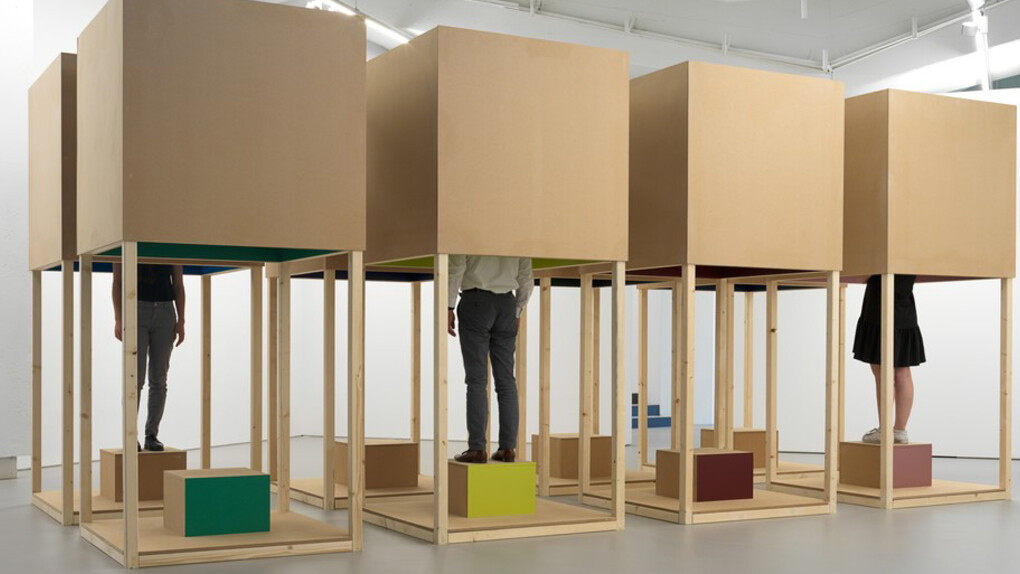
Such habitation is enlarged as the face of the subject in Where is, and expanded into the construction of an actual space. The image of the father and mother, captured via typical frontal composition, escapes the two-dimension as it is manifested as a three-dimensional state. where is dad is installed in a space in which two identical photographs face one another over a narrow corridor, and where is mom is installed to have the image projected on a T-shaped structure be separated.
The peculiar habitation where life and death coexist is here transformed into a structure of both the image and place of face. This space is designed for every figure’s perspective to gaze at oneself. This contradictory structure, in which one looks at oneself through one’s own eyes, questions the certain infringements around perspective. Ahn speaks of the subject’s face as below in an interview.
“My work perceives the face as a place. … I felt that the triggers for numerous positive, and sometimes negative, memories are buried in my parents’ faces as if a dense minefield. And in that sense, I thought that the face is similar to a camera. As a place of memory, layered with the gaze of someone looking out into the world through the viewfinder.”
The perspective inside where is is after all not so much the perspective of the subject as a projection of the perspective of the figure standing straight against the subject. The faces of his parents are the sites of memory where the artist’s gaze is accumulated, and the navel-gazing that becomes possible when that territory of image is divided is molded through the gaze on the other side of the lens.
The mixture between the seeing and the seen, generated by transcending the general perspective of looking at oneself through the mirror, cannot but be a delusional structure created through the relationship between images. Ahn’s work therefore presents the paradox that the perspective of the figure behind the lens becomes clearer when the nature of photography to reflect the subject in front of the camera as a mirrored image rather violates the perspective and takes part in the fabrication.
In his work, the image of his parents does not serve to celebrate and remember their existence; it is the process of contemplating the image of his parents that is accumulated in him, the self that is taking the photograph; it is the object that investigates the dualism of imitation and independence that takes place within family relations.
Hanged Man
In a lecture titled “Imitation and Independence”, Natsume Soseki explained that “I” represents both humans and me, and that humans embrace the dualism of imitation and independence. The image of the subject is manifested in the form of imitating the being, but it is only when passing through that similarity that it becomes independent within the perspectives of anonymous others. However, unlike this flexible sequence innate in the nature of images, the sequence of life is not so simple.
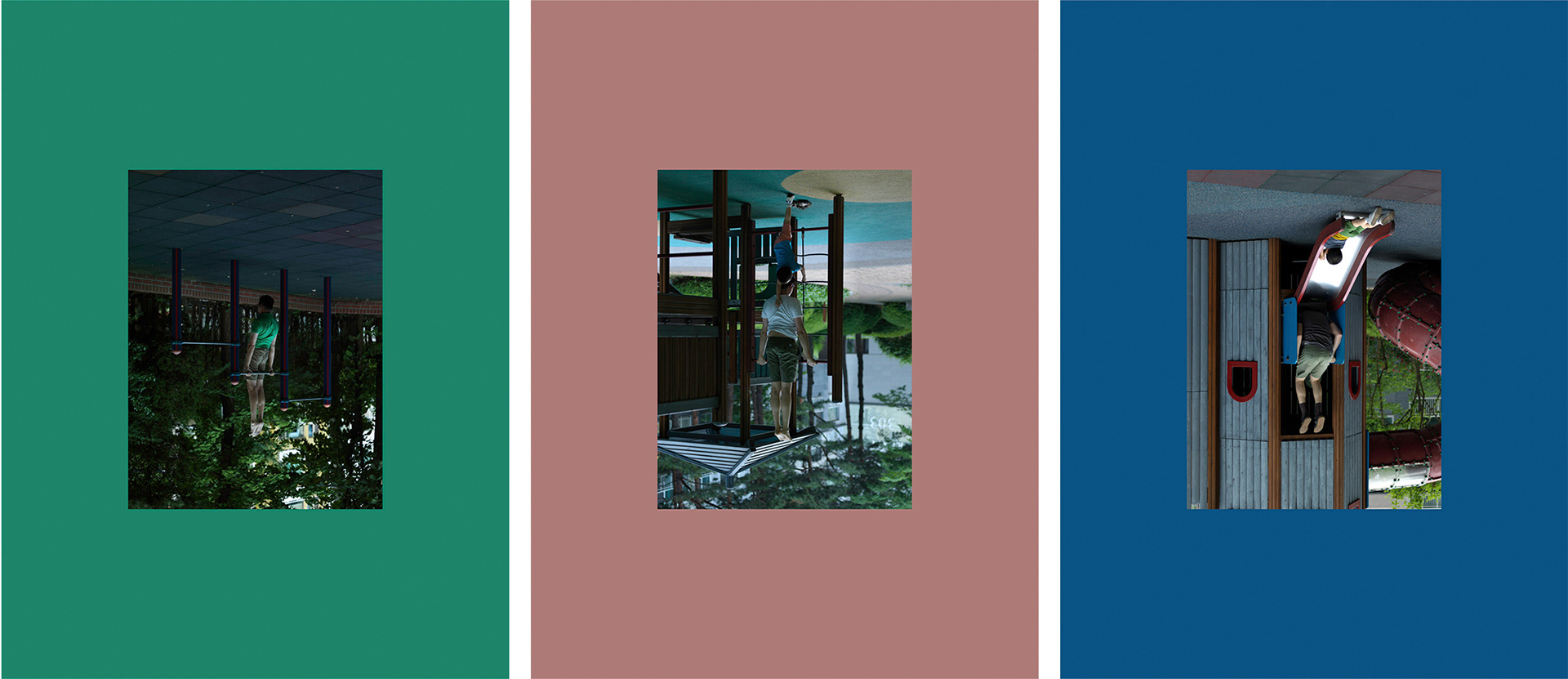
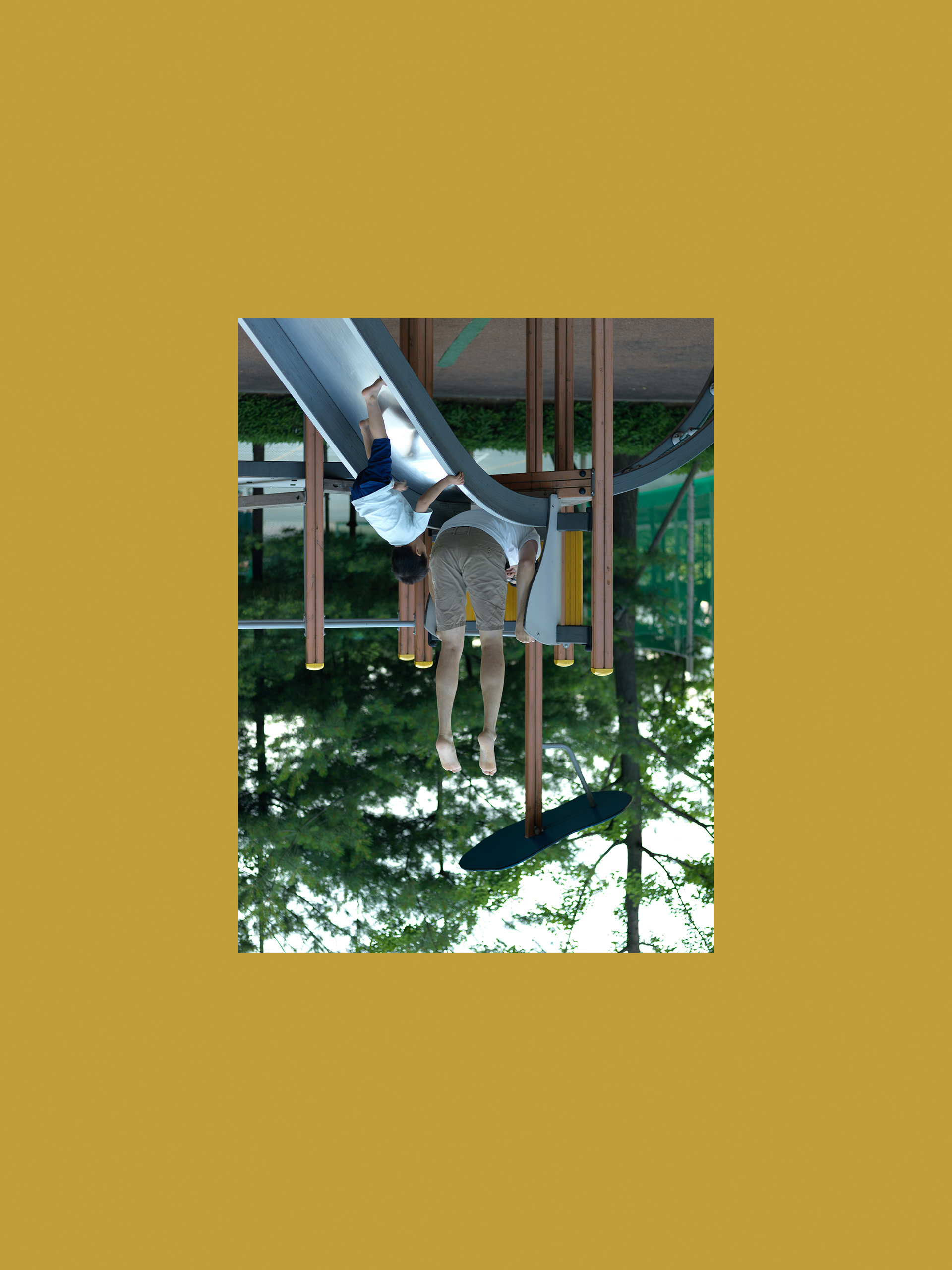
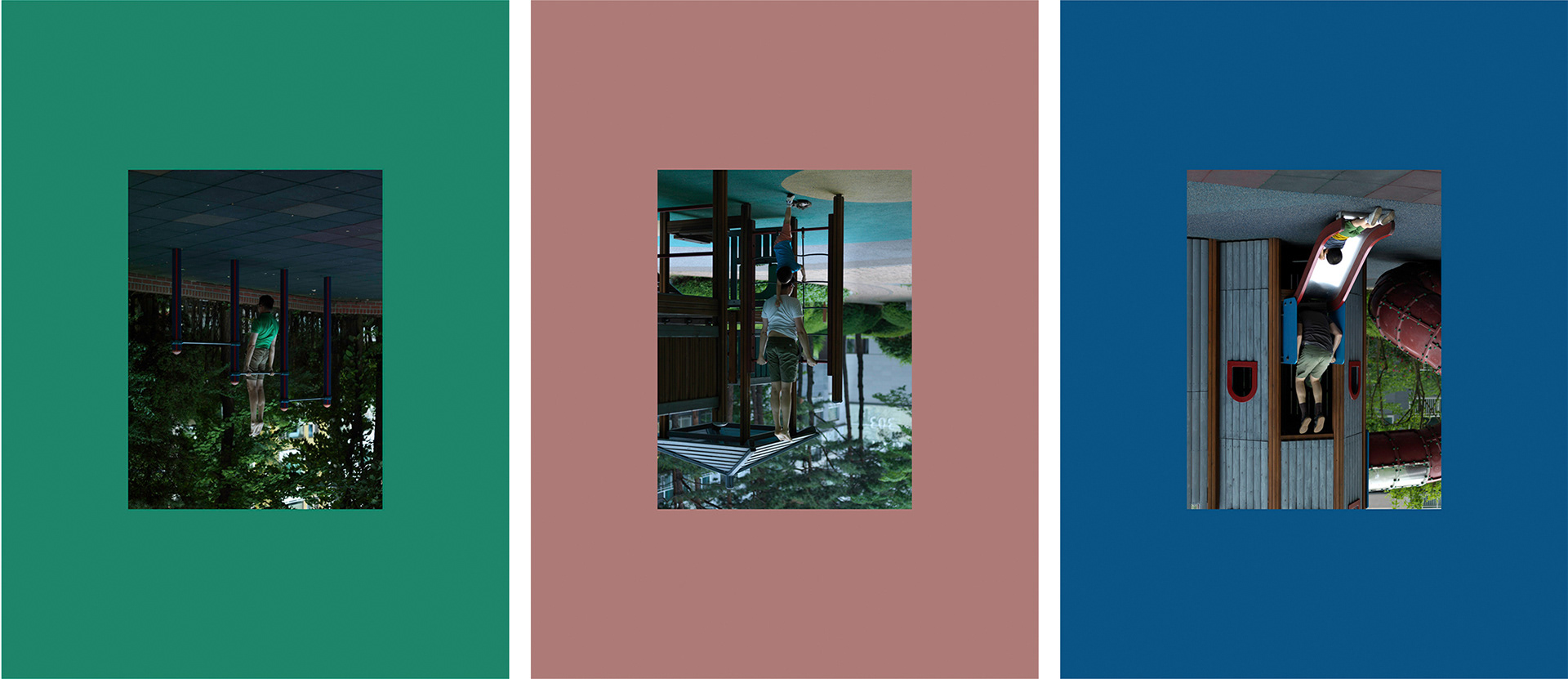
Hanged Man starts from the hypothesis that the image production process of photography may be the key to transforming the link between the past and the present. In this work, the artist himself becomes the subject, standing where his parents had once stood. He hangs as an image in between imitation and independence.
Having accumulated the image of his parents in the lineal sequence, the artist becomes the object of accumulation in a different Other’s perspective. However, in order to break free of such repeated imitation, he focuses on the overturn that takes place the moment the photograph breaks free of the actual object; or in other words, he focuses on the reversal of the image that has passed through the lens.
Photography turns the table on the object in order to fully imitate it, and it is only by doing so that it becomes an independent subject. It is for such reasons that the artist as subject stands in the opposite direction from the world’s gravity. The figure hanging upside down in a joyful playground for children can recover the direction of normality only when he is processed through the lens.
However, such transition is accompanied by a reflection on death, the nature of photography. The gesture of the figure hanging on to the world without any ground to stand on reverses the structure of similarity and willingly chooses death inside the image in order to liberate his son as a complete subject. Just as we cannot choose our parents or children, the image of the photograph cannot select its object.
However, just as there is more leeway for choice in demise than in birth, photography proceeds toward the realm of freedom, called the image, instead of proving the existence via death. As such, the pain of imitation is blocked in Hanged Man, and the totem of the image of an independent perspective’s birth is constructed.
In short, Bergson asserts that one should hold a position of privilege over objects in order to exercise an actual and new effect on the objects surrounding the body, and that this means that images can affect images. If this reflects the functional acts of the body, the world of images can be linked to our existence through the operation of the perspective that shifts the images into objects.
Imitating photography’s means of operation, Ahn’s work format is founded upon a proactive will to intervene in the outside world perceived as image, and to transform it. However, his work is processed through an inevitable change in the face of the technicality of the visual device where such structure collapses.
Slice
At some point, it became inevitable to reconsider the various concepts presented by the classics of photography. It was when the technical state of photography started to expand and dilute into realms completely different from the previous structure. Since the Information Age, production and consumption of images have taken on as its essence the units transposed into symbolized technical codes, instead of eliminating the gap between themselves.
Baudrillard explains it is at the state when the medium cannot be defined nor instruct a clear action that the implosion of the medium takes place. In the face of such systematic shift of the medium, Ahn’s work methodology of crisscrossing and investigating the medium traits of photography and its ontological implication encounters yet another round of contemplation.
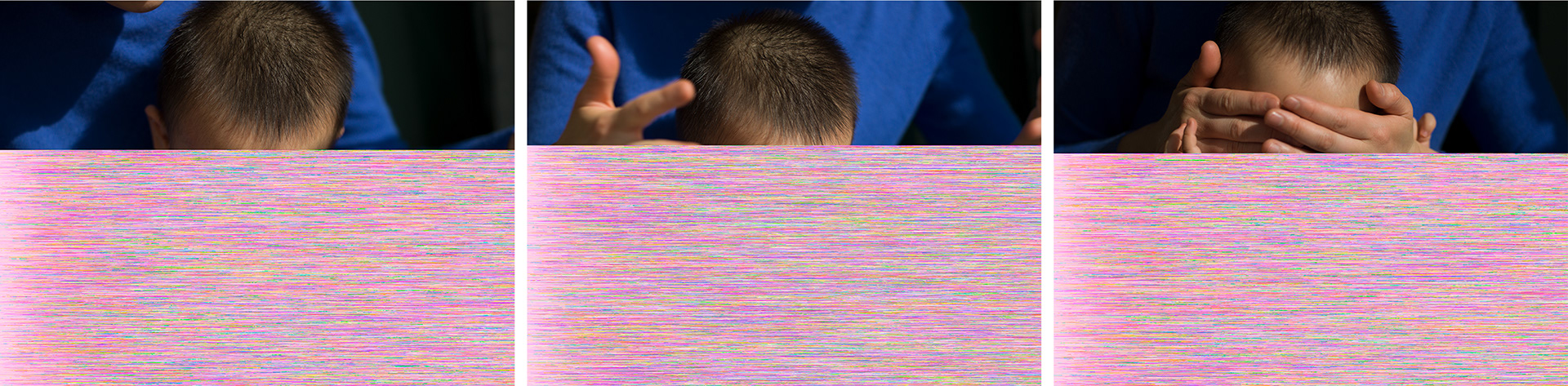
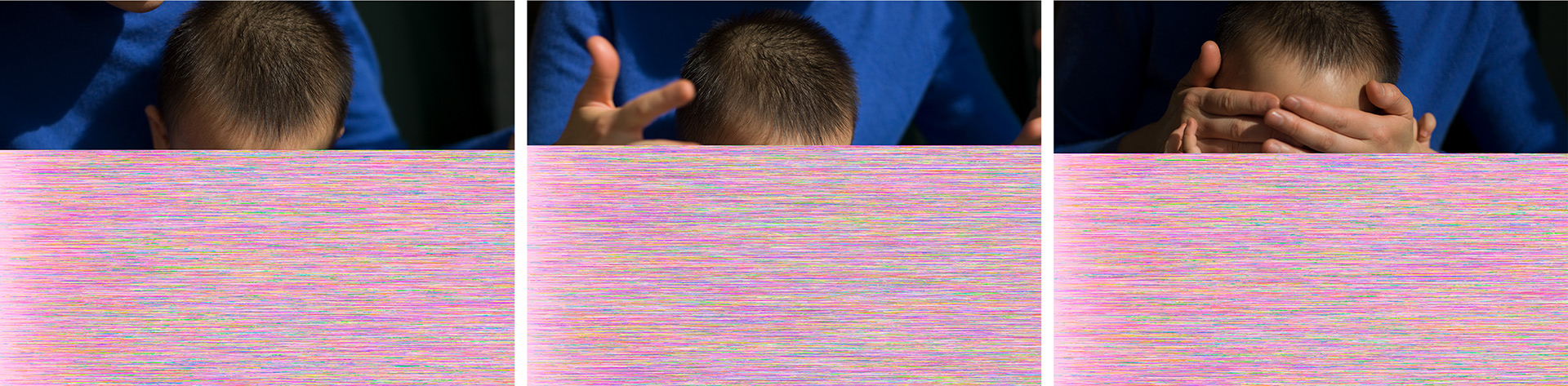
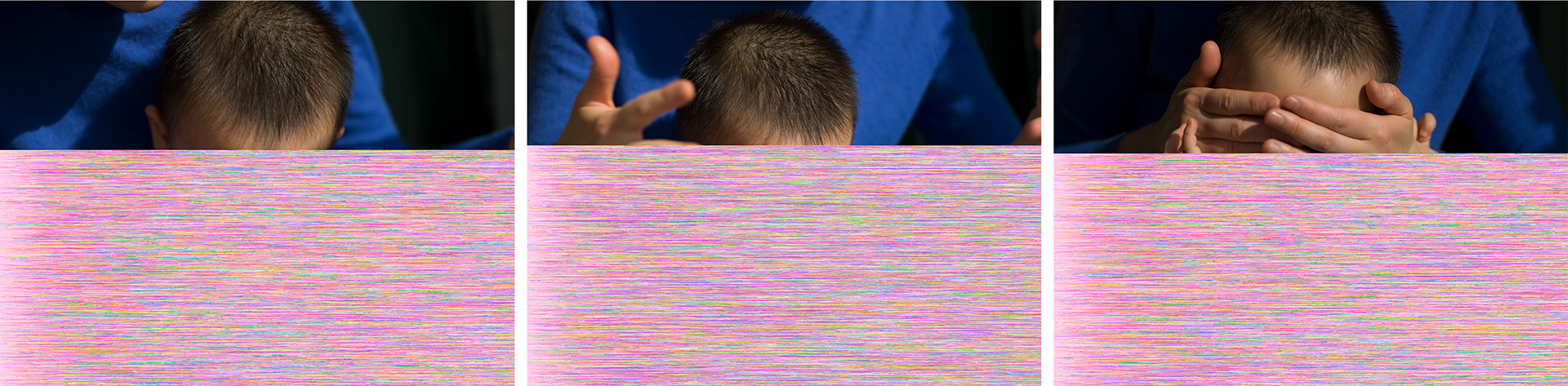
It started by chance. In 2017, a grand amount of data that he owned was declared impossible-to-restore. 20150208 is the name of not a folder that he created for the work, but a folder of his private photos. The images of a family’s private and daily lives represent photography’s traditional function of celebration, the archived documents of a child’s growing up. In that the object and time can be possessed, and in that the images substitute and call on memory, photography has skillfully fulfilled the role even after its transition into the digital.
However, just as the film of the past’s photography could be permanently damaged through sudden exposure, today’s digital photography is also subject to a similar weakness to bugs. Whereas the photography of the past was the chemical product of the image formed via light and air, and thus damaged by the same elements, today’s photography is the product of bits saved as digital signals, and thus damaged by the same element.
While Ahn is enraged by the sudden attack of the bug on his data, he acknowledges the fact that the state of the image conveys a sensation that cannot be generated through an artistic intent.
It brutally deconstructs the image, but bears no intention whatsoever. Intention is an act processed through perspective and body, and bears a specific objective, but the noise of deconstruction generated within a device’s error is merely an error itself. This implosion, which Baudrillard has dubbed a slow terror with no exterior motif, places not only the act of saving but also destruction within a specific intensity. The fear, always making a sudden entrance and yet ubiquitous, emerges and the most significant system of “saving” loses its function.
Therefore, the rupture of saved images has brought a sudden shift in the direction of Ahn’s work thus far. Having become a completely helpless being in the face of the destroyed files, the artist witnessed the treason of images, constantly slipping in the memory of the past. And this treason led him to a cold victory in his ontological battle against photography.
This was a destruction of visual perception, and at the same time, an image that has departed image, awakening the true nature of images. The documenting and archiving function of photography, the medium’s historical foundation of being, was hereby dissolved, and the genealogy of perspective and photography on imitation and independence was scattered.
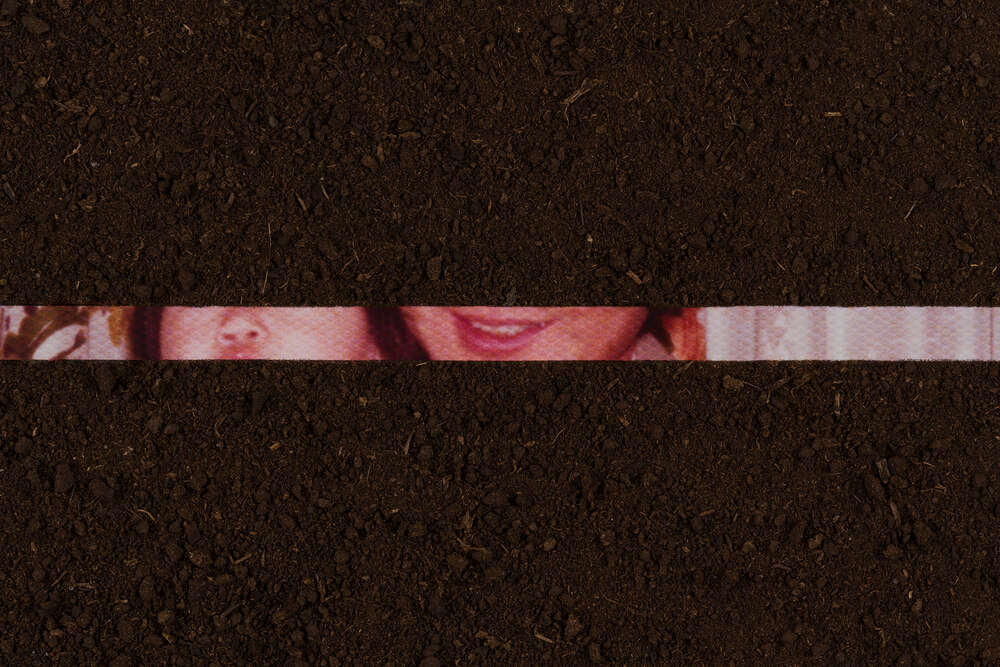
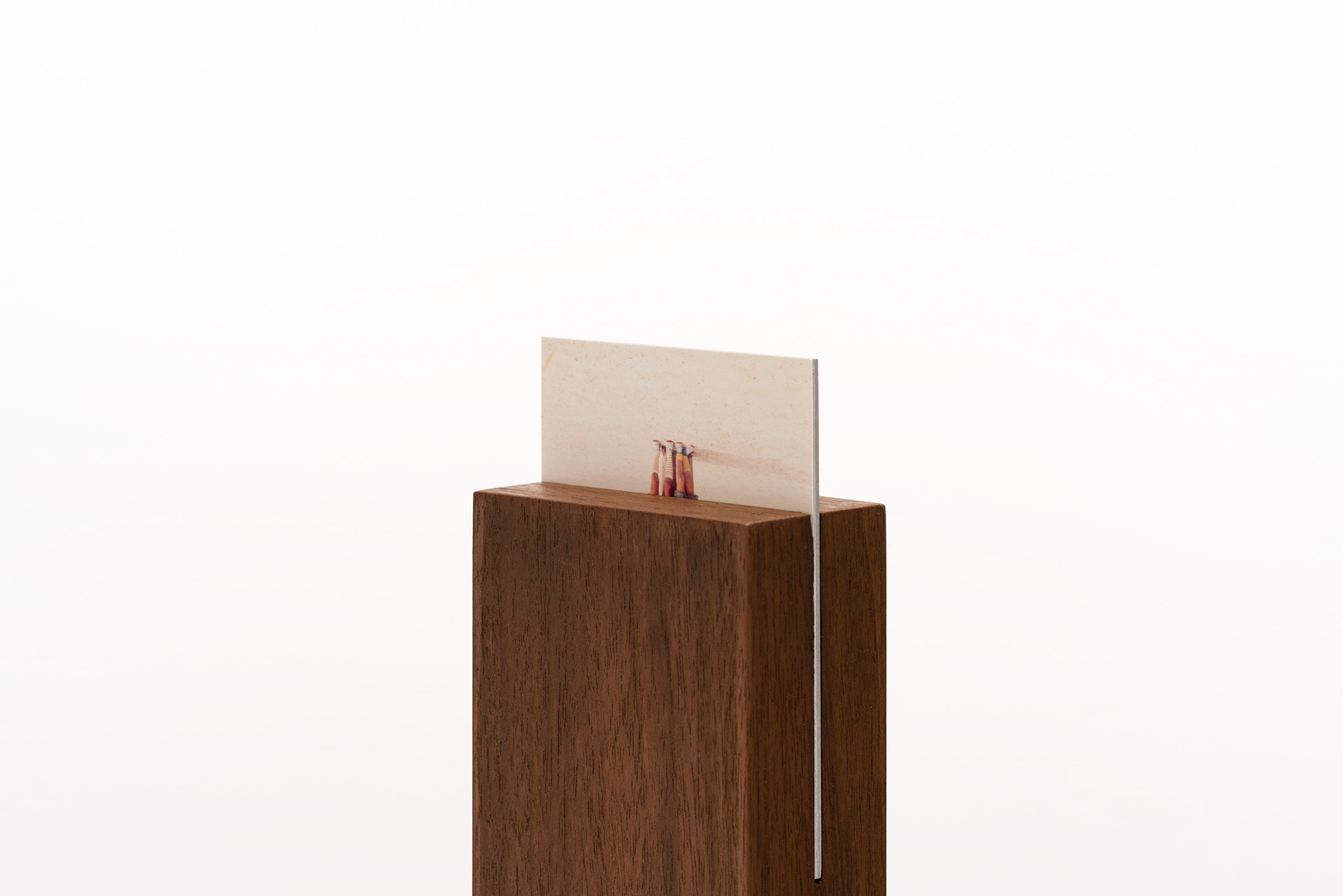
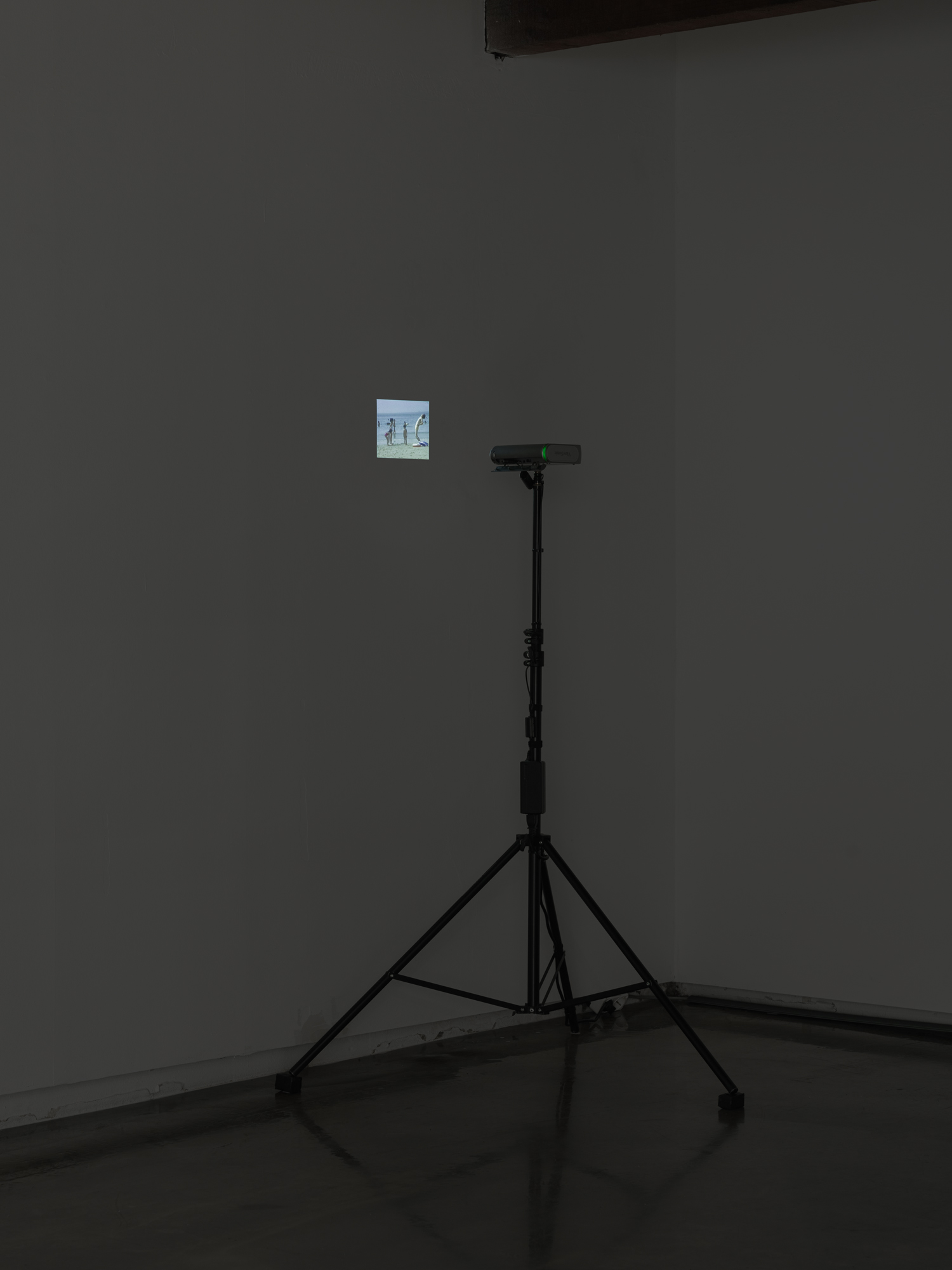
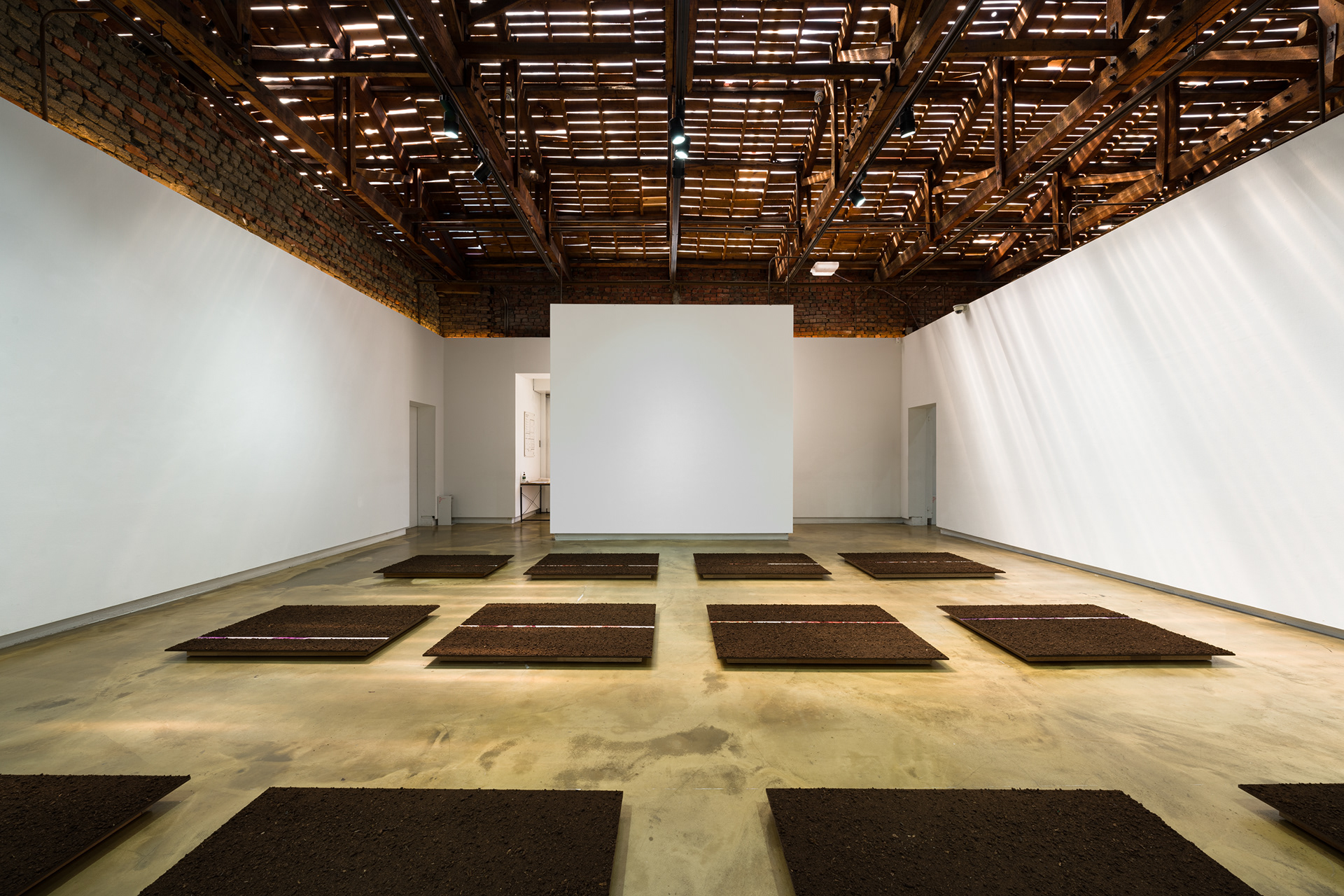
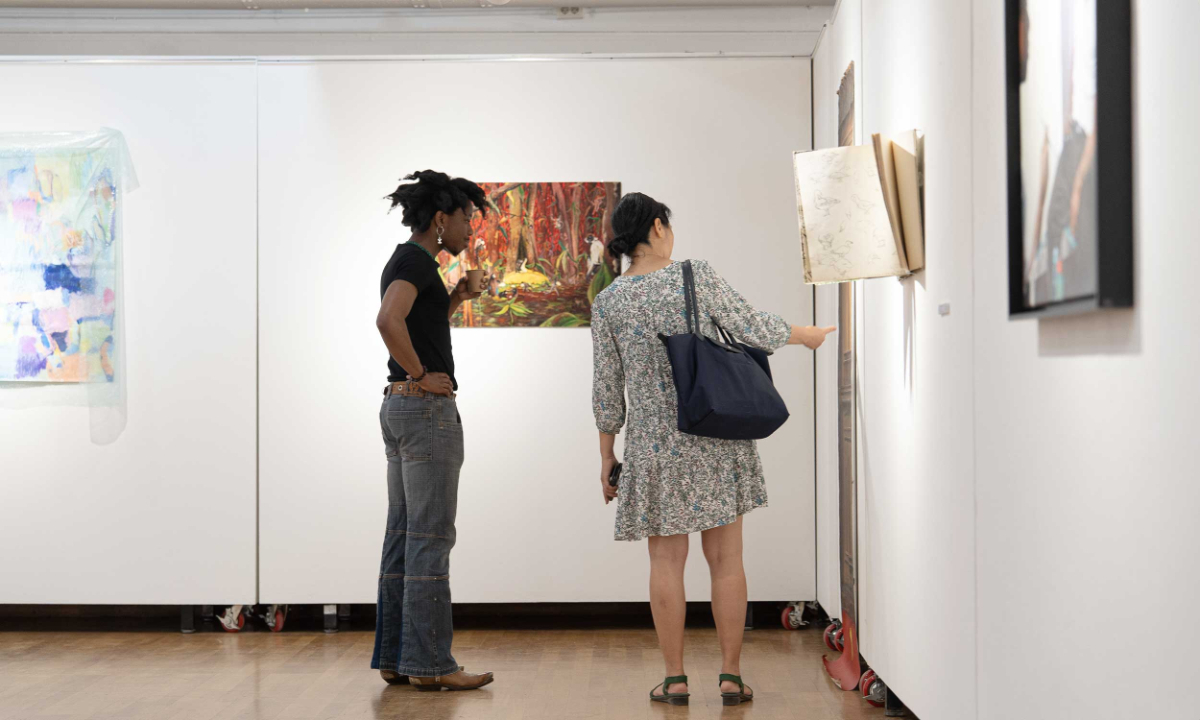
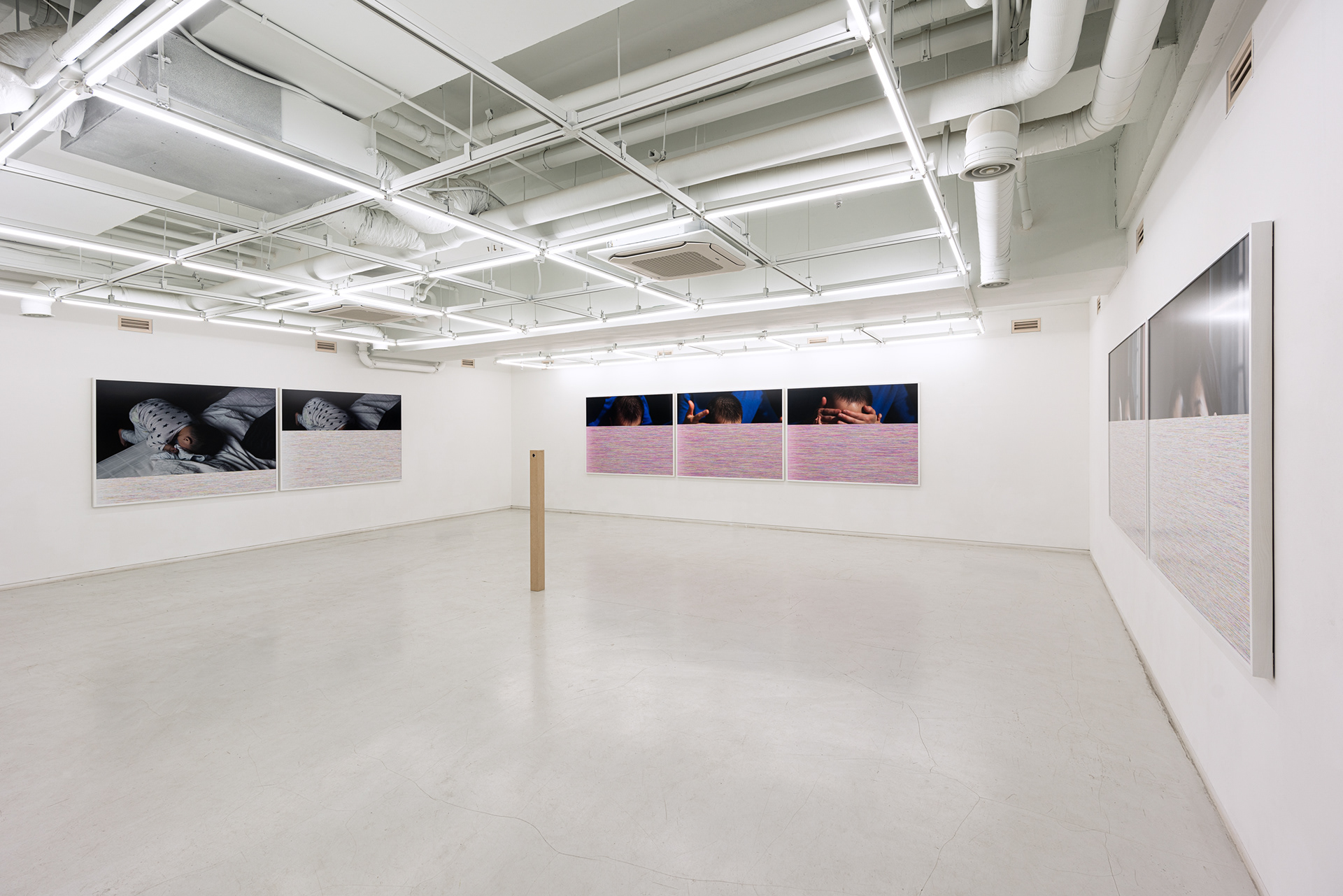
In the subtle serial movements of the daily life captured in ‘20150208’ series, the eyes are all covered, closed, or hidden. What is clearly revealed through this retreat of nullified vision’s system is the slicing of the error that deconstructs even the fundamental function of copying, along with the uniform pixels of the noise. Vaguely supposing it to be the artist’s intent, the audience faces the picture inside a silent exhibition space.
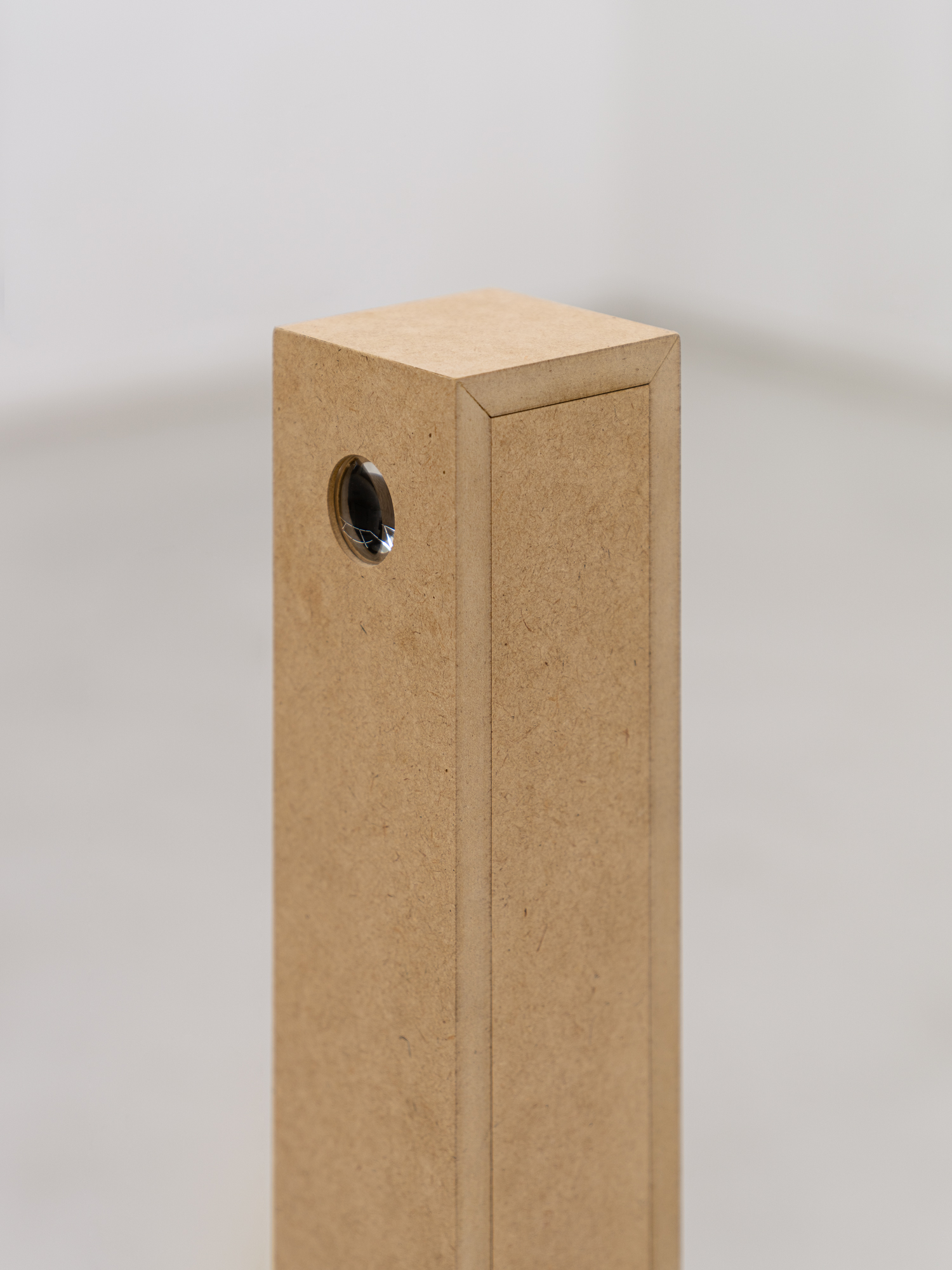
However, the moment the audience lays eyes on the lens of Slice! placed in the middle of the space, Bunuel’s fatal blow is thrown into the eyes. What slices our perspective in this sudden moment of perplexity is the explosive of the image. It is also the moment we understand that Ahn’s fragmented photograph is a metonymy for the collapse of visual experience.
Regardless of whether the artist intended it or not, the visually impotent state of Slice provides a route of evolution for the space of where is, which he constructed in order to interpret the relationship with perspective, and also that of Hanged Man, in which he struggled against the dualism of imitation and independence through a lopsided image, and leads them toward a certain state of liberty.
This fortunate sense of freedom embraces an advancement in the re-perception of visual experience. Jonathan Crary points out that all circulation and acceptance of visual images does not grant any significant independent identity on a single medium or form of visual representation, but that the new element of perception merely repositions the observer, and that the new element of perception is always re-perceived.
As such, the blow of errors that destruct even the order of the simulacre underlies the nature of today’s images, demanding a new stance of perception toward the medium’s identity. An acute severance of this new visual system that suddenly appeared with neither intent nor manipulation reveals that the element of resistance, Ahn’s persistent challenge against the system by overturning images, is slowly being transferred into a different context.
In this sense, his 《Slice》 is the image of the existence reflected without a mirror, bearing no collateral of either death or intersection of perspectives. In this shifted structure of verity on photography, Ahn’s ontological contemplation now stands on a new crossroad.