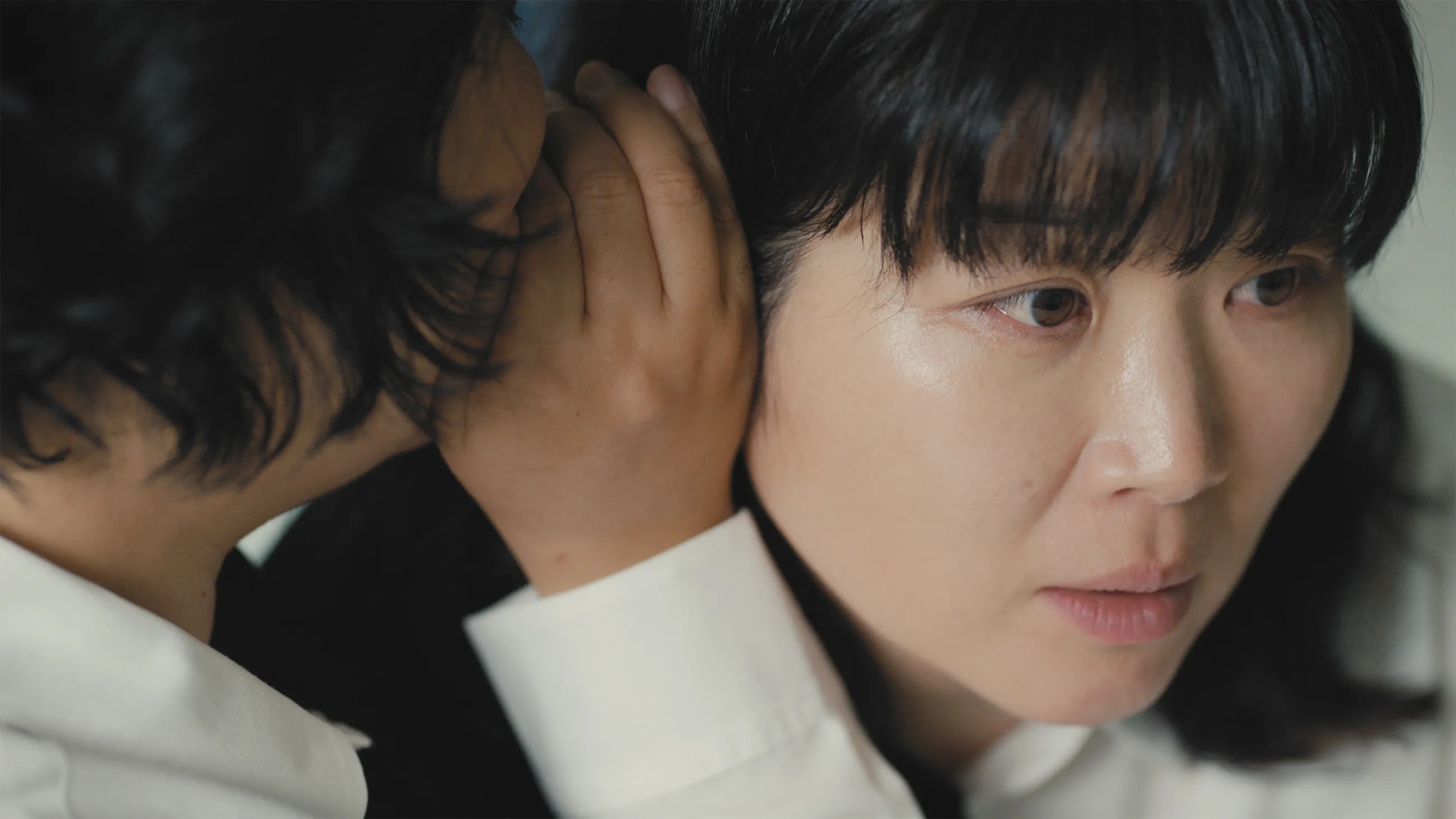
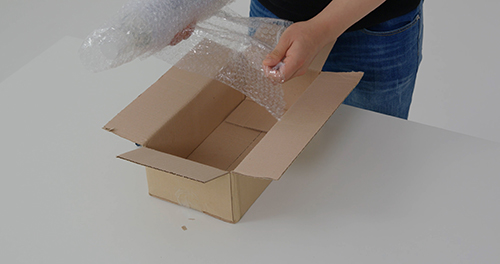
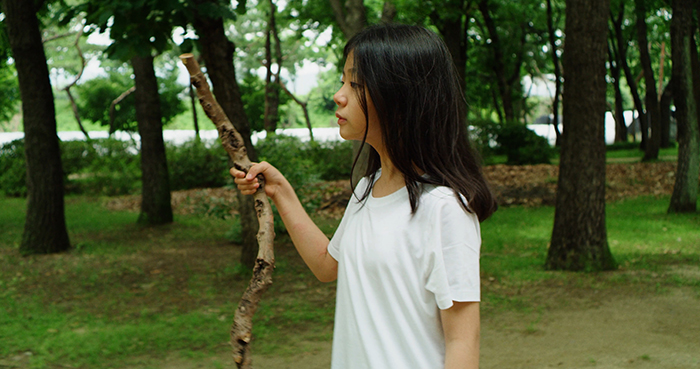
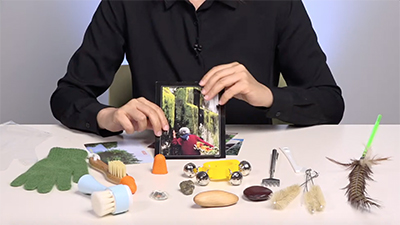
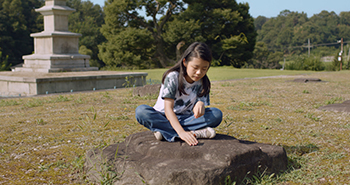
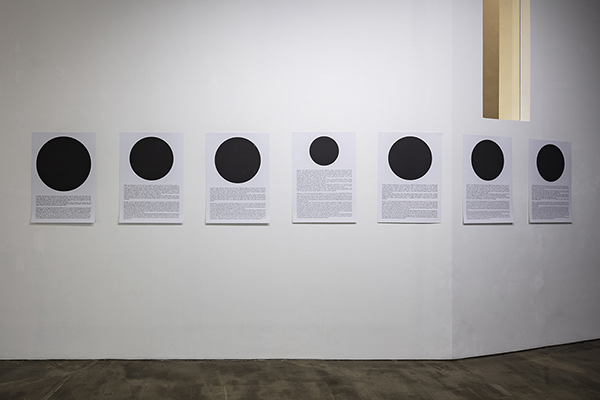
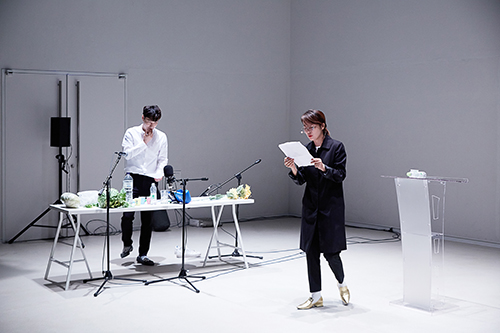
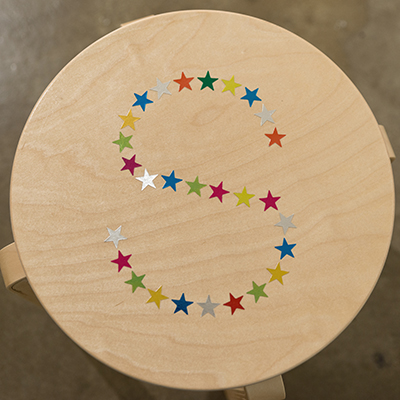
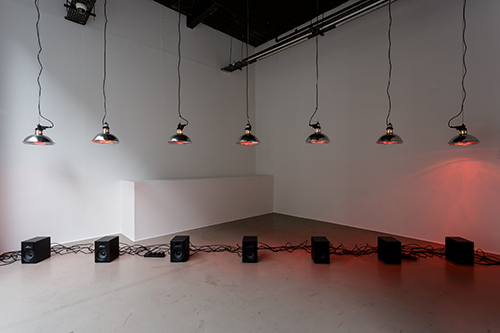
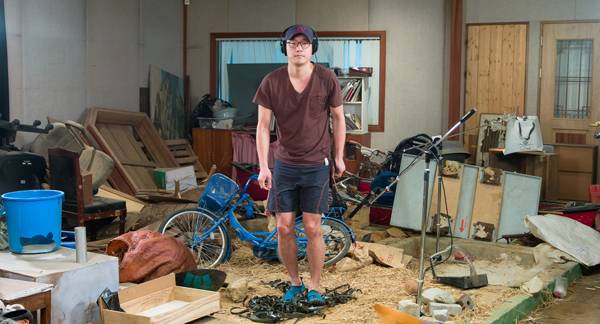
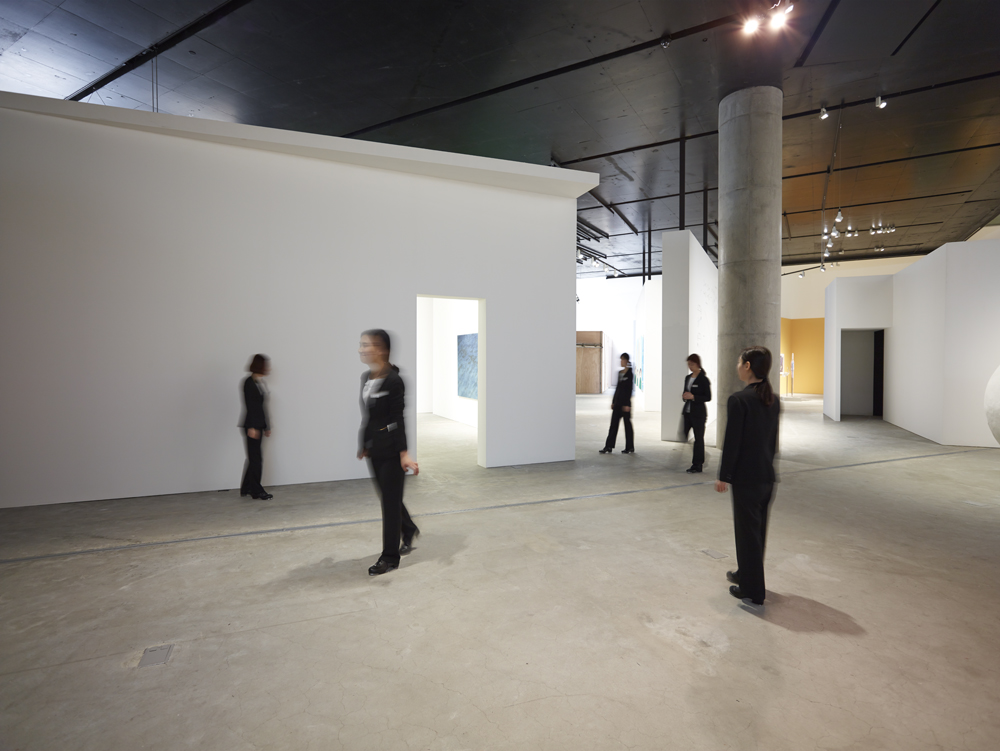
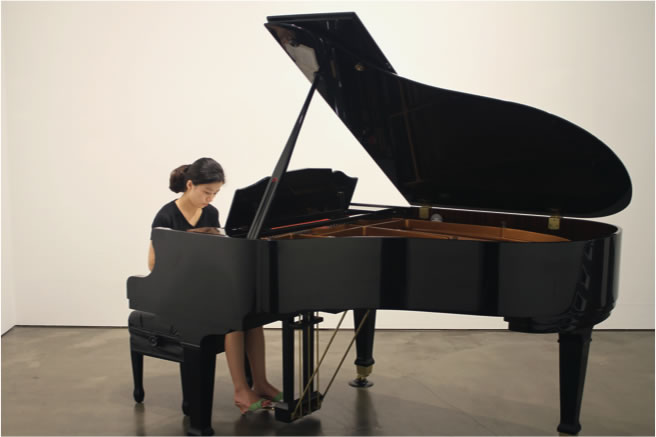
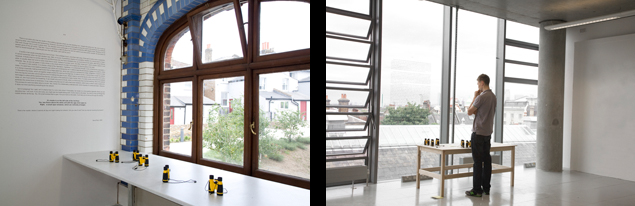
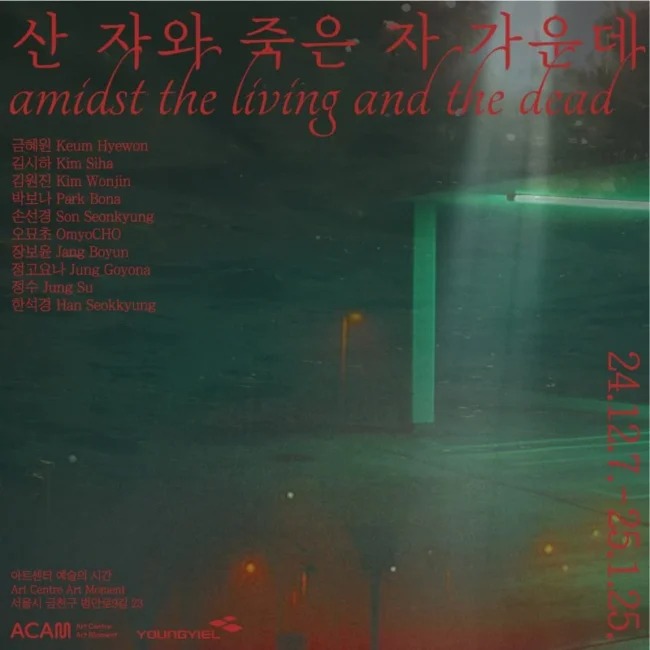
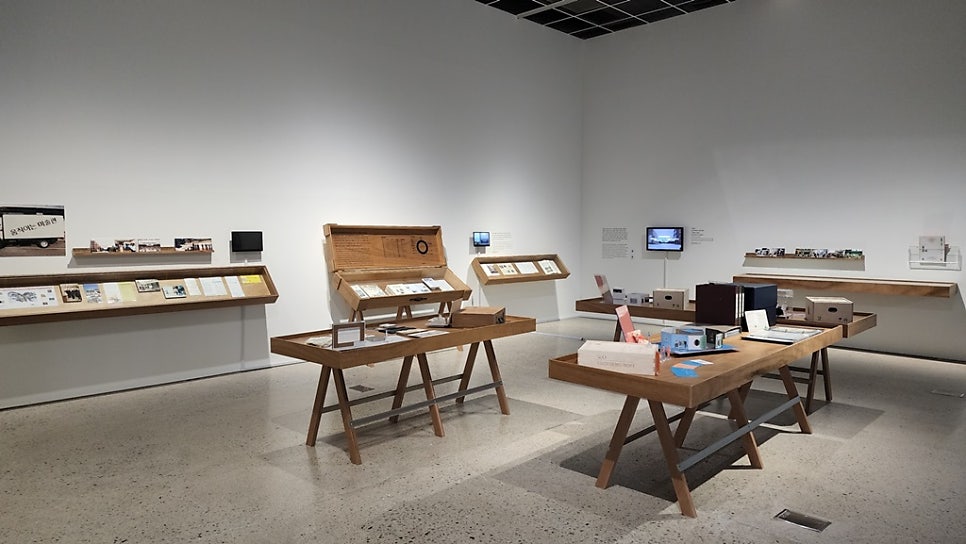
Poster image of 《amidst the living and the dead》 © Art Centre Art Moment

Imagine a large or small building with several rooms. Canvases of different sizes hang on the walls of each room. Various videos, media works, sculptures, and installations fill the space. Some works invite visitors to linger for a while, while others are merely passed by. Following the floor map in their hands, visitors read the names of the artists and the titles of their works.
They pause briefly before works that catch their interest, enjoying them as they might savor a slice of cake. After viewing the exhibition, they leave neither enriched nor impoverished by the experience. They then return to the routines of everyday life.

Why did they come here in the first place? Is experiencing art related to grasping the content of an artwork, understanding the artist's intentions, or, ultimately, coming to understand art itself? In contemporary art, both this process and these questions remain perplexing.

To whom are artists directing their cries? Those who can speak remain silent, while those who can hear hear nothing, and hungry souls depart just as hungry as they arrived.

Walter Benjamin's notion of the poverty of experience may help explain, in part, the sense of inner impoverishment we feel in our everyday lives. As we have come to place greater trust in facts believed to be scientifically verified, numbers, and statistics, we live in an age in which the unique experiences of individuals are becoming increasingly insignificant.

Technological advancements bring most people together within similar frameworks of experience. Koreans striving to achieve similar goals possess remarkably similar sets of experiences. A society that cannot afford to make room for the stories embedded in individual experiences also fails to connect with the stories of those who lead lives different from our own.

Above all, in today's smartphone-dominated world, the forms of life available to us through experience have rendered the world beyond our individual selves increasingly monotonous and flat. The poverty of experience and the poverty of narrative are permeating and becoming embedded in the culture of each generation living in our contemporary society.

In a culture that resembles a smooth, gleaming marble surface but is as hollow as plastic within, what we can turn to is our own inner space. A culture of poverty and deprivation turns a blind eye to the emptiness within individuals. Cut off from meaningful experiences, this inner space is gradually experiencing a state of nothingness, a state akin to death.


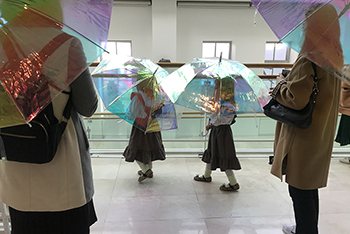
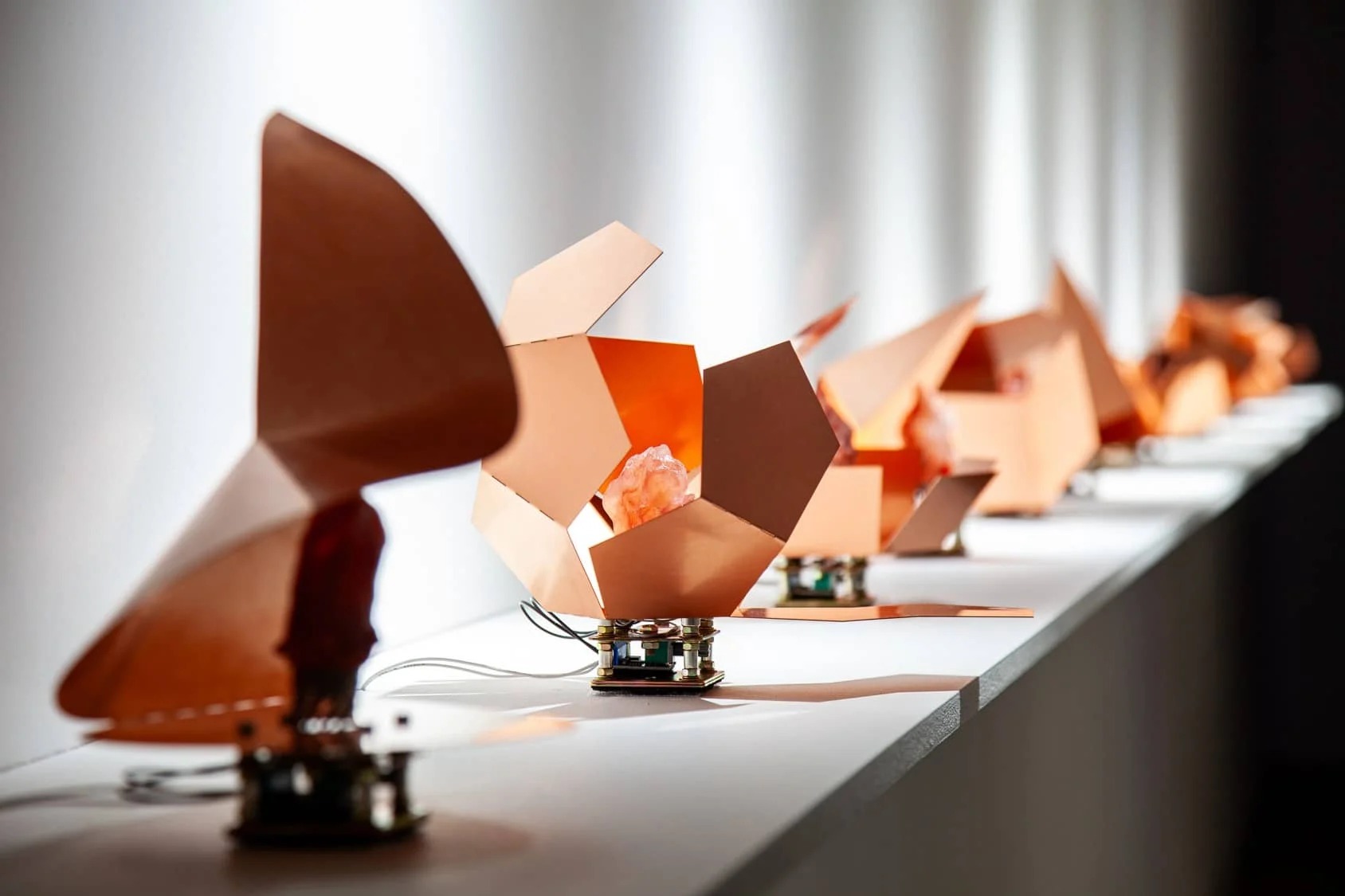
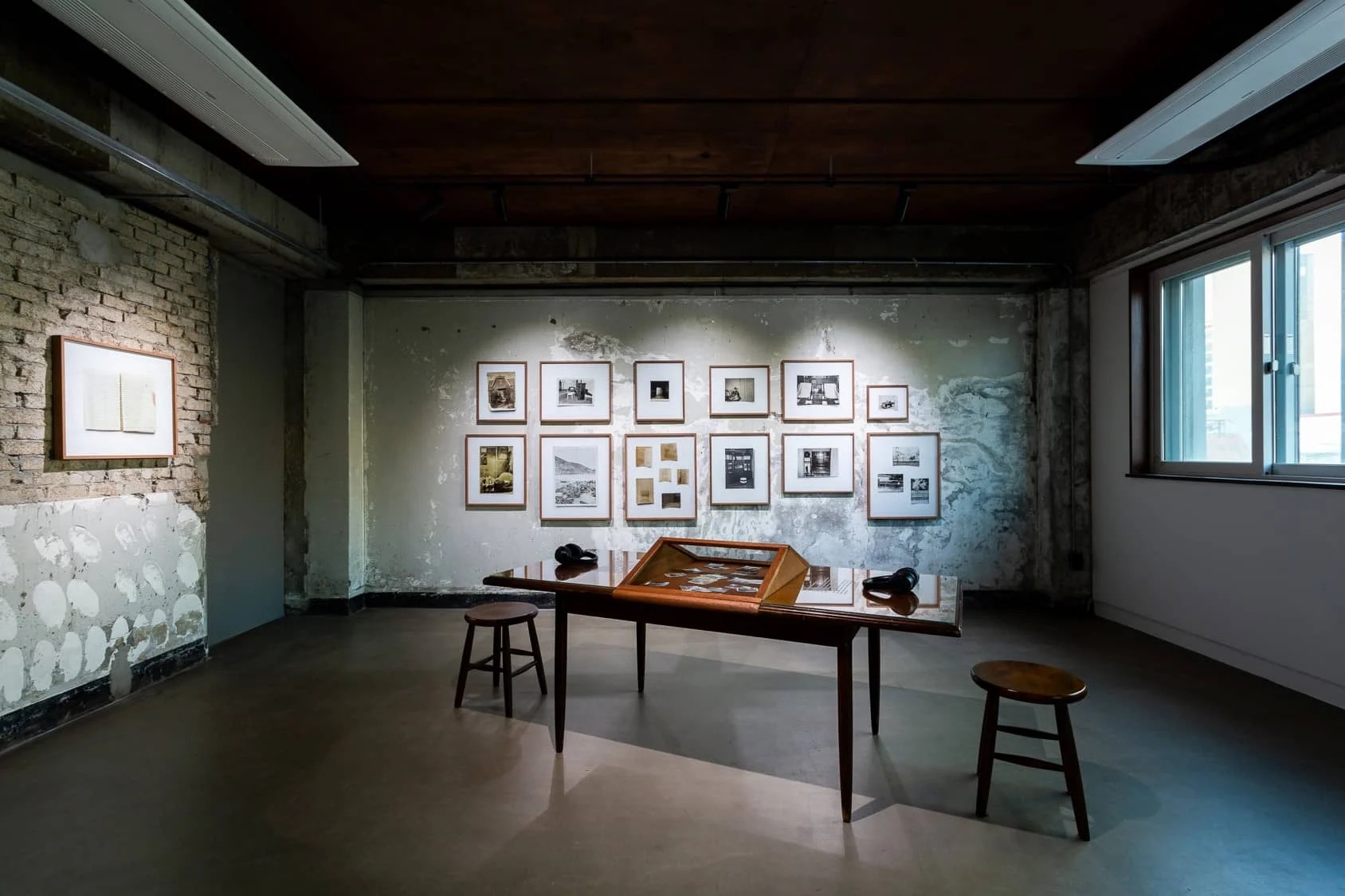
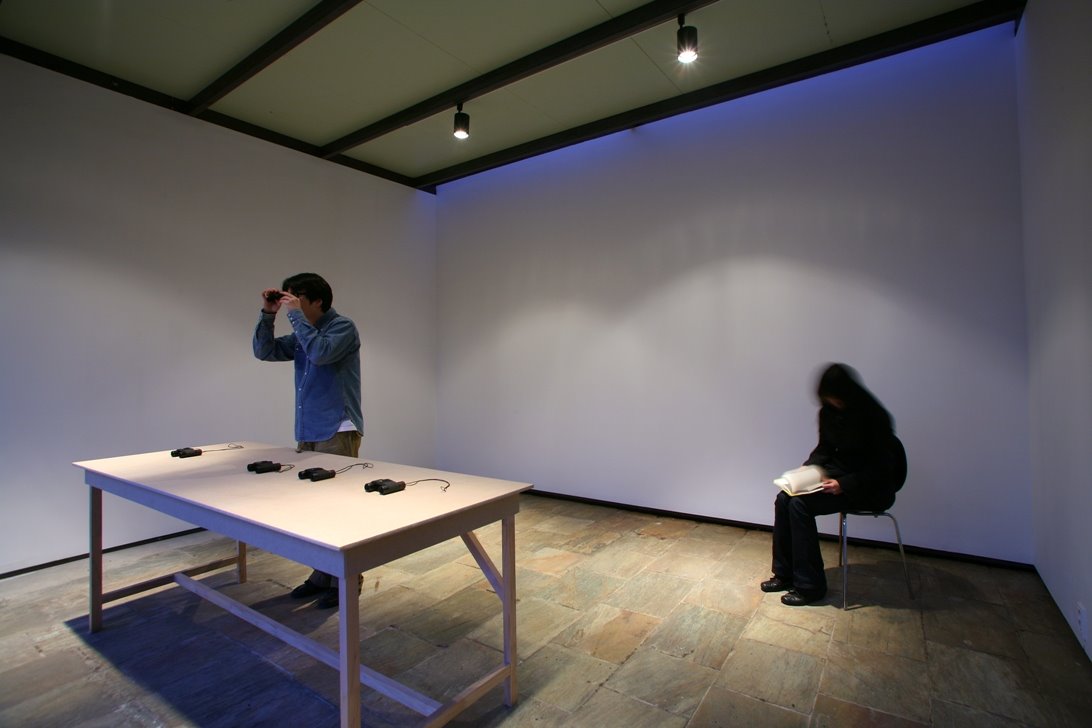
Installation view of 《amidst the living and the dead》 © Art Centre Art Moment

Artists are those who fill the impoverished and hollow spaces within us. In this sense, artists are storytellers. They are people who can speak about themselves, who attempt to connect themselves with the world, and who breathe life into a culture overshadowed by death through the poverty of narrative.

Those who possess the power of storytelling can spin new threads that connect the events of their inner lives, enabling them to form relationships that transcend isolation. If there are those who can bring forth the buried stories unique to individuals and open the eyes of modern people absorbed solely in a fragmented present, this may be both the distinctive responsibility and privilege of artists.

In this sense, artists can be understood as those who have first experienced the power of storytelling. Through the beauty experienced in narrative, artists can fill our lives with a sense of togetherness and speak to us of the reasons for our existence. The highest forms of beauty are among the greatest gifts that life can offer us. This is the true reason why art is valuable, and something that only artists can give.

A good novel awakens us through its remarkable metaphors for human life, while a good poem possesses the power to purify an era. Art is the act of presenting a text within a context—that is, within the historical and social circumstances of its time—and the process through which that text can be meaningfully conveyed.

A text takes shape as an artwork, poem, novel, piece of music, or film infused with the artist's life and struggles, leaving a resonance in the lives of others. What, then, of visual art? What stories can contemporary art unfold and share?

And how can we recognize who is an artist and what constitutes art?


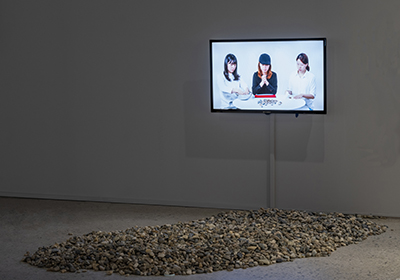
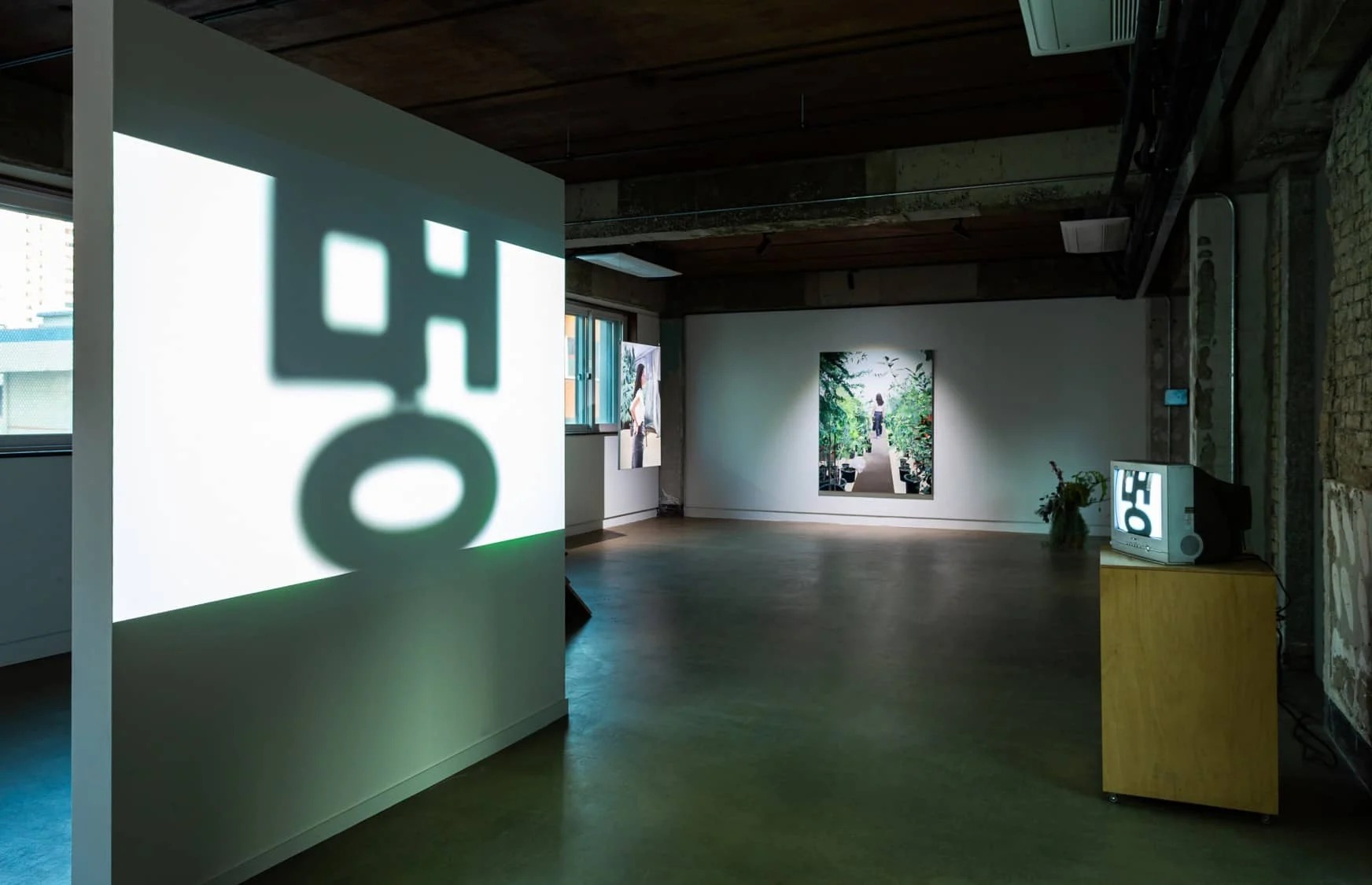
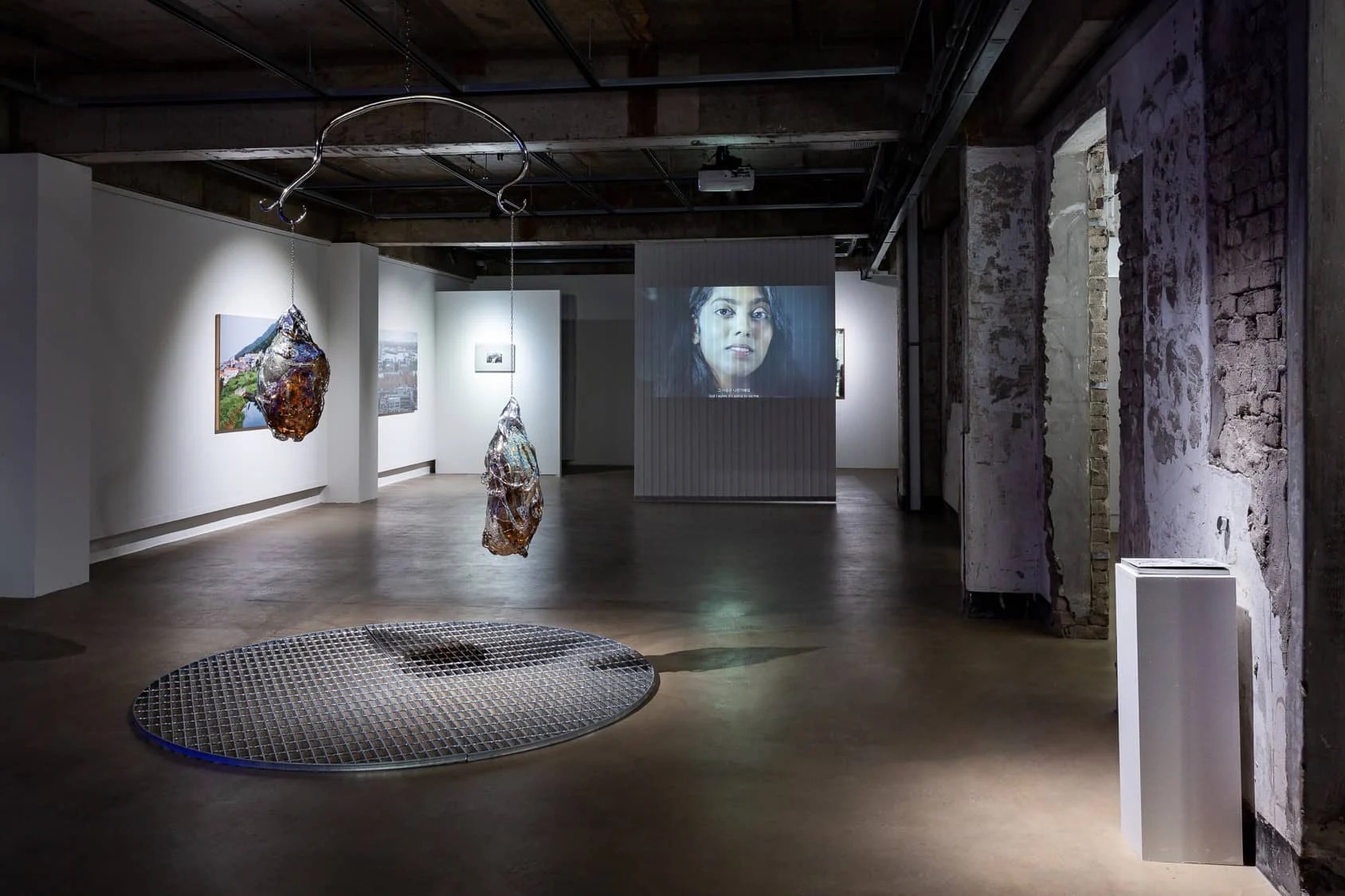
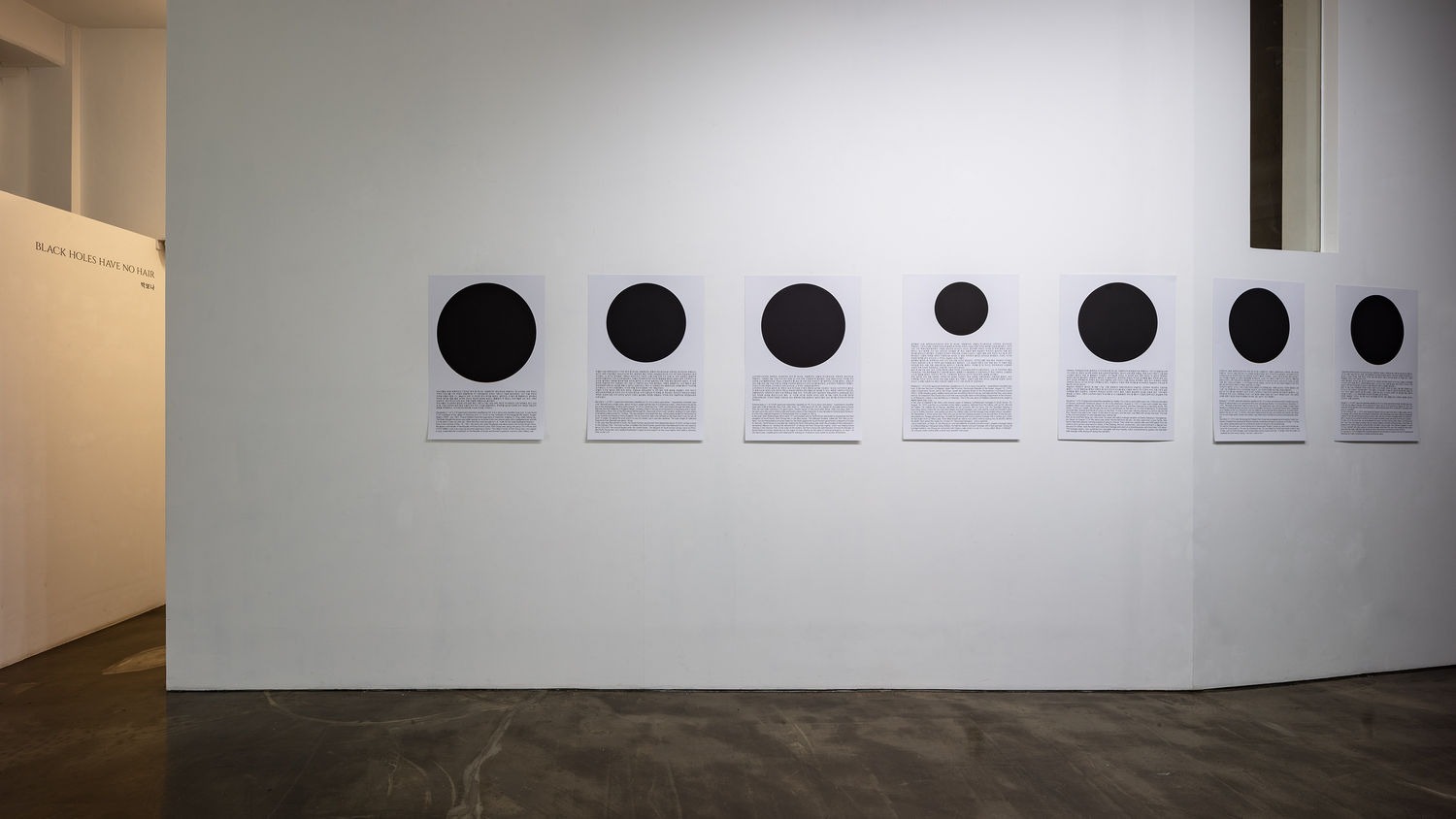
Installation view of 《amidst the living and the dead》 © Art Centre Art Moment

It is difficult to define beauty and ugliness. Just as it is difficult to say that one thing is beautiful and another is less so, we cannot precisely articulate the value and criteria of beauty. We can only vaguely suggest that there is "something" within us that enables us to perceive beauty. Experiencing beauty is not so much a statement of subjective preference based on immediate, sensory, and instinctive judgments as it is something connected to universal values.

What is implicit in each individual's sense of beauty is a shared recognition of what is necessary to make our lives together both possible and worthwhile. For example, consider a joke that amuses everyone and creates a positive atmosphere. Such a joke would be considered good, or one that fulfills its purpose effectively.

Conversely, a joke that causes offense or discomfort would be considered bad or of poor quality. Someone who can use appropriate humor to bring enjoyment to those participating in a conversation is someone capable of presenting the right text within the right context. An underlying universal sensibility resides within us, functioning as a shared standard through which we perceive beauty.

The perception of beauty is also similar to the sense of wonder that many people commonly experience through the contemplation of nature. We can reflect on the beauty that art offers through our experiences of observing nature and the feelings of sublimity and awe inspired by its transformations and beauty. In the presence of nature's beauty, we become aware of ourselves as beings capable of affirming our own existence, experiencing freedom and a sense of fulfillment.

Art resonates within us because it is beautiful. And art can be beautiful because it means something. Art may be meaningful without being beautiful, but to be beautiful, it must necessarily possess meaning. Experiencing the meaning of beauty in life, or failing to do so, is ultimately connected to the distinction between feeling alive and feeling dead.

There are elements in life that make us feel alive, just as there are elements that make us feel as though we are dead. Perhaps boredom is one such element that can lead us toward a sense of death. Boredom may be understood as a condition in which modern individuals lose their sense of self amid the busyness of everyday life, a state of self-alienation. Living solely within the present, thoroughly disconnected from both past and future, they become excluded from the continuity of context, which can lead them to withdraw even further into themselves.


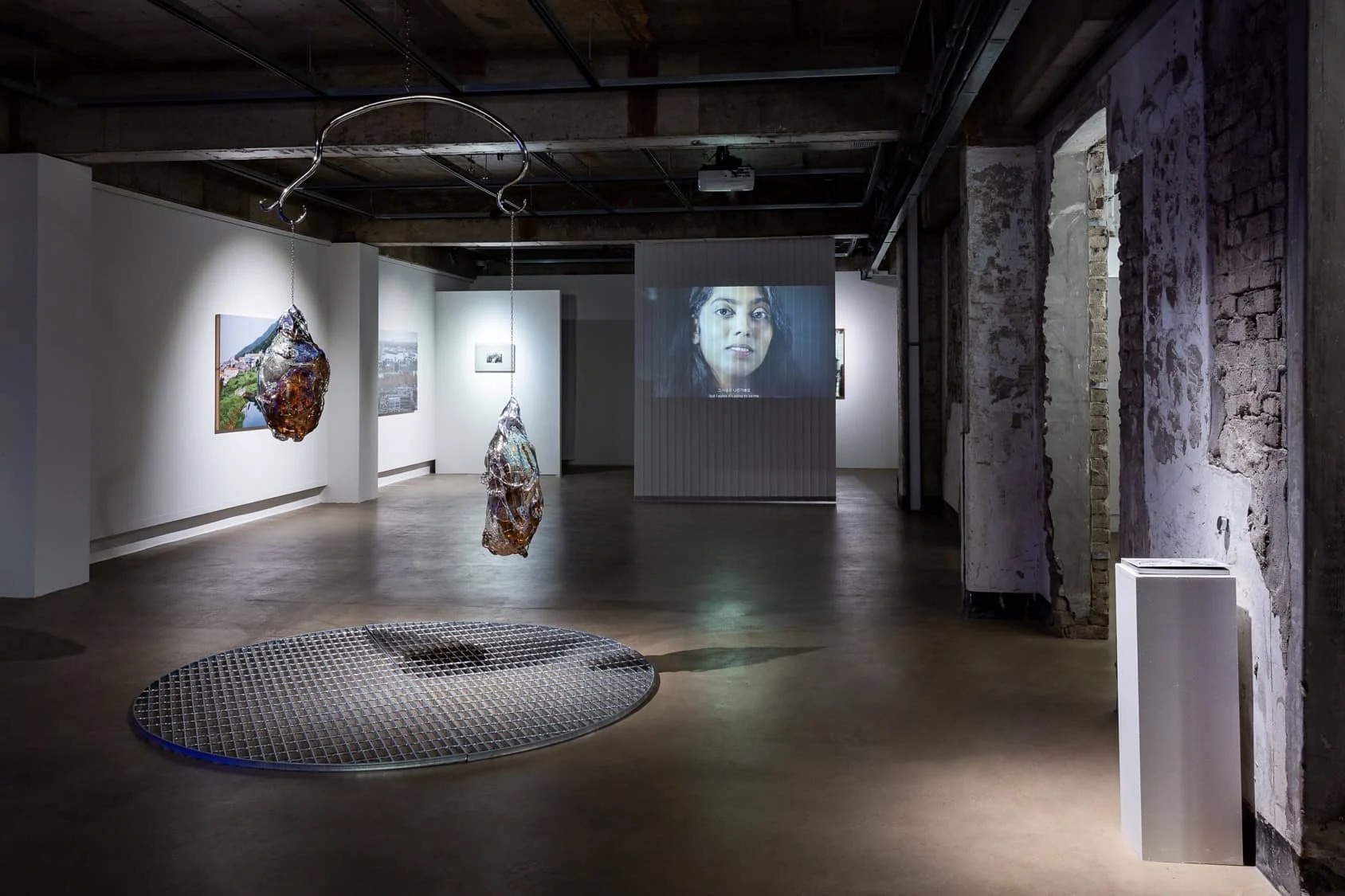
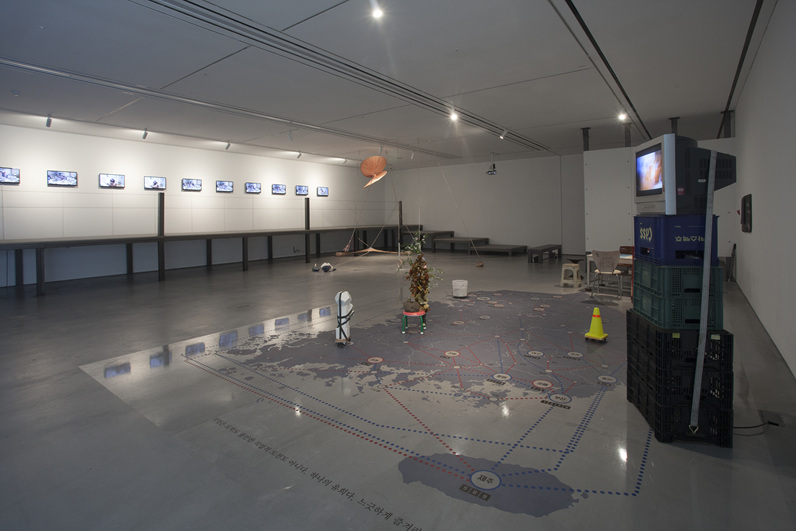
Installation view of 《amidst the living and the dead》 © Art Centre Art Moment

Through the assault of things that slowly disappear without our even noticing their absence, things that gradually eat away at us, we experience death even as we live. Or perhaps we seem to exist somewhere between life and death. We may even be experiencing death without feeling that anything is wrong.

It is only when a swarm of locusts has descended and stripped everything away that we finally recognize the state of death. A fossilized life is one lived in willful ignorance. It is a life of turning away and averting one's gaze, a life accustomed to ignoring the emptiness and impoverishment of the inner self laid bare.

As in the past, and as will be the case in the future, we always live amidst the living and the dead. What is alive, and what is dead? Who is physically alive yet leads a lifeless existence, and who appears dead yet remains truly alive? Those who find themselves standing alone amidst the mingling of the living and the dead are often artists immersed in profound existential contemplation.

Through their lives and works, artists live with the freedom and choice to tell their stories in their own ways, choosing to live more fully among those who remain asleep as though dead.

If beauty is no longer perceived in our world, it is because we live as though beauty does not matter at all. Artists live in the present, yet cannot be said to belong to it. Within the present, they reflect upon the world around them and continually choose the freedom to present their stories in different ways. What, then, will they choose, and which path will they point toward?

Albrecht Dürer's engraving Melencolia I is regarded as a work that encapsulates the Western tradition of discourse on melancholy. In a sense, it is a portrait of the Western artist. Dürer's angel, inspired by the heavens yet overwhelmed by anguish, melancholy, and suffering arising from human frailty, subsequently became a self-portrait of all artists.

Philosophers have portrayed their respective eras as dark and gloomy, and in this sense, melancholy may also be considered the fundamental mood that defines the modern age. Hope and despair coexist in every era. Those who speak about an age diagnosed as being "without hope," or who address those still hoping for a better future, carry both the concerns of their time and the existential struggles of the individual.

Ultimately, artists are beings who repeatedly probe and unsettle what remains invisible, continually questioning and struggling, and living in pursuit of truth through an atmosphere of melancholy.


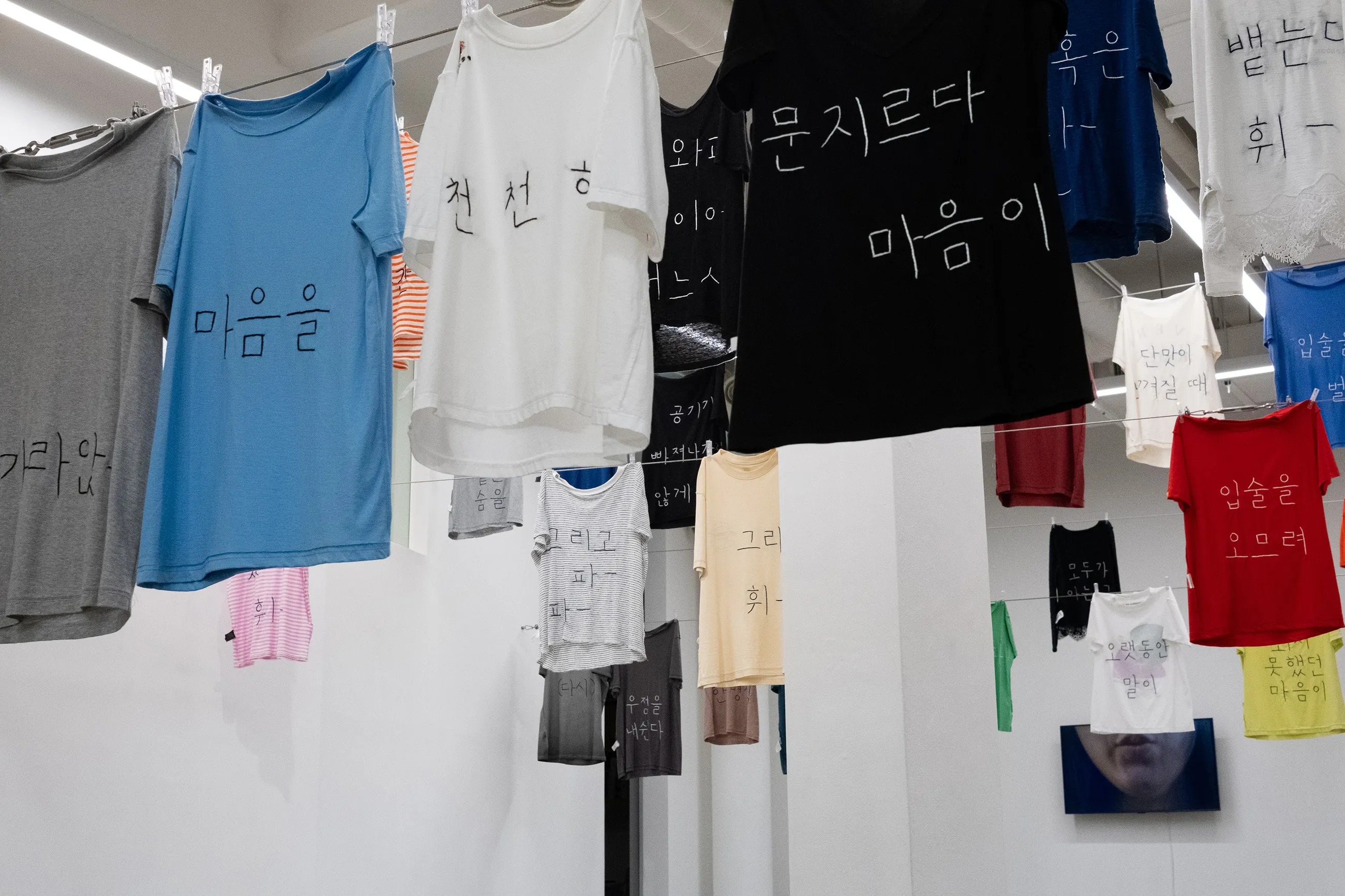
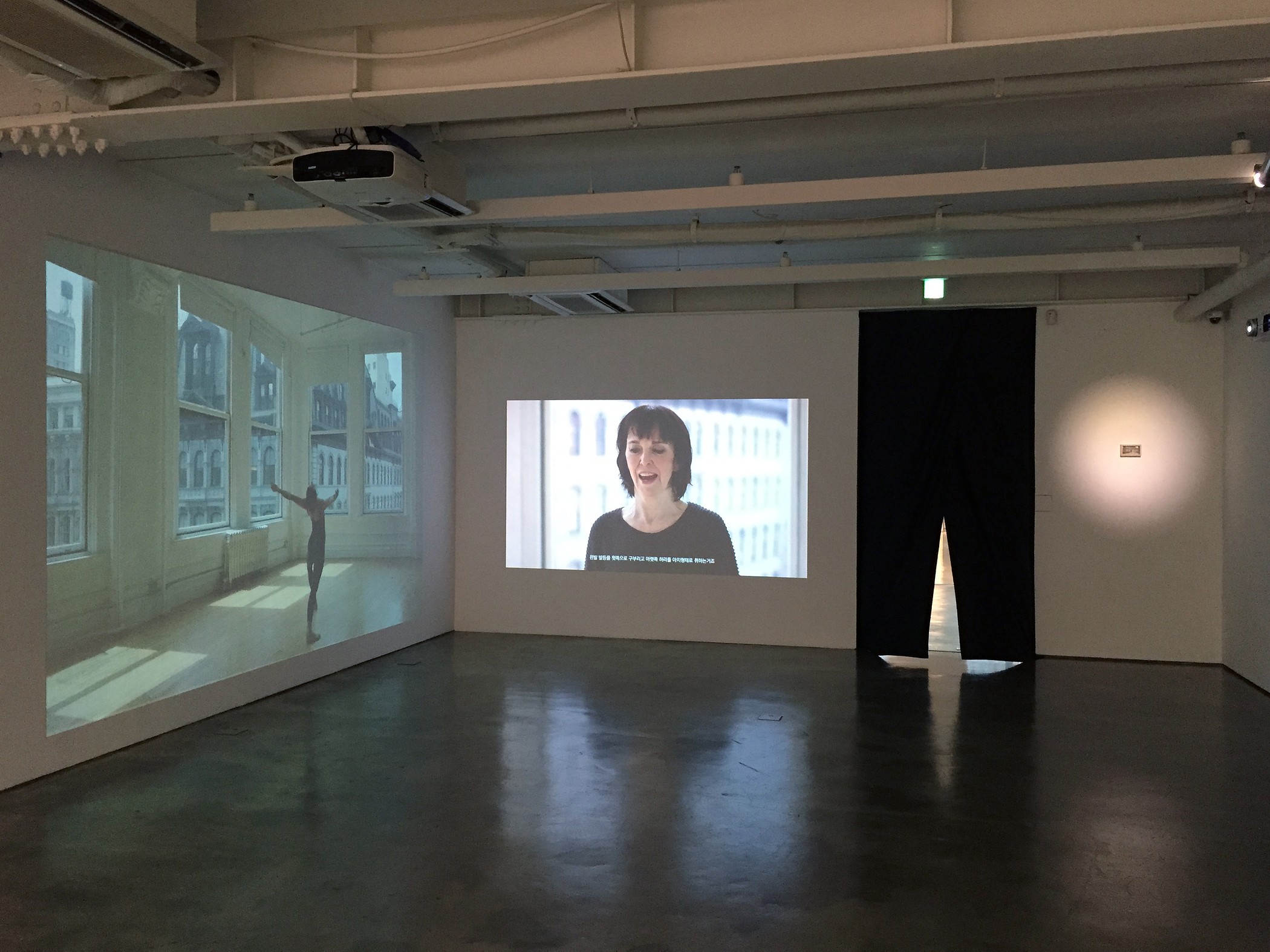
Installation view of 《amidst the living and the dead》 © Art Centre Art Moment

Those who refuse to become the "dead," passively accepting life as it unfolds within an empty and barren culture, and instead remain among the "living," engaging in philosophical reflection and contemplation to understand the "something" that exists beyond themselves, may all be described as "melancholic individuals."

Those who can present works of art within the context of their time, expand their narratives through these works, and seek connections with the stories of others may perhaps affirm their own existence as living beings by drawing forth living stories from the depths of the abyss. Artists must be capable of imbuing their works with the substance and spirit of beauty, and of conveying the meaning of that beauty to others.

Their role is to perceive and recognize the beauty of the present and express it through their own works so that it may be communicated as genuine beauty. If we aspire to live as the "living," this responsibility applies equally to you, who are looking at the artwork, and to me, who am speaking about it.

References