In the video The World Until
Yesterday by Jang Pa, the triangular shape of Sumeru Mountain, which is
believed to be the center of the world in Buddhism, fades and only its
reflection is left. In fact, this video shows an absurd situation, as a
reflection should belong to its original object. If this is the case, is the
reflection of Sumeru proof that the mountain’s (past) existence is illusionary,
or is it real? Ironically, people’s belief-structures are created via a similar
mechanism. To someone who believes that she is under constant surveillance –
something considered to be delusional – her anxiety, and the incessant gaze of
the outer world is real. Others’ dismissal of her fear as mere delusion doesn’t
matter to her. Rather, she is compelled to persuade those who don’t believe
her. When a belief is shared with other people, it becomes a truth or a fact.
When it’s too personal, it can be a delusion. Proof doesn’t confirm her belief;
a belief causes her to find the evidence.
If Sumeru is merely founded upon
people’s belief that it is the center of the world, can we call this phenomenon
– only its reflection exists independently – absurd? In terms of belief, a
world in which Sumeru’s reflection, the evidence of existence, exists itself
independently – is this not more rational? Whether something actually,
physically existed or not is not important in a belief. Even if it’s a
widely-held belief about a significant matter – the center of the world – a
belief itself is very fragile, and no better than a shared delusion. The
coordinate axis with Sumeru as its origin indicates a coming collapse, and the
reflection as physical evidence of the mountain conceives a possible
exploration toward a new axis, even it turns out to be in pursuit of another
delusion.
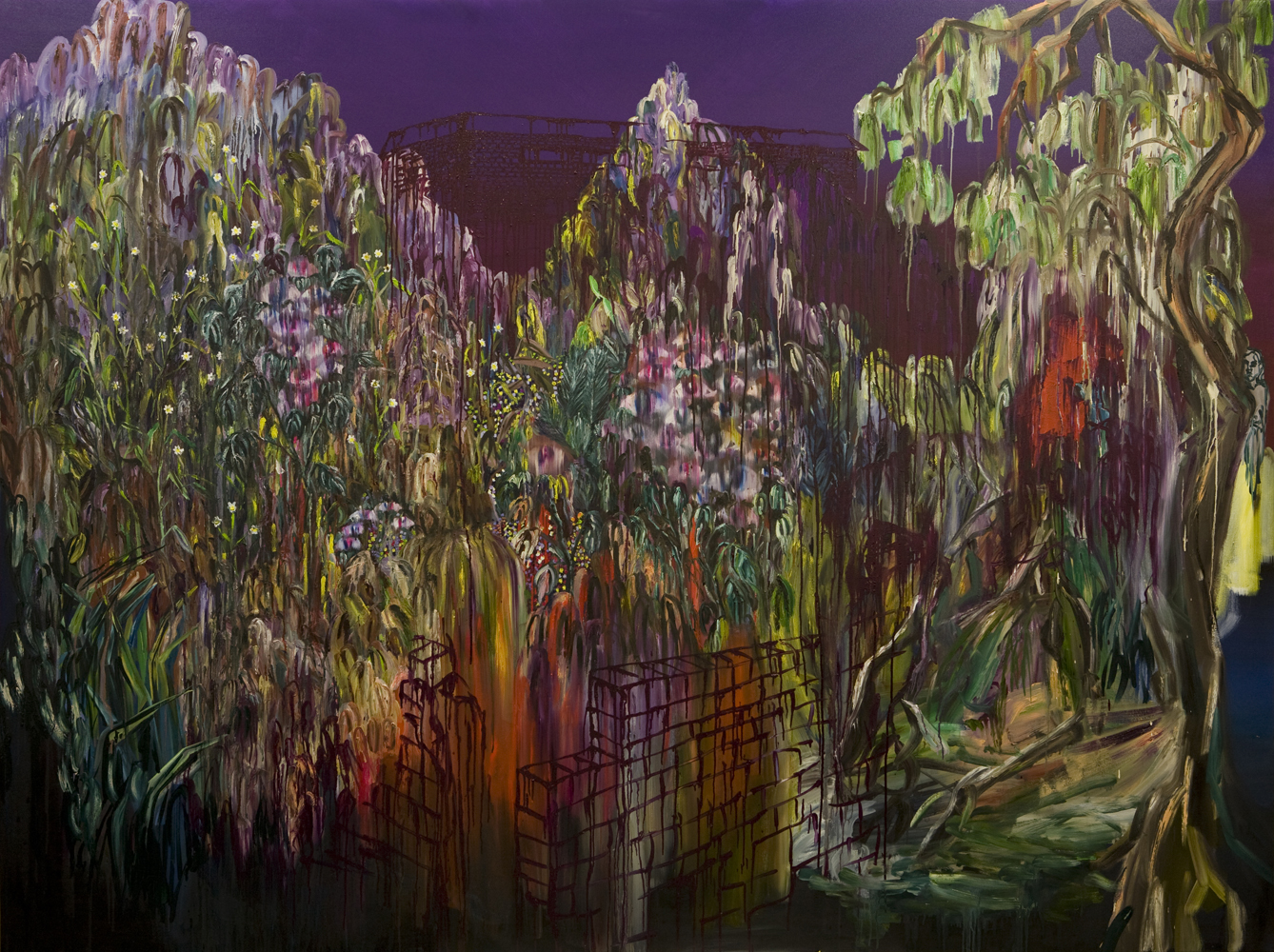
Plato’s ideal triangle becomes an imperfect one when it is realized. The
contradiction that ‘The World Until Yesterday’ implies lies here. Sumeru and
the tower built with yolks pursue an idea of a perfect triangle, however,
physical realization of the original destroys its inherent perfection. Thereby,
both the mountain and the tower are ready to collapse. The triangle reveals the
vulnerability of abelief in a stable center, and it transforms into a circle in
negation of its origin.
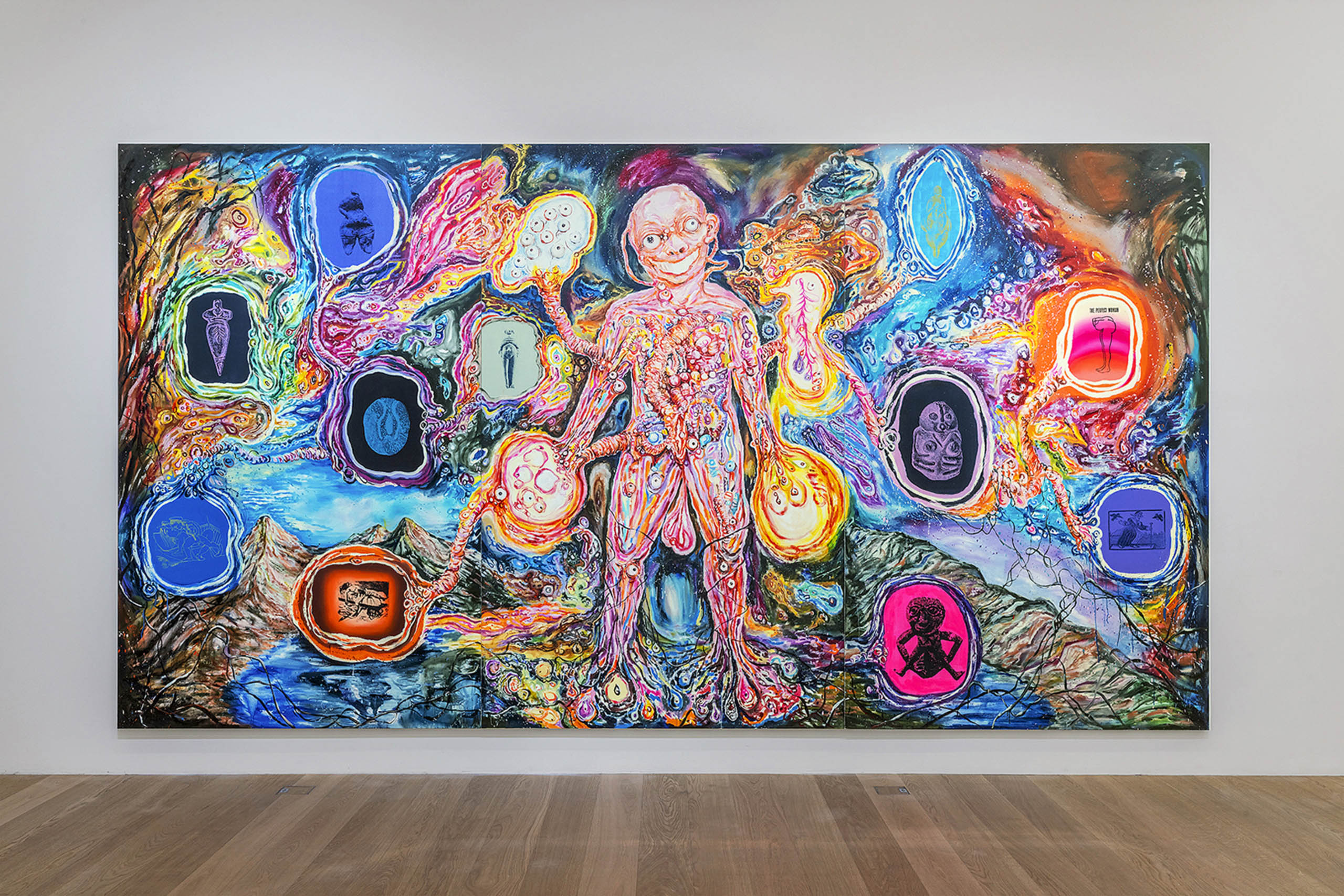
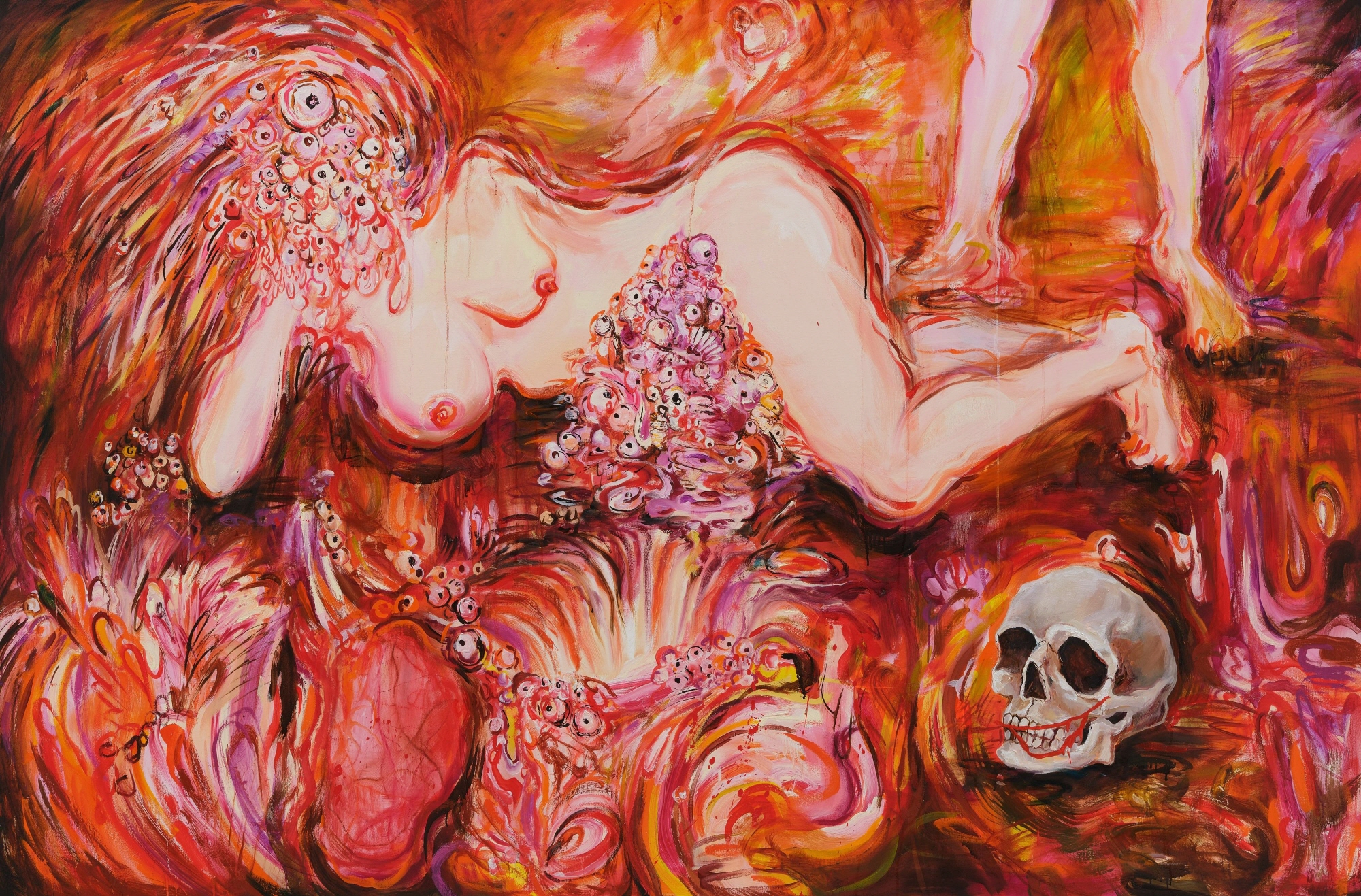
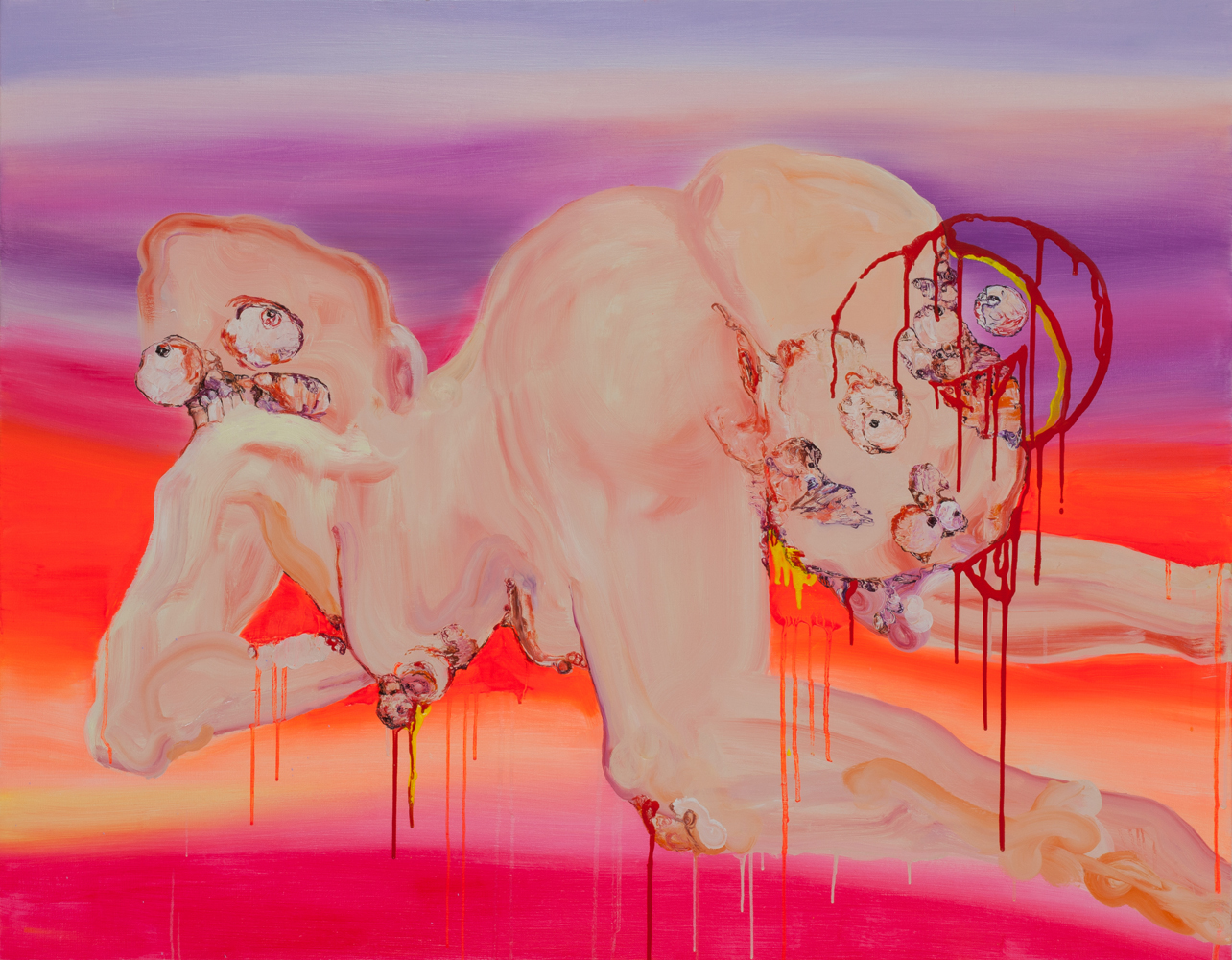
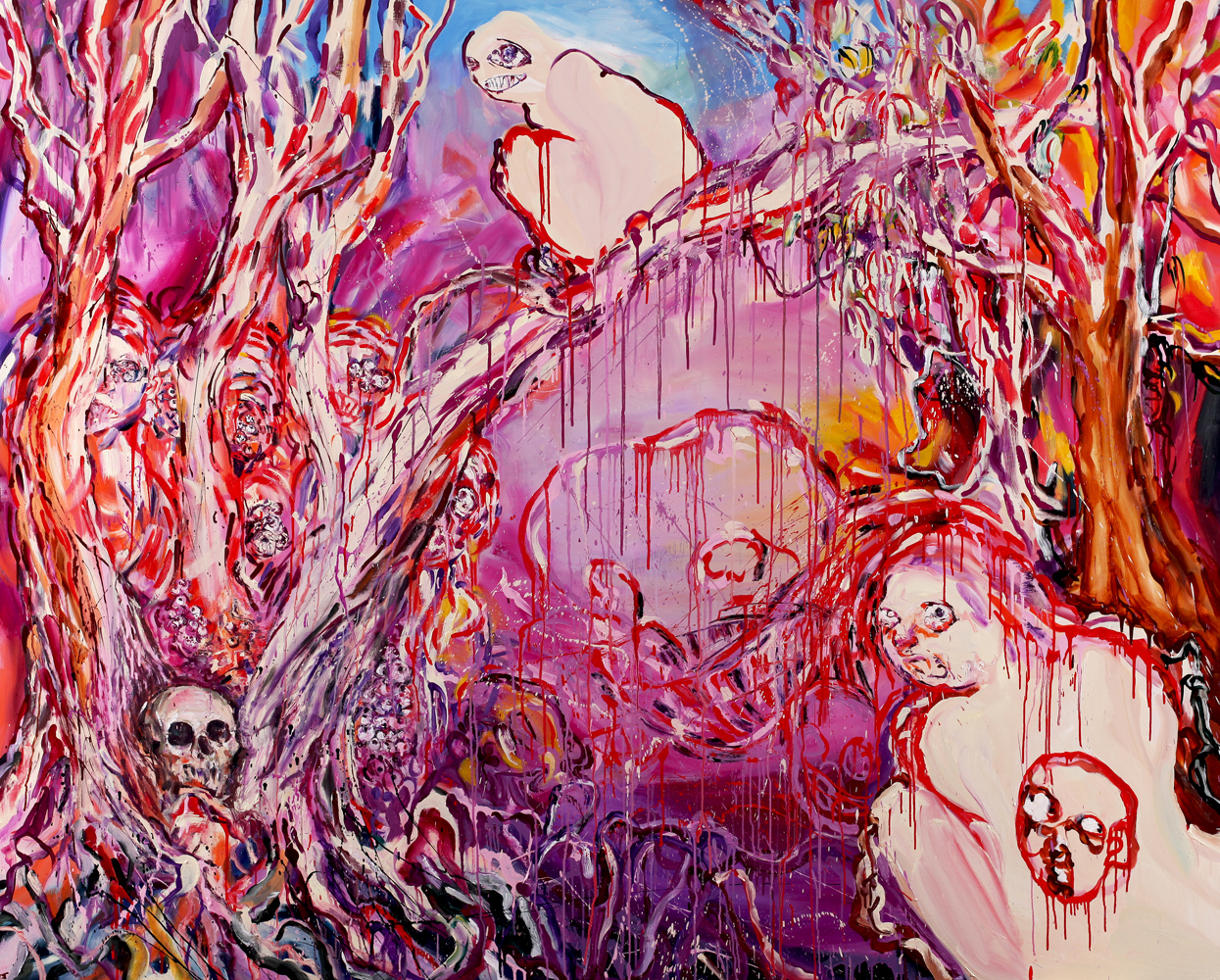
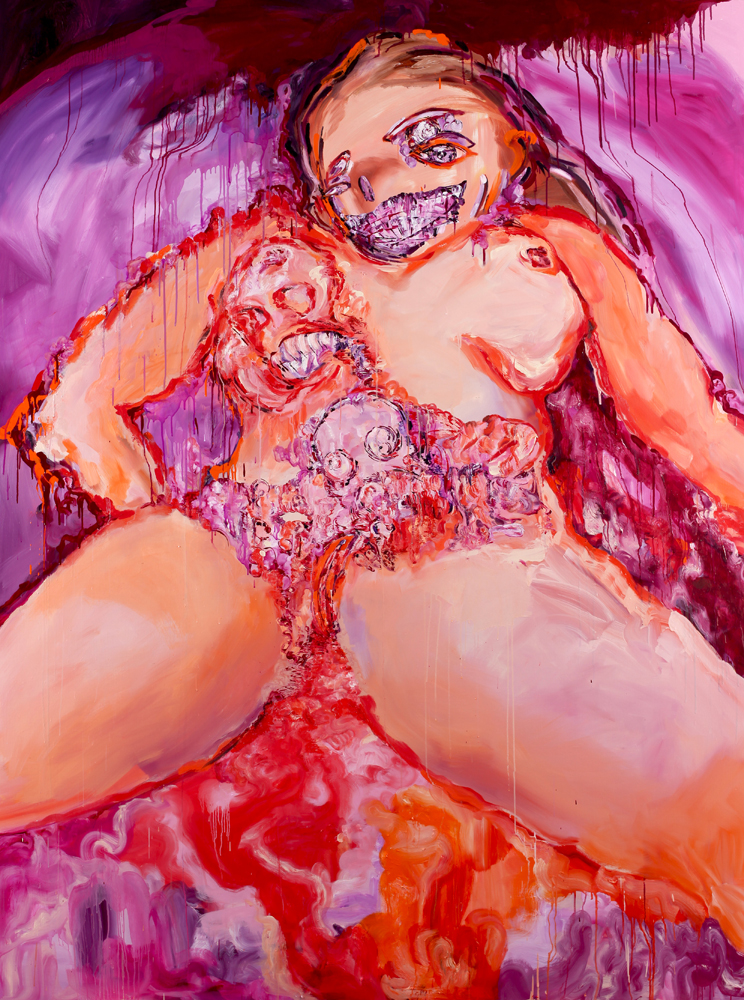
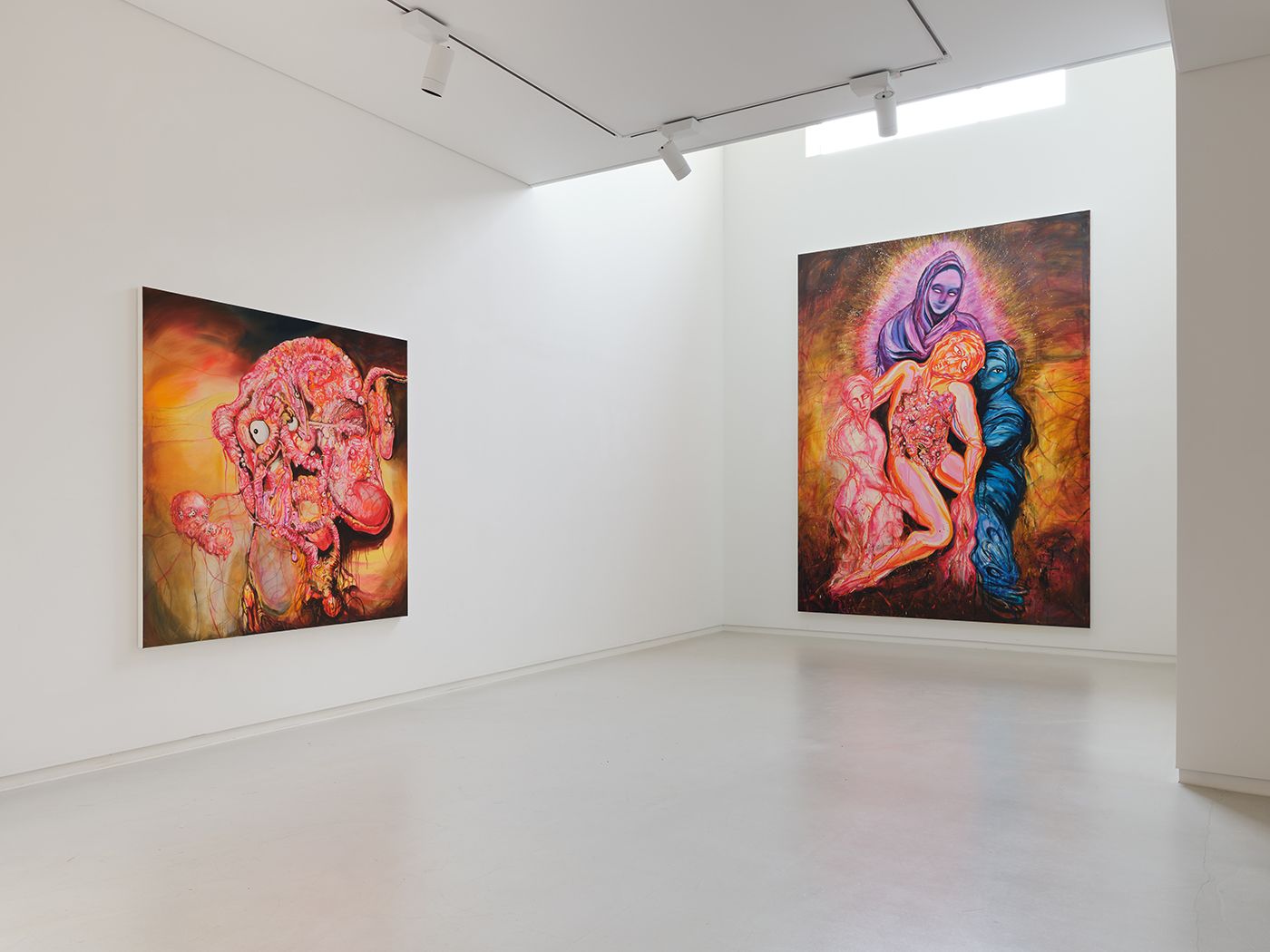
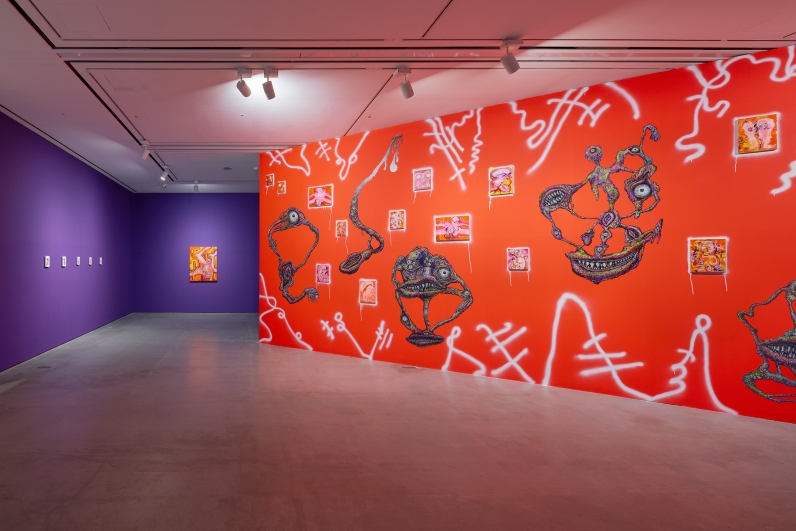
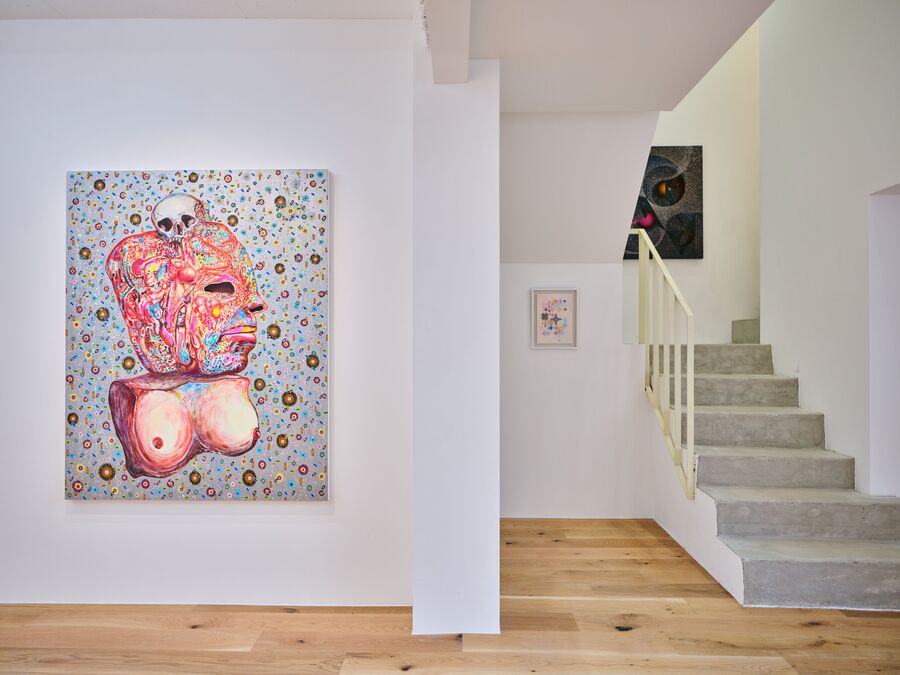
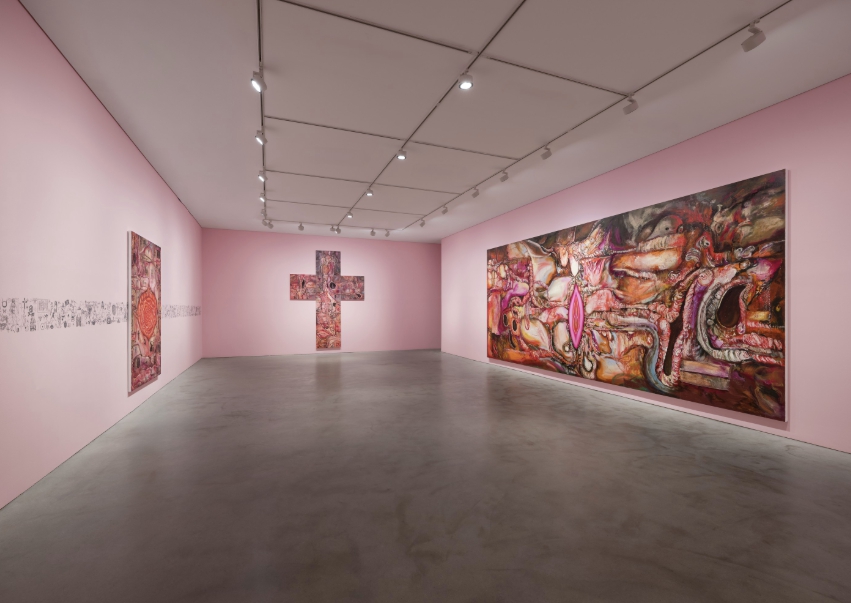
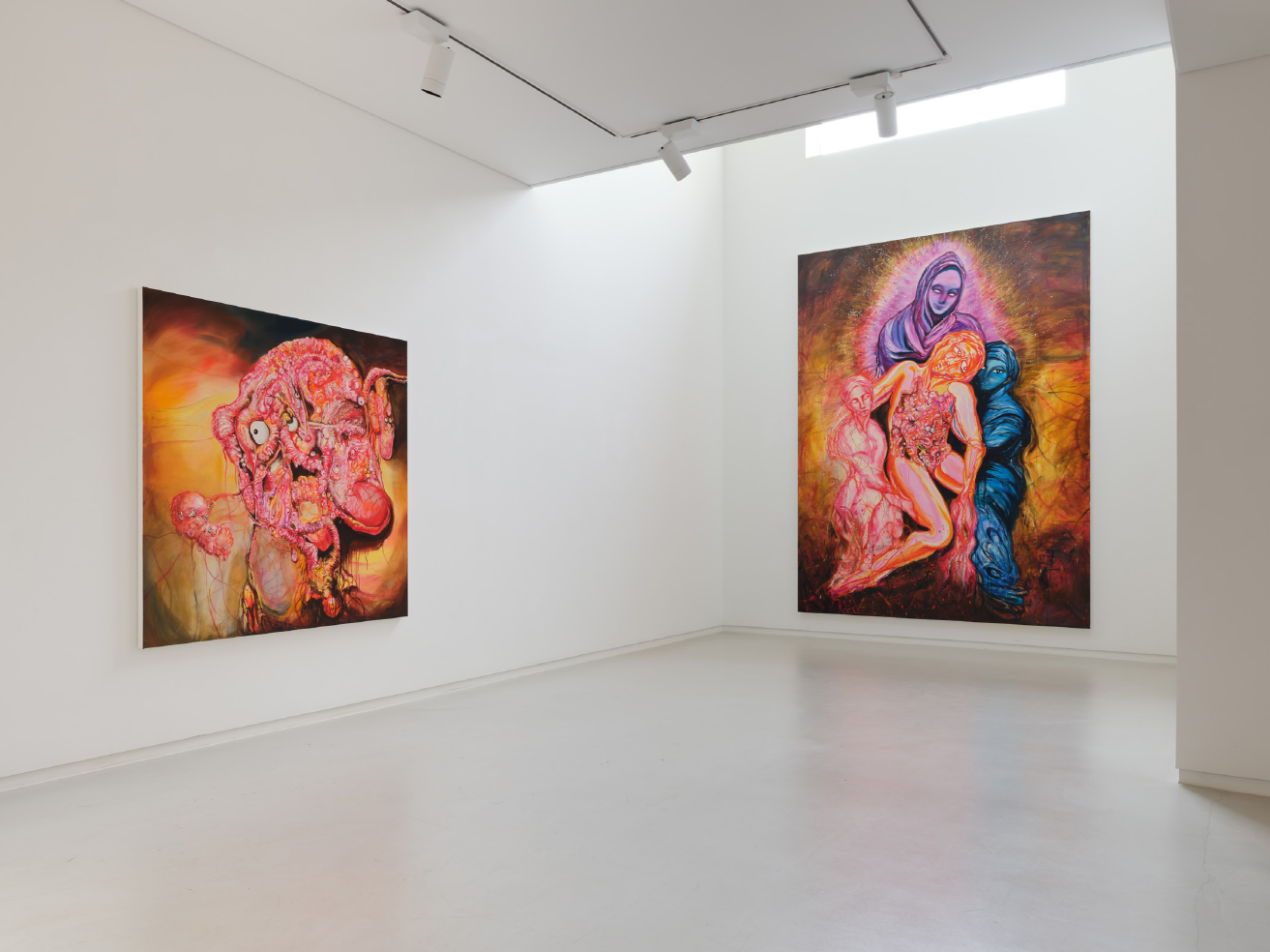
The circle in Fluid Neon series
is not an ideal, perfect circle. Rather, it is distorted as a giggling face, a
spewing hole, and a gazing eye. It is not a circle as an assemblage of points
equidistant from the central point; it exists as a shape whose center cannot be
discerned. The smirking face in The Double Lover series flows down like body
fluids, proving its independence and authenticity. In Fluid Neon series,
eyeballs float around and rupture the gazes of voyeurs and controllers of the
canvas. Sneering expressions and eyeballs, coming out from a woman’s genitals,
seem to be multiple prototypes that do not require any kind of evidence of
their existence. The ‘imperfect’ circle that Jang Pa draws resembles a woman
with positivity. A woman who escapes from the ideal triangle as a prototype and
draws her own circle. A woman as a reflection that dares to deny the origin and
stands alone. A woman who floats around on her own coordinate axis which isn’t
shared with others and has an unclear origin. A woman who refuses a stable
belief system and builds a world from her own insecure imagination.