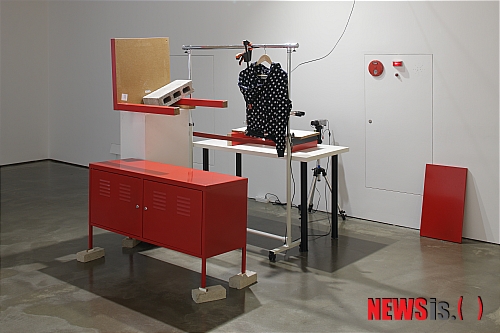
Kyungwoo Han works across video, sculpture, photography, and installation, consistently focusing on how images are constructed through the arrangement of objects and the manipulation of viewpoints. In his early video works, he meticulously calculates camera positions, spatial distances, and the proportions of objects to transform three-dimensional spaces into seemingly flat images.
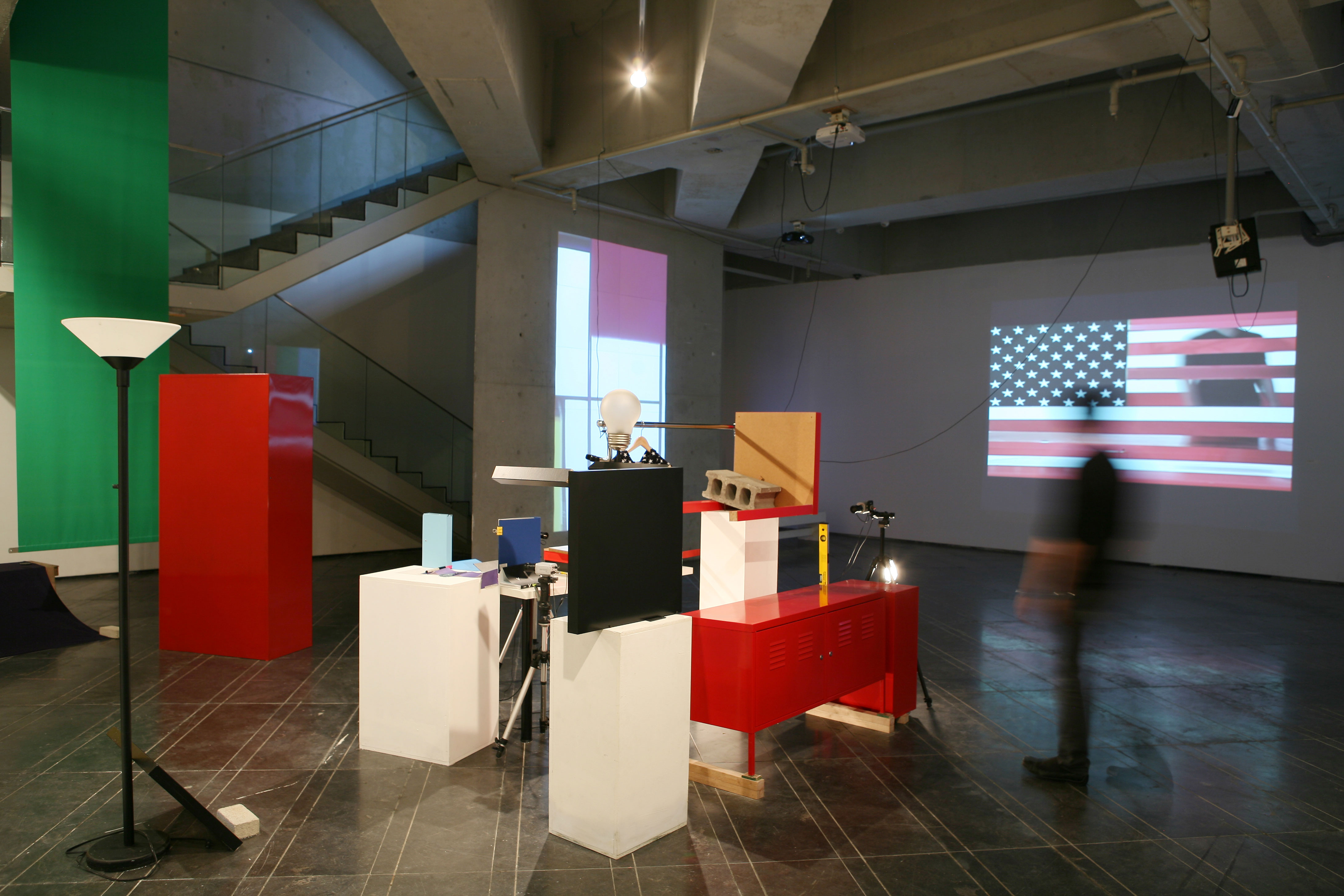
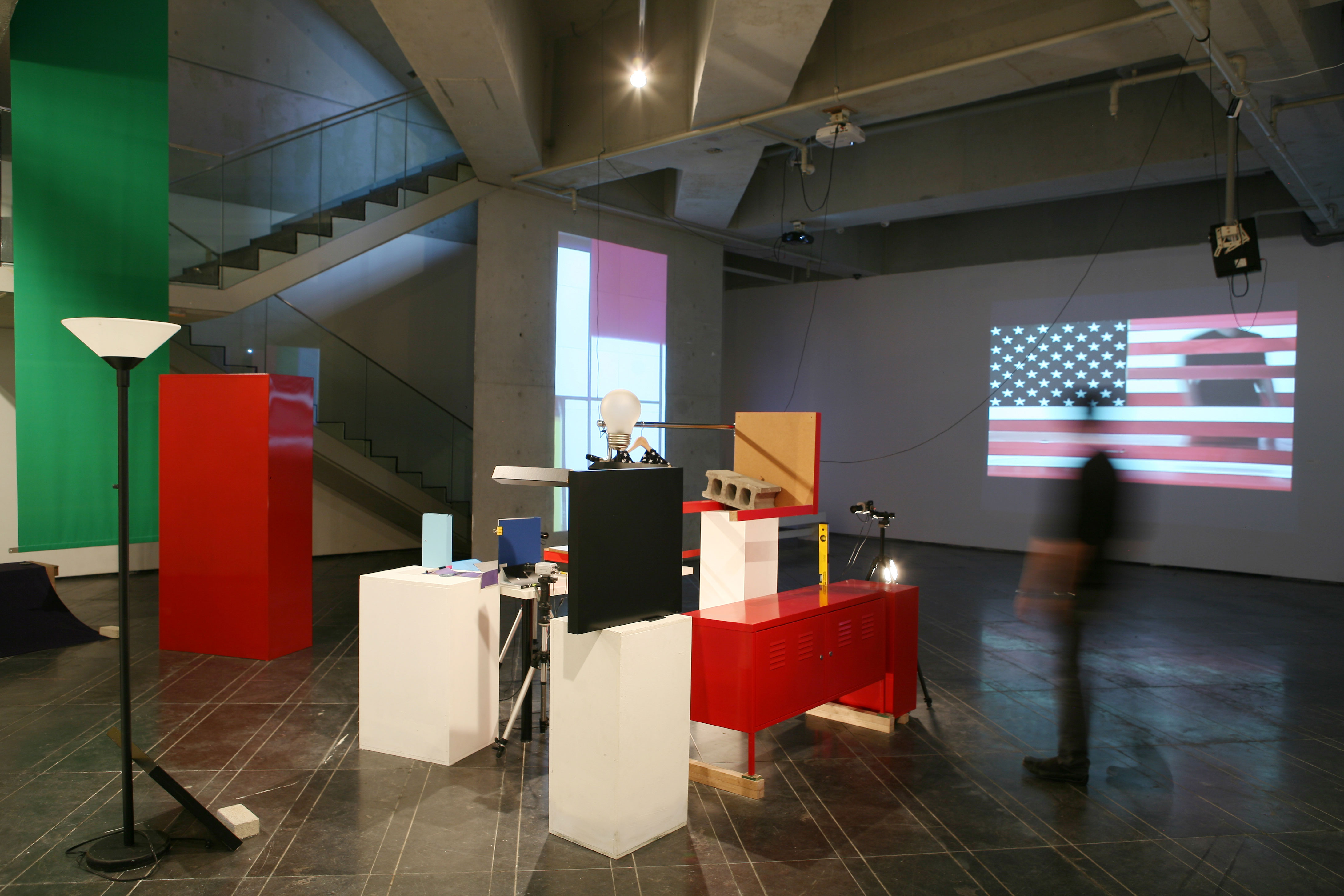
Works such as Red Cabinet (2005), Tableau with Objects (2008), and Star Pattern Shirt (2011) arrange everyday furniture and objects so that they resemble familiar visual icons when observed from particular viewpoints. Using fixed cameras and relatively short video durations, Han directs viewers’ attention toward the screen before revealing the physical reality behind the images through the movement of objects or the appearance of figures.
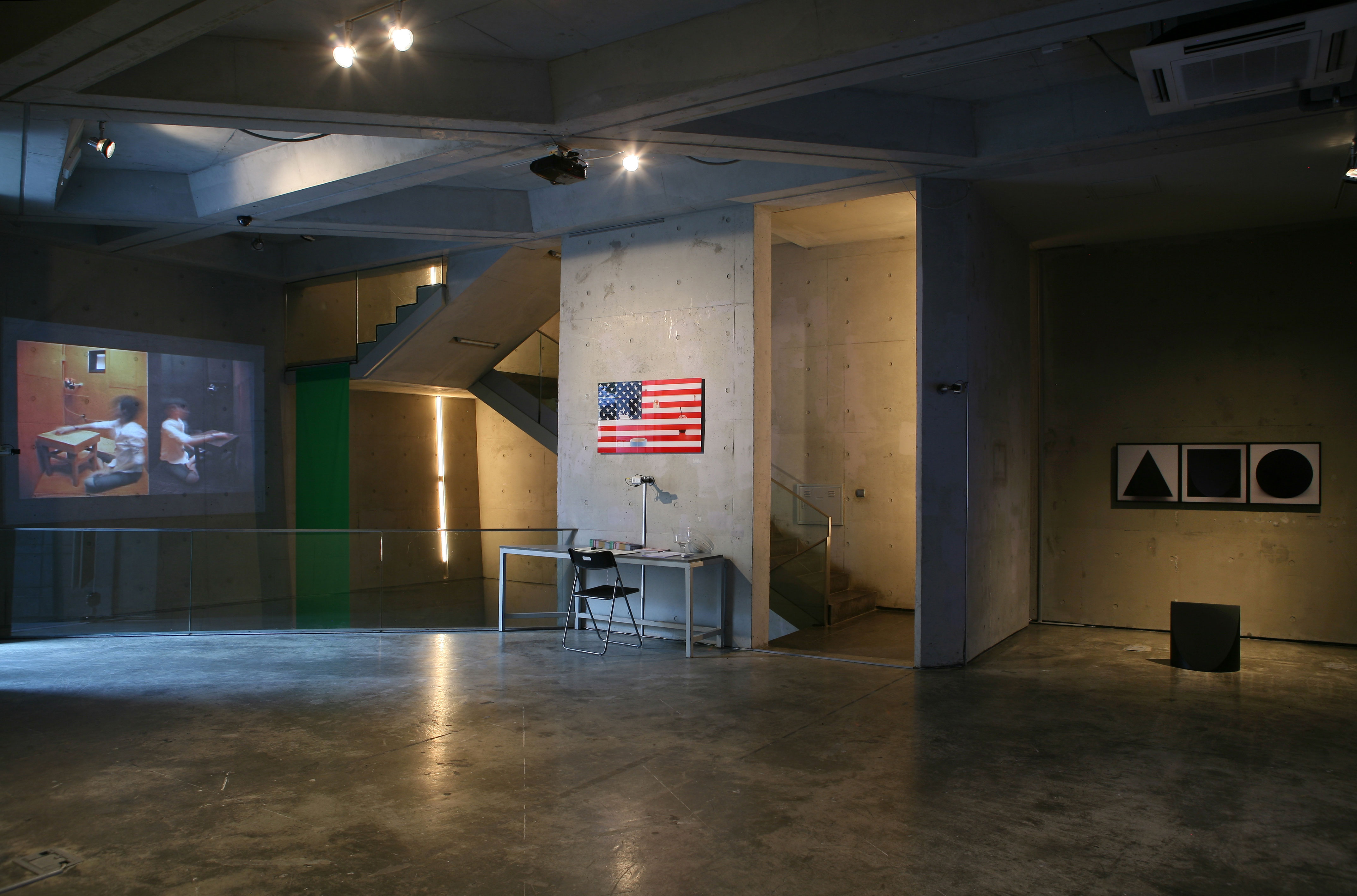
His 2011 solo exhibition 《Red Cabinet》 further developed this approach by connecting live surveillance-camera footage with the actual objects arranged throughout the exhibition space. The images on the screens and the scattered objects initially appear unrelated, yet the movements of viewers reveal that they belong to the same physical environment. Through carefully orchestrated visual sequences and restricted fields of vision, Han makes the conditions under which an image is produced an integral part of the work itself.
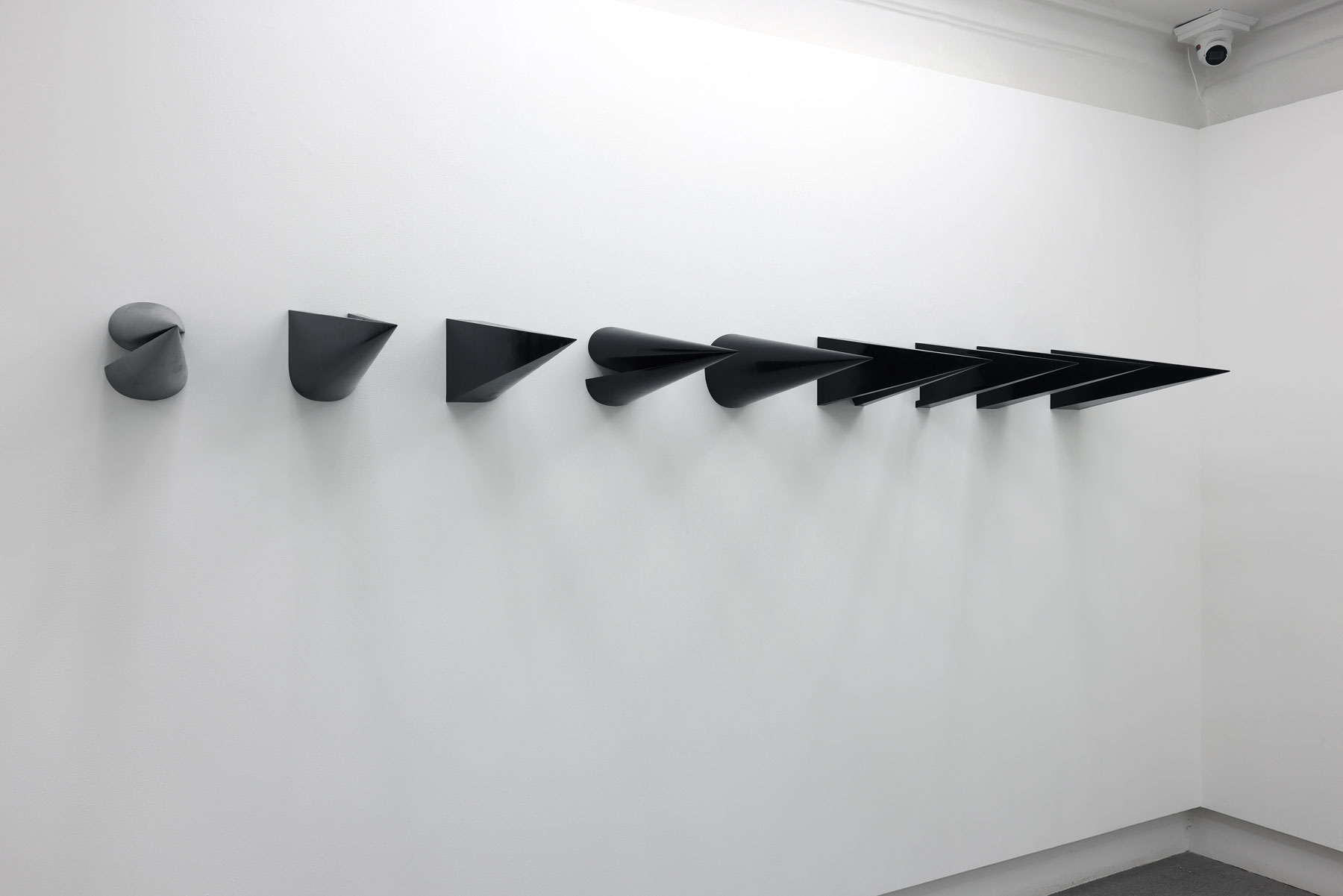
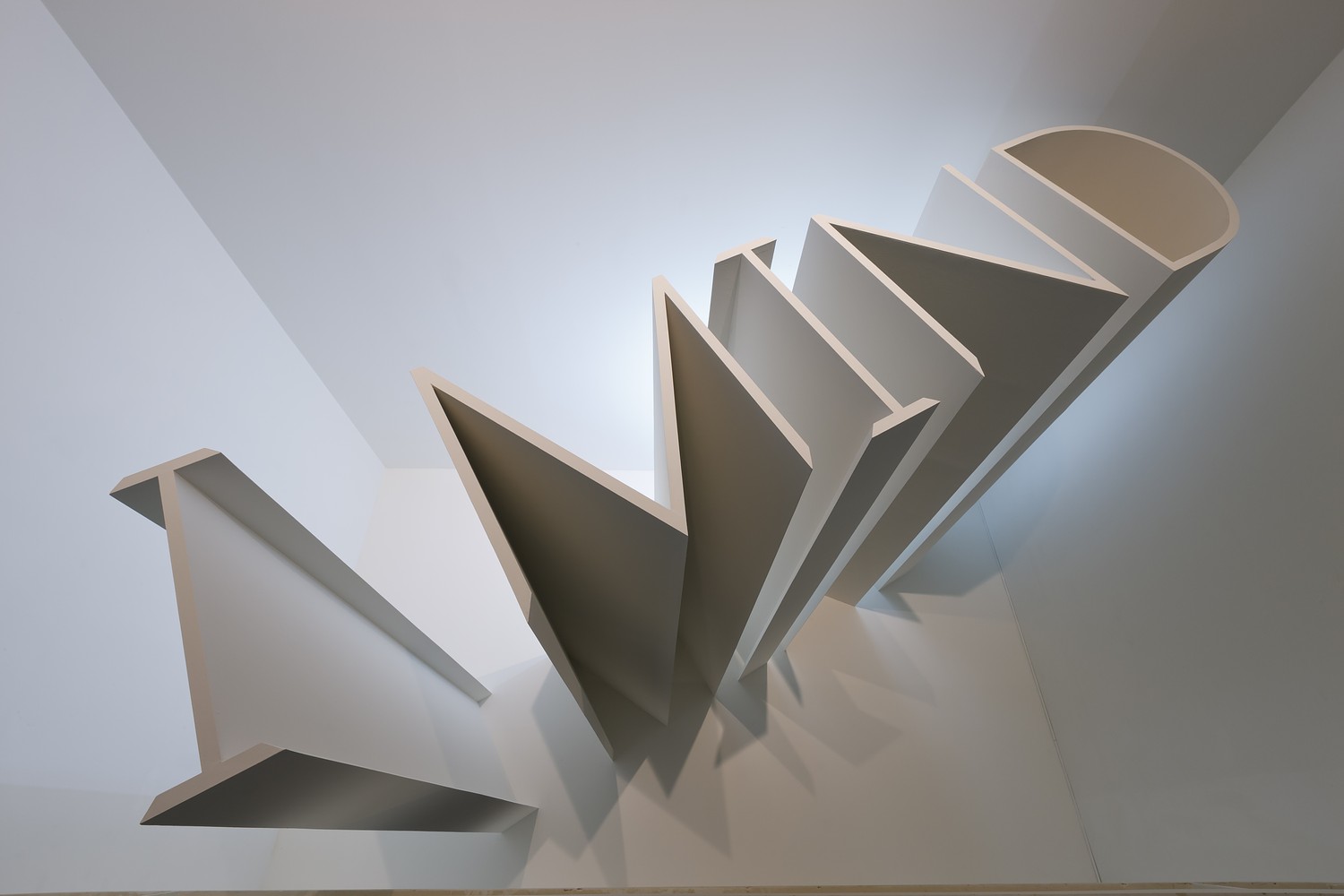
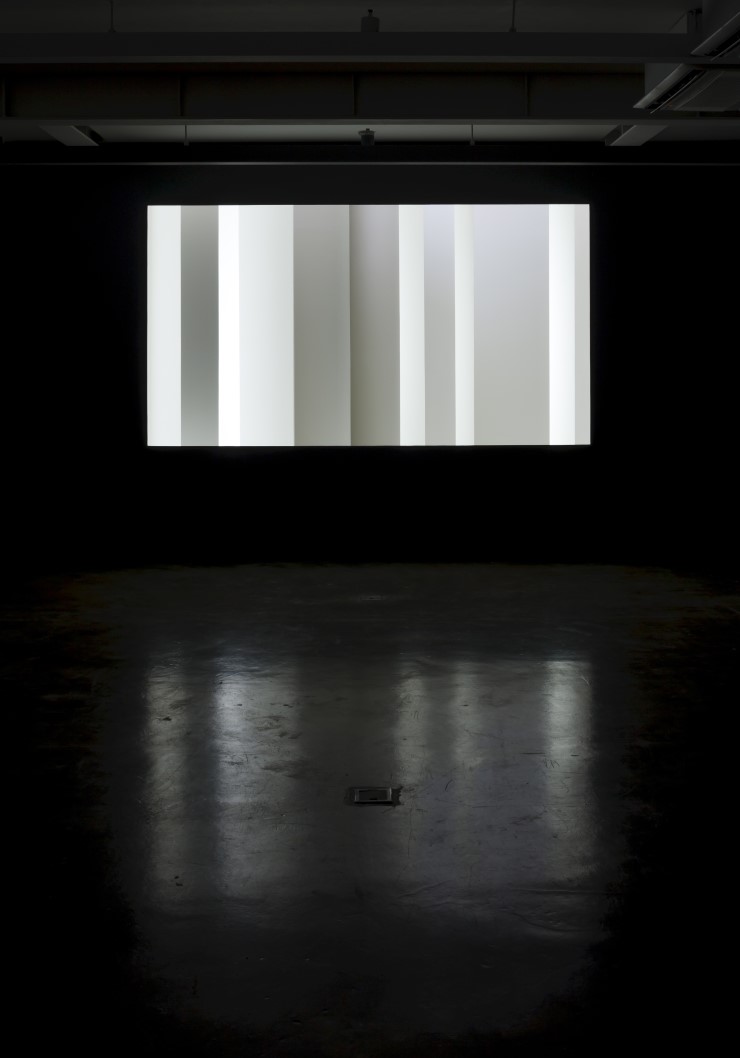
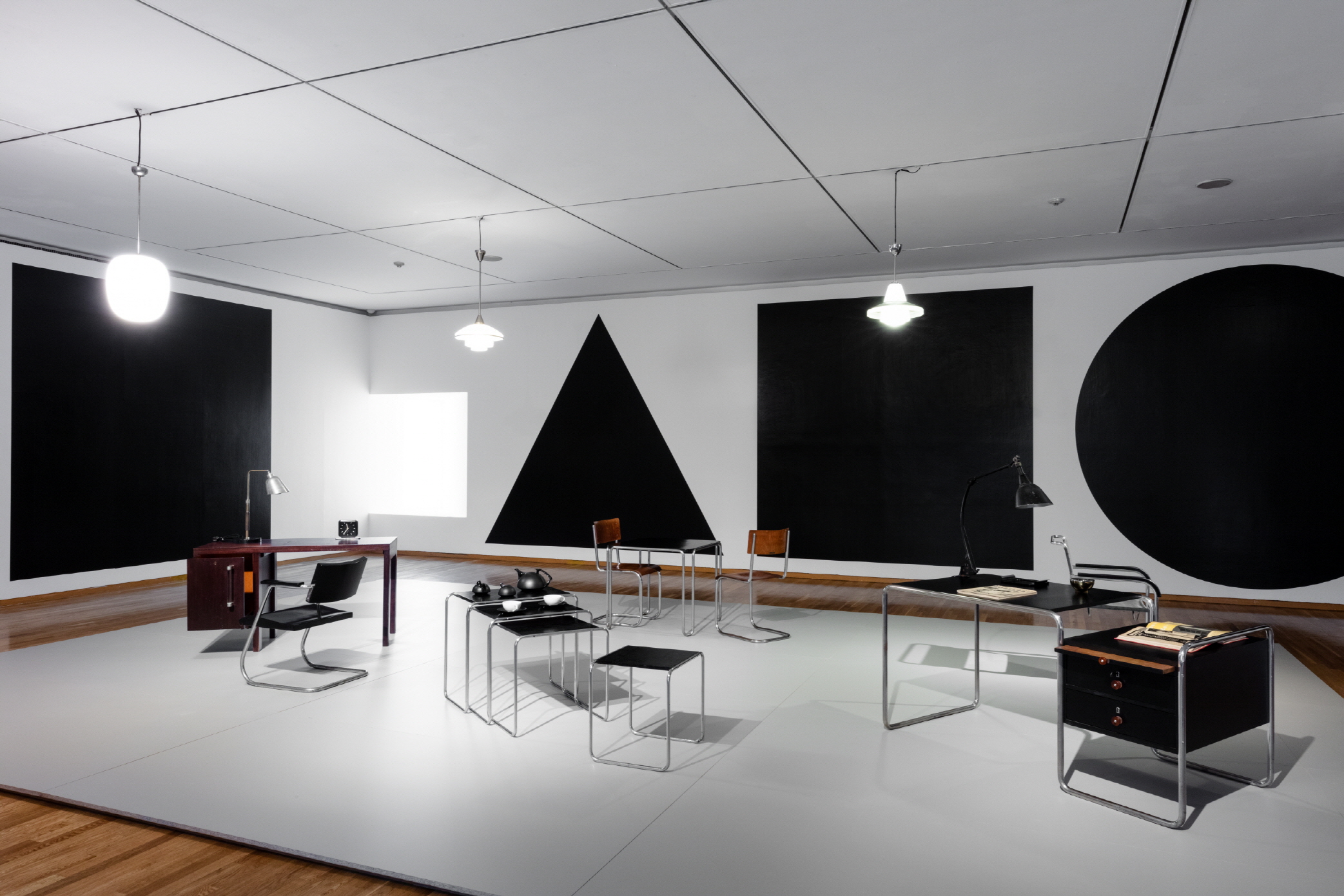
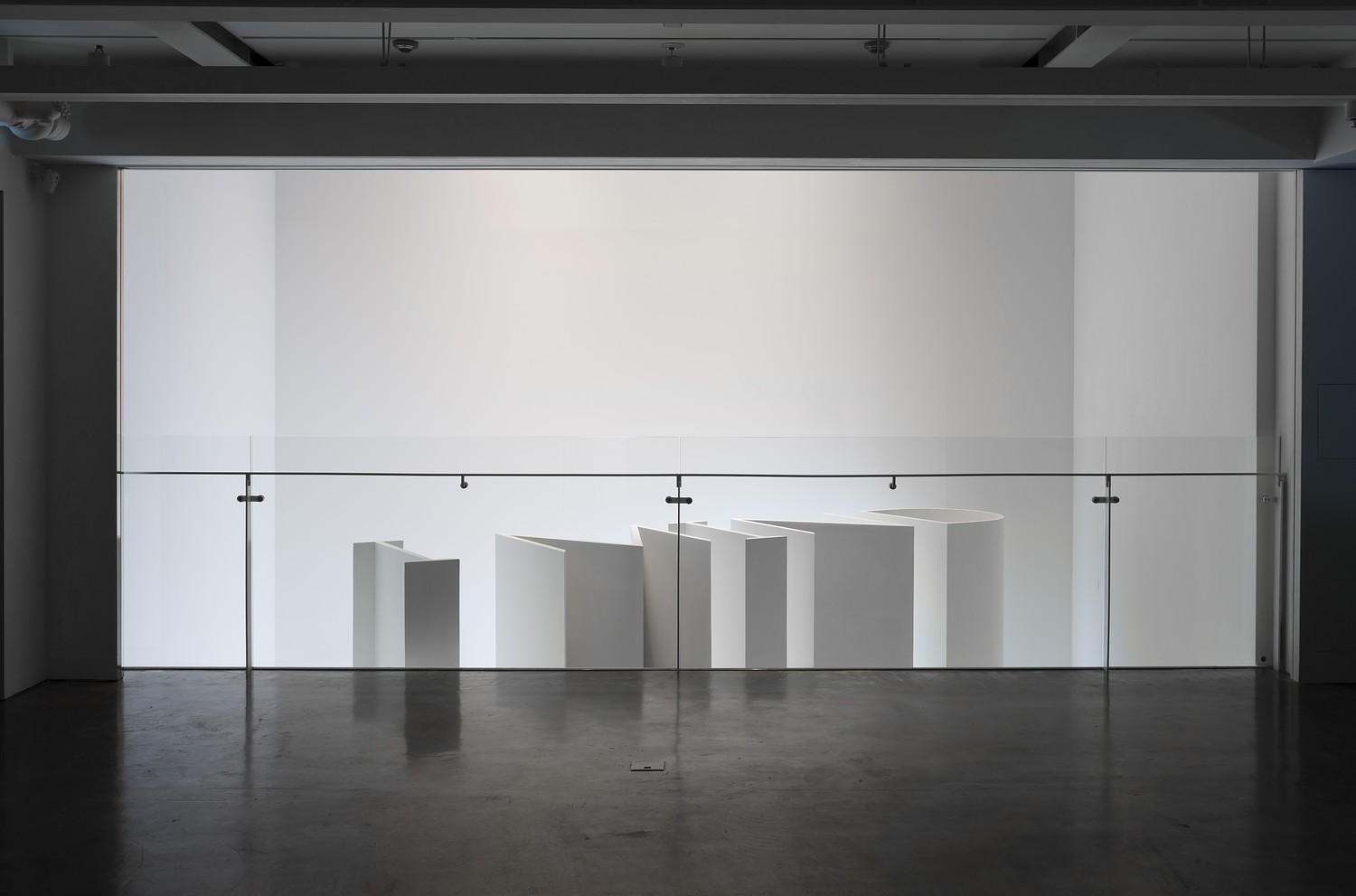
This meticulous calculation of viewpoints extends into spatial installations that require viewers to move physically around the work. While Triangle, Circle, Square (2008) explores a three-dimensional structure that appears as a triangle, circle, or square from different directions, I MIND (2014) incorporates the architectural conditions of the exhibition space and the movement of visitors into its composition.
Constructed from plywood and paint, the large-scale installation initially appears from the front as a flat arrangement of vertical planes in varying shades of gray. As viewers approach, however, its obliquely positioned three-dimensional elements become apparent, while the words “I MIND” can only be read when the structure is observed from the floor above.
Moving through the exhibition, viewers encounter a succession of distinct forms that prompt them to reinterpret what they have previously seen. By encouraging visitors to observe the forms before recognizing the letters, Han introduces a temporal interval between visual perception and linguistic comprehension. In this way, the viewing position and sequence of movement become essential to the experience of his installations, while the exhibition space itself organizes the gradual transformation and discovery of images.
Symmetry, reflection, and shadow are equally recurrent formal strategies in Han’s practice. The symmetrical compositions employed in works such as Merge (2006) and Green House (2009) bring together disparate spaces and objects to produce visual arrangements that do not exist in their apparent form.
This interest becomes particularly evident in the photographic work Plastic Rorschach (2014), for which Han photographed crumpled plastic bags and arranged the resulting images in bilateral symmetry, creating compositions reminiscent of the inkblots used in the Rorschach test. The accidental folds of the plastic acquire shapes resembling animals or human bodies through symmetrical arrangements, inviting a range of interpretations informed by viewers’ imaginations.
In Projected Specimen (2014), created in the same year, Han employs the relationship between light and shadow. He cuts and distorts taxidermied animals to produce silhouettes resembling familiar hand-shadow figures, projecting their shadows onto the walls.
Both works involve the deliberate transformation of ordinary or recognizable subjects into familiar images, yet the experience changes when the material conditions underlying these images are revealed. By manipulating the relationships between photography, sculpture, and projected imagery, Han makes visible the processes through which visual resemblance is constructed.
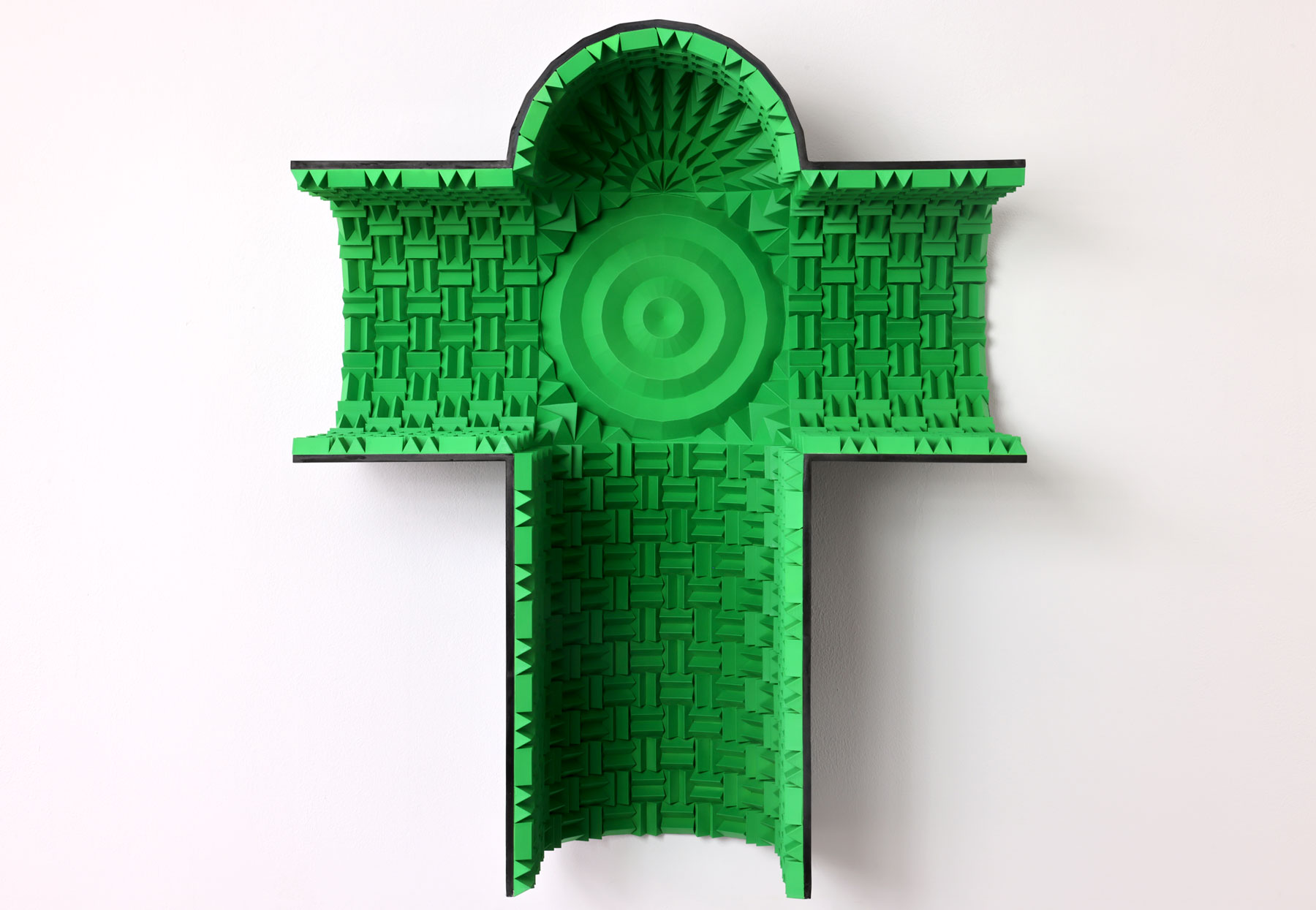
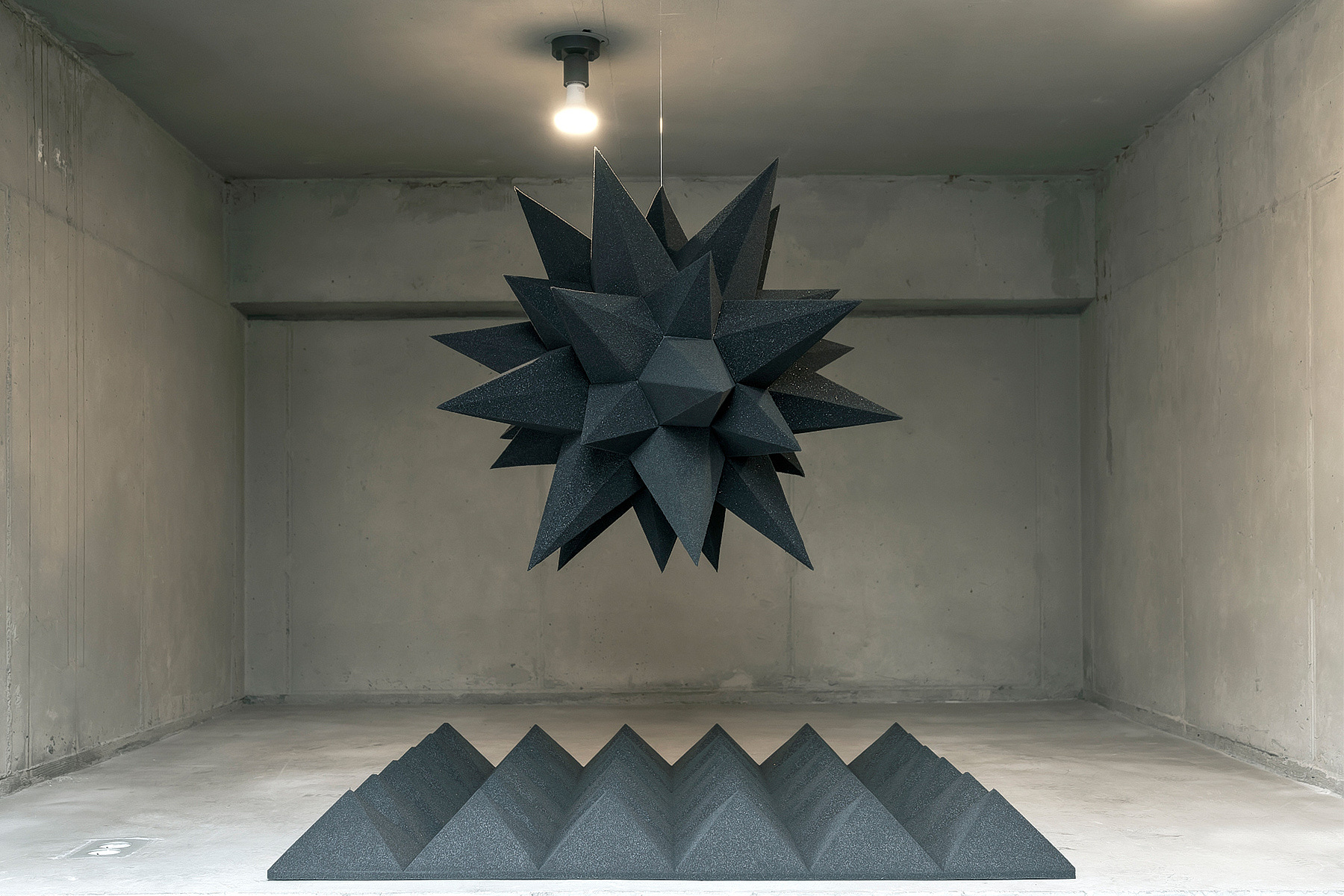
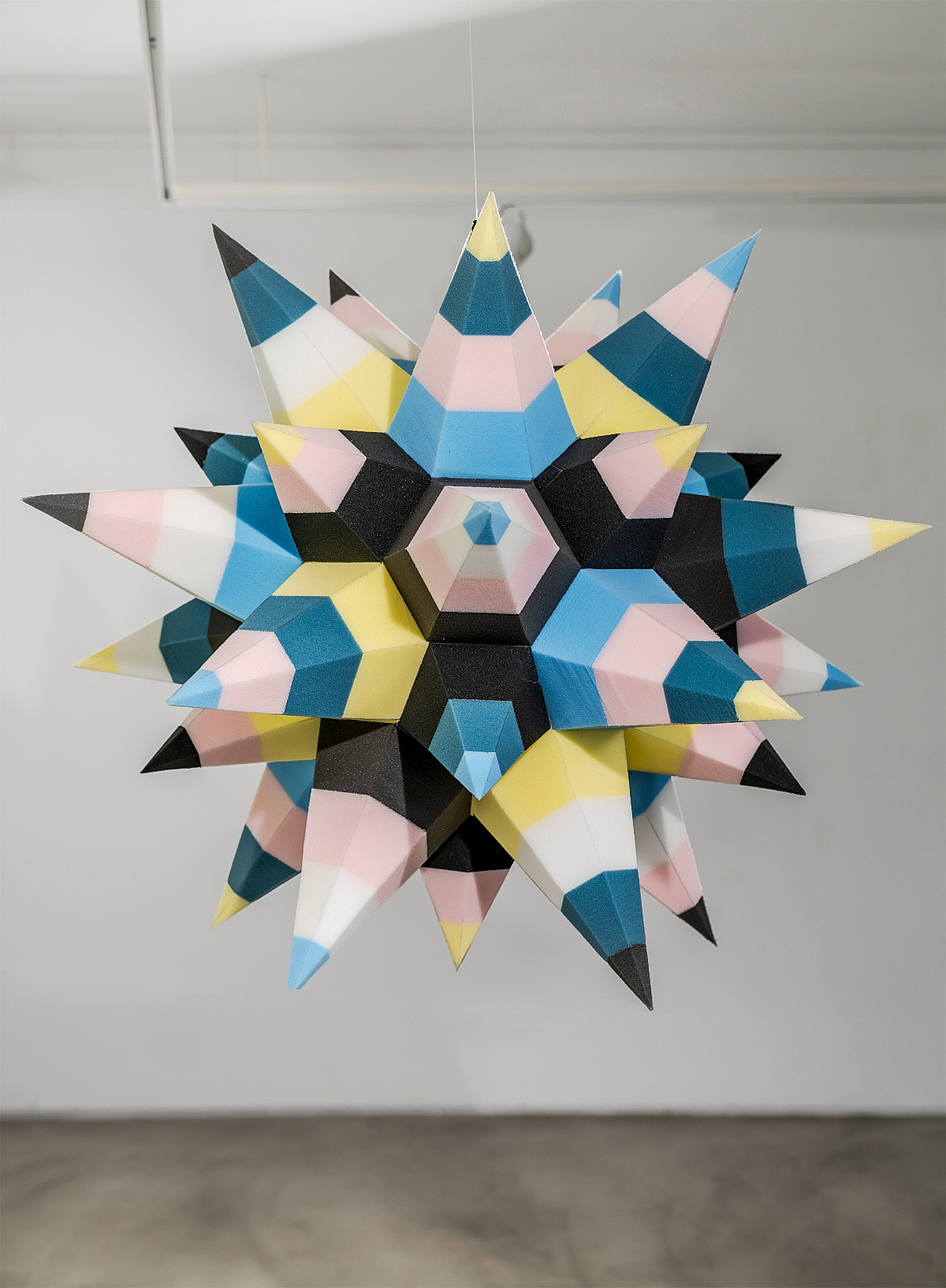
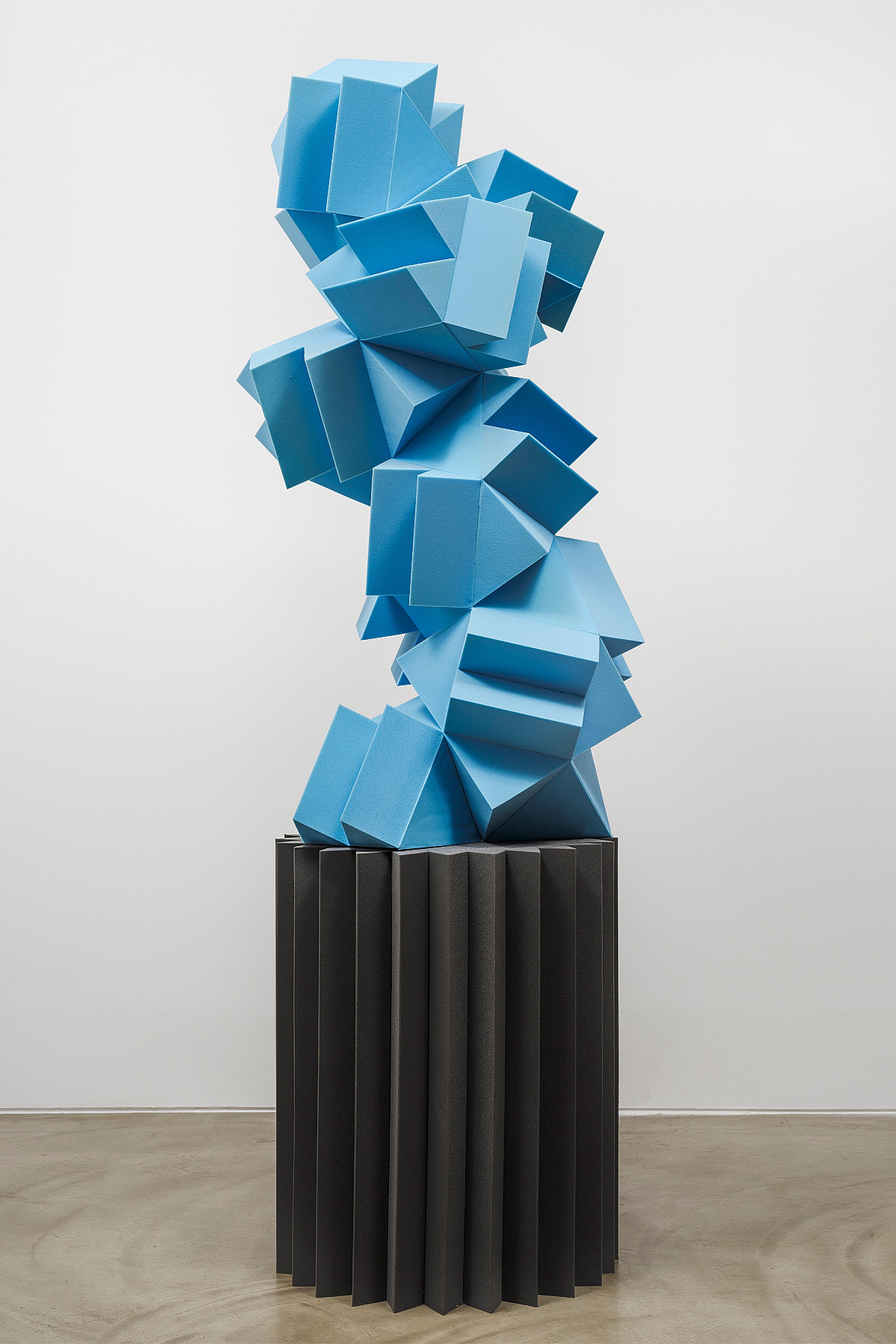
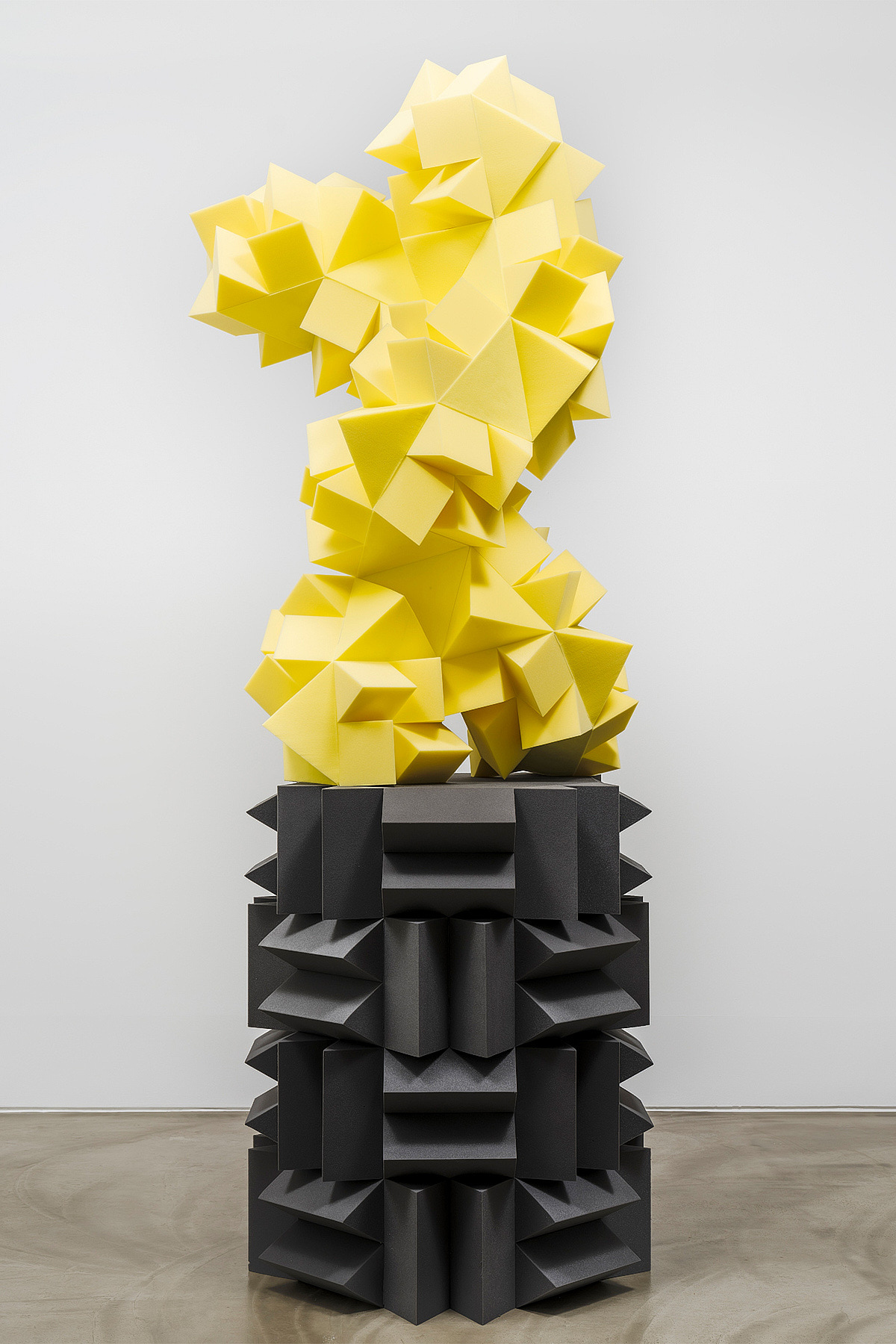
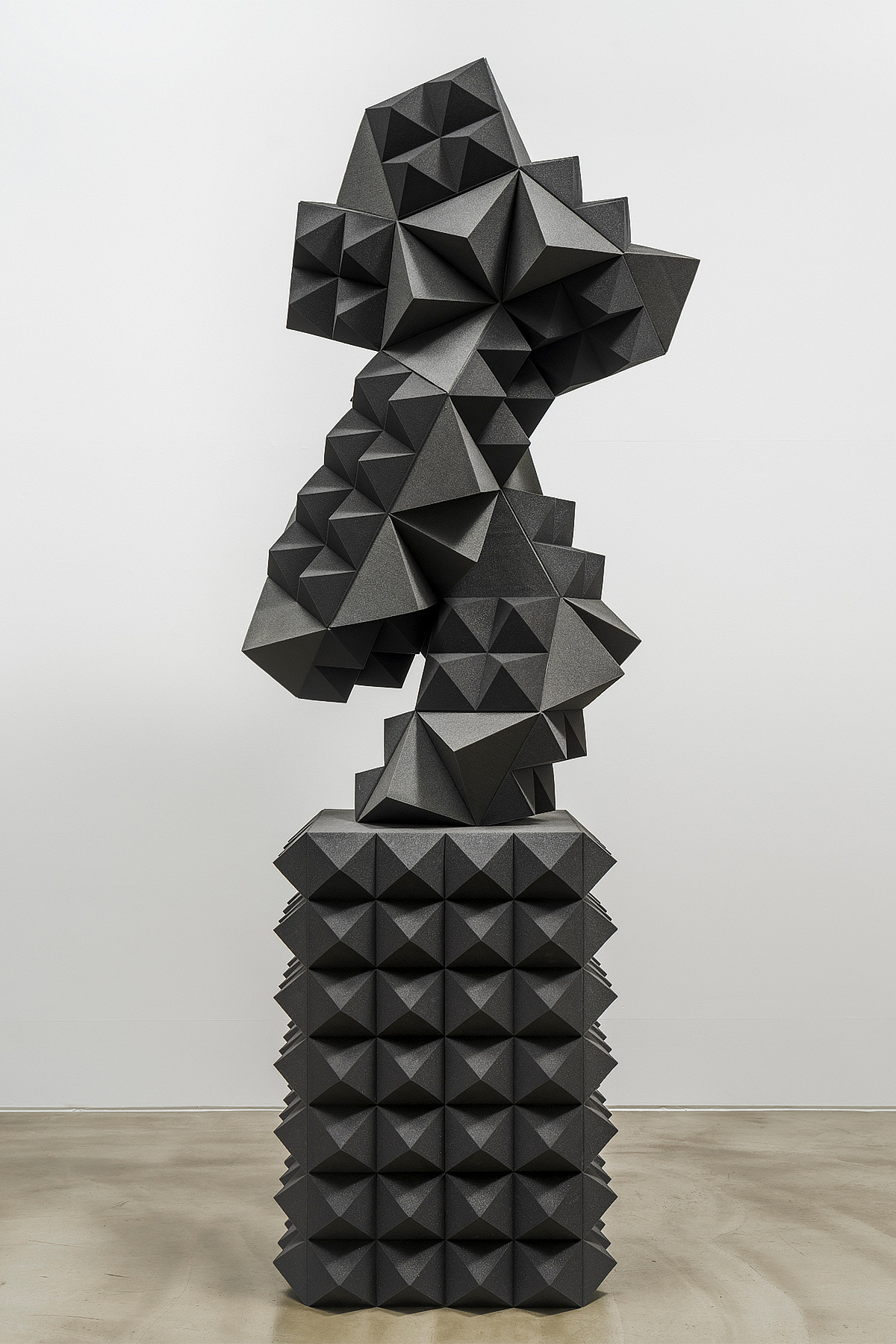
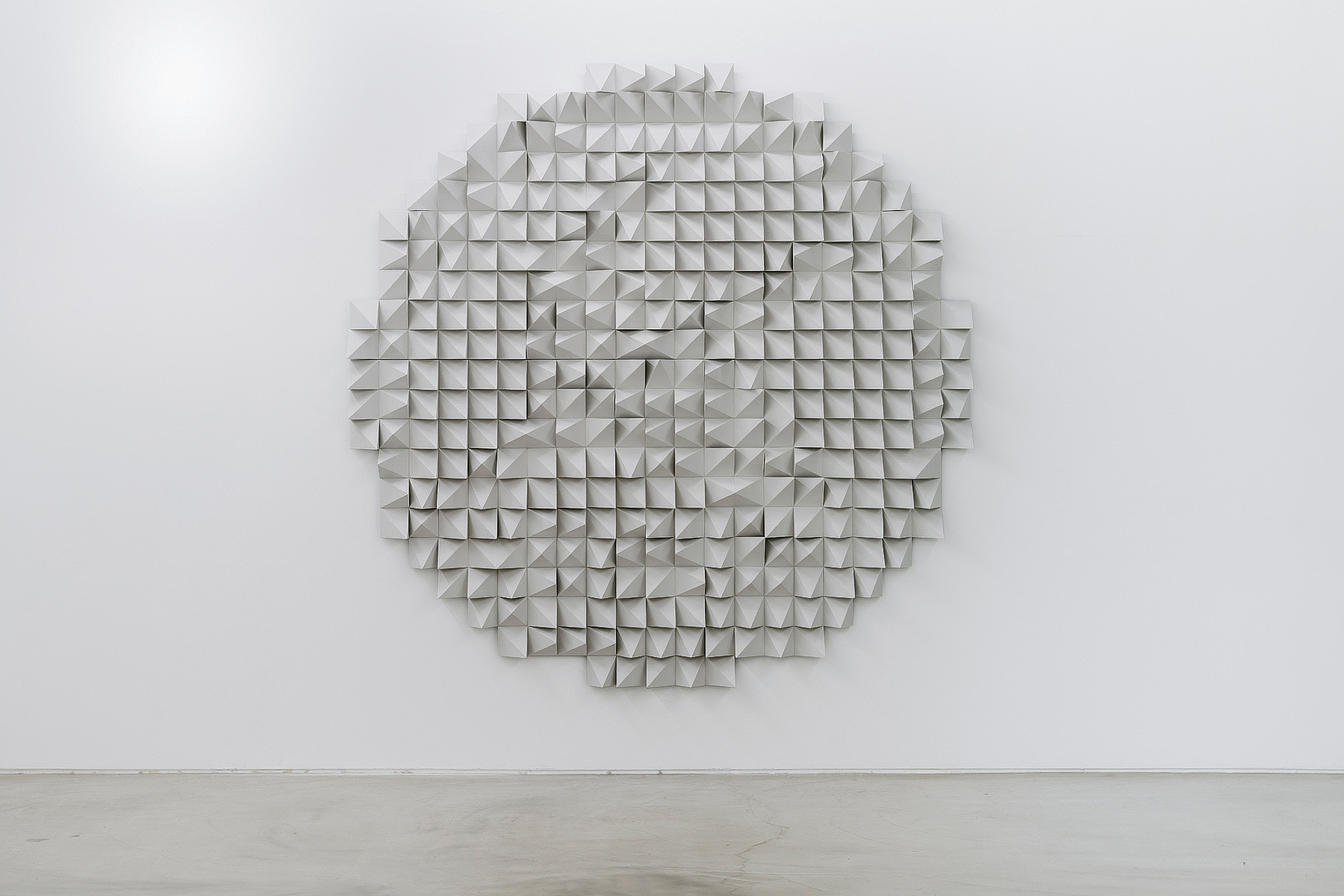
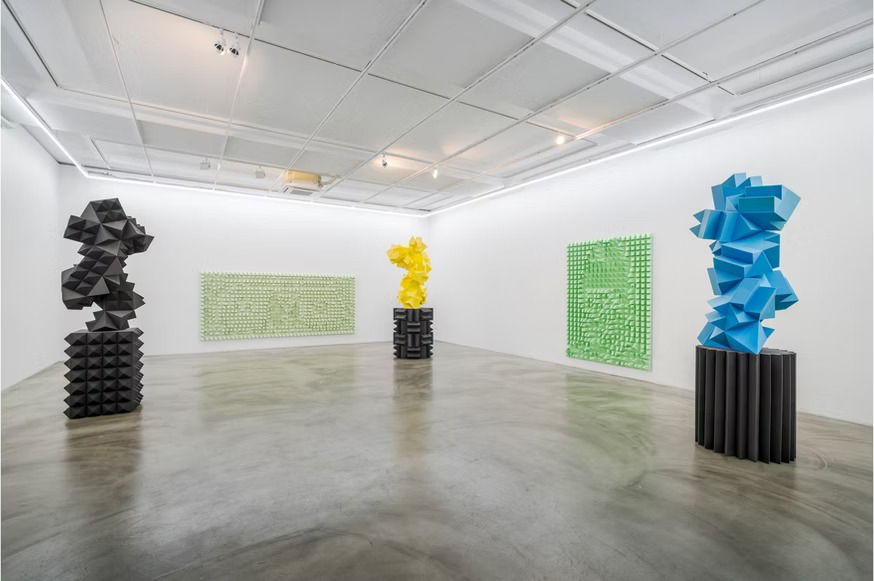
In his more recent works, Han continues to develop these formal strategies while expanding his engagement with material properties and sensory experience. His 2021 solo exhibition 《Anechoic Figures》 introduced sculptures made with sound-absorbing materials based on the principles of anechoic chambers, incorporating the experience of diminished sound reflection into the work.
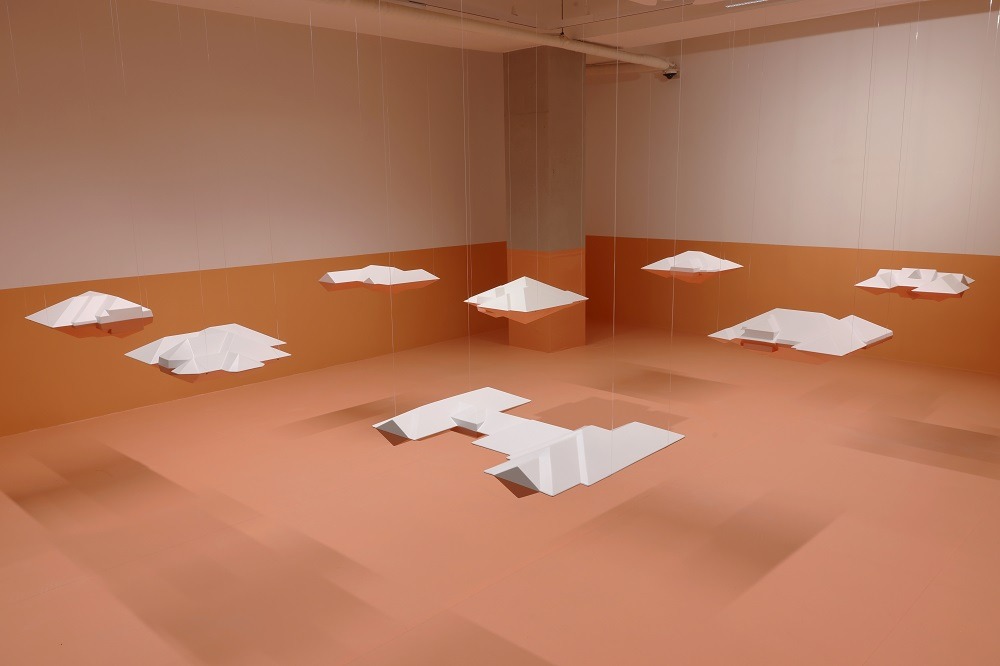
These sculptural forms, which do not respond to external sounds, combine visual presence with acoustic absence and invite viewers to reconsider their sensory relationship with the artwork. In his 2025 solo exhibition 《Warm Horizon》, Han connects his established vocabulary of symmetry and reflection to environmental concerns.
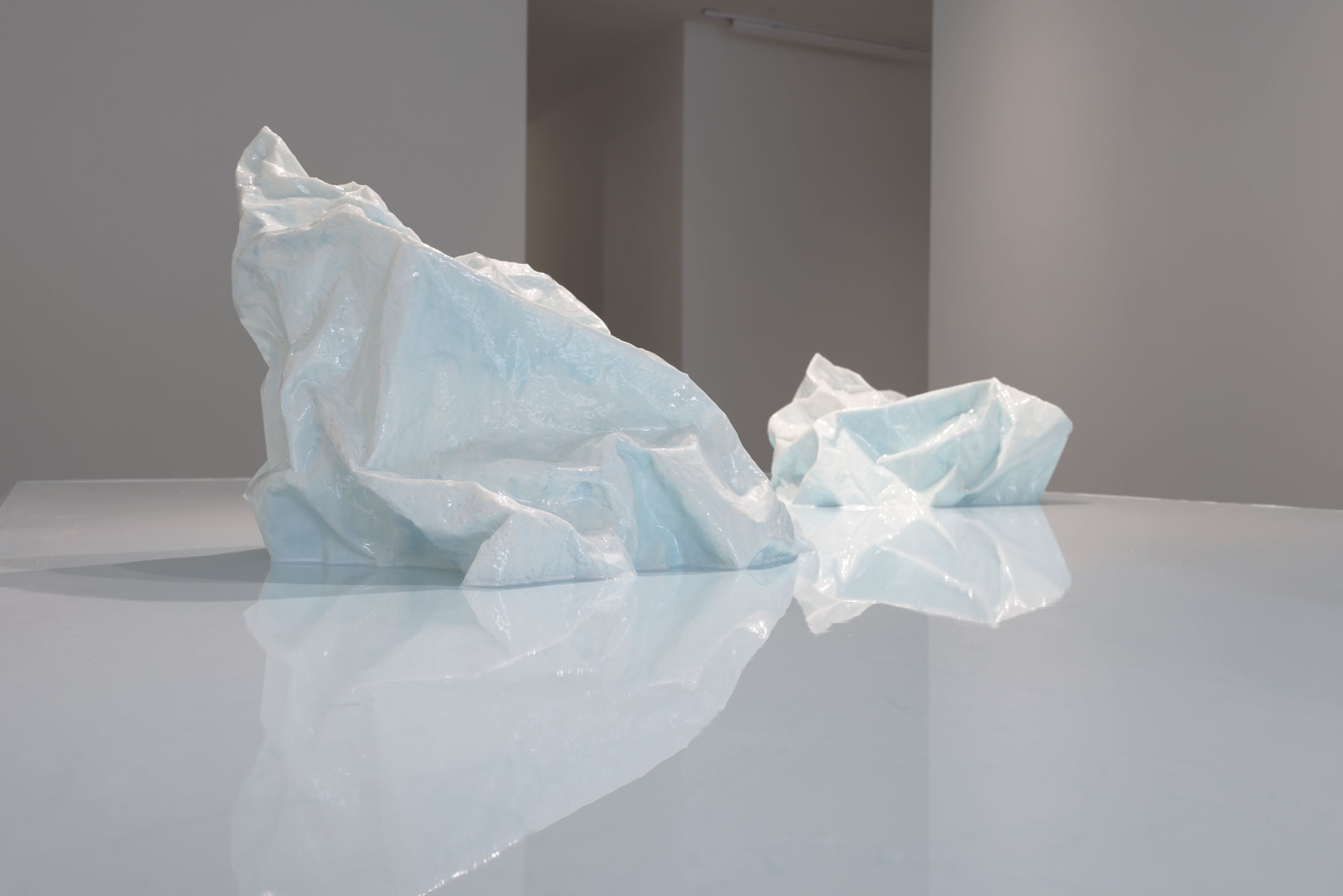
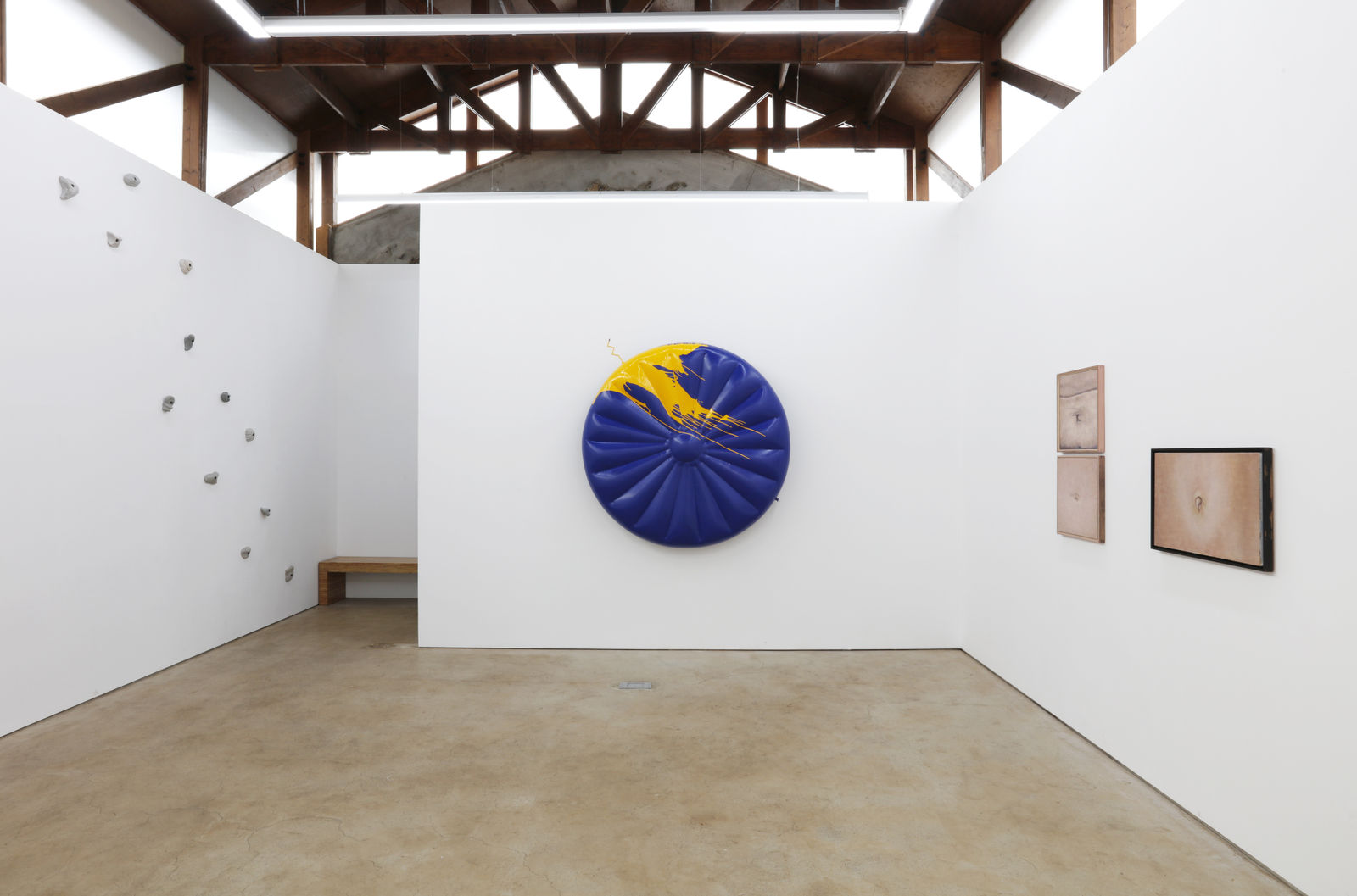
New Landscape reconstructs the rooftops of flooded buildings into compositions resembling reflections on water, using the gallery’s staircase and circulation routes to evoke the physical sensation of descending beneath the surface. Meanwhile, Plastic Islands recreates plastic bags through 3D printing and coats them with blue resin, transforming them into sculptural forms reminiscent of icebergs floating in the ocean.
In the 'Shimmering Horizon' series, he photographs the accidental forms of plastic bags and arranges them in vertical symmetry, simultaneously evoking horizons and submerged landscapes. Throughout his practice, Han has combined the physical properties of objects with the visual order of images. His recent works further extend this approach by incorporating the coexistence of beauty and discomfort into their expressive content.