The relationship between being and appearing. Art is the form of truth most deeply intertwined with the sensory. Human beings are certainly not infinite. (...) Although we are finite, we are not entirely ignorant of infinity. We can speak of infinity, we have given it a name, and we can question what infinity is, or whether the universe is indeed infinite.
Human beings encounter and experience the world through their senses. Moments of imagination are no exception. Sometimes images arise without our having to see anything, and fragrances emerge from images in our minds. Even from a distance, merely looking at something can evoke sensations of softness or roughness.
The rustling of leaves swaying in the wind passes through our minds. Hinoki cypress on a humid morning. A camphor tree encountered on a day of brilliant sunshine. Japanese cedar and tea trees shimmering before me on a rainy day. Even when nothing is clearly visible, the atmosphere surrounding me carries fragrances. A Japanese nutmeg yew beneath the red sky at sunset.
The flowers and grasses encountered along the way, whose names I have yet to fully recognize. Moss and soil. Birds and insects. Smaller organisms still. Molecules. Whether in untouched nature or a cultivated garden, each exists in its own way. The sky is cool and refreshing. Fragrances sway gently as though dancing. With every breath, the scents of all things meet, overlap, merge, and sometimes repel one another, day after day.
It is, quite literally, mysterious and beautiful. Thus, the artist has captured, erased, imagined, and recombined the various manifestations of sensations as they appear and disperse. Transparent and opaque spaces, in which collections and records are held and flow, repeatedly open, close, and open again. The actions and reactions arising in this process, along with reflections on phenomena and artistic experiments, move between the infinitely small and the immensely vast, stimulating thoughts and emotions.
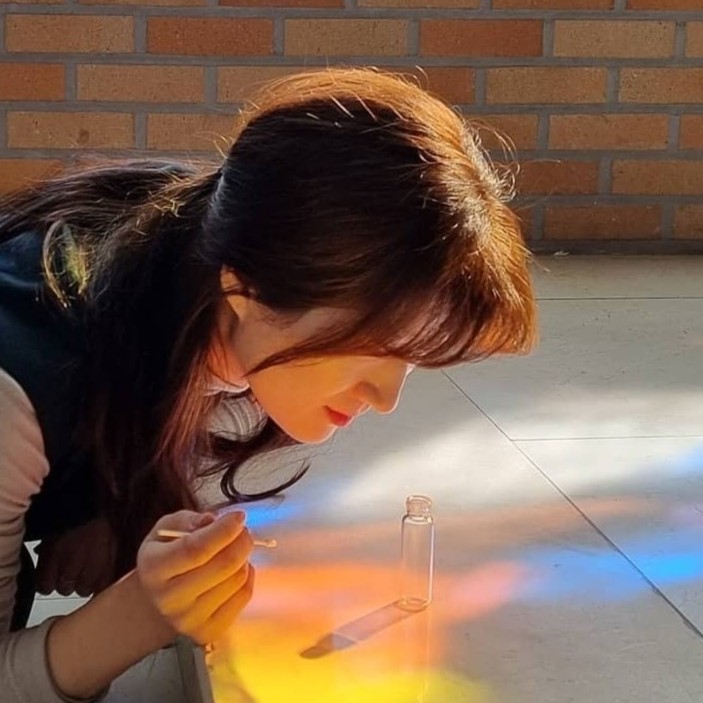
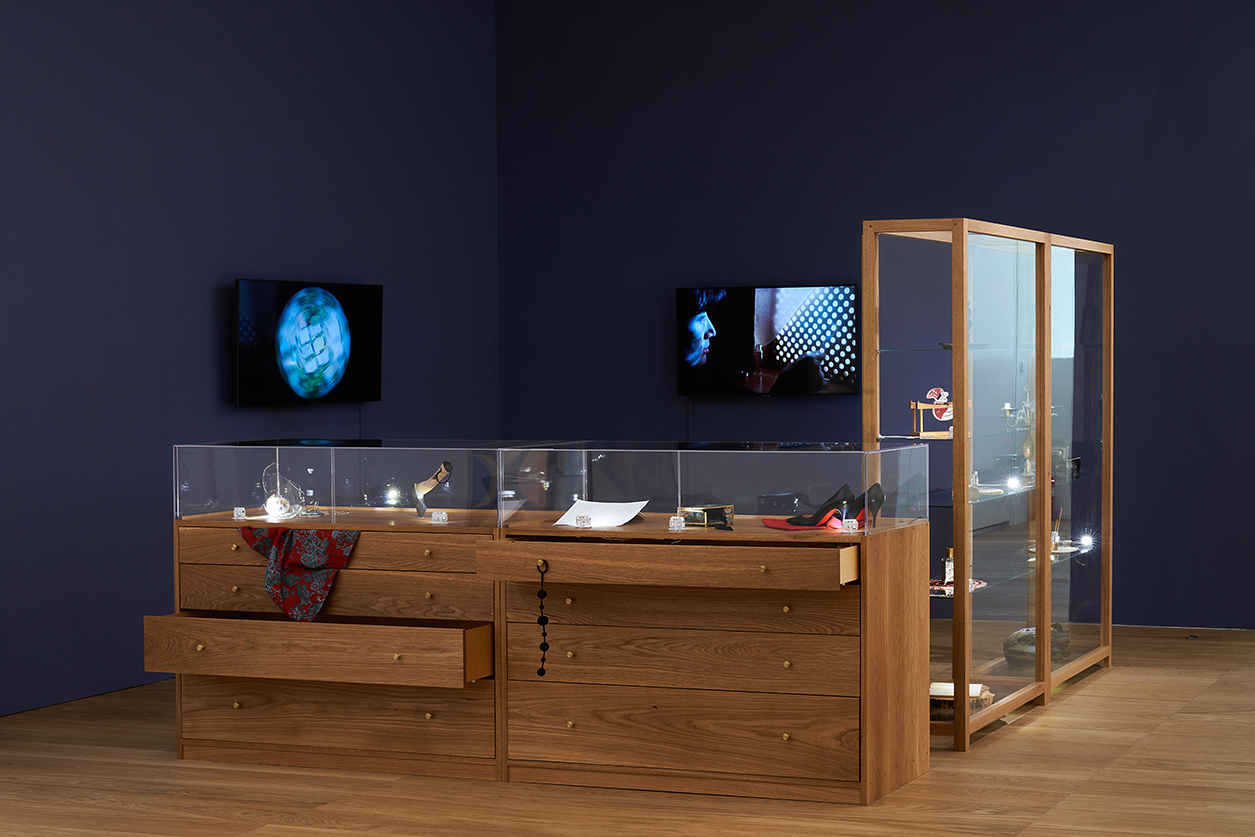
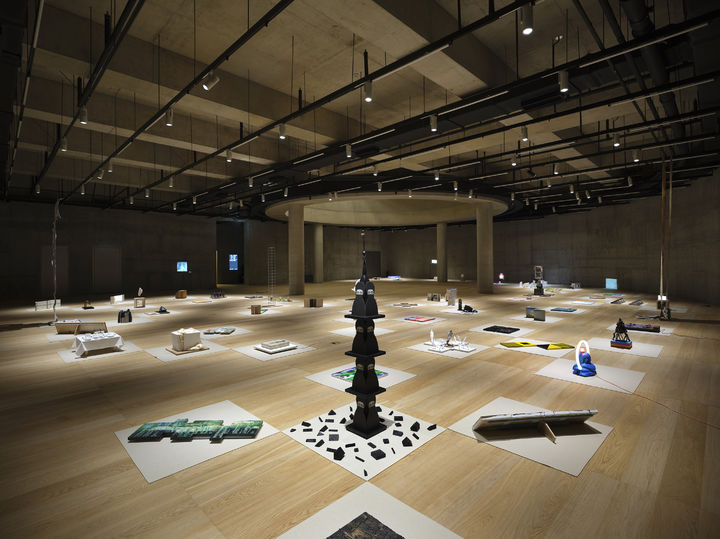
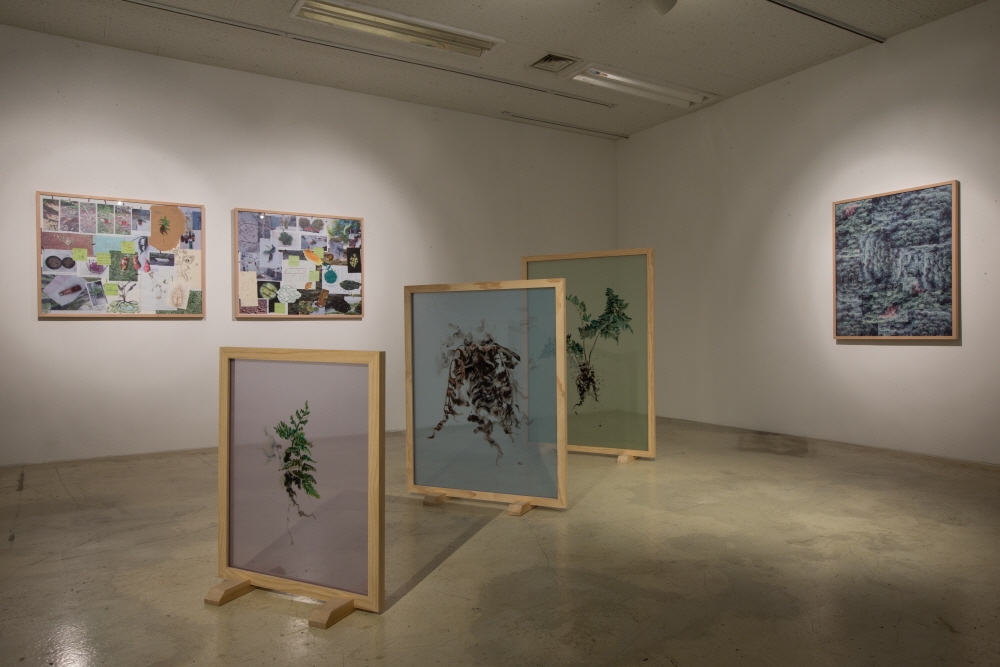
In Kim Jee Soo's solo exhibition 《To Become Fragrance》 (2025), fragrances gather and disperse, repeatedly becoming visible and invisible. They create forms that stimulate vision while simultaneously transcending it. The artist has long described herself as having been particularly sensitive to smell and other senses since childhood.
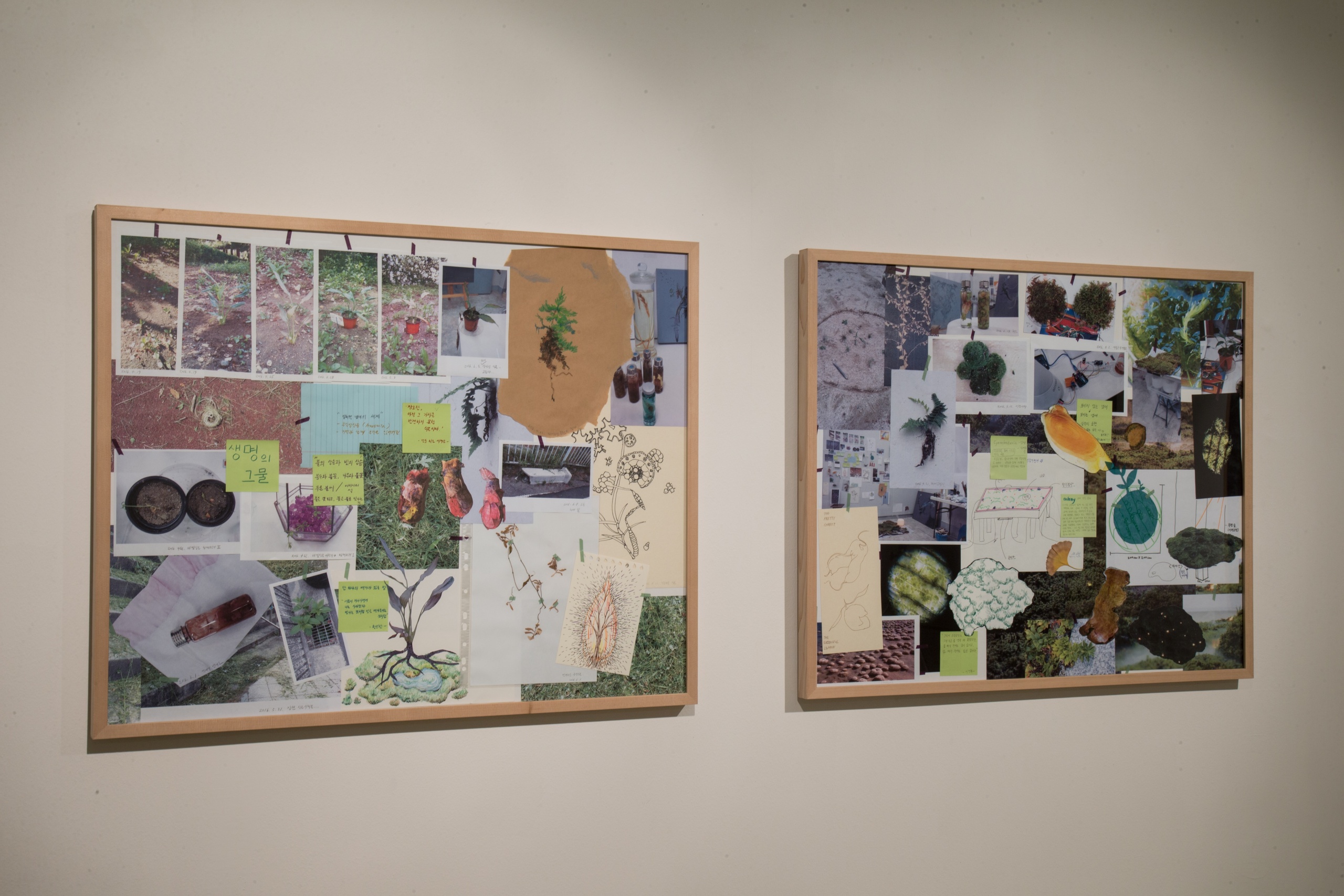
As suggested by notes such as “rocks, vines, the smell of damp moss, fragrances meeting light, body odors, interactions, scattering and gathering and disappearing, becoming a scent molecule, traveling through time and space, simultaneous sensations,” sensory perception serves as the foundation of her artistic ideas. When we recall a cherished place, its fragrance comes to mind. Just as scents can evoke forgotten memories, the reverse is also possible. Recalling a memory from long ago can revive a particular scent.
Since the human body and mind cannot be separated, sensations are embedded in thoughts and emotions. They are intimately connected and interact with one another. Olfaction, which Kim Jee Soo takes as the starting point of her practice, is a sense directly connected to life itself, arising from the very act of breathing. Most living humans cannot help but smell throughout their lives.
Yet, although the degree may vary, scents are perceived regardless of the subject's will. It seems almost like an unavoidable fate. The only way to escape a smell is to leave the place where it is present, but a smell that is difficult to describe in either words or images cannot be precisely located. It simply exists, spreads, and gradually fades. Perhaps it would be more accurate to say that it disappears almost immediately. This is partly because the sense of smell quickly adapts to it. It is an experience that inevitably promises its own disappearance shortly afterward, like a momentary event.
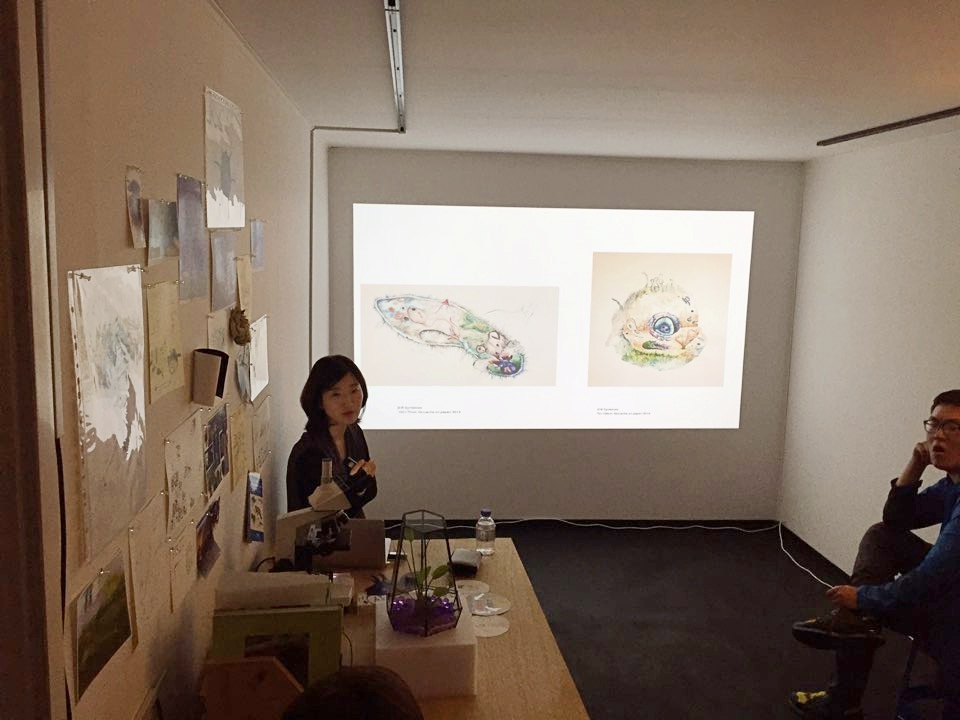
For this reason, although scientific inquiry has once again provided the foundation for her work, as it has for many years, the artist has had to pass through a mysterious realm of intuition and emotion that precedes logical and rational inference and sometimes defies description altogether. Her desire to approach something unknown, something she has yet to encounter, has grown even stronger.
Like poetry that speaks of what lies beyond or transcends established and defined territories, fragrances that fill the spaces between beings and connect them convey what human knowledge has not yet discovered or managed to grasp. The artist's “poetic universe” strives to capture and express a world that cannot be fully perceived, represented, or, above all, held onto.
This becomes even clearer when we narrow our perspective to sensory experience. Not only olfaction but all sensory experiences inevitably disappear. Once the moment of sensation has passed, they linger only in memory and imagination, like mirages, unable to endure. They resemble fleeting, luminous events. And the artist's act of somehow capturing “what is about to disappear” and “naming” the fact that it has “come into presence” is poetic, whether expressed through writing or drawing.
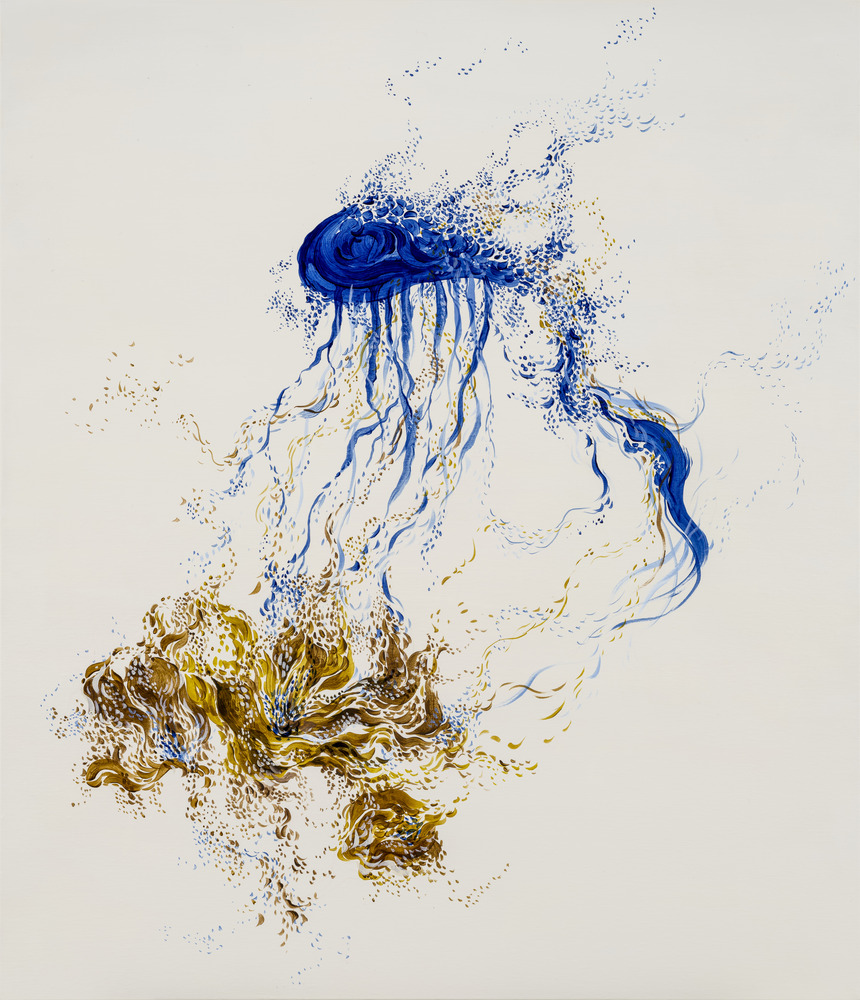
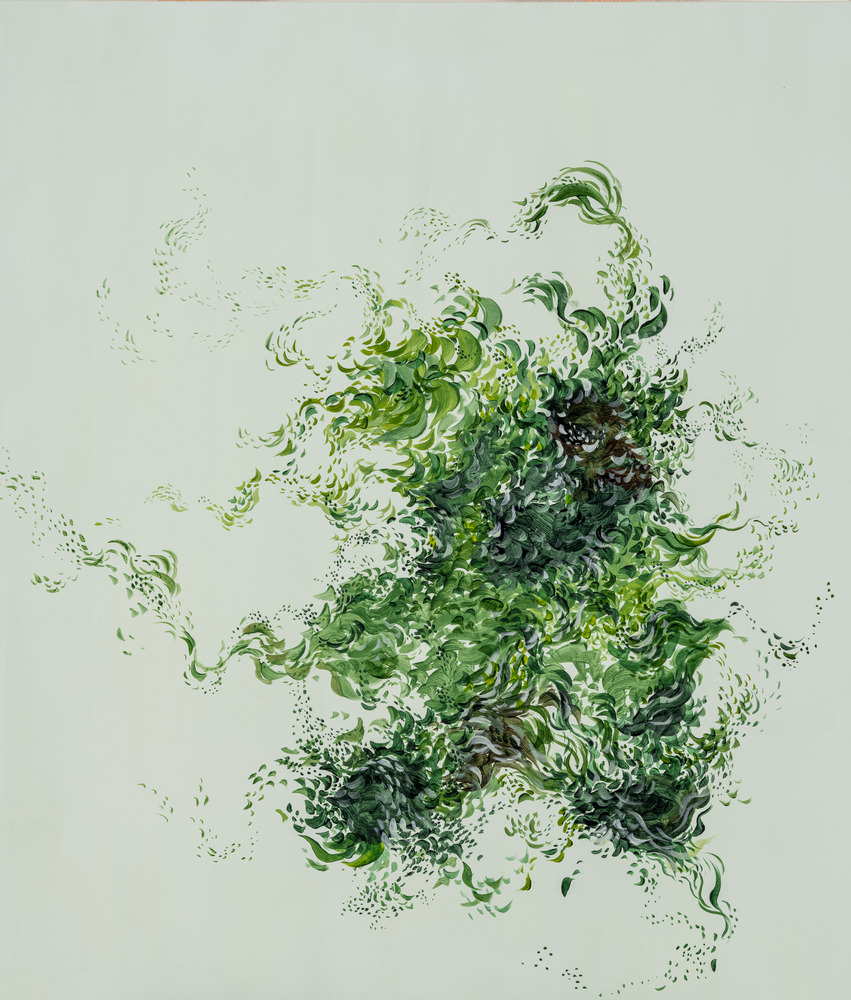
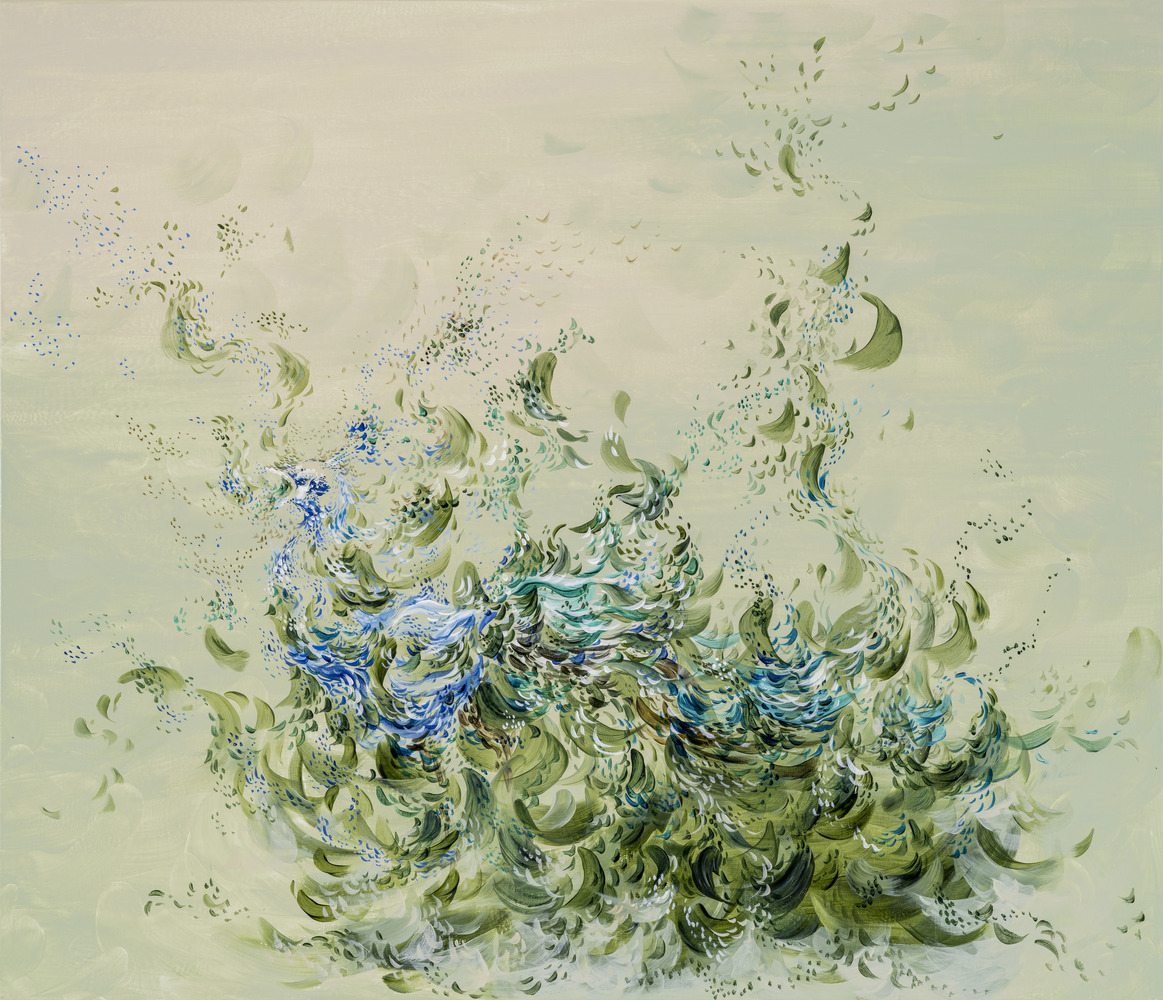
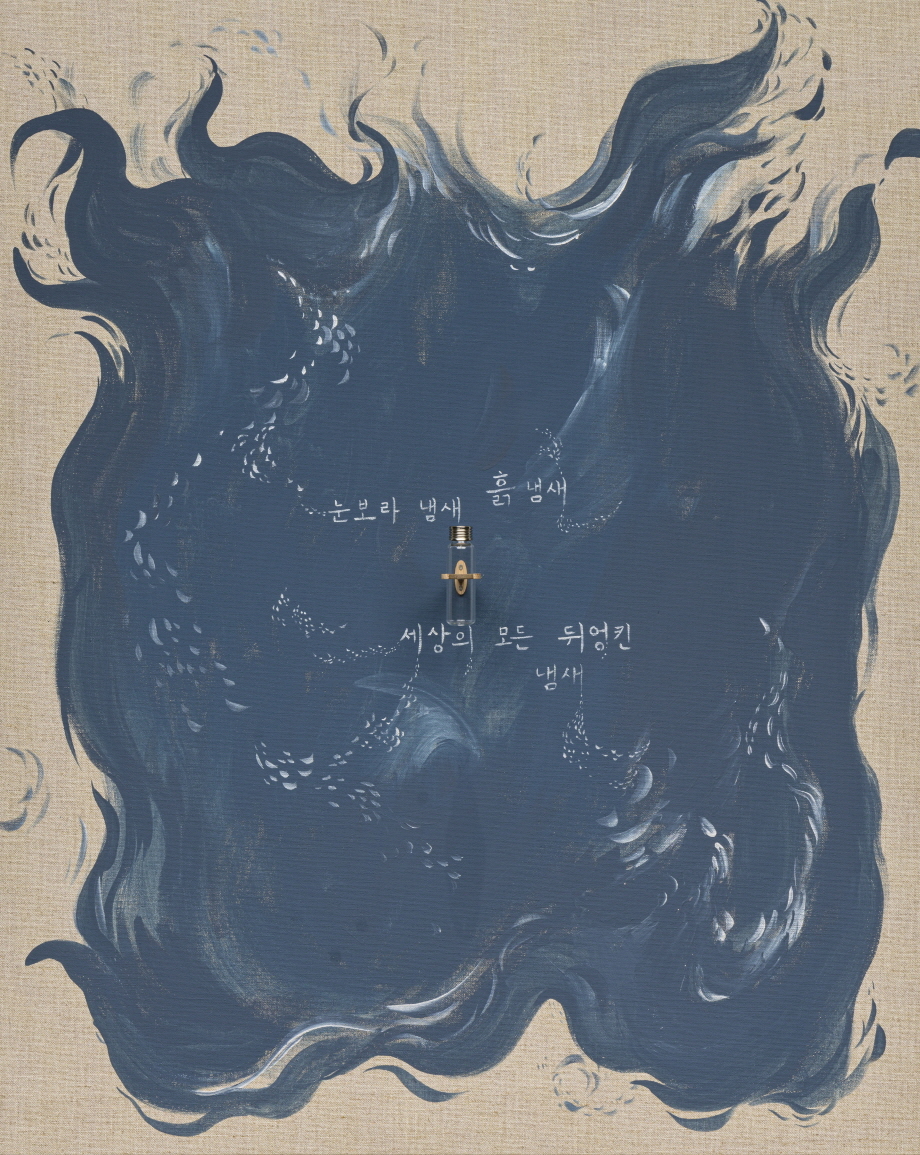
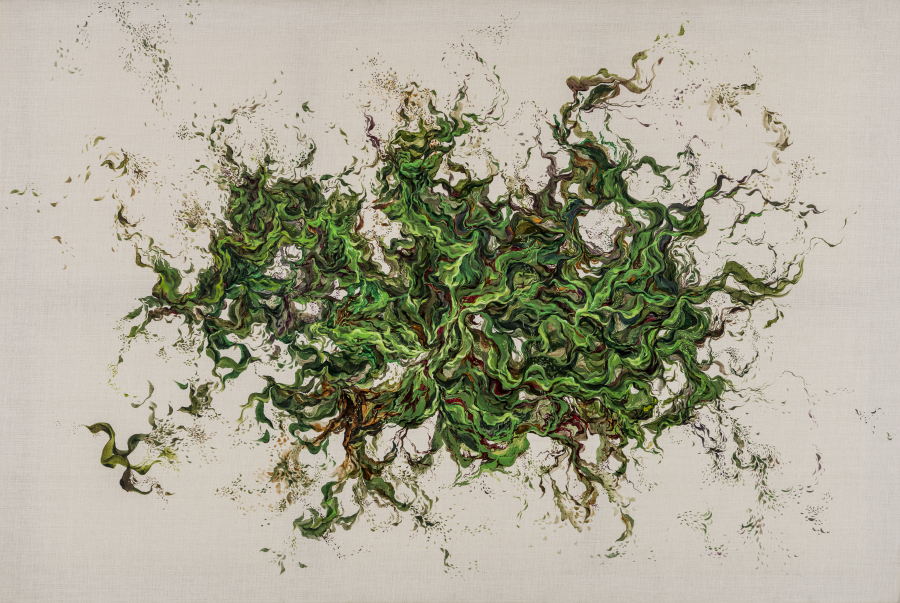
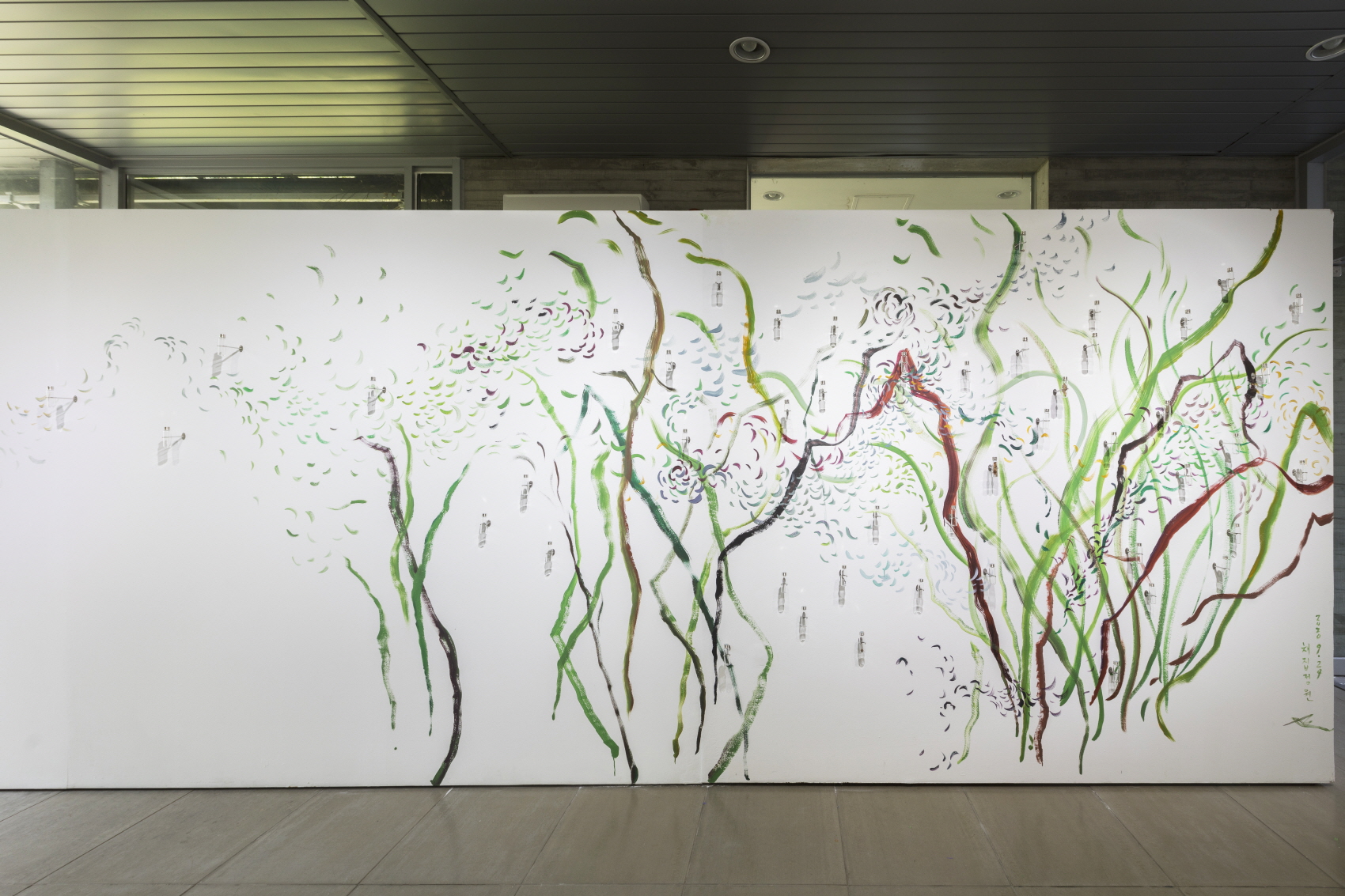
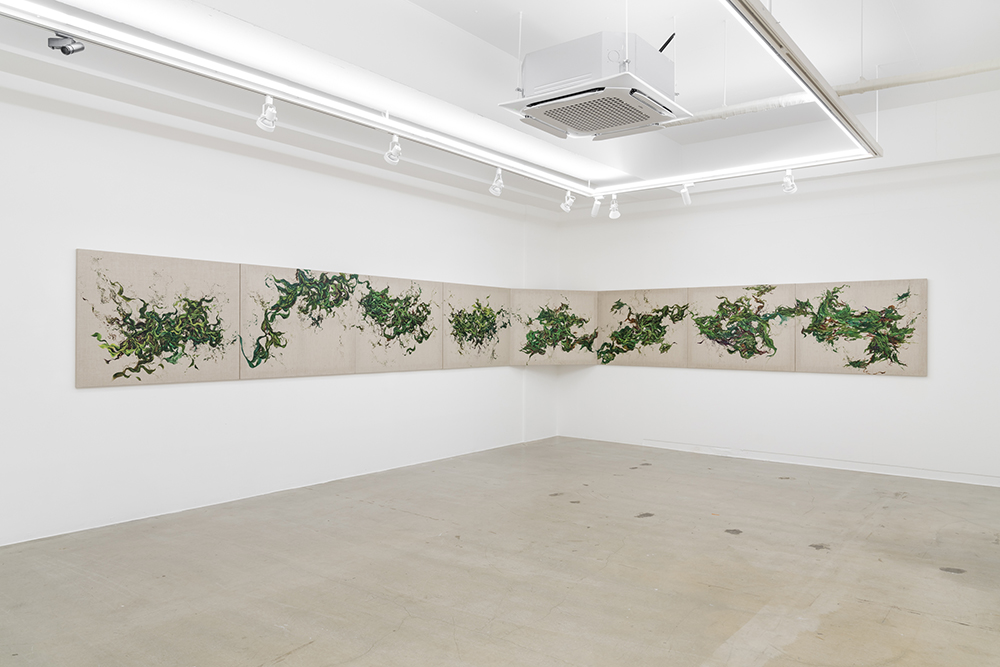
Nature is particularly prominent in 《To Become Fragrance》. Paintings such as Pul Pul, Becoming a Forest (2025), The Time of Scattering Rocks (2025), and Dreaming of a Forest (2025), as well as drawings including Hello~ (2025), Sniff, Sniff, Jeju's Rocky Mountain and Me (2025), and A Conversation with an Ostrich (2025), evoke a distinctly pastoral atmosphere. In fact, Kim's process of collecting scents goes far beyond simple investigation and gathering.
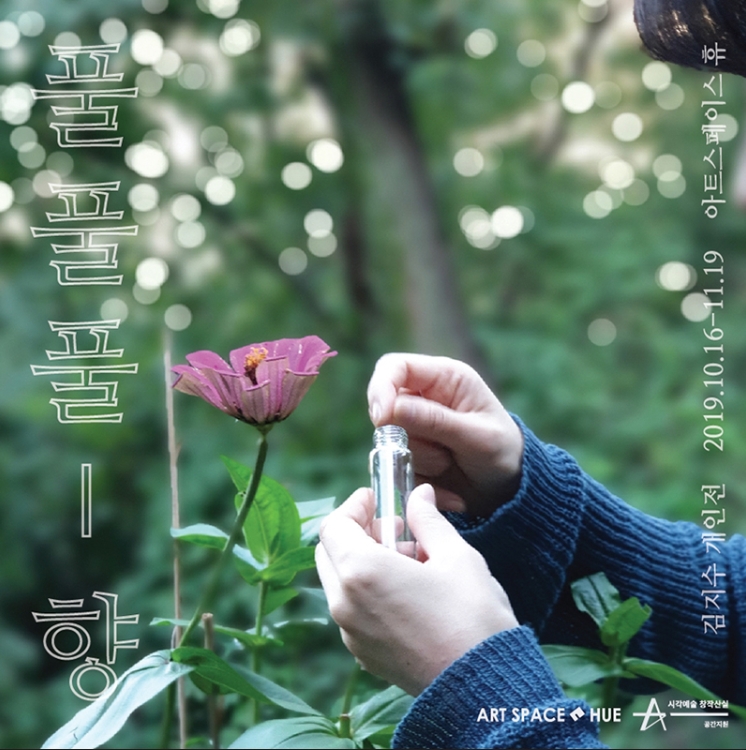
The artist walks, observes, listens, breathes, and feels the atmosphere. In the process of smelling and collecting fragrances, she touches the subjects themselves. Through these interactions with the world, the boundaries between the artist's inner and outer worlds subtly permeate one another. The very act of engaging all the senses of her body is meaningful in itself.
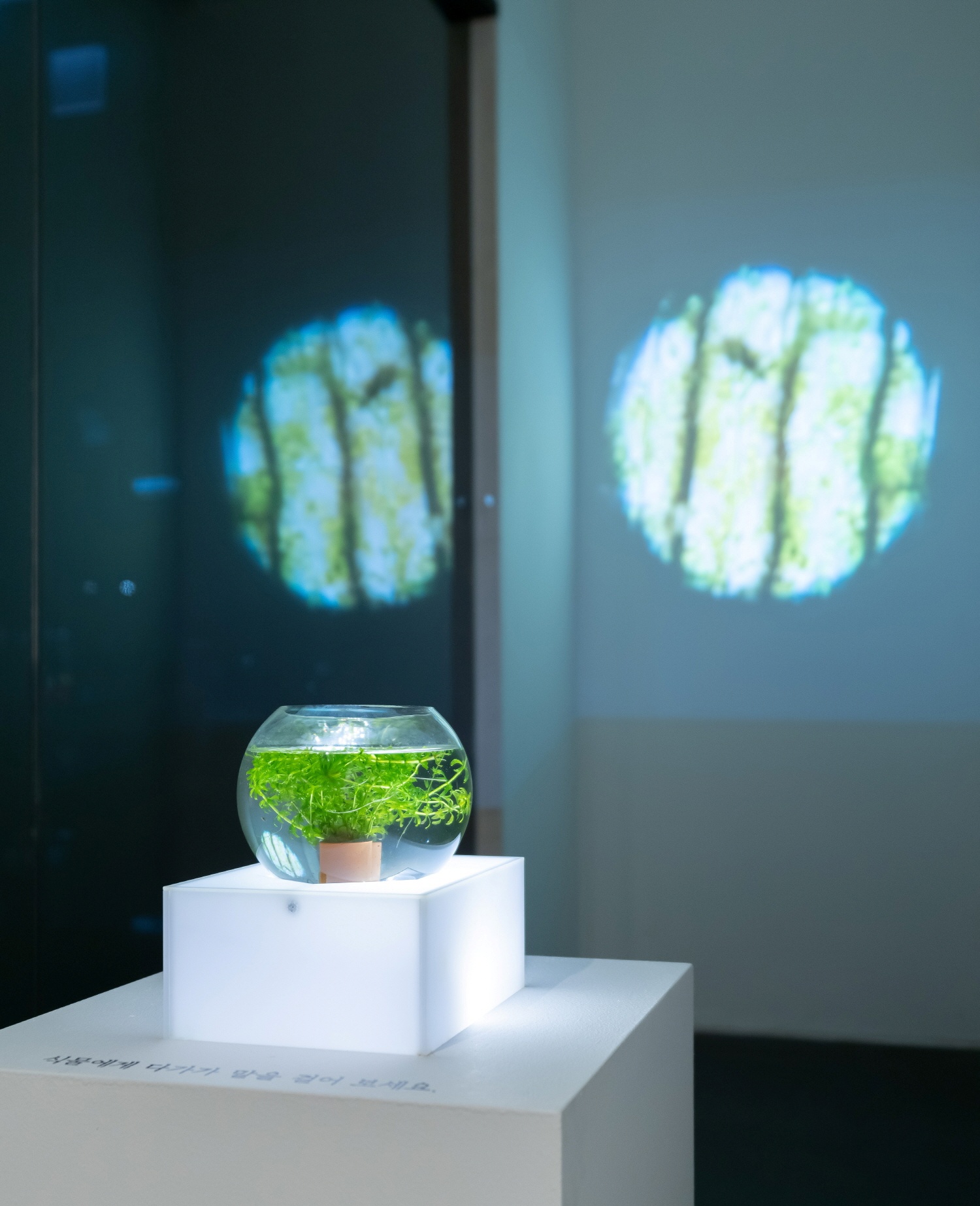
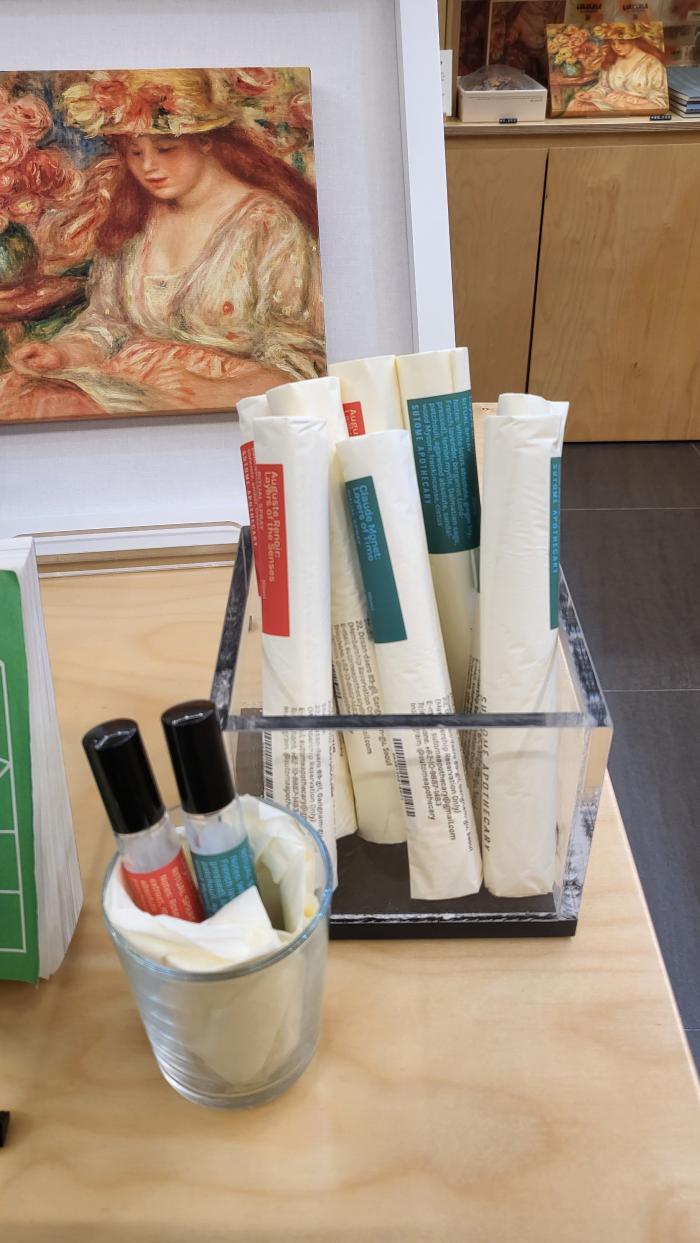
To offer visitors a similar experience, the artist has prepared five tree fragrances for the exhibition: camphor tree, Japanese nutmeg yew, Japanese cedar, tea tree, and hinoki cypress. Although Kim does not collect scents exclusively from plants, this exhibition incorporates the results of her two-year exploration of the relationship between Jeju Island's forests and the human body, conducted in collaboration with the Jeju Plant Resources Research Institute.
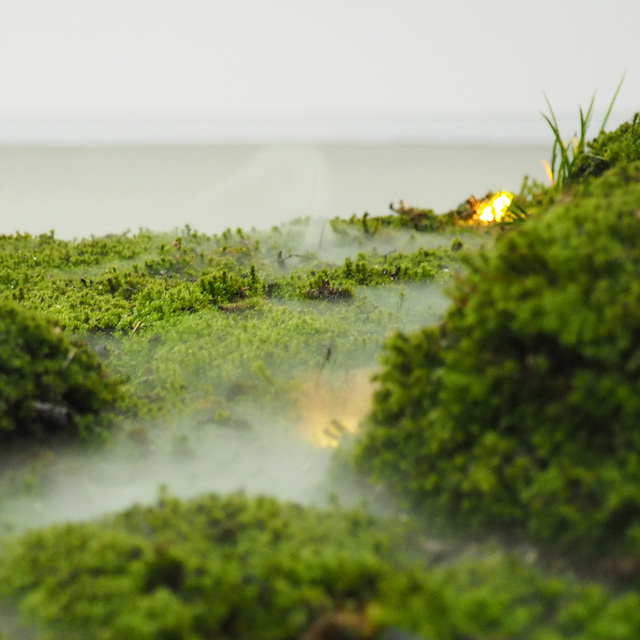
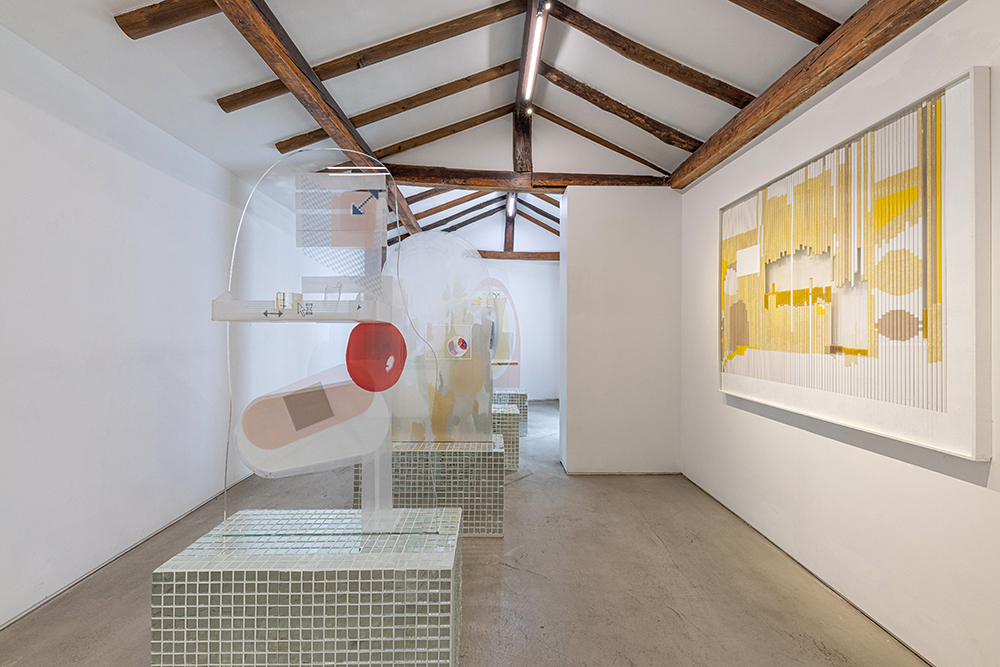
Mysteriously, beings of different species, appearances, and scents influence one another. A space draped in a translucent pale pink veil embraces me, you, and others like a forest enveloped by trees, clouds, and gentle rain. Objects emitting light reminiscent of miniature auroras add a sense of warmth.
Meanwhile, the artist's external and internal experiences in the forest, along with the flow of her thoughts, are expressed more directly in the video work Becoming a Scent Molecule (2025). At some point, the artist found herself unable to imagine separation and began to dream of a somewhat romantic sense of unity.
When “the aesthetic vibrations of plants steeped in spiritual fullness” are conveyed, humans are enveloped in tranquility. Perhaps the artist sensed how plants move and respond according to their surrounding conditions. Simply because they are rooted in the ground does not mean they remain motionless. Plants move freely and gracefully, beyond what humans might imagine.
Their movements are simply too slow for human vision to perceive easily. The growth of plants and changes in their leaves are also forms of movement. Branches change direction in response to sunlight, while leaves sway in the wind. Plants live and breathe in response to the rhythms of the universe, communicating with other living beings, including humans.
We begin to imagine the souls and wills of plants. Through breathing, the very evidence of being alive, the scent molecules of trees also move and permeate freely. At times, an immeasurable multitude of fragrances comes flooding in.
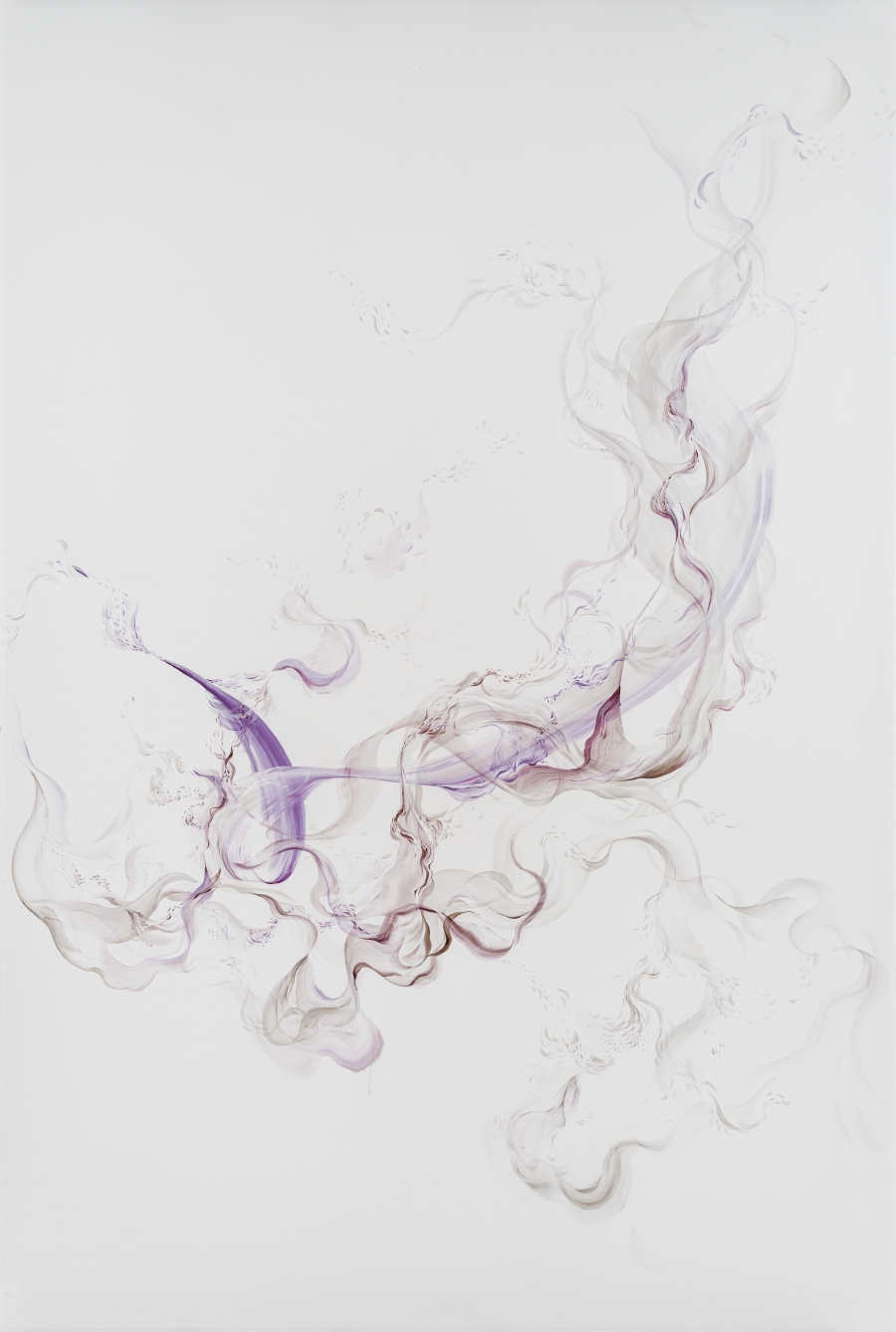
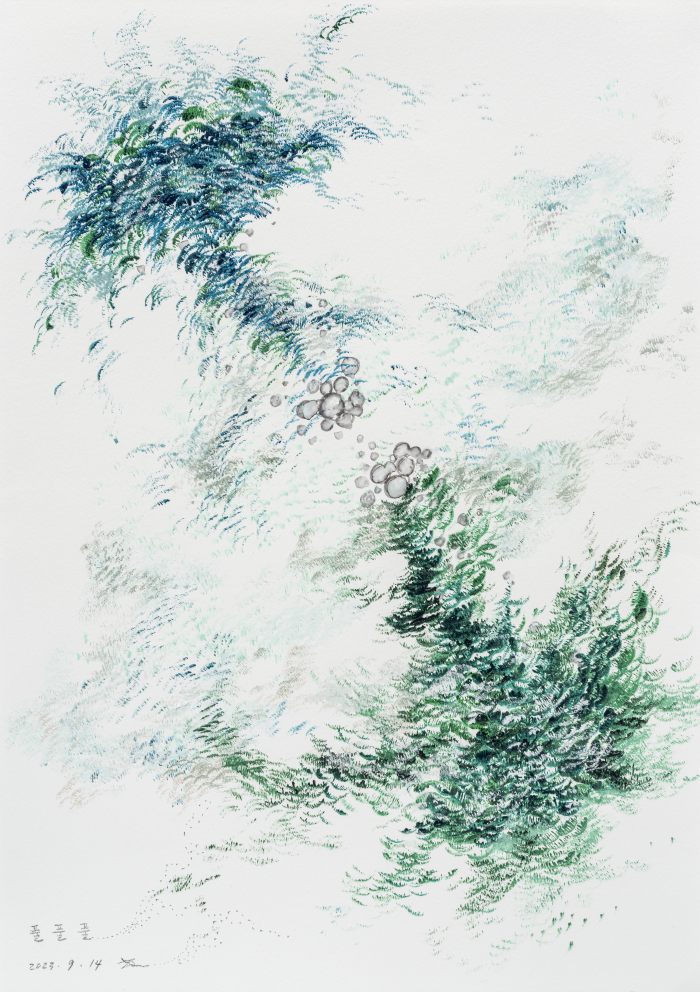
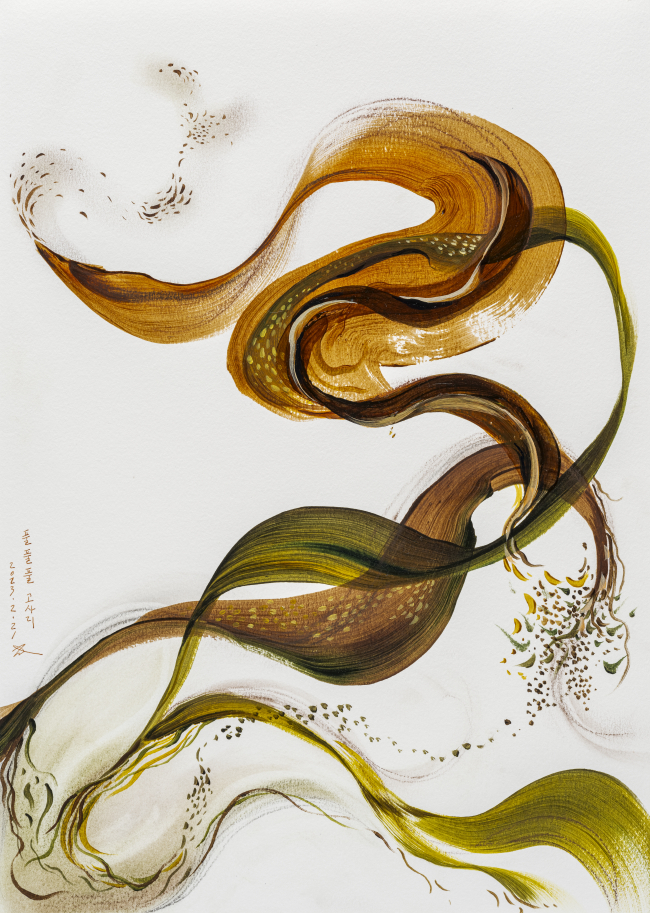
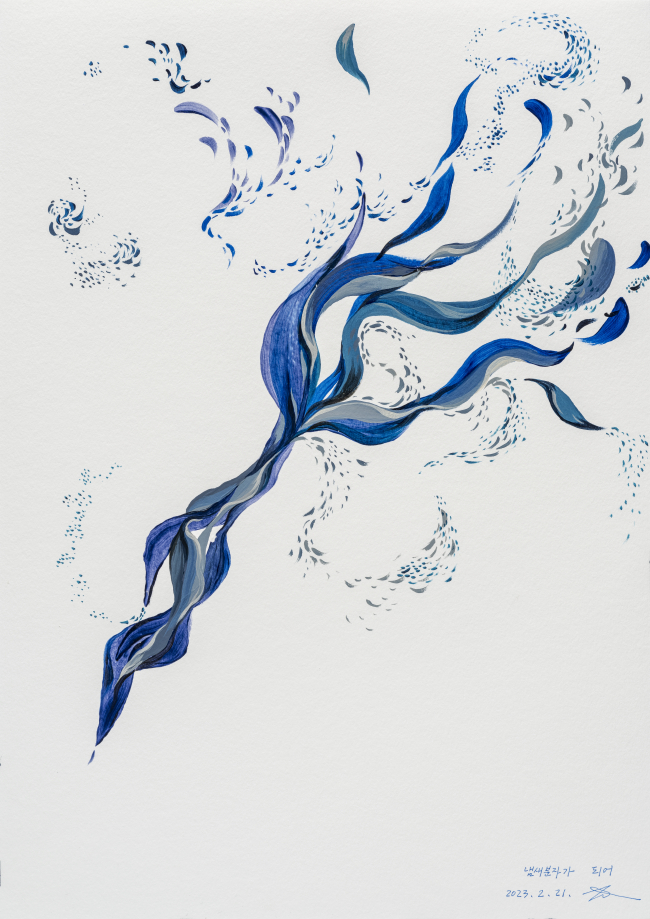
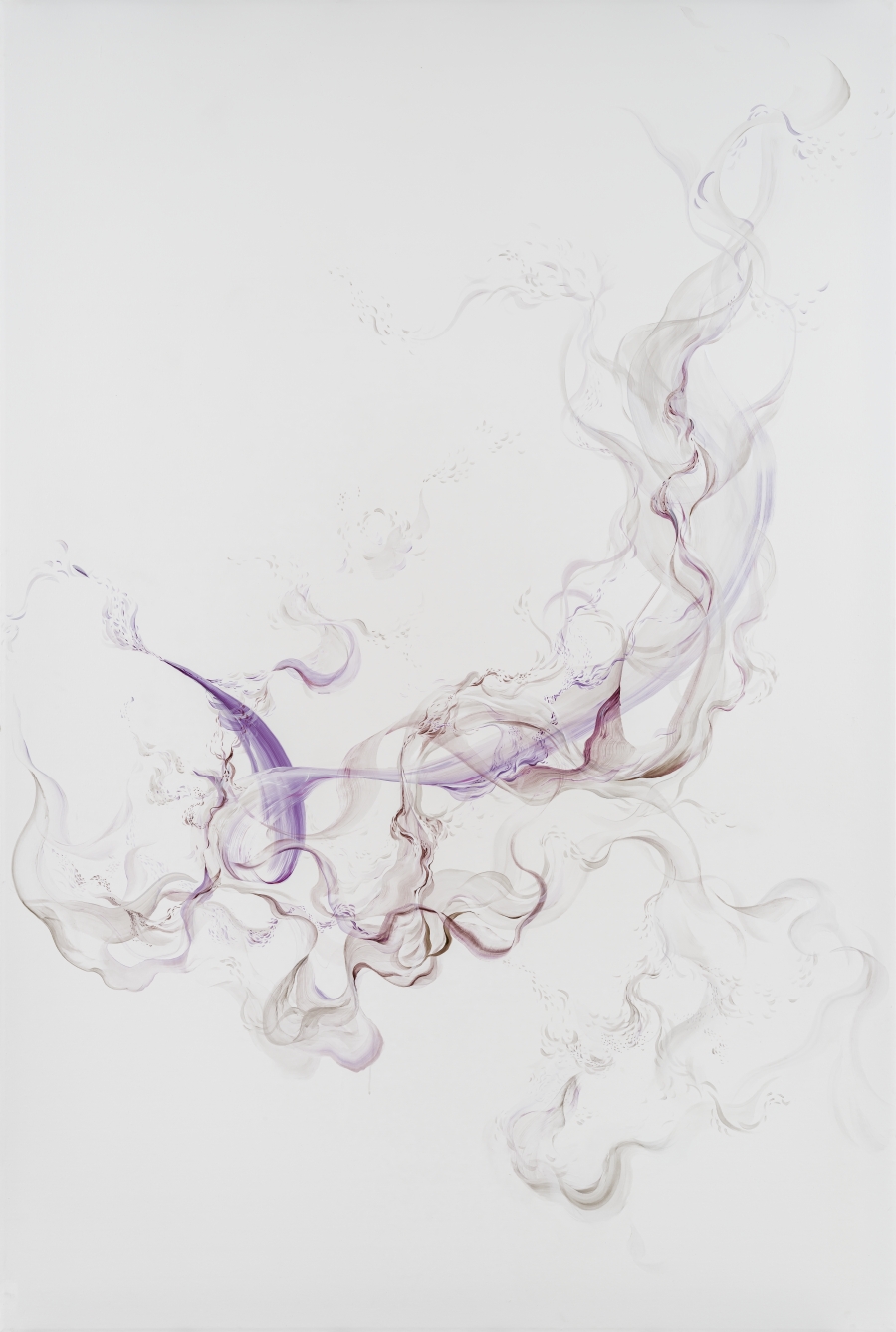
In her 'My Poetic Universe' series (2025), which resembles a choreographic score tracing the movements of scent molecules and the dance of trees or nature, Kim Jee Soo momentarily captures fragrances that spread and drift freely yet fade away with a certain sense of transience, along with the processes of life contained within them.
As her work progressed, the artist was able to approach something she could not fully comprehend but could unmistakably feel. Come to think of it, fragrances, emotions, thoughts, and life itself have no fixed form. They cannot be confined or held onto. Perhaps they are radiant and beautiful precisely because only their fleeting traces remain. Actions, time, and scent are projected onto forms and colors, completing “a landscape of interwoven strokes, spaces, and landscapes.”
The artist, as a human being, is not infinite, yet she is not ignorant of what infinity means and continues to contemplate it endlessly. She seeks to understand it. And quite often, questions about infinity lead to eternity. Eternity does not simply mean the endless continuation of a single being or state. It also prompts us to contemplate finitude.
The finite, the infinite, and the eternal are all connected to place and space, time, matter and immateriality, sensation and mind, existence and nonexistence. Each is inseparable from the fundamental principles of the world. We begin to question whether a spreading fragrance is finite or infinite. We then find ourselves reflecting on the finitude and infinity of the artist's work and of art itself. In this way, the fleeting moment extends into eternity.