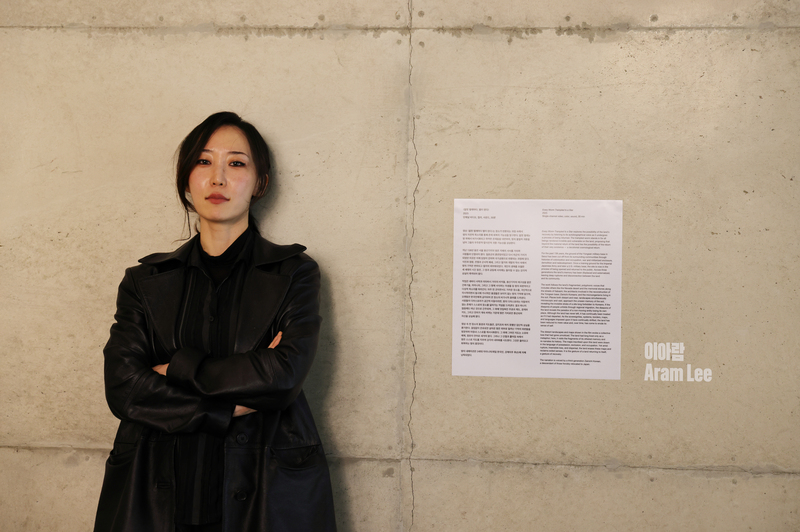
Aram Lee (b. 1986) traces the material and ecological afterlives of colonialism and militarisation across museums, objects, bodies, and landscapes, drawing on feminist materialist thought and postcolonial perspectives.
 
Through performance, video, installation, and other media, she recontextualises materials found within Western institutional settings to bring marginalised and overlooked narratives to light and explore subversive cultural structures.


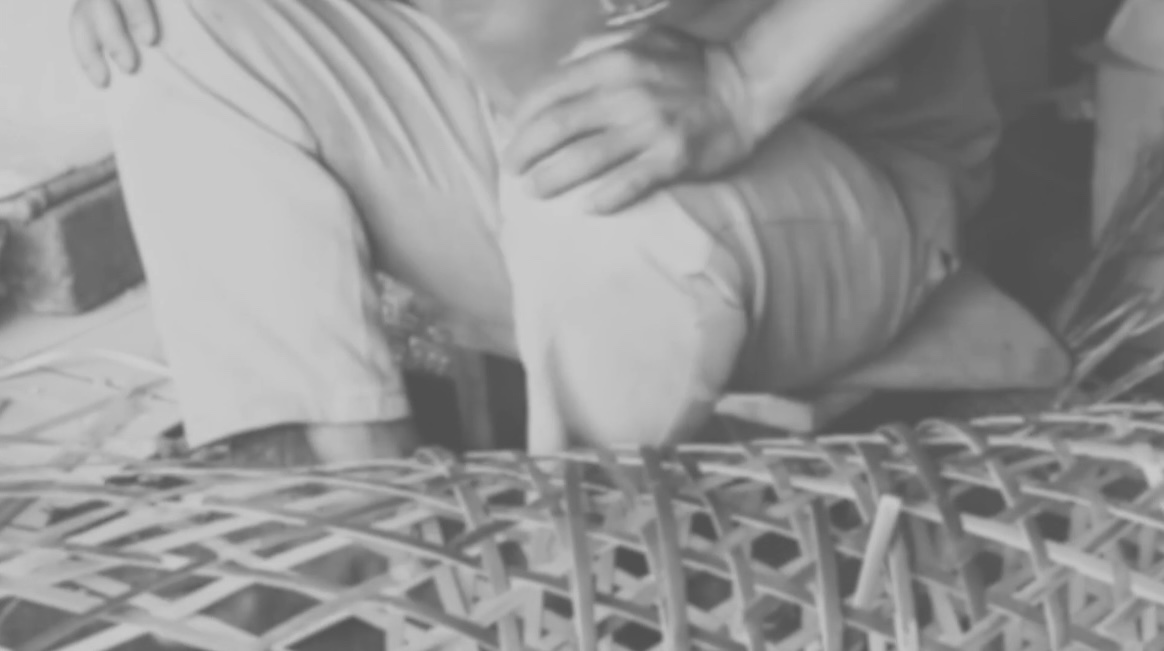
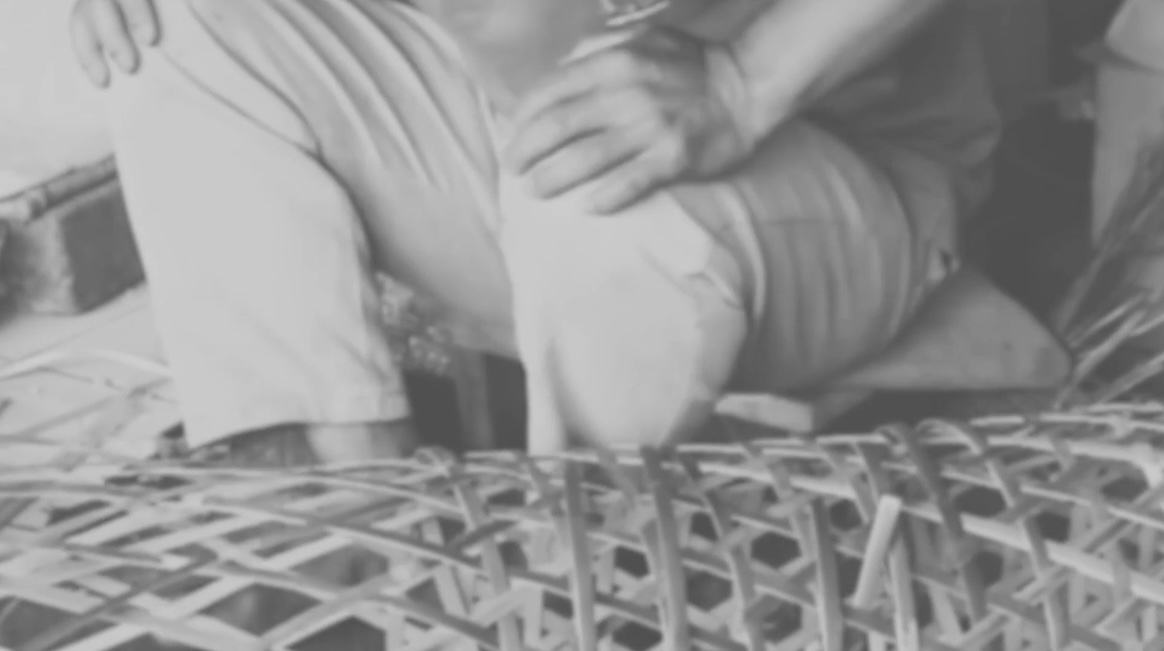
Aram Lee, The Journey of the Dutch wife, 2017-2022, Film, B/W, sound, 8min. © Aram Lee

After completing her undergraduate studies in Korea, Aram Lee continued her education in Stuttgart, Germany, and Eindhoven, the Netherlands. Following several artist residencies, she eventually settled in Amsterdam, where she is currently based. Through these repeated experiences of relocation, Lee has developed a critical distance from which to examine how places and institutions shape memory and perception.
 
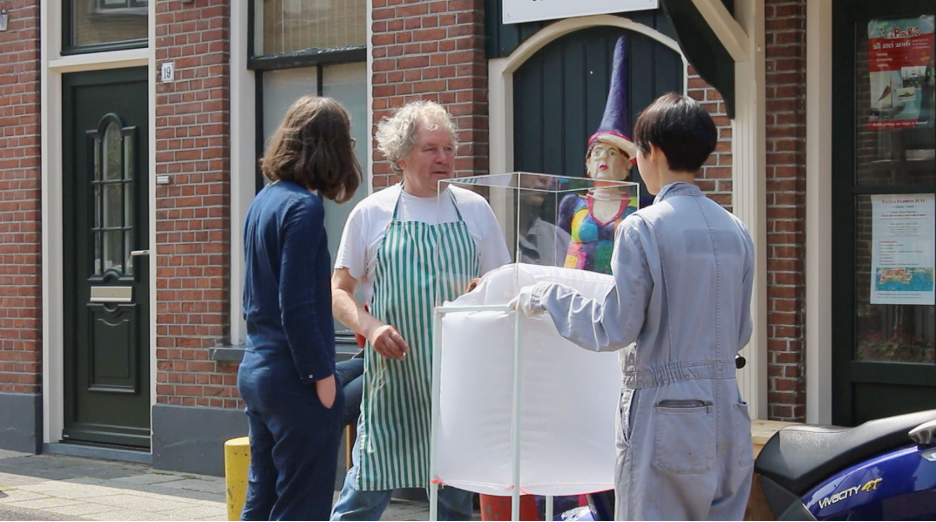
In her early series ‘Dutch Wife’ (2017–2022), Lee brings together archival and field research conducted in Indonesia and the Netherlands to explore the movement and return of objects entangled in colonialism.
 
The project begins with an inquiry into how histories embodied in objects can draw on the mutability of time inherent within them. As the historical trajectories embedded in objects extend into the present and future, they acquire a sense of openness, allowing us to engage with them in new ways.
 
Lee’s ‘Dutch Wife’ focuses on an object that is little known in the Netherlands but widely recognised in Indonesia as the “guling”. Tracing its existence through Dutch colonial history, the artist seeks to return the object to the place from which it was displaced.


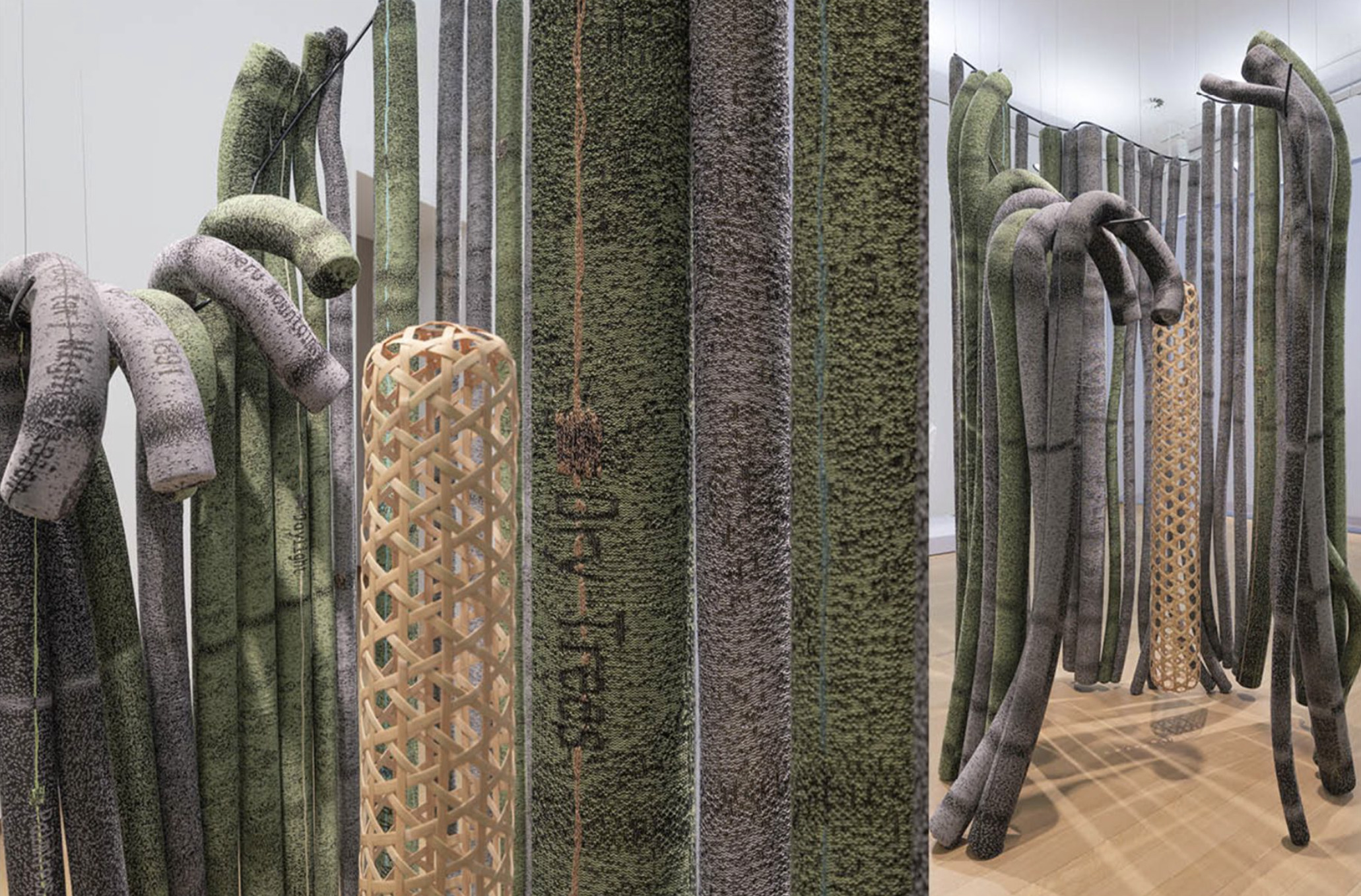
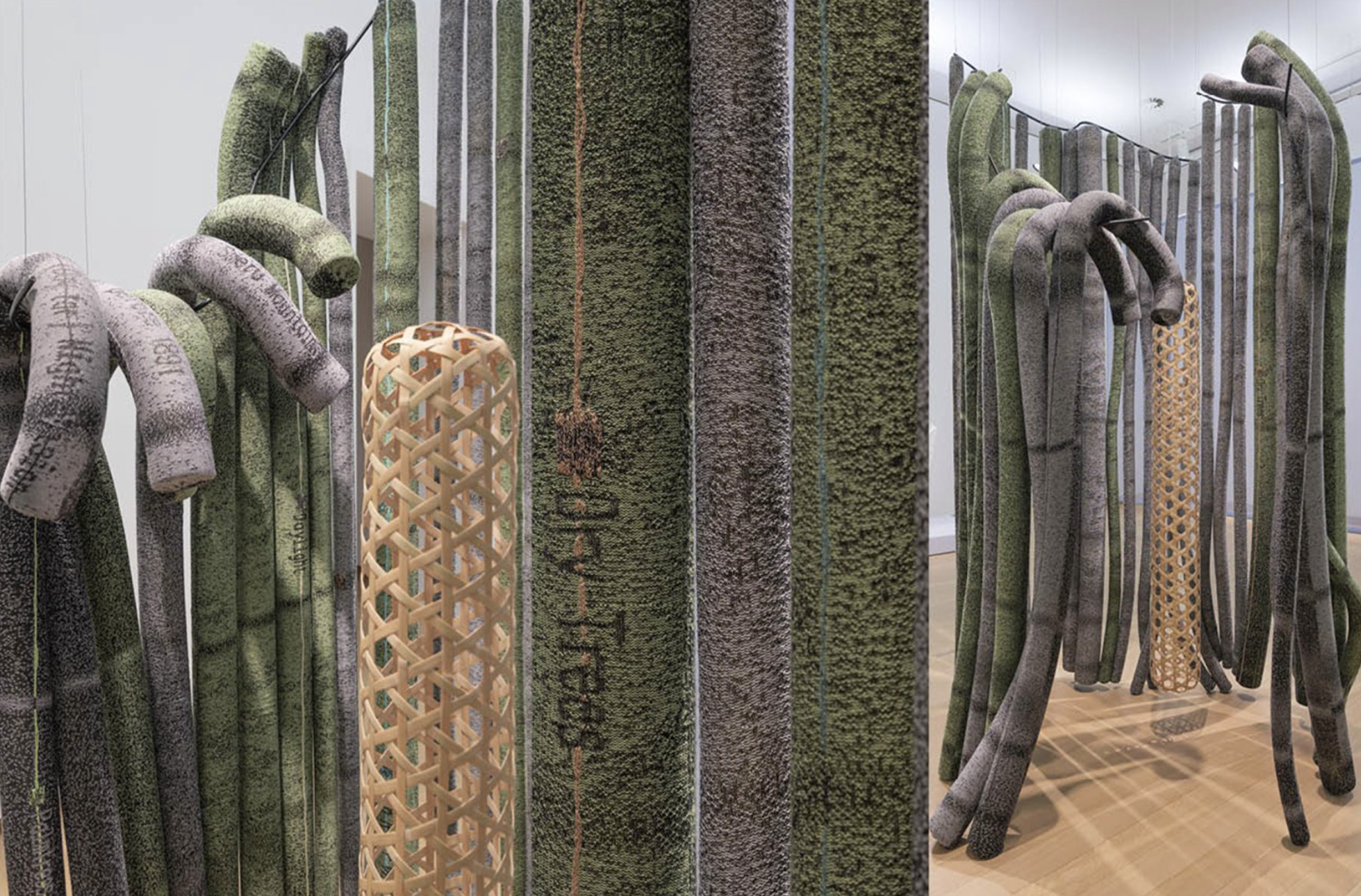
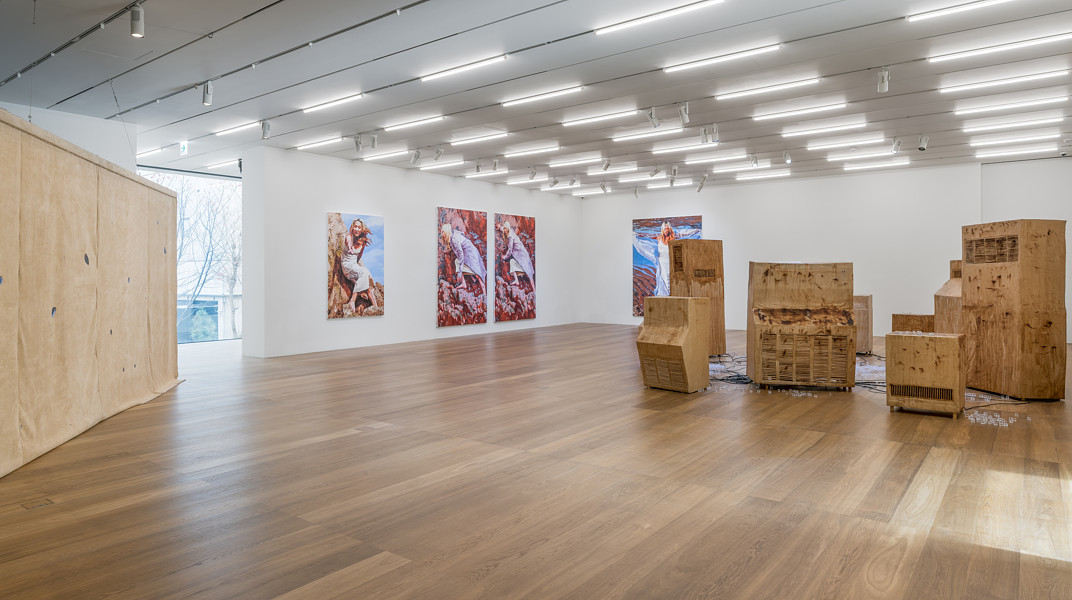
Aram Lee, Dutch wife, 2017-2022, Merino wool, knitted objects with mapped patterns (W210cm × L190cm × H310cm), bamboo weaved object (W50cm × L50cm × H150cm), rebars. © Aram Lee. Photo: Konstantin Guz.

Known as the guling, this object is a human-sized pillow made from woven bamboo, designed to improve ventilation when held close to the body while sleeping on hot, humid nights. During the Dutch colonial occupation of Indonesia, it came to be known as the “Dutch Wife.”
 
Evoking Indonesian women under colonial rule, the name reveals how even an everyday object can bear traces of the histories of multiple Asian countries and the memories of women subjected to oppression.
 
Over approximately two years, Aram Lee traced the origins of the guling from Korea through Indonesia to the Netherlands. Working with local craftspeople to remake the object, she revisited the bodies and memories of Asian women objectified under colonialism.
 
In particular, Lee transforms the object’s function and the bodily gestures associated with it, shifting it from something held by another into an agent that embraces others. Through this reversal, she reconsiders the historical oppression inscribed in the object and seeks to address the trauma of colonialism.
 
Knitted tubes enveloping the original guling and a map woven into the object’s body reveal hidden narratives through this process of reclamation.


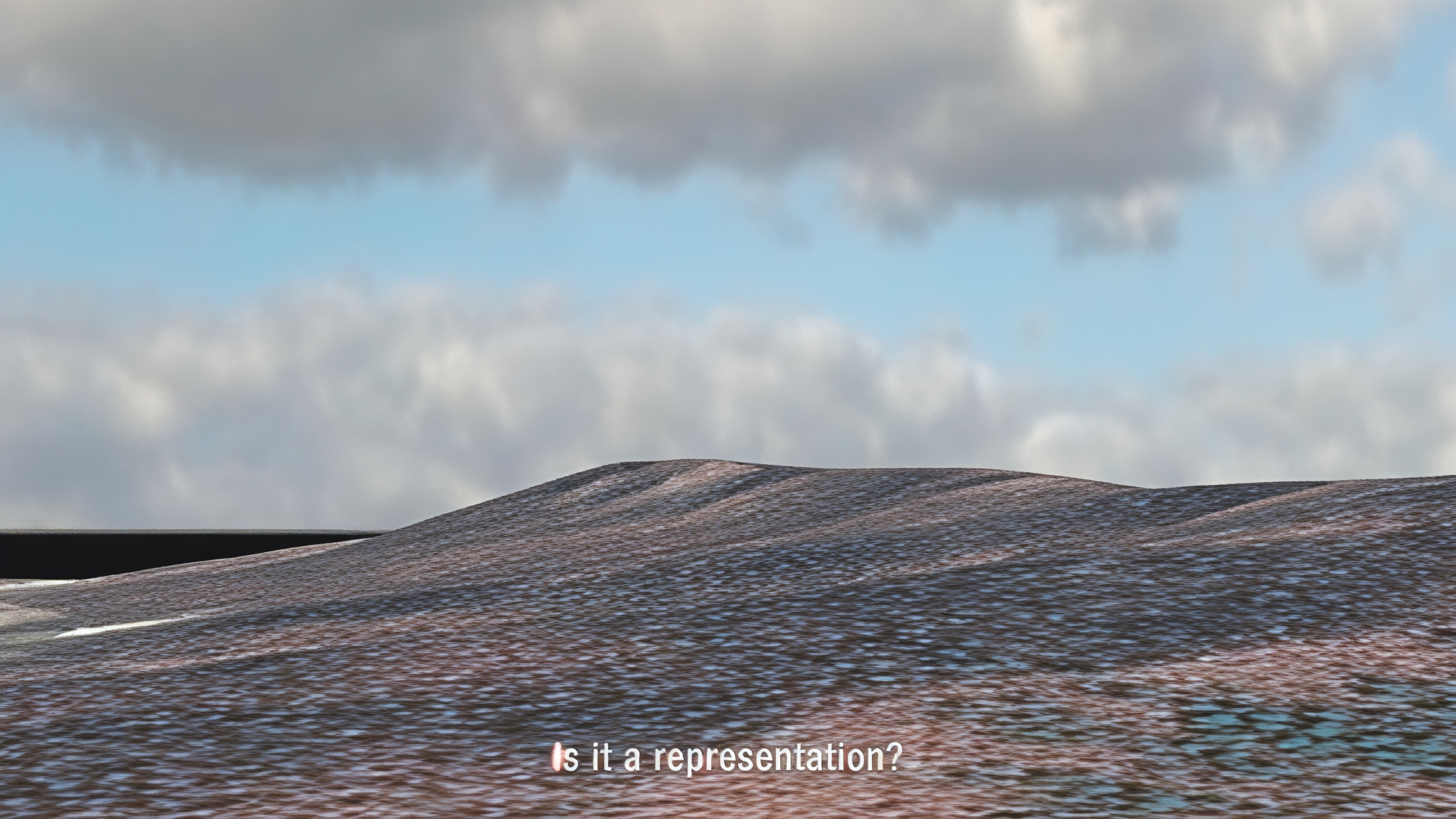
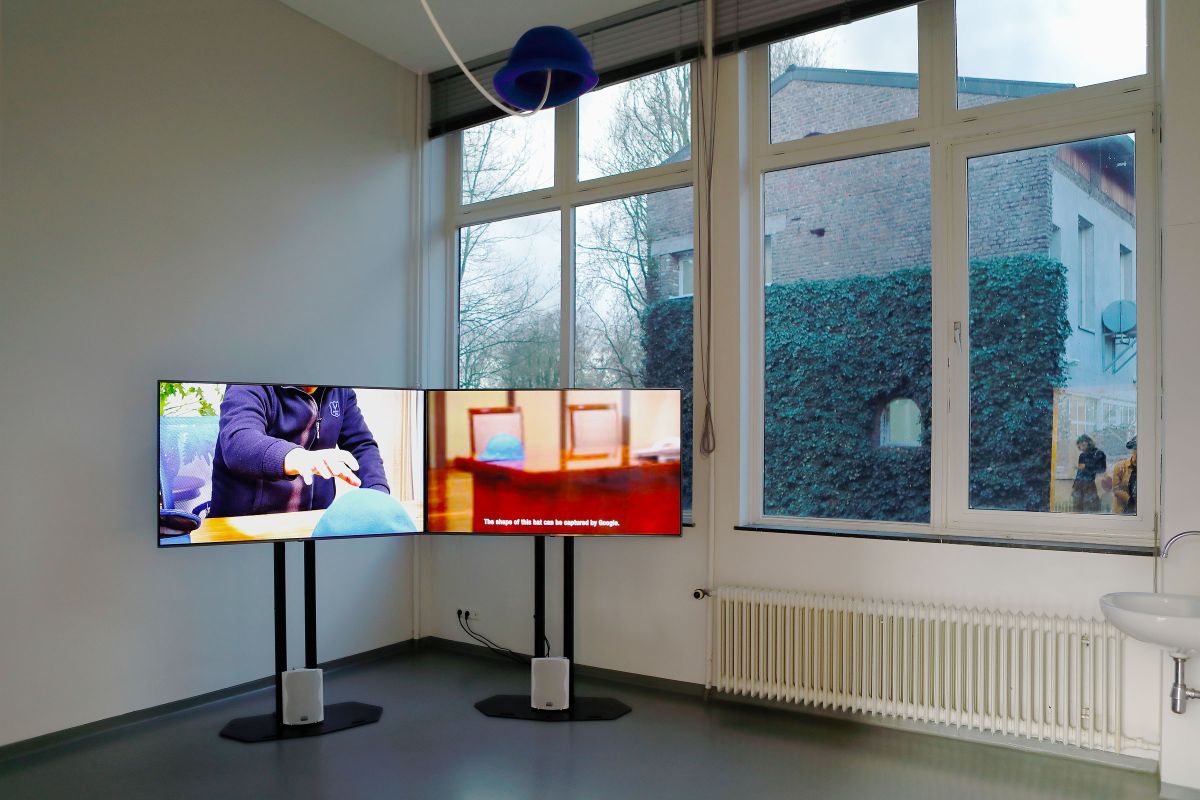
Aram Lee, From Pyongyang to Pluto and Back, 2019, 2-channel video, color, sound, 12min. © Aram Lee

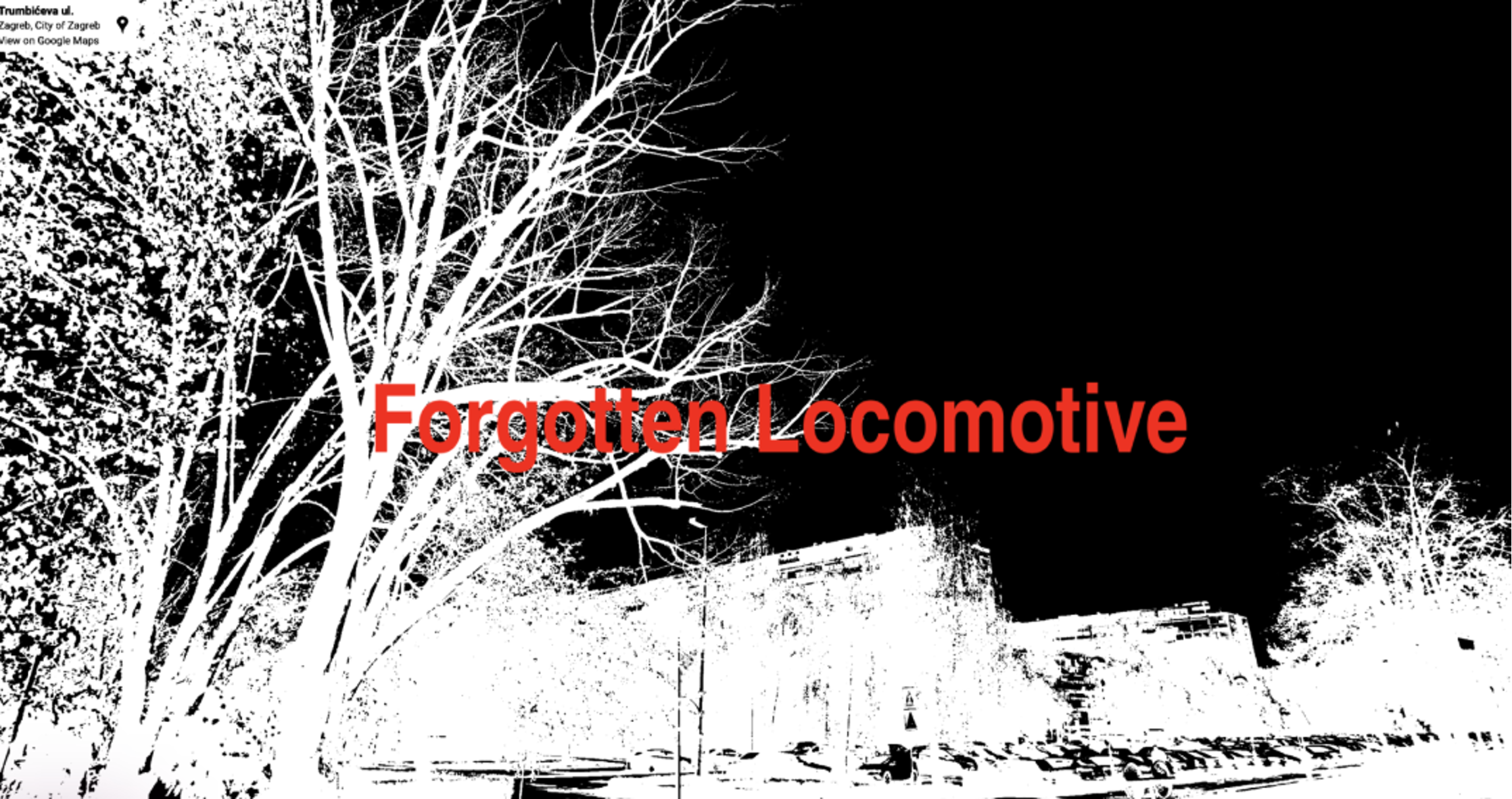
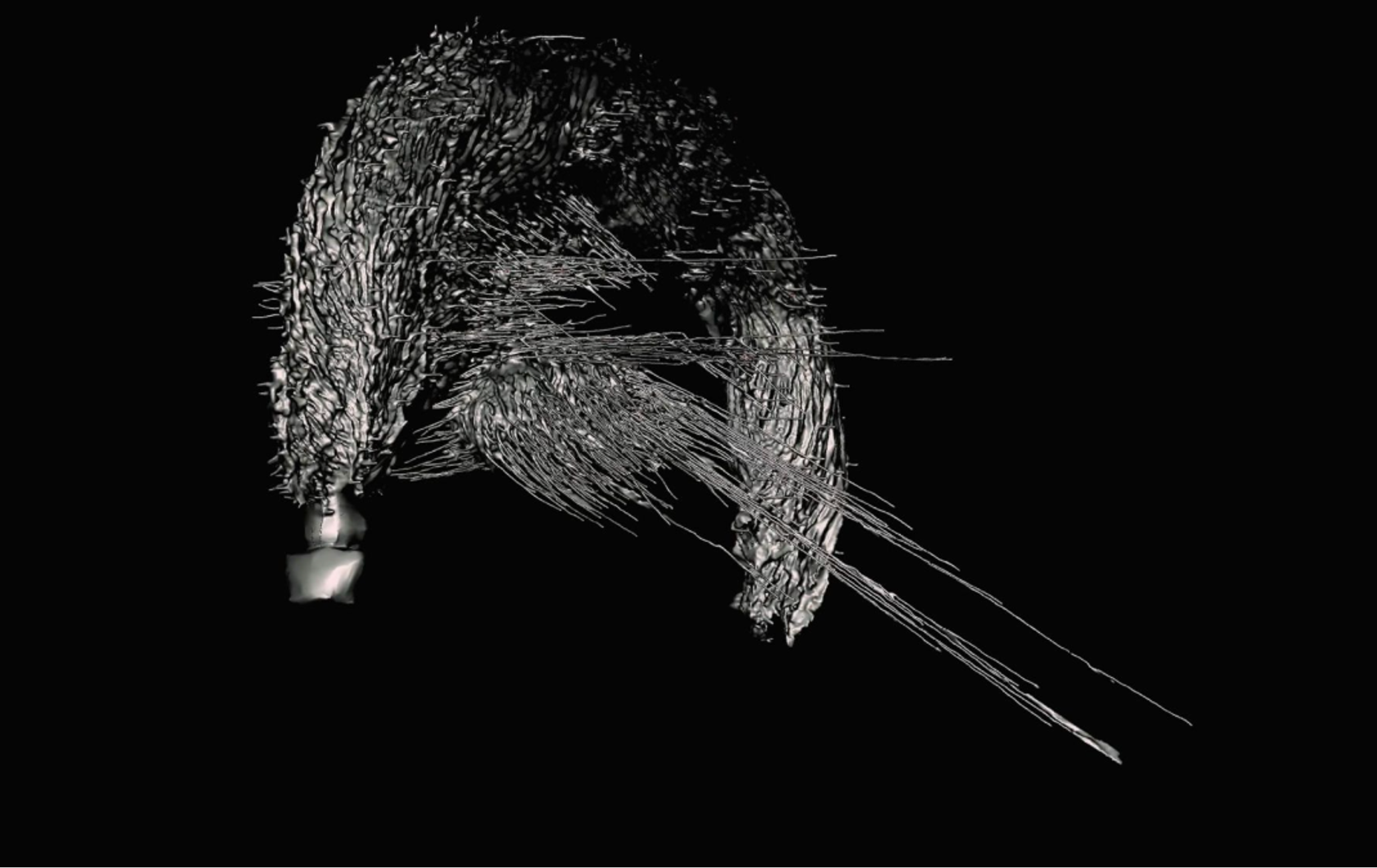
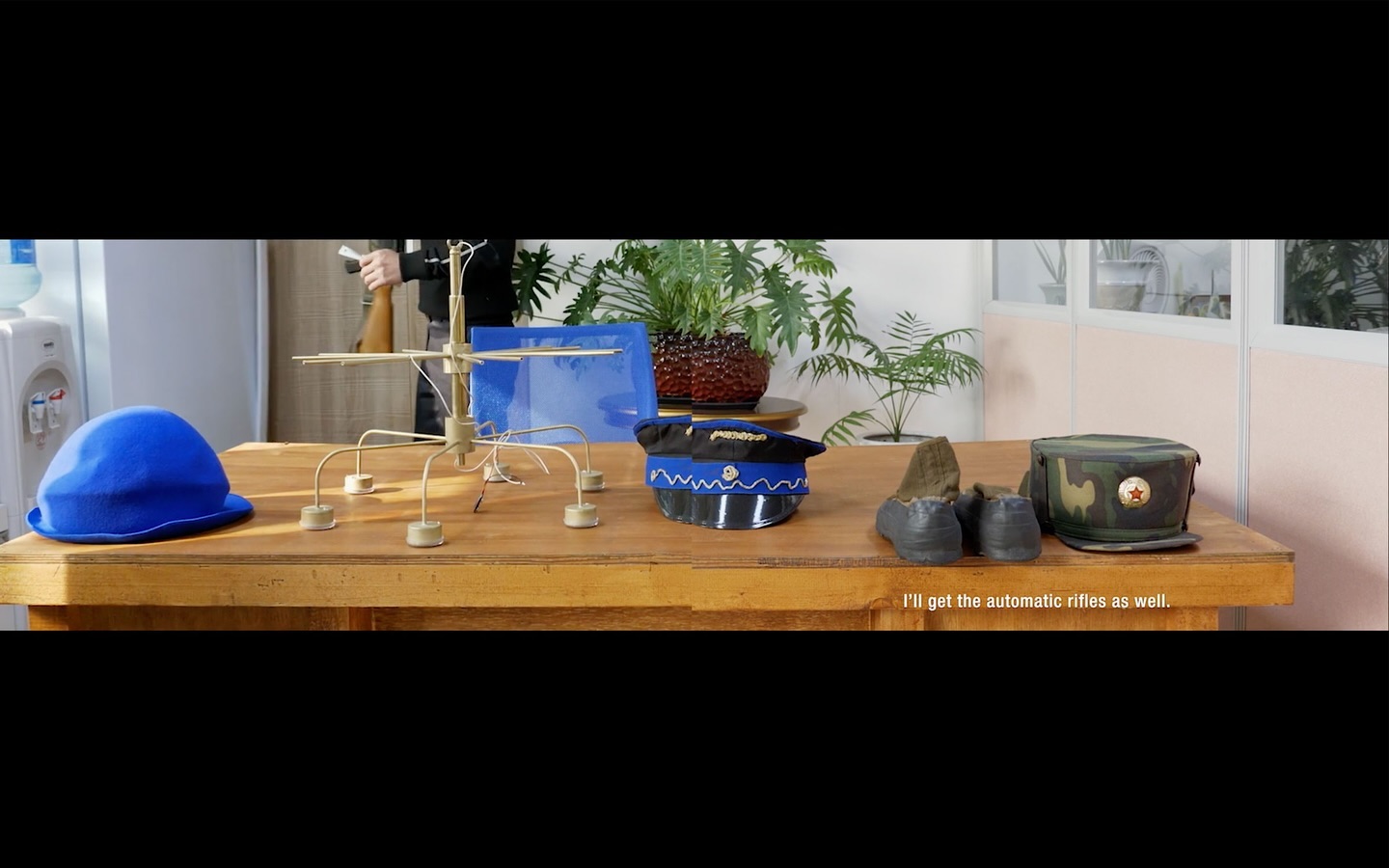
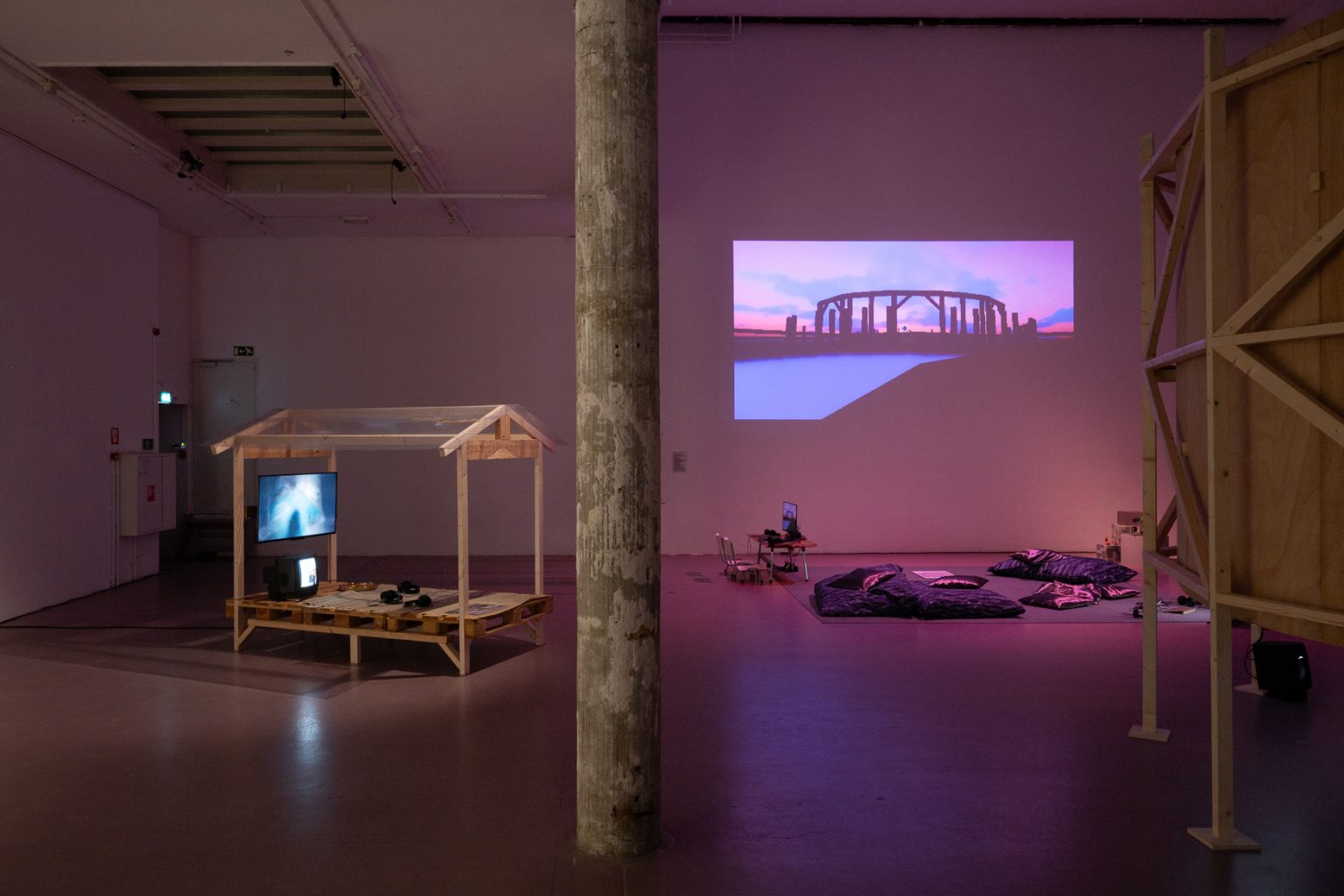
Meanwhile, From Pyongyang to Pluto and Back (2019) is the outcome of a journey through a diaspora of images and people in search of North Korea, one of the world’s most inaccessible and unknown places.
 
When browsing the web for American satellite images of North Korea, Lee came across Washington D.C.-based institution 38 North. A website devoted to informed analyses surveils the country to create truths through images.
 
3D-rendered objects and spaces from their digital archive enhance existing images by providing the buildings with interiors complete with lamps, desks, tables, computers, chairs, and various other small objects. These are all details inaccessible to the prying lens of the satellite. The intention is to give a heightened, yet speculative, impression of reality.


Aram Lee, From Pyongyang to Pluto and Back, 2019, 2-channel video, color, sound, 12min. © Aram Lee

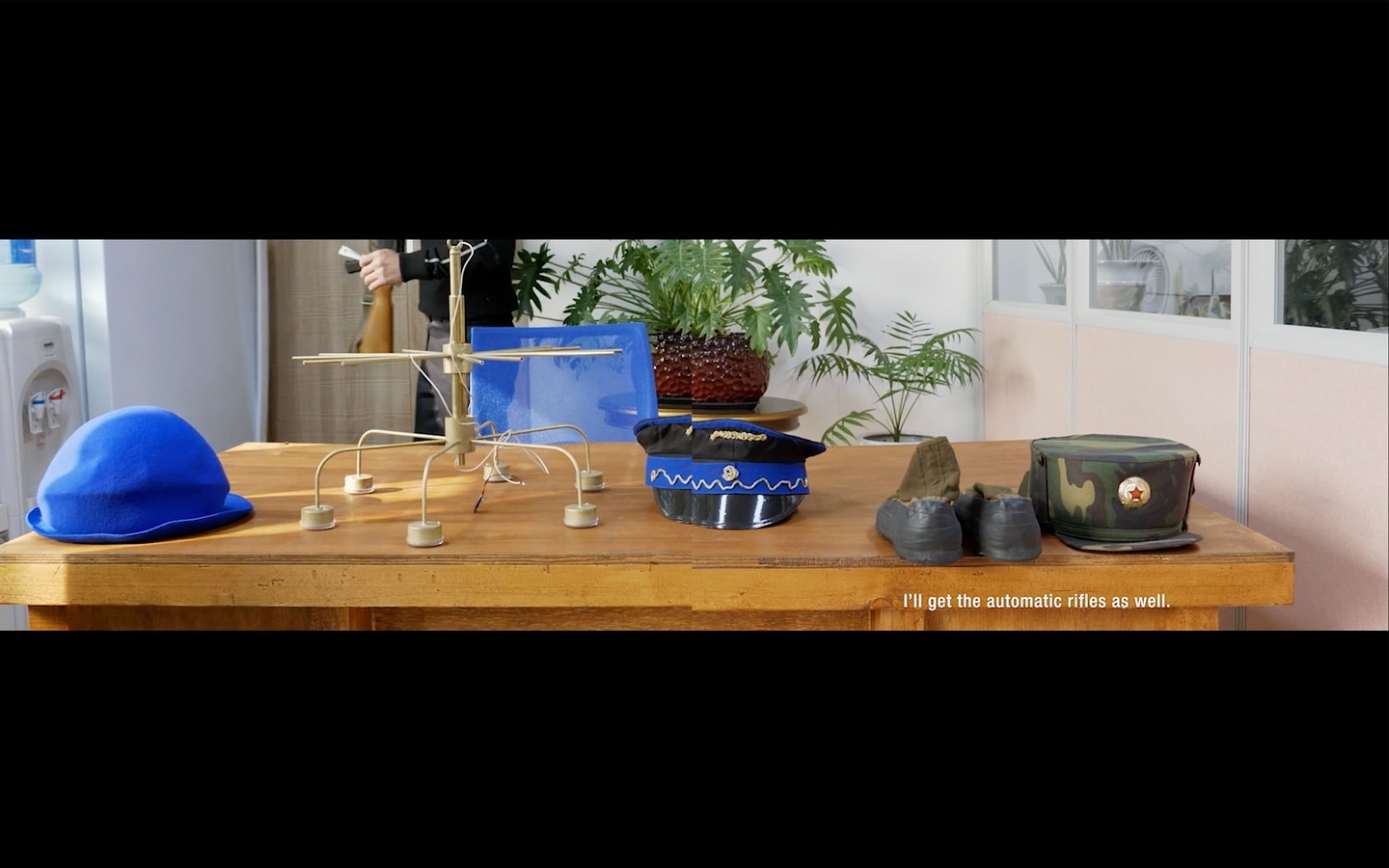
Aram Lee recreated five virtual objects from an archive as physical objects and brought them to Korea to show a former North Korean military officer who had defected. Two of these objects were a military cap and a bowler hat, casually placed on a long computer table in a simulated interior space. Yet their owners never appear in the images. Confronted with the physical objects, the former officer responds with incredulous laughter at their disconnect from reality.
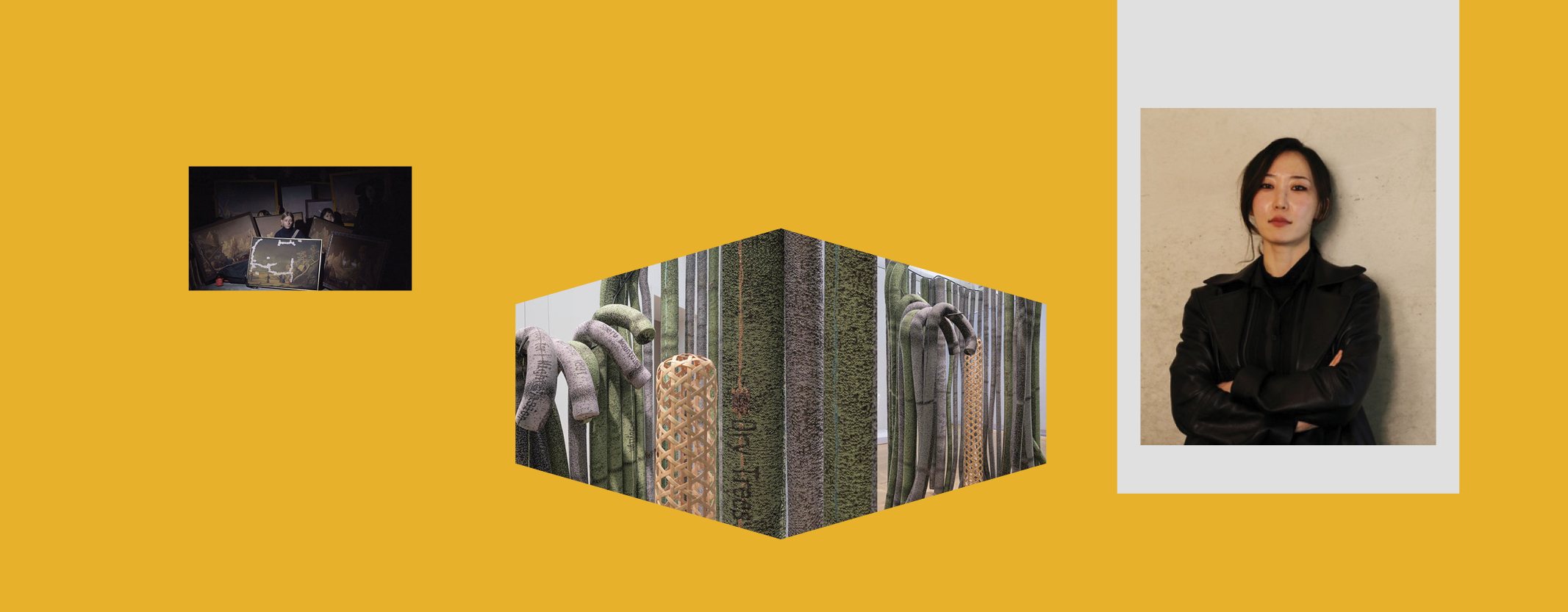
 
This scene starkly reveals how real places, shaped by the politics of images and representation, become detached from their actual conditions as fact and fiction intertwine.


Aram Lee, A Dissonance of Landscapes, 2019, Single-channel video, color, sound, 13min. © Aram Lee

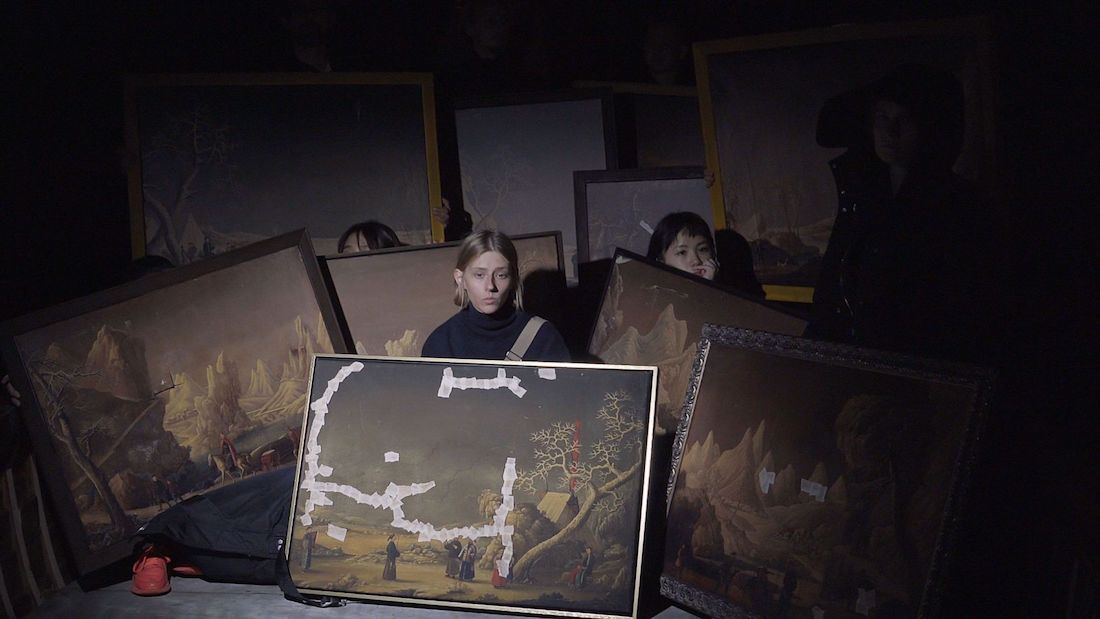
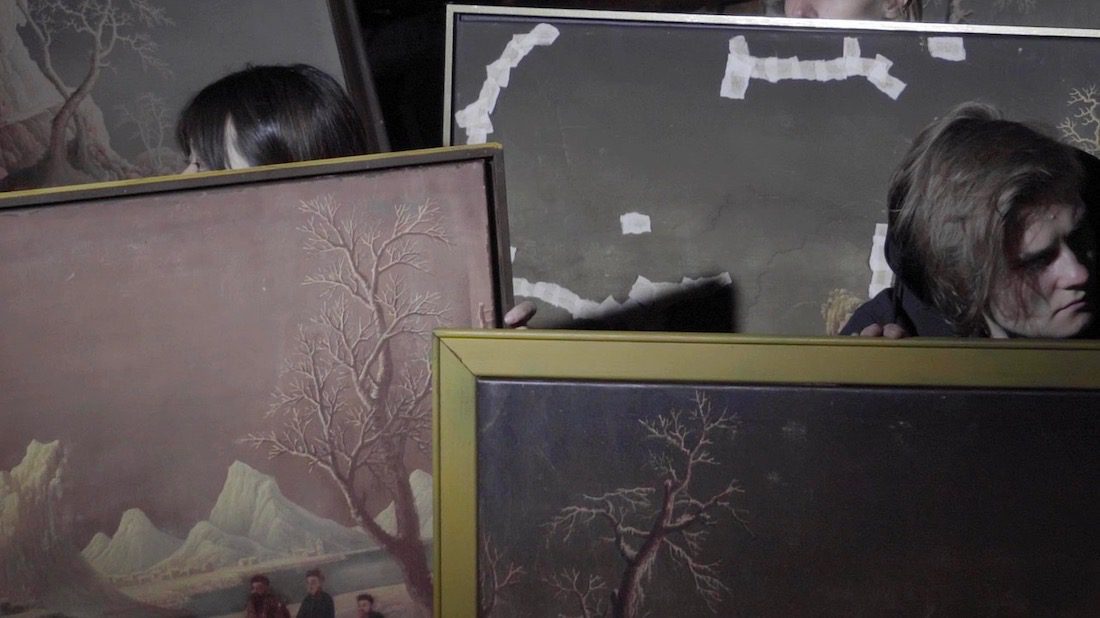
Aram Lee’s video work A Dissonance of Landscapes (2019), also presented that year, depicts ten “export winter landscapes” emerging from a dark museum storage room on a summer night and dispersing through the city’s shadowy corners. Ten people on a precarious boat, each carrying an oil painting of a winter landscape, journeyed into the sea from the IJ.
 
While these landscapes are painted by Cantonese painters in tropical regions and attributed to the region, the imagination of winter landscapes behind them is a result of an exchange between the Dutch and the Cantonese in the 19th century. Looking more closely, one can see that the figures resemble people from Guangdong, while the surrounding mountains and trees are rendered in a European style.


Aram Lee, A Dissonance of Landscapes, 2019, Single-channel video, color, sound, 13min. © Aram Lee

Currently undergoing long-term restoration at the museum, the ten landscapes have never been publicly exhibited and bear traces of repair, including patches of tape scattered across their surfaces. They bring together imagined winter scenes from a region without winter, the repeatedly repaired surfaces of these landscapes, and the dark exterior into which they are returned.
 
In the video, these tropical snow scenes poetically reconfigure a liminal space, unfolding within a dark setting that remains ambiguous between interior and exterior. Figures drift out of focus as the images move between motion and stillness, following waves that seem poised to change at any moment.


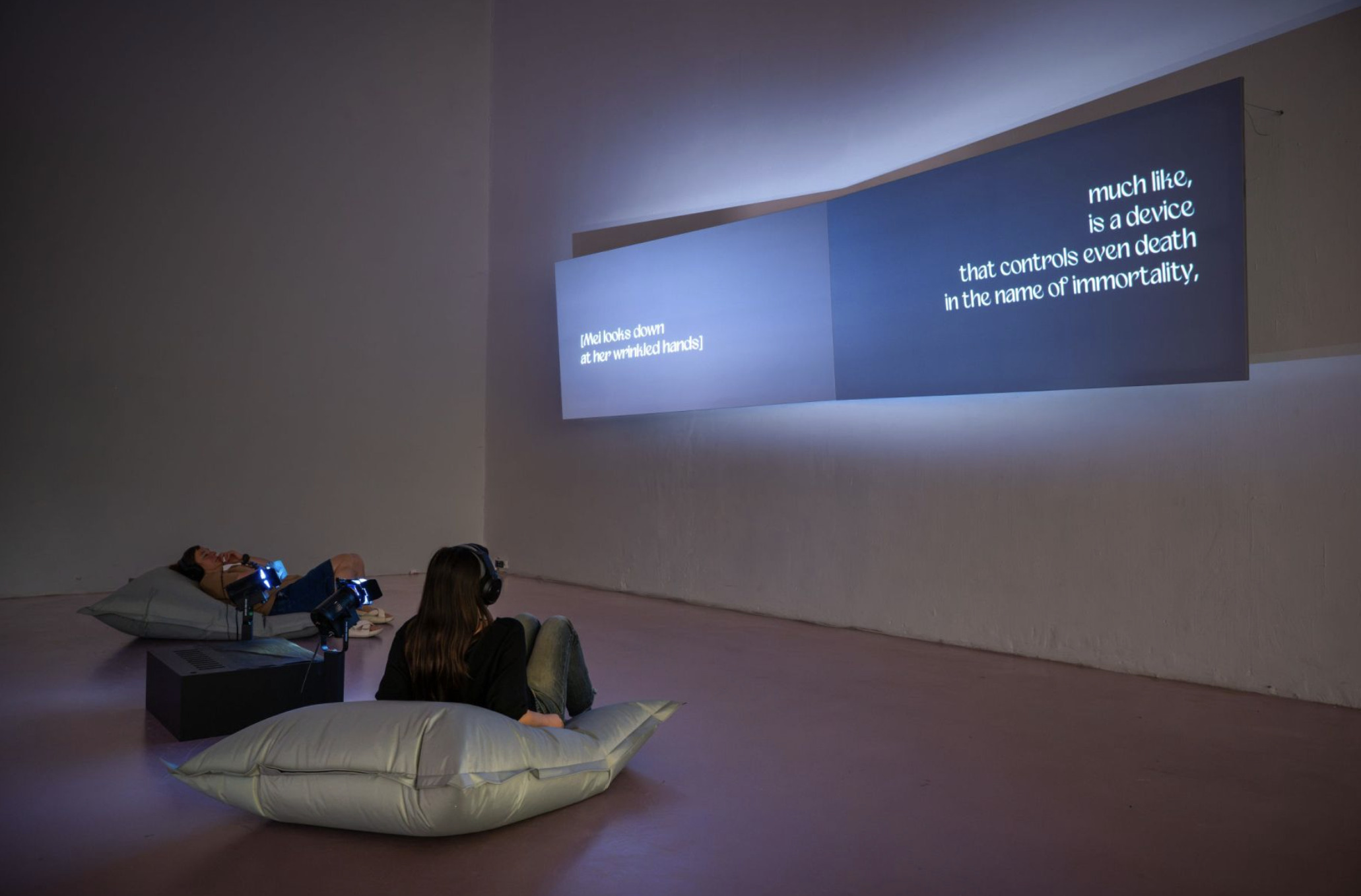
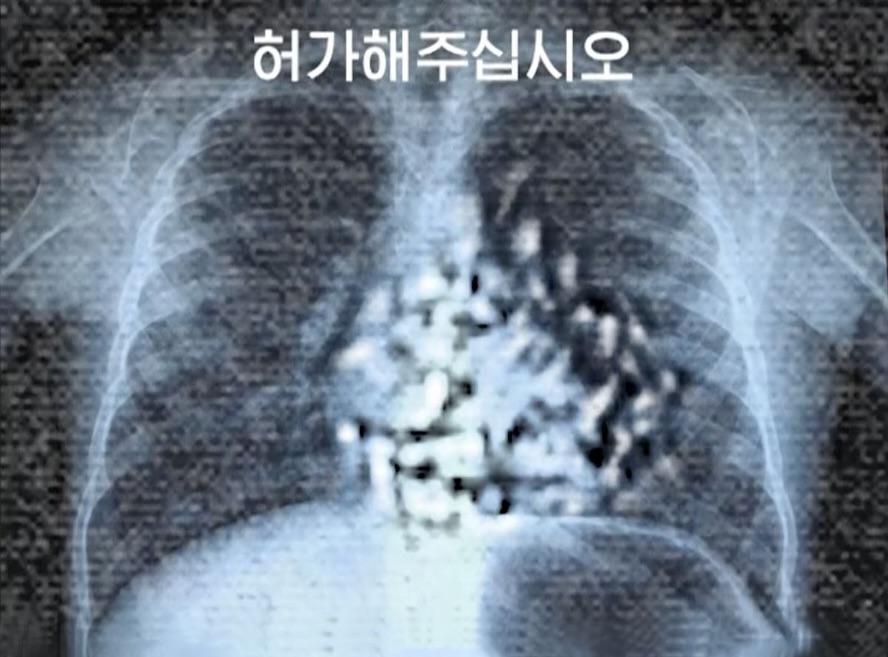
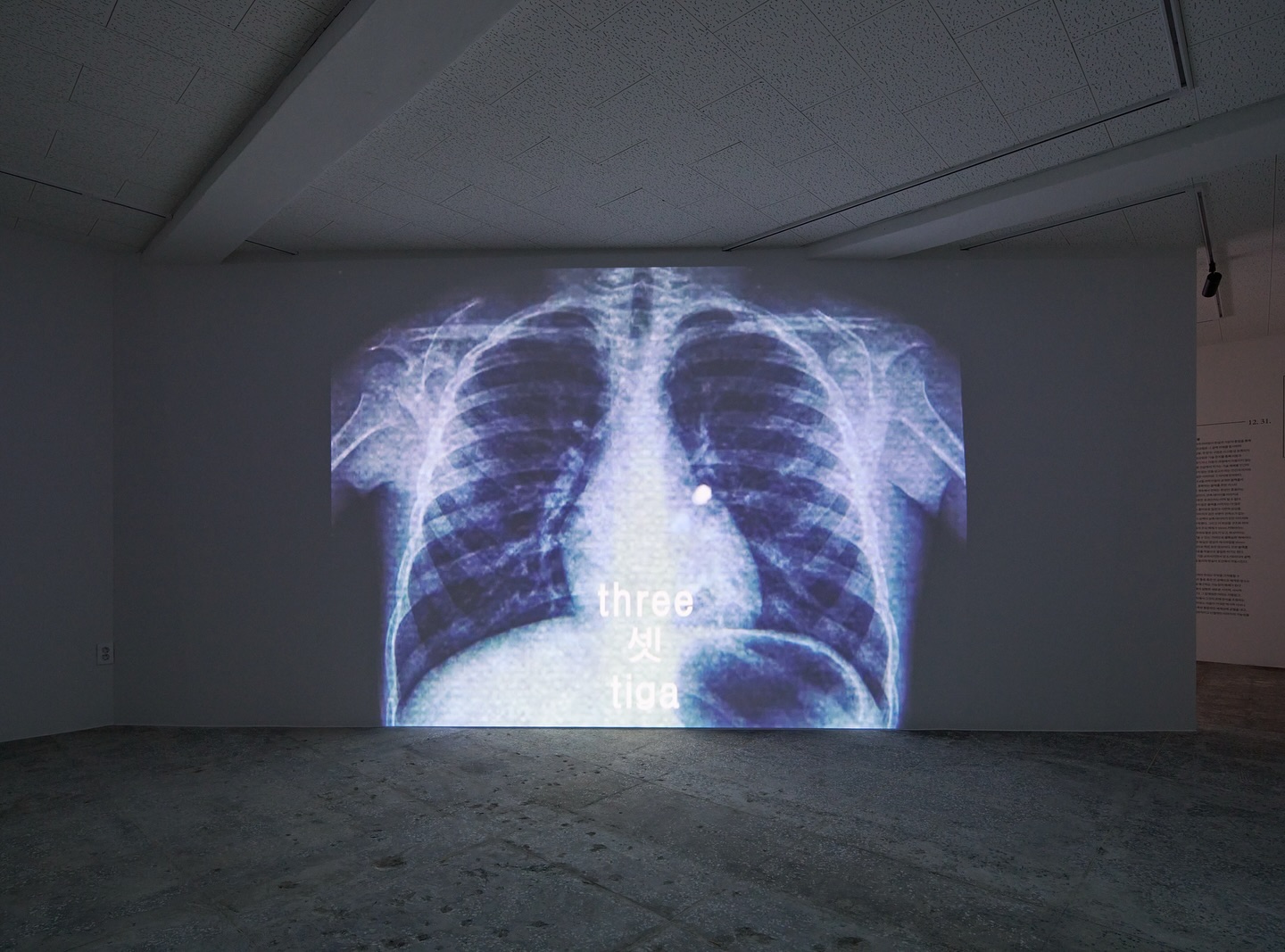
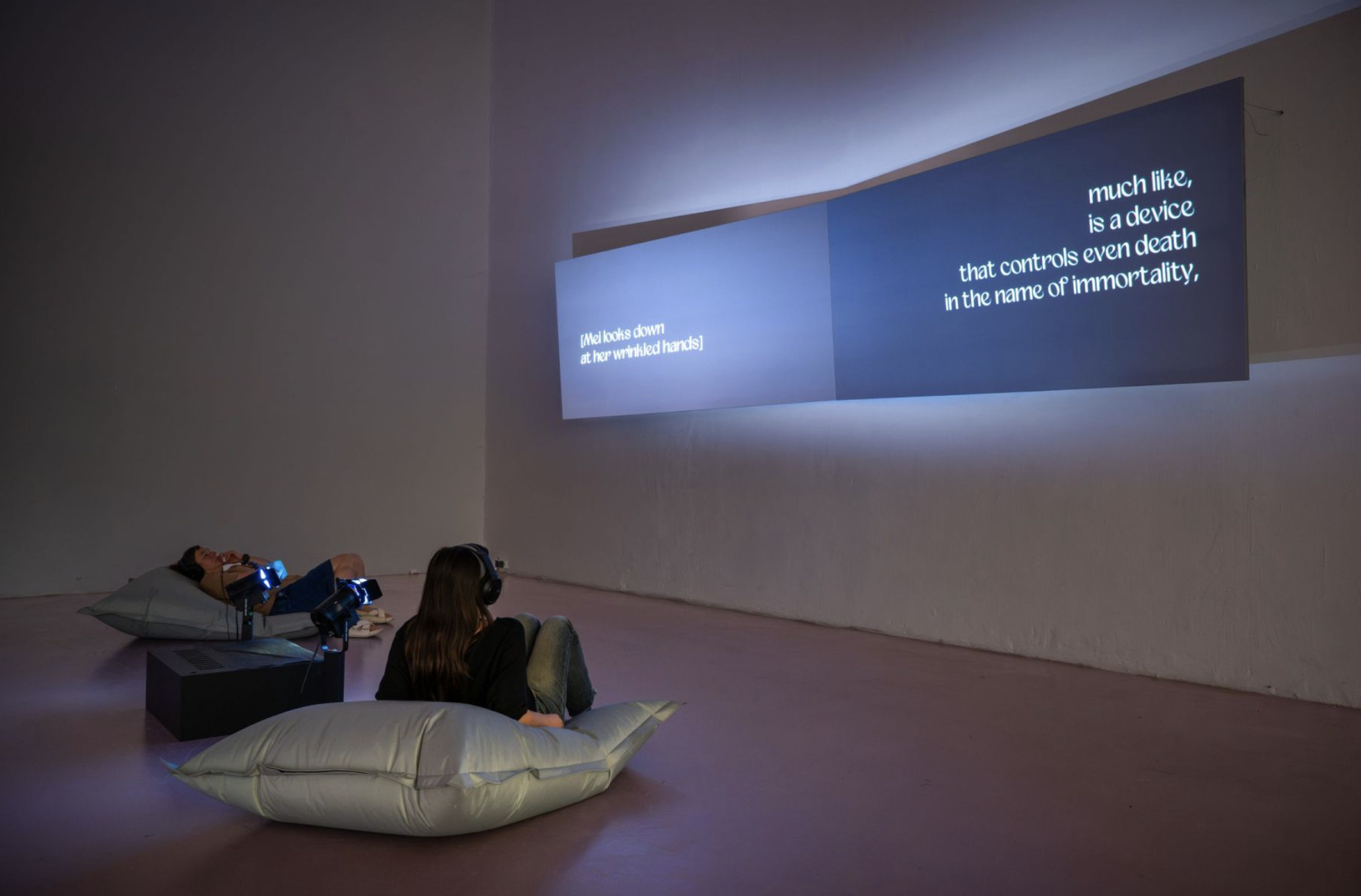
Aram Lee, X-hale, 2023, Single-channel video, color, sound, 2min 23sec. © Aram Lee

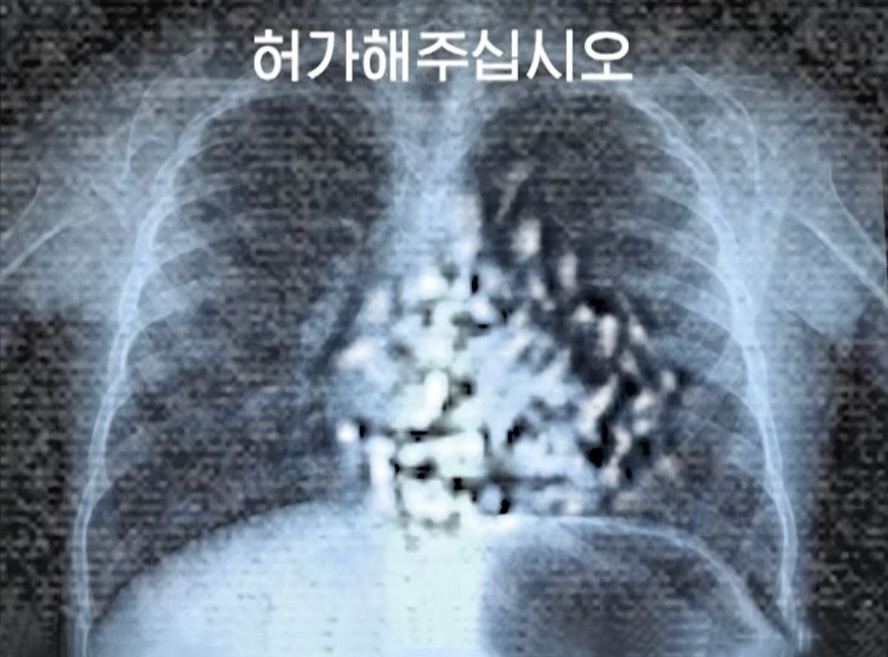
Having explored how objects transform and exist as they move across historical, cultural, and political boundaries, Aram Lee turns to the regulation and control of her own body at the border in her 2023 video work X-hale.
 
The video presents X-ray images taken during a tuberculosis screening that Lee was required to undergo when moving from Germany to the Netherlands. Whether tuberculosis screening is mandatory at the border depends on a person’s nationality.
 
Through this work, Lee recounts her experience of having her body made an object of verification and being required to undergo medical examination before being granted permission to enter the country.
 
X-hale originates in shared experiences that Lee discussed with an Indonesian artist colleague. Brief monologues in Indonesian and Korean intermittently cross the screen and unfold as voice-over narration.
 
This cinematic collage centres on the artist’s own body, subjected to medical examination at the border, bringing together everyday personal experiences and images of microorganisms that Lee collected directly from the basement walls of a world ethnographic museum.


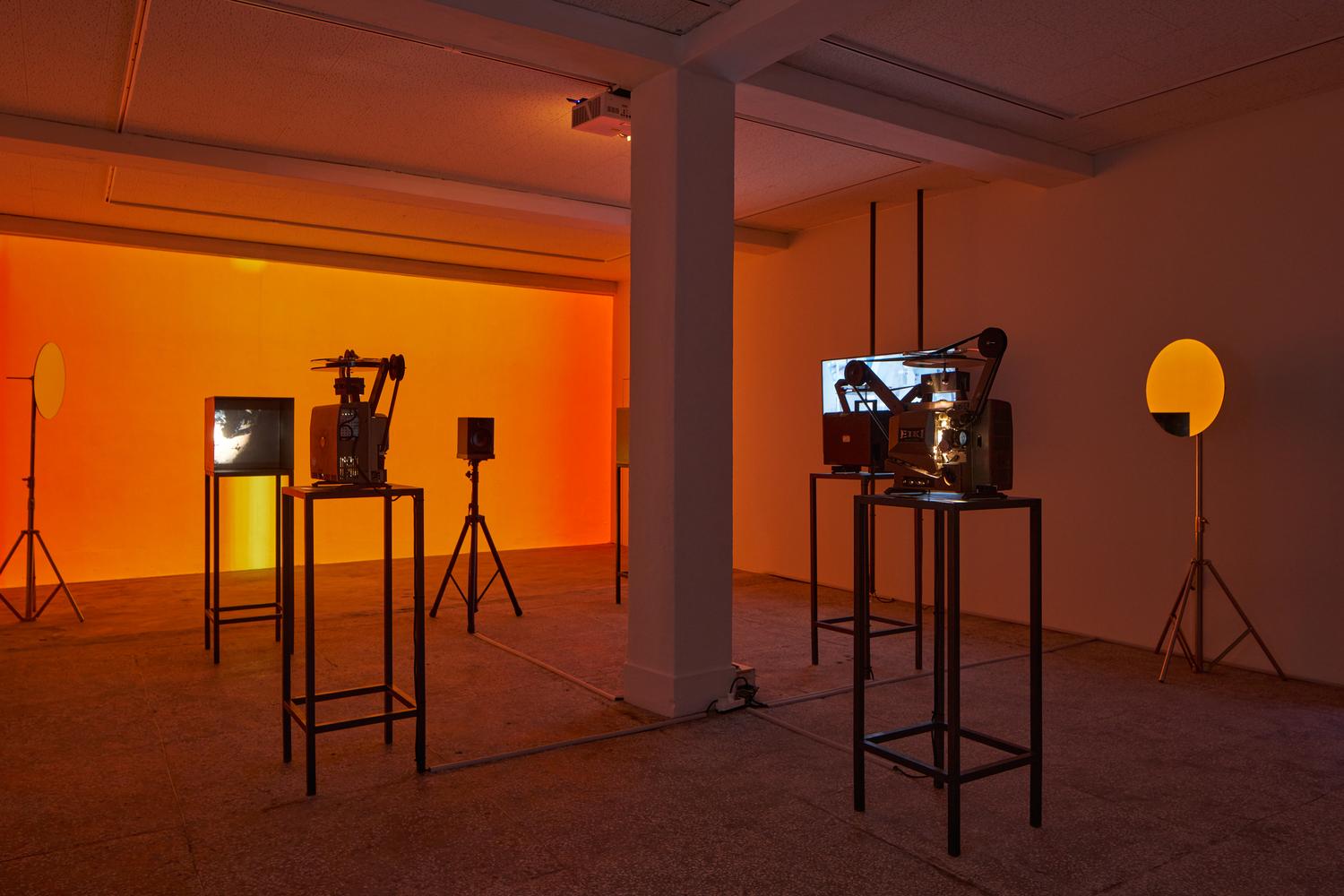
Aram Lee, X-hale, 2023, Single-channel video, color, sound, 2min 23sec. Installation view of 《This nameless sites》 (K-Arts space, 2024) © Aram Lee

These microorganisms slowly seep through moisture from the exterior of the museum’s basement walls into the interior. Within this institutional environment, filled with objects of the Other that regulate and control everything, they constitute another invisible outsider. At the same time, they are entities that move freely between inside and outside.
 
Working with scientists, Lee digitised the images and movements of 97 species of microorganisms collected from the museum walls. By combining these microorganisms with images of her own body, the work approaches the body as a geopolitical site.
 
Like territory, the body may be recognised as legitimate through registration and authorisation, yet it may also be deemed a source of risk or classified as an entity crossing borders without permission, like a clandestine entrant or undocumented migrant. Surveillance is carried out to enforce these distinctions, revealing the complex interplay between the body and the concept of borders.


Aram Lee, 350,000 Leaks, 2024, Single-channel video, B/W, sound, 45min 31sec. © Aram Lee. Photo: Sander van Wettum.

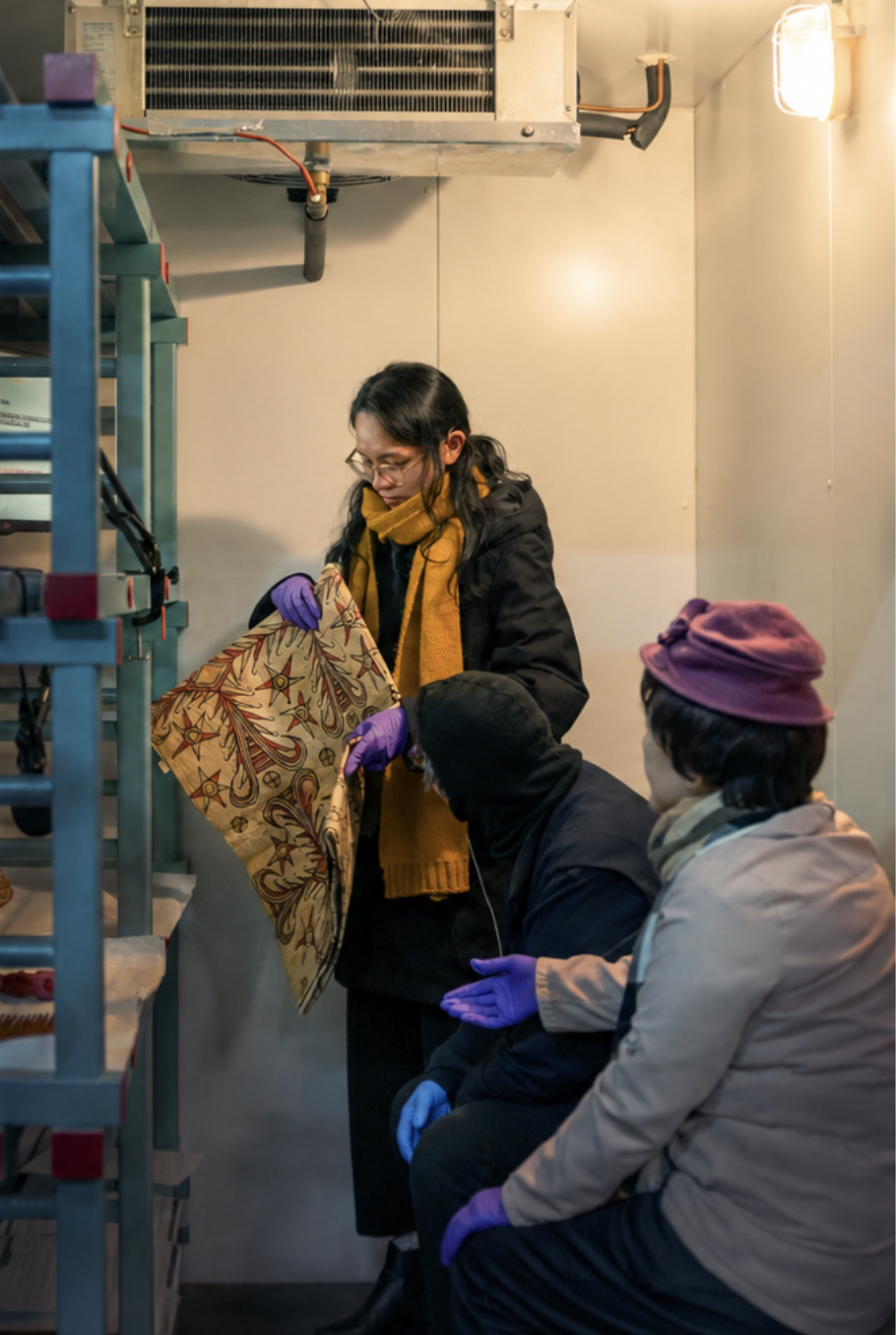
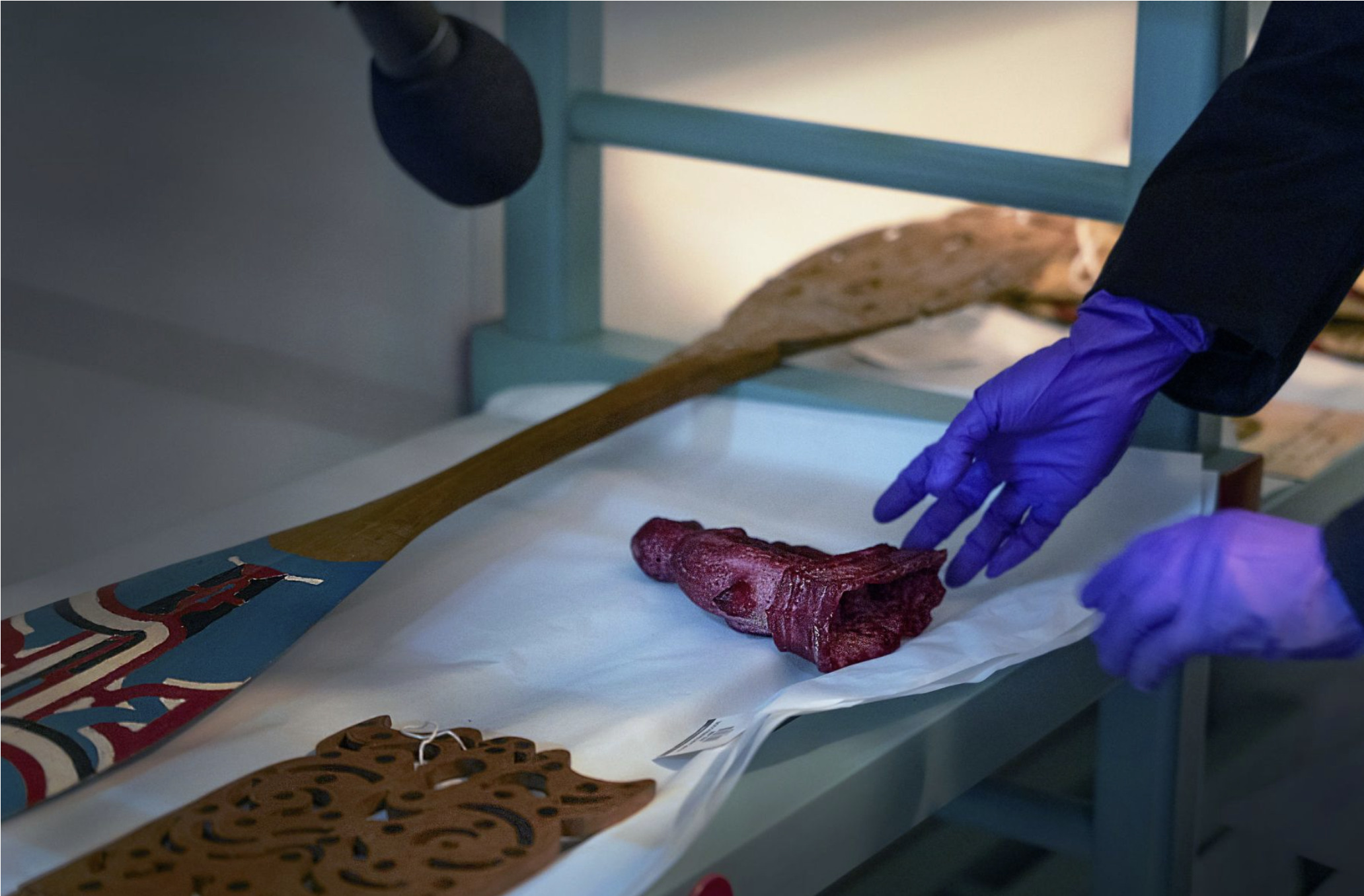
Furthermore, in 350,000 Leaks (2024), Aram Lee seeks to disrupt the institutional ecology of colonial museum storage facilities, spaces that have long been tightly controlled and sealed off. This radio broadcast project gives voice, through live radio, to restricted areas within the museum—such as freezers, air-conditioning rooms, storage rooms, and water pipes—that regulate the climate maintained for the collections.
 
The project was inspired by Japanese radical filmmaker Masachi Adao’s 1968 theory of “Fukerion” (landscape theory), which locates the power of the state within the landscapes of everyday life. The work’s soundscape allows listeners to follow a route through the storage rooms and freezers of the colonial museum in Amsterdam.


Image documentation of the live radio in the freezer. Depot of Wereldmuseum, Amsterdam, 2024. Photo by Konstantin Guz. © Aram Lee

In 350,000 Leaks, Aram Lee explores how the bodies of objects connect with the bodies of broader ecosystems, using water pipes and the flow of water as a point of departure.
 
During her research, Lee discovered living organisms in water seeping from the exterior into the museum as she traced its water system. This encounter led her to ask, “What kinds of living beings can a museum accommodate?” and to consider what constitutes life and what can be recognised as living.
 
Lee regards these aquatic microorganisms as forms of “lively matter” within the various systems of the museum, manifesting different forms of living existence. These fluid elements stand in stark contrast to the stasis commonly associated with museums—the suspension of change.
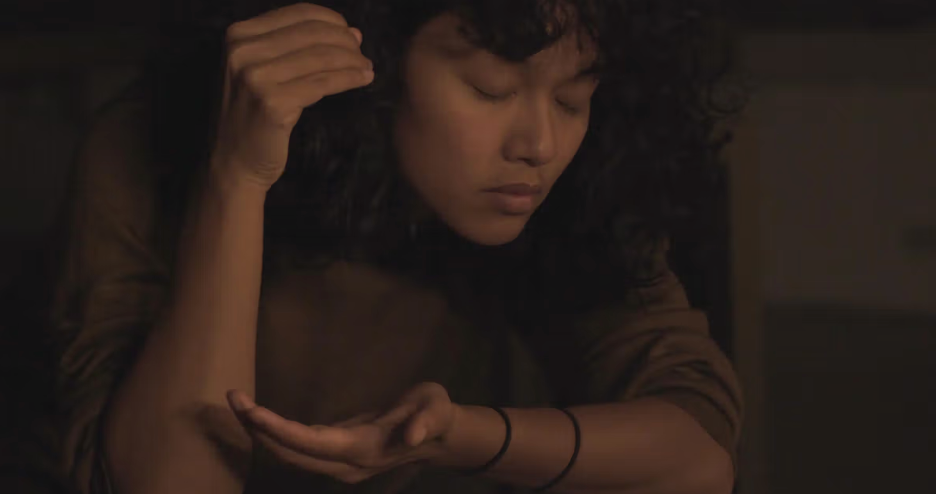
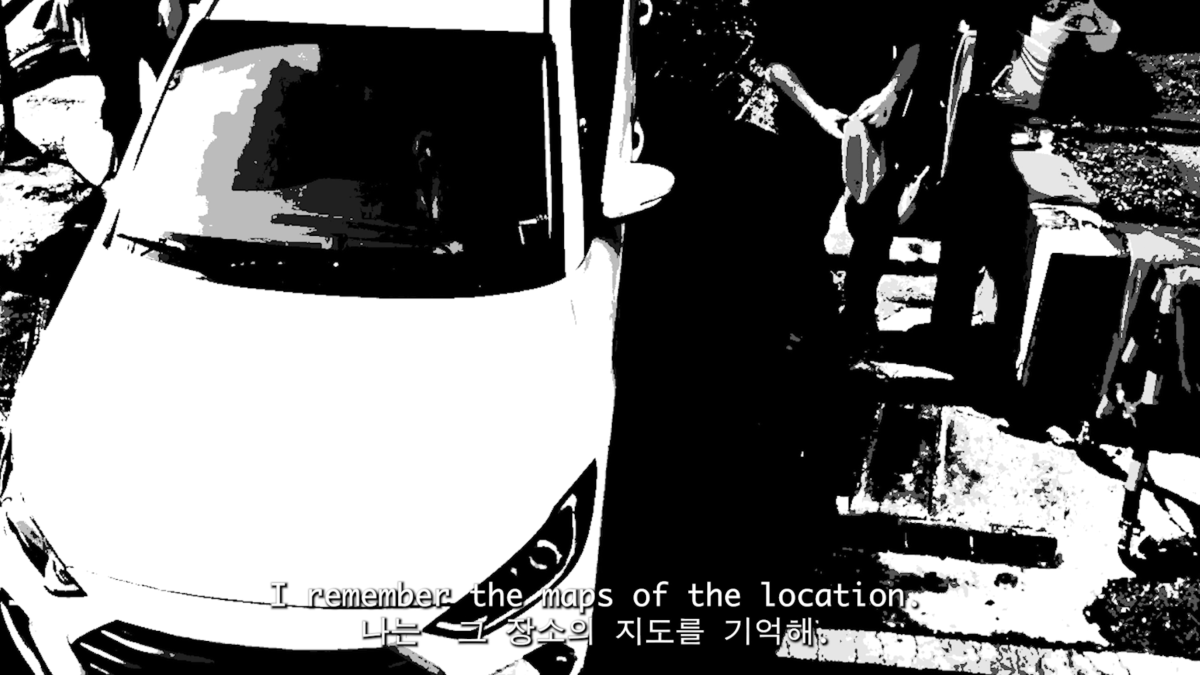

Image documentation of the live radio in the freezer. Depot of Wereldmuseum, Amsterdam, 2024. Photo by Konstantin Guz. © Aram Lee
Grounded in these reflections, Lee’s research begins by analysing the direction, speed, and flow of the museum’s water pipes. In collaboration with microbiologists, climate scientists, and urban architects, she mapped the museum’s geographical and spatial scales, including its dimensions and floor plans.
 
Through this process, Lee seeks to create a new hydrological map of the museum by reassembling and charting the networks connecting water channels, rainwater reservoirs, taps, and water tanks.
 
This map begins to open up the circuits of enclosed objects, making visible the structural connections along the routes taken by their bodies as water: from glass display cases through storage rooms, into the city’s canals beyond the museum, and ultimately out to sea.
 
In doing so, Lee listens closely to the soundscapes experienced by objects in storage, seeking to release them, through sound, from the temperature discrepancies between their original environments and their present surroundings.
 
She reveals how invisible institutional power structures operate as institutional climates and, more broadly, how these are embodied in the temperature politics between the Global South and the Global North. By exposing the rhetoric surrounding temperature regulation, she extends these questions into a political practice that can be perceived through the senses of touch and feeling.


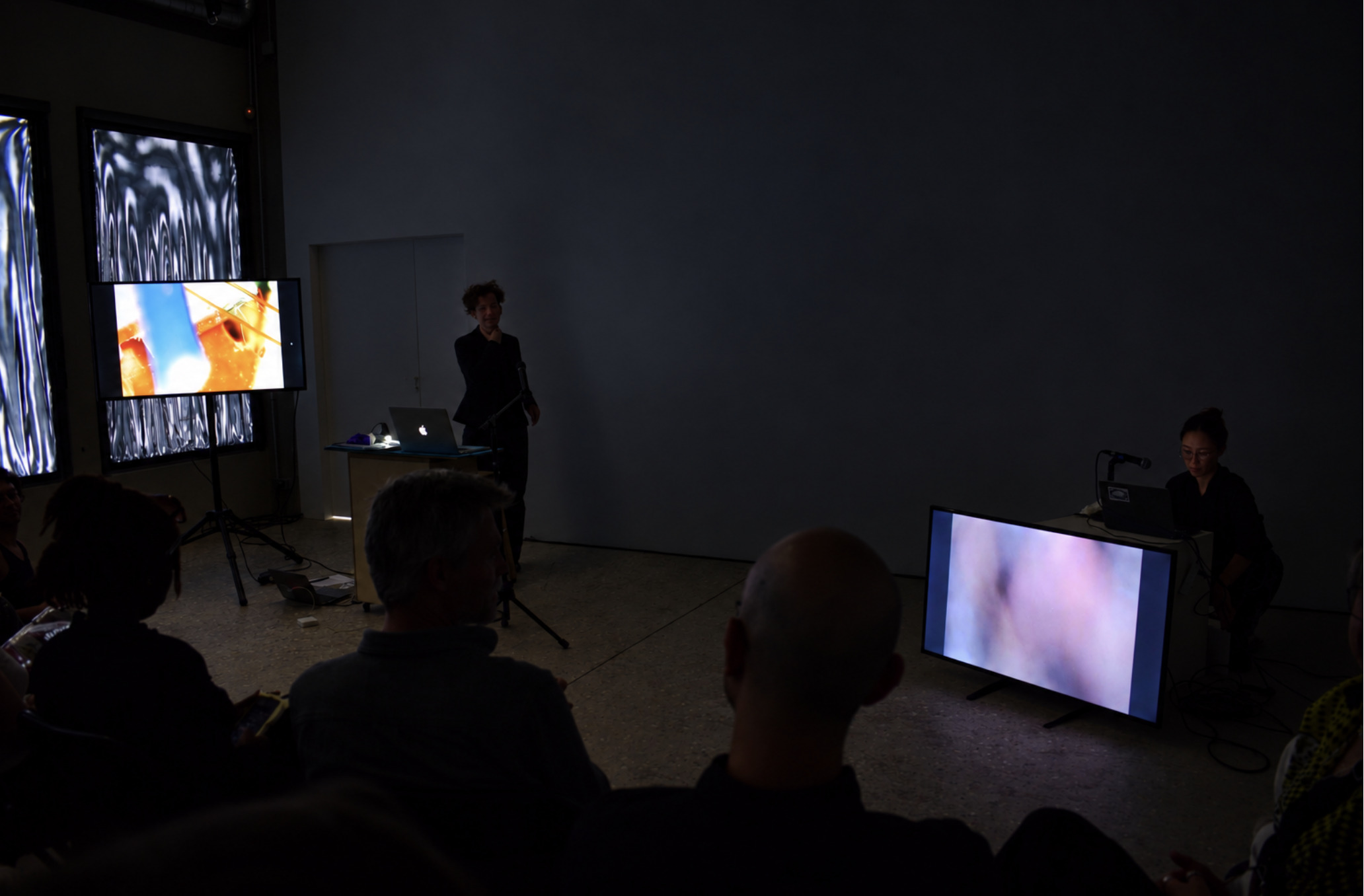
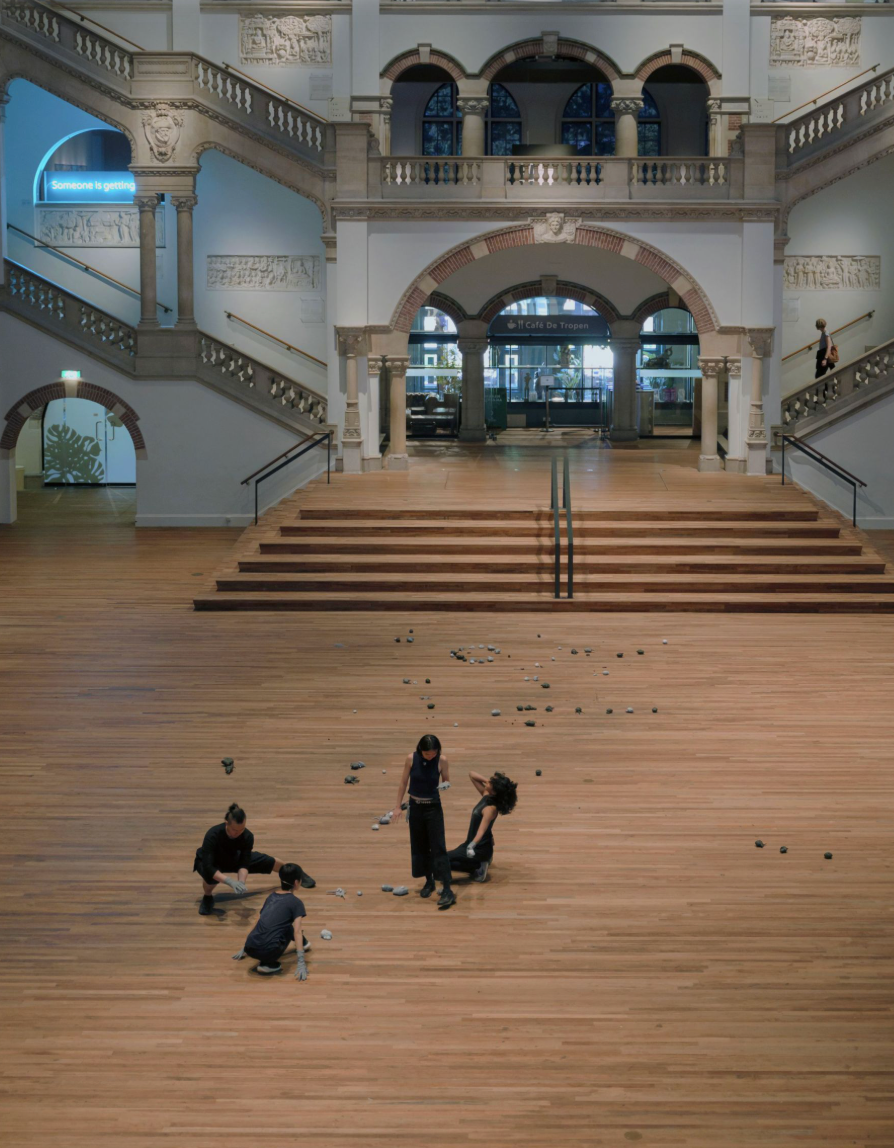
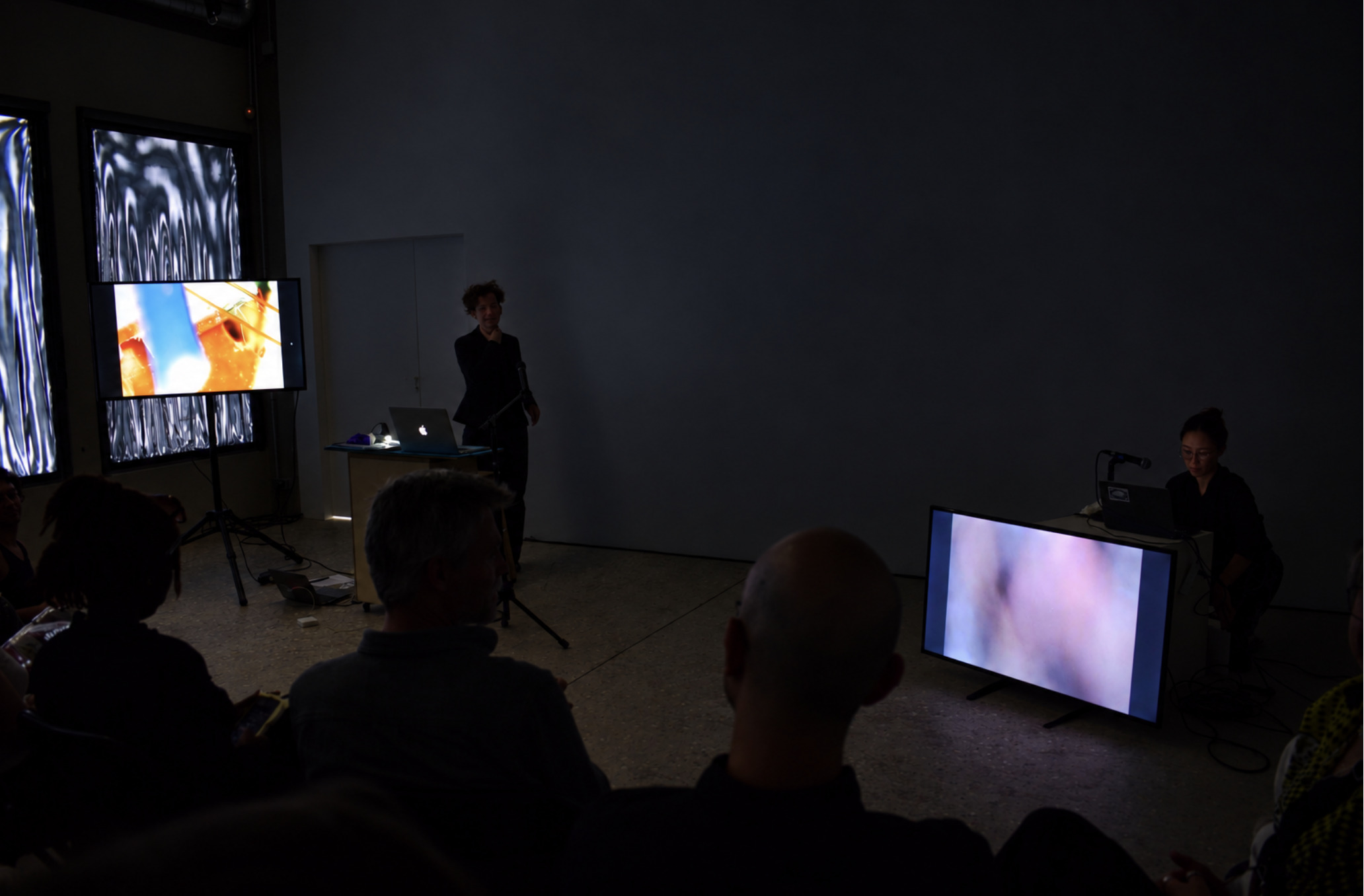
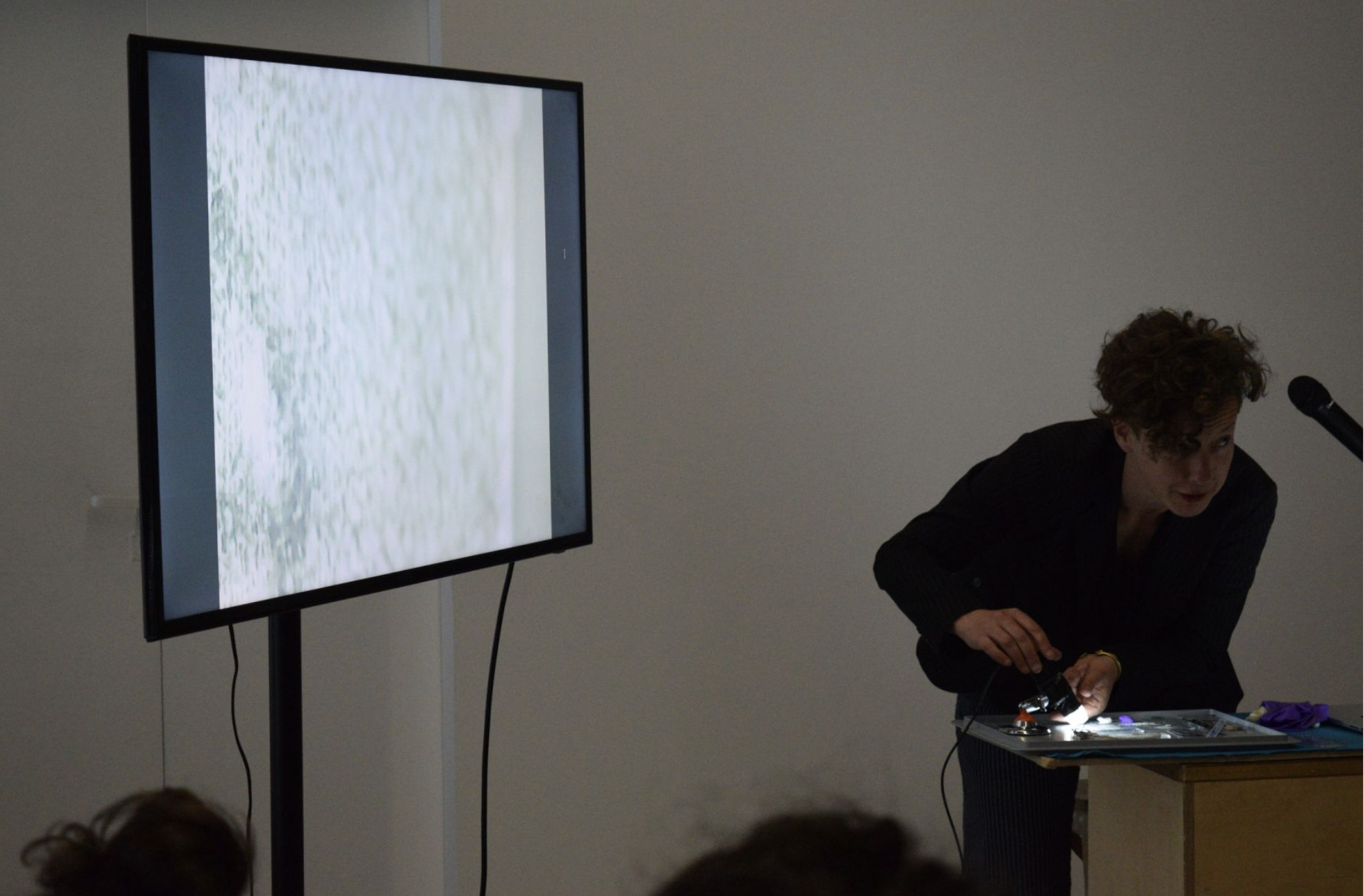
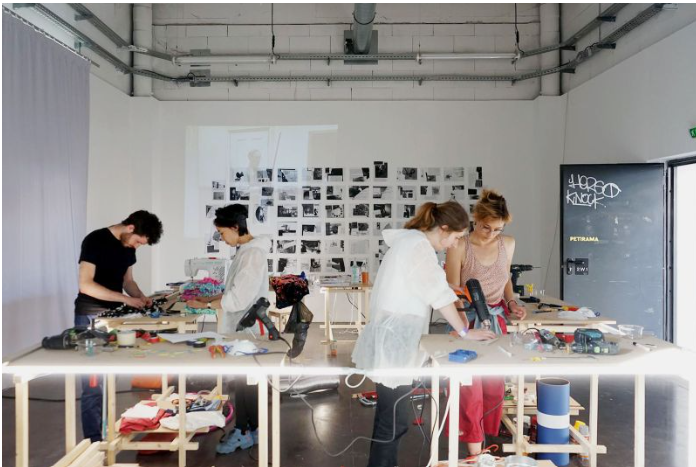
Aram Lee, Transcorporeality in Toxic Times, 2025, Performance at Bétonsalon, Centre d’art et de recherche, 2026. Photo: Bétonsalon. © Aram Lee

The investigation of the microscopic world, invisible to the naked eye, leads to an exploration of the metabolic processes of toxic substances in Transcorporeality in Toxic Times (2025). Spanning multiple media, languages, and contexts, the work critically examines the view of the bodies as self-contained, autonomous entities.
 
Instead, it begins from the porosity of human and non-human bodies, activating artistic practices that foreground exchange, exposure, and transformation. Through dialogue, the work interweaves archival materials and their temporalities with questions of bio- and necropolitics, seeking to trace the often invisible metabolism of toxicity.
 
Toxicity has been used to describe masculinities. Drawing on feminist materialisms and decolonial ecologies, the performance focuses on lives altered by toxic substances, distorted institutions, and racialized mattering.


Aram Lee, Transcorporeality in Toxic Times, 2025, Performance at Bétonsalon, Centre d’art et de recherche, 2026. Photo: Bétonsalon. © Aram Lee

It interrogates these hazardous conditions together with participants, working from within states of exposure rather than distance. Bodies are affected by toxicity: they absorb and transform it, suffer from it, and yet also turn vulnerability into a site of resistance.
 
During the performance, an endoscope and a microscope move live through the interior of toxic objects and material matter, opening up microscopic worlds that are otherwise inaccessible to human perception in real time.


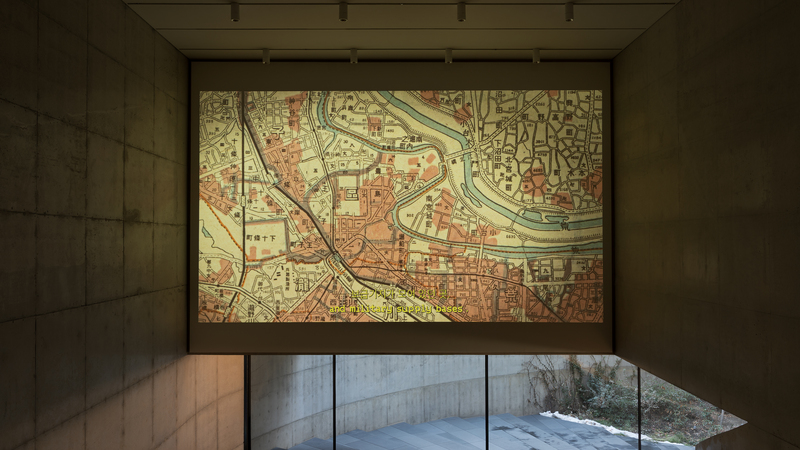
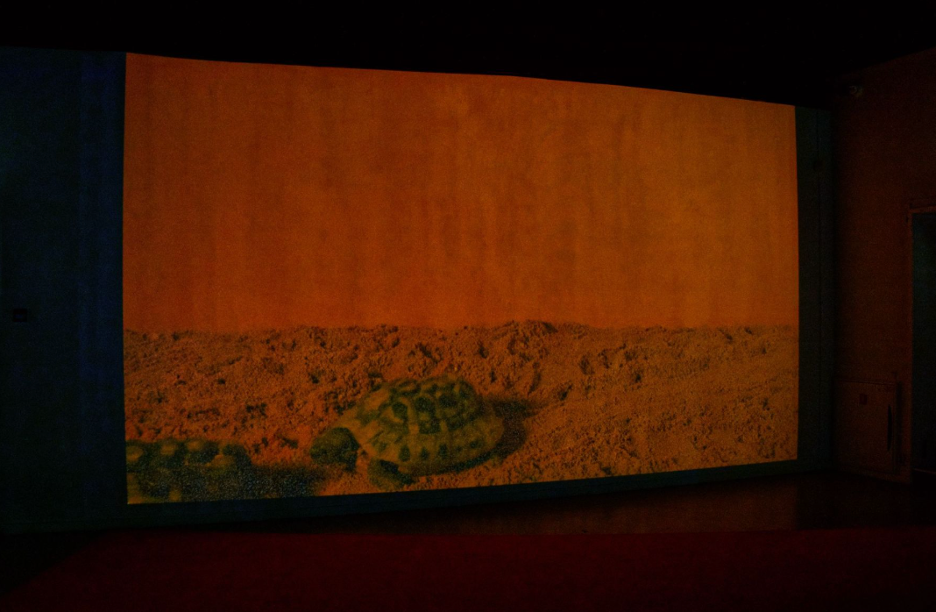
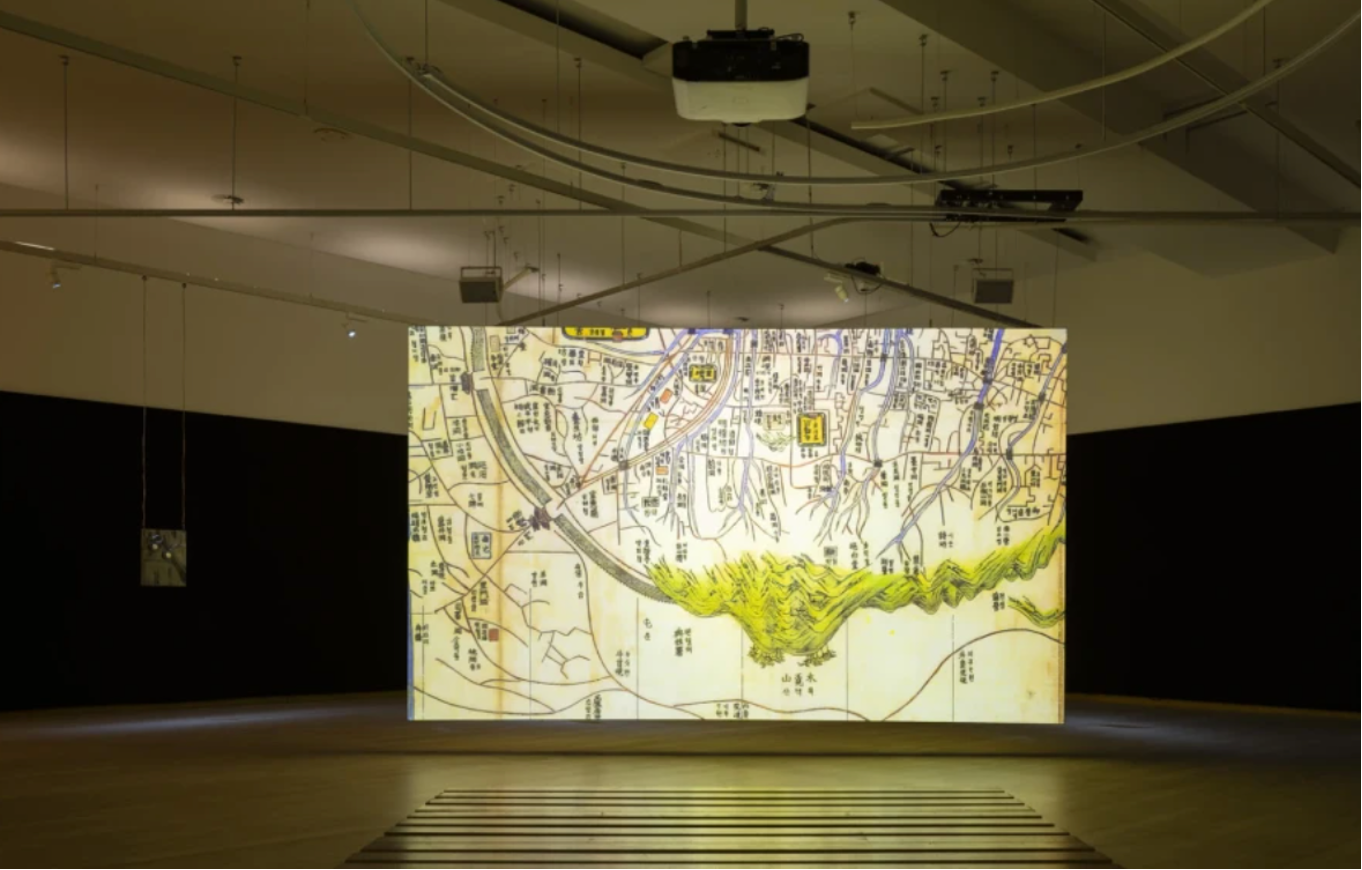
Aram Lee, Every Worm Trampled Is a Star, 2025, Single-channel video, color, sound, 30min. Installation view of 《The 25th SONGEUN Art Award Exhibition》 (SONGEUN, 2025-2026) © SONGEUN Art and Cultural Foundation

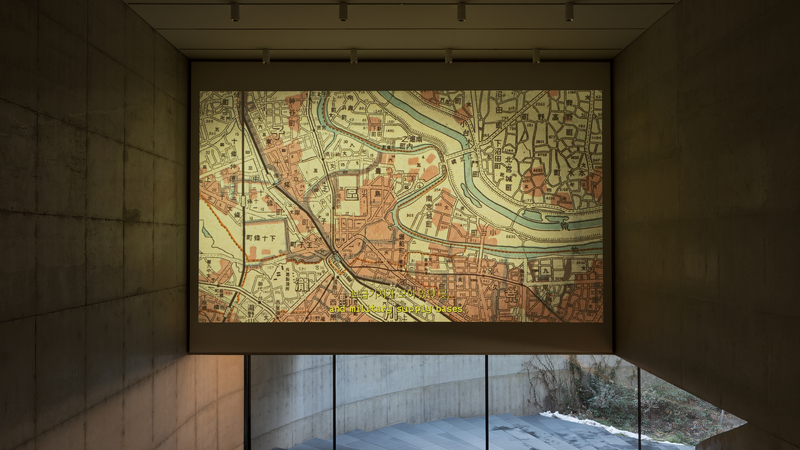
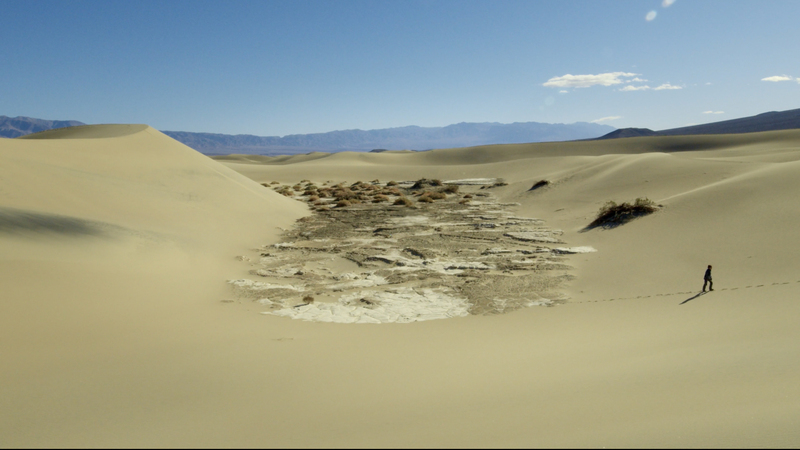
In Every Worm Trampled Is a Star (2025), a video work presented at 《The 25th SONGEUN Art Award Exhibition》, Lee explores the possibility of recovering a “diaspora of the land” by summoning the land’s autobiographical voice in the process of territorial return.
 
Tracing the history of the Yongsan Garrison in Seoul—which has remained cut off from civilian life for the past 138 years as a Japanese military training ground and later a U.S. military base—the work follows the memories of land displaced and externalized through colonization, occupation, and prolonged military enclosure.
 
The “trampled worm” serves as a metaphor for beings subjected to coercion and rendered invisible, symbolising the possibility that suppressed memories may return after being transposed into another dimension of time. Following fragmented, polyphonic voices—from the architects who reconstructed Nevada, Itabashi, and Yongsan Garrison, to Zainichi Koreans, descendants of forced migration, and microorganisms—the work approaches the invisible layers of places that have long been inaccessible to Koreans.
 
If the diaspora of people entails physical movement across space, the diaspora of land described in this work refers to the displacement of memory and the severance of sensory connection. On land that itself does not move, successive overlays of sovereignty and institutional power, along with shifting borders and languages, have produced ongoing forms of loss.
 
The video recalls fragments of memory pushed to the margins and portrays a process in which the land re-narrates itself, articulated through the voice of a third-generation Zainichi Korean.


Aram Lee, Every Worm Trampled Is a Star, 2025, Single-channel video, color, sound, 30min. © SONGEUN Art and Cultural Foundation

In this way, Aram Lee has traced the movements and cultural displacements of objects that have been lost or objectified within dominant symbolic systems shaped by Western hegemony and narratives of modernity. Through this process, she repositions traces and memories that have been othered or erased, imbuing them with new meanings and possibilities.
 
Working across diverse media, including live radio, video, and performance, Lee intervenes in and reorganises power structures surrounding institutions, bodies, and cultural capital. She disrupts the representational conventions and stereotypes of dominant narratives, seeks the return of excluded beings and memories, and blurs the boundaries between subjects, objects, and environments to propose new relationships and possibilities.

”I consider my work to be ecological since it engages the interrelationship between an institutional ecology (artificial), the indigenous (previous) ecology of the collection and the institution’s exterior ecology. And how those ecologies can interact with each other. For me, ecology is about the ‘relationality’ of a political body and other political bodies: its physical environment.” (Aram Lee, from the “Cultivating Museum Ecologies Otherwise”, Anthology 2020-2025, 2025)


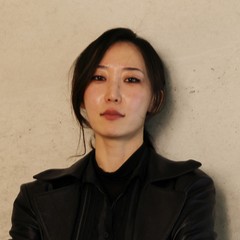
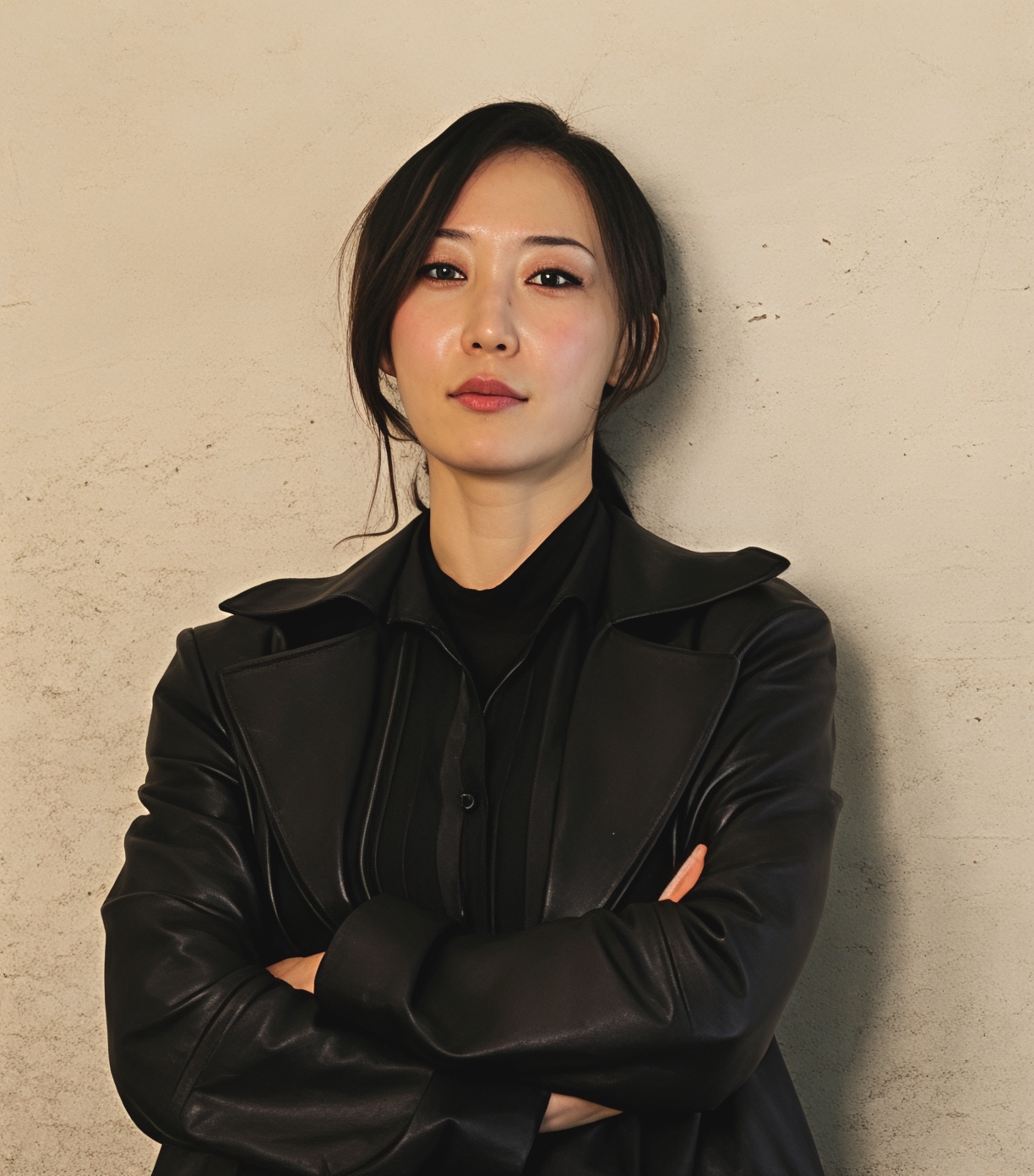
Artist Aram Lee © SONGEUN Art and Cultural Foundation

Aram Lee graduated at the Korea National University of Arts. She later withdrew from the Diploma programme in Fine Arts at the Staatliche Akademie der Bildenden Künste Stuttgart and went on to earn a master’s degree in Contextual Design from Design Academy Eindhoven (DAE). Her solo exhibitions include 《Every Worm Trampled Is a Star》 (Buro Stedelijk, Amsterdam, 2026) and 《To Pluto and Back》 (Framer Framed, Amsterdam, 2020).
 
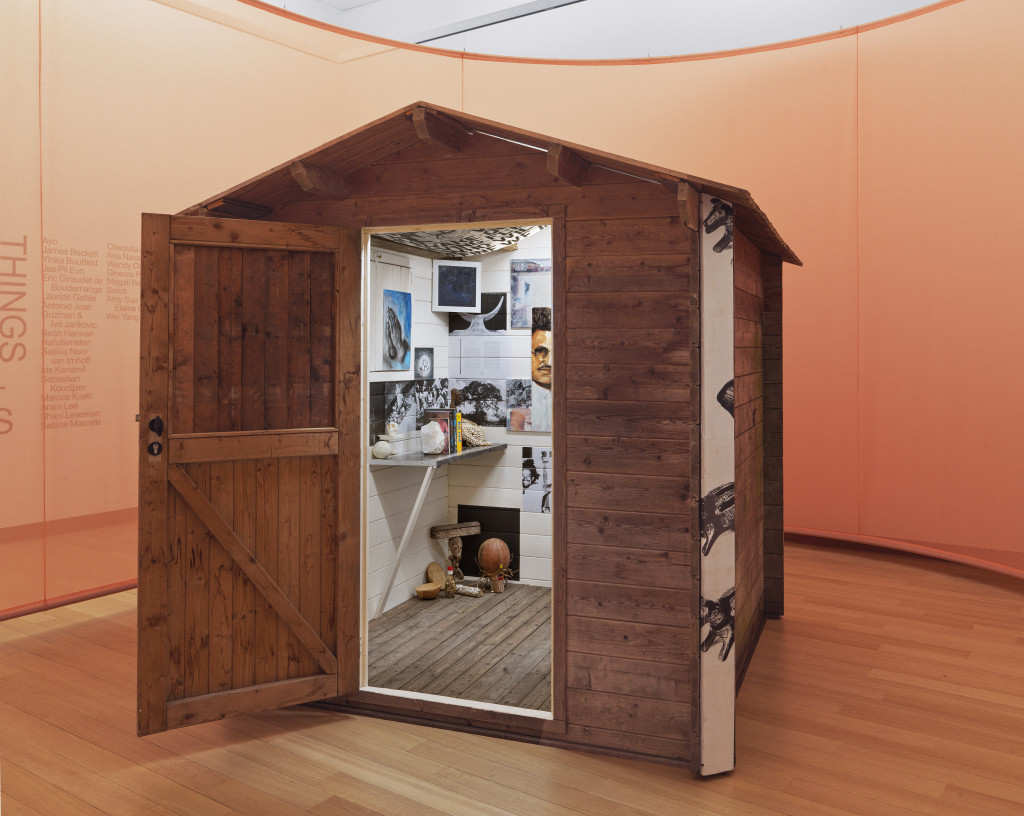
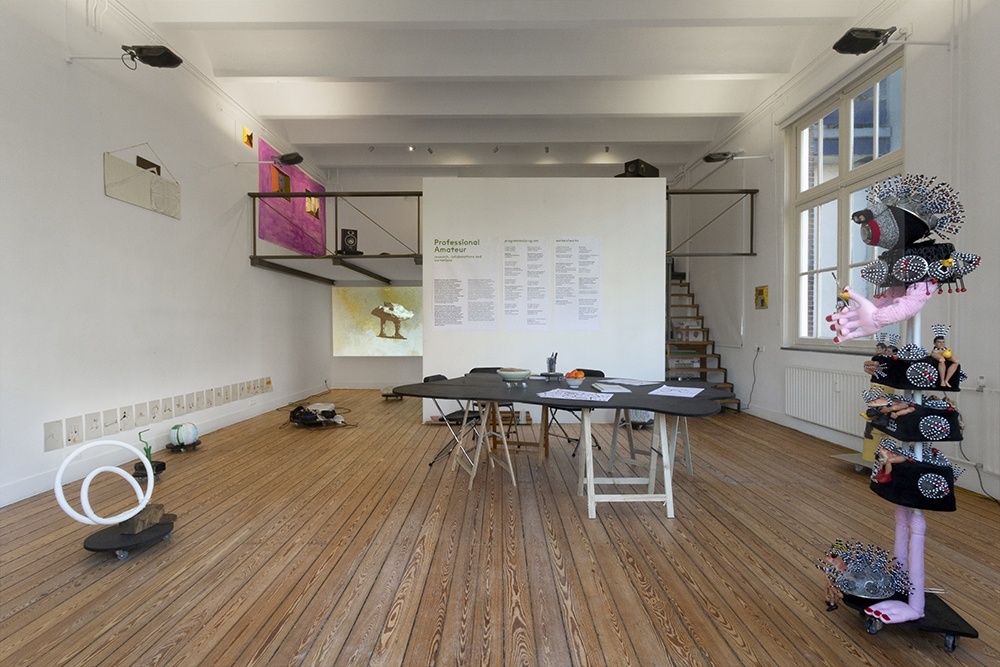
Lee has also participated in numerous group exhibitions, including 《SONGEUN x UNBOXING PROJECT: Generative Forms》 (SONGEUN, Seoul, 2026), 《The 25th SONGEUN Art Award Exhibition》 (SONGEUN, Seoul, 2025), 《This nameless sites》 (K-Arts space, Seoul, 2024), 《Branching Streams, Sketches of Kinship》 at the Dakar Biennale (Musée Théodore Monod d’Art Africain, Dakar, 2024), and 《When Things Are Beings, Proposals for the Museum Collection》 (Stedelijk Museum Amsterdam, Amsterdam, 2022).
 
Lee has participated in residency programmes at the Rijksakademie (the Netherlands, 2022–2023), Goethe-Institut (Marseille, 2019), and Jan van Eyck Academie (Maastricht, 2018–2019). She was awarded the Grand Prize at the 25th SONGEUN Art Award.

References