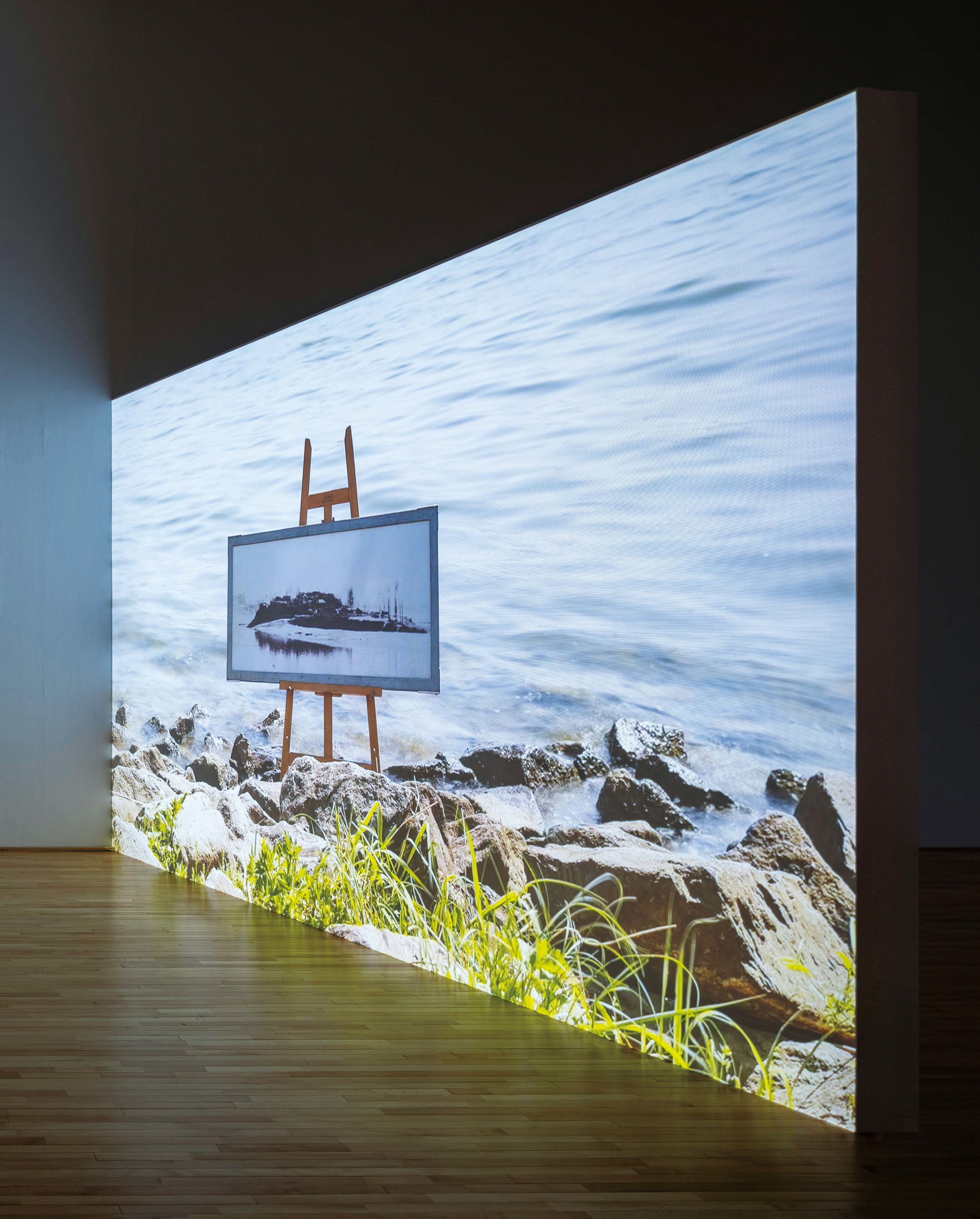
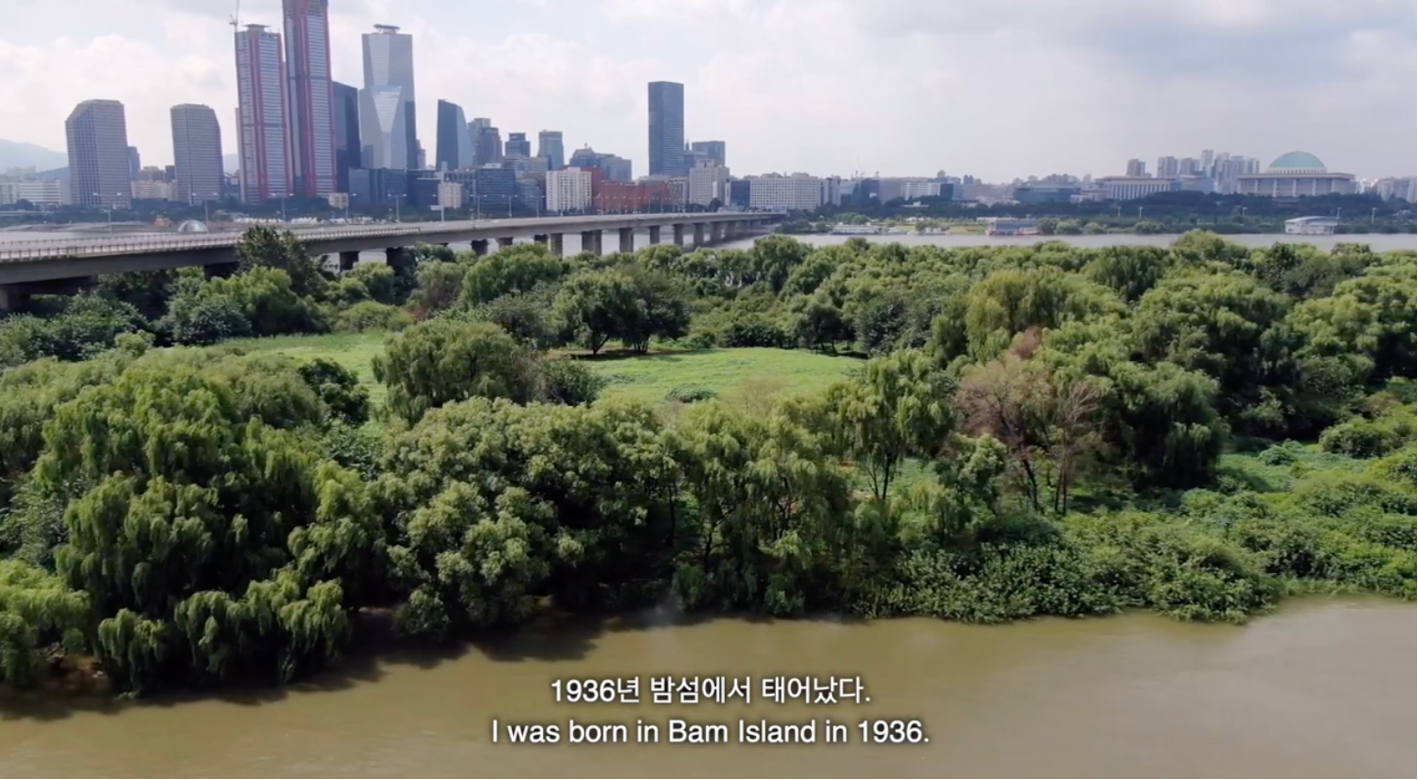
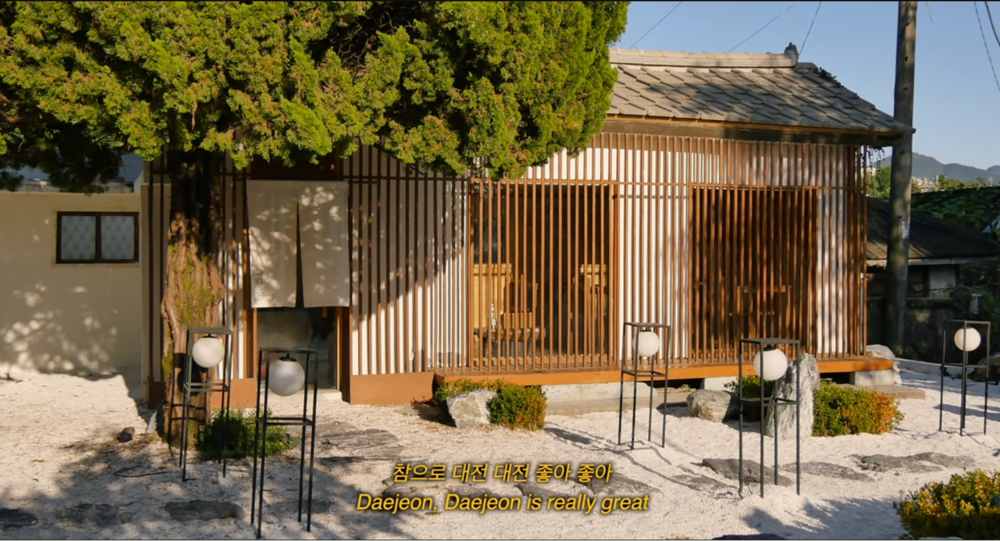
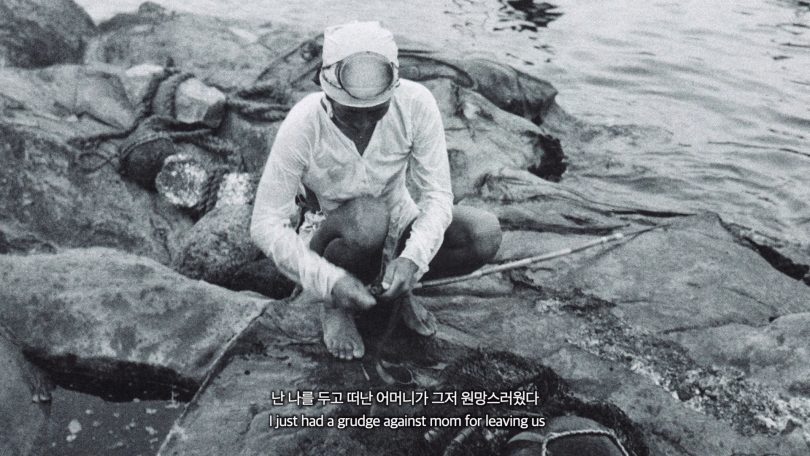
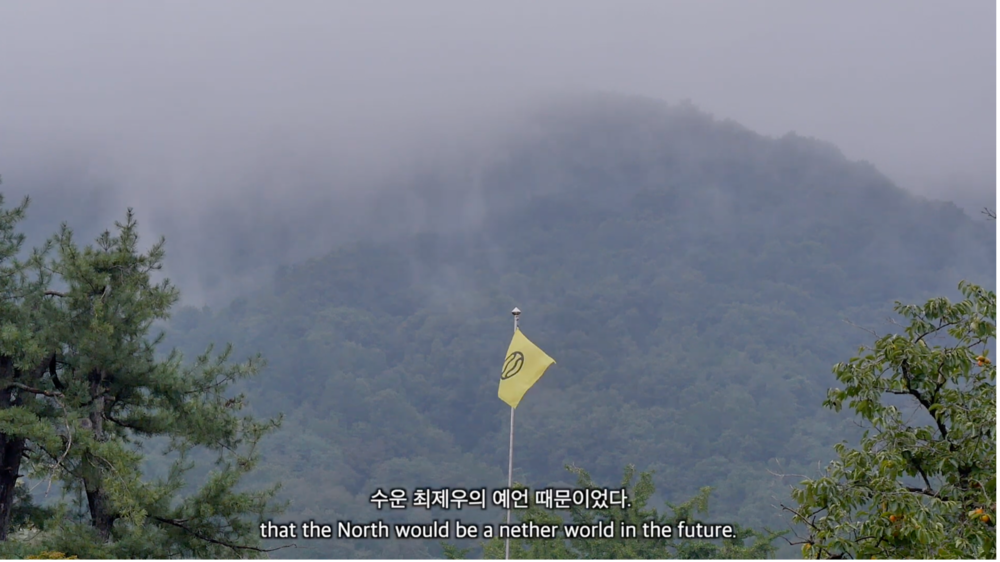
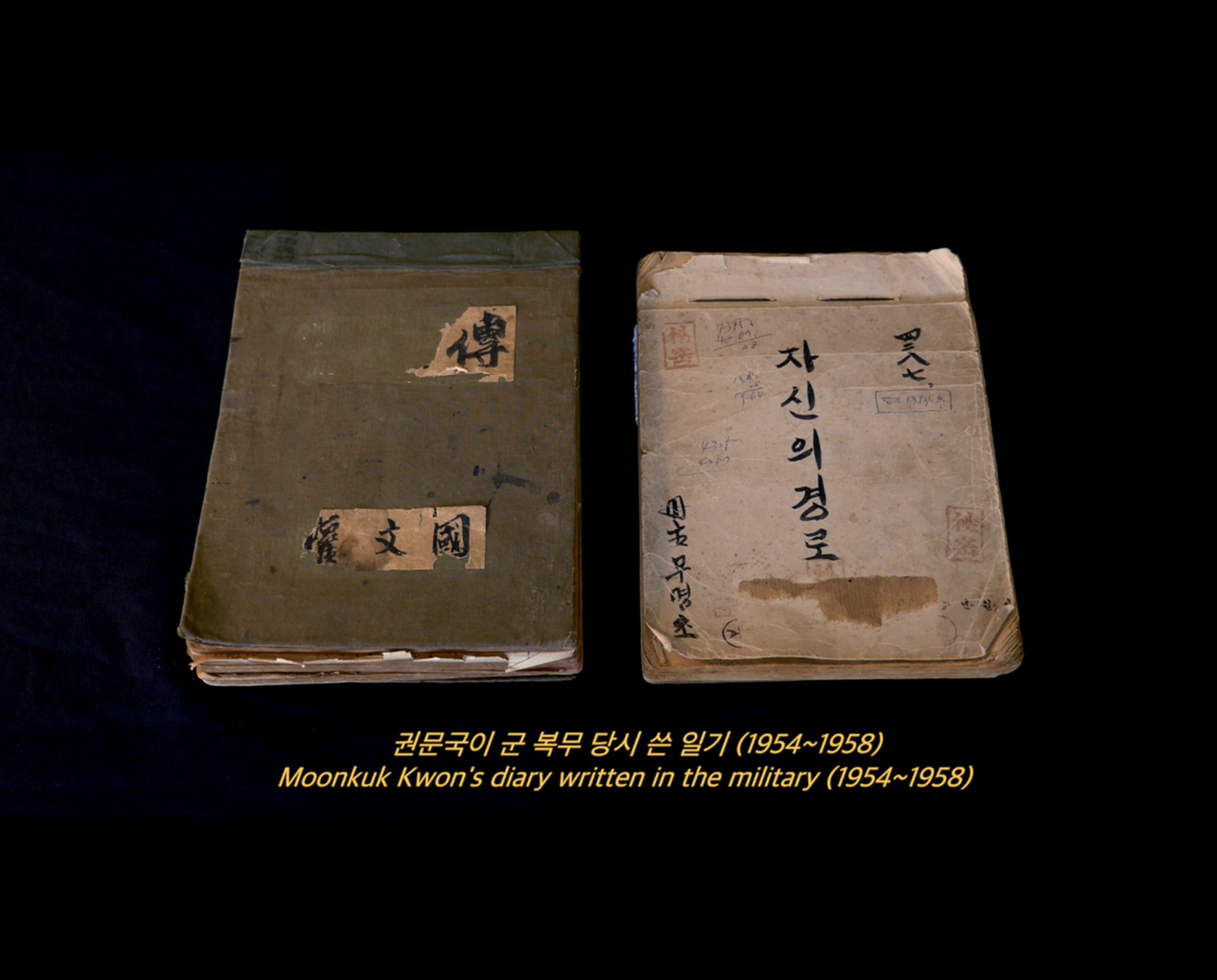
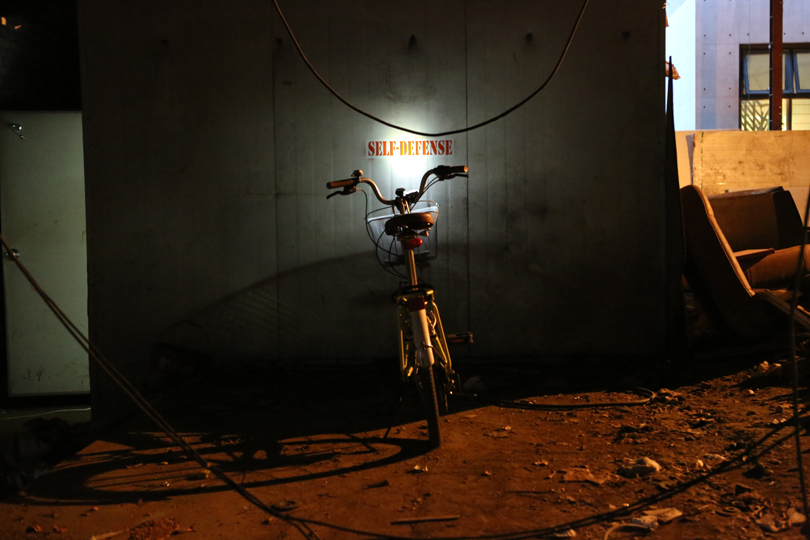
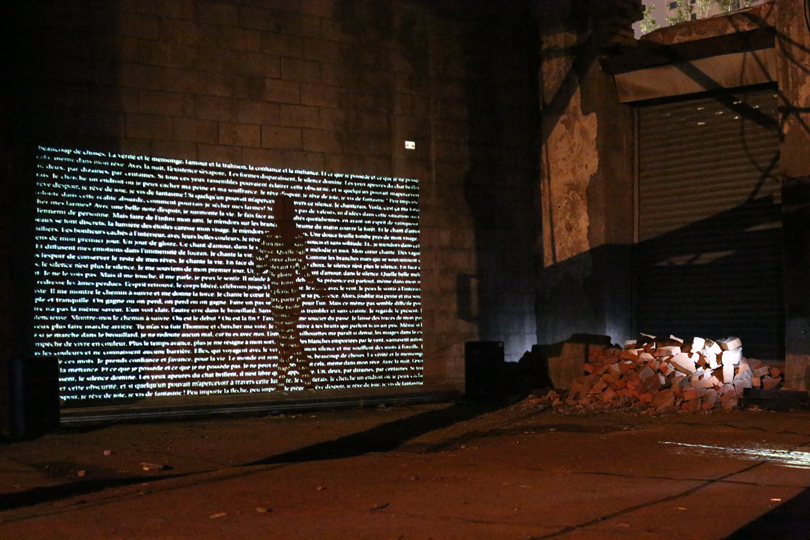
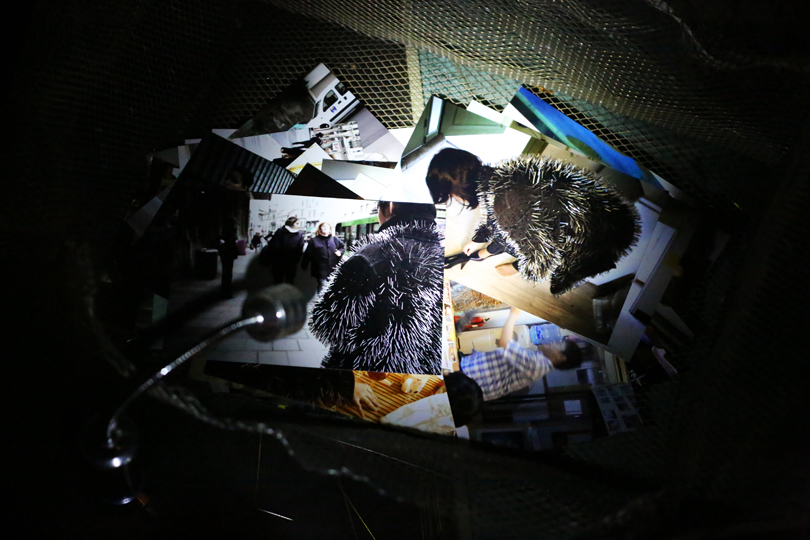
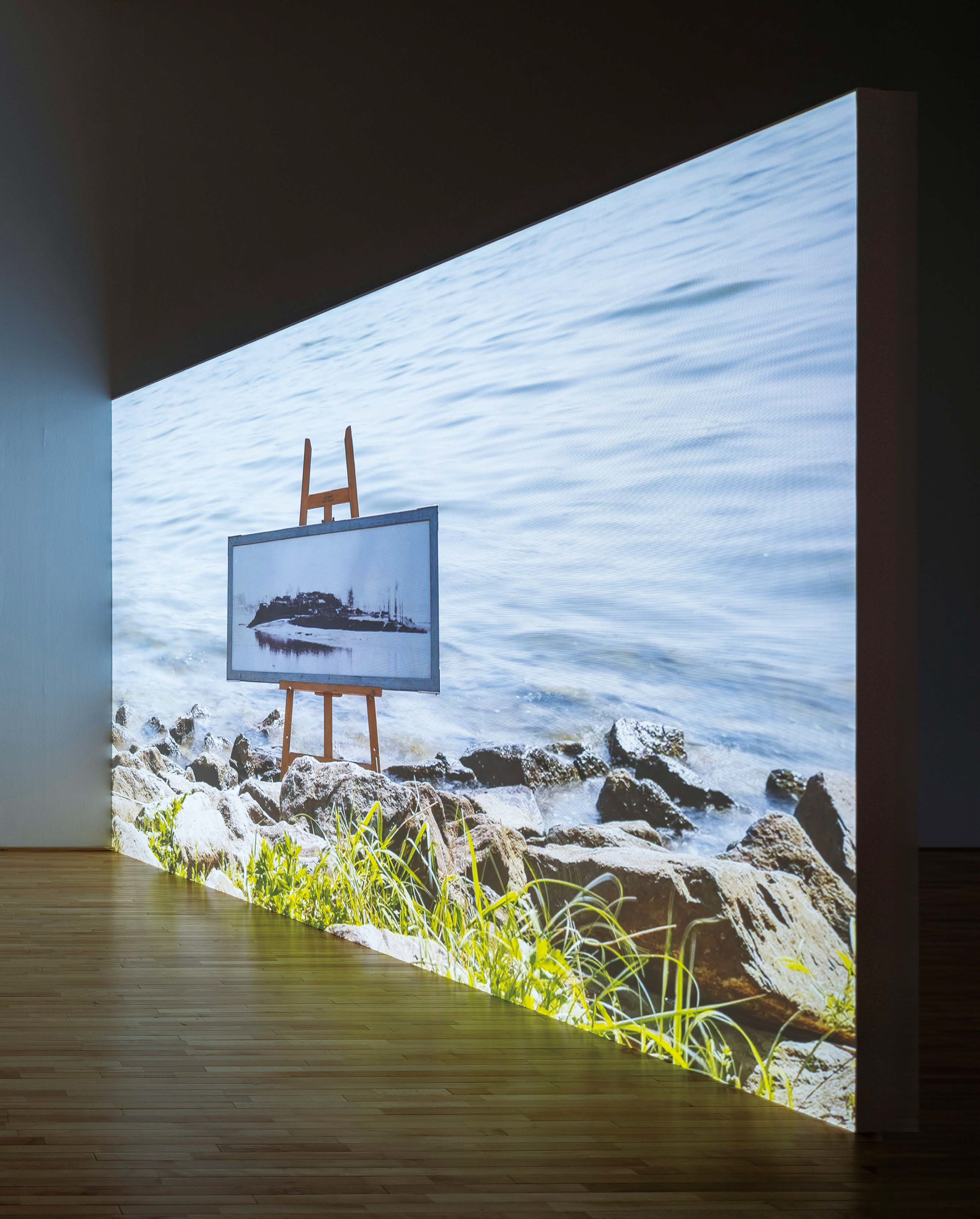
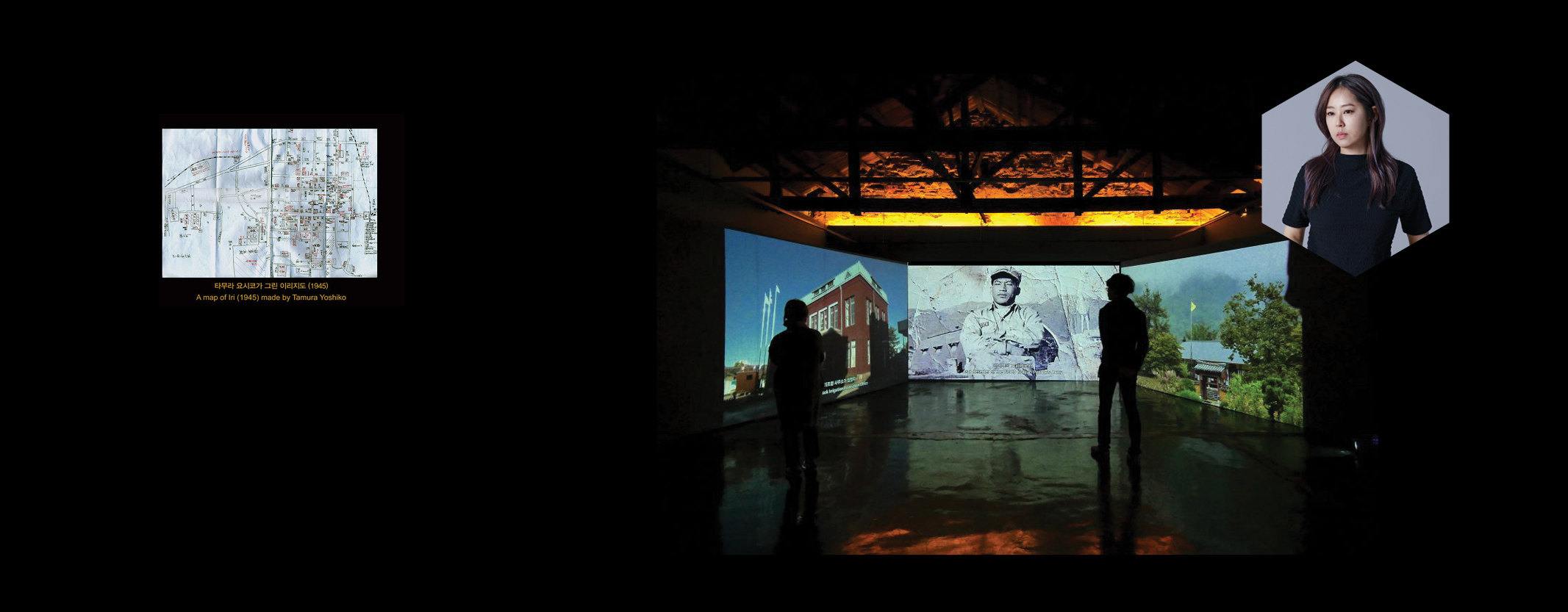
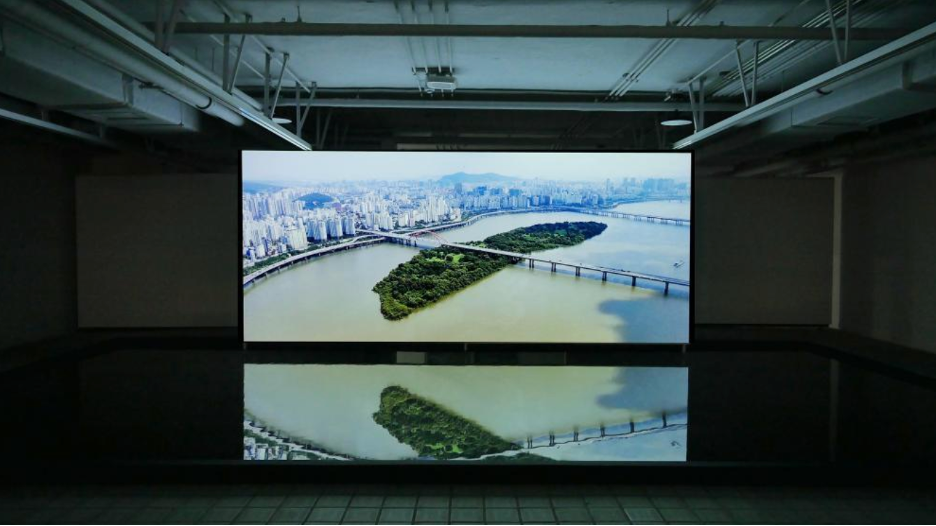
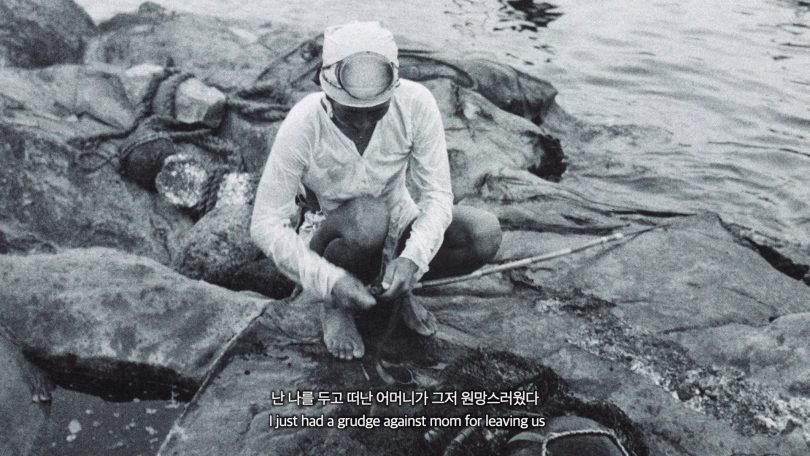
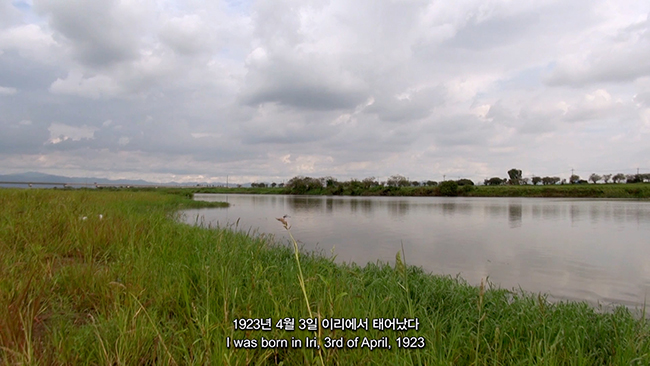
Mi-jung SHIN, Yul-do(栗島), 2020, Single-channel video, color, sound, 19min 41sec, Installation view of 《Three Voices, a World Unveiled》 (Pohang Museum of Steel Art, Pohang, 2024) © Pohang Museum of Steel Art

1. Names

The people are always exposed to the risk of disappearance. What must be done and what must be thought in this endless state of threat? How can the people be exposed not to the risk of disappearing, but to themselves? How can they appear and take form?1

Mi-jung SHIN enters the tilted gaps of history and brings forth anew those who had remained buried as nameless remnants. From Colony/Memory(2015) to Taiwan, the Foreign Land, and the Other(2023), the stories revealed across seven video works are records of individuals abandoned by the state and of lives excluded by institutions.

SHIN’s archive is constructed by externalizing silence through private materials such as autobiographical testimonies and diaries belonging to her interviewees. What emerges are voices excluded for many years, each bearing an individual name rather than being compressed into collective categories such as “displaced person” or “migrant.” Yoshiko Tamura, Moon-guk Kwon, Chun-hee Lee, Soon-taek Yang, Michiyuki Hagimoto, Il-yong Lee, and Seong-jeong Kim.2 As the protagonists of these seven works, they begin to speak narratives that had never fully belonged anywhere, now under their own names.

These stories contain images. Faded photographs and notebooks filled with ink-blurred handwriting appear alongside newly built roads and the moving waters of coastal shores. Within the frame, they are sometimes still, as photographs, and sometimes moving, as video, screened alongside narration. While supporting the narrative by following the speaker’s testimony, the images repeatedly slip beyond language rather than merely serving as illustrations.

They flow according to the sequence of the film, crossing past and present before being irregularly montaged and fading out with an affective pathos that resists clear boundaries. Following the scenes and temporal fault lines summoned by SHIN, viewers sense the compressed underside of pain.


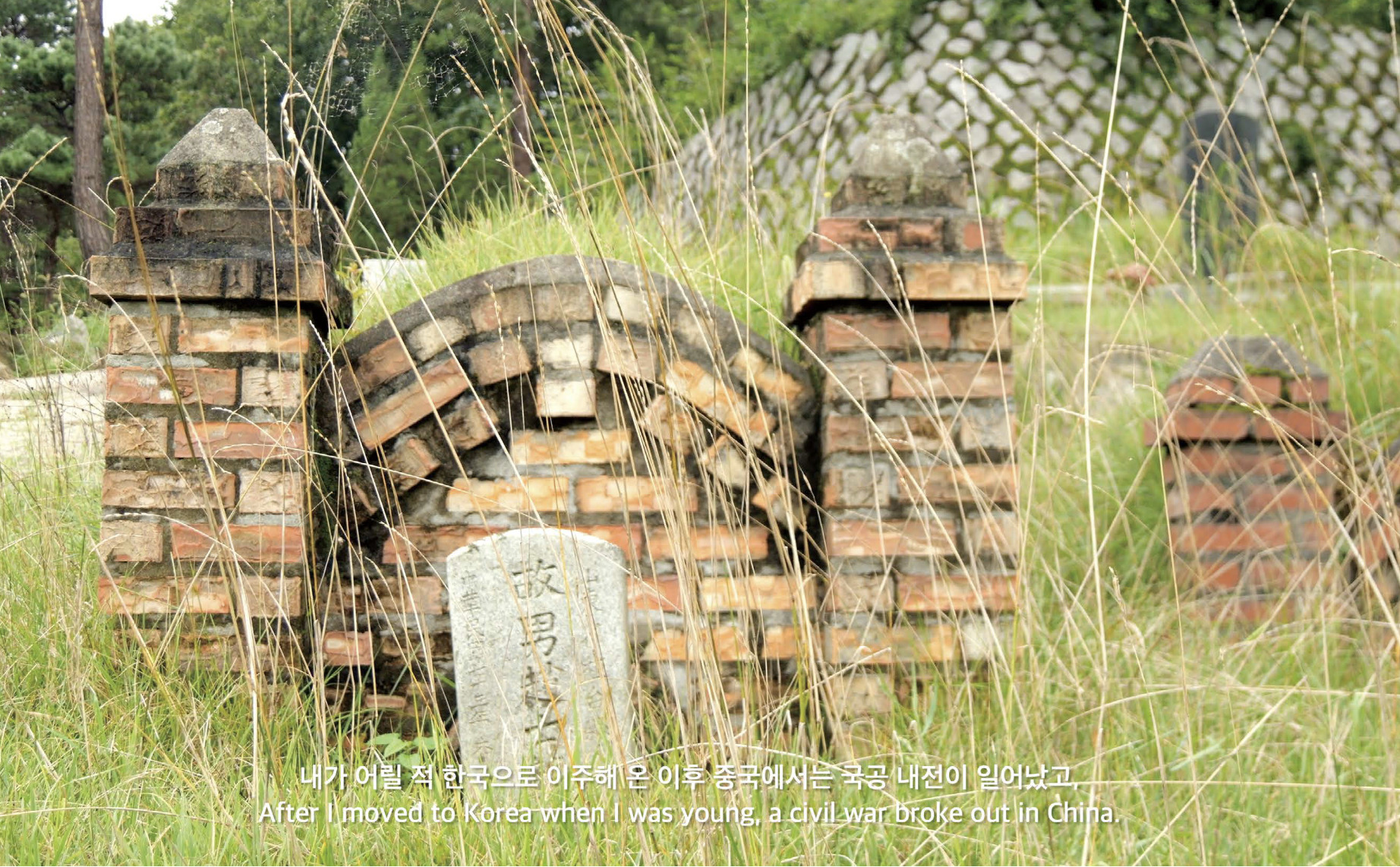
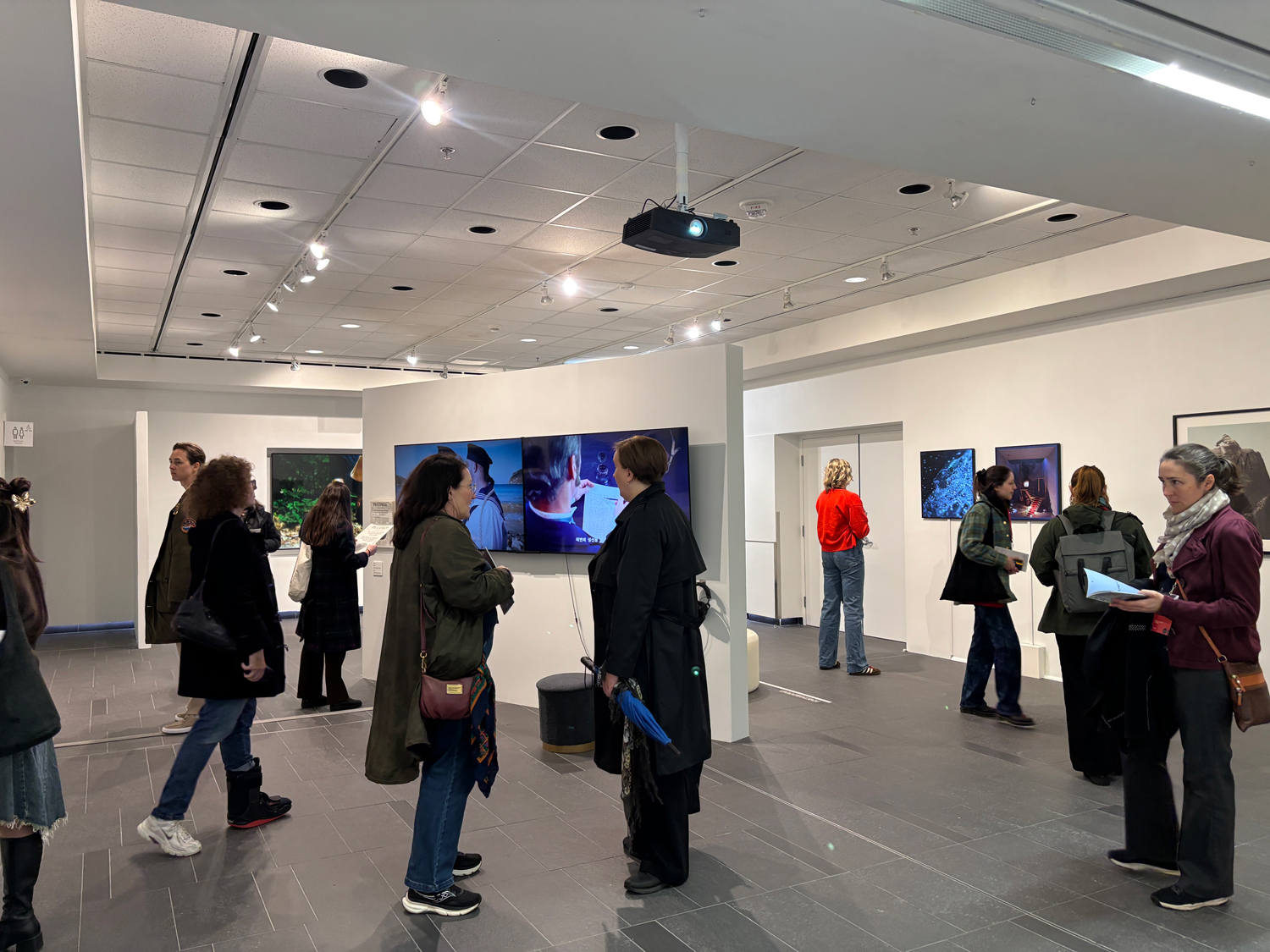
Mi-jung SHIN, Taiwan, the Foreign Land, and the Other, 2023, Single-channel video, color, sound, 16min 15sec. © Mi-jung SHIN

History is biased, and landscapes are indifferent. The experiences that had to be compressed into personal grief amid colonization, division, and industrialization are difficult to locate with any certainty. A camera cannot photograph events that have already passed; it can only trace places where something might have happened, searching as thoroughly as possible.
What one must rely on, then, is topos—the place where memory resides. In Path of My Life (2016), which follows the life of GWON, Mun-Guk through his time under two opposing regimes, the North Korean People’s Army and the South Korean military, the screen captures contemporary military installations and borderland landscapes, retracing the archetypes of consciousness.

In The Way of Faith (2017), which recounts the life of LEE, Chun-hui, who migrated south in accordance with the doctrines of a folk religion, the artist juxtaposes present-day views of the railway station where she arrived and the factory grounds where she worked to make a living, holding on to the emotional spaces of the past.

These are not monumental sites as we commonly understand them, but places that resemble familiar scenes repeatedly seen or ordinary landscapes. Yet these images are concentrated wounds and submerged ruins. Through them, viewers encounter those stranded and adrift between a vanished yesterday and a surviving today.


2. Ghosts

Hito Steyerl understands testimony not merely as a description of the world, but as an act of restoring it on a social and political level. She also sees the act of recognizing testimony as an attempt to open oneself to the experiences of others, a step toward what Wittgenstein described as “the task of feeling pain in another person’s body.” Hannah Arendt, too, identifies the substantive truth addressed by testimony as a condition of society.³

The testimonial approach that Mi-jing SHIN has employed throughout her practice resonates with these ideas. The artist listens to and collects the words of real individuals, then structures them as first-person monologues to affirm the presence of the marginalized. By returning speech to those who have been erased and displaced, she restores their place in the world.

Leaving Hometown (2018), recited by Yang Sun-taek, a haenyeo (female diver) who lost her family home and livelihood due to the Jeju April 3 Incident and coastal development, and Bam Island (2020), read by Lee Il-yong, a shipbuilder displaced from his home when Bam Island was demolished under the Han River Development Plan, are voices that reach yearningly toward their origins.

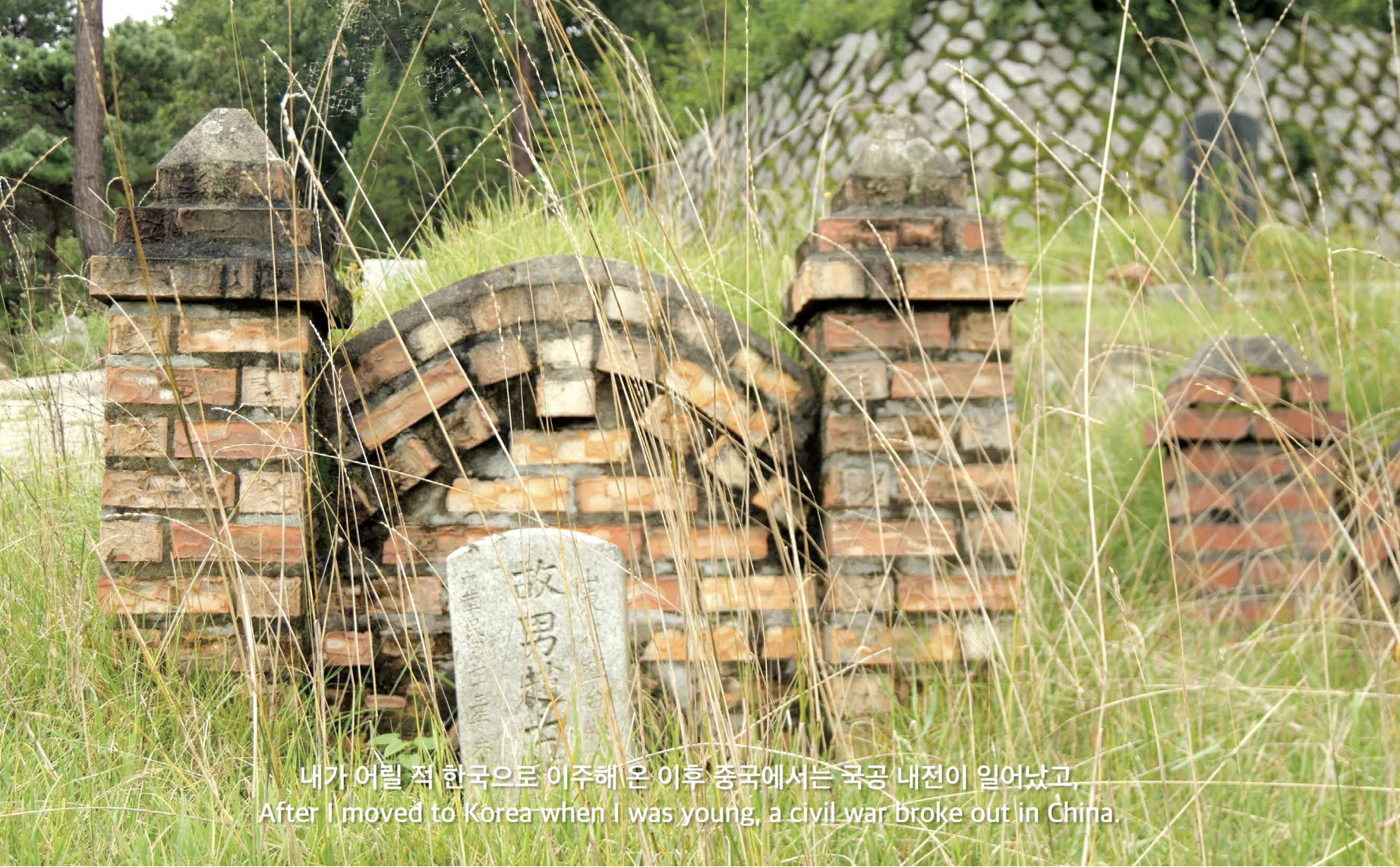
Yet these diasporic voices, whether spoken by the individuals themselves or recorded by a third party, sound old and sorrowful. Some belong to people who have already died. Kim Seong-jeong, a first-generation ethnic Chinese resident featured in Taiwan, the Foreign Land, and the Other, speaks to announce his own death.

The reading, performed by his son on his behalf, is uncanny because it speaks in the first-person “I” as the voice of a spirit, while becoming distantly immersed in projected genetic memory. Although the video reconstructs Kim Seong-jeong’s life, it does not give him a clearly defined image of home. Instead, it reveals his traces through a gaze that circles around his grave.

The sensory dissonance created by this juxtaposition with images that suggest the subject’s death demonstrates how Shin’s work moves beyond the confines of documentary realism, transforming its limitations into ruptures in the narrative and aesthetic tension.

In his critique of the work, Lee Ik-joo interpreted diaspora as “a ghostly existence that cannot enter the order of memory called history and instead wanders around its margins,” adding that “the life of the diaspora, as the existence of a non-being that exists and yet does not exist, is concealed as a ghost in this video work.”⁴ Gradually, this “ghost” permeates the artist’s practice, bringing with it both the challenge of representation and the weight of mourning.


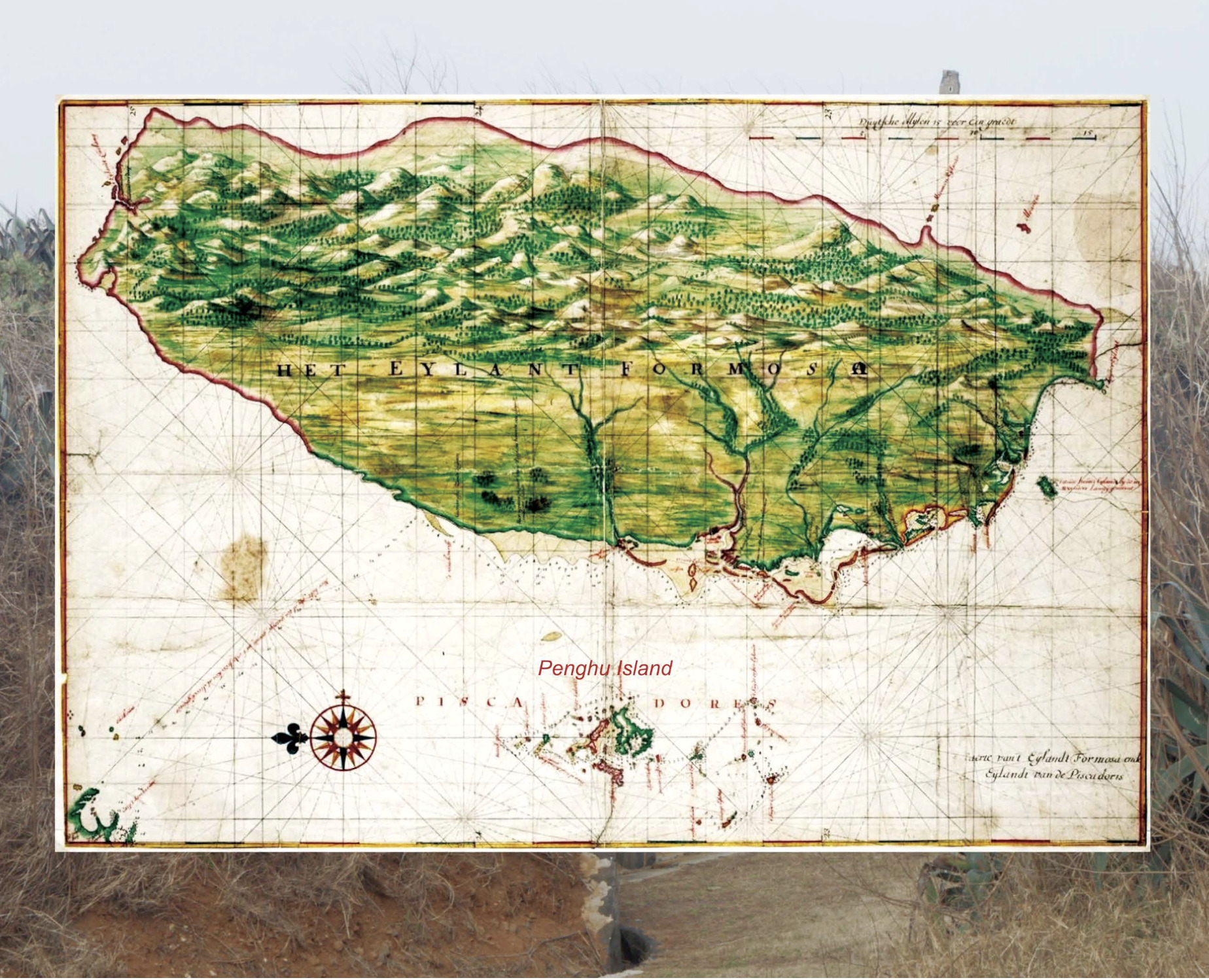
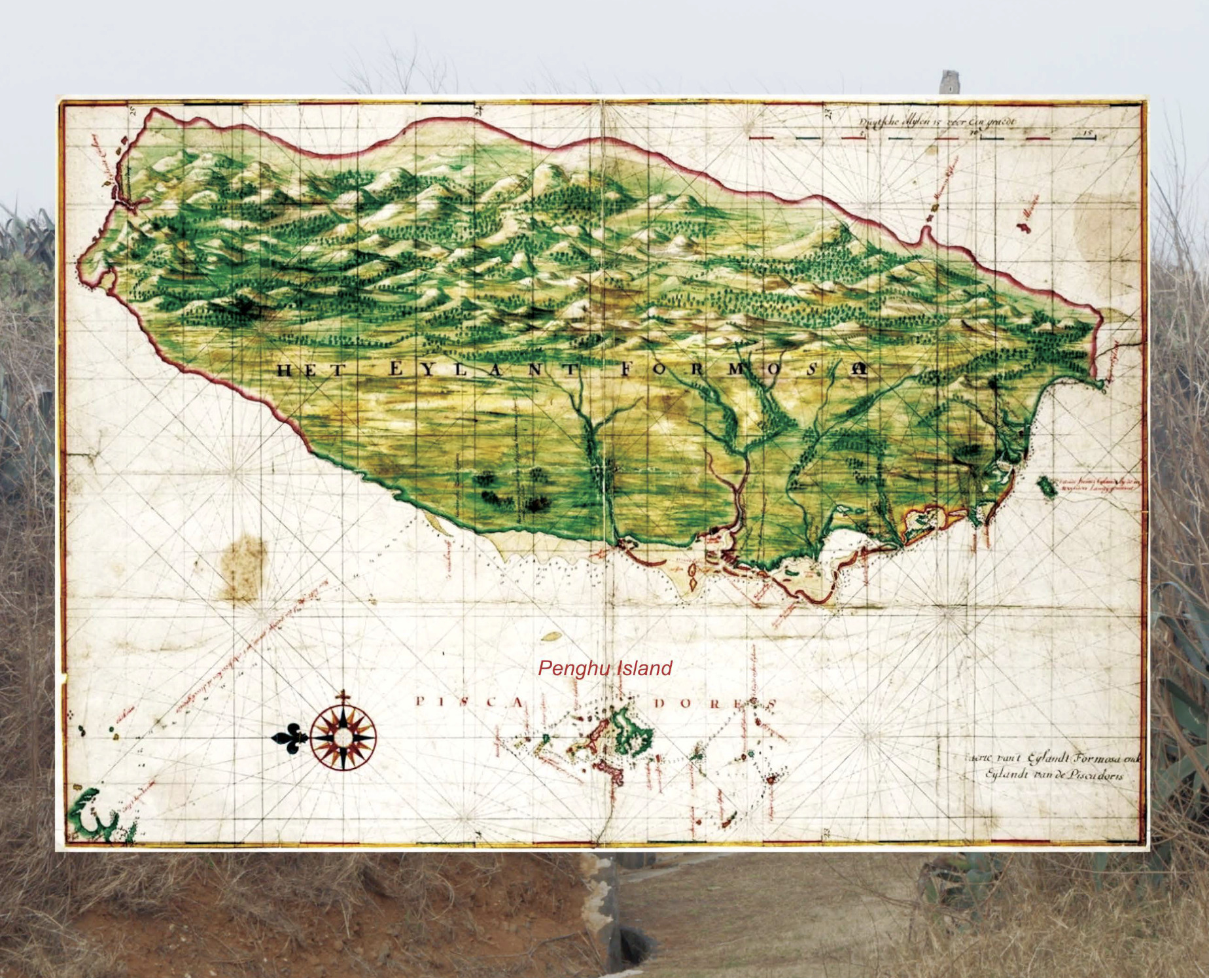
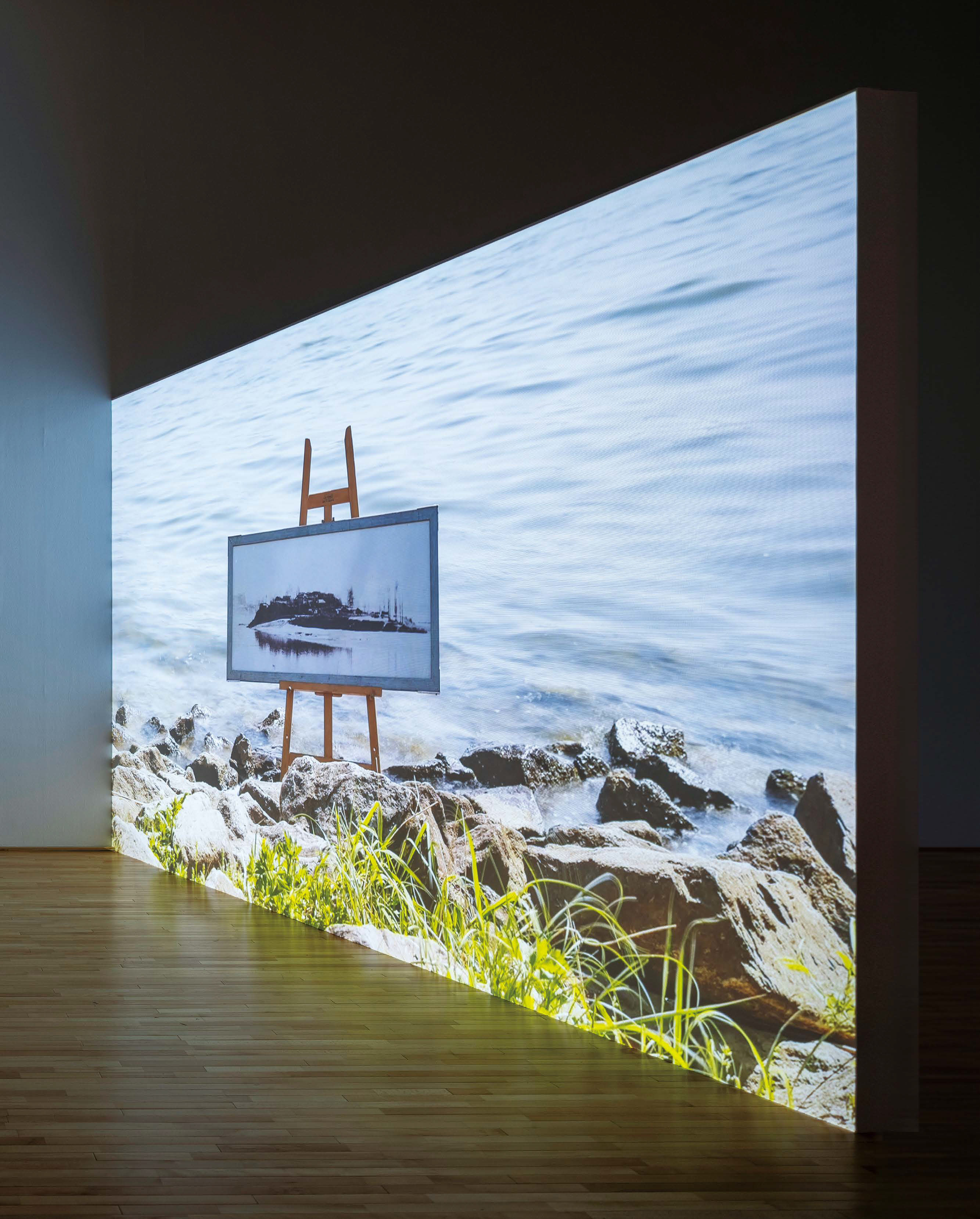
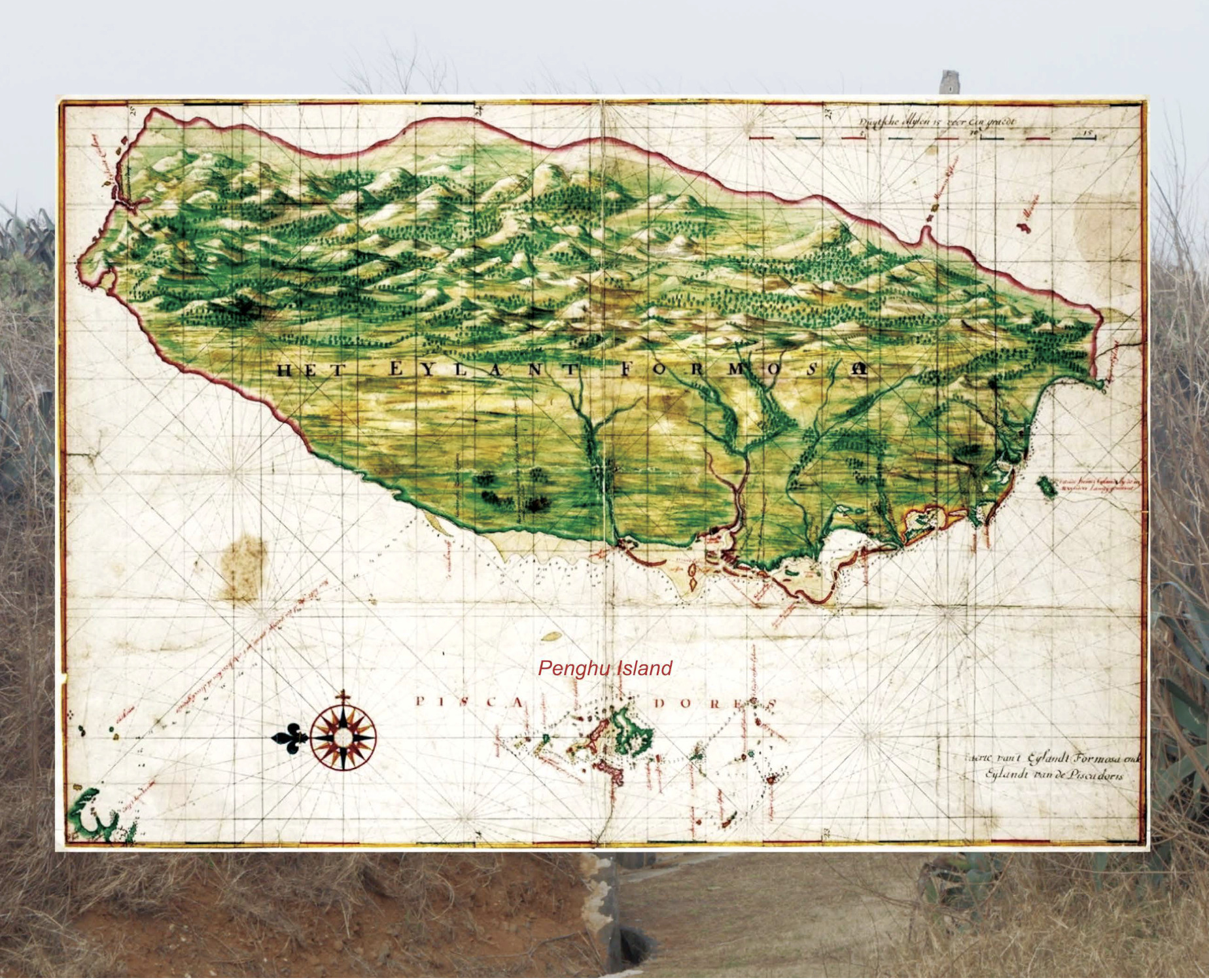
Mi-jung SHIN, Penghu Island, 2024, Single-channel video, color, sound, 11min. © Mi-jung SHIN

After presenting Taiwan, the Foreign Land, and the Other, SHIN began producing the new work Penghu Island(2024). Unlike the seven preceding first-person narratives, Penghu Island invokes neither the name nor the dialogue of an individual figure. This suggests the ethical concerns the artist has had to bear as an observer dealing with narratives of the dead, as well as her search for a new language.5

Penghu Island is a tragic site where many teachers and students who fled the Chinese Civil War in 1949 were killed by the Taiwanese military, yet today it has been transformed through cultural cleansing into a tourist destination. The camera scans the island’s empty land and aging structures, tracing erased remnants. Where language has disappeared, musical sound and negative film technically fill the void. Here, “testimony” floats as a faded and dispersed afterimage. Viewers must read the last words of the dead within these speechless images.

I hope that now you will lead me. I hope that you will pull me toward the clear side, toward the place where the light shines, toward the place where flowers bloom.6


3. The Thief

Because the archive is a place where things hidden beneath discourse may be glimpsed, and where diverse, unexpected, even radically unconventional forms of behavior emerge as normative and standardized behaviors break down, the archival worker is able to distance themselves from the all-too-familiar concepts of domination and oppression.7

As they read the language of archives that moves back and forth between what cannot be forgiven and what must be forgiven, workers who listen to the lives of those below may come to hear sounds that had previously been inaudible—or, in some cases, that they had not dared to hear—and may suddenly encounter the persistent melodies of people seeking happiness and struggling to secure dignity.8

SHIN reconstructs individual narratives in the first person, yet she herself does not appear in the works and has maintained the distance of an observer. The distinct grammar of her work has emerged from the characteristics of the beings she encounters, the arrangement of collected materials, and strategies of looking such as camera movement. To achieve restoration while avoiding the risk of objectification, she must enter the gaps of history with great care. Like a microscope inserted through a hole in a torn net, the lens leaves alternative paths of interpretation open.

Yoshiko Tamura, the narrator of Colony/Memory, and Michiyuki Hagimoto, the first-person narrative subject of Daejeon Station(2020), are Japanese people who were born and raised in Korea during the Japanese colonial period. Their nostalgia for their hometowns occupies a position that is both similar to and different from the testimonies of marginalized people that SHIN has repeatedly addressed.

Their memories were structurally made possible by their privileged position under colonial rule. Yet the sorrow of suddenly having to leave their hometowns as subjects of a defeated nation touches the oblique gap between history and personal life. Their recollections span layered emotions between complicity and loss and occupy an ethically complex position.

SHIN does not divide these experiences into a binary structure but exposes their ambiguity as it is. Following the testimony of a particular individual, the camera naturally traces the places into which their lives have seeped. SHIN has consistently recorded in her videos the regions contained within the stories of the narrators she attends to.

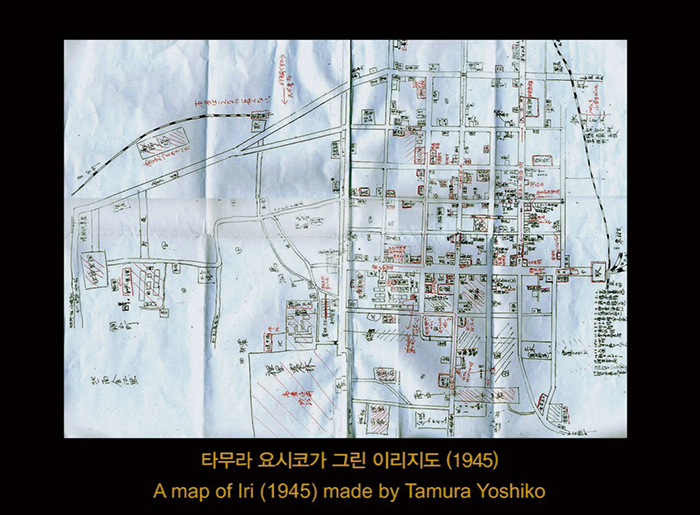
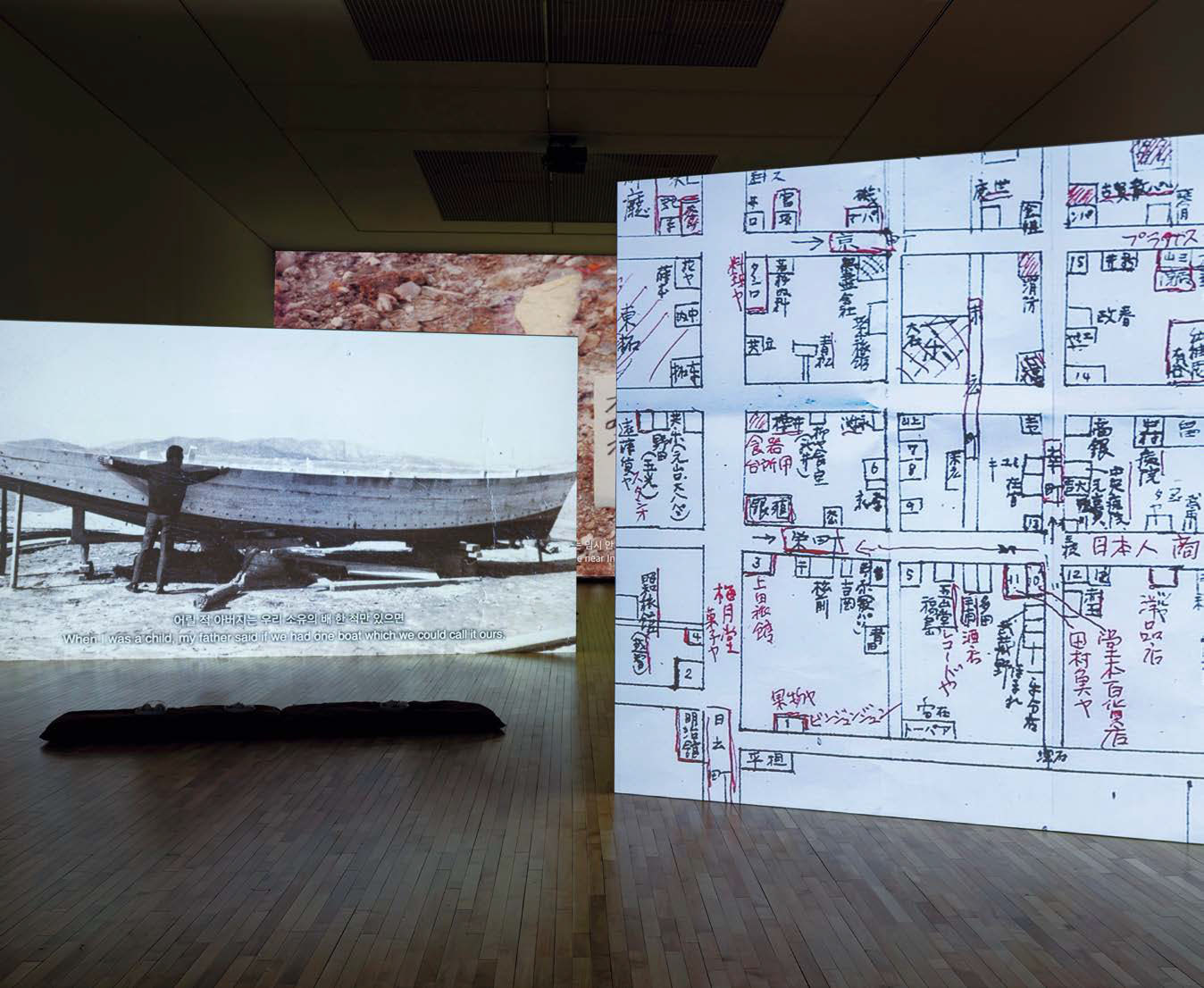
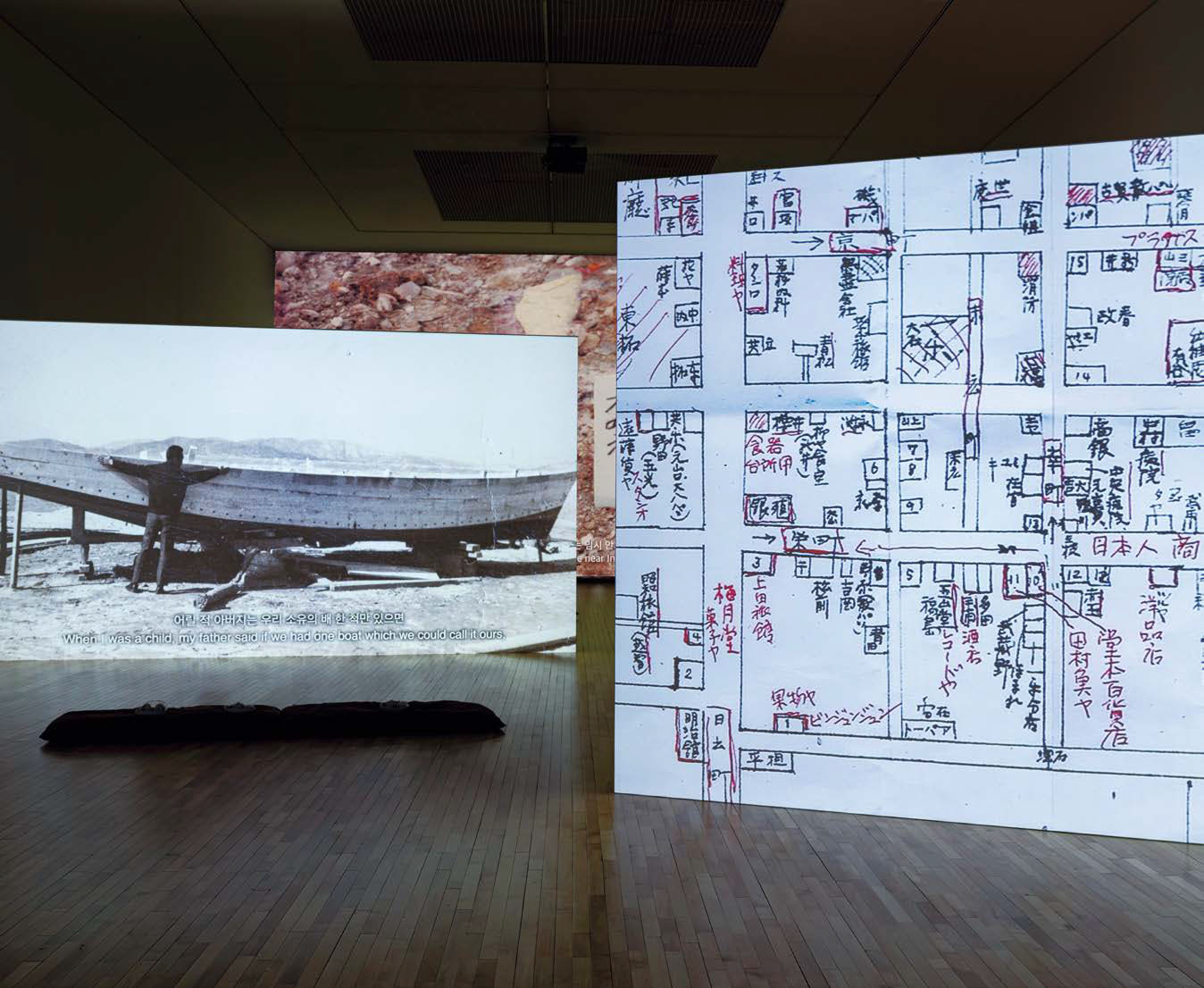
Colony/Memory is set in present-day Iksan, formerly known as Iri. The work weaves together a map of her hometown drawn from memory by Yoshiko Tamura, the daughter of an executive of the Oriental Development Company, with old photographs of alleyways and other materials.


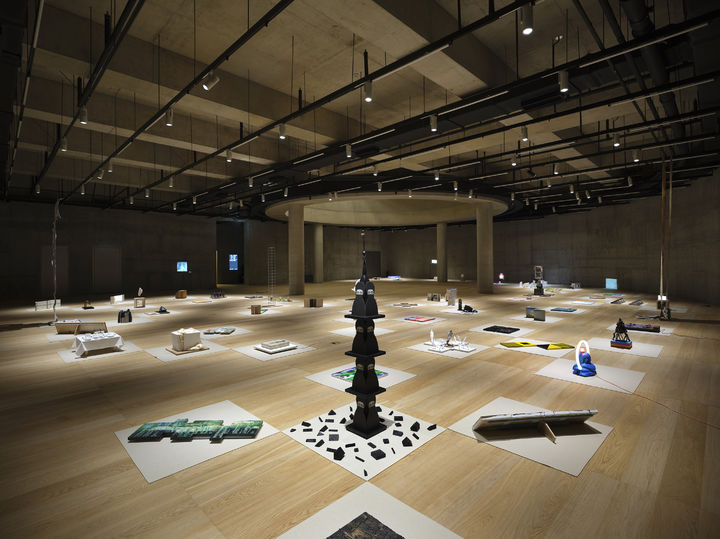
Installation view of 《Three Voices, a World Unveiled》 (Pohang Museum of Steel Art, Pohang, 2024) © Pohang Museum of Steel Art

In Daejeon Station, SHIN weaves a narrative by arranging a model of the railway residence where Michiyuki Hagimoto, the son of a locomotive engineer, once lived near Daejeon Station, together with photographs of the old downtown area and trains. Although scenes of colonial violence are absent from these images, the sites come alive as multilayered places entangled with emotional truths.

Space transformed into an archive of time no longer remains a simple physical backdrop. When individual memories accumulate within it, an intangible place begins to exert material force. In the research video Iksan Site Survey / Research Process(2015), SHIN films Iksan resident Seok-go Oh walking through the city by following Yoshiko Tamura’s map.

At the moment when Tamura’s and Oh’s memories overlap, the region proves itself not merely as space but as evidence of a community. In her solo exhibition 《City × Island × Archive》(SeMA Bunker, Seoul, 2021), where she screened Yul-do(栗島), SHIN further strengthened this methodology of questioning how a “region” can be substantiated by exhibiting not only private materials belonging to former Bamseom resident Il-yong Lee, but also newspapers, news footage, satellite photographs, and official documents as part of the archive.

At this point, it is worth returning to SHIN’s early work, particularly her second solo exhibition 《A Theft Case at an Abandoned Factory》(2014). This archival exhibition centered on an incident the artist had experienced three months earlier. After completing her studies abroad, SHIN was preparing her first solo exhibition in an abandoned factory in Mullae-dong when video equipment and other belongings were stolen and her artworks were damaged.

In an attempt to track down the thieves, she collected piles of trash they had left behind. In the process, she also discovered traces of household belongings abandoned by a former factory worker. Against the circumstances of gentrification unfolding in Mullae-dong at the time, the worker had been forced to leave behind the site of their livelihood.

This incident became a turning point that shifted SHIN’s attention from personal experience toward broader social issues. She began focusing on revealing memories and places belonging to marginalized people dispossessed by structural “thieves.”

The concept of dispossession embodied through the artist’s own experience symbolically marks the way society operates around individuals and between individuals. Even the testimonies that emerge continue to contain absences, yet it is precisely by accepting those absences that meaning opens its door and approaches us. SHIN’s practice asks who occupies the position of the one who speaks before that which ultimately cannot be spoken, and takes shape as an impossible attempt to record the traces of time that cannot be recorded.

It is at once an accumulating archive and a collapsing one. It is not simply a repository that stores the past, but a fluid topos in which the observing present continually reflects upon its resonance. It is a space in which the voices of those who disappeared are revived, while the incompleteness of that revival remains with us as an unresolved task.

The archive is incomplete, yet within that very incompleteness we are able to face lives history failed to capture, records the state did not preserve, and faces swallowed by oblivion. Within the limits of what art can do, Mi-jung SHIN carries out this attempt at mourning and restoration for all that has disappeared in a manner that is both deeply painful and truthful.

* This essay was commissioned as part of the Korea Arts Management Service’s “2025 Korean Art Criticism Support” special contribution program.

References