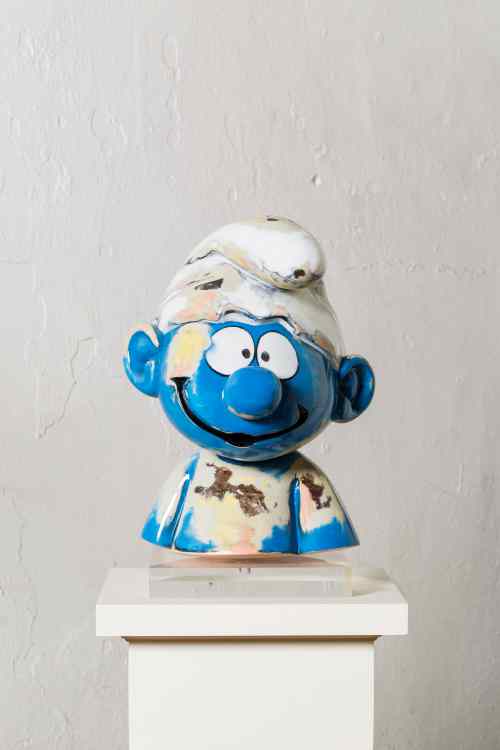
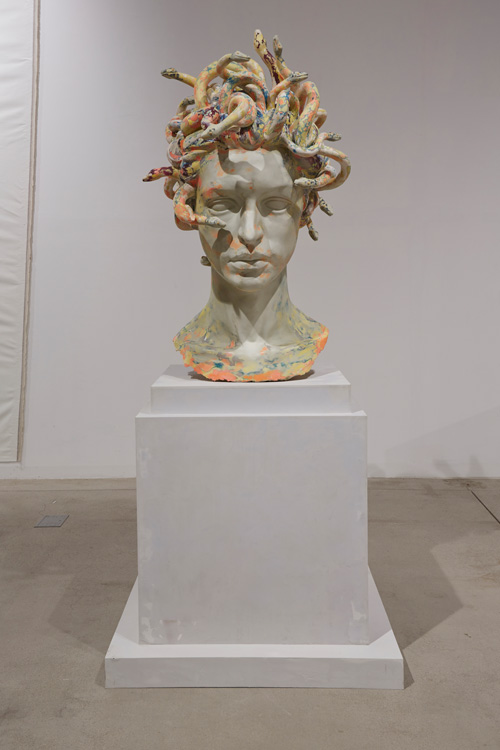
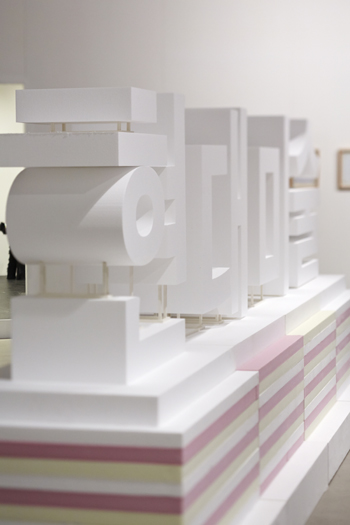
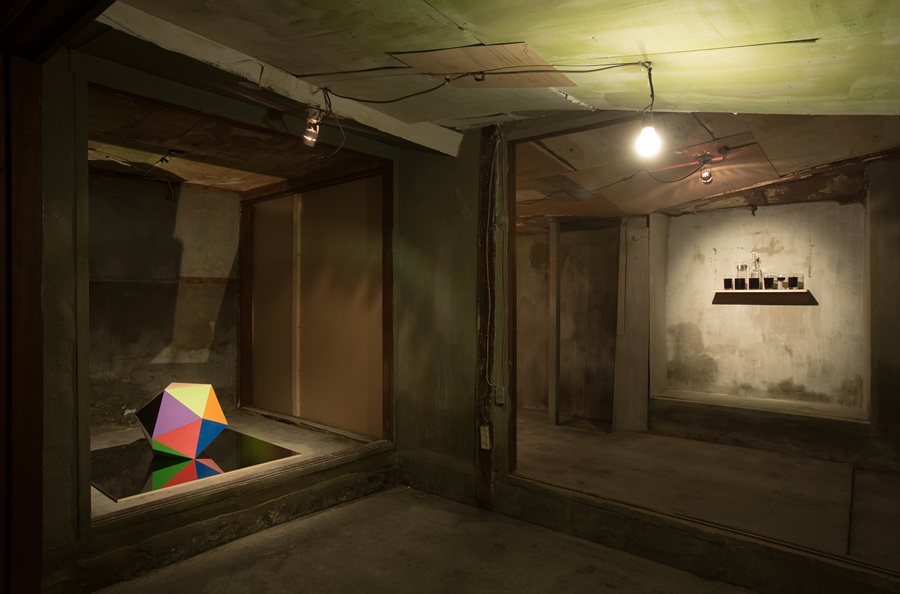
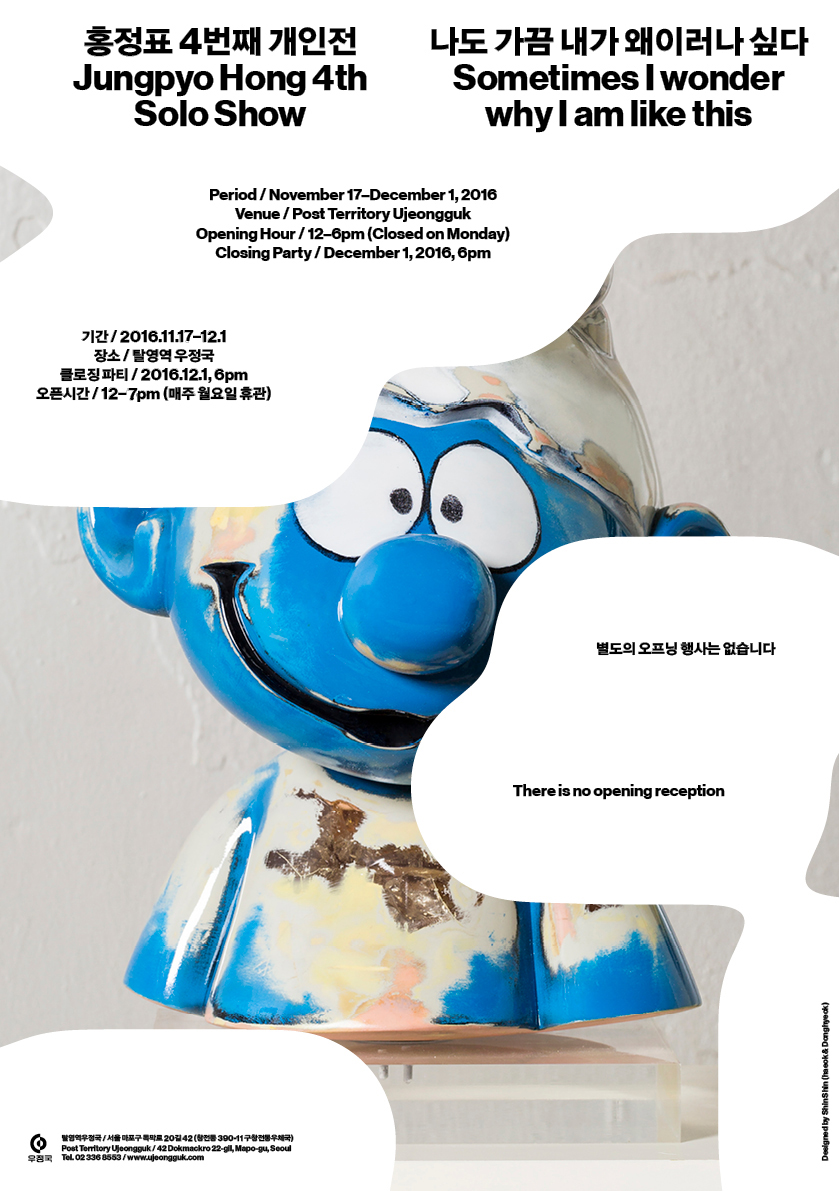
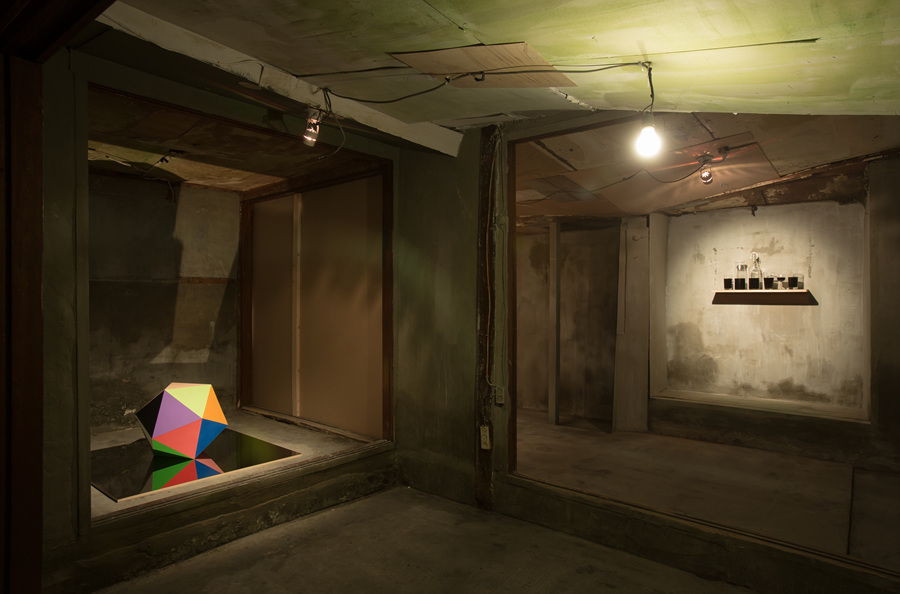
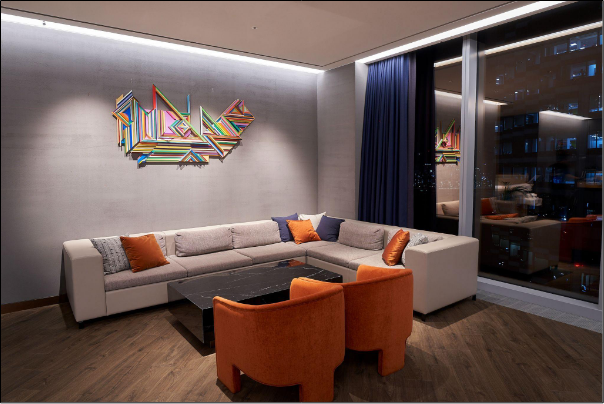
Hong Jungpyo's sculptures are characterized by vivid primary colors, meticulously finished surfaces, and precisely assembled lines and edges. Incorporating everyday objects and industrially manufactured materials, he develops sculptural forms through repetitive processes of casting, sanding, painting, and assembly.
In his 2005 ‘Artactually’ series, Hong reproduced familiar objects, such as mackerel and doughnuts, at their actual sizes, translating their recognizable forms and material qualities into sculpture. The ‘Artactually-krispykreme’ series, in particular, involved casting actual doughnuts in transparent fiberglass-reinforced plastic (FRP), then repeatedly sanding their imperfect surfaces and filling them with colored FRP to address irregularities caused by the original material.
The carefully finished appearance of Hong's works thus emerges from extensive manual labor and repeated corrections, while errors occurring during production also play an important role in determining their final forms.
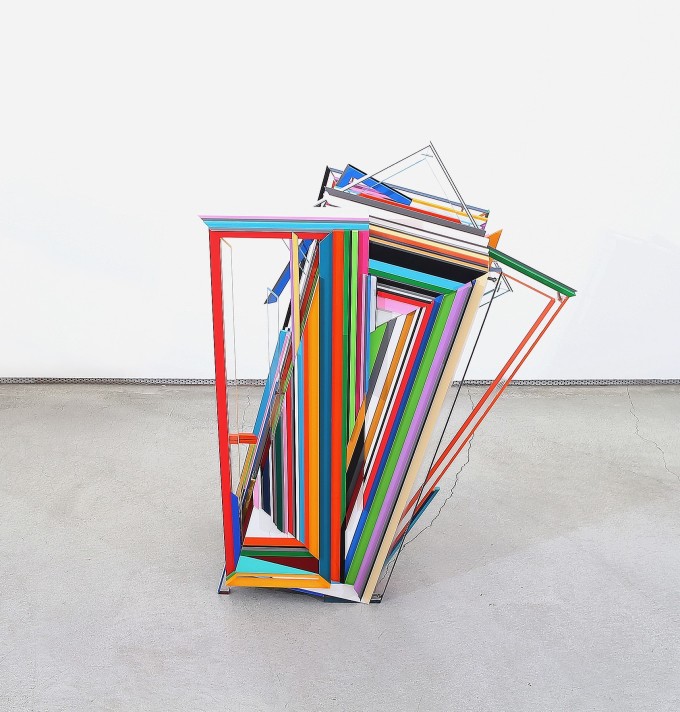
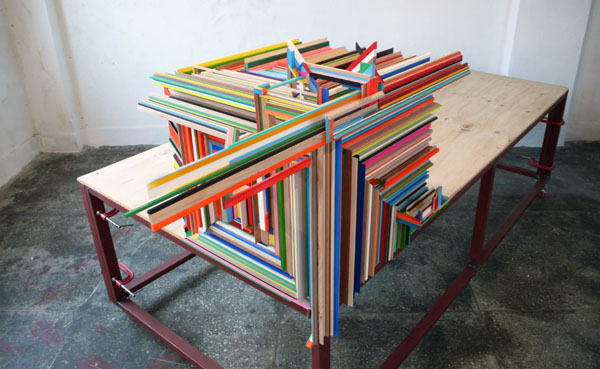
In the ‘Hidden edge’ series, his earlier methods of reproducing objects develop into the construction of geometric structures. Drawing upon architectural molding techniques used to create smooth transitions between rough surfaces, Hong repeatedly adds structural elements to conceal exposed material cross-sections, only to cover the new cross-sections that emerge as a result. Intersecting horizontal and vertical lines, edges protruding at various angles, and components of different thicknesses are continuously assembled into increasingly complex structures.
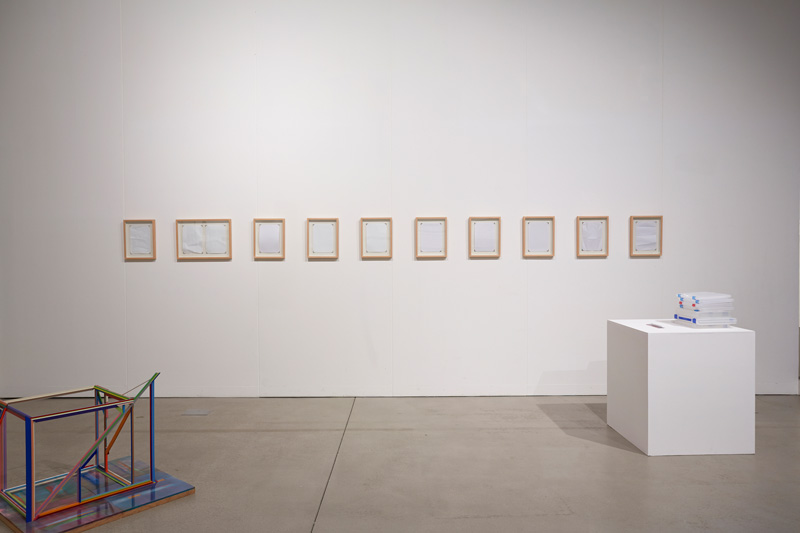
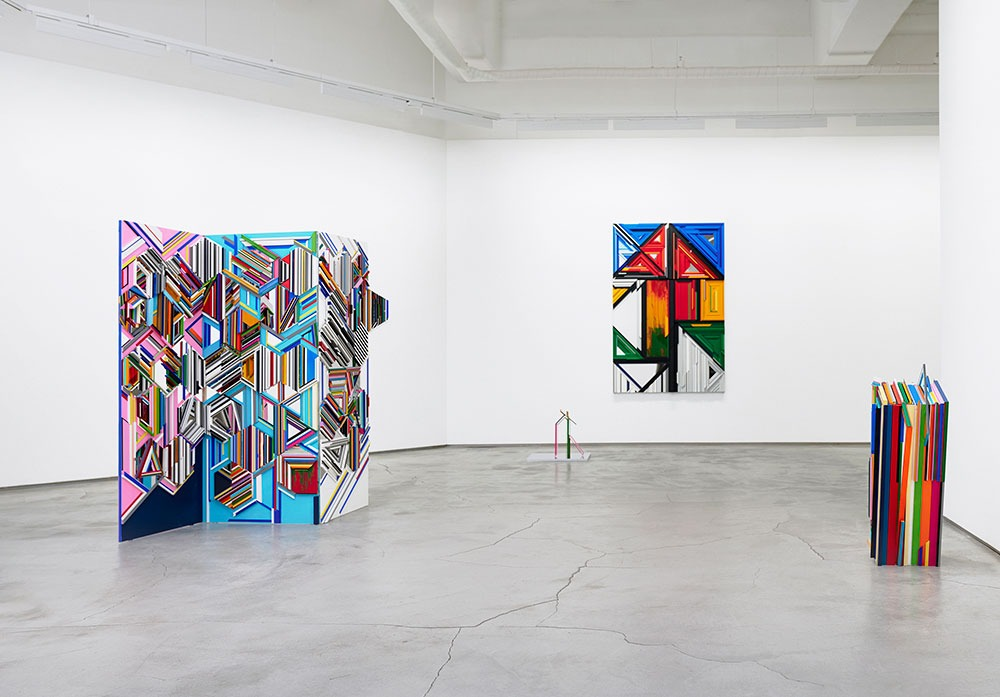
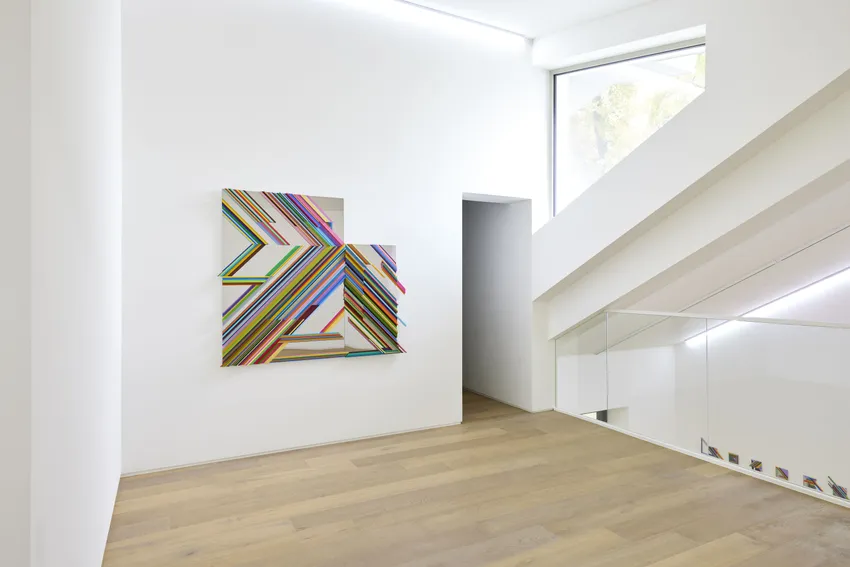
While the early works emphasized three-dimensional forms based on hexahedral frameworks, the series subsequently evolved toward linear configurations and wall-mounted reliefs. In works such as Hidden edge #101 (Concealing the Cross-section #101) (2021), these constructive principles generate structures that move between two and three dimensions, emphasizing the spatial relationships formed between sculptural surfaces and edges.
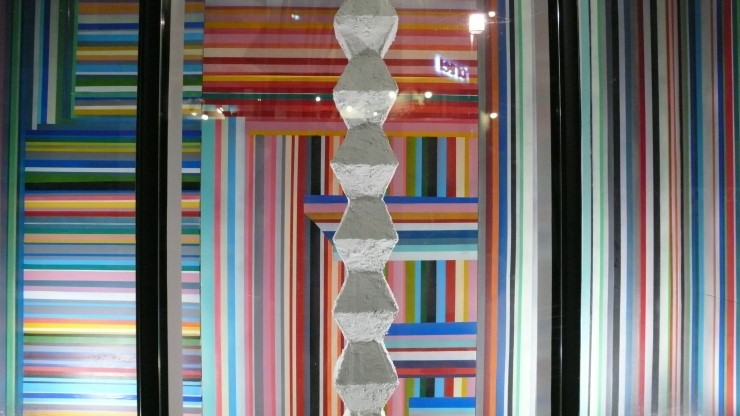
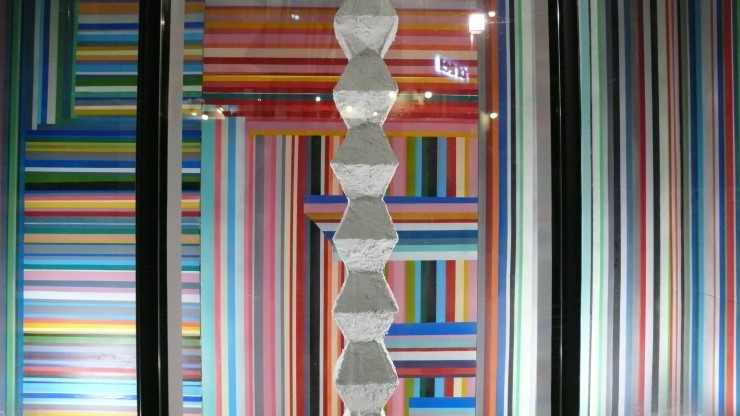
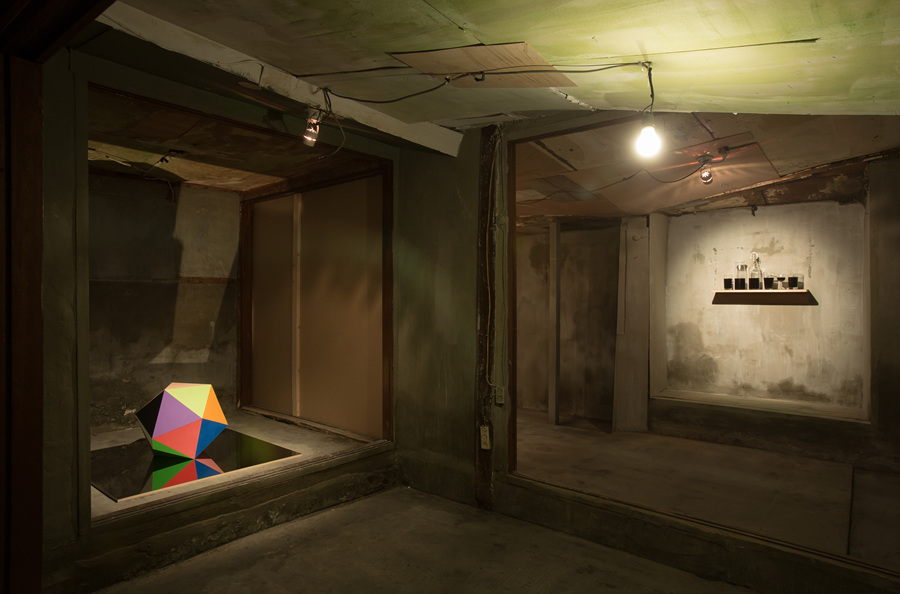
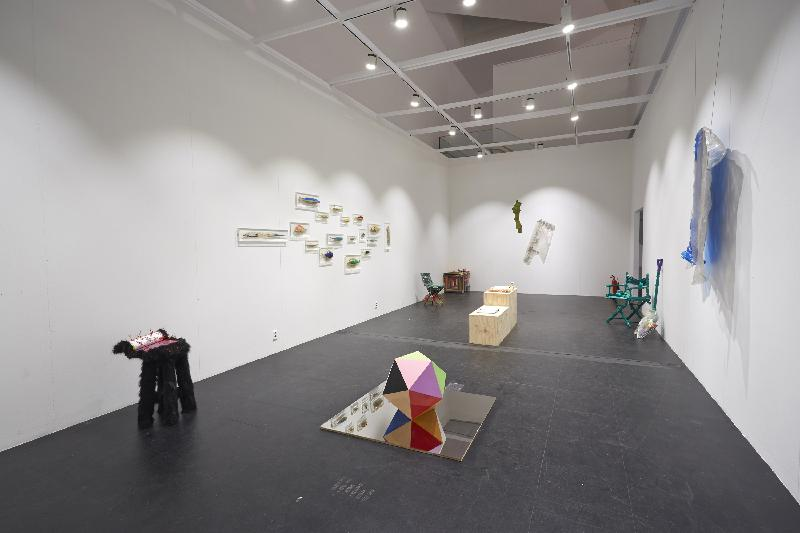
Hong has also expanded the visual experience of sculpture by manipulating the relationship between sculptural structures and their surrounding spaces. In Infinite Pillar (2014), he installed highly reflective super mirrors on the ceiling and floor and arranged repetitive lines and a column-like structure to create the illusion of a confined exhibition space extending infinitely in the vertical direction. In the ‘Hidden edge’ series, the arrangement of lines and edges connecting interior and exterior spaces produces varying perceptions of depth depending on the viewer's position.
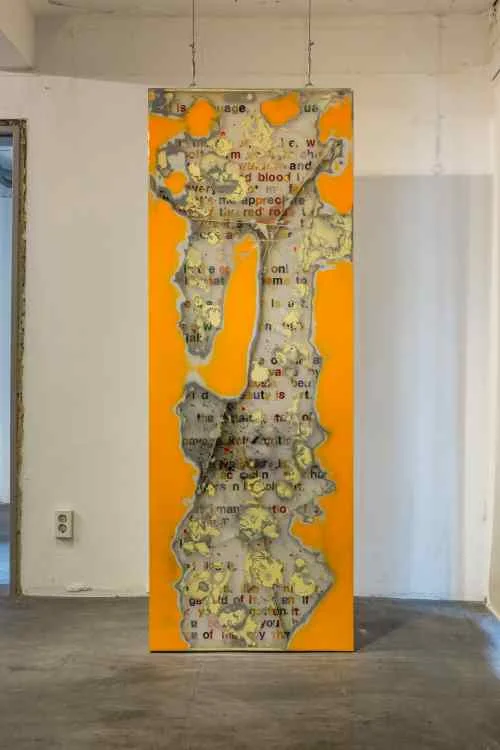
In Hidden edge #18 (Concealing the Cross-section #18) (2021), he incorporated mirrors to superimpose the physical space of the structure and its reflected image, while No decision #002 ver.HE (2021) uses a special pigment to conceal the underlying construction process. Through the physical thickness of materials and the visual effects of surfaces, these works explore the relationship between the space occupied by sculpture and the space perceived by viewers.
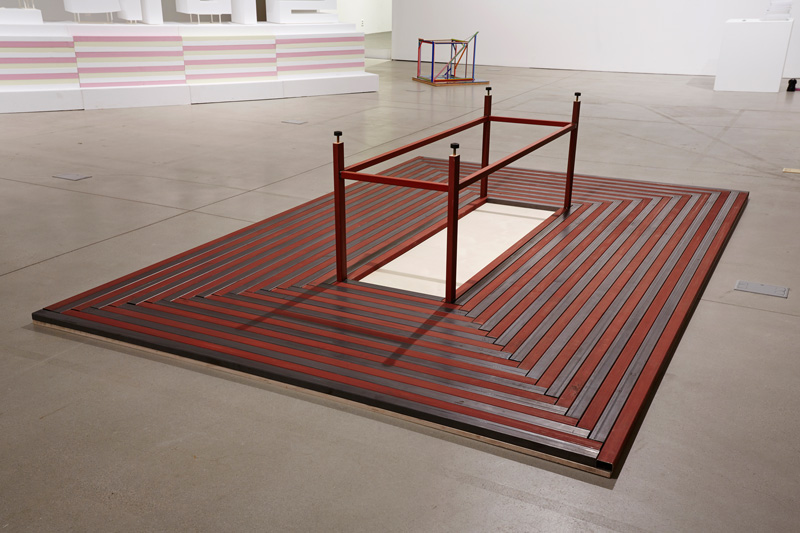
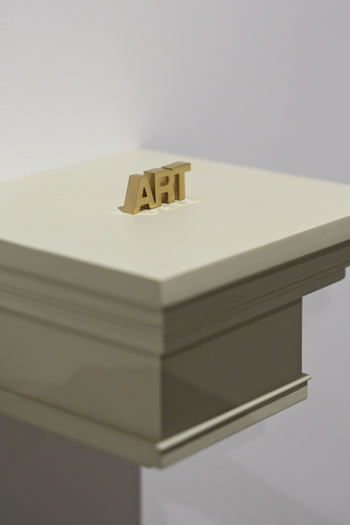
More recent works actively incorporate architectural structures and existing objects, transforming their functions and modes of installation. Lerberg and No Use (2024) are based on an IKEA shelving unit and a steel pipe hanger, respectively, presenting formerly functional objects as independent sculptural forms. In I Don't Want the Bottom of the Object to Get Dirty (2024), Hong alters the structure of a sculptural pedestal, reversing the conventional relationship between support and artwork.
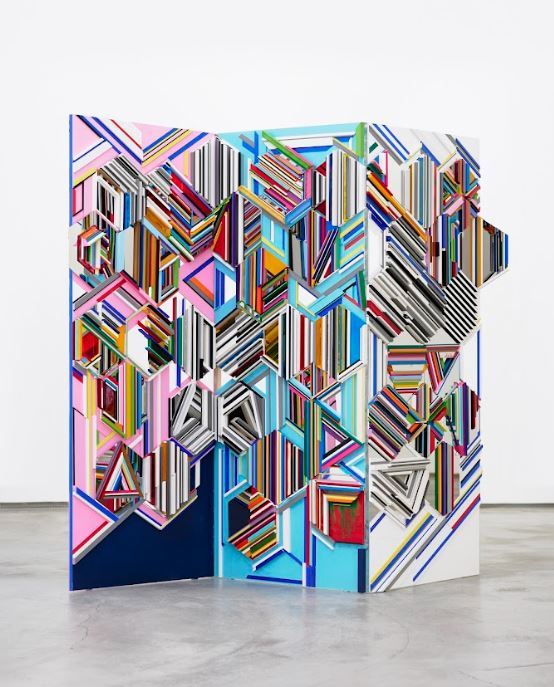
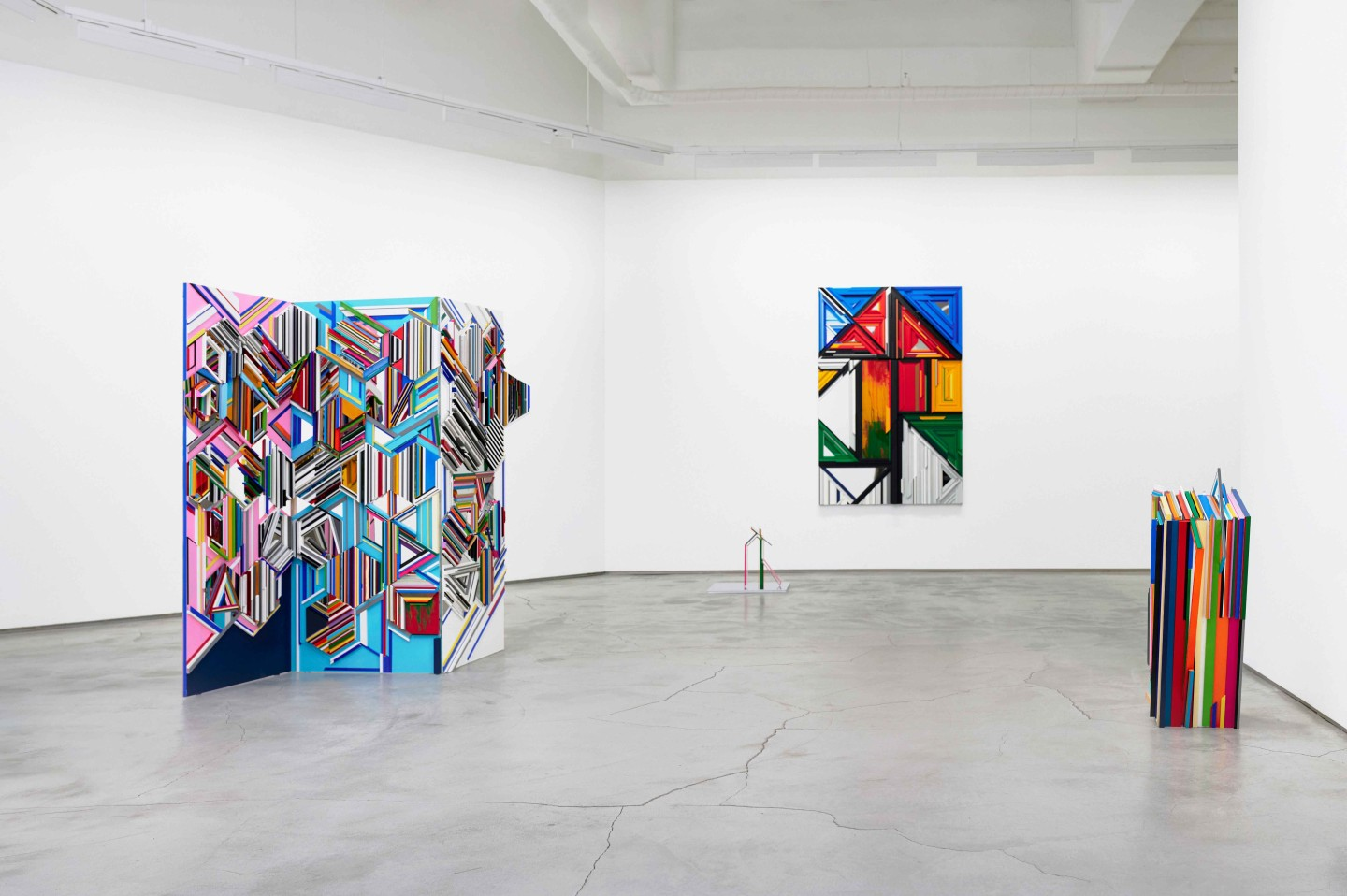
Meanwhile, the ‘Loading in 9 Times’ series combines moldings of varying thicknesses to explore structures extending along three spatial axes. In Different Feelings (2024), he simultaneously exposes the front and back of a folding-screen-like form, revealing both the finished surface and traces of the production process. Maintaining his characteristic precision in surface treatment and structural assembly, Hong continues to broaden the expressive possibilities of sculpture by transforming the functions, orientations, and visible surfaces of objects.