Black, Hole, Body, and Black Hole Body
My first impression of Seo Young Chang's work was of the color black, which made pale faces appear even paler. Frequently appearing throughout her work, this black reminded me of the formal tailcoat worn by a classical orchestra musician or the black sedan waiting to transport a coffin at a funeral—sophisticated, yet somehow evocative of death.
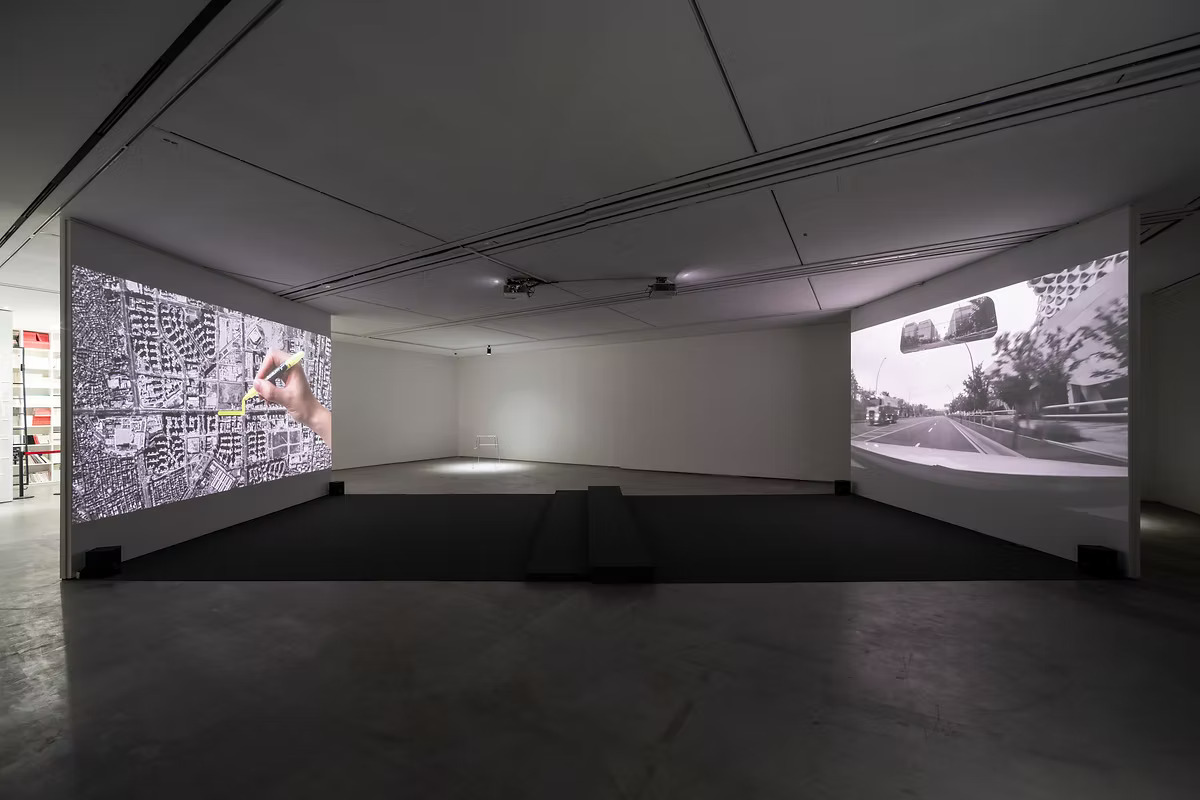
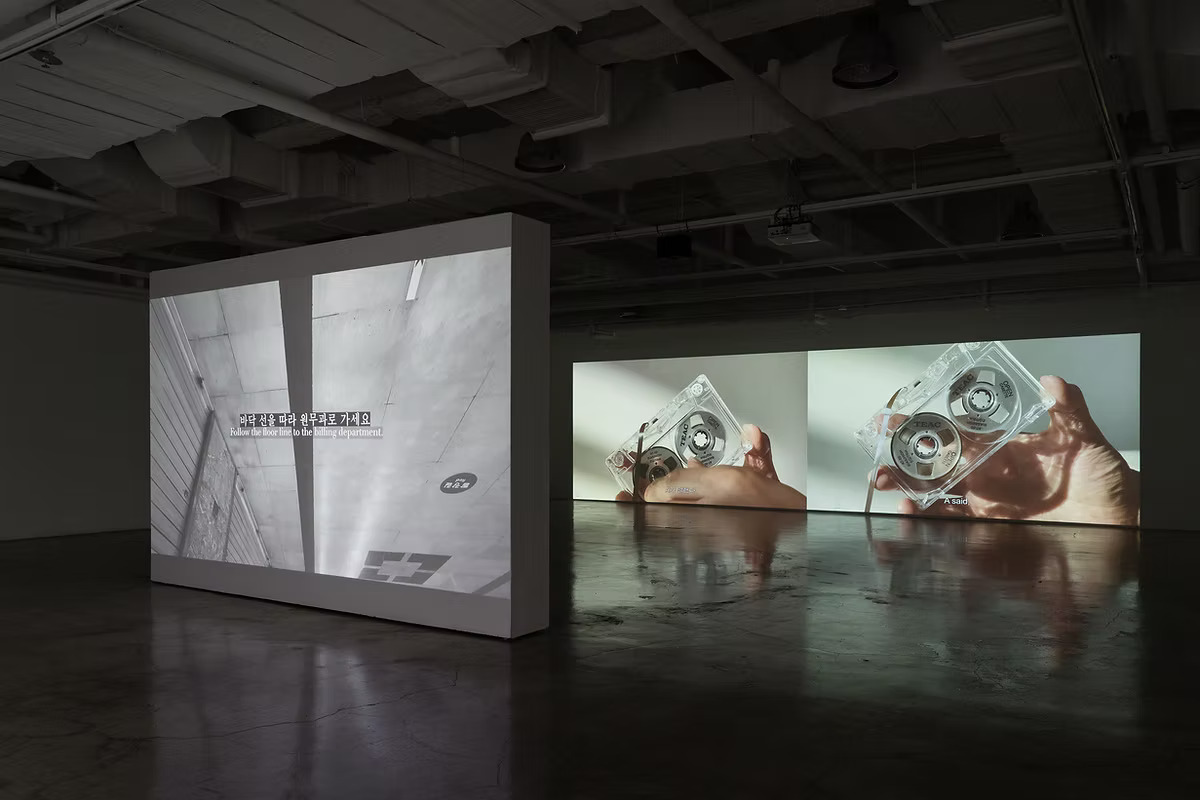
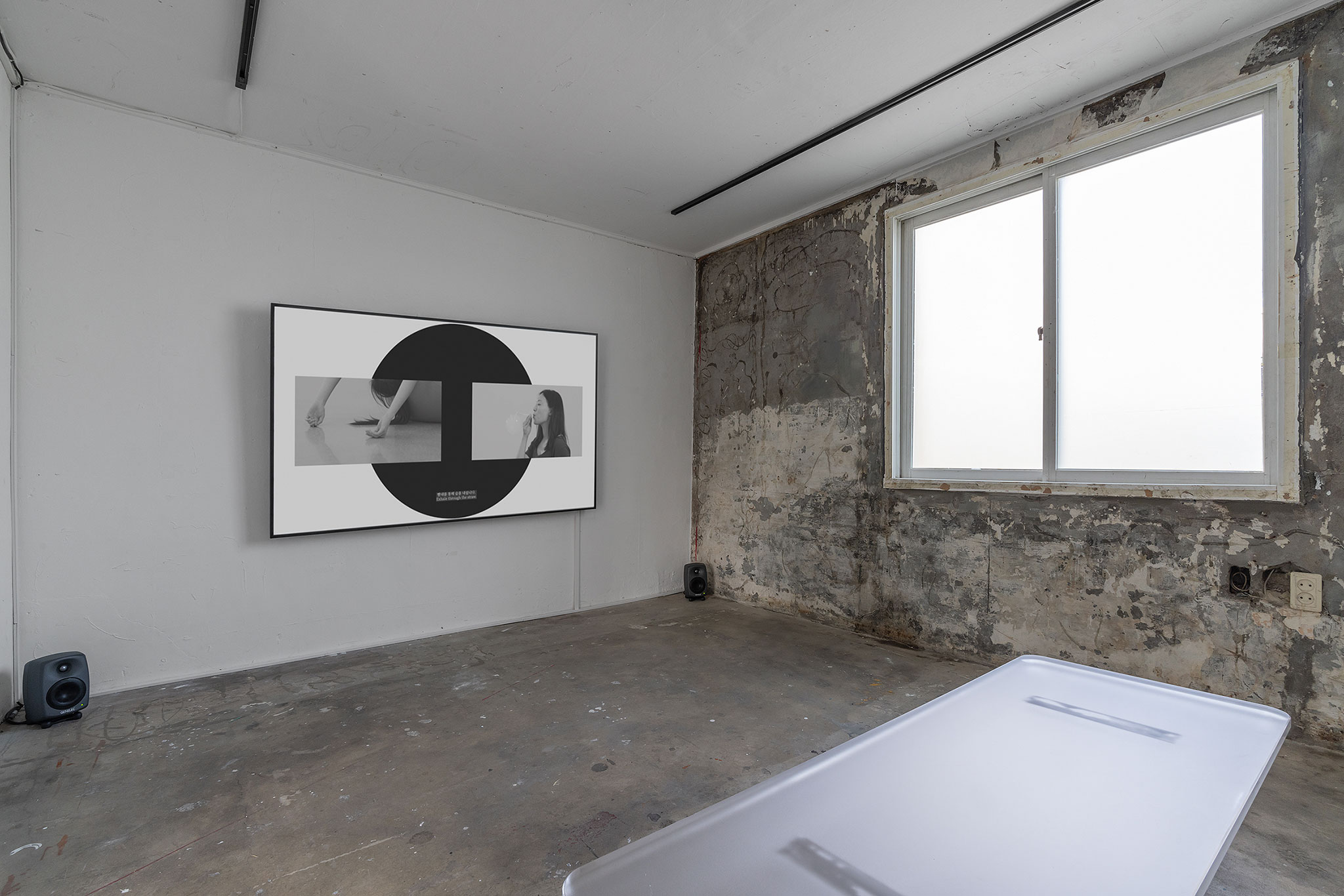
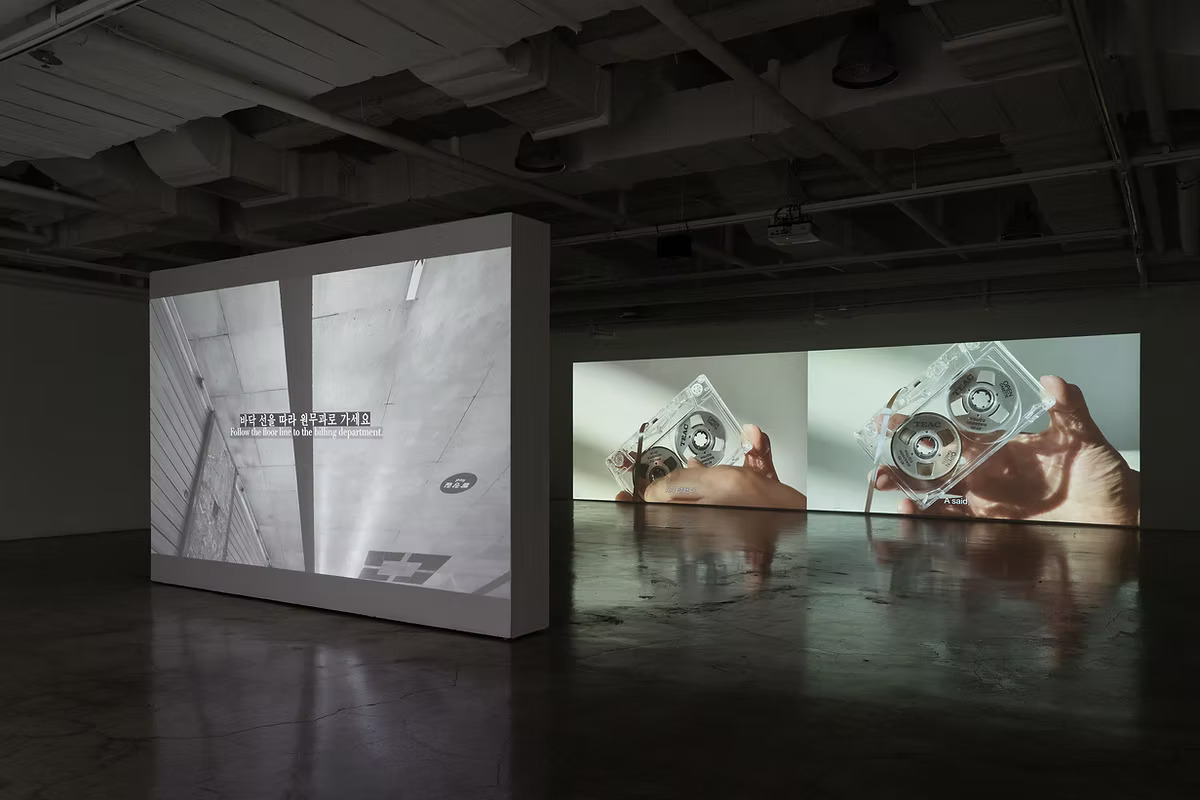
Much like this initial impression formed through color, Chang's practice, which primarily employs video, is characterized by its ability to engage viewers through a comprehensive sensory experience, encompassing the relationships between scenes, text and sound, and the environment in which the works are presented.
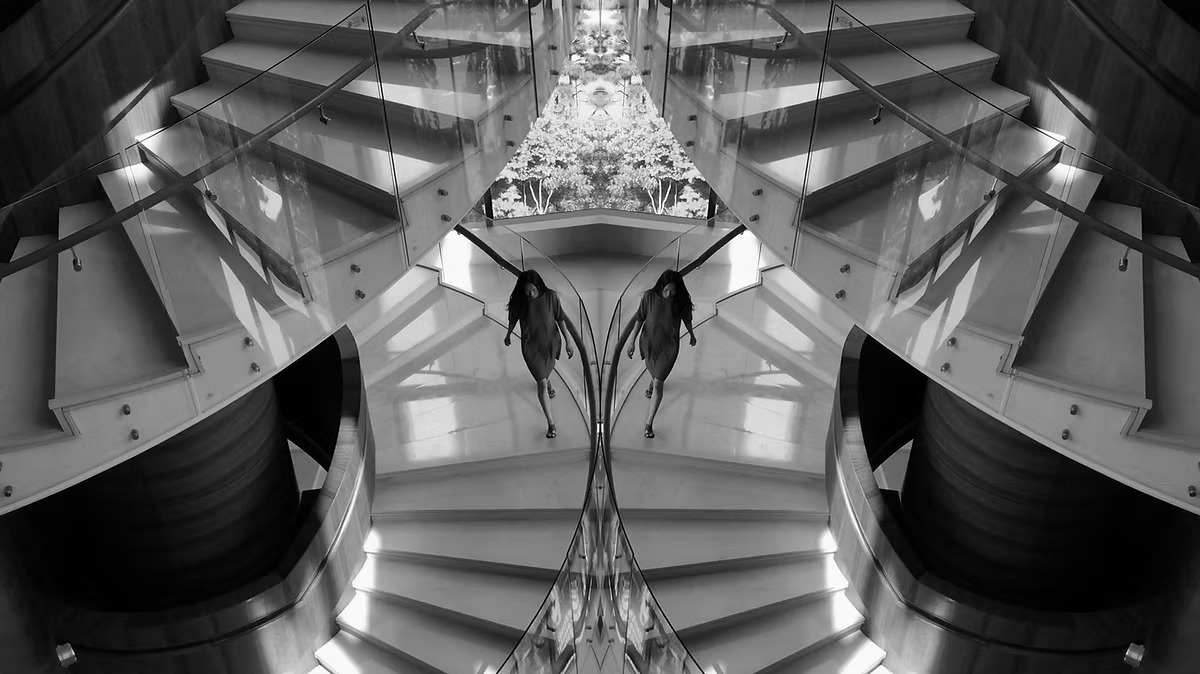
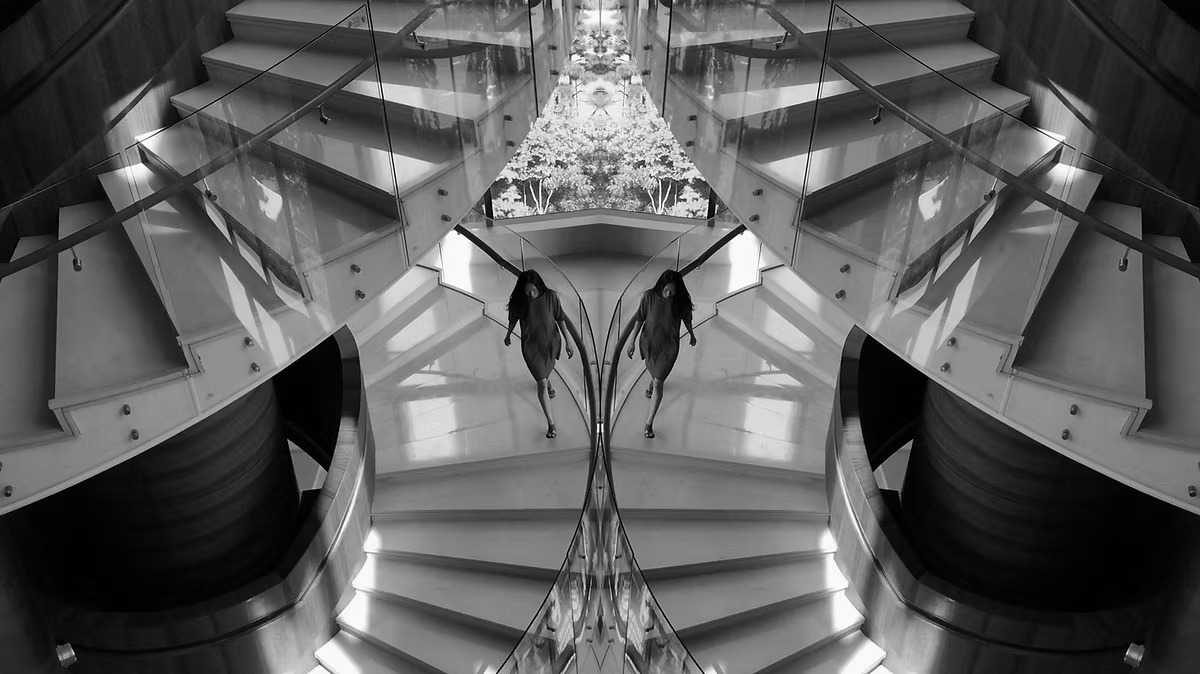
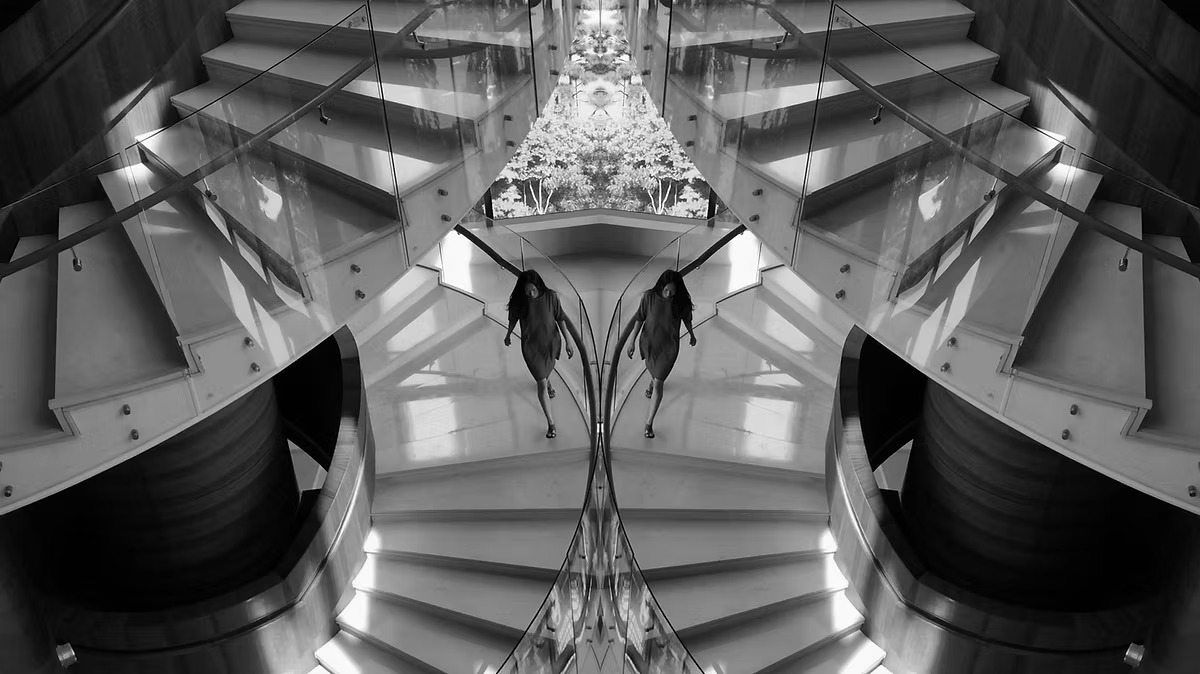
For example, in her recent work Circle(2017), the screen is divided into two symmetrical halves resembling a decalcomania, while the camera follows a figure endlessly descending a spiral staircase.
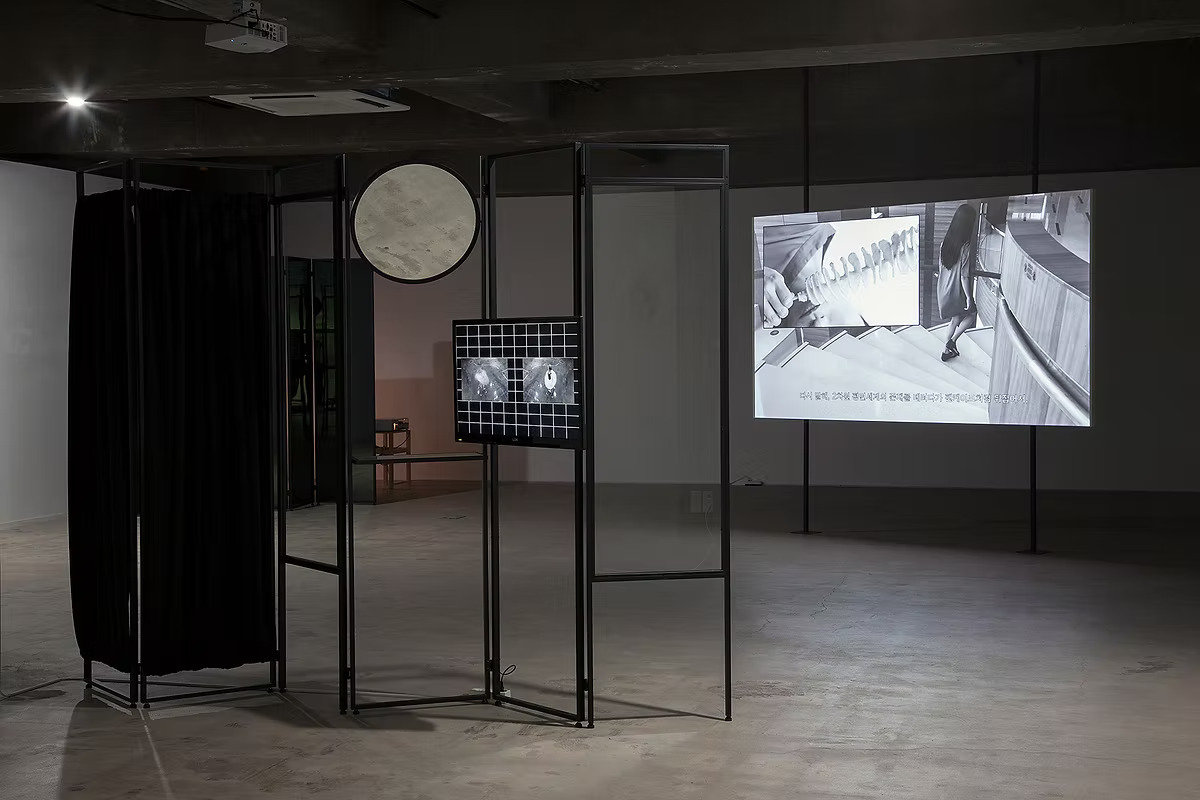
Through this symmetry, the spiral staircase vaguely evokes the shape of human ribs or winding internal organs, while the camera's gaze, following the figure as they rotate downward along the stairs, creates the impression of water being drawn into a drain. Meanwhile, the superimposed subtitles introduce words such as "apocalypse," "end," and "spiral," intercut with footage of someone eating a spiral-cut potato.
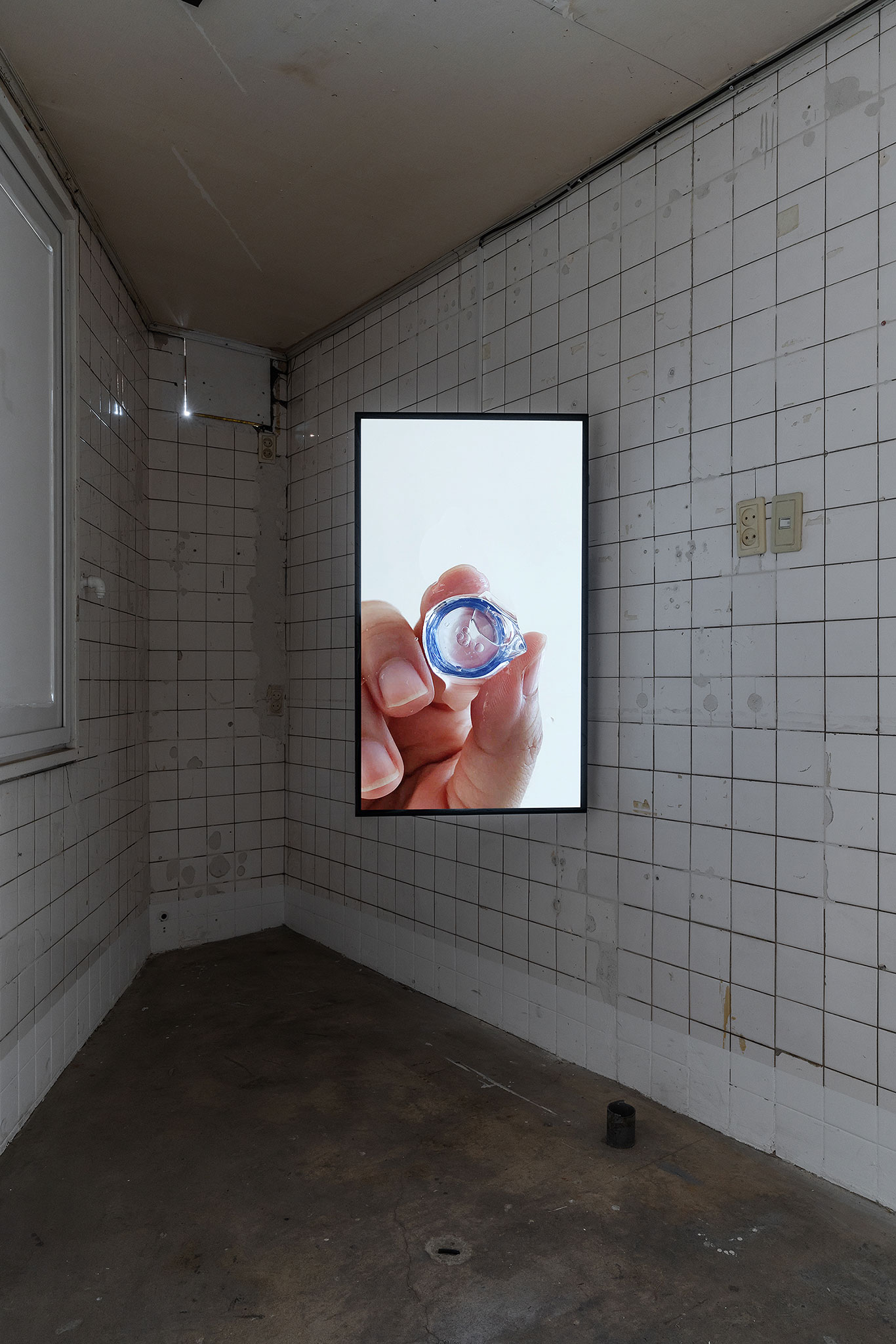
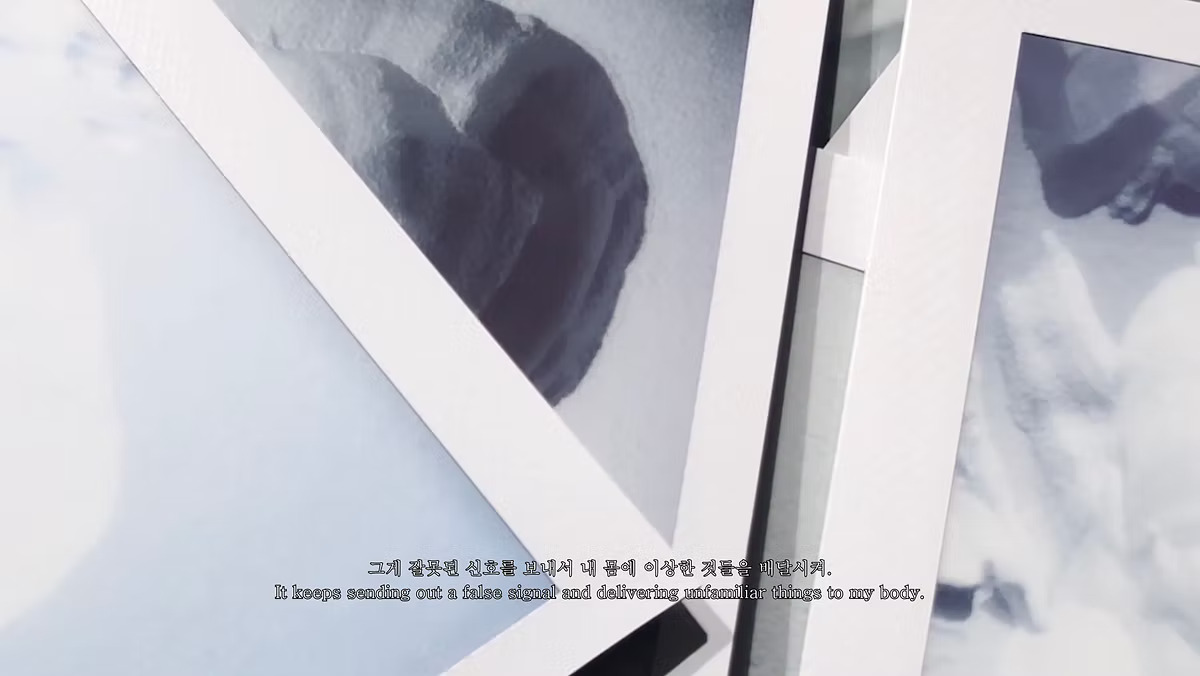
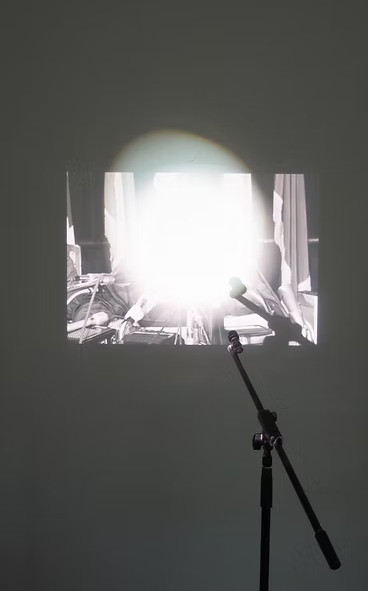
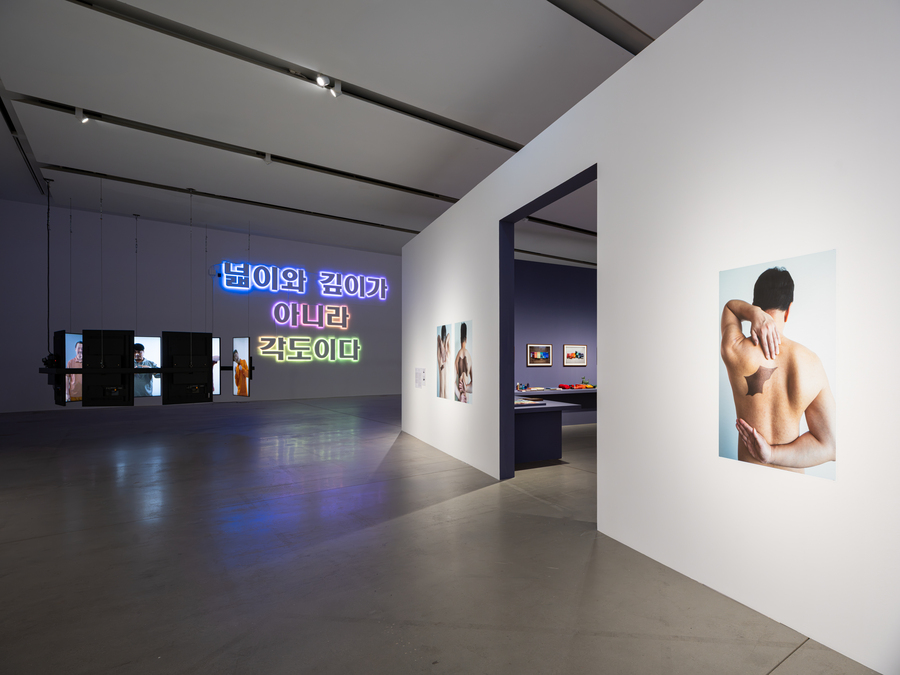
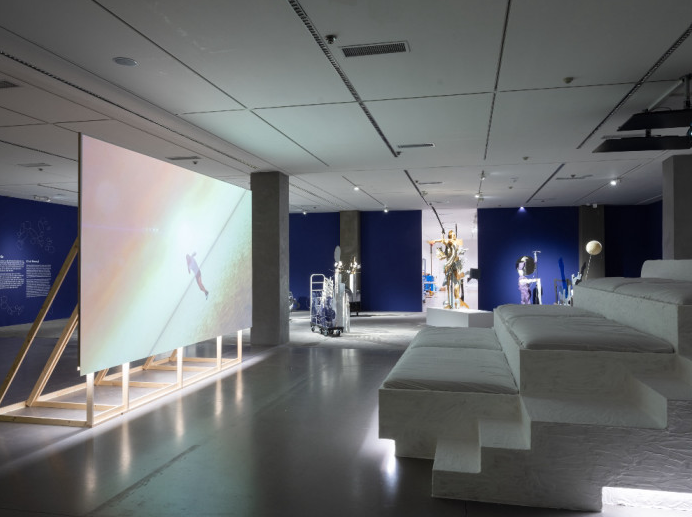
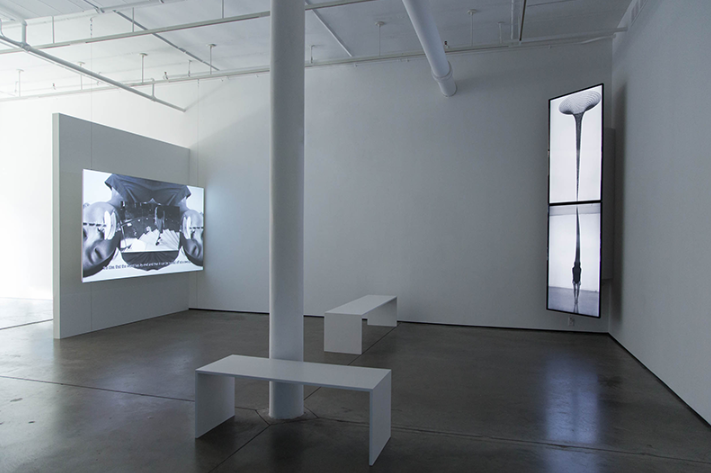
Other works in the surrounding space feature slides collecting spiral-related images, black mirrors, mirrors, and blackout curtains, functioning as supporting statements. The relationships among these works explain why the exhibition as a whole, titled 《Black Hole Body》, must be considered in relation to its individual components.
Through the sense of emptiness conveyed by repeated scenes, the implications of illness and death evoked by cold hospital imagery, and figures endlessly performing feeble gestures, Chang skillfully accomplishes the difficult task of "presenting something precisely through indirect means," lending her work a poignant sense of presence.
The Body in a State of Loading
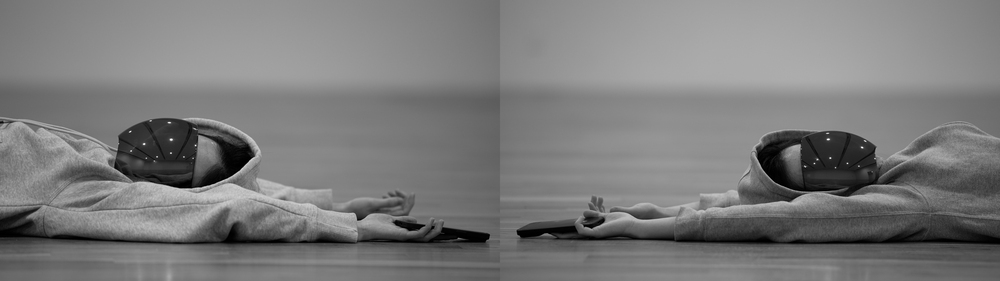
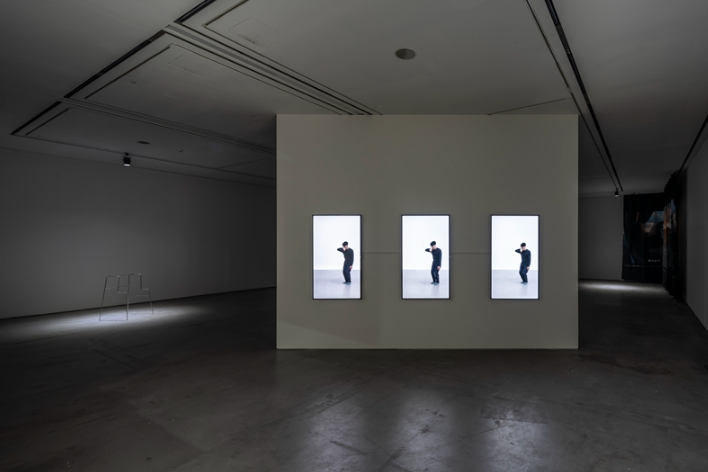
Chang employs the body as a subject in two particularly interesting ways. First, she symbolizes the body's interior and exterior through its organs and limbs, respectively, expressing the condition of diseased organs through impaired limbs. Second, she constructs specific situations in which the body cannot function properly, repeatedly performing gestures resembling rehabilitation exercises intended to overcome these limitations.
Both approaches are premised on the body's imperfection, and because the body continually attempts to overcome this condition, it might be described as being in a state of "loading."
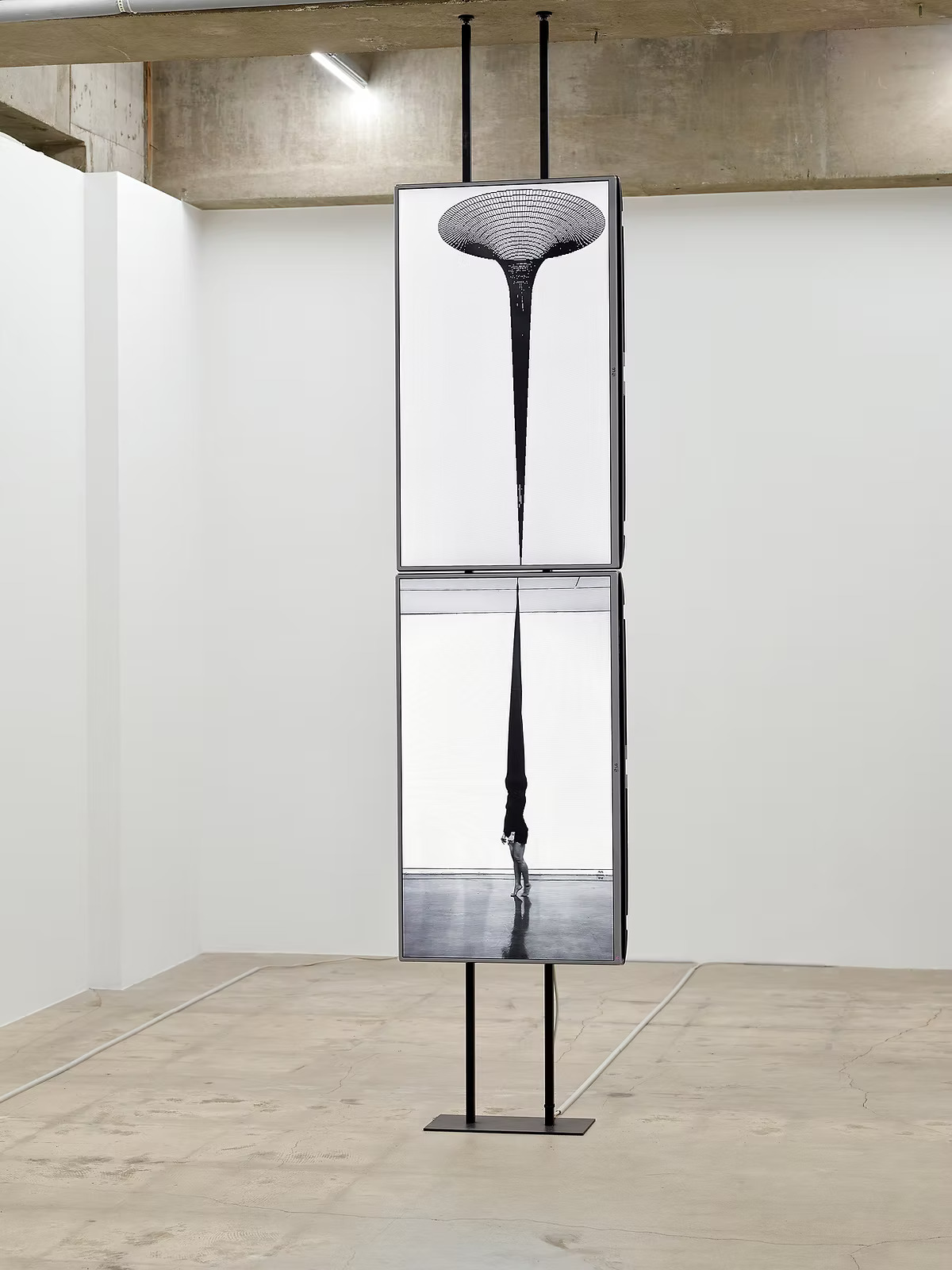
In Nameless Disease(2016), a solitary barefoot figure stamps their feet, creating a measured rhythm with their toes. On the upper monitor, whose relationship to the lower image remains uncertain, a net appears either to grow from the figure's head or to pull it upward. The precarious state of almost falling but never quite doing so continues indefinitely through the looping video. The body's confinement persists until the video is switched off, and the dancer's refusal to stop moving their toes, even under painful circumstances, evokes a peculiar sensation in the viewer.
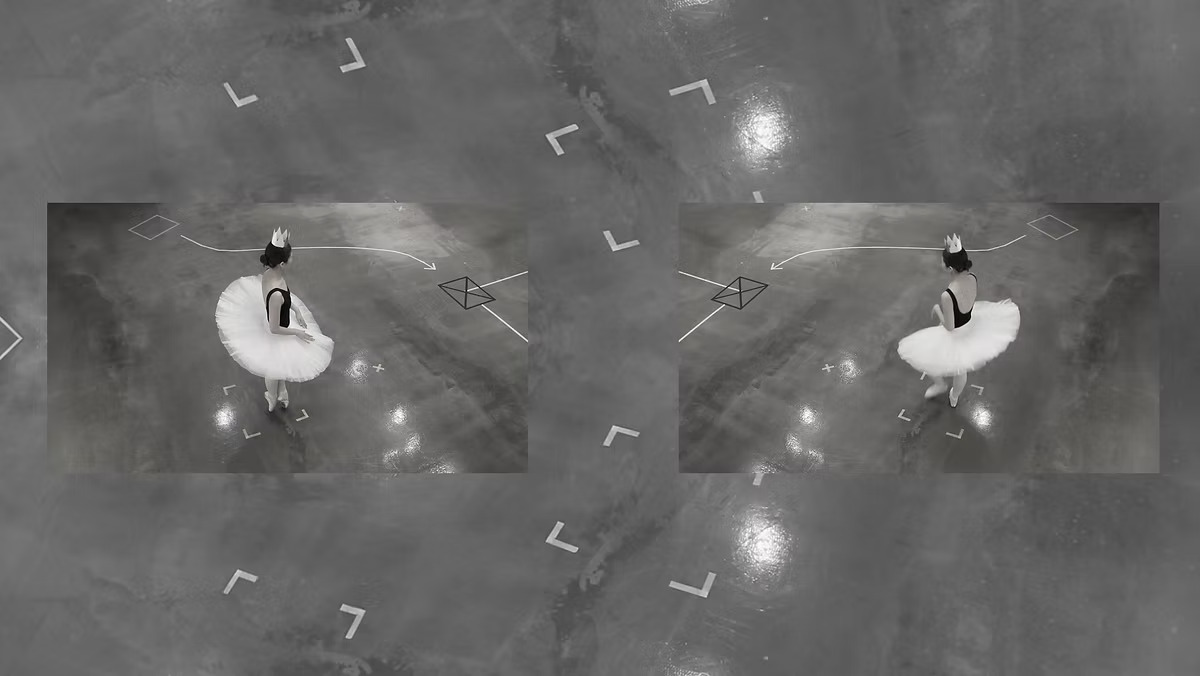
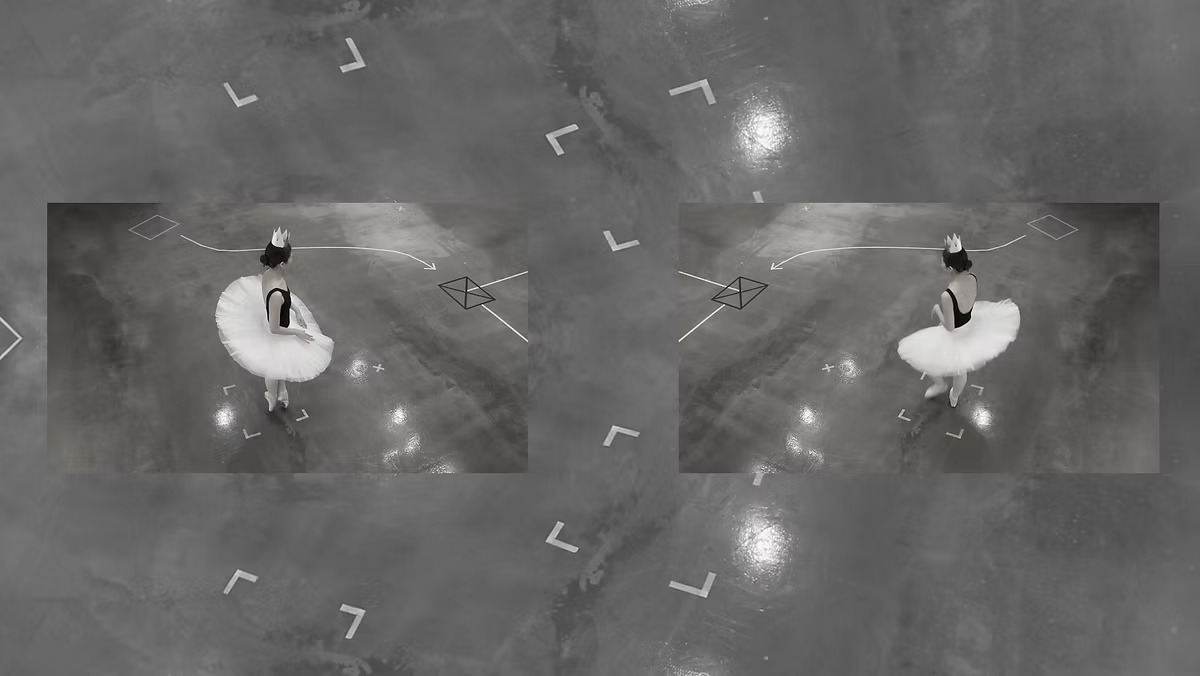
The image of a dancer performing under such restrictive conditions is a recurring motif in Chang's practice, from her early work First Steps(2008) to the more recent Until Your Name Is Called(2017). In First Steps, Chang introduces a dancer wearing a straitjacket, resembling either a wind-up figurine in a music box or a victim being punished in someone else's place. For the dancer, this state of confinement may resemble an unidentified illness: its cause is unknown, there is no clear way to escape it, and yet it cannot simply be ignored. The dancer therefore cannot cease even the slightest struggle.
Meanwhile, in Until Your Name Is Called, Chang juxtaposes the image of a dancer with the rotating circular symbol commonly seen when a video is loading. This resembles her approach in Circle, where she stretches the moment between the beginning and end of a situation, connecting different elements through sensory associations.
The possibility that the final destination reached after being drawn into the "black hole of the body" might once again be the body's surface repeatedly emerges throughout Chang's work. Is this not similar to the futile gestures one makes in an attempt to awaken the body during sleep paralysis?
The World of Either 0 or 1
As discussed above, Chang's works share an underlying atmosphere of illness, anxiety, and emptiness. Black humor arising from the acceptance of these conditions and anxiety resulting from an inability to accept them coexist through bodily gestures. At the same time, Chang pushes situations toward opposing extremes, transforming the decimal world into a flat world of zeros and ones.
For Chang, for example, death carries both its literal meaning and the figurative meaning of being forgotten by others. Repetitive gestures appear to be the performative method she has chosen because they offer a means of effectively overcoming both forms of death.
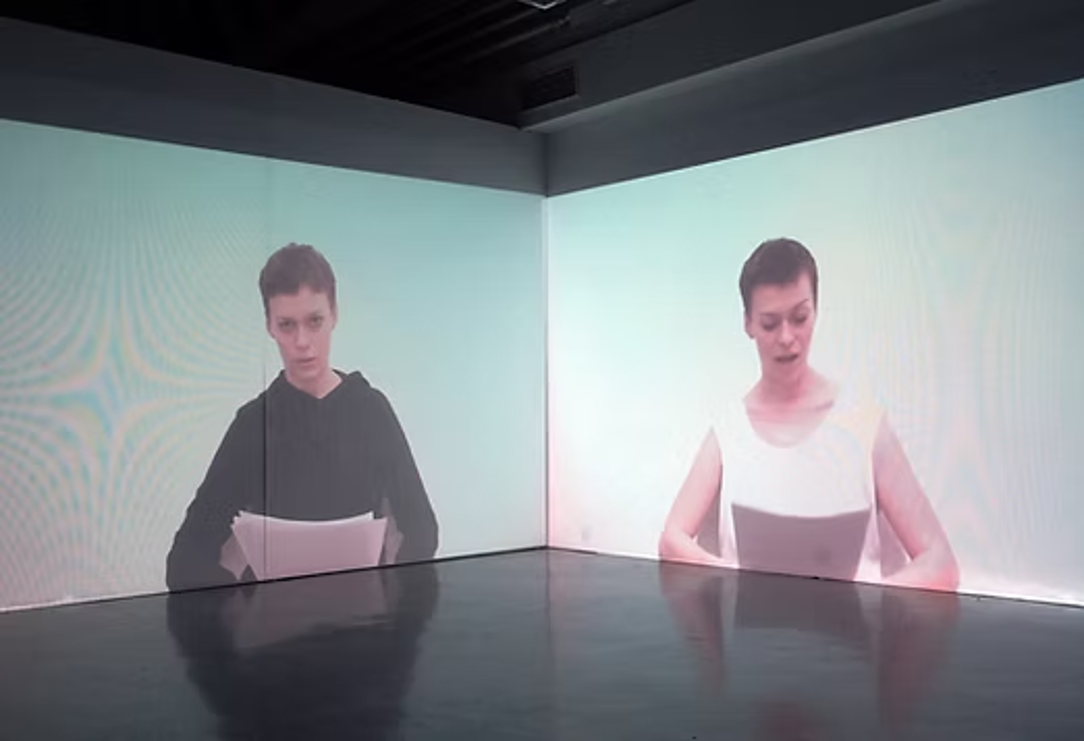
Among her works, The Story of a Bear That Drowns Repeatedly Forever(2013) most clearly demonstrates her black humor. The work takes as its subject the tragic paradox of a polar bear drowning as the glaciers melt. The visceral fear of drowning is diluted by the polar bear's cheerful manner of describing its own death, its exaggerated gestures, and the repeated deaths occurring within the narrative. In this process, the direct cause of death—"the glaciers are melting"—is transformed into a karmic condition in which "because it drowned before, it will drown again."
Like reciting an old incantation while plucking the petals of a flower one by one, Chang's practice resembles an endless repetition of the words, "It ends. It does not end." The implications of this repetition might be summarized as "the absence of a statute of limitations on events," "the absence of gaps in thought," "a physical effort to seek out the subject," and "the act of remembering those who are being forgotten."
Perhaps the reason we continue to listen to these repeated utterances, despite the monotony that accompanies them, is that, for a fleeting moment, they sound as desperate as a prayer.
Chang finds meaning in the act of continuing to move in a self-determined direction, even if it means walking on tiptoe and progressing slowly and painfully. Rather than offering concrete solutions for preventing the polar bear from drowning or enabling the dancer to escape the straitjacket, her works sustain these situations in order to examine the interval between a beginning and an end.
In this way, Chang's practice produces a kind of paradox in which the will to overcome emptiness is intertwined with the helplessness of accepting it. This is also why her works cannot simply be characterized as nihilistic or pessimistic merely because they address death or the end of things.