As
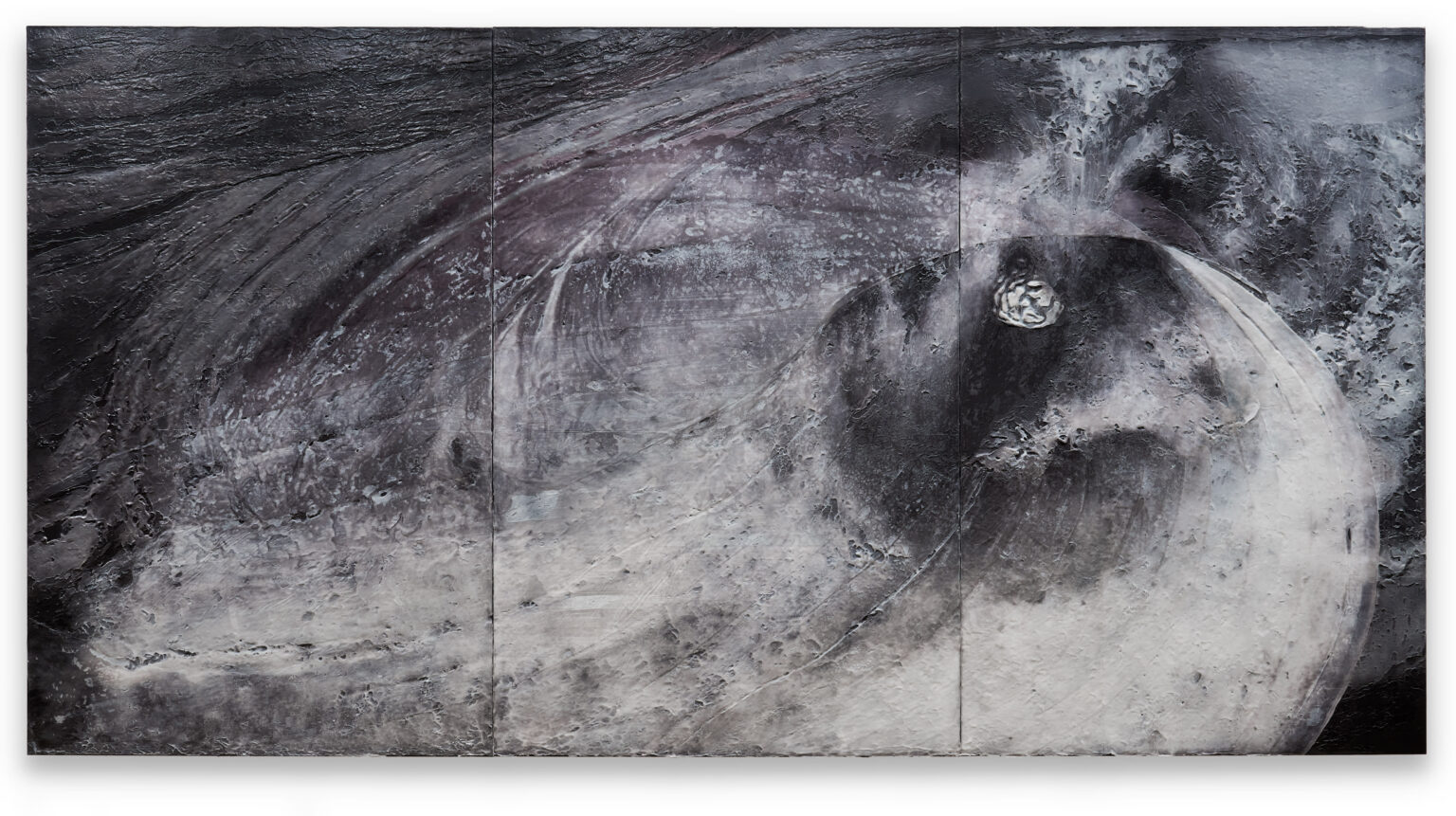
is well-known, Heemin Chung deals with the renewed status of images in the
midst of digital milieu via the medium of painting. While few critics disagree
with this type of general assessment, most of them seem to stop short of
pinpointing what exactly makes her works singular at all. In a catalogue essay
for EVE, a group exhibition of which she partook, I wrote that her oeuvre
“suspend the hierarchical dichotomy of ‘figure and ground’.” In this short
piece, I’d like to render that argument much more conspicuous by making
references to her more recent works.
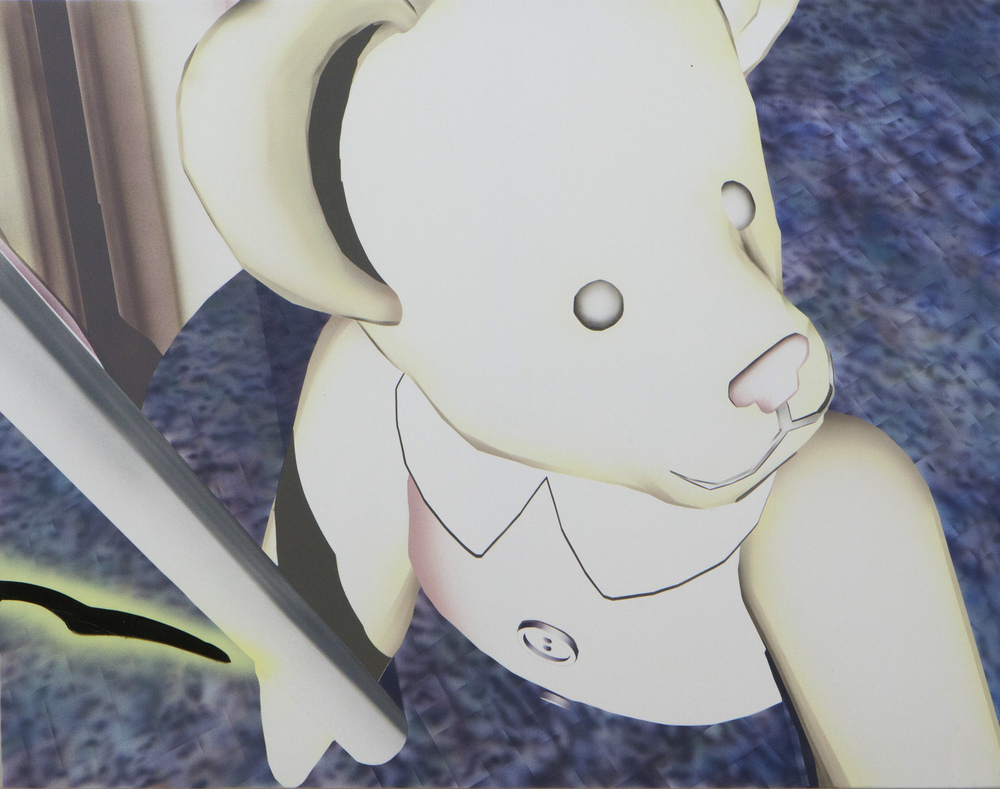
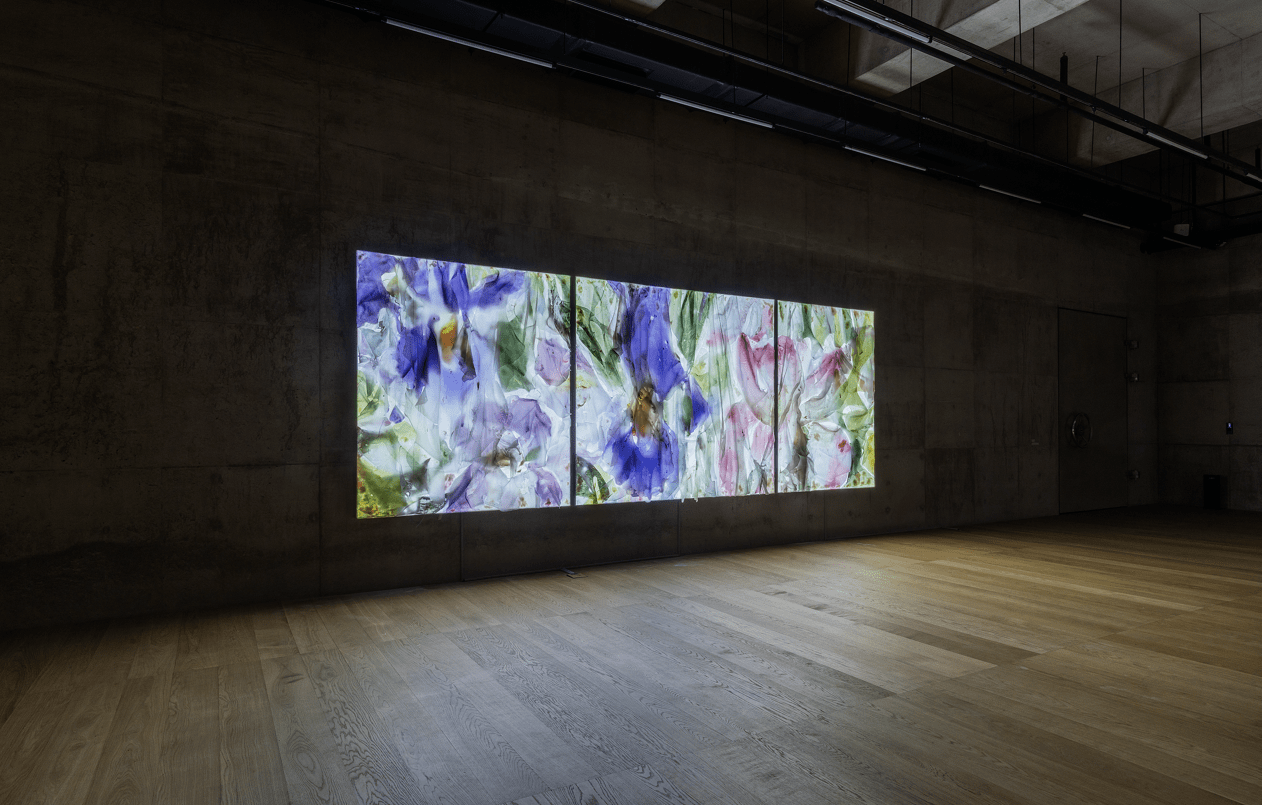
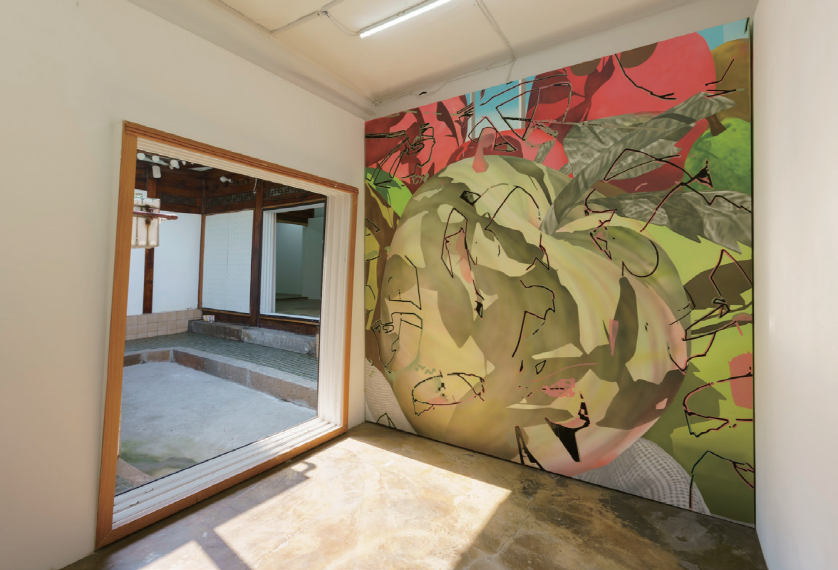
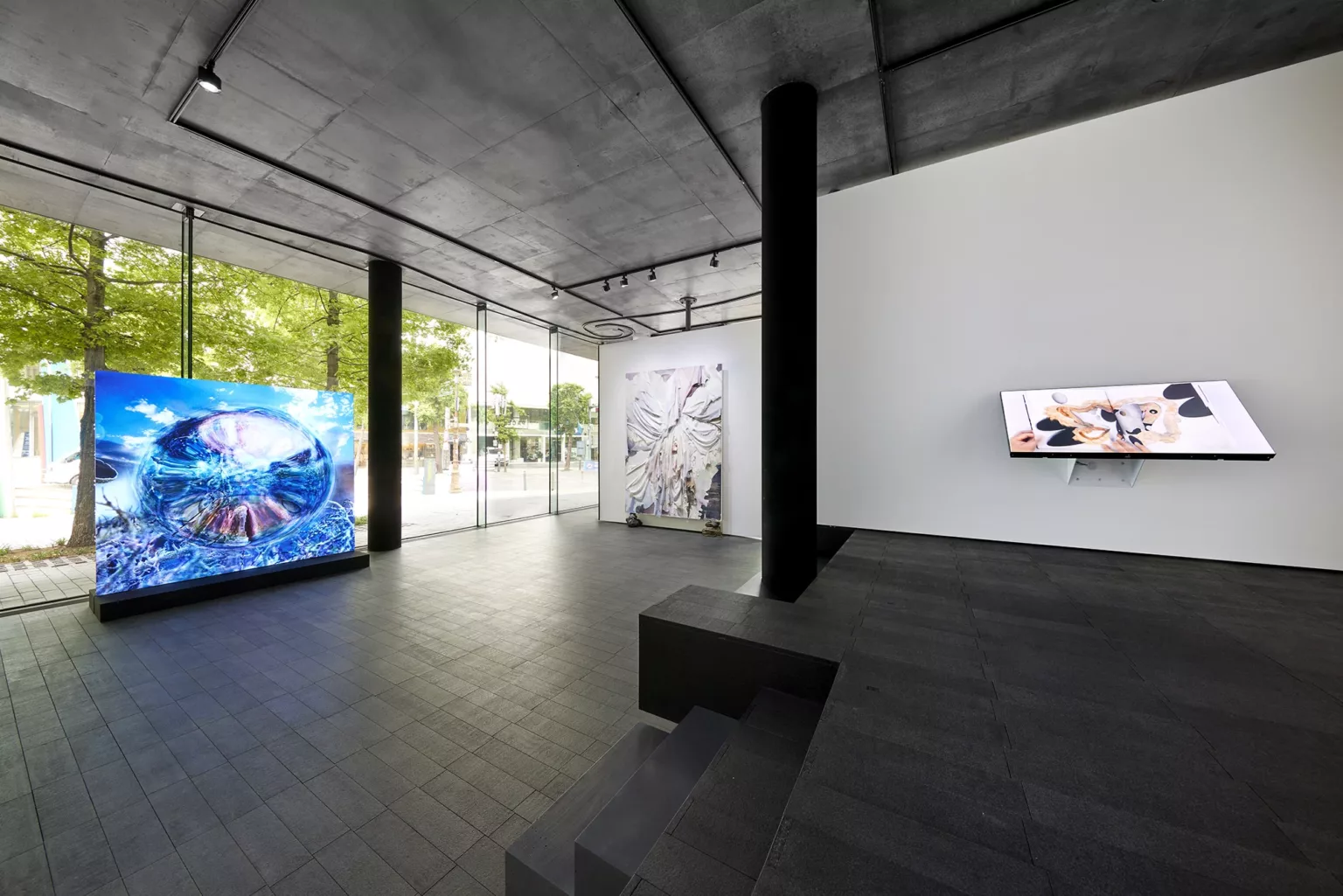
Let’s begin with 〈I Stared at the
Field You are Standing in His Dank Mouth〉(2019),
wherein a “damp imaginary space inside the mouth of a dog, freely wandering on
the streets” was putatively posited. Shown at the ‘Young Korean Artists 2019’
exhibition, this work was not only the single work Chung presented, but, more
significantly, was said to depict the world seen from the inside of the dog’s
mouth. According to the official caption, this “haptic scene” unfolded in the
gallery space by means of corporeal images such as “teeth, eyes, and
fingernails” as well as sculptural mass embodying materiality of saliva, of
which the space inside the mouth is reminiscent. Nonetheless, it is quite
doubtful whether this work readily serves to “brin[g] the viewer into a
complete momentary immersion.” We are not saying that this painting ‘failed’ to
achieve the goal. Rather, the problem concerns the very idea that this work
should “bring viewers into immersion.”
At stake here is the peculiar fact that problems of reading images arise less
at the level of ‘interpretation’ than at the dimension of ‘description’ of the
work in question. For, more often than not, the latter determines the horizon
of the former. Even when the above-mentioned caption belongs to the artist, it
is virtually impossible to bring such description to one’s mind while looking
at the work on site, let alone grasping the perceptual correlation between the
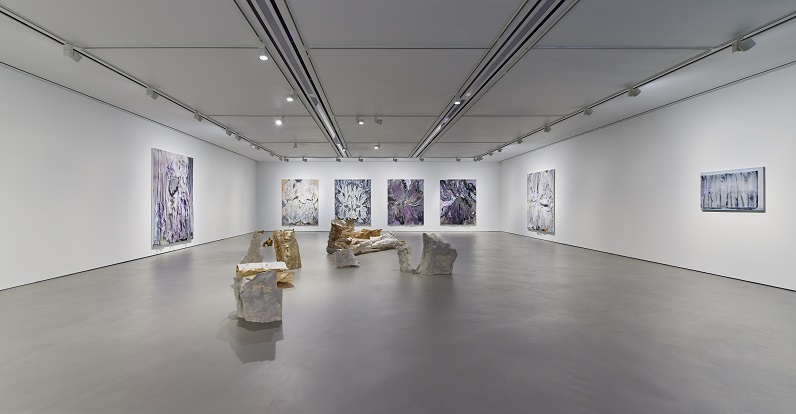
two. Setting aside the painterly work, allegedly portrayed as a “haptic scene,”
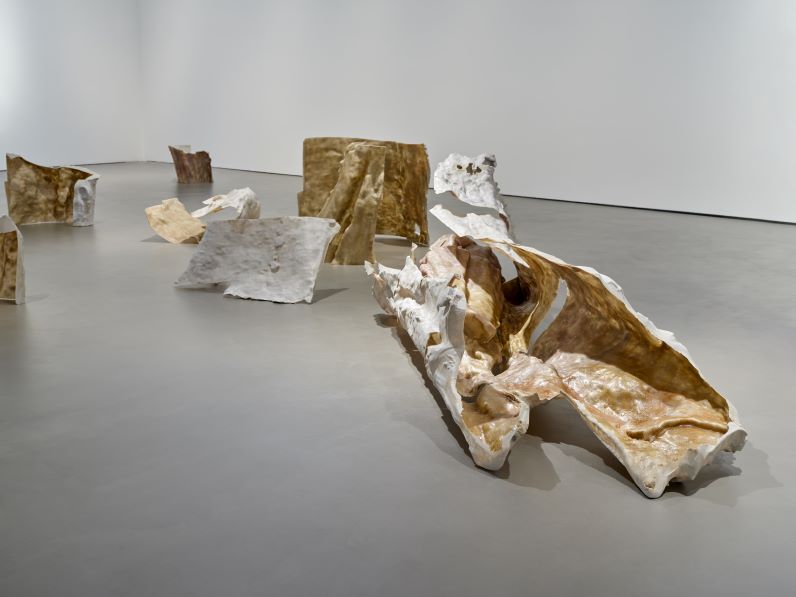
for the moment, the exact relationship between the painting and translucent
physical materials scattered on the gallery floor, along with the figure of
flowers blooming on top of them remains entirely opaque. Why are the resin
sitting at the bottom of flowers, for instance, rendered translucent? Why are
the flowers’ configurations jagged, evoking pixelized digital images? More
fundamentally, specifically how does the flat, plane painting relate to the
objects on the floor? These questions call to mind the fact that her works
constitute less the object of ‘iconological’ or ‘iconographical interpretation’
than that of ‘topological determination’ or ‘description.’ As to this issue,
three points need to be elaborated on- all of which directly resonate with the
evolving trajectory of Chung’s works and its implications.
To begin with, the simplest way to read the flowers on the floor is to read
them in terms of digital/flat images’ desire or yearning for ‘substance’ or
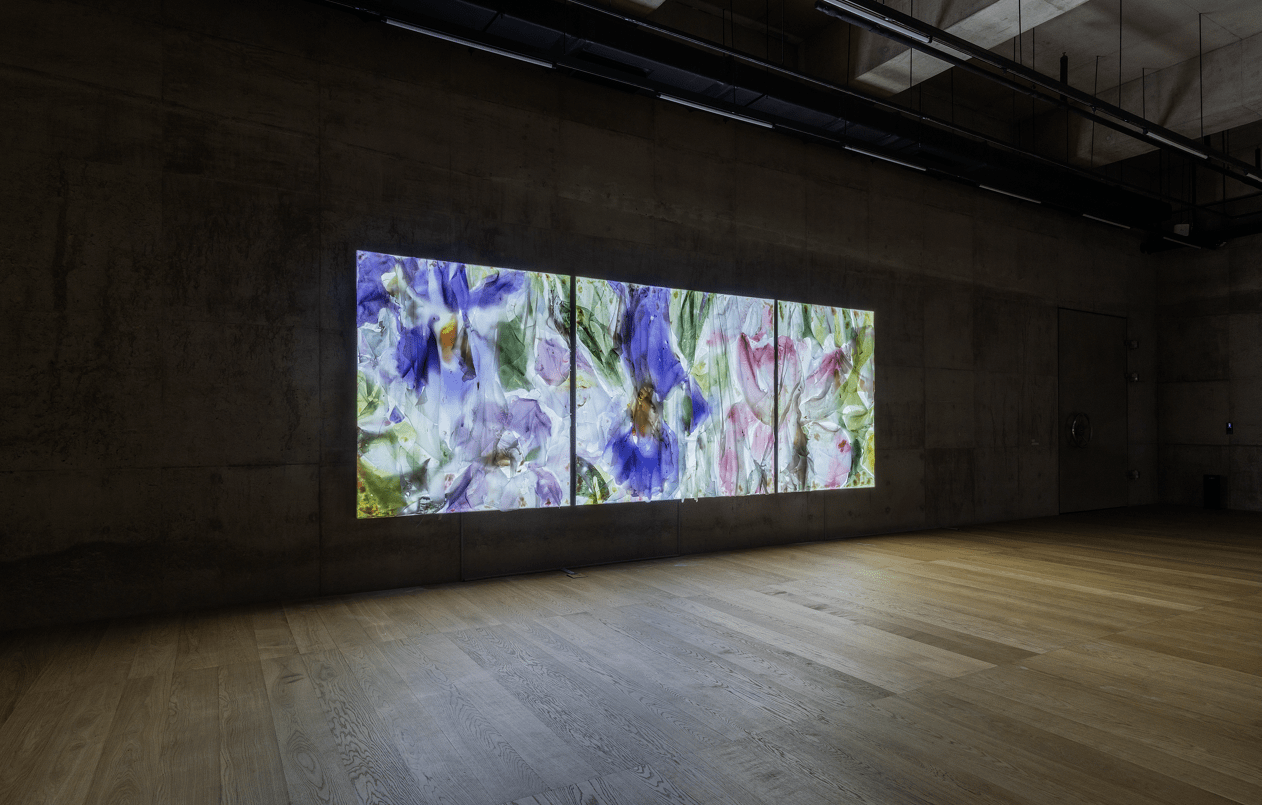
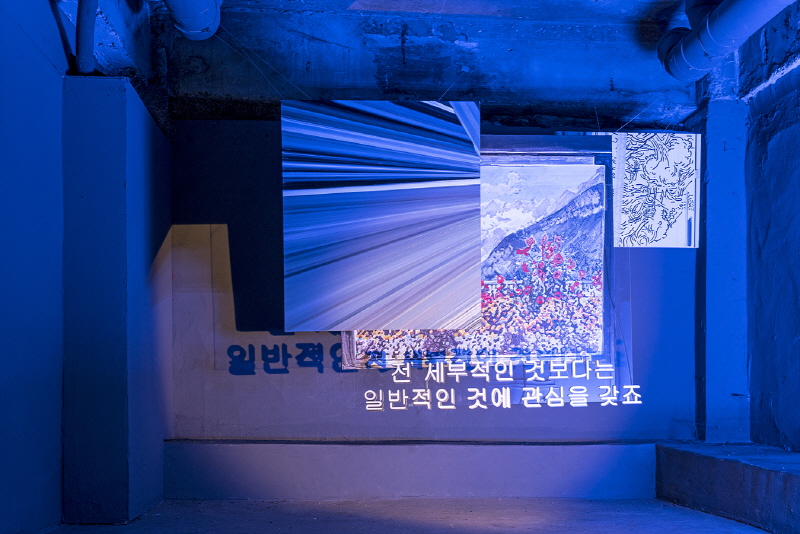
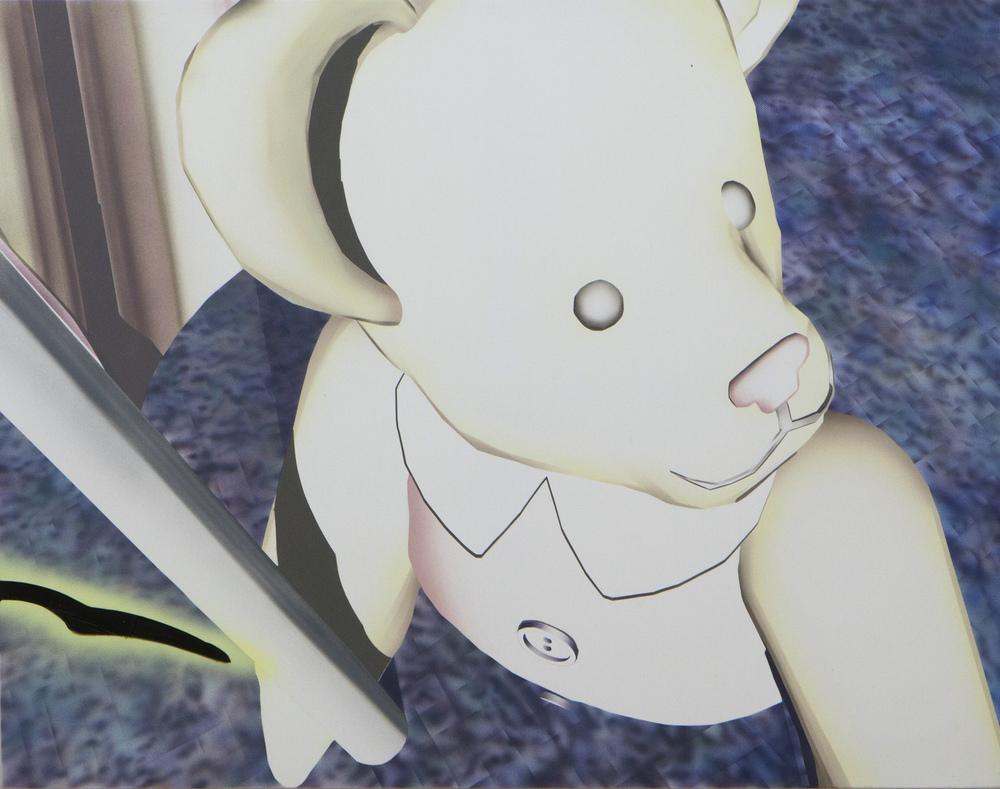
‘volume.’ 〈Song of Childhood〉(2019)
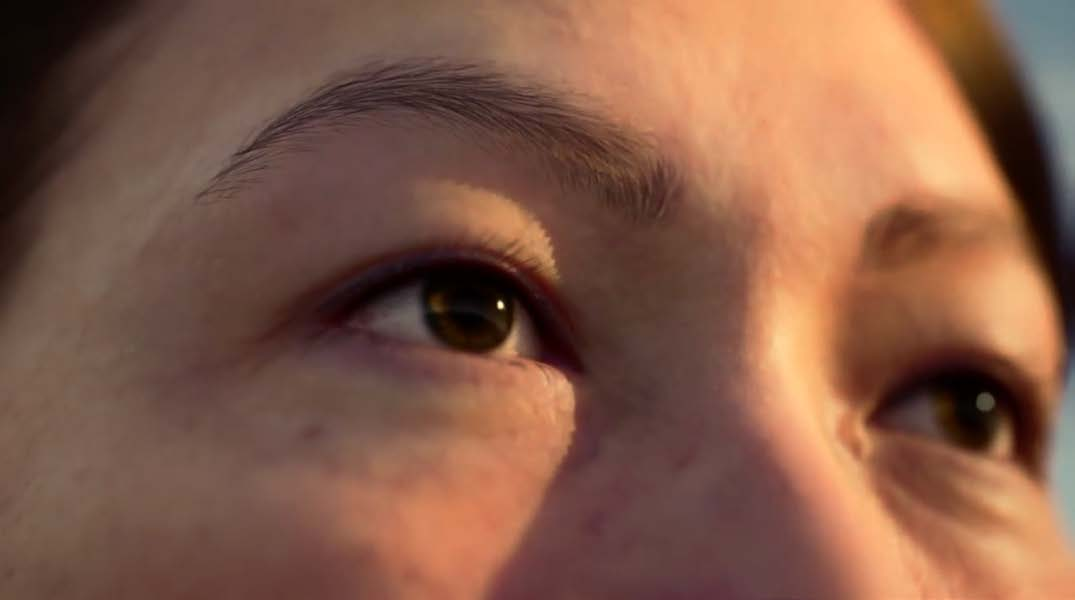
is arguably the most glaring example of this desire. Shown at 〈An Angel Whispers〉, her solo exhibition at
P21 last year, this work was Chung’s first audiovisual image work to date,
unfolding the abovementioned topoi of nostalgia, lack, and melancholy by means
of a child’s narrative. Functioning as the metonomy of digital image ecosystem,
‘surface’ is almost obsessively presented as lacking ‘volume’ and ‘depth.’ This
leitmotif of ‘absence’ corresponds to the body, the ultimate feature that the
angel lacks in Wim Wenders’s film 〈Der Himmel über
Berlin/Wings of Desire〉(1987) (To be sure, this film is
the background from which 〈Song of Childhood〉, along with the title of the exhibition itself, is derived) On the
other hand, this ‘absence’ is no less powerfully evoked by the child’s ‘memory
of squashing’ “tofu, cheese, and jelly”, food items s/he encountered at a local
store with her/his mom, infused with the sense of touch and materiality. That
is, lack is twofold. Missing, or lost for good here is not only the childhood
but also the material tactility. (No wonder how critical writings on Chung’s
oeuvre such as ‘Crying Data’ by Kim Jung-hyun or ‘NAVY: Long and Sad Blue(s)’
by Yi Hyun are pervaded by the topoi of sadness and melancholy)
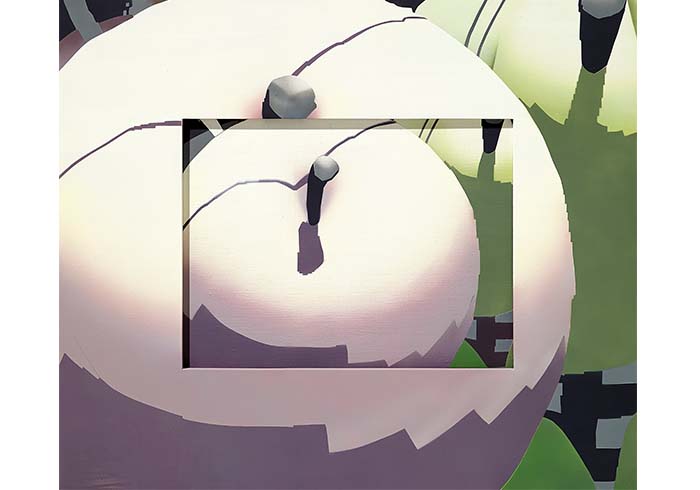
Secondly, one must note that the flowers in question are far from a simple
‘substance.’ Rather, they come close to pixelized flowers blooming on the
translucent soil or mound. If the translucence of the former suggests the
liquid crystal of digital devices, the flowers with pixelized contour lines
retain the features of digital interface as well. Are they ‘substance’? Or
‘failed attempts to become substance’? Regardless of our answers, these
questions are bad ones as long as they evaluate digital images negatively,
i.e., in terms of ‘lack and absence’ against the backdrop of the putative
‘substance.’
In other words, the real question concerns how to avoid painting the gap
between digital and analog, or ‘flat surface and materiality/sculpture’ with
the topoi of ‘lack’, ‘nostalgia’ or ‘melancholy’, let alone an ambiguous
rhetoric of ‘dialectics.’
Noting how her canvas is “a place where immateriality of digital image
and materiality of the painting are traded,” art critic Kim Hong Ki, for
instance, rightly points out that “the fascination towards the immateriality of
the digital image and the aspirations for the materiality of canvas and paints
coexist.” (These topoi of ‘trade’ and ‘coexistence’ can also be found in 〈Climbers〉(2020), the most recent audiovisual
work Chung made with Yong-a Lee and Seungho Chun, where ‘descent’ into the
water is equated with ‘ascent’ or ‘climbing’ towards higher objects) A question
is raised, however, when he adds that, “while fascinated by the immateriality
of the digital image,” the artist “resists with the materiality of the canvas
and pigments.” Does she “resist” the immateriality or, rather, insist that it
must be ‘restored’ by- or ‘back to’- materiality? However similar they look,
differences between the two, if any, is decisive.
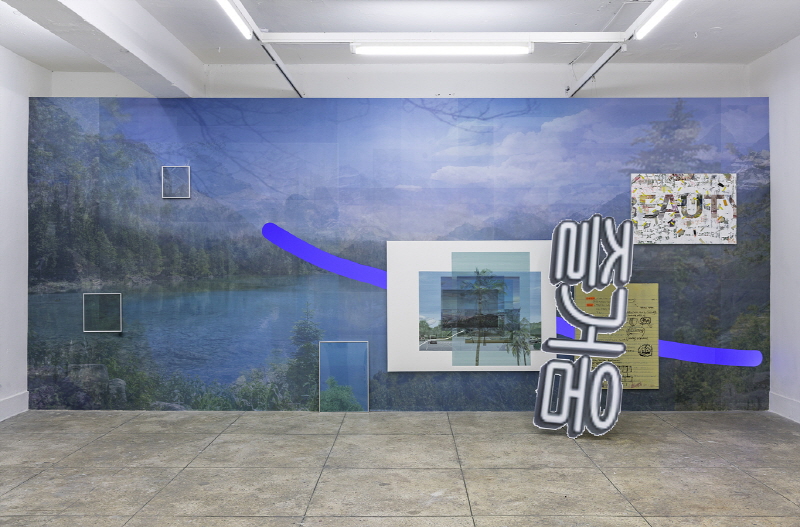
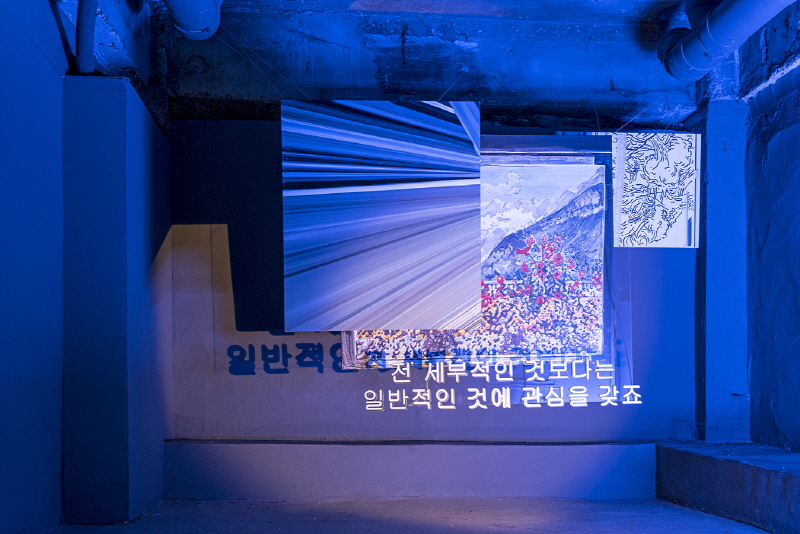
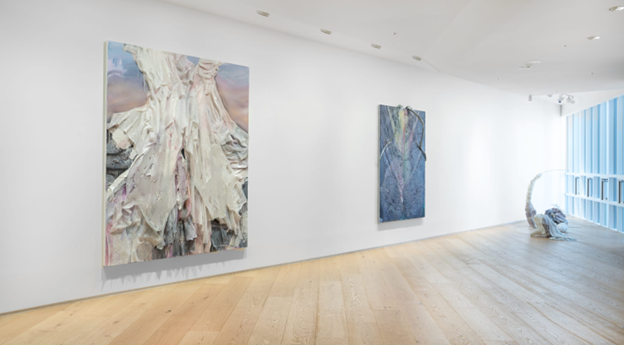
Highly suggestive here is 〈If We Ever Meet Again〉(Jun.-Aug. 2020), Chung’s most recent solo exhibition to date. To be
sure, the same topoi of loss and absence appear to be no less present (e.g.
‘Greeting that Has Never Arrived,’ ‘Missing Cat,’ ‘You Will Miss Me’) More
(un)noticeable is the background that covers one fraction of the gallery space
and its implications. It is graph paper, which even secured its firm place in
the catalogue. Not only does it overlap with the afterimages of minimalism, it
also intersects with digital image pixels. Still, it sits firmly within the
sphere of analog dimension. Does the artist, once again, attempt to ‘revert’
digital interface back to the analog materiality of graph paper? I think not.
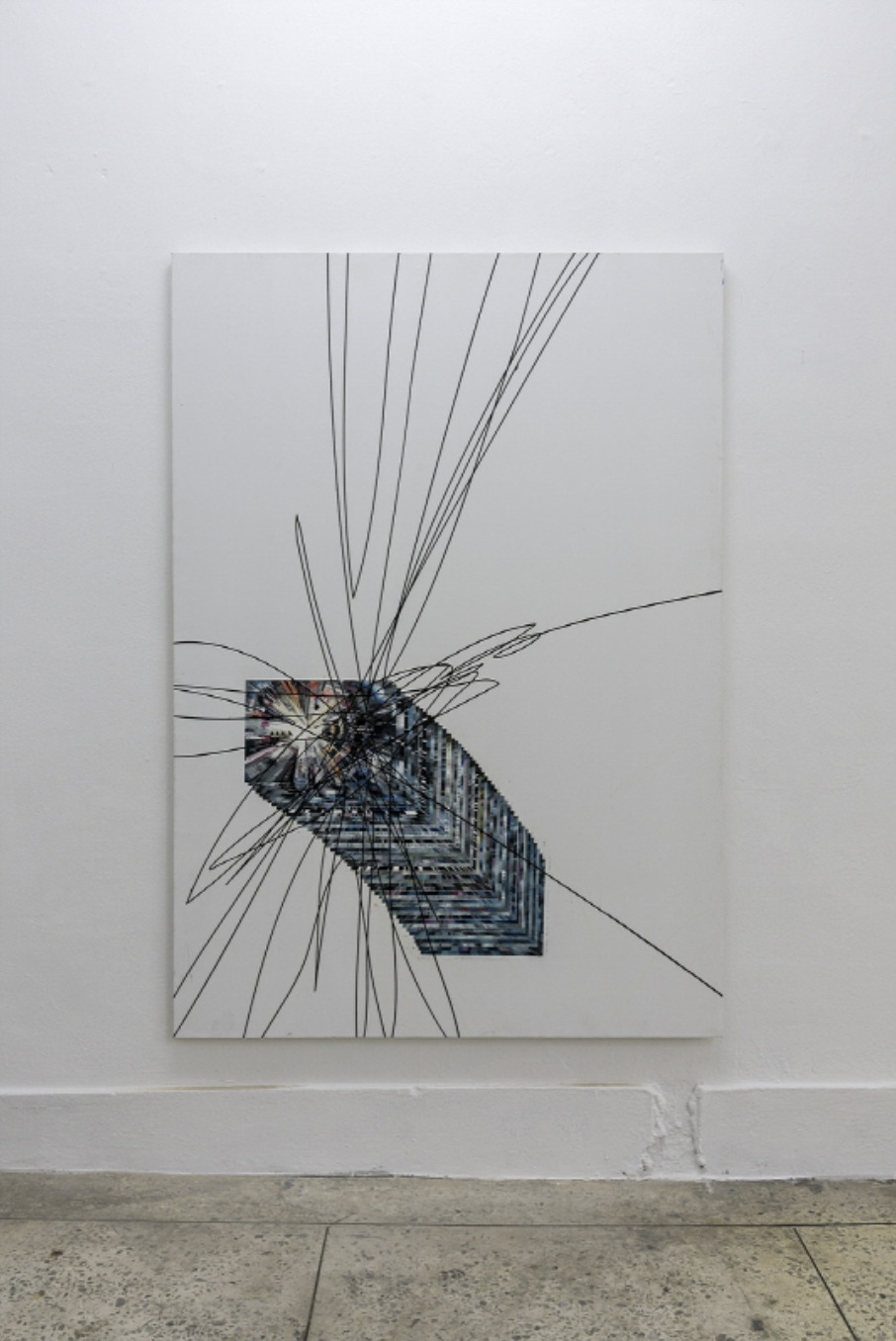
Let’s recall my 2018 essay, where I wrote Chung “suspended the
hierarchical dichotomy of ‘figure and background.’” Grasping her repeated
attempts to apply or superimpose thick pigments on the canvas, thus rendering
thickness more conspicuously pronounced, solely in terms of the hierarchical
dichotomy of ‘analog vs. digital,’ is doomed to replay the melancholic Blues,
desperately ‘compensating’ for the ‘loss’ in the former. In contrast, Chung
asks anew the question of what constitutes the background, or the foundation of
contemporary images and visibility in general, by introducing graph paper into
the gallery space, if in part- not unlike the flickering fluorescent light.
Precisely in this sense, despite the topoi of melancholy and absence she has
constantly foregrounded or turned into her main figures, Chung’s oeuvre in its
entirety must be read anew from the perspective of this ‘suspension.’ Let’s
meet over there. ‘If We Ever Meet Again.’