Can time be reversed or erased? From the moment a human being is born, time is a gift freely bestowed by the universe, like air or sunlight. The objective time called “Chronos,” inherited equally by everyone from nature, is an irresistible force that humans can neither reverse nor erase. In this sense, every being is powerless before time.

What humans can do, however, is immerse themselves in the subjective time called “Kairos” within the present moment. It is a time granted only to oneself, a spiritual and psychological time in which one’s choices assign particular meaning to existence. Unless through death, the reconstruction of time—which otherwise seems almost impossible—becomes possible within Kairos.

One may bury the past in oblivion or summon the past from memory and allow it to walk within the present. It even makes possible the belief that one can manage time and create a Kairotic future of one’s own. While recognizing the undeniable limitation that it must ultimately submit to Chronos, art traverses Kairos with ease, dismantling and recombining the contexts of time in the name of imagination.

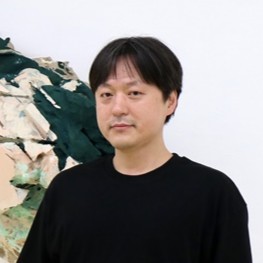
The world of Lee Byungho’s work presented in this exhibition is situated within this question of temporality. He continues his practice by “recontextualizing” Kairos, itself the result of “decontextualizing” Chronos. In doing so, he reflects on the meaning of the macroscopic time of Chronos within the microscopic time of Kairos.

In this exhibition, he organizes three separate presentations around three subthemes, each occupying its own room. One room contains works related to the early 'Vanitas Bust' series, in which the exterior forms of silicone sculptures are transformed; another presents the 'Anthropometry' series, which he began several years ago; and the final room features the new work Seated Figure. Numbering them from “Room 1” to “Room 3,” let us examine how the decontextualization and recontextualization of time manifest themselves concretely in each body of work.


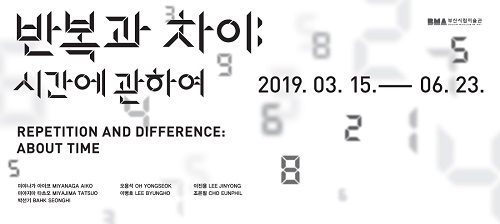
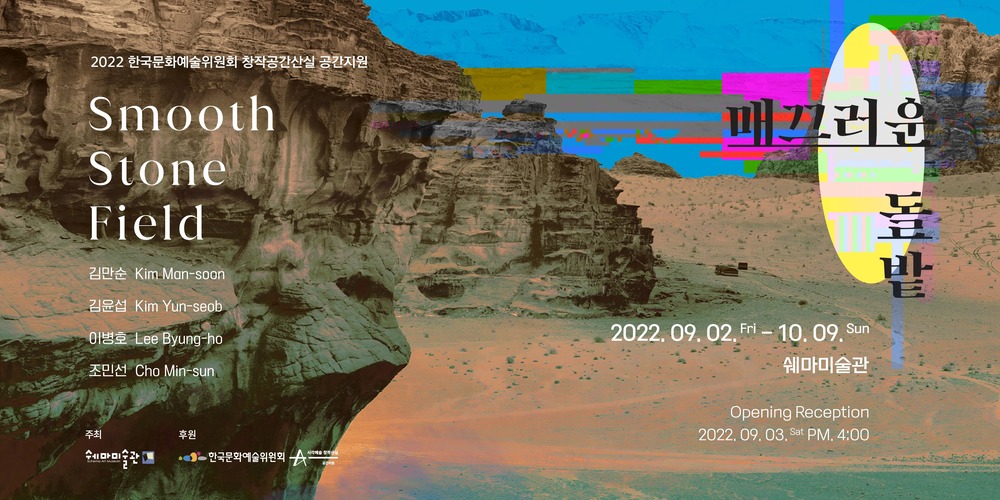
Poster image of 《Repetition and Difference: About Time》 © Busan Museum of Art

Room 1_Vanitas Between Life and Death

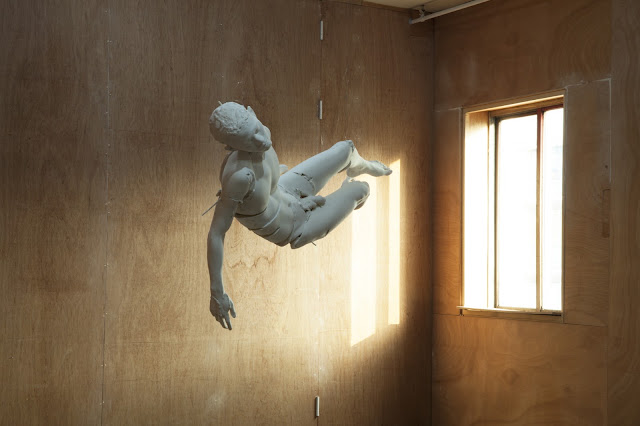
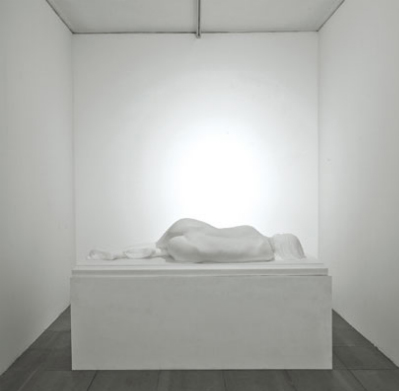
The first room presents a series of busts that Lee has shown for many years, along with a reclining female figure. In these works, the outer skin of a silicone sculpture gradually collapses and then recovers repeatedly through the action of a motor that alternately draws in and releases air.

To create these works, the artist takes a thin silicone mold from the exterior of a clay bust and constructs a rigid inner layer in FRP resembling an anatomical skeleton or aged wrinkles. He then adds a motorized mechanism and sensors that regulate the injected air, repeatedly pressing the outer and inner layers together and pulling them apart to create remarkably lifelike kinetic sculptures.

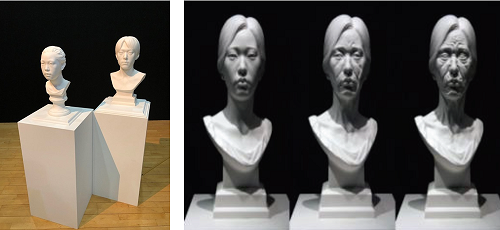
In the 'Vanitas Bust' series, the figure of a young girl slowly transforms into an old woman and returns again, while a boy gradually becomes a skeleton before reverting to his original form. In Deep Breathing, which depicts a young woman reclining on her side, the skeletal shadow of death gradually falls over her as time passes. The death drive known as “Thanatos,” accompanied by an instinct toward destruction, arrives.

Through self-directed and outwardly directed aggression, it seeks to draw destruction and ruin from vibrant life and reduce it to a state of non-being. Thanatos continually opposes and struggles against “Eros,” the instincts of self-preservation and sexuality.

By condensing “human life” into a brief span of time through figurative sculptures in which the fierce struggle between Eros and Thanatos unfolds visibly, Lee’s works employ a striking sculptural language to awaken us to the essence of Chronos, the time given equally to everyone, while prompting reflection on the ontology of human existence. Are our lives not always overshadowed by the futility of loss and disappearance amid this conflict between preservation and destruction? Here, one can infer why Lee chose “vanitas,” the Latin term signifying the transience of life, as the title of the series.

Through the invisible medium of “air,” his works visualize questions of life and death between silicone skin and FRP skeletons or musculature. The process of “life → death,” in which air is drawn out, operates alongside the process of “death → life,” in which organs such as genitals, breasts, and muscles swell as air is injected.

A small, life-sized human sculpture thus embraces within a single mass the overwhelming problem of life and death. It is as though the joys, anger, sorrow, and pleasure of one subject operate together within the history of another subject’s birth, aging, illness, and death—an image of human ontology itself.

Lee Byungho, Vanitas Bust, 2010, Silicone and air compressor, 56 x 30 x 27 cm © Lee Byungho

Room 2_Anthropometry Linking Deconstruction and Recomposition

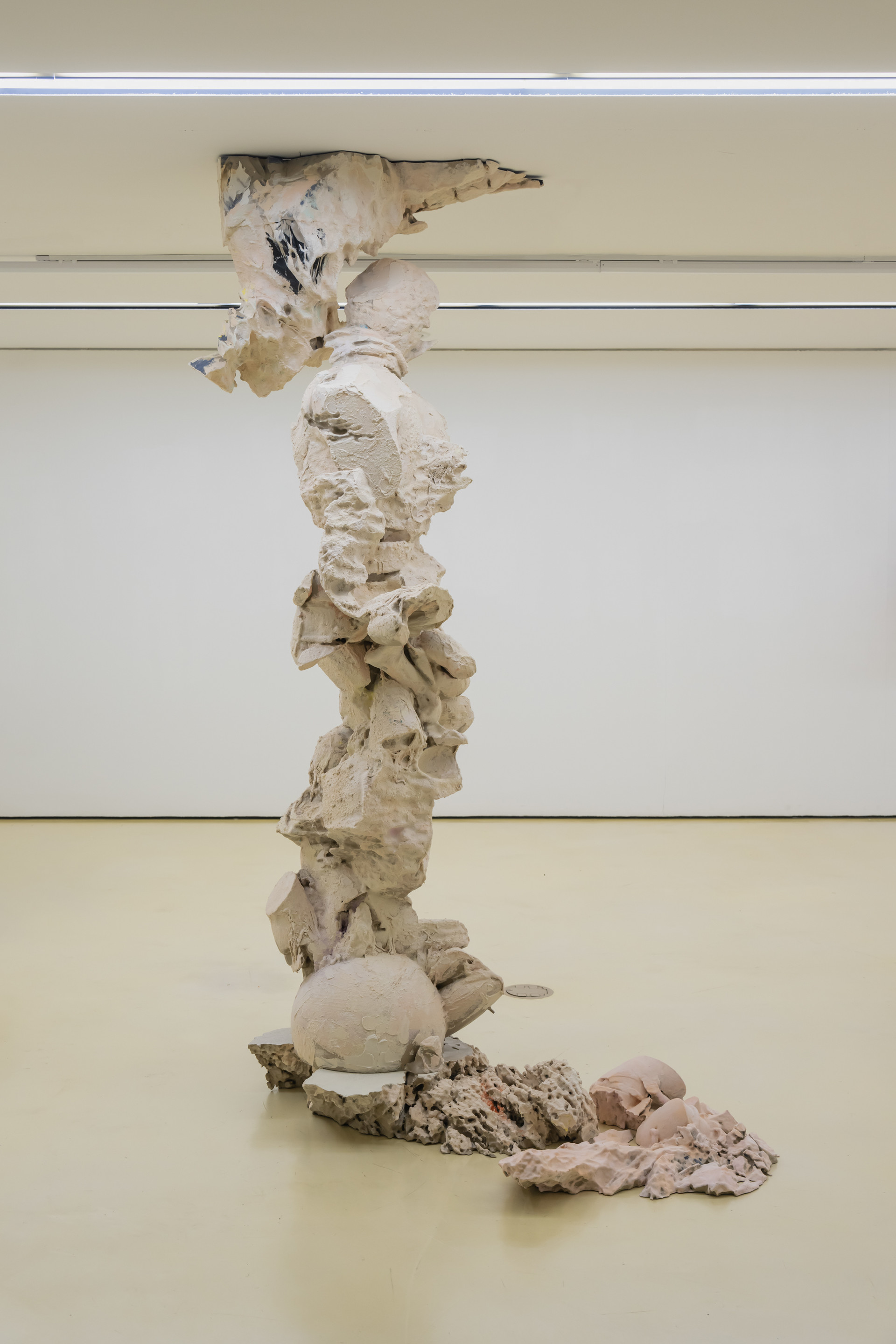
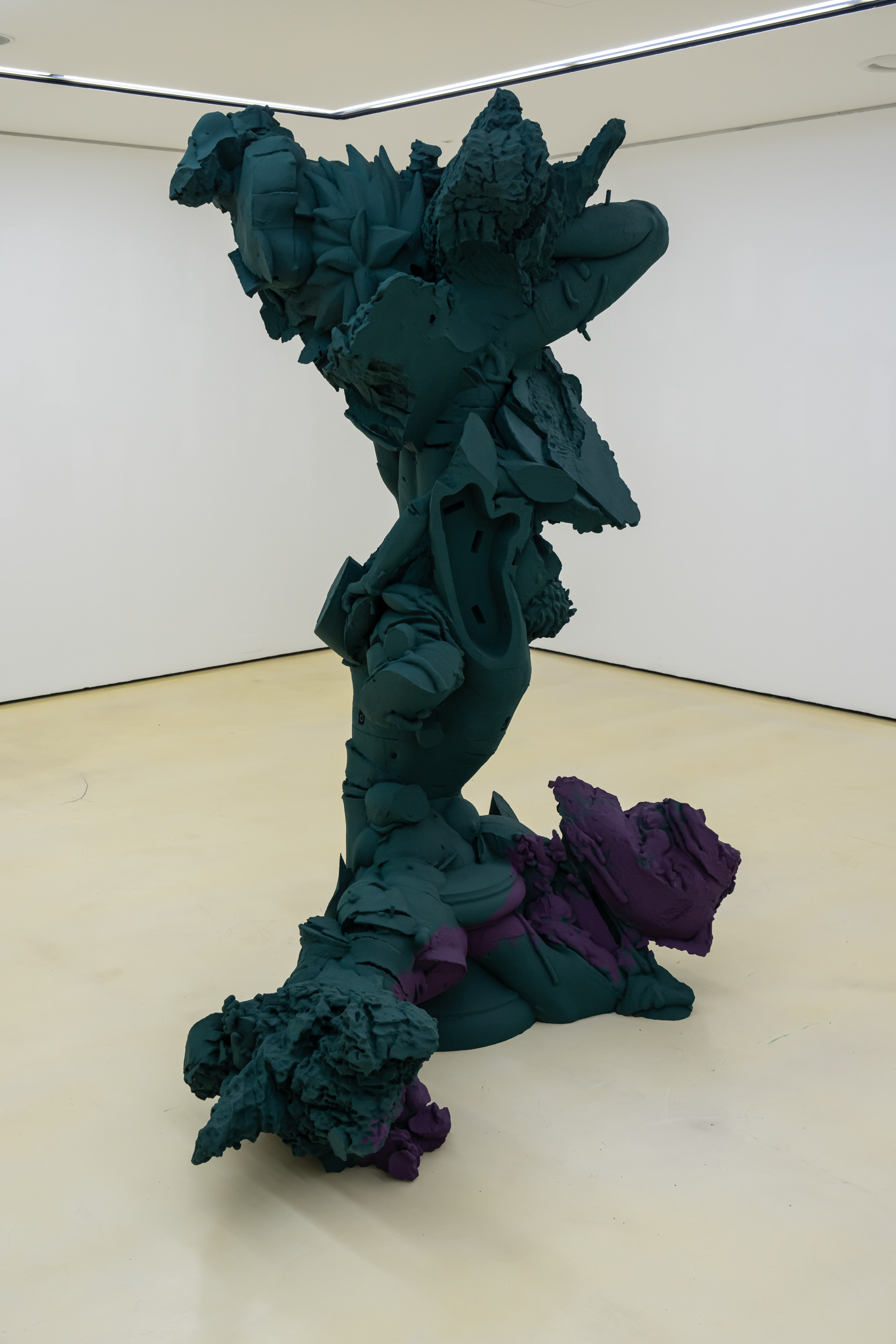
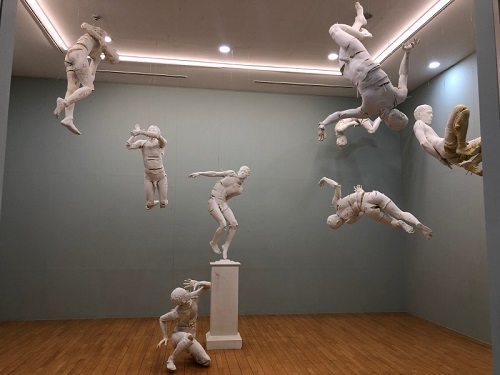
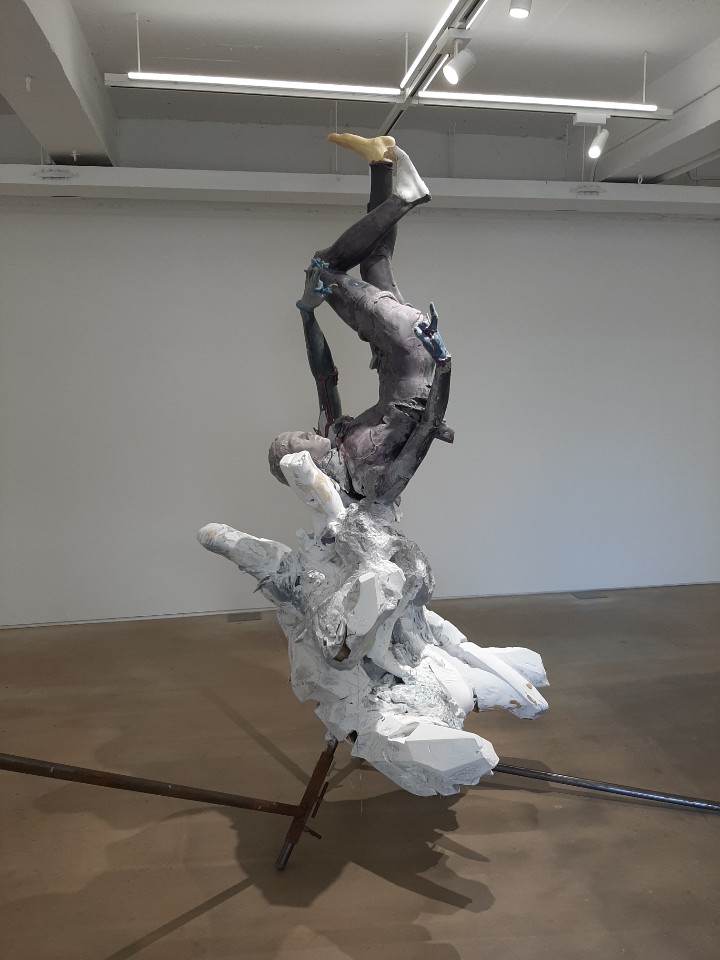
The second room presents the recent 'Anthropometry' series, a body of work that has occupied the artist intensely in recent years. In this room, ten human figures are suspended from the ceiling. Borrowing its title from a 1960 work by Yves Klein, this series shares Klein’s aesthetic of revealing form “through means other than conventional representation.”
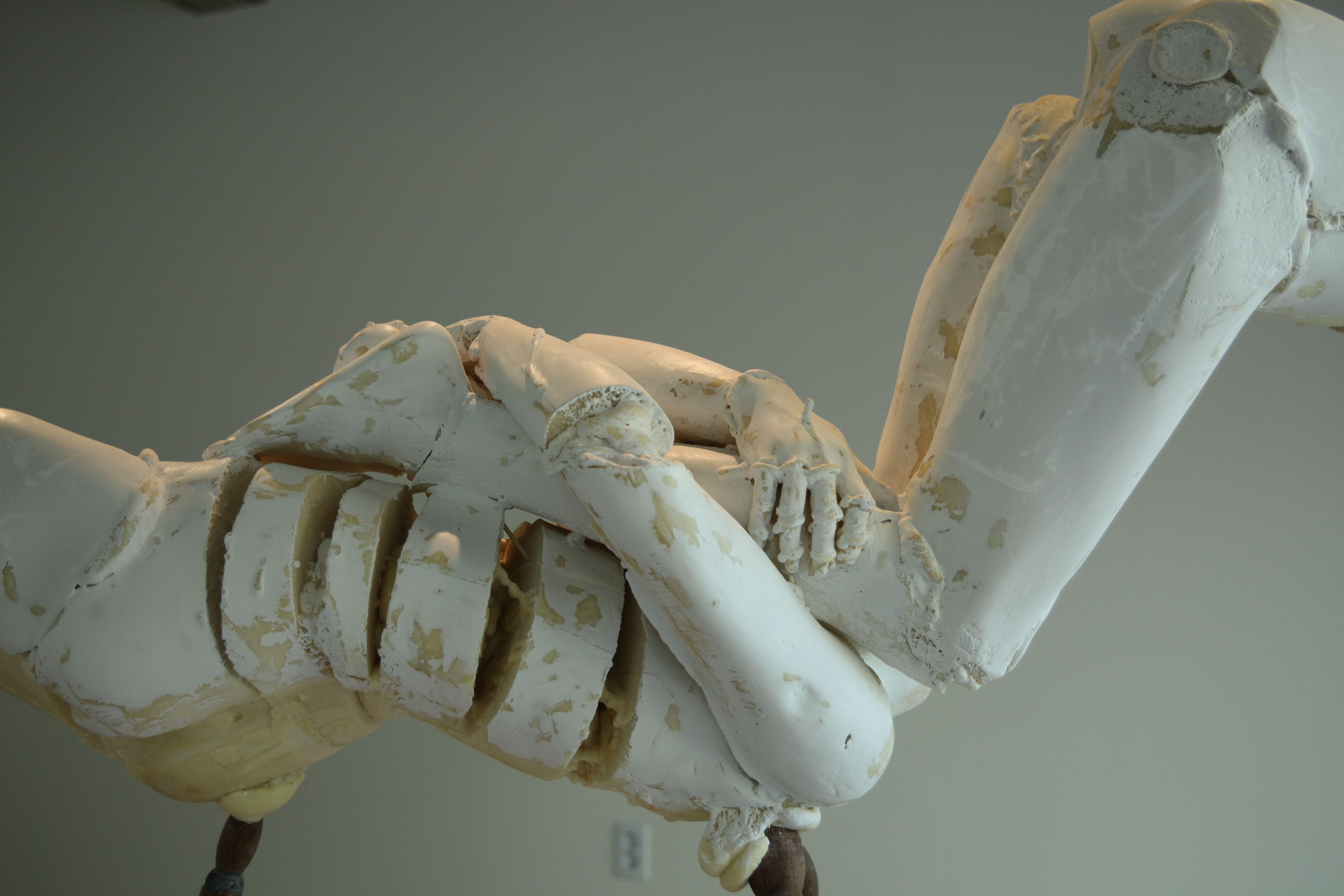
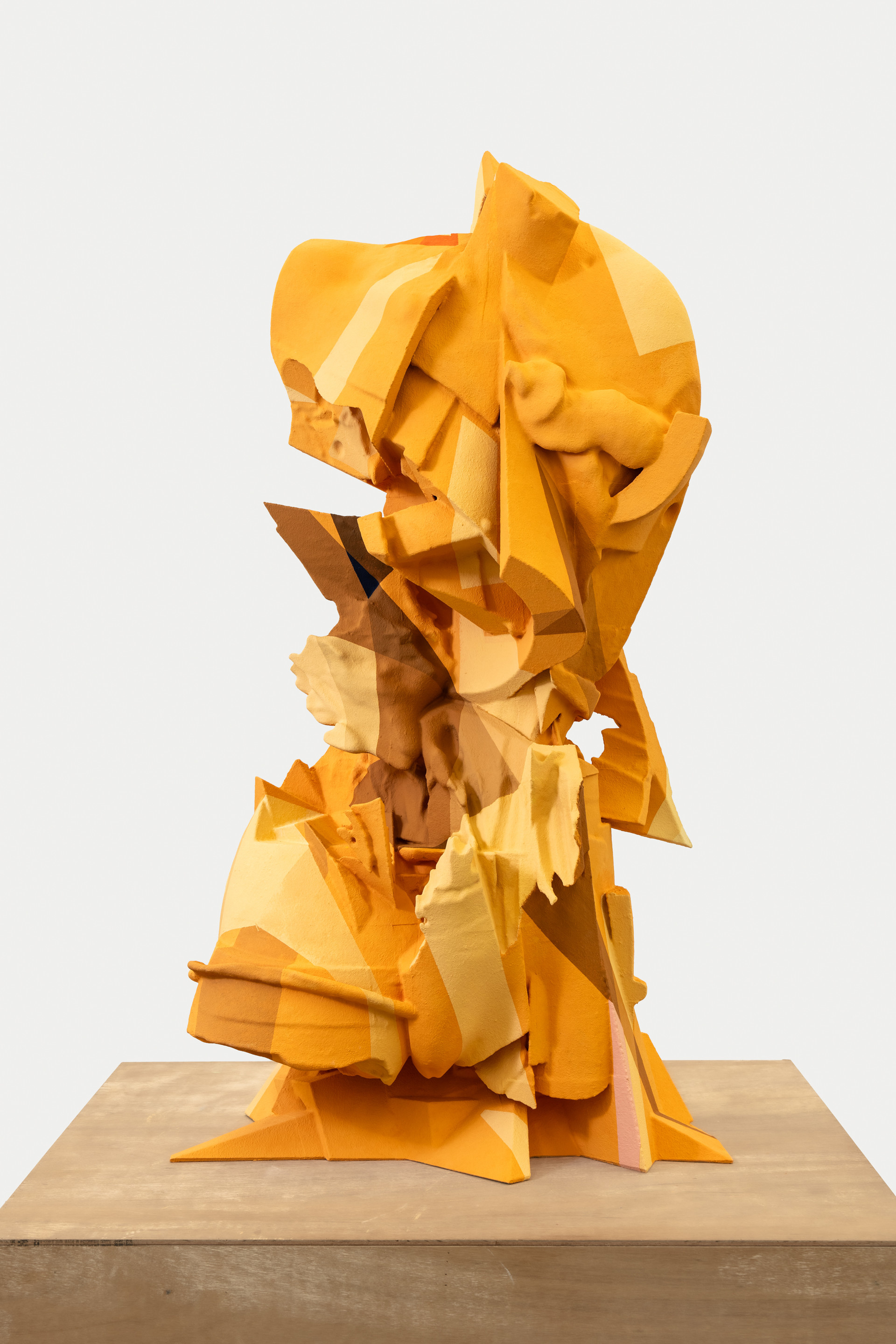
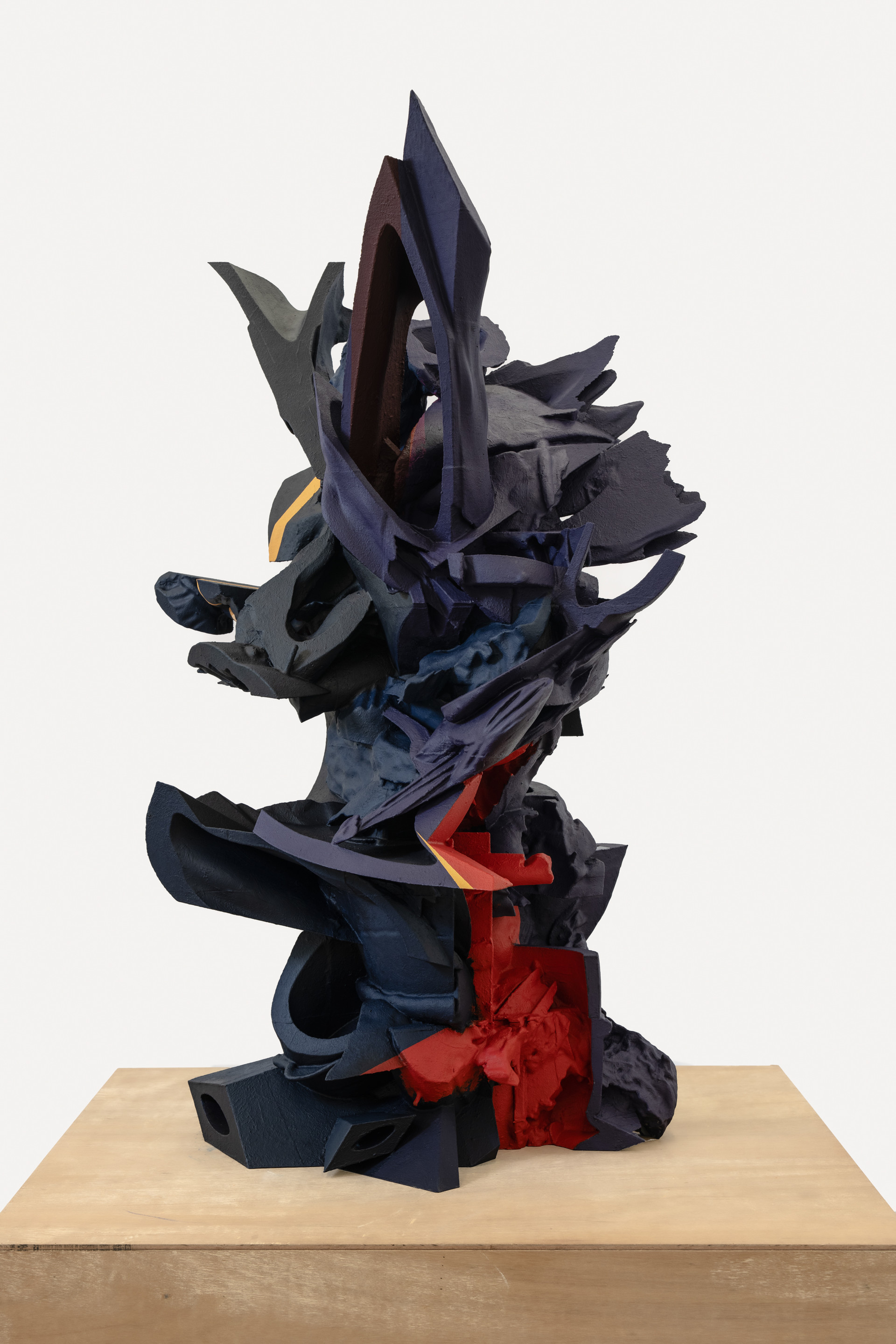
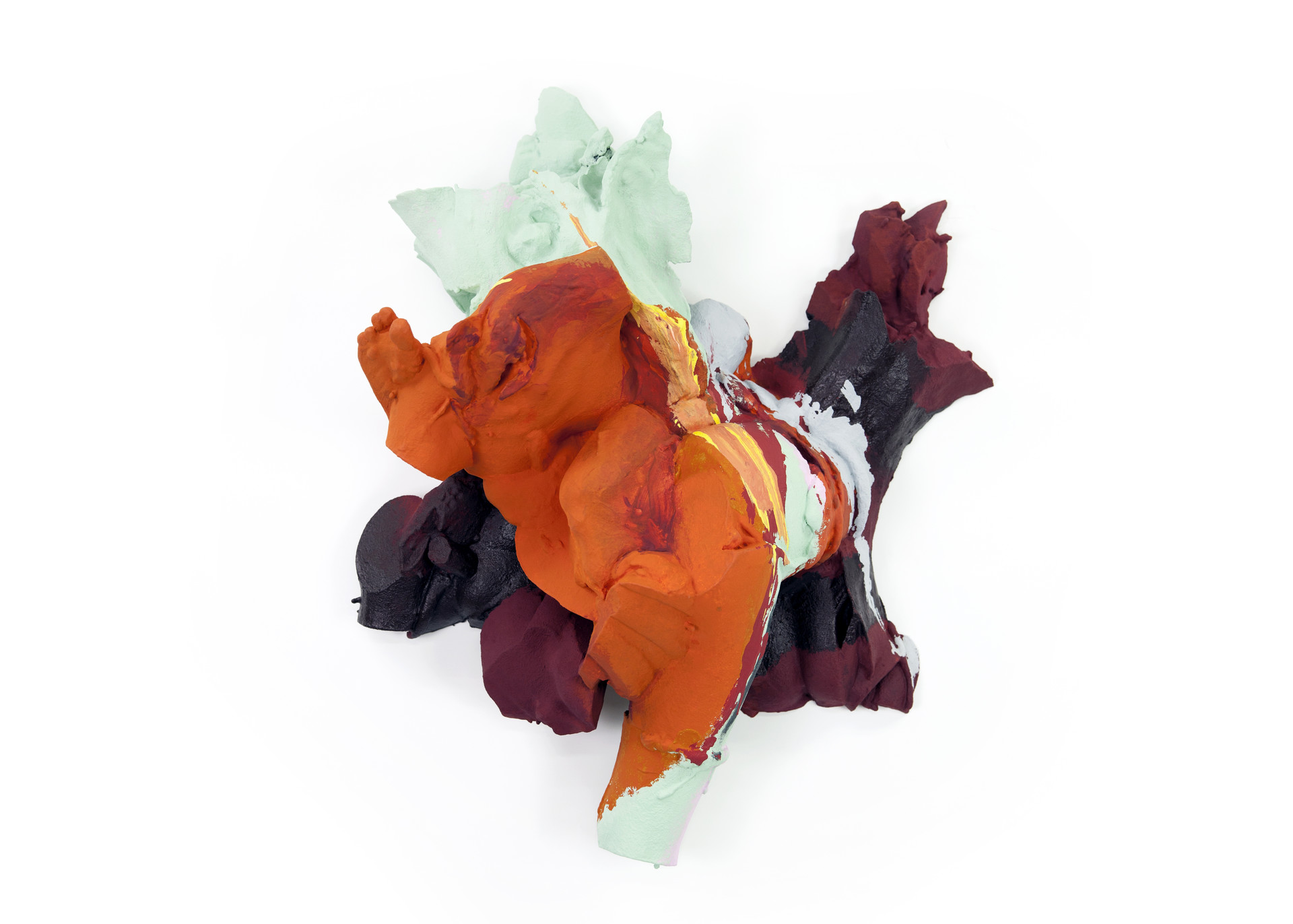
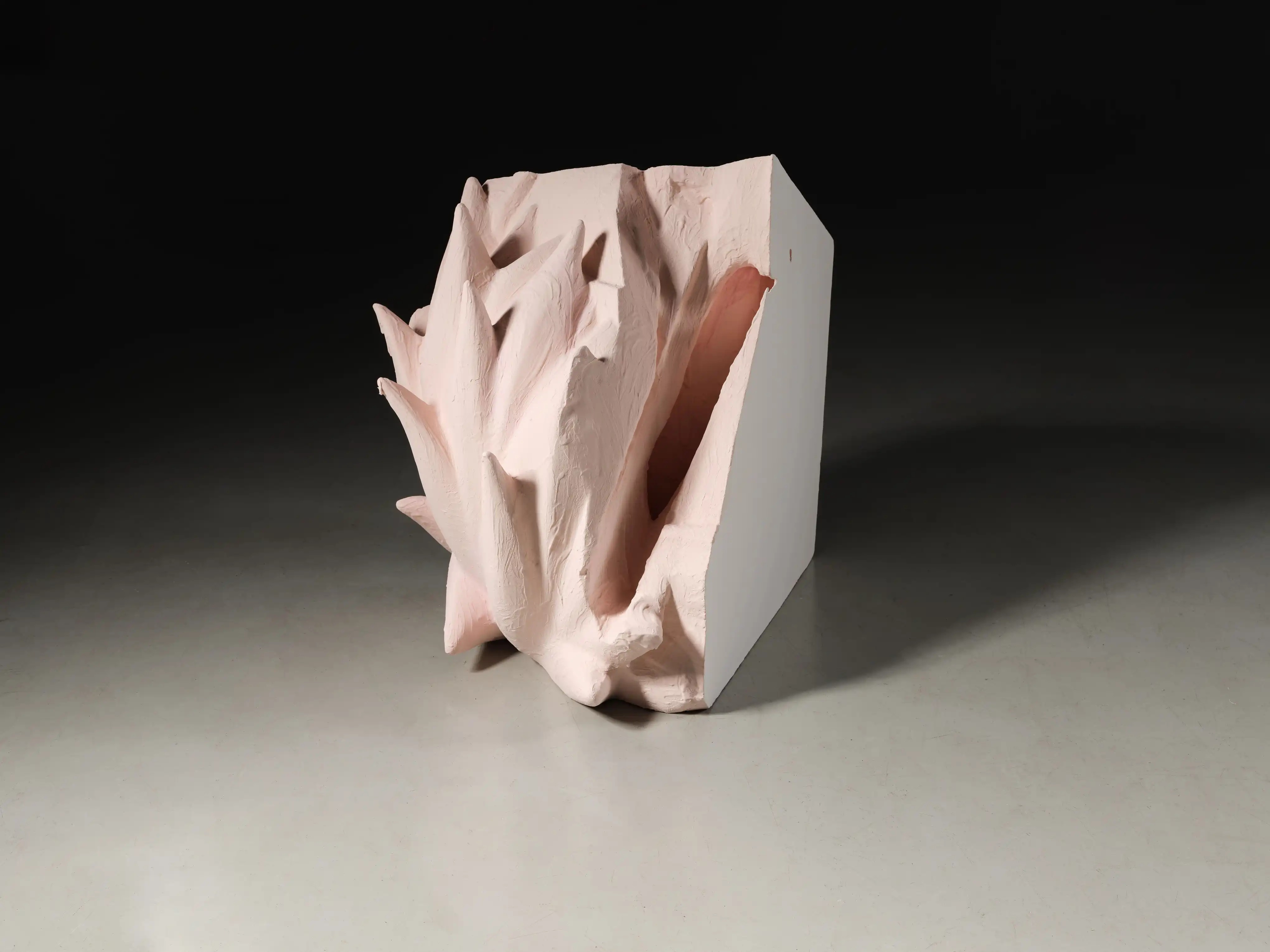
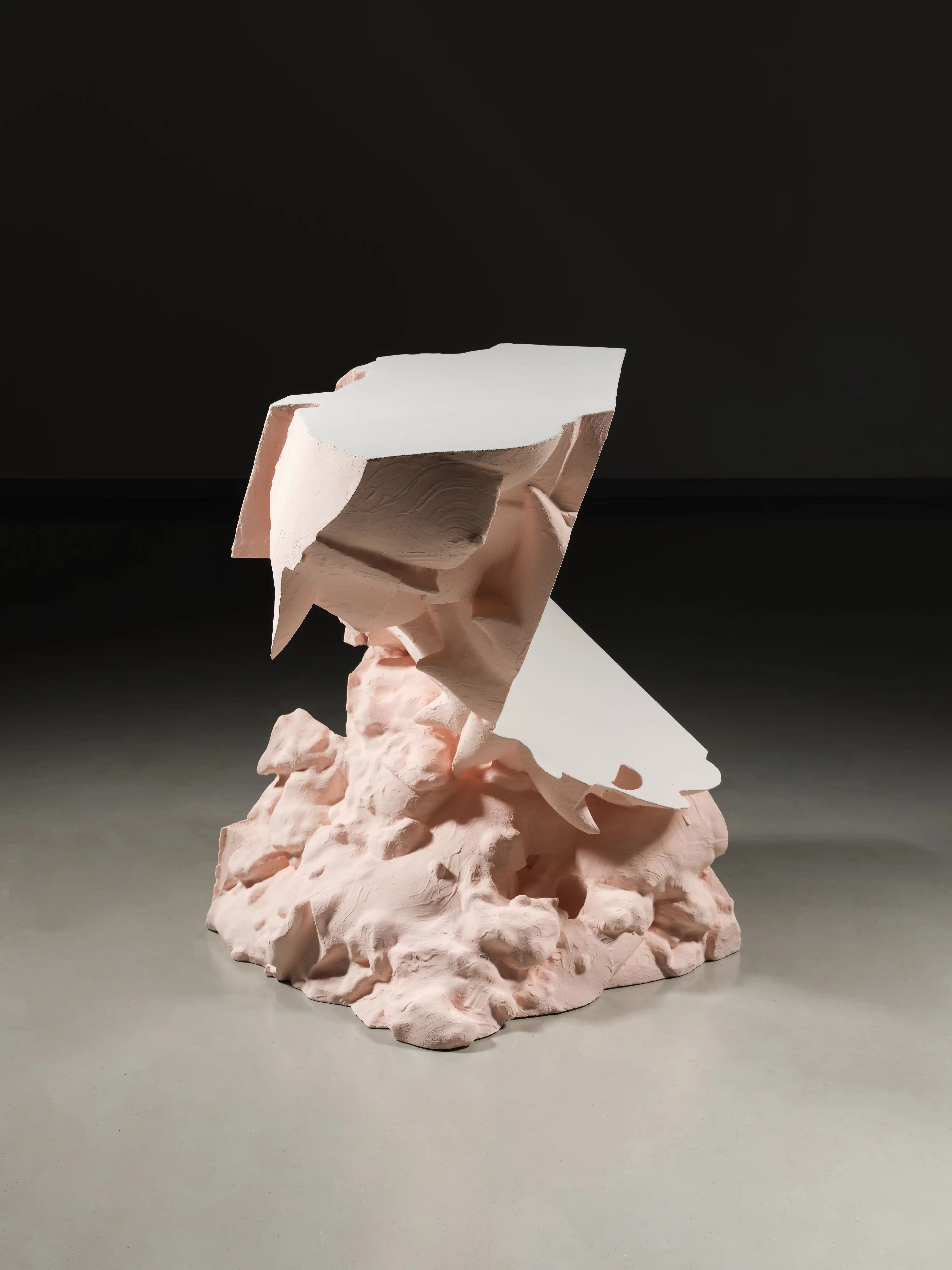
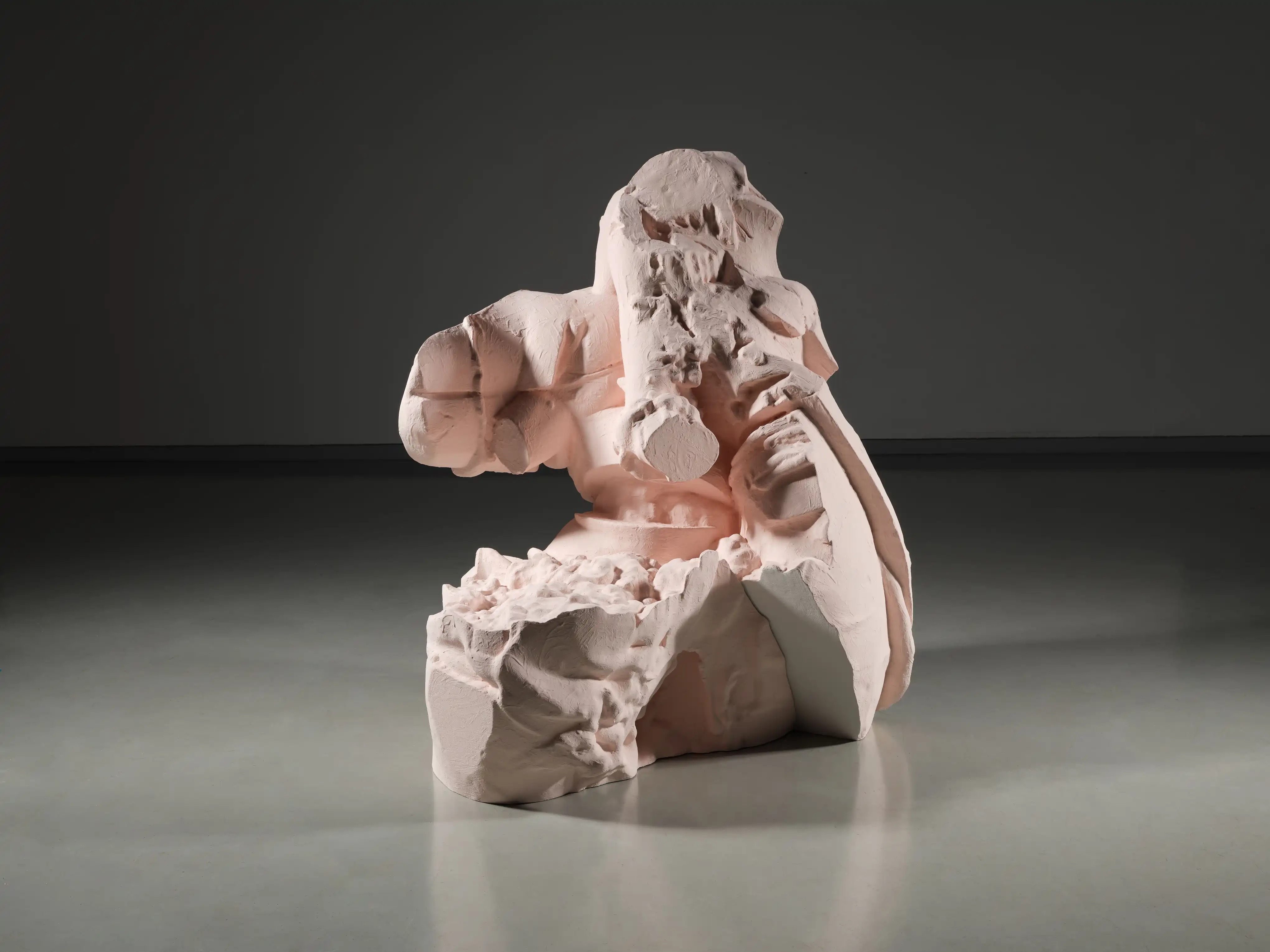
In other words, rather than modeling or carving, it seeks a new kind of “construction of form” in sculpture through the deconstruction and recomposition of “multiple human sculptures” that function as modules. For this work, Lee Byungho first casts a real human body in a conventional pose such as an easy stance, then uses it as a single prototype mold to produce countless replicated human sculptures in polyurethane. He then cuts these human sculptures into parts and recombines the fragments to create sculptures in new poses.

These sculptures in new poses are transformed and reproduced with reference to the poses of figures that appear in group sculptures by masters in art history such as Michelangelo, Camille Claudel, and Auguste Rodin.

For example, he detaches Jesus from the Virgin Mary in Michelangelo’s Pietà, then transforms and varies the pose of the figure of Jesus and suspends it in the air, employing a method of “sculptural installation” to produce a sculpture that appears similar yet is entirely different. In this sense, Lee Byungho’s work simultaneously deconstructs (decontextualizes) and reconstructs (recontextualizes) the time of Kairos inherited from the masters.

What is interesting is that this process of deconstruction and recomposition does not reveal itself easily in his finished sculptures. This is due not only to the formative power displayed by his human figures assembled from fragments, but also to the rough atmosphere and texture of expressionism that the sculptures convey. This, too, is intentional on the part of the artist.

As he joins together fragments obtained by cutting up infinitely replicated human sculptures, he deliberately leaves the empty spaces between the joined surfaces like traces of knife wounds, or injects polyurethane into them so that they swell like pus or scars, thereby creating variations within the work.

Even in the final process of forming the overall skin of the sculpture by thinly coating the polyurethane body with plaster, he contributes to these variations by intentionally applying the plaster unevenly in some works, allowing patches of the urethane surface to remain visible. As a result, his sculptures come to appear like works of expressionism, in which rough and smooth matières coexist.

A discerning viewer will not find it difficult to recognize that his works conceal within the formal techniques of expressionism an aesthetic device of deconstruction and recomposition—that is, decontextualization and recontextualization. He brings into his own work references to masters such as Michelangelo, yet through transformation and variation he erases the context of traditional representation and aims toward conceptual abstraction, thereby pursuing meaninglessness.

“Meaninglessness within form”? This arises not only because he erases the historical and situational contexts of the sculptures he references and actualizes them anew, but also because he decontextualizes the fragments of life-cast human sculpture that he uses as material into something like “dry modules of assembly.”

More specifically, this appears in his work as something that moves between figuration, abstraction, and a certain minimal aspect. Indeed, by erasing “every possible context,” he seeks to dive into the deep “sea of time” that produces meaninglessness. In other words, he decontextualizes and recontextualizes the Kairotic time of others in order to probe deeply into “his own aesthetics of time.”


Installation view of 《Repetition and Difference: About Time》 © Busan Museum of Art

Room 3_The Manifestation of the Invisible and the Time of Kairos

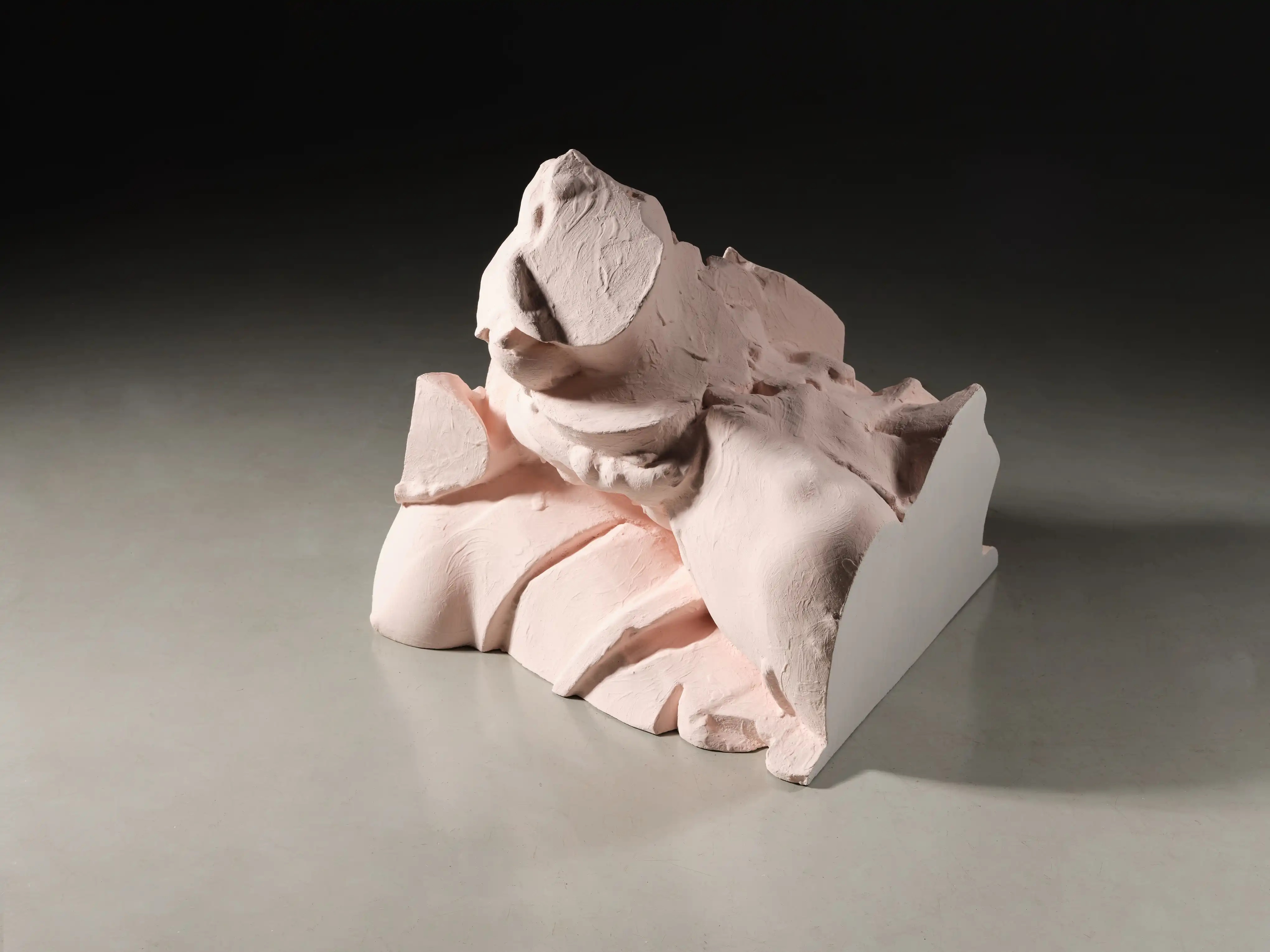
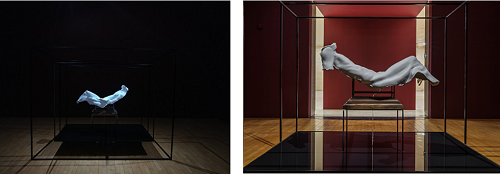
What, then, of the new work Seated Figure, presented in the final room? This work is particularly significant. In a large room filled with darkness, a single human sculpture illuminated by light moves slowly, occupying the space like a monument. A white human figure sits in a relaxed, almost reclining posture atop a pedestal constructed as a tank filled with black water, breathing through slow movements.

Its soft silicone skin gradually draws in air until it comes into contact with the FRP inner layer shaped like anatomical musculature, then fills with air again, repeatedly widening the gap between the two. The figure appears to inhale and exhale with its entire body. As the white skin repeatedly touches and separates from the emaciated musculature beneath, vibrations from the motor create waves in the tank, producing gentle ripples across the surface of the water.

Look! Here, where death and life are pressed flat against one another, a small life embraces even death. The light that animates a dark space in which time seems to have stopped, the slow movement of the human sculpture and the quiet sound of the motor breaking the stillness, and the rich scent of ink emanating from the gentle ripples of the ink-filled tank—all of these incarnate his human sculpture as a human being anguished by life.

But why does Lee Byungho present only a single, relatively small work in this expansive exhibition space? Is he exploring the possibility of occupying a large space with just one small work? Such questions on the part of viewers have already been anticipated by the artist. The format of the exhibition in “Room 3,” therefore, is highly intentional.

Consider this: for any artist, the white cube is a space in which decontextualization and recontextualization can be tested through dismantling and reconstruction. It is a space where each artist unfolds, under the name of an exhibition, the time of Kairos captured in the studio. Some artists make the maximization of this condition a central task, while others do not.

Strictly speaking, Lee Byungho, like many artists, belongs to the latter group. Just as he has remained committed to sculpture while intermittently practicing sculptural installation, he has generally concentrated on the work itself without taking a strong interest in recontextualizing the white cube in its entirety. At least the works presented in the previous two rooms may be said to focus more on “the work itself” than on “the space outside the work.”

What is interesting, unlike in the previous cases, is that for the exhibition in “Room 3,” Lee Byungho considers a series of frames that function simultaneously as artwork and spatial staging. He plans to present not only a rectangular frame enclosing the human sculpture and its pedestal, but also another frame encompassing the entire arrangement.

Rather than a strictly orthogonal structure, this is a hexahedron with altered angles that take perspective into account. For Lee, this empty hexahedral frame serves both as “a layer that segments invisible space” and as “a device that draws the entire exhibition space into the work, expanding the scale of the work to encompass the exhibition space as a whole.”

Positioned between the “human sculpture in light” and the “exhibition space in darkness,” the hexahedral frame functions as an “invisible medium,” much like air. Just as “air” in his earlier works set the silicone skin into motion and prompted us to reflect on Chronos, the objective time of birth, aging, illness, and death, the “hexahedral frame” in the exhibition of “Room 3” encourages us to consider how the “three-dimensional space” of our lives—in which light and darkness cannot be visibly or clearly separated—is ultimately a “four-dimensional spacetime” intertwined with time.

Thus, although his hexahedral frame is in reality a powerless presence incapable of physically dividing visible space, it instead establishes itself as a symbolic medium that segments and expands invisible space. This is the paradox produced by art. It may be understood as the result of the artist’s longstanding inquiry into how the invisible might be made manifest.


Lee Byungho, Seated Figure, 2019, Silicone rubber, air compressor, air hose, timer, iron, water, resin, 240 x 150 x 190 cm © Lee Byungho

Epilogue

We return to the opening question: “Can time be reversed or erased?” We have understood this as something made possible within the time of “Kairos” operating in present life—through memory, which brings the past into the present, and imagination, which draws the future closer. Artistic creation, moreover, is a force that drives this Kairotic time.

Lee Byungho erases the time of others as Kairos. Within human sculptures that erase and reconstruct historical contexts of the past, he removes the context of form and, by creating a state of meaninglessness that escapes every possible context, seeks to reveal something invisible behind it. It is not yet possible to say clearly what that something is, but even today, he continues to search for it.

References