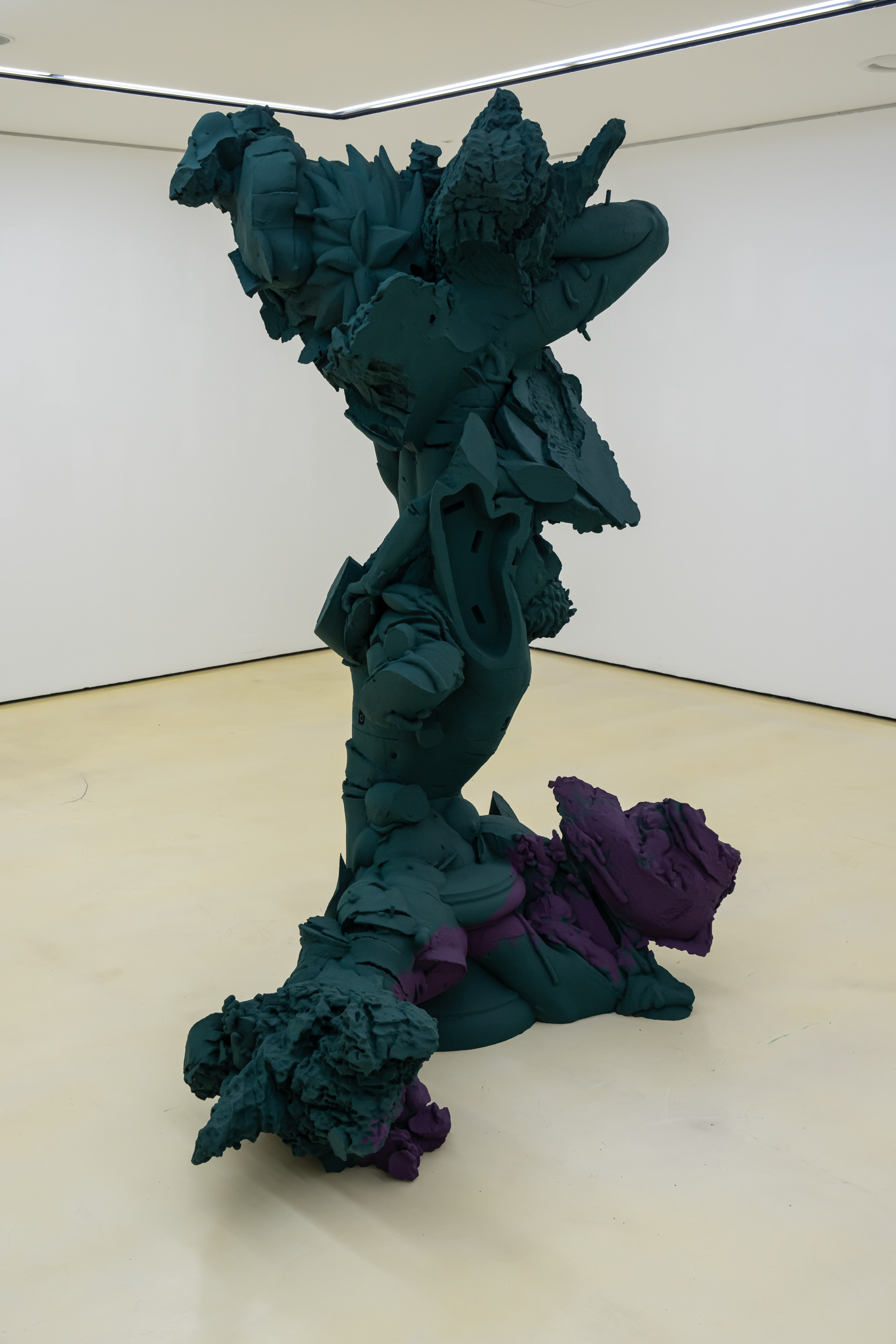
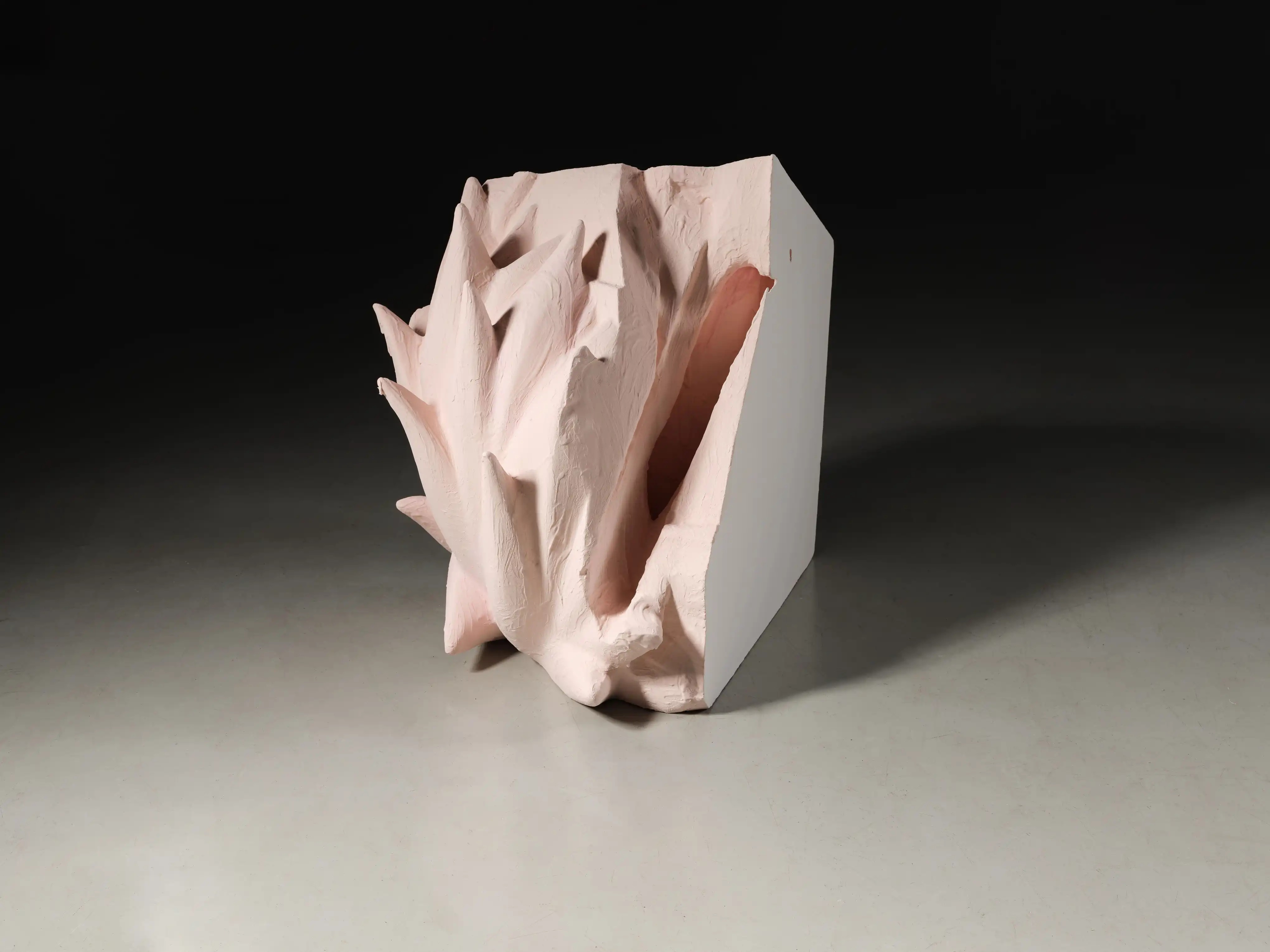
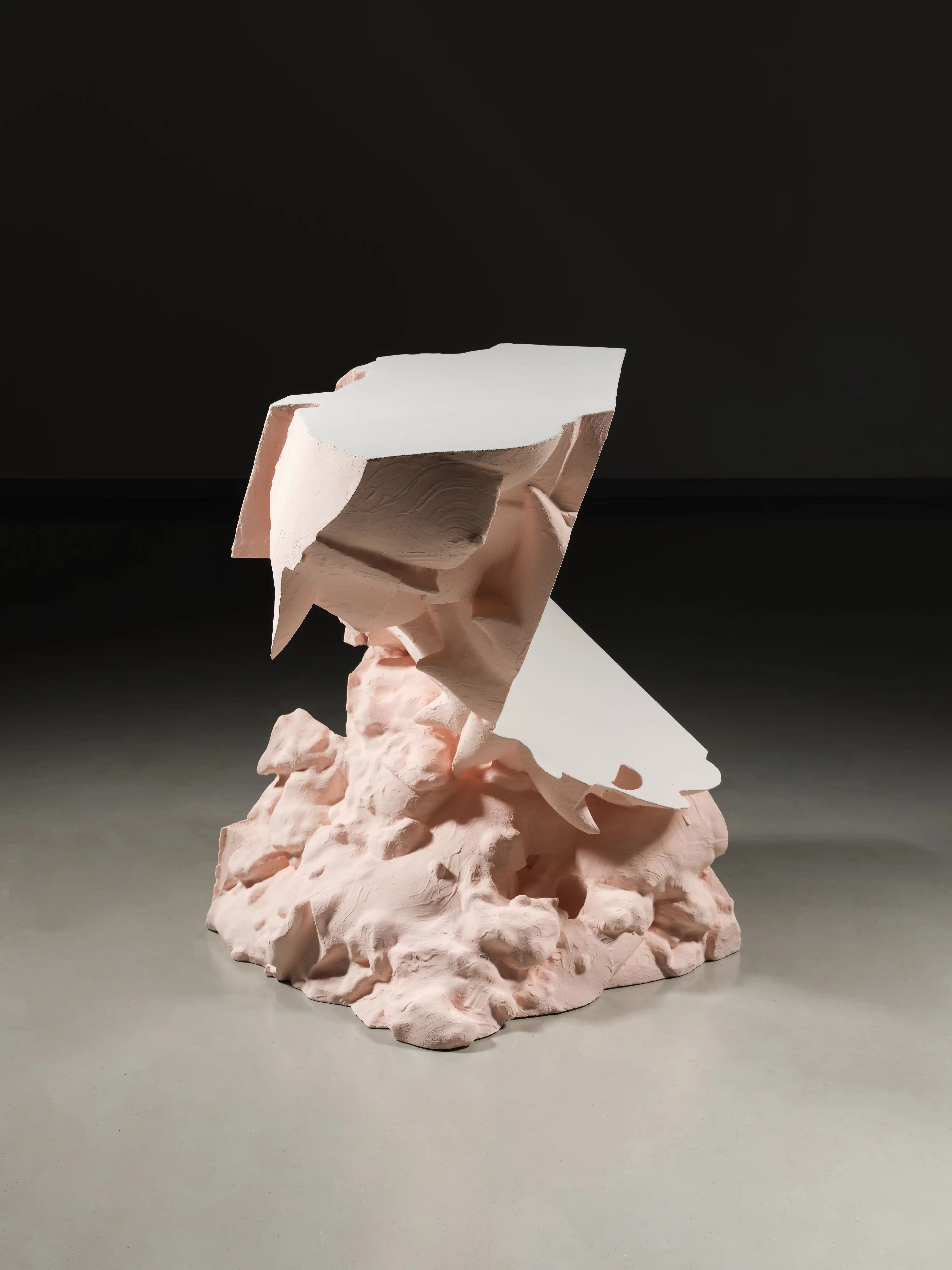
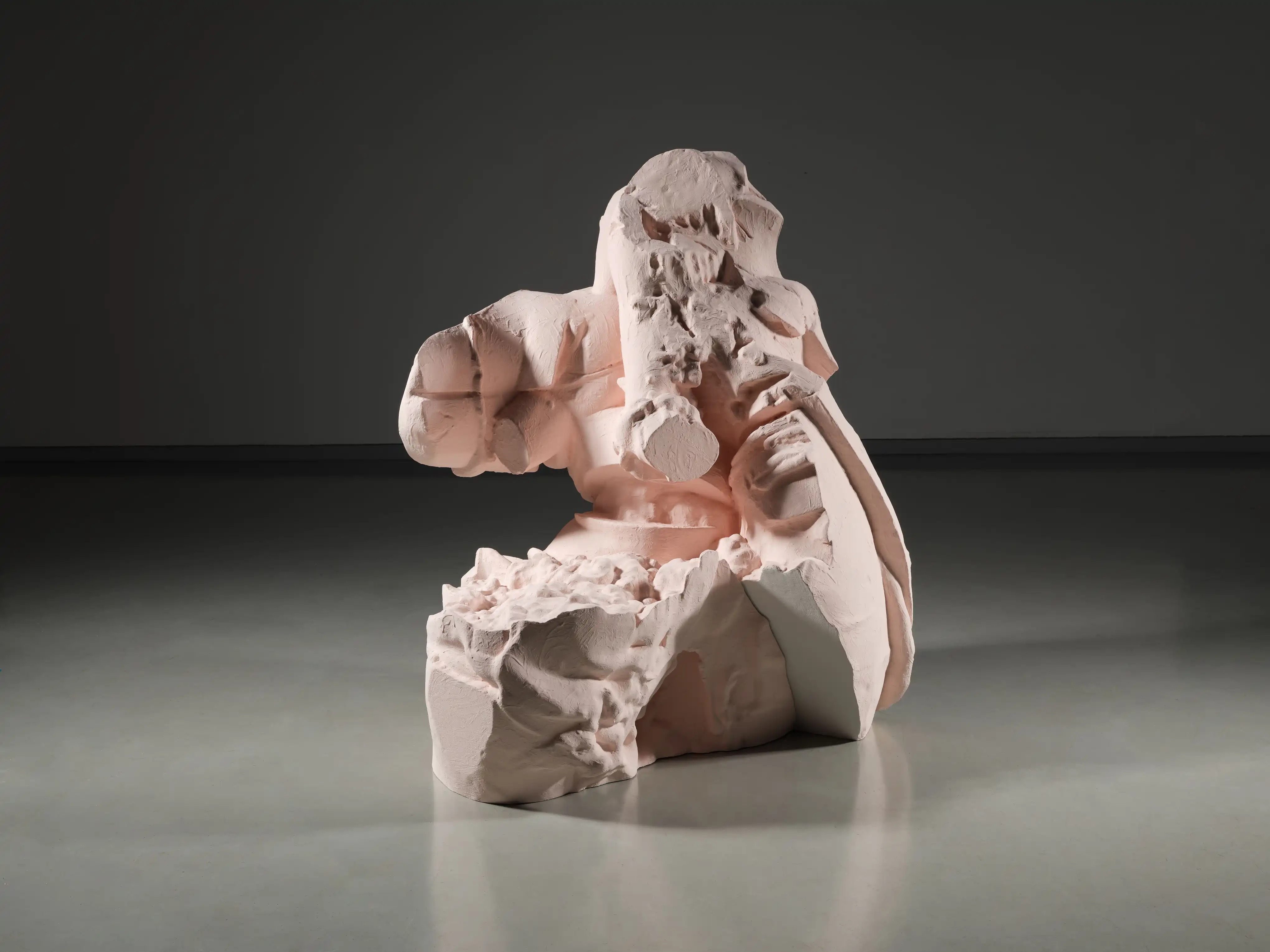
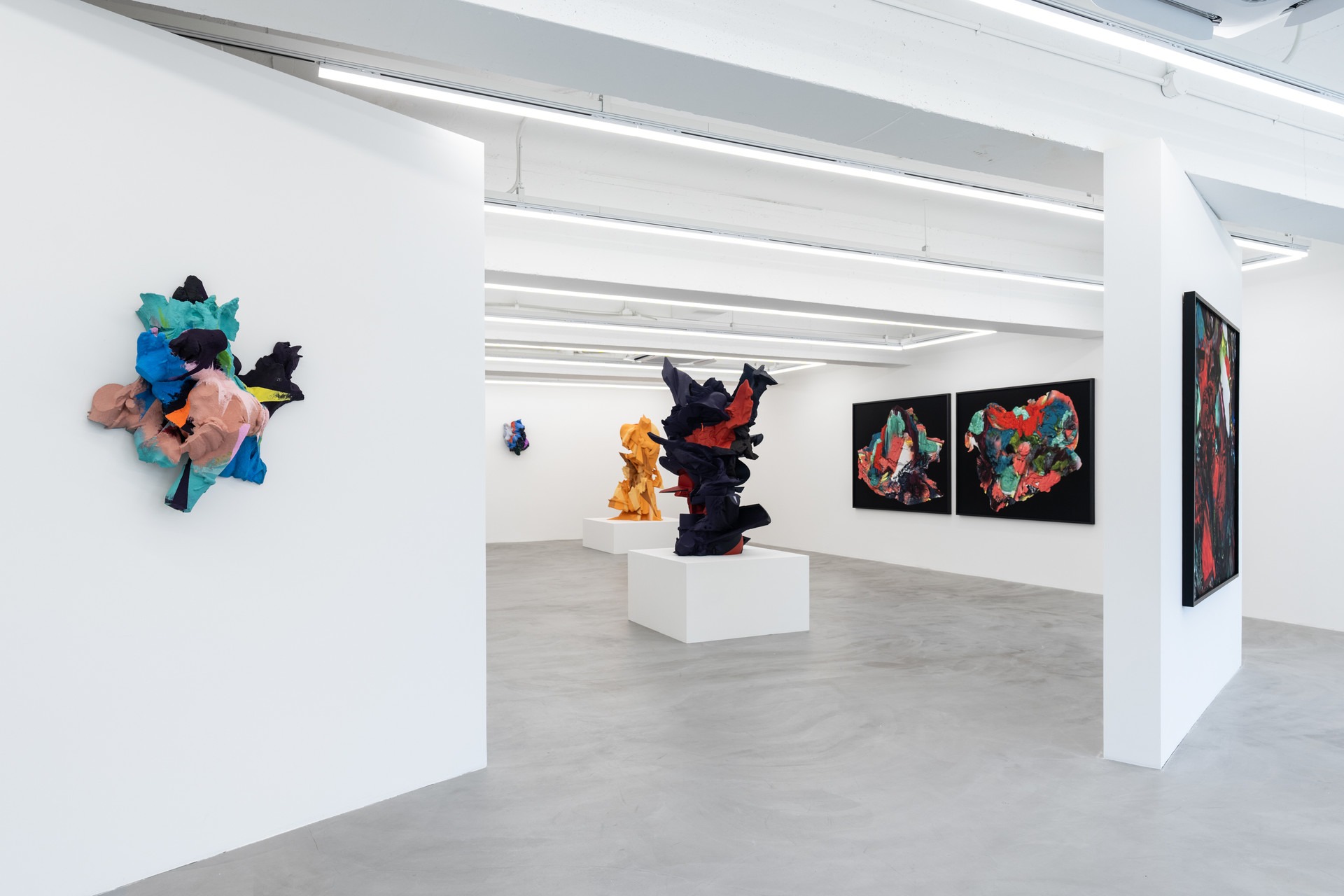
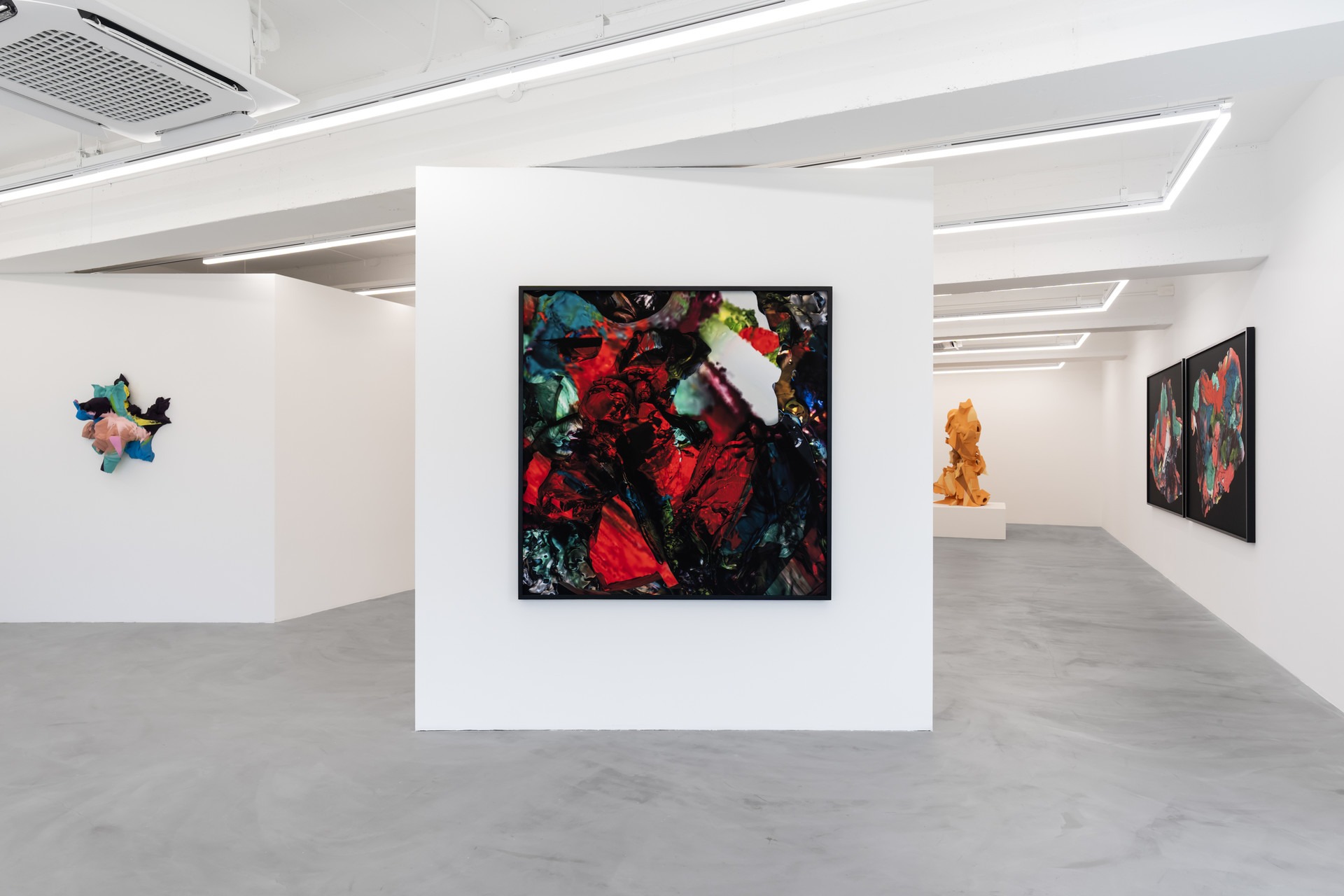
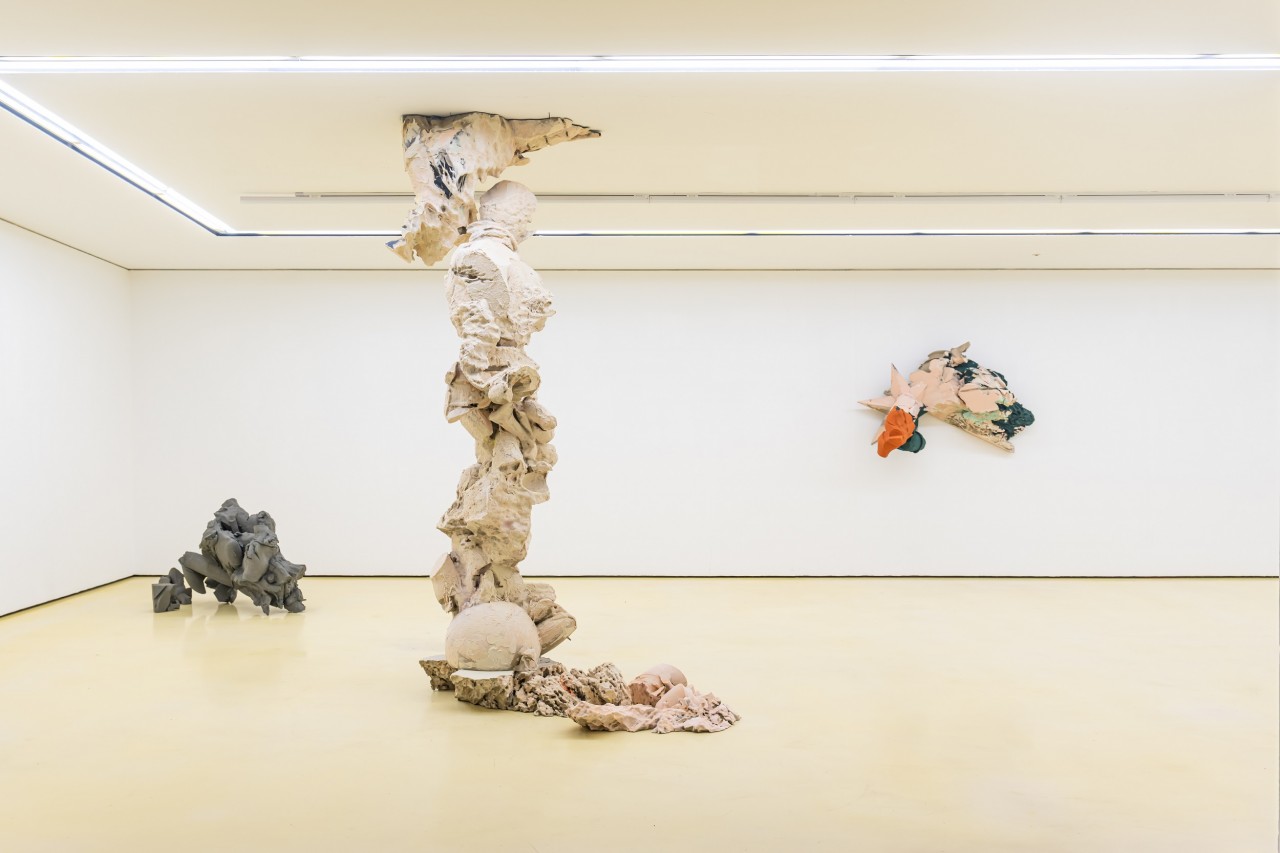
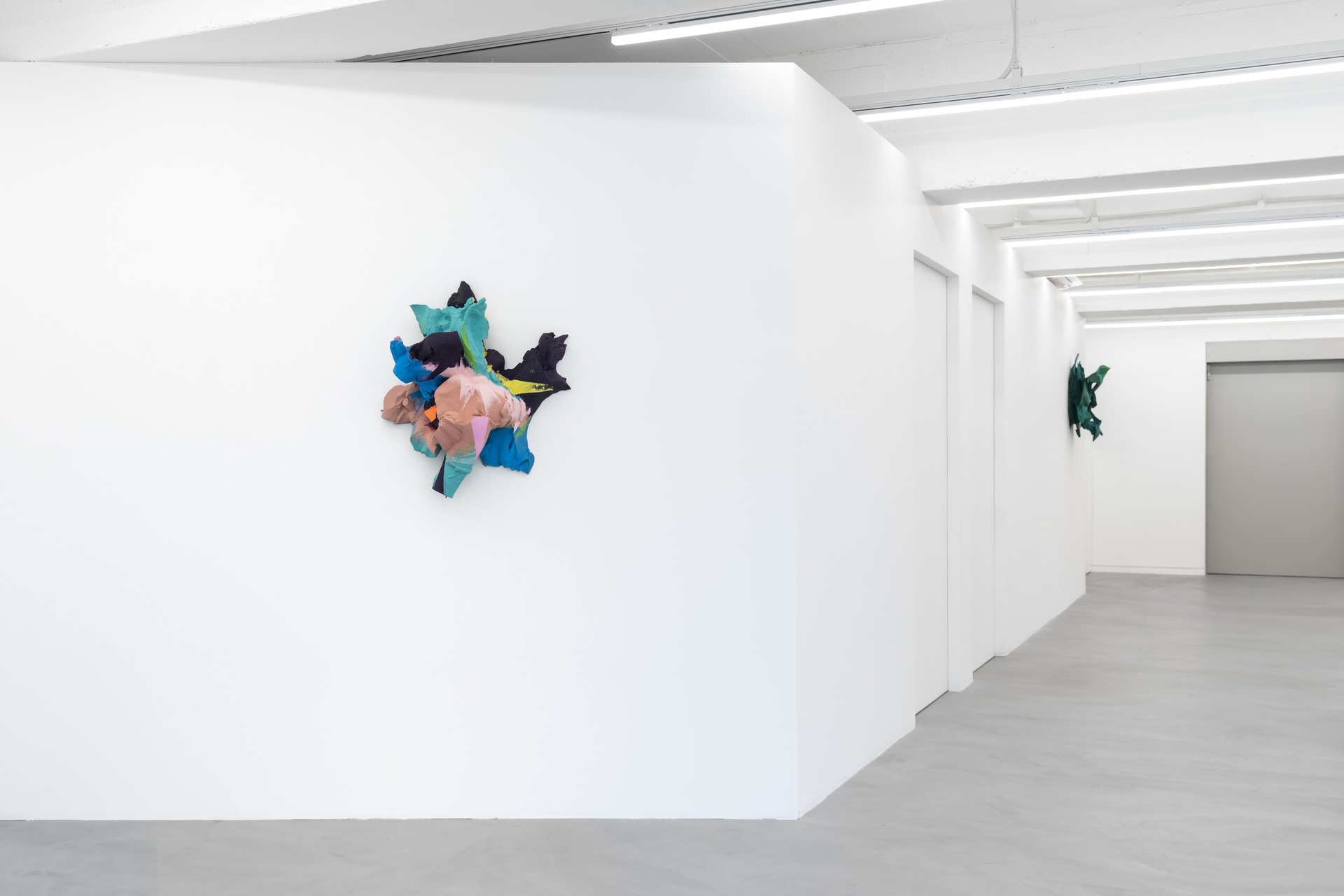
Installation view of 《Indistinct Vision》 © SPACE SO

Sculpture in Progress

Origins

The oldest sculptures discovered to date are the Venus of Berekhat Ram, found in the Golan Heights of Israel and estimated to date from approximately 280,000 to 230,000 years ago, and the Venus of Hohle Fels, excavated in Baden-Württemberg, Germany, and estimated to be around 41,000 years old.

Meanwhile, the oldest known drawing is the Blombos Cave Drawing, dating back approximately 73,000 years, while the oldest known figurative painting is the Sulawesi warty pig cave painting, discovered in Leang Karampuang Cave on the Indonesian island of Sulawesi and estimated to be around 45,000 years old.

In the case of sculpture, as the designation “Venus” suggests, both works take the human body as their form; in painting, by contrast, the Blombos Cave Drawing consists of intersecting diagonal lines, while the Sulawesi warty pig cave painting depicts an animal, as its name indicates. In other words, sculpture originated in the form of the very human beings who made it, whereas the subjects of painting were abstract patterns or objects of the hunt. Although both sculpture and painting have their origins in the ritual value of art, the objects they represent are markedly different.

While three-dimensional sculpture was oriented toward the value of the familiar human body as its subject, painting was directed toward the value of objects such as patterns and animals. Thus, within the genre of sculpture, the “human body” encapsulates the origins of both its emergence and existence, and the relationship between sculpture and the human body persisted in an “insistently intertwined state” throughout the history of art until the advent of the twentieth century.

The reason for tracing the discussion of Lee Byungho’s work back to the earliest sculptures made by humankind is that this “insistently intertwined state,” historically constructed between the human body and sculpture, plays a crucial role in his practice. The trajectory of his work constitutes a process of repeatedly experimenting with the relationship between the human body and sculpture, developing a new mode of perception within the history of sculpture and ultimately expanding that inquiry into sculpture itself.
He extracts “sculpture” itself from the obligation to represent the human body. While deriving the concept of sculpture from the human body as its primordial form, he separates sculpture from the referentiality inherent in bodily representation. To take issue not with the “figure” but with the “sculpture of the human body” is to escape the referentiality of the object toward which it has traditionally been directed and to investigate the fundamental depths of sculpture as a genre.

His work departs from a self-contained condition in which the human figure functions as an indispensable prerequisite. Instead, the three-dimensional forms he discovers by expanding the conceptual field culminate in an ongoing sculptural trajectory—sculpture that remains perpetually in progress.

Installation view of 《Indistinct Vision》 © SPACE SO

Proliferation and Hallucination

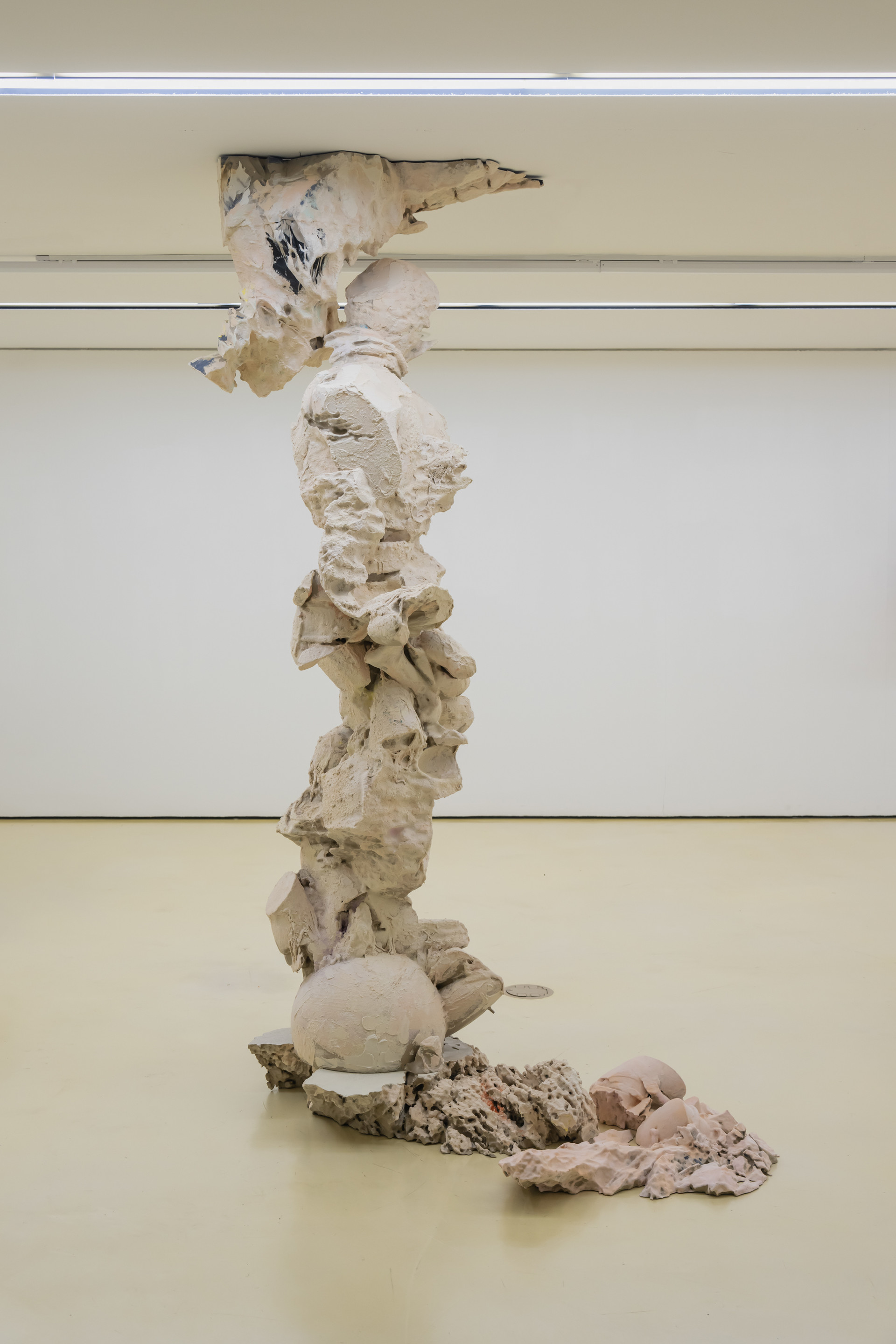
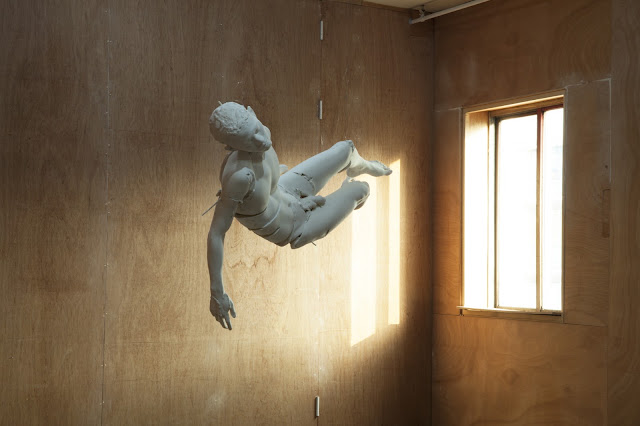
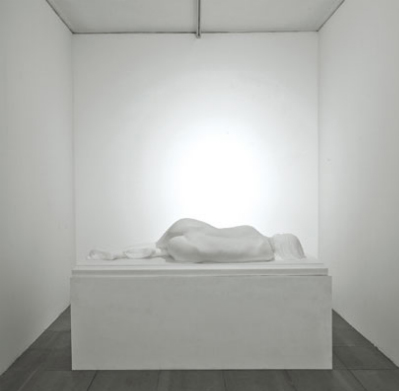
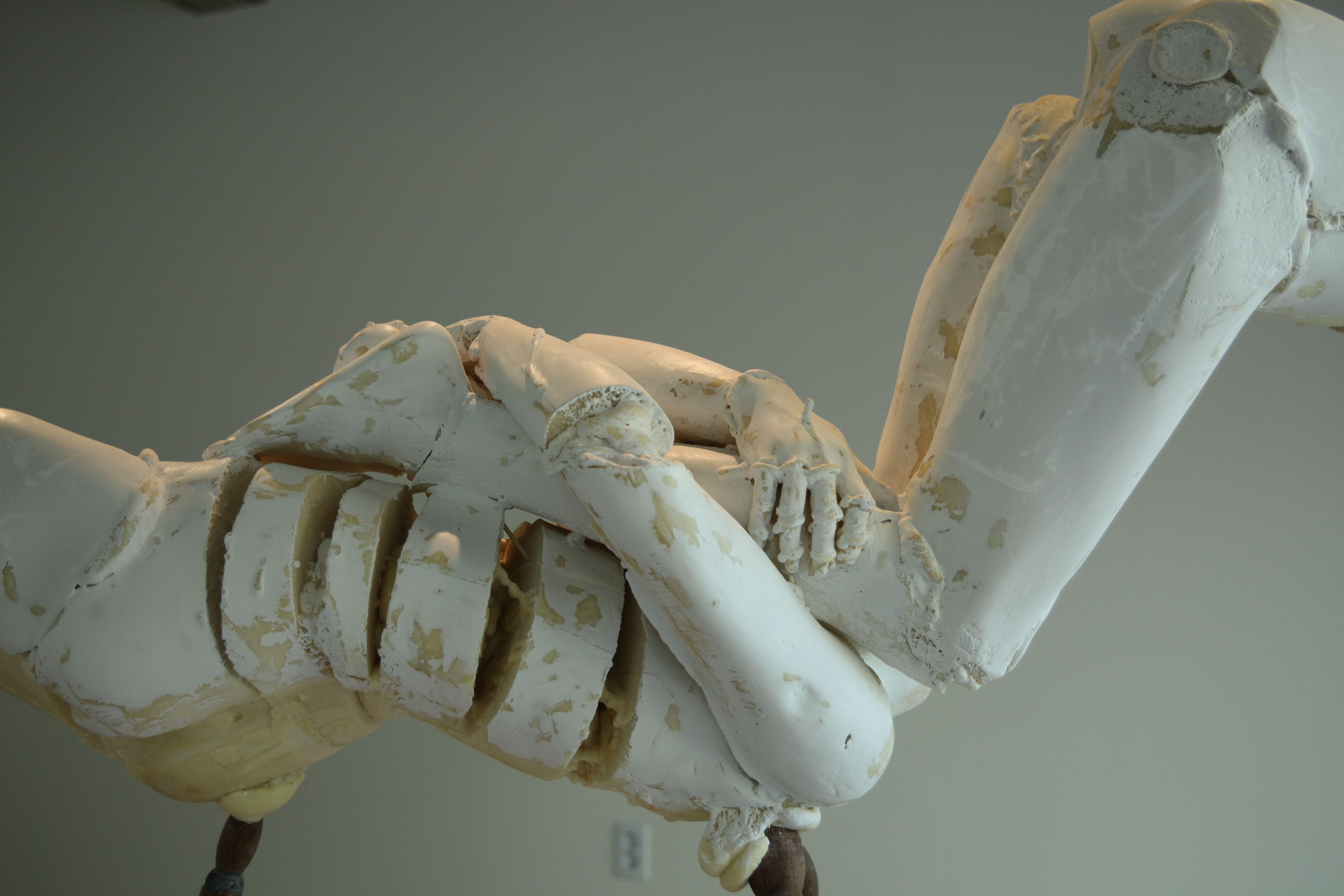
For Lee Byungho, the human body functions as both the historical origin of sculpture and a singular proposition of its identity, leading him first to twist the element of bodily representation through the logic of “replication.” He casts an actual person, establishes the resulting form as a single prototype, and then separates and dismantles it to develop entirely different forms.

The prototype can be transformed into virtually any sculptural representation of the human body from art history, through processes that split or twist its anatomical logic in ways analogous to historical sculptures. The cracks and gaps that emerge through these variations of the prototype are filled with various materials, while at times even the human body itself is transformed into something resembling a support structure endowed with dynamic movement.

For example, his 2019 work Anthropometry consists of nine distinct human forms that dynamically occupy the surrounding space. Rather than constituting a scene intended to convey a particular narrative or content, this occupation appears to form a system that demonstrates the possibilities of figurative sculpture through the formal proliferation of the prototype.

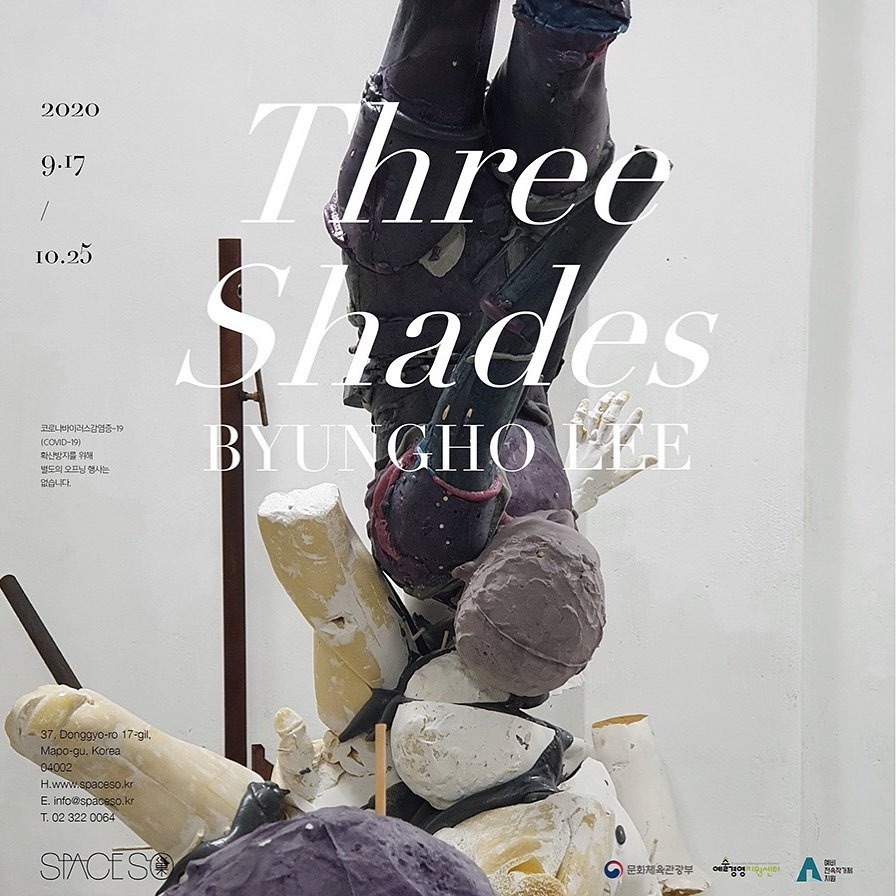
In particular, in his 2020 solo exhibition 《Three Shades》 at SPACE SO, Lee clearly articulated the proliferative and variable nature of figurative sculpture by drawing on the precedent of Adam and The Three Shades from Auguste Rodin’s The Gates of Hell. As Rosalind Krauss discussed in relation to postmodern repetition, the seriality inherent in Rodin’s casting process for The Gates of Hell destabilized the modernist ideal of originality while revealing the possibility of recontextualization through sculptural arrangement.

Lee interprets the properties of replication and repetition inherent in the modeling process, tracing them further back to the “replication” of the human body itself before transforming the process into one of recontextualizing and reconstructing an identical bodily prototype. Rodin’s recontextualization is also related to the fact that sculpture is a three-dimensional object that exists in 360 degrees.

It actively exploits the gap between sculpture’s mode of existence and the cognitive limitations of the human body: because our visual field when viewing a three-dimensional object is restricted to less than 180 degrees, the same “Adam,” even when repeated, is perceived as a different form depending on its position. Moreover, the dualism arising between the three-dimensionality of the actual object and human perception is further intensified in Lee’s work as a question concerning the very concept of sculpturality.

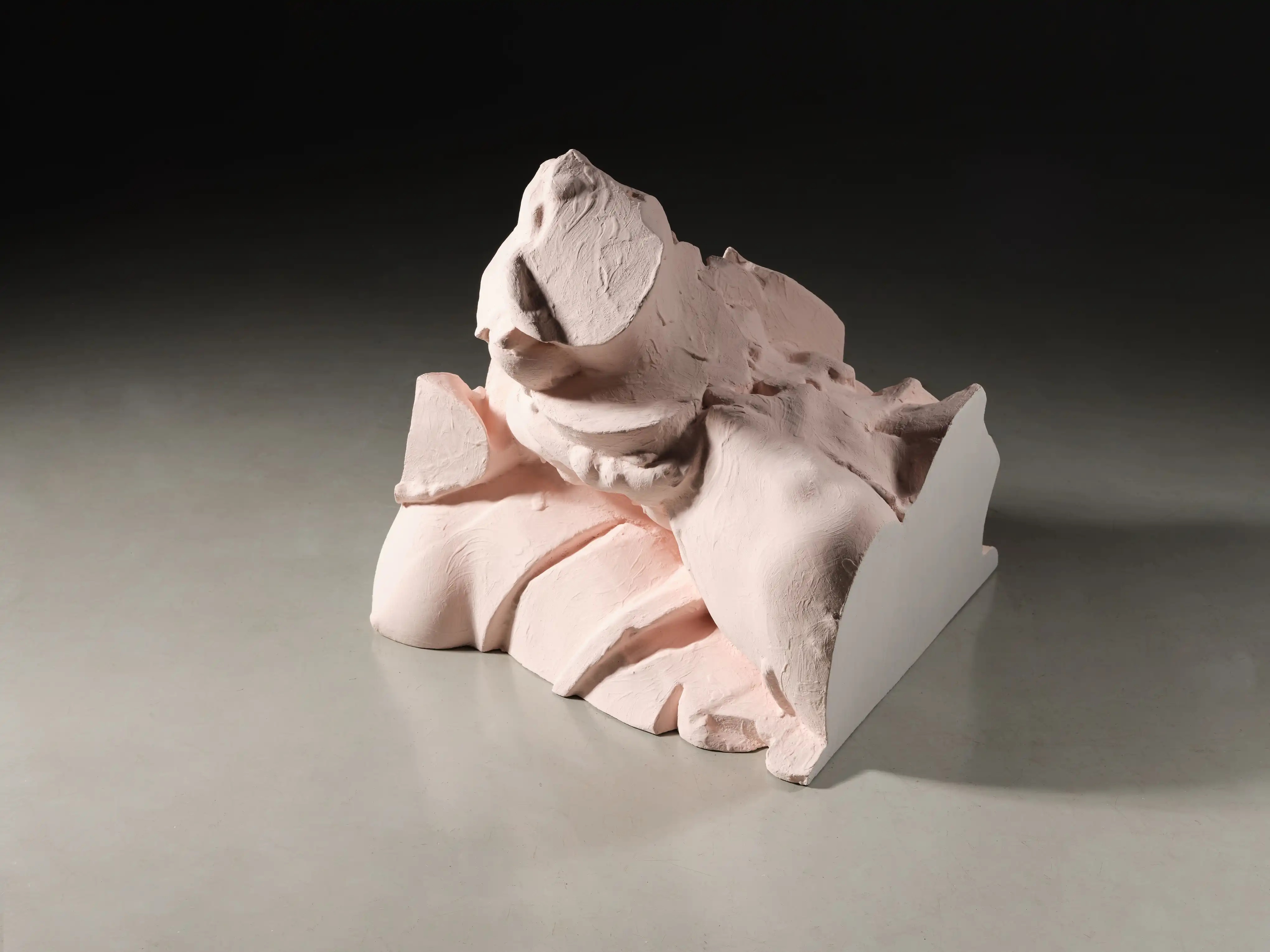
To accelerate the formal transformation and variation of the bodily prototype into innumerable differences, he adopts Rodin’s abattis method. A single bodily prototype is broken down into countless fragmented parts, and the assemblages of the resulting abattis are reconstructed into increasingly inscrutable configurations through continuous processes of dismantling and combination, transformation and proliferation.

As this process accelerates, the sculpture moves further away from the body and evolves into abstract form. By pushing to its extreme the contradiction of endlessly distancing sculpture from the body while retaining its origin in the “insistently intertwined state” between sculpture and the human form, sculpture differentiates itself from the body, while the body is transformed into form.

Installation view of 《Indistinct Vision》 © SPACE SO

This process is also a consistent theme that Lee Byungho develops step by step throughout his practice. Beginning with a prototype cast directly from the human body and moving toward complete abstraction, each stage represents the result of a deliberate effort to infer a sculptural condition without end. In his work, moreover, sculpture becomes intertwined with the problem of the image, and with this, the vocabulary of color begins to emerge.

As in the case of Rodin’s repetitions discussed earlier, three-dimensional form always functions as an image within our perception. For this reason, the image of sculpture appears as a constantly shifting silhouette formed by the interplay of material volume and the outline of form. The color on the surface of a sculptural mass combines doubly with the shadows of saturation and brightness inherent to the material itself, and this is further compounded by the indispensable phenomenological limitation that, as human beings, we cannot perceive the sculpture in its entirety all at once.

If, for example, it has a red surface, then the color red in the image of the sculpture must pass through three layers of distortion. Lee describes this as the coexistence of “real mass and imagistic mass,” and the color on the sculptural surface becomes the very field in which this battle of inevitable distortions takes place.

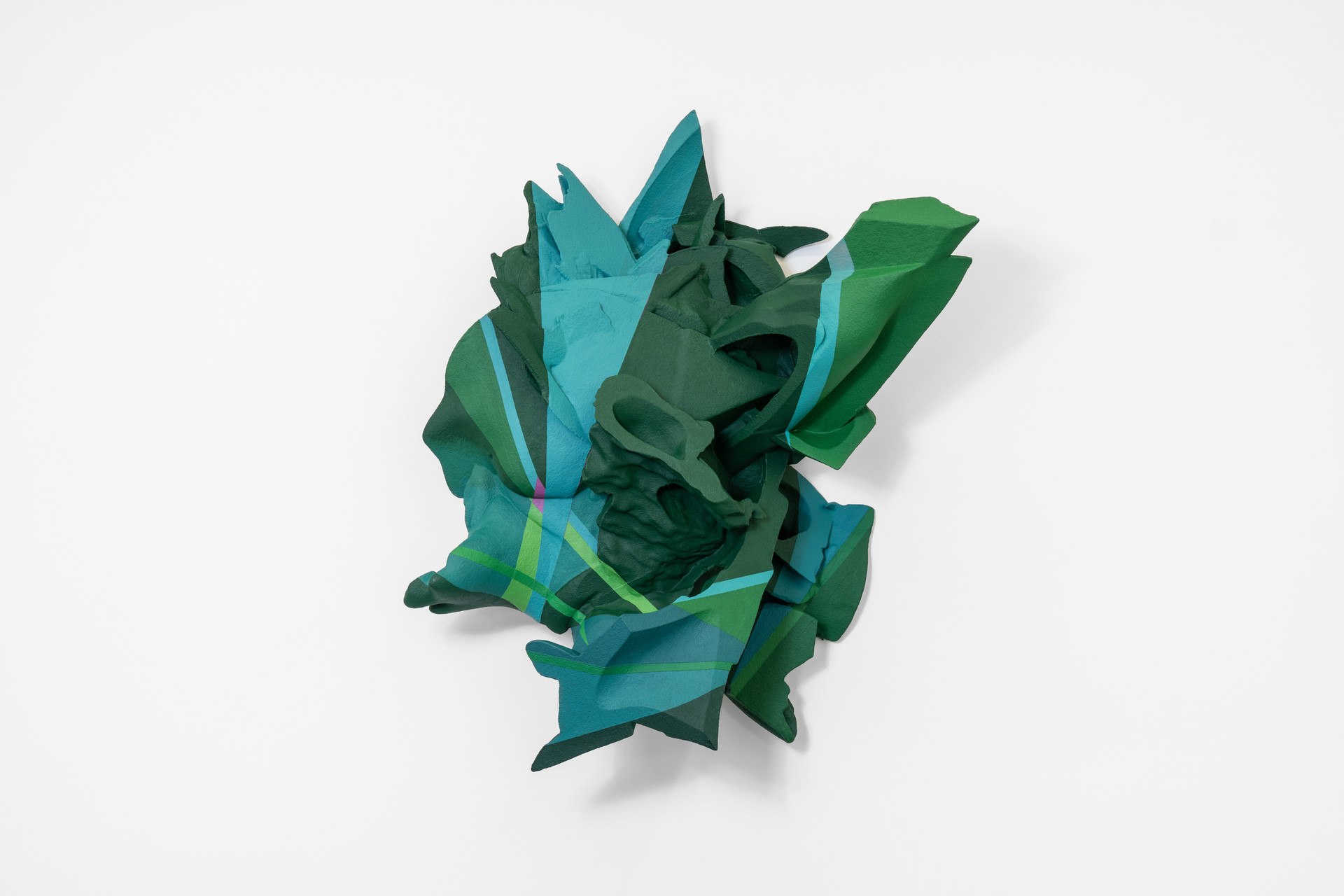
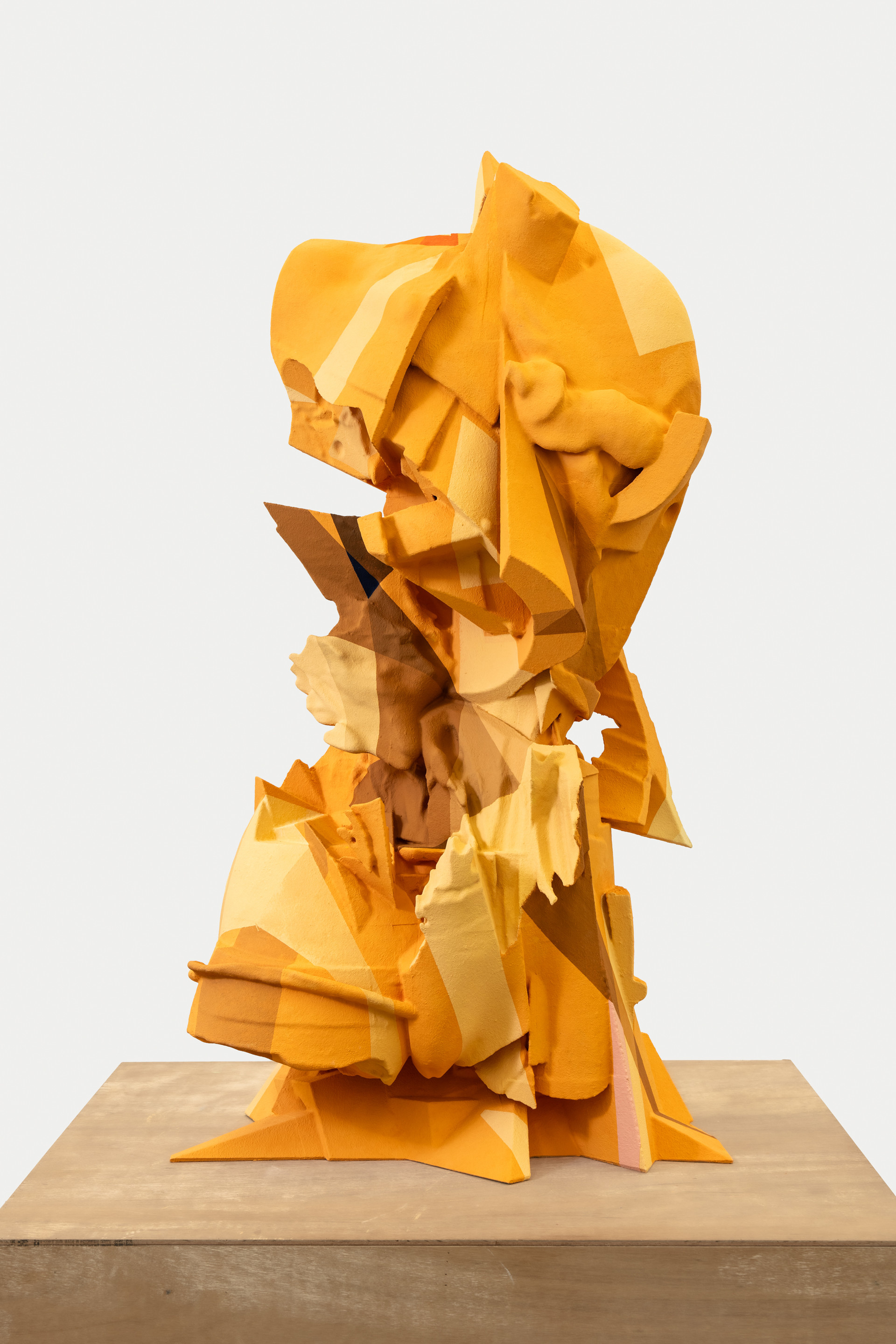
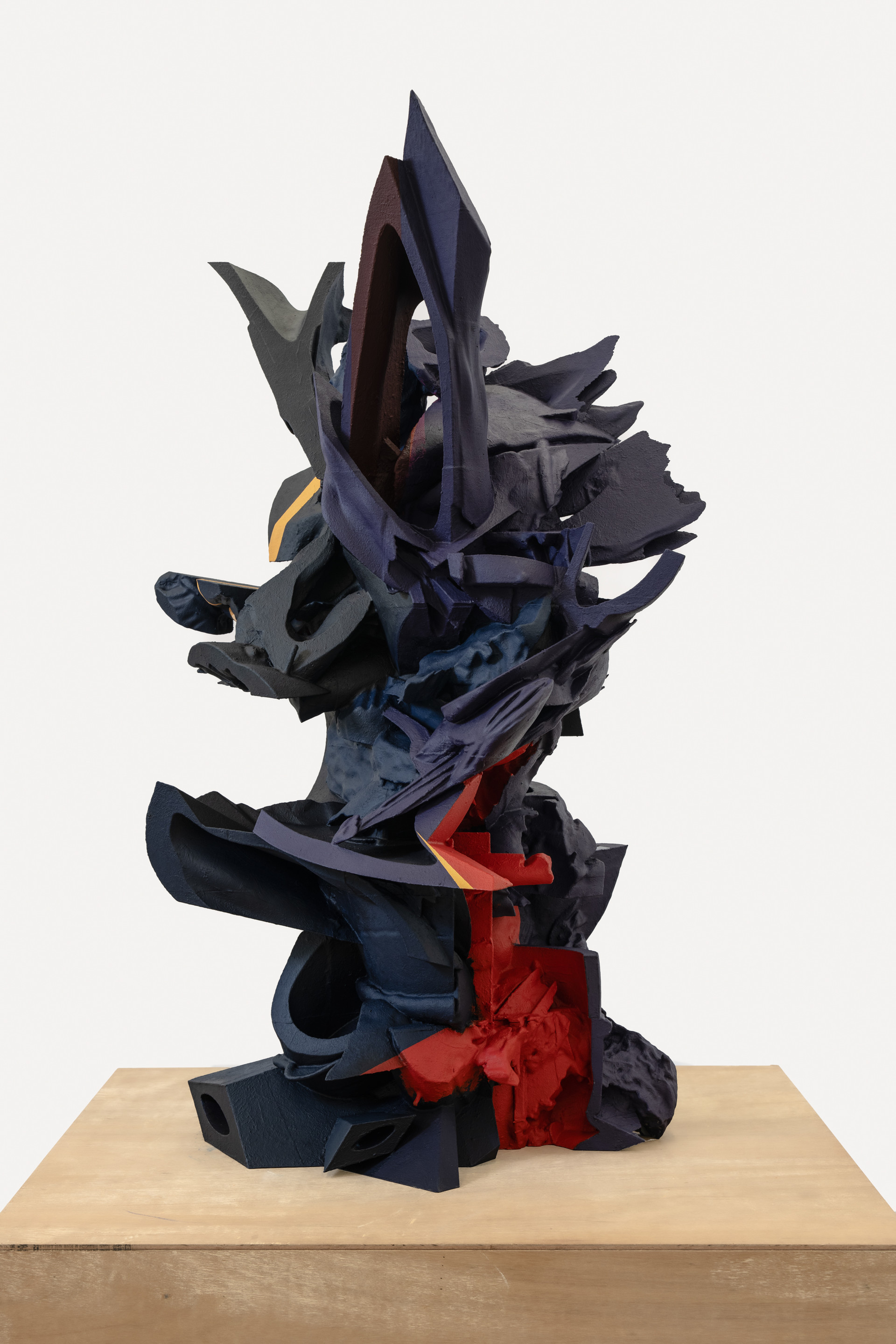
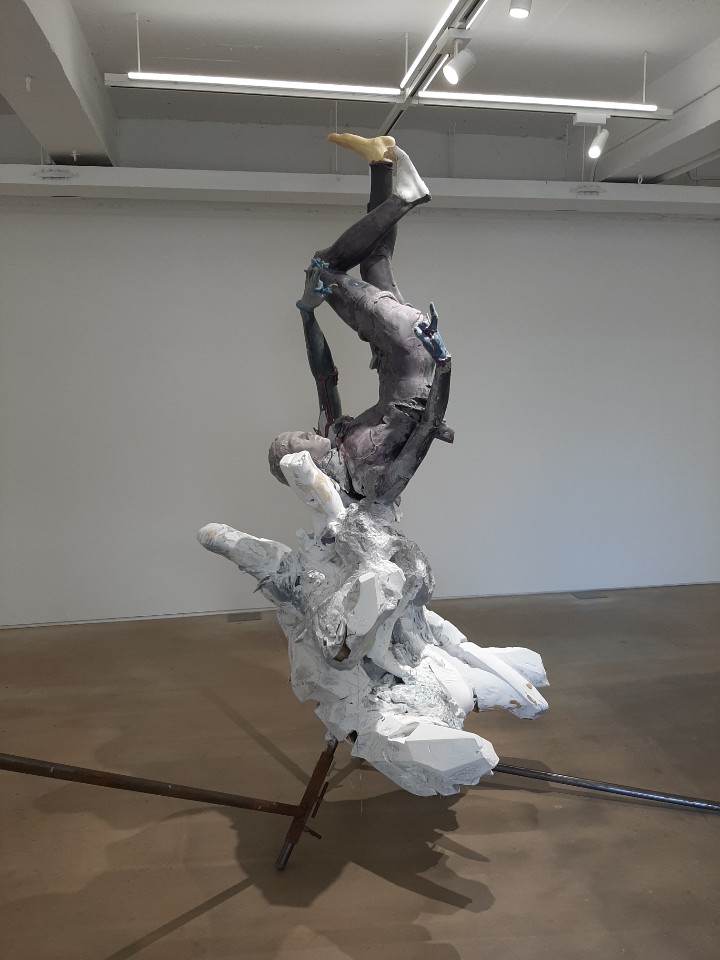
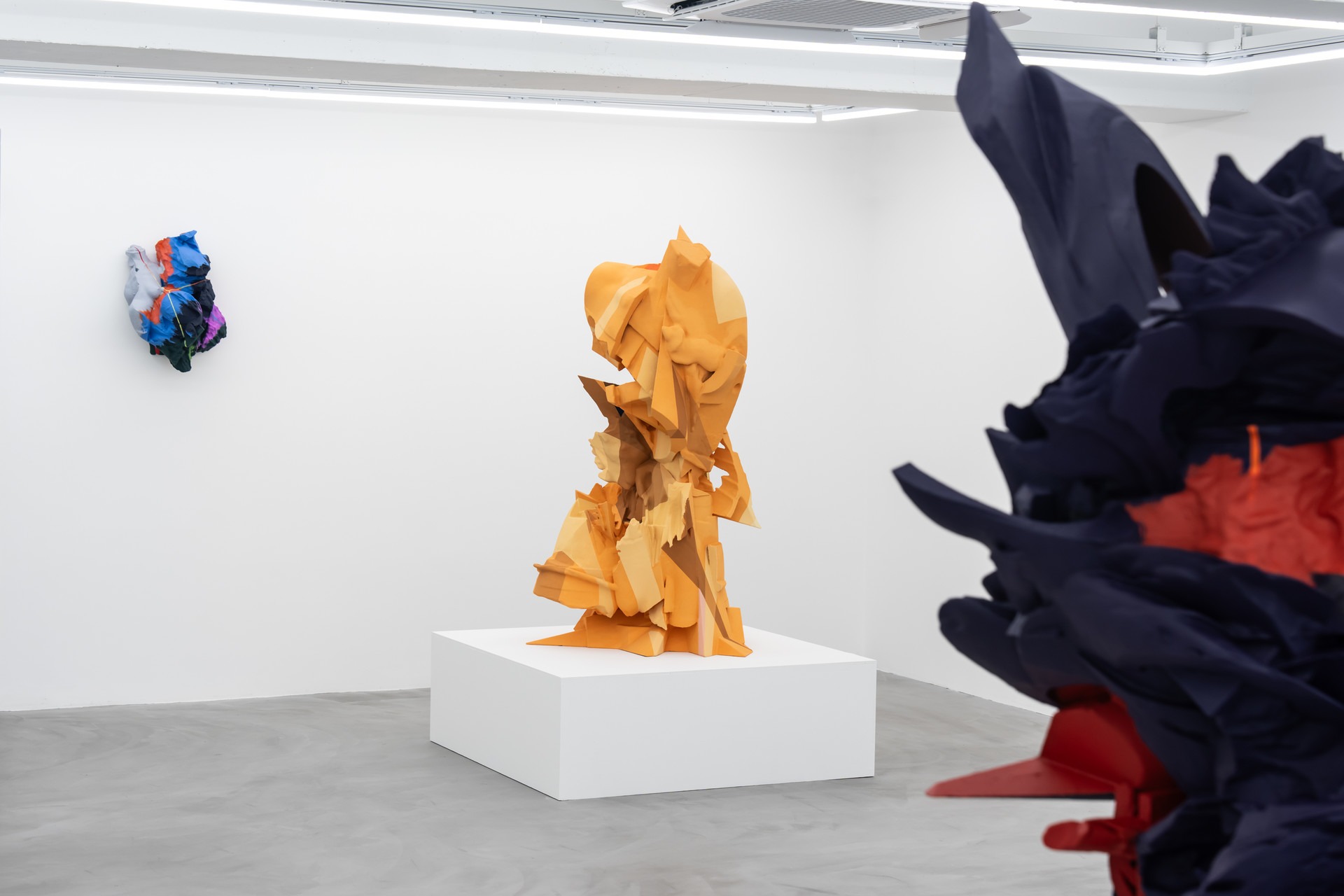
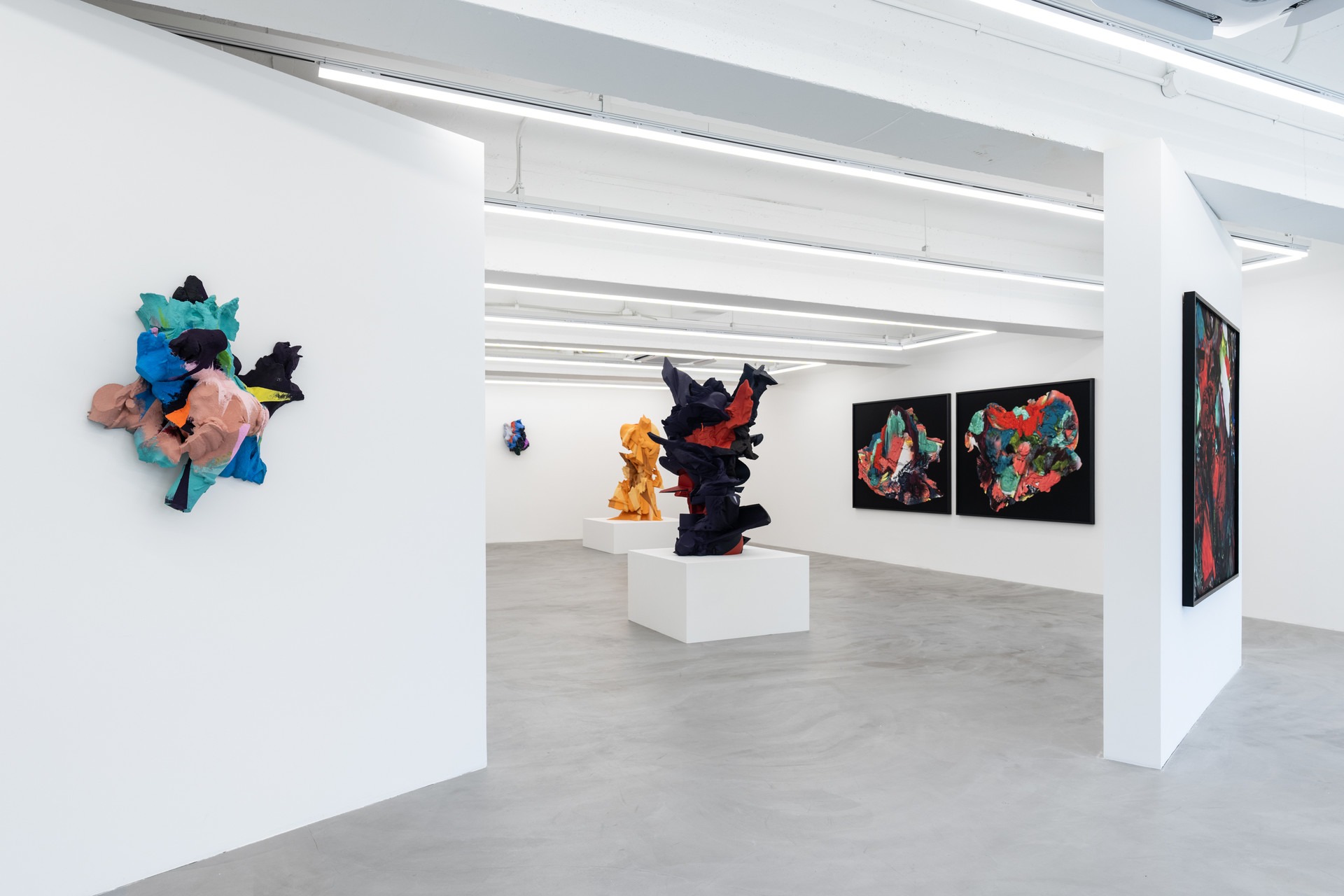
The exhibition 《Indistinct Vision》 is filled with these characteristics of sculpture and its imagistic qualities. Through variations based on the condition of the human prototype, the sculpture reaches abstraction, and with the intervention of color, the concept of sculpture expands its scope. For example, Eyes and Vision is an independent standing sculpture inscrutably constructed through bodily abattis.

On its surface, a rigorously differentiated logic of color seems to emerge, yet upon closer inspection, endlessly misaligned zones of paint and three-dimensional undulations are intermingled. This chaotic and illogical composition is intensified to the point where absolute color can no longer be discerned through texture and gradation, becoming a scene of collision produced by the colors of sculptural reality and image.

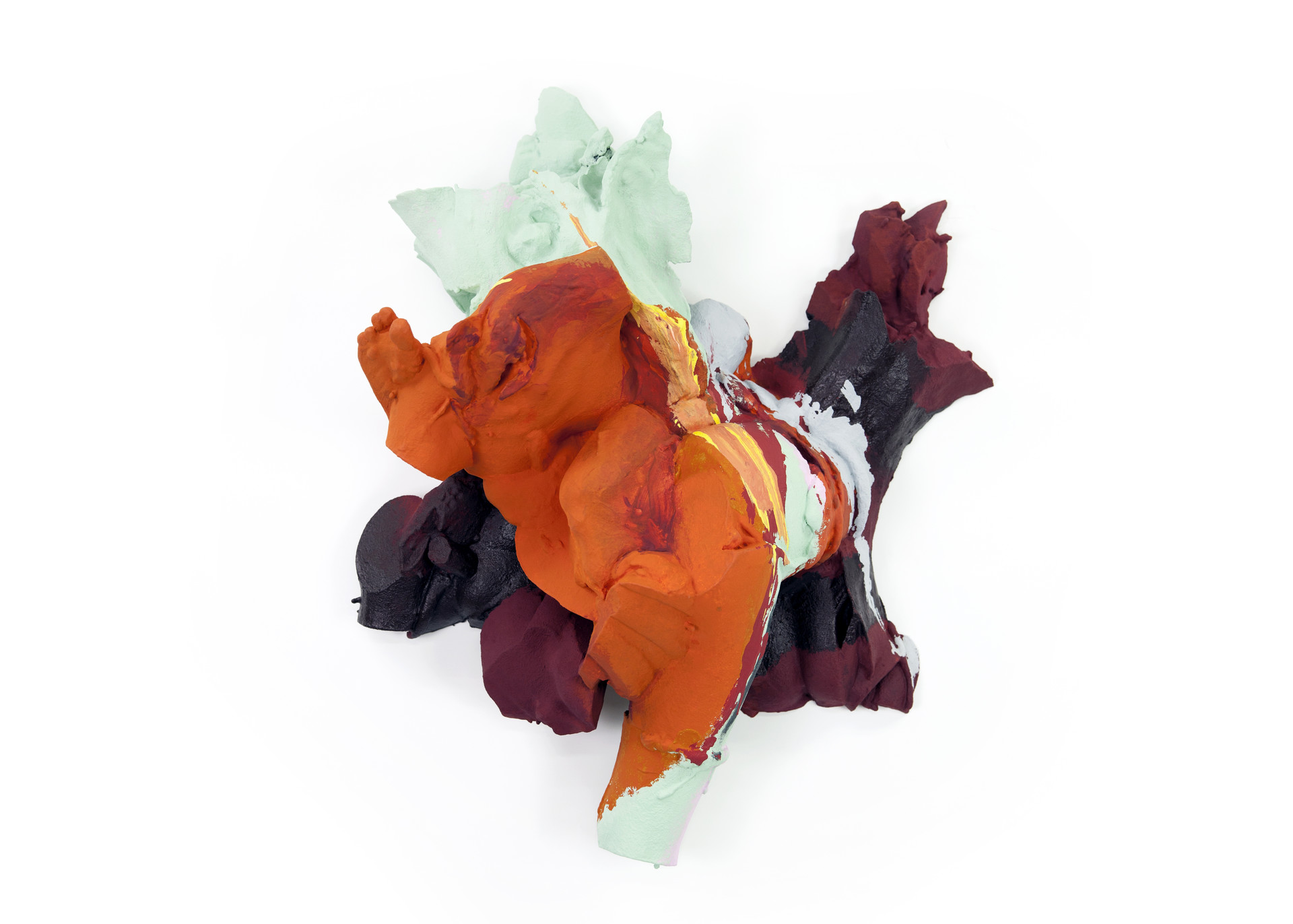
That collision is perceived differently depending on our eyes, position, and distance, creating an “indistinct vision” in which optical illusion and misperception, three-dimensionality and surface, are restlessly entangled. The paradox of collision and illusion is also generated in high-relief works such as Image Thing. The contrast of vivid, highly saturated colors creates clear shadows and corresponding differences in density even within the same hue, so that form and color continue to interlock, presenting the image of sculpture, or the illusion of an image.

This is precisely the complex condition that three-dimensional sculpture cannot but possess, and through it the essential incompleteness formed between the limitations of our vision and three-dimensionality is revealed. It is a hallucination that appears when sculpture’s destiny—its role of mediating the three-dimensionality of the human body through the three-dimensionality of form and standing in for an obstinate reality—is penetrated through rigorous reflection.

Installation view of 《Indistinct Vision》 © SPACE SO

Expansion and Emergence

In the process of segmenting body castings, Lee Byungho generates multiple abattis objects. At this stage, the original forms of the abattis are preserved as simulated data through 3D scanning. Although each original abattis is inevitably lost in the process of disassembly and recombination, the figurative prototype can be sustained by converting it into data and, when needed, digitally assembling it into volumetric masses.

In this context, the object within computer data becomes “information” existing at specific coordinate points, with its original materiality, thickness, interior, and exterior evaporated; whenever those coordinates move, its form, shading, position, and direction become visible. Because the image in data appears not within the two- or three-dimensional space we experience, but through a coordinate-based dimension of space, three-dimensional form is necessarily grounded in the mathematical condition of the X, Y, and Z axes.

The volume of sculpture appears as planes and silhouettes, light and shadow, within an abstract space established by an aggregation of coordinates and one or more sources of light. At this point, we too encounter an image of three-dimensionality on the flat surface of a monitor.

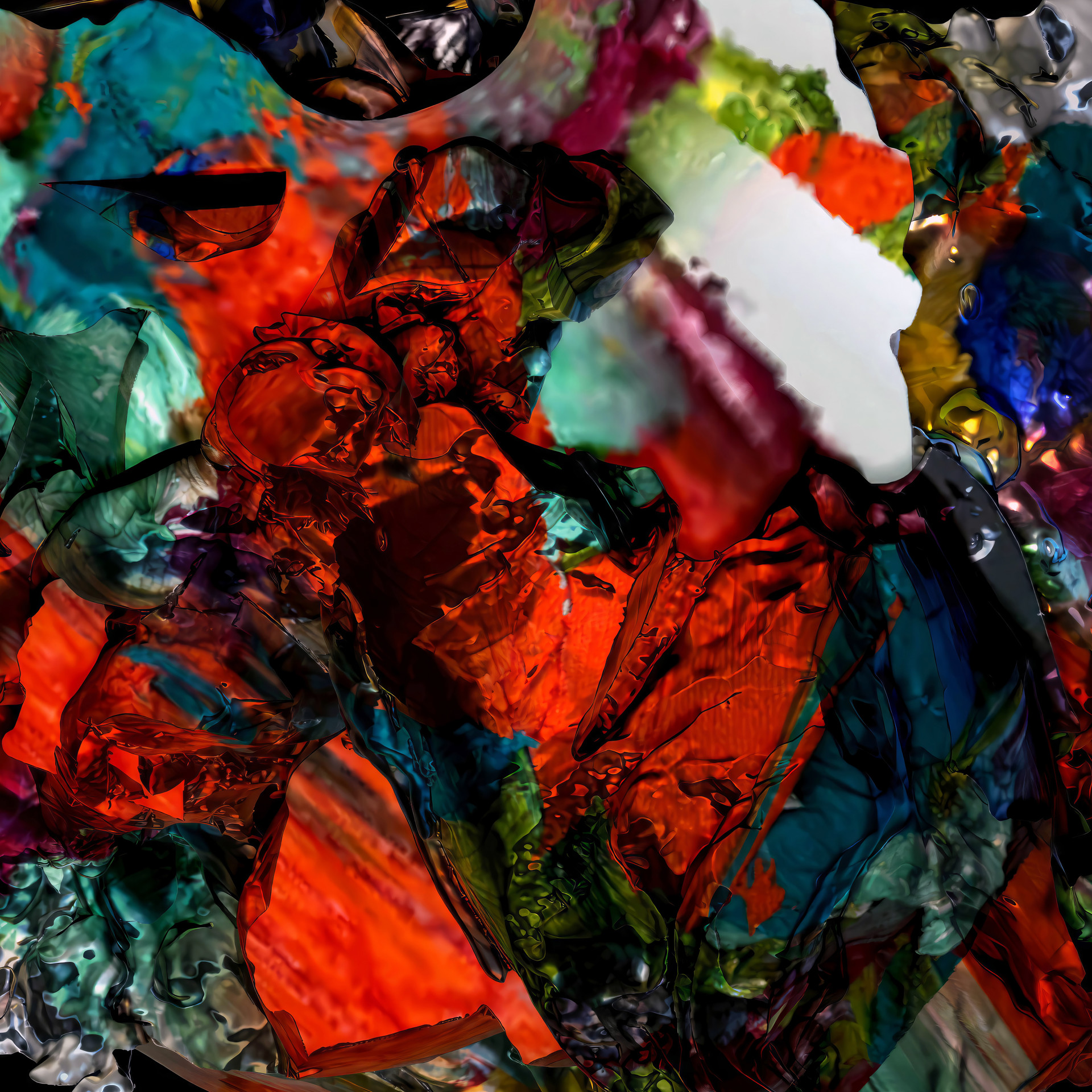
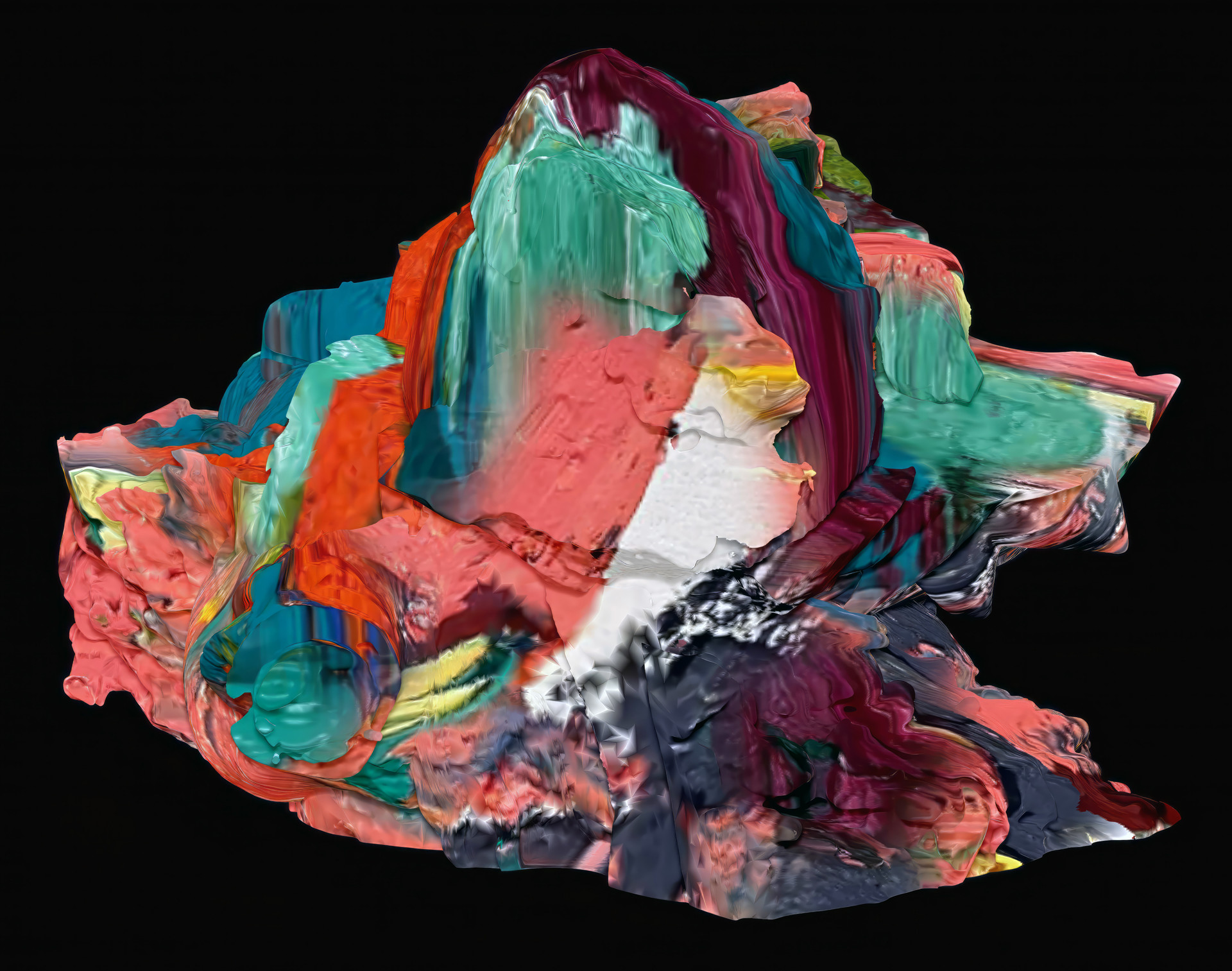
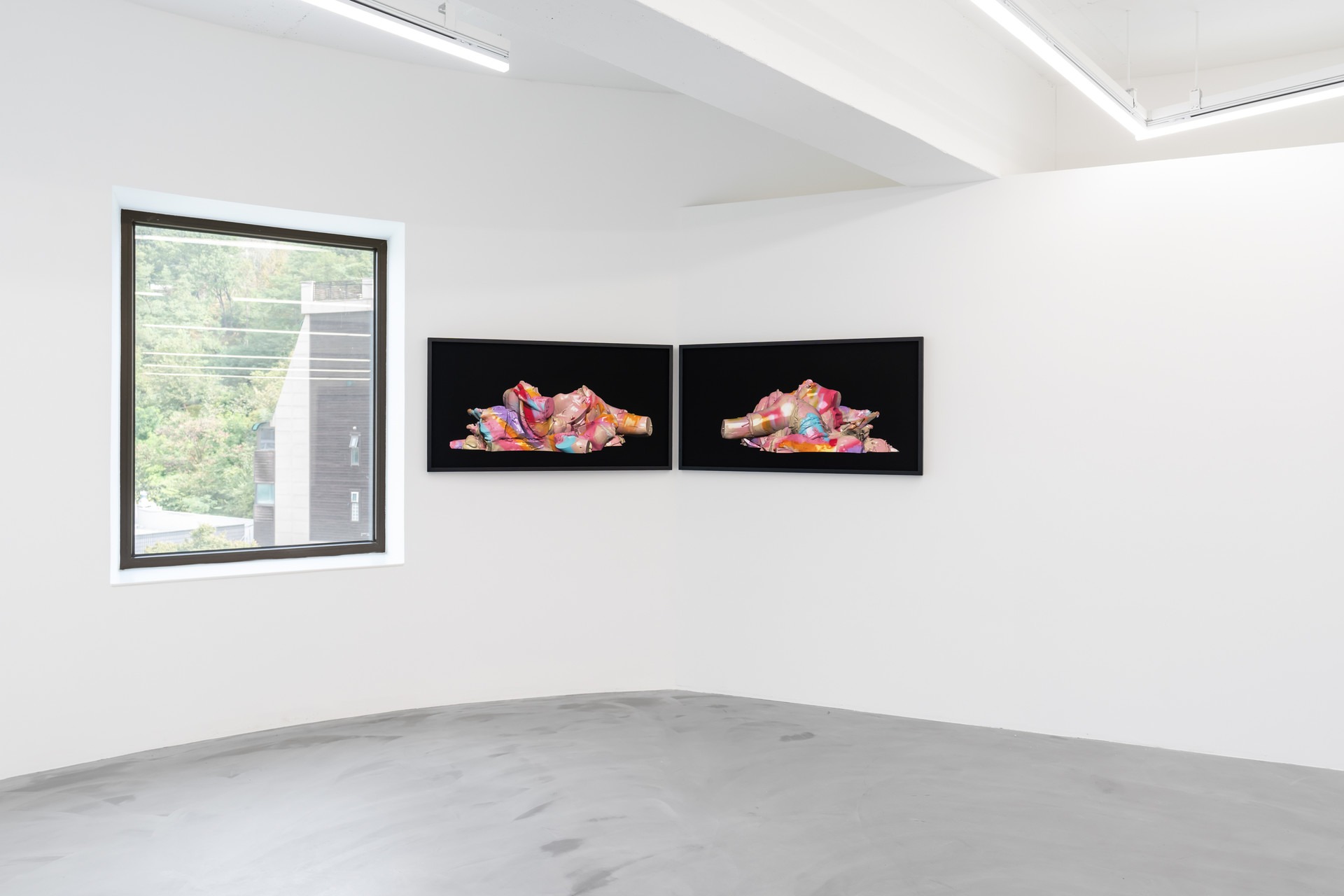
Silhouette Coordinates is a contour formed by positional values set according to the heights of coordinates, and an image constructed through the combination of abattis forms latent as invisible data values. It exists before us as a flat image, while at the same time existing in the dimension of three-dimensionality generated by coordinates.

In other words, within today’s media environment, the dimension of volume produces a concept of “three-dimensionality” entirely different from our experiential reality, proposing the space of “another sculpture.” This serves as a conceptual ground on which Lee Byungho can further develop his inquiry into sculpture, and specifically into figurative sculpture.

In particular, because of the gap and limitations between the three-dimensionality of sculpture and the visual condition of our eyes, what appears to us as a volumetric form in data is in fact the operation of a sculptural vision manifested in an abstract space established by infinite coordinate values. The visual condition that Lee calls “vision touching coordinates” is explained as follows.

Installation view of 《Indistinct Vision》 © SPACE SO

Images are pulled and pushed by the grid of coordinates, functioning like material that is deformed along with volume. Therefore, a volumetric image composed of data with coordinate values is not merely a visual image. It is a sculptural image, because the very mode of its existence depends on coordinates, volume, and the topography of form.

The image does not lie flat upon a surface; rather, it follows the structure of the volume and acquires a new sense of mass. ‘Silhouette Coordinates’ refers to this kind of sculptural situation, produced as data and coordinates, color and form reflect and bend one another.

In this way, the ‘Silhouette Coordinates’ series proposes the concept of another environment in which sculpture unfolds. Here, Lee Byungho does not employ the conventional graphic method of unfolding the coordinates of an original three-dimensional form into flat UV coordinates and then applying color so that it fits the coordinate values of the volume.

Instead, he makes use of the unpredictable stretching and distortion that occur when color is placed directly onto the coordinates of XYZ three-dimensional space. In sculptures whose contours emerge through coordinates, applying color without using two-dimensional planar coordinates that wrap the three-dimensional image results in severe errors, yet these errors are reduced to key spatial indicators through which the “sculptural situation” becomes visible.

Just as sculpture in real space continues to generate distortion and optical illusion through the unevenness of its mass and the contrast of light and shade even when color is applied to its surface, the errors of coloration that occur in volumetric data likewise become aesthetic suggestions that reveal the “sculptural situation.”

Accordingly, the artist’s interest in the concept of how volume is perceived and manifested produces a sensory circulation between reality and the virtual, ultimately converging in both spaces as the “indistinct vision” contained by sculpture. Lee Byungho’s work begins with an awareness of the origin of figurative sculpture, passes through a Rodinian transformation, and expands into data-based space grounded in the properties of sculpture itself. These are all trajectories pursued through their own consistent plans, and when unfolded, they form a single lucid map.
His map stems from an attitude that seeks to make sculpture into an ever-evolving tense of the progressive form. In this sense, 《Indistinct Vision》 marks the point where the completion of an earlier trajectory intersects with the beginning of a new one. The question of how far sculpture can proliferate and grow suggests that he understands sculpture as an indefinable organic being. His sculpture continues endlessly to expand and to emerge.

References