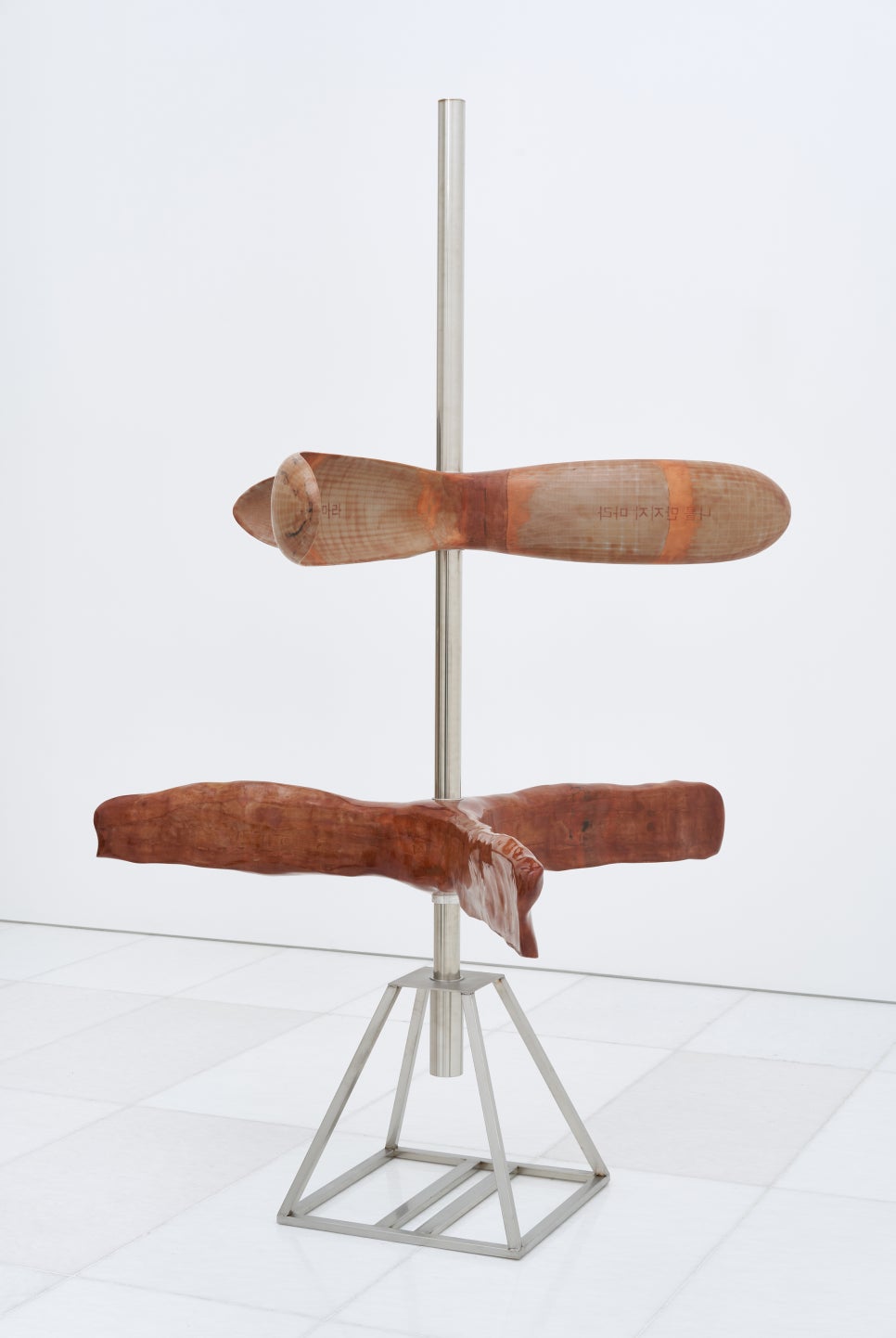
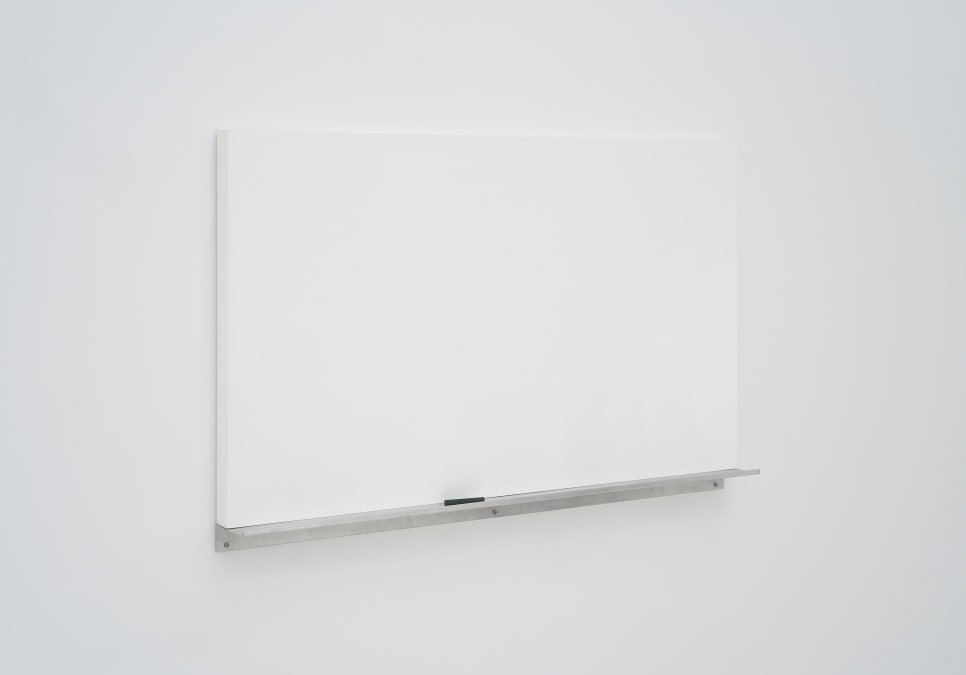
“Change is a concept that presupposes time, and honestly, I don’t really like that.” Yet artists are beings possessed by the compulsion that they must change, that they must renew themselves. “I don’t want to renew myself. I don’t like the idea of becoming new every time I make a work or prepare an exhibition, either. Rather than changing, it may simply be a matter of showing what has changed.” What is this? This feeling of being betrayed. And yet, at the same time, this exhilarating feeling that makes me want to cheer him on.
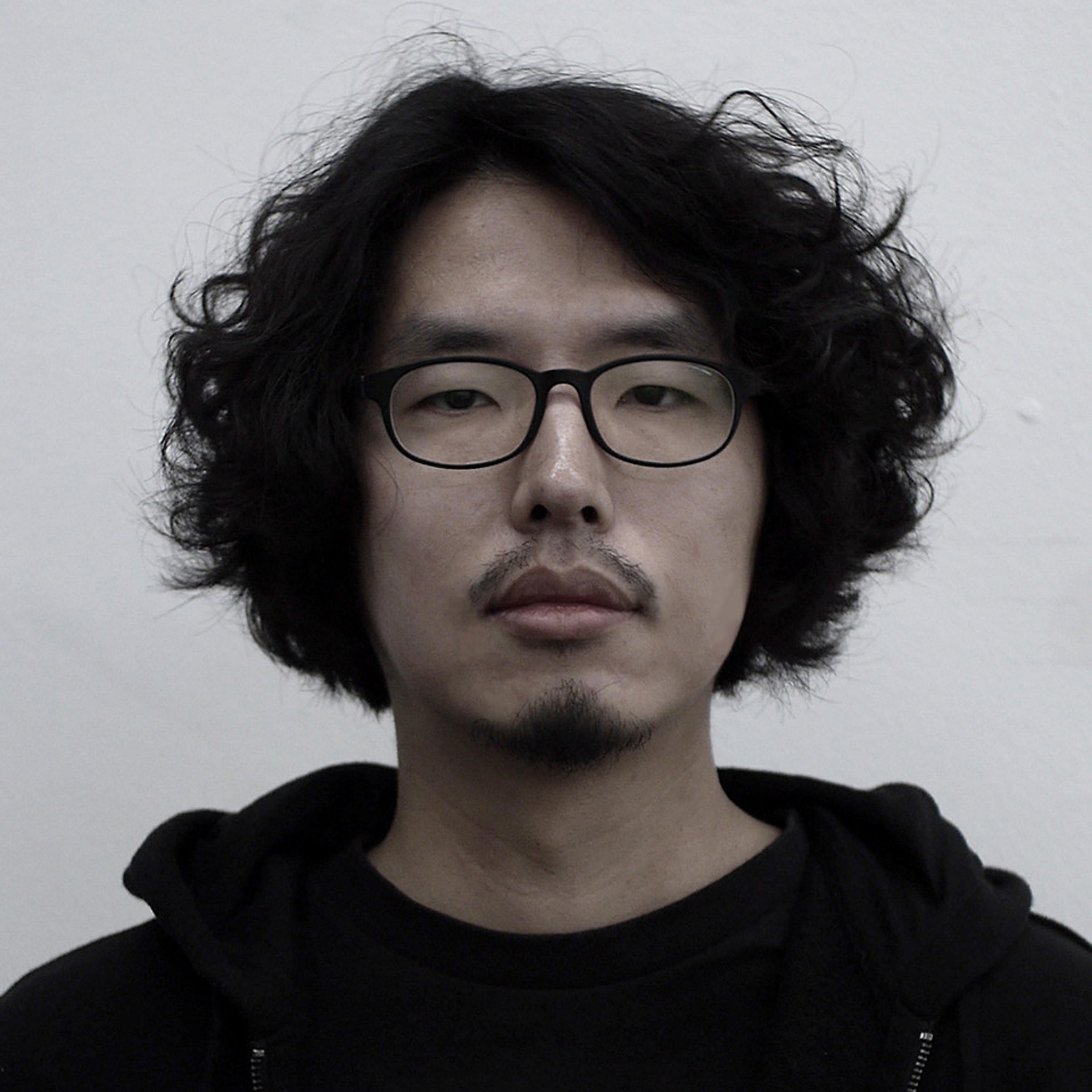
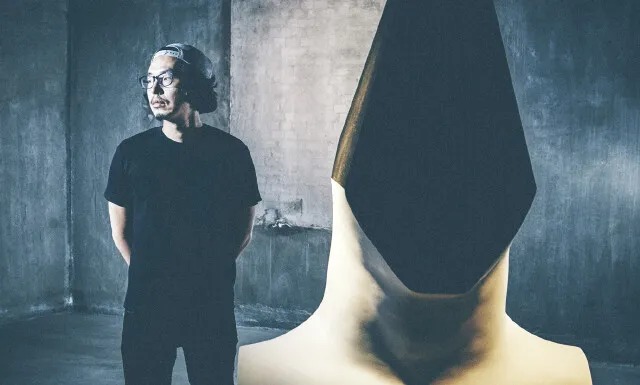
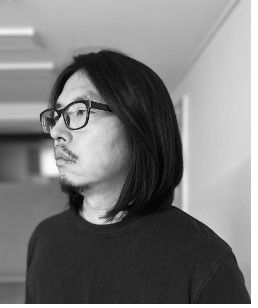
Inbai Kim is thin. He is not particularly tall, either. Maybe around 175 centimeters. I used to imagine Kim’s sculptures being taken out of his body one by one. Kim would open his own body, pull the works out, and then close himself up again. It makes no sense. It is simply the impression of a poet (for those of you who may have forgotten, let me remind you: I am a poet).
Inbai Kim is a sculptor. He was born in 1978. I wanted to meet him. To be precise, I was curious about what he looked like. I imagined that he would be enormous. Because there were sculptures inside his body. I wanted to see for myself whether that was true.
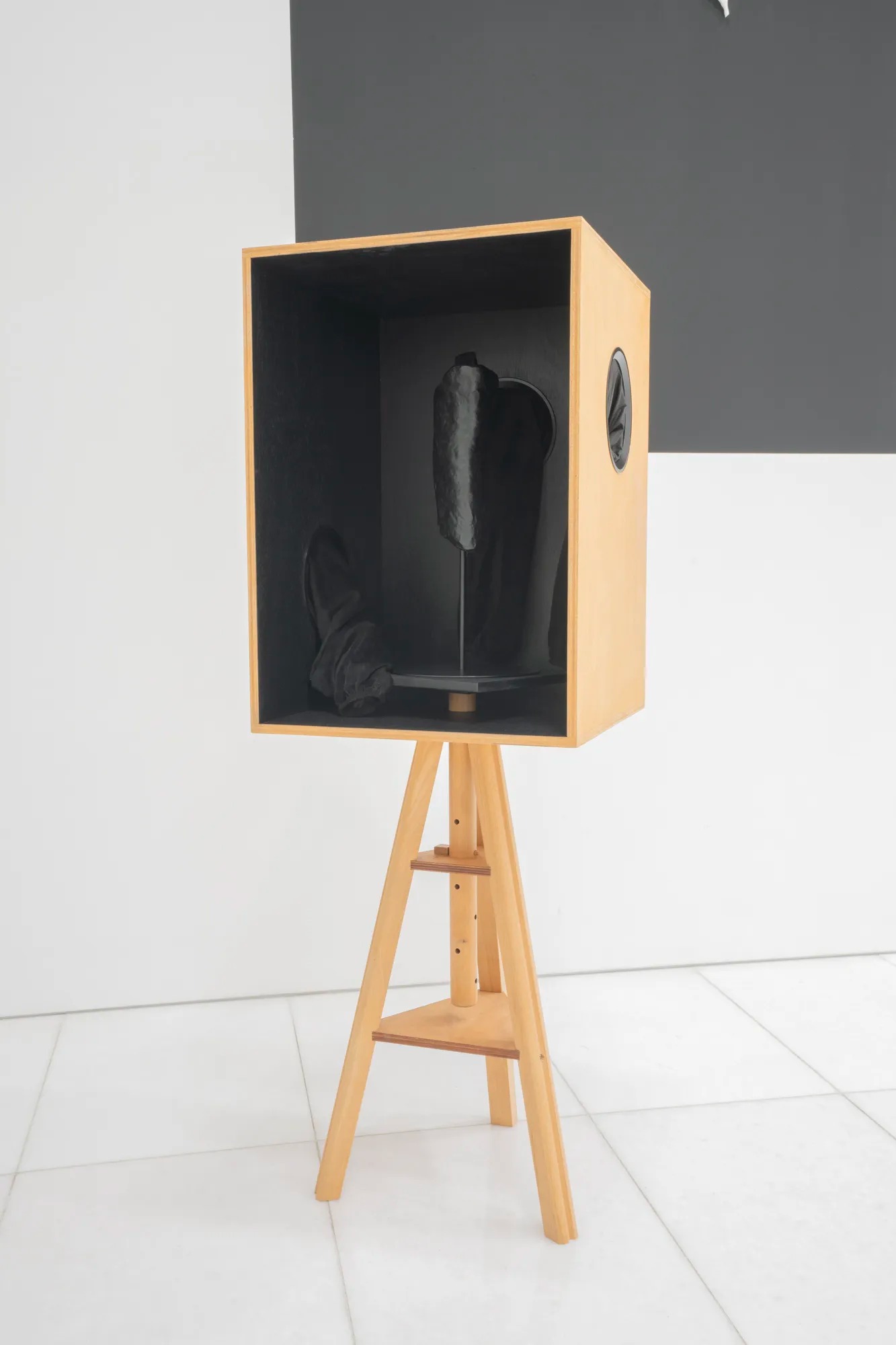
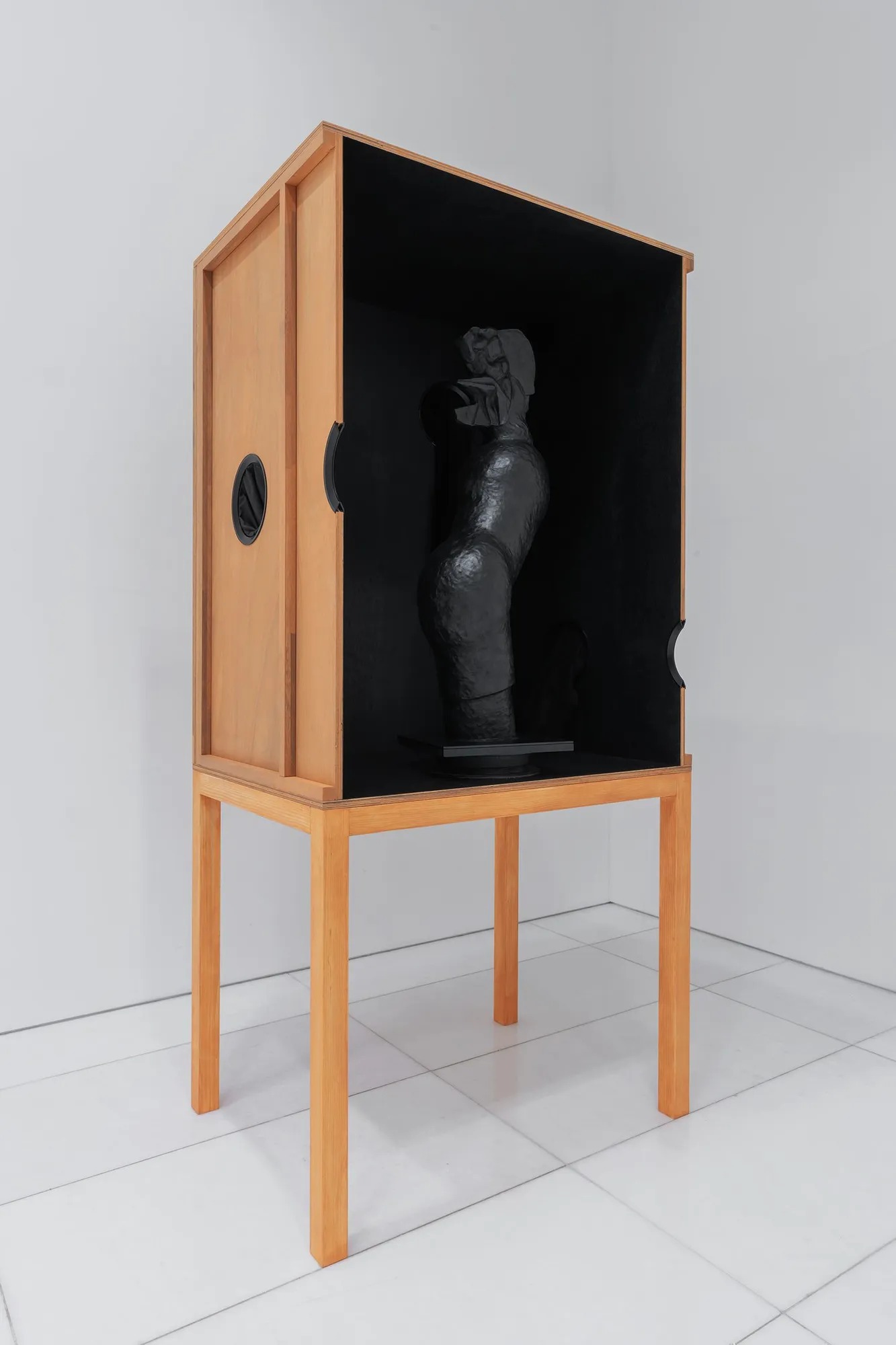
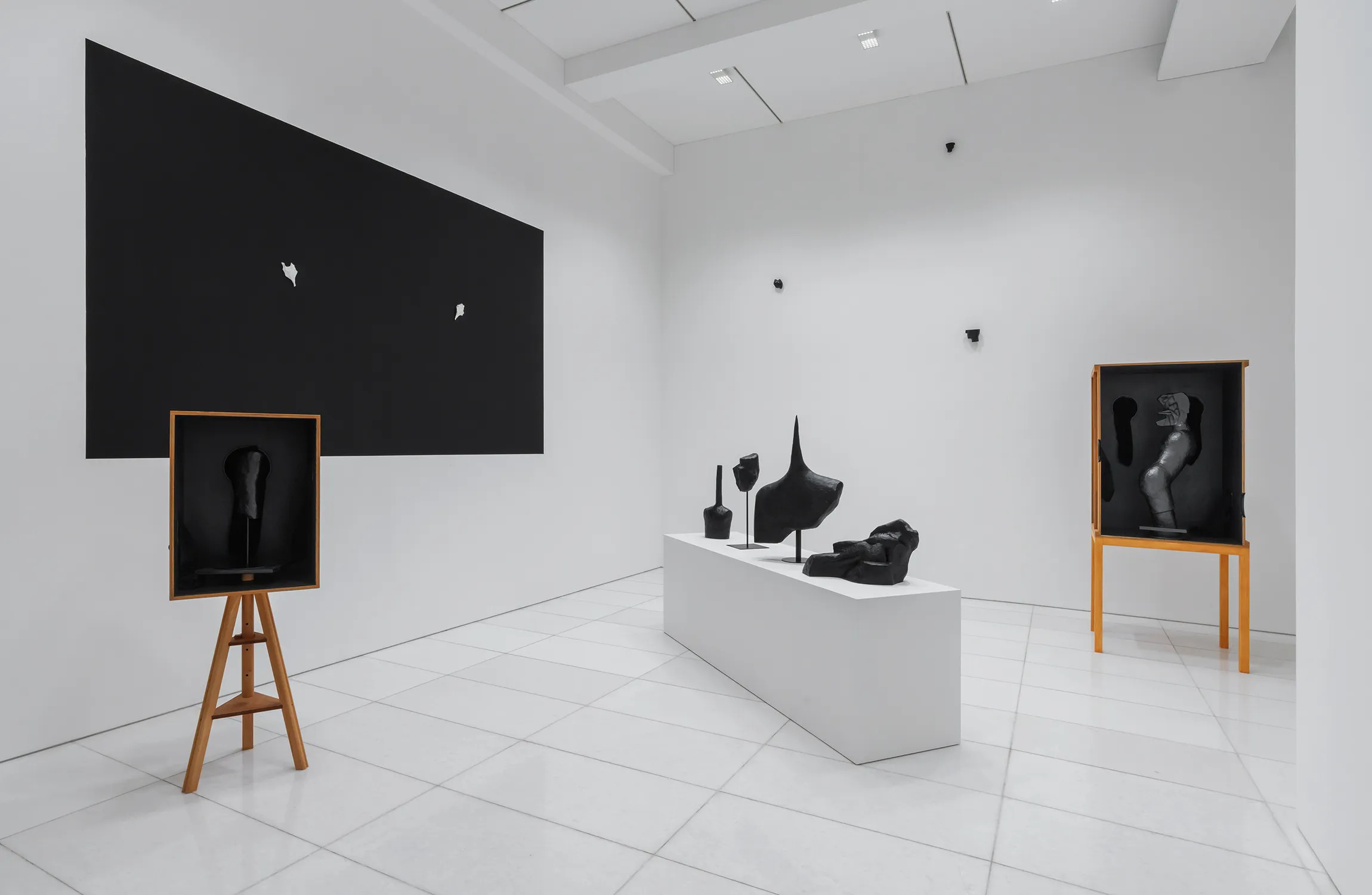
He is a sculptor. I bother to say it again because he draws—that is, he draws with a pencil. On what? He draws on paper. He draws on walls. He draws on sculptures. He draws, then models. He models, then draws. If you look closely at his sculptures, you can find traces of pencil drawing.
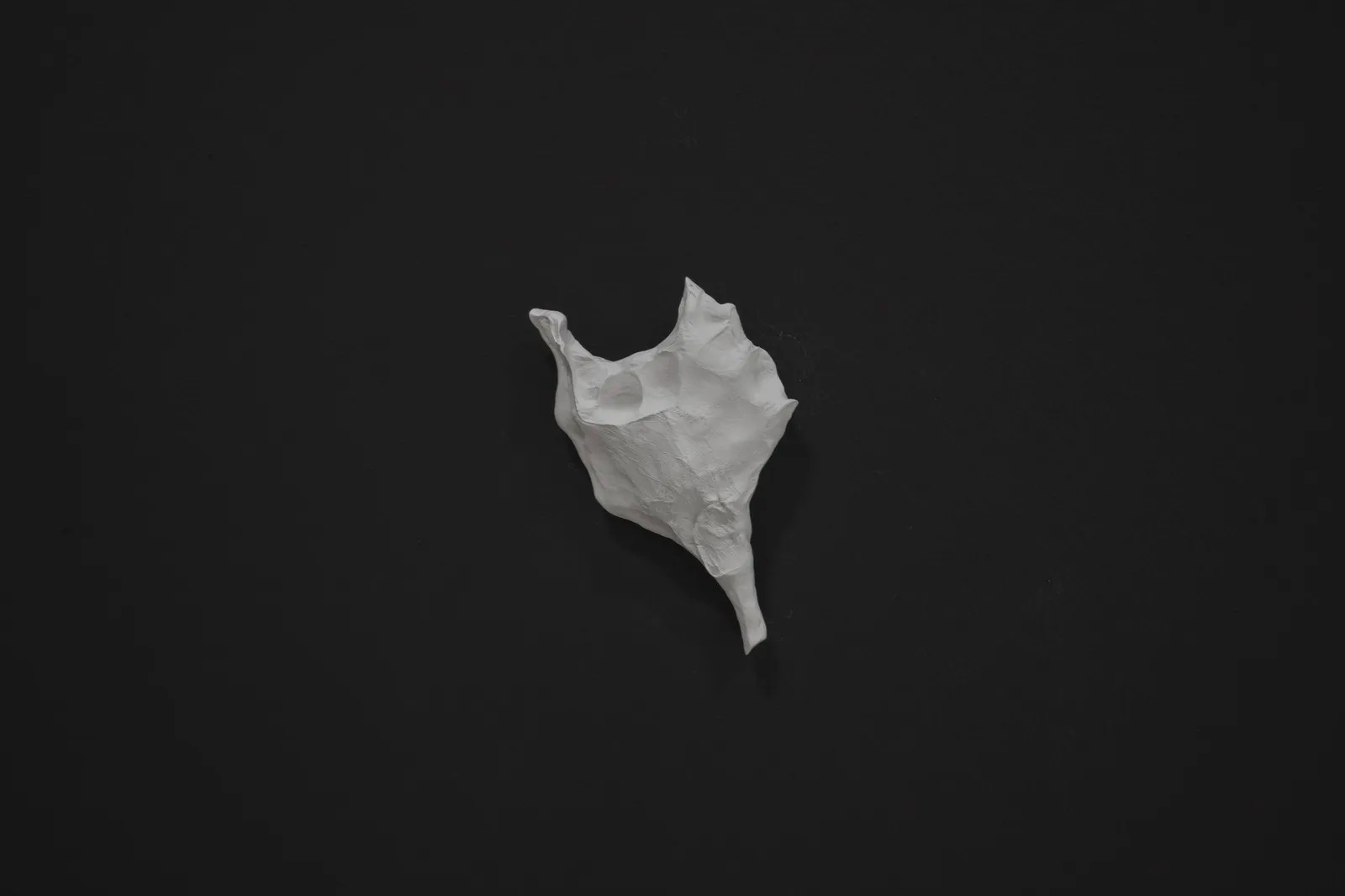
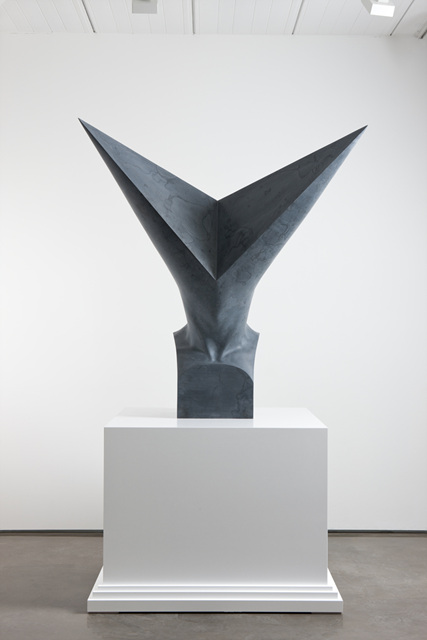
He made sculptures that seemed to bring unfamiliar things together. Then he began leaving things out. Eyes, nose, and mouth, for example. Without eyes, a nose, and a mouth, it is neither human nor animal, is it? Then what is it? Once things were omitted, the door to imagination opened. This is the point in Inbai Kim’s work that I keep holding onto. I want to discover my own poetry through his work.
I heard that a collaborative exhibition by Inbai Kim, the rock band Ankle Attack, and the artist group Joketta Project was being held at ARARIO MUSEUM Dongmun Motel II in Jeju. It sounded full of youthful energy. I got on a plane. To meet the enormous Inbai Kim. To see whether sculptures were really sloshing around inside his body. But Inbai Kim turned out to be small. Thin—no, even delicate—and with his permed hair, he even looked pretty.
Inbai Kim, not burly in the slightest. Still, I did not let myself be flustered and behaved naturally, as though I had always known that this was what Inbai Kim was like. “You’re the artist Inbai Kim, right?” The café on the first floor of Dongmun Motel II was open to the outside, so noise came rushing in from the street. Kim spoke softly and slowly. I truly had no choice but to prick up my ears like a rabbit.
I imagined him opening his body, taking out his works, and closing it again. Sculptures that look human, but perhaps are not. “If there were no time, there would be nothing, but you could also say that everything exists.”
“Perhaps what is harder than change is coming to a complete stop.” He went on to say something more. I could not hear it. But I did not feel that we were failing to communicate. Later, after returning home, I sent him an email. I asked him a few more questions. I did not understand what he said. Take this answer, for example.
“Time, myself, and everything coming to a complete stop together. It is difficult, but I think there is a strong possibility that this is actually the more natural state. For time not to exist means there is neither cause nor effect, no logic, nothing at all, and yet you could also say that everything exists.”
Does the absence of time mean the “exclusion” of time? He is like a haze dispersing faintly into the air. And I begin to think there is little point in looking at the haze itself. I should look beyond it.
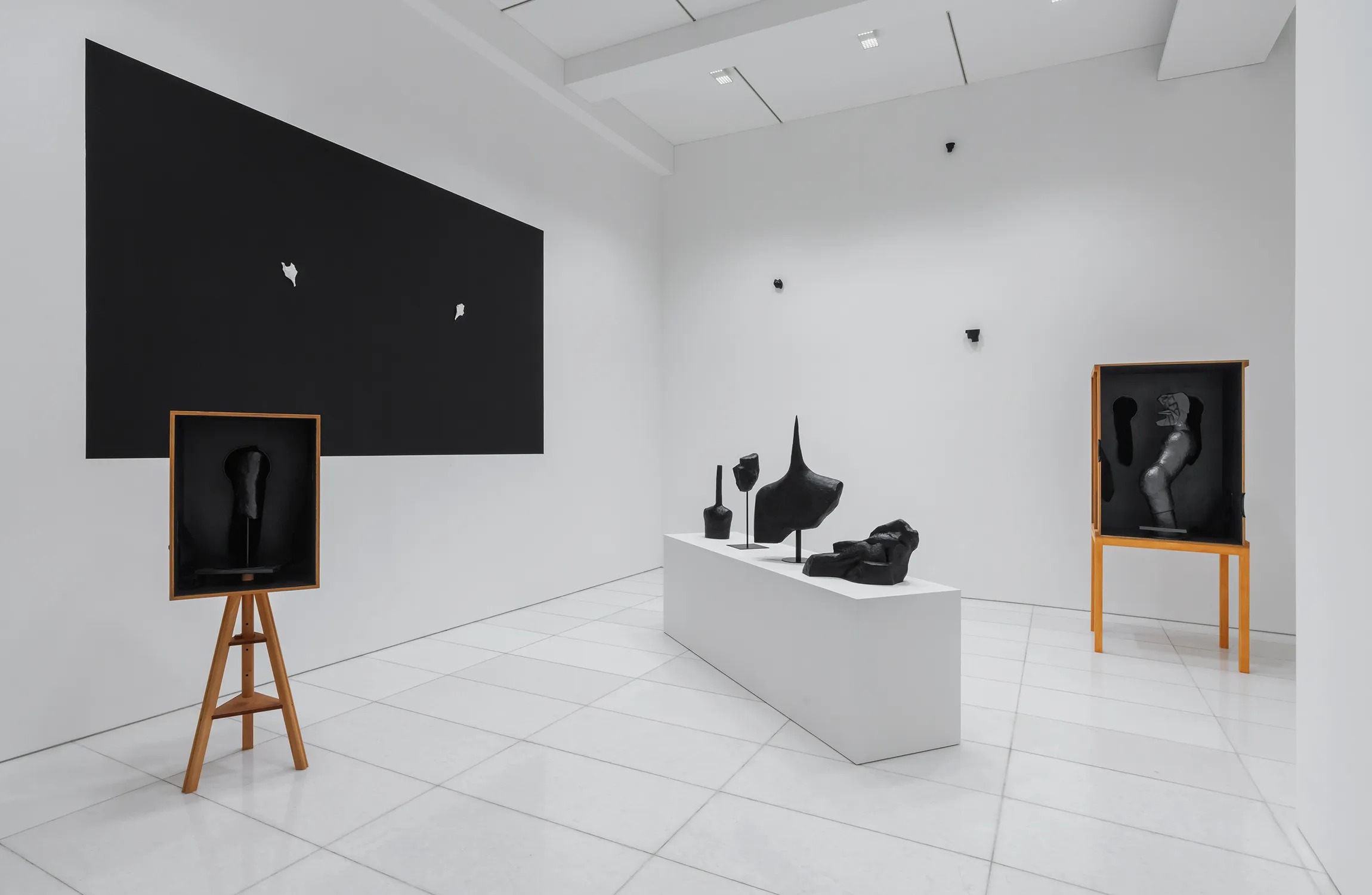
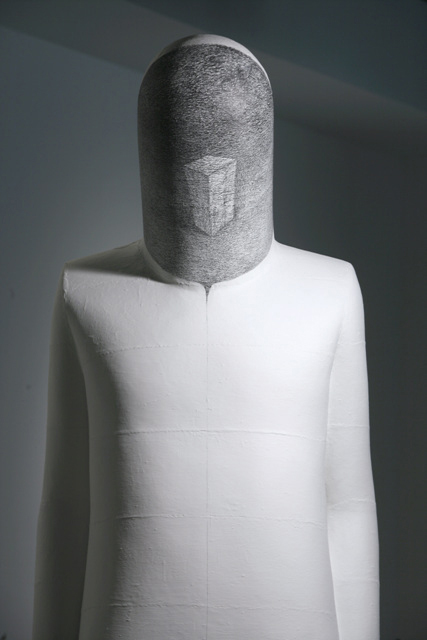
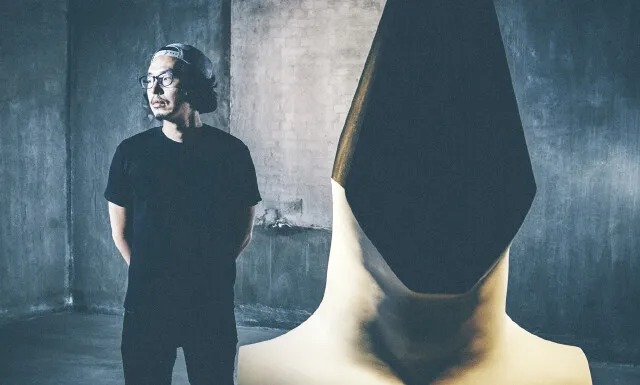
That day, I spent a long time looking at Inbai Kim’s works. I went back to see them again the next day. His works are installed throughout the fourth floor of Dongmun Motel II and in a small room on the fifth floor (this building really was once a motel). Two sculptures are displayed on the fourth floor. They are upper-body sculptures of the same form. They seem human, but perhaps they are not. Their faces are pointed. They have no eyes, nose, mouth, or ears.
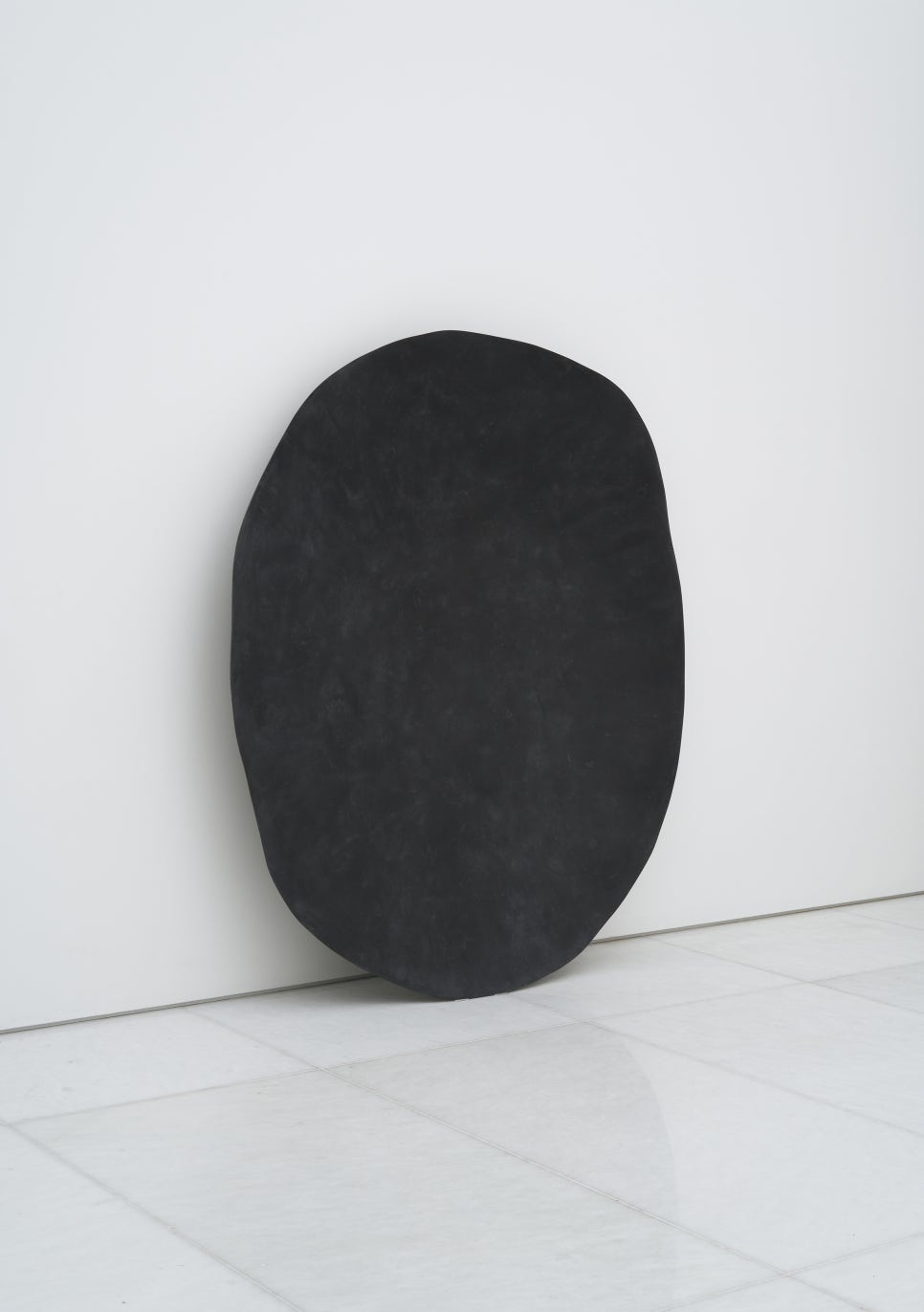
On one face, countless lines radiate outward from a single point. Drawn in pencil, of course. The other face has been covered entirely in black. With pencil, naturally. They are unmistakably works by Inbai Kim. The title of this exhibition is 《The Silent Syllable》. I found myself thinking that, for him, a silent syllable must be both sound and form. At the same time, I felt that within the context of the work he had built up over time, he was changing slowly and distinctly, almost as though standing still, like one scene following another.
“Questioning, dismantling, and recombining the points that constitute change will probably form part of my work.” Difficult, as expected. “I try to narrow my field of vision. I look only at whether what I am doing now is similar to or different from what came immediately before. What I can create through that process might be breathing? Rhythm? I don’t want to see the big picture. I think of it as bait.” He seemed to dislike being predictable, or having either himself or his work anticipated in advance.
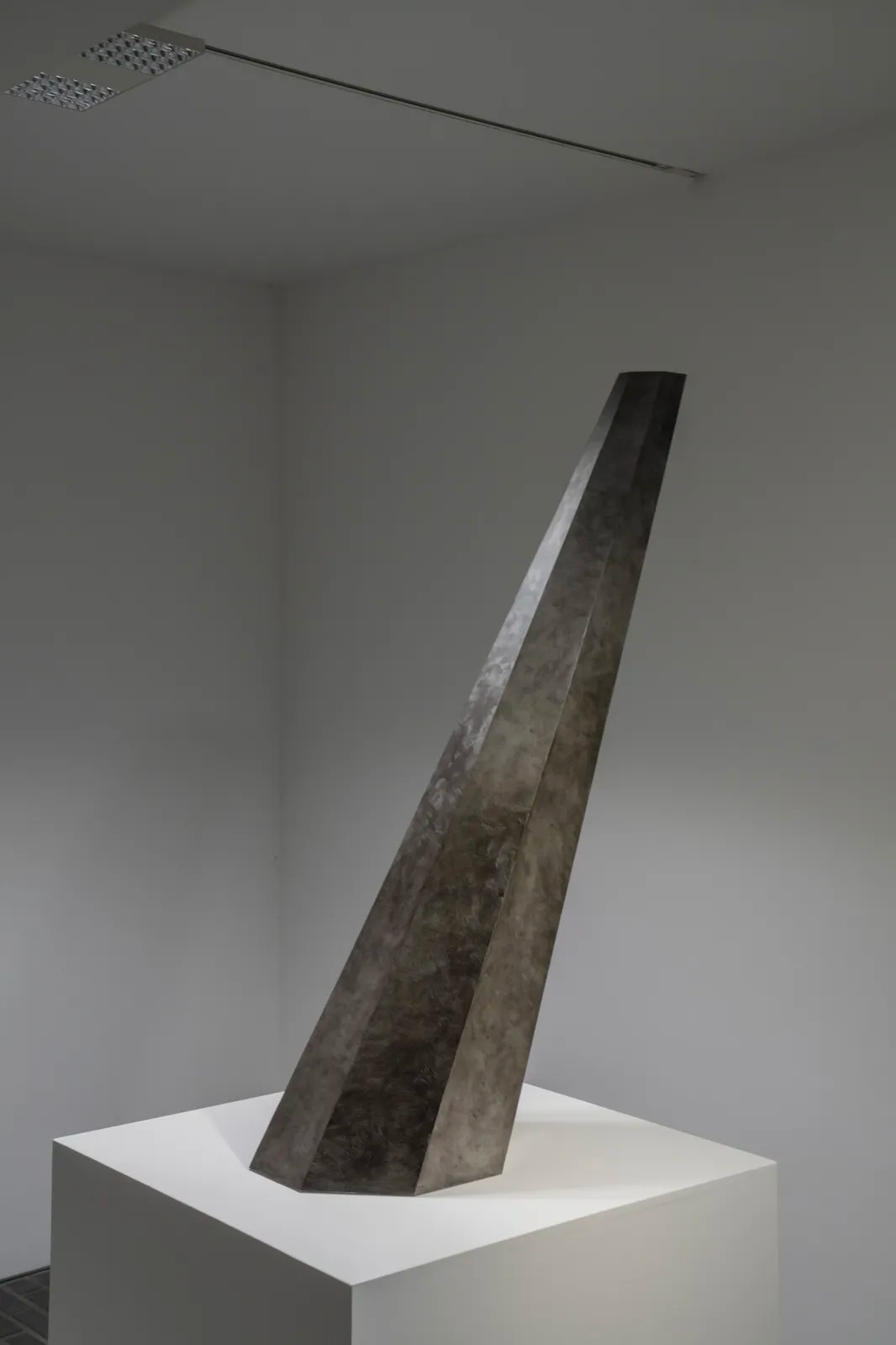
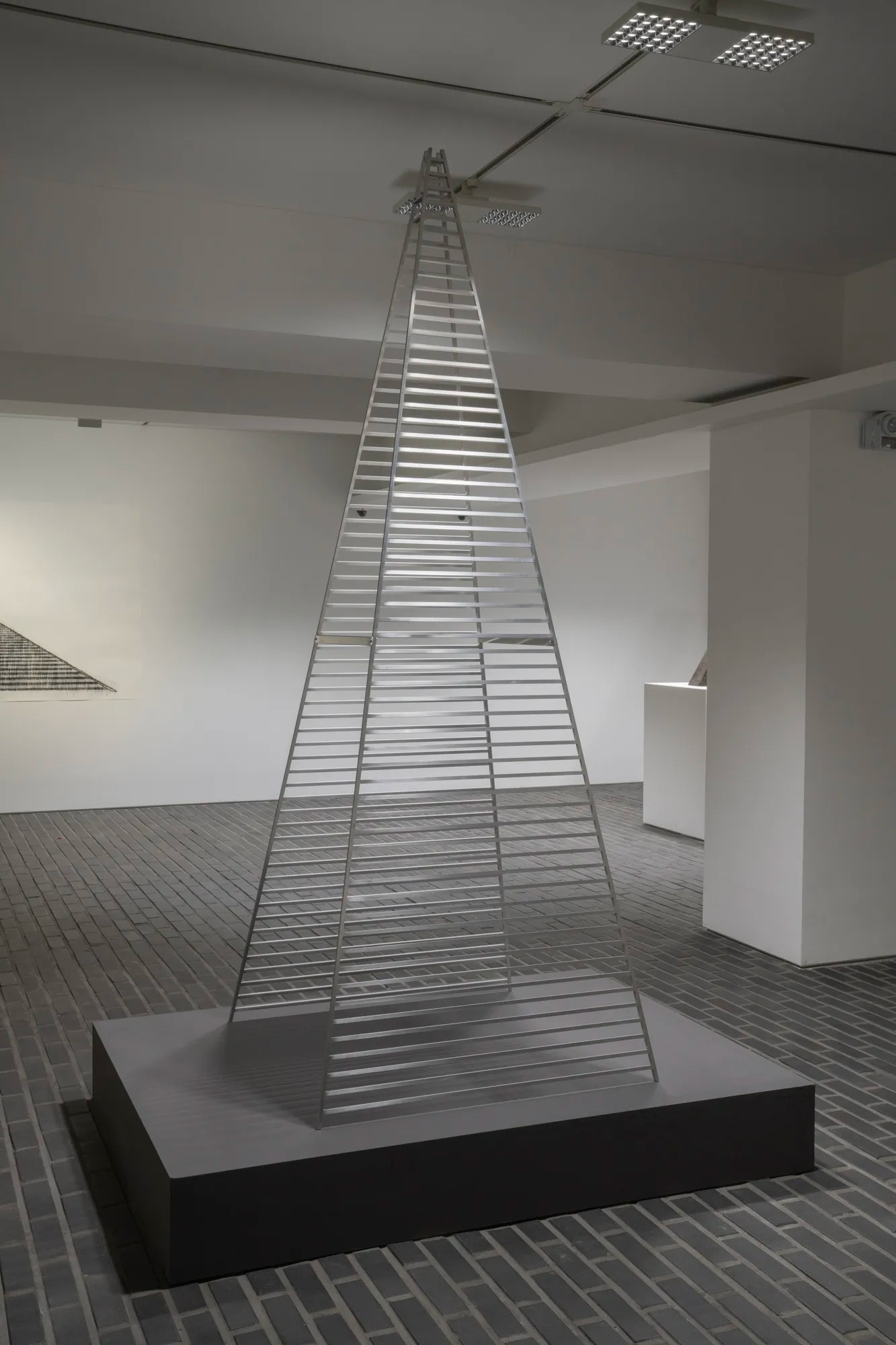
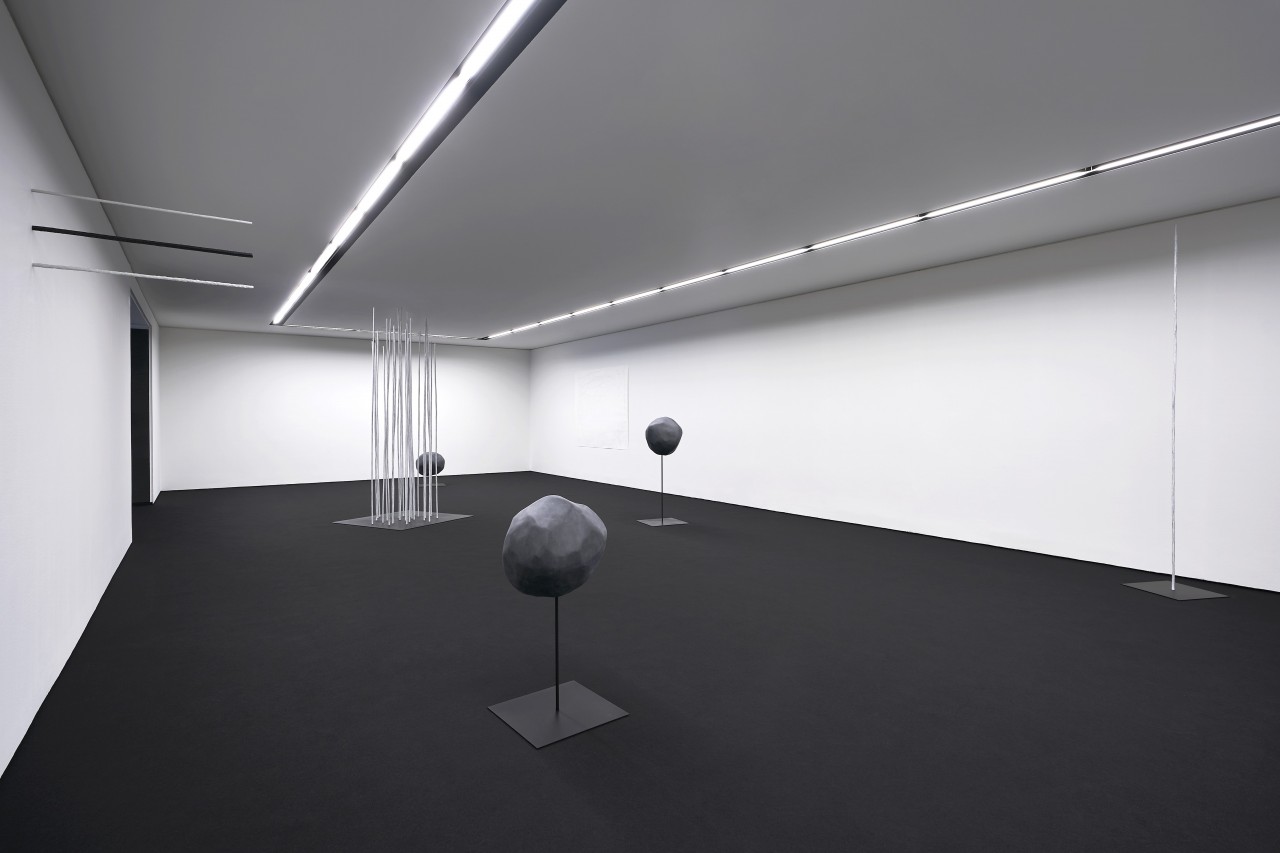
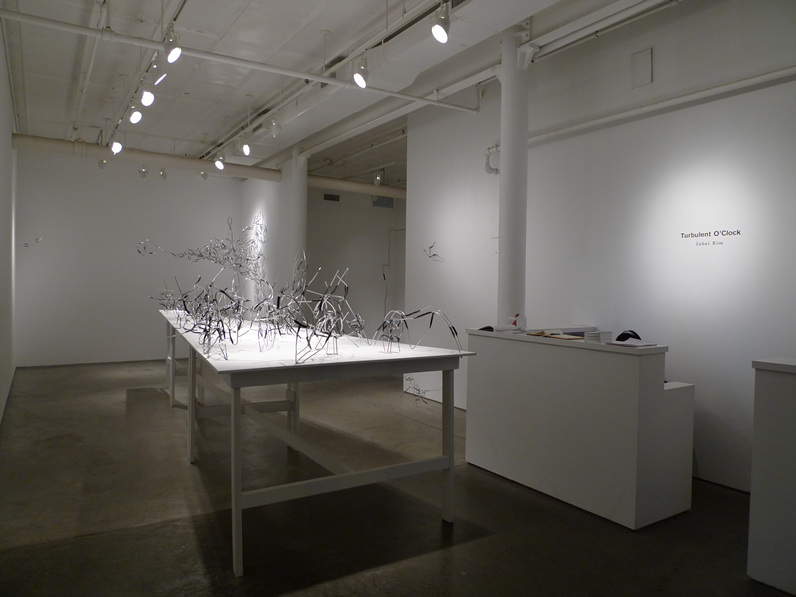
In the small room on the fifth floor hangs a work made of bent aluminum wire. They are outlines of faces. “It might be helpful to think of the work on the fifth floor as being like writing in terms of its forms, materials, and method of composition. In fact, I think drawing has qualities similar to writing as well. It has to be read. Its components are simple, but it has to be read. You feel it, but you also have to read it.”
I went back up to the fifth floor. To try to read it. The face sometimes looked like a profile and sometimes like a frontal view, and it shifted slightly depending on where the viewer stood. As I walked, I could even step inside the face. Had he made the entire body, I might have ended up inside Inbai Kim’s body.
I know why I felt as though Inbai Kim’s sculptures had been pulled out of his body. But I cannot explain it. And without explanation, it does not become a newspaper article. This is precisely where I think contemporary journalism distorts contemporary art. Most of the second, third, and fifth floors of Dongmun Motel II are occupied by works by his friends and fellow artists, Ankle Attack and Joketta Project.
“I often went to watch Ankle Attack as they composed and performed their music. I also knew well what kind of work Joketta Project was making. The exhibition has already begun, and the process of making the works is over, but the process of coming together, of influencing one another, is still ongoing. For me, at least.” Should I ask the artist to explain this process in concrete terms? Is it even possible to explain it?
I still believe that Inbai Kim must have pulled his sculptures out from inside his own body. He is too thin. But his body is his world, and that world may be vast or narrow, distant or vivid. I believe that his sculptures are among the countless parts that constitute his self. There are sounds that can be heard or seen without ever being pronounced. Could those, too, be called silent syllables?