For the artist, a portal signifies the possibility of encountering and opening another world through art, much as a scene encountered in everyday life can prompt one to imagine another dimension. However, because the other world the artist envisions is not a utopia inhabited by virtuality or conceptual speculation beyond reality, but rather something connected to points within reality itself, the portal is not unlike thinking through reality.
At the same time, it also reflects his consideration of his status as a sculptor, insofar as he revisits and reapplies his previous practices—from object installation to plaster casting and pigment research—while seeking new sculptural forms. The thematic concerns of his early work, which unfolded by transforming the modes of life created by subordinate subjects into object installations, are absorbed and condensed into the form of sculpture through the renewal of form; this exhibition reveals that journey as well as the sculptural changes he has newly encountered.
A Turn from Object Installation to Sculpture
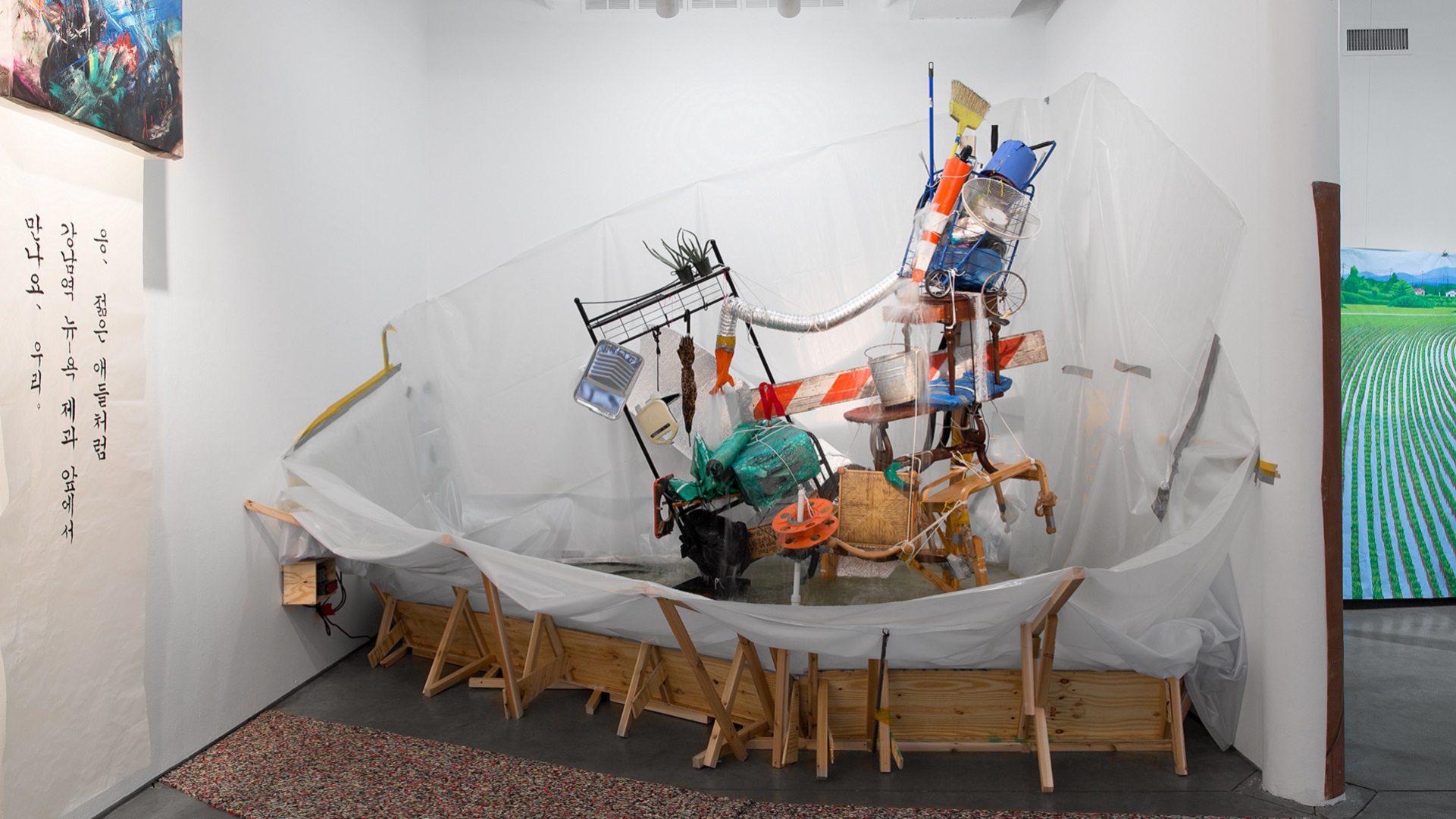
In the early stage of his practice, the artist captured scenes that appeared aesthetically legible to his eye—formative scenes created by people in everyday life—and used them as motifs for his work. The sensations glimpsed in the piles, bundles, and arrangements of things that people had stacked, placed, or tied together while living and working were closely bound to their lives.
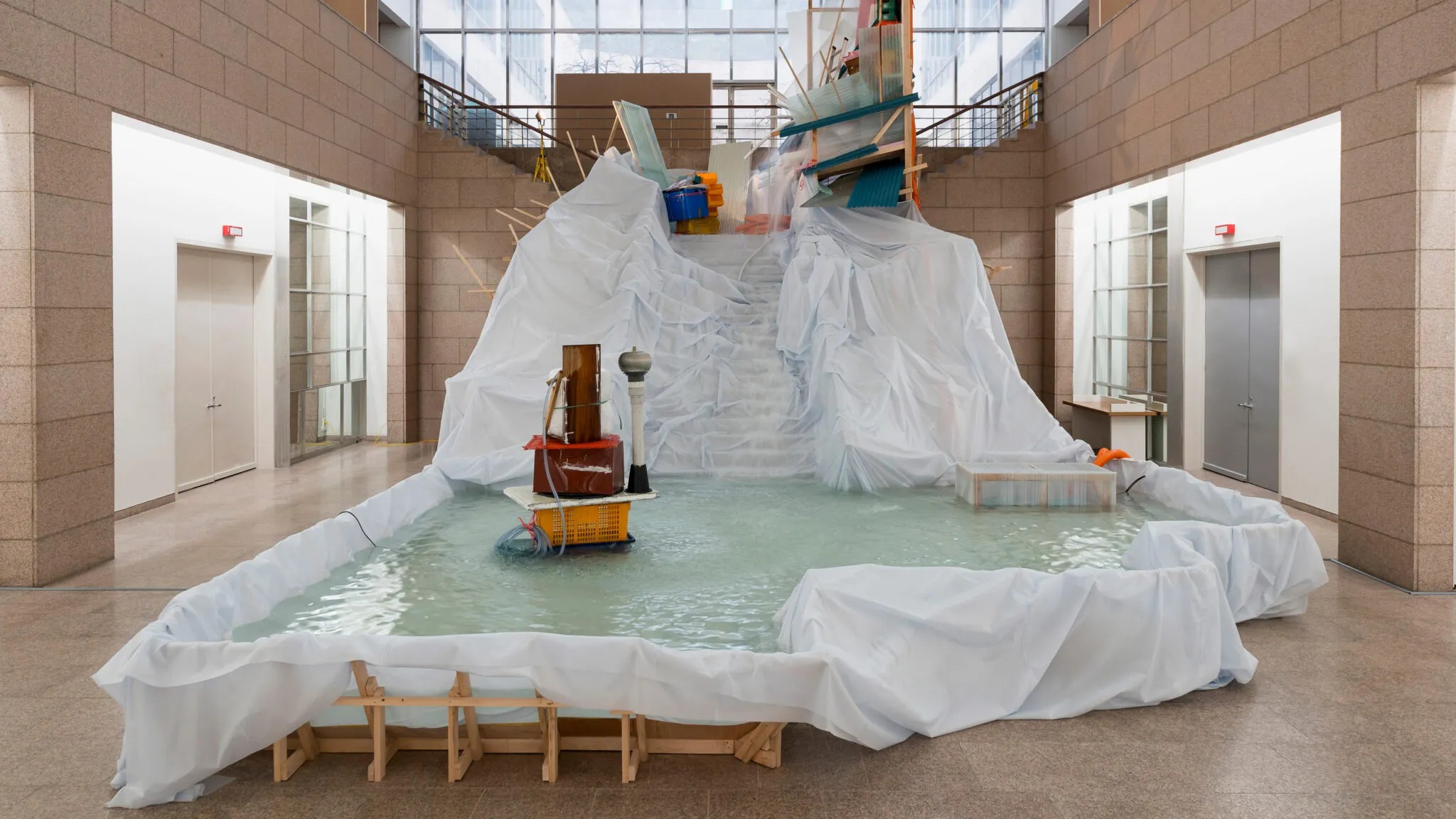
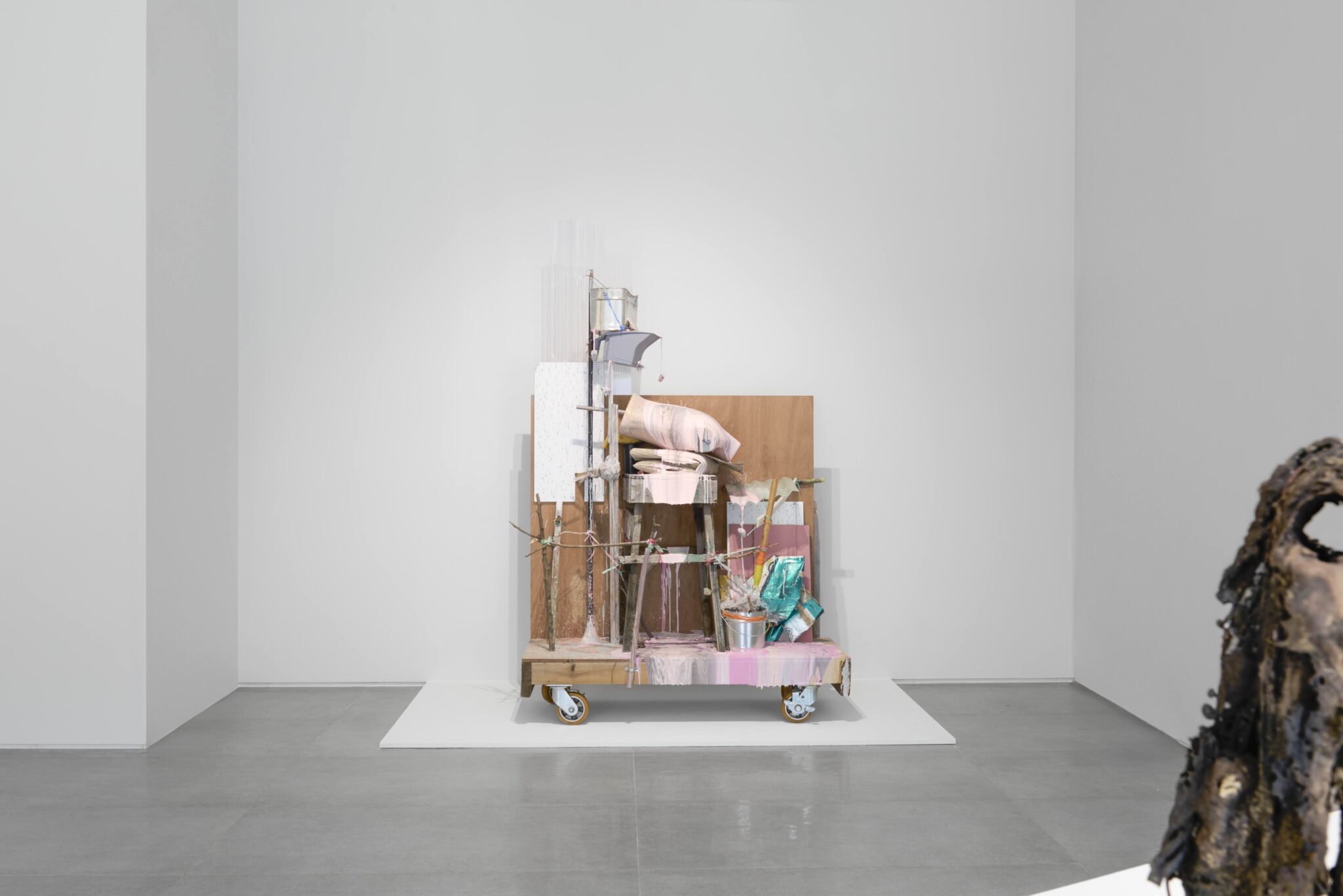
Works such as Buoy Light (2010) and the series ‘Waterfall’ (2011–) were grounded in his interest in and affection for particular people, but rather than directly representing those individuals, they focused on their attitudes toward life, their ways of living, and the structures of their lives. To this end, he brought into his work ready-made objects, worn by use and bearing the passage of time, creating object installations that empathize or resonate with people’s lived sensibilities through the associations among numerous things.
In this way, he built a kind of solidarity with beings who create their own modes of living even on an incomplete and unstable social ground, giving it form as something that does not collapse, or that endures, even within precarious structures.
According to the situation or subject, the artist has repeatedly produced many kinds of object installations, physically internalizing their order while also using them as opportunities for change. In other words, he moves away from a formative attitude dependent on objects and advances toward making things by hand through questioning his nature as a sculptor.
《Casting》 (2018) was an exhibition that marked such a sculptural turn by casting in plaster the objects themselves, as well as bodies and structures formed through combinations of objects. It sought to reveal whether the sense of life and accumulated time embedded in the objects could still be expressed sculpturally, even if they were unified and bleached within a plaster cast.
The objects become internal triggers for the sense of volume, weight, form, and surface texture of the plaster cast, and in place of the order once created by the collision and convergence of indiscriminate objects, a refined sculptural beauty emerges within the conditions and limits of what can be cast. Meanwhile, his recent experiments mixing chemical powder pigments with plaster include an intention to restore to the bleached sculptures the colors once held by the objects.
What Resembles Reality and What Does Not
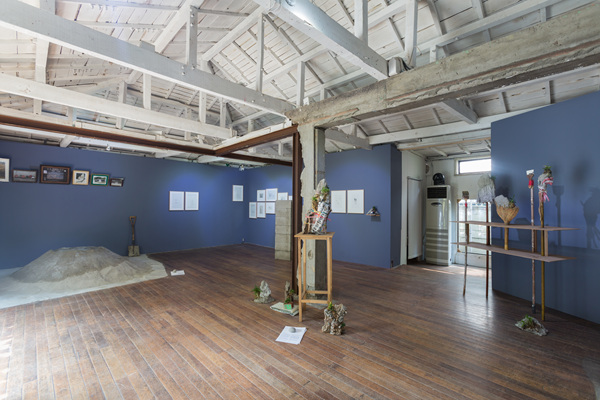
Through this exhibition, the artist seeks to visualize the portal and embody the results of his pigment experiments in sculpture. Revisiting objects and scenes he has cherished, and reexamining previous works, he extracts key elements to create two layers. One is an attitude of directly reproducing the scenes in which he felt the moment of the portal, and the other is an exploration of more abstracted form and color.
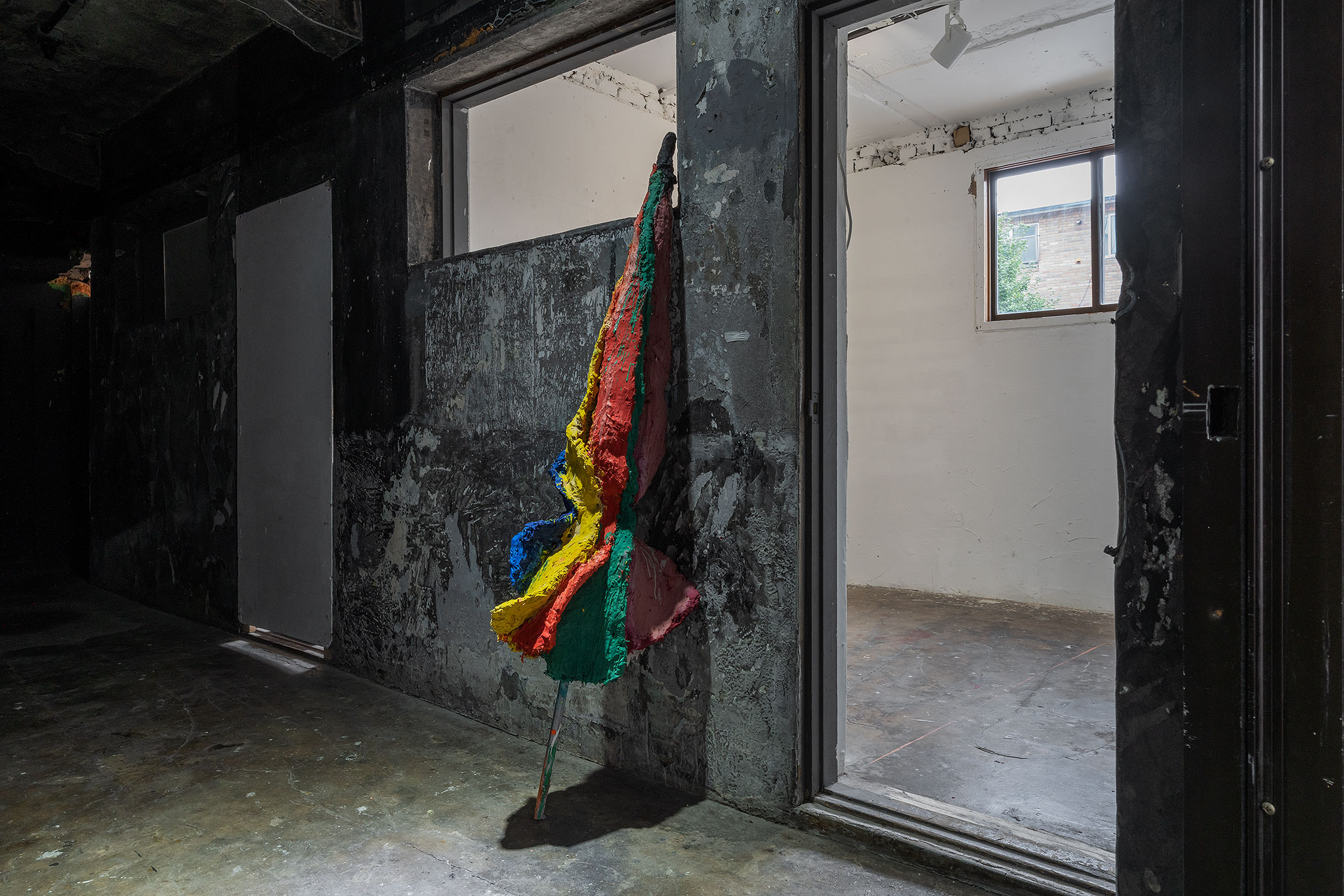
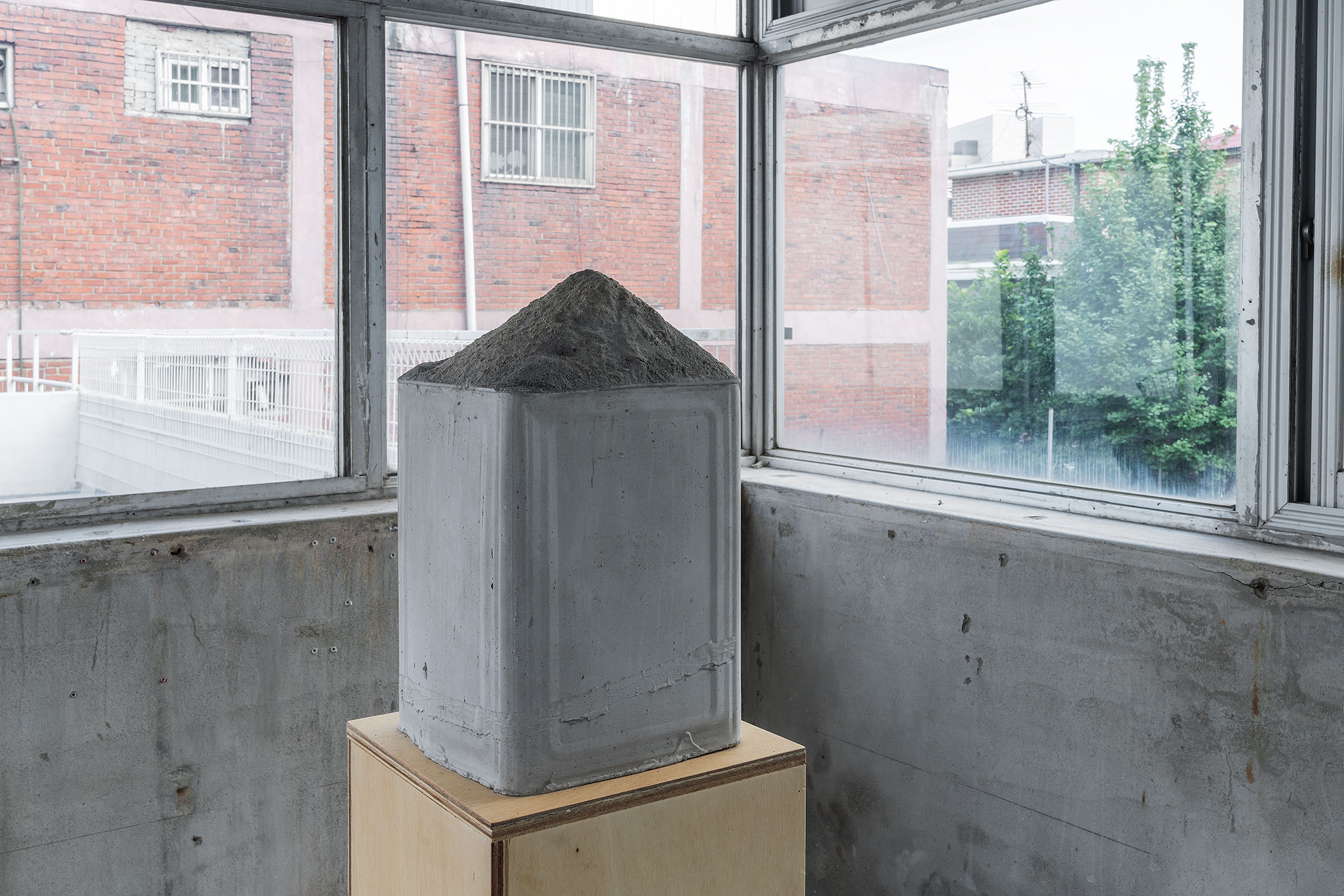
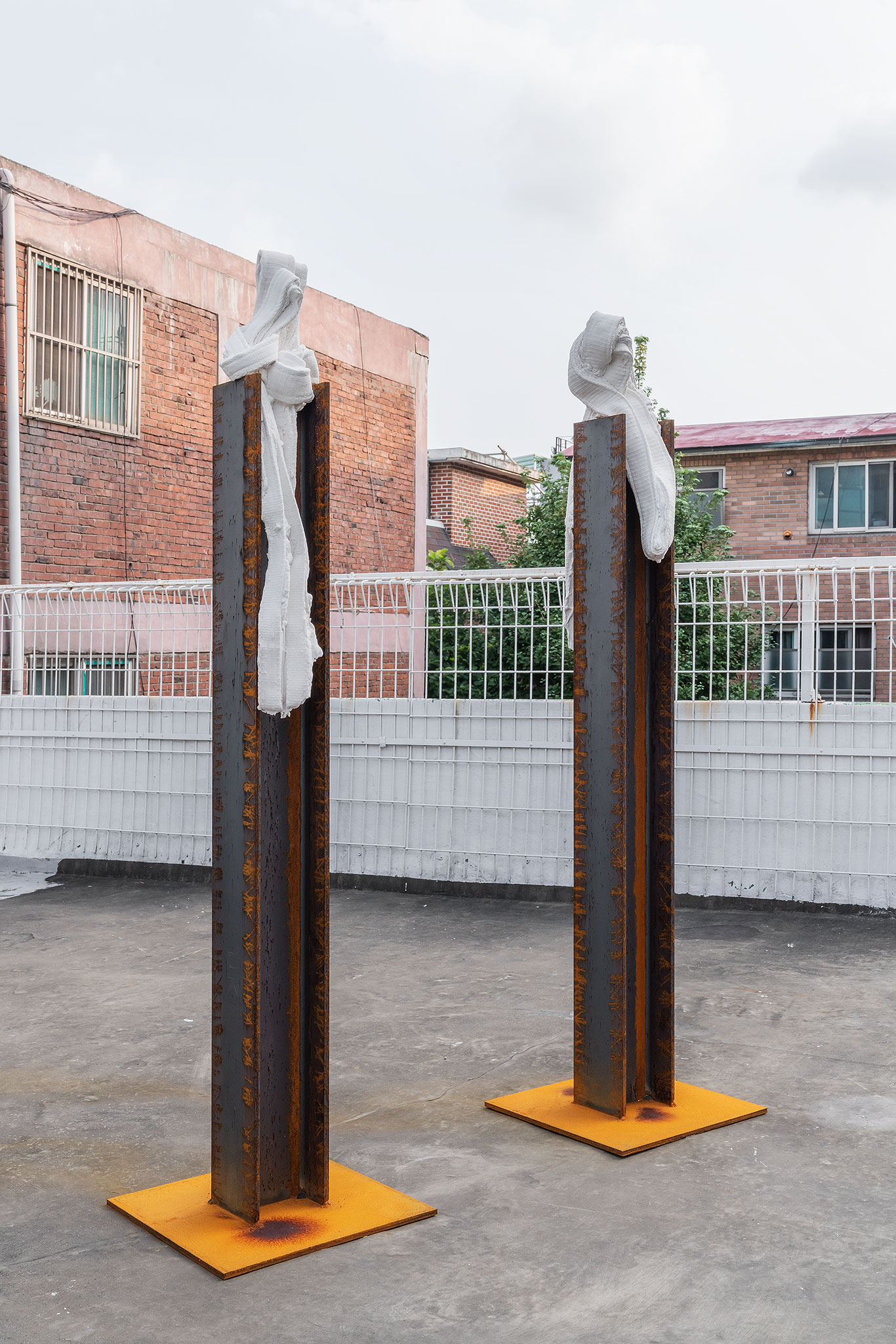
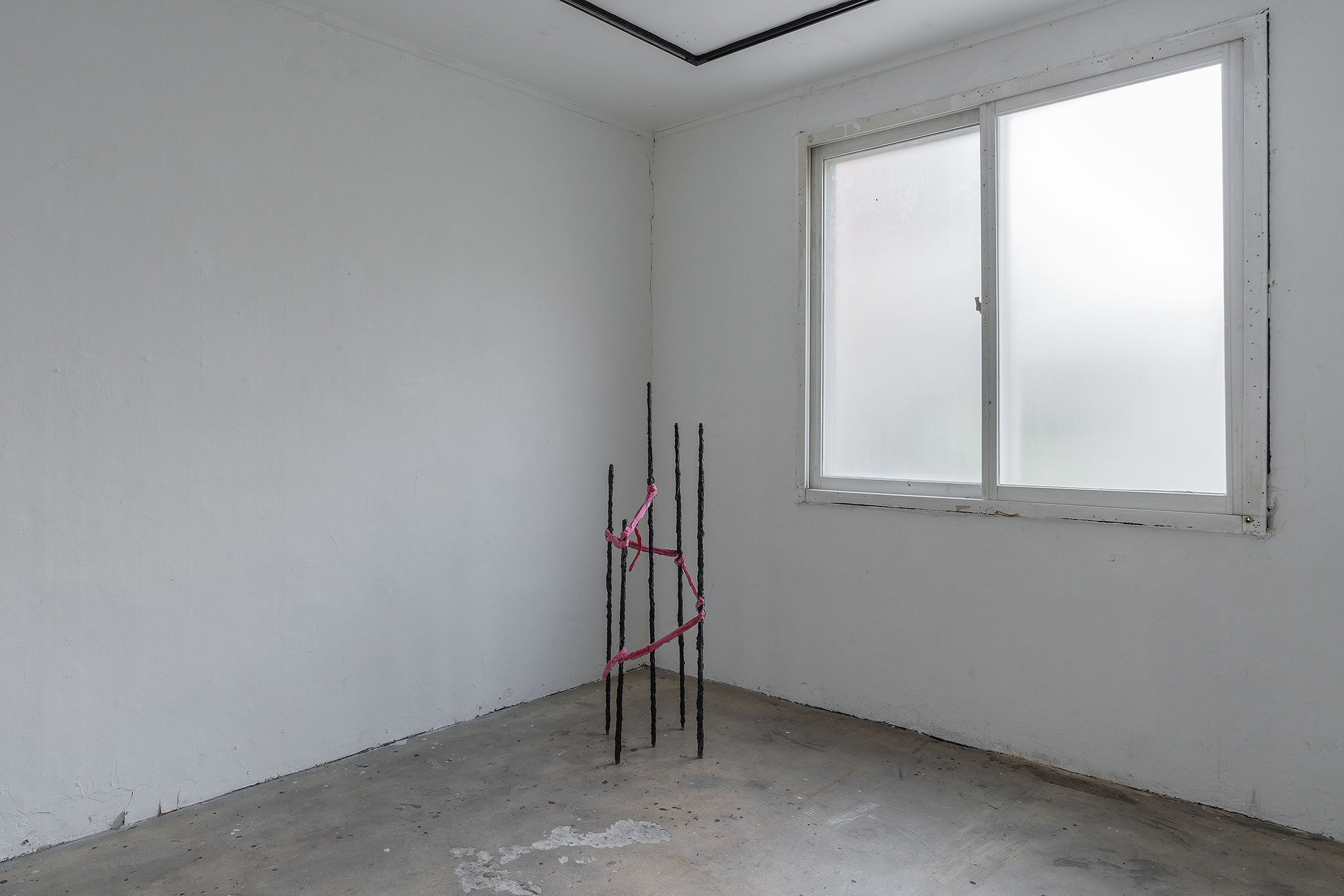
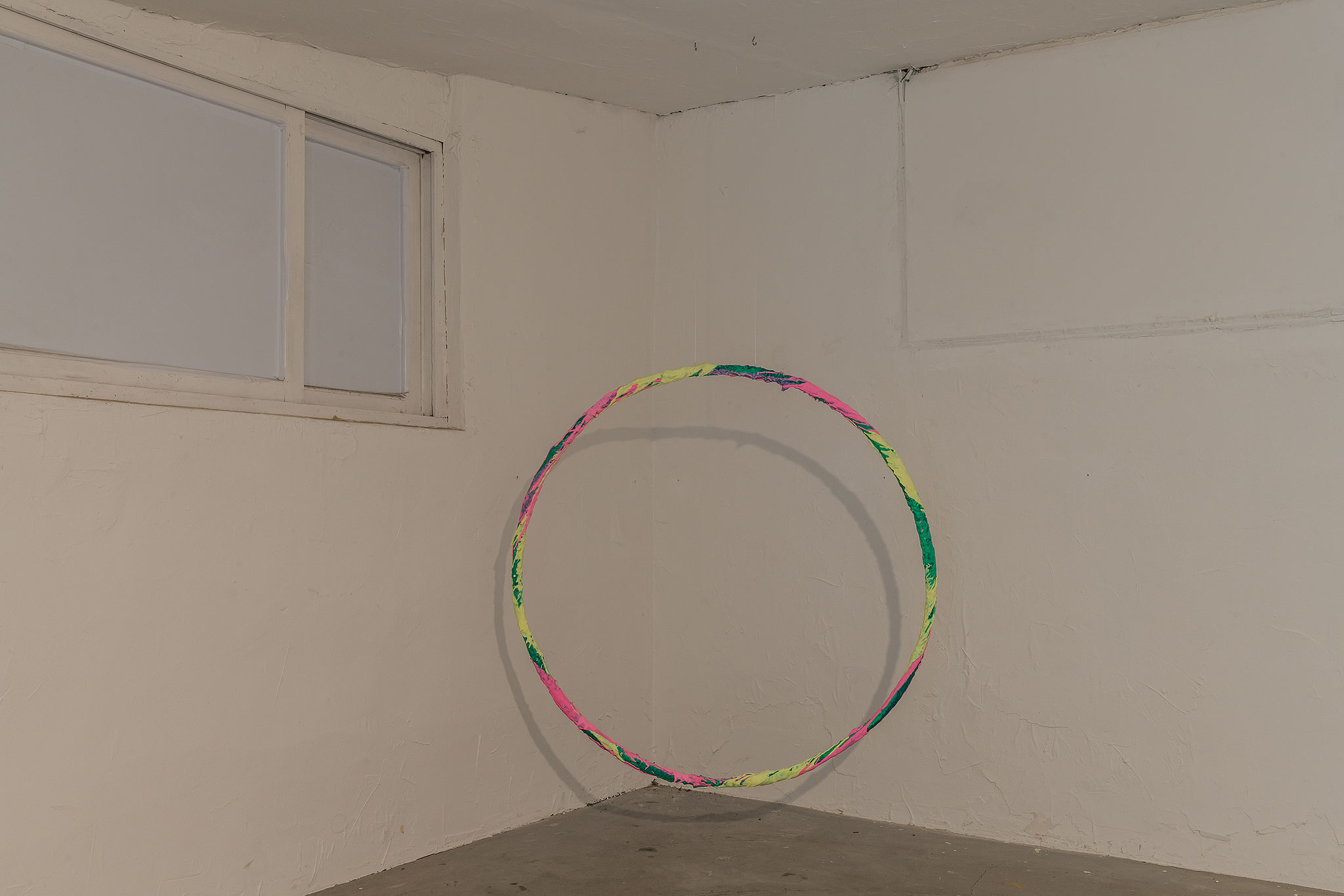
Scenes that people have made while working or in places of rest—such as a casually rolled-up parasol, a sling belt placed on an H-beam column at an ironworks, cement naturally hardened on top of a can, a loosely tied piece of twine on a metal rod, or a hula hoop hung up in a park for anyone to use—were all moments in which the artist experienced a portal.
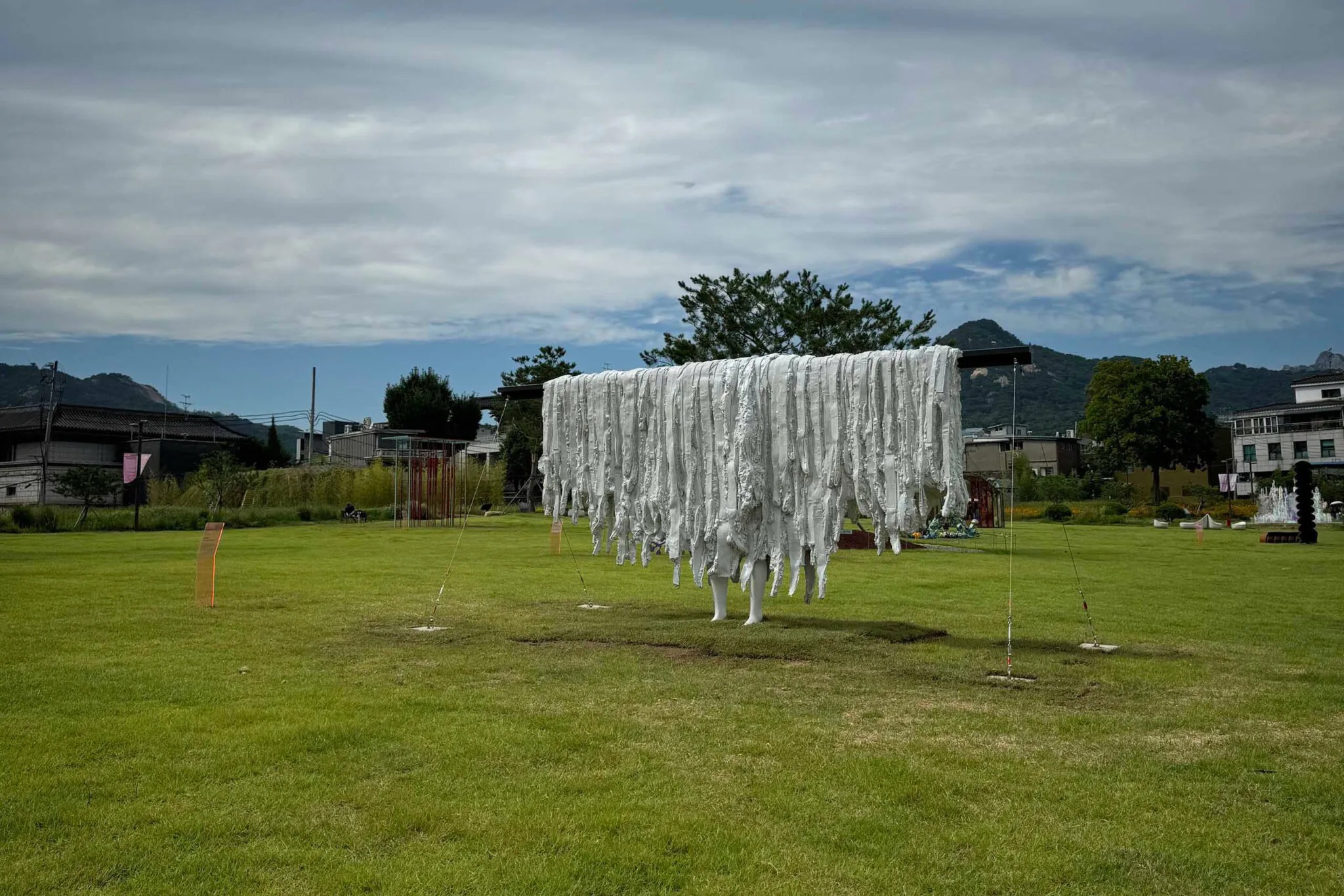
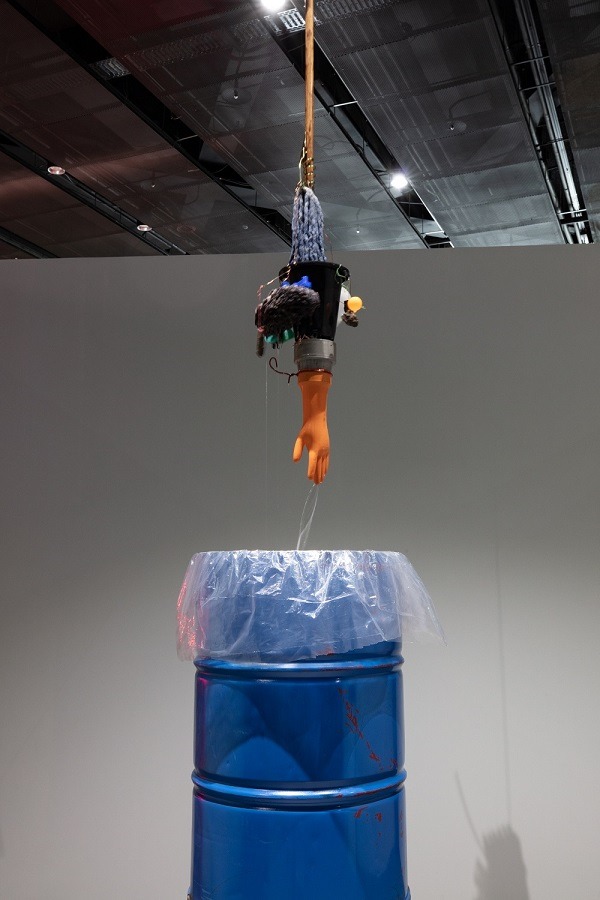
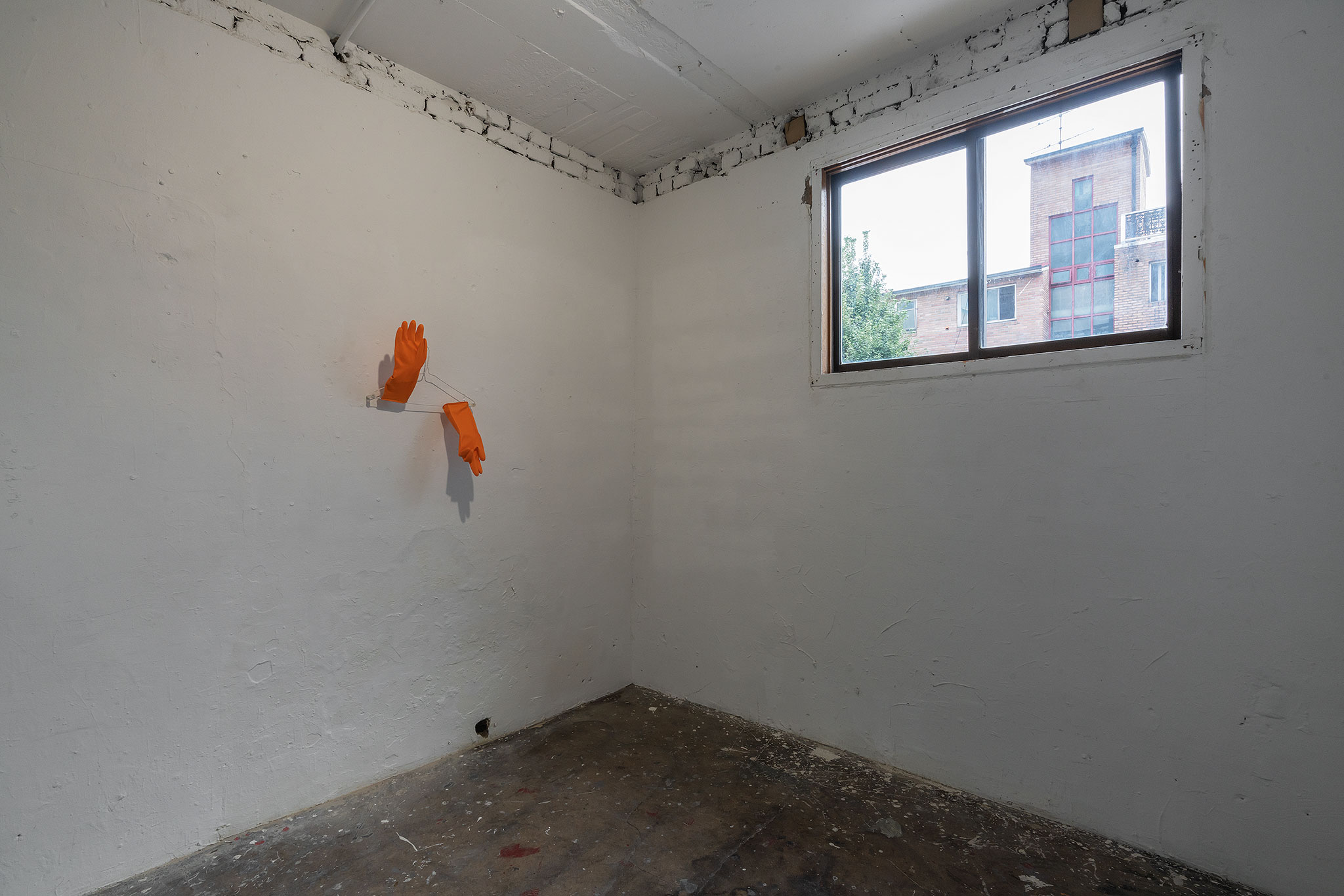
The subjects of Parasol (2022), Sling Belt 1–3, 2–4 (2022), Portal (2022), Rope (2022), and Portal (2022) are rendered realistically enough to preserve their form and color, yet they also produce changes in sculptural materiality and chromatic sensation. In addition, rubber gloves carelessly left behind by a cleaning worker are transformed into a Buddha’s mudra through The Hand Seal (2022). In this way, the artist hopes that by bringing into focus things that remain unseen unless one pays close attention, different landscapes of life may emerge.
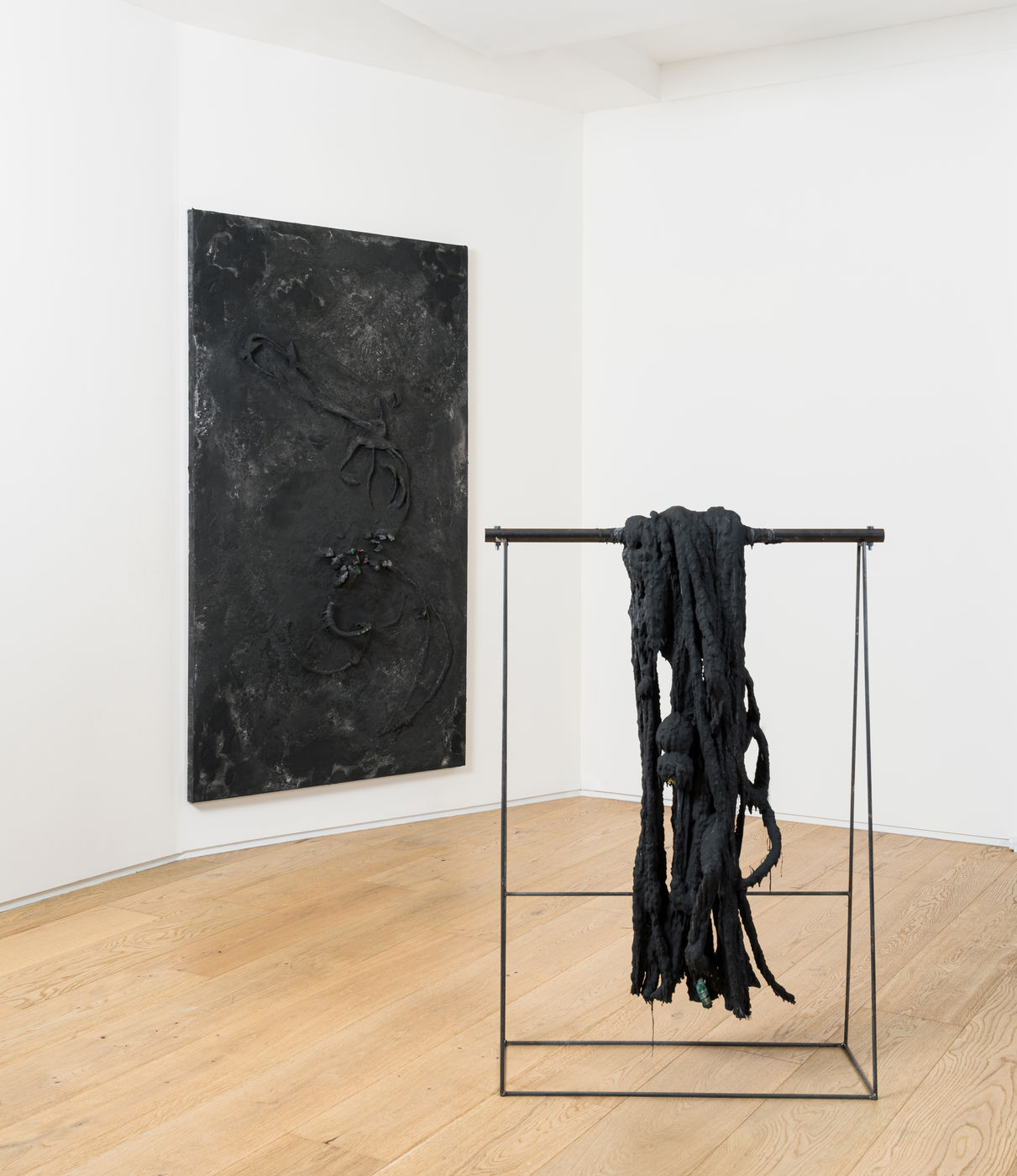
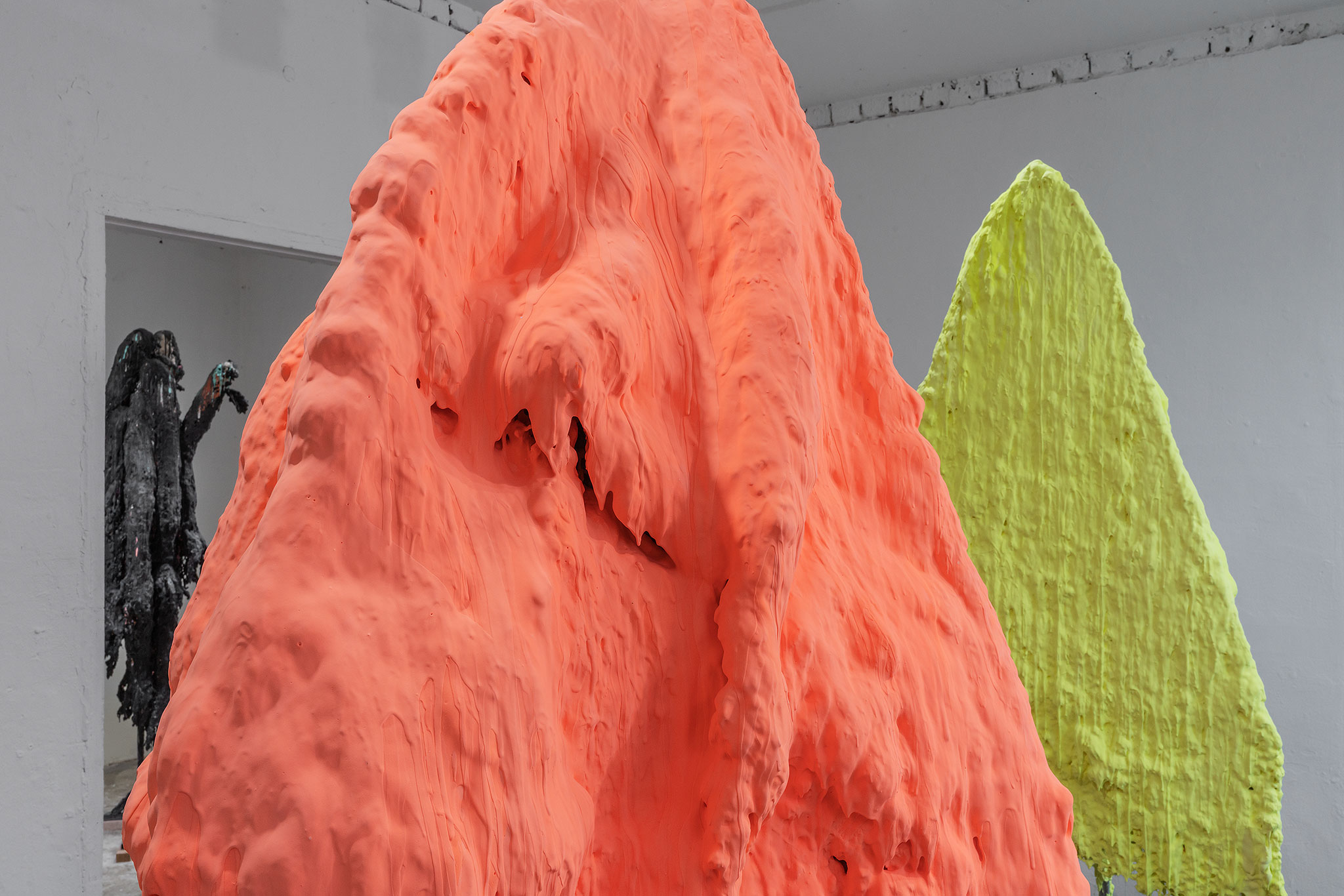
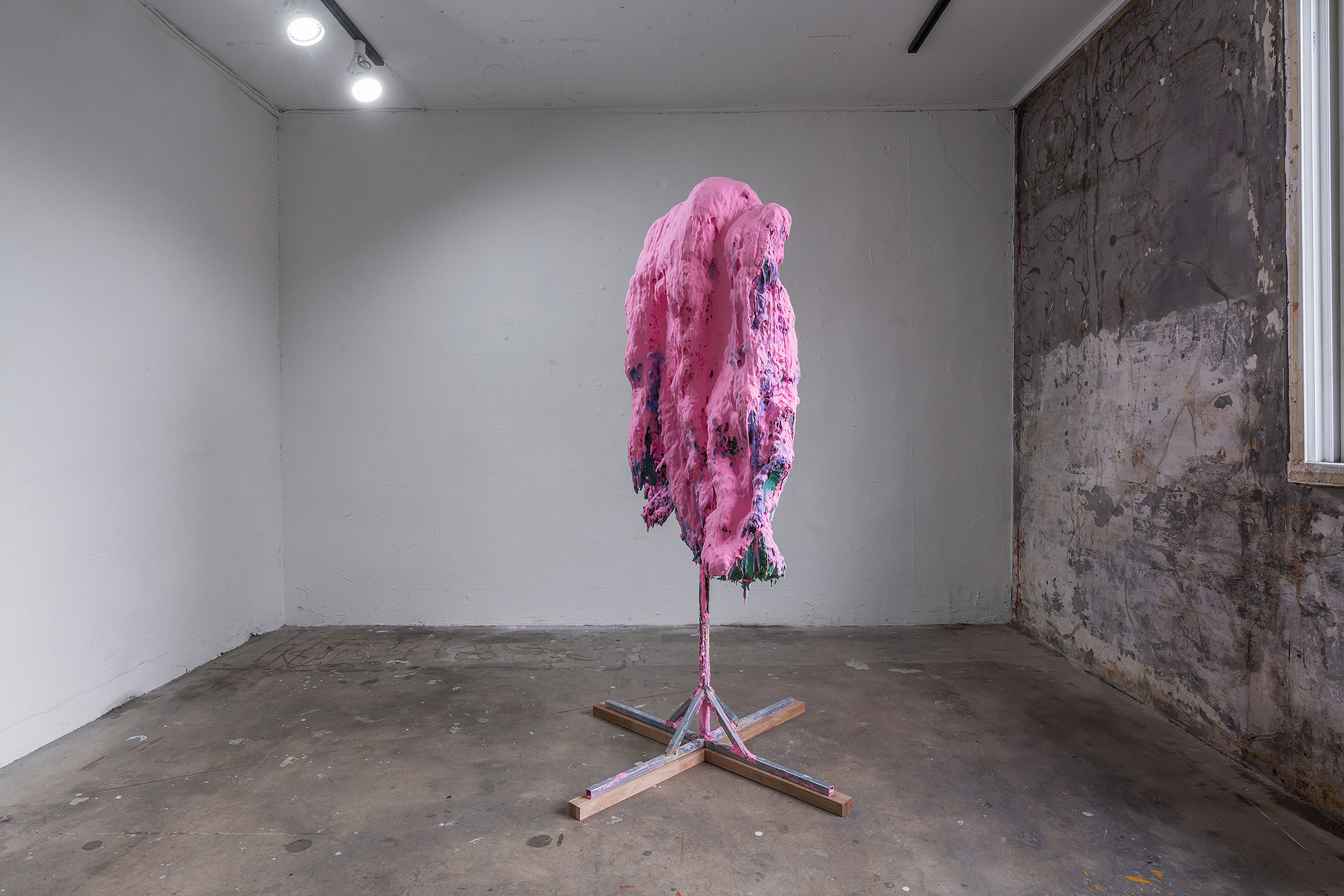
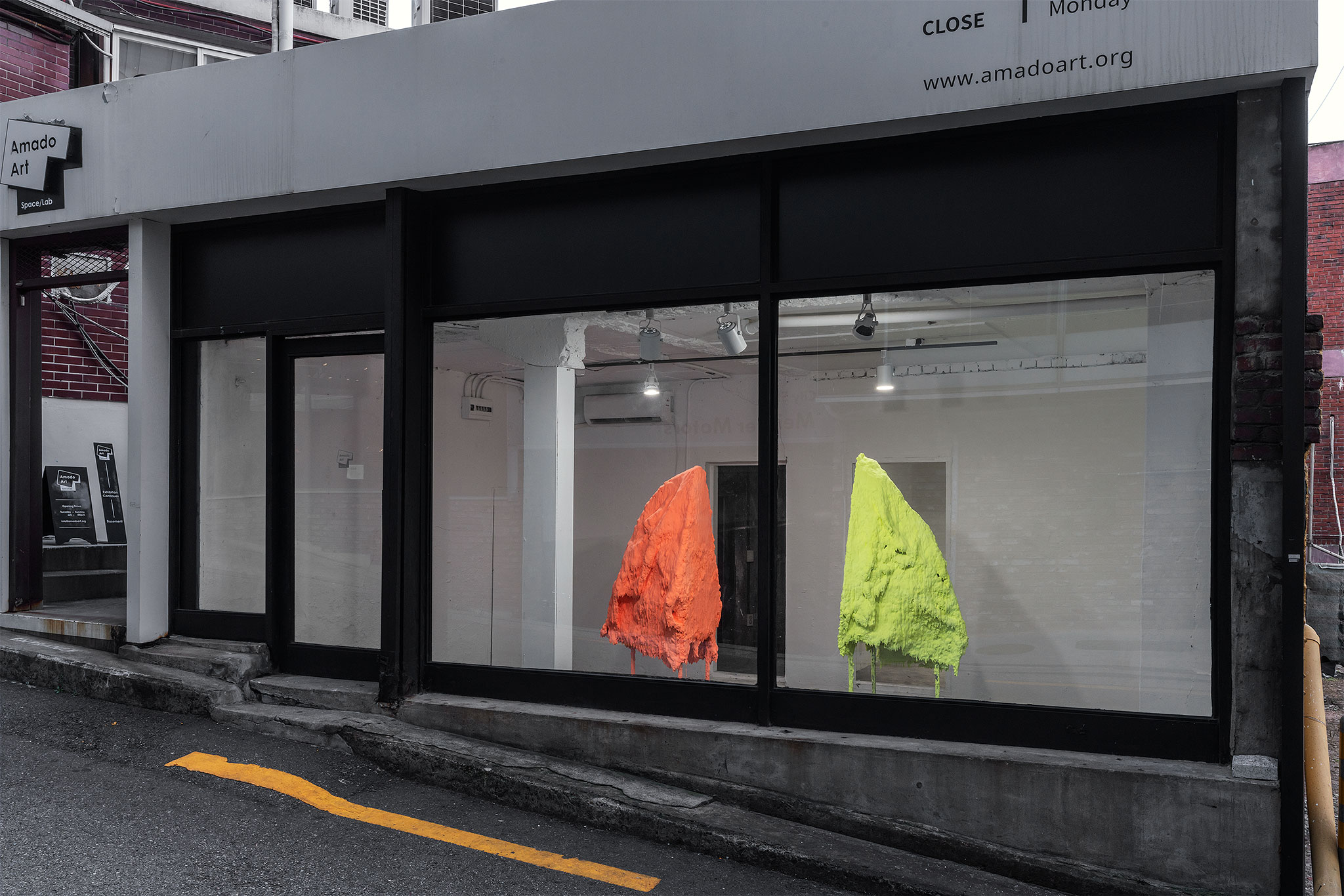
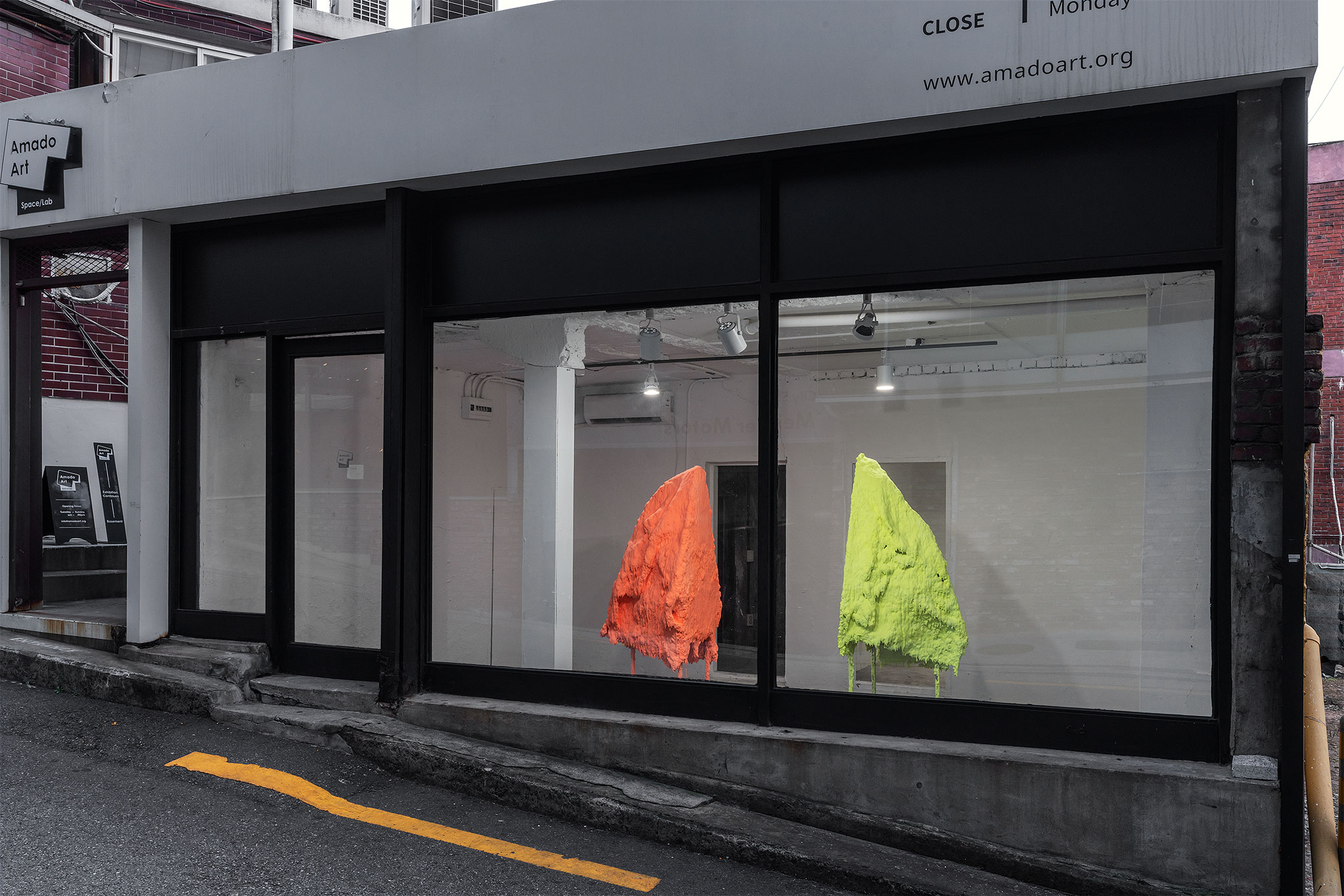
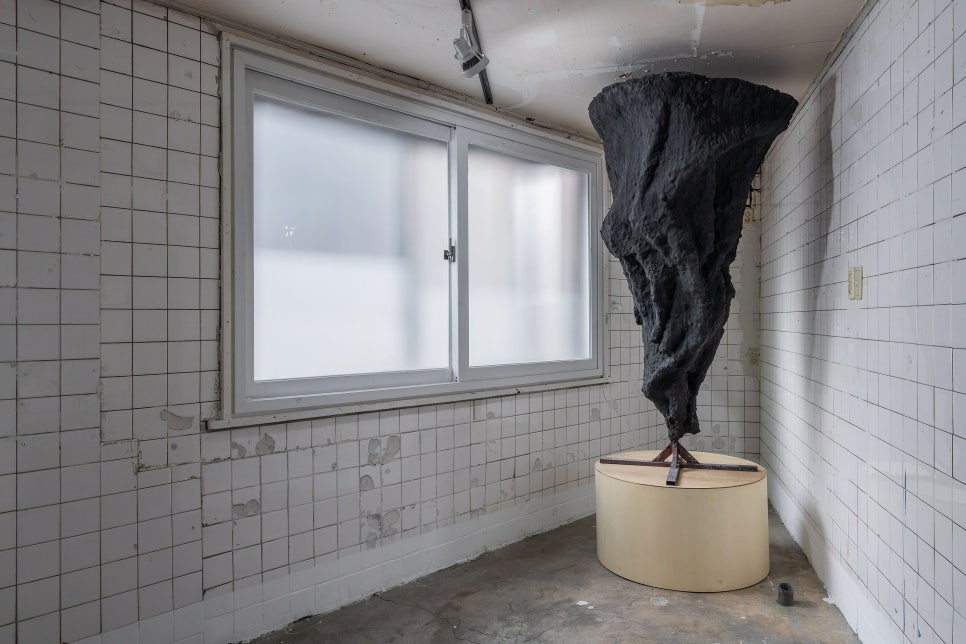
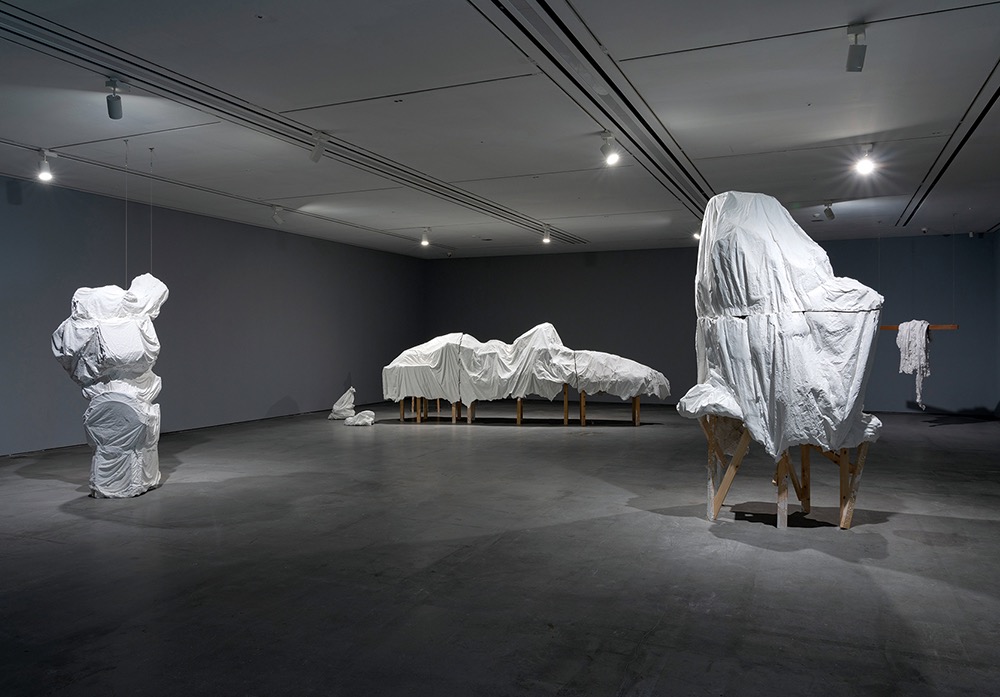
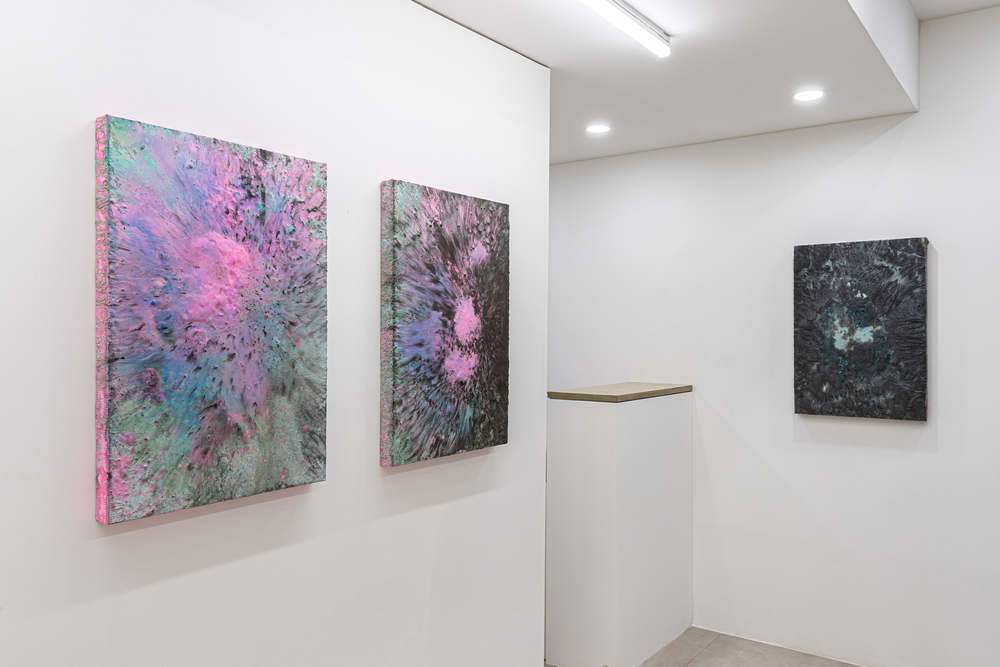
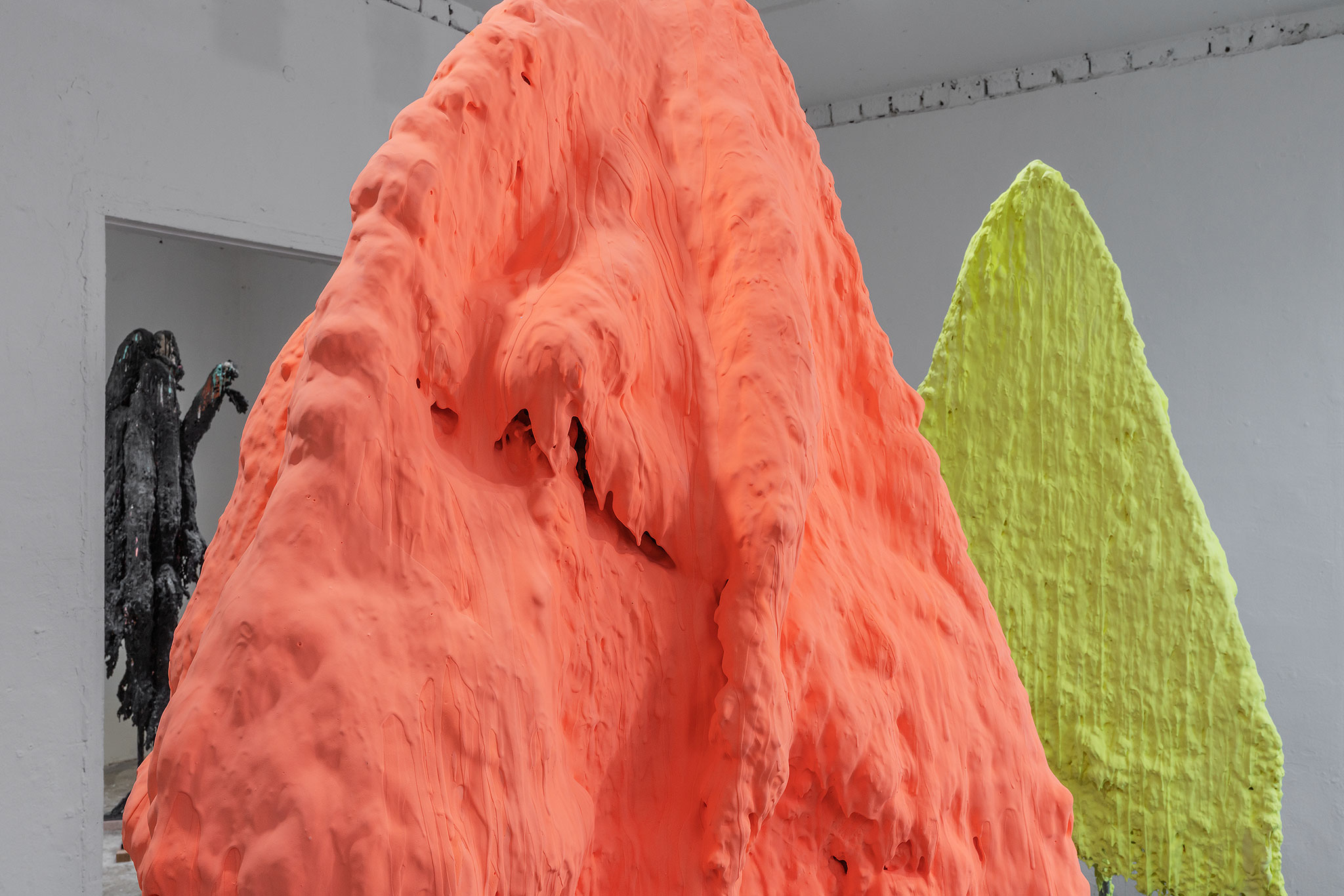
Although based on real-world objects or previous works, the pieces that undergo abrupt transformations of form and color are driven by a different sculptural intention. Fluorescence I, II (2022) and Shade (2022), which take packaging tarpaulins or sunshades as their motifs, undergo changes in their original forms in the process of building structure with steel pipes, and through the repeated acts of applying, pouring, and spraying plaster and pigment dozens of times over those forms, the forms become blurred, generating an uneven sense of mass.
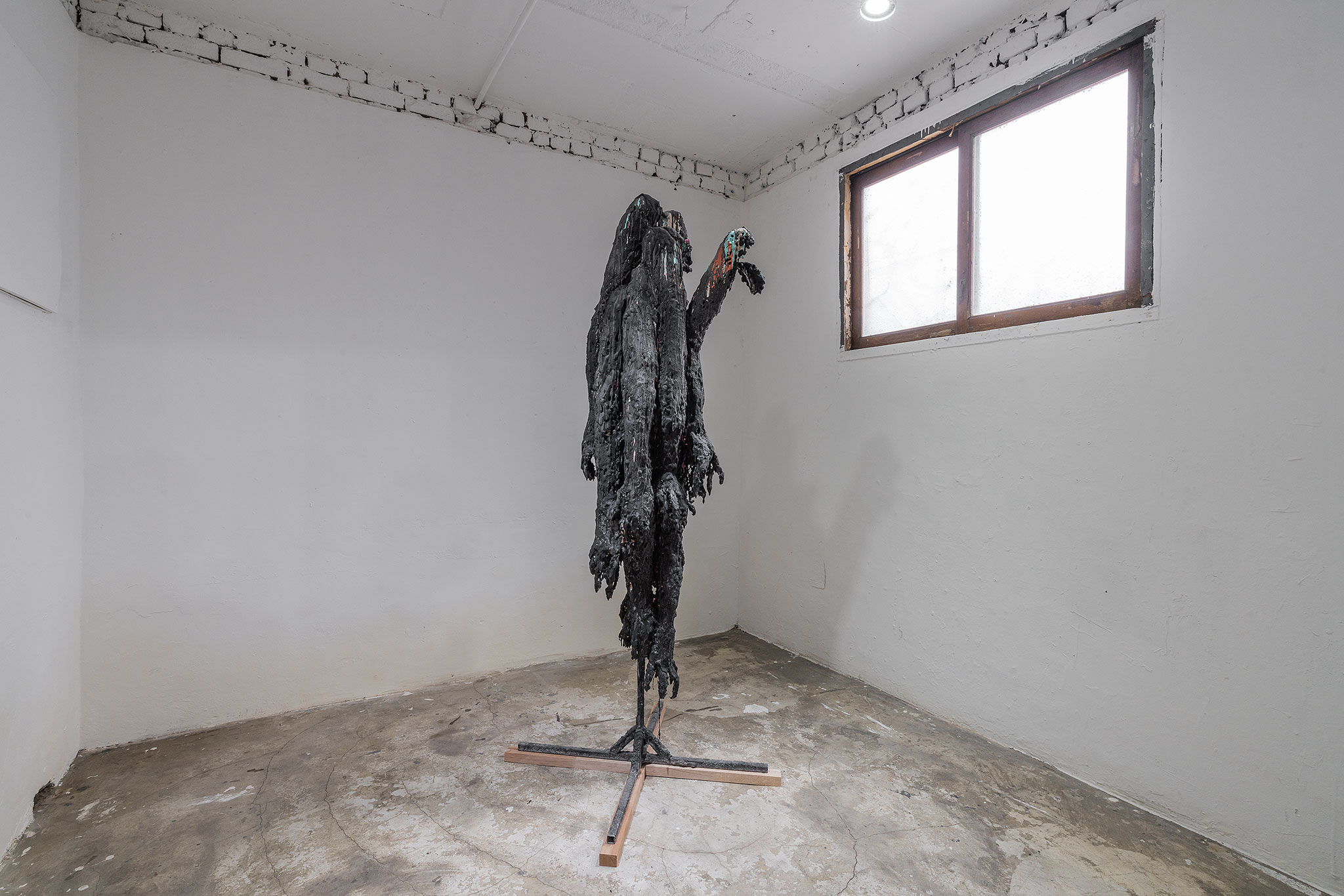
In addition, the flow in forward and reverse directions, along with fluorescent and pearl black pigments, gives rise to unreal textures and surfaces. Colanyl Black (2022) and Pink (2022) also refer to earlier works or their production processes, but through the application of pigments, they acquire strong coloration or different textures.
Through formal transformation in the process of making the works, and through the intervention of the physical and chemical properties of plaster and pigment, these works are grounded in reality while showing the emergence of other forms that do not resemble reality.
A Concept Connecting Here and There
Beginning with 《Solidification》 (2016), the artist refers to the “portal” as a working concept that connects “here” and “there.” From piles of cement at construction sites, he recalled the condition of division; through landscapes created by subordinate subjects, he sought to trace their modes of living; he tried to understand how the life of a laborer is connected to the mechanisms of industry and capital; and in pigment shops, he considered the relationship between the chemical industry and imperialism.
These thoughts, which arise from realities such as society, economy, and politics, appear as explicit themes in installations and videos, but the process of sculpturalization led him to seek different attitudes and methods. His previous way of creating scenery, scenes, and situations through the installation method of piling, spreading, and expanding has changed into a time of observing and savoring the entire process by which a single sculpture is completed.
His ongoing attempts to diversify the materials, forms, and colors of sculpture are ultimately no different from seeking to make the reality he has witnessed more refined and beautiful through new sculptural forms.