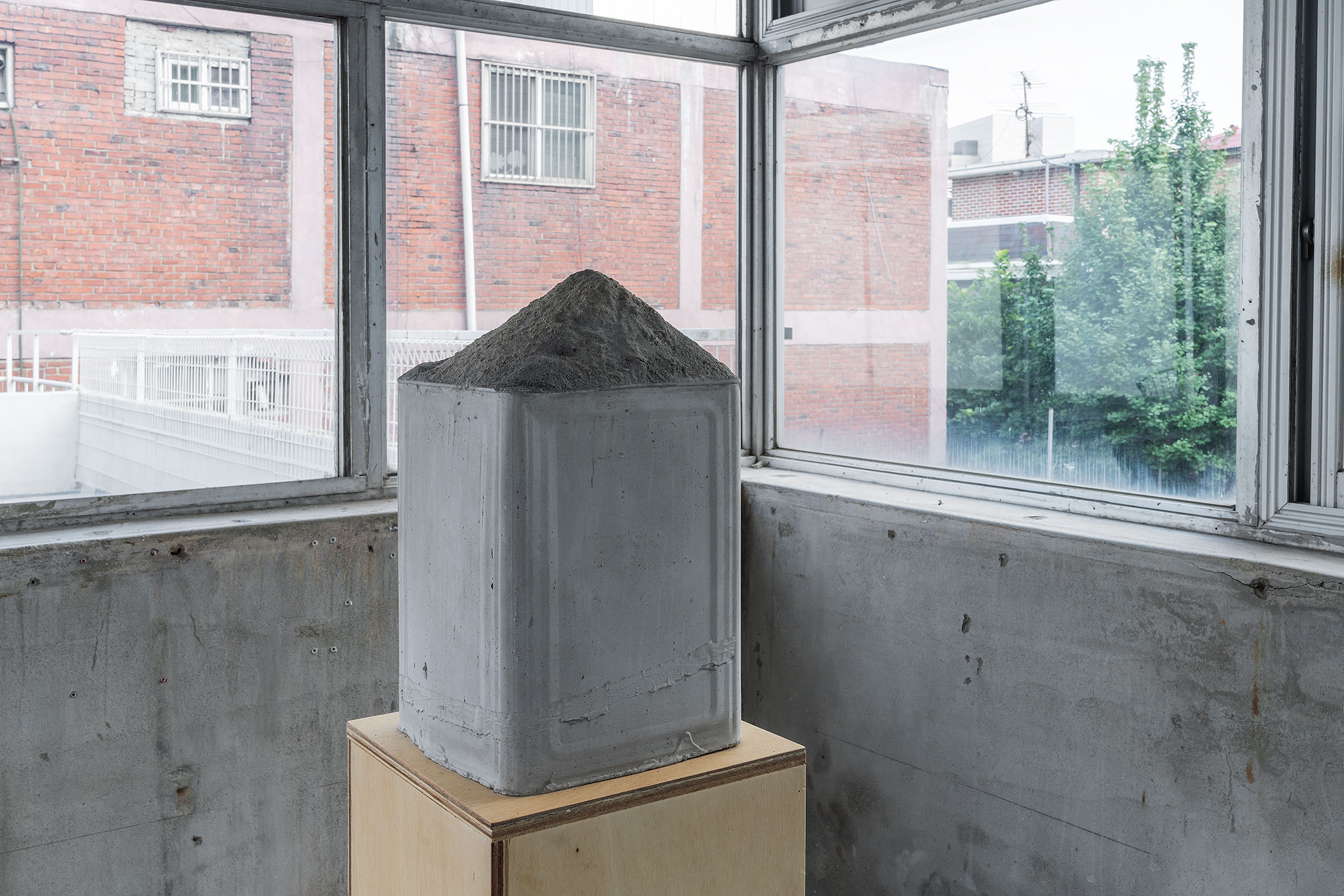
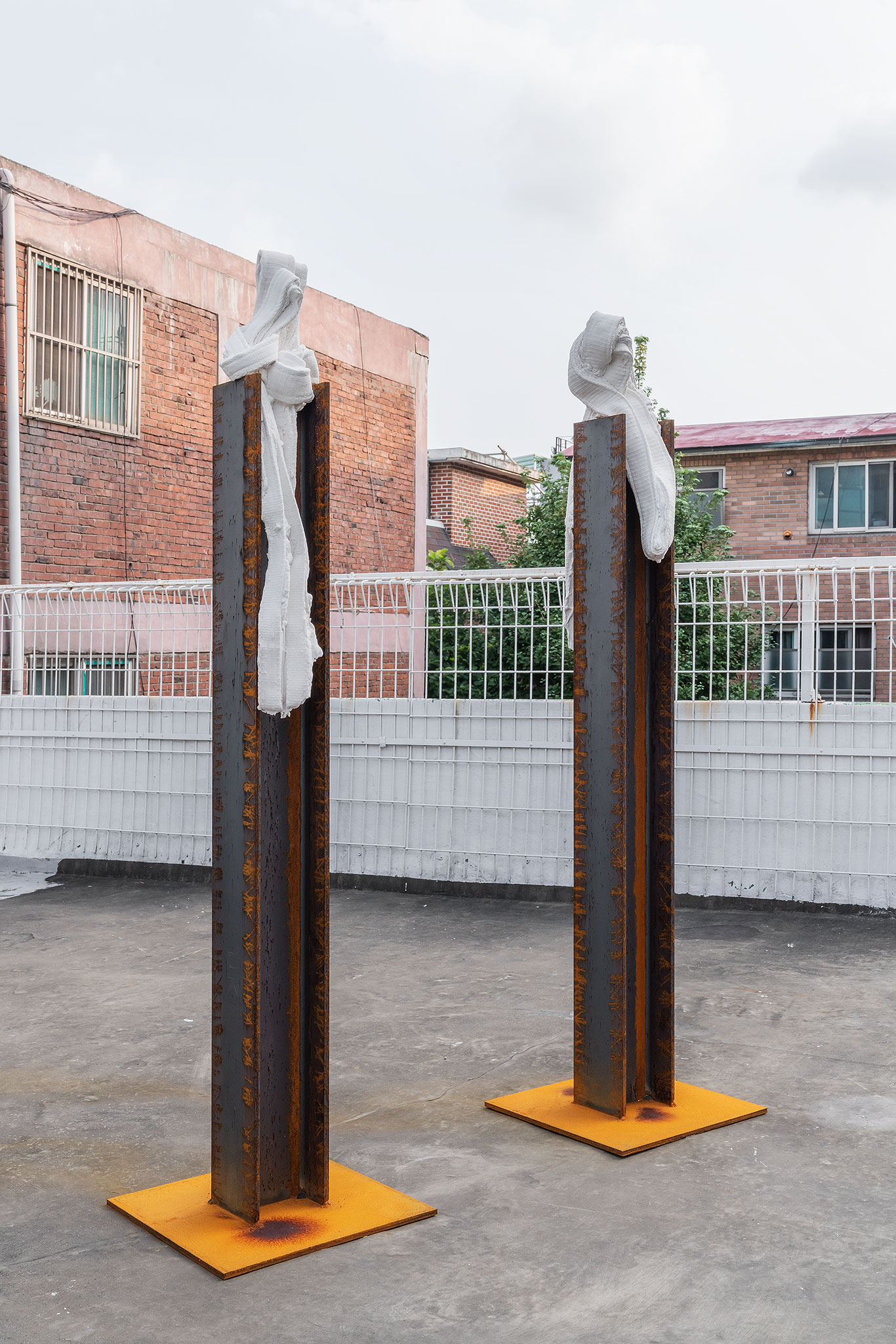
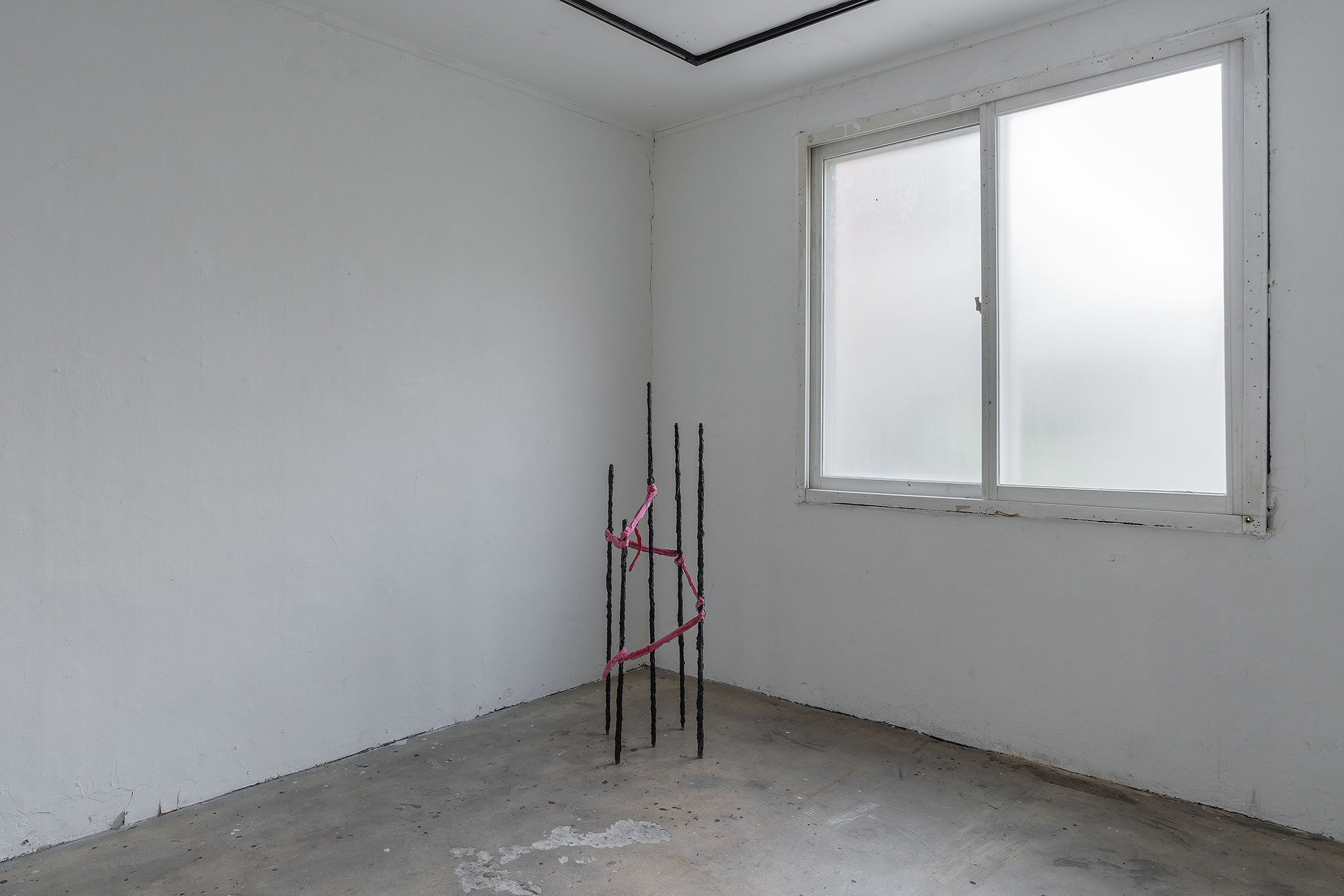
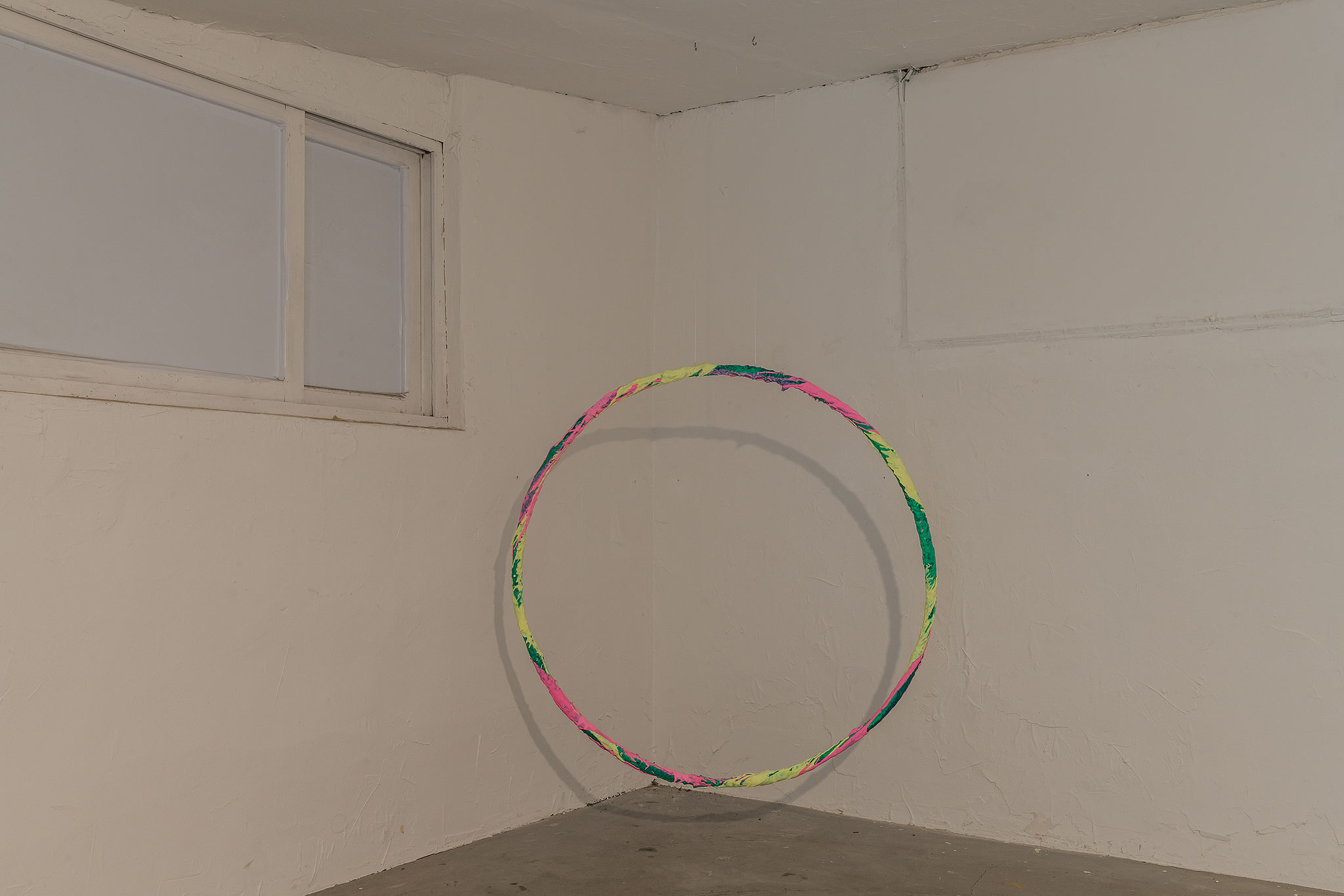
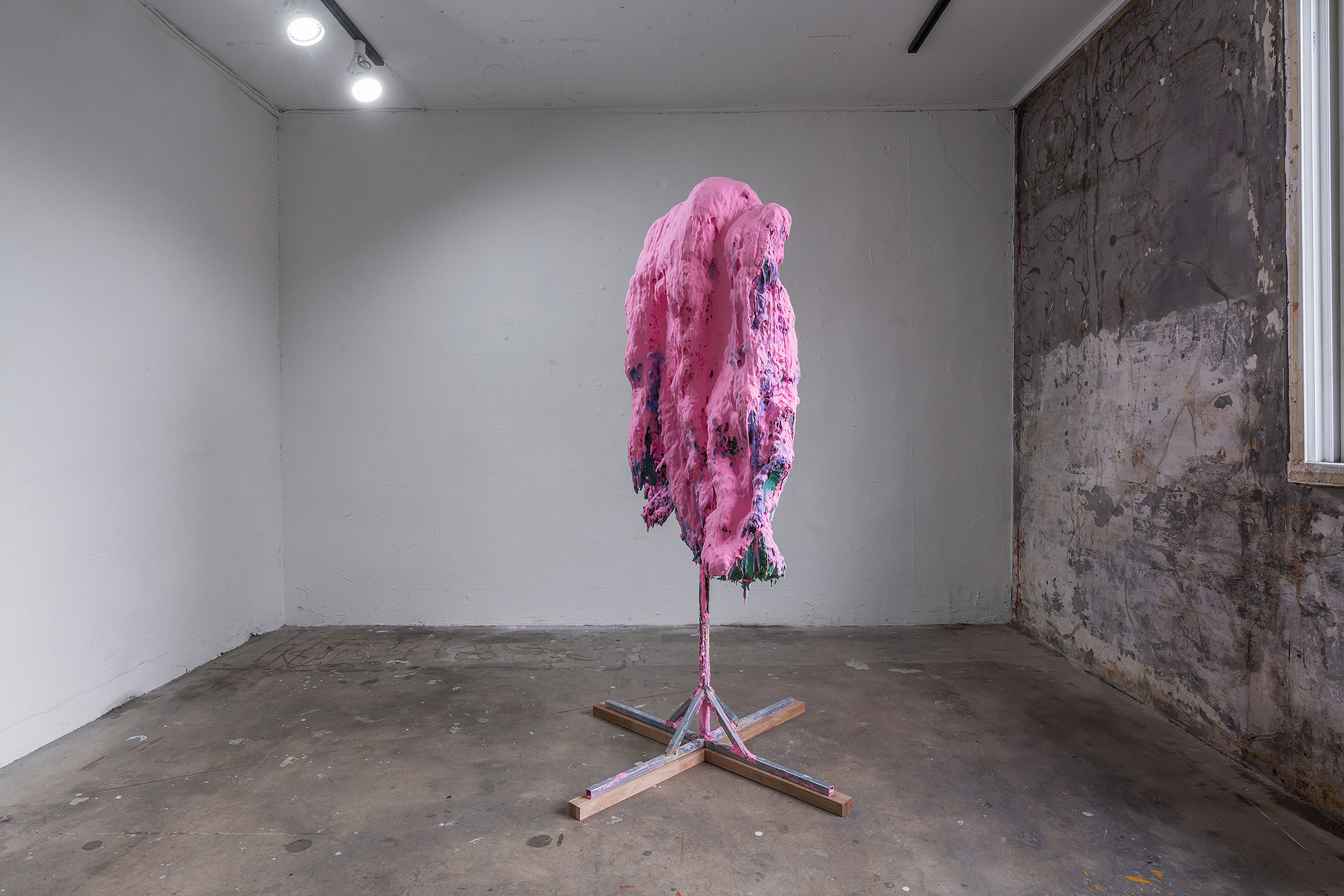
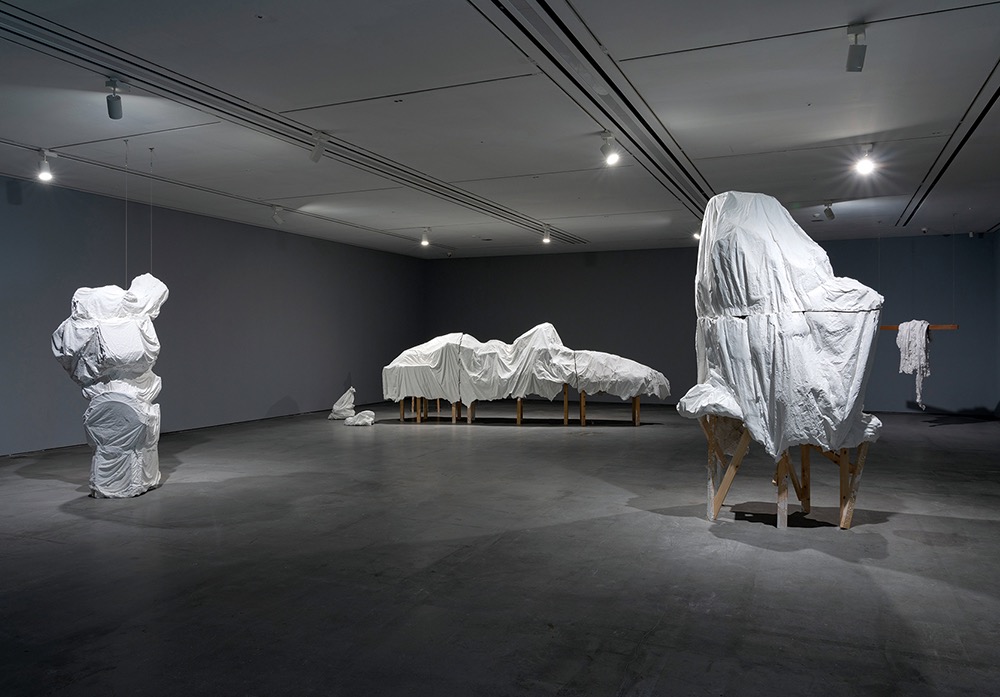
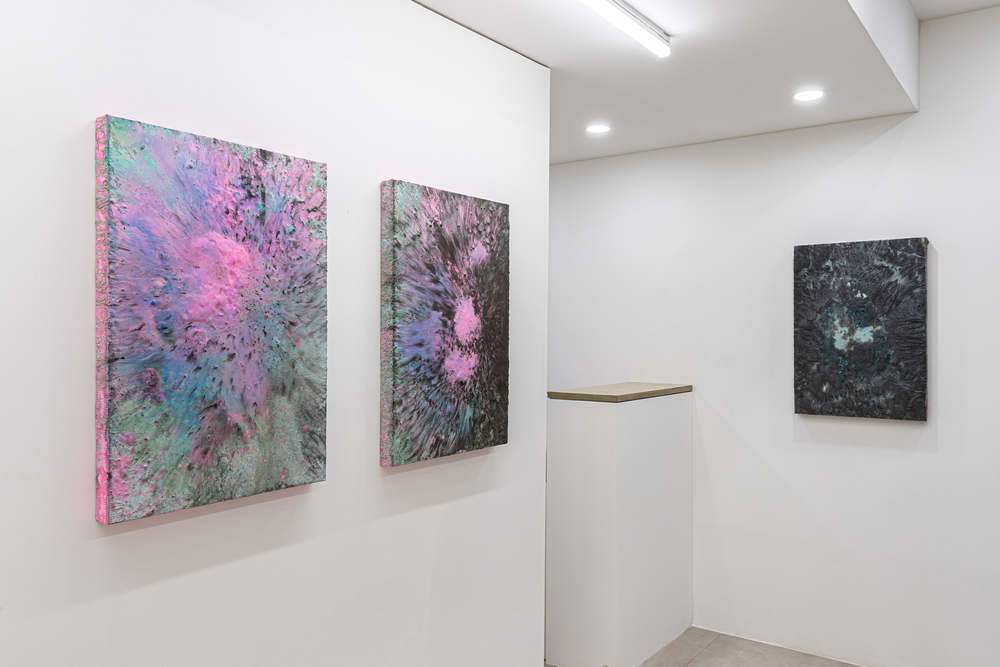
An awareness of the present is achieved not through detached observation, but through intervention. In Kwon Yongju’s work, the present in which the artist has intervened is preserved like a trace. In his solo exhibition 《Casting》 at DOOSAN Gallery, the artist transforms scenes of the present he has encountered into artworks by covering materials commonly found at labor sites with tarpaulins to create temporary structures and then casting them.
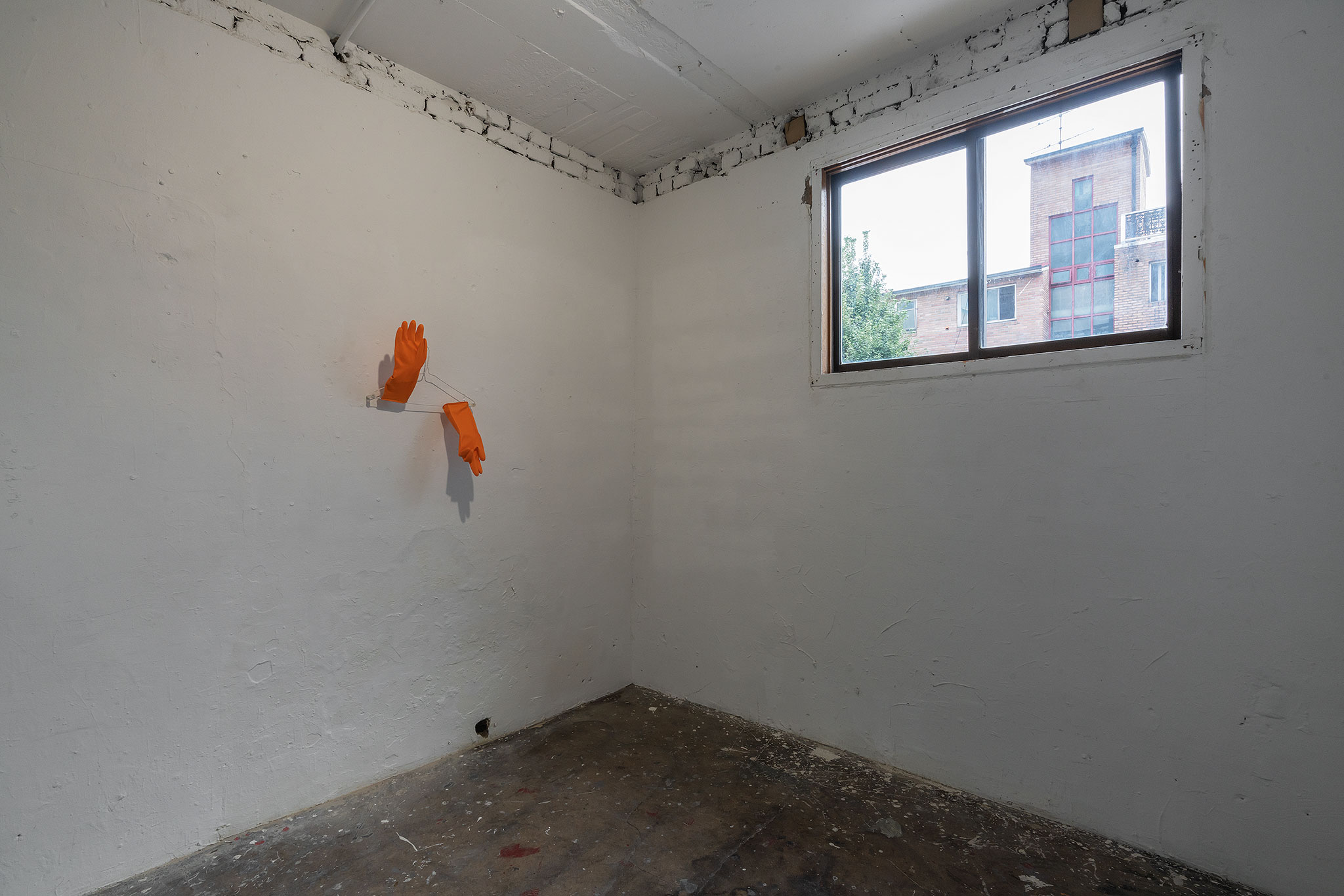
As in his previous works, this exhibition moves back and forth between the two axes of labor and art, approaching us like a quiet ritual of sharing the results of an individual’s arduous leisure carried out in a world where both labor and art seem to feel like work. What, then, is the purpose of the arduous leisure the artist continues to undertake, and of sharing its results?
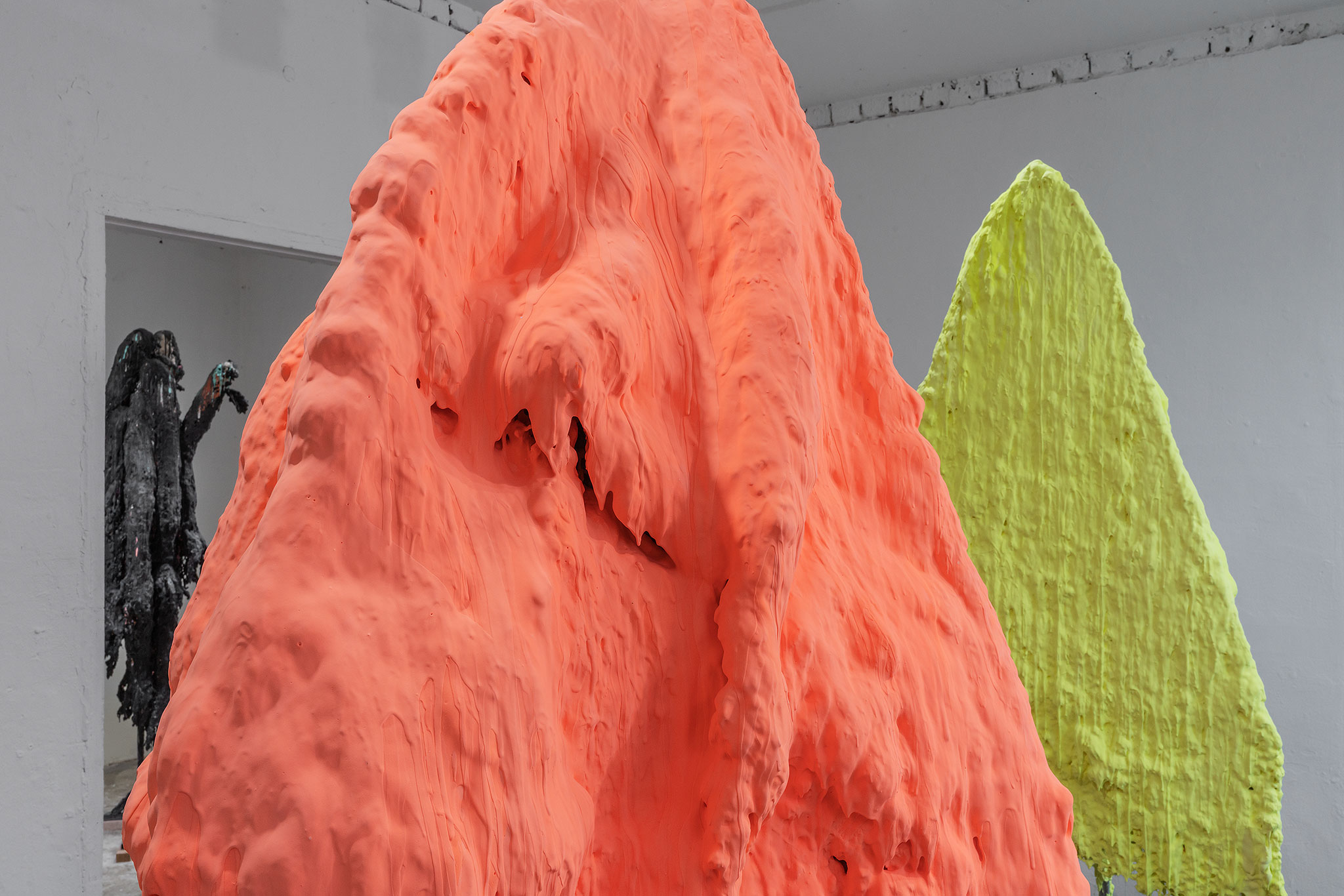
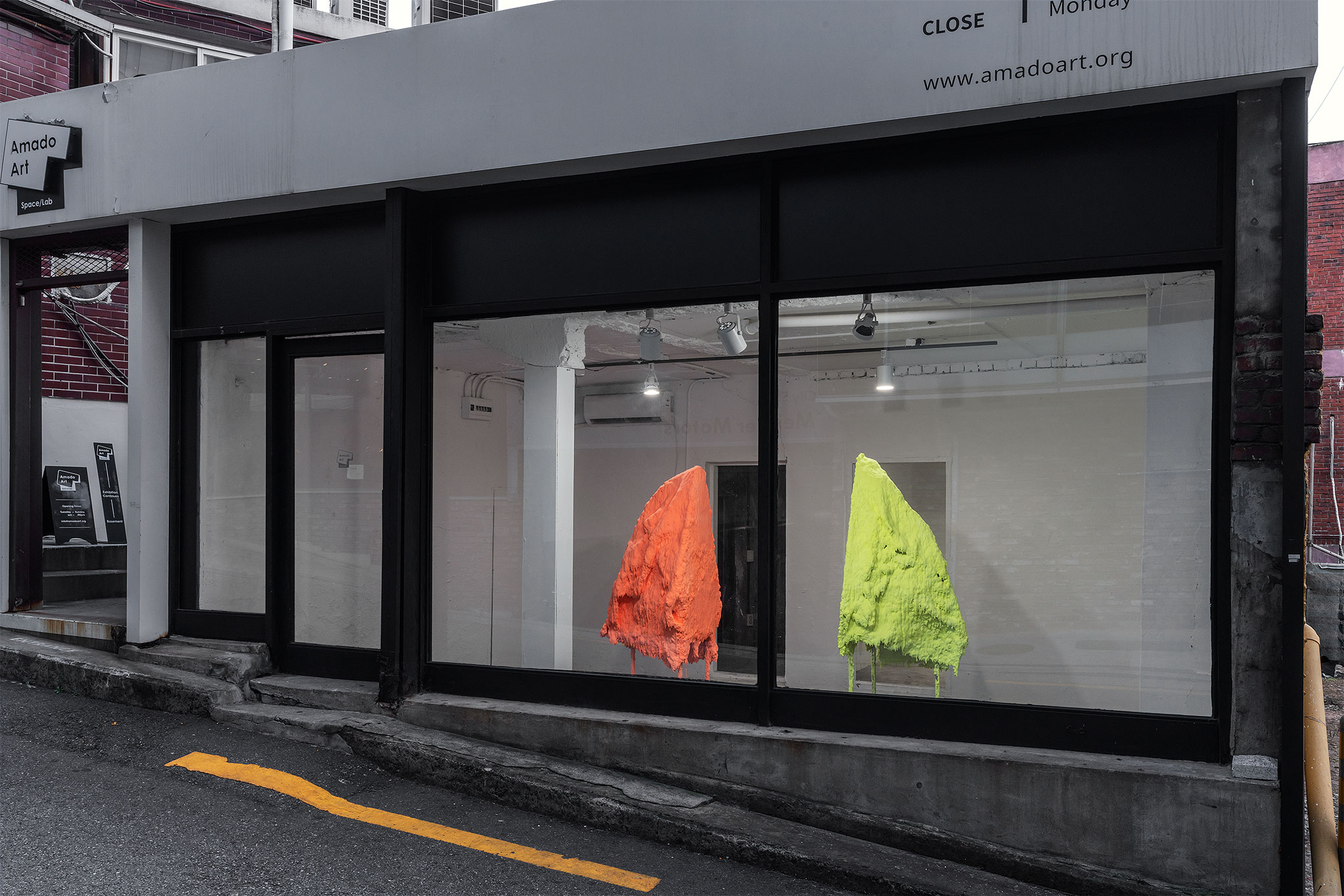
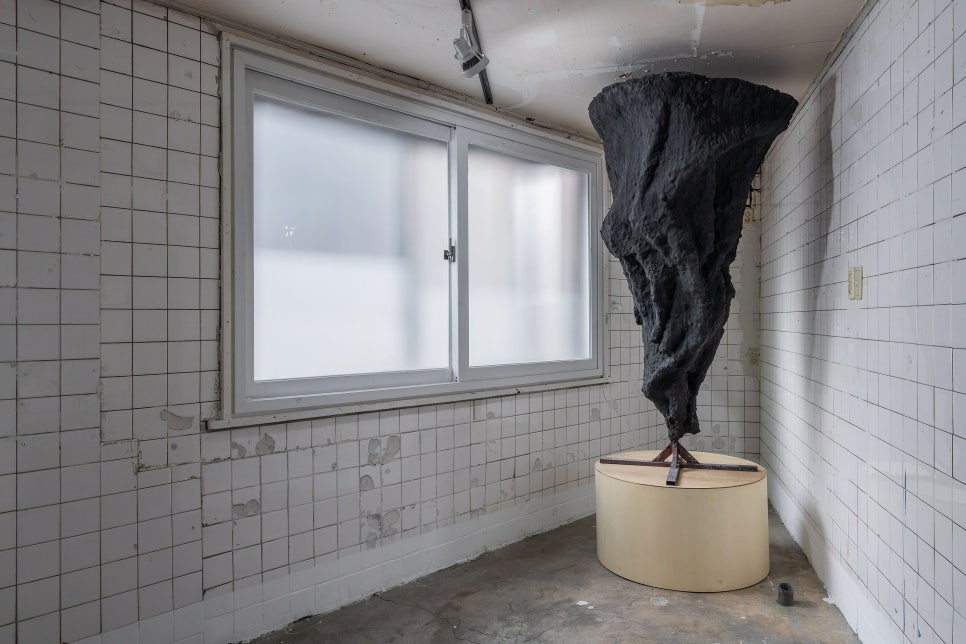
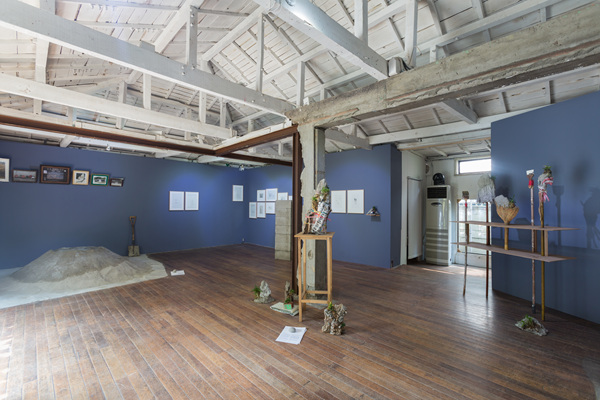
The first scene of the exhibition is occupied by small white sculptures sitting in the gallery window space like islands, mountains, or clouds. Moving closer and examining the identity of these white masses, one realizes that they resemble industrial materials such as sheet metal and panels. This experience of detecting and rediscovering the white masses continues inside the exhibition space.
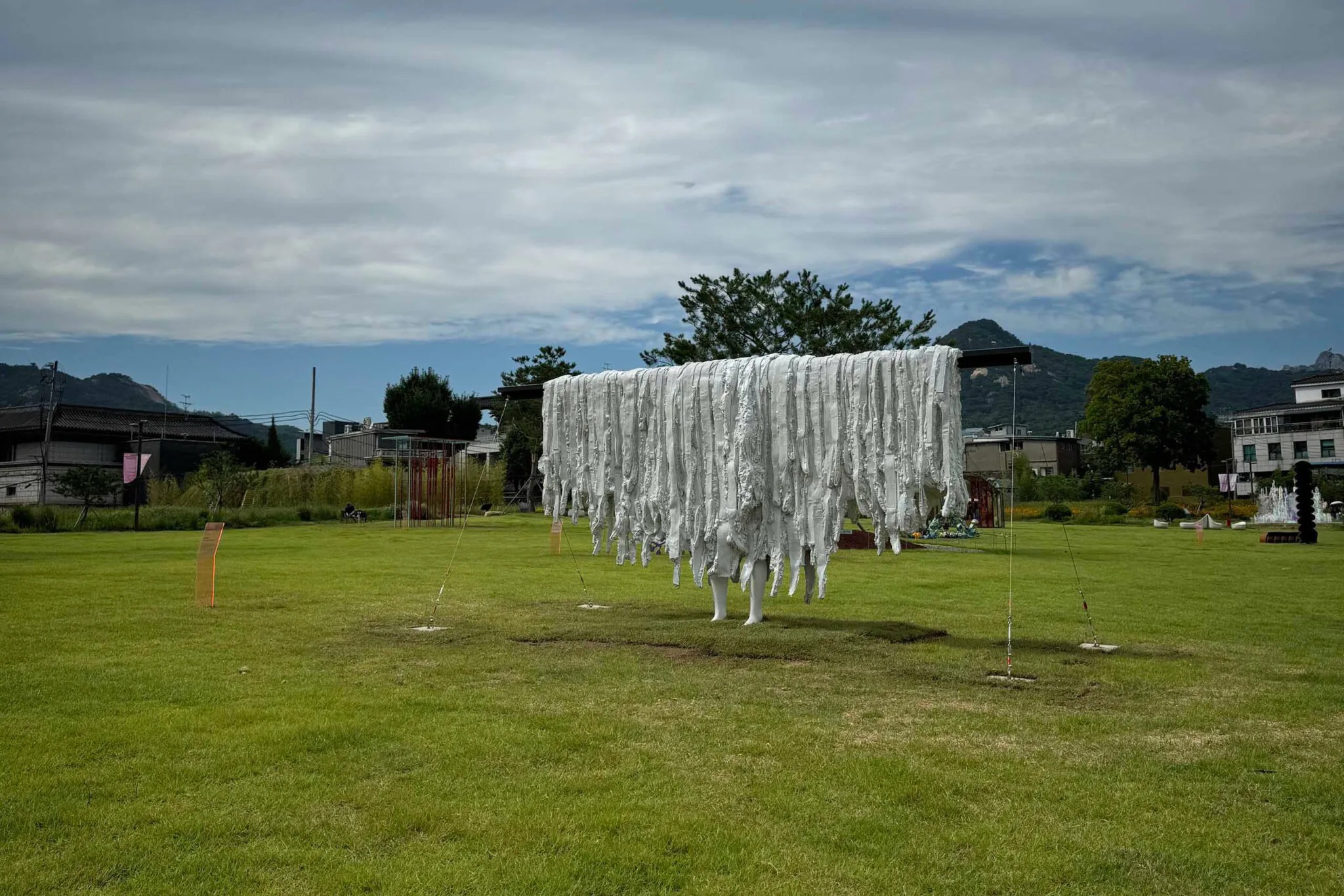
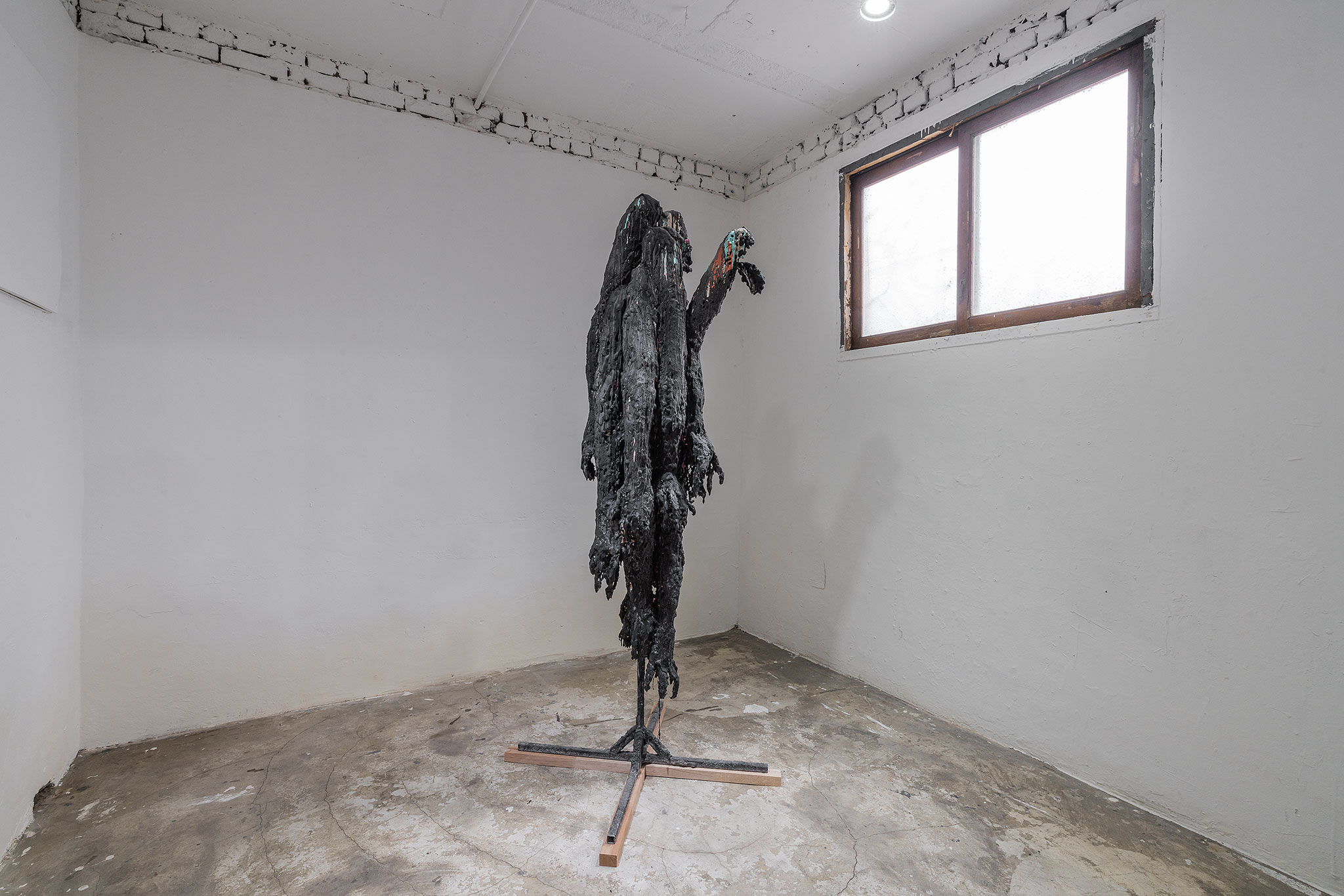
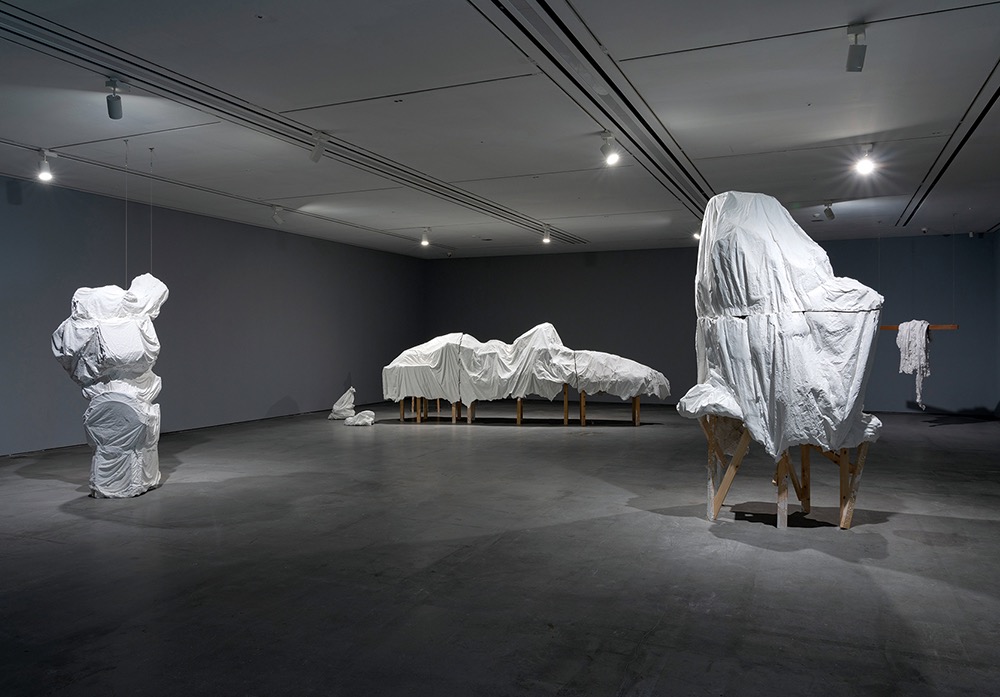
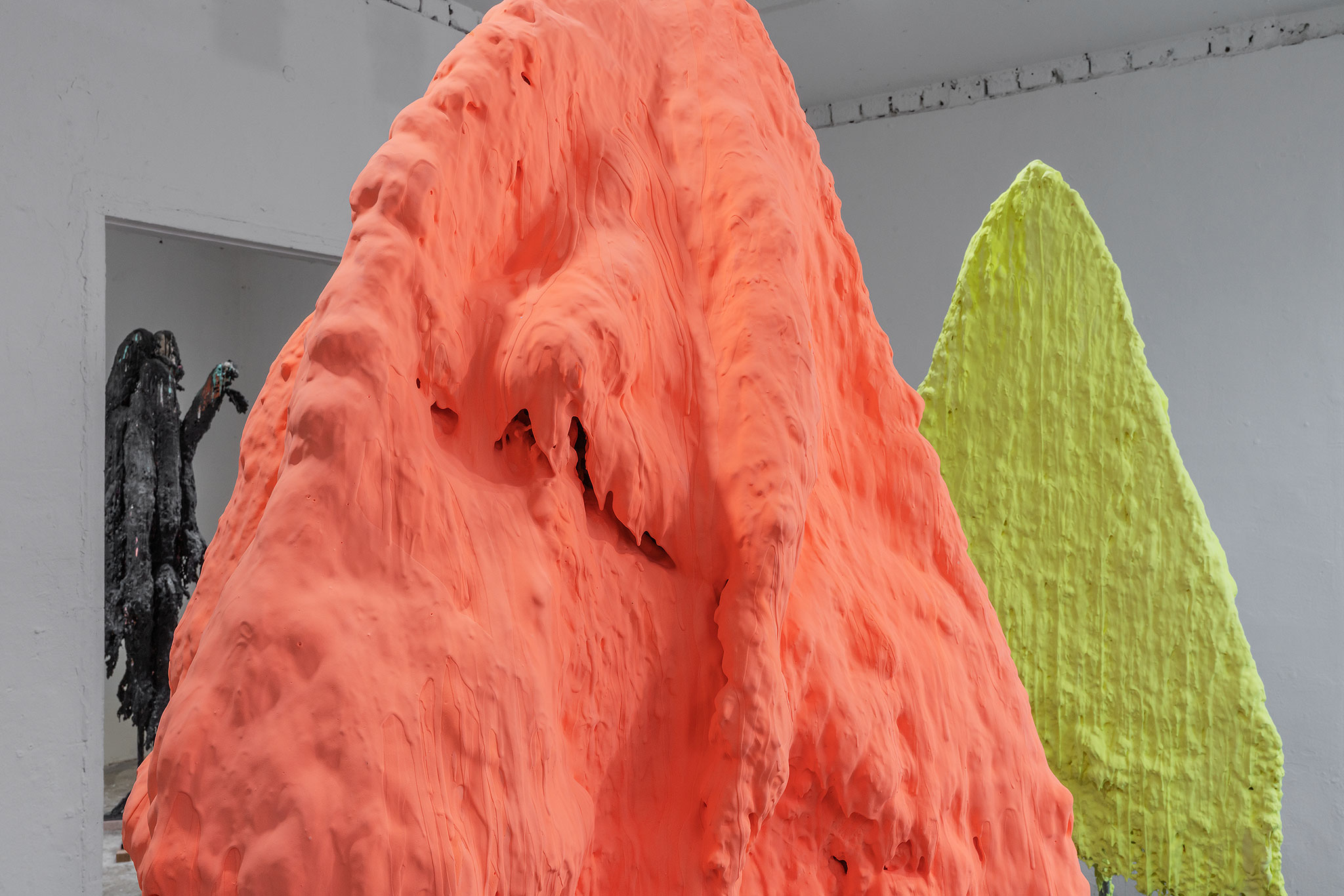
Upon entering the gallery, one encounters a tranquil landscape formed by white masses of various sizes. Yet the moment one realizes that they were cast from assorted objects covered with tarpaulins—and imagines that beneath those tarpaulins there may be various kinds of waste, materials, and tools from labor sites, as in the artist’s earlier works—the tranquility of the exhibition space suddenly takes on the weight of reality.
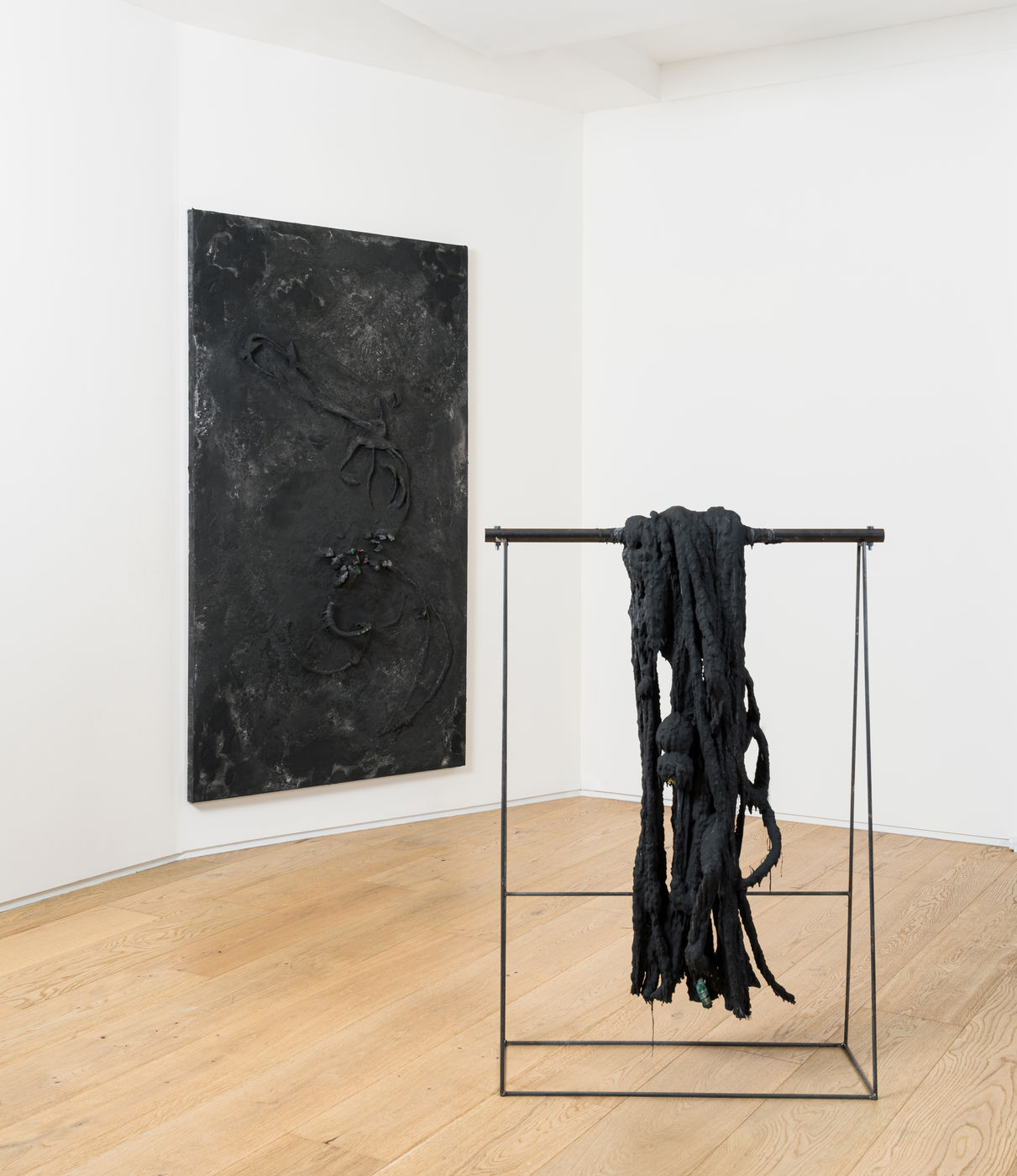
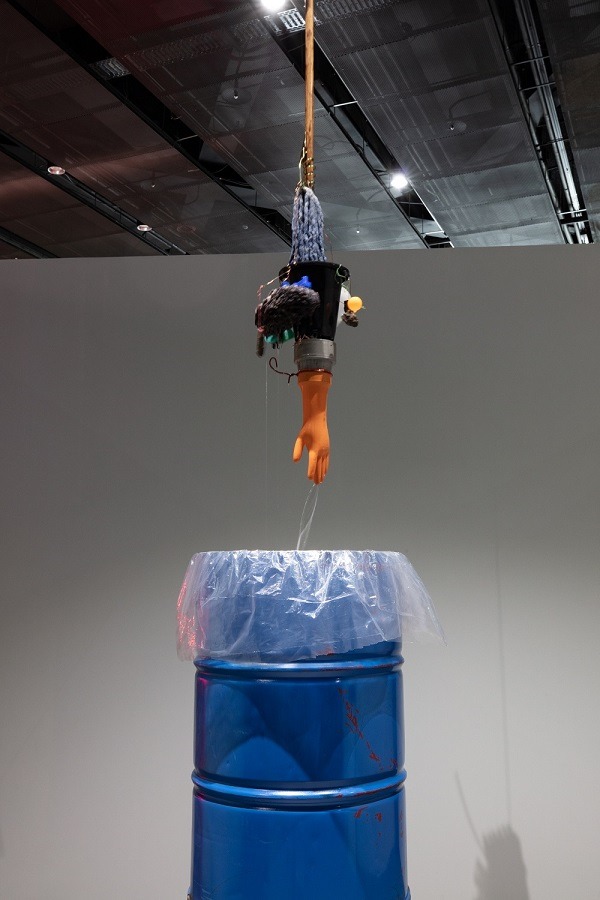
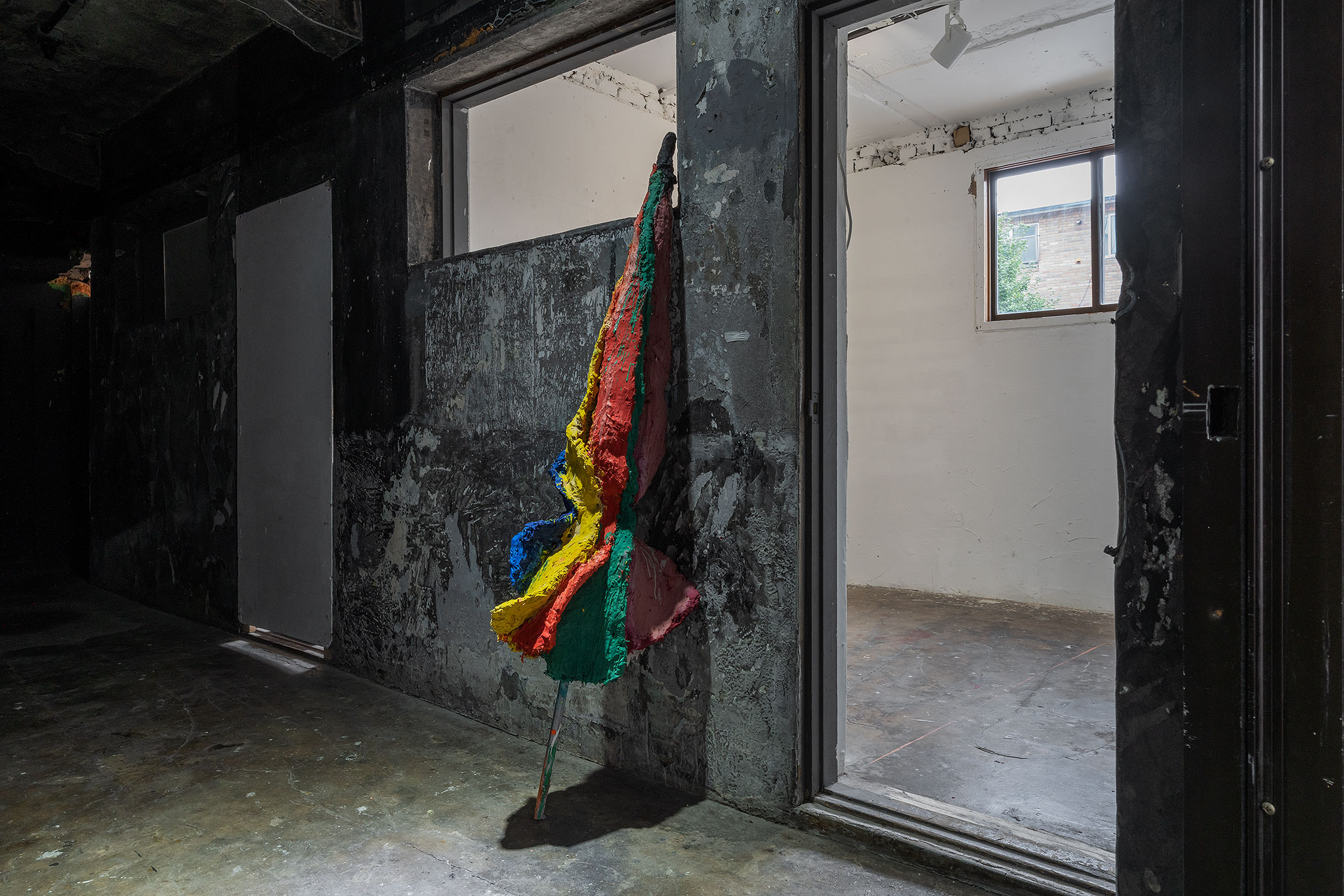
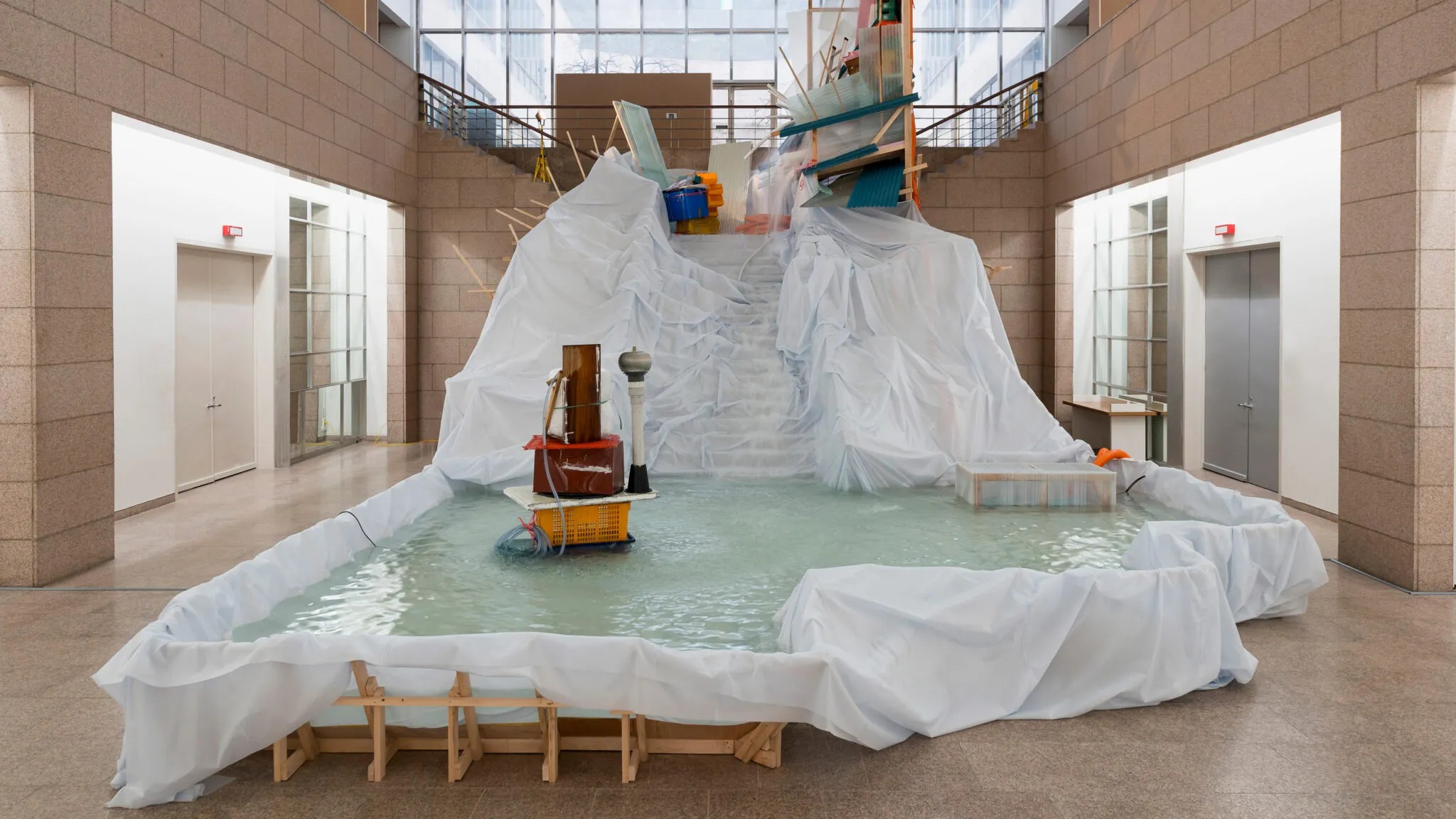
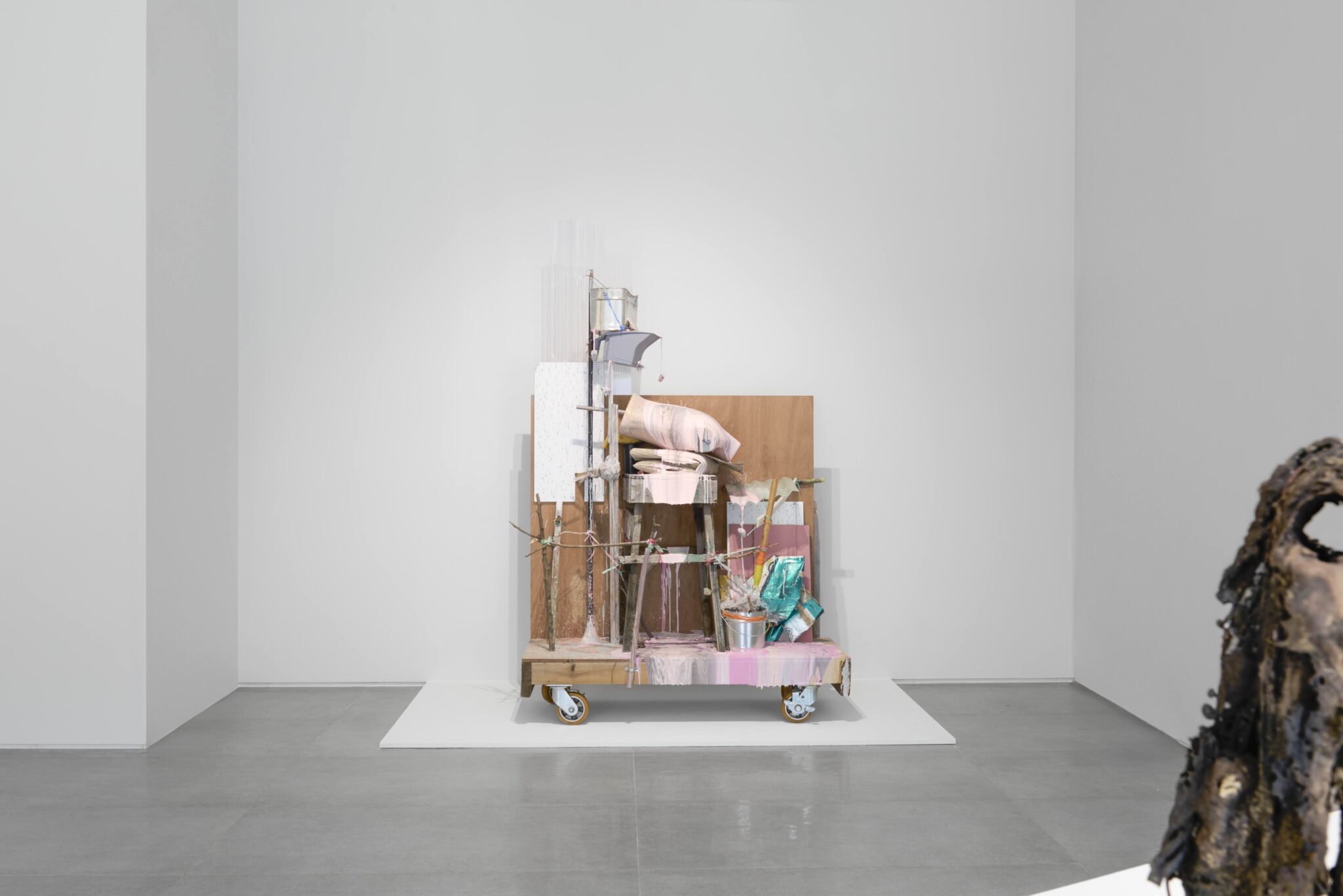
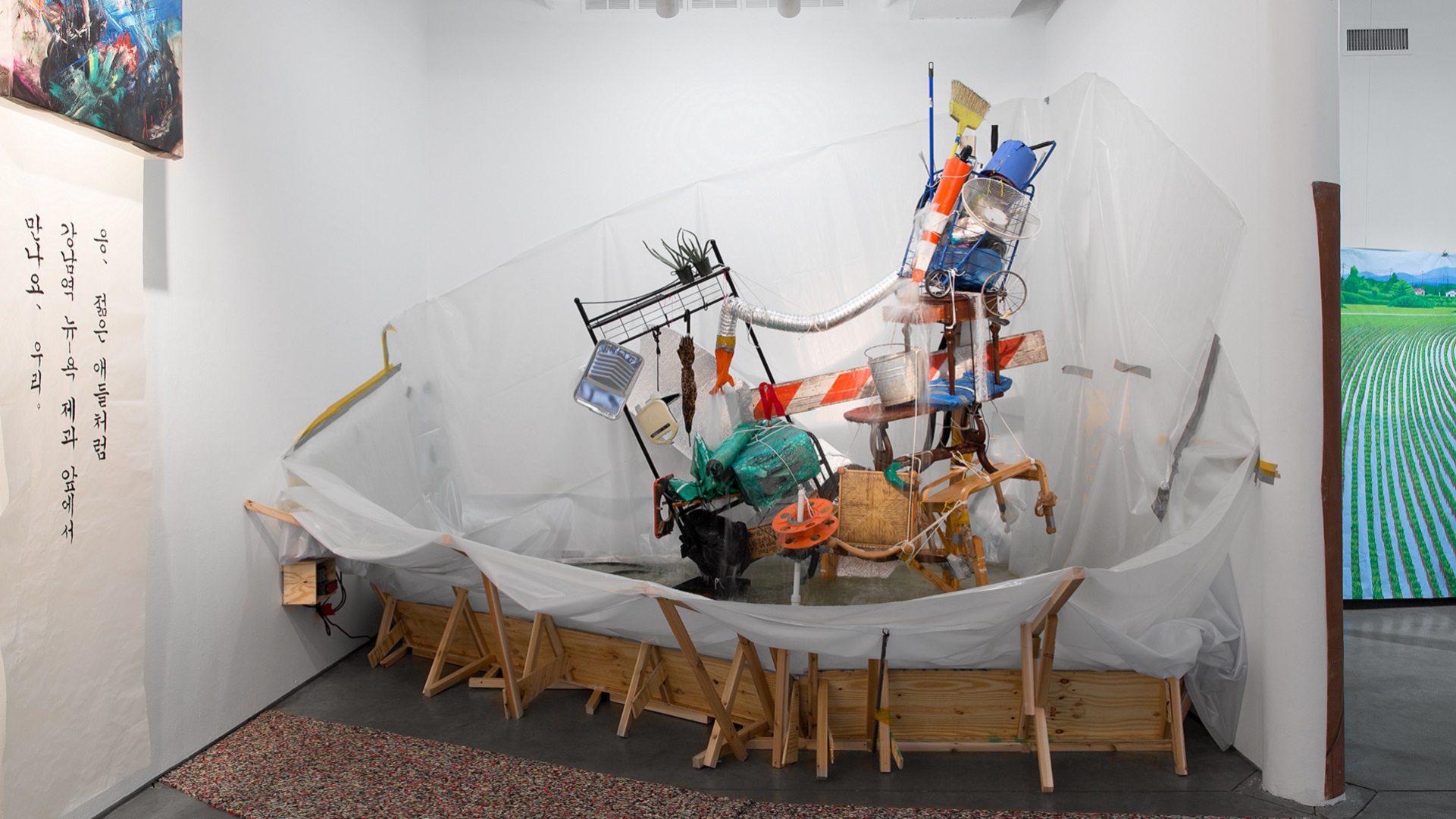
At this point, several of the artist’s previous works also come to mind. The process of piling up assorted tools and discarded materials, covering them with fabric, and spraying them with diluted plaster overlaps with Waterfall, in which discarded objects and a submersible pump were combined to create an artificial waterfall, constructing a structure of survival from abandoned things.
Likewise, the act of assembling various tools and materials and then applying a substance that hardens over them, as well as the point at which the texture and form of the hardened material come to be perceived almost as part of nature, overlaps with Mounting on Rocks, a miniature landscape of bizarre cement cliffs. In this way, the exhibition experience, which continually recalls the artist’s earlier works, reaffirms the overlap between work and labor that has persisted throughout his practice and the new perception of reality made possible through it.
Although the exhibition overlaps with his previous works, there is also a distinctly different aspect: a variety of materials are covered with tarpaulins and cast, subsuming them into a single materiality—plaster. Whereas Waterfall and Mounting on Rocks generally revealed the properties of individual objects as they were and sought to connect them with corresponding scenes of reality, this solo exhibition causes multiple materials to be perceived as a single, unified mass.
As mentioned at the outset, this covered and unified materiality reveals multiple layers of discovery. By subsuming diverse materials into a single materiality, the exhibition ultimately gathers into masses those scenes of reality that cannot truly be concealed even when covered, but instead emerge and are felt naturally. The corners and surfaces of reality that unexpectedly protrude despite being covered sometimes evoke an even stronger emotional resonance than those exposed in the artist’s previous works.
As though acknowledging that forcing and suturing may arise when scenes of reality experienced by an individual are narrated within a collective context, the exhibition allows us to sense the reality embedded within it and its emotions more freely, or more comfortably, than before. This may ultimately stem from the power inherent in the act of covering and encompassing.
The traces of arduous leisure shared by the artist reveal multiple layers of reality. The moment the substance of the landscape created by the exhibition is revealed to be part of the present, that landscape can also begin to feel like a kind of reverie. And once again, a question arises: is art, in the end, grounded in a world of reverie? Just as the rough emotions of the present emerge from the surface of the landscape as one approaches it, Kwon Yongju’s exhibition moves diligently between artistic reverie and the sharpness of reality.
For art’s reverie to exist as a meaningful reading of the present, it must continually rediscover its connections with society and generate new frameworks for thought. Kwon Yongju’s solo exhibition, which seems to extend the points of contact between his ongoing experiments and the present into a longer trajectory, thus proposes a kind of intermediary space in which one experiences the intersections of opposing terms such as labor and art, work and leisure, the worksite and nature.
It is precisely this point that raises expectations about what kinds of transitions his practice may produce in an era when even human labor is becoming increasingly malleable, and what new points of contact between art and reality it may activate.