Because the title “media artist” has consistently accompanied Sookyun Yang’s name throughout her practice since 2010, I believe that looking back at her work can provide one perspective from which to review the past fifteen or so years of the Korean media art scene.
This essay concerns the subjects and media that the artist has addressed, but it also points out that the environment in which she has worked has constituted one of the major stages of Korean media art. By the end of this essay, I therefore hope it will be possible to consider comprehensively both an understanding of the artist’s work and the ways in which the media art field has absorbed technological media at different moments, and I believe that doing so will help us understand her practice from both within and outside it.
In her early practice, Sookyun Yang began by regarding the body as a kind of intermediary device into which various inputs could be introduced. The body reads signals configured by the artist, is affected by them in one form or another, and accepts them as part of itself. Works of this kind were referred to by various names in her early practice.
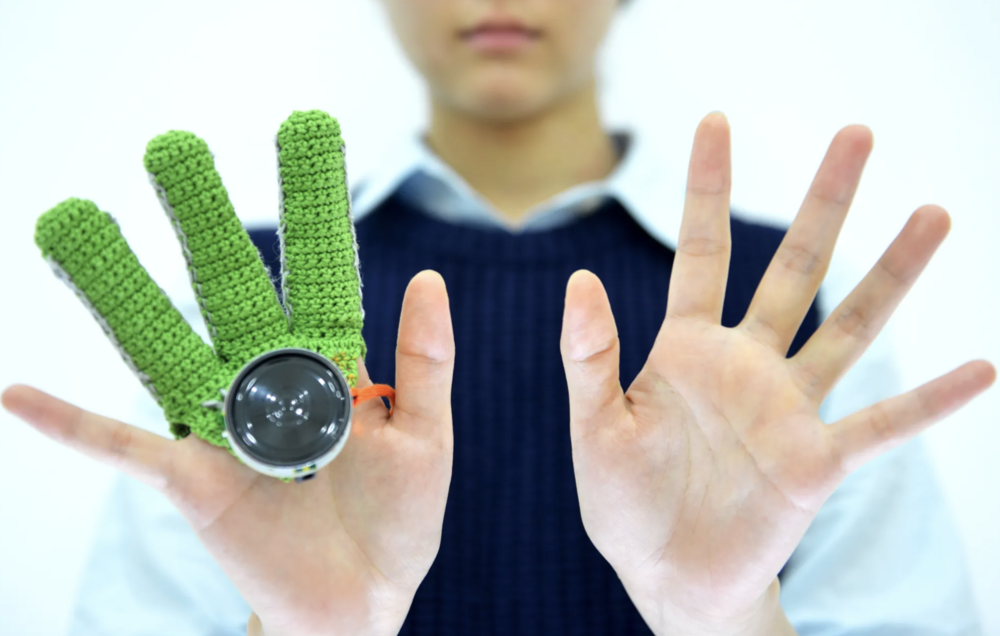
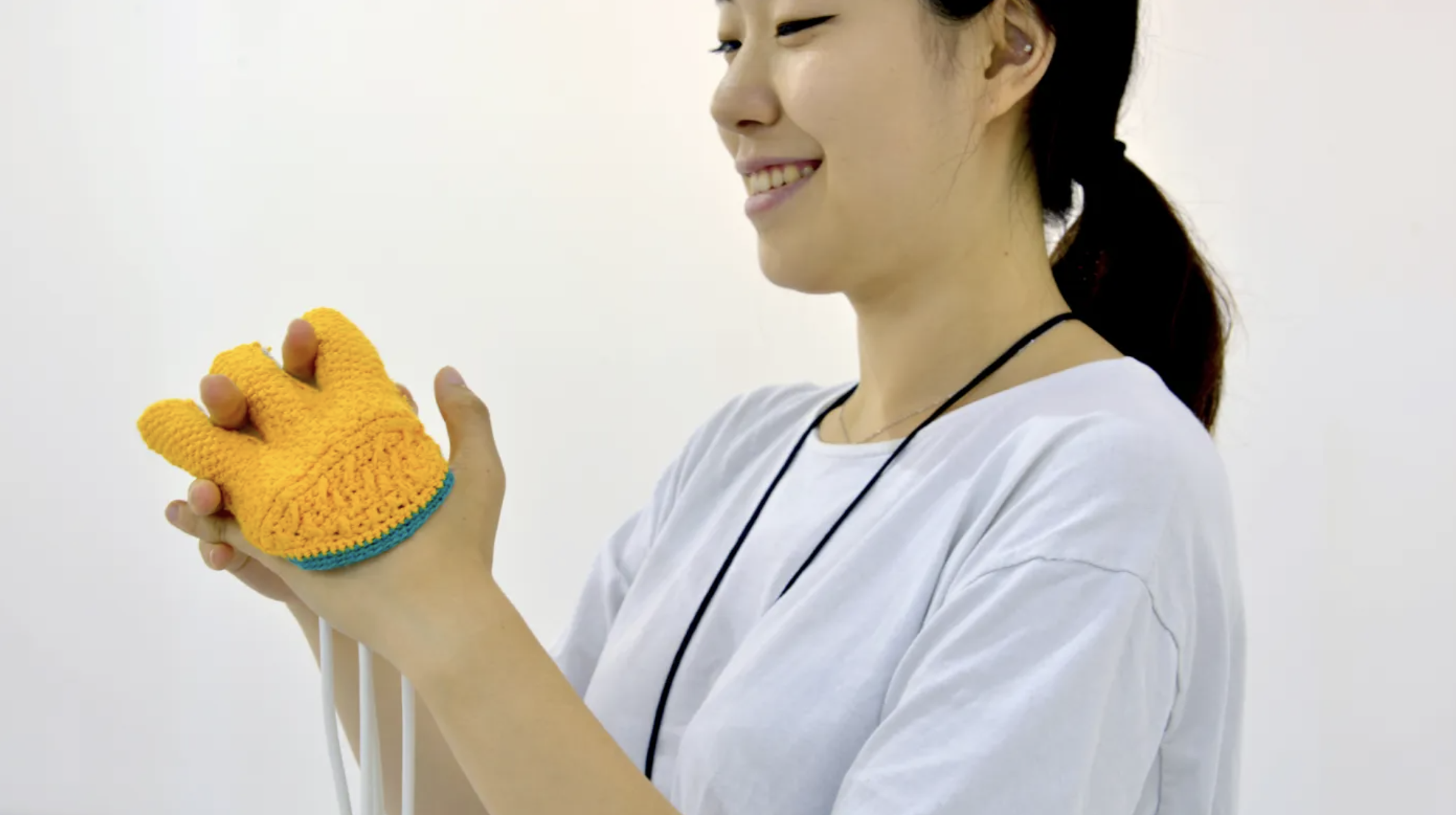
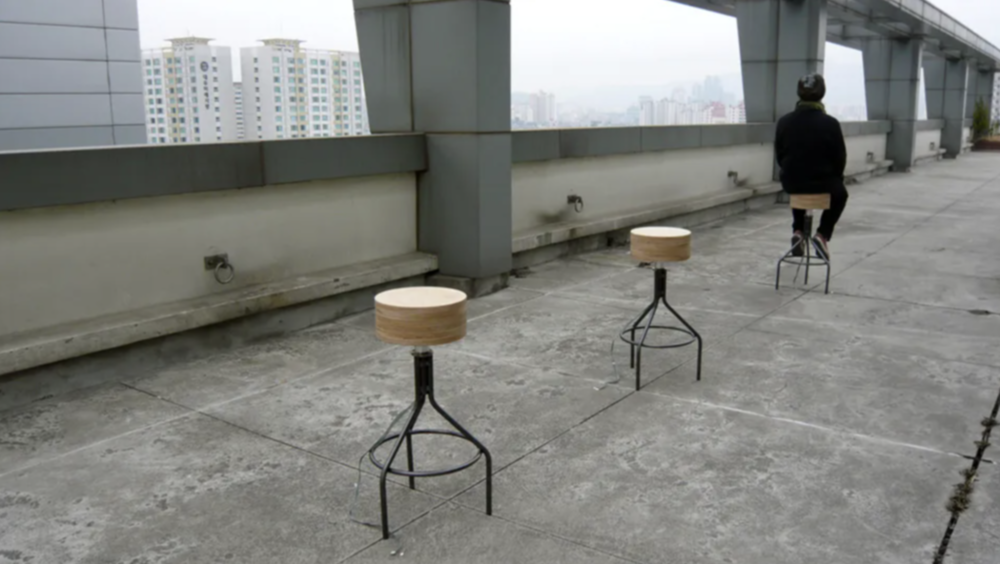
In particular, because they linked the body with sound, Frog Xylophone(2010)1) was described as a “portable electronic instrument,” while works including Super Craft Series-Hand(2014), Kkagji(2017), and Ttwali(2017) were referred to as “analog synthesizers.”
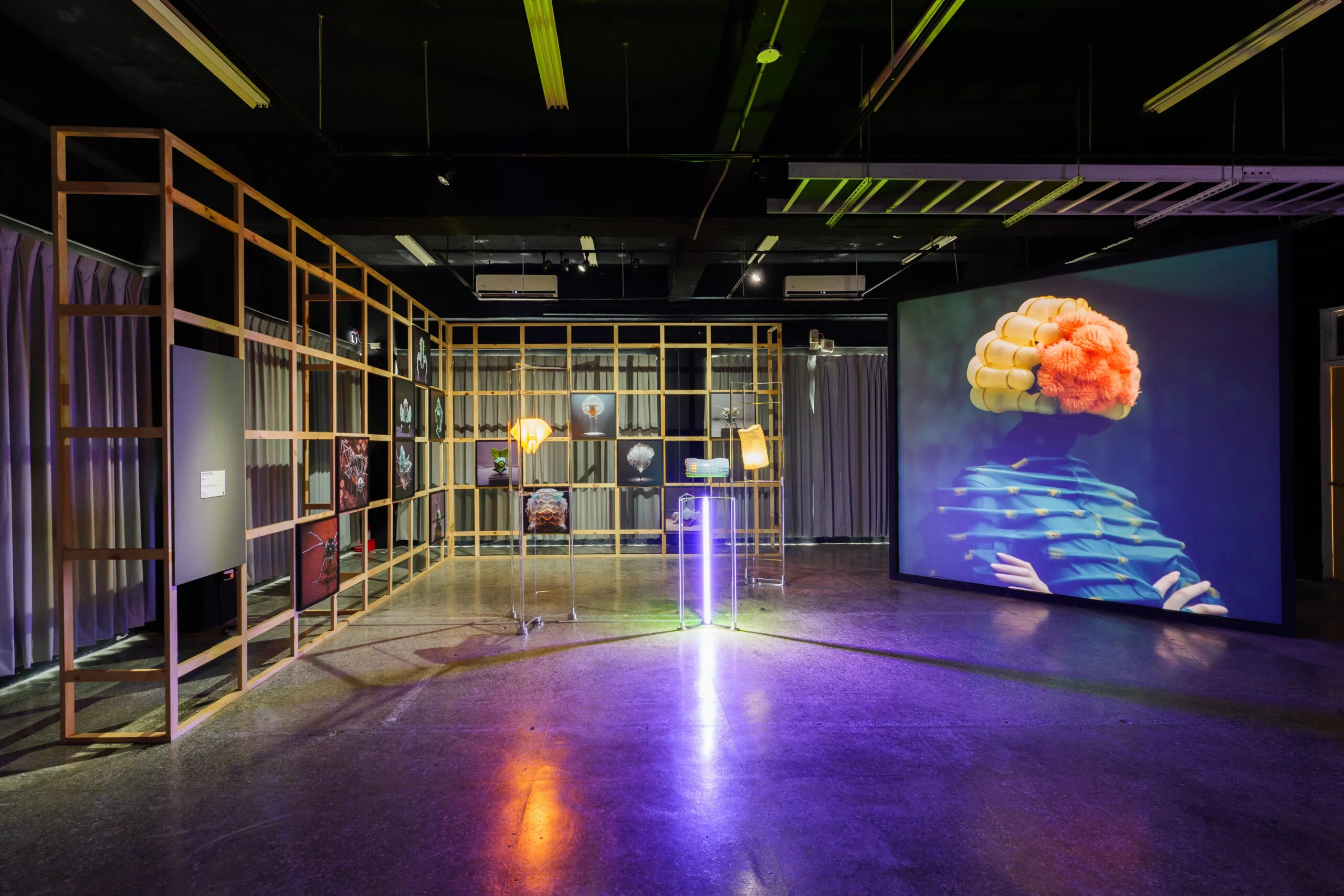
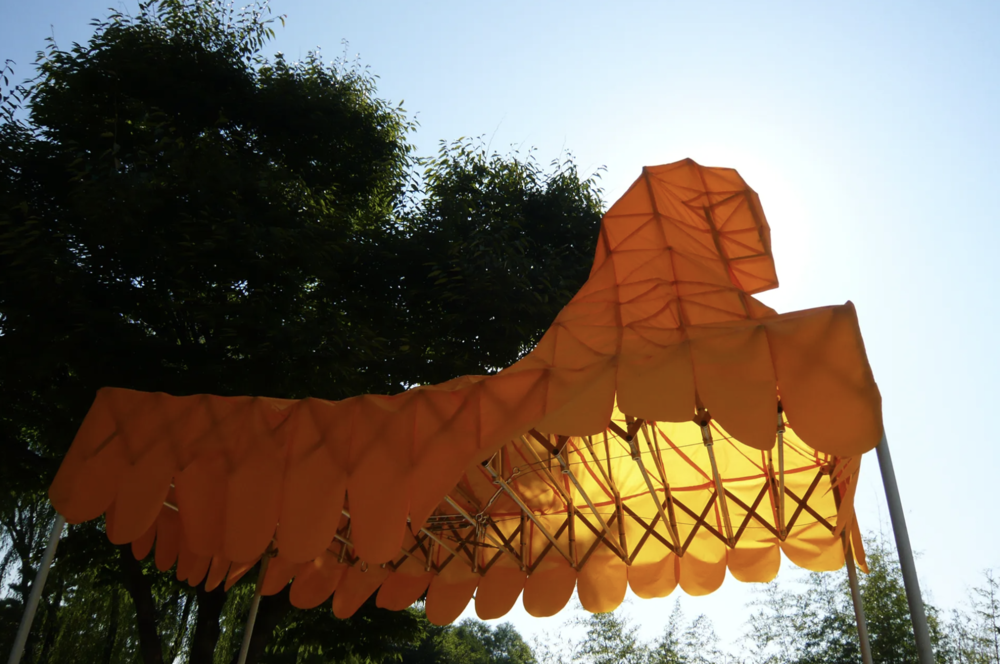
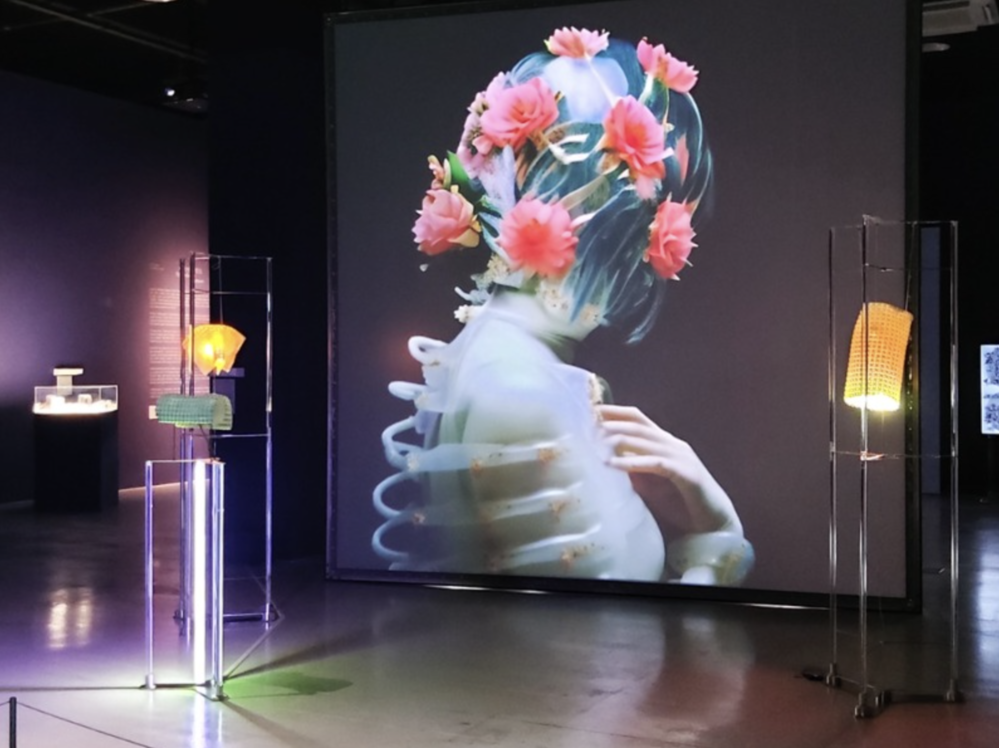
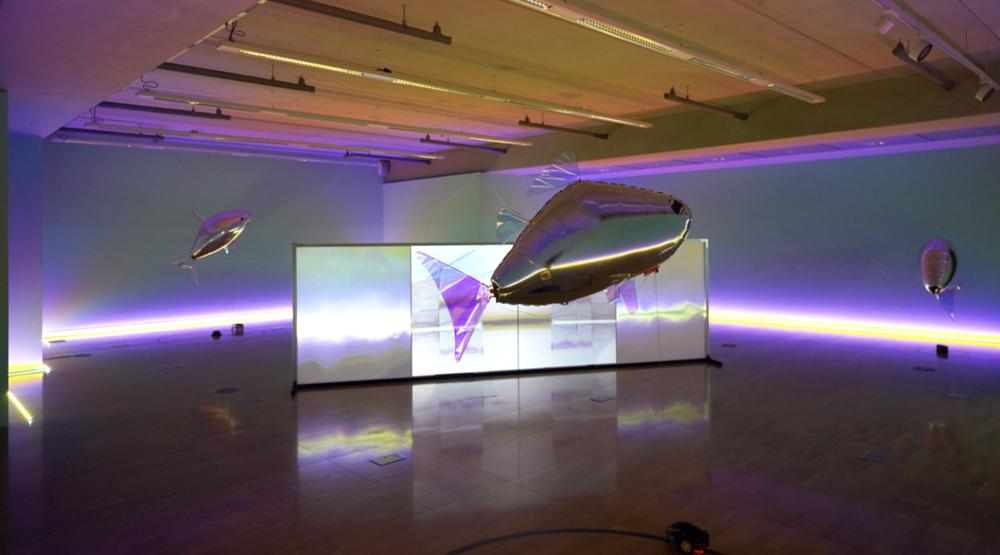
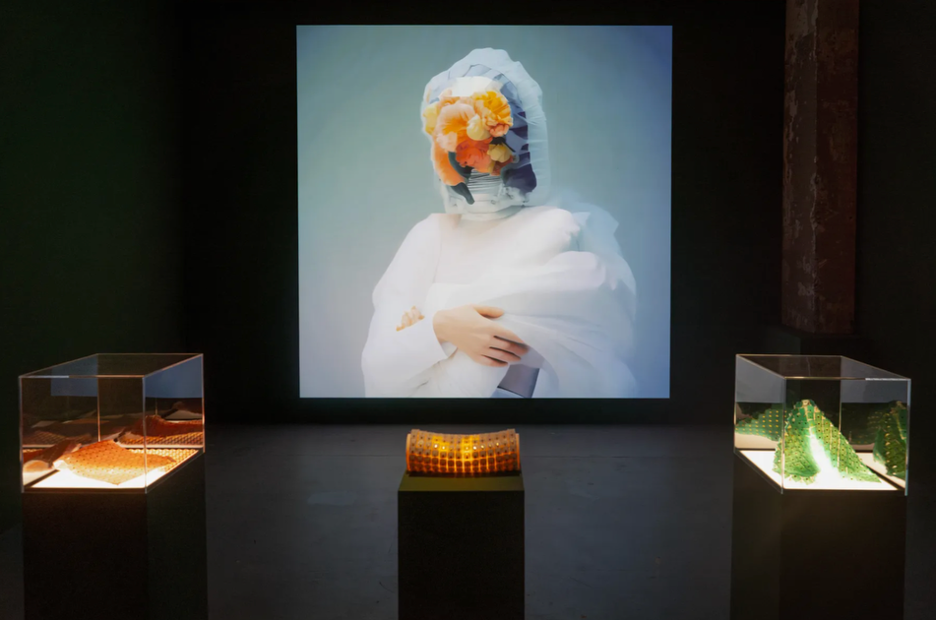
This series later developed into the conceptual investigation of wearables seen in Wearable things for the future(2022), while in more recent works such as Exotic Species in the Robot Ecosystem(2023), Yang connects wearables with exotic species, extending the discussion to ecology and the diversity of beings. If her early works reveal an interest in expanding bodily perception, her recent works go further, encompassing the idea that the very way corporeality is defined is anthropocentric and that this may consequently contribute to a lack of diversity within technological and artistic fields.
Looking at these changes, we can observe not only the development of the artist’s interests and research but also, even if the two do not correspond exactly, what the media art field itself has focused on over time. The descriptors attached to Yang’s works have changed according to those broader currents. Around the 2010s, when Yang’s early works were first presented, interactive art with a strong element of play occupied a prominent position in the media art scene.
Works in which sound and the body were directly connected were therefore described as interactive works or instrument-based works. Later, as increasing numbers of works incorporated digital devices onto the body or connected devices with the body, many media art practices based on human attributes such as sensation, emotion, and behavior were introduced. As smart devices proliferated, this tendency gradually expanded into an interest in wearables.
What, then, do the artist’s wearables mean within this context? Rather than focusing on the design and functionality of wearables that appear to be naturally “worn,” Yang has concentrated on attaching wearables to the body in ways that reveal the narrow gaps and invisible spaces between the body and the device.
The viewer who wears such a device in the exhibition space therefore constitutes a hybrid being. Depending on the currents of the time, these works have been called interactive devices, portable electronic instruments, analog synthesizers, and wearables, yet the artist’s intention lies behind such classifications, in a non-human perspective.
One example that demonstrates this intention can be found in the following research project, which runs counter to the notion of an autonomous human body.
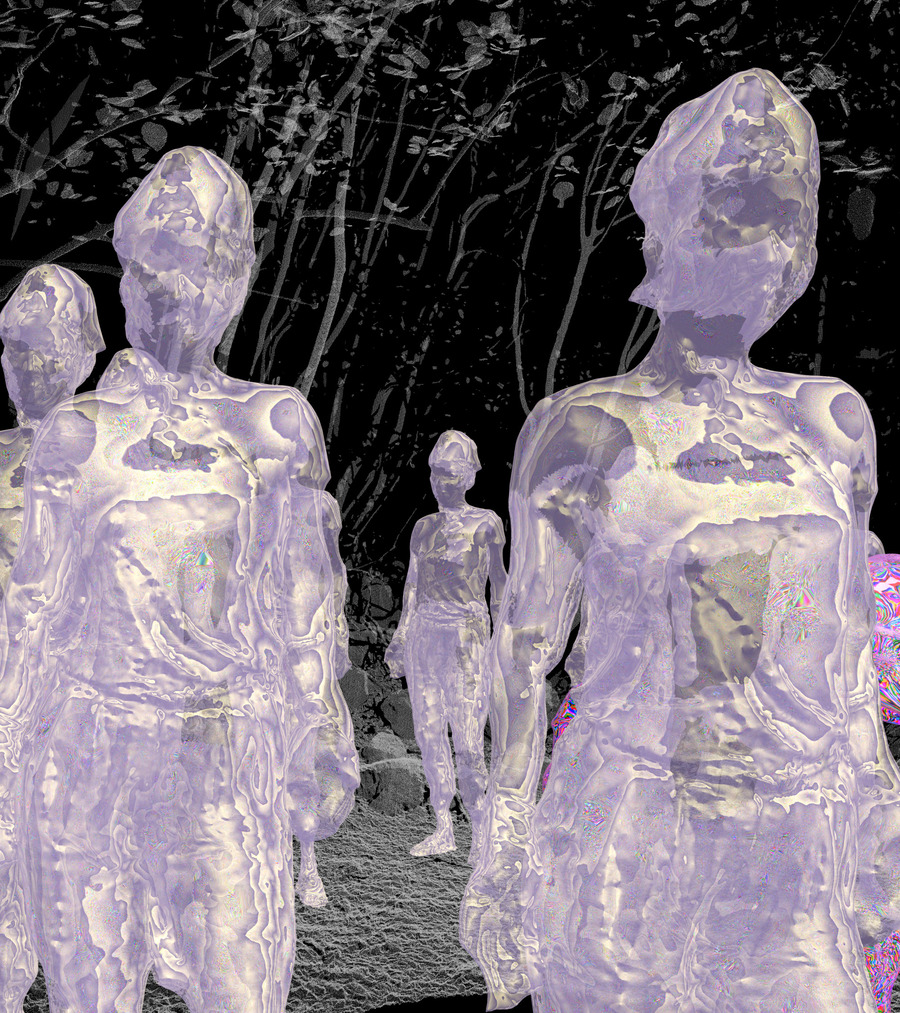
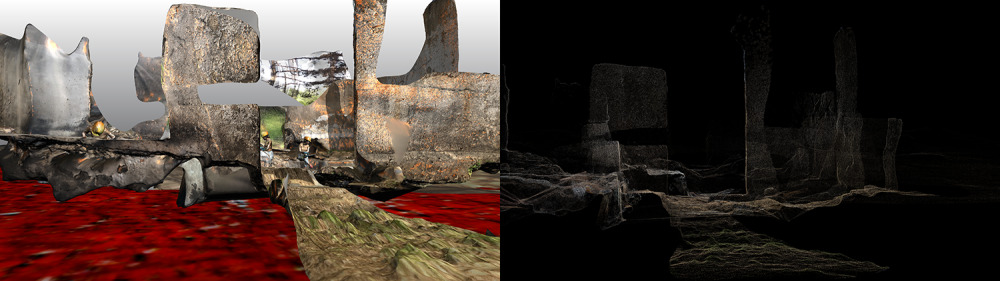
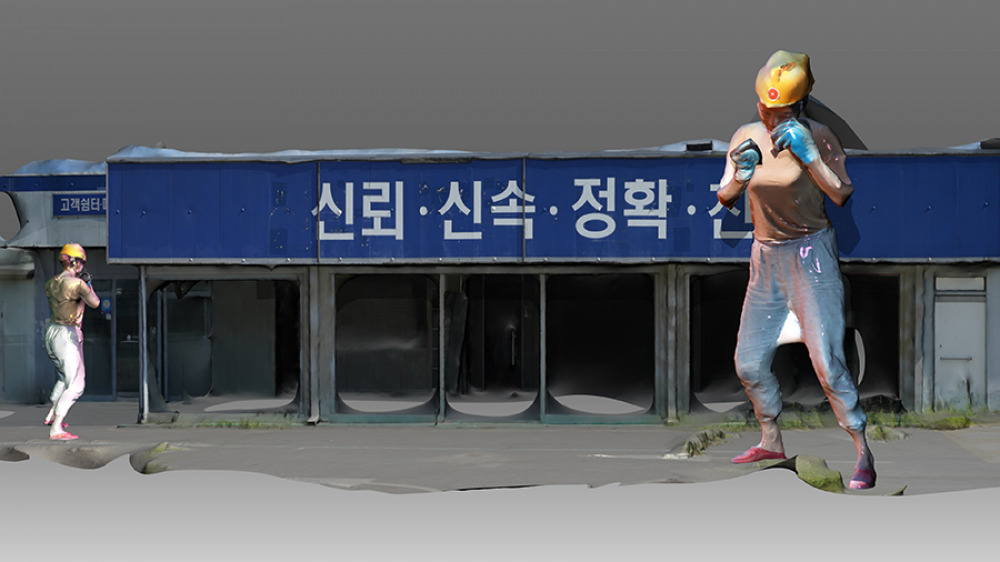
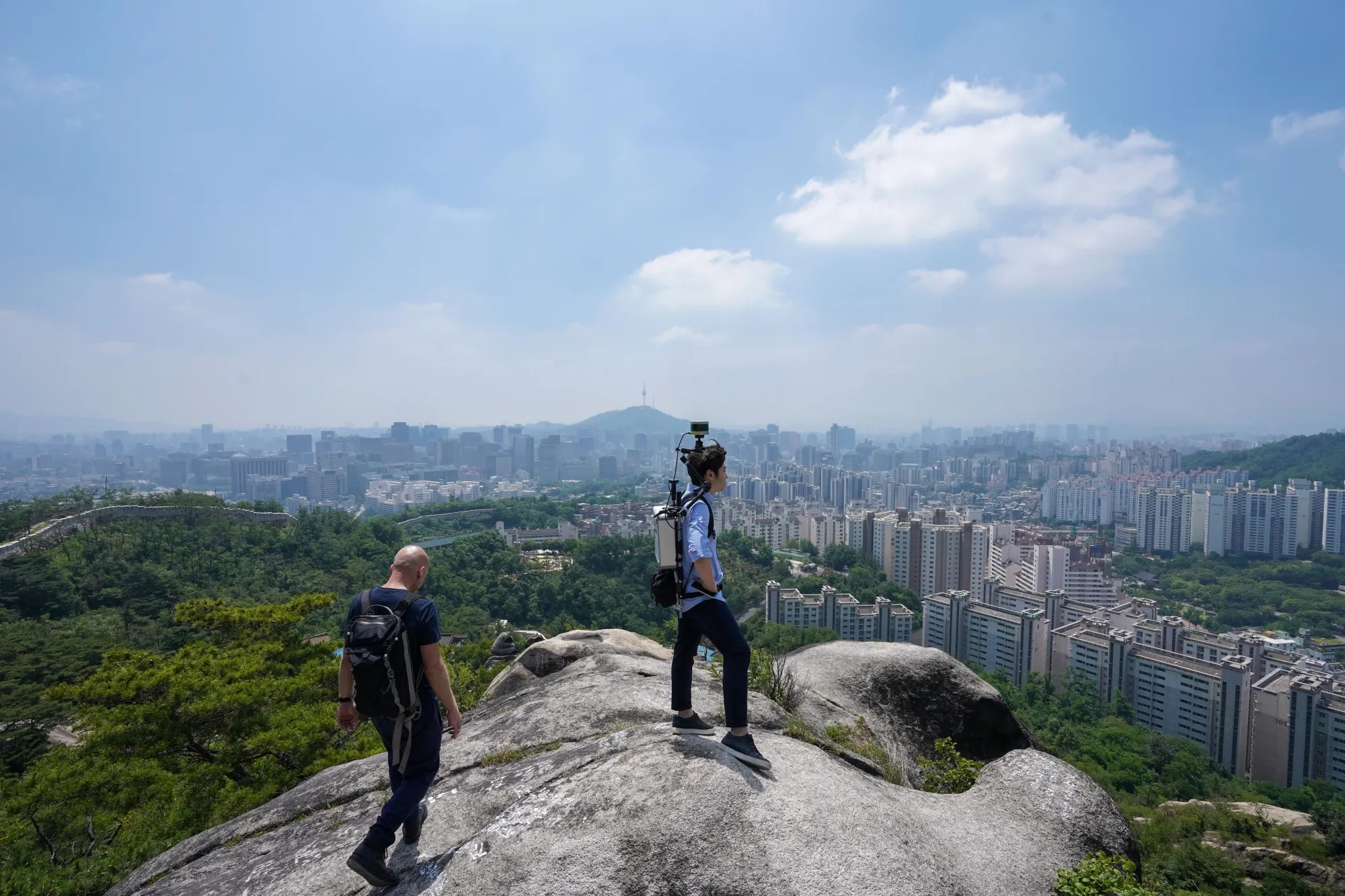
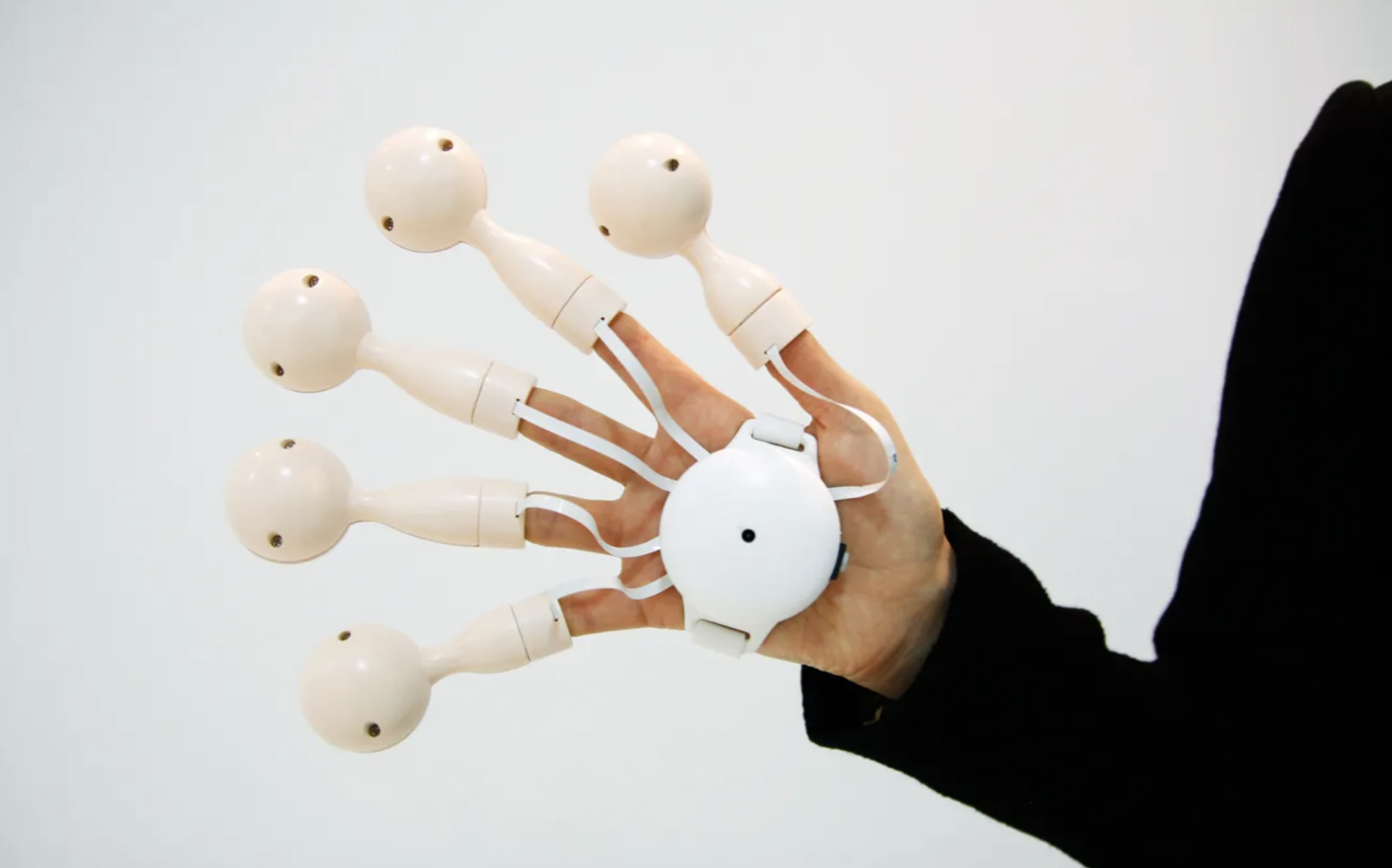
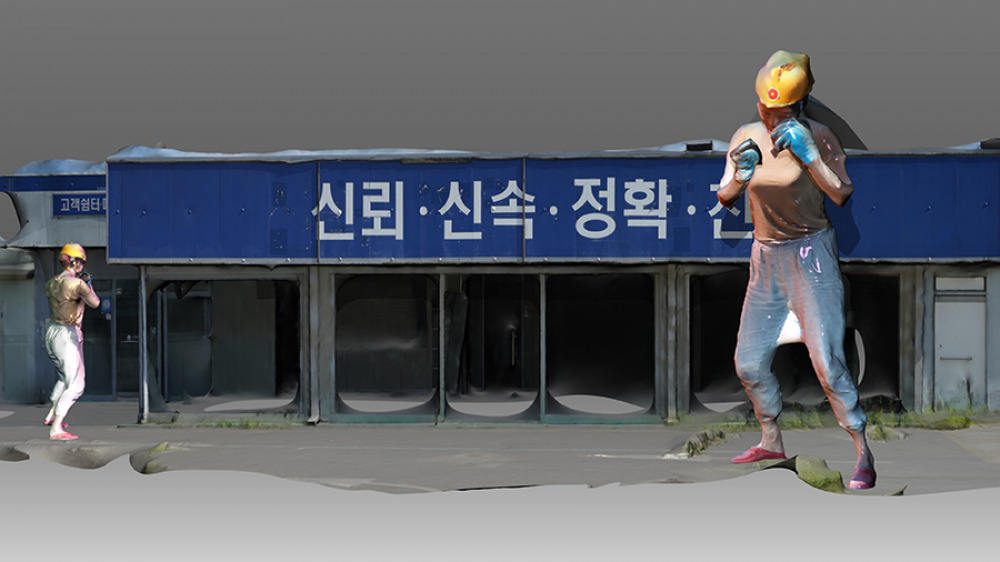
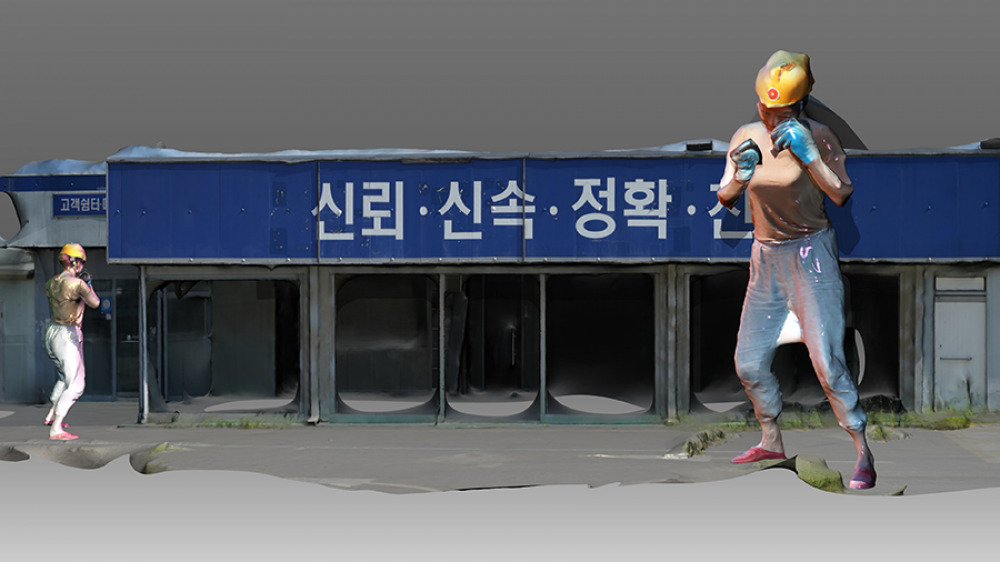
Volumetric Data Collector(2018)2) deliberately erases and avoids the extremely human value of a body endowed with autonomous will, instead instrumentalizing the body so that it interprets its environment by relying on technological input—in this case, a LiDAR sensor. The human who “wears” the LiDAR sensor becomes a hybrid entity whose purpose cannot be discerned, which the artist describes as a “human captured by technology.”
If something directly “worn” on the body is called wearable—that is, something that can be worn—this work, despite likewise involving the act of wearing, might instead be considered closer to something “wornable,” something that can be imposed upon or worn onto the body. As one attempt to reverse an anthropocentric interpretation of technology that attaches “-able” to things under the assumption that everything is possible, the artist combines -able (wearable) with the notion of exotic species.
Her most recent interest involves research that interprets technology by analogy with exotic species—beings that are not indigenous but have nevertheless settled in a particular environment.
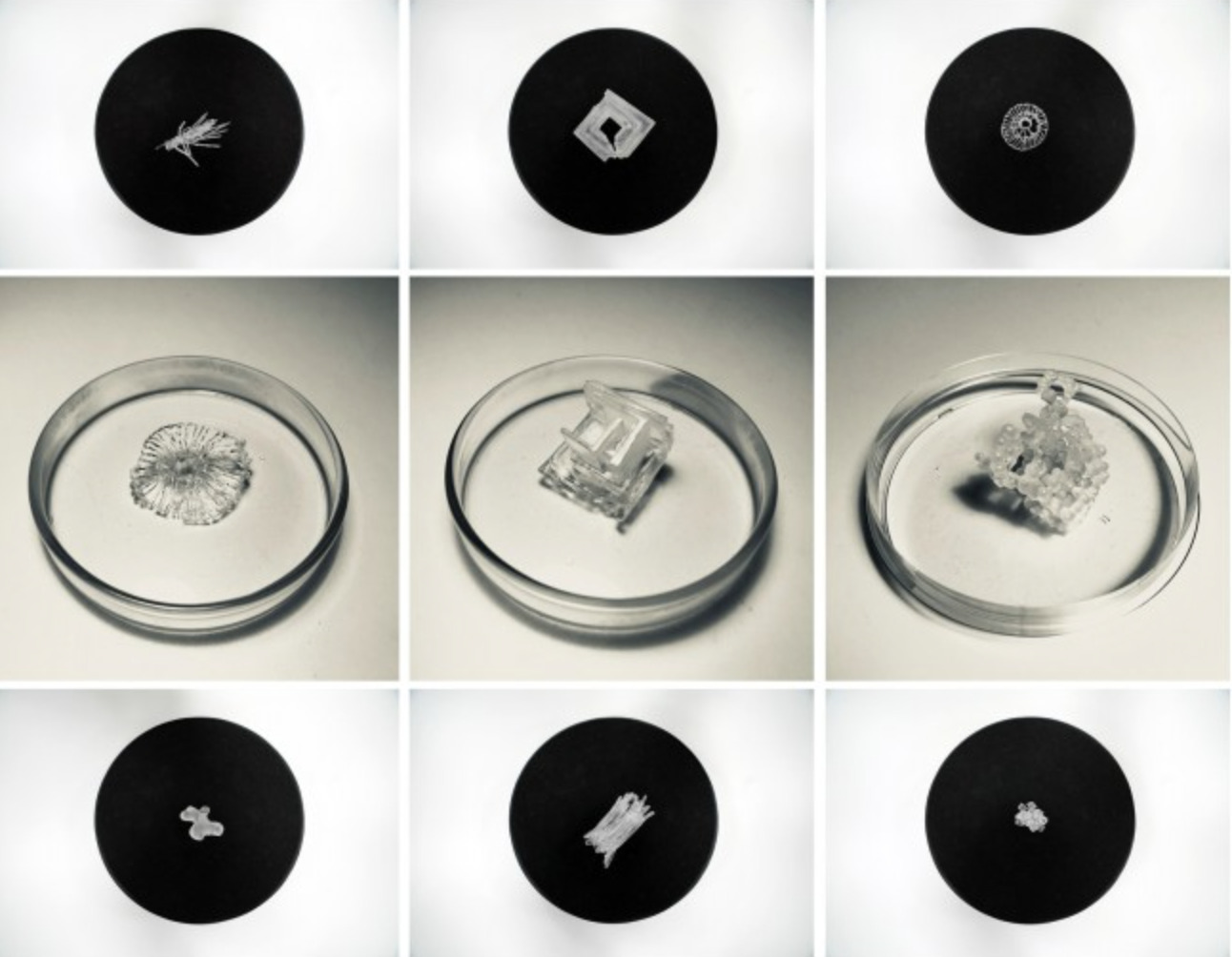
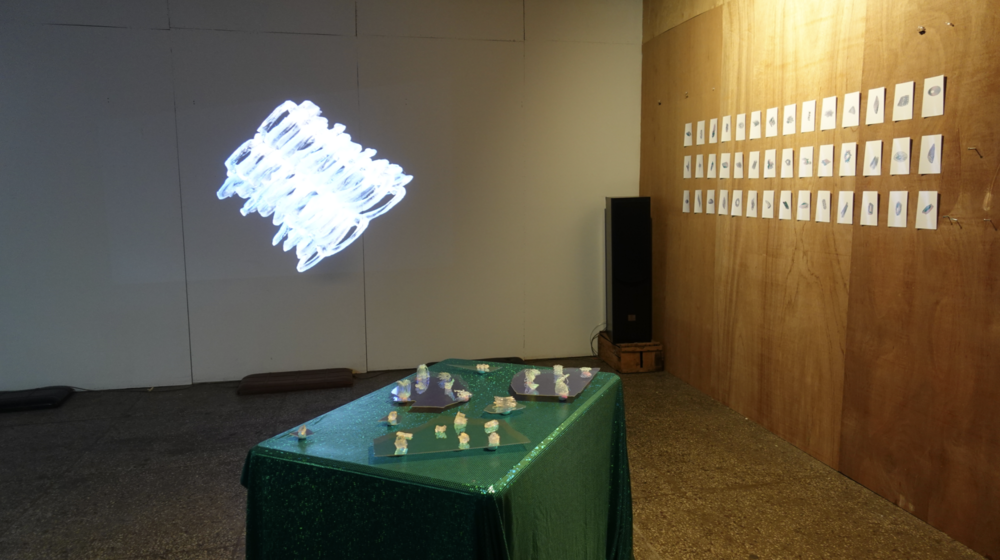
As another example of the foreign and the hybrid, Sookyun Yang connects data to the body introduced above. Sensory, Crystallized(2018) concerns data that cannot be translated between 3D modeling and VR—in other words, a kind of glitch. The artist records an action in VR: that is, some bodily movement performed by a healthy body possessing the autonomy most of us are assumed to have, and therefore an action heavily invested with human values.
She then renders it through 3D printing, transforming it into something that possesses mass. At first, a fragmentary interpretation following trends in the media art scene may be possible. In other words, one might conclude that every action we perform while connected to a VR device is data and therefore invisible, whereas the body, by contrast, is visible.
As with countless other works, one might also discuss VR by describing it as moving between the virtual and the real. Yet is this not a rather dry and formulaic description of the world?
According to an apparently immutable formula of conventional media art, it can be laid out through the uncluttered grammar of “body -〉 data -〉 matter,” or “action -〉 virtual -〉 real.” These may well be among the most frequently used terms in media art, but what deserves attention in Sookyun Yang’s work is that not all of these processes can be represented by the formula “-〉.” At times, this symbol simply does not apply.
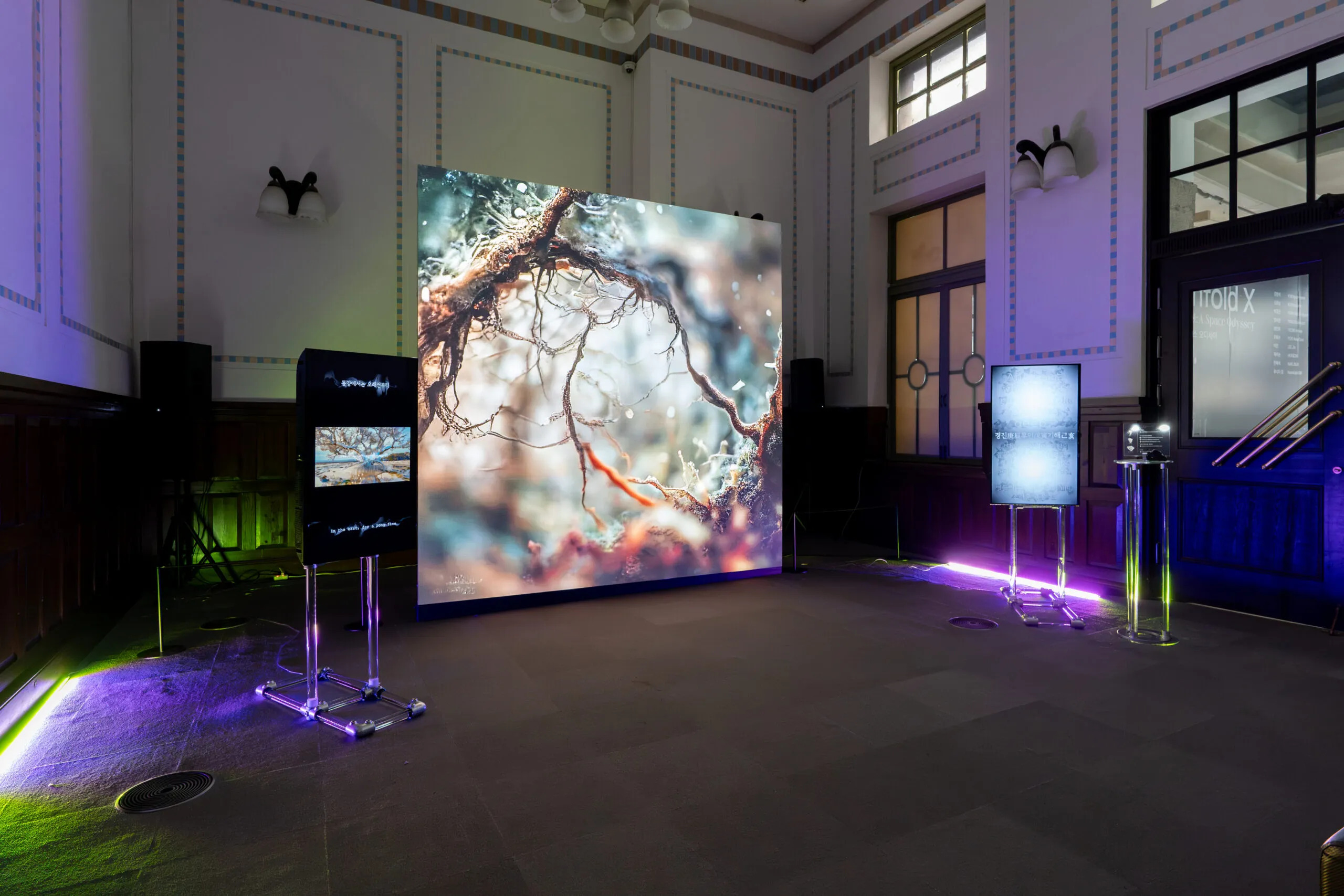
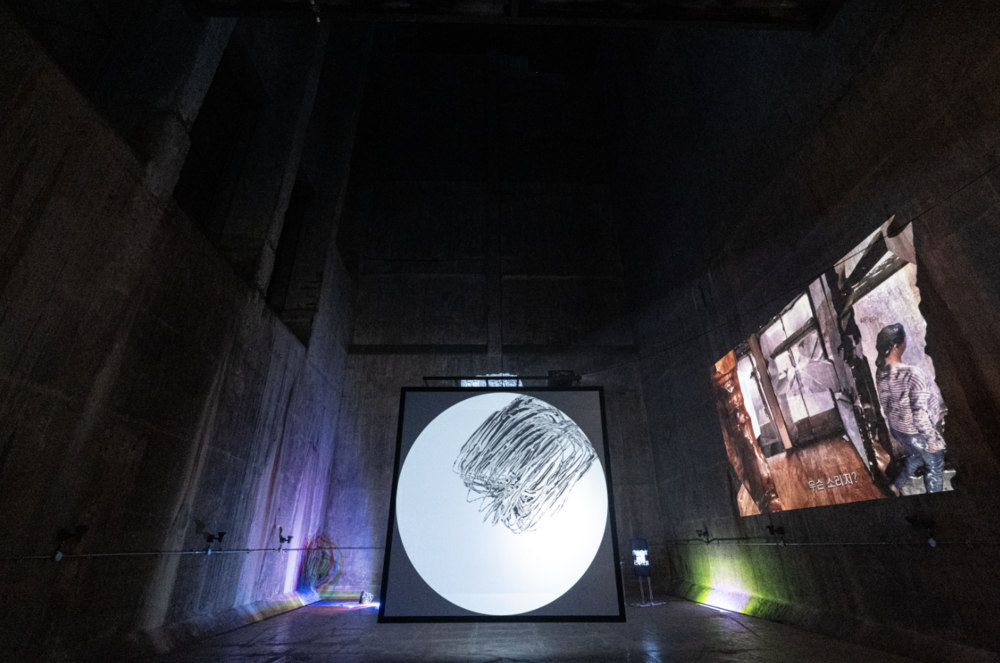
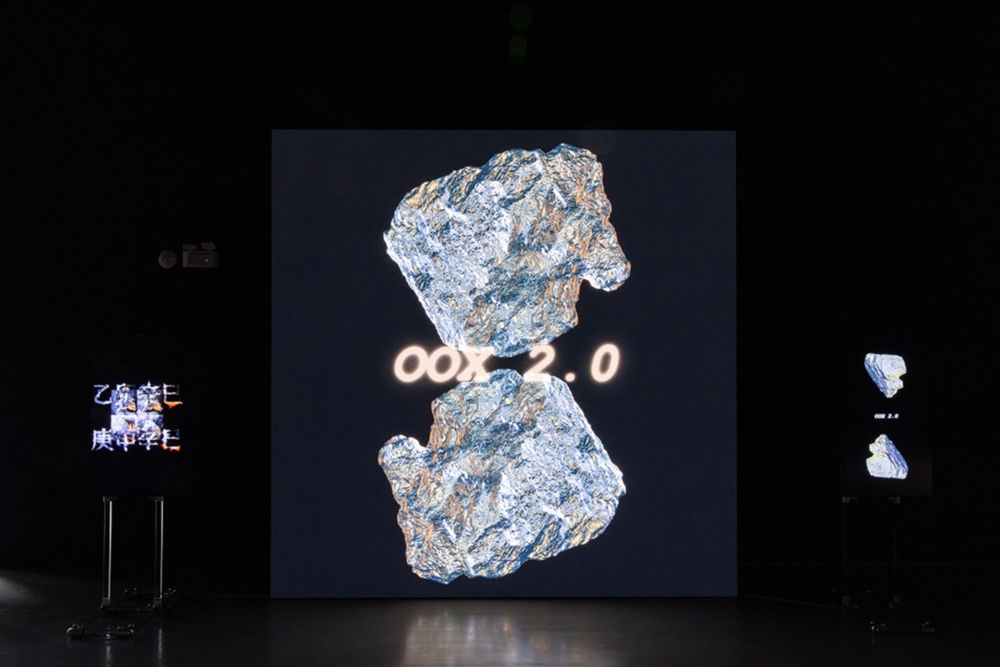
If the immutable formula above can be broken, how should we now understand this technology? Two possible answers, Data, we can meet(2019) and From the OOX(2020), overturn fixed definitions of data and depict defects, problems, buffering, and collapsing worlds. According to the artist’s works, not all data can be converted; nor does data simply produce a clean output.
Instead, it deteriorates and disappears, or attaches itself to unexpected places and creates hybrids. As we trace how the artist’s work has changed and which concepts have influenced her, we can also recognize how greatly our own attitude toward data has changed over the past fifteen years.
Not only in Yang’s practice but also within recent currents in the media art field, works that overturn this grammar of data materialization have begun to appear with some frequency. In certain contexts, data is now a resource; conceptually, then, perhaps it may even be something that possesses mass.
At this point, Sookyun Yang makes even clearer that the conventional formulas of body -〉 data -〉 matter and action -〉 virtual -〉 real cannot be satisfactorily fulfilled; that we, who enthusiastically consume these systems, might ourselves all be reduced to parts of data; and that the contaminated state called a glitch cannot represent or express humans, nature, or society.
Through works that twist our tendency to diligently carry our world into the world of data despite knowing that no technology can reflect reality, the artist casts doubt on the abstraction of data. Through her works, she also makes us “wear” technology on our bodies in various ways, plunging bodies that we assume to possess autonomy into a profound illusion. At the very moment of wearing when we encounter this illusion, data disguises itself as the skin of a wearable, as though it had always been our own outer covering.
Where does foreignness in digital technology come from? Media art has repeatedly defined digital concepts such as pixels and data as invisible and non-physical. Early works in media art therefore concentrated on converting analog signals into digital signals or vice versa, or on making the invisible visible and the inaudible audible. To move a little further beyond practices that conveniently translate between the visible and invisible, the audible and inaudible, we might pose the following question.
Is the proposition that “the digital is invisible and non-physical,” which media art has long taken for granted, an unquestionable truth that cannot be reconsidered? Moving one step beyond this longstanding definition, might it be possible to view the relationship between things that possess mass and digital computation from a different perspective?
Following the artist’s practice, I might have titled this essay “Body and Matter,” but in order to move away from these stale concepts and terms, I have instead written “Things That Move Autonomously, Things That Have Mass.” As Sookyun Yang’s practice suggests, might foreignness also be discovered within attempts to reread and newly interpret such firmly established grammars? PA
[Footnotes]
Jeonpasang (Sookyun Yang, Park Eol, Na Daero)
Seoul LiDARs (Sookyun Yang, Choi Jinhoon, Hyun Park)