II. Vitality Drawn Forth through an Expressionism of Neutrality
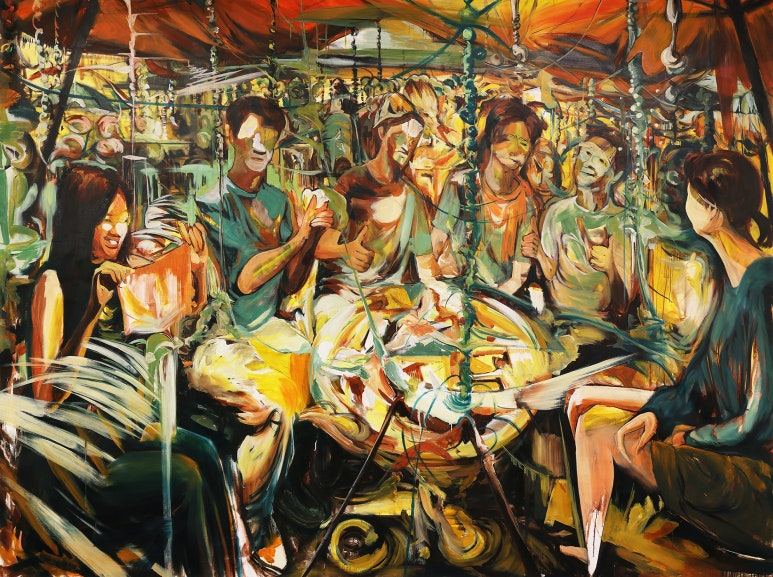
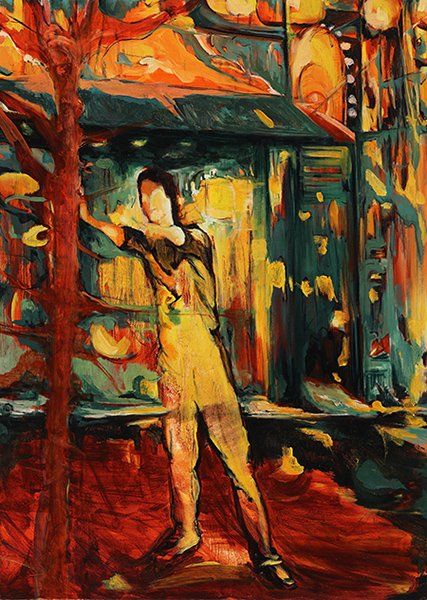
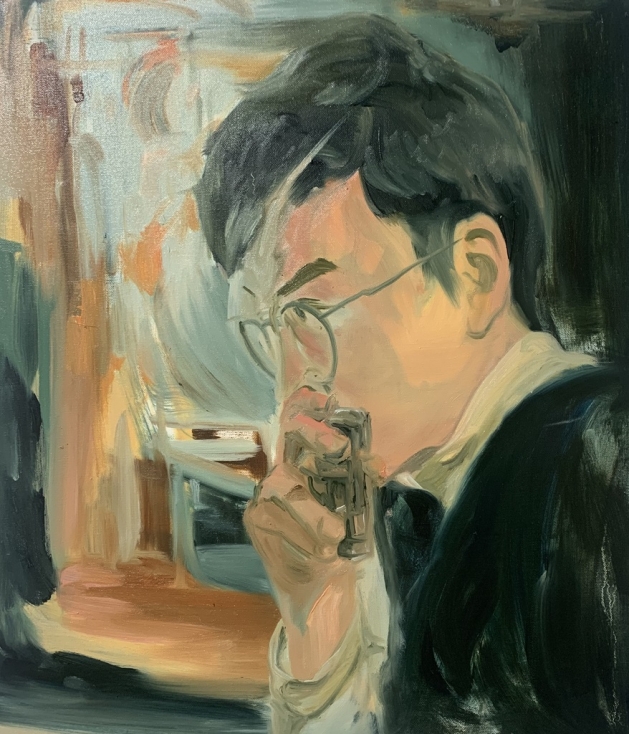
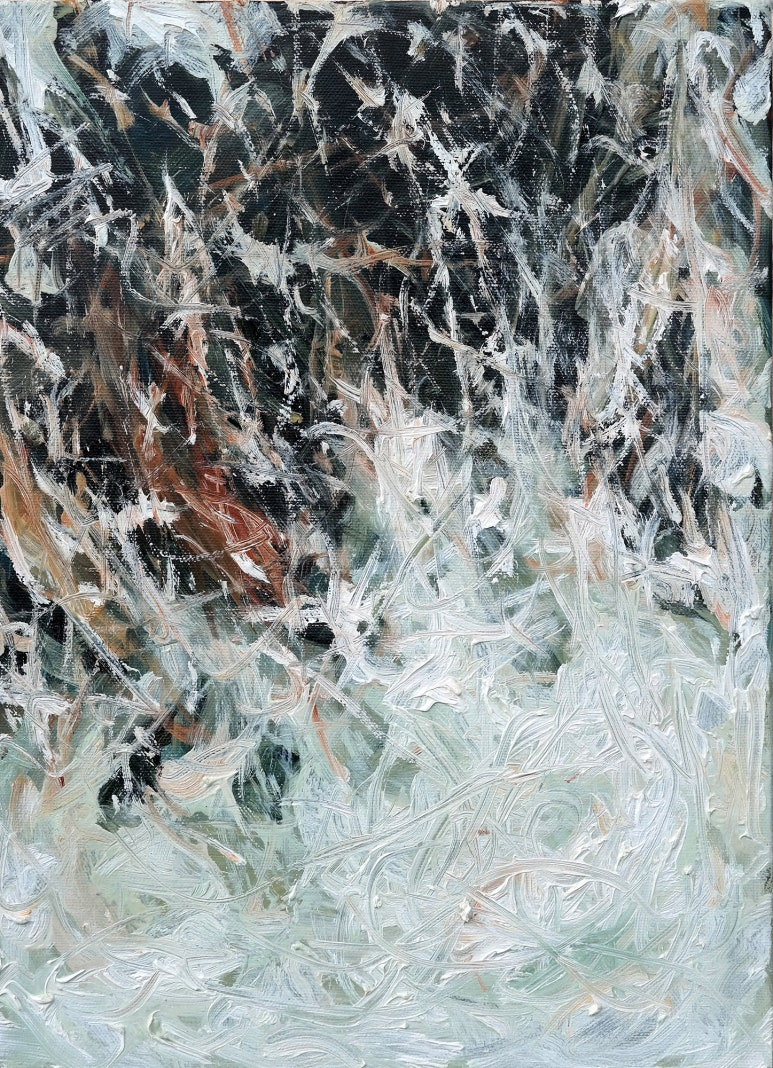
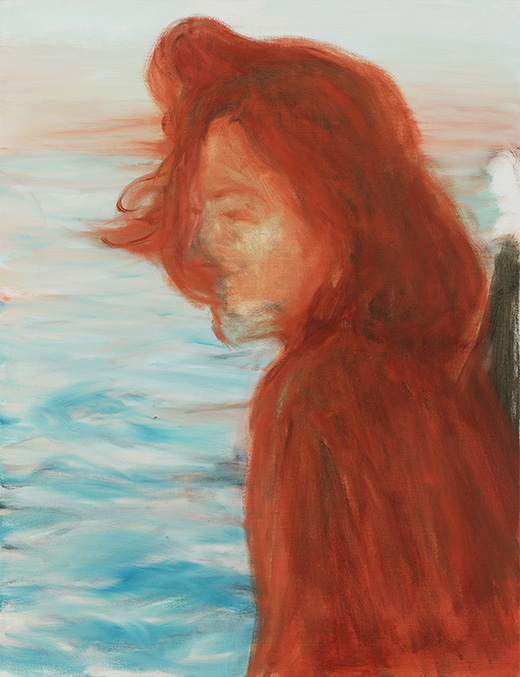
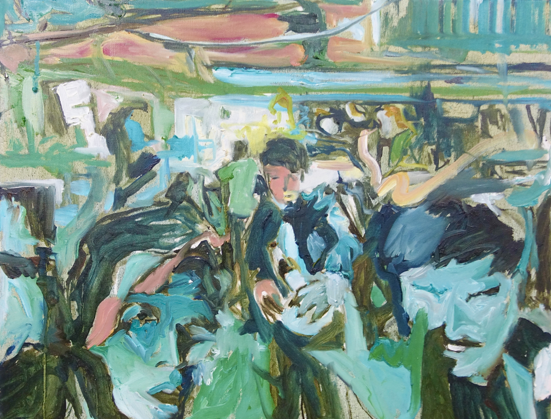
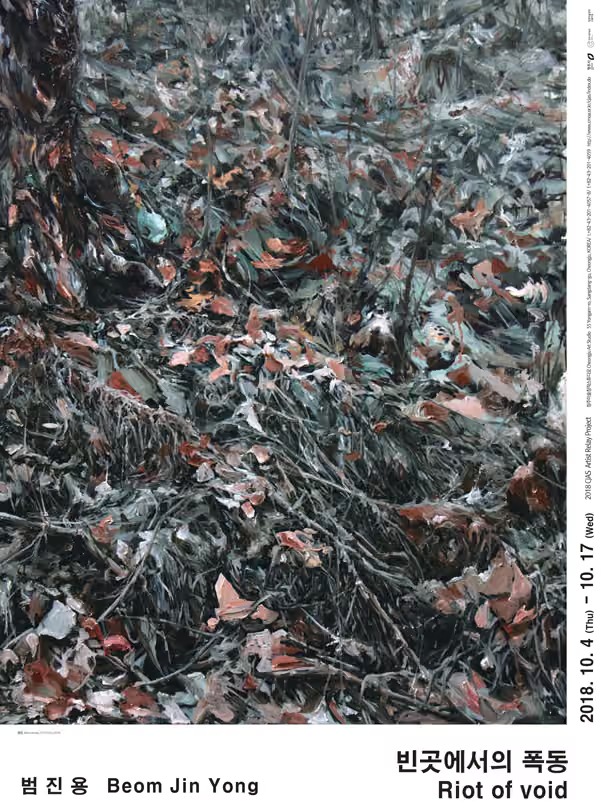
Expressionist visual language is particularly well suited to capturing the writhing vitality of the “nameless natural objects and human subjects” summoned into his works. His method of mixing paint by applying it to the canvas and dragging it across the surface, using the canvas itself like a palette, together with vigorous brushstrokes that move freely in every direction and dissolve the boundaries between objects, actively draws chance out of an unplanned mode of painting and thereby intensifies the language of Expressionism.
What is the language of Expressionism? It is a subjective language that manifests inner emotions such as libido. Is libido not the boundless psychic energy arising from the id, represented above all by sexual desire? Accordingly, the ethics and institutions of modern society, constructed through the suppression of instinct—an “existence that resists control”—as well as rationalized systems of order within art, become objects of negation and dismantling in Beom Jinyong’s artistic practice, which employs an Expressionist language.
Through this language, he dismantles structured forms and narratives in order to construct another kind of order. In other words, through an Expressionist language that advocates an “order within disorder,” he simultaneously deconstructs the narratives of everyday life and reorganizes the grammar of his own artistic world.
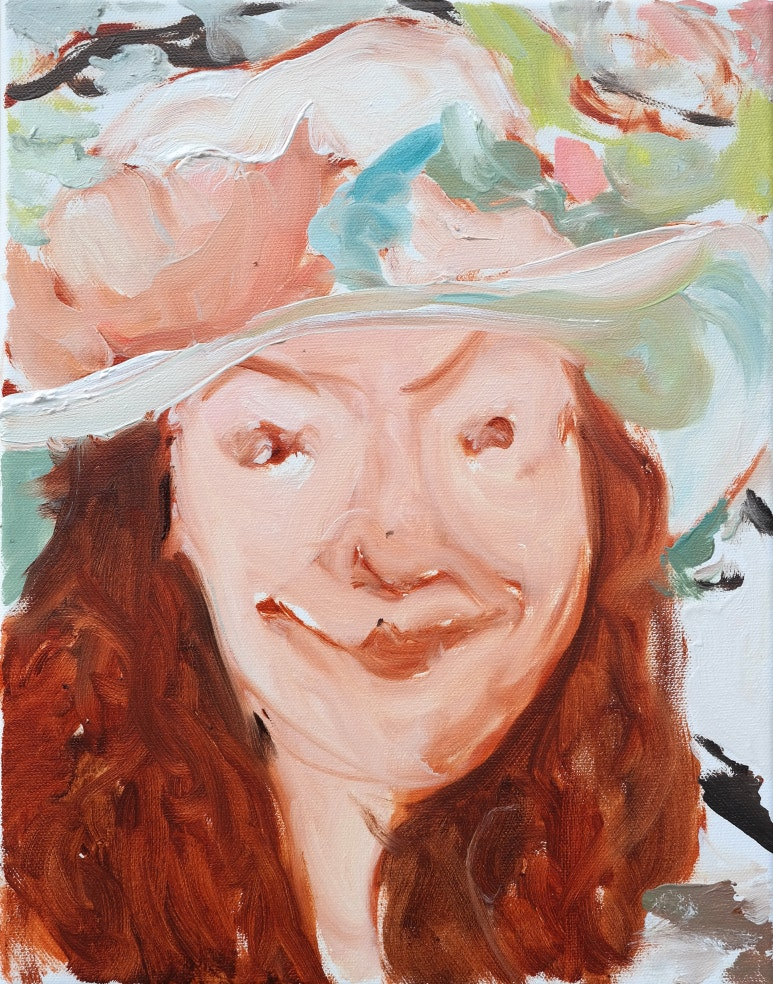
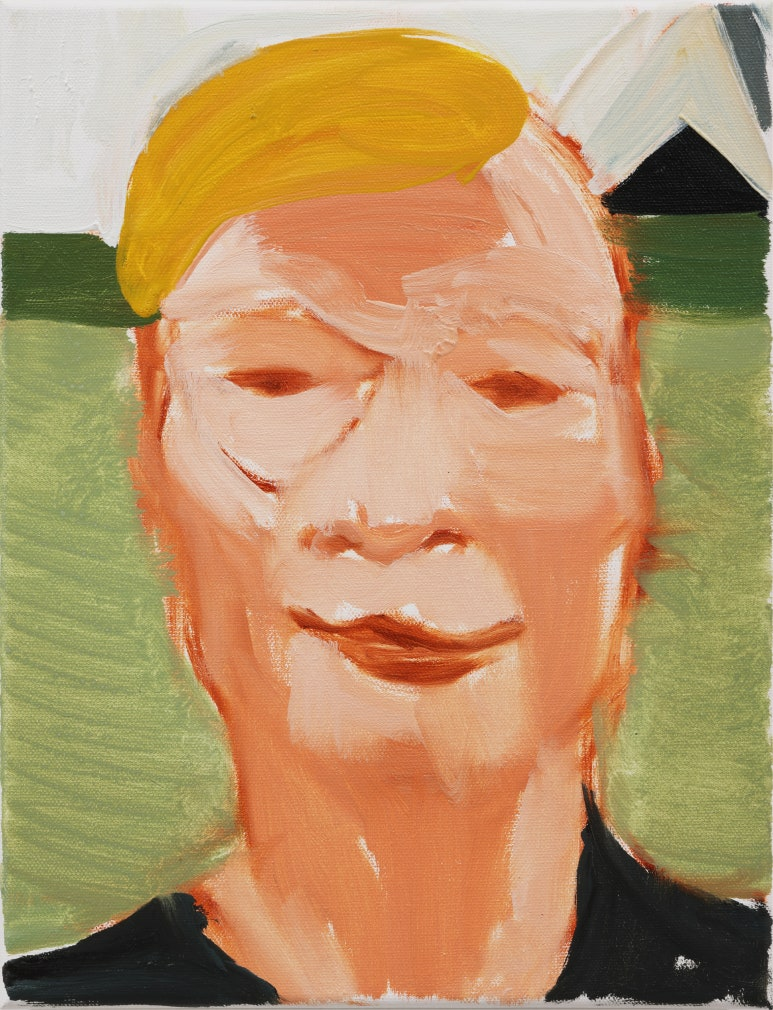
In his paintings, Expressionist brushwork that actively exploits the slow-drying materiality of oil paint, together with spontaneous and improvisational strokes produced through rapid, energetic handling of the brush, visually breaks down the boundaries between objects, or between objects and figures, while preemptively dismantling any narrative that might form between them. In doing so, he allows viewers to set aside verbal explanations and semantics and concentrate fully on the aesthetic objects captured by vision itself.
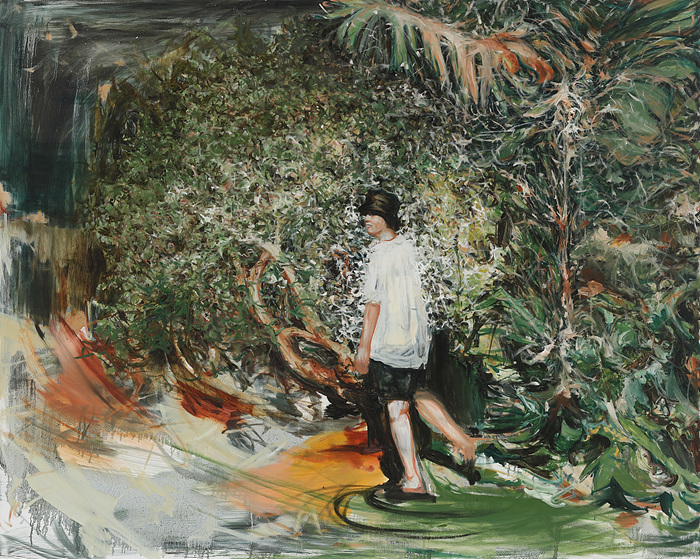
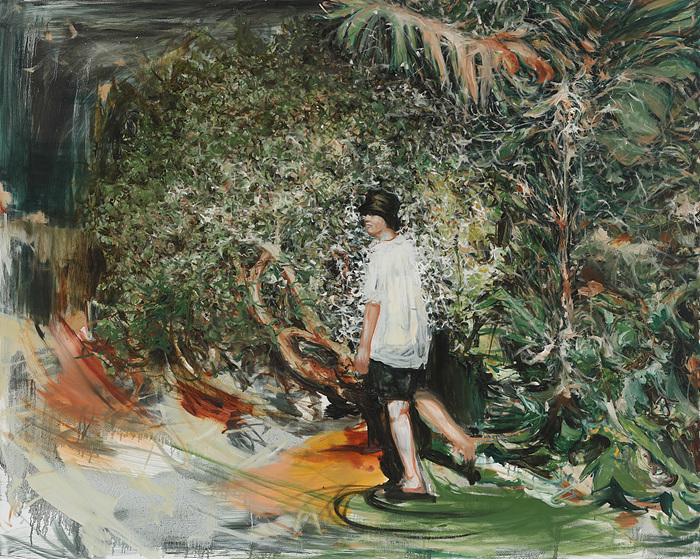
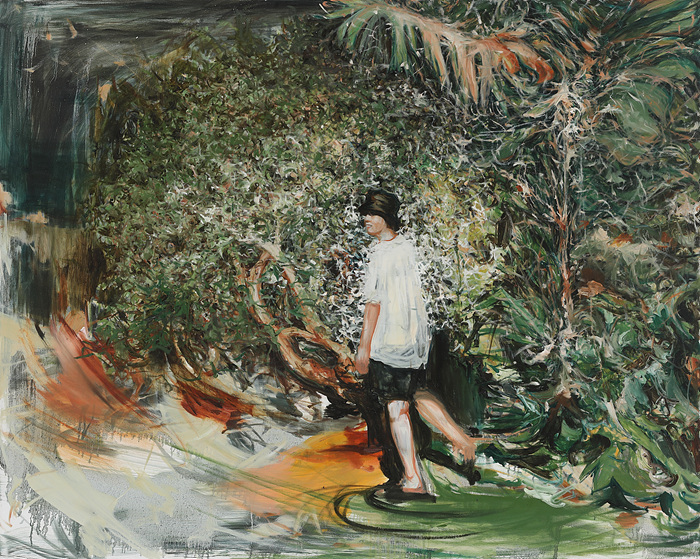
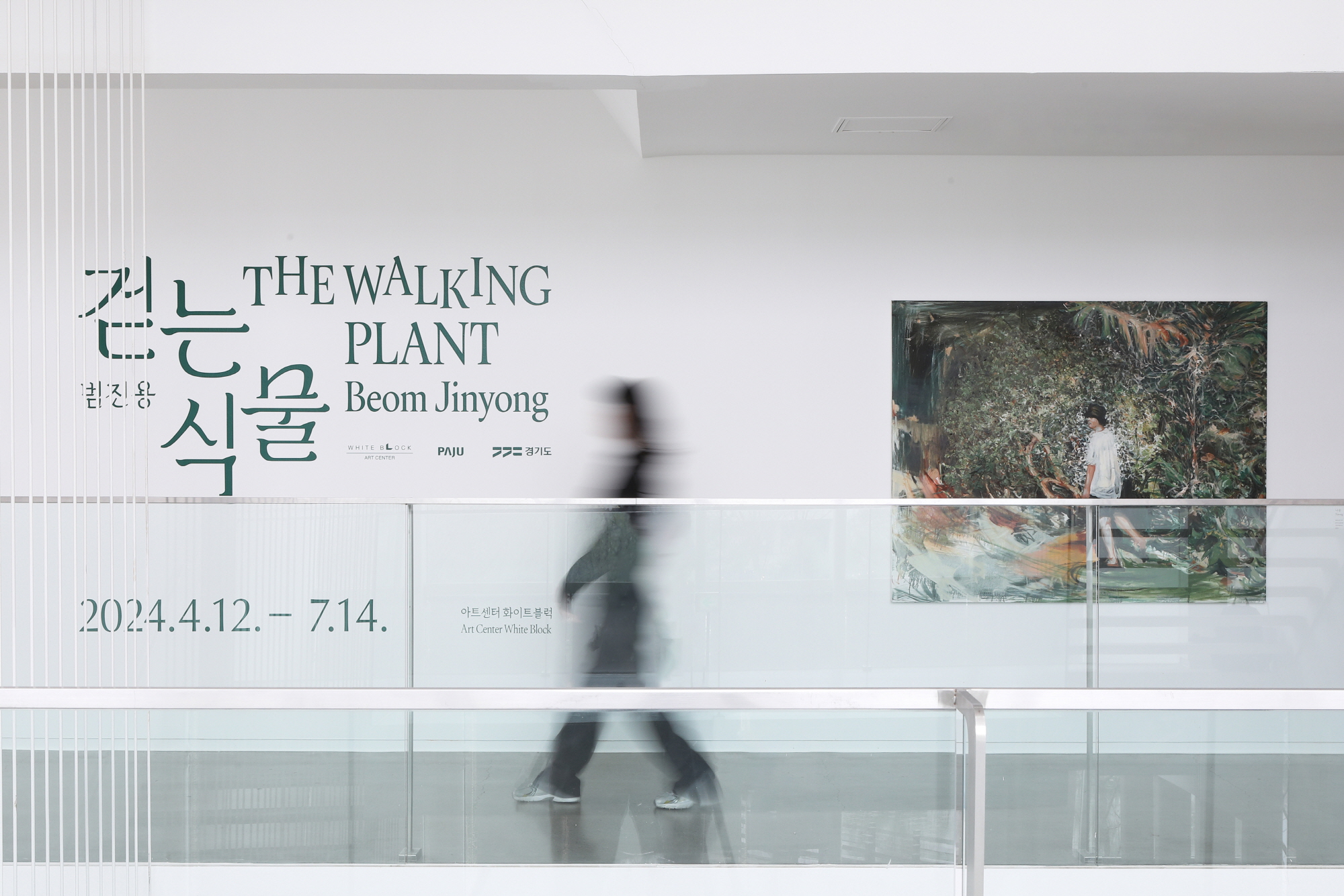
Consider the works. In Naong (2021), a figure dressed in white walks against a forest or garden densely filled with rough Expressionist brushwork and thick impasto, while Mrs. Geumja (2021) depicts a figure standing before an enormous plant laden with viscous green paint, with sketch lines left intermittently visible as though the work were an unfinished drawing.
As their titles suggest, these works may lead viewers to trace Beom Jinyong himself or a woman named “Geumja,” yet any attempt to identify them as specific individuals soon fails. This is because Beom Jinyong is not particularly interested in conveying the message of his painting through the identity of a specific person.
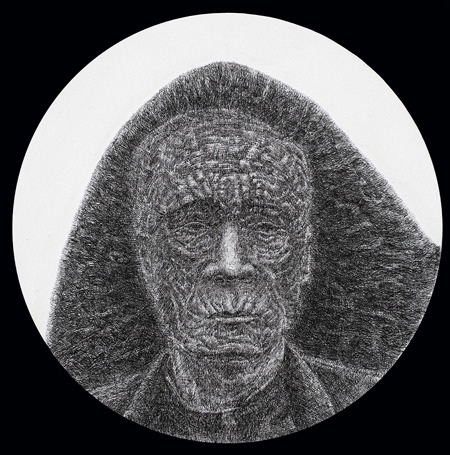
Although each figure is an individual and is, to some extent, called or referred to by what resembles a real name, the figures are treated either as part of the landscape, assimilated into nature, or effectively rendered anonymous. Their ambiguously or vaguely depicted facial features further erase the significance of specific identity and contribute to an emphasis on anonymity and namelessness.
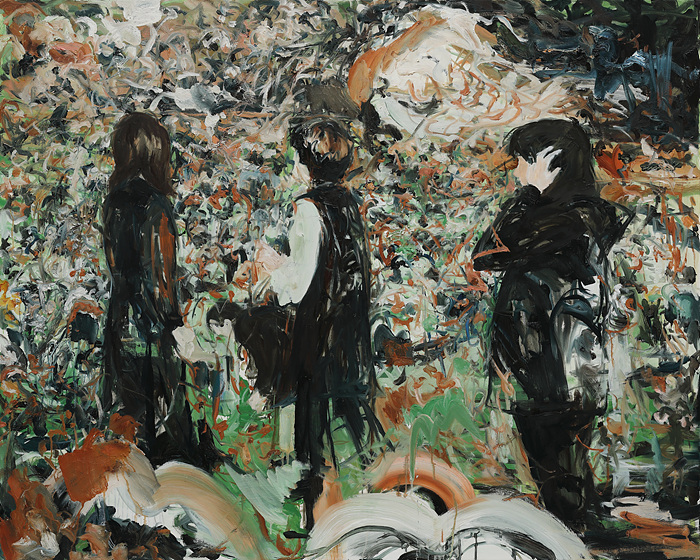
Consider also A Flower Bed of Crows (2020), which captures the backs and profiles of three figures dressed in black standing in a flower garden whose background is formed by free and spontaneous brushstrokes resembling hastily scrawled text. The work suggests the ominous signs of some impending event, yet it readily resists any attempt to grasp a narrative beyond the vague tension created by the separation between figures and background.
Likewise, Snow Day (2020), which depicts livestock resembling black goats wandering through the yard of a quiet rural house amid falling snow, presents a tense pictorial surface through broad brushstrokes and Expressionist language, yet does not convey any particular narrative beyond the modest scenery of everyday life.
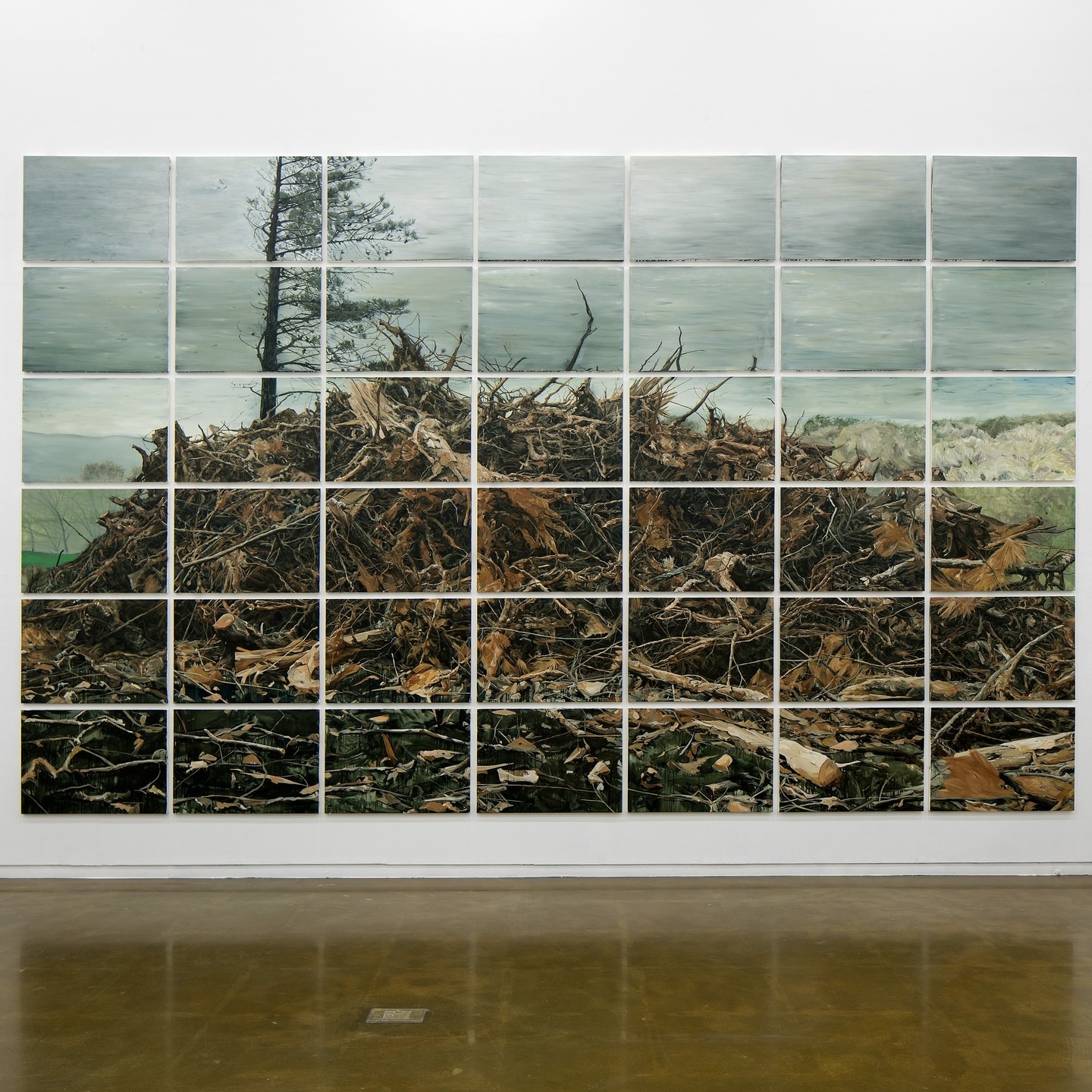
What demands our attention in his work, then, is not a particular narrative, but rather Beom Jinyong’s Expressionist language of neutrality, through which he invests ordinary everyday subjects with emotion. An “Expressionism of neutrality that invests objects with emotion”?
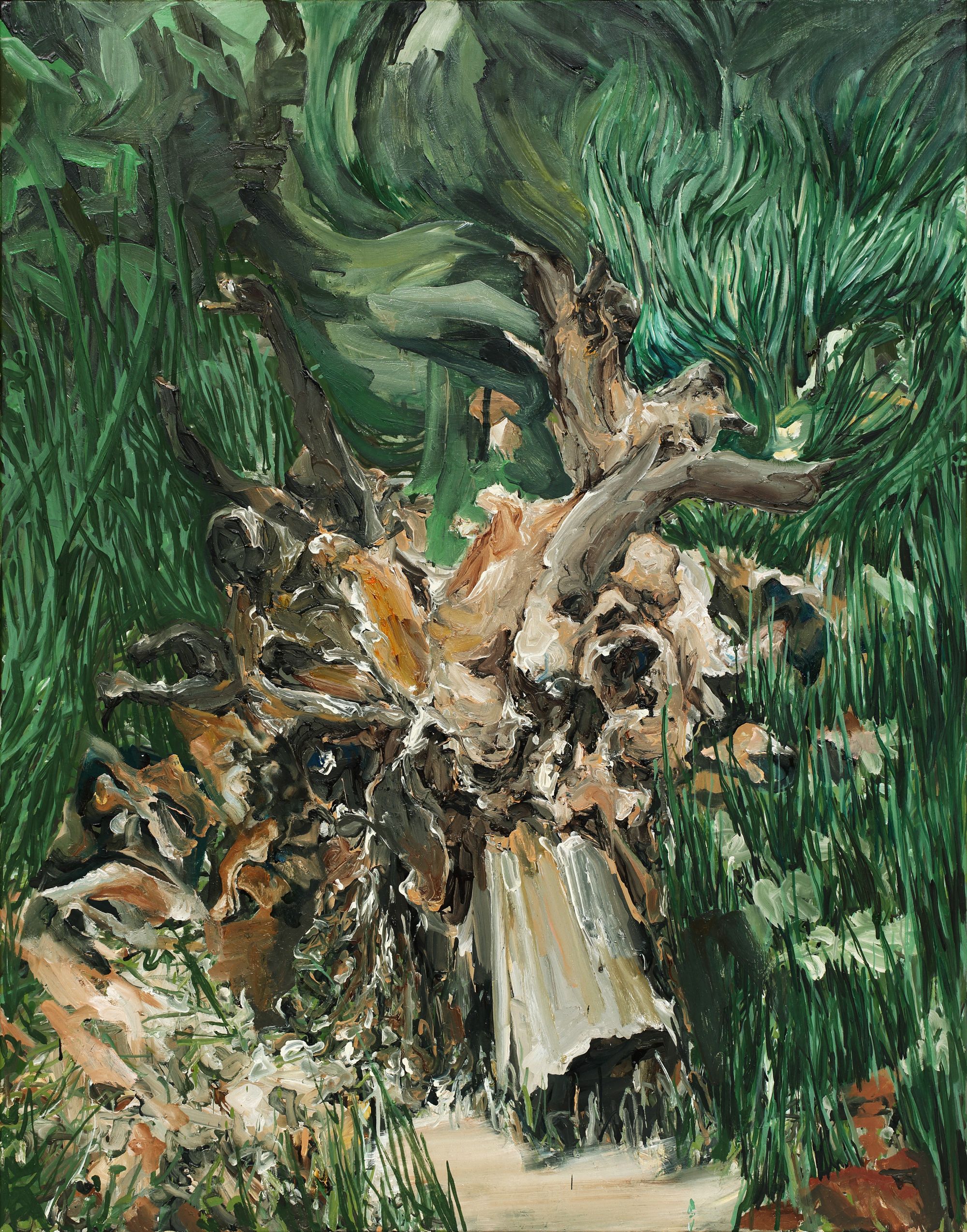
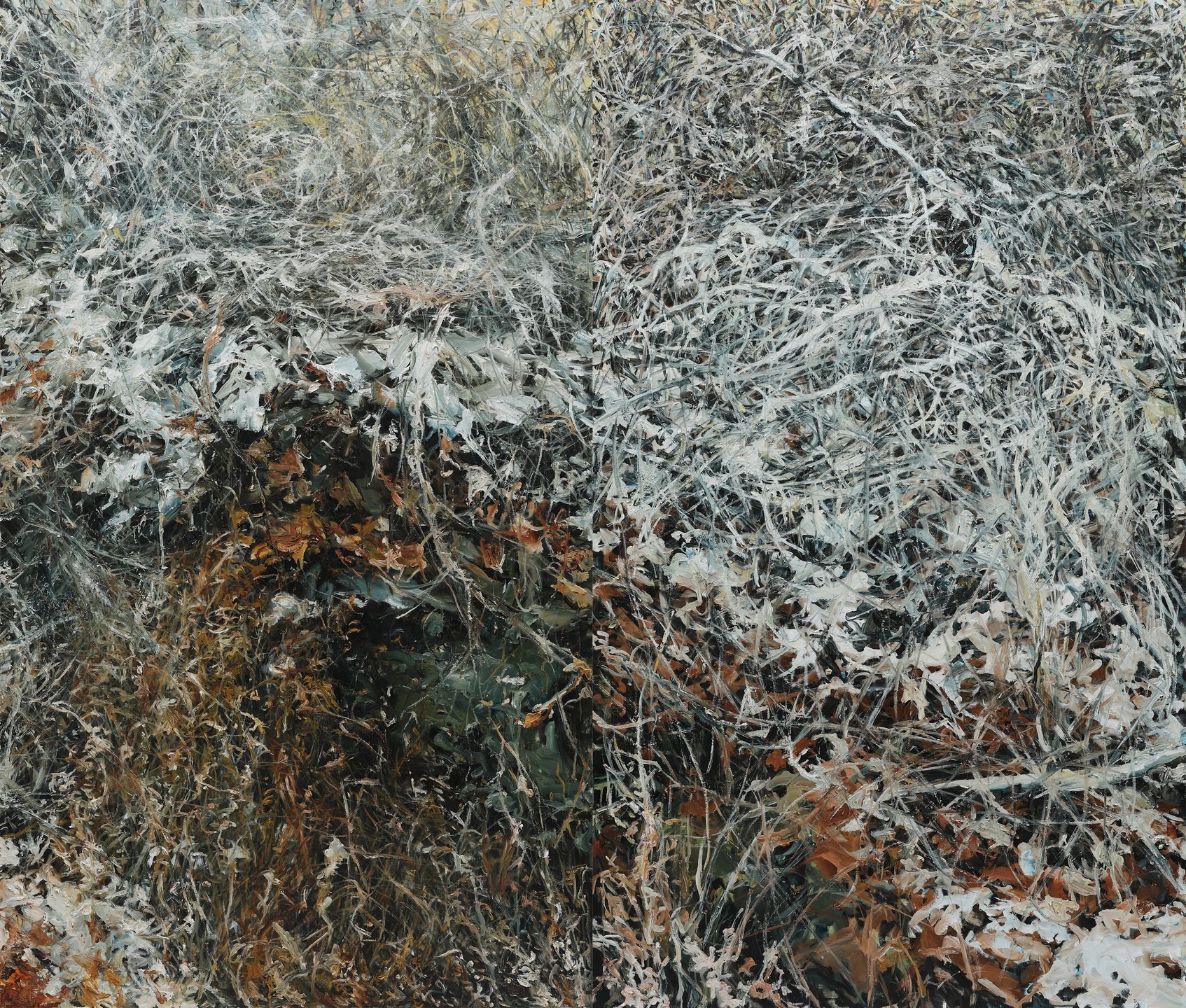
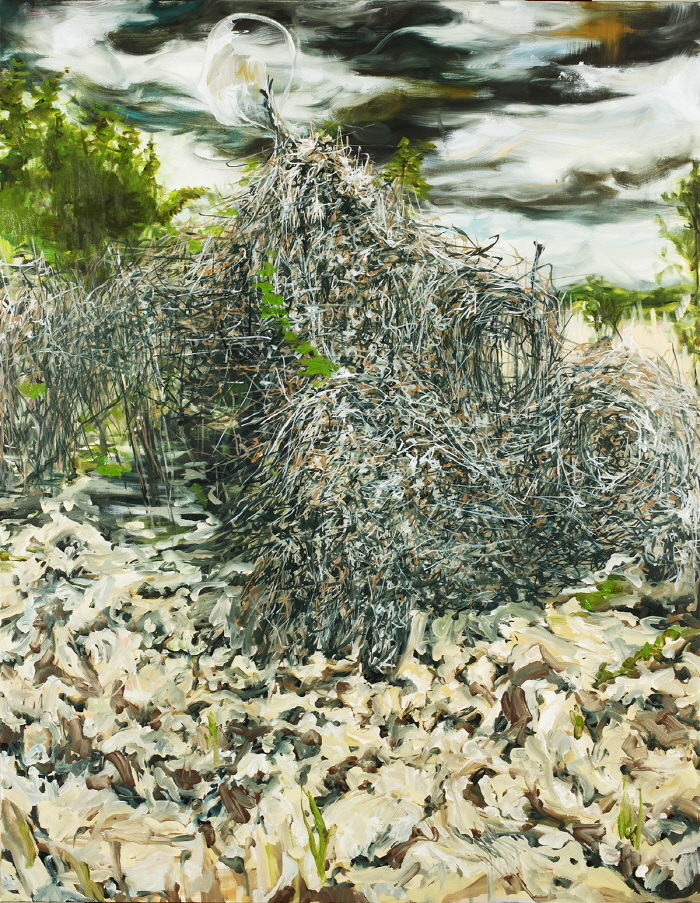
Unlike other forms of Expressionist language that rely on unstable compositions, dazzling colors, excessive spontaneity, and distortion, his practice slowly projects emotion onto its subjects through a comparatively restrained Expressionist vocabulary: everyday aesthetic objects, intermediate tonalities with little opposition between complementary colors, and impasto that remains relatively subdued despite the freedom of the brushwork. From these subjects, he draws forth a resilient vitality.
Consider the works. Forest (2015), composed of two joined canvases depicting a natural landscape at the height of a lush green summer, and Landscape (2018), which portrays a forest with a small pond during the same season, are representative examples of this Expressionism of neutrality. These are ordinary natural landscapes from everyday life, devoid of any particular narrative, yet Beom projects his own emotions onto them and renders them on canvas through a relatively calm “Expressionism of neutrality,” despite the viscous materiality of the paint.