Western modern art has its roots in Renaissance art, which in turn was based on the so-called “camera obscura”—a darkened room in which the world appears inverted when viewed through a small aperture. This later developed into the system of perspective, a device that converges the external world onto a two-dimensional plane.

In this process, the subject who paints or observes is no longer merely a passive viewer, but becomes a “subject” who constructs and produces the world. Thus, it was in the fifteenth century, known as the Quattrocento, that interest in the individual and individuality first came to the fore, resulting in compositions based on perspective and representational painting.


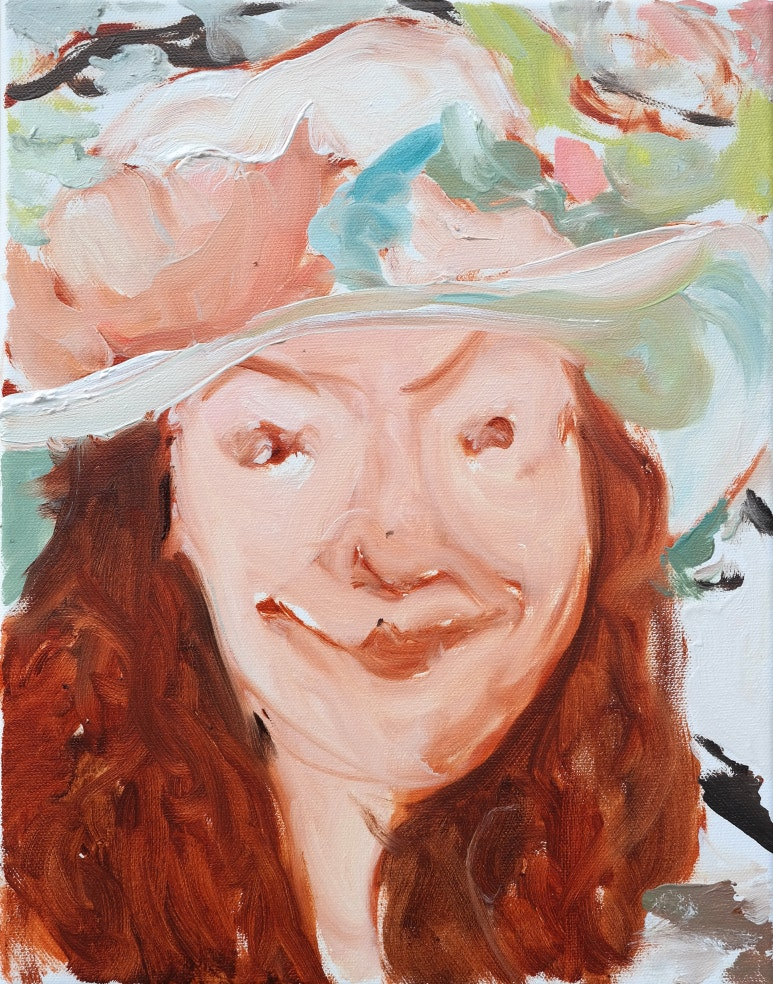
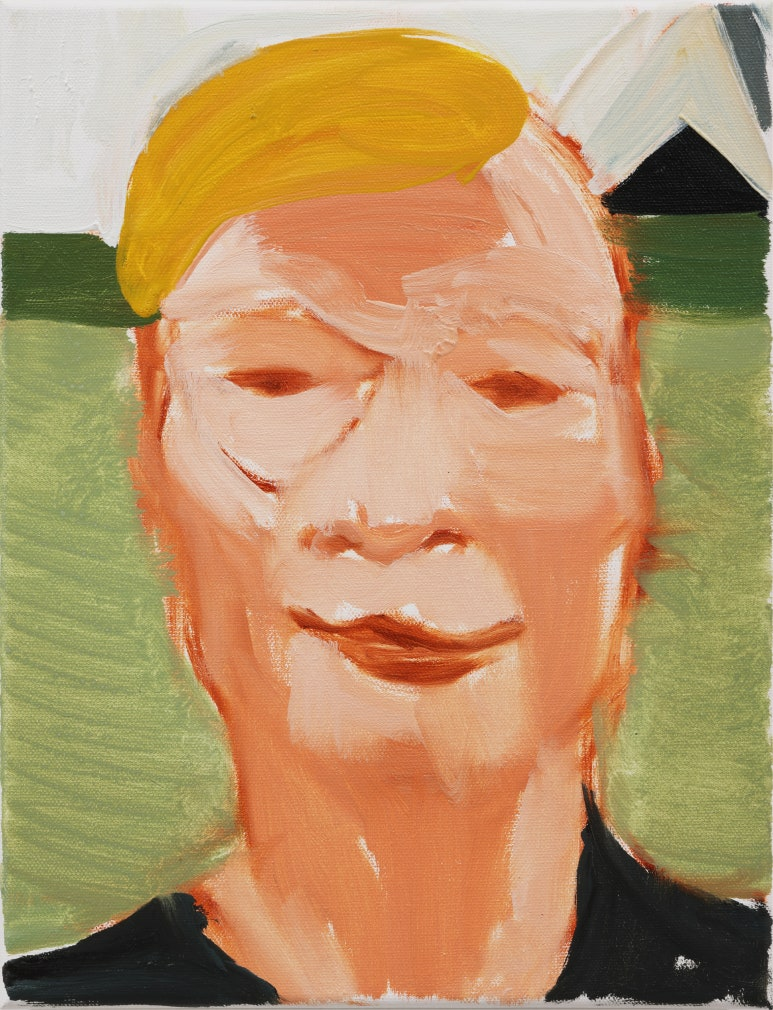
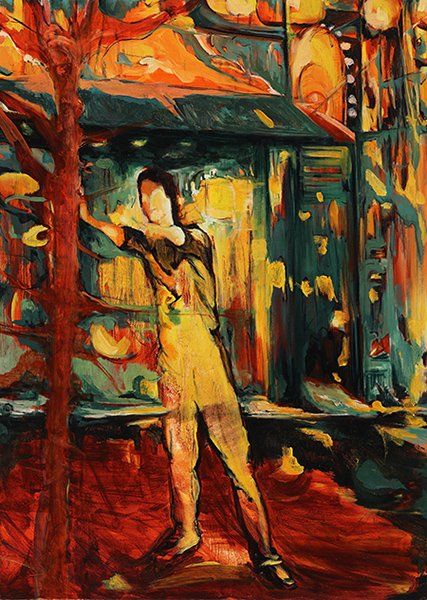
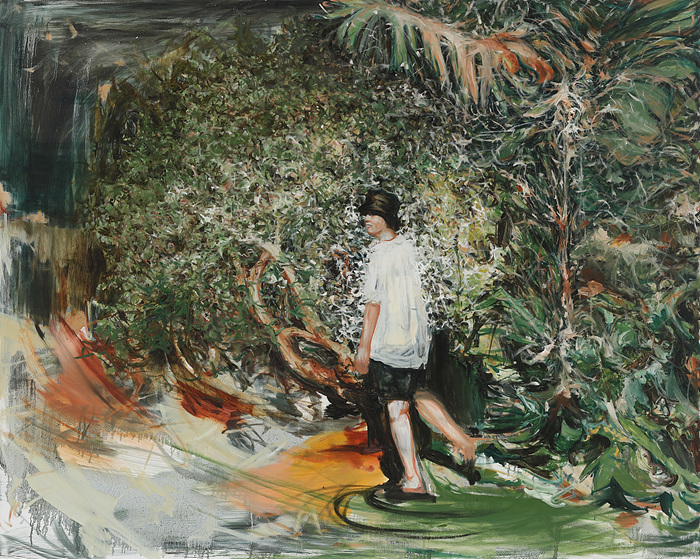
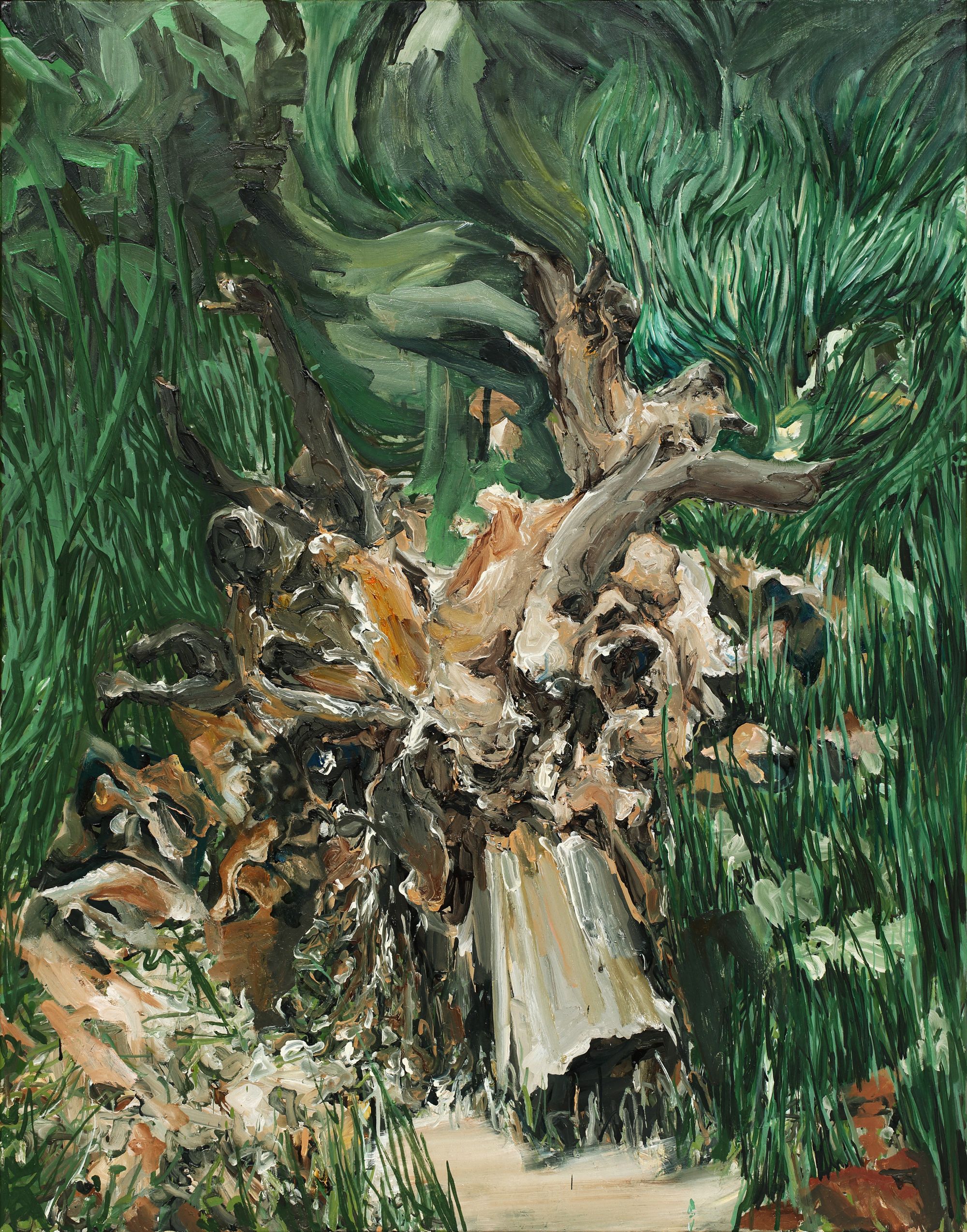
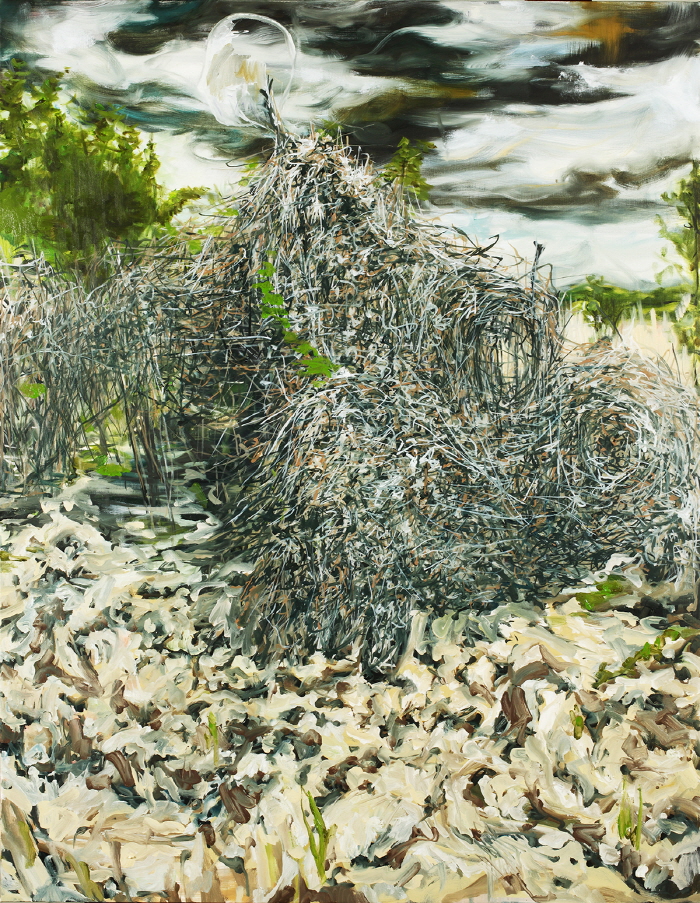
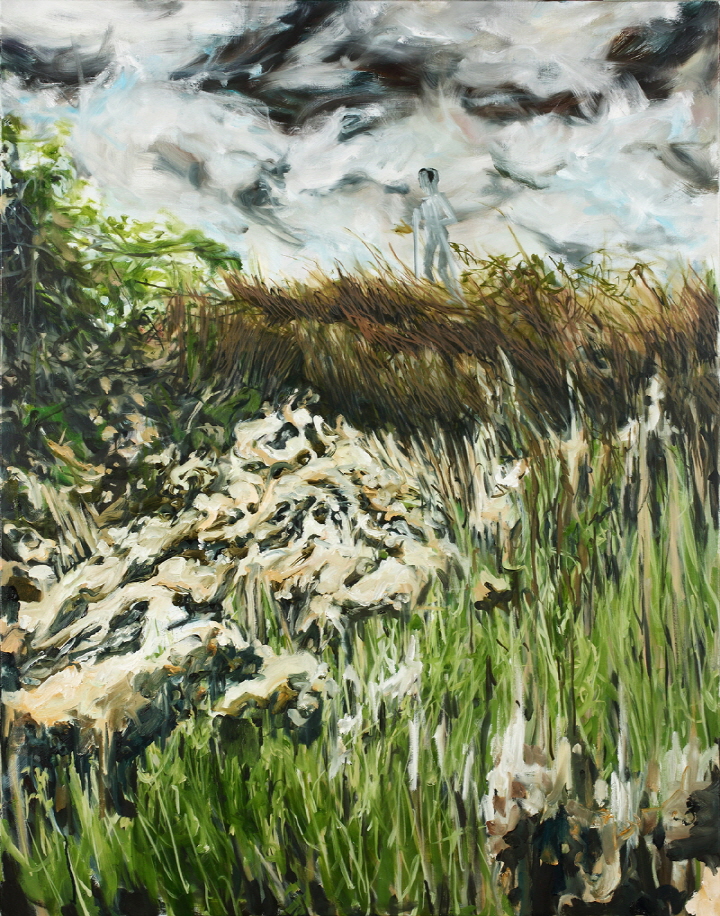
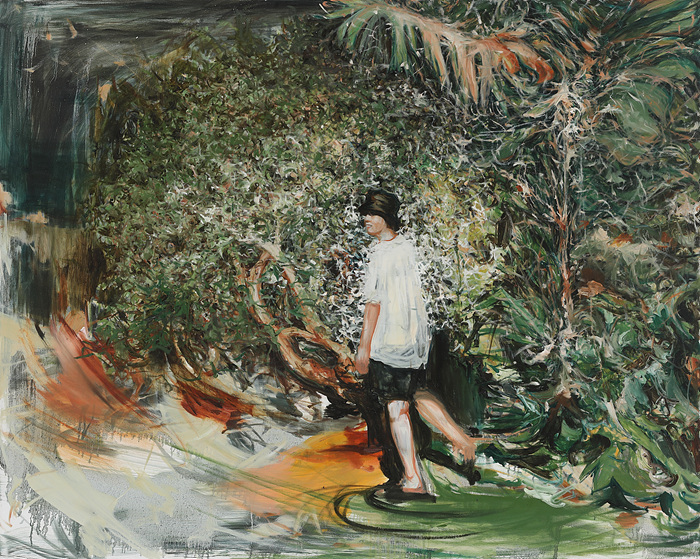
Beom Jinyong, Beyond the Lights, 2015, Oil on canvas, 117 x 91 cm © Beom Jinyong

This sense of self-consciousness as a unified entity that governs the entire creative process of a work is precisely the essence of Western modern art. By the early twentieth century, however, this understanding of the subject began to fracture. This was because conceptions of the human being and of humanity itself came to be interpreted in a fundamentally different way.

Human beings were no longer understood solely as rational and reasonable entities; rather, the unconscious, madness, chance, and irrationality came to be recognized as potentially essential elements of human existence. Among the most representative thinkers who disseminated such ideas were Dostoevsky, Nietzsche, and Freud.

Building on their interpretations and investigations of humanity, modern art began to pursue a wide range of practices shaped by the unconscious, dreams, chance, and irrational elements. Dada, Surrealism, and much of the modern art that followed can be seen as deeply indebted to this shift in understanding.

The unconscious and chance, in particular, are fundamentally things that cannot be controlled by the artificial framework of the artist’s conscious intention. They are “unconscious” in the sense that they exceed the scope and control of artistic consciousness. The unconscious or chance—what might be called an aesthetics of nature—that surpasses the individual will of the artist entails abandoning premeditated and orchestrated consciousness, while at the same time awakening the unconscious.

It also means accepting uncontrolled existence, or chance, as it is. In fact, practices based on the unconscious and chance seek to record realities unexpectedly encountered beyond individual intention, and to see what lies outside the limits of our imagination and conceptual systems. Ultimately, this can be interpreted as a gesture of endlessly affirming what is wholly unfamiliar and the infinite possibilities of chance.


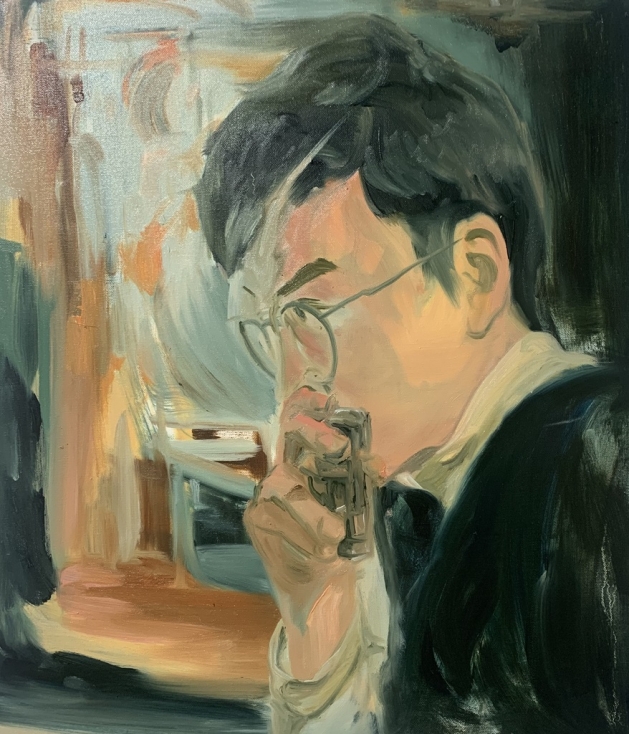
Beom Jinyong, Beyond the Lights, 2015, Oil on canvas, 117 x 91 cm © Beom Jinyong

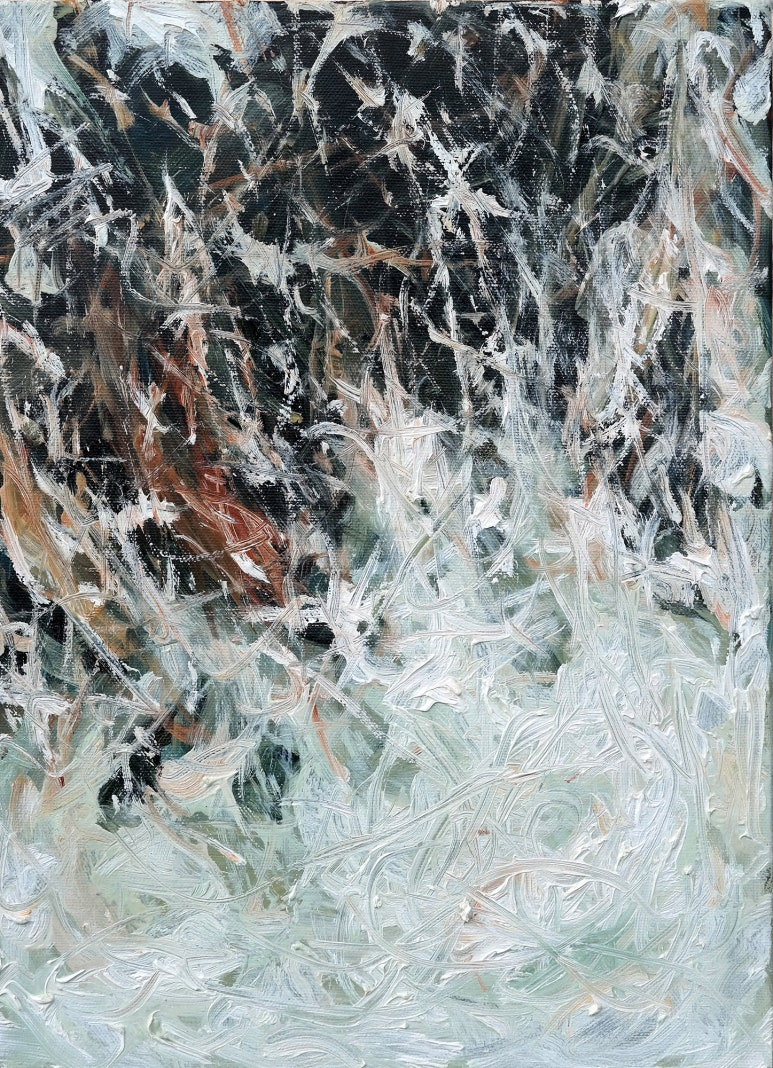
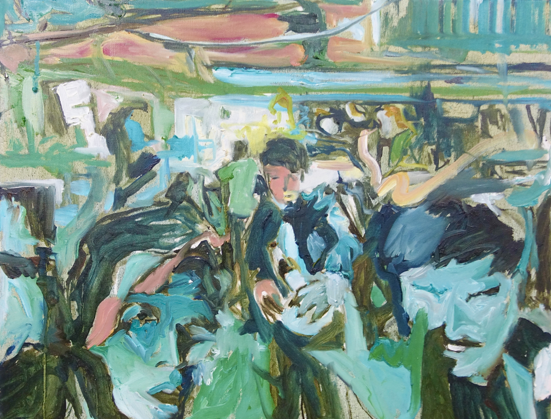
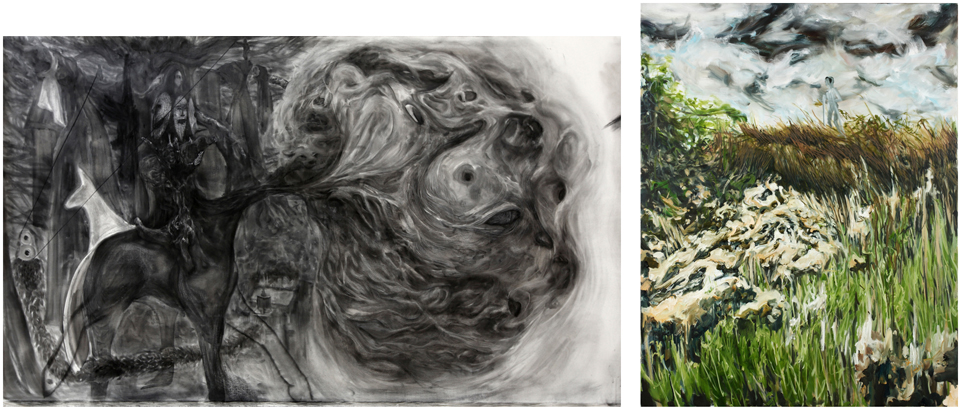
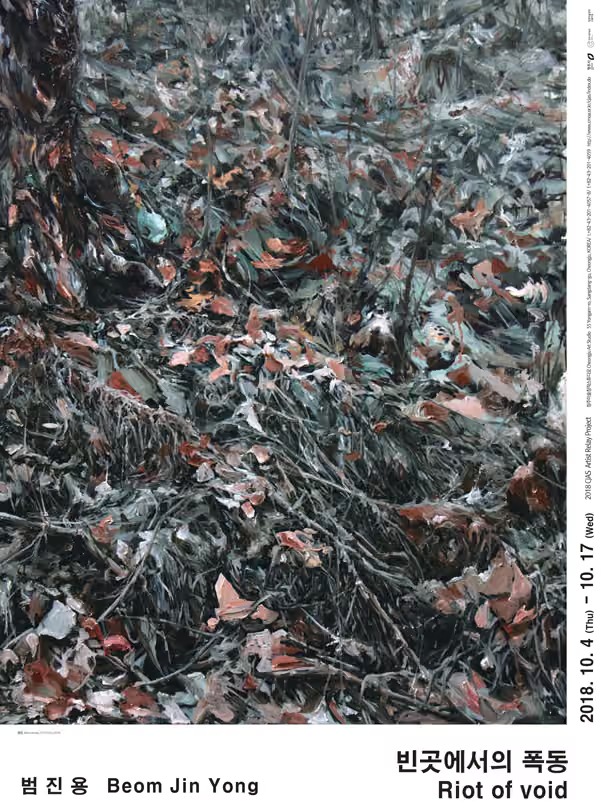
Beom Jinyong’s paintings are close to representational painting. Yet the landscapes he depicts feel somehow unfamiliar. Free yet dense, charged with violent energy yet filled with delicate brushstrokes, the surfaces are saturated throughout.

The restless brushwork and colors tuned to something close to a monochromatic palette render everyday natural scenery vividly while at the same time revealing a condition stirred by an atmosphere that is difficult to put into words. These paintings do not simply fix natural scenery in place; rather, they urgently bring into proximity the vital force of nature and that “something” generated in the artist’s own mind as he looks at the landscape.

He begins with ordinary scenes encountered along the paths of his daily life and transfers what he has seen and felt onto the canvas. Yet this representational process does not merely describe what is visible as it is; instead, it overlays the landscape he is looking at with hallucinatory or dreamlike scenes that have stealthily intruded into it. As a result, the familiar landscape is fissured and estranged.

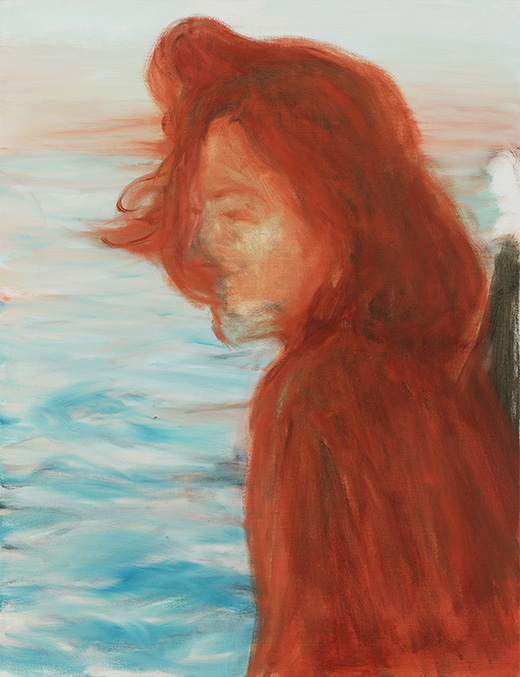
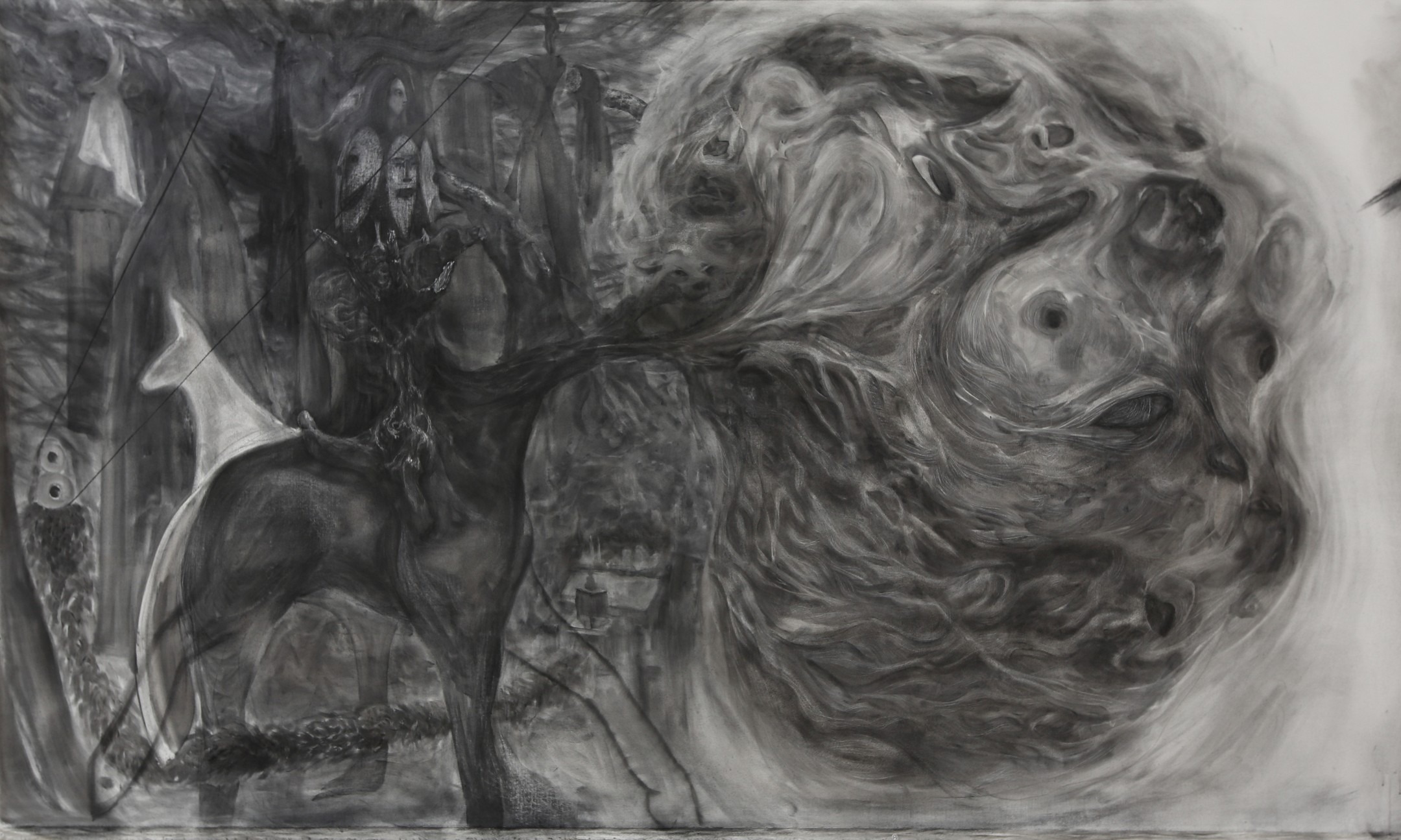
The artist describes his own work as a “dream journal recording the unconscious.” In other words, he seeks to express unfamiliar images and narratives unfolding in dreams. But he does not depict dream scenes alone. Rather, he paints a situation in which, while looking at a landscape in the realm of reality, scenes from dreams permeate and interfere with it until the two become thoroughly entangled.

The landscapes he paints therefore resemble another world altogether—neither reality nor dream, but a world in which the two intersect and overlap. Within them, the world of dreams penetrates reality, and hallucinatory scenes force their way into everyday space.

At the same time, these landscapes are always haunted by something like human figures or strange energies that seem to stir, while violent tremors and surges sweep through them. These are perhaps visionary experiences seen only by the artist: landscapes shaped by encounters with scenes from dreams within reality and by all manner of imagination intervening in a particular view.

Freud’s concern, in revealing that human existence is in fact seized by some unknowable thing (the id) situated beneath reason, was directed from surface-level contingency toward an underlying order. Surrealism, by contrast, sought to open up and expand chance even further in order to move toward a new world.

The Surrealists aimed to show familiar objects in entirely new ways, and pursued the novelty that arises at the moment when inner unconsciousness (chance) meets the reality of external objects (objectivity). This meant an attitude that does not follow prearranged procedures, but allows and accepts everything that occurs moment by moment in the process of making. In other words, it draws all of that into the internal domain of artistic creation.
In this way, modern art set out by foregrounding the unconscious over consciousness, chance over necessary planning, rupture over equilibrium, and naturalness over artificiality. Art therefore became not the reproduction of an already established and imposed beauty, but a process of continually exploring and presenting new perspectives on beauty.

At the same time, it became a conceptual inquiry into what it means to see and to paint. Above all, seeing became a crucial issue. What mattered was no longer merely the image of the world reflected on the retina, but also an affirmation of what lies behind it—the invisible, non-visible world. The gaze complicates the mind.

To say that we see something is to say that we think about that object. This gaze reads things within a network of learned and remembered relations, yet at the same time continually departs from them. Painting is what encompasses not only what is visible, but also what is invisible.


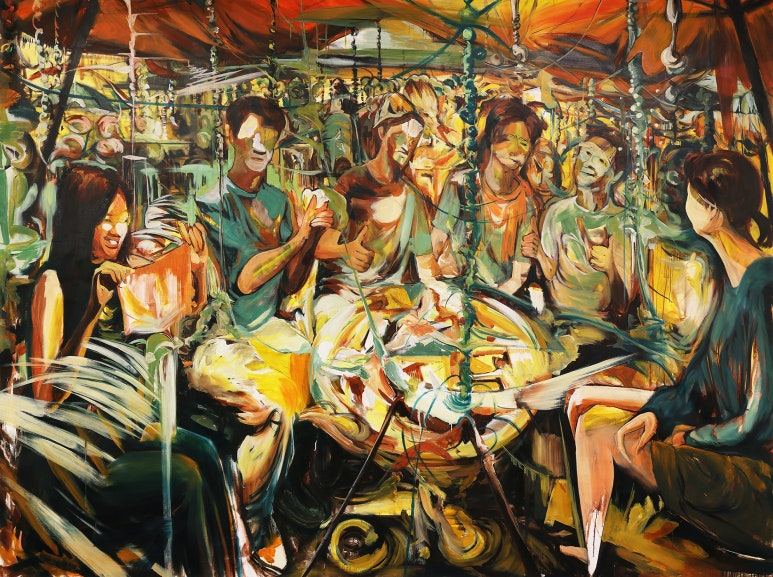
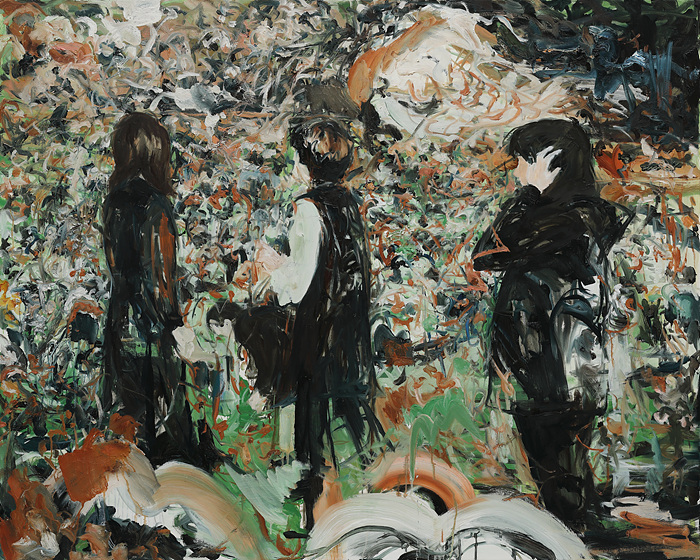
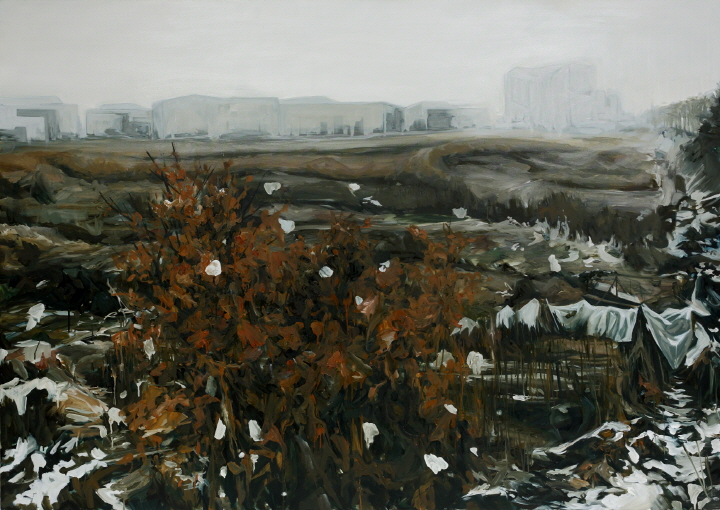
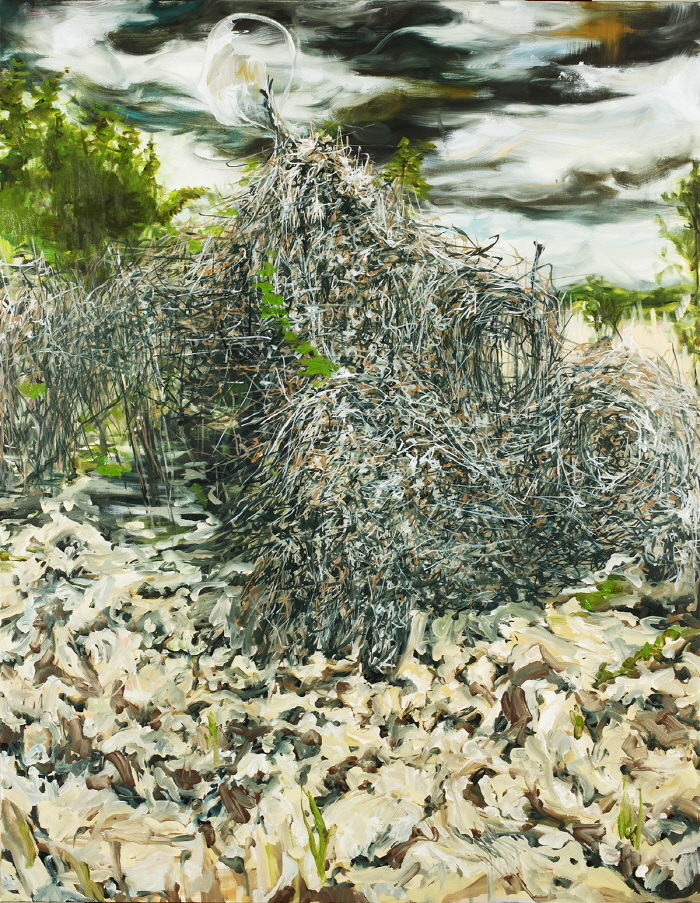
Beom Jinyong, Landscape, 2016, Oil on canvas, 151 x 211 cm © Beom Jinyong

Beom Jinyong paints landscapes encountered in his everyday life. As specific subjects, these others are at once familiar and unfamiliar. At times, they approach him unexpectedly and create ripples of emotion; at others, they puncture the familiar world and produce a rupture. Strange scenes are superimposed upon these landscapes. The visible alone does not constitute the world. Nor is that world bound by form.

It appears ceaselessly different, shaped by energies that cannot be outlined, emotions that cannot be defined, and the collusion of reality and dream. Driven by an incomprehensible yet unmistakable force stirring within himself, the artist looks again, more closely, at these subjects and paints them. The resulting images become uncanny landscapes suspended between the everyday and the extraordinary—landscapes that are present yet absent, real yet hallucinatory.

They therefore occupy a space between reality and unreality, the visible and the invisible, objectivity and subjectivity. Good artists are those who perceive what suddenly and unexpectedly appears within the flow of everyday time. They are those who do not miss the moment when an irrational, accidental, dreamlike world intrudes upon reality, and who at the same time seek to represent it. They are those who move beyond every taboo governing what may be seen. Beom Jinyong’s paintings likewise vibrate intensely within this context.
References