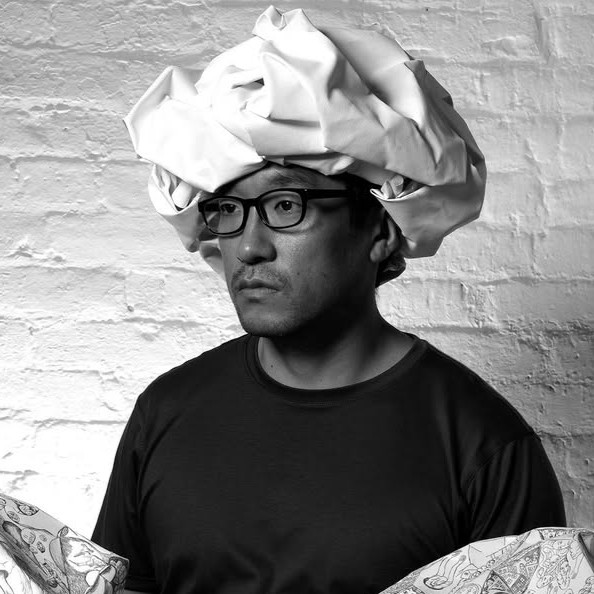
Eunhyung Kim is an artist who reinterprets inspirations drawn from Eastern and Western classics through contemporary ink painting. Among Western classics, opera in particular has played an important role in the way he generates ideas and constructs the content of his works.
While living in New York around 2008, Kim attended nearly fifty operas at the Metropolitan Opera. He came to subjectively reinterpret and express through his work the various elements of opera, including the visual spectacle of the grand stage, the musical dimensions of orchestra and voice, and the literary dimension of the libretto.
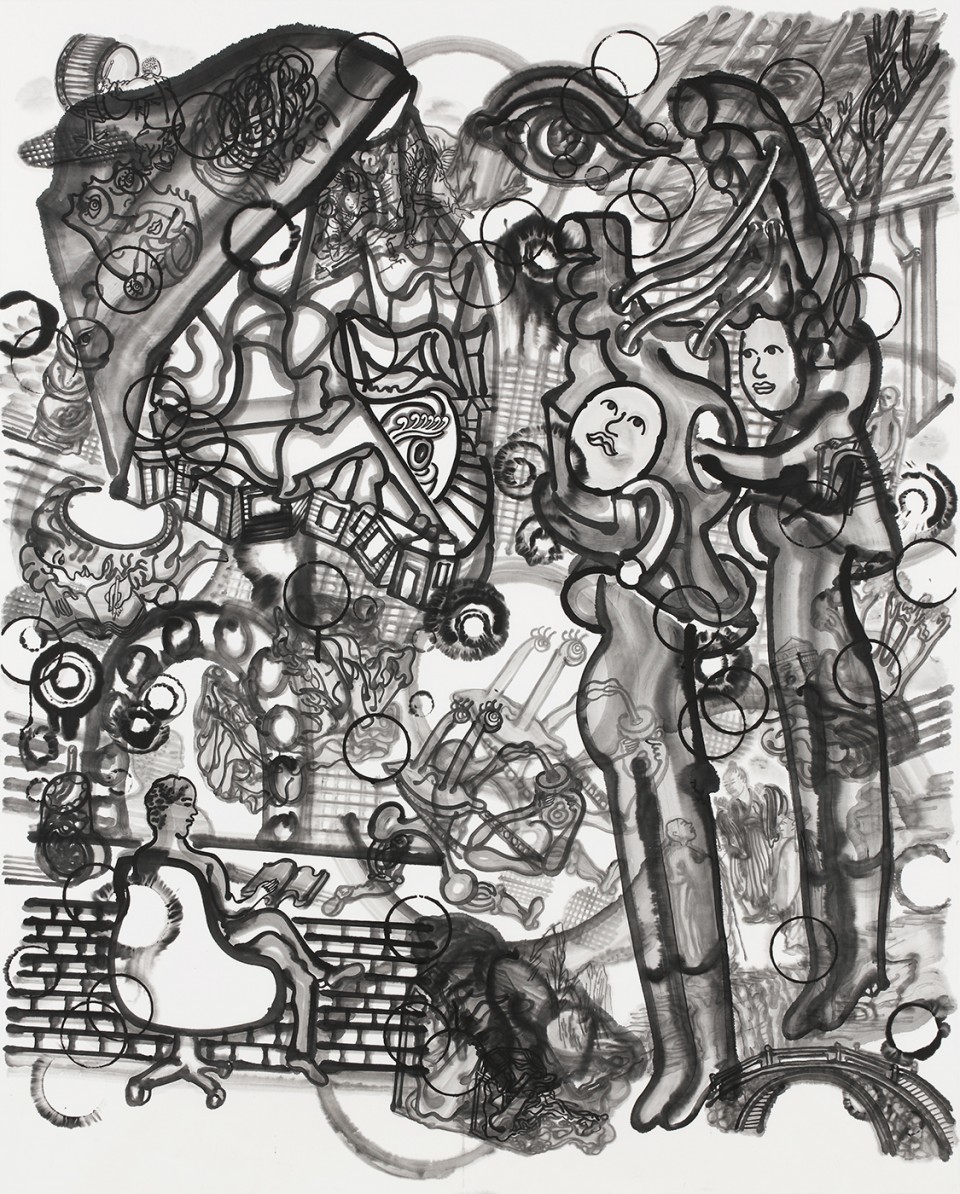
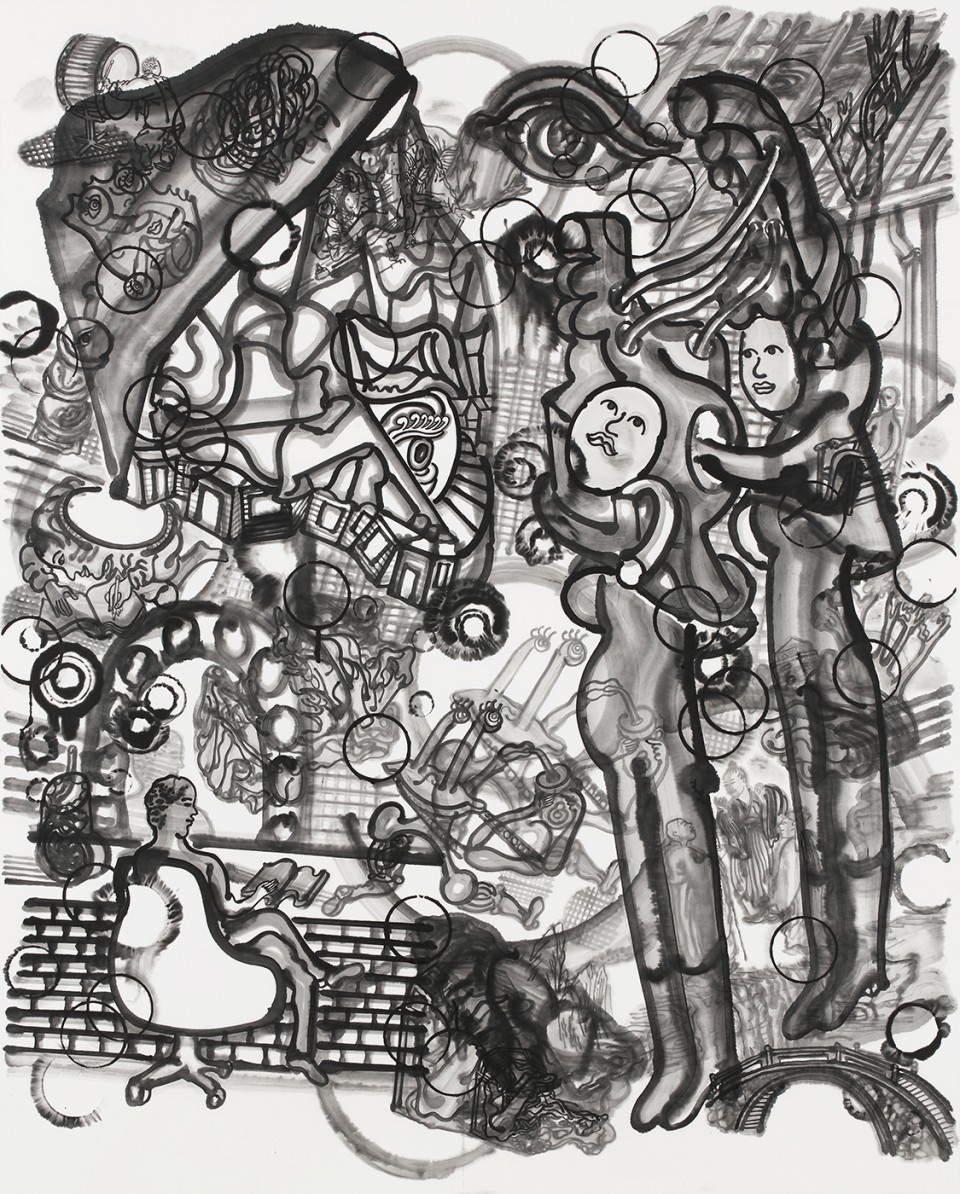
He connected the themes and characteristics of works such as Mussorgsky’s Pictures at an Exhibition, Wagner’s Der Ring des Nibelungen, and Mozart’s The Magic Flute with contemporary issues, adding his own interpretations and transforming them into newly conceived ink drawings. Alongside Western classical music, Korean classics—particularly paintings from the Joseon Dynasty—also serve as important motifs in Kim’s practice.
He especially draws upon paintings of Daoist and Buddhist figures and genre paintings from the Joseon period through the concept of fang (倣), extracting portions of original works and reconstructing them in his own brushwork so that they can be connected thematically with operatic narratives.
He then adds futuristic imagination, bringing these elements together within a single pictorial field to create entirely new scenes. Such works may be understood both as homages to works the artist admires and as expressions of his desire to reinterpret and revive aspects of tradition that he considers valuable, while offering viewers a complex experience of new artistic forms.
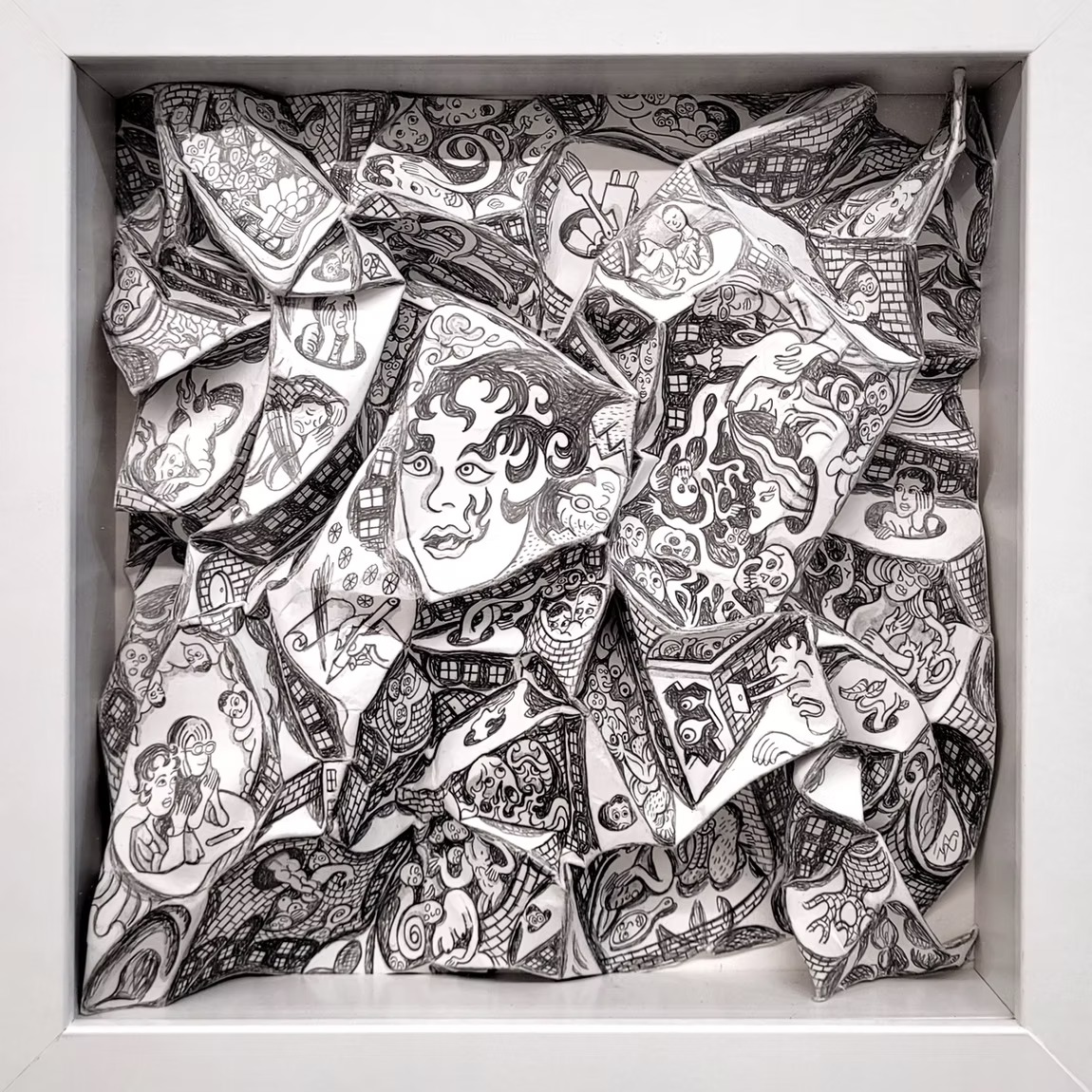
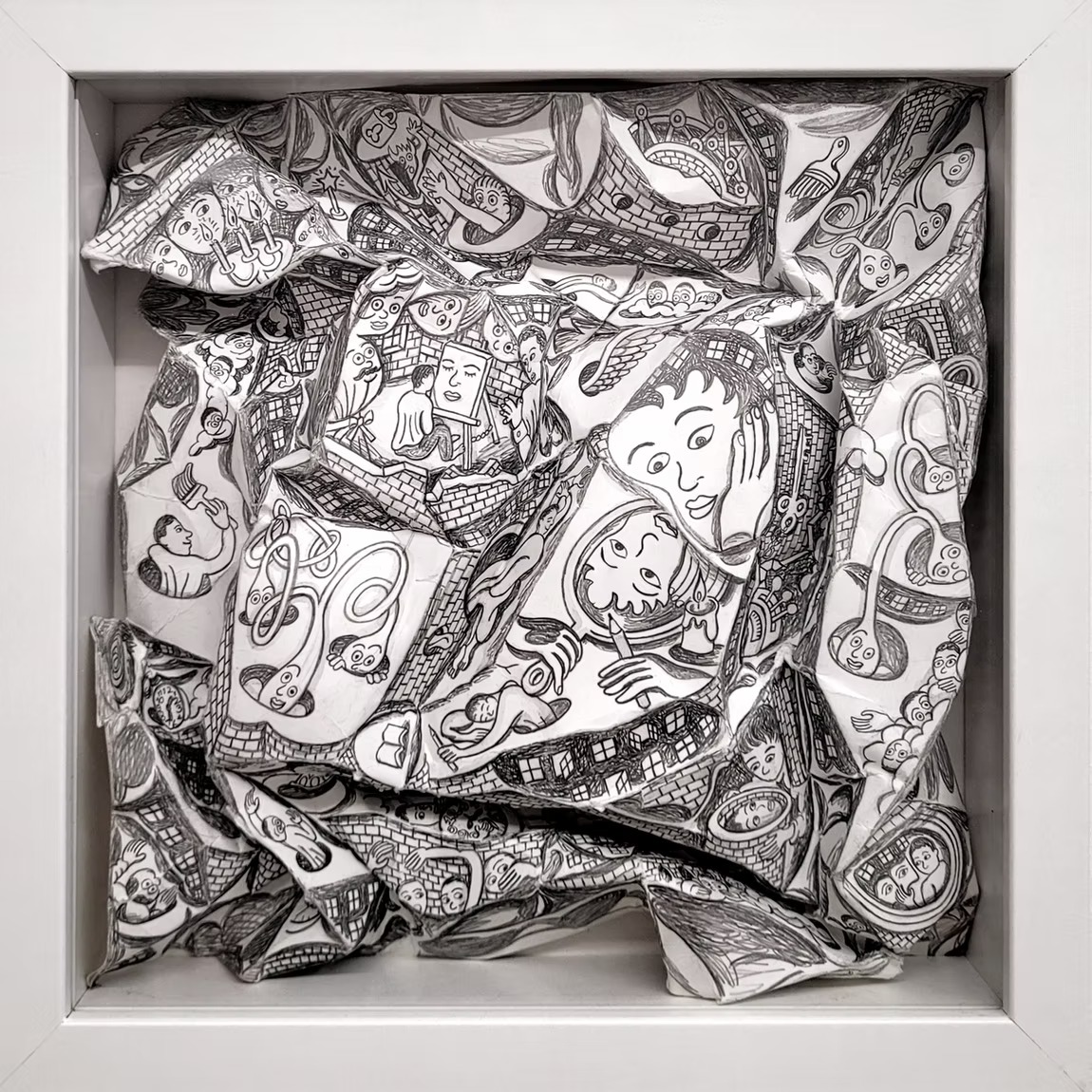
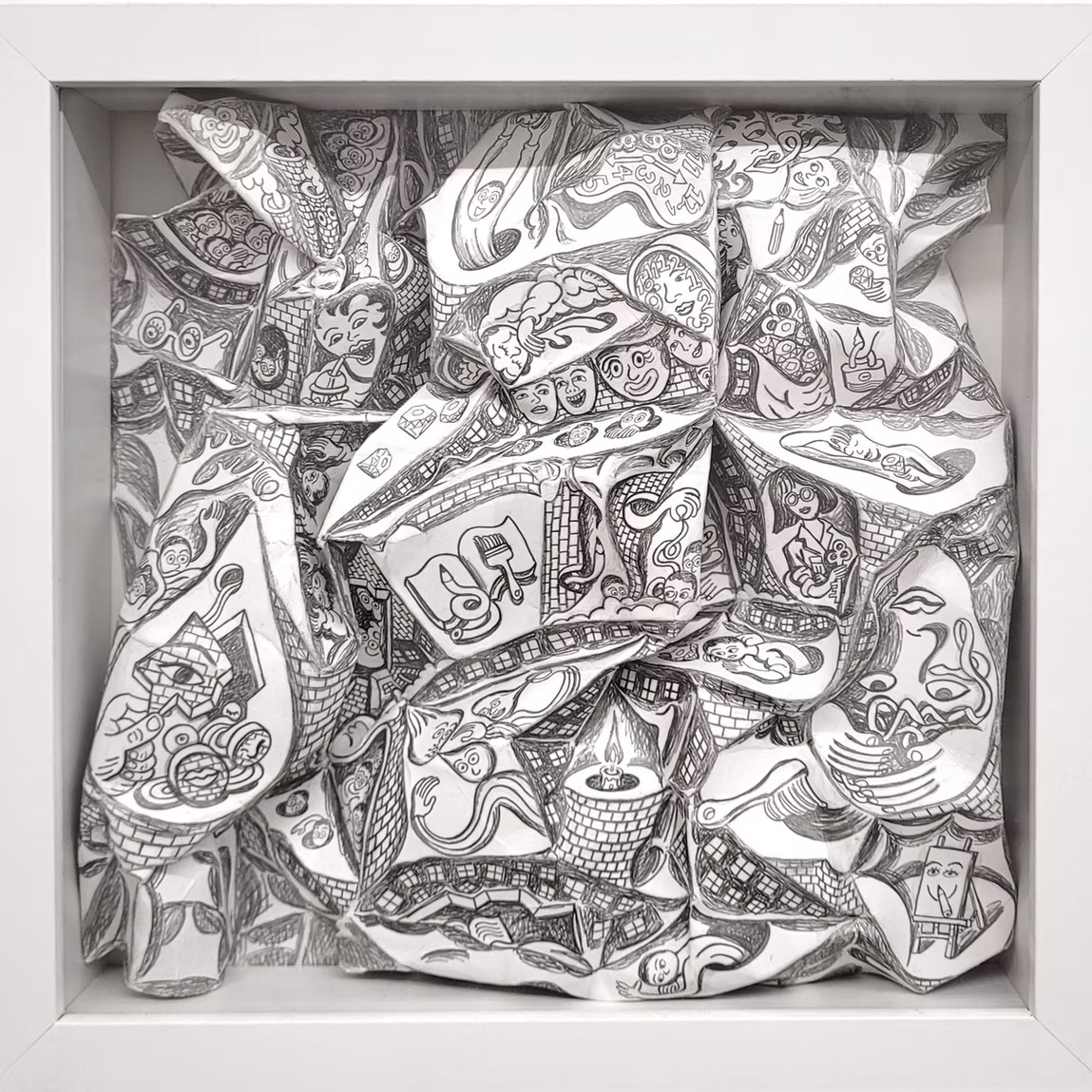
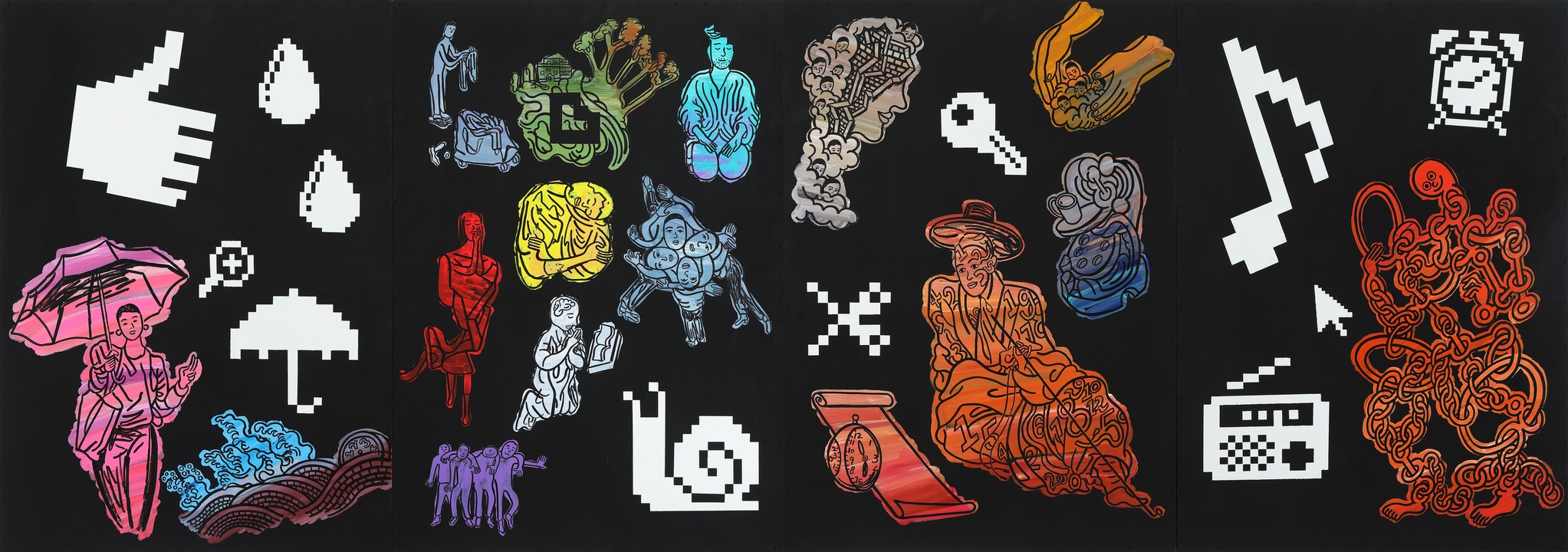
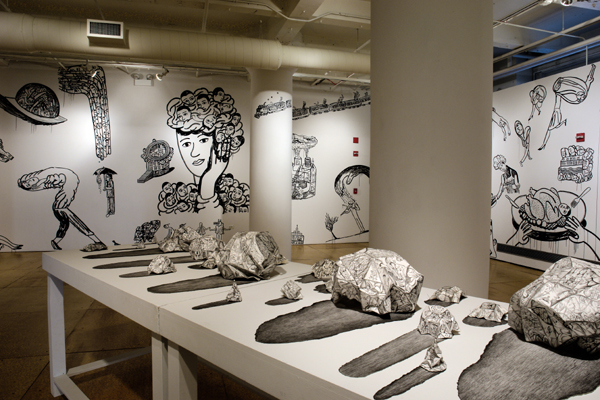
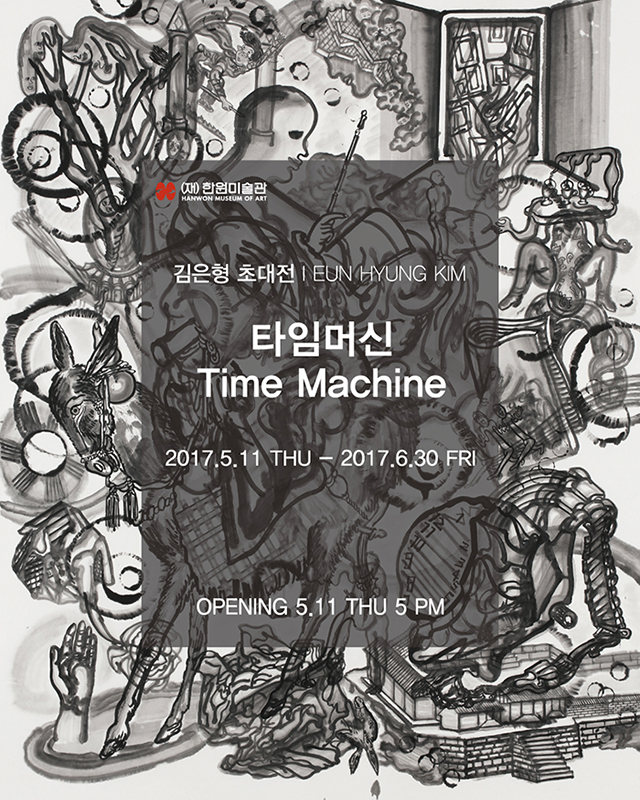
This approach of combining classical music and painting and transforming them into a new form of ink painting becomes more fully articulated in this exhibition. As the title 《Time Machine》 suggests, Kim first revives traditions of the past, then extracts and condenses philosophical reflections that address the inner dimensions of human emotion—joy, anger, sorrow, and pleasure—as well as issues in contemporary society, reconstructing them into new forms that can resonate with audiences today.
While retaining ink as a traditional medium, he develops a distinctive form of ink painting characterized by surreal drawing through the process of weaving independent art forms such as music, visual art, and literature into newly unified themes.
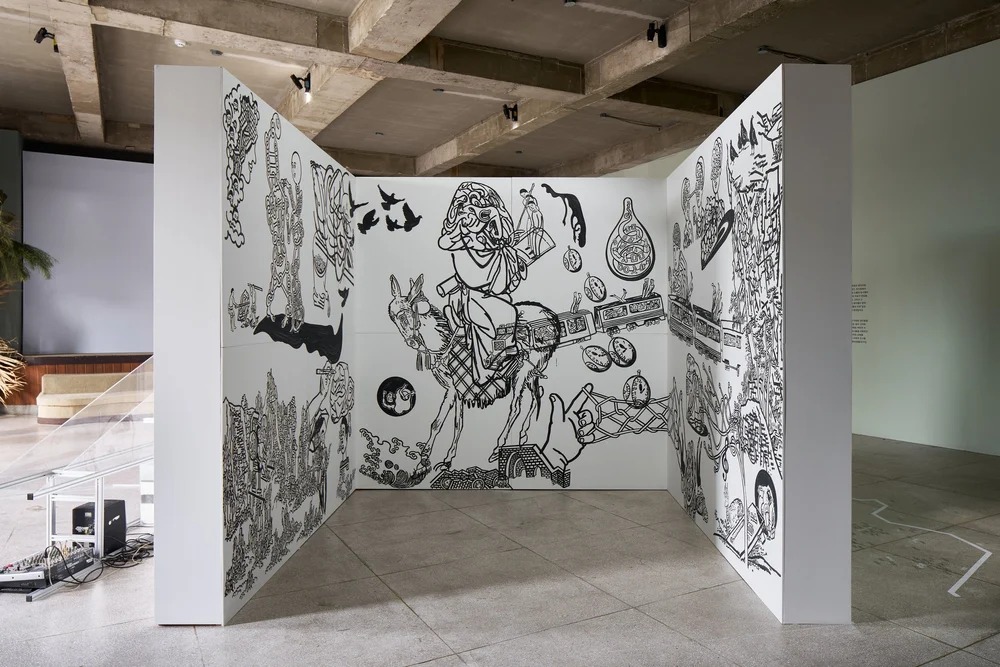
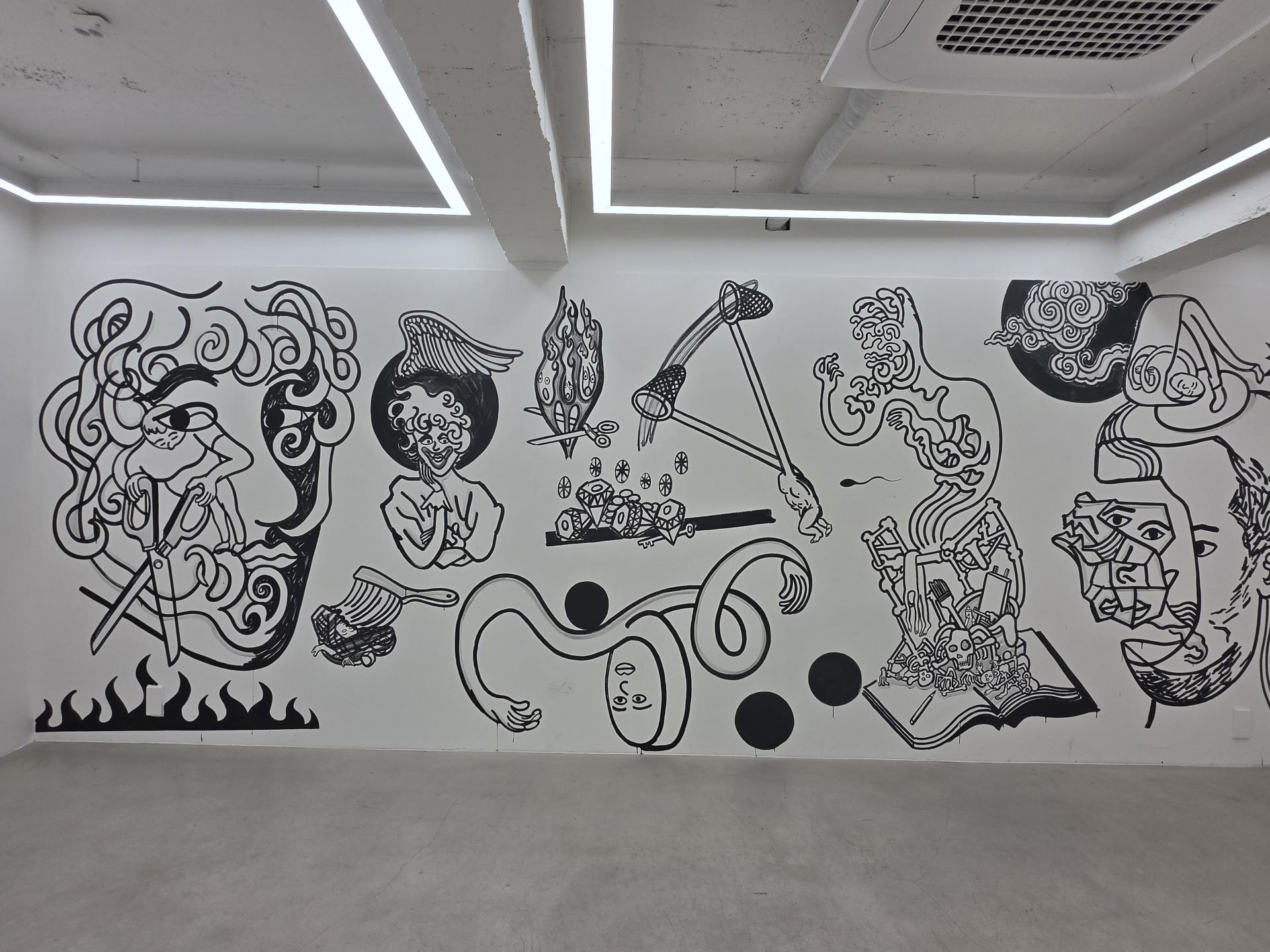
These characteristics are particularly evident in the new work The Elixir of Love (2017), based on Donizetti’s L’elisir d’amore. The opera, in which drinking a potion supposedly causes the person one secretly loves to return that love, features the carriage of Dulcamara, a fraudulent traveling doctor who sells cheap wine disguised as a love potion.
Kim reworks this image through the process of fang (倣), drawing upon “Confucius’s carriage,” a scene from Kim Jin-yeo’s eighteenth-century work Jaro Munjin, and transforming it into his own version of The Elixir of Love.
Even without a detailed explanation of the opera or Kim Jin-yeo’s painting, viewers can discern the artist’s humorous imagination through various clues embedded in the work—Raphael’s angel, Cupid’s arrow, and a wristwatch symbolizing a time machine. The highlight of the work is further enlarged into a mural, becoming part of the museum space and engaging directly with viewers.
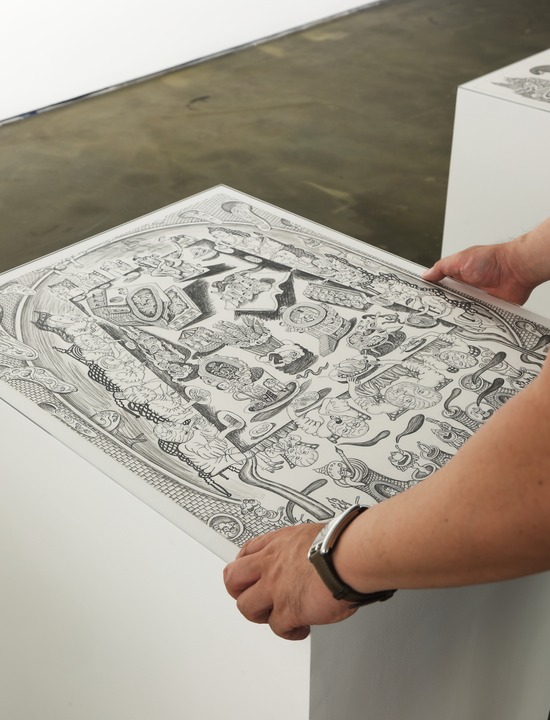
Kim sometimes connects independent narratives into a single theme to create a consistent atmosphere, while at other times he arranges several separate short stories to construct a single work. In the new work Alien SEX (2017), he redraws humorous works from the late Joseon period, including Shin Yun-bok’s Viewing Erotic Paintings and Begging by the Roadside, as well as Choe Buk’s Three Laughers at Tiger Ravine, transforming them into a contemporary erotic painting.
In reimagining the genre of erotic painting produced by artists such as Kim Hong-do and Shin Yun-bok in the eighteenth and nineteenth centuries through the surreal figure of an alien, Kim employs bold brushwork driven by spontaneity, along with metaphorical and humorous spatial compositions that leave room for the viewer’s imagination.
Kim’s attempts to build points of identification with viewers by reflecting contemporary sociocultural issues are also evident in his new works. For example, in Candlelight Protest (2017), motifs such as a rocker carrying a guitar and imagery evoking candlelight demonstrators offer readily recognizable keywords with which people living in the present can identify.
One particularly intriguing detail is the recurring image of the “three monkeys,” each covering its eyes, ears, or mouth, hidden throughout the work. The motif conveys the message “see no evil, hear no evil, speak no evil,” and may evoke Confucius’s injunction, common throughout Confucian cultures, to “look at nothing contrary to propriety (非禮勿視), listen to nothing contrary to propriety (非禮勿聽), and speak nothing contrary to propriety (非禮勿言).”
Others may read the motif as a critical perspective on the dangers of a society that suppresses the free circulation of thought and expression. In this way, Kim incorporates traditional elements while exploring modes of expression that reflect changes in contemporary society. At the same time, he leaves his works open to interpretation so that viewers can engage with and enjoy the images even without detailed knowledge of each individual element.
In this way, Eunhyung Kim brings together more than a decade of varied experiments since 2004—drawing forms, musical themes, and freely experimental expressions in ink—focusing on the creation of new pictorial fields through their combination with images from traditional painting.
Through an ambitious, new, and innovative approach, he continues to establish a distinctive artistic territory of his own, producing an ongoing body of visual outcomes that reflects his consideration of the forms an individual artist can create in response to changes in environment and art, as well as his efforts to construct diverse themes in complex and multilayered ways.
Although rooted in Korean painting, his practice is not confined to its conventional boundaries. By bringing diverse genres of contemporary art together within a single space and presenting a new form of contemporary ink painting, this exhibition may propose a new vision for a crossover genre encompassing Korean painting.
Furthermore, it is hoped that the playful experience generated through the artist’s distinctive visual language will function as a platform through which viewers can encounter an expanded conception of Korean painting.