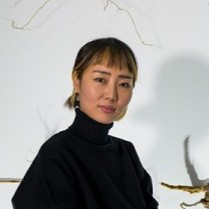
Jazoo Yang’s practice, developed across Berlin, Seoul, and Busan, stands at a considerable distance from the surfaces and sensations of contemporary technological civilization that surround us. In a world of ultra-fast internet and global networks, we hold smartphones in our hands, “scrolling” and “swiping” through reels and feeds uploaded in real time, minute by minute and second by second.
At the core of Yang’s works, however, are gestures and tactile sensations of the hand that are quite different from—indeed, almost the opposite of—those reflexive, rapid movements.
Painting, by its very nature, is an art inseparable from the human hand. Even so, Yang’s works might be said to maintain a certain distance from the conventional act of “painting.” She has constructed the act of image-making through methods such as murals, graffiti, stamping, rubbing, and solidifying. Moreover, her “drawing” did not begin in a quiet studio before an empty canvas.
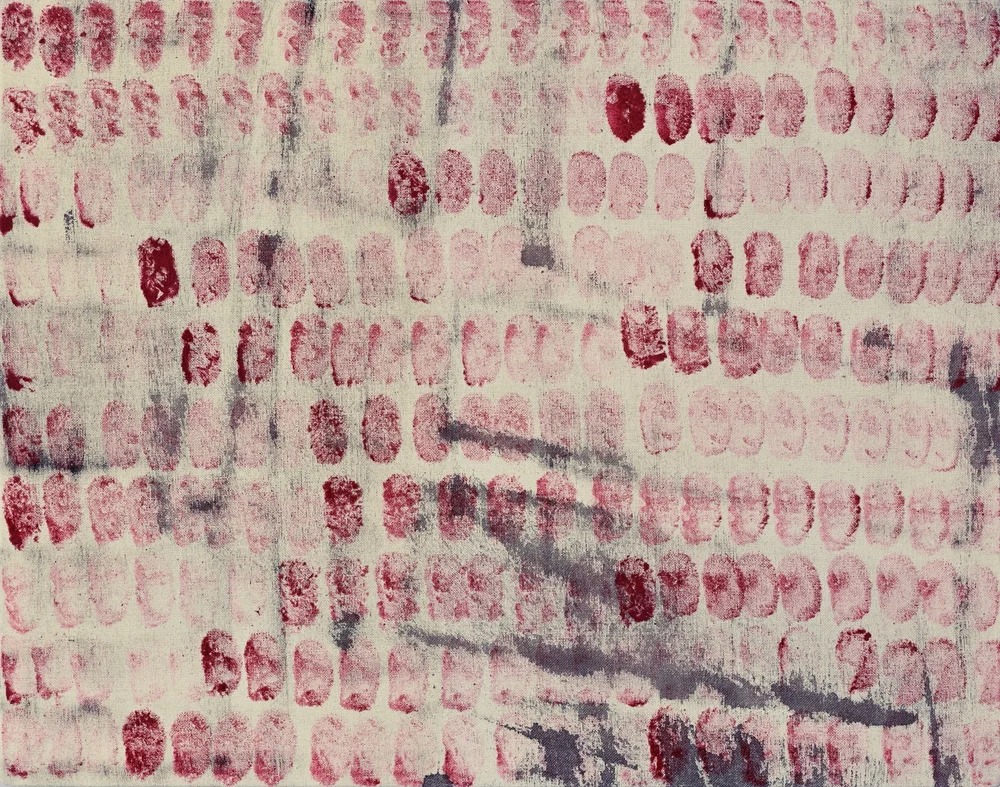
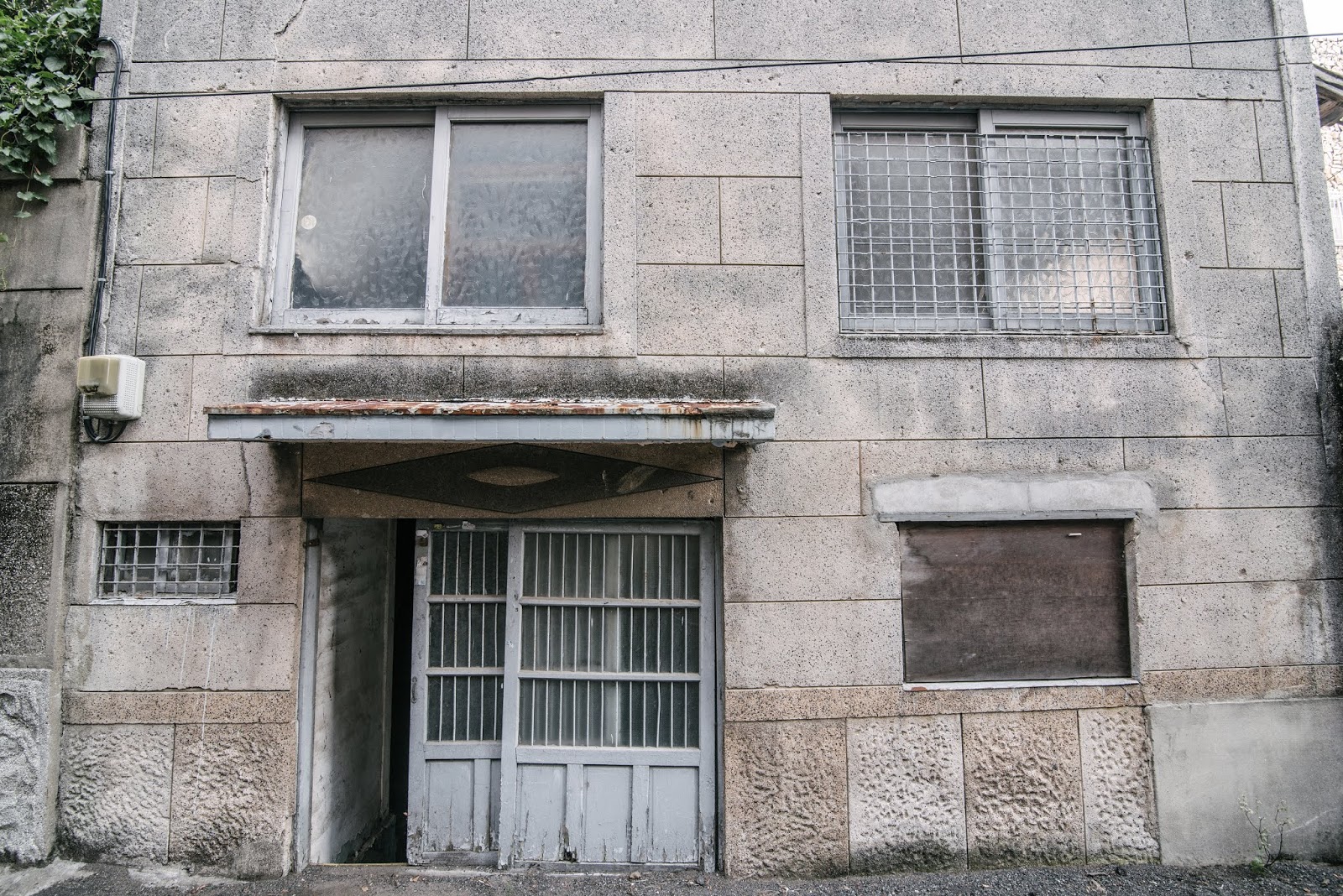
It began within lived reality—in hillside neighborhoods, vacant lots, demolition zones, and rural villages; in other words, on “walls.” The work that most clearly demonstrates her attitude and tenacity toward art is undoubtedly Dots: Motgol66 (2015). Ten years ago, Yang covered an entire house in Motgol, Busan, with her fingerprints.
The countless impressions of red stamp ink on the exterior wall of the old house appear not as an abstraction composed of “dots,” but as a red wave. What could such an act be called? An ascetic gesture of pressing her own fingerprints, one by one for an entire month, onto a house in a demolition district that was soon to disappear. An uncompromising act of mourning for things collapsing and vanishing. A reckless resistance to uselessness and futility, and a secular form of magic. Consider that time—the year 2015.
In the aftermath of the Sewol ferry disaster, there may be no language capable of explaining such a reckless act of creation other than a painful sense of reality directed toward what was sinking and what had survived. In her notebook, Yang copied a passage by Chihiro Minato: “To master pain through discipline is to master reality,” and “Without pain, reality also disappears.”
The work that began in Motgol, Busan, in 2015 was repeated several times thereafter, yet expanded along a spiral trajectory. Beginning with Dots: Shosse Revolusetll 84, carried out with migrant workers at a museum in St. Petersburg, Russia, the project developed into a form of participatory art involving local residents in Besançon, Paris, Norway, Berlin, and elsewhere.
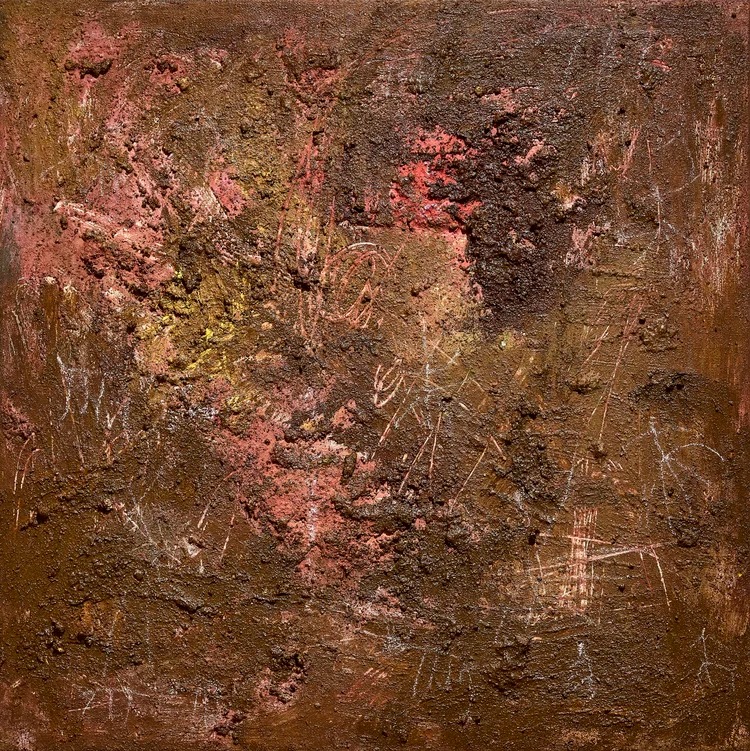
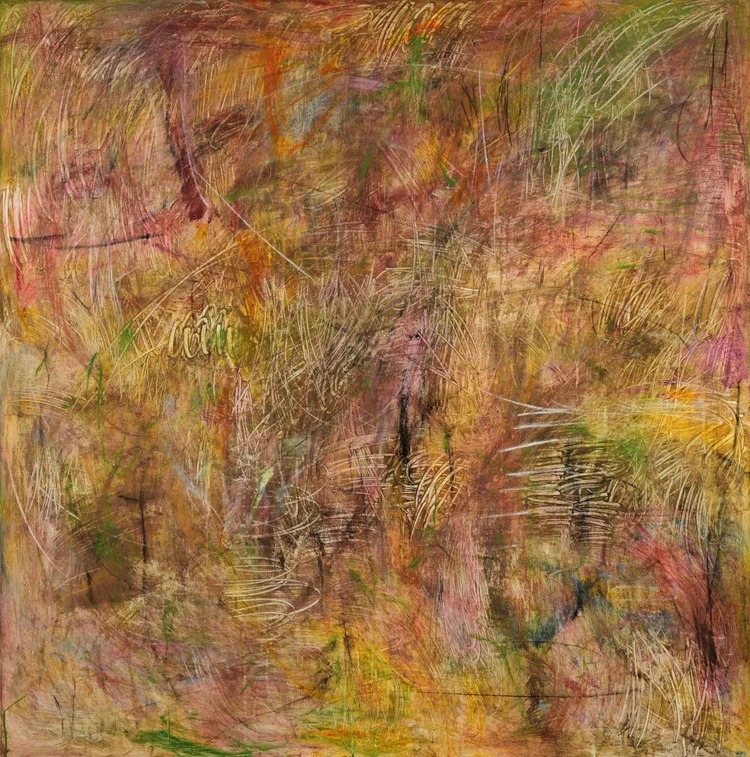
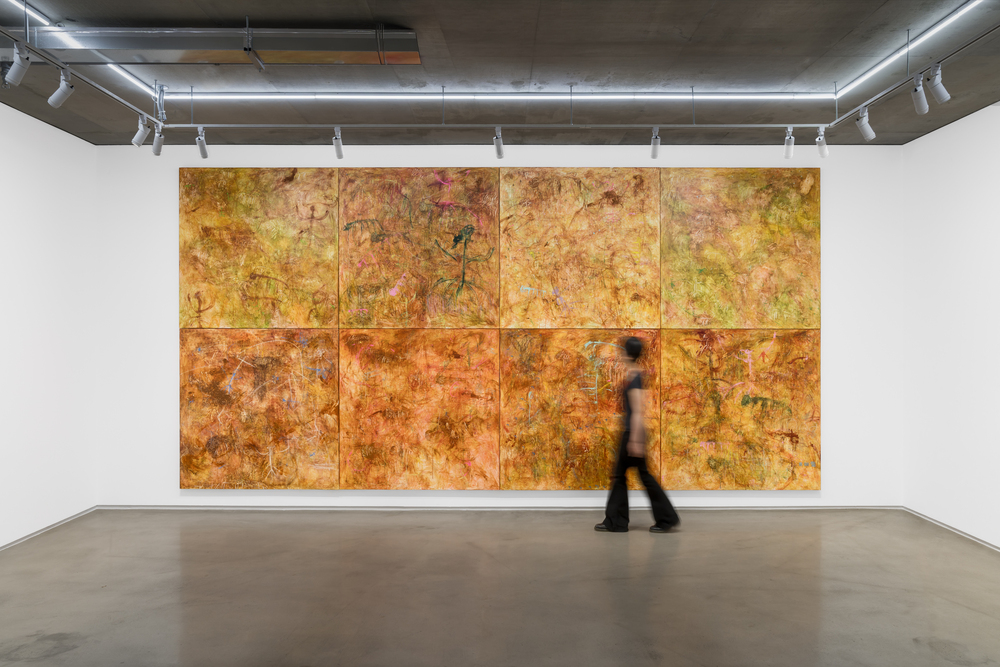
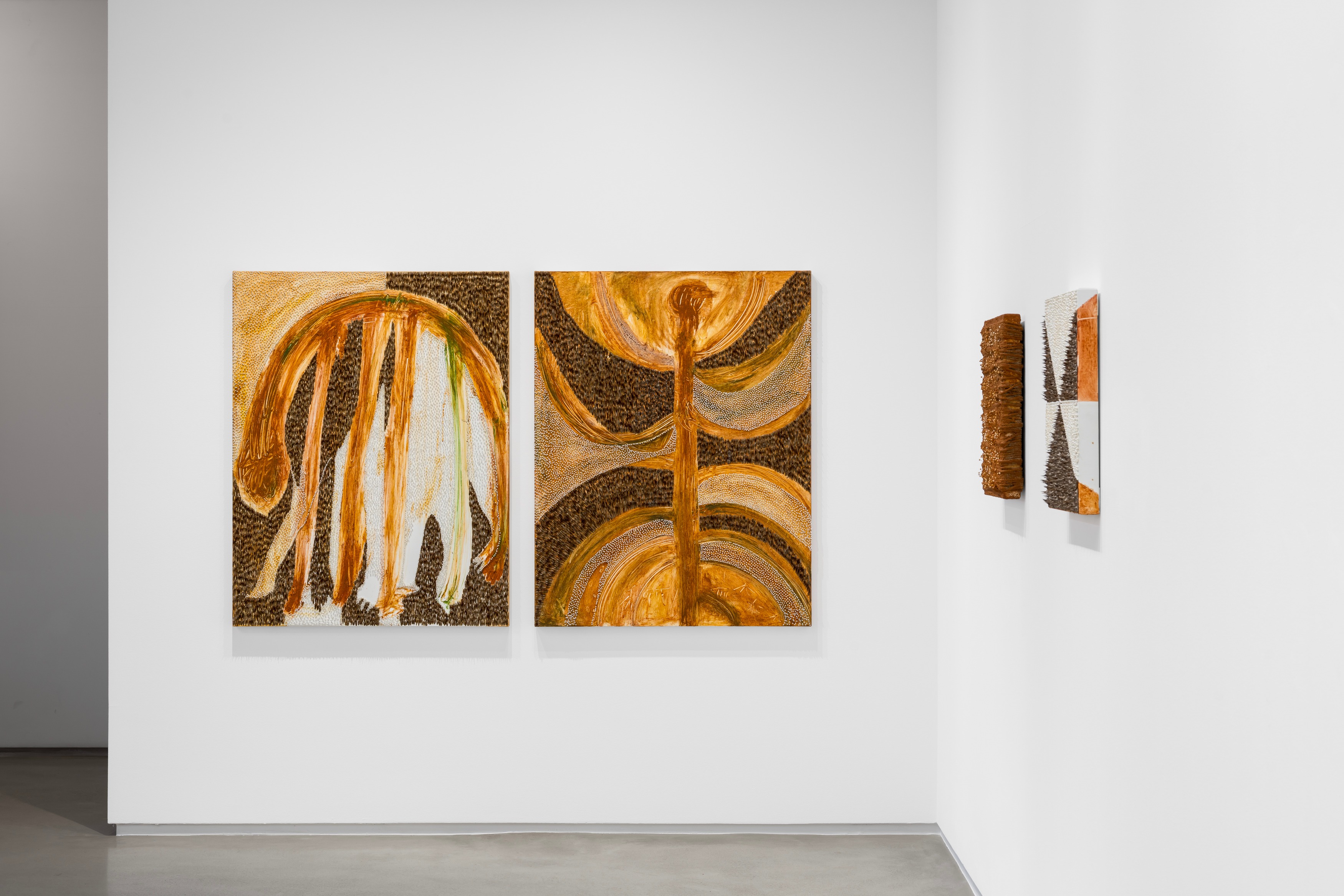
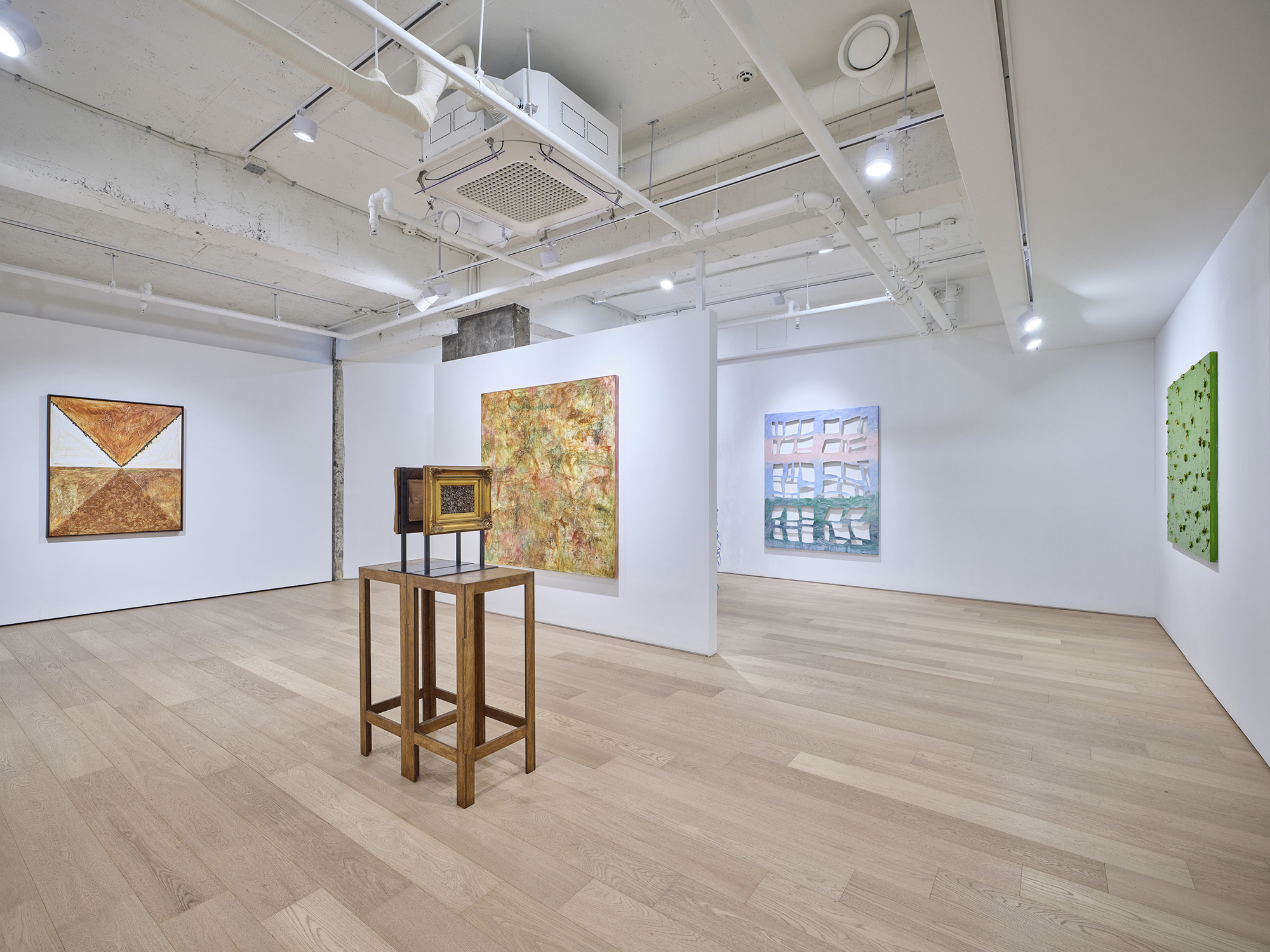
This method of inscribing and remembering the sensations and material realities of life in a particular place through traces of the hand continues directly into the painting-based 'Skin of Everything' (2023–) series. Begun in 2023, the series consists of paintings made by mixing soil gathered from places where the artist temporarily resides—such as Yeongdeok in Gyeongsangbuk-do and Gwanaksan in Seoul—with powdered pigments and animal glue, then repeatedly applying the mixture so that it permeates the canvas.
In works made with soil and powdered pigments collected from old thatched houses in Yeongdeok, pastel colors are added and pearl-headed pins are sometimes inserted across the surface. When fragments of printed fabric are hung from the corners of the paintings, neither pictorial illusion nor the three-dimensional presence of the work as an object is allowed to function conventionally.
The casually hanging scraps of cloth, as though the painting itself had become part of a wall, conspicuously eliminate any possibility of mistaking the work for an intoxicating Abstract Expressionist painting. Yang has described these elements as traces and “skin” of Yeongdeok as well. It is a seaside village where many things hang freely wherever space allows: clothes draped over corners and protrusions, fish and seafood drying on racks, and siraegi, dried radish greens, suspended through the winter. There is something compelling about this unselfconscious “realism.”
The origin of these assemblage-like “soil paintings” can be found in Hanok, Yeongdeok (2022), a painting made by crushing tiled walls, earthen walls, and other materials collected from an old hanok in Yeongdeok and mixing the resulting soil with adhesive. Composed of two elongated panels, the work contains no artificial pigments, yet different tones of earth and black are woven together in a rough rhythm.
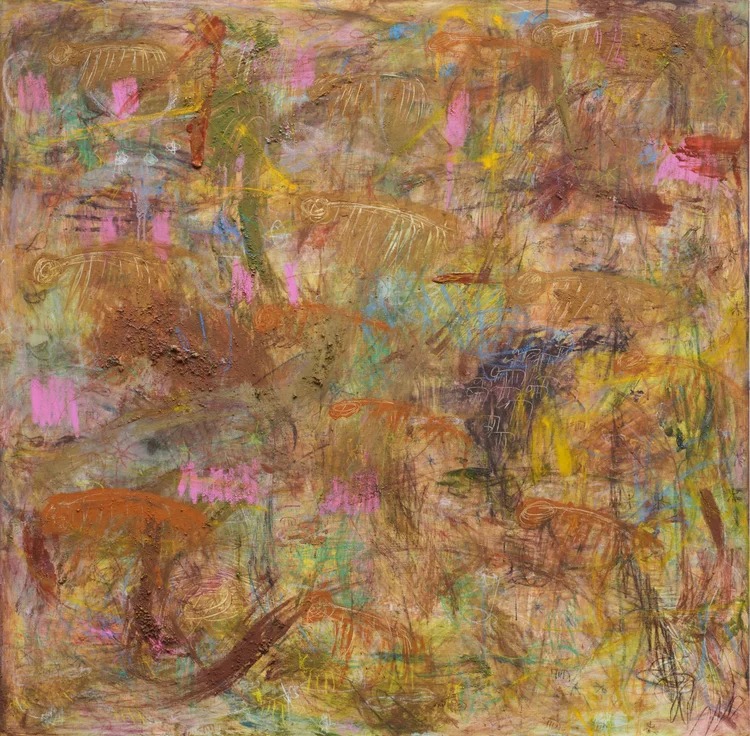
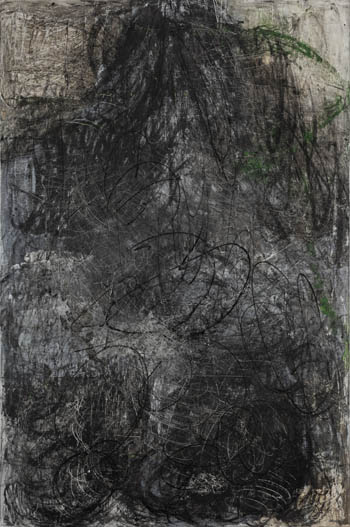
Over time, the soil paintings seem to absorb more densely and heavily into the canvas, creating mottled frontal surfaces that gradually transform into a kind of “wall” resisting oblivion. In Beings Living on Land (2024), made by mixing soil from Gwanaksan with pigments, fantastical colors and certain forms emerge in place of the rough materiality produced by rubbing and kneading.
Or, more precisely, rather than recognizable forms appearing, childlike scribbles and traces resembling primordial handprints come to take the place of conventional pictorial figures. These paintings, in which ground and image can no longer be clearly distinguished, may evoke postwar European Art Brut; more than anything, however, their simple and repetitive motifs—forms that might resemble a crouching person, a four-legged animal, or a symbolic sign—recall prehistoric cave paintings.
This is not simply because Yang originally studied history at university or because she is fond of Lévi-Strauss. These four-limbed, doodle-like forms do not seem to imitate primordial time so much as to embody an impulse to create such a time anew.
French prehistorian André Leroi-Gourhan argued that, in the emergence of prehistoric images, rhythm preceded realistic representation or symbolic meaning. According to him, the earliest traces left by modern humans consist of small notches or sequences of lines incised into bone or stone, suggesting that the origins of drawing were not pictorial but rooted in rhythmic action. Interestingly, Yang likewise says that the motifs and imprinted handprints in her paintings are not intended to represent particular forms or symbolize anything, but are simply consequences of rhythm.
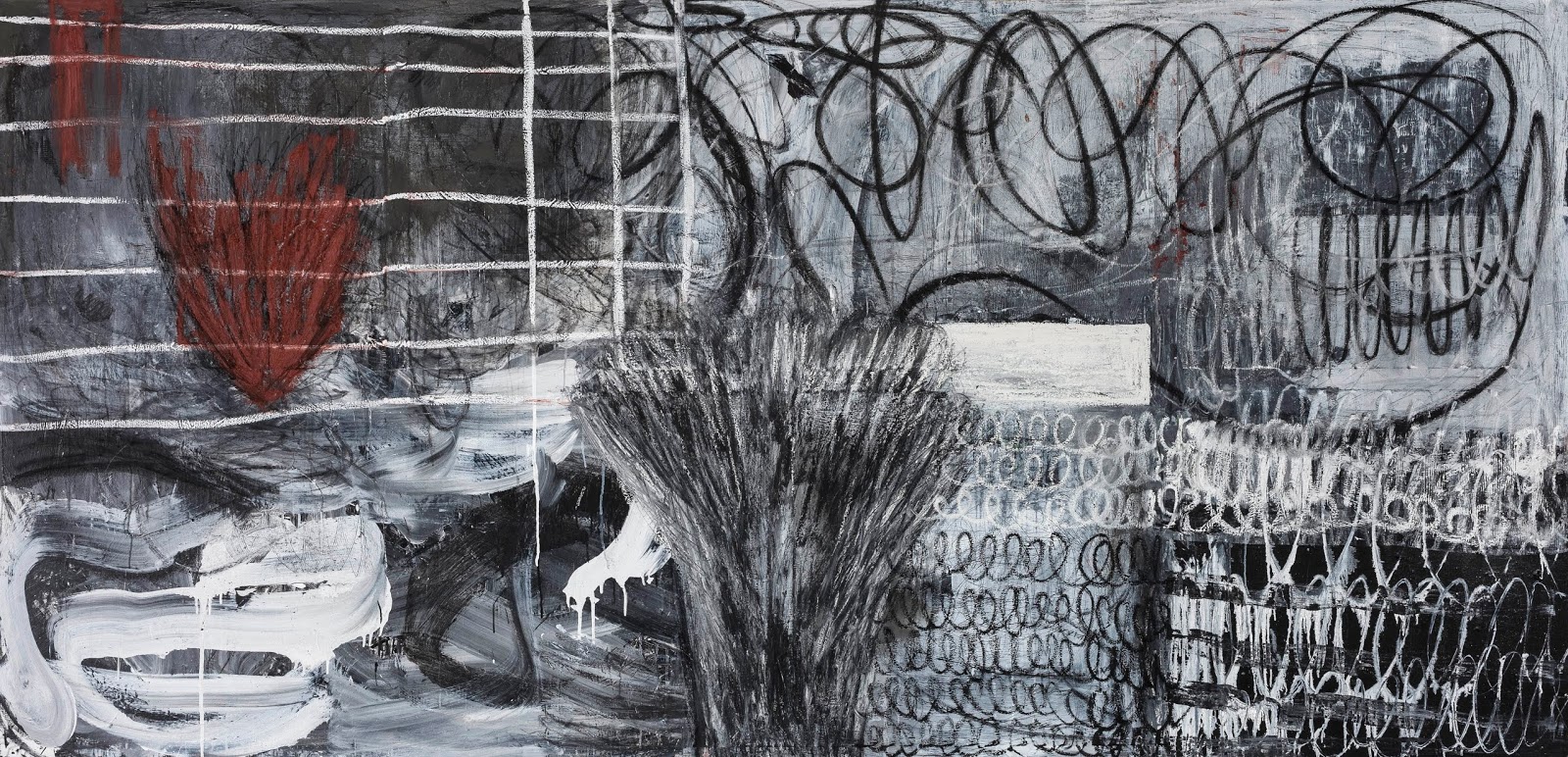
This rhythm-based mode of drawing may have its prototypical structure in the live painting performance Canvas Instruments (2013), which Yang presented years ago with sound artist Haku Sungho. For the performance, she constructed a large canvas fitted with steel springs and plastic cups, transforming the vibrations generated on the canvas surface while painting into sound.
The gestures of painting synchronized with rhythm might appear to reiterate the spirit of the twentieth-century avant-garde, which sought to make painting interchangeable with music, regarded as the most abstract and absolute of the arts. Yet the destination of Yang’s practice is not the same kind of “abstraction.” Rather, what she moves toward might be described as a raw rhythm or pulse directly connected to the act of drawing—a rhythm whose center lies not in the head, but in the fingertips and toes.
When we speak of primal impulses or rhythms in visual art, performance, or hybrid forms, we tend to imagine the artist’s own passion, desire, or unconscious embedded within the work. In Yang’s practice, however, such impulses and rhythms seem to resonate on a synchronic rather than purely private level, because they are grounded in highly concrete and tangible contexts: the specific places in which life unfolds.
Yang often refers to the boundary at which such contact occurs as “skin.” In her work, this skin is no different from soil; further, it is no different from the peeled surfaces of objects and nature. Here, the boundaries between human and nature, and between the artificial and the natural, are not erased so much as transferred into one another.
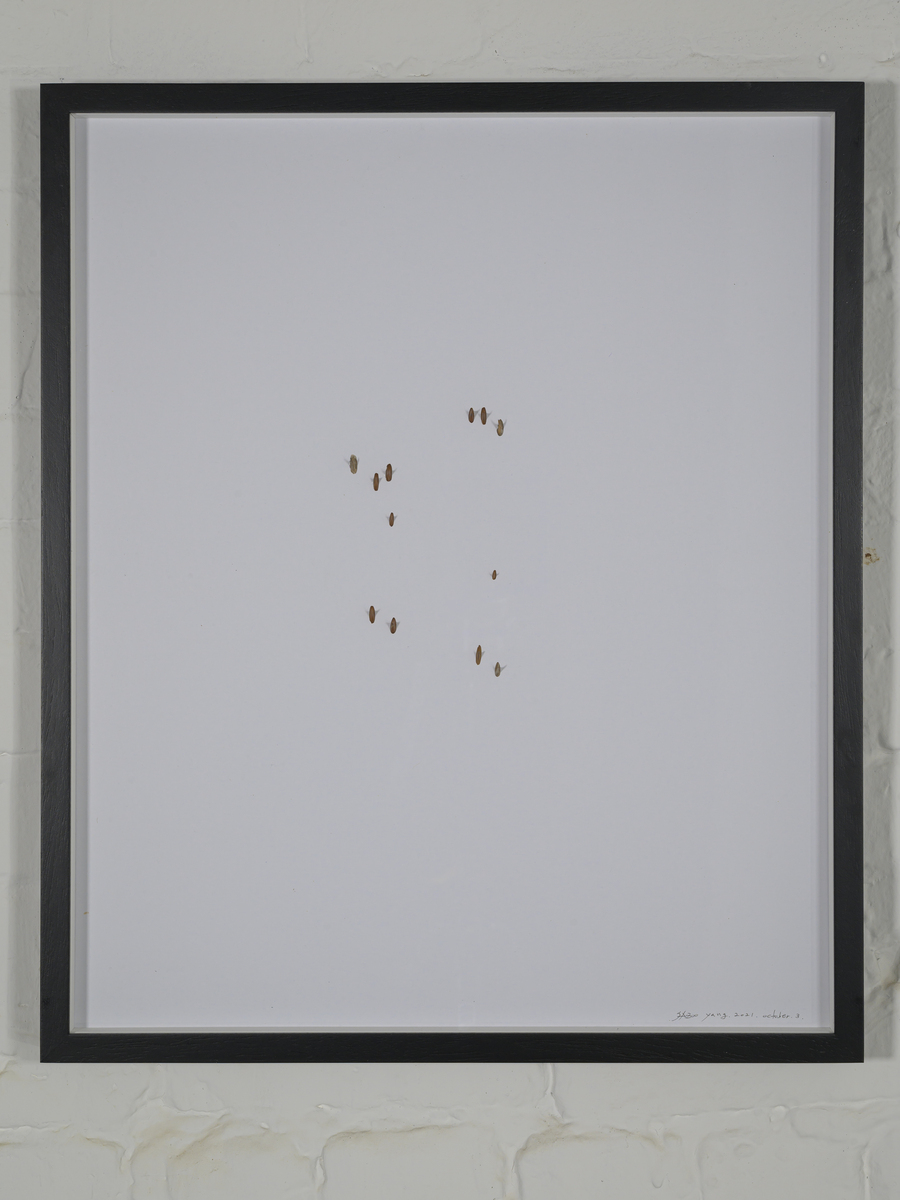
At times, they are exchanged in a mythic—or perhaps superstitious—manner, as in The Last Memory (2021), in which the limbs of workers were rendered as pieces of wood. This may be understood as Eastern shamanism or Western pantheism. Either way, what Yang believes to inhabit old houses, dead branches, discarded clothing, and fragments gathered from the street are the “memories” and traces of all things that are, or once were, alive.
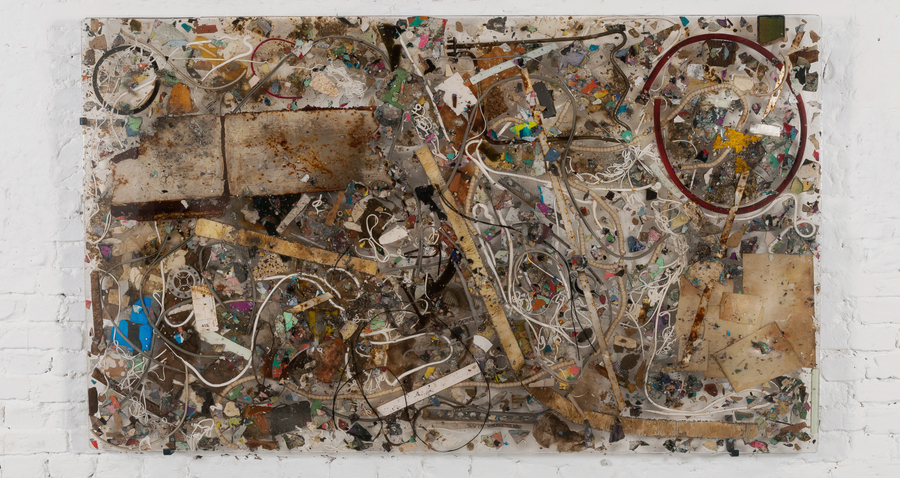
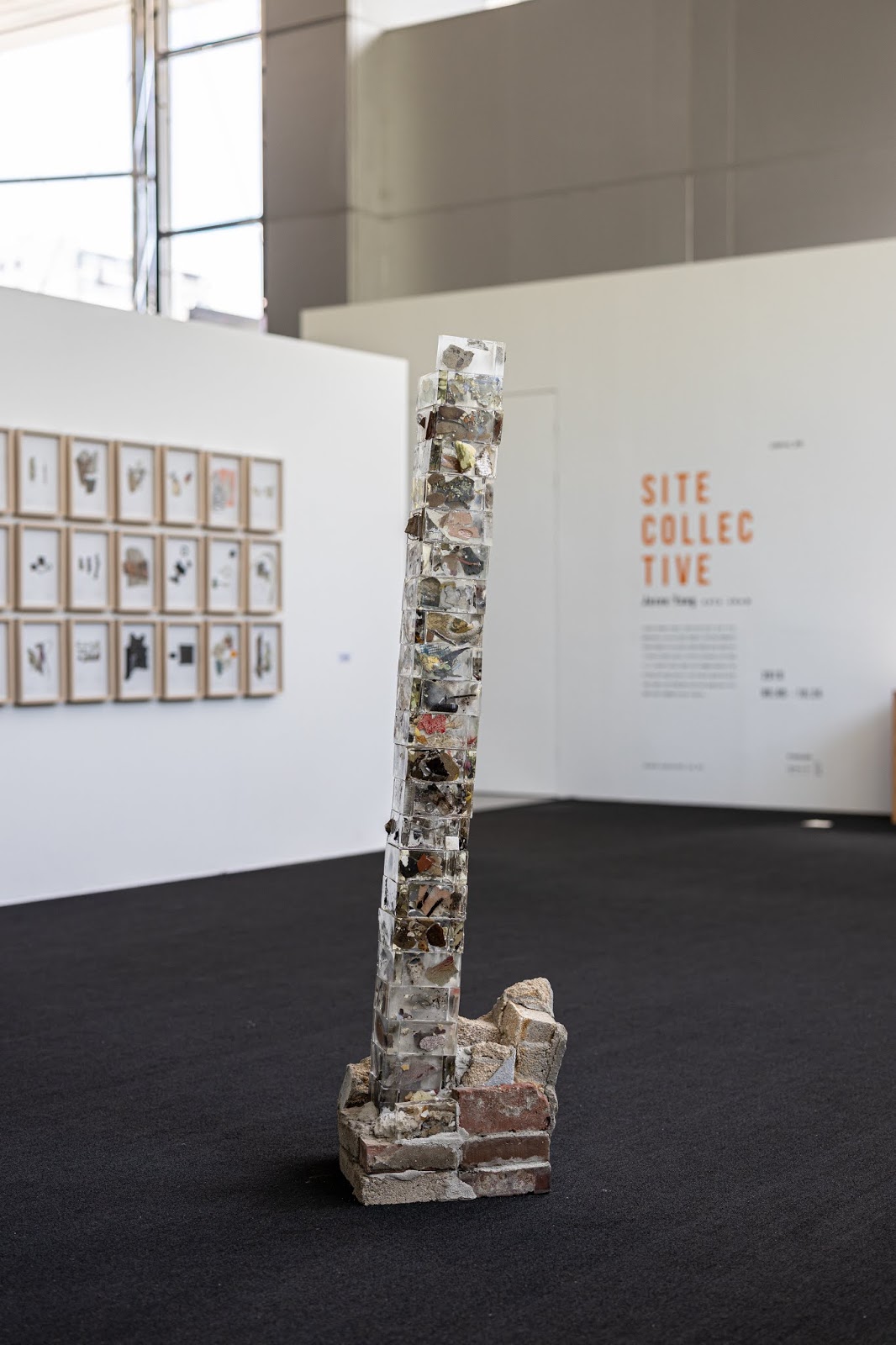
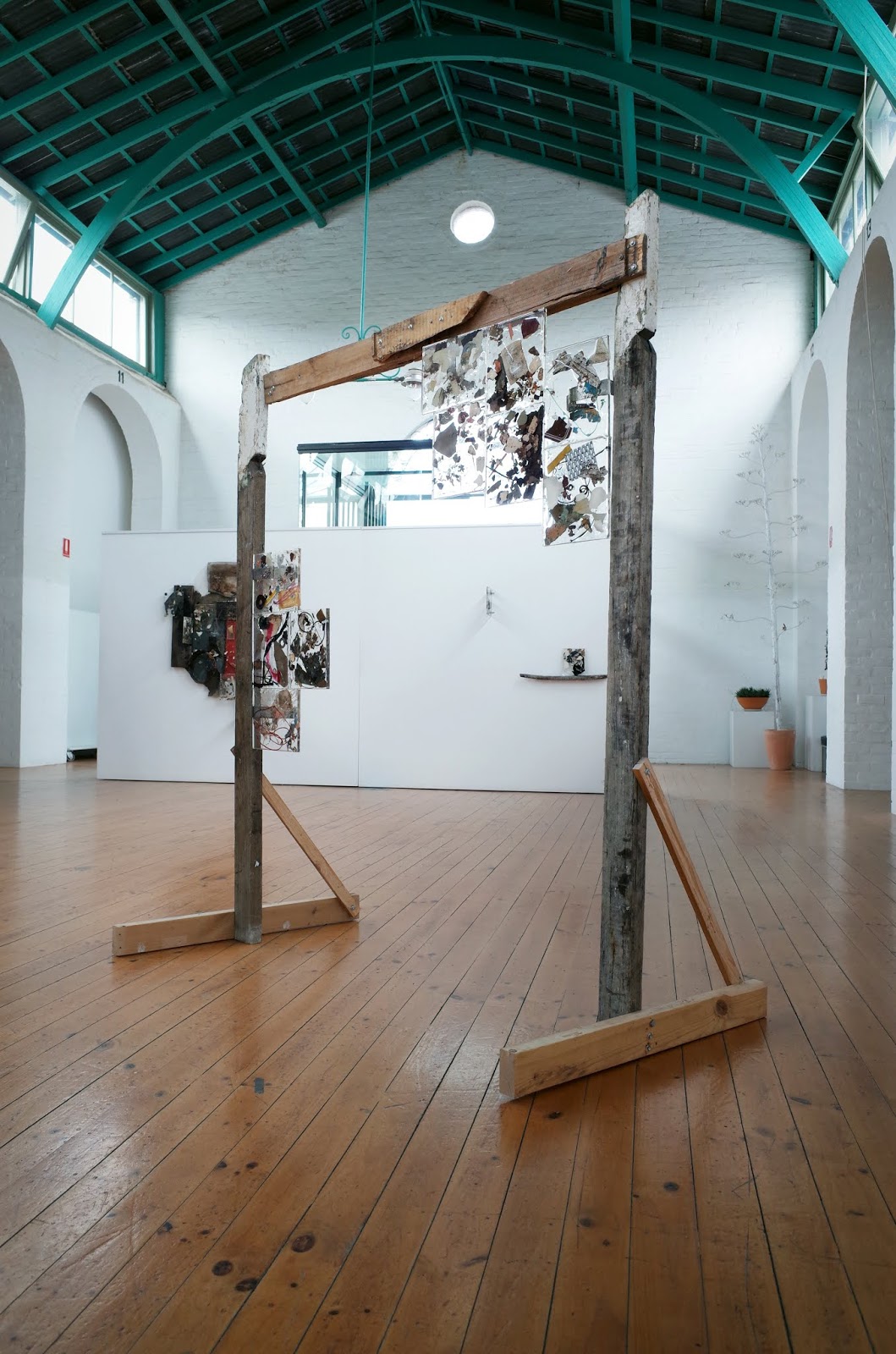
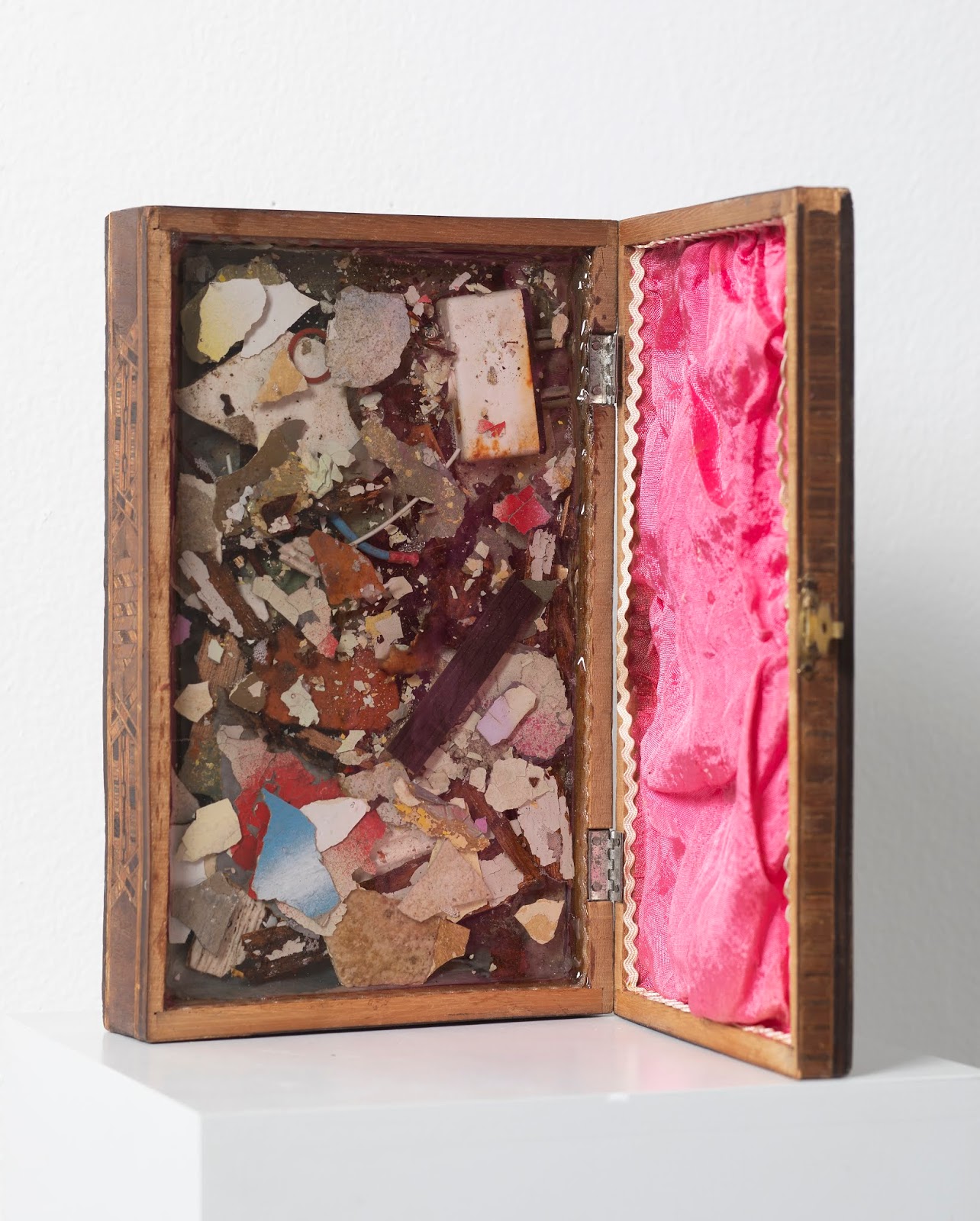
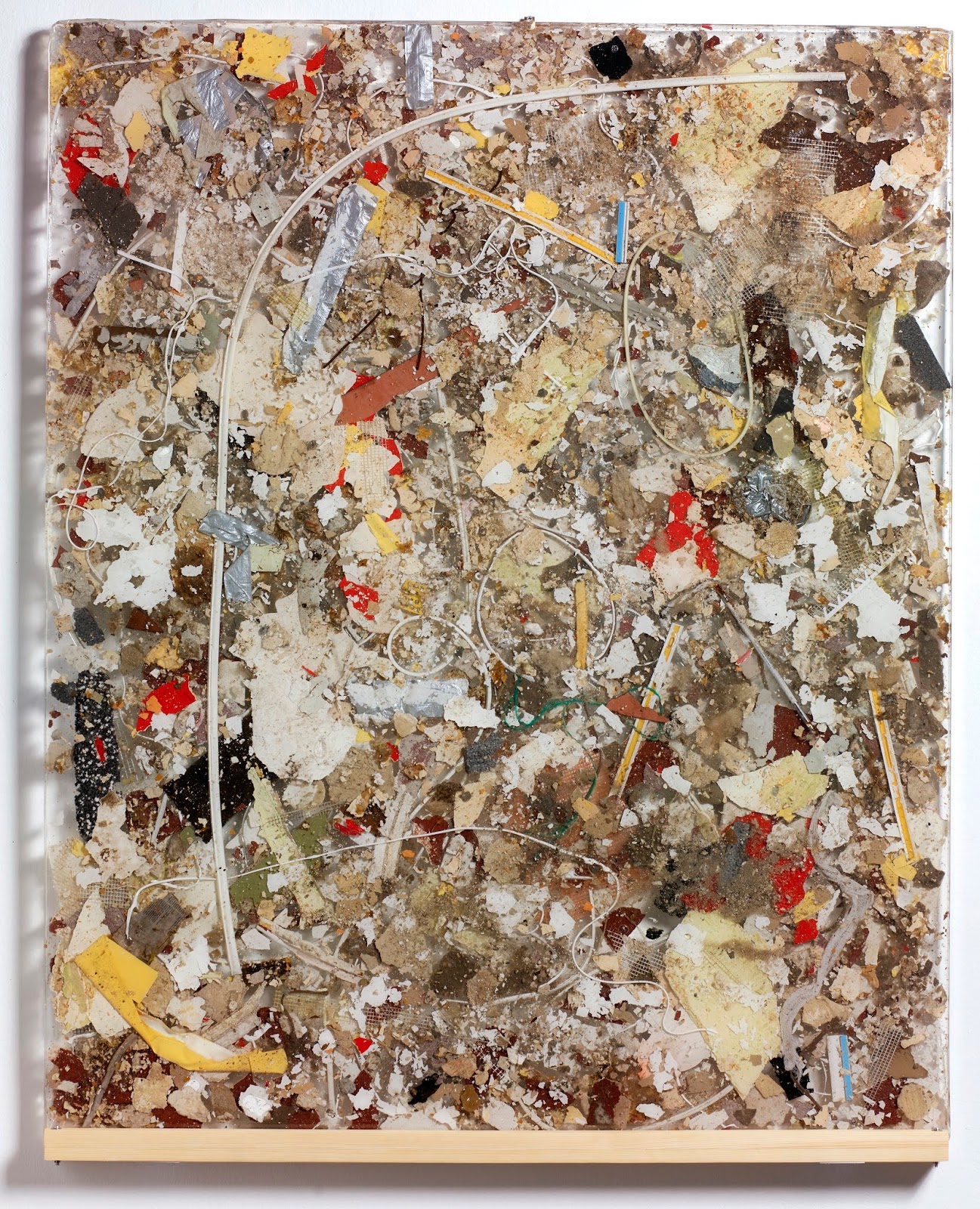
For nearly two decades, Yang has lived while moving—indeed, wandering—between Seoul, Yeongdeok, Busan, Beijing, Berlin, London, Paris, St. Petersburg, and many other places. The resin painting series 'Materials, Busan+Berlin' (2017–2018) and 'Immanence' (2018–2023) are ragpicker-like collages assembled from discarded fragments gathered in these places. Their thick yet transparent preservation appears less like a suspension of matter than a suspension of time, built up layer by layer through indexical traces.
In ‘Stolen Time’, strings, pipes, fragments of frames, and all manner of tiny debris are embedded within the surface, while the earlier 'Materials, Busan+Berlin' consists primarily of flakes of paint and peeled surfaces detached from old houses and structures. For Yang, the place where painting began was the “wall,” and those walls must always have been filled with things coming loose and falling away.
For an artist who obsessively covered houses awaiting demolition with fingerprints, the peeled surfaces of old walls and cities must have seemed no different from relics imprinted with the traces of every being that once inhabited them.
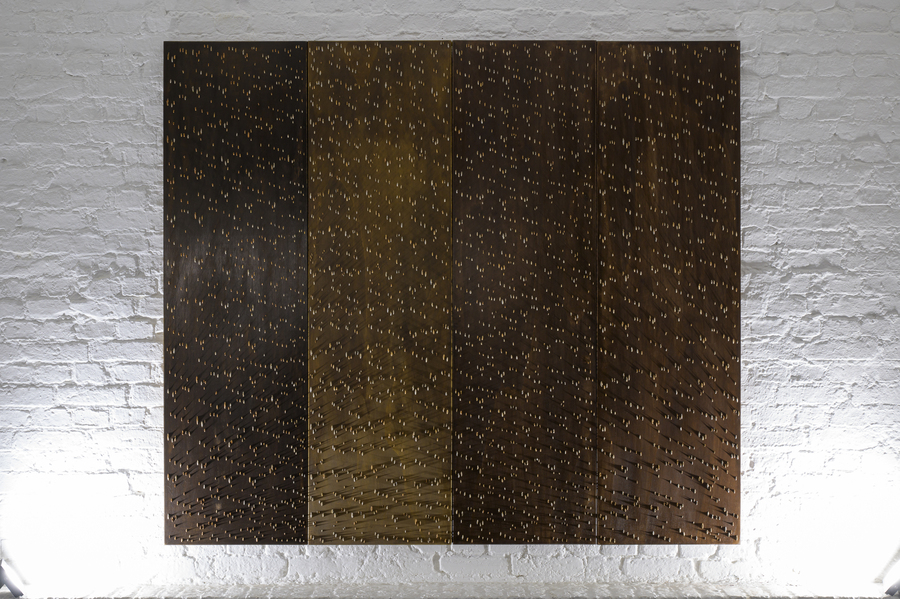
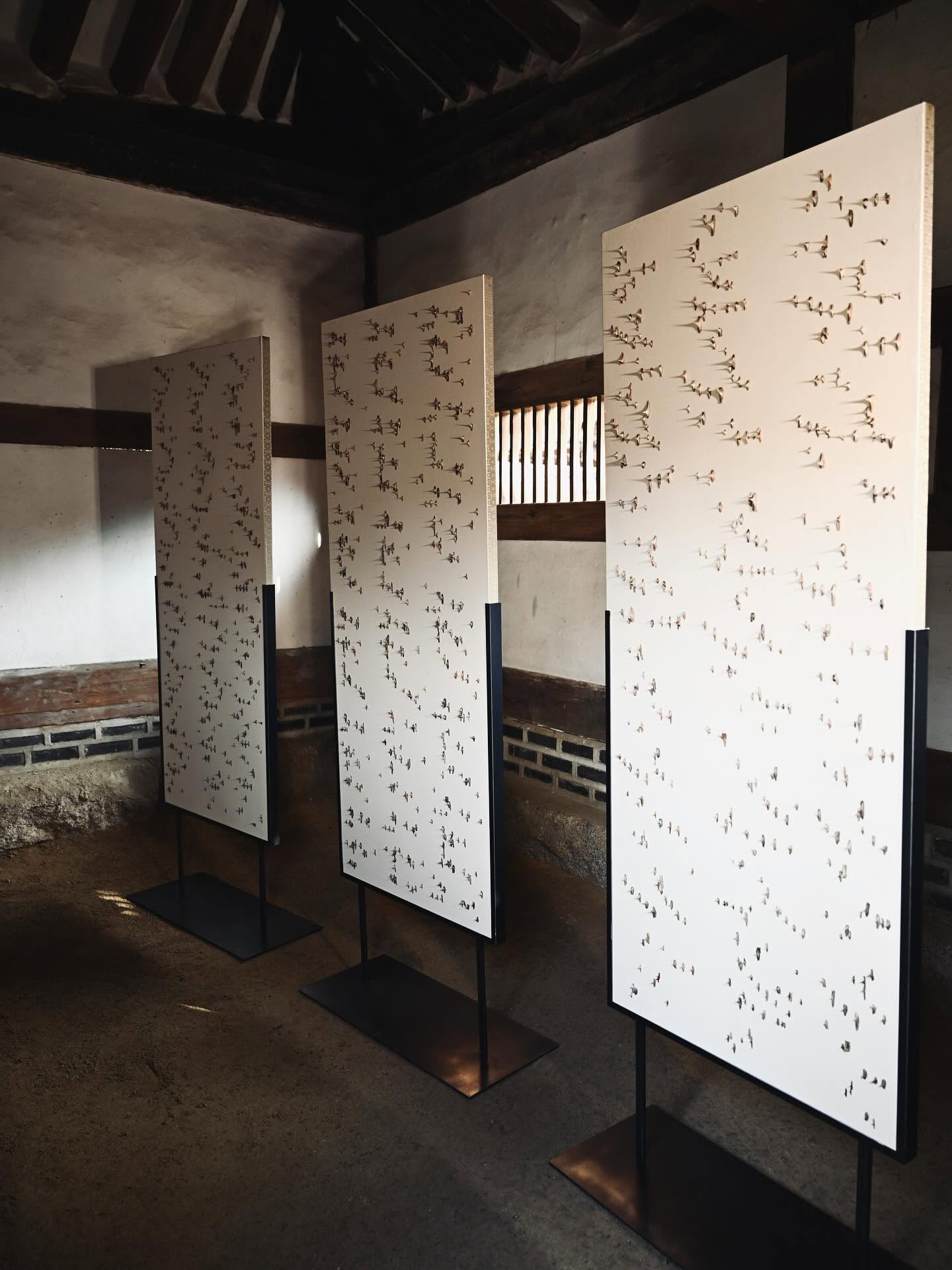
Another kind of skin painting collected by Yang might be called a “thorn painting.” ‘Thorns’ (2021) is densely covered with rugosa rose thorns gathered near the artist’s home in Berlin. The brown tones of the wood form an uneven panorama ranging from gold to black, while the thorns themselves vary widely in shape.
In Korea, Yang has also produced works using thorns from Kalopanax trees, while another work consists of four wooden panels onto which thorns from plants in the rose family were affixed according to their original arrangement on the branches. If the arrangement of these thorns can be understood both as a tense will to live and as “the rhythmic patterns of nature in temporal and spatial terms,” we are reminded once again that Yang’s concern lies in transcribing the struggles and rhythms of beings embedded throughout the spaces of life.
Yang’s practice thus resembles an act of gathering fragments of memory belonging to all the interconnected others who inhabit the spaces in which we live, and reawakening them through the act of art. Yet this gesture is neither deliberately mythic nor overtly social or socially critical. Yang has said that she “works at the boundaries between myth and the city, the organic and the artificial, sensation and sign.”
In this sense, her practice attends to what Lévi-Strauss called the “structural unconscious”—the internal logic of myth as a logic suppressed and excluded within social structures—and sensorially replays this duality. Thus, when we encounter her material, sensuous, primal, and, if the term may be used, transfigurative paintings, we cannot help but imagine the vibrations of forgetting and memory, death and life, trembling at the tips of her fingers and among piles of soil, thorns, and pearl-headed pins.