In Antoine de Saint-Exupéry’s The Little Prince, the star is neither a backdrop nor a setting. It is the smallest possible space in which a relationship can arise. Asteroid B-612, where the Little Prince lives, is far too small to be called a world, yet within it are a single rose, two volcanoes, and the repeated time devoted to care. The star is presented not as part of the vast universe, but as a world scaled to what a single being can take responsibility for until the end.
A world may expand physically, but the place in which a relationship can be formed is always limited. Visually, a star is close to a point, a figure almost without form. Here, the “star” functions less as an object of observation than as a coordinate where memory, emotion, and relationship overlap. For the Little Prince, the star is the place where the rose exists, a space condensed with the time he has spent caring for it.
What matters is how long one has remained there. Among countless stars and roses, the reason only one becomes “one’s own” lies precisely in the time and responsibility invested in it.
This structure becomes even clearer when the Little Prince arrives on Earth. The thousands of roses he encounters in a field unsettle the meaning of the rose he had believed to be unique. His world suddenly expands, yet within that expanded world he can no longer see a place where he himself might remain. It is only through his encounter with the fox that a relationship begins to take shape.
The fox refuses immediate intimacy with a stranger and explains that a relationship can be formed only through repetition: meeting at the same time and waiting for that time to arrive. As their meetings recur, the field, once merely one place among countless others, gradually becomes a particular place through the time spent there and the sensations accumulated within it. It is no longer anonymous space, but a place inhabited by relationship.
What matters here is not the size of the space, but the density produced by repetition and sustained attention. The Little Prince eventually comes to understand that uniqueness does not arise from the rarity of an object, but from the care and responsibility attached to a particular place. At the end of the story, after the Little Prince disappears, the star remains no longer as a physical dwelling place but as an image that makes absence bearable. The stars in the night sky become memories containing the sound of laughter, traces that testify that the relationship has not disappeared.
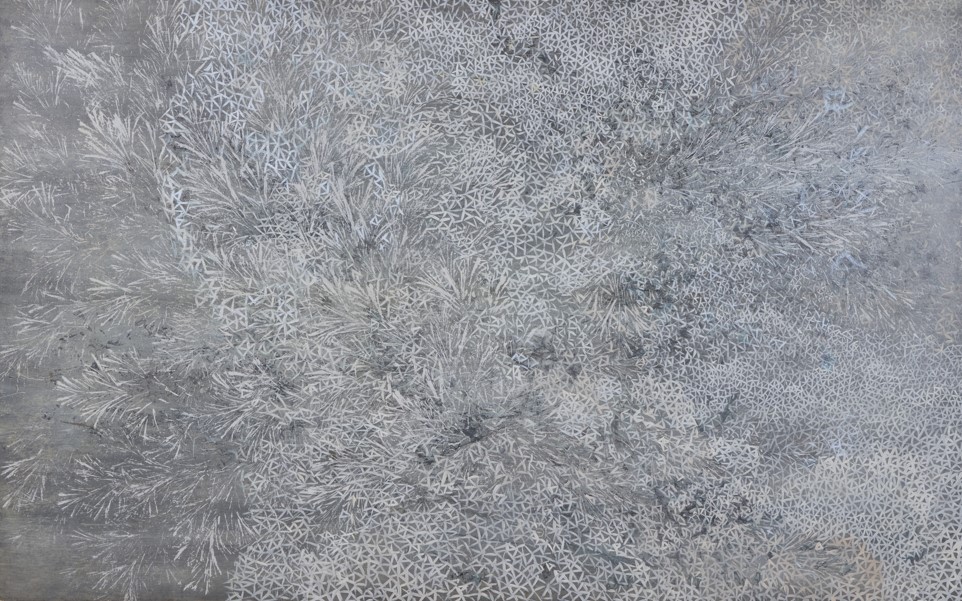
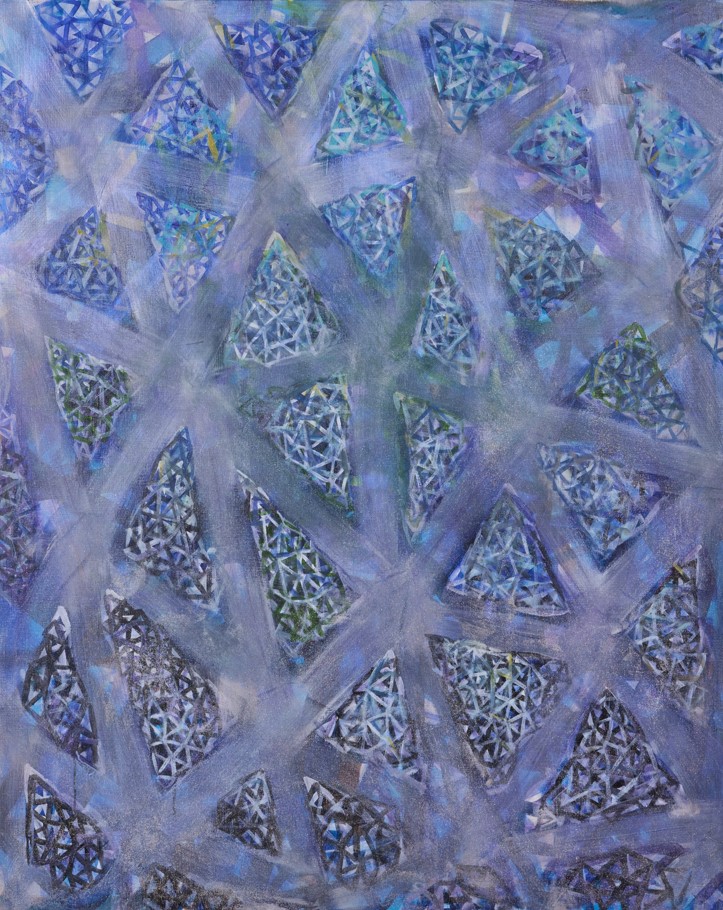
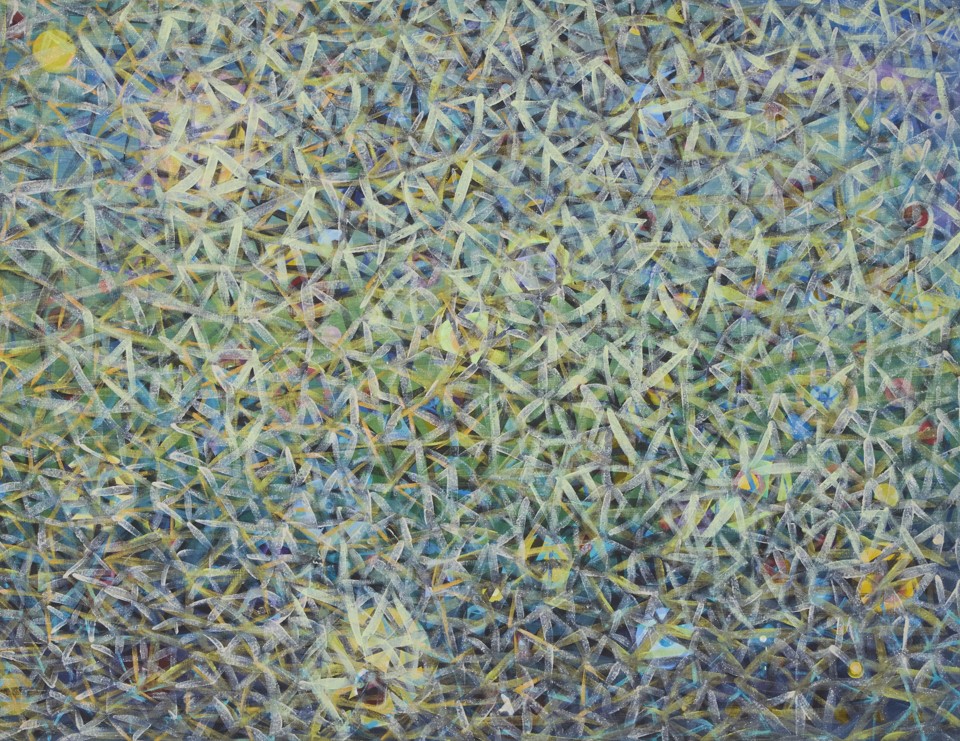
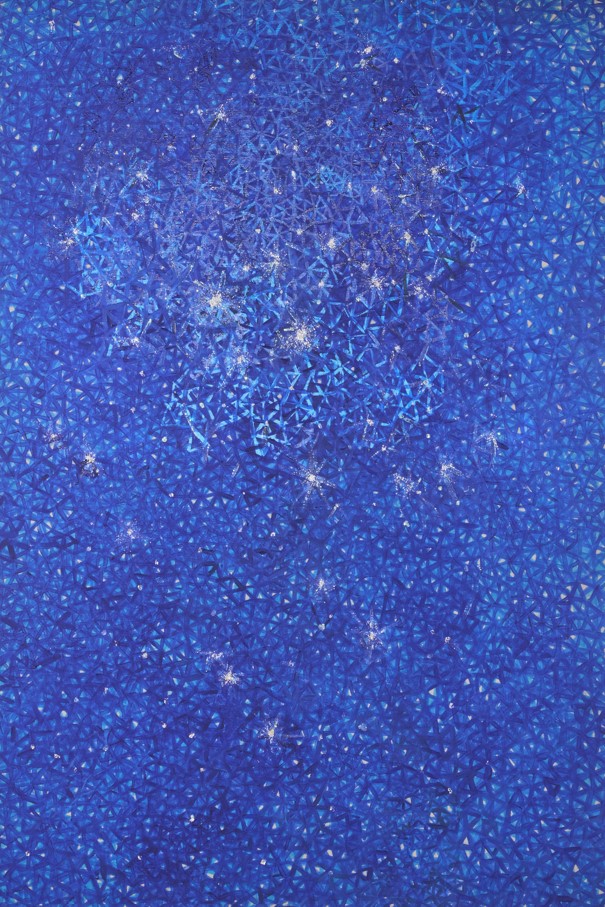
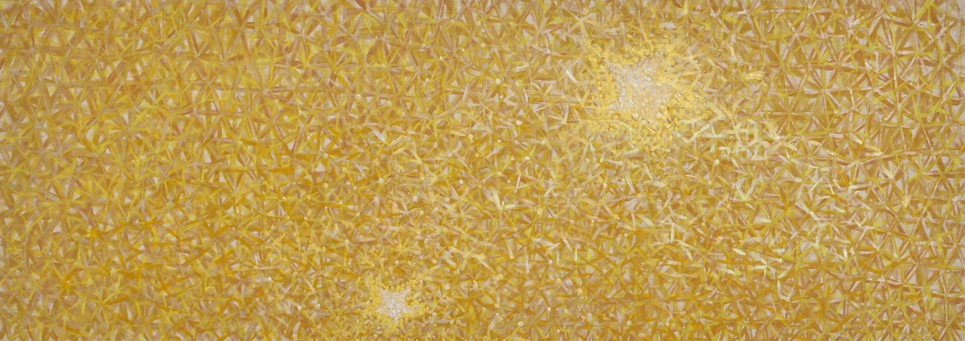
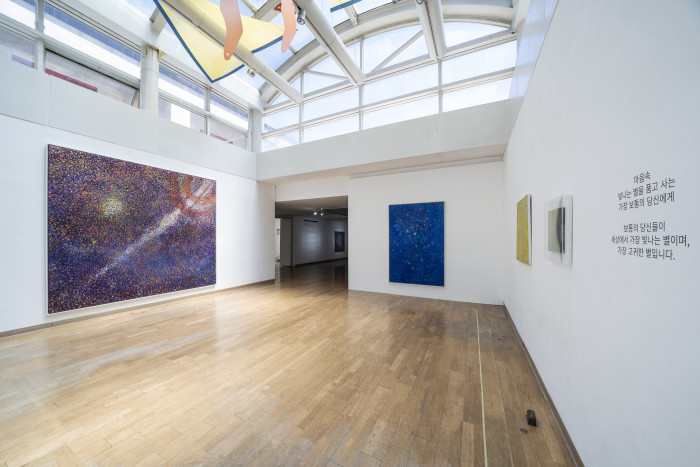
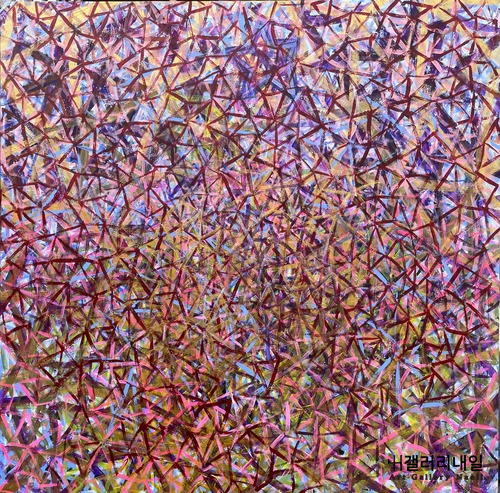
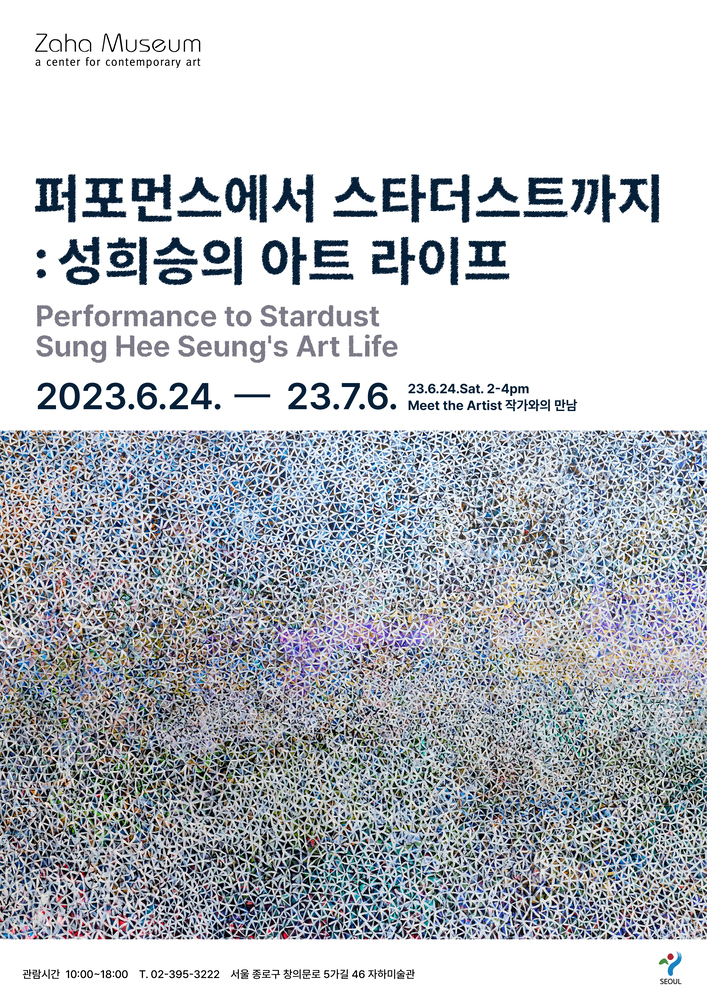
This line of thought extends naturally into the paintings of Starya Hee-seung Sung. The recurring points and lights, and the traces of color accumulated layer upon layer across her surfaces, evoke stars and the cosmos, yet they are closer to impressions left by sensation than to acts of representation.
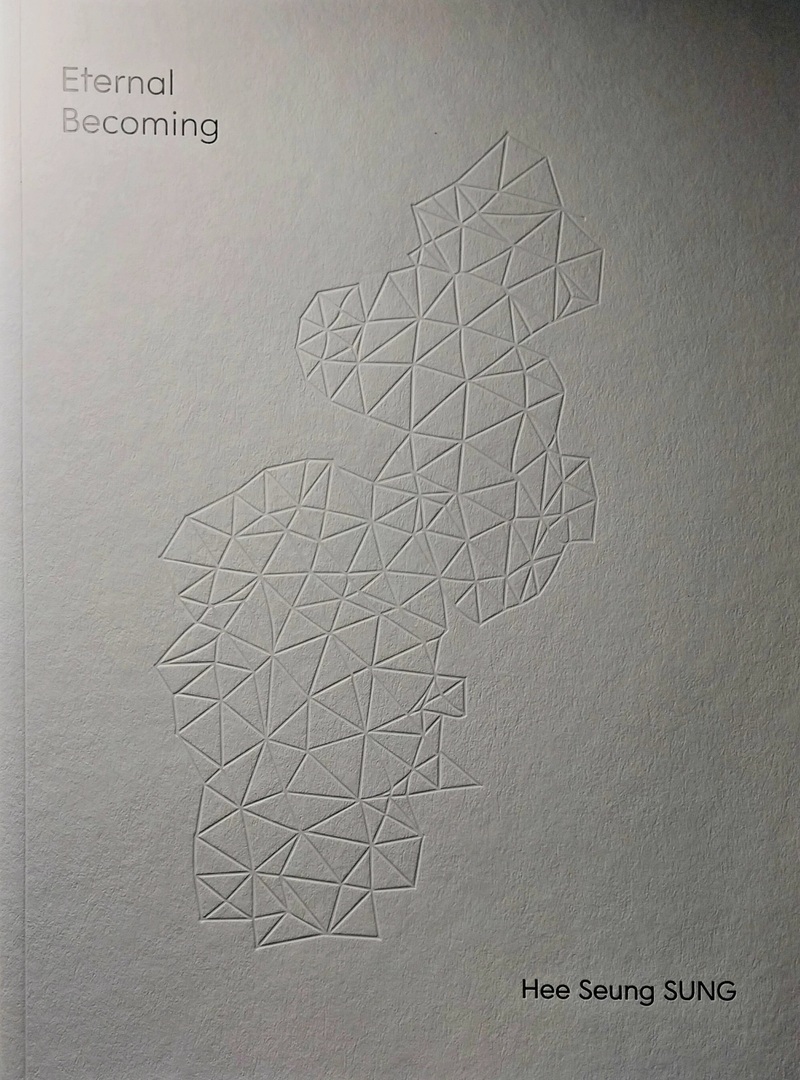
Sung’s paintings are not images intended to depict a particular space. Rather, they are traces left on the surface by the time spent looking and remaining. 《Eternal Becoming》 is a process of bringing into form a language that has not yet reached its end. It attends not to the moment when a form becomes complete, but to the time in which form continually emerges and moves.
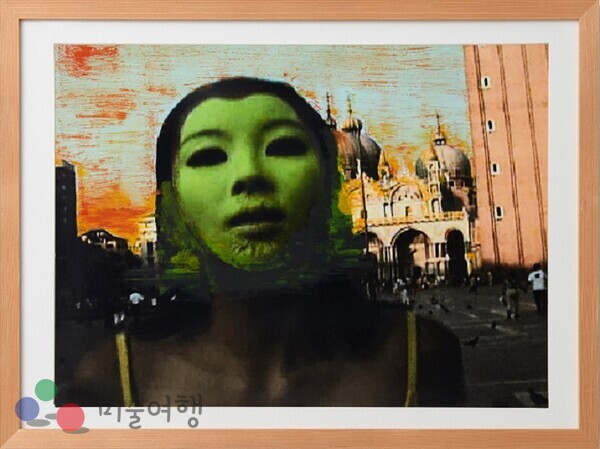
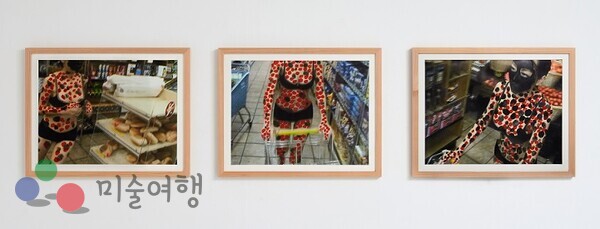
The “circle,” which appeared repeatedly in Sung’s early work, was the most fundamental form of completion. As a visual language encompassing circulation, repetition, and infinity, the circle was combined with performance, photography, and video, embracing both corporeality and concept. Yet her sustained exploration of the triangle marked a turning point in her practice.
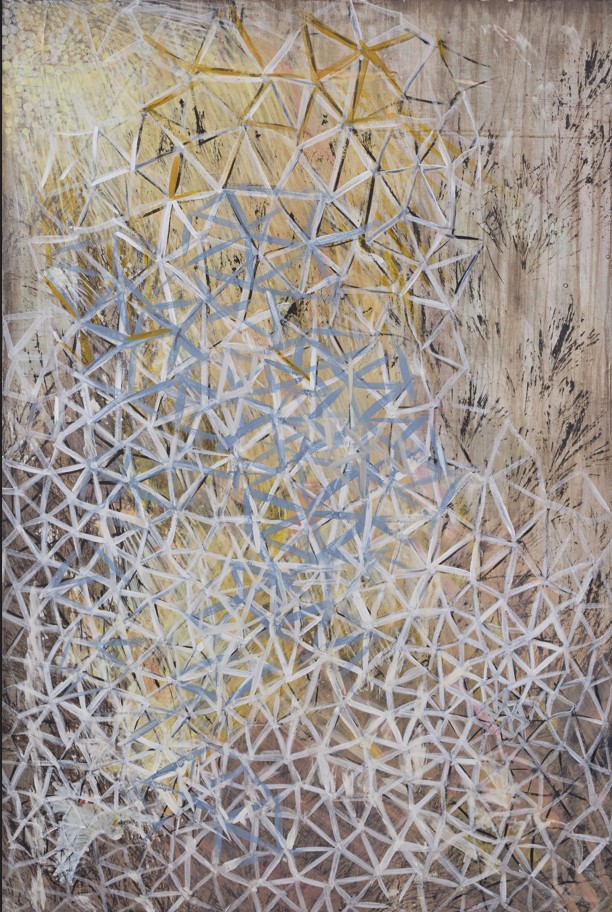
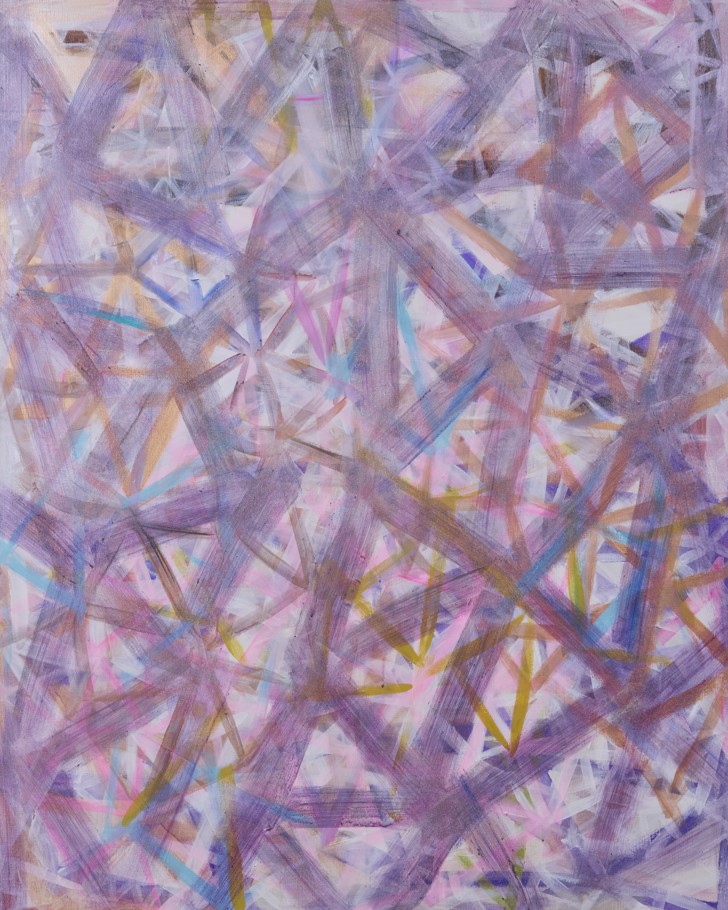
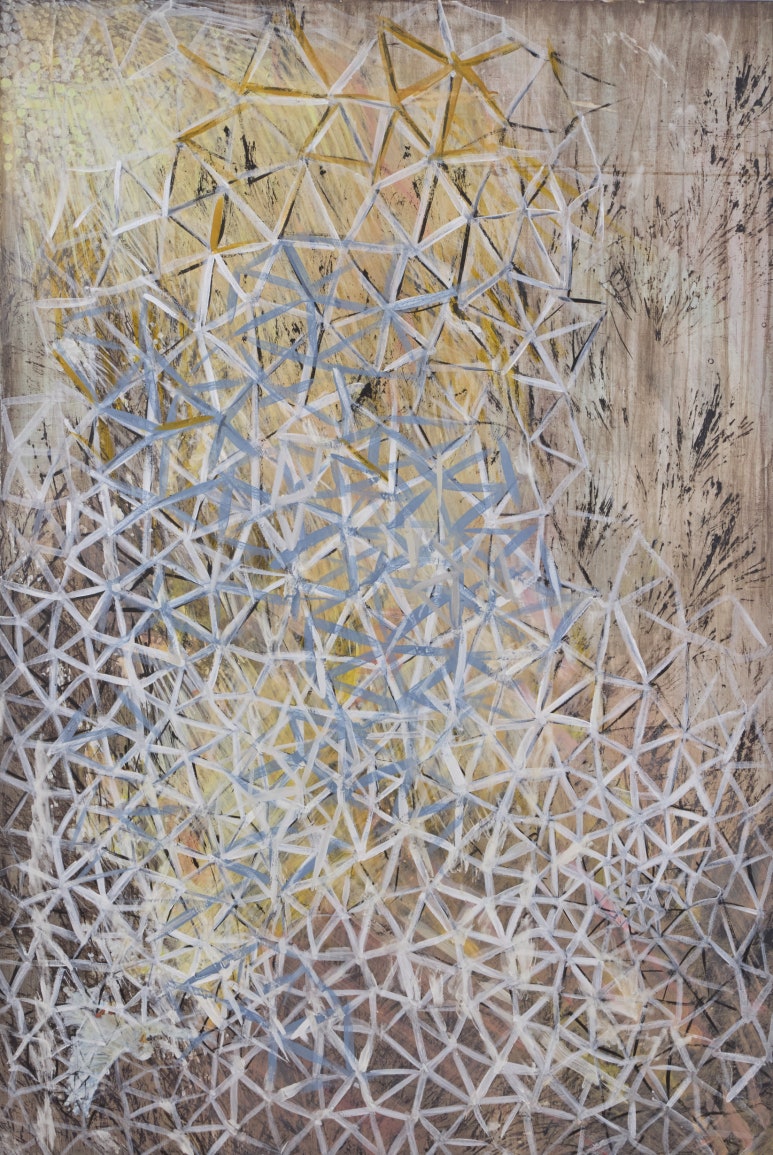
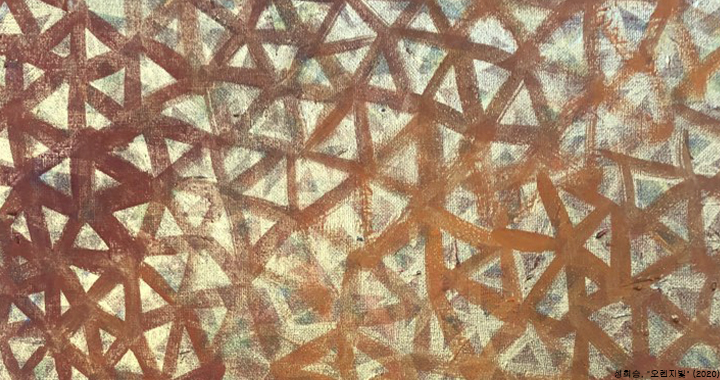
The triangle is a structure that contains stability and tension, generation and collapse at once; it is a unit capable of producing maximum vibration through minimal form. The circle is no longer an endpoint, but becomes a phase that is dismantled and reconfigured within vibration.
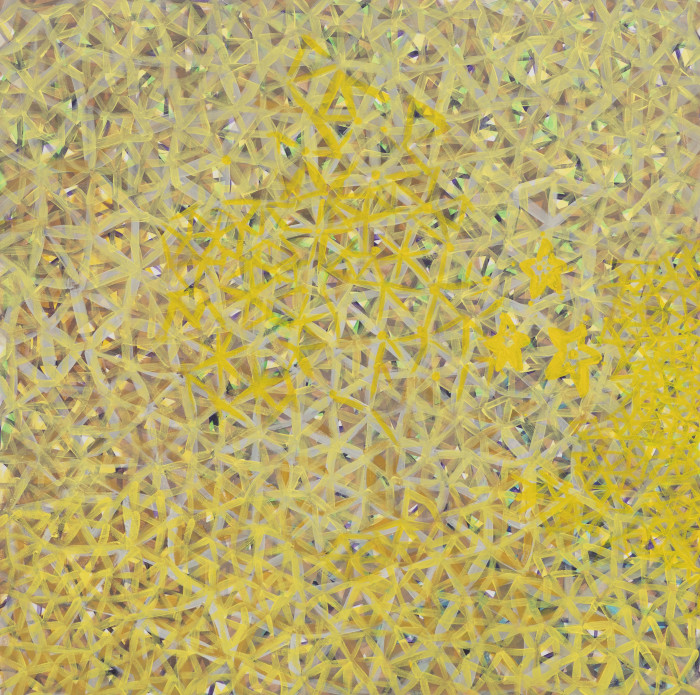
The “star” is the outcome of this process. It is the point at which circle and triangle, completion and expansion, overlap within a single pictorial field. Rather than a change in form, it is closer to a trace of a shift in the artist’s way of perceiving the world. In her paintings, the star does not point toward a specific symbol or narrative.
While encompassing love, hope, and consolation, it also operates as a question concerning the restoration of existence. Starlight encountered in the night sky amid ruptures in the artist’s personal life became not a “symbol,” but a “memory.” Here, the star is a light that cannot be grasped yet undeniably exists. It cannot be possessed, yet it enters into relationships; it is distant, yet continues to exert influence. Sung gives abstract form to states that cannot be articulated in words, referring to this as “Hyper-Abstract.”
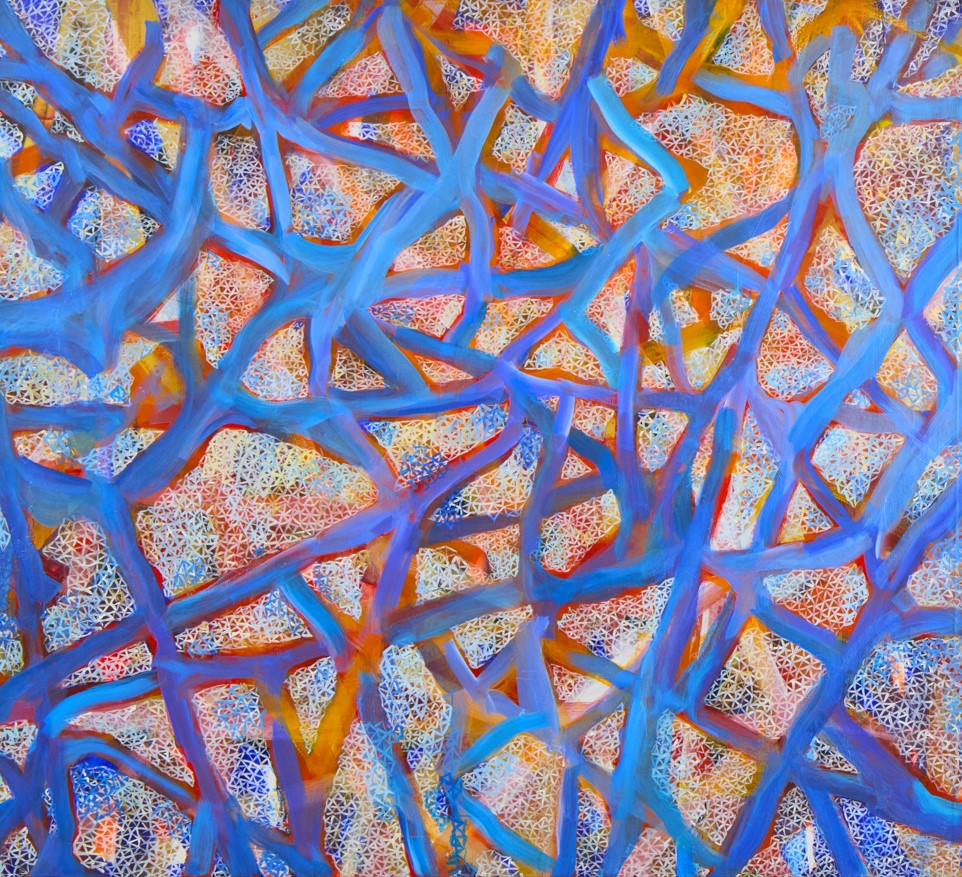
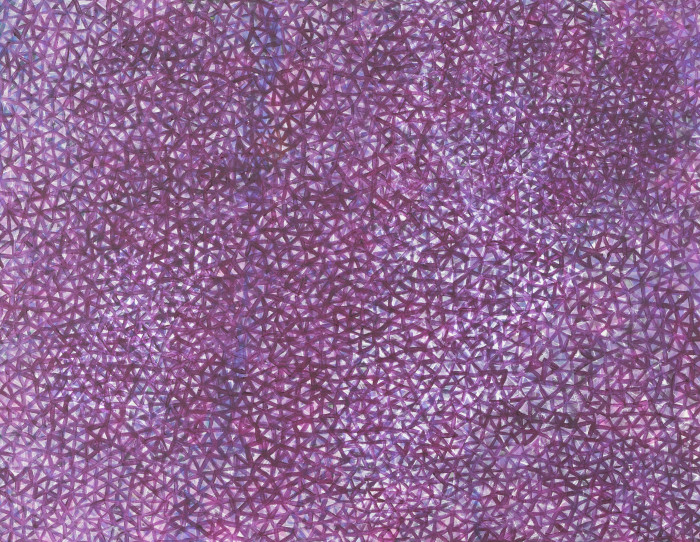
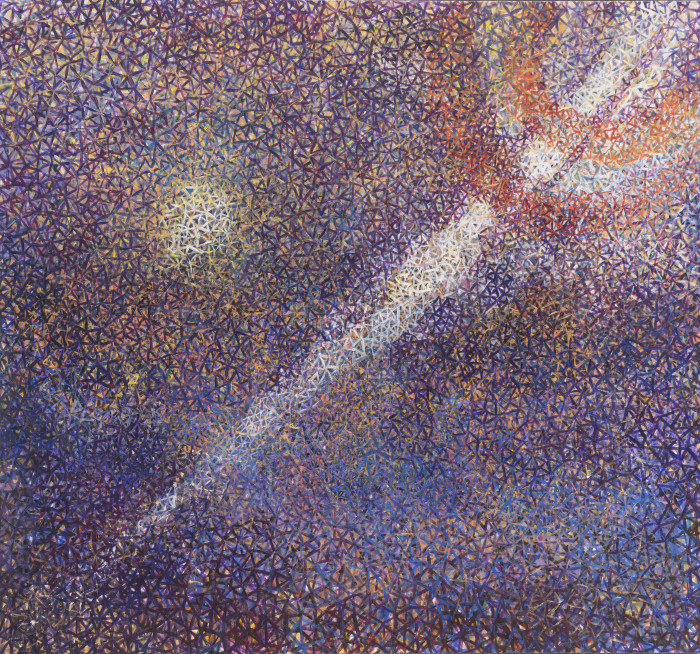
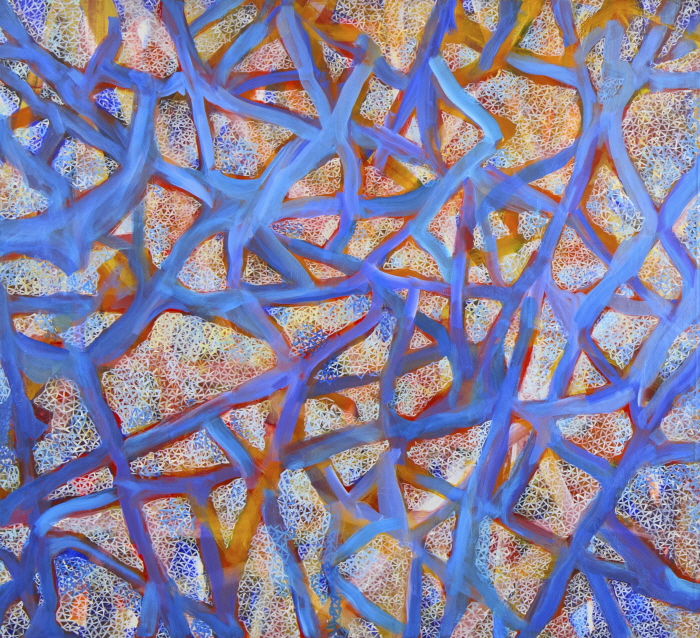
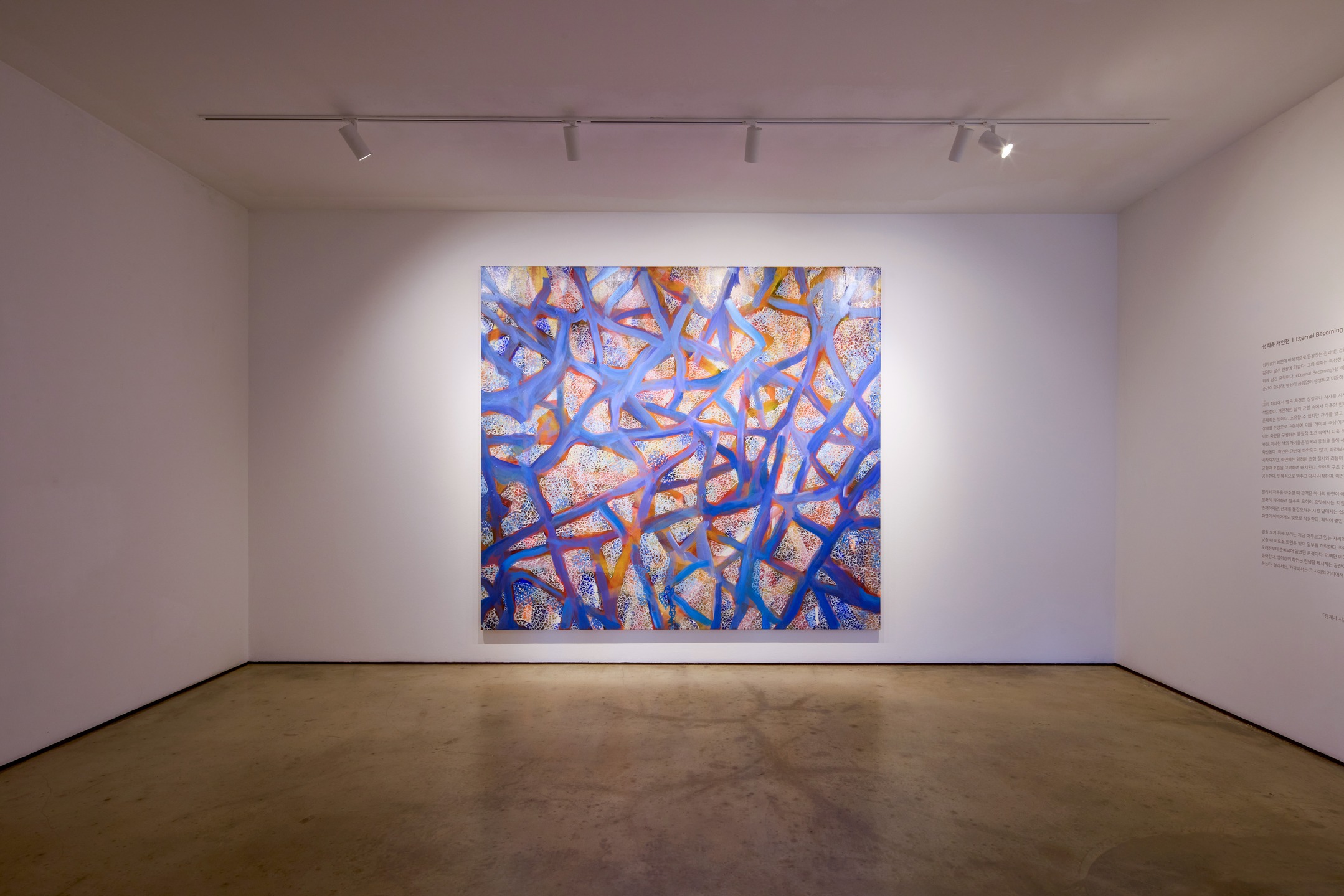
This becomes even clearer through the material conditions that structure the pictorial surface. Her paintings do not present a single image instantaneously. Points, short brushstrokes, and subtle differences in color gradually build the density of the surface through repetition and layering, spreading gently in multiple directions rather than converging toward a center.
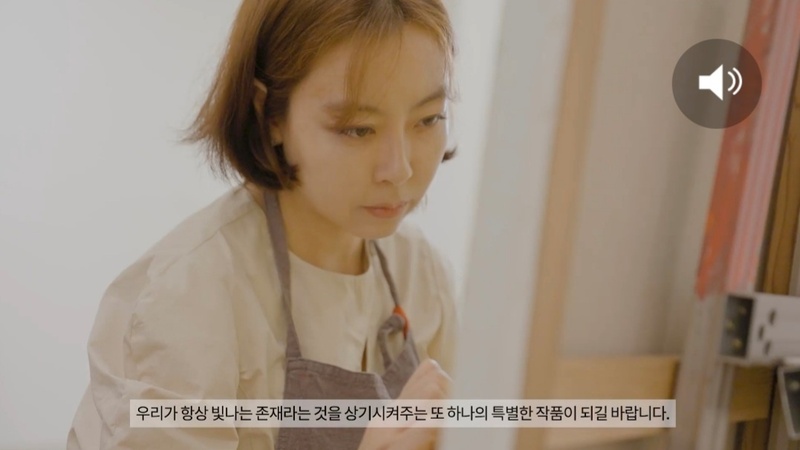
The surface cannot be grasped all at once; instead, it reveals different layers according to the duration of looking. The work begins with spontaneous gestures, yet a consistent visual order and rhythm are maintained throughout. Repeated patterns may appear to be entrusted to sensation, but each point and brushstroke is placed in consideration of the balance and breathing of the entire surface.
Chance functions as a variation permitted within structure, while freedom and tension, organic movement and stability coexist within the pictorial field. The process repeatedly stops and begins again, adding new layers over previous traces.
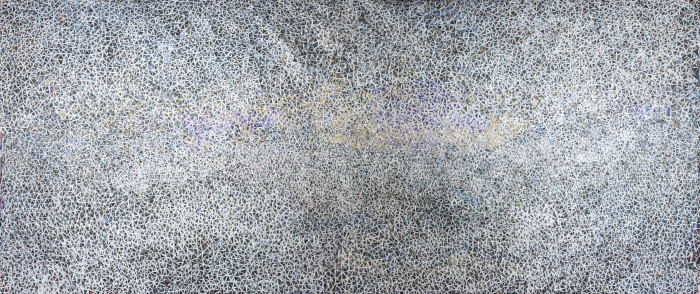
The restrained palette that has become prominent in Sung’s recent work continues this development. The shift from intense, direct colors toward ivory, off-white, gray, and pastel tones does not signify the disappearance of energy, but rather a movement into deeper layers. Color is emotion and time; it is the density of energy. The sensitivity required to perceive subtle differences among colors produced by nature becomes an important point of departure for the work.
The stars within the surface are both individual and collective. Each possesses its own vibration and rhythm, yet together they form a single field. The whole reveals itself through the individual, while the individual becomes more distinct within the whole. The two do not oppose one another but interpenetrate, forming a single breath.
Encountering the work from a distance, the viewer finds oneself standing not before a single image but within a field of light. Structure, flow, and a cosmic rhythm are sensed first, yet the more one attempts to grasp them precisely, the more certain areas begin to blur. Like stars in the night sky, the innumerable points exist distinctly within darkness, yet resist being captured by a gaze that attempts to apprehend the whole.
Approaching the surface more closely reveals an entirely different landscape. Even the untouched spaces where no brushstroke has landed begin to function as light. The layered traces create a density of expansion that is difficult to measure through sensation alone.
To see the stars, we must temporarily relinquish the light of the place where we presently stand. Just as the eyes adjust to darkness, the pictorial surface only permits part of its light to emerge when viewers quiet their own senses. Just as a star beyond the veil crosses light-years of time to reach our eyes today, the light within the painting is also a trace that has long been in preparation. Before a light that may already have vanished, we remain for a moment before returning once again to the time of everyday life.
Starya Hee-seung Sung’s pictorial surface is not a space that offers answers, but a field in which questions open. It asks not what one has seen, but how long one has remained. Whether from afar or up close, the work waits for the moment when, somewhere within the distance between the two, each viewer’s breathing quietly begins to change.